Issue 67

Features

Personal Fidelity:

HiFiGuy 528’s Faves!

By Mike Liang

995:

Seven Cheap and Cheerful Favorites

By Mark Marcantonio

Old School:

Vintage Favorites

By Sean Brady

Feature Favorites

The SMARTractor
By Richard Mak

Four Favorite Upstarts:
Audeze, ModWright, PrimaLuna, and Coffman Labs

My Nine Favorite Amplifiers
By Jeff Dorgay

Seven From My System
By Rob Johnson

Our Favorite System – The Devialet Ensemble

Music

Current Releases:

Bob Gendron’s Favorite Live Rock Albums of the Last 25 Years

Jaan Uhelszki’s Favorite Short List

Jeff Dorgay’s Six Favorite NON Audiophile Discs

Previews

BAT VK-655SE Power Amplifier

Simaudio MOON Neo 430HA

Dali Rubicon 2 Speakers

Rega DAC-R

Reviews

SONY’s NWZ-A17
A new standard in portable players
By Jeff Dorgay

Kiseki BlueNS and Purple Heart NS phono cartridges
By Jeff Dorgay

The REL S/2 Subwoofer
By Jeff Dorgay

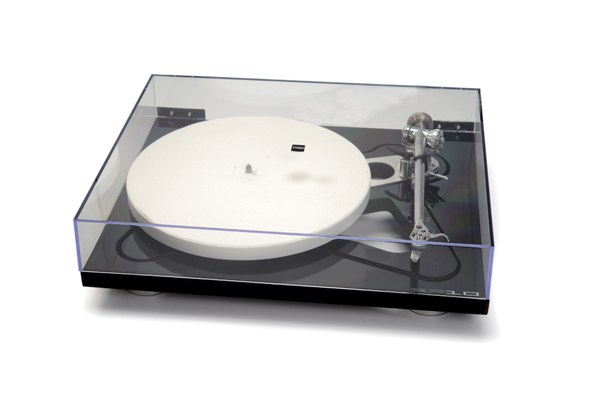
Rega RP10 Turntable

Our publisher has been a Rega fan since the fateful day in the mid-’80s when we happened by our local dealer (Audio Emporium in Milwaukee, Wisconsin) to find them opening a shipment of Planar 3 turntables.  As they lifted a bright, fluorescent green table out, the sales guy quipped, “What idiot would buy a turntable in this color?”  Little did he know that’s been publisher Dorgay’s favorite color since age 6.  He solemnly replied, “I’m that idiot!” and we took that little British table back to his listening room and were subsequently blown away, being Technics SL-1200 guys at that moment in time, thinking there couldn’t possibly be anything better than direct drive.

Words like pace and timing weren’t even part of our vocabulary back then, but there was a ton of inner detail coming through those Magnepan MGII speakers that wasn’t there the day before, and to this day, both of us have always owned at least one Rega turntable.  For the record, my current reference is a P9 with Apheta cartridge, and it has served me well for some time now.

Evolution no. 10

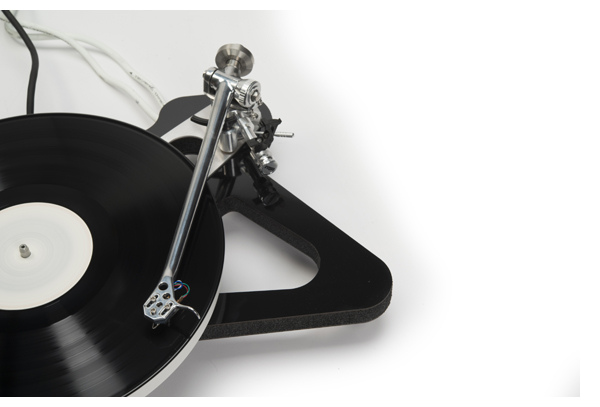
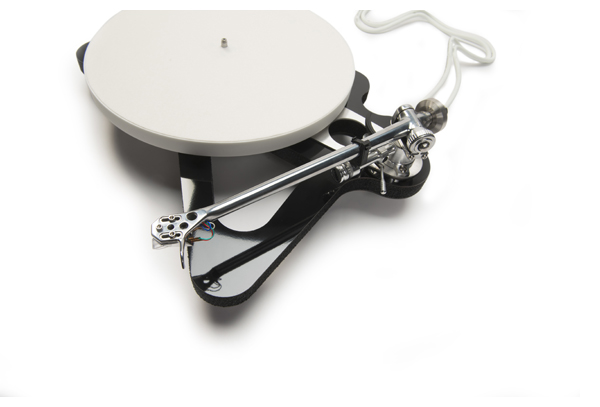
Someone once said that an elephant is only a mouse built to military specifications, and on one level the same could be said for the P9 – you could think of it as a fully geeked-out P3.  The platter, drive mechanism, tonearm and power supply are all highly evolved versions of the basic Rega turntable.  For those of you that aren’t familiar, the tonearm on the earlier P3 and P9 shared the same basic casting, and now the new RP10 uses a highly refined version of the new casting for the RP3 (and is secured with the same red tape Rega has used for decades), yet the new RB2000 is completely handmade and finished to the highest of tolerances, as was the RB1000.

According to Rega, the RB2000 arm “is designed to have a minimum of mechanical joints while using the stiffest materials possible in all areas.”  Like its predecessor, the bearings are hand fitted and of highest quality, all handpicked for tolerance before insertion into the arm.

A new twist on the Rega platform, beginning with the RP3, is the mechanical brace: magnesium in the RP10, going between the tonearm mount and the turntable bearing, assuring maximum rigidity between these critical areas, while taking advantage of the new, skeletal plinth (further refined from the RP8 design) having seven times less mass than the original Planar 3.

An ex-automotive engineer, Rega principal Roy Gandy has always taken the advantage that less mass means more energy transferred from the record groove to the stylus tip, an opposite philosophy of the “more mass is better” approach embraced by some other manufacturers.  Gandy’s approach has always worked well, but in the past, the P3 and variations have always been accused of being somewhat lightweight in the lower register.  The former flagship P9 has always featured the liveliness that their tables have always been known for, with additional heft in the low frequencies.  Combined with a set-and-forget ethos, there’s no wonder the P9 has won the hearts (and ears) of so many music lovers that just want a fabulous turntable without the setup anxiety.

The race is on

So as much as we wanted this to be a standalone review, the question on the tip of everyone’s tongue – and on our Facebook inbox – has been, “How does the RP10 stack up to the P9?”  As the title of this review suggests, it is an evolutionary move.  Listening to the P9 and RP10 side by side easily shows the additional resolution present in the new table.

A speed check was the first test on our list, and utilizing the Feickert iPad app showed the RP10 to be dead-on for both 33 and 45 rpm speeds.  It’s still somewhat of an urban legend that Rega tables run “a bit fast” to provide a zippier sound.  In our experience, this just hasn’t been the case in the last 15 years or so, and the RP10 keeps them batting a thousand.  So, if you’ve had any internet-related anxiety about the speed of the RP10, forget about it.

Ease as always

Should you opt for the Apheta MC cartridge, which comes pre-installed (at least for US customers), it’s a winner on two counts.  The Sound Organisation, Rega’s US importer, sells the two as a package for $6,495, saving you almost a thousand bucks in the process – and they install the cartridge for you.  Even though this is super easy, because the Apheta features Rega’s three-bolt fastening, and as all Rega tables come from the factory optimized for correct VTA, the RP10 is possibly the only no-fuss, no-muss premium turntable.  All you need to do is set the tracking force to 1.75 grams and fiddle a little bit with the anti-skate if you feel so inclined.  If it takes you more than five minutes to play records on an RP10, you are overthinking it.

If the Apheta is not your bag, rest assured that there are a number of other great cartridges available that will provide excellent synergy with this table.  Here at TONE, we’ve used everything from the ZU Denon 103 cartridge all the way up to the $10,000 Lyra Atlas cartridge on both the P9 and RP10 with fantastic results.  You can read the Apheta review here[1] to get more of a feel for this cartridge, but for those not wanting to dig back, here’s a short synopsis:  The Apheta is a very fast, neutral cartridge with a lot of HF energy.  If you don’t have an MC phonostage capable of going down to somewhere between 25 and 50 ohms, the Apheta will make a poor showing and sound somewhat shrill.  Load it correctly and you will be rewarded with clean, detailed sound.

The P9 and the new RP10 are awesome for music lovers who want great sound without a fuss.  While I’ve listened to a lot of megabuck tables at the TONE studio, $5,000 is my sweet spot – and let’s be clear: I do not consider this the point of analog diminishing returns; however it is all the more I’m comfortable spending on a turntable.  So for me, personally, the RP10 gives me enough of a glimpse into the price-no-object tables for comfort.  Considering Rega has only raised the price $500 over the cost of the P9 speaks volumes for their manufacturing efficiencies.

More listening

As hinted at the beginning of this review, the RP10 does reveal more music throughout the range.  Transients are cleaner, the bass carries a bit more weight, and the high end is even crisper than before.  Regardless of program material chosen, the improvements made feel like going from ISO 200 to ISO 100 on your favorite digital camera (or film for those of you still embracing the medium).

Should you trade up from your trusty P9?  That’s a question only you can answer, and it will probably depend on what your dealer will give you for a trade-in and how wacky you’re feeling with the checkbook.  -Jerold O’Brien

Additional Listening

I’m probably more anxious than most people to finally get my hands on the RP10, as I saw the prototype of this turntable at Roy Gandy’s home about six years ago and it was fantastic back then.  You’ll either love or hate the skeletal design; I love it because it looks so un-Rega, but those of you wanting a more traditional-looking turntable can leave it in its full base.  Me, I’d rather see it in its naked glory and cast a few spotlights on it, letting the shadows fall where they may.

As Mr. O’Brien mentioned, this table, though more radical in design, is definitely evolutionary.  You won’t mistake the sound of the RP10 for an SME or Clearaudio table and that’s a good thing.  Most of the improvements to the tonearm and power supply are not easily seen from the outside, as is the second generation ceramic platter, but Rega tables are always more than the sum of their parts.

In my reference system through the Audio Research REF Phono 2SE, I noticed the same sonic improvements in the RP10/P9 comparison, but what I did notice on a more resolving reference system than Mr. O’Brien’s was that the RP10’s new arm and table design will accommodate an even better cartridge than the P9 could.  Where the Lyra Kleos was about the limit of what I’d mate with the P9, the RP10 could handle the Atlas.  I’m sure most RP10 customers aren’t going to drop $10k on a phono cartridge, but you could, and it can resolve more music than a Kleos will let through.  And that’s part of the magic with the RP10.  It’s a sleeper.

I’ve always enjoyed the Apheta with the P9 and now the RP10, but I found absolute bliss with my Dynavector XV-1s cartridge, offering a slightly warmer overall presentation than the Apheta.  Again, this will be decided by your ultimate sonic preferences and the RP10/Apheta combination is really tough to beat for the money.  Rega has hit a pretty interesting run with the RP10, as there are a lot of great turntables in the $10k–$15k range, as well as in the $2k–$3k range, but this price point is pretty wide open.

We could talk tech for hours, but do we want to?  Put a record on and relax.  Much like my P9, the RP10 has that extra amount of LF weight and drive (torque maybe?) that really makes this table a blast to listen to rock records with.  Going back to Deep Purple’s classic “Smoke on the Water” from their Made in Japan album was incredibly convincing when those famous chords were played.

Extended listening with a wide range of program material reveals a table that gets it right on so many levels.  Mounted on an SRA rack, there were no feedback issues, no matter how loud I played music, so the table’s design is working as it should.

Reflecting on my time with the RP10, I just wonder when Mr. Gandy and his crew will run out of ideas?  They remain fresh as ever, and I can’t believe that after more than 30 years, I’m just as smitten with Rega as I was the day I brought my first one home from the hifi store.  Now, can they just make it in lime green?  I’m happy to give the Rega RP10 one of our Exceptional Value Awards for 2014.  -Jeff Dorgay

Rega RP10

MSRP:  $5,495 (without cartridge)  $6,495 with Apheta pre-installed (US Only)

www.soundorg.com (US distributor)

www.rega.co.uk (factory)

PERIPHERALS  (O’Brien)

Phonostage Simaudio MOON 610LP
Preamplifier Coffman Labs G-1A
Power Amplifier Conrad Johnson Premier 350
Speakers Vandersteen 5A
Cable Cardas Clear Light

Primary Control Tonearm

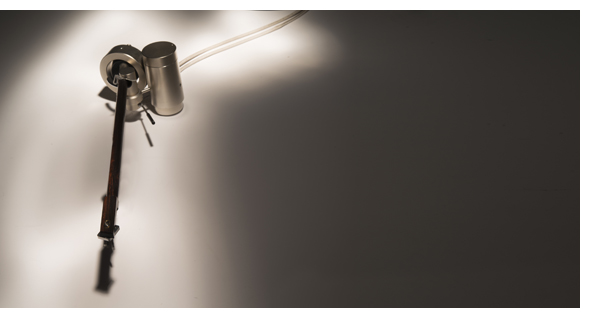
If you are lucky enough to have tried bespoke tailoring in Savile Row, you will know that nothing off the rack really comes close to it. The term “bespoke” originates in Savile Row, a street in Mayfair, Central London, famous for prestigious tailoring for the individual customer.  It is understood to mean that a suit is custom measured, cut and made by hand to provide a perfect fit where it literally hugs one’s body. In the world of high-end analog audio, if there is such a thing as a “bespoke tonearm,” the Primary Control tonearm from the Netherlands fits this description.

Primary Control is an Amsterdam-based company that specializes in exquisite custom-made tonearms.  Its owner, Bernd Hemmen, is an electrical engineer whose lifetime passions are music and audio. His fascination with the mechanics of turntable and tonearm design led him to create a tonearm that gives users precise management of every conceivable setup parameter, or, as he calls it, “Primary Control” over adjustability in order to allow a cartridge to retrieve signals accurately. After eight years of research and development, the Primary Control tonearm is born.

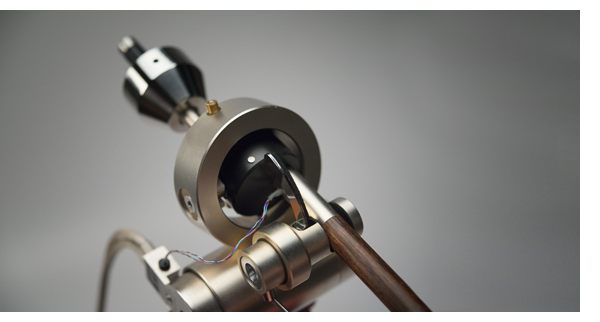
The ”bespoke” process begins with a consultation with the designer (or the dealer) about your specific turntable needs, as there really isn’t a standard model of the tonearm.  The options are plentiful:  9”, 10.5” or 12” lengths; the metal parts come in matte, shiny, or black; and the armwand in carbon graphite or an exotic wood of your choice. My first review sample took a little over four months to arrive, a 12” model with a Macassar ebony armwand. A few months later, a second 10.5” model made of carbon graphite and titanium followed. The armwand is made of a titanium tube and a carbon graphite outer layer, separated by carefully inserted damping material to optimize resonant characteristics. These two arms are the first to land on North American soil.

Immediately Engaging

The Primary Control’s exquisite elegance can be felt right away as you unwrap the shipping box. Unlike most tonearms packed in molded Styrofoam boxes, the Primary Control is housed in a wooden box with precut foam inlays. It looks and feels expensive, reminding me of the now discontinued DaVinci Grandezza. From afar, the arm itself looks almost like a Schröder Reference tonearm with a nicer finish. The head shell mounting plate and the armwand look remarkably similar, and are both situated to the left of the mounting column.

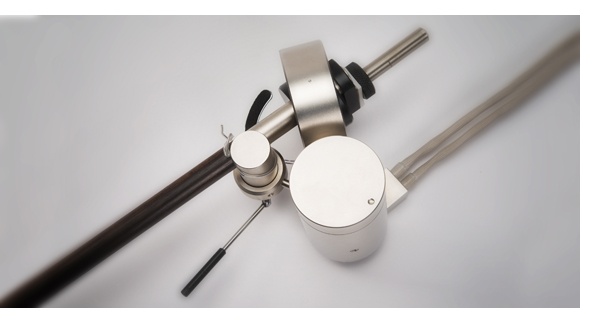
The Primary Control employs a unique proprietary two-point pivot, similar to Basis Audio’s Vector arm of the ’90s. The entire bearing structure is hidden within a round housing made of Delrin, making the bearing mechanism invisible to the naked eye. It wasn’t until I disassembled the entire bearing housing (a task not recommended by the manufacturer) that I began to understand the working mechanisms of the arm. The arm has a bearing cup mounted on the underside of armwand, which sits on a vertical sapphire bearing that points upward, based on the concept of most unipivot tonearms on which the entire armwand is balanced on a single point of contact.

Distinctly Different, Yet

Proponents of unipivot tonearms often argue that these tonearms provide a better top-end extension and a more vibrant presentation. But the free multi-directional movement of a unipivot arm is as much a nuisance as it is an advantage. Without horizontal stabilization (as in the case of the Moerch UP-4), the armwand wobbles from side to side during play resulting in measurable distortions and increased crosstalk between channels; therefore, the newer unipivot designs will have some sort of horizontal stabilization mechanism to remedy the problem. The Graham Phantom and the Durand Talea use magnetic force to stabilize the arm, whereas the Reed 3P adds on additional side bearings to restrict horizontal movements. The Primary Control incorporates a lower horizontal ball bearing into the pivot housing which makes the armwand “lean” continuously onto a right pivot, virtually eliminating side-to-side wobbling. The horizontal bearing also creates a center of gravity offset from the main pivot, which will improve stability and balance. By turning the counterweight assembly, you can adjust the “leaning force” which essentially changes the horizontal damping of the tonearm. Too much damping causes the sound to become muddy and lifeless, while too little makes the sound thin and nervous.

The instruction manual is short, concise, and filled with detailed diagrams. If one follows the 16-page manual closely to perform cartridge alignment, VTA, Azimuth, VTF, anti-skating and horizontal damping, even a novice will achieve a relatively good setup. Fortunately, some parts of the manual will tell you what sonic changes to expect with certain adjustments –– something very few owner’s manuals will do.

There are two important points which should be mentioned with regard to the mounting position of the armpost and the relative idle position of the armwand to the platter. The Primary Control is designed with the armwand situated to the left of the main column, meaning the mounting position of the main column has to be further away than normal. Both my JC Verdier La Platine and TW Raven tables require an 8” armboard to be made long rather than the normal 6” to 7”; otherwise the optimal position prescribed by the mounting template cannot be achieved on the 12” arm.   The anti-skating mechanism has been carefully designed to incorporate the use of several opposing magnets to provide for a non-linear force across the record surface. If the idle position of the arm deviates too far from the template’s optional  position, the antiskating force may be applied too early or too late, depending on whether the head shell position is too close or too far out relative to the platter. This is why the tonearm is “bespoke tailored” specifically for your specific turntable.

The Proof Is in the Listening

How does the arm sound? To put it simply, the ebony version is musical, elegant and soothing, whereas the graphite/titanium version is accurate, straightforward and lively.

Unlike other reviews I have written in the past in which a general sonic description can be pinned down, in this case it would be unfair to assign a blanket sonic description because every bespoke Primary Control tonearm will have sonic variations. Both arms display exceptional finesse, detail, and frequency extension which tonearms with less adjustability can only aspire to achieve. Depending on the type of music I’m playing, the seductiveness of one may draw me away from the other.

The ever-so-romantic display of poignant emotions was gracefully displayed with the 12” Macassar ebony Primary Control when the violin in the Andante in Act 3 of Delibes’s Sylvia was played (Decca SXL 6635/6, Bonynge – New Philharmonic Orchestra). Paired with the Dynavector XV-1T bamboo body cartridge, the ebony version gives a vivid display of organic qualities which are distinctively more prominent than with the graphite armwand. Though the sonic image appears more smudged and with less clearly defined edges, it makes up for the deficiency by presenting a picture which offers more human-like qualities, drawing you closer to the music.

Yet, when the grand finale in Act 3 of the same ballet is played, the graphite arm is decidedly more neutral, accurate and dynamic, but not so much as to veer towards the direction where it becomes analytical and hard sounding. It delivers a soundstage which is more upfront, yet extends further into the room. The sonic image has more three dimensional qualities. The bass goes deeper and carries more definition, texture and less boominess to the sound.

With vocal-dominant recordings ranging from 1950s Victoria de los Ángeles recordings to 2011 Adele albums, I find myself caught in the same dilemma. The ebony arm exceeds the graphite version on organic qualities, but loses out on dynamism and speediness of response. The same can be said with Fleet Foxes’ White River Hymnal, with which the graphite version offers a more upfront presentation than does the ebony version, which puts you in a few rows back. Halfway through the review, I like the arm so much I will add one of these to my reference system, but I am having difficulty in deciding which one.

The More Care, the More Sound

If there is ever a time in which the veteran can excel over the layman, the Primary Control would be the apt instrument for such a demonstration. With the meticulous attention to details and clarity in setup instructions, the layman can certainly achieve a pretty high level of sonic achievements by following setup procedures. But the Primary Control is also a tonearm which will allow a person with a bit more experience to take the sonic performance to a much higher level. Given the numerous bespoke customizable configurations available, combined with the precise adjustability of the Primary Control, it is a tonearm which offers limitless potential –– and you can be sure it will never be the bottleneck of any analog setup.

There is always a downside to anything elegant and exclusive. Just like the bespoke suits of Savile Row, the Primary Control comes with an elegant price tag. The price ranges from around $5,500 to approximately $8,000, depending on the configuration. Ten years ago, if I were to mention an $8,000 tonearm, it would likely have raised some eyebrows. But in 2014, where a slurry of new tonearm models have gone past the $10,000 mark, such as the Graham Elite, Triplanar Mk VII, or the Vertere Reference –– just to name a few –– they do make this bespoke work of art appear less exorbitant.    -Richard. H. Mak

Primary Control Tonearm

MSRP: Starting at $5,500

http://www.primarycontrol.nl


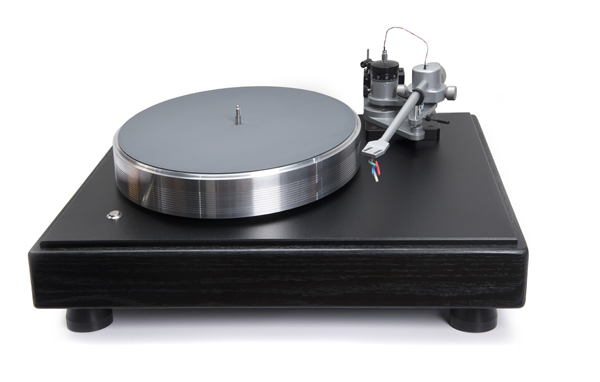
VPI Classic Two Turntable

VPI’s Classic One set the standard for analog performance at its price a few years ago when introduced and one is still in service at TONEAudio as a reference component, recently revised by Harry Weisfeld to accommodate an Eminent Technologies tonearm.

The Classic Two builds on the success of the Classic One, with the primary difference being the ability to adjust the VTA on the fly while the record is playing, giving the analog enthusiast more control and adjustability than the One does.  Sound quality is very similar, so if you are a more monogamous audiophile who tends to stick with a single setup, the One may be all you need.  But, if you love to change and tweak your system on a constant basis, the Classic Two is the way to spin.  It will make your adjustments much easier to execute.  -Jeff Dorgay

VPI Classic Two Turntable

$4,000

www.vpiindustries.com

MartinLogan Motion 35XT Speakers

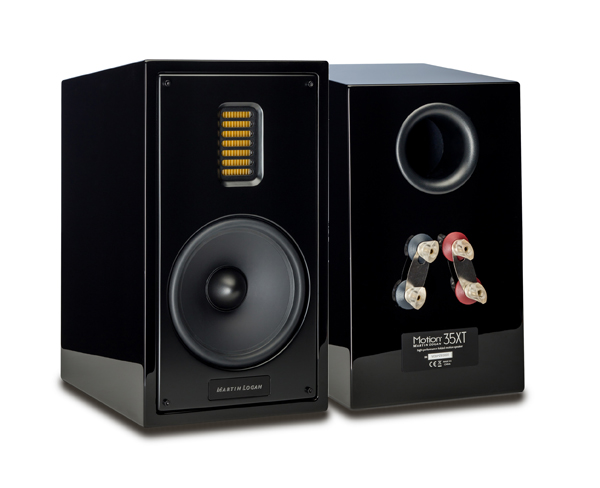
MartinLogan continues to expand their phenomenal Motion series of loudspeakers to the new 35XTs you see here, featuring a 6.5” woofer and their incredible folded motion (ribbon) tweeter, all in a solid wood cabinet, available in a variety of colors, including high gloss black.

As with every MartinLogan speaker, these are painstakingly crafted and reveal a level of music that is above and beyond their modest price. Voiced to match the floor standing speakers in the Motion line, these can either function as a high performance/minimal form factor pair of rear surround speakers in an all Motion system (though they do mate very well with MartinLogan electrostatic speakers as well) or a great pair of stand mounted speakers in a dedicated two channel system.

MartinLogan Motion 35XT Speakers

$1,195/pair

www.martinlogan.com

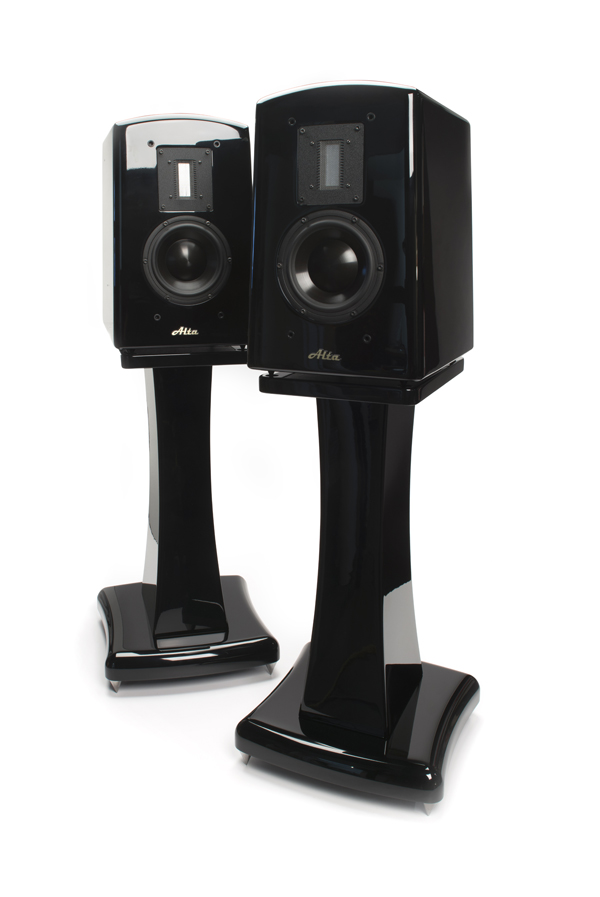
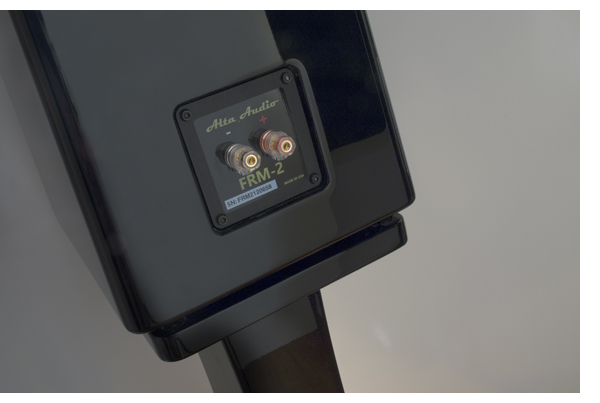
Alta Audio FRM-2 Speakers

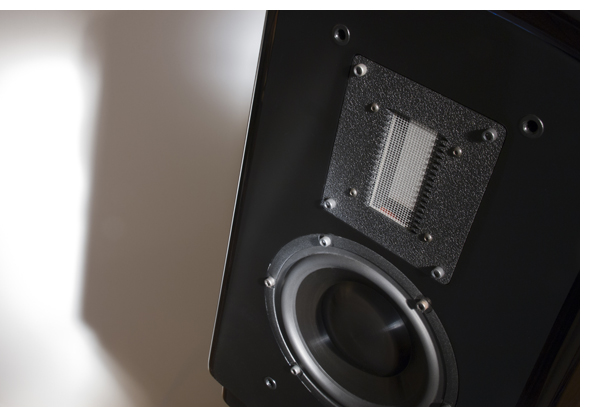
The arrival of the Alta Audio FRM-2 loudspeakers exposed a certain prejudice or bias of mine against ribbon tweeters. But it’s a valid one, as I’d never heard a ribbon tweeter that was properly integrated with the rest of the drivers in the system, nor had I ever experienced a ribbon tweeter with a natural high end.  My audio pals with a penchant for razor-sharp transients swear by them, but I’d always come away from them fatigued.  So I must admit that when I was unpacking these scrumptious speakers, my heart sank just a little bit.

And speaking of scrumptious, to someone who spent his formative years in an auto-body shop, and later as a photographer around some of the world’s finest automobiles, the finish of the FRM-2s almost defies definition.  The finish on the review samples exceeds that of anything I’ve seen on a Bentley or Aston Martin, and the new Mercedes S-Class sitting in the driveway looks pathetic in comparison.  The same goes for the audio world: let’s just say the FRM-2s have the finest finish I’ve seen applied to a set of loudspeakers.  And I know that takes a lot of hand work to get right.

While our test samples arrived in a Spinal Tap-like “how much more black can these be?” finish, Alta’s head designer Michael Levy has told us nearly any automotive color can be accommodated.

However, a pretty box is meaningless without sound to match, and I’d buy a pair of FRM-2s if they looked like Bluemenstein Thrashers.  Fortunately for $13,000 a pair you get great looks and great sound.  These little speakers have destroyed all of my preconceived notions as to what a modest sized speaker is capable of.

Keith Jarrett’s At the Blue Note has a wonderful sense of ambiance, with just enough of the audience mixed in to feel dimensional, and is accompanied by a cast of phenomenal musicians.  I’m instantly struck at how completely natural his piano sounds, as well as the cymbals – they just float in the air perfectly, without the slightest hint of sibilance or being goosed for effect.  As wonderful as the instruments come through, the telltale sign is Jarrett’s trademark groaning.  As much as I love Jarrett’s work, this is always aggravating, yet through the FRM-2s, it creeps in gently and then is quickly gone, almost like a whisper.  I’ve never experienced this effect in any speaker before.

Charlie Haden’s double bass work on the Jarrett album sends me in the opposite direction, digging out Shellac’s At Action Park to sample the machine-gun bass line in “Crow.”  Again, the speed of the FRM-2s six-inch bass driver, utilizing Alta’s XTL bass tuning system along with a highly inert cabinet offers up serious bass grunt and definition.  As the rest of the staff trickled in to audition these speakers, they all offered up the same descriptions without being prodded by yours truly.  Four staff members all remarked, “these sound like great electrostats, but with bass!”  And I would add great dynamics, too.

Plumbing the depths of these speakers’ LF capabilities lead me to the last Simian Mobile Disco album, Unpatterns. Cranking up the Devialet 120 used for most of the review had me looking around for the subwoofer and the supermodels. I felt like I was at Fashion Week with the powerful, grinding bass coming out of these relatively small speakers, REL subwoofer (review next issue) unplugged from the AC mains.  The FRM-2s move major air.

More than just bass

Another fun test track here at TONEAudio is Dead Can Dance’s “Yulunga (Spirit Dance)” from the recently remastered SACDs. The opening is ominous and creepy, with an incredibly wide soundfield.  This track features a great balance of real and electronic sounds that don’t necessarily reveal everything about tone and timbre, but a great pair of speakers will disappear completely, rendering a wealth of spatial cues.  Check and double check.

Devo’s debut, Q: Are We Not Men? A: We Are Devo! produced by Brian Eno, does the same thing, yet in a wackier way.  Mark Mothersbaugh’s trippy vocals float all over the room, with ethereal synth effects and overprocessed guitar everywhere.  Not a single natural sound here, yet the speed of the FRM-2s presents this classic in a truly psychedelic way.  Big, big, fun on tap.  Go straight to “Shrivel Up.”

Much like one of Todd Rundgren’s Utopia albums, the Little Village album reveals  highly layered vocals with three guys that sound very similar.  John Hiatt, Nick Lowe and Ry Cooder all have a very similar phrasing and tone that can blend together on a speaker lacking in resolution, yet through the FRM-2s, these three voices all have a distinct sound.

No matter what the program material, the FRM-2s never cross that line that every other ribbon driver based system I’ve experienced crosses.  These speakers have an intoxicating ability to render inner detail, with plenty of transient attack, yet have a relaxed quality like a pair of soft dome tweeters.  It’s very close to magic.  This is one of those rare speakers that has me agonizing between exploring new music and wanting to revisit so many favorites, just to see what treasure would be revealed through this new lens.

Easily integrated

With a rated sensitivity of 87.5 dB @ 2.83 volts @ one meter, you’d think the Altas need a ton of power to work their magic, but again, the preconceived notion is wrong.  Even the 35 watt per channel Van Alstine Ultravalve amplifier provides highly pleasing results in a smaller room, and while bone crushing volume isn’t achievable, they play loud enough on all but really heavy rock records to be engaging.

The first half of this review was conducted in my new home listening room that only measures 11 x 14 feet, with modest GIK room treatments.  Bass traps in the corner, a few diffusor panels behind the listening chair and one 242 panel at each first reflection point.  The FRM-2s proved easy to set up, and even with the speakers placed somewhat randomly in the room, threw an excellent three dimensional image.  Utilizing the supplied stands (an extra $5,000 expense) put the tweeters right at ear level, and even with a slight toe-in, proved excellent in this small room.  Because these speakers are capable of such solid low frequency response, they can be placed a bit farther out in a small room than one might do with something like a KEF LS-50.

Again, the benefit is getting the punctilious imaging of a small monitor with the bass response of a full-range speaker.  An even bigger surprise was how well this performance translated into a large room.  For those just tuning in to TONE, my main listening room is 16 x 25 feet, with a pitched roof and a nice blend of absorption and diffusion, removing the slap echo without being dead and overdamped.

Powering the FRM-2s with the prodigious Pass Labs Xs300 monoblocks was an eye opener.  Much like putting the pedal down in a base model Porsche Boxster and then climbing into a 911 Carrera S, there’s just more oomph there.  The speakers still had great LF traction, and upon spinning the Stereophile test disc, there was indeed solid output at 30hz, though it did drop off sharply after that.  No shame at all for a speaker like this.

Should you have more clean power at your disposal, these mighty little speakers will not disappoint you.  Running through some heavier rock records, I was constantly surprised at how far I could push them without breakup or collapse.  AC/DC, Van Halen and the White Stripes were all highly satisfying.

The FRM-2 is the perfect speaker for someone wanting state-of-the-art performance without having to deal with a pair of massive, floor-standing loudspeakers.  Even in the context of a six-figure system, the Alta Audio speakers are never the weak link in the chain.  It is as easy to hear the subtle differences between ARC, Burmester and Robert Koda preamplifiers as it is between phono cartridges and cables.  These speakers could be an incredible reviewing tool.  Hint, hint to Santa Claus:  I’d love a pair of these under the Christmas tree.

In a word, awesome

The Alta Audio FRM-2s shatter every preconceived notion I’ve ever had about ribbon tweeters and associated issues.  Having had the pleasure of listening to some fantastic speakers from Dynaudio, Focal and Sonus Faber – all in the $12,000 to $20,000 price range – the FRM-2 is easily at the head of the class.  And one of the most musically engaging speakers I’ve heard at any price.

Considering the performance that these speakers have turned in, I can’t even imagine what Alta Audio designer Michael Levy has in store for us with his new flagship speaker.  I can’t wait to find out.

Alta Audio FRM-2 Speakers

$13,000/pair,  Low Profile stands, $2,000/pair, $5,000/pair optional Onyx Black stands

www.alta-audio.com

PERIPHERALS

Analog Source AVID Acutus Reference SP/Tri Planar/Lyra Atlas
Digital Source dCS Vivaldi stack
Amplification Pass Labs Xs 300 monoblocks and Xs Preamplifier    Devialet 120
Cable Cardas Clear

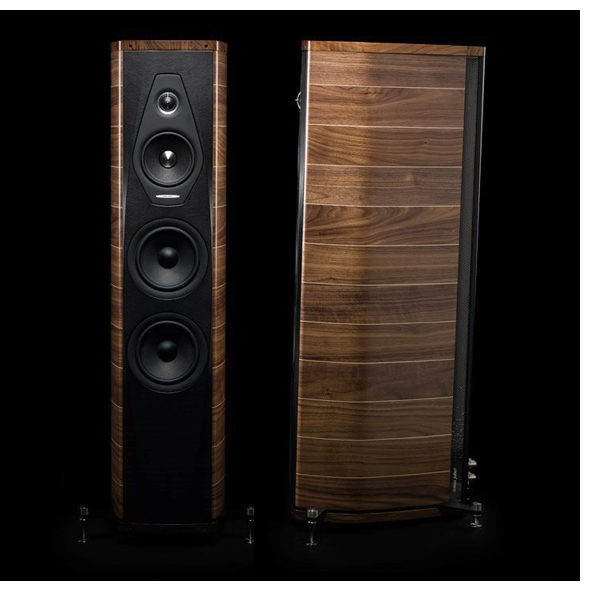
Sonus faber Olympica III Speakers

Sonus Faber Olympica III review by Rob Johnson ToneAudioAt TONEAudio, we’ve had the pleasure of testing Sonus faber’s flagship Aida speaker ($150,000), the Guinari Evolution ($22,900), and one of their more entry-level offerings, the Venere 3.0 ($3,500). In each of these cases, the sound and build quality represents a high bar for their respective price tags.

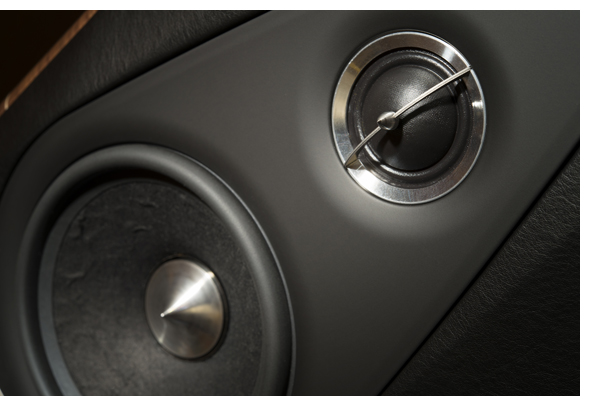
Not wanting to neglect a middle child in the Sonus faber family, we put the new $13,500 Olympica III floorstanders to the test. The Olympica line of products makes available three models. The Olympica I is a stand-mounted, two-way design. Olympica II is a three-way floorstander with a single bass driver. The Olympica III is the biggest of the bunch with two 7-inch (180mm) bass drivers supplementing the 1.14-inch (29 mm) tweeter and a 5.9-inch (150mm) mid. A center-channel speaker rounds out the lineup should a prospective buyer seek a home theater option.

While there are several great companies producing speaker drivers, and many other speaker manufacturers build cabinets around them, Sonus faber takes a different approach. All their drivers are designed in-house, and each is mated with a cabinet shape which gets the most from it. As a holistic package the Olympica is designed from the ground up with system synergy the priority.

Grace of a figure skater

Made entirely in Italy like Sonus faber’s flagship series, the Olympicas receive the same attention to detail at each level of the build process. Cabinet woodworking is gorgeous, and the resulting products have the appearance of fine furniture. Our sample pair sport the walnut finish. Panels of grain-matched wood curve delicately from the front to the back of the cabinet. Eleven pinstripe-thin maple joints separate the 12 walnut sections on each side of the cabinet, providing an elegant and subtle contrast. For those who prefer a darker colored cabinet, Olympicas are also available with a graphite finish. Even with the greyish-black stain, the wood grain remains beautiful and clearly visible. Regardless of color, several layers of clear lacquer provide a protective and attractive semi-gloss coat.

A top-down view of the leather-topped and backed speaker cabinet reveals a uniquely engineered shape to minimize cabinet reflections. For lack of a better descriptor, it’s an angled teardrop shape with the rounder edge toward the front and the point out the back. The rear portion is asymmetrical with a bit more swoop to one side. This configuration facilitates the addition of Sonus faber’s unique perforated port design on one rear edge. Unlike most small and round bass ports, the Olympica sports a two-inch wide metal-grated port that extends the full length of the speaker. Gracing the cabinet base, a metal four-point outrigger configuration creates additional stability for the narrow towers. Tightening and loosening the spike height facilitates leveling so the speakers keep all four tiny feet firmly anchored to the floor.

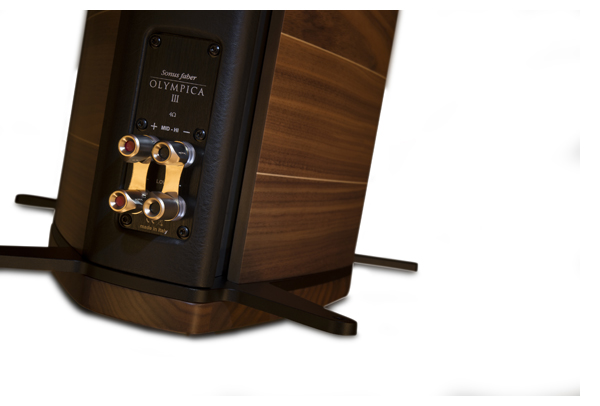
Even the metal speaker cable binding posts offer a unique design. With a teardrop profile that mirrors the speaker shape, it’s easy to get a good grip on the posts and tighten them firmly by hand. Dual posts allow for bi-wiring or bi-amplification, and an included, stamped-metal jumper connects the two. The sum of all these parts assigns the Olympica III dimensions of 43.8 inches (1114 cm) in height, 10.25 inches (260mm) across the widest part of the cabinet, and a 16.25-inch (406mm) depth.

Warming up

Speakers are always a tricky piece of equipment to review because each speaker interacts a little differently with a listening space. After a few hours of scooting them around the room in small increments left, right, backward, forward and with varying degrees of toe-in, they finally landed in a location I marked immediately with painter’s tape. To facilitate the process, the Olympica manual suggests some sample speaker and listening seat placement suggestions. These ideas do offer a good starting point for your quest. While the placement process remains a little tedious, these speakers will reward you for the effort.

The aforementioned speaker port can aim to the outsides or insides of the speaker pair since there’s no specific left and right speaker configuration. Trying the ports to the outside first, then swapping the speakers to aim the ports toward the space between speakers, I find the latter configuration offers best sound in my room. Owners should try both and decide for themselves what sounds best to them. Once in place, the Olympicas reveal all they are capable of.  And they have a lot of capability.

Sonus Faber Olympica III review by Rob Johnson ToneAudio

The Decathalon

Decathletes are like the Swiss Army knives of the sporting world. They must do very well at ten different events in order to win. Of course, each individual will have his or her own weaknesses and strengths to bring to the table. Like these athletes, the Sonus faber Olympicas perform very well regardless of the musical genre or source material. In some cases, they truly excel as a reference.

For instance, once the speakers are placed optimally, the sound-staging ability defies expectations. First, the speakers draw no particular attention to their physical location. Sound floats around them without bunching up around the speakers or at the midpoint between them.  Second, musical elements of my favorite songs, panned to the extreme left and right, wrap far into the room and sometimes even startle me with their reach toward the rear of the room. Hooverphonic’s “One Way Ride” offers the illusion of movement as some synthesized tones ping-pong back and forth. With the Sonus fabers, sound transits far beyond the speakers themselves as if it somehow broke free of any barriers and traveled at will. My Piega P-10 reference speakers are no slouch in this characteristic, but the Olympicas exceed them by a significant margin.

Sonus faber’s specifications for these speakers indicate a frequency response of 20kHz down to 35Hz – not quite full range, but close to it. When listening, I long occasionally for the feeling of extremely low and heavy bass on tracks like “Substitute for Love” from Madonna’s Ray of Light album. But honestly, I have little non-electronic music in my collection that delves that deep. For most of the music I enjoy, the subterranean bass extension is not missed. The rest of the Olympica bass spectrum proves excellent. There’s no shortage of rumble in the sofa and floor, and the level of tight, tuneful tangibility projected from the Olympicas is marvelous. On the opposite end of the audio spectrum, highs, too are very well extended but not hot in the mix. Bell strikes, like those on Ben Harper’s “Alone,” have a tuneful decay that reverberates so long that – like fossil dating – a listener almost needs to define it by a half-life.

Vocals and instruments with frequencies residing in the middle of the spectrum are never neglected in favor of the extremes. Unlike my reference speakers with a ribbon tweeter and midrange, the traditional cone shape of the Olympicas offers a slightly more tangible presence.  As with the ribbons, sound remains natural, but Sonus faber drivers add a degree of palpability and up-close sense of the musical performance. The album Perennial Favorites from the Squirrel Nut Zippers represents an interesting challenge for speakers. With multiple vocals, percussion, strings, piano, harp, a horn section, and many other instruments spread across the stage and layered on top of one another, there’s potential for a sonically muddled mess. The Olympicas manage to sort out all that information, across a wide dynamic range, to present each individual element with a convincing illusion of a live performance.

Final score

There’s no such thing as a best speaker. Upstream component synergy, interaction with the room, music genre, and a listener’s personal sonic preferences all weigh into the equation. In my case, I knew a day would come when a set of visiting speakers would unseat my current reference at a price point I can manage. Apparently, that day has come.

Through the Olympicas, there’s only one real downside for me: I’m truncating the lowest bass frequencies. However, other positive characteristics outweigh my quibbles. Soundstaging prowess, palpability, and pure musical enjoyment in my listening space remain top-notch though the Olympicas. There are certainly speakers out there – including Sonus faber’s own flagship designs – which can reproduce full frequency response, a bit more close-to-the-action musical detail, and perhaps more overall sonic heft. However, they will likely cost significantly more.

The Sonus faber Olympica IIIs are marvelous speakers. At $13,500 per pair, they should be. However, there’s a lot to consider as part of that price tag. First, the build quality and finish are stellar – more like a piece of carefully rendered artwork than a speaker. Secondly, a lot of research and development went into their design, including the creation of in-house drivers. Finally, this package’s performance in my listening room exceeds that of some more expensive speakers which have visited. For those like me who value their stereo more than their car, the Olympica III speakers are worth saving for.

If you are investing in speakers to live with for a long time, and this price range is within your reach, be sure to audition the Olympica III. Perhaps like me, you’ll find they are speakers to long for. I’m purchasing the demo pair.

Sonus Faber Olympica III review by Rob Johnson ToneAudio

Additional Listening

by Jeff Dorgay

Sonus faber’s $120,000-a-pair Aida is one of the most breathtaking speakers I’ve had the pleasure to spend time with, but like my GamuT S9s or the equally enticing Focal Grande Utopia EM, all of these speakers are out of reach for most audiophiles.  Yet after listening to the Olympica IIIs for a month before handing them off to Rob Johnson, it’s very exciting to see just how much of the Aida special sauce is present in these speakers at a much more affordable price.  Yes, yes, I know we’ll get all kinds of flak for saying “affordable” and “$13.5k a pair” in the same sentence, but it’s all relative. I know plenty of people that have spent way more than this on a motorcycle, jet ski, wristwatch or a Leica M and a couple of lenses.  If you love music, these speakers aren’t out of reach for a decent number of people and the pleasure they bring is well worth the asking price.

Best of all, these speakers perform well with a wide range of amplification, so if you have a modest system and are looking at these as your ultimate speaker that you will buy now and upgrade electronics around as you go, consider this – they sound awesome with a 35 watt per channel PrimaLuna integrated or a Rega Brio-R.  Their 90dB/1 watt sensitivity allows even modest amplifiers enough headroom to fill a room with sound.

If you were listening to something like Crosby, Stills and Nash, or your favorite solo female vocalist, you might even be challenged to hear the difference between the $120k/pair Aida and the Olympica.  All the major attributes of the flagship speaker are here in spades.

For this price, you should expect great sonics, and the Olympicas deliver.  Yet they also manage to be perfect examples of industrial art as well, with no part of their design or construction less than exquisite, and that’s what makes the Olympica shine above every other speaker I’ve spent time with at this price, save Focal’s Diablo Utopia.  This is a product you’ll love to look at and have as part of your life, even when not playing music!

I am thrilled to grant the Sonus faber Olympica III speakers one of our Exceptional Value Awards for 2014.  They are certainly a personal favorite.

Sonus faber Olympica III Speakers

MSRP: $13,500

www.sonusfaber.com

PERIPHERALS

Speakers Piega P10
Amplifier Burmester 911 Mk3
Preamplifier Coffman Labs G1-A
Analog SME 10    Dynavector 17D3
Digital Light Harmonic DaVinci   Mac Mini    JRiver Media Center 19
Cables Jena Labs
Power Running Springs Audio Haley    Cardas/RSA Mongoose Power Cords

A First Look At Tidal’s Music Streaming Service

Along with all the wacky things that happened in the world today, TidalHiFi launched their music streaming service.  So the quote goes, “who needs another rock and roll band,” and it might be said with equal weight, “who needs another music streaming service?”

But we do.

Unlike all the other streaming services, Tidal is serving up their music at 16/44.1 resolution.  For those not so techie, this is pure CD quality resolution, not the dumbed down mp3 files that everyone else is offering.  And the difference to anyone that cares is huge. Yes, yes, I love analog and my vinyl, but I’m totally tired with the thought of moving 12,000 CDs and 6,500 albums this May when Pamela and I move into Portland’s Pearl district and an 800 square foot apartment.  Millions of tracks, served up on my iPod, through the digital output to my dCS DAC?  Sign me up.

I love music, that’s the reason I bought my first decent stereo system in the first place when I was about 17 years old.  38 years later my enthusiasm hasn’t waned, but lugging around physical media has.  If you had been sitting next to me in high school (like our web editor, Ellen Green was) and whispered in my ear, saying “dude, someday you’ll have 20,000 albums,” I would have never believed you.  But it’s 2014 and I do.

If you’re the rabid music collector that has ten or twenty pressings of everything, the idea of streaming CD quality music probably doesn’t sound like anything that impressive.  But if like me, you’re a music lover, who even after purchasing almost 20,000 albums, cringes when the person behind the counter at the music store says, “find everything you need?” This is your lucky day.  Of course I found everything I fucking needed, I just couldn’t afford to bring 1,500 albums home today.  Duh.

Even with todays music servers, you still have to rip all those darn CD’s that you no longer want and then, depending on the size of your music collection, you might just have to become a part time IT guy as well.  Who needs it?  Not me.  The Tidal service sets you free and allows you to discover and enjoy music without any of the headaches.

So, how does it work?

Unlike the logjam that is Spotify, you’ll be up and listening to music in about 90 seconds with Tidal.  Give em a user ID, password and credit card number.  Download the app – bingo!

Like most other systems, there is an artist, album and track layout, with others favorites, etc etc. You can stream on your iPhone or iPad instantly through headphones, and if your phones are up to the task, you’ll immediately notice the increased fidelity that streaming 16/44 makes.  But we’ll argue about that more later.

Using my iPhone 5 as the physical streamer proved decent, but the larger screen of the iPhone 6+ definitely makes this all more readable for those of us 50 and over.  Interestingly, the Bluetooth connection between the Apple TV and the iPhone 6 makes for a much better musical interface, with a much bigger and more fleshed out sound, the 5 sounding like mp3 by comparison.  An hour into the demo, it’s getting a lot more interesting.  Yeah, they’ve got 12 Tommy Bolin albums in the queue.  Hmmm.  Keith Richards, check.  The new Annie Lennox album, double check.  No Tim Curry yet though, or the Beatles, but they expect to flesh the catalog out sooner rather than later. Do I really want to move all that vinyl in May?  I’m thinkin EBay.

How does it sound?

With so many audiophiles peeing themselves about DSD downloads, seriously, I could care less.  I’ve got a couple of great DAC’s in the house and for the most part, this vinyl lover can live happily every after with 16/44.  And who knows, maybe Tidal will start streaming high res files one of these days.  Until I know for sure, I’m not giving the guys at HD Tracks another penny, and neither should you.

While the sound quality via Bluetooth is excellent, hardwiring the connection from the iPhone, going via USB is much, much better. A quick listen of Laurie Anderson’s Home of the Brave instantly reveals how much more musical nuance is brought to the party – particularly in the upper registers.  Now, the Bluetooth connection sounds like early CD, with a bit of graniness. However, the Iphone does not use the latest, greatest Bluetooth protocol, so there’s probably more performance to be had here.

Tidal does not mention what master is used for any of these tracks, but a side by side comparison of the Laurie Anderson stream from Tidal and the original CD reveals no discernable difference between sources, via the dCS Paganini stack.  So the rest of you should be ace.

The bad with the good

As awesome as all this is, there are still a few things to be addressed, but for a 1.0 release, Tidal is pulling all A’s.  First, they don’t have everything, so you can’t dump your whole music collection just yet.  But there is a lot to listen to, and I was truly amazed at the catalog depth they’ve pulled off out of the chute. Bluetooth playback is still slightly glitch, but it is with every other Bluetooth device I’ve used, so we’ll call this a neutral.

However, that’s about 3% neutral to bad, 97% awesome.  Sound quality when Bluetooth is on point is excellent, and hardwiring your iDevice to your DAC sounds as good as any transport or streamer.  Tidal is promising Sonos and other streamer compatibility in the near future, so you can count on this getting better too.

The ability to make and save favorites and playlists is also quite good, but being wishful, if Meridan licensed the Sooloos interface to Tidal, the combination would be untouchable.

All nitpicking aside, Tidal offers a way to ditch all or most of your physical media, and have the music you love whenever and wherever you want it, all for $20 a month.  If this isn’t worth an Exceptional Value Award for 2014, I don’t know what is.  I can’t think of a better way to enjoy music!  Now you can be the guy with the major music collection without lugging all those boxes of albums around.  And, they are streaming music videos too…

www.tidalhifi.com

Tidal Music Launches Today!

TIDAL, the first high fidelity lossless music streaming service with HD music videos and curated editorial, today announced the launch and availability of its service in the UK and US.

The ideal service for those who care about quality, TIDAL welcomes music lovers to enjoy its extensive library of 25 million-plus tracks, 75,000 music videos and curated editorial articles, features and interviews written by experts.  Ad free and available now for a monthly subscription of £19.99 / $19.99, visit www.tidalhifi.com or download the app from iTunes App Store or Google Play.

TIDAL has spent considerable time building up its extensive catalogue of lossless HiFi quality music and music videos. With distribution agreements signed with all of the major labels, including Sony Music Entertainment, Universal Music Group and Warner Music Group, TIDAL has also been working with many independent labels to offer a comprehensive catalogue that includes a wide range of genres to suit all musical tastes. TIDAL has also signed agreements with licensing organisations PRS for Music for UK and ASCAP, BMI, SESAC, and Harry Fox Agency for U.S.

Available across iOS, Android, network players, and PC/Macs, TIDAL offers high fidelity lossless sound quality, a prerequisite to enjoying music the way it was intended by the artists.  Streaming at more than four times the bit rate of competitive services, users are able to enjoy TIDAL on a wide range of the world’s finest home and portable audio products.  Possibly the most eagerly anticipated music streaming service by the audio industry, partnership and integration agreements have already been made with 34 of the world’s most respected audio brands, including: Anthem, Airable by Tune In Media, Astell & Kern, Audeze, Audiovector, AudioQuest, Auralic, Aurender, Bel Canto, Bluesound & NAD, Dan D’Agostino, Definitive Technology, Denon HEOS, DTS Play-Fi, Dynaudio, Electrocompaniet, Harman Omni, HiFiAkademie, ickStream, JH Audio, Linn, McIntosh, Meridian, MartinLogan, Paradigm, Polk, Pro-ject, PS Audio, Raumfeld, Simple Audio, Sonos, Steinway Lyngdorf, Wren Sound Systems with more to come.

More than just a music service, TIDAL users also have access to unique editorial created by music journalists and industry insiders.  Ideal for those wishing to find out more about their favourite artists or for those looking to find new music, TIDAL’s expertly curated editorial includes album spotlights and daily updated features, including artist interviews, daily news articles, playlists and close-ups on artists, labels, sub-genres and historical eras. Weekly playlists also present highlights from the week’s new releases and top recommended tracks.

“We are delighted that TIDAL has launched and that music lovers can now appreciate music the way it is meant to sound,” said TIDAL CEO Andy Chen.  “But the music is just one part of the service. The expert editorial educates, entertains and enriches the music experience whilst the music videos complement the music perfectly.  We are sure that TIDAL will quickly become the music streaming service of choice for all who appreciate high quality at every level.”

As an advertisement-free, lossless, CD-quality music and music video streaming service with extensive curated editorial expertise, TIDAL is available now in the UK and the U.S. for a monthly subscription of £19.99 / $19.99. To experience high fidelity streaming, visit the TIDAL website at www.tidalhifi.comTIDAL is initially tailored for the US and UK markets.

TIDAL also has three videos that explain the service – please click the links below:
TIDAL Brand Video
TIDAL Product Video
TIDAL How Good Can Music Sound Video

Visiting Light Harmonic

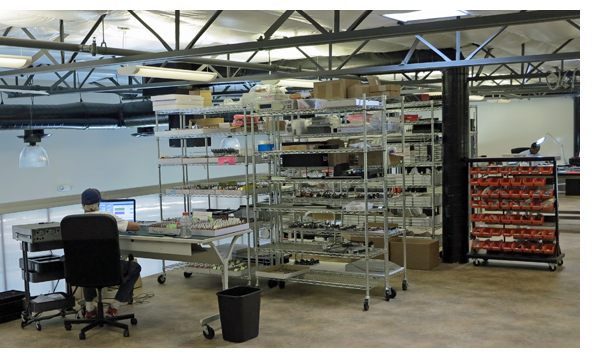
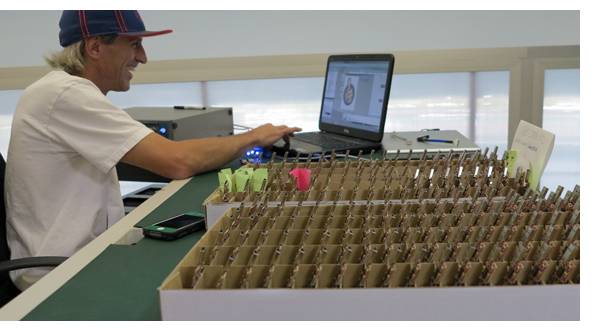
Light Harmonic’s business continues to advance, and with that growth comes the need for a bigger production facility. Managing editor Rob Johnson had a chance to visit their new offices near Sacramento, California.The space may be under construction still, but that doesn’t slow their team down. Here’s an inside look at the process behind production.


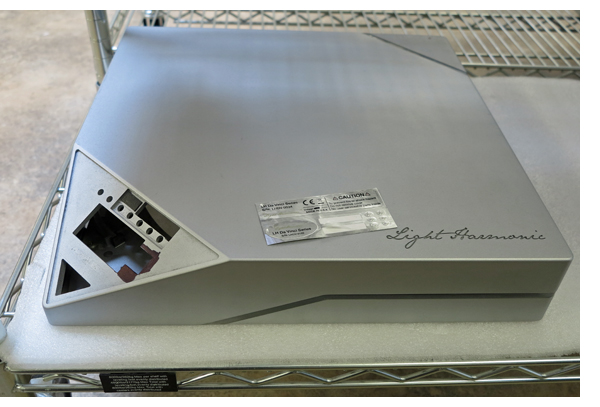
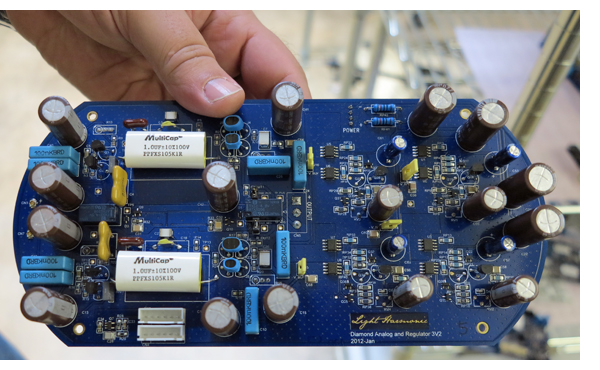
Many are familiar with Light Harmonic’s flagship DaVinci DAC, which we reviewed here. It’s a true labor of love. Here’s a quick look at the upper case of a new DaVinci before assembly.


The photo below showcases one channel of the DaVinci output stage. Despite the diminutive size of the components on the board, each piece is soldered by hand.


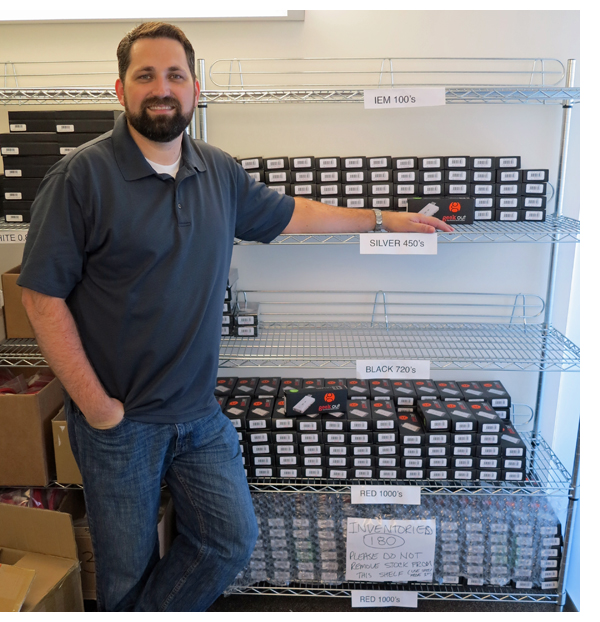
Though very successful Indiegogo and Kickstarter campaigns, LH has nurtured quite a following for their Geek series portable DACs and headphone amps. Here, Gavin Fish the Director of Sales and Marketing, poses with many of the Geek products ready for a new home.


You might notice the IEM 100 shelf looks a little, um, bare. Here, Marty Murphy has his hands full refilling that shelf. As you might guess from the name, the IEM 100 amp and DAC is optimized for in-ear monitors.

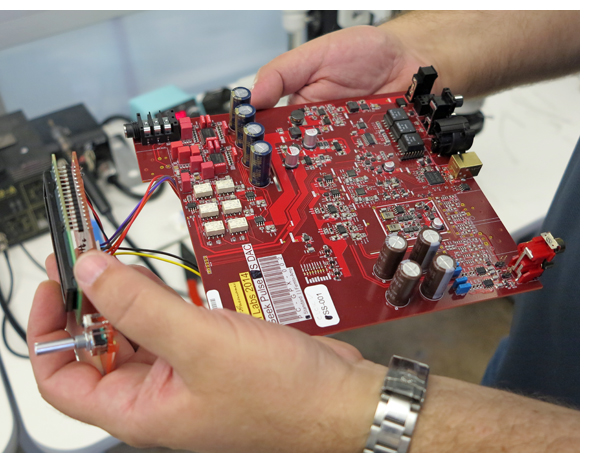
Taking a step up in size, the Geek Pulse S combines a high-definition DAC and headphone amplifier in an enclosure designed for use in a desktop system.  Here, Gavin holds a Geek Pulse S circuit board. As you can see from the fine detail, each is created with the same level of care as the DaVinci DAC boards.


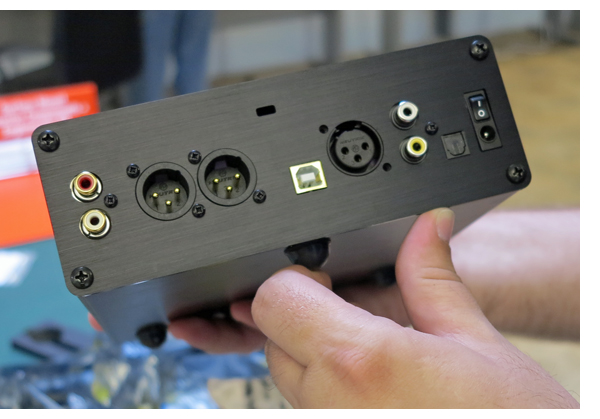
Adding to their product lineup is the Geek Pulse X with a highly user-friendly rear panel. Geek Pulse X is a balanced version of Geek Pulse.

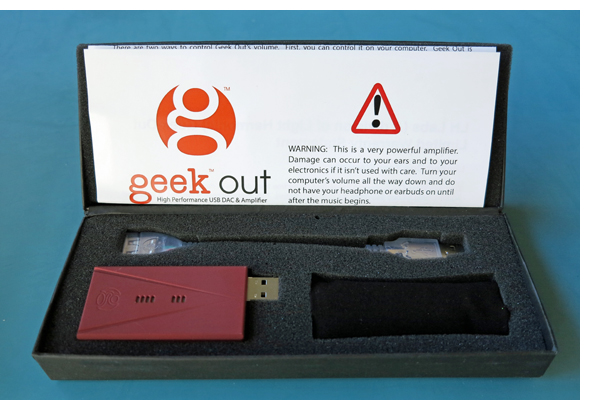
Last, but not least, here’s a finished Geek Out portable headphone amp and DAC ready for shipment. It’s a very tiny package with a lot of capability. Geek Out offers the ability to handle digital files up to 32/384 kHz and DSD 128. An internal amplifier generating a full watt of output is made to power full-sized headphones. A test system including Audeze LCD-XC headphones, sounded full and fantastic.


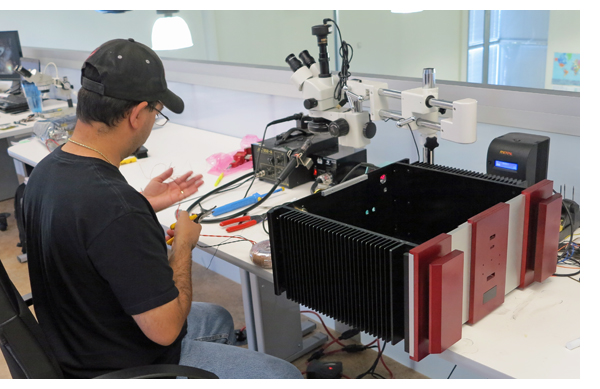
While still in the prototype stage, here’s an in-process look at LH’s upcoming amplifier. Eric Carrasco is fine tuning the unit. For now, the internals are placed in a Krell amp case for testing.

While we heard a preview of the amp at Rocky Mountain Audio Fest 2014, we’re excited to hear the final version when it becomes available!

Balanced Audio Technology VK-3000SE Integrated Amplifier

The VK-3000SE from Delaware’s Balanced Audio Technology (BAT) is a vacuum-tube linestage and a solid-state amplifier rolled into one. The latter offers 150 watts per channel into 8 ohms and twice that into 4 ohms. For the preamp section, BAT utilizes a pair of Russian 6H30 valves, which are concealed inside the unit. Some refer to these military-grade tubes as “super tubes” for their longevity and durability; they’re also alleged to have a whopping 10,000-hour lifespan. In the unlikely event of a bad tube, BAT stands behind them with a one-year warranty. (The VK-3000SE itself comes with five-year warranty.) The unit weighs in at 50 pounds and the chassis measures 19 by 5.75 by 15.5 inches. It’s priced at $7,995, which is pretty reasonable considering the amp’s broad capabilities.

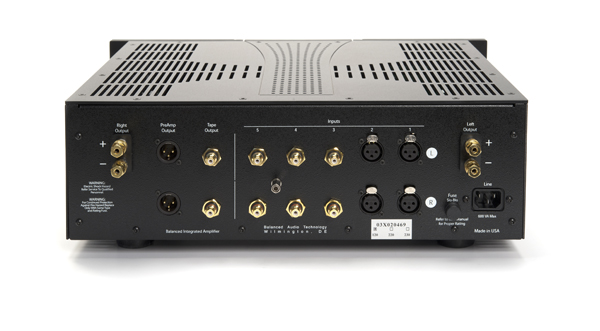
As you might guess by the company’s name, the VK-3000SE’s internal circuit topology accommodates a fully balanced signal. The back panel offers a combination of three single-ended RCA inputs, two balanced inputs and an RCA tape out. Metal speaker binding posts accommodate many connection options. Keep in mind that the posts are quite close together, so large speaker cables with spade connections like mine require some finagling.

In addition to the standard linestage capability of the preamp section, BAT offers a pre-installed MM/MC phonostage with the associated outboard inputs as a $1,000 upgrade option. Users have an option of a 48 or 55 dB gain, the latter being the default. Load-wise, the phono card is factory set at 47,000 ohms, but it can be adapted for other cartridges as needed. Users can make these changes themselves by removing the unit’s cover and following BAT’s instructions. The standard load works quite well with my cartridge, a Dynavector 17D3, so I didn’t make further adjustments.

Clean Design

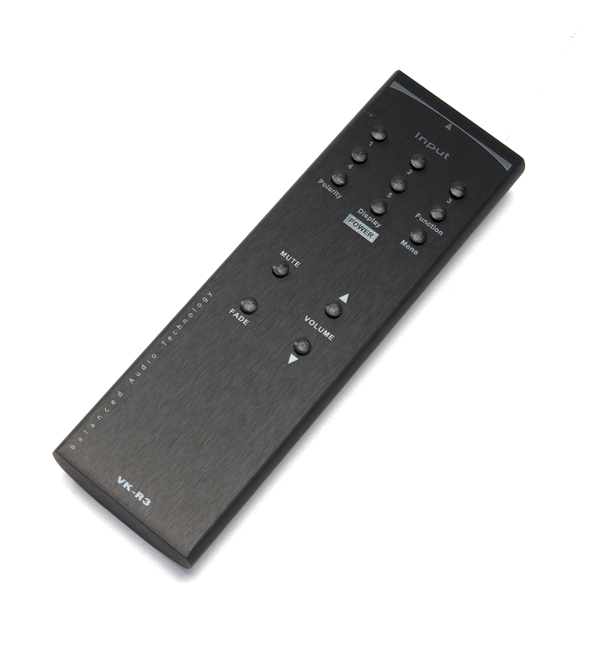
The VK-3000SE offers a clean, elegant external design. Our sample unit sports an anodized black finish, but silver is also an option. The hefty, metal remote control has a similar finish. The chassis’ subtle curves give the amp a sleek, modern appearance. To help keep the unit cool, which is especially important given the hot tubes within, BAT utilizes a top panel with small ventilation slits at the outer edges and holes down the center in an hourglass shape.

Once powered up, the amp’s front-panel vacuum fluorescent display (VFD) shows the input choice and volume level. The font is large, blue, and very visible—it’s easy to read from my listening seat 9 feet away. For those who prefer darkness, the remote’s display button will variably dim or turn off the VFD.

A minimal number of small controls on the front panel disguise the versatility within. The visible buttons include power, mute, input, phase, mono and function, the latter of which allows access to an on-screen menu. And of course, there’s a beefy volume knob that goes from 0 to 140. According to Geoff Poore, BAT’s sales manager, the numbering scale represents a 70 db range, in half db increments. He goes on to mention “There are two other volume “scales” that can be used in the 3000SE: “DBM” and  “DBU”.  The unit comes with a more understandable (for consumers) “CNTS” (counts) scale.  Broadcast and recording facilities are more likely to use “DBM” (-70 to 0) or “DBU” (-50 to +20).  One may preset any of these different scales in the set-up with the “function” button while cycling through.  We are very proud of the sophistication and accuracy of the volume control in the 3000.”

When toggling through the input options, you’ll see that the VFD has them listed as CD, tape, aux and so on, though the owner can modify the labels. Relabeling the third input as “iPod” proves very easy. Once programmed in, the amp stores these labels in its memory and remembers them even if it’s powered down and unplugged.

The function button is similarly flexible; pressing it reveals several user-selectable options for the selected input. Users can adjust balance, phase, mono/stereo and display mode, and select fixed, relative and maximum volume to equalize input sources and to avoid an inadvertent sound blast. To exit the menu, just hold the function button for two seconds. Most of this functionality is also accessible via the remote.
Up and Running

Setup for the single-box unit is very straightforward—just connect sources and speakers and you are ready to rock. Pressing the power button puts the VK-3000SE into a muted tube-warm-up mode; after a minute or so, a quiet click indicates the amp is ready. Pressing the button again puts the unit into a low-power standby mode, with the tubes remaining engaged. Holding down the power button for a couple seconds shuts down the unit completely.

Testing both the single-ended and balanced connections with my DAC, I find that they sound similar but have some subtle differences. The XLR connections do offer a bit quieter background, providing a little more sonic detail and nuance, and the presentation is a little more up-front. If you have the option of balanced connections, they are the way to go.

Across the frequency spectrum, VK-3000SE leans a bit to the warmer side of neutral in my system. Pitch Black’s album Rude Mechanicals provides a helpful test. The bass presentation is more relaxed than punchy and the amp has no trouble making very low frequencies known, but they never overwhelm the mix.

Extremely revealing components have a tendency to make the listener wince when playing some female vocal recordings; pleasantly, the VK-3000SE does not. Throughout Sia’s cover of “I Go to Sleep,” vocal crescendos project little stridency, despite their power. Also, as I notice in the cymbal shimmers on other tracks, the amp has a slight tradeoff of sonic realism for a touch of veil, but a degree of euphony in some circumstances is welcome. Balanced connections prove more revealing, so users should experiment with interconnects to find the sonic balance that works best in their system.

The amp’s ability to portray both a vertical and horizontal soundstage is fantastic, regardless of source material. Music extends beyond the speakers to the extreme left and right and from floor to ceiling, though front-to-back layering is not a strong point. The VK-3000SE does make it easy to pick out individual elements of a song, but it’s not a fully convincing reproduction of a live performance when band members are scattered across the front and back of the stage.

Putting the phonostage through its paces, I soon find that there’s a lot to enjoy. Analog and digital sources have similar sonic signatures through this amp, but the phonostage offers a greater sense of ease and naturalness. Vocals, like those on Daft Punk’s “Instant Crush,” move forward in the soundstage, enhancing the VK-3000SE’s front-to-back presentation. Some of that benefit, of course, is due to the analog source, but the quality of the analog reproduction is strong evidence of the effort and quality that BAT put into the unit’s phono card. It would be a challenge to find a single-box phonostage of this quality for the amp’s $1,500 phono add-on. The VK-3000SE demonstrates the synergistic value of an integrated audio solution.

Final Score

While $8,000 is a substantial investment for any piece of audio gear, it’s important to frame this product in the context of what you get for that price. You could spend a lot more money for individual components that deliver greater sonic nuance, layering, and air around each musical element, as well as a more realistic-sounding reproduction of a live concert. Of course, with added components, an owner also needs to consider the cost of extra interconnects and power cords.

The VK-3000SE is both a great preamp and a great power amp, and with the optional (and fantastic) phonostage, it’s a versatile, compact, and great-sounding piece of gear. If each of its elements were sold as individual components, the combined price would certainly be higher than the cost of the single unit, and it would be tricky to find separates that complement each other this well.

Having plenty of power and multiple input options, the VK-3000SE offers a turnkey solution that will mate well with many sources and speaker types. With a five-year warranty backing it, this is a component you’re likely to enjoy for a long time, even as the other gear in your audio arsenal evolves around it.
Additional Listening

By Jeff Dorgay

Having been such a big fan of BAT gear over the years, I had to hand the main review over to Rob—partly to share the excitement of the brand (with which he’s had no experience) and to deliver a more impartial review. Firing up the VK-3000SE to perform break-in duties is like putting the keys in a Porsche 911, in the sense that everything is where I remember it and, regardless of vintage, the overall ride is similar—just as the dynamic sound of BAT is like taking an old friend for a test drive.

While BAT has made a name for itself based mostly on the reputation of its fine vacuum-tube gear, the company has always made great solid-state power amplifiers, which have not always received their fair share of (well-deserved) praise. I have always loved the combination of a solid-state power amplifier and a valve preamplifier, so the VK-3000SE is right up my alley.

As much fun as modestly powered tube amplifiers are, 35 watts per channel limits your speaker choices too much, in my opinion. But 150 wpc is just right for all but the most inefficient speakers. Everything at my disposal—from the 90-dB-per-watt KEF Blades to the 84-dB-per-watt Harbeth Compact 7s—proves a good match for this amplifier, with nothing running out of steam until I crank the volume to beyond brain-damage levels.

A side-by-side comparison to another favorite, the Simaudio MOON 600i, is enlightening. Both amplifiers are similarly priced (though the MOON does not include an onboard phonostage option), yet the MOON is all solid state. Those preferring a slightly more neutral, even a touch punchier sound and who don’t care about the phono might prefer the MOON. Personally, the VK-3000SE has that combination of solid-state grunt and a touch of tubey warmth in an ever-so-slight way that is not veiled, colored or slow.

The 6H30 is a very dynamic and powerful tube, sounding nothing like, say, a 12AX7. And BAT built its reputation around this tube, and the company implements it like no other. Whether you’re blasting AC/DC, Coltrane or Coldplay, this amplifier offers a lot of inner detail and timbral purity in spades.

As good as the onboard phonostage is, choosing it will ultimately be the limiting factor for the hardcore vinyl enthusiast. But again, it’s damn good for a thousand bucks. If you are primarily digital and just dabbling with LPs, it’s fine; grab your favorite $2,500 table/arm/cartridge combo and call it a day. However, if you’re more of an analog lover or plan on serious analog upgrades in the future, order your VK-3000SE without the phonostage and go for BAT’s awesome VK-P6 instead. (We will have that review shortly). You’ll be glad you spent the extra dough. The VK-P5 was a class leader and the P6 promises even more performance for around $3,500.

High-performance integrated amps continue to be popular for the audio and music lover who wants world-class performance without buying a rack full of components. The VK-3000SE is an excellent choice, should that be your cup of tea. This is certainly one I could retire with happily ever after.

VK-3000SE Integrated Amplifier

MSRP: $7,995 (plus $1,000 for the optional phono section)

Balanced Audio Technology

www.balanced.com

PERIPHERALS

Digital Sources HP desktop computer with Windows 7    JRiver Media Center 19    Light Harmonic DaVinci DAC    Audio Research CD3 Mk2
Analog Source SME 10 turntable with Dynavector 17D3 cartridge
Preamplifer Coffman Labs G1-A
Amplifier Mark Levinson No. 335
Speakers Piega P-10    Sonus faber Olympica III
Cables Jena Labs
Power Running Springs Audio Haley    RSA/Cardas Mongoose and Golden power cords   Shunyata Python Alpha power cord
Accessories ASC Tube Traps    Cathedral Sound room-dampening panels    Mapleshade Samson racks    Coffman Labs footers

Epic trade in program for Peachtree owners…

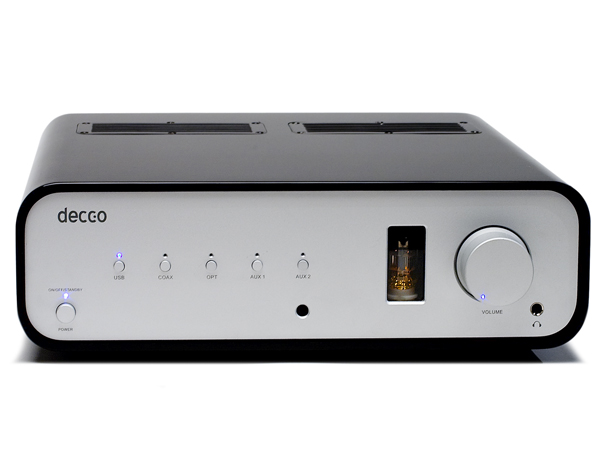
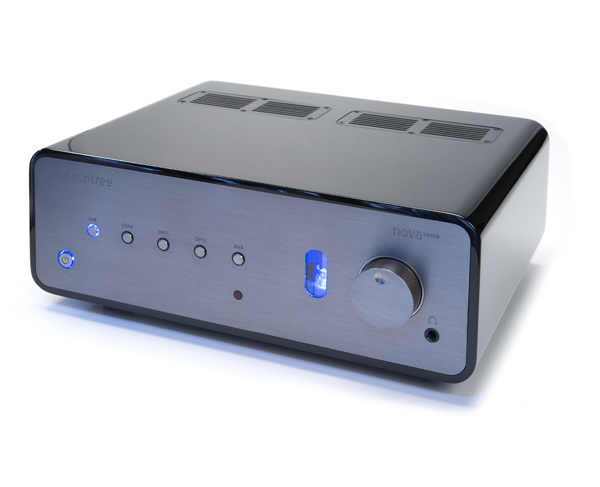
Peachtree Audio is proud to announce that for a limited time current Peachtree integrated amp owners can easily Trade Up from their old Nova or Decco series integrated amp to a new and improved novaSE model. Customers will receive a generous credit for their current Peachtree integrated when they trade it in towards a new nova125SE or nova220SE – without the hassles of selling their old amp.
This past summer Peachtree launched the novaSE series, the latest evolution in the popular line of integrated amplifiers with built-in high-performance USB DACs. The novaSE family ushers in trickle-down preamplifier design from Peachtree’s critically acclaimed $4,500 Grand Integrated X-1. This upgraded circuitry provides exceptional sound quality from digital and analog sources at more affordable prices. The two most powerful novaSE models, the 125 watt-per-channel nova125SE and the 220 watt-per-channel nova220SE are available as part of this promotion.

“We wanted to provide an easy and affordable way for our customers to move up to our latest generation of integrated amplifiers,” Peachtree Audio president Andrew Clark stated. “Over the years, we have refined and improved every aspect of our integrated amplifiers from the DAC through the power amplifier with the most recent improvements realized in the preamplifier section,” continued Clark. “The novaSE family represents a significant audible improvement from everything that came before them, especially our earliest models,” concluded Clark.

The trade up promotion runs through Friday November 14th. Eligible trade-in models include the Decco, Decco2, iDecco, decco65, Nova, iNova and nova125. Some restrictions apply. The promotion is available at participating retailers and through www.peachtreeaudio.com/tradeup

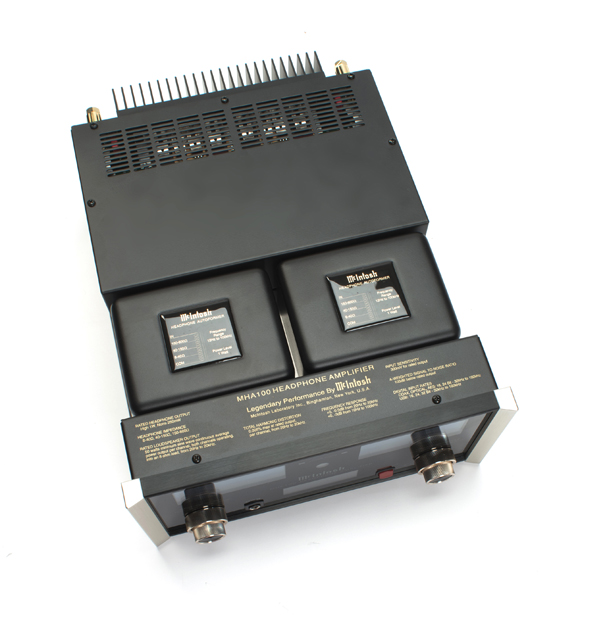
McIntosh MHA100 Integrated Headphone Amplifier

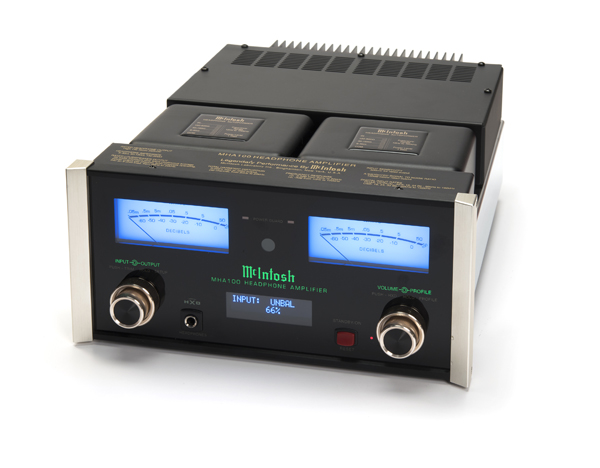
I can’t believe what I’m hearing from my little pair of Energy satellite speakers, which I think I paid $150 for about a decade ago. Dr. Dre’s 2001 should not be thumping like this through these speakers. The cause of this magic trick? McIntosh Lab’s new MHA100, which delivers 50 potent watts into 8 ohms for speakers.
The bass on “Forgot About Dre” is surprisingly deep and crisp through the Energy speakers’ tiny drivers. I didn’t think they were capable of such low-frequency response—but, of course, I can only turn the volume knob on the amp so far, to where the iconic blue decibel meters just barely start swinging, before I have to stop for fear that the Energys will explode.

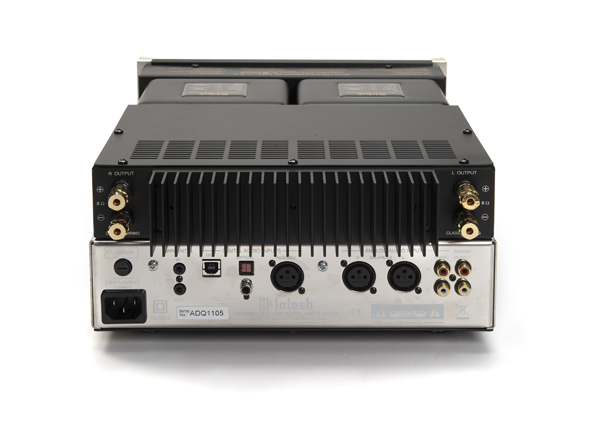
The big, clean power that this little solid-state amp delivers to speakers is truly astounding—especially considering that it was designed as a headphone amplifier. As most TONE readers know, McIntosh doesn’t really do anything small or halfway. As such, the MHA100 is no mere desktop audio accessory. With a set of sturdy speaker terminals on the back panel, along with a wealth of inputs, this is a pretty serious integrated amplifier. Inputs include USB, coax, and AES/EBU on the digital side—the onboard DAC can facilitate digital files up to 24 bit/192 kHz—and balanced XLR and unbalanced RCA for analog (plus an RCA preamp output), so this amp can take pretty much any source you throw at it.

This also isn’t exactly something you’d want on your desktop: It’s about a foot wide, a foot and a half deep, and 6 inches tall, and it weighs more than 26 pounds. The cost for this not-so-little wonder is also in line with what our readers likely expect from McIntosh: $4,500, which is probably more than most people are willing to spend for a headphone amp—but considering that this really is an integrated amp (and a very capable one at that), the price tag isn’t entirely unreasonable.

The MHA100 also does a solid job with the floorstanding ELAC FS249s—which, at $8,000 a pair and with a recommended power input of 30 to 400 watts per channel, are in another world than my little Energy speakers. Through the ELACs, the MHA100 delivers Jason Isbell’s outstanding album Southeastern will all the finesses and soul that it requires, but on hard-hitting rock and pop from the likes of Vampire Weekend, Jack White, and Led Zeppelin, the McIntosh amp has no problem throwing down.

Of course, I would be remiss not to discuss the MHA100’s greatest capability, its headphone section, which is among the best I’ve heard. Perhaps its most noteworthy feature is the ability to select from three headphone impedance ranges—8 to 40 ohms, 40 to 150 ohms, and 150 to 600 ohms—all powered by a version of McIntosh’s famous output Autoformer, adapted for headphone use. These selections cater to a variety of headphones—everything from ear buds to ear cans. (Headphone impedance, input/output, volume, and limited bass adjustments can all be controlled using the two dual-level knobs on the front panel or with the small supplied remote.)

A 24/192 version of Dark Side of the Moon sounds downright eerie through the MHA100 and a pair of 600-ohm Beyerdynamic T1 headphones. The auxiliary sounds at the beginning of “Money” are so real and detailed that they almost induce hallucinations. Similarly, Songs of Leonard Cohen on vinyl through these headphones gives one the creepy impression that Cohen’s lips are right next to your ear and he’s whispering to you. The MHA100 reveals details on that record—such as distant backup vocals and various instrumental nuances—that are not present though most systems. The Mac amp illuminates them in the mix, bringing the listener deeper into the music.

The soundstage this amp presents through headphones is big and lifelike, and its accuracy and clarity across the frequency spectrum are reference-level good. McIntosh has done a phenomenal job adapting its trademark amplifier sound for the headphone user.

I can’t stress enough how wonderful the headphone section is—but at $4,500, the MHA100 isn’t for everybody. Those who take the plunge will have a component that they can base a reasonably sized system around. Unless you’re looking to drive gigantic or overly power-hungry speakers and run multiple analog and digital sources, the MHA100 will give you everything you need with all the power, finesse, and quality for which McIntosh is known. Oh yeah, and it’s a kick-ass headphone amp.  Bailey S. Barnard

McIntosh MHA100 Integrated Headphone Amplifier

MSRP: $4,500

www.mcintoshlabs.com

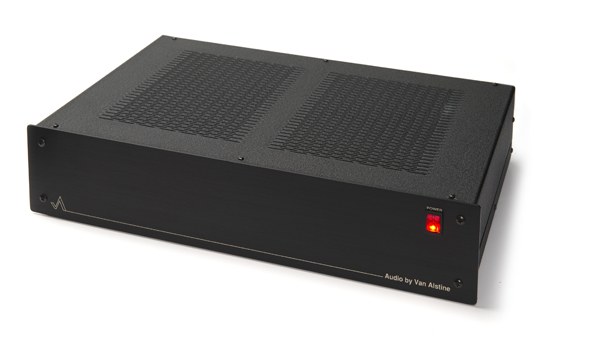
Van Alstine Vision Phono Preamplifier

Though famous for his tube designs, Frank Van Alstine is no slouch with solid state either.  With passive EQ and no coupling capacitors, this American made phonostage offers no frills high performance.  And MC owners take note, AVA can customize the Vision to the loading requirements for your cartridge.  We are currently using this with the legendary Denon 103 and it offers mega performance.
-Jeff Dorgay

Van Alstine Vision Phono Preamplifier

$599

www.avahifi.com

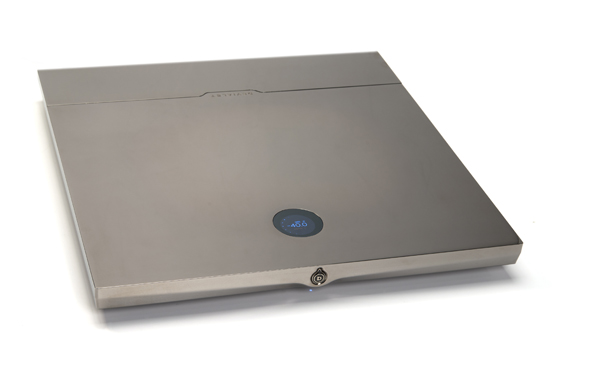
Simaudio MOON Evolution 610LP phonostage

Bouncing between St. Vincent’s current and last album, I can’t help but be in awe of the staying power of the vinyl record.  Thanks to the many manufacturers, like Simaudio, who have not only kept the faith, but continue to innovate and refine their designs, spinning records is better than ever in the year 2014 than it ever was.  Who knew?  Even better much of the technology in flagship designs is making its way down the food chain to more affordable designs like the MOON 610LP here.
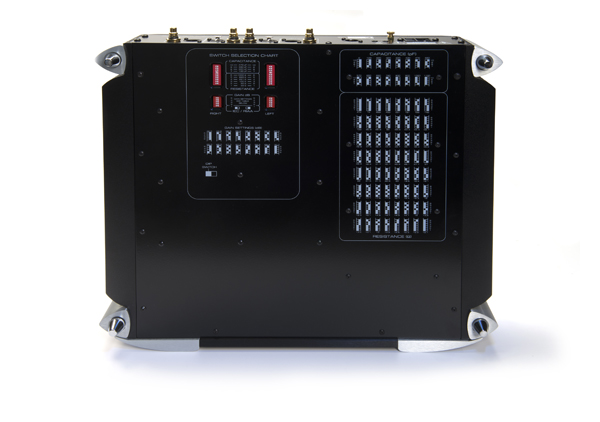
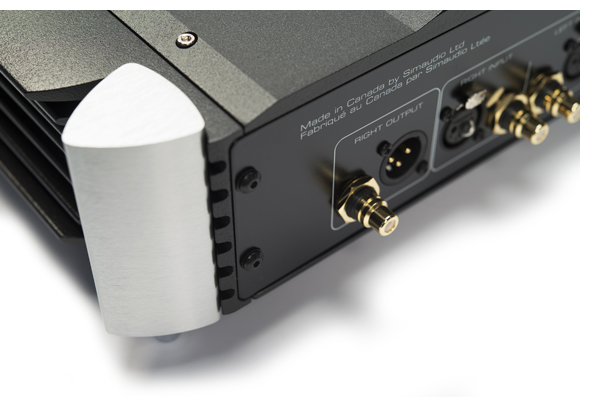
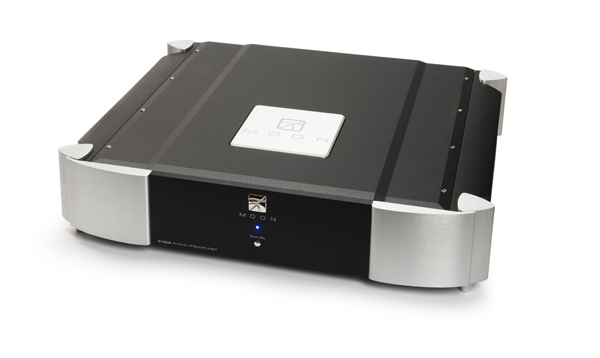
We’ve been using the Simaudio MOON 810LP phonostage as a reference component for some time now, but at $13,000 is out of reach for a certain group of analog enthusiasts.  The $7,500 MOON 610LP, though not inexpensive, opens another door.   Comparing the 810LP and 610LP side by side reveals subtle yet profound differences and while the 810LP ultimately reveals more music than the 610LP; some may actually prefer the presentation of the 610LP.

A unified voice

First and foremost the 610LP has a similar, yet slightly softer voicing than the 810LP.   The more expensive MOON offers up more resolution on leading and trailing transients in a take no prisoners system, but some of your preference may come down to overall system tuning and associated components.  Going back and forth with the Lyra Titan i, I actually preferred the 610LP in my reference system, which is a few clicks to the warm side of neutral.  Those wanting every last molecule of resolution will prefer the 810LP, but the 610LP is no slouch.  Dare I say it, but the 610LP almost sounds a touch more “tube-like” in the same vein of my favorite solid-state preamps from Pass, Burmester, Robert Koda and Luxman.  Never slow or veiled, just a bit lusher than the 810LP, which struck us as one of the most neutral phonstages we’ve had the pleasure to audition.

Tracking through the recent Blue Note remasters and the recent Miles Davis discs from Mobile Fidelity are a perfect example of the 610LP at its finest. This phonostage creates a soundfield that is both extremely deep and wide, going well beyond the boundaries of my Dynaudio Eminence Platinum speakers, but the magic doesn’t stop here.  Where the 610LP mirrors the performance of it’s more expensive sibling is in it’s ability to render acoustic instruments naturally.

Switching from the Titan i to the more tonally neutral Atlas, it’s tough to tell these two phonostages apart through the critical midrange, especially with modest dynamic swings.  The cymbals at the beginning of Bachman Turner Overdrive’s “Blue Collar” float in the air in front of my listening chair, feeling right spatially as well as feeling as if the drum kit is of a realistic size.  The 610LP does not exaggerate perspective, which can be fun for a short period of time wears on you after long listening sessions.

Quiet, quiet, quiet

Though the 610LP has a claimed signal to noise ratio of 93db, while the spec on the 810LP  is 95db, you’d be tough to tell them apart.  This phonostage is dead quiet.  Even the most delicate pieces of classical music, the noise floor is always in the recording, with tape hiss from the master coming through, not the electronics.  Personally, this is one of the true benefits of a great solid-state phonostage – the absence of noise.  While a number of tubed units can add a touch of palpability (wanted or unwanted) that the solid state units can’t match, they always seem to impart a bit of sporadic tube noise.

Depending on your system, this can go from barely audible to somewhat annoying.  Even more annoying is trying to rustle up a matching set of tubes for your phonostage that you love, only to find the tonality changed when it’s time to re-tube.  Another awesome reason to go solid-state; turn the 610LP on, leave it on and forget about it forever, unless you change cartridges and need to adjust gain and loading.  Personally, as much fun as tube rolling is, I enjoy the consistency of transistors – your mileage may vary.

If you haven’t sampled a top solid-state amplification component in a while, you will be surprised at how lifelike and natural the 610LP renders music without needing vacuum tubes.  The gap has been closing for years and Simaudio is one of the rare few that produces solid-state electronics that have no “sound” of their own.  If you desire the tonal flavor that comes with a vintage vacuum tube sound, that’s another story.

Mega adjustable

With 64 steps for resistive loading from 12.1 ohms to 47k, 16 steps for capacitive loading from 0pf to 470pf and 16 steps of gain adjustment from 40db to 70db, I can’t imagine a cartridge that the 610LP can’t handle.  I certainly had no issues with the cartridges at my disposal and appreciated the wide range of adjustability down at the lower end of the scale – critical with some of the Koetsus and especially the Rega Apheta, which mates incredibly well with the 610LP.  Ultra OCD analog lovers will appreciate the fine adjustments available, and again, the more resolving your system, the easier it will be to hear those fine adjustments.

As with the 810LP, all of the adjustments are via DIP switches on the underside of the unit, so this is not a phonostage for casual adjustment.  After living with both of these units for some time, I suggest putting your 610LP on a shelf with plenty of height, so you can prop it up and not have to disconnect it or remove it from the rack when making loading settings.

It’s worth mentioning that the 610LP makes an incredible moving magnet phonostage.  Though I’m guessing that most analog enthusiasts at this level will have probably graduated beyond the top MM carts (all in the $800 – $1,200 range), if you start your assault on top notch analog, you can start with the 610LP as an anchor and go up the scale on cartridges as your budget allows.  The 47k setting is a wonderful match for the Grado moving iron cartridges, which have a low output of .6mv, yet still require 47k loading.   For those in the audience with the Grado Statement and Statement 1, the 610LP is a perfect match for these cartridges.

The 610LP also offers balanced inputs as well as outputs. If you have a balanced tonearm cable for your turntable, take advantage of the fully balanced, differential circuit design of the 610LP.  Using identical Cardas clear tonearm cables, my impromptu listening panel always picked the balanced option as more open and dynamic.  We’re not talking a major delta here, but noticeable enough that even untrained listeners could pick it out, and again, the more resolving your system, the bigger difference it will make, especially if you have a fully balanced system.

Rounding out the package

For those not familiar with Simaudio, all engineering, design and assembly is done at their factory in Montreal, and like Boulder, they do all their chassis metalwork in house as well. The MOON 610LP is a member of their Evolution series, robustly built-both mechanically and electronically, as you would expect from a flagship component.

Lifting the lid reveals a massive power supply that Simaudio claims has more reserve power, is faster and quieter than an equivalent battery supply.  Going topless also reveals first-rate components throughout, and having been to the Sim factory (see issue 32) the care taken in machining chassis parts and physical assembly is some of the best our industry has to offer.  This is why Simaudio offers a ten year warranty on their products – very few of them ever go back home to the mother ship.

More power

You’ll notice a socket on the rear panel of the 610LP marked “power supply,” allowing you the option to take advantage of Simaudio’s 820S external power supply.  We have a review of the 820S in the works and while this massive power supply does extend the range of the 610LP in a mega system, most of you either don’t need it or would be better off stepping up to the 810.

However, because the ($8,000) 820S has outputs marked “analog power” and “digital power,” Those having either the 740P preamplifier, the 650D or 750D DAC/Transport would be well served to split the duty of the 820S between phonostage and one of these other components.

Simaudio’s MOON Evolution 610LP phonostage is a fantastic addition to an analog system, offering an incredibly high price to performance ratio for the analog enthusiast that wants a cost no object phonostage in a single turntable system without refinancing their home.

For all but the most obsessed, this will be the last phonostage you need to buy.  Very enthusiastically recommended.  -Jeff Dorgay

Simaudio MOON Evolution 610LP phonostage

MSRP: $7,500

www.simaudio.com

PERIPHERALS

Preamplifier Robert Koda K-10    ARC REF5SE    Burmester 011
Turntable AVID Acutus Reference SP/Tri-Planar/Lyra Atlas    Rega RP10/Apheta
Cartridges Lyra Titan i    Lyra Kleos    Ortofon Cadenza Bronze    Ortofon SPU    Ortofon 2M Black    Grado Statement 1    Dynavector XV-1S
Power Amplifier Pass Xs300 monoblocks
Cable Cardas Clear
Power IsoTek Super Titan

PrimaLuna DiaLogue Premium Preamplifier

PrimaLuna and I go way back; back before TONEAudio was even a twinkle in my eye back.  The first audio review I wrote for The Absolute Sound happened to be the original EL-34 based ProLogue 1, and was way more exciting than the boring NAD integrated amplifier that Robert Harley was going to have me cover for my first assignment.  I bought that review sample not only because it sounded great, but it was so much fun; reminding me of all the great EL-34 amps I’d owned over the years.  11 years later it’s still in my family, going strong, with merely one set of replacement tubes – a testament to PrimaLuna quality.
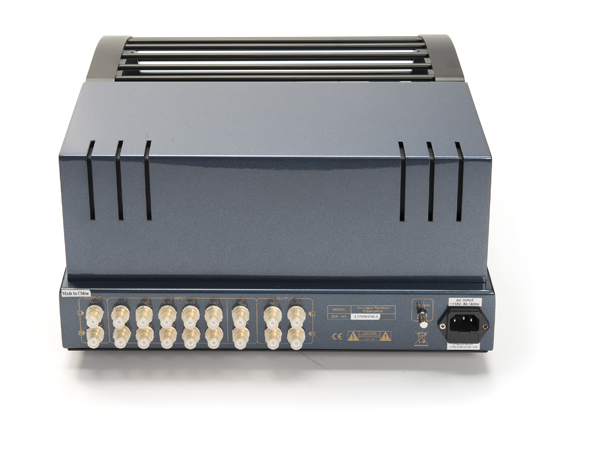
It’s been fun watching TONE and PrimaLuna grow over the years, diversifying our products, but keeping the same ethos of offering high performance at a reasonable price, never giving quality a back seat.  PrimaLuna now has a range of four vacuum tube preamplifiers; with the DiaLogue being the top of the range at $3,199.

Where a number of past PrimaLuna preamplifiers relied on the 12AX7 tube, the DiaLogue Premium takes advantage of the 12AU7, six of them – and this has two big benefits.  For those not familiar with the brand, PrimaLuna gear has always been super easy on tubes, so investing in a good set of premium NOS (New Old Stock) tubes has always been solid thinking.  Fortunately, where the best 12AX7s are now pushing $200 – $350 each, equally good 12AU7s will only set you back about $75 each.  And PrimaLuna’s US importer Kevin Deal can hook you up.

You don’t need to invest in NOS tubes if you don’t feel inclined.  The DiaLogue Premium sounds great out of the box.  Tube rolling is only for those who are part curious, part OCD, and can yield different results for those wanting to chase the rabbit.  Most of you will just unbox your DiaLogue Premium and enjoy.  There’s nothing wrong with that.

The biggest advantage of the 12AU7 though, is it’s lower gain.  With so many of todays sources having a four volt output, the 22 -28db of gain that most contemporary line stages provide is just not needed.  You end up with the volume control always being used in the 7:00 to 9:00 position and not only having precious little range of control, but noise can be an issue because the preamp is not running in it’s sweet (and lowest noise) spot.

Less gain, less pain

The DiaLogue Premium, having 10db of gain, gives you plenty of volume control range and is dead quiet throughout.  Using it with my Zu speakers (101db sensitivity) and a pair of 845 SET amplifiers, I had the silky smooth silent treatment, even with my ear right up against the ribbon tweeter.  When substituting the DiaLogue Premium, for the Nagra Jazz preamplifier in an all Nagra system, thanks to the low gain, the PrimaLuna was quieter than the mighty Nagra, costing three times more.

A dual mono design with five inputs and two variable outputs, the DiaLogue Premium should be able to handle anything you can throw at it, except balanced sources. (You can use an adapter if need be)  As a tape enthusiast, I really appreciated the additional, fixed level, buffered tape output to make mix tapes on my trusty Revox.  A home theater pass through is also incorporated, for those needing to make the DiaLogue part of a home theater system.

Running the DiaLogue Premium in our main reference system, displacing the $13,000 ARC REF 5SE preamplifier and the $32,000 Robert Koda K-10 was highly insightful.  While the big bucks preamplifiers revealed more music and more dynamic slam at the extremes, the mighty PrimaLuna was never embarrassed.  Kind of like comparing a Porsche Cayman S to a GT3.

Trying the DiaLogue Premium with about ten different power amplifiers from Simaudio to Burmester again underscored it’s versatility.  Only the Burmester 911 Mk. 3 really needed the volume control cranked all the way to get full output.  (no doubt because we were using balanced adaptors here, all of the other balanced power amplifiers tried had separate, single ended RCA inputs. That lower gain was a real blessing when using vintage power amplifiers like the Conrad Johnson MV-50, which only need about .6 volts to be driven to full output.  FYI, combining this preamplifier with my MV-50 that has had all of the caps upgraded to CJD Teflon was absolutely heavenly, mated with my Quad 57s.

I’ve always found PrimaLuna gear to be a wonderful combination of old and new school design and sonics, yet as you go up the line, the top components in the PrimaLuna line sound more like current vacuum tube electronics, i.e. more linear and neutral, where the entry level pieces sound slightly more vintage.  Much of this is due to the beefy power transformers used, combined with premium Takman resistors, SCR foil capacitors and Swiss sourced, silver plated oxygen free copper wiring throughout.

It’s also worth mentioning that the DiaLogue Premium has no problem driving long runs of interconnect cables.  Comparing the sound between a 20 foot run of AudioQuest (find cable here) and a one meter pair revealed no difference, and no rolling off of the high frequencies, so those that like having their power amplifier down on the floor close to the speakers, with the rest of their components further away on a rack will be pleased.  I had similar luck with cable from Cardas and ALO Audio.

Love that tube

Personally, there is always something special to me about the sound of a preamplifier built around the 12AX7 or 12AU7 tube, they just always seem to paint the sonic picture with a little bit more air and gradation than the 6DJ8/6922 designs do, and feature more sonic gradation between heavy and soft tones than a preamplifier utilitizing the 6H30 tube.  Neither is better or worse, just different.  A Lotus Elise gets around the curves with a little less effort than a Corvette or a Viper.

I noticed this the most when listening to acoustic music of any kind.  Spinning the XRCD of Lee Morgan’s Tom Cat, it was easy to discern the differences in rendition between my vintage ARC SP-11 (6922 design), current REF 5SE (6H30 design) and the Koda K-10. (best solid state I’ve ever encountered)  Morgan’s trumpet has more “blat” and slightly more contrast with the REF 5SE, but the cymbals are dreamier, more palpable, and smoother through the DiaLogue Premium.

Going back to some of George Winston’s solo piano records on the Windham Hill label, the pianos decay is equally enticing through the DiaLogue Premium.  This is a totally musical preamplifier, always getting out of the way of the presentation, so that you don’t focus on the gear.  Not all preamplifiers can do this regardless of price, so this is a home run for the PrimaLuna – and amazing for $3,199.

Each preamplifier brought its own palette to the reproduction, yet the DiaLogue offers an excellent balance, and cohesion to the musical presentation, almost like listening to a full range ESL, rather than a speaker made of woofer, tweeter and midrange.  The DiaLogue provides fatigue free listening at its finest, and made for many 12-hour listening sessions without wanting to ever turn the music down.

While the DiaLogue Premium turns in good performance at the frequency extremes, offering solid, defined and tuneful bass response, combined with extended highs that are never screechy, it’s this coherence and ability to nail instrumental tone and texture that makes it so compelling.

The DiaLogue Premium does what tubes do best, providing a dreamy, three dimensional sense of ambiance, giving the listener a healthy dose of “you are there” realism. Eschewing female vocals, I spent a lot of time listening to Johnny Cash, Elvis and Tom Waits through the DiaLogue Premium and I always came back impressed.  The soundstage painted is huge, in all three dimensions, making my Dynaudio Eminence Platinum speakers disappear in the room, no small feat.

Rounding the bases

The DiaLogue Premium preamplifier offers incredible sound and value for $3,199. If I were building a system in the $20 – $50k range, I can’t imagine needing to spend more than this for a linestage, provided you didn’t absolutely have to have balanced outputs.  The ability to tube roll with ease and modest cost is another big bonus with this preamplifier, allowing the ability to either fine tune the sound, or just play with a different feel.

Best of all in over a decade now, PrimaLuna has not compromised a molecule on build quality.  They are still making gear that feels bank vault solid, encased in a dark blue, high gloss metallic finish that would do an Aston Martin proud. (and a set of cotton gloves to keep fingerprints off of said finish)  Even the shipping cartons are the best in the business, with three layers of heavy cardboard to make sure your purchase arrives without blemish.

Combining all of these small touches and world class sonics, makes for gear that owners don’t want to part with.  Perusing Audiogon or EBay rarely reveals used PrimaLuna gear, and when it does go for sale, it fetches top dollar.  Another home run from PrimaLuna!

PrimaLuna DiaLogue Premium Preamplifier

MSRP:  $3,199

www.primaluna-usa.com

www.upscaleaudio.com

PERIPHERALS

Digital Source dCS Vivaldi Stack
Analog Source AVID Acutus Reference SP/TriPlanar/Lyra Atlas
Phonostage ARC REF Phono 2SE
Power Amplifiers PrimaLuna DiaLogue Premium Power Amplifiers    Burmester 911 mk. 3   Conrad Johnson MV-50C1    Nagra 300B    Pass Xs300    Pass Aleph 5
Cable Cardas Clear
Speakers Dynaudio Eminence Platinum,    Acoustat 2+2, KEF Blade

Devialet 120

Everything we loved about the Devialet 110 is here in spades with the new 120, but the addition of a crucial feature makes the 120 more than a simple upgrade.  Devialet’s new SAM (Speaker Active Matching) technology, in a nutshell, provides a more synergistic coupling between amplifier and loudspeaker, thanks to their engineers harnessing more power of the on board DSPs.  Visually, the 120 looks identical to the 110, with the same compliment of inputs and outputs.

SAM is an optimized program for your individual speaker (Devialet is constantly adding new SAM profiles to their website) that claims full phase alignment over the entire frequency spectrum and extended low frequency response down to 25Hz.  While we have no way of measuring this, the results with the Penaudio Cenya speakers, the KEF LS-50s and the KEF Blades was nothing short of stunning.  We are currently working on a full review of the Devialet Ensemble system, utilizing a pair of Devialet designed Ahtom GT1 speakers.

This is not a subtle upgrade.  While the KEF Blades are no slouch in the bass department, it was easy to hear more extreme bass extension on bass heavy tracks from Pink Floyd and Daft Punk.  Not only was there more detail in the low bass as you would get with a top notch subwoofer, there was more punch, more weight.  The heartbeat in the classic Floyd track “Speak to Me: Breathe” now feels heavier, more ominous than without SAM.  For the Thomas’s doubting SAM, the Devialet remote allows you to dial up how much SAM processing you’d like in the system, making it easier to see the results first hand.

In my smaller listening room, this proved very useful with the LS-50 and the Cenyas, as there was just a bit too much bass with SAM set at 100.  Both work best with SAM set in the 60-70 range.  With SAM engaged I was able to shut the subwoofer off with both of these speakers, it was no longer needed.

The new functionality that SAM brings to the picture, along with the additional 10 watts per channel that the 120 offers is only a firmware upgrade away for existing Devialet 110 owners. Fantastic sound and drop dead gorgeous casework aside, this is the best thing about owning a Devialet product is that they are future proof.  It was awesome to view the 120 at the Munich hifi show and be told, “You only need to download the new firmware and you have a 120.”  That’s music to my ears.

Devialet 120

$6,500

www.devialet.com

Peachtree nova220SE Integrated Amplifier

The idea of an integrated amplifier has always appealed to me. Combining the amplifier and preamplifier sections in a properly isolated design makes economic sense—just sit back and enjoy the music without the bleed-through of a tuner.
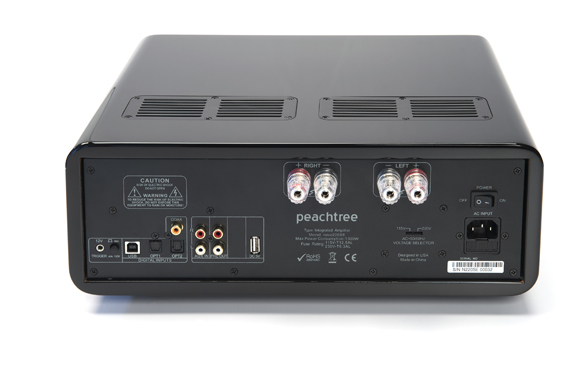
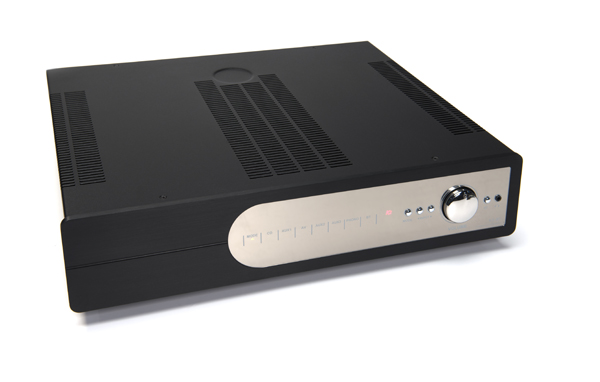
Last year, I had the pleasure of reviewing Peachtree’s nova125 integrated and, while I enjoyed both its form and function, I wondered what impact nearly doubling its power would have on the notoriously power-hungry Magnepan 1.6 speakers. Well, I now know—and it’s been worth the wait. The nova220SE possesses tremendous grip, never letting the Magnepans beat it into submission.

Delving into orchestral music with Beethoven’s 9th by the North German Radio Symphony conducted by Günter Wand, I experience the symphony’s beautiful, complex inner movements and quick pace changes, which prove a great test for the nova. Where lesser-quality amplifiers struggle to keep instrument separation, the nova performs exceedingly well. Even under the intensity of the Magnepan’s 2-ohm load drops and volume levels crossing 100 dB, the amp stays in control. It revels in being driven hard; this isn’t an integrated for those who enjoy listening to music at whisper levels.

Nuts and Bolts

The nova continues Peachtree’s distinctive and curvaceous design. The various stained-wood cases have been replaced by black lacquer, and the front panel is brushed aluminum, with a similar gray color to that of Kyocera equipment from the 1980s.

The nova’s front panel is clean, though I do wish the selector buttons were identified with a slightly larger font, as the contrast on the panel is minimal. The power button is located in the lower left, with the five source buttons—USB, coax, opt 1, opt 2, and analog—encircled by blue LEDs. Following the Peachtree tradition, a blue LED-lit oval window displays the nova’s Russian-made 6N1P tube. A large, smoothly rotating volume knob completes the front panel. The back panel is nearly as clean: wired remote and source inputs, jacks for pre-out and RCA, right and left speaker binding posts, power cord receptacle, and master power switch. The amp is 14.8 inches wide, 5.2 inches tall, and 11.5 inches deep, and it weighs just over 19 pounds.

The matching anodized-aluminum front remote is also straightforward, with two groupings of buttons; the upper for controlling volume and tube buffer and selecting the USB input, and the lower for selecting the other four inputs.

As I go through my various test tracks, the toms on the drum kit really stand out. The nova makes the various hits pop with intensity. Whether reproducing the attacks of the Who’s wild man Keith Moon or the magic of Buddy Rich, the exact placement of the drumsticks on the toms is distinct and easily discernable. Chalk that up to the class-A preamp section and the 220/350 watts per channel (into 8 and 4 ohms, respectively) of the class-D power section. The clarity between the left and right hits on Dan Fogelberg’s “Higher Ground” has me replaying the track several times over.

Until recently, praising class-D power amplifiers came with a warning that proper speaker matching is crucial. Just like Peachtree’s nova125, the nova220SE needs no such disclaimer. With speakers from Harbeth, Totem, ACI, Golden Ear, and Magnepan, this integrated amplifier shows no weaknesses—though the combination with the Golden Ear Triton Sevens is a particularly good match, both sonically and financially. Just one listen to “Still… You Turn Me On” by Emerson, Lake and Palmer convinces me to keep the amp-speaker combo together for a week.

A Lot to Love

To the team at Peachtree, the word integrated means including a built-in DAC that utilizes the asynchronous ESS Sabre Hyperstream 9022 chip, USB and coax inputs that can handle resolutions ranging from 16 bits/44 kHz all the way to 24/192, and two optical inputs (which are limited to 24/92). Using my MacBook running iTunes/Pure Music and a Wadia i170 iPod dock, I’m able to test all the configurations. The DAC section is a fine performer—definitely not a gimmick. I find it bettering the Audioengine D2 DAC by pulling out greater inner detail, which is especially noticeable in the guitar and piano of William Ackerman’s “Climbing in Geometry.” On the same song through my reference Simaudio 300D DAC, the edges of the highest frequencies come out a hair shriller than through the nova, and the acoustic guitar is a bit drier—but overall the nova puts forth an impressive effort.

Since my wife works from home, I spend a great deal of time using the nova’s headphone output, which offers 1,170 mW into 32 ohms and really brings a pair of Sennheiser HD800s to life. Bonnie Raitt’s mellow masterpiece “Nick of Time” holds the same acoustic properties as when running through speakers, signaling that the headphone section wasn’t an afterthought but a well-thought-out part of the nova220SE. For those readers who wonder if the headphone output gets the tube buffer treatment, the answer is yes and it offers the same tubey goodness as the amplifier does.

When listening to the nova through speakers, I keep the tube buffer engaged for the most part, as I’m a fan of the harmonic pleasure that vacuum tubes provide. But at times it’s hard to tell when the 6N1P tube is in the auditory loop, which I attribute to the superb class-A preamplifier section. Consider the tube buffer as a tone control for the 21st century.

When nothing but heavy metal will suffice, the nova, like a Detroit muscle car, is ready to go balls to the walls at anytime. “I Can’t Quit You Baby” from Led Zeppelin’s BBC Sessions alternates between stoplight blues and accelerating guitar riffs. The sheer grunt to put the listener back in his or her seat is the nova220SE’s specialty. Get comfortable and enjoy the sonic ride.

Obvious differences between the $1,999 nova220SE and my reference $8,000 Simaudio Moon i-7 integrated are subtle but prevalent. The little things are missing from the nova’s resolution. For example, the xylophone notes at the beginning of Steely Dan’s classic “Aja” don’t take on the three-dimensionality that I’m used to hearing. Steve Martin’s exceptional banjo picking through the nova occasionally sounds a bit flat when measured against the i-7. But beyond that, the nova is a very worthy competitor.

For the digital junkie, the nova’s myriad inputs enable CD playback, mass storage, and streaming from multiple sources without swapping wires—just push a button and jump from a hard drive to AirPlay or Sonos. Vinyl lovers only need to plug their favorite phono preamp into the nova’s auxiliary input to enjoy their favorite records. For those with budgetary concerns, the low energy usage of the nova’s class-D power section and its versatile preamp section, along with Peachtree’s two-year warranty, make it a wallet-friendly investment.

Final Tally

As smitten as I was with the nova125 last year, I’m totally impressed with the nova220SE. With nearly twice the power and an improved preamp design trickled down from Peachtree’s top-of-the-line X-1 integrated, it makes terrific music with every speaker combo I have on hand. Right now, if I were forced to change integrated amplifiers, the nova220SE would be my choice. The sheer value of its capabilities as an integrated amp, DAC, and headphone amplifier makes the nova220SE a no-brainer. The only thing keeping it from being perfect is its lack of a built-in phono preamp. Perhaps Peachtree will incorporate one into the next iteration.

nova220SE Integrated Amplifier

MSRP: $1,999

www.peachtreeaudio.com

PERIPHERALS

Amplifiers SimAudio Moon i7 integrated amplifier    Vista Audio i35 integrated tube amplifier   Virtue Audio Sensation M451 Tripath/hybrid integrated amplifier
Phonostage Simaudio Moon LP5.3
Sources Rega RP1 turntable with Ortofon Super OM40 cartridge    MacBook iTunes/PureMusic    Wadia i170 w/iPod 160 Classic
Digital Processor SimAudio Moon 300D
Speakers ACI Emerald XL    Harbeth Compact 7ES3    Golden Ear Triton Seven   Magnepan 1.6 with Skiing Ninja crossovers Totem Acoustic Rainmakers
Cables Shunyata Venom 3 power cord    AudioArt IC-3 interconnects    AudioArt SC-5 speaker cables

Roksan Kandy K2 BT Integrated Amplifier

British hi-fi buffs know Roksan Audio as a company that offers extraordinary value and sonics that challenge far pricier competitors. The company, located just northwest of London, takes a complete-system approach, with analog and digital sources, amplification, speakers, cables, and power supplies among its product lineup—and it is currently making a push into the North American market.
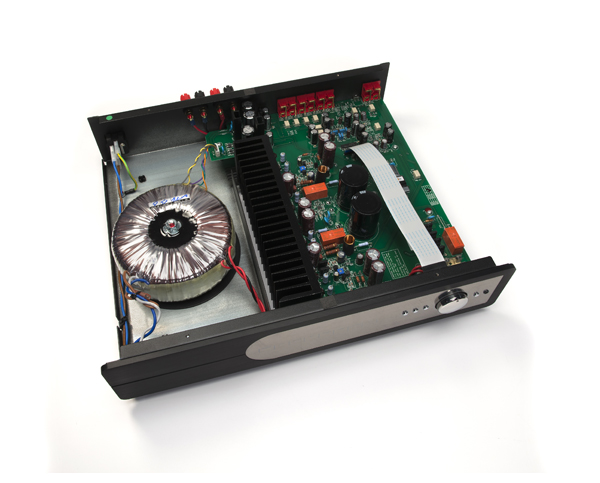
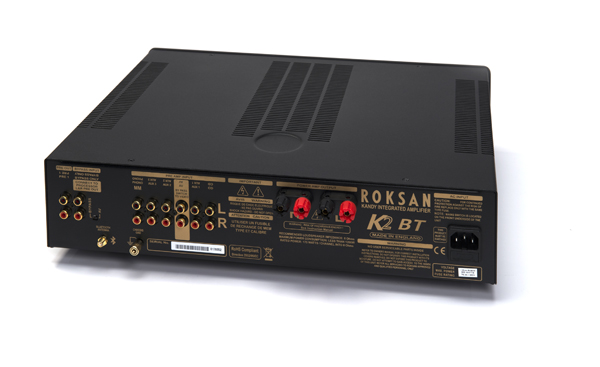
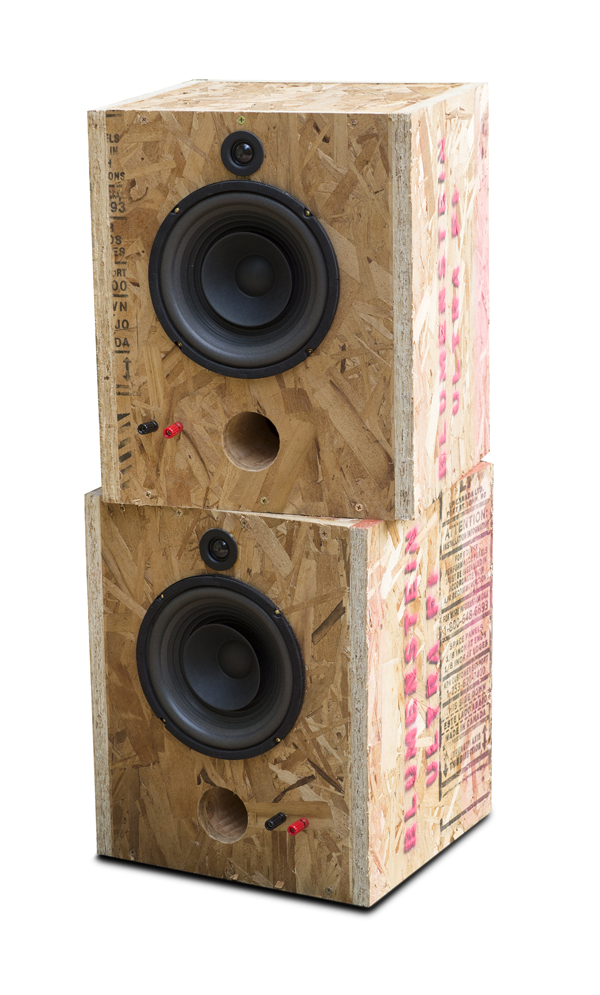
Roksan has several lines that cater to different needs: The Oxygene line strips away everything to the basics, with modern design and functionality; the Kandy line offers higher performance; and the Caspian line is the top of the hill. All Roksan products have a simple but appealing aesthetic and are known for high reliability.

The subject of this review—and the first Roksan component that has been in my system—is the Kandy K2 BT integrated amplifier, which retails for $1,900. The K2 BT is one of the more feature-rich integrated amplifiers that we have reviewed, equipped with a phonostage, five line-level inputs, a tape loop, remote control, and Bluetooth connectivity—the latter of which is what the BT designation represents. (The standard, non-Bluetooth K2 retails for $1,700.) The unit’s power output is 120 watts per channel into 8 ohms.

Roksan says it uses the highest-grade parts available and that the K2’s output stage is based on that employed in the Caspian series. The company pays special attention to circuit layout and especially power supply, with the sonics coming first. The result is a product that makes for a sound investment, which has helped build Roksan’s reputation since its founding in 1985.

The Basics

The casework on the K2 BT, while not extravagant, is solid, nicely put together, and commensurate with the price point. In terms of appearance, the unit is available with either a black case and silver faceplate or the reverse.

Installing the K2 is straightforward, with connections made and sound emanating from speakers within minutes of unpacking. The amp easily drives a pair of Gallo A’Diva Se satellite speakers with a Gallo TR-3D subwoofer, and it makes light work of the Harbeth Compact 7ES-3s sans sub. (See end of article for additional full list of peripherals.)

The review sample has decent mileage on it, so only a few days are needed to get it up to optimal performance—and it does not take long for the K2’s personality to shine. It flows music to the speakers in a velvety smooth, seductive, and effortless manner, even with the relatively inefficient Harbeths. The amplifier never breaks a sweat, delivering gorgeous, dare I say, tube-like tone and imaging that is wide, deep, and always involving.

Down to Business

Nick Cave’s 2013 recording Push the Sky Away is transportative through the K2. The open, spacious mix and Cave’s superbly recorded voice are perfect for the amp to show off its way with nuance, instrumental timbres, and timing. Cave always imparts some sort of drama and tension in his songs, and on this collection he does so with more subtlety than usual. Here, the K2 lets the tension build and ebb so as to spotlight the performance, with all things “hi-fi” taking a back seat. This is truly a music lover’s amplifier.

On a lighter note, streaming a variety of recordings by lounge-pop revivalists Pink Martini is great fun, with the K2 keeping pace with the free spirit of the band’s whimsical, intoxicating sound. Such albums as Sympathique, Hang On Little Tomato, Splendor in the Grass, and Get Happy are a gas—and the Kandy is up to the task. Whether cycling through jazzy standards, French lullabies, tangos, Chinese folk songs, or Turkish pop, this amp keeps the party going, never missing a beat.

With higher-resolution digital files, the K2 pays big dividends. The 96-kHz download of Chicago’s album II is excellent, and the Kandy brings back the summer of 1972, showcasing the quality of the legendary band’s interplay and songwriting. It makes tracks like “Poem for the People” and “In the Country” sound vibrant and fresh.

The K2 not only unravels complex music but also lays out simple pleasures, like Chuck Berry’s monumental 1950s Chess recordings, with ease. Trying to resist tracks like “Little Queenie” or “Back In The U.S.A” proves futile, as the Roksan takes these mono recordings and renders them with natural authority; and the pacing is sublime. I am continually reminded that this amplifier effortlessly gets out of the way, always drawing attention to the music and not to itself.

The K2 clearly has a wonderful way with digital sources, regardless of program material or sampling rate. I put it through its paces further with a little analog via some pre-recorded, commercially released 7.5-ips reel tapes played back on my vintage Sony deck. The results are stunning, with the Kandy providing a clean, quiet background and excellent detail retrieval. It ups the ante on the musical involvement that tape lovers find so intoxicating.

Final Score

Ergonomically, the K2 is a dream. It offers plenty of volume steps, even with the remote, which can be a sticking point on amplifiers in the $2,000 price range. The front panel is easy to navigate and the amp is dead quiet, running cool as a cucumber. All this adds up to maximum enjoyment and flexibility.

After spending an extended period of time with the K2, listening to it with a wide variety of music and gear, I become curious about a complete Roksan system. Perhaps we’ll see a full-system review in the future.

The only area where I find that the K2 comes up short is its Bluetooth capability. The sound quality is excellent, but the connection in my system proves a bit unreliable with both an iPad Air and and iPhone 5. When the Bluetooth works, it is fun as heck, but it’s annoying when the connection is marginal. (Our publisher doesn’t experience issues with the Bluetooth. See Further Listening below.)

Roksan has rightly earned a reputation across the pond as a music-lover’s manufacturer. The K2 BT is a special component. Paired with multiple sets of speakers, sources, and cables, it never disappoints sonically. Aside from the shaky Bluetooth connection I experienced, there is nothing to quibble about. You get the complete package here, including good looks. At just under $2,000, this is an easy recommendation for those who want a full-function integrated amp that works equally well with both analog and digital sources. The Roksan Kandy K2 BT is clearly a benchmark for its price point.

Further Listening

By Jeff Dorgay

Andre sums up the essence of the Kandy K2 BT perfectly—though, lacking a turntable, he wasn’t able to comment on the phono section, which I find to be excellent, especially for a $1,900 integrated. As vinyl continues to enthrall new users, and with so many people dipping their toes in the water, a high-performance phonostage is a wonderful addition to an integrated amp, allowing maximum system flexibility.

Most people purchasing an amplifier and speakers at this level will probably be using a turntable in the $100-to-$1,000 range, and they will not be disappointed. The Kandy’s phonostage is easily on par with any outboard phonostage we’ve auditioned costing $300 to $500, so for price matching most of my listening is with the $95 Shure M97 cartridge and the $295 Rega Elys 2—both MM designs. Just to push the envelope, I use the $700 Ortofon 2M Black and have good results. This is definitely an integrated amp that an analog owner can grow with.

Where most budget solid-state phonostages are flat, two-dimensional, and relatively sterile, the Kandy’s phono section performs admirably, giving up more height and depth than is usually associated with a relatively inexpensive onboard unit. Playing the MoFi remaster of Los Lobos’ Kiko, the Roksan renders this rock classic with an extra-large sonic image, especially with the Ortofon 2M Black. Brian Eno’s Small Craft on a Milk Sea proves highly involving, with the subtle environmental textures not fading too far into black.

Interestingly, I had zero issues with the Bluetooth receiver in the Kandy, so those who may be using it in an area with a lot of wireless connectivity in the vicinity should consider a test drive to see if this part of the gear is right for you. I can see where this would be a deal-breaker if it doesn’t work properly in your environment.

I can easily proclaim that the Kandy is an incredible bargain for under $2,000, but it’s even a better deal when you take the phonostage into account. Anyone looking for a great system anchor should give this baby a test drive. We are happy to award the Roksan Kandy K2 BT one of our Exceptional Value Awards for 2014.

Kandy K2 BT Integrated Amplifier

MSRP: $1,900

www.roksan.co.uk (manufacturer)

www.rutherfordaudio.com (North American distributor)

PERIPHERALS

Speakers Harbeth Compact 7ES-3    Anthony Gallo A’Diva SE satellites    Thiel CS.24 floorstanders
DAC Bryston BDA-1    Denon DA-300USB
Sources Simaudio MiND 180D Streamer    Sony TC-350 reel-to-reel tape deck
Cables Transparent Wave speaker cables    Darwin    Kimber Kable    Stager    DH Labs interconnects

Issue 66

Features

Personal Fidelity:

The OPPO HA-1  Headphone Amplifier!

By Jeff Dorgay

995:

Lounge Audio’s Mk. III Phonostage

By Jerold O’Brien

Getting Personal:

A Conversation with Pianist Matthew Shipp

By Aaron Cohen

TONE Style

Burmester 3D Mobile Hifi System and the Mercedes S550
By Jeff Dorgay

EGO’s Awesome Leaf Blower

Apple’s iPhone 6

Janis Joplin Stamps

Four Adventurous Picks From the Wino
By Monique Meadows


Music

Current Releases:

Fresh Releases in the Pop/Rock World
By the TONE Staff

Jazz & Blues
By Jim Macnie & Aaron Cohen

Snapshot: Derek Trucks
By Jerome Brunet

Previews

Pass Xs Preamplifier

VPI Classic Two Turntable

MartinLogan Motion 35XT Speakers

Eggleston Works Emma Speakers

Woo Audio WA234 Monoblocks

Reviews

Sonus faber Olympica III
By Rob Johnson

Rega RP10 Turntable and Rega Factory Visit
By Jeff Dorgay

Primary Control Tonearm
By Richard Mak

Alta Audio FRM-2 Speakers
By Jeff Dorgay

Blumenstein Audio Thrashers Speakers

One of the signs of a mature audiophile is whether they have a true garage system—not the wife’s old Lloyd’s faux-wood tuner/record player/cassette, but an actual receiver, disc player and speakers. Chances are the electronics are at least 20 years old, but the true pride is often in the speakers. Placement usually either involves a couple of L-brackets or, for the more adventurous, eyehooks and some length of chain. It can be problematic when the speakers are needed for an outdoor event away from the garage/workspace. I would not recommend taking your home speakers to the park gazebo.
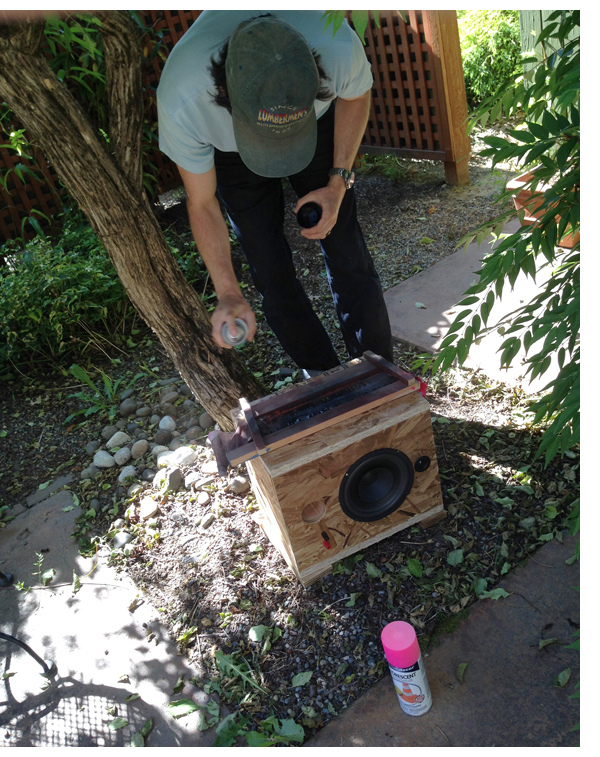
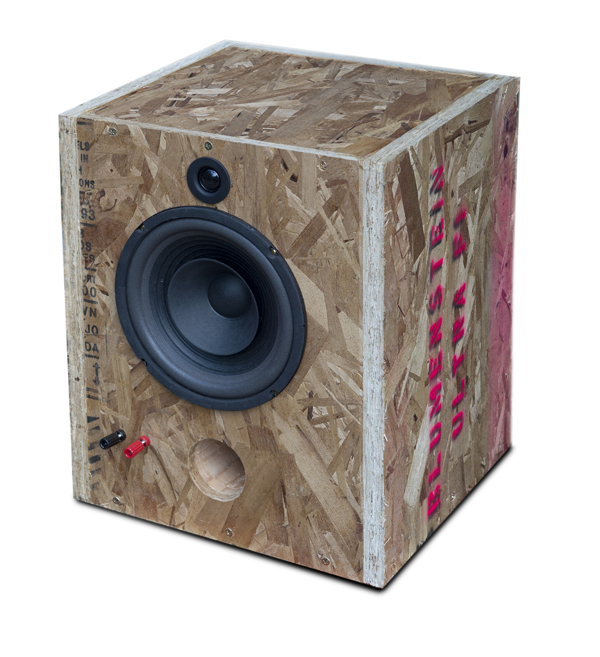
Out of this madness comes Blumenstein Audio with what may be the most useful, multi-purpose and durable solution, the aptly named Thrashers. Blumenstein generously calls the finished look “industrial design.” In truth, the speakers look like something straight out of a Jeff Foxworthy special.

The review pair comes with an oriented-strandboard (aka chipboard) cabinet. Two cabinet upgrades are available: a fir plywood front or a complete fir plywood cabinet. Each cabinet measures 17 by 13 by 12 inches. The port and speaker jacks are mounted in the front panel below the 1-inch super tweeter, which is crossed over at about 10 kHz; an 8-inch Pioneer Bofu driver is also mounted in the front panel. With everything on just one side, there is less to worry about when inebriated friends decide to help move them about.

To make the review as real world as possible, I power the Thrashers with my 1980 Harman/Kardon 680i receiver, Magnavox DVD/CD player and 16-gauge speaker wire. I place the speakers on a shelf in my garage 6 feet apart and 5 feet off the floor. Much of the listening time transpires while I work on a home project, with plenty of contemplation and hopped adult beverages, and with the TV on mute during the World Cup. With their 92 dB rating, the Thrashers take precious little effort to play loud and clear, and they are designed to be manhandled, both physically and sonically.

The Thrashers sound like a quality budget set of nearly full-size speakers. Vocalists, whether Tom Petty, Melissa Etheridge, Roger Daltrey, or Rihanna, sound far more lifelike than if they were reproduced by the well-cared-for rack systems of yore. The crunchiness of vocals comes from the limitations of the recordings, not the Thrashers. Robert Plant’s eviscerating vocals during “Stairway to Heaven” are scary realistic. The front port helps deliver ample bass down to 45 Hz, even when placed against a wall.

One afternoon out of boredom, the teen neighbors bring over a mixed disc of hip-hop, rap and popular music. They listen to the first song and turn up the volume a couple of times. During the second track, they begin texting. Next thing I know, a car pulls up with three of their friends. The girls begin dancing to Rihanna, while the boys punch one another and act like bloodhounds. The spontaneous listening ends only when the neighbors are called to go to a ball game. The Thrashers are like the ultra nerds in high school who everybody ignores until test time and then everyone needs to sit near them in order to pass the class.

Upping the game with a Vista Audio i34 integrated tube amplifier makes the overall sound more sultry and sweet, and an SET amplifier would probably take it further, but why bother? Whatever the combination of factors, the Thrashers sound better than any $229 dollar speakers have a right to, hands down. For those few rare audio souls who have come across and rescued a tube amp awaiting the garbage truck, the Thrashers are the mates.

As luck would have it toward the end of the review period, I’m invited to a large picnic at a nearby park. Seizing the opportunity, I toss (well, not quite) the Thrashers and receiver in the back of my pickup and head for the park. Discovering the area doesn’t have any electrical outlets, I plug the Thrashers into my pickup with the speakers sitting on the tailgate, and soon the park is filled with music. Cranking up Frampton Comes Alive! brings out the air-guitar enthusiasts, and several people compliment me on the great sound system.

Sure, you could go to Goodwill and maybe find a pair of speakers that don’t suck for $50—but the odds of that happening are somewhat slim. Or you could get out the power tools, make a few trips to Home Depot and build your own pair. Hats off to you if you’ve got the fortitude for that exercise. I say send the folks at Blumenstein Audio a couple hundred bucks and break out the beer. Carry the Thrashers, slide them, dent them—it’s all about the sound and carefree portability, which these speakers offer in spades. Just a hint: Keep a pair of work gloves handy, as the Thrashers do shed splinters on occasion.

www.blumensteinaudio.com

Publisher’s note: After auditioning the Thrashers with everything from an $88,000 pair of Pass Xs300s to my Sansui 771, I decided that I need them. Per Mr. Marcantonio’s suggestion, they are my new garage speakers. Rock on. —Jeff Dorgay

The Smart Car Electric Drive

Here at TONEAudio, we’ve been green from day one, eschewing chopping down trees for a consumer magazine, which has just never felt right to us—even when we lived in Scottsdale, Ariz., instead of tree-loving Portland, Ore. So, other than our massive pair of Pass Labs Xs300 amplifiers, we try to keep our carbon footprint small.

Most of the autos with premium sound systems that we review in these pages are anything but miserly on fuel (though the current Porsche 911 will hit 30 mpg at about 70 mph on the motorway, if you’re gingerly with the gas pedal.) And considering all the great luck we’ve had with battery-powered audio from Red Wine Audio, ASR and a few others, we figured why not try a battery-powered car?

Of course, the Tesla comes to mind, but with a “business lease” on the current Model S breaking the bank at around $1,000 per month and with Tesla’s long-term future remaining potentially murky, we chose a much simpler solution: the Electric Drive from Smart. For those of you who don’t know, Smart is a Mercedes-Benz product and its cars are distributed by Mercedes dealerships.

This is actually a full-blown car review, as the stereo system in the Smart either sucks (the “multimedia system” upgrade basically just adds a pair of door-mounted tweeters and a wimpy subwoofer) or really sucks (the standard system has only a pair of 5.75-inch speakers in the lower part of the door panels). However, considering that the car is battery powered, range is everything, so forgoing a high-powered audio system is actually a good thing—which is too bad, because the Electric Drive is really quiet inside. It would be the perfect place for a killer system. Maybe we can get Vinnie Rossi from Red Wine to do a signature Smart system with a couple of his really low-powered class-D amps. Stay tuned for that.

Charge Now

Having lived with the Electric Drive for a few months now, I’d like to reiterate that range really is everything. A “charge now” indicator comes up on the dashboard every time you shut off the Electric Drive, reminding you that the car can cover a very finite distance on a single charge. Smart claims that it has a range of 59 miles for strictly freeway driving, 76 miles of all city driving, or 68 combined. We seem to reach just about 70 miles in the car no matter what, with a few caveats.

Driving the car spiritedly but not maniacally still keeps the range close to 70 miles, but strong headwinds, constantly mashing the accelerator pedal to the floor (which is totally fun, due to the car’s instant torque) or using the air conditioning heavily will drop the range to about 58 miles. And this leads us to the only complaint with the Electric Drive: This little car that could would really be the little car that can if it could go 100 miles on a charge. Maybe the next generation will.
The Electric Drive comes with a 120-volt charger installed in the rear tailgate. This is great to get you started using the car, but it will take 16 hours to charge it from a 20 percent charge, which severely limits the car’s usefulness. What you want is a 240-volt charger to replace the sexy Smart charger, which will set you back $2,500. Amazon has a Bosch charger (which we featured in last month’s Style section) for $479; it will have you rocking in about four hours. Combine that with visiting your favorite stores—like IKEA, which feature EV chargers on site, some even at no cost—and you can really extend the range of your excursions.

Reality Doesn’t Bite

In the Electric Drive, day-to-day, moderate-distance hops couldn’t be more enjoyable.  The car is comfortable and way roomer than its diminutive size suggests. The passenger cabin feels very similar spatially to that of the Fiat Abarth but without the rear seat. The Electric Drive’s cargo space will hold about eight bags of groceries or a few large bags of dog food and, with the front passenger seat folded flat, it can easily accommodate a substantial pair of speakers or a large piece of furniture from IKEA.

The car’s most underrated specs are its 0-to-60 mph time and its top speed: 11.5 seconds and 74 mph, respectively, according to Smart. Our test vehicle easily sprints to 60 mph in just under 10 seconds and can hit 85 mph on level ground. And unlike your average econobox that wheezes heavily at 70 mph on the open road, the Electric Drive shoots from 70 to maximum speed with ease. Driving it like a rally car in downtown Portland is amazing; this four-wheeled midget will show its rear bumper to just about anything off the stop light to about 35 mph. It’s a ton of fun to holeshot punks in Subaru WRXs with a car that doesn’t even use gas.

Thanks to a short wheelbase and rear-wheel drive, the Electric Drive handles crisply. It is an absolute blast to drive and everyone who has had a chance to take it for a spin comes back with a huge grin on his or her face. Best of all, you can lease one from your Mercedes dealer for about $150 a month. (The car starts at $12,490 after U.S. federal tax credit.) Considering that all my cars average about 22 mpg on premium gas, driving the Electric Drive about 1,300 miles a month means I save about $250 a month on gas. It’s like having a free car!

I don’t know how long Mercedes will keep offering the Smart Electric Drive for this low of a price, but if you do a lot of short-trip driving and can get over the American point of view that you have to have a massive car to feel safe, the Smart Electric Drive just might be one of the most enjoyable automobiles you’ve ever driven.  -Jeff Dorgay

www.smart.com

The Beats Pill

On one level, Beats has become the new Bose, in that everyone loves to slag Beats. But like the legendary Bose 901 speaker, which we reviewed a few years ago, most of the Beats stuff is pretty damn good and not worthy of the aggression thrown its way. I’ve got a Beats audio system in my Fiat Abarth and it sounds better than any other $900 car-stereo upgrade I’ve heard. Plus, it plays loud enough to overpower the growl of the Abarth’s turbo motor—no small feat.
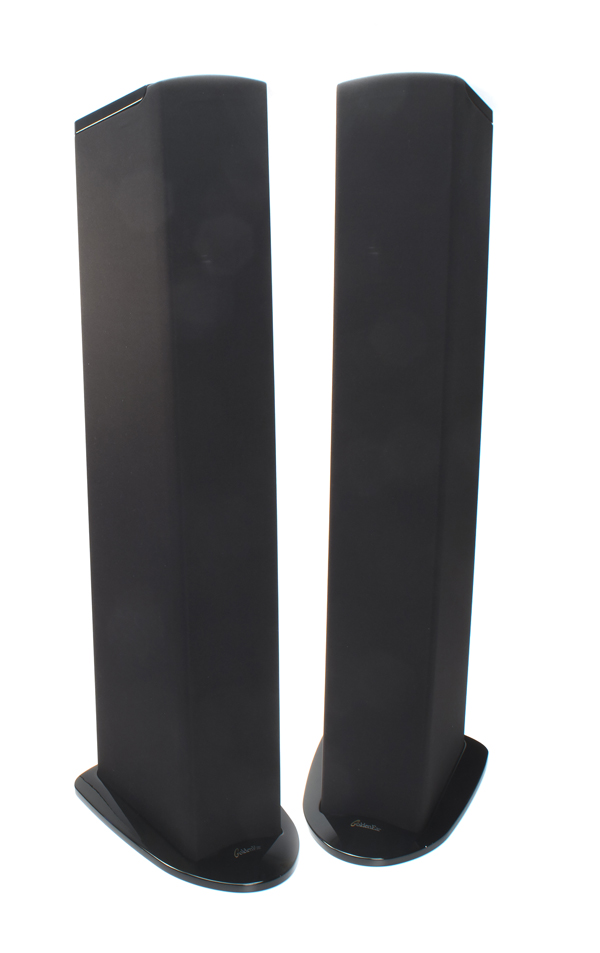
…which leads us to the little red guy you see here, the Beats Pill, complete with a matching Beats Character. My only real complaint is that it doesn’t bend like a Gumby—now that would be super awesome. But it does sound awesome. Yes, you heard right: The Beats Pill sounds awesome.

It feature aux, USB and Bluetooth inputs—and, as you might expect, it sounds best hardwired via the aux jack, but this compromises mobility and coolness. All things considered, Bluetooth playback is not all bad, especially playing Apple lossless files via my iPhone 5.

Specs Aren’t Everything

Actually, there are no specs for the Beats Pill on the company’s website, but the device does have an internal DAC and amp of some kind. The website does mention that the Pill has three volume settings: loud, turnt up, and (my favorite) call the cops. Well, it doesn’t really play that loud, but the four little speakers that seem about 2 inches in diameter do move some serious air for their size. As cute as the Beats Character is, it elevates the Pill off of the table enough to diminish the surface bass response, and for many, that’s what Beats is all about.

Listening to the latest Daft Punk release demonstrates the table-gain phenomenon quite clearly. If you want a bit more boom in your low end, take the Pill out of the Character and place it midway back on the table. This will give the maximum bass reinforcement.  However, if you’d like a bit more of a balanced response, putting the Pill back in the Character helps achieve this. The vocals on Chrissie Hynde’s “Dark Sunglasses” have a throatier quality when directly on the table sans Character; yet, Johnny Cash’s voice in “Delia” has too much. Male vocal tracks seem to be more natural with the Pill up off the table.

A Joy to Live With

Much like my Smart Electric Drive, the Beats Pill has to be one of the most fun, user-friendly pieces of gear I’ve ever played with. Everyone wants to touch it, experience it and interactive with it. Almost unanimously, the first comment is always, “Wow, it’s so cute,” followed by, “This thing sounds great.” No one bats an eyelash when I mention the $249 price tag (with character; $199 without). Most guys seem to like the black one and, of course, most women liked the pink one with the cute eyebrows. I find myself wishing Beats would make a lime green one…

In addition to no specs, there are almost no instructions either. In keeping with the Apple ethos, precious little instructions are required—just push the Bluetooth button on the back, pair it with your computer or smartphone and you’re rocking. The miniscule LED on the back blinks until you pair the Pill and then goes to solid white once the connection is made. Should you run the Pill out of power (a full charge is claimed to last 7 hours, but we routinely got 8) or shut it off, it will look for the last device it was paired to upon power-up. You can charge it with a wall adaptor or via USB from your laptop.

A Double Dose

As cool as the Pill is, it’s even better in stereo. You can link two of them via the output cable on the rear, and then stream to the duo with one as the left channel and the other as the right channel. I can’t think of a more fun way to boost your laptop or desktop sound—well, maybe if they offered a wireless Beats subwoofer.

Spreading them about a foot from each side of my MacBook Pro makes for the best stereo image without collapse. Listening to the Flaming Lips version of Dark Side of the Moon with this configuration proves incredibly trippy. The width of the Pills flanking my laptop makes it feel like I have a miniature pair of Quad 57s on my desk—these babies create an image like crazy. Somehow, this pair of Beats speakers has me thinking about electronica, so I go old school, listening to a lot of Kraftwerk, Eno and Art of Noise tracks with great results.

Fun, Fun, Fun

At the end of the day, the Beats Pill, whether you order it alone or with a character, is the most fun desk accessory you’ll ever buy. I suggest you get a pair of them.  -Jeff Dorgay

www.beatsbydre.com

Visiting Rega

Here, you can see a line of Rega RP10 turntables, nearing final assembly at their plant in Essex.  All Rega turntables are 100% built in the UK by a highly skilled workforce.

Visiting Dynaudio in Denmark

The Dynaudio factory in Denmark is equally impressive.  They too, make all of their own drivers in house to go with every one of their home, pro and auto speakers.  In addition to hearing the latest in the XEO series of wireless speakers, we were treated to the auto sound partnership between Dynaudio and Volkswagen.  Expect a review on this awesome mobile system soon!

In Denmark with Dali

Touring Dali’s 200,000 square foot facility in Denmark, we get a glimpse at a huge run of speaker baffles ready to move down the assembly line to be mated with drivers and cabinets. Dali too, produces everything in house and manufactures all of their own drivers as well. And watch for a review of a very cool desktop product from Dali!  We got to sample the final prototypes while there and it is stunning.  Understated Danish design and top notch sound!

Preview: Conrad Johnson LP125sa Power Amplifier

Johnson has been making fine tube power amplifiers for almost 40 years now and the new LP-125sa is more evolutionary than revolutionary; borrowing from their past LP series of amplifiers and their current Art amplifiers.

However, the results are indeed stunning.  With 125 watts per channel, thanks to a quartet of KT120 output tubes, the LP125 does not sound like a vintage tube amplifier.  If the last time you sampled a CJ power amplifier was more than 10 years ago, you don’t know what you are missing.  -Jeff Dorgay

GoldenEar Technology Triton Seven Speakers

The shock of thunderous bass waves is what the GoldenEar Triton Seven speakers greet me with to start a surprising review experience. Put away your preconceived notions of what slim, budget mini-towers should sound like—these are the first such speakers that don’t prompt me to add a subwoofer, even just to see if any bass response is missing. Unless you’re trying to out-thump the teenage neighbor with the 15-inch woofers in the back of his hatchback, the Sevens provide as much bass as you could ever want from a $1,400 pair of speakers.
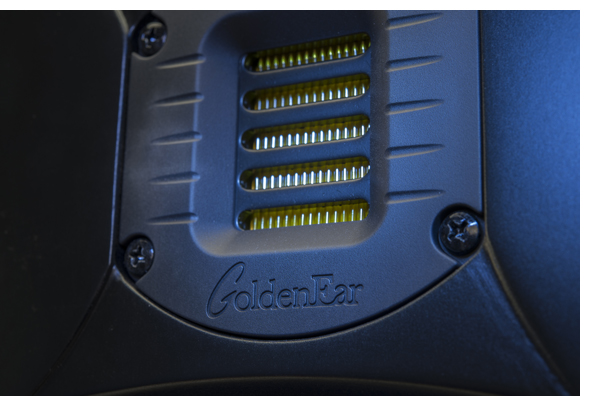
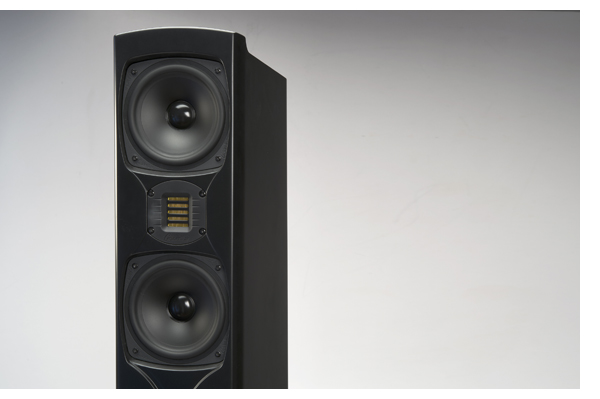
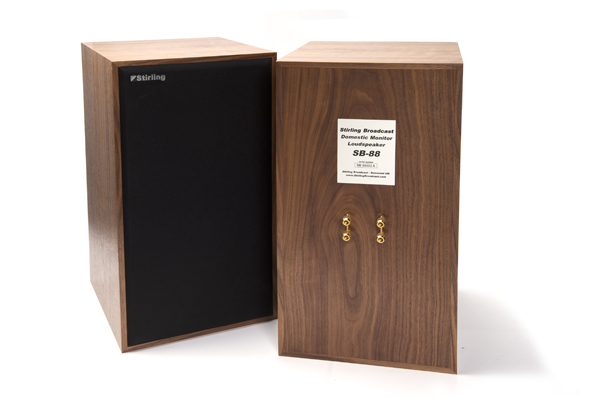
Thanks to their dual passive radiators, the Sevens go down to 29 Hz, which is plenty of low-frequency extension for most listeners. From the instrumental thunderclap in James Taylor’s “Gaia” and the cannons in Tchaikovsky’s “1812 Overture,” to Dire Straits’ “The Man’s Too Strong” and non-ear-bleeding hip-hop or techno dance music, these speakers easily provide the necessary weight to get the job done.

If imaging floats your boat, the Sevens flood the room with that characteristic—so much so that my small man cave (about 9 by 12 feet) isn’t quite large enough to let them breathe. In my 14-by-18-foot living room, the speakers thrive, with instrument placement that reminds me of much more expensive speakers. The individual percussion whacks of the Indigo Girls’ “Three Hits” rotate around the outside of each speaker, with the individual voices placed far left and right, and the magical harmony point placed well in front of the mini-towers.

Aerosmith’s classic “Dream On” is a stress-test song. Steven Tyler’s vocals can push many tweeters in the sub-$1,500 range into screechy crunchiness. Triton’s High-Velocity Folded-Ribbon (HVFR) tweeter keeps the high frequencies clear and dynamics strong. A testament to their driver design, the Sevens manage to keep even dense recordings well sorted.

Tech and Setup

Optimizing the Sevens takes very little effort. In my room, I achieve the best results using an equal triangular measurement, with the speakers toed-in directly to the listening position and placed four feet out from the wall. If you place the speakers too far apart, male vocals will hollow out and the center image will collapse. During setup, I suggest moving them apart a few inches at a time until you’ve gone too far, and then move them a touch closer.

With an 89 dB sensitivity rating at 8 ohms, the Sevens get jumping pretty easily. Though they thrive with the 150 watts per channel of my reference Simaudio Moon i-7 integrated, the 35-wpc Vista Audio i35 tube integrated still delivers plenty of punch though with a slightly softer presentation than the Sim. These speakers are truly amplifier-friendly, as they work equally well with class-D amps.

Standing just under 40 inches tall, 7.25 inches wide, and 10.5 inches deep, the Triton Sevens appear quite ordinary from a distance. Step up close and the first difference becomes apparent: A black grill sock topped with a shiny black plastic cap covers each speaker—no veneer or vinyl anywhere. Why the grill sock? It provides a sleek and uniform look and covers the dual passive 8-inch radiator bass drivers located near the base on either side panel. This old-school usage of the passive radiators comes from Golden Ear president Sandy Gross’s experience as cofounder of Polk Audio. The result is an impressively detailed bass response down to 29 Hz.

The two midrange drivers and the Heil-inspired HVFR tweeter are mounted in a D’Appolito mid-tweeter-mid array. Incorporating the passive radiators requires only a single third-order crossover set at 3 kHz. Other speakers I’ve reviewed with a Heil-type tweeter have a much lower crossover point, but 3 kHz works just fine in the Sevens. The speakers come with a simple but sturdy plastic base, and four spiked or rubber-tipped feet are provided, for those desiring such floor coupling.

Further Listening

Never one to shy away from testing a speaker’s limits, I play a multitude of symphonic recordings and discover that the Sevens will expose poorly recorded performances. Two versions of Gustav Holst’s The Planets aptly demonstrate this characteristic: One recording gives a muddy, undefined soundstage during the thunderous “Jupiter” movement, while the other recording is open and enveloping.

Through the Sevens, powerful vocals appear dead center and about a foot out in front of the speakers. Adele’s “Daydreamer” shows off her conversational singing style between the powerful moments, with the Sevens picking up her soft accent. On “Best for Last,” the second track of her debut album 19, there is a background chorus humming that I’ve never heard from similarly priced speakers—and the Sevens present it with ample clarity. When Adele lets loose with full-thrust vocals, these speakers don’t shrink; they stay faithful to the performance.

Getting timbre right in the listening sweet spot is one step, but getting it right off center is another level altogether. Even with the toe-in, I find reasonable timbrel accuracy in off-angle listening spots. Achieving faithful tonal character of unique vocalists is something I always look for, especially when it comes to James Taylor. Many speakers in the sub-$2,000 range either embellish his nasal sweetness or thin out his voice. The Sevens lay off the sugar just a bit, thus keeping his vocal character intact.

The Seven’s most stunning musical performance during my review comes from live small jazz ensembles. On Bill Frisell’s East/West [Live], all the characteristics mentioned above come together. The soundstage presented is a three-dimensional revelation—an audiophile nirvana experience, where the listener gets totally lost in the music. Every instrument has a place but at the same time comes from everywhere; it’s stereo reproduction at its best. For a $1,400 pair of speakers to so strongly recreate a live performance is a remarkable auditory feat.

Solo piano recordings are notorious for showing speaker flaws. The Sevens perform admirably here, producing a very natural-sounding piano. George Winston’s “Ike La Ladana” does show a bit of midrange congestion, but not as much as a pair of Totem Rainmakers, another pair of speakers in this price category with fine imaging. Other George Winston albums and songs don’t show the same level of congestion, though on a couple of occasions a slight hint can be detected.

For head bangers on a budget or limited in real estate, the Sevens will make you toss your hair with abandon. My ears fly the white flag of surrender numerous times at the 103 dB mark, while the speakers continue to provide a solid soundstage. The instrumental layering on “Stairway to Heaven” doesn’t muddy up the overall sound that the speakers present. Instead, the 5.25-inch midrange drivers create ample acoustical space without limiting the multiple instruments. Good speakers recreate the strength of individual instruments, and that is what the Sevens do consistently.

During my last weekend with the speakers, I hook them up to my 2.0 home theater setup and am not disappointed. Dialogue is clear, sound effects during car chase are well placed, and gunshots make me feel like I’m in the middle of the violence. Most importantly, I never need to reach for the remote to turn the volume up or down, as I neither strain nor feel sonically overwhelmed.

Final Tally

For speakers that do so many things well for just $1,400 a pair, one might ask what was sacrificed? The Triton Sevens don’t have the level of resolution of my reference Harbeth Compact 7ES3 speakers, but the extra 15 Hz on the bottom end earns some serious points, especially when the speakers are used in a home theater setup. The Sevens do the basics well and add in the treats of outstanding imaging and real, prodigious bass.

These are speakers that a family with myriad musical tastes can enjoy. Watch out competition: Sandy Gross has a winner in his lineup.

GoldenEar Technology Triton Seven Speakers

MSRP: $1,400 per pair

www.goldenear.com

Stirling Broadcast SB-88 vs Harbeth Compact C7ES-3 Speakers

The Black Keys’ new record Turn Blue reminds me of some of the finest psychedelic tunes from the 1960s. The opening track “Weight of Love” has a very Clapton/Cream vibe. There’s something about British speakers and classic rock; they just feel right. I have used Harbeth’s Compact 7ES-3 and the Monitor 40.1 speakers as references for some time now and a few of their main characteristics seem worth noting:
First, the midrange is spectacular; second, these speakers do an excellent job retrieving the timing information from whatever music you happen to be listening to; and third, even though the 40.1 doesn’t have prodigious amounts of bass (though, with a 13-inch woofer, it’s more than adequate), it does have a lot of life.

But enough about Harbeth. (More on that later.) While that brand gets much of the British-monitor love these days, there’s another player that’s not quite as popular but that is just as interesting, if not more: Sterling Broadcast began as a company repairing and refurbishing LS3/5A and other BBC-type monitors. It soon expanded to produce its own speakers, getting the license from KEF for new drivers in order to build a version of the LS3/5A, which was very well received.

Another Classic, Updated

The SB-88 accomplishes the same thing as Stirling’s version of the LS3/5A—this time as a revamped LS/AA speaker. A two-way design with an 8-inch woofer, the SB-88 is a British monitor through and through, from the thin-walled cabinets to the basic black grille that’s nearly impossible to remove. Just like the Compact 7, this speaker performs best on a pair of 19-inch-tall speaker stands, to get the right tweeter-to-listener height.

As with the Compact 7, I suggest a very dense stand, like the Sound Anchors I currently use, to best ground the speakers, resulting in a smoother and more extended low-frequency response. In my reference system, the Devialet 110 proves a perfect match for these speakers, offering grip and control that gives them a more modern sound. When paired with a low-powered tube or solid-state amplifier, the SB-88s lean more towards the warm, wooly sound often associated with British monitors. So, choose the amplifier you want to give you the mood you seek with these—they can go either way.

While the SB-88s provide a wide frequency response, they live up to their heritage, providing a lush yet natural midrange that helps most recordings sound better than they have a right to. In the day of hyper-detailed, hyper-real-sounding speakers from YG, Wilson and Magico, the Sterling Broadcast SB-88s are a wonderful experience, almost like your favorite form of comfort food. What they lack in resolving power, they more than make up for in natural presentation. Day in and day out, they remain incredibly user-friendly and non-fatiguing. Should this be what you’ve been searching for, these are the grail. If you’d like to keep the British sound but still want a modern feel, the Harbeth Compact 7 might be more your spot of tea, as staffer Mark Marcantonio reveals on the following pages…

Harbeth Compact 7ES-3 vs. Stirling SB-88

By Mark Marcantonio
Heritage: It’s a key component to how stereo equipment is designed and how it sounds. When it comes to speakers, BBC monitors arguably have the most famous lineage. Simple, thin-walled boxes designed to be placed on stands, these types of speakers add in a sonic signature of low coloration and flat measurements, which are the basics of a successful monitor. Two companies currently epitomize the BBC design: Harbeth and Stirling.

While direct comparisons are not the norm at TONEAudio, when a pair of Stirling SB-88s arrived for review, the obvious comparison to the Harbeth Compact 7ES-3 couldn’t be helped. Possessing a nearly identical cabinet size (20.5 by 10.7 by 12 inches for the Harbeths; 19.5 by 10.7 by 11.75 inches for the Stirlings), along with similar drivers and port layouts, these speakers present instant curiosity. Even grill removal on both models calls for patience and an old credit card. Besides veneers, the biggest differences are the flat front flange, sealed back panel, and dual binding posts of the SB-88, and the slightly rounded bevel, screwed-in rear panel, and single set of binding posts of the Compact 7.

True to their DNA, both models prefer slightly shorter stands for optimum performance—in this case, the 19-inch Sound Anchors. After a weekend playing with positioning, the results for the 9-by-12-foot room were identical, sans a 1/4-inch less toe-in for the SB-88. Two other rooms were used as well: an 11-by-18-foot family room and 14-by-18-foot living room. Powering the competitors is the 150-watts-per-channel Simaudio Moon i-7 integrated amp. Sources include the Rega RP1 with Ortofon Super OM 40 cartridge and Sim Moon LP 5.3 phono pre, and a MacBook running iTunes/Pure Music paired with a Sim Moon 300D DAC.

The SB-88s resolve with a sense of intimacy. Allen Stone’s bluesy vocals in a live recording of “Sleep” ache with emotional clarity. The tightness of the acoustic guitar strokes leaves little doubt as to technique. Yet, for all the purity of high frequencies, hiss and edginess are never spotted.

The midrange of the SB-88 continues the purity of signal, which is not surprising considering the design parameters of the BBC concept. Percussion is equally tight, with obvious definition between each piece of the drum kit. The strong piano-key strokes on Trixie Whitley’s “Breathe You in My Dreams” hold their own space next to her rich and complex vocals.

But the lower registers really give away the SB-88 as a monitor. The rich layering that bass brings to so many songs just never kicks in with the SB-88. The funk classic “Fire” by the Ohio Players, with its foot-tapping bass line, gives only a hint of its existence. The lack of bottom-end has always been mini-monitor territory. No matter which of the three rooms are utilized, I’m left wanting so much more.

Interestingly enough, both speakers sound their best in nearly the same position in all three listening rooms, another nod to their lineage. However, when the music begins to play on the Compact 7s, the difference is palpable. The Harbeths bring more bass grunt and detail. Listening to music with any sort of low end through the Compact 7s is a whole different experience. The bass guitar in “Fire” resolves and thumps, matching the speaker’s 46-Hz low-end rating.

The upper frequencies of the Harbeths offer a wider imaging sweet spot, while the signal coming forth just has more of everything: detail, depth, spaciousness, etc. A sense of soulfulness is present on the Compact 7s that isn’t there with the SB-88s. Through the Harbeths, the xylophone near the beginning of Steely Dan’s “Aja” rings from the deepest regions of the speaker cabinet. And Trixie Whitely’s vocals take on a sense of aged richness, much like a fine wine.

As with the SB-88s, the Compact 7s take advantage of the space in the cabinet and that in between the speakers, but the latter speakers extend all the way to the walls. Acoustic treatments do come into play, though I find no need to reset the position of the GIK panels. The music comes to the listener rather than he or she needing to step into the musical space. There’s no need to check with head/ear position to confirm the sweet spot with the Harbeths—just sit back and enjoy the experience.

The Compact 7s reproduce two of the hardest instruments for speakers—the piano and the human voice—with a naturalness and clarity that stuns. The piano notes roll over the music like waves. Jan Gunnar Hoff’s piano on a vinyl version of his album Living cascades throughout the room. Tonal structure and timbre are beautifully accurate and as non-fatiguing as one can rightfully expect at this price point.

Listening to pre-Auto-Tune vocal performances demonstrates the additional resolution that the Compact 7s have over the Stirlings. From Ella Fitzgerald to a young Melissa Etheridge and from Dean Martin to Kris Kristofferson, the Compact 7s deliver a complete vocal performance, including the imperfections that make each singer’s voice an honest and terrific treat.

The Final Tally

While the Stirling SB-88 is a nice speaker, with all the good intentions of the BBC monitor tradition, it cannot match the broad, rich sonic experience that the Harbeth Compact 7ES-3 provides. Alan Shaw (Harbeth owner and speaker designer), the BBC monitor crown belongs to you.

Stirling Broadcast SB-88

$3,450 – $3,850, depending on finish

www.stirlingbroadcast.net

Harbeth Compact C7ES-3

$3,690 – $3,990, depending on finish

www.harbeth.co.uk

Penaudio Cenya Monitors

Cranking Public Enemy’s “Fight the Power” to a level way beyond what I’d ever expect from a small pair of monitors causes me to redefine my mental short list for a final hi-fi system. While I routinely audition six-figure speakers (and enjoy every minute of it), the Cenya and its slightly more expensive sibling, the Cenya Signature, deliver so much music that I would happily retire with these Finnish beauties as destination speakers.
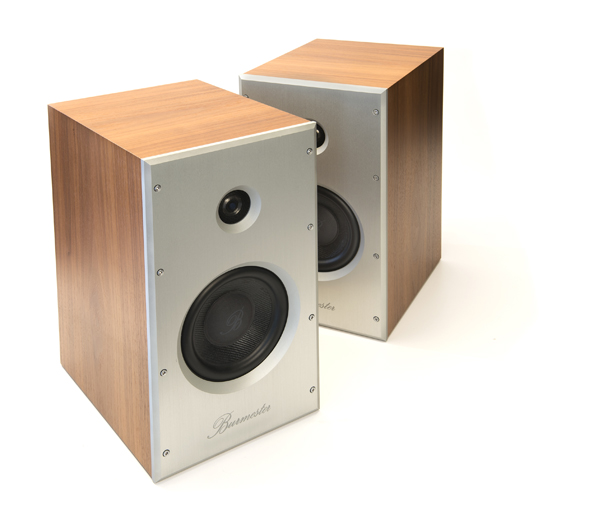
The Cenyas do everything but deliver the last octave of deep bass, and at $4,000 a pair, they leave you enough scratch to add your favorite subwoofer, should you require it. But in a small- to medium-sized room, you may not need the extra bass. These speakers are positively heavenly in my new small listening room (10 by 13 feet) powered by the Devialet 120. Penaudio speakers have always needed a little bit of juice to give their all, and the 120 watts per channel provided by the Devialet gets the job done, no matter what the musical faire. The opening bass drum beats from Led Zeppelin’s “No Quarter” are delivered solidly, without overhang. As the cymbals linger in the air and fade off into black, the sparkle remains potent, which leads me to believe that these little speakers move some serious air.

It’s worth noting that Devialet owners that are running the current firmware can now take advantage of their new S.A.M. (Speaker Active Matching) system, which offers phase alignment for a list of speakers, like the Cenya, custom tailored to the individual speaker.  S.A.M. also offers bass equalization/compensation in the DSP domain that extends the frequency response cleanly down to 25hz. This had just become available at the end of this review, so watch for a follow up when we’ve spent more seat time with it. The short story is that it works incredibly well. You’ll swear there is a subwoofer in the room!

My history with Penaudio goes way back to the Serenades that we reviewed in issue 4 and that ended up as my reference speakers for a couple years. I’ve always appreciated Penaudio founder Sami Pentilla’s ability to build speakers that combine understated good looks and natural tonality in a compact form. The tiny Cenya is no exception. It looks like a slice of the Serenade, with a 6-inch woofer and a 1.25-inch soft dome tweeter, and it is available in a wide variety of finishes.

This particular pair comes in the high-gloss white that was the rage at this year’s Munich High End show. Considering psychoacoustics, this may be the best color for these mini monitors, as it lets them disappear even further into my listening environment, which is painted Ralph Lauren Studio White. A knuckle rap demonstrates cabinet rigidity, which contributes to the speakers’ stellar bass response and freedom from cabinet-induced vibration.

Super Simple Setup

As with any high-quality pair of mini monitors, the Cenyas benefit from doing two things: placing them on massive stands and providing a solid coupling between the speaker and stand. Though not as attractive as the Cenyas deserve, a pair of 24-inch sand-filled Sound Anchor stands works perfectly, with a set of small Isonode feet ($19.95 for a set of 4; available from Bright Star Audio) providing an ideal mechanical interface.

The Cardas Clear Light speaker cables also work well with these speakers, but for those requiring a bit more zip and high-frequency extension, the Graditech speaker cables provide it. They prove a perfect match for the Conrad Johnson LP125sa power amplifier, while the Clear Light cables are a more balanced solution (for these ears, anyway) with the Devialet.

Final speaker placement takes about 15 minutes, with a bit of fine-tuning after the Cenyas have about two weeks of major break-in. Like all of the other Penaudio speakers we’ve auditioned, a good week’s worth of listening to dynamic music at moderate to high volume does the trick—though they do sound fabulous right out of the box.

Jah Wobble’s Japanese Dub leads the way into a long session of bass-heavy tracks that help define the low-frequency response of the Cenya2. The official specification is +/–3 dB from 45 to 28,000 Hz in an anechoic chamber, and thanks to a little bit of room gain, the Cenya 2s reproduce the 40 Hz test tone on my Stereophile Test CD with ease, though bass response falls off rapidly after this. For most musical material, this will rarely be an issue, considering the quality of the bass that the speakers produce. Again, this was all done without S.A.M. engaged on the Devialet.

A Nimble Performer

In a modest-sized room with first-class amplification, the Cenyas will spoil you. Thanks to their small front surface and high-quality SEAS tweeter, they throw an expansive soundstage that not only extends beyond the speaker boundaries but also past the wall boundaries.

When I revisit Springsteen’s The Wild, The Innocent & The E Street Shuffle, it’s a pleasure to hear the nuance in his young voice and, even though the recording is only mediocre, the coherence provided by this high-quality two-way speaker makes it come to life. As with the previous Cenya iteration, the new Cenya exhibits a transparency much like an ESL. The Hammond organ at the beginning of “Kitty’s Back” remains in the air, slightly above the speakers, lingering in the room as though through my Quad 57s, but with more punch and dynamics.

The Cenyas excel at keeping the musical pace intact. The rapid-fire drum beats in Blamstrain’s “Dog Song” stay solidly anchored in the middle of some dreamy synth riffs, while the deep bass line fills the listening room without blurring the spacey presentation, until the volume is turned up well beyond a reasonable level. This is the only limitation of these petite Finns: They can only move so much air, and when pushed past their limit, they compress rapidly. However, I think anyone demoing a pair of Cenyas for the first time will be surprised at just how loud this level is.

Of course, the vocal performance of these speakers is beyond reproach. Those preferring more audiophile faire will be highly satisfied at the deftness with which the Cenyas project both male and female vocals. Whether you love Tom Waits or Shelby Lynne, the speakers deliver the goods.

Compatibility

With a sensitivity rating of 86 dB, the Cenyas work better with more power, though in my small room, even the 25-watt-per-channel 845 SET amplifiers at my disposal prove adequate, albeit not able to push the speakers as far as the 120-wpc Devialet can.

Regardless, the Cenyas are very tube friendly in a way that my Serenedes never were. The McIntosh MC275, PrimaLuna DiaLogue Monoblocks and the new C-J LP120sa vacuum-tube amplifiers all work well with the Cenyas, delivering great dynamics, extended HF response and good damping of the woofer cones without issue.

The Cenyas are equally versatile with solid-state amplification, from about 35 wpc on up, proving a good match with the 35-wpc Naim Qute2, the 50-wpc Rega Brio-R and the 60-wpc Pass Aleph 5—all reasonably priced yet high-performance small solid-state amplifiers.

Surprisingly, the Cenyas are transported into another world with the 300-wpc Burmester 911 MK3 and the similarly powered Pass Xs 300 monoblocks, though it is hardly likely that someone would spend $30,000 to $80,000 on amplification for a $4,000 pair of speakers—though, if you do, these little beauties are up to the task.

The $4,000 Question

If you are looking for maximum performance with minimum footprint, look no further than the Penaudio Cenyas. They will do justice to whatever ancillary components you have at your disposal and they produce way more music than you would expect from a speaker this diminutive in size. Highly recommended.

Penaudio Cenya monitors

MSRP: $4,000 per pair

www.penaudio.fi

PERIPHERALS

Digital Source Devialet 120    Meridian Control 15    MacBook Pro
Analog Source Thorens TD-124    SME 3009 tonearm    Ortofon 2M Black cartridge
Amplification Devialet 120
Cable Cardas Clear

Burmester B10 Speakers

If you’ve ever had the opportunity to audition Burmester loudspeakers, you know they mate perfectly with the company’s electronics and that, together, they put forward a very dynamic, powerful presentation. And, as founder Dieter Burmester is a bass player in his spare time, his speakers are never lacking in low-frequency authority.
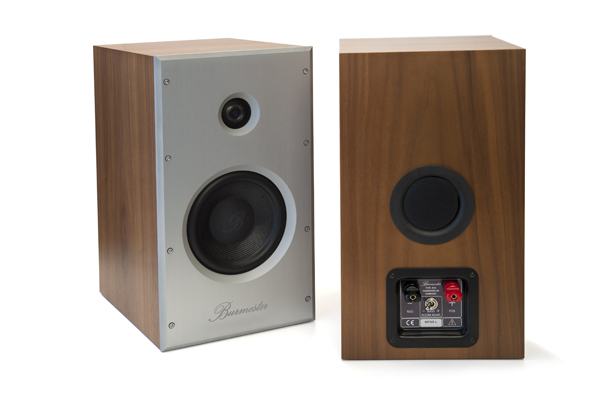

In a fairly good-sized room, pairing the hefty Burmester 911 amplifier (or the larger 909) with Burmester speakers makes for highly engaging listening. But for those of us wanting the Burmester experience in a smaller room, the B10s—which are only about 15 inches tall, 9 inches wide, and 11 inches deep—deliver just that. They fit on a pair of stands; I use sand-filled Sound Anchors in my modest 11-by-13-foot listening room.

This understated-looking pair of two-way speakers is something of a happy accident. Originally designed as personal reference monitors for Dieter’s studio, they became part of the product lineup and they make for an excellent match with Burmester’s smaller 101 integrated amplifier and 102 CD player, which we review here. With an 87-dB sensitivity and 4-ohm nominal sensitivity, the B10s are obviously geared towards Burmester amplification, but they work great in the context of any system, whether tube or solid state.

For initial break-in, I run the B10s for a few days with the Devialet 110 (now upgraded to 120 status) in my second listening room, merely swapping out the Stirling Broadcast 88-B8 speakers (also 87 dB) that have been in for review for some time. This could not have been a more night-and-day difference; it was like going from a mid-1980s Mercedes 300 turbo diesel (the Sterlings) to a current AMG C63 (the Burmesters). There’s more resolution and extension everywhere, and even though these are fairly small speakers, the signature Burmester low-end performance is there in spades.

The Burmester B10s have an MSRP of $9,000, without stands.

Initial Listening

Once settled in, my Devialet/Meridian combination goes out and in comes the Burmester 101/102 combination, which proves very interesting, as this amplifier is Burmester’s foray into class-D design—no doubt as a result of the company’s work on high-end automotive audio systems. For those already familiar with the Burmester house sound, (read: slightly warm for solid state), the 101 does not disappoint; it lacks the slight haziness and harshness normally associated with these designs.

Listening to Thomas Dolby’s “I Scare Myself,” I find that the B10s exhibit excellent pace, keeping the deep bass line firmly anchored in place, as the synthesizers float about the soundstage with plenty of width and depth. Interestingly, the B10s use a dome tweeter where the rest of the Burmester line uses a ribbon/AMT driver. Ribbons in general tend to elicit a polarized response from most music lovers, and reviewer bias admitted, it is not my favorite driver, so I find myself very drawn to the overall sound of the B10s, especially since I have a soft spot for well-designed two-way loudspeakers.

Setup is simple and straightforward. As with any compact high-performance monitor, a pair of rigid stands is a must in order to extract the best possible performance. Burmester does make its own stands, which are more attractive than my Sound Anchors, but the Sound Anchors are very dense stands and so they are a great match for the B10s. Putting the speakers on less-massive stands does, in fact, compromise bass extension and focus, so regardless of which way you go, don’t set these speakers on weak stands or you will be disappointed.

Seat Time

The more time spent with the B10s, the more comfortable I become. Expanding the musical palette reveals no shortcomings, with the only thing missing being the extremely low frequencies of large floorstanding speakers. Yet, taking advantage of the room gain in a small room, the B10s do not disappoint, even when playing tracks from Deadmau5, Pink Floyd and Mickey Hart. Though it might seem counterintuitive with a $9,000 pair of speakers, the B10s deliver more low-end heft with a larger amplifier—in this case, my reference Burmester 911 MK3, which has been in service for some time now.

Listening to the new Black Keys album Turn Blue is much freakier with the added power of the 911 driving the B10s. The fuzzy guitars come alive with more weight, bite and roundness, while the vocals seem more real and full of life. A similar experience is had with Pink Floyd’s classic album Wish You Were Here. The title track comes in with barely a whisper as the acoustic guitar spikes up, standing out clearly in its own acoustic space. The smaller 101 amplifier, though similar tonally to the 911, flattens the leading in and trailing off of sound ever so slightly, though it is still involving and something you wouldn’t notice if you didn’t happen to have a 911 hanging around.

As hinted at earlier, the B10s will work fine with vacuum-tube amplification, suggesting that they have a well-designed crossover network, though you can expect that a slightly softer sound will reflect what comes out. The 35-watt-per-channel Van Alstine Ultravalve renders a very mellow performance, per its character, while the 125-wpc Conrad Johnson LP120SA+ is much more authoritative and incredibly deep. While these comparisons offer different flavors than the Burmester amplification, the experiment is a ton of fun, turning my listening room into a fishbowl full of music—not necessarily real, but highly engaging.

Keeping It Real

The B10s rock with authority and image like crazy, but they do not present an overblown sense of perspective, preserving tone and timbre with acoustic instruments. The Jung Trio’s Dvorak Trio in F Minor Op. 65 quickly demonstrates how well these small monitors keep violin and piano sorted, especially the violin. This masterfully recorded piece is so clean that any hint of harshness in a system will be revealed instantly. The B10s pass this tough test with ease.

The subtle brushwork at the beginning of Thad Jones’ “April in Paris” is equally impressive. As Jones’ smooth horn gently glides into the mix, it’s easy to hear him move ever so slightly across the soundstage, and the B10s nail the subtle phrasing of this jazz master, delivering a very emotional experience.

Chrissie Hynde’s highly processed vibrato in the Pretenders’ self-titled debut is perfectly rendered through the B10s. Each of her breaths on the track “Private Life” comes through the mix with an exciting sense of immediacy. Shelby Lynne’s not bad either, so the audiophile whose taste leans more towards female vocalists will not be disappointed with these speakers.

Going through record after record, I find that the design and meticulous build quality that goes into the B10s (like that of every single Burmester product) is evident. These speakers may look understated and simple, but the musical result is fantastic. A perfect match for an all-Burmester system, the B10s will also mate fantastically well with a non-Burmester system. They may even pull you further into the world of Burmester.

Burmester B10 speakers

MSRP: $9,000 per pair

www.burmester.de

www.rutherfordaudio.com (North American importer)

PERIPHERALS

Digital sources Meridian Control 15    Burmester 102 CD Player
Amplification Devialet 120    Burmester 101    Burmester 011/911
Cable Cardas Clear

Jaguar F-TYPE Coupe

Colors, like fashions, change in such a fluid manner that at times you don’t even realize that they’ve happened.  Pretty soon everyone is wearing skinny jeans and you’re caught without.  The same could be said with the color orange.  It snuck in a few years ago on a few Lamborghinis and now it’s everywhere.  Even yours truly has a bright orange (make that Valencia) BMW and the color has really caught on – it’s a happy color.

Perhaps nothing is more happy than a 550 horsepower Jaguar F-TYPE coupe (or coup-eh, as the Brits like to call it) in Firesand Metallic.  While it is stunning on the F-TYPE convertible, the coupe takes the excitement to another level entirely.  The biggest question posed by many auto enthusiasts and critics at the launch of the convertible was “how about a proper hardtop roadster in the style of the legendary E-TYPE?”  When the Jaguar gods decided that the concept would go to production, the next curiosity was to see how close the final car would resemble the design brief.

At times, it’s best to keep your top on

The results are indeed smashing, and the coupe succeeds on every level.  It not only casts a sleek silhouette, the additional rigidity of the coupe improves on the already highly competent roadster chassis, sharpening the handling even further.  You don’t really notice it until you drive the two back to back – the hardtop really gets the nod for driving purists.

This is made perfectly clear while behind the wheel of the coupe at Willow Springs Raceway with Davy Jones (not the ghost of the Monkees, but the ‘96 winner of the 24 hours of LeMans) in the passenger seat telling me I’m braking too late, repeatedly.  Where the ragtop feels great for a convertible, with no scuttle shake, the coupe is a few major degrees more crisp, with no sense of squirm under hard braking, or making a slight course correction in the midst of a high-speed sweeper.

Serious music enthusiasts will enjoy the coupe for yet another reason: the 380-watt Meridian sound system that comes standard with the F-TYPE.  An extra 1,200 dollars steps you up to the 12-speaker, 770-watt Meridian system.  We described the system in depth in Issue 58 and concluded that with the increased cabin noise of the soft top, the upcharge for the bigger system is hardly worth it; however the coupe is a different game entirely.

The dual purpose exhaust system stays quiet while tooling around town, giving the F-TYPE the civility of a luxury sports sedan, yet when the accelerator pedal is mashed to the floor, the baffle opens, providing more than enough growl to feel sporty.  Even more so with the 550 hp, supercharged V-8.

You don’t have to drop 100k to have fun

Don’t let the evil British villains in the Jaguar commercial fool you: you don’t really need 550 hp to enjoy the F-TYPE.  While we didn’t have any of the $65,000 base model cars with a meager 340hp V6 at our disposal, the 380hp supercharged V6, priced around $75,000 with a few options is still no slouch, getting from 0–60 at 5.1 seconds and having a top speed of 172mph.  This should be good for all but those needing to leave the scene in the most fiendish manner.   Interestingly enough, the V6 felt a bit better in the convertible, even though it specs the same in the coupe and all of the auto journalists present made the same observation.

Again, the folks at Jaguar made the comparison to the iconic Porsche 911, as if it were the benchmark they are striving for.  And again, after having driven more than a few 911s since the convertible launch and now, I maintain that they are entirely different automobiles.  If I were in the income bracket to afford it, I’d have both in my garage.

Obvious comparisons

The current Carrera is more capable at the limit – and as good as the 8-speed ZF auto box is, Porsche’s PDK is still the one to beat, offering a connection to the road like no other.  When driving in more subdued situations, the Jaguar gets the nod, being way more sporty than a Mercedes SL or BMW Z4, yet more posh than the current 911.

The F-TYPE offers two driving modes, standard and dynamic. Dynamic is the more sporting mode, stiffening the suspension, altering the shift points and programing the torque vectoring more aggressively.  This innovative system feeds more power to the inner rear wheel, while gently applying braking to the outer rear wheel, offering tremendous driver control.  This was instantly evident when we took the cars out on the skidpad at Willow Springs Raceway for a brief drifting session.  When disengaged, it takes the skill of a professional driver to keep the tail in line, yet with the driver assist engaged, the F-TYPE practically defies the laws of physics, even in the wet.

Hard top or soft?

My experience has been that those loving topless motoring won’t care about most of the coolness built in to the F-TYPE coupe because the top doesn’t go down.  Where the classic E-TYPE convertible still stands as one of the most beautiful automobiles ever made, the coupe was always somewhat of a homely stepchild.  This is not the case with the F-TYPE coupe – it is easily as beautiful, if not more so, as its soft-top sibling.

Much as it is with high end audio gear, it’s tough to call a $75,000 to $100,000 car a “bargain,” though in comparison to its competitors from Porsche and Mercedes, the F-TYPE certainly offers excellent value.  And if you don’t need the prestige of an Aston Martin badge, the new Jaguar is a steal.  Having spent plenty of time in both the DBS and Vantage, I can’t see why anyone would want to shell out the extra dough for an Aston, when the Jaguar is so capable.  — Jeff Dorgay

MartinLogan Crescendo

In the years since Bowers & Wilkins introduced the Zeppelin (now the Zeppelin Air), there have been many imitators, but no one has really come close to the combination of form and function that this innovative British company started.  Until now.
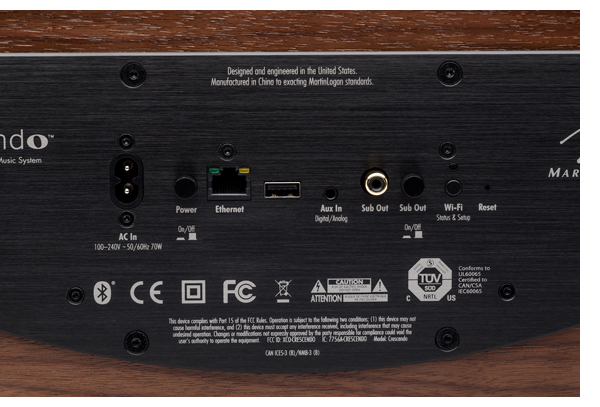
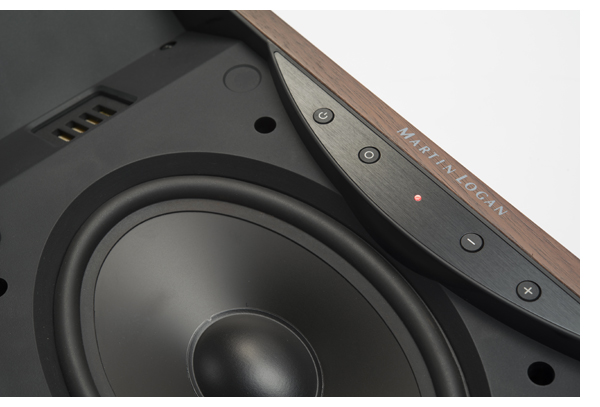
I got my first glimpse of the Crescendo at this year’s Consumer Electronics Show in the MartinLogan room – I thought it was a static display and I was listening to a pair of class-leading ElectroMotion speakers.  When informed that I was listening to the Crescendo, it was a revelation.  Hard to believe a desktop player could not only sound this good, but throw such an expansive stereo image.  Justin Bright, MartinLogan’s PR guy, smiled and said, “You can hook it up to one of our subs for an even bigger sound,” which had me thinking about other possibilities.

Not everyone is brainwashed by Bose.  Many want decent sound, don’t want to become audiophiles, yet sheepishly know that a Wave Radio is wrong.  They always have that guilty look in their eyes when they ask, “So what should I buy?”  Without question the Crescendo is the way to roll.  For $895 you can’t beat it.

Major tech under the hood

The Crescendo utilizes a lot of existing MartinLogan technology to work its magic.  The same folded motion tweeter design from the ElectroMotion speakers is at work underneath the grille, along with a 5×7-inch midwoofer speaker, crossed over at 3,600 Hz, so the effect is stereo up beyond that.  It works remarkably well, giving as much of a stereo impression of any of the other tabletop portables I’ve experienced.

Combining a 50-watt amplifier for the woofer, a 2×25-watt amplifier for the tweeter and a full-blown DSP preamplifier, the Crescendo produces room-filling sound with ease.  Blasting “Firehouse” from KISS 40 proves that the Crescendo is not just a pretty desktop with no guts. A long playlist of Nine Inch Nails (played at equally high volume) without damages to the Crescendo underlines its robustness.

The Crescendo is equally adept at moderate volume levels, and those enjoying more subdued fare will be just as happy as the headbangers in the audience.  The subtle, waif-like vocal shadings of Sharon Van Etten on her Tramp LP are reproduced with the delicacy required.  Equally delightful were the textured vocals in Jonsi’s GO.


Setup as easy as one, two, three – well six, actually.

There are six different ways to connect to the Crescendo:  Via WiFi, Bluetooth, USB, line level, Toslink and a standard wired Ethernet cable, so no matter what you have, you’ll be able to plug in.  I made it a point to try them all and had equally good luck.  The enclosed quick start guide is very concise and this device works as described, so no matter what level of geekiness you posess, you should be up and running in a few minutes.  The folks at MartinLogan have produced one of the best instruction manuals I’ve come across in years, so take ten minutes and read it.

As cool as this all is, the subwoofer output really adds to the Crescendo’s oomph.  Not only can you use a wired subwoofer (with a switchable crossover at 80 Hz), Paradigm’s PT-1 wireless subwoofer controller and Monitor Sub 10 make for a killer combination.  Adding an $849 subwoofer to the Crescendo might seem like overkill, but seeing I just happen to have these two items as reference components in my home theater system, it seemed like a smashing idea.  Those on a more reasonable budget might want to consider the Paradigm Cinema Sub at $349, though you do give up wireless capability.   It only took about 30 seconds of LL Cool J’s “I’m Bad” to convince me that adding the sub was a ton of fun.

For those going sans subwoofer, where you place the Crescendo will weigh heavily on its bass output. Even though you can boost the bass with the “bass mode” switch on the aluminum remote, this won’t be quite enough should you place the Crescendo in the middle of a room or on a freestanding table.  Take advantage of room and surface gain – install the Crescendo against a wall or even in a room corner if possible.   Just as you would with your favorite pair of conventional loudspeakers, experiment with position until the perfect balance between midrange clarity and bass weight is achieved.

A lovely package

The gorgeous, half-moon shape, available in black or walnut complements any décor and it fits marvelously in my little mid-century modern abode.  So much so, that I might just be keeping the review sample. As cool as the Crescendo is, I think the folks at the MartinLogan custom shop, the same skilled artisans that produce MartinLogan ESL speakers in custom finishes, should offer a hardwood upgrade for the Crescendo.  No doubt this baby is going to make its way into some stylish abodes – why not go all the way and really make it a work of art?  I’d happily pay extra for this option.

Though the MartinLogan Crescendo has a winning combination of sound quality, build quality and ease of use, it’s a truly fun experience.  Thanks to its wide range of connectivity, anyone can plug in, whether literally or wirelessly and be enjoying their music in seconds.  And enjoy it you will.

MartinLogan Crescendo

MSRP: $899.95

www.martinlogan.com

AURALiC Gemini 2000 Headphone Amplifier

Is the Gemini 2000 a headphone amplifier? Is it a headphone dock? Is it a DAC? Well, yes. Through the Gemini, Hong Kong-headquartered AURALiC creates a design that manages to pack all that into an attractive and great-sounding component. For those seeking a headphone-based desktop system, this AURALiC offers a turnkey package.
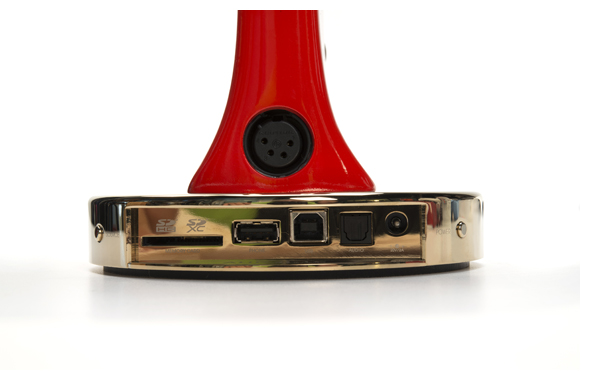
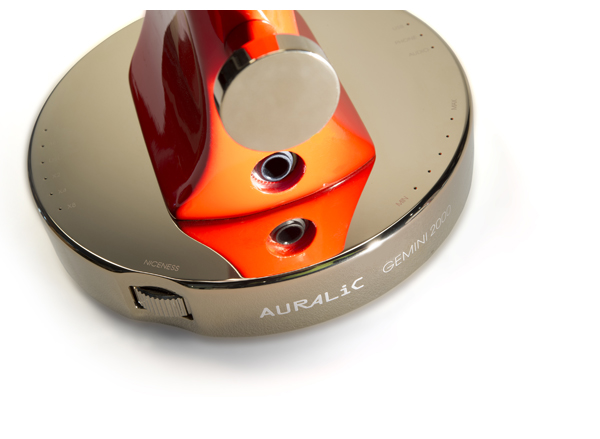
Headphone stand

At first glance, the most eye-catching and unique feature of the Gemini is its headphone stand, licensed from Klutz design. Standing about a foot tall with graceful curves, the stand not only looks great, but it offers a secure way to display your favorite headphones and keep them at the ready. AURALiC offers a lot of color options including a glossy white, black, yellow, blue, and the bright red of our review sample. In addition, there’s a choice of a shiny gold or silver base finish. With so many choices each prospective owner is bound to find some color combination to his or her liking.

Acting as a headphone stand, the Gemini certainly has stability and heft. The base of the unit is quite heavy, and lifting the unit makes me feel as if I’m accepting a hefty Oscar statue. The Gemini is not likely to tip over with your valuable headphones draped over it. Another really nice feature of the stand is the ability to wrap the headphone cord onto it, keeping the desktop tidy. Metal pegs at the top and bottom facilitate the process, acting in a similar fashion as the electrical cord holder on an upright vacuum cleaner.

The business end…

The stand element by itself may look impressive, but the real design feat is squeezing the DAC and amp into base of the unit, about an inch tall with 5.5-inch diameter. Each Gemini comes equipped with a 4GB SDXC card which includes Windows computer drivers, a manual, and some sample music.

The Gemini 2000 we reviewed also has a little brother, the 1000. The main difference between the two is the option of a balanced headphone output on the former, and the amount of power output. The Gemini 1000 offers 1000 milliWatts (a.k.a. one watt), and as you might guess, the 2000 offers double that. We didn’t have the opportunity to compare both units side-by-side, but I expect the 1000 would have adequate power to meet the requirements of many headphones.

The lower, narrow part of Gemini 2000’s stand offers ¼” headphone output on one side and a balanced output on the other. Those who desire a mini-output will need to use an adapter.

Tiny red LEDs grace the circumference of the base’s top, indicating the user-selected volume, input source, and file resolution. Equally diminutive buttons on the side of the base facilitate power-up and source changes, while the knurled edge of a scrolling wheel adjusts volume. AURALiC doesn’t label “Volume” as such though. Instead, it humorously claims, “Niceness.”  Moving the wheel, I have to agree with the nomenclature. Until you get used to placement of the controls be sure to bring your reading glasses because these labels are almost microscopic.

DAC

With some trickle-down technology from AURALiC’s marvelous Vega DAC, the Gemini’s DAC is capable of decoding high resolution files including CD-standard 44.1k, 48k and DSD, double DSD and DXD.

In addition to the standard USB connector, there’s the uniquely shaped digital input for Android phones and tablets.  Finally, those with a Toslink-enabled CD player or Astell & Kern player can purchase the appropriately terminated cable for connection with the Gemini. As mentioned earlier, Gemini sports a SDXC card slot, and depending on the card’s capacity, quite a bit of music can reside within the amp itself, controlled by the connected computer with included software.

Connecting the Gemini to a MacBook Pro laptop proves a breeze. After tethering the Gemini to the computer via the included USB, simply go to the System Preferences, and under the sound options AURALiC appears as a selectable option. Once done, iTunes recognizes the change immediately and diverts all sound to the Gemini. For those using Windows-based computers AURALiC provides a Gemini driver to facilitate the interface between the two machines.

Amplifier

Gemini 2000’s shiny base sports a class-A amp design that takes all the DAC, feeds it, and generates great sound. As with the DAC section, the amp benefits from trickle-down technology borrowed from AURALiC’s Taurus II headphone amp. Class-A circuits, in addition to great sound, generate a lot of heat and the Gemini is no exception. Seriously, if the amp remains powered up for an extended period you won’t want to handle the metal base. That’s one hot potato! Don’t worry though; it is designed to act as a heat sink and to handle the temperatures safely.

Listening

Borrowing a few pairs of headphones for this review, I had the opportunity to listen though Audeze LCD-X, Sennheiser HD-650, and others on hand. Two watts produced by the Gemini 2000 proves more than enough for the driving power needed to make all the headphones sing. Trying both the single-ended (1/4”) and balanced outputs, sound is quite similar, but with a bit more detail retrieval and bass substance though the latter.

CD-quality 44.1 KHz or 48 kHz songs render very nicely through the AURALiC. There’s never the singe of high frequency edge, and midrange portrays both vocals and instruments well. Piano, trumpet and cymbals on Enrico Rava Quintet’s “Tears for Neda” demonstrate the Gemini’s prowess with the nuances of instrumental jazz.

When listening to some rock tracks with Apple Lossless files, bass through the Gemini can appear slightly subdued. It’s not quite as robust and punchy as some other amps I’ve heard. However, what’s there is both tuneful and enjoyable. To my ears, the Gemini’s overall sound signature is well-voiced and slightly warm, focusing on the bigger musical picture more than every minute, ambient detail. Switching to the Sennheiser HD-650 reveals similar sonics from the Gemini.

Listening to higher fidelity DSD files truly gives the Gemini a chance to sing. Listening to Bob Marley’s “Three Little Birds” with high res, the soundstage opens up, and every aspect of the musical spectrum comes further to life, bass included. Similarly, listening to the title track from Paul Simon’s Graceland on DSD offers a sonic treat. Background vocals, various types of percussion and other instrumentation float into the soundstage and with a more pronounced attack and decay. The driving guitar and bass give a sense of speed and energy to the recording, and Simon’s voice remains very upfront.

For those who have invested in DSD-quality files, you’ll definitely get more mileage out of them through the Gemini. If your digital collection does not yet have any, this amp is a very good incentive to take the plunge in purchasing a few favorite albums.

Is the Gemini 2000 right for you?

After experiencing the Gemini 2000, I find myself a fan of its modern, practical design and the very good sound it produces. Indeed, there’s a lot to love! However there are three considerations a potential buyer should be aware of. First, the Gemini is designed primarily for use in a desktop scenario. There’s no battery-powered option so the electrical tether is a must. Obviously, this isn’t the kind of portable setup you will take with you on a plane.

Second, for those who want to bypass the Gemini’s DAC and input an analog source from an iPod or a turntable directly to the amplifier, you are out of luck. The unit does not offer an RCA or a mini-jack input, so many portable sources prove incompatible with a Gemini rig. To be fair though, the Gemini’s DAC is quite good, so there’s not a lot to be achieved from bypassing it anyway.

As a last minor quibble, there’s not a manual impedance selector to help optimize the feed to a variety of headphones. While the Gemini is no slouch regardless, it’s nice to have some options to experiment with to ensure your ‘phones are giving a listener the best sound they are designed to provide.

If those caveats are no concern to you, the Gemini 2000 could become your new best friend at home or at the office. The form factor is elegant and practical, with options to match any décor or preference. The sound it offers is very good, and it pairs well with the headphones I had on hand for testing. A key benefit with the Gemini 2000 is price-performance. In the often-expensive world of hi-fi, $1,995 is a reasonably small investment. Heck, the Audeze headphones cost almost that much. For all the technology packed into this marvel the price tag is very reasonable. Trying to buy a top-of-the-line headphone stand, DAC, and amp as standalone units will cost a lot more. Do keep in mind that the Gemini 1000 costs $995, so if you need only a single-ended ¼” headphone output and can get by with less power, it might be a more economical alternative. Either way, if you seek an all-in-one solution for personal hi-fi, do yourself a favor and check out the Gemini!  –Jerold O’Brien


Further Observations

It’s rare that Mr. O’Brien and I agree on things like this, as he’s more of a “performance is everything” kind of guy and I’m more of a “but it’s gotta look cool” kind of guy.  And though we enjoy the Gemini 2000 for different reasons, I was hooked the minute I saw the cool shape.  Knowing what AURALiC has accomplished with everything else we’ve auditioned, I had a strong hunch it would sound great – and I was not disappointed.

I don’t think I’ve ever had a more conversation-provoking piece of audio gear.  It looks marvelous sitting front and center on the Noguchi table in my living room with a pair of Audeze headphones perched on top.  Guests to my home always beg to play with it, and for me, that’s what the world of audio needs – more “ooh, can I touch it?”

Think of the Gemini 2000 as a headphone hookah.  Display it in a prominent place and let everyone partake!  While the performance is world class, the style points are off the chart.  Get the party started.  –Jeff Dorgay

AURALiC Gemini 2000

MSRP: $1,995

http://www.auralic.com

Acoustat 1+1 Electrostatic Loudspeakers

For many audiophiles, their journey with electrostats began with the legendary Quad 57—but not mine. As someone who really likes to rock, I spurned the audiophile approach and preferred to rock the house with my Altec 19s and a big McIntosh power amplifier. When our publisher Jeff Dorgay was giddy as a school girl with his first pair of Magnepans (turning his back on his beloved Cerwin Vegas speakers driven by a Phase Linear 400), I remained steadfastly nonplussed: They did not rock. I was equally unimpressed by his brief bout with a pair of Rogers LS3/5As. Fortunately, that phase passed quickly.
But one evening, Jeff bribed me with a lot of beer for helping him move a pair of Acoustat 2 speakers into his listening room. Little did I know that my life was about to change. I rolled my eyes, thinking, “Here we go again, another lame pair of panel speakers.” And on initial power up, these relatively small panels that only had about an 83 dB sensitivity rating did not impress. However, two days later, after the ESL panels were fully charged, these little Acoustats rendered music in a very interesting way, with a clarity and presence that the Magnepans just couldn’t muster and a delicacy that I had not yet experienced. They still needed a lot of power to move some air, and when these speakers were replaced with the much bigger 2+2s, I finally “got” the ESL thing—and I’ve remained a lover of the style ever since. But I tended to prefer the 1+1s, partly because they always remind me of the monolith in 2001: A Space Odyssey.

Charity Begins at Home

Perhaps the best thing about having audiophile buddies, especially ones that have a bit of adult ADD, is that they can’t sit still for very long, meaning there are always great deals to be had if you wait long enough. Car enthusiasts seem to be that way too. And camera enthusiasts, but I digress…

While the model 2 always seemed a bit congested and lacking in ultimate focus, with the 2+2 a little bit too round on the bottom end, my goldilocks speaker has always been the 1+1. Essentially the 2 with the panels on top of each other, rather than side by side, the 1+1 creates sonic images like few other speakers can, even today, thanks to a panel width of about 9 inches and a floor-to-ceiling height.

Back in the 1990s, I had a set of 1+1s that I paired with Jeff’s old Audio Research D79, and it was a match made in heaven in my 11-by-14-foot room. The 1+1s even generated decent bass and, just to be sure, I bought a pair of Quad 57s just to compare—not even close! Yes, the Quad has a midrange purity that is arguably tough to beat, but for this guy, the much greater low-frequency response and dynamic range of the 1+1 make it a more interesting daily driver.

Back to the Future

Driving today’s 1+1s with a pair of 100-watt Pass Aleph monos, combined with an ARC SP-11, makes for a kick-ass vintage system on a reasonable budget. Borrowing a friend’s D-79 to pair with the 1+1s brings back great memories, with a bit more romance through the midband, but the class A Pass amps make for more control and more bass wallop (not to mention eliminating the need to track down suitable tubes).

The original Acoustat ESL panel is nearly indestructible, but the power supply/interfaces are starting to have issues, mainly due to expired capacitors, with most of these speakers now over 30 years old. Thanks to speakers’ straightforward design, those handy with a soldering iron can easily replace the capacitors, and while you’re at it, take out the cheesy internal wire and replace it with a bit of your favorite premium wire from Cardas or Kimber, for a little more zip in the transparency department.

Later-model examples featured interfaces with the coveted “medallion upgrade,” improved transformers that coupled the panel to your amplifier and were wired with Monster Cable inside. Those of you with these speakers will notice that they’ve turned a nice shade of green, which is a wonderful patina for a copper roof, but not the greatest thing for an audiophile speaker.

You can send your interfaces to Roy Esposito at Audio Haven for a full refurb for about $600 a pair. We went this route and it was money well spent. Roy is semi-retired and a great guy, so don’t pester him to hurry. Let the man do his thing in peace and quiet. About a month later, your Acoustats will sound better than new, and he works on all models.

Setup of these speakers is a breeze: Move them about 3 feet from your back wall and start with the speakers about 5 feet apart; move them farther apart in 6-inch increments until the stereo image falls apart; then move them slightly back toward the center; and play with a touch of toe-in until you achieve imaging perfection.

It’s worth noting that a little bit of room treatment goes a long way with the Acoustats. I’ve always achieved the best results with some absorption right at the first reflection point, and either absorption or diffusion directly behind the panels will yield a more precisely focused stereo image. If room treatments are not an option, try moving the speakers slightly farther out in the room, however you will sacrifice a bit of bass extension by doing so.

Getting Some

If you’re looking for an alternative to a pair of Quad ESLs, I can’t suggest a pair of Acoustats highly enough, regardless of whether you have modern or vintage electronics. Unlike my other favorite electrostat, the MartinLogan CLS, the Acoustats are a bit easier to drive with tube electronics, but you sacrifice some of the CLS’s ultimate resolving power.

A clean pair of Acoustat 1+1s, with either cream or black grille cloth, should set you back about $600 to $800. As the grille cloth (or socks, as they’re often called) is nearly impossible to find these days, try to find a pair that have not been physically damaged. Should yours be ravaged by age, dirt or even cigarette smoke, an overnight soak in the tub with a potent elixir of bleach and OxiClean followed by a spin in your washing machine’s gentle cycle will have the cloth looking much better. Experience has taught me to dry them in the fluff cycle only—you don’t want any heat. Even though the socks are made of a synthetic material, there’s no sense in taking the chance of shrinkage. Resist the urge to dye them a funky color—or not. The vintage look of these speakers is definitely part of their appeal. – Jerold O’Brien

Dynaudio Evidence Platinum loudspeakers

As the sound-level meter bounces above 105 dB during playback of the title track from Iron Maiden’s The Number of the Beast (and I see nods of approval from the non-audiophile buddies present to take this all in), I’m reminded that you need big speakers that can move a substantial amount of air to really enjoy this kind of music. The same can be said for Mahler’s Symphony No. 5 or Deadmau5, if Maiden is not your favorite faire. Dynamic swing and contrast is a big part of recreating the illusion of live music in your listening space, and a large pair of speakers with the appropriate amount of power gets the job done.
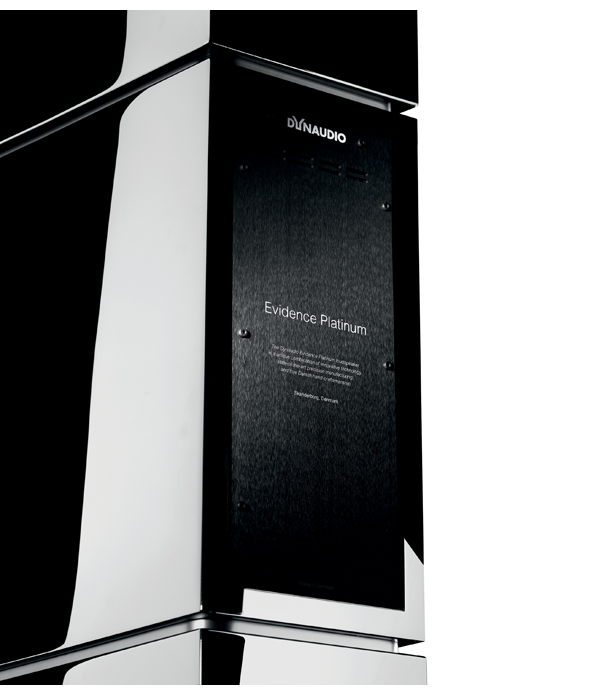
In the day where $200,000 speakers are becoming more and more common, Dynaudio’s top speaker tips the scale at only $85,000 per pair. Yes, yes, the word only is going to offend a lot of people, but if you happen to be in the market for a six-figure pair of speakers, this level of greatness for $85K is a bargain—it’s all relative. After living with the Evidence Platinums for some time now, I see no need to drop $200K on a pair of Wilson XLFs. And that’s enough money left over to put a new Porsche GT3 in your garage. I know what I’d rather buy.

A number of things make the Evidence Platinum speakers unique. Though they are over 6 feet tall, they carve a very small footprint in your listening room, and thanks to a wide range of wood finishes, along with piano black, they should blend in with any décor. While minimalist yet tasteful grilles are included, the precision craftsmanship of the front sculpted baffles beg them to be left uncovered. Those without large pets or small children will have an easier time leaving the grilles off.

No Limitations

Much like a high-performance supercar, the Evidence Platinums have few limitations. And just as an Aston Martin feels different from a Porsche or a Ferrari, all three cars still provide stellar performance way beyond that of normal transportation. Sticking with the automotive metaphor, the Evidence Platinums remind me of the Audi R8: a new concept that offers similar if not better performance than its contemporaries—and with a bit more style. The Dynaudios are definitely one of the most svelte large speakers around.

Having lived with Dynaudio’s much smaller Confidence C1 Signatures for a few years, I notice a striking parallel between the two speakers. The comparatively diminutive C1s, with their highly optimized front baffle, present a musical picture almost like a point source, while the massive Evidence Platinums simply disappear. In a small room at low volume, with equally high-quality electronics driving the speakers, you’d be hard pressed to tell the difference, other than on the deepest low-frequency excursions.

However, in a larger room, when the sound level comes up and dynamic expectation increases exponentially, the Evidence Platinums justify their price tag. Queuing up the Stereophile test CD reveals solid bass performance at 25 Hz, which is lower than what you’ll need for most program material. Playing Mickey Hart’s “The Eliminators” at high volume confirms the measurement; these speakers can punch you in the chest—hard. The four 7-inch woofers move more air than a single 12-inch unit; yet, because of their small size, they are faster, providing mega bass with maximum tone and definition.

The Evidence Platinums make it a breeze to discern between bass players and their respective styles: The difference between a Hartke bass-guitar amp with aluminum cone drivers and a vintage Ampeg amp with paper cones is now easily apparent. This is what adds so much to the musical experience, making your music so much more immersive. And that’s what you should get when you write the big check.

Top-of-the-Line Technology

Dynaudio has left no stone unturned with the Evidence Platinums, taking advantage of the company’s top technological advancements. Relying on silk dome tweeters since the beginning, Dynaudio’s design requires a very labor-intensive process that involves shaping the fine-fabric dome and treating it with a specially formulated coating. The “Precision Coating” used throughout the Platinum range is Dynaudio’s latest refinement to that process. The higher uniformity of the dome’s shape results in a smoother high-frequency response and even more dispersion of mid and high frequencies.

This is clearly evident when comparing female vocals through the Confidence C1s and the Evidence Platinums. A quick spin of Ella and Louis Again uncloaks the difference in the timbre of Ella’s voice, which is already silky smooth and convincing when played through the C1s. By comparison, the Evidence Platinums dematerialize completely, even though they are so much bigger physically. This is truly the magic of these speakers: They vanish like a mini monitor and are transparent like an ESL, yet they have the drive of an enormous cone speaker.

The Evidence Platinums throw a soundstage that is staggeringly wide and deep, but they also get the height aspect right—probably due in part to their physical height. While playing the MoFi copy of Frank Sinatra’s Nice And Easy, I feel as if Sinatra is standing right in front of the speakers, with his voice coming from where his mouth would be.

Custom drivers, check. Precision optimized crossover network, check. Premium electrical and mechanical parts throughout, check. The combination of all these technologies is certainly present in most flagship loudspeakers, but Dynaudio’s DDC (Dynaudio Directivity Control) system is the heart of what makes these speakers perform the way they do.

The combination of the finely shaped front baffle, driver placement and matching the phase response of the individual drivers makes for a more focused dispersion pattern that does not require nearly as much room treatment to sound their best as do many large speaker systems. This is all trickle-down technology from Dynaudio’s professional division, taking advantage of what the company has learned building studio monitors.

Another benefit of this optimization is the ease of setting up the Evidence Platinums. We’ve spent hours (sometimes a day or more) to get reference-caliber speakers to sound their best. The Evidence Platinums sound great right out of their crates before much attention is paid to positioning. About an hour’s worth of fine-tuning brings the speakers to the point where, when Dynaudio USA’s Michael Manousselis stops by to check my work, he merely makes a few fine adjustments and then I’m on my way. These are not finicky speakers by any stretch of the imagination. Even the machined plinth offers a choice of footers for hard and soft surfaces. Once unpackaged, the Evidence Platinums only take a few days of 24/7 play at modest volume to open up and sound their best.

Still Solid, Months Later

After listening to these speakers day in and day out for months, I am still amazed and impressed. It’s easy to get carried away with premium speakers after first listen, especially after running through a number of well-recorded audiophile classics.

This is not the case with the Evidence Platinums. I go out of my way to dredge up even the worst-sounding selections in my music collection, and these speakers do a fantastic job with any program material. There is nothing I can throw at them that trips them up. Regardless of the program material and volume level, we simply cannot drive the Evidence Platinums hard enough to invoke listener fatigue.

With a sensitivity rating of 89 dB and a crossover network of 6 dB per octave, the Evidence Platinums are very easy to drive with either tube or solid-state amplification. Even in my 16-by-25-foot listening room, more than adequate volume levels are achieved with the 20-watt-per-channel Nagra 300i integrated amplifier. I would suggest about 100 watts per channel or more for best results, especially if you like to hear your favorite music reproduced loudly.

While these speakers can reproduce some great dynamic swings, they are highly linear, with their massive stereo image still intact, even at very soft volume levels—again, not unlike a great mini monitor. Chrissie Hynde’s signature vibrato comes through clearly on the original Pretenders album. The delicacy present in “Private Life” puts Hynde in the room, right near the center of the listening position.

Coupled to the amazing Pass Labs Xs300 monoblocks, with nearly boundless power on tap, the Dynaudios really come to life. As I blast Lou Reed’s The Creation of the Universe, there isn’t a point at which the wide, vivid stereo image ever collapses—no matter how high the volume. Much like the Focal Maestro Utopia speakers that we just got done auditioning, the Evidence Platinums excel at reproducing large-scale music, especially drums and percussion—and they do so without fatigue.

You Need a Pair

If you are looking for a statement loudspeaker, look no further than the Dynaudio Evidence Platinum. After six months of constant listening (and punishing) on an incredibly wide range of musical program material, I can tell you that there is nothing that the Evidence Platinums can’t handle, if you have enough amplifier power on tap.

Along with their musical performance, the Evidence Platinums offer a level of fit and finish that is in keeping with a speaker of this level. They exude luxury and will be an excellent fit for the world’s finest listening rooms, a fact that can’t be overlooked when spending this kind of money. Lastly, Dynaudio is a major player in the speaker industry, so this is a purchase that can be made with confidence, knowing the company will be around to support these speakers.

With so much capability, the Dynaudio Evidence Platinums should be your last speaker purchase.

Dynaudio Evidence Platinum loudspeakers

MSRP: $85,000 per pair

www.dynaudio.com

Morel Octave 6 Limited Floorstanding Speakers

Though I knew little about Morel before this review, after listening to its new Octave 6 Limited floorstanding speakers, the company now has my attention. Based in Israel, Morel builds car speakers, in-walls, and various standalone options, as well as its own drivers.  Morel has been a manufacturer of premier drivers for a number of major speaker companies for some time now, however while all of their drivers share core technologies, the ones utilized in their own systems are built from scratch and customized for that individual speaker.  Everything from crossover to the drivers is done in house, except for cabinetry.
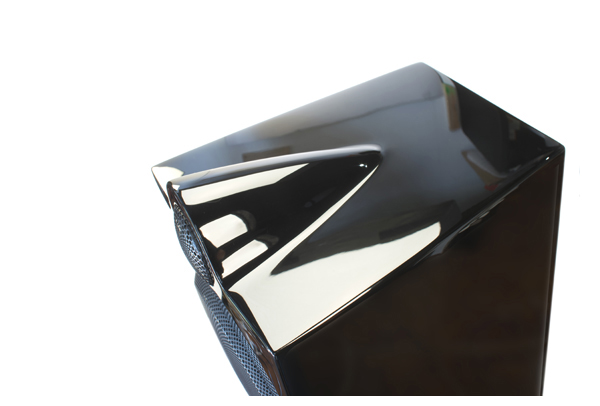
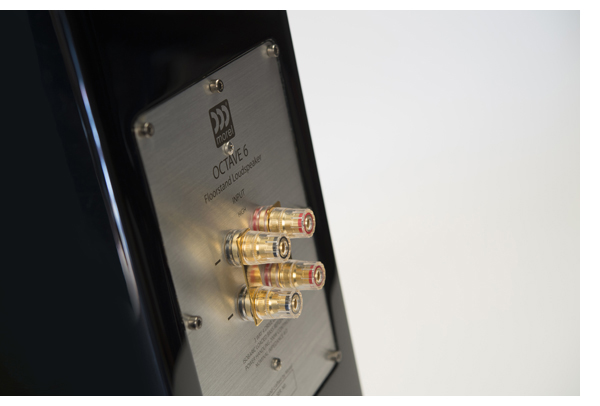
The Octave 6 Limited speaker line, which is among Morel’s mid-tier hi-fi offerings and contains some trickle-down technology from the top speakers (mainly the Fat Lady flagship speaker), includes a bookshelf/stand-mounted model, a limited-edition floorstander with larger woofers and voice coil, finished in either black or white lacquer.

Design and Setup

I put the Octave 6 Limited floorstanders through their paces. They utilize a 1.1-inch soft dome tweeter, a 6-inch midrange unit with a 3-inch voice coil, and a single 9-inch side-firing subwoofer with a giagantic 5.1” voice coil and a hybrid carbon fibre/paper cone. All the drivers are covered with protective lotus grille, utilizing a special pattern to minimize reflections and resonance – a special tool is enclosed to carefully remove these grilles for maximum sonic effect. Though they are disparately placed, the drivers display fantastic sonic cohesion.

The box cabinet is modified with some curved edges and includes a rear port. The forward-firing tweeter is molded to the top and set slightly back to ensure proper time alignment with the midrange driver, which is set into a slight bulge extending from the otherwise straight cabinet. These floorstanders are rather small in stature, measuring 38 inches tall, 13.4 inches wide, and 7.3 inches deep; they weigh about 52 lbs each.

A double set of binding posts allow for bi-amping. For those using standard speaker wire, stamped and gold-plated jumpers connect the binding posts. In testing, I found that a set of Jena Labs jumpers sound better than the stock jumpers. The speakers also come with a set of spikes to couple them to the floor.

The binding post and driver placements remind me of the Audio Physic Virgos, which I had for several years. A new pair of the Virgos cost around $7,000, so I found myself very eager to hear what the $7,000 Morels could accomplish. As much as I loved the Virgos, the Octaves prove themselves a better choice for my taste.

After an hour of scooting the Octaves around my listening room—which is 17 feet deep and 20 feet wide, with a 10.5-foot ceiling—I find the ideal placement to be about 4 feet from the front wall with a slight toe-in, thereby twisting the side-firing woofers slightly toward the rear of the room.

Sound and Performance

My reference speakers, the Piega P-10s, are larger than the Octave and in their day, the Piegas cost twice as much as the Octaves, so it’s not a fair comparison, though the Octaves offer some similarities in terms of sonic signature. They reproduce a little less detail and ambience than the Piegas, though they absolutely hold their own, filling the room with wonderful music. The Octaves create the illusion of sitting a few rows back in an auditorium during a live performance. From that perspective, a bit of lost detail is natural.

Morel says the Octave’s frequency response covers the 20-Hz-to-20-kHz range of human hearing and extends to 22 kHz. The speakers offer a high level of neutrality, more so than the Virgos, which have a slightly warm character. Considering the Octaves modest cabinet size, the amount of low-frequency information they portray is impressive. The upper and mid-bass regions remain tuneful, tight, and well defined. Frequency-sweep tracks verify the speakers can produce very low frequencies, though they roll off below 40 Hz in my room, despite experimentation with speaker placement. The Octaves do work magic, but at some point the rules of physics take over. There’s only so much stomach-tingling oomph that a small enclosure can muster.

The Octaves don’t offer the level of bass tangibility I’m accustomed to with my reference speakers. For example, passages on Pitch Black’s “Ape to Angel” leave me longing for more heft. Still, I remain amazed at what the Octaves can produce, given sufficient amplifier power. The touch of low-bass shyness I experience may not be as apparent in a smaller room.

The Octaves do a great job of high-frequency extension without tipping toward an edge of stridency or etch. They deliver plenty of detail while maintaining the music’s natural sound: accurate male and female vocals; cymbals retain their shimmer; saxophones and clarinets are rendered with appropriate woodiness; and on good acoustic guitar recordings, it’s easy to discern the difference between nylon and metal strings.

Soundstage and Dimensionality

The Octave 6 Limited speakers have the ability to cast sound in all directions, while drawing no particular attention to the physical location of the speakers. Music drifts organically and effortlessly between and beyond the speaker boundaries, immersing the listener in sound. Everyone’s listening space provides different benefits and challenges. In my room, the perceived depth of the soundstage behind the speakers is not quite as dramatic as some speakers I have encountered. However, the left, right, and vertical sonic extension rivals that of some of the best speakers I’ve heard in this space.

The Chesky Records test disc illustrates how far the Octaves can extend a sonic image into the room. One track features David Chesky beating a tom drum while walking around an omnidirectional microphone; another utilizes a surround-sound processor to simulate the same activity. In both cases, the Octaves convincingly create the auditory illusion that Chesky is indeed walking a big circle around my listening space. Though my listening chair is against the back wall of my room, it’s as if David Chesky has somehow walked behind me. Many speakers do a good job approximating this illusion, but the Octaves do a fantastic job.

To Each Their Own

The Morel Octave 6 Limited floorstanders are marvelous speakers, especially considering the value they offer at a $7,000 per pair. Across objective audio metrics and subjective musical preferences, the Octaves excel.

Those with large listening rooms, those who crave every ambient nuance of a performance, or those who prefer bass-heavy rock and electronica may want to seek larger and more expensive speakers that can better deliver those characteristics. Those caveats aside, the capability of the Octaves across the audible spectrum is extremely good for speakers in this price range—and their ability to deliver three-dimensional imaging is indeed rare for this price. If that appeals to you, head to your local Morel dealer for a demo.

Morel Octave 6 Limited Floorstanding Speaker

MSRP: $7,000

www.morelhifi.com

PERIPHERALS

Speakers Piega P-10
Digital Source Light Harmonic DaVinci DAC Audio Research CD3 Mk 2    HP Quad Core desktop with Windows 7 and JRiver Media Center 19
Analog Source SME 10 with 10 tonearm    Dynavector 17D3 cartridge
Preamplifer Coffman Labs G1-A
Amplifier Mark Levinson No. 335
Cables Jena Labs interconnects and Twin 15 speaker cable
Power Running Springs Audio Haley    RSA/Cardas Mongoose and Golden power cords
Accessories ASC Tube Traps    Cathedral Sound room-dampening panels    Mapleshade Samson racks    Coffman Labs footers

Alta Audio Launches new speakers at NY Audio Show

Alta Audio will be debuting three new speakers at the New York Audio show on Sept 26, and will be having a press meeting in their room (313) at 1:00 PM that day.
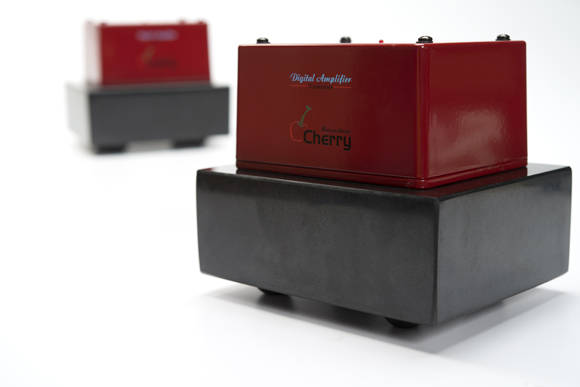
They will be featuring the 7’2″ Statement tower, the full range Solo and the compact monitor FRM-2, which we’ve just finished reviewing for issue 66.

Issue 65

Features

Personal Fidelity:

McIntosh’s MHA100 Headphone Amplifier!

By Bailey Bernard

995:

Blumenstein Audio’s Thrashers

By Mark Marcantonio

Getting Personal:

An in-depth interview with Sharon Van Etten

By Jaan Uhelszki

TONE Style

The Beats Pill
By Jeff Dorgay

Space Girl Bath Bomb from Lush

The Screw Pen

Staying Green:

Living with Smart’s Electric Drive

Crowdfunding-It’s not just for HiFi anymore:

Snappy clothing from Gustin


Music

Current Releases:

Fresh Releases in the Pop/Rock World
By the TONE Staff

Audiophile Pressings

Jazz & Blues
By Jim Macnie & Aaron Cohen

Snapshot: Deep Purple
By Jerome Brunet

Previews

REL S2 Subwoofer

Alta Audio FRM-2 Speaker

Van Alstine Vision Phonostage

Rega RP-10 Turntable

From the Web

Ortofon 2M Black Cartridge

Reviews

BAT VK-3000SE Integrated Amplifier
By Rob Johnson

PrimaLuna DiaLogue Premium Preamplifier
By Jeff Dorgay

Peachtree Nova220SE Integrated Amplifier
By Mark Marcantonio

Simaudio MOON 610LP Phonostage
By Jeff Dorgay

Roksan Kandy K2BT Integrated Amplifier
By Andre Marc

Ortofon’s 2M Black

I’m sorry to say we are late to the party on this one…  Ortofon’s 2M Black has received numerous accolades from nearly every hifi magazine on the planet and with good reason – it’s a fantastic sounding cartridge.

Trying to break the price/performance barrier, there are a couple of great moving coil cartridges that immediately come to mind, and Ortofon’s own SPU at $999 is at the top of my list, but all of these cartridges need a step up device of some kind, which adds to the bottom line.  Much as I’d rather have 16/44.1 digital well implemented than budget high res, I feel the same way about cartridges.  I’d much rather listen to a great MM with a well designed phono stage, than a budget MC cartridge with a less than stellar phono stage.

Enter the 2M Black.  Reasonably priced at about $700, depending on where you purchase one, this cartridge features a shibata stylus and is very easy to set up.  With an output of 5mv and a recommended tracking force of 1.5 grams, it works equally well with your favorite vintage receiver to a modern MM phono stage.  Mounted in my Thorens TD-124/SME 3009 combination, equally good results were achieved with both a vintage Sansui 771 receiver and the Decware MM phono stage in my reference system.

Previously accustomed to the current OM40 and the vintage VMS20 cartridges, there is a definite family resemblance, yet the 2M Black displays more refinement throughout the range.  Almost exactly like the Cadenza Bronze cartridge I use in my Avid Volvere SP turntable, the 2M Black features an incredibly clean midband.  This cartridge does not enhance, embellish or color the midrange in a way some other designs can.  It proves an incredibly good mate for the Decware phonostage, which is a few drops on the warm side of neutral, making up for the slight bit of soul that the 2M Black does not posess.  Again, you might view that “soul” as coloration, so if that is your preference, ignore my choice in phono stage here.

Digital Amplifier Company Cherry Maraschino Monoblocks

The Digital Amplifier Company—founded in 1996 and located in Allentown, Penn.—solely produces hyper-engineered, audiophile-grade Class-D amplifiers. Its products output plenty of power from manageably sized and attractive packages. The company’s Cherry line comprises stereo and monoblock variants, which are available in standard or higher-output Ultra configurations.
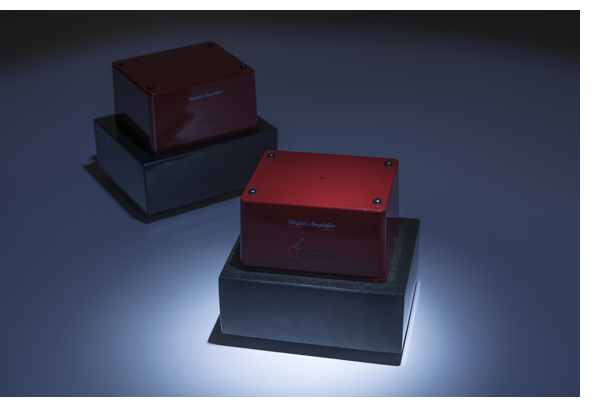

The company says it does not use prefabricated modules and that it designs all vital components in-house, with everything built in the Unites States. Every amplifier comes built to user specifications, allowing customers to choose standard or Ultra configurations and the amp’s color. The company sells direct to end users.

The $4,000-per-pair Cherry Maraschino monoblock model is the newest brainchild of company designer Tommy O’Brien. The Maraschinos are mighty mites, with published output power of 250 watts into 4 ohms. The parts employed are very high quality and include Dayton binding posts, Neutrik XLR inputs, and high-tolerance metal oxide resistors.

The amps feature true balanced input and external power supplies with IEC receptacles. These power supplies are upgradeable, with an available power increase of up to 800 watts. The chassis sits on a granite block, with Sorbothane feet for resonance control. The Maraschinos are produced with a brilliant, high-quality red finish (which is fitting considering the amp’s name).

Setting up the Maraschinos is pretty straightforward, with some twists. The accompanying documentation asks that the user plug in the power supplies last, after all other connections are made, and with low-level music playing through the system. There is no power switch, as the amps automatically detect a signal and come out of standby mode; when no signal is present for a period of time, they return to standby. The amplifier sensitivity is on the high side, at 2.2 volts, but that should be no issue with most preamps and sources.

The Maraschinos accept only XLR inputs, but very nice RCA-to-XLR adaptors are supplied. The adaptors are put to good use, as a passive preamp is what we put ahead of the amps, driving a pair of Harbeth Compact 7 ES3s. Sources include a variety of DACs and disc players. Cabling comes courtesy of Transparent, Shunyata, and Stager Sound.

The amplifiers very much make their identity known from the get-go, with their wonderfully open, clear, transparent, and precise sound. There are no mechanical artifacts or spotlighting of any kind. There is a top-to-bottom, even keeled balance that becomes very quickly addicting such that even familiar recordings come alive with a fresh perspective. This may be due to the Maraschinos’ incredibly quiet background. Music seems to appear out of the ether. Recordings that seemed previously homogenized now appear spacious and wide.

The amps render the Punch Brothers’ Antifogmatic with startling dynamics, precise imaging, and stop-on-a-dime timing. Chris Thile’s well-recorded vocals and virtuoso mandolin playing take on very human qualities, and the groups clever arrangement of Radiohead’s “Kid A” through the Marachinos is worth the price of admission alone.

Peter Gabriel’s New Blood, featuring new interpretations of some of his classic songs, is a hair-raising showpiece through the Maraschinos. The recording is amazingly dynamic; the use of a live orchestra in lieu of rock instrumentation allows the amps to showcase their sound-staging chops. One listen to the new version of “San Jacinto” brings you as close to the recording as you could hope for.

The recent 96 kHz remaster of Nick Drake’s three sublime albums are ravishing through the Maraschinos. Having heard these albums in every format and through countless amplifiers, I find it rather impressive that they still sound fresh, with the amps unexpectedly lifting even more detail from the recordings. If you have a collection of high-resolution music, the Maraschinos will serve you well, as they reproduce what the mastering engineers intended.

After cycling through more genres of music, I discover that the Maraschinos greatest strength is coherence. Bass notes are deep and punchy yet speedy and nimble, with high frequencies sounding extended and smooth. Certainly, system matching is going to be important here. If your speakers edge toward the speedy side of things, that may be too much of a good thing with the Maraschinos. These amps will expose lean-sounding speakers and sources. If listening preferences trend toward mellow and rosy, there will be other amps to look at. However, if clarity, brilliance, and agility are your thing, then the Maraschinos will serve you well. A balanced tube preamplifier ahead of the Maraschinos may indeed provide a perfect balance of both worlds. Neutral, open-sounding cables will also pay dividends.

Perhaps the only quirk to nitpick is that one of the amps is slightly less sensitive than the other, so it takes a few extra seconds to come out of standby. This is not a deal breaker; just a minor annoyance. The fact that the amps save watts while still being ready for optimum performance when awakened is worth the trade-off. They also run cool as a cucumber—a very nice contrast to some of the space heaters usually in for review.

The Digital Amplifier Company has wonderful success on its hands with the Cherry Maraschino monoblocks. By the way, the company’s name does not reflect its design mission: It does not make digital amplifiers. These are analog amps all the way. They are amazingly refined with low distortion. Those accustomed to bogus mid-bass warmth may think the Maraschinos are a bit vivid, but in reality they provide a clean window and they have speed to spare.

If your system needs a kick in the pants, the Maraschinos will deliver. They make our reference system come alive. It is like cleaning a dirty windshield to get a better view of the road. At $4,000 per pair, the Maraschinos are not entry-level amps. They deliver all the real-world power you need, and they’re upgradeable, efficient, great looking, and terrific sounding. These amps give listeners a good look at what the very best amps do well, for a fraction of the cost. Pair them with high-quality sources and speakers and they will deliver the sonic goods.

Cherry Maraschino Monoblocks

MSRP: $4,000 per pair

Digital Amplifier Company

www.digitalamp.com

PERIHPERALS

Speakers Harbeth Compact 7 ES3
Preamp Channel Islands Audio PLC-1  MKII
CD transport Musical Fidelity M1 CDT
DAC Denon DA-USB300    CLONES Audio Sheva
Music server Squeezebox Touch
Cables Transparent    Shunyata    Stager    DH Labs

Wireworld Launches New, Updated Webiste

Wireworld has just finished work on a complete site overhaul, showcasing their products in a much more informative, graphic rich environment than ever before.
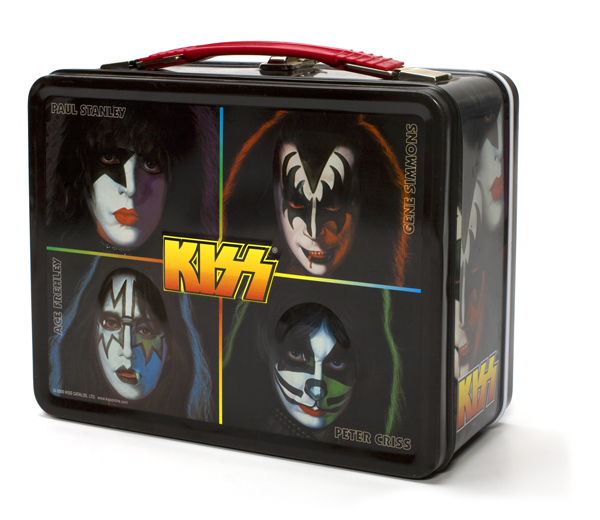
The new site has plenty of product and company info, making it easier to find out more about their products, and their creator, David Salz. Links to their social media portal and YouTube are now available to further expand the Wireworld experience

Stop by www.wireworldcable.com and explore!

KISS Lunchbox

While perusing the cassettes on sale for 99 cents each I almost missed this one, but my daughter let out a squeal when she saw the KISS lunchbox, not realizing this is a most excellent one from the period celebrating the four “individual” KISS records.

KISS Lunchbox:  $5, Mermaid Records

The Kiss Van

Here’s one fan’s ultimate expression for the hottest band in the land, and it succeeds brilliantly.  Contact artist Jay Werner at his studio to explore the possibilities. Maybe a Tales of Topographic Oceans van next?

The Kiss Van

www.jaywerner.com

Price: TBD

Kiss Plushies

Move over Bart Simpson. The hottest plushies in the land are here, and they rule. At about eight inches tall, the likeness of the band’s four individual members are captured in grand style, from the platform boots to guitarist Ace Frehley’s gold Les Paul. And let’s not forget Gene Simmons’ trademark tongue. If you love Kiss, or great memorabilia, you need these. –Jeff Dorgay
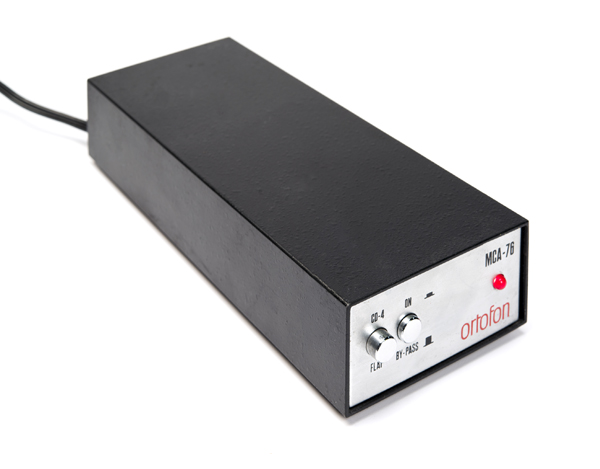
Kiss Plushies

$10.99 each

www.funko.com

Ortofon MCA-76 Head Amplifier

Back when I was selling Technics SL1200s and Shure V-15 cartridges by the truck load, on the brink of becoming an major obsessive audiophile, our shop received the latest and greatest from Ortofon – their MC20 moving coil cartridge and the accompanying MCA-76 head amplifier.  If memory serves me correctly, the cartridge was about 300 bucks and the MCA-76 about twice that.  Big bucks to step up from that Shure indeed.  I was driving a bright green Saab 99 that I barely had that much invested in, but I had to have it.
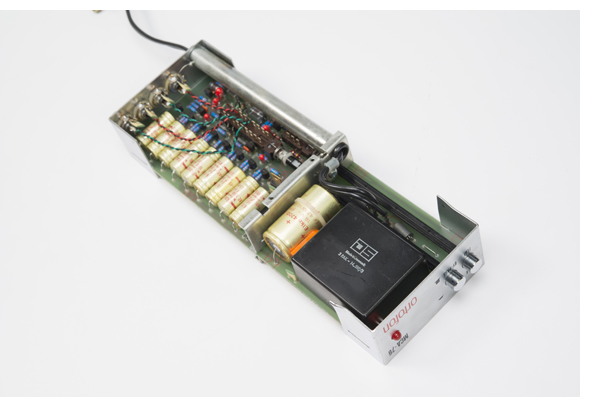
The Ortofon cartridge was a major step up in analog playback, and having just discovered Stereophile and The Absolute Sound, I was crazed with an expanded vocabulary that included words like “soundstage” and “transparency…”  Yes, I was hooked on analog madness in a major way.   Of course, after about two weeks of listening to these new toys, the Technics was no longer good enough and an Oracle Delphi Mk. 2 would take its place, but that’s another story for another day.

Today, the MC20 continues as the MC20 Super, reviewed here, but the MCA-76 is long discontinued, however it is readily available on the secondary market.  And a new old stock MC20 can be purchased for about $100-$200, but vary widely in quality.  The same goes for the MCA-76; these can be had for as little as $100 (what I paid for this example) up to as high as $600.  Six big ones is probably a trifle optimistic, considering that the thirty plus year old electrolytic capacitors in the power supply really need to be replaced by now and how insane you want to get will that could easily add a few hundred more to the eventual price.

Staffer Jerold O’Brien who has a penchant for vintage gear is already champing at the bit to give the MCA-76 an overhaul, add film capacitors, better RCA jacks and a healthy dose of Cardas wire to this vintage jewel, so we may revisit this on the Analogaholic section of our website.

To be as true to my memories as possible, a Technics SL-1200 was borrowed from O’Brien and I still had a pristine example of the MC20 from our review of the MC20 Super.  Once set up at the necessary 1.7gram tracking force, listening could begin in earnest.  This cartridge produces a miniscule output of .07 (mk1) to .09mv (mk2), so the MCA-76 has a correspondingly high gain to match, making it a less than optimum partner for many of todays MC cartridges in the .4 – .6mv range without overload.  There are no adjustments for gain or loading with the MCA-76; audiophiles did not have the plethora of MC cartridges that they enjoy today.

With analog, it’s always worth giving even the wackiest combination a go, even if the specs suggest otherwise and the MCA-76 was not a bad dance partner with the Dynavector Karat 17D3, (.3mv), even though it has a DC resistance of 38 ohms, where the MC20 is only 3.  Ortofon’s SPU Classic GM E cartridge spans the gap between new and old, with a DC resistance of 6 ohms and an output of only .2mv – an excellent combination.

But enough stalling, how did our visit down memory lane with the MC20 go?  Quite well, actually.  Listening to Mobile Fidelity’s version of Los Lobos’ Kiko proved enchanting.  The swinging groove of “That Train Doesn’t Stop Here,” had a wide and vivid sounstage, with the vocals large, in charge and up front, as they are with a modern cartridge.  Moving the MC20 from the Technics to a recently refurbished Thorens TD-125/SME 3009 combination made for even better low level detail retrieval and a warmer overall sound.  The rest of my listening sessions would be with this setup and the MC20 has remained on the Thorens.

Even with the old power supply capacitors, the MCA-76 renders a fairly quiet background, though not as inky black as you’d expect from something like a Lehmann Black Cube.  For now, the jury is out until we upgrade the caps.

Do you need one?  Probably not, unless you can get a major deal and just feel like taking that test drive again, but if you are a careful shopper that can probably be arranged.  The only real exception to this rule would be to pair it up with an SPU on the cheap until you find the $$ for a better MC phonostage.  These two have a synergy that can not be denied.

Either way, it’s always a great time taking a look at legendary gear that changed our perceptions of what analog is capable of, and the solid engineering behind these two pieces from Ortofon continue to this day.

– Jeff Dorgay

Peachtree’s deepblue 2 on the way!

Peachtree Audio, manufacturer of high-performance audio products since 2007, is proud to announce that their INDIEGOGO.com campaign for the launch of deepblue2, the company’s “Ultimate Bluetooth Speaker”, has exceeded $200,000. The campaign reached its initial goal of $63,000 in just over an hour.
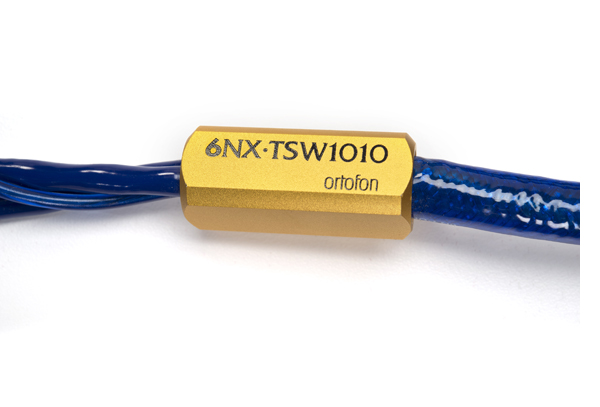
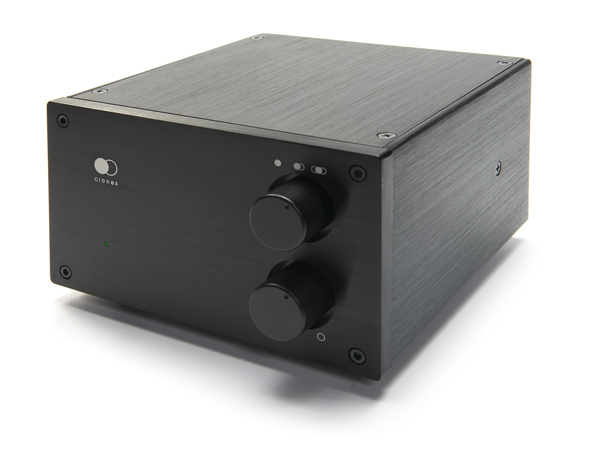
Launched on Monday, July 21, the campaign gave early backers the opportunity to

get deepblue2 for $249, a 50% savings from its expected $499 US retail price. Current backers are still able to get deepblue2 for $299, a 40% discount.

“We’re ecstatic about the response that deepblue2 has received,” said Andrew Clark, President of Peachtree Audio. “Our more than 600 backers include longtime Peachtree customers, as well as people from all over the world who are coming to the brand for the first time. It’s encouraging that more than 20% of our backers have chosen to receive multiple units, and we’re confident that our newly-added referral program will help introduce even more backers to our brand and products.”

Peachtree launched the original deepblue in 2013 to rave reviews from the media and customers alike. The unexpected closing of an OEM supplier forced Peachtree to discontinue the product shortly after the first production run.

Rather than give up on the concept of “Ultimate Bluetooth Speaker”, Peachtree went back to the drawing board determined to build a product that would play louder, produce deeper bass and have even better overall sound quality. The result is deepblue2, a more advanced and higher performance Bluetooth speaker in every way.
“Everybody loved the original deepblue,” said Jonathan Derda, Peachtree’s Ambassador of Awesome.  “The response to our Indiegogo campaign shows that there are a lot of people who want a simple, high-quality all-in-one speaker, and we’re confident they’ll love deepblue2.”

The INDIEGOGO.com campaign for deepblue2 went live July 21 and runs through August 22nd. Deepblue2 is expected to be available from select retailers and peachtreeaudio.com in late 2014 for $499.

https://www.indiegogo.com/projects/deepblue2-the-ultimate-bluetooth-speaker-designed-by-peachtree-audio/x/7065271

Ortofon 6NX-TSW1010 Tonearm Cable

Many associate the Ortofon name with its legacy of phono cartridges, but the company’s product line includes a multiple of analog accessories, including headshells, tonearms, and high-end cables. The 6NX-TSW1010 tonearm cable, like Ortofon’s cartridges, is extremely well built.

The cable’s transparent blue casing showcases the shielding beneath, which surrounds seven conductor cores made of very pure copper. The main cable body is 5/8 inches thick and it is surprisingly flexible; the segments leading to RCA plugs are about 1/4 inch thick, and the grounding wire is much thinner. The whole cable is 1.2 meters long.

I’m surprised to see the forked grounding termination simply crimped onto its wire, given the rest of the cable’s build quality, but the connection is solid. Also, despite the gold-plated RCA covers, the plugs connecting to phonostage binding posts are not gold plated. Regardless, these design choices result in a nice-sounding cable.


While I listen to several albums on vinyl—with an SME 10 turntable and Dynavector 17D3 cartridge—a few consistent characteristics emerge. This cable offers a big sound, meaning that it supports a huge soundstage, with both width and height. Vocals sound very upfront, both as part of the perceived stage and in terms of their relation to the drivers.

Bass is deep but a touch reticent in the mix. This cable delivers a lot of detail without the sound becoming strident or sibilant. It brings the listener to the front of the auditorium. Those desiring a more laid-back and organic presentation might find this cable a bit much, but for those seeking a more upfront sonic delivery, the Ortofon could be just the ticket.  – Rob Johnson

Ortofon 6NX-TSW1010 Tonearm Cable

MSRP: €235 (about $325)

www.ortofon.com

Clones Audio 25i Integrated Amplifier

What started as a one-off unit intended as a family birthday gift has blossomed into a full-fledged audio equipment manufacturer. Hong Kong’s Clones Audio now counts monoblocks and a DAC among its product roster, but its 25i amplifier ($865/€629) is what jump-started the boutique manufacturer. The 25i, which is a 25 watts-per-channel integrated amplifier, was inspired by a 47 Labs’ circuit design that later landed in the public domain for the DIY crowd. After all, not everyone would see the $3,000-plus asking price of the 47 Labs’ Gaincard amp without wincing—and some might double over in pain upon seeing its internal part count.
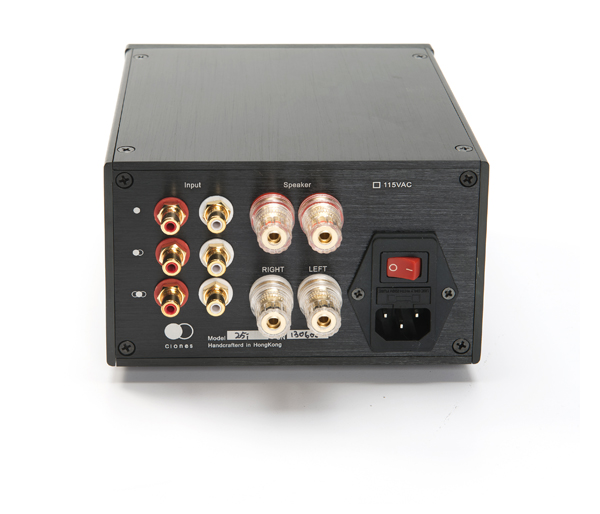
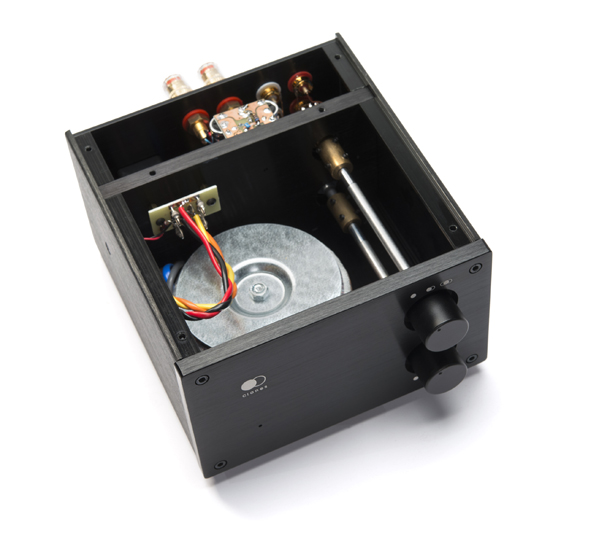
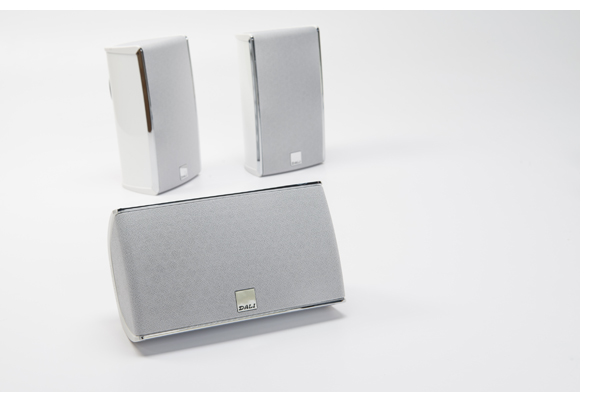
This shoebox amplifier’s genetic connection to the circuit design from 47 Labs’ founder Kimura-San makes the 25i a proper Gainclone. Little wonder then that Clones founder Funjoe went with a brand name that connotes body doubling. His integrated amp mirrors the Gaincard’s short-as-possible signal paths and broader emphasis on circuit simplicity. None of the 30 dB gain comes from the pre-stage; it is only present for input selection, of which there are three. At the business end of the 25i is an in-house-designed board that houses Texas Instruments LM3875 amplifier on a chip.

Funjoe describes his clone as using “no protection print oil to enhance clarity of sound image and musicality.” That’s funny because clarity is also the first descriptor that comes to mind when trying to encapsulate the sound of the 25i. The other word that keeps surfacing is fruity. The 25i offers solid punch, dynamics and tonal color. It’s possibly not quite as zippy as Peter Daniel’s similarly Gaincloned Patek integrated amp, but the 25i fleshes out more acoustic mass to keep the trade-off seesaw perfectly balanced.

Comparisons

First up: the REDGUM RGi60, which is made in Melbourne and is somewhat of a reference at Darko HQ Down Under. The 25i trades in some acoustic mass for upper-midrange zip and caffeination, which lends it that sports-car vibe: a speedy ride with the top down. The REDGUM is warmer, more majestic and better suited to source material like the valium-drenched sound of Lampchop’s Nixon. Conversely, Morrissey’s Your Arsenal really benefits from the Clones’ keener energy with transients that, via the REDGUM, come across as softer and more rounded.

The 25i looks down its nose at the NAD D 3020. The little Gaincloner is an altogether more refined and nuanced listen that those with more luxurious transducers are likely to appreciate. This by no means negates the NAD’s far more impressive feature-driven bang for buck, but the NAD gets found out long before we call time on the Clones.

Playing week in and week out with Wadia’s 151PowerDAC Mini calls for intervention from of one of neatest budget thumb-DACs currently doing the rounds, one that won’t physically crowd out the 25i itself and keeps the DAC-amplifier combination costs within range of Wadia’s all-in-one unit. I lassoed Resonessence Labs’ Herus to the Clones integrated with a ZuAudio breakout cable. The Wadia and Clones/Herus pairing shares similar high-relief edge definition, but the latter steps forward with the larger soundstage. Similarly, the Clones plates up more body, but (crucially) it does so without bringing with it the fuzzier definition that could be attributed to the likes of Rega’s excellent Brio-R.

Loudspeaker Matches

With the French Atohm GT1.0 ($3,440/€2,500), things can get a little too bitey up top when less-than-stellar recordings are running higher SPLs. Thankfully, the Atohm has adjustable tweeter gain on the rear for such occasions. With the top end dialed back, this co-habitation proves to be one I could happily live with long term. I’m not saying the Clones is bright per se; that B word is too blunt an instrument and one that fails to connote this shoebox’s ebullient handling of subtlety. The abundance of micro-dynamic flair might not suit everyone, especially those whose systems are already strong on lower-treble caffeination.

As such, I’d peg the Clones integrated as ideally suited to lusher loudspeakers. Harbeth’s C7ES3 immediately springs to mind. And don’t think for a moment that a $1,000 integrated has no place driving loudspeakers four times its sticker—Funjoe’s shoebox is a genuine over-achiever.

Don’t have Harbeth money? Don’t fret. Wharfedale’s limited-edition Denton loudspeaker is one that channels a vintage vibe in both looks and, to a lesser extent, sound. They definitely lean towards a warmer, thicker-aired presentation and the 25i is just the (dream) ticket; it’s a match that’ll keep your total system cost under $2K. This Gainclone is the hot blade to slice through the Denton’s butter, keeping tight control on the mid-bass so that things don’t get too rich. With the electronic-infused world music of Banco De Gaia’s Maya, bass notes are tight but abundant with texture.

I like this amplifier a lot. It’s no powerhouse and perhaps that’s the reason why I found loudspeaker matching to be more crucial than usual during my three-month audition time. However, find the right dance partner and the Clones 25i brings the goods: acoustic mass, illumination and tonal color, all in one tidy solution. Like the sound of this but need more power? Clones’ 55pm monoblocks might be the answer.

Don’t be fooled by the budget pricing, though. Know that the Clones’ integrated is a bona fide high/er-end wolf dressed in entry-level sheep’s clothing.

Additional Listening

By Jeff Dorgay

Everyone I know who’s had the good fortune to hear this little Clones 25i has really jumped up and down about it, so after the photos were taken I proceeded to really put this little jewel through its paces in the context of a $200K system. Yep, that’s no misprint. Running the dCS Vivaldi stack directly into input one and the output to the Dynaudio Evidence Platinum speakers proves interesting.

While this is clearly insane with a source and speakers of this caliber, it’s pretty obvious exactly what the amplifier in question can and can’t do.  No, it won’t be replacing my $84,000 pair of Pass Xs300 monoblocks anytime soon, but this little amp makes a very impressive showing. It drives the Dynaudios not only with ease but great control. Bass is tight and tuneful, with the high end being smooth and extended.

What you don’t get here is the level of nuance and refinement that the big-dollar stuff offers, but the overall tonality is very neutral. When I swap the dCS and Dynaudio combination for the awesome OPPO 105 disc player and my 90-dB Vandersteen 1Ci speakers, this little amp really blows my mind. The level of clarity for under a thousand bucks is nothing short of amazing, and comparing it to my other favorite benchmark in the class, the Rega Brio-R, I concur with Mr. Darko 100 percent.

Whether you are a budding audiophile or looking for a cool yet compact second system, I highly suggest the Clones 25i. It’s got the right stuff.

www.clonesaudio.com

Dali Fazon Mikro 2 Speakers and Sub 1 Subwoofer

As the starship Enterprise explodes while I’m watching Star Trek: Inception, it’s clear that these miniscule satellite speakers from Dali deliver big sound. Working in concert with the tiny Fazon Sub 1, which utilizes a 6.5-inch long-throw driver, the speakers provide an equally solid bass response, as illustrated by the cannon shots in AC/DC’s “For Those About to Rock (We Salute You).”

Finding a balance between performance and aesthetics when integrating great sound into your living room is always a challenge. Danish manufacturer Dali does a better job than most at combining a modern, understated look with exceptional performance. In the case of the Mikro 2s, the company manages to deliver such performance in a small package that easily fits anywhere.

With an enclosure built of machined aluminum—like the Fazon F5 speaker we reviewed in issue 43—the Mikro 2s feature a slightly curved shape that looks equally at home on a stand mount, on your desktop, or mounted directly to the wall. I use them in a 5.1-channel system powered by the Anthem MRX 510 multichannel receiver that has become my reference workhorse, with 125 watts per channel. Dali also makes the Fazon Mikro Vokal, which is identical to the Mikro 2 but oriented for horizontal use as a center-channel speaker. The Mikro 2s have an MSRP of $650 per pair; the Vokal is $325; and the Sub 1 is $595—which makes for a very reasonably priced multichannel setup. All the units are available in gloss white (as pictured) or gloss black.

Easily Mounted

Thanks to the integral bracket and supplied wall mount, TONE staffer Rob Johnson and I were able to mount the five Mikros in my living room with ease. To angle the rear speakers, we improvised by making wall mounts from a 4-inch long piece of PVC that we painted white, cut in half, and glued to the wall with Liquid Nails. The end result is a very subtle install.

Those wanting stands for the Mikros can purchase accessory stands from Dali, which may better suit your needs if you don’t have speaker cables running through your walls. The stands ($199 per pair) are also available in black or white.

Should you be in tighter quarters, the Mikros can also serve as a kick-ass desktop 2.1 or 5.1 system, enveloping you in sound in a way that headphones cannot. In my small (7-by-10-foot) home office, a pair of the Mikros and the sub underneath my desk delivers prodigious sound surrounding my 30-inch Apple Cinema Display.

Bottom line: These exquisitely crafted speakers work well anywhere, especially if you’re limited on space but want big sound.

Natural Sound

Dali speakers all share a natural voice, and the Mikros continue this tradition. A two-way design with a 4-inch wood-pulp woofer and 1-inch soft dome tweeter, the Mikro 2s have a somewhat low sensitivity of 84 dB, but this does not prove problematic in any situation I am able to create. The 125 watts per channel of the MRX 510 is easily able to drive these speakers to their maximum output of 104 dB, which is louder than I need in all but extreme conditions.

While Dali states that the speakers’ low-frequency response is 90 Hz, placing the Mikro 2s on the wall and fairly close to the room corners takes advantage of room gain, giving the impression of much more powerful bass response than the specs indicate. Using the same strategy with the Sub 1 and setting the crossover at about 80 Hz turns out to be perfect in my listening room. Those craving more LF output might want to consider adding a second Sub 1 in an adjacent corner, though I would resist the urge to get a lone larger subwoofer, as it may not integrate as seamlessly as the Sub 1 does.

Setting the Sub 1 up by ear takes very little time and even a rank beginner should be able to achieve excellent sub/sat integration. The ARC 1M room correction of the MRX 510 takes this to another level, and really helps the Dali speakers disappear completely in the room, both visually and sonically. The speakers are so unobtrusive that almost none of my recent guests even notice them—a major triumph in aesthetics.

Dynamic Range

Because of this natural voicing, the Mikro 2s are a perfect choice for anyone needing their home theater system to pull double duty as a family music system. Operating the receiver in simulated surround-sound mode and cranking the volume makes Cheap Trick’s version of “Day Tripper” (from Found All the Parts) sound convincingly live, with the applause folded into the mix adding to the presentation’s illusion of spaciousness.

Staying in a Beatles groove, tracking through the new copies of the Beatles’ U.S. albums, recently remastered by Greg Calbi, proves equally compelling. The Mikro 2s’ ability to disappear only heightens the ping-pong, ultra-stereo quality of these recordings.

Through these little speakers, Elvis Costello’s vocals in “I’ll Never Fall In Love Again,” (from the Austin Powers: The Spy Who Shagged Me soundtrack) is positively dreamy, capturing the mid-1960s Burt Bacharach feel perfectly, with Costello’s unique vocal styling fully intact. Tegan and Sara’s “I Know, I Know, I Know” is equally enjoyable, with both vocalists able to happily coexist in the soundstage yet with each of their voices being easily discernable.

I run the gamut of rock and jazz favorites, and nothing throws the diminutive Danes a curve they can’t navigate. The only place these speakers come up a bit short is when the program material switches to heavy electronica. You won’t be able to play your favorite Skrillex or Chemical Brothers tracks at full throttle—one can only expect a 6.5-inch woofer (from any manufacturer) to go so far. But everywhere else, when keeping sound levels prudent, the Fazon Mikro 2s always satisfy.

The available bass from the Sub 1 goes down solidly to about 35 Hz and, while this is not the ultimate in extension, it is well defined. Personally, I’d rather have detail in a small subwoofer than just boom, and this is another area where Dali excels. It’s easy to follow the bass groove in Thomas Dolby’s “Hot Sauce,” which exhibits plenty of weight. The acoustic bass line in Stanley Clarke’s In the Jazz Garden is full of overtones, perfectly capturing the speed at which this legendary player moves up and down the neck of his acoustic instrument.

Beauty, Value and Performance

The Dali Mikro 2 system offers all three of these virtues in equal measure. There will always be the audiophile who wants a traditional floorstanding or stand-mounted speaker, but for those wanting their music system to less obtrusively integrate into their surroundings, I suggest the Dali Mikro 2 system. This small system’s service to musical truth makes for a convincing home-theater experience. You will not be disappointed.

Fazon Mikro 2 speakers

$650 per pair

Fazon Mikro Vokal center-channel speaker

$325

Fazon Sub 1 subwoofer

$595

MANUFACTURER

Dali

CONTACT

www.dali-speakers.com