







Gear

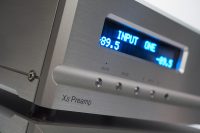
Benchmark DAC-1HDR An Excercise in Evolution

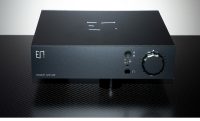
Benchmark DAC-1HDR

All the way back in issue three of TONEAudio, we gave the original Benchmark DAC-1 our first Exceptional Value Award. Through the years, they’ve continued improving this diminutive yet highly powerful piece of audio gear and even though it has gone up in price from $995 when we first reviewed it to $1,895 today it offers a lot more under the hood. Amazingly enough, Benchmark’s engineers have managed to squeeze it all into the original box, so on the outside it looks pretty much the same. For those of you just needing the basic DAC and headphone amplifier, you can still buy the original DAC-1 for the same price of $995. That’s pretty awesome, considering our wacky economic times.

What made the DAC-1 such a great value was the addition of an outstanding headphone amplifier to the package. You’d easily have to spend $400-600 to get this kind of performance with an outboard headphone amplifier and you’d need more cables, etc. The DAC-1 has always included the option of fixed or variable outputs, which has always made it very handy as a linestage in a pinch, or as the cornerstone of a compact, yet high performance audio system. Then, as now, I still can’t think of a product that does more in less space than the Benchmark DAC-1, no matter what version you choose.

A quick history refresher

If you’ve followed the progress of the DAC-1, it originally offered coaxial, XLR and optical digital inputs along with a pair of RCA and XLR outputs. But, we audiophiles always want more and as more people started to use laptops as music sources, Benchmark answered the call and provided the DAC-1 USB, with a USB input. I had mentioned in my review of the DAC-1 USB that this would be the perfect combination if it only had an analog input, so that this could truly be used as a front-end component for that music lover that enjoyed analog as well as digital sources and the DAC-1 PRE was born, featuring an analog input.

They’ve been reading my mind

As cool as the DAC-1 PRE was, I began thinking “now if it only had a remote control…” and before you know it, we now have the DAC-1 PRE. This unit includes the recent op amp upgrades to the last few rounds of the DAC-1, featuring high current LM4562 op amps in every step of the analog path. Comparing the current DAC-1 HDR to the original DAC-1 reveals slightly less grain than the already good original, when playing them side-by-side in my reference system.

However the big change, along with the remote control is the addition of a custom, motorized ALPS volume control. It offered very smooth operation from the remote and perhaps replacing the original volume pot with the ALPS version accounted for a little of that added smoothness. Now the DAC-1 HDR is the perfect compact linestage/headphone preamp/DAC combination. Hmmm, maybe they’ll add a couple of triode tubes to the output stage next? Or a phono preamp? Let’s see those guys at Benchmark squeeze that one in that tiny case!

But seriously

All kidding about vacuum tubes aside, the DAC-1 HDR does a fantastic job with its core technologies. As I said, I made it a point to compare the original to the current model and there is definitely a slight advantage to the latest in regards to smoothness in the treble register.

The strength of the DAC-1 HDR is that it is such a great all around piece. If you are just looking for a DAC or don’t need the analog input, save the money and grab the original DAC-1 or DAC-1 USB.

The sound of the Benchmark as a DAC overall is very neutral and dynamic. While it lacks the bass slam or smoothness of my Wadia 781SE or the new Simaudio Moon 750 that I’ve spent a lot of time listening to, these units cost 7-10 times what the Benchmark does. Regardless of what the measurement geeks want to tell you, there’s more to the sound of a DAC than the bits and you won’t get a $10,000 DAC for a $1,000.

However, the Benchmark still stacks up very well against its similarly priced competitors, offering a neutral midrange, solid bass performance and some airiness to the presentation. What makes it outstanding is the other functions it performs without needing additional interconnects or power cords.

Another extremely cool feature of the DAC-1 HDR is the pair of balanced analog outputs. This allows you to keep the DAC 1-HDR up on a shelf, perhaps with a music server, etc and run a long pair of balanced cables to a power amplifier elsewhere in the room. Which is precisely what I did, pairing the DAC-1 HDR with a few different amplifiers; the McIntosh MC275 (tubes), the Nagra PSA (solid state) and the BAT VK-55SE (tubes). Equally impressive was the DAC-1 HDR’s ability to drive a pair of 20 foot RCA cables as well. This is certainly a very robust output stage!

A superb line stage

Making the DAC-1 HDR the hub of my test system worked well when I added my Technics SL-1200 with Sound HiFi mods and SME tonearm to the mix, along with the Simaudio Moon LP 5.3 phono preamplifier. Digital sources were a Sooloos music server via S/PDIF input and my MacBook Pro via USB.

The Benchmark had no problems playing high res files from either source and recognized the MacBook and a windows Netbook with no glitches whatsoever. I also made it a point to try the TOSLINK connection, with no problem. Gone from the original DAC-1 is the XLR digital input, so if you are one of the rare users that need this for your transport, you will be out of luck on the DAC-1 HDR

The sound of the line stage is just like the analog stage of the DAC; clean, dynamic and neutral. Similar to many of the op amp based preamplifiers I’ve heard, there is a similarity in the sense that an ultimate sense of “airiness” is not present. You can only cram so much into a tiny box and in the Benchmark’s defense, the $3,500 Classe preamplifier I auditioned last year that was full of op amps (and did not have a DAC or headphone amp inside) sounded no better, it’s just the nature of the beast.

Great news for headphone lovers

I’m not sure what I like better about the DAC-1 HDR, the DAC, or the headphone amplifier. Using the new Sennheiser HD-800’s as well as my HD650’s with Stefan Audio Art Cables and AKG 701’s with ALO Audio cabling, I always had a great time listening to my headphones. The DAC-1 HDR spent a fair amount of time in my bedroom system with the Wadia 170i and an iPod full of uncompressed files.

The stereo image provided by the DAC-1 was very wide and the bass performance with the HD650’s and HD800’s was very powerful. The DAC-1 also did a great job at driving the AKG 701’s, which is notoriously tough to drive. If you are primarily a headphone user that would like to build a system around one box (two if you have a turntable) the DAC-1 HDR will be a perfect match for the space limited audiophile that still wants great sound.

Much more than the sum of its parts

If you break it down, the Benchmark DAC-1 HDR is essentially a $700 linestage, a $700 DAC and a $500 headphone amplifier. The sound quality and resolution of each stage compares favorably, comparing each section of the DAC-1 HDR to individual components easily costing twice as much. Back $300-500 out of that price for even the least expensive interconnects and power cords, and this is a value that just can’t be beat.

Again, I am proud to give the latest version of Benchmark’s DAC-1 one of our Exceptional Value Awards for 2010. This is a fantastic anchor to a system in the $4,000 – $10,000 range and one that you will have to pay quite a bit more money to outgrow.

-Jeff Dorgay

The Benchmark DAC-1 HDR

MSRP: $1,895

Manufacturers website:

http://www.benchmarkmedia.com

Peripherals

Analog source Technics SL-1200 w/Sound HiFi Mods, SME 309 Toneram, Simaudio Moon LP 5.3 preamplifier and Lyra Dorian cartridge

Digital sources Sooloos music server, Wadia 170i, McIntosh MCD500 (as transport)

Amplifiers McIntosh MC275, Nagra PSA, BAT VK-55SE, Moscode 402au

Cable Shunyata Aurora, Cardas Golden Reference

Power Running Springs Haley, RSA Mongoose power cord


The Red Wine Audio Black Lightning DC Power Supply Get those wall warts out of your system!

The Red Wine Audio Black Lightning DC Power Supply

By Jeff Dorgay

If you’ve been reading TONEAudio for the last couple of years, you know I’m a big fan of the battery-powered gear from Red Wine Audio, built by Vinnie Rossi and his team. I’ve used their Signature 30.2 power amplifiers and their Isabella tube preamplifier with excellent results. The key to a large part of these components success is the fact that they are powered “off-the-grid” from high-current, sealed lead-acid (SLA) batteries, and Red Wine Audio has made the them effortless to use thanks to their SMART charging system.

The great thing about SLA batteries is that they have very low impedance (very high output current capability) and relatively flat discharge characteristics. The benefit to you is that the sound does not change as the batteries begin to discharge, and dynamics are maximized. I’ve used a number of battery-powered components, and the ones that rely on normal alkaline batteries (the Sutherland PH3D and Chord preamps come to mind) change their sound dramatically over the charge period and don’t have the low output impedance. The result is a sound you can’t really get used to.

SLA batteries are much better in this application, but they do require a certain amount of care to keep them performing at their peak, but who’s got time for that? What Red Wine Audio has done with their new SMART (SLA battery Monitoring and Auto Recharge circuit) board is to make the battery process a “no fuss, no muss” affair. Everything works in the background, so you only need to concentrate on the music. When the battery voltage discharges down to a set level (which is continuously monitored via the SMART board), the SMART circuit automatically turns OFF the unit and begins the recharge process for you. In addition to being very convenient, it maximizes battery life by avoiding accidentally deep-discharging the SLA batteries.

There are three other very important features worth mentioning about the Black Lightning: First, when you are using battery operation, the charging circuit is completely disengaged from the batteries, so there is no chance of noise leaking into the power supply. The battery charger itself is a separate unit that plugs into the Black Lighting for total isolation.

Second, the Black Lightning has 0.5 second in-rush current limiting avoid the high current in-rush that you don’t typically see with conventional AC power adapters because they cannot supply nearly the same level of output current. According to Vinnie, it’s actually better to leave your component switched on all the time and use the power switch on the Black Lightning as your power switch, thus always allowing “soft starts” of your audio component – which prolongs the life of their internal components.

Third, and possibly most important, I have to believe that while a good portion of the Black Lightning’s improvement comes from removing your audio component from the grid, it also eliminates one or more switching power supplies from proximity to your system. Anything in your HiFi system that uses a “wall wart” power supply is a noise bandit, dumping a healthy amount of RFI back into your power line and associated components. Even with world-class power line conditioning, I noticed a slight decrease in background noise with my other components, having eliminated the two switching power supplies from my system.

Red Wine brings this technology to the rest of us

As cool as the idea of getting off the grid is, for most power amplifiers, it’s not practical because of the high voltage requirements. But for preamplifiers, phonostages, dacs, and other low-level components that accept DC input voltages from AC wall adapters, Black Lightning will elevate the performance of your components to a whole new level. The minute you leave the grid, you’re leaving any AC-related noise and distortion components behind completely.

Earlier this summer, Vinnie and I were discussing exactly this and I asked him if he could build an upgraded 12Vdc power supply for my Nagra VPS phono preamplifier. I’d like to think I had a small hand in the process and in November, the Black Lightning was born. There are two models to choose from, the Series 10 and the Series 12. The main differences between them are the available output voltages and their current capacity (measured in Amp-Hours), which translates into the ability to power a component that draws more current for a longer period of time.

You can read the full list of configurable options here:

http://www.redwineaudio.com/products/black-lightning

The Series 10 starts at $625 and the Series 12 starts at $825. When you think about it, that’s just about what a good power cord would set you back. Hmmm. My review centers around three components that I felt would respond very well to being removed from the grid and that accepted a 12Vdc input (which I had Red Wine Audio configure a Series 10 unit for me); the Nagra VPS phono stage, the Nagra LB portable digital recorder and the Wadia 170i iPod dock.

Across the board gains

The $9,000 Nagra VPS/VFS phono stage has been my reference for over a year now and is a hybrid tube/solid state design. I’ve been very satisfied with the VPS/VFS, but it’s always had the slightest bit of background noise and hum that I’ve just chalked up to life with tubes.

Immediately after plugging the Black Lightning in, all of the noise was gone, even when sticking my ear right up to the tweeter. The Black Lightning redefines the term “inky black background.” The big surprise was when I set the stylus down on the first record, Neil Young’s Live at Massey Hall. (200g. Classic Records version) We gave this record one of our product of the year awards in the audiophile recordings category. If you have this record, you know how big the soundstage is, but adding the Black Lightning just blew the boundaries out of my room. The Nagra’s already excellent dynamics went up a few solid notches. It just wasn’t the same preamplifier anymore. Everything I loved remained, but now it was super sized!

I am a big believer in clean power, and the validity of good power cords, but I’ve never had this much improvement from any power cord or line conditioner. I currently use the Running Springs Dmitri line conditioner on the front end of my system (and a Running Springs Maxim on a separate 20 amp line for my power amplifier) and I feel this product is the top of the mountain in power line conditioning products. I would compare the difference plugging the Nagra into the Black Lightning to be an equivalent jump in performance I experienced when I plugged the rest of my system into the Dmitri from the wall. Background noise decreased dramatically, dynamics increased substantially and the upper registers got smoother, yet more defined.

The more records I played with the new “upgraded” Nagra, the more impressed I was with the contribution of the Black Lightning supply. The effect was all positive and not the least bit negative. The bass drive had increased substantially, as if I had added a subwoofer to the system!

As much fun as the additional bass grunt was, this already detailed phono preamplifier was considerably better with microdynamics than before. No matter what kind of music I was listening to, I was always able to hear further into the recordings than I could before, thanks to the lower noise floor. This also gave my system the added benefit of sounding “louder” even at low volumes because the effective dynamic range was increased.

I’d also like to mention that when Vinnie and I were discussing playback times as he was developing the Black Lightning, I was expecting about 4 hours worth of playback time with the Nagra VPS (based on its power consumption rating) and I’m getting about 8 hours consistently. Very impressive!

Benefits with other devices as well

I had similar results with the Wadia iTransport dock, and this was very easy to discern using the Wadia 781i as my DAC. Everything was decidedly “less digital” sounding and the gap between .wav files on my iPod and the CD played on the Wadia closed further.

When using the Black Lightning with my Nagra LB digital recorder that is already battery powered by AA batteries, the main difference when using the Black Lightning SLA battery supply was slightly increased dynamics, better resolution during lower level passages and much longer record time. The LB will eat up eight AA cells in pretty short order, and with the Black Lightning I was able to record all day long without stopping to recharge. Again, the added benefit here with a Black Lightning is that you aren’t tossing a pile of Duracell’s (that contain mercury) in to the wastebasket on a regular basis. Better sound and better for the environment.

A product that truly exceeds expectations

In the world of high-end audio, there are a lot of snake oil vendors and precious little science and engineering, with every new widget promising nirvana where none previously existed. Red Wine Audio’s Black Lightning power supply is well-built, with solid engineering behind it and does a fantastic job at its designated task. You can’t ask any more from a component!

If you have something in your system that uses a switched mode/wall wart power supply and feeds a DC output voltage to your component, the sonic benefits you will receive from the Black Lightning will be instantly apparent. It has certainly made a welcome addition to my reference system. Give Vinnie a call to see if he has one that will suit your needs.

The Red Wine Audio Black Lightning, $650 – (approx.) $1,000 depending on size and configuration.

www.redwineaudio.com


The Running Springs Maxim Power Line Conditioner Another level of clean

By Jeff Dorgay
The Running Springs Maxim Power Line Conditioner

As a long time owner of Running Springs power conditioning products, I was very anxious to hear the effect of their newest power conditioner, the Maxim on my system. Unlike a number of other power product manufacturers at the recent Rocky Mountain Audio Fest that made outrageous claims for their power products (two of which have already been returned to their companies already), RSA designer Dan Babineau simply told me, “If you like your Dmitri, the Maxim uses the advancements I made going from the Haley/Jaco/Danielle series of our products to the Dmitri, but with additional filtering. It’s been optimized for high power/high current amplifiers.”

The new Maxim has an MSRP of $4,500 and the optional HZ power cord is another $1,495. The standard Mongoose power cord is $695.

In six years the RSA line conditioners have been the only ones I’ve been able to use in my system, that I could plug a power amplifier into without negative results; mainly the squashing of dynamics at modest to high volume. Every other power conditioner I’ve tried has fallen down when I’ve plugged my CJ Premier 350 or Burmester 911 mk.3 amplifier in. I’ve heard a couple do a respectable job at cleaning up the power (however, not as good as the RSA), but the minute you plug a big amplifier, the magic is gone.

In my reference system, most of my line level components (preamplifier, phono preamplifier, turntables and DAC) are plugged into the Dmitri on its own dedicated 20-amp circuit. My Naim CD555 has it’s own dedicated 20 amp line with a Running Springs Haley and the power amplifier on another 20 amp line with a Jaco.

How much further can it go?

I was particularly interested in torture testing the Maxim because I was working on a few high power amplifier reviews for our December issue. We’ve got the SimAudio Moon W-7 monoblocks at 500 watts per channel, the Burmester 911 mk. 3 at 350 per channel and the McIntosh MC1.2kw monoblocks at a staggering 1200 watts per channel as part of the lineup. And there’s a JL Audio Gotham hanging around with the ability to put out about 4000 watts in short bursts, so I couldn’t think of a better trial for the Maxim.

The Maxim took me by surprise because I was already content with the Jaco in my system, paired with the HZ power cord. Though I approached this with some skepticism, the result of swapping the Jaco for the Maxim was not subtle.

Immediately, I noticed a lower noise floor overall. This is instantly perceived as an increase in volume, because what your ear interprets as an increase in volume is actually the difference between loud and quiet. So if you want your system to sound louder, you can get more juice by making it quieter. Everything appears louder for the same given SPL.

Even more exiting was the increase in soundstage width and depth. With the Jaco in place, it seemed like the soundstage went about a foot beyond the speaker boundaries of the Gamut S-7’s that I used as the benchmark for all of my amplifier tests, but with the Maxim in place on the same music, the soundstage went about four feet beyond the speaker boundaries.

Keep in mind, with both power conditioners, the tonality of acoustic instruments stayed consistent and I could still wind out a big power amplifier without the leading or trailing transients getting shaved off, but in every case, the sound was bigger and slightly louder with the Maxim in the system. This effect also remained consistent, whether I was using the big Macs or my CJ LP70S, which is only 70 watts per channel.

The serious torture test was playing music at moderate to high levels with the big power amplifiers I had at my disposal. When those big blue meters on the MC1.2kw’s start swinging up past 600 watts per channel, you need current and that’s what the Maxim delivers. If you take a glance on just about any HiFi forum, you’ll see any number of posts where people throw their arms up and mention that their system always sounds more dynamic and lifelike when they just plug back in the wall. With the Maxim it’s just the opposite. Whether you are blasting Shostakovich or Snow Patrol, your system will exhibit a level of dynamics you didn’t think possible.

Is it real or is it Memorex?

Of course the human ear is fairly adaptive and it’s very easy to get used to the sound of one component over another after a while. After about a month of continuous listening with the Maxim, I plugged my Jaco back in the system to see if I really “needed” a Maxim. Everything shrunk down by a substantial amount and the system got slightly quieter, even at low volumes.

Keep in mind a power conditioner should not affect the tonality of your system at all. You shouldn’t get deeper bass or a more extended high end. Properly implemented, a good power line conditioner and associated power cords should merely deliver 100% of what your components are capable of delivering. No matter where you live, your power is moderately lousy to really lousy, because there are a lot of distortion components present in the line when power is generated. In short, things should get quieter and bigger. That is precisely what the Maxim does.

So, do I need one? You bet I do! If you have a modest system, it doesn’t make sense to buy a $6,000 power conditioner and power cord. Grab a Haley and enjoy the benefits. But if you’ve got a state of the art system and you’re already at 11, thinking there’s no where else to go, rest assured; there’s one more click on the dial with a Maxim.

The Running Springs Maxim Power Conditioner

MSRP: $4,500 (alone) HZ power cord, $1,495, Standard Mongoose power cord, $695

www.runningspringsaudio.com

Peripherals


Analog Source
Spiral Groove SG-2 w/Triplanar arm and Lyra Skala cartridge

Digital Source
Naim CD555

Preamplifier
Conrad Johnson ACT2/series 2, Burmester 011

Power Amplifier
Burmester 911 mk.3, CJ Premier 350, CJ LP70S, McIntosh MC1.2KW monoblocks, SimAudio Moon W-7 monoblocks

Speakers YG Acoustics Anat II Studio, Verity Audio Sarastro II, GamuT S-7

Interconnects
Shunyata Aurora

Speaker Cables Shunyata Stratos SP

Power Running Springs Dmitri and Haley, RSA Mongoose power cords, Shunyata Python CX power cords


The MartinLogan Purity: HiFi with ease!

By Jeff Dorgay
The MartinLogan Purity:  HiFi with ease!

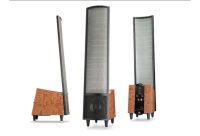
In the last few years, MartinLogan has received a lot of praise for their hybrid electrostatic designs, mating their legendary electrostatic panel to a dynamic woofer. In the case of the Purity, it’s a pair of 6.5-inch woofers in a very compact package that will only take a 10 x 15 inch patch of your living area.

What makes the Purity special though, is the fact that these are powered speakers, so you only need a source component and a pair of fairly long interconnects to build a complete system! These speakers feature a 200-watt, high resolution, switching amplifier built in, so if you want high quality HiFi, but don’t want a rack full of gear to go along with it, the Purity is for you. You can even run them with an iPod or Squeezebox and have the ultimate minimalist system. The Purity can be customized for different color options, at a base price of $3,295.

Small sources

That’s exactly where I started my journey with the Purity. In my small (11 x 17 foot) living room with my iPod full of Apple Lossless files and a pair of 8 foot Radio Shack interconnects. Worth noting when you set the Purity up for the first time, there is a hard plastic base on the bottom of the speakers that will tilt the speakers’ electrostatic panel back somewhat or keep it straight up.

Pay careful attention to this adjustment, because tilting them back gives the speaker a better overall tonal balance if you are going to be listening to the speakers primarily walking around the room or mostly standing. If you are going to be more of a traditional audiophile, listening in your chair, stand them straight up. Note, that with either of these positions, you will lose some of the high frequency and focus when you are not in the optimum listening position.

Tech info

If you’ve got a high quality source, you will be floored at how good the Purity sounds and how much music comes out of these relatively small speakers. I’m guessing you will be in one of two camps: A legacy MartinLogan owner that needs another pair for a different room in your home or office or someone new to the MartinLogan way of doing things.

If you are new to the electrostatic speaker experience, you’ll be surprised at how open and airy these speakers sound compared to a lot of box speakers, and that’s MartinLogan’s trademark. The diaphragm inside the panel assembly weighs close to nothing, so it can accelerate instantly. Thanks to the crossover frequency being so low (450hz) this panel handles most of the critical musical information and the two small woofers give you the same amount of bass you would get with a larger woofer, but in a smaller space. Those two small woofers also move faster, to keep up with the panel, adding to the overall transparency of the sound.

If you’re already a MartinLogan owner, you know all this stuff and you probably want to know how the Purity compares to the larger speakers you already own. The actual panel in the Purity uses the same materials and construction as the rest of the MartinLogan line (all the way up to the flagship CLX, which is one of my reference speakers), featuring their 2nd generation electrostat panel technology.

Wow!

Even using my iPod as a source, I was very impressed with the sound of the Purity. Think of the Purity as a bite-sized serving of what the CLX has to offer. When sitting in the sweet spot, it’s easy to be fooled at first listen that you aren’t hearing something much more expensive than the Purity and that’s it’s best attribute.

Granted, a switching amplifier has some limitations and because of the two 6.5 inch woofers, these speakers will reproduce solid bass down to about 40hz, where MartinLogans’ larger speakers will go all the way down to the mid 20’s, the overall balance is excellent.

As a MartinLogan owner, I was excited at just how much sound I could coax out of these speakers. After quite a bit of iPod listening, my next task was to investigate the limits of performance these speakers were capable of, so my next task was to drag out some better interconnects, power cords and source components to find out if this was a serious HiFi speaker after all.

Upping the ante

Again, the Purity passed with flying colors. Now, my “budget” system consisted of the Audio Research SP-17 preamplifier that we had in for review along with the Marantz K-A1 Pearl CD/SACD player. Both of these components cost almost as much as the Purity, and I did upgrade from Radio Shack interconnects to two pair of ED422 interconnects from Empirical Design, valued at about $500 each. I swapped the stock power cords from the Purities for a pair of Shunyata Venom cables ($125 each) and plugged the whole system into a Running Springs Haley power conditioner.

Bottom line, the Purity is up to the task of being the cornerstone of a real “audiophile” system too, so even if you start out just using the Purity with an iPod, you can rest assured that if the upgrade bug bites, you can grow with these speakers.

The Sound

The sound is pure MartinLogan. Open, airy highs, walk through midrange and tight punchy bass. I kept going back and forth between my dedicated listening room where the CLX’s make up a six-figure system and the Purity in my living room with the ARC/Marantz combination, playing the same CD’s on each.

The Purity did a fantastic job with everything I played. My favorite rock records had plenty of body and of course, vocal records really let these speakers shine. At times, you could definitely hear the limitations of the switching amplifiers present in the Purity, but that was only when comparing the system to my reference system. I think MartinLogan has done a great job with integrating the amp and speakers.

When playing musical selections that did not possess huge dynamic swings or subterranean bass notes, it was easy to be fooled when going between rooms. I was surprised at how good the speakers’ bass response was, considering the printed spec lists the LF response at 41hz. Yep, the driving bass line in “In-A-Gadda-Da-Vida” came through loud and clear. Speaking of loud, these babies did a great job with my favorite Mastodon, Tool and Metallica cuts, so they should be able to play anything else that interests you after this torture test.

While the Purity does not have the full scale of dynamic range that the more expensive Vantage or Spire possess, it does one thing better than most of the speakers in the MartinLogan line; top to bottom coherency. Those small woofers are fast and articulate. So much so, that you might be fooled into thinking this is a full range electrostat!

The only real limitation to the Purity is that the sweet spot for critical listening is small. If you have them angled back, the sound is very good all over the room, but the best sound will only be in one spot. Same thing if you have them optimized for your chair; that will be the only place you get all of the magic. Keep in mind you would have the same limitations with a small pair of mini monitors in this kind of space too, so I don’t see this as a limitation.

I also made it a point to run some fairly long interconnects to these speakers, as they only have RCA line-levelinputs. While I didn’t have any trouble with 20 foot interconnects, it might be a good idea for the next version of these to have balanced XLR inputs as well. Those with a budget source only possessing speaker level outputs can connect via the speaker level inputs as well.

In the end, convenience

Thanks to the internal power of the MartinLogan Purity, they make a great place to put a high quality sound system, where you might not have in the past. In five minutes you can have them set up and playing music and that’s what it’s all about. Though some of you might get grumpy that a powered speaker doesn’t give you the flexibility to choose amplifiers, speakers, etc., you’re missing the point; the Purity is the perfect speaker for someone who doesn’t want to bother with all of that! Plug em in and enjoy.

Because the Purity offers this level of performance, style and simplicity in one package at such a great price, we are awarding it one of our Publishers’ Choice awards for 2009.

The MartinLogan Purity
MSRP: $3,295
www.martinlogan.com

Peripherals

Sources: iPod Touch, Audio Research SP-17 preamplifier, Marantz K1 Pearl SACD player

Cable: Empirical Design ED 422 interconnects, Shunyata Venom Power Cables

Accessories: Running Springs Haley power conditioner


The Rega Elicit – A top shelf integrated

By Jeff Dorgay
The Rega Elicit – A top shelf integrated

Ed. Note: This review was published in late 2008, but we somehow failed to upload it this spring when the site was overhauled. Our apologies!

Rega has had a string of great products lately, including the improved P3-24 turntable and the stellar Ios phono preamplifier. While I might be accused of being biased toward Roy Gandy and company, it’s pretty hard not to like them when everything they’ve sent our way has been such a home run. Actually, I’m getting more and more biased towards having a great integrated amplifier in your system.

Integrated amplifiers in general have been making a comeback for a while and we’ve had quite a few of them in our paws this year that have been spectacular. The Sim Audio Moon i-7 at $7,000 is one of my favorites and features a beefy 150-watt per channel power amplifier section. The Naim SuperNait at $5,000 is less powerful but has a versatile DAC built in along with a fantastic headphone amplifier stage.

Perhaps you don’t require a built in DAC or a headphone amplifier and you would like to spin some LP’s without having to purchase an outboard phono stage? Enter the Rega Elicit. For $3,000 without a phono stage or $3,200 with your choice of MM or MC card installed, the Elicit could be the amplifier for you. My review sample came with an MM board, as Rega did not yet have the MC boards in stock, so we will do a follow up on the MC board as soon as we receive one.

The Elicit has more than enough inputs to be the center of your HiFi system. If you order yours with the phono board installed, there are five more high level inputs; four on the input selector as well as a tape monitor input. There are three outputs as well; a variable level output marked “preamp output” that you can use with a powered subwoofer or perhaps an additional power amplifier in a biamped setup, a fixed level output marked “record output” for a tape recorder, CD recorder, etc., and an additional fixed output marked “record output link” which is functionally equivalent to the record output. Rega says that the phono preamp is a plug in card and mentions “future options.”

The Elicit is rated at 82 watts per channel and while we don’t measure our amplifiers output on a bench, I can say that it played just as loud with the same speakers as the Naim SuperNait (rated at 80 watts per channel), so as long as your speakers have a sensitivity of at least 86db the Elicit will have enough power for your application. I do find the subwoofer output critical for an amplifier at this level, I’ve auditioned too many pricey integrateds that ignore this feature.

This amplifier is continuing in the path that Rega has started down with the Ios phono stage as part of their premium line of components. “This is the best integrated we are capable of making” Roy Gandy told me in a recent phone conversation. “The circuit has actually been around for a while and we’ve been refining it.” If you aren’t familiar with Rega as a company, they do not rush to market with anything, always waiting until a product is built exactly the way they want it. Their website says at the bottom of the page “they are the last major HiFi manufacturer to produce a CD player.”

Peeking inside the Elicit shows the attention to detail, with premium parts everywhere and I’d like to emphasize that there are no Class-D modules or op amps anywhere; the Elicit’s circuitry is all discrete.

Music in five minutes

Even with a turntable, CD player and subwoofer, I was rocking out in no time with the Elicit. The instruction manual is straightforward, as is the remote. As you are lifting the Elicit out of the box, you will notice how beefy it is – there’s a major power supply lurking under the casework. With a similar form factor to the rest of the Rega components, the Elicit will look right at home with a P9 and PSU power supply, an Ios phono stage, or a Rega CD player. The big difference is the openings cut in the left and right sides, revealing some massive heat sinks for the output stages.

The volume control is somewhat recessed in the front panel and is microprocessor controlled, changing volume in +/- 1db steps. Rega claims better than .2db channel balance, which I had no reason to doubt. I liked the row of LED’s that light up around the volume control as you increase the level, as an alternative to a large LED panel with numbers. And yes, those of you that get grumpy about glowing LED’s can dim them from the remote.

Top quality sound

You’ll forget all the specs the minute you fire up the Elicit; this is something special indeed. While I liked what I heard immediately, after a couple of days of continuous play the Elicit opened up even further.

Because I see the Elicit as the core of a very high performance system, I made it a point to use it with quite a few different speakers, including the MartinLogan Spires in for review as well as the 53 thousand dollar Loiminchay Chagalls. Even with the mega Loiminchay’s, which are known for their exceptional resolution of fine detail, the Elicit held it’s own.

The good news is that the Elicit has enough current drive to power the Logans just fine and every other speaker I was able to throw at it. So unless you need concert hall levels or just have tremendously inefficient speakers, the Elicit should be able to drive most speakers with ease. I ended up settling in on the system mentioned in the sidebar, with a pair of Harbeth Compact 7ES-3’s, a Rega Saturn CD player and a Rega P3 turntable with Clearaudio cartridge.

I’m fortunate enough to have a very high performance system to listen to every day and while this system I’ve assembled does not eclipse my six figure reference setup, it does nail the fundamentals so well, that it’s easy to forget that you aren’t listening to a much more expensive system. Listening to music that isn’t terribly demanding on the frequency extremes, like the new James Taylor album, Covers, or perhaps some chamber music will easily fool you into thinking you are listening to something a lot more expensive.

What fools you into thinking that you are listening to much more expensive gear is the tonality that this amplifier provides. While you won’t confuse the Elicit for a tube amplifier, it does have a drop of warmth to the presentation, sounding closer to the Luxman 590 (All class-A) than say the Moon i-7 or the SuperNait. Listening to my favorite classical discs was very pleasant indeed, with the Elicit having an unmistakable ”rightness” about it.

I briefly added the Luxman D-7 combination player that we have in for review, so that I could listen to the new Analogue Productions SACD release of Sonny Rollins Saxophone Colossus and it was awesome, showing off the dynamic capabilities of this amplifier. When Sonny blasts away, the Elicit did a fantastic job at capturing the transient attack. I had equally good luck with some of my favorite Mahler and Shostakovich discs. At moderate to loud levels, I always felt like there was enough headroom to enjoy the music without strain.

The Elicit’s performance under torture is also worth mentioning. I spent a few hours working outside the studio and had a good playlist full of Led Zeppelin, Van Halen and Snow Patrol playing, running the Elicit at full volume for about four hours straight. The heatsinks got a little warm, but not hot to the touch, indicating robust build quality.

At the risk of sounding vague, the Elicit is very musical. While some solid-state amplification, especially at this price point can sound somewhat harsh and fatiguing, this was never the case with the Rega. Towards the end of the review period, I moved it to my desktop system with a pair of Stirling Broadcast LS3/5a’s and MartinLogan Grotto i subwoofer. This system has incredible midrange detail and a very smooth high end along with an uncanny amount of resolution listening nearfield. Anything that is the least bit fatiguing will become torture during 10-hour Photoshop editing sessions.

Having spent the last two weeks of producing the August issue, listening to this combination nonstop, it was always enjoyable, even after 12-hour shifts, playing a very wide variety of music. I’m sure the parts quality and all discrete circuitry had a lot to do with this.

The hidden jewel

I was not prepared for the surprise that I had when I plugged my P3-24 into the Elicit. I have reviewed a number of integrated amplifiers and preamplifiers that charge $500-700 dollars for a plug in phono board that aren’t nearly as well executed as this one is. While I used Rega’s P3-24 with the Clearaudio Maestro Wood at first, I was so impressed with what I heard, I even upped the game, going to my P9 and Grado Statement combination. While this was pushing things beyond the resolution of the onboard phono stage, it still sounded great.

The internal phono board more than held it’s own when comparing it to a few of the $700 external phono stages I’ve had the opportunity to sample, so for many vinyl lovers, this will be a great place to start. Being solid state, it is extremely quiet with good dynamics and an amazingly open top end for an under $200 upgrade.

Granted the internal phono stage will pale in comparison to Regas Ios (which costs as much as the Elicit), but it’s a great place to start. That being said, using the P9 with the Ios and the Rega Apheta MC cartridge was very impressive indeed. Not a bad way to go for a compact, all analog system!

A great alternative to separates

With integrateds gaining momentum all the time, if you haven’t investigated them in a few years, you will be taken back by just how much performance is now available. The Elicit is the perfect amplifier for someone who wants a high performance music system, regardless of configuration. The fact that you need fewer cords and cables is a big bonus.

Remember, what you get for $3,200 is a preamplifier, a darn good phono preamplifier and a power amplifier all on one chassis. Even buying modest interconnects in an all separates system would be another few hundred dollars and you would require a lot more rack space to get the job done.

It’s also very important to point out that while some of you in the audience might not quite grasp the significance of this $3000 British integrated, Rega has never made an integrated at this price point. They’ve built an amazing reputation on their Brio at $695 and the Mira at $1195, so this is big bucks for Rega. The Elicit offers so much at this price point because Rega builds their products in quantity and everything shares similar casework and packing materials. Unlike some boutique products that penalize the owner for building in small numbers, Rega reaps the rewards for running a tight ship and passes those savings on to their customers.

I defy anyone to put together more performance with a separate power amplifier, preamplifier and phono preamplifier at this price point. I’m happy to say that we are purchasing the review sample to become part of the permanent collection here at TONEAudio.

The Rega Elicit
MSRP: $2,995
www.soundorg.com

Peripherals:

Analog sources Rega P3-24, Rega P9, Rega IOS phono stage

Digital sources Rega Saturn, Luxman D-7i
Speakers Harbeth Compact 7ES -3, MartinLogan Spire, Stirling Broadcast LS3/5a

Cable Furutech Reference III (speaker and interconnect)

Accessories Running Springs Haley with Mongoose power cords, Finite Elemente Pagode Signature Rack


The Pathos ClassicOne mk.III A Petite Italian Beauty

By Jeff Dorgay
The Pathos ClassicOne mk.III

I’ve always been a fan of Pathos Acoustics fusion of Italian style with technology, while always yielding very musical results. The Classic is the perfect integrated amplifier for someone wanting to integrate a compact, yet high performance music system into a design conscious environment. It is very reasonably priced at $3,195.

The ClassicOne mk. III has been part of the Pathos product lineup for some time now and is a solid seller, packing 70 watts per channel onto a very compact chassis that only measures 8” x 14” x 5” (90 x 100×90mm). Though there are five inputs on the rear panel, input one can be either balanced XLR or RCA, with the other three being RCA. There is also a fixed level RCA output to use for recording. I would love to see a variable level output for a subwoofer substituted here. I think this would be highly useful, as often times when a system has to be designed around the decor, a subwoofer/sattelite setup is called into play. Perhaps in the mk. IV?

Major Style Points

From the minute you take the ClassicOne out of the box, the attention to detail is apparent. The front panel is polished aluminum and sculpted wood, with a tiny power switch to the right and an LED display to the left, working double duty as a volume indicator and input selector. The transformer case is polished to a high gloss while the black plexiglass chassis top has a matte finish, something I felt was a nice touch, as it will not show fingerprints as readily as a gloss black surface. The very svelte remote control is made from solid wood and has four small buttons to control inputs, muting and volume.

No attention to detail has been spared on the ClassicOne. The allen head bolts on the top of the chassis are chrome plated along with the control knobs and the small tube cages guarding the pair of 6922 tubes in the preamplifier section. This is definitely a work of art that will get plenty of attention in your listening environment.

A true integrated

Unlike many amplifiers at this price point, the ClassicOne has a separate pre and power amplifier stage. Taking this approach is more costly to the manufacturer, but it does offer more linear volume control action as well as a stable input impedance. Many so called integrated amplifiers with a passive volume control tacked on the front of a power amplifier can be very source dependent, sometimes sacrificing dynamics or rolling off the high end somewhat. I had no problems using the ClassicOne with any of my reference components.

The output stage of the power amplifier is class AB solid state, with high bias current. This uses a few more watts of power, but results in a smoother sound throughout the range, with excellent bass control.

The System

Keeping with the design concept of the ClassicOne, most of my listening was done in the living room system, however to get a good feel for the performance envelope of the amplifier, I started out in the studio, using the GamuT S-7’s, Harbeth Monitor 40.1’s and MartinLogan Spires. Mating a $3,500 amplifier with considerably more expensive speakers is somewhat overkill, but it reveals the limits of the amplifier much easier.

Even as the heart of a $100,000 system, the ClassicOne did an excellent job. I also made it a point to compare it to a couple of my other favorite amplifiers in the three to ten thousand dollar range to see how it stacked up against its peers. Needless to say, I came away very impressed. Should you live with the ClassicOne for a while and decide you have to have more power, the ClassicOne can be bridged and used in mono mode, giving you a pair of very compact 150-watt amplifiers.

We managed to get a second ClassicOne for a brief period and the results were excellent. I’m not sure if I would build a system like this from the ground up, probably choosing one of Pathos larger power amplifiers instead, but the flexibility is a great idea.

Once a baseline feel for the ClassicOne’s performance was established, I moved it back to the living room system, with the highly efficient Zu Audio Presence speakers. This was a great match, because the Zu speakers high sensitivity gave the ClassicOne almost unlimited headroom.

The system was rounded out with the BelCanto CD1, which has a similar form factor to the ClassicOne, though I’m sure if you were starting from scratch, you’d probably want to go with the Pathos Digit CD player – it matches the aesthetics of the ClassicOne perfectly.

Shunyata Venom cables and their VRay power conditioner took care of the power duties with Empirical Design 422 interconnects and 213 speaker cables made up the rest of the system. All told, I had assembled an extremely satisfying system for just over $10,000.

The Sound

The hybrid concept of the ClassicOne succeeds brilliantly, truly combining the benefits of both technologies. The overall tonal balance is slightly warm, yet it has the grip of a good solid-state amplifier. When listening to “The Barbarian” on Keith Emerson’s current album, the tiny Pathos amplifier took hold of the GamuT’s woofers and shook the room accordingly, with the low synth bass notes on “Ignition.”

Thanks to the ClassicOne’s rich sound, the female vocal lovers in the audience will be extremely happy. Those of you that live on a steady diet of this kind of music will love the way this amplifier gives solo vocalists a larger than life presentation. Spinning Jacqui Naylor’s Live at the Plush Room, 2001 put her center stage, about six feet in front of the equipment rack. It’s worth noting here that the ClassicOne makes an outstanding combination with the Focal Utopia Diablos that we reviewed last issue. The warmth of the Pathos with the high resolution of the Diablos convinced many visitors to my home that they were listening to a much more expensive system.

Those two tubes give this amplifier something special, offering a slightly lush, airy presentation that I think will bring out the best in source components that are similarly priced. It’s also worth noting that the ClassicOne offers one balanced input, so this will give you a lot more flexibility when choosing source components. Many of today’s newer DAC’s have balanced outputs, so this is handy, if you want to put the Pathos amp front and center, yet have your DAC and perhaps a music server elsewhere in your listening room.

The ClassicOne’s slightly forgiving nature was also a huge blessing when streaming audio from the Internet, or using the iPod as a source. The 320kb/sec feed from the Zune Pass on our living room’s HP Touch Smart music server sounded the best I’ve ever heard from a low-resolution source.

When we stepped up the game a bit and played some high res files from the Naim Label, and the B&W Music club through the Wadia 521 DAC, the ClassicOne had the necessary resolution to showcase the format.

On all but the most inefficient speakers, I had to press the ClassicOne way beyond reasonable levels to drive it to clipping (and again, you can add the second amp if you have to play that loud), even with the Harbeth 40.1’s which have a low sensitivity of 86db.

Conclusion

Overall the Pathos ClassicOne mk.III is one of those rare components that achieves a perfect balance of performance, style and value. Thanks to the small tube compliment, you will not have to worry about sourcing tubes, either. The 6922 and it’s variants are very plentiful at reasonable cost, and I don’t imagine the ClassicOne going through tubes in a hurry, so probably a new pair every five years or so should keep you running along just fine.

Whether you are a mega audiophile putting together a second system, or a music lover that doesn’t want to sacrifice aesthetics for performance, this amplifier will keep both sides of your brain very happy.

The Pathos ClassicOne Mk. III

MSRP: $3,195

North American Distributor

AudioPlus Services
156 Lawrence Paquette Industrial Drive
Champlain, NY 12919
800-663-9352

www.audioplusservices.com

Peripherals

Digital Sources BelCanto CD3, Wadia 521 DAC, Luxman DU 7i combination player

Speakers Harbeth Monitor 40.1, Gamut S-7, Focal Utopia Diablo, Zu Audio Essence

Cable ED Design 213 and 422 (speaker and interconnect)

Power Shunyata VRay power conditioner, Shunyata Venom power cords


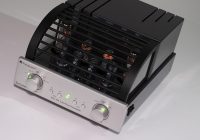
The Vista Audio i34 Integrated Amplifier A Solid Performer

By Mark Marcantonio
The Vista Audio i34 Integrated Amplifier

In the world of audio, simplicity not only exists, but also is ravenously celebrated. Both Conrad-Johnson and McIntosh have produced anniversary editions of a few of their most beloved equipment. The single driver speaker community is alive and well. Most importantly, the days of mass buttons and switches have gone the way of the dinosaur, sans home theater receivers. Vacuum tube equipment thankfully has always followed a more simplified life. Though the process of developing a fine piece of glowing glass is a long and laborious process, the finished product is quite simple, and usually elegant.

Vista-Audio first caught my eye a few years back when I got to spend a few weeks with their i84 integrated tube amplifier. It was a very musical amplifier, that had a tonal purity and did an excellent job with fairly inefficient speakers, so I was anxious to sample their latest creation, the i34, which uses a pair of EL34 tubes per channel to produce 35 watts per channel. This definitely opened up the possibilities to mate the Vista sound with a wider range of speakers.

The i34 is designed and built in Serbia and is very reasonably priced at $980. It uses a pair of ECC832’s, which designer Boris Sasic feels offers the best qualities of the 12AX7 and 12AU7 in one tube. The latest version of JJ’s EL34 the EL34L’s are used for the output tubes and are supplied in a matched quad for this amplifier.

Sleek and simple

The i34 features a basic layout, reminiscent of the Dynaco Stereo 70 or early McIntosh power amplifiers with an open steel chassis, exposing the tubes and transformers. Definitely an old school approach. The transformers are sourced directly from Traformatic, who’s factory is nearby. Sasic says that this helps to keep the build cost more reasonable, because the majority of the amplifiers bulk doesn’t have to be shipped very far. The i34 weighs 24 pounds, but feels heavier than it is, definitely having a short and stout footprint.

The front panel has a simple volume control and input selector. Around back ar three sets of high level inputs marked CD, TUNER and AUX. There is also a ground for Vistas’ new phono preamplifier that I am in the process of reviewing. There are taps for 4 and 8 ohm speakers, rounded off with a standard IEC receptacle for power and the power switch, which keeps the front panel clean.
Setup and burn in

Thanks to the matched quad of tubes, the i34 leaves the factory with it’s bias already set. Sasic claims that the tubes do not need to be rebiased until a new set is fitted. Per Sasic’s direction, I gave the i34 a full week of burn in before settling down to serious listening.

Not wanting to get too much of a tubey good thing, I kept my modified Jolida CD player with a tube output stage on the sideline and used the SimAudio i.5 and the Rotel RCD-1520 CD players as sources for the bulk of the review. My usual reference speakers, the Eficion F200 speakers were used, sans MartinLogan subwoofer, as the i34 does not have a variable output to use with a sub.

The Sound

The i34 had a very open tonal quality and did not bloat breathy female vocals as some tube amplifiers can do. When listening to Nora Jones, Come Away With Me, the airy sultriness that attracts most listeners to her voice wasn’t overdone in the least. This was very similar to my memory of the i84; midrange magic, but not too much.

Thanks to the more delicate nature of the EL 34 tube, this amplifier is probably more suited to acoustic and vocal music. Unless you have incredibly efficient speakers, you won’t be able to enjoy Megadeth or Audioslave at the proper levels, though I was intrigued with the Who’s Quadrophenia when listening to Keith Moon’s drumming. While this amplifier does not hit you on the head with thunderous bass performance, the quality of the bass is excellent and the amplifier has great pace overall.

Comparing the i34 to my other tube amplifier, the Onix SP3, the Onix amplifier had more overall slam, but the i34 had more detail and delicacy. The i34 is a very resolving amplifier for its price point indeed.

Trying a few different speakers, I had excellent luck with the Swan 2.1SE monitors, which have a slight bass bump, making for an excellent match with the bass performance of the i34. The Era Design 5’s are less efficient and were not terribly enticing overall. The i34 is no different than any other 35 watt tube amplifier in this respect; careful speaker matching is necessary to get the most out of the power on tap.

Final thoughts

There’s a solid selection of tube integrated amplifiers around the $1000 price range. At $980 the Vista Audio i34 holds it’s own very well. The fit and finish is excellent, with an understated vintage aesthetic. The overall presentation is excellent, with this amplifier providing a more refined sound than you would expect at this price point.

The Vista Audio i34 amplifier

MSRP: $980

Manufacturers Information

ENG Vista, Inc.
77-21 86th St
Ridgewood, NY 11385


The Rita-340 Integrated Amplifier Tubey Goodness from Grant Fidelity

By Jeff Dorgay
The Rita-340 Integrated Amplifier

If you like tube amplifiers that hanker back to the glory days of audio with a big, beefy chassis and huge output transformers, the Grant Fidelity Rita-340 is for you. It’s so robustly built that even the careless handling of the UPS guys couldn’t stop it! The substantial crate arrived, looking like it had been dropped off the top of my garage roof, but after I dusted off the Rita and fired it up it worked perfectly and it has worked flawlessly for the past six months. I think this should settle any build questions you might have about this amplifier; anything that can survive that kind of abuse should be fine in everyday use.

The Rita-340 has a substantial footprint, reminding me a lot of the Audio Research D-79 and D-150 that I used to own in the 80s, so make sure you have enough shelf space. It measures 15.5” wide, 10” tall and is 19” deep, weighing about 115 pounds. Perhaps the bottom shelf on your rack may be the best.

The silver faceplate is massive and it features control buttons on the front with a pair of transparent power meters that feature deep blue lights that let you see the tubes glowing inside. The Rita 340 is also available in all black if you prefer that look. If you subscribe to the “deep listening” crowd that needs all the lights out to get in your audio trance, you can switch the lighting off on the back panel. I loved the contrast of the blue panel and the rich warm glow of the tubes. However, I did find the power meters relatively useless. With no markings to show what they really are indicating, and the small, thin florescent orange pointers, they are virtually impossible to read from more than a few feet away. If I made the style decisions, I’d just leave the see through front panel without the meters.

Setup

Keep in mind that this is an integrated amplifier, so the size isn’t so imposing when you realize it’s taking up two spaces. There are four high level RCA inputs and one XLR input, should you have a component with balanced outputs to integrate with your system. I took advantage of this to use my Luxman D7 combination player, which features balanced outputs.

The test system consisted of the Luxman player, my Sound HiFi modded Technics SL-1200 with SME 309 arm, Sumiko Blackbird cartridge and Audio Research PH3SE phono stage. All cabling was the latest Furutech Ref III (speaker and interconnects), with Shunyata Python CX power cords and a Shunyata V-Ray power conditioner.

While most of my listening was done with my Harbeth Monitor 40.1’s, I did try quite a few different speakers during the listening period. The Rita wouldn’t really push my MartinLogan CLX’s or Magnepan 1.6’s (nor did I expect it to…), but it did a great job with all the more traditional dynamic speakers I used it with. Excellent results were achieved with the Zu Essence, Verity Audio Sarastro II’s and the Gamut S-7, as well as a number of mini monitors that have passed through for review.

There are two sets of speaker outputs on the rear panel, and while the amplifier is rated to drive speakers from 4-8 ohms, with a tap for 4 and 8 ohms and a common ground. The speakers I tried had varying impedance and I did not notice any issues driving anything.

Overall the Rita-340 is very easy to use, the only quirky thing I found during the review period was the relatively slow ramp up of the volume control, but I’d rather have it go too slow than too fast, which has been the case on a few preamplifiers I’ve used lately. Fortunately, the stylish remote does have a mute button, so it’s all good.

The basics

The good news is that none of this affects the amplifiers performance, which is excellent. After a brief burn in period of about 50 hours, Rita was in full song. Featuring a pair of EL34’s driven by a 6SN7 and 6SL7 in each channel, tube rollers will be in heaven. I was very pleased with the stock tubes, but swapping the 6SN7’s for a pair of Sylvanias’ I had on hand relaxed the overall presentation, but if you are a tube roller, I’m sure you have your own secret combination. For those wanting to take the amplifiers’ performance a bit further without a lot of experimentation, you can purchase Shuguang Treasure “Black Bottle” 6SN7’s for about $300 a pair and their EL34 tubes for about the same price. Click here to see their variations on the theme:

http://grantfidelity.com/site/catalog/90/shuguang_treasure_series

If you purchase a set from Grant Fidelity at the same time you pick up your amplifier, they will give you 25% off. And thanks to Grant Fidelity’s excellent customer service, if you aren’t quite ready to swap tubes, as a Rita owner, they will still extend the discount later, when you are ready to make the change. Very cool.

If you are new to tube rolling, I’d highly suggest just trying the 6SN7’s. NOS variations of these tubes are indestructible and you can actually change the tonality of the amplifier quite a bit, allowing you to fine tune the sound to your room, taste and speakers. NOS EL34’s may prove too spendy, reaching as much as $300 or more each.

While still on the subject of tubes, the Rita-340 features fixed bias on the output tubes, so you will not have to monitor or adjust bias. This will require purchasing a matched quad of output tubes when retubing, which usually adds 10-20% more to the cost, but because the Rita is run so conservatively, I anticipate tube life to be very long, much like my McIntosh MC275.

If this all sounds like too much work, just fire up the Rita and dig the glorious sound.

Big amplifier, big sound

The Rita is an excellent blend between current and old school design. It has the midrange delicacy that drives most people to a tube amplifier in the first place, yet has the extension at both ends of the frequency scale to sound modern. But being an EL34 design, it does possess more warmth than a KT88 design. If you prefer a punchier version, try their Rita-880, which uses KT88 tubes and is only slightly more expensive at $4,200. The 340 was a perfect fit for me, as the EL34 is one of my favorite tubes, and I’ve used quite a few variations on the theme over the years.

I was most impressed with the quality of the bass and control that the Rita possessed. When used with the $42,000 Verity Sarastro II’s that go solidly down to 25hz, it was no problem getting some serious bass grunt with some resolution. Playing my favorite Pink Floyd and Genesis tracks revealed that the Rita could shake the walls quite nicely, but switching to some acoustic bass showed off the more articulate side of the amplifier.

Listening to “Her Room” on Anja Garbarek’s Smiling and Waving allowed me to cross the acoustic bass and female vocal requirements off the list handily. This record is a great demo, because it starts with some great plucky bass lines and weaves a great sonic texture of trippy environmental effects with Ms. Garbarek’s ethereal voice.

As I mentioned earlier, this amplifier does an excellent job of adding a touch of tubiness without becoming slow and syrupy, but make no mistake; this is a tube amplifier that adds a slight bit of body to the sound. But isn’t that why you buy a tube amplifier in the first place? Listening to some of Henry Rollins’ spoken word discs was outright scary! It sounded like Henry was right in the room screaming at me through the Harbeths. Johnny Cash’s “Delia” from American Recordings and various tracks from Tom Waits Mule Variation were equally haunting.

The presentation never got cloudy, when listening to relatively complex music either. Orchestral music had a very nice sense of spaciousness and placement. The Rita threw a very big and wide soundstage, with a lot of front to back depth as well. While 35 watts can only go so far, the Rita gave its all, even on less efficient speakers and to its credit, clips very softly. 86 db speakers should be no problem if you don’t need to achieve concert hall levels and anything above 90 db sensitivity will let you rock the house.

But there’s just something special about listening to 60’s and 70’s rock on a great tube amplifier like the Rita. That extra body just makes those Marshall amplifiers come alive in your living room. Thanks to the airy presentation, I also enjoyed my favorite grunge records from the 80’s and early 90’s too. Sonic Youth’s “My Friend Goo”, from Goo is a relatively flat recording, but the Rita did an excellent job of unraveling the texture within. Soundgarden was just as much fun to blast as Led Zeppelin and I was always surprised at just how dynamic the Rita made good live recordings sound.

This sense of dynamics really came in handy when listening to some of Naim Records’ latest 24/96 recordings. “Dolphyus Morphyus”, the sixth track on Empirical’s Out and In, has some great sax solos that will push an amplifier to its limits to keep up. The Rita-340 did a great job and never felt strained in the least, so if you are adding high res files to your music collection, you will have no problems here.

Conclusion

Regardless of your musical taste, the Rita is an excellent amplifier that was always involving and most of all, a lot of fun to listen to. As an integrated, you save on rack space and the fact that you will only have to upgrade one power cord (if you are so inclined) and will not need to agonize over interconnects between amplifier and preamplifier. Not to mention the resulting synergy that comes from having it all in one box.

If you have wanted to get back into tubes or are thinking about trying it for the first time, the Rita-340 should provide years of musical enjoyment thanks to its robust construction and gentle use of its power tubes. The folks at Grant Fidelity have an excellent reputation for customer service, so they can help you with tube rolling and other system questions. We are very happy to give the Rita 340 one of our Exceptional Value Awards for 2009.

Manufacturers Information

The Grant Fidelity Rita – 340 Reference Integrated Tube Amplifier

MSRP: $3,500

http://www.grantfidelity.com

Peripherals

Analog Source: Sound HiFi Modded SL-1200 with Sumiko Blackbird and Audio Research PH3SE

Digital Sources: Luxman Du-7 Combination player, Sooloos Music Server with Neko Audio D-100 DAC

Speakers: GamuT S-7, Harbeth Monitor 40.1, Verity Audio Sarastro II, ZU Essence

Cable: Shunyata Aurora interconnects, Shunyata Orion speaker cable, Shunyata Python CX power cords

Accessories: Shunyata V-Ray power conditioner, Shunyata Dark Field Cable Elevators, GIK sound panels, Furutech DeMag


We review the Moscode 402au… It's The Best of Both Worlds

By Jeff Dorgay
We review the Moscode 402au…

The question of whether to power your HiFi system with tubes or transistors has plagued audiophiles for years, with each camp having valid reasons why which is better, but in the end we love what we respond to most strongly; measurements and specs be damned. Up until I found peace and happiness with an all solid-state system from Burmester, I’ve always enjoyed the combination of a tube preamplifier and solid-state power amplifier for years. It started in 1981 when I mated my Threshold 400A power amplifier to a Conrad Johnson PV-2a.

However, to flash forward, hybrid power amplifiers that usually combine a tube driver stage with a solid-state output stage have always been somewhat rare but usually very special products indeed. One of the most special is the Moscode 402AU that we have here for review. Moscode designer George Kaye doesn’t have just any hybrid; he was the first to develop a tube input/MOSFET output stage amplifier, the legendary New York Audio Labs Moscode 300. It was a great amp for the day, but was ultimately limited by the generic quality of parts used at the time that are upgradeable today. As designer George Kaye said, “That was my state of the art at the time. It took 20 more years to refine the Moscode to todays level.”

Today, the 402AU is not hampered by the “cloudiness” that used to plague MOSFET amplifiers of all kinds. The circuitry is up to date and this amplifier features a big, beefy power supply to go along with some other innovative features. This $6,495 power amplifier puts out a very healthy 200 watts per channel into 8 ohms in a dual mono design. As you remove it from its shipping carton, you can feel the quality inside.

Popping the top panel reveals a massive power supply, gold plated circuit boards, (hence the AU in the model designation) and careful attention to detail everywhere you look. It’s obvious that a lot of care was taken in building these amplifiers.

Available in brushed silver, or a black anodized finish (the color of my test sample), the 402 AU has a clear, etched glass front plate with the Moscode logo that glows soft blue along with the four driver tubes, right up there where you can see the glow. Pushing the center mounted power switch on the front panel starts the blue glow blinking for about two minutes until the amplifier is ready to operate, with the outputs staying muted.

Though it sounds good right from startup, once broken in the Moscode takes about 45 minutes to open up all the way, but it’s worth the wait! And for those of you that need to listen in absolute darkness, you can shut the front panel lights off, but I think it’s way too cool to do so…

Straightforward setup

The rear panel is basic and to the point, with Cardas RCA jacks and Edison Price speaker binding posts. Hats off to George Kaye for including these high quality binding posts that accommodate spade or banana ends, instead of those dreadful plastic coated binding posts that many manufacturers are going to. Hooking up my reference Shunyata Stratos SP speaker cables (that are a bit on the bulky side) was a snap.

During the initial 100 hours I spent on burning the 402AU in, I used the supplied, basic power cord to get a baseline read on the sound. Once that was established, I switched to a Shunyata Anaconda cord that powers everything else in my system, so I could make a valid comparison to other components in my system. While it certainly will perform well with the stock power cord, I highly suggest a premium power cord with any high current, high power amplifier to get 100% of what it is capable of. For the review period, the Moscode had a dedicated 20amp line all to itself.

While the Moscode has a pair of single ended RCA inputs, I had excellent success with both single ended and balanced (with XLR adaptors) preamplifiers. I made it a point to use the Moscode with everything from my vintage Audio Research SP-9 all the way up to the Burmester 011. It worked well in every situation I auditioned it and was not particularly swayed by different choices of interconnects either. It had enough resolution that I could easily tell the differences between whatever cable I was using, but nothing in my arsenal from Shunyata, Cardas, Furutech or the others wouldn’t work. The Moscode gets high points for being a great chameleon and not having any system synergy issues.

I had the same luck with speakers. As is customary here, I like to try any power amplifier in question with at least five or six speakers that vary greatly in efficiency as well as difficulty to drive. My Magnepan 1.6’s and MartinLogan CLX’s are both very revealing speakers at their respective price points, yet can be somewhat difficult to mate with an amplifier. Again, the Moscode did a great job with both speakers and would be an amplifier I would suggest wholeheartedly should you own either of these speakers. Having just finished two issues almost completely full of speaker reviews, I went beyond the normal call of duty and probably auditioned the Moscode with about 20 different speakers.

It’s safe to say that this is an amplifier you can live with for a very long time and should not have to trade in if your taste in speakers should change down the road. And if you need more juice, you can operate the amplifier in BiAmp mode, which parallels the inputs for two channels of equal power, one for the highs and one for the lows, however I had no trouble driving my reference speakers with just one amplifier.

Glorious sound

When I earned my living as a commercial photographer and had to go to numerous press checks, when my work was being printed, the age-old argument over “correct color” and “pleasing color” always came up. I have always preferred the printed page to be slightly shifted towards the red, warmer side than the blue, colder side and I like audio the same way. Sure, if we can achieve that perfect balance, that would be ideal, but I’ll take a slight dose of tonal richness over sterility any day of the week.

However, it’s tough to just get that ever so slight drop of “tubiness” into the mixture without spoiling it and coming up with a sound that is colored, gooey and rolled off. It only takes a few percent of magenta or cyan to ruin yellow and here Kaye has succeeded brilliantly. Everything I listened to during the review period had the slightest bit of tonal richness that I enjoyed tremendously. Drum heads sounded very life-like and stringed instruments had a realism that is rarely heard in an amplifier at this price point.

Where a tube power amplifier usually goes too far for my taste, (especially at this price point) and ends up getting a little whumpy in the bass department, the Moscode keeps it tight. Probably has a little bit to do with George Kaye being a bass player… Acoustic instruments had an extra dose of palpability thanks in part to the tubes up front. It’s hard to get around em. And the female vocal lovers in the group will really love this amp too. This is one that lets you get lost in the performance.

Two things really stood out with the Moscode. It’s ability to throw an incredibly deep soundstage and the amount of low-level detail it possessed. I spent a lot of time listening with the Harbeth Monitor 40.1’s and these speakers will not reveal front to back detail with a mediocre amplifier. When listening to the latest MoFi CD release of Beck’s Sea Change, I had stuff spinning all over the room as if I had a pair of surround speakers. Very cool.

Live recordings are always fun to listen for hall ambience to place the players in a distinct acoustic space and my favorite test record of late is Classic Records’ remaster of Neil Young’s Live at Massey Hall. If you’ve had the pleasure to listen to this on a great system, you know how big this record sounds. But another favorite of mine is Jacqui Naylor’s’ Birdland: Yoshi’s East/West. You can hear the depth in the audience on this one. When the people are clapping and clinking their glasses, you can hear the depth in how close or far away from the stage as well. A lesser amp just puts the claps up on the same plane with the stage. Just another day as a HiFi nerd, but something that jumped right out at me when listening to the Moscode.

All this talk about detail and tonality is somewhat meaningless without grunt. Grunt is the fourth dimension in my book. The Moscode possesses a lot of grunt without giving up finesse and that’s what makes it such a special amp. Whether you are listening to a full symphony or blazing guitars loud, the Moscode doesn’t lose its fine-grained ability to pluck the details out of the mix. This amplifier passes the ultimate test – after about 20 minutes you are under it’s spell and you’ll find yourself wanting to just keep spinning whatever kind of discs are in your collection. Unless you have very inefficient speakers, I can’t imagine needing more than one of these amplifiers.

One last trick

For those of you that can’t leave well enough alone, the front panel of the Moscode flips down and exposes the tubes. The 402AU comes from the factory with a pair of 6H30 tubes in the V101 and 201 positions and a pair of 6GU7’s in the V102 and 202 positions. As long as you replace them in identical pairs, you can tube roll to your hearts content. I must warn you though, if you lean the least bit towards adult ADD, this could be the ball of catnip that keeps you from enjoying the music, so don’t say I didn’t warn you. While I did not do a ton of tube rolling (because I really liked the sound straight from the factory) I did swap the factory 6H30’s for a pair of NOS 6H30’s that used to reside in one of my BAT preamplifiers and this is definitely a worthwhile upgrade. The 6H30 tube is very powerful and robust but can be slightly harsh. The older versions of this tube have all the power and less grain. A good pair of these will set you back about $4-500, but they do take the Moscode to an even higher level of inner detail without any harshness.

Interestingly, you can use 6922/6DJ8 tubes in all four positions, but you can only use the 6H30’s in the inside two sockets. This added flexibility assures that you should be able to get tubes for the 402AU no matter where you are.

33 1/3 days to make up your mind

Another part of the Moscode’s secret charm is that it’s sold factory direct. If this amplifier were sold through the traditional dealer network, it would probably cost about 33 1/3 % more. Though I normally am on the side of the traditional retail channel, smaller manufacturers selling direct evens out the playing field and allows them to be more competitive. Best of all, you have 33 1/3 days to return it (in the condition you received it of course) should it not be for you, but I’m guessing this is one you’d have a hard time to walk away from. Don’t have them send you one if you aren’t ready to write the check. George Kaye did mention that they have started selling the 402AU through select dealers, and the pricing will stay the same.

If you need a high-powered amplifier that sounds wonderful and is not the least bit fussy, I can’t suggest a better choice than the Moscode 402AU. I love this amp and purchased the review sample for permanent duty as a reference component here in the TONE studio. I’ve heard many an audiophile and audio critic discuss where the “point of diminishing returns truly is” and this is and amplifier that you will have to spend quite a bit more money to get this combination of power, resolution and musicality.

Manufacturers Information

Moscode
74 Cotton Mill Hill, Suite A124
Brattleboro, VT 05301
1-877-797-8823

www.moscode.com

Peripherals

Preamplifiers C-J ACT2/series 2, Burmester 011, ARC SP-9 and SP-17, Nagra PLL, Red Wine Audio Isabella, BAT VK-32SE, McIntosh MC2300

Digital Sources Naim CD555, Wadia 781SE, Sooloos Music Server

Analog Sources Spiral Groove SG-2 w/Triplanar and Dynavector XV-1s, Nagra VPS phono stage with VFS platform

Speakers MartinLogan CLX, Magnepan 1.6, Harbeth Monitor 40.1, Verity Audio Sarastro II, GamuT S-7, Zu Audio Essence

Cable Shunyata Anaconda power cords, Shunyata Stratos SP speaker cables, Shunyata Aurora interconnects

Power Running Springs Jaco and Dmitri Power conditioners


The Ultimate Remote Control is Here! Say hello to the King of Remotes

By Jeff Dorgay
The Ultimate Remote Control is Here!

I’ve been eyeing one of those $300 universal remotes for years now, but at the back of my mind kept thinking about the marriage of the iPhone/iPod Touch and all of my other devices around the house. You can have the Red Eye for $188.

The future is here, it’s cool and affordable. Most of all, it’s straightforward to use. Well, it’s almost here. The Red Eye from ThinkFlood will be in stores sometime in October, just in time for the holiday shopping season. While you are picking one up for yourself, I suggest buying one for anyone in your family that has more than two remotes laying on their coffee table; they will love you for it.

The only catch is that you need an iPhone or iPod touch to use it. Even if you don’t have an iPhone or iPod Touch, I’d suggest jumping off the cliff for at least an iPod Touch, as you can pick them up refurbed on the Apple Store for about $150. Who cares if you don’t need an iPod, this is the most exciting thing I’ve seen since AV gear started coming with remote controls attached.

Those needing an extra rationalization to buy the latest cool thing, here’s a point to ponder: If you have about seven remote controls lying about, that’s at least 14 AAA batteries you are throwing in the garbage once or twice a year. (Maybe more, if you are a mega channel surfer) If you are buying Duracell’s in a four pack at Walgreens, the Red Eye will pay for itself in two years and that’s about 50 icky batteries you haven’t dumped in the garbage can. See, now you’re an environmentalist and an economist; how cool is that?

The principle behind the Red Eye

Once you program the Red Eye for your devices, when it gets a signal from you iPhone/iPod Touch, it’s base station (that is no bigger than a standard iPod dock, but in a cool transparent blue) will send the corresponding signal that used to come from your remote control, to your CD player, preamplifier or other device. The Red Eye dock also serves as a charger for you iPhone/iPod, so that you will always have it charged and easy to spot. More organization, great stuff!

By the time the Red Eye is out on the market, they should have a large database of built in remote control codes that you can easily download. But for the companies that don’t release their remote codes, or the occasional off the radar device, the Red Eye will “learn” the commands by a simple push of the button. You only need to go into the setup screen and push the “learn command” button on your iPhone.

Easy networking

In the event that you don’t have a wireless network in your house, your iPod device can connect to the Red Eye via an “ad hoc” network. There are complete instructions for that on the Red Eye website, and it usually will not take more than going to the System Settings>Wi-Fi and selecting the Red Eye network. Now your iPod device will see the transmitter. However, if you do have a wireless network, you can link the Red Eye to your network and expand the range of where you can command your empire. This can be very useful if you like to listen to music on the system downstairs while you are lounging in a bubble bath upstairs. When the phone rings, just push the pause button and carry on!

Now the real fun begins

Once you have all of the remotes in your world entered into your iPod device, you can customize how you use these devices and tap the full power of the Red Eye system. The next step is to set up activities for each one of them. The more complex your system, the more you will appreciate the Red Eye, as will members of your family that aren’t as technically savvy.

It’s worth mentioning that the Red Eye will integrate into your lighting system if you have one, so when you want to “Watch a DVD”, you can program your system to open the drawer, change inputs to play the disc player, eject the tray and dim the lights. I told you that you needed one of these.

Even the staunch 2-channel enthusiast will love this. You can mix devices on one panel. For example, as part of the control structure with my Naim CD 555, I added a volume up and down button (that actually control my Burmester Preamplifier) so I don’t need to switch screens when listening to this player. I’ve done the same thing for all three of my disc players and it has made my system much easier to use.

Accessory of the year

With the rest of the accessory articles in the queue for the year, I can spill the beans and let you know the outcome in November right now. The Red Eye will be getting our Product of the Year award in the accessory category. This is by far the most useful HiFi accessory I’ve ever come across. Almost anything that is controlled by an IR device can be managed with the Red Eye. Now you can kiss all of that remote control related clutter goodbye.

If they can only make it control the garage door opener, I’ll be in Heaven.

The Red Eye will hit the market in early November, just in time for the holiday shopping season. You can get more information from their website at:

www.thinkflood.com