










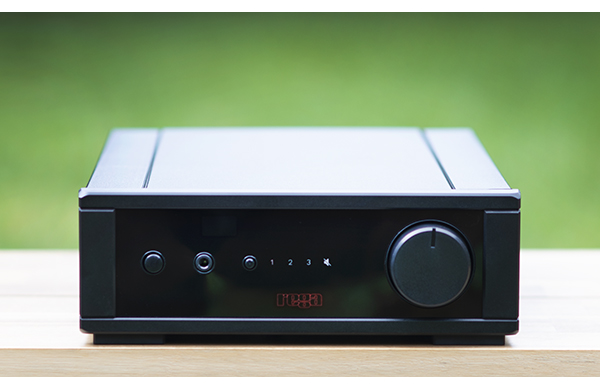
 It might strike some of you to start a Rega review talking about Naim, but the comparison begs to be made. Rega’s io is destined for legendary status.
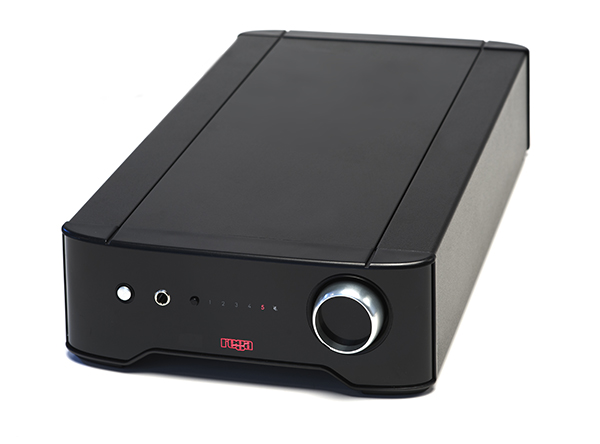
Naim’s original Nait amplifier was a fantastic product, offering incredible musicality in a compact form factor at a price everyone could afford. It enticed thousands of audiophiles based on the above, and to this day, those still in possession of a working Nait cherish it. We’ve always been huge fans of Rega’s $900 Brio-R for the same reasons. While the Brio-R bests the vintage Nait in every way, it remains true to the concept of high performance, high value, and minuscule form factor. Though lacking the onboard digital section of something like the PS Audio Sprout (come on, this is Rega we’re talking about), the sound quality of the Rega’s discrete design and overall build quality is far superior. Rega says that the phono and amplifier section of this amplifier are straight from the Brio, so it’s easy to hear where its brilliance comes from.
Lowering the stylus on my older Rega P3 with Elys 2 cartridge, via a pair of FYNE 500 speakers makes beautiful music with a minimum footprint. Tracking through the first side of the purple bonus disc of Prince’s One Night Alone is spacious and delicate. Even though the FYNE speakers only have a sensitivity of 87db/1 watt, they are driven and controlled by the 30 watts per channel offered by the io with ease. The io only offers MM phono, but it is of very high quality. There are plenty of standalone phonostages selling for the $595 MSRP of the io failing to reveal this much music.
 Different legos
Swapping the P3 out for a vintage Technics SL-1200 facilitates trying a few other MM cartridges from Sumiko, Clearaudio, and Shure. All offer equally fantastic results, so any cartridges in the $50-$500 range should be a good fit. The phono section of the io is extremely quiet, but Rega has been building great budget phonostages for decades. Experience makes the difference.
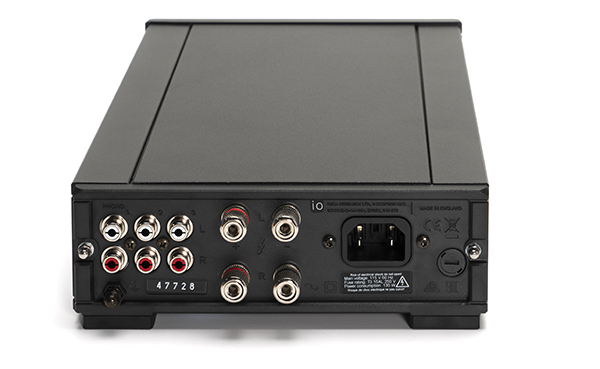
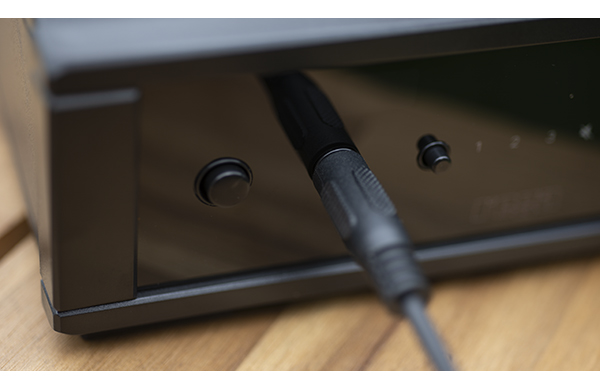
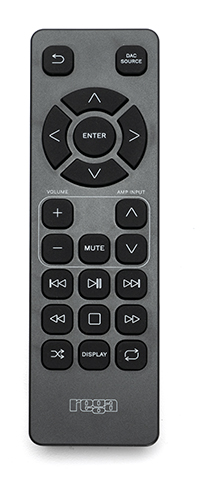
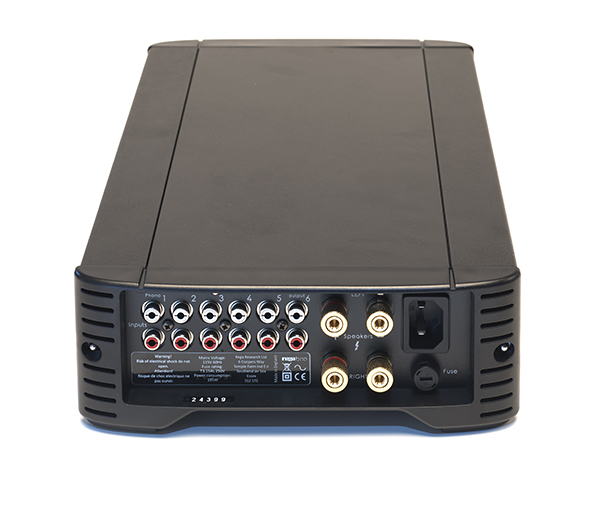
Also included in the io is a front panel, mini headphone jack. Trying to stay in the budget ethos, a few phones from B&W, Grado, and an original pair of Audeze 2s make for great personal listening. Again, we can’t think of a $595 headphone amplifier with onboard phonostage that we’ve enjoyed this much. Apartment dwellers not yet ready for speakers would be smart to acquire an io as a headphone amplifier for now, adding speakers later. The io is the perfect building block to transition you from personal listening to full room listening. Merely plug your phones in to disable the speaker outputs. In addition to the MM phono input, there are two more line-level analog inputs around back, so you can add a DAC/streamer, possibly a tuner, or maybe even a tape deck. Staying compact, we used the Gold Note DS-10 DAC/streamer to provide digital files for additional listening beyond analog.
 Quiet quality
In the end, the amount of music that the io reveals is the value proposition. There have been a handful of notable low power solid-state amplifiers over the decades, and we submit the io for top billing. Most amplifiers at this price (and beyond) struggle just to drive a pair of speakers. The io sounds like a component you would expect to pay quite a bit more for. One of the biggest keys to Rega’s ability to build this much for this little is their corporate frugality, combined with major engineering chops, building nearly everything in-house. Having been to the factory a few times, their commitment to excellence and efficiency is amazing. They use a limited number of enclosures for the same products to minimize tooling costs, with as much raw material overlap as possible. Everything they do is refined, distilled, and simplified as far as it can, but no more. Finally, the highly skilled workforce at the factory assures things are built and tested to perform for the long term. The io is built with the same level of care that Regas top components are.
Sublime sonics
Using the io as an anchor for a $1,500 system will provide plenty of sonic bliss, but going upstream a bit proves just how much more this small amplifier is capable of. Swapping the FYNE speakers for the $1,500/pair Wharfdale Lintons and even the $4,000/pair JBL L-100 classics – both with excellent result illustrates how much resolution the baby Rega amp can muster. This amplifier could easily be paired with components costing a lot more. The io provides a lot of bass control, offering a lot of low-frequency definition when listening to bass heavy tracks. This was always an area that the original Nait lacked.
 The ios’ high frequency response (especially when listening with more revealing speakers) has a level of polish that you’d expect in a $3,000 integrated. Again, there’s something special about a high quality, low power amplifier used within the realm of its capability. This amplifier plays music with the best.
Selecting tracks with multiple vocal layers shine through, and acoustic pieces give enough insight to feel natural. The io is dynamic, but like the Brio-R will hit a wall. 30 watts only goes so far, and this amplifier does run into a wall when taxed. It does not clip hard though, it merely flattens out dimensionally. The solution is easy, keep listening levels modest or get a pair of very efficient speakers.
Head of the class
The Rega io is so good, one is tempted to summon up a cauldron full of well-worn audiophile clichés. While it is excellent at first listen, the toughest part of reviewing a component offering such a high level of performance is that it begs being connected to much more expensive ancillaries to experience the depth of its true capabilities. You could grab a pair of budget speakers and a thrift shop turntable and live happily ever after with the io, but like that other legend from the UK, don’t be surprised to see this one in the company of much more expensive components. Watch for the audio forums of 2050 to speak of this amplifier in hushed reverence. Of course, the io is worthy of our Exceptional Value Awards for 2020, but that doesn’t truly explain a product that gets the essence of the music so right. Audiophiles beginning their journey here may be spoiled for a very long time.
I need one!
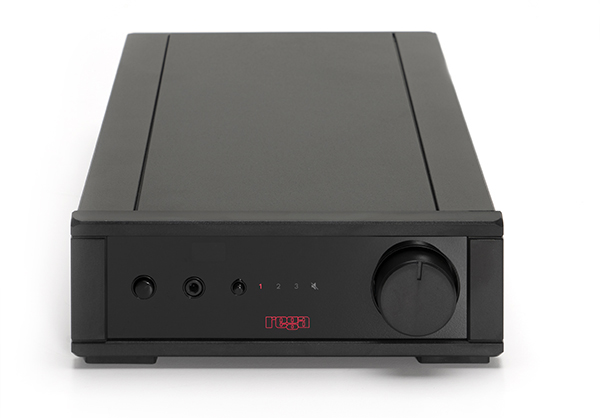 The Rega io
$599
soundorg.com (NA distributor)
rega.co.uk (factory)
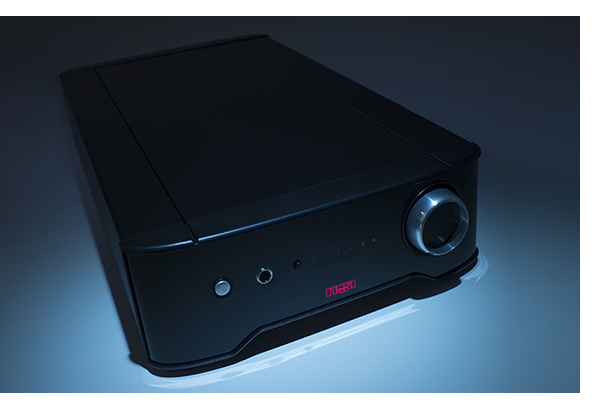
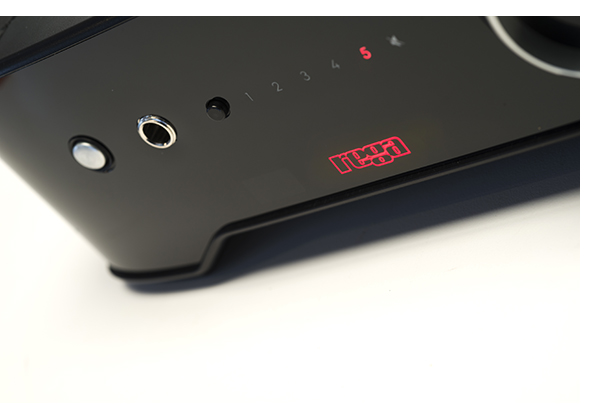
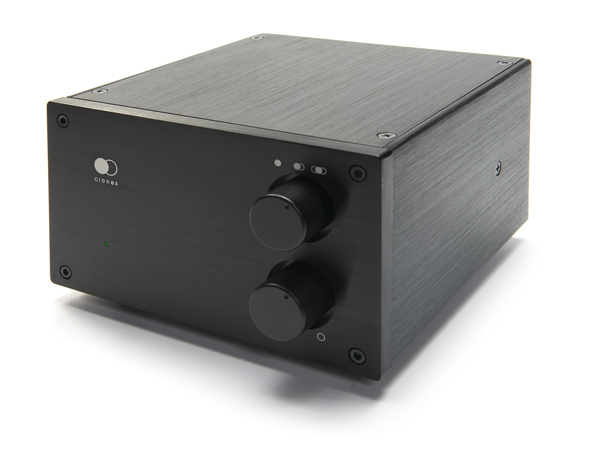 What started as a one-off unit intended as a family birthday gift has blossomed into a full-fledged audio equipment manufacturer. Hong Kong’s Clones Audio now counts monoblocks and a DAC among its product roster, but its 25i amplifier ($865/€629) is what jump-started the boutique manufacturer. The 25i, which is a 25 watts-per-channel integrated amplifier, was inspired by a 47 Labs’ circuit design that later landed in the public domain for the DIY crowd. After all, not everyone would see the $3,000-plus asking price of the 47 Labs’ Gaincard amp without wincing—and some might double over in pain upon seeing its internal part count.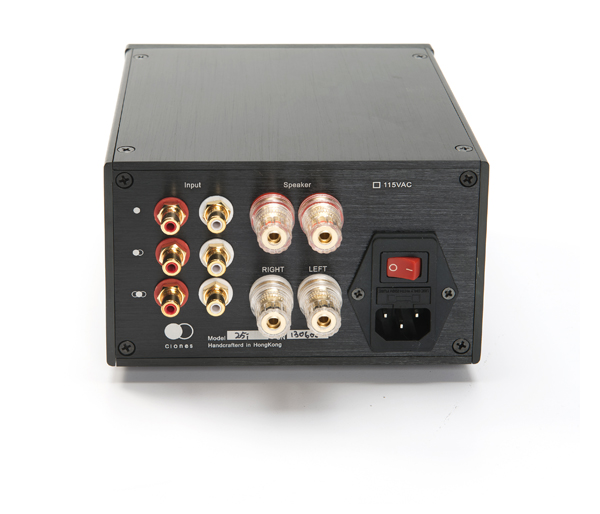
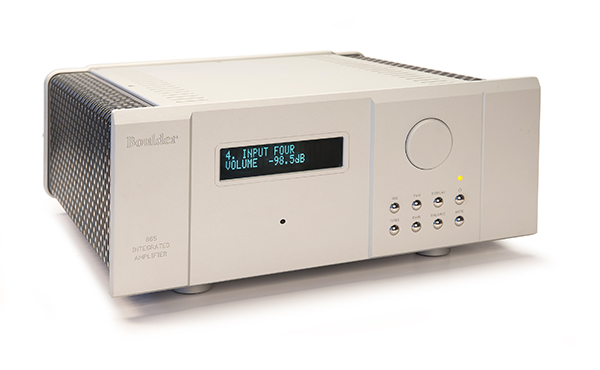
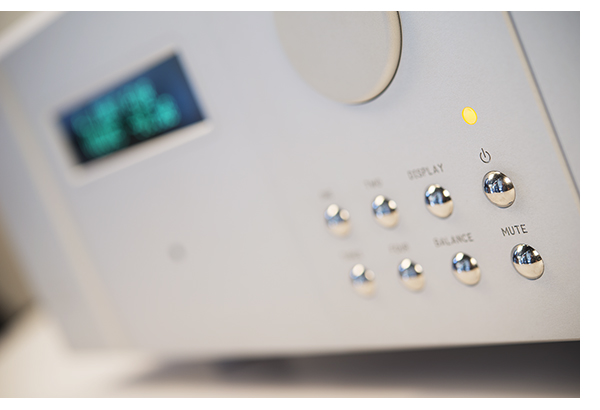 Following Steve Martin’s vocal musings on “Late For School,” it becomes immediately apparent how well this integrated amplifier, Boulder’s entry-level piece, keeps track of pace and timing.
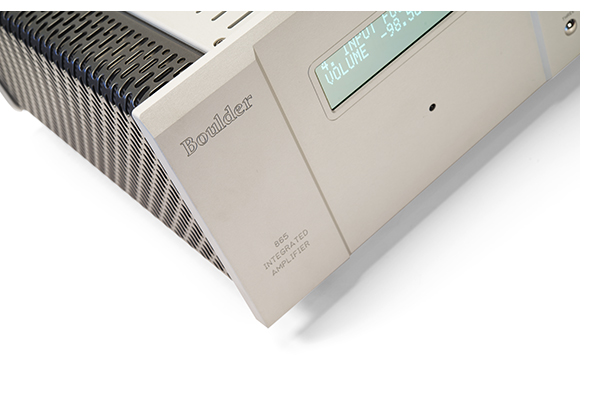 The XRCD version of Jackie McLean’s Swing, Swang, Swingin’ proves equally illuminating. Like every other Boulder product I’ve experienced, the 865 follows the family tradition by neither adding nor subtracting to the sound. While this may bring slightly less to the presentation on poor quality recordings, that can benefit from a bit of warmth, what it does for stellar recordings is well worth the tradeoff. Just like the 3050 monoblocks that we reviewed last year, the 865 is a wonderful conduit for music, never throwing the focus on itself; it’s always in the service of the music.
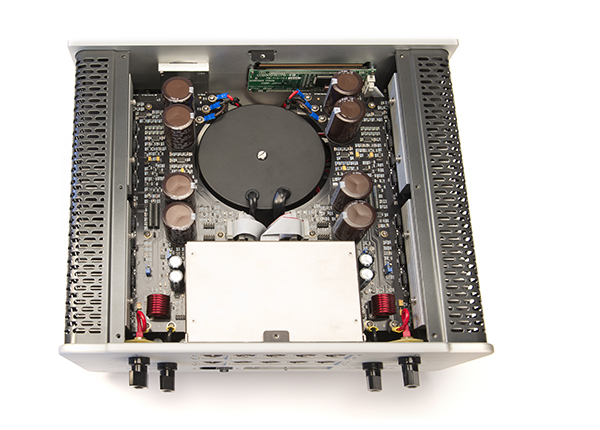 All Boulder
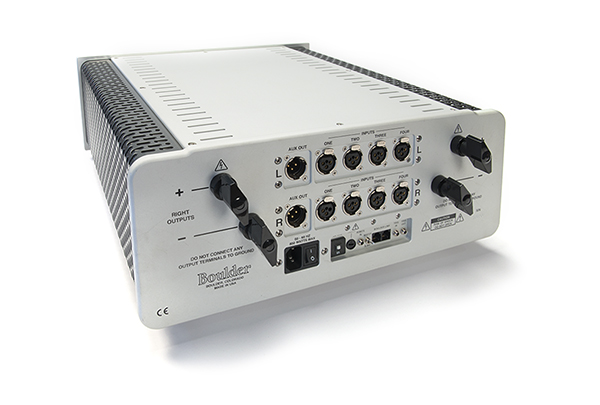 Switching between the KEF Blades, the Dynaudio Evidence Platinum speakers and the GamuT S9, the 865 did its job-playing music effortlessly. Moving it to room two with the Dynaudio Confidence C1s and the Sonus faber Guareri Evolution speakers, both extremely high performance, yet small speakers made an incredible case for stopping the audio journey right here and just enjoying the music. The 865 reveals so much that if you don’t need to blow the windows out of your listening room and you just want to revel in quality – this is your amplifier.
 Peripherals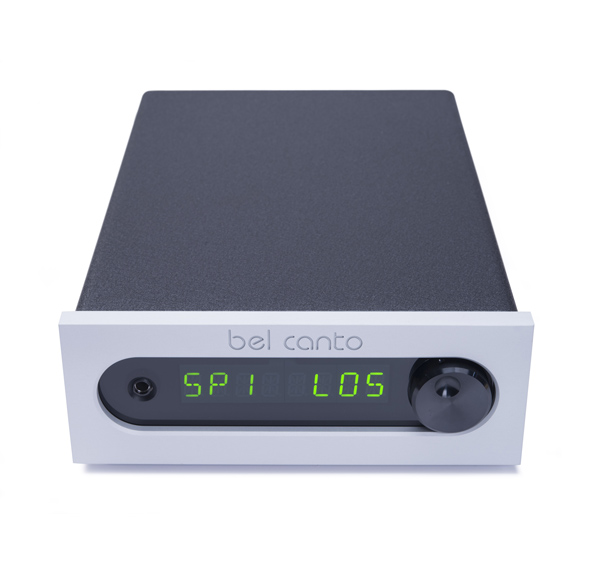
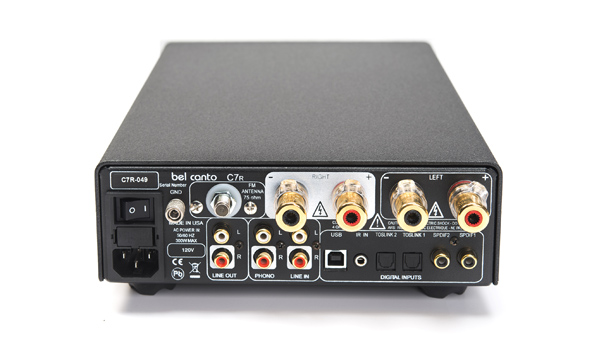
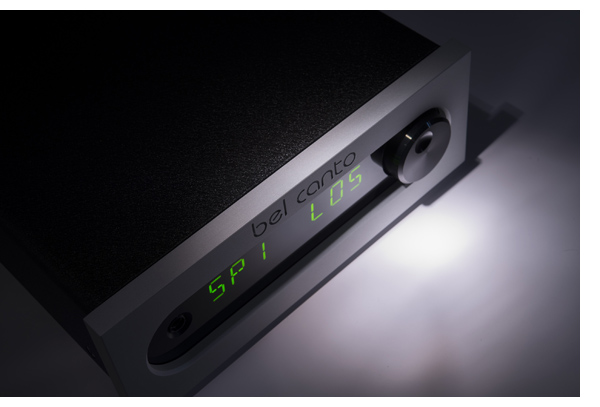
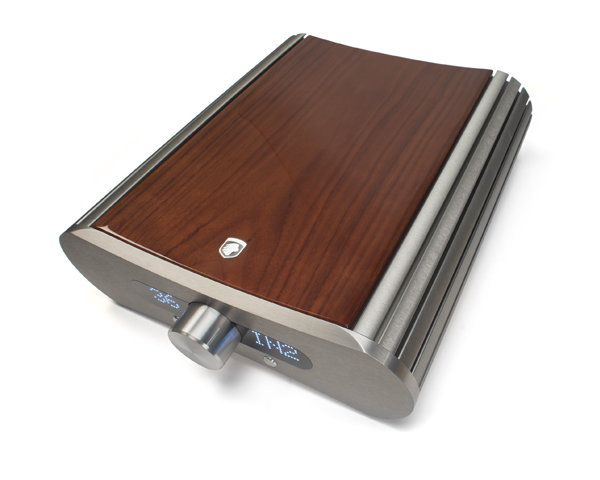
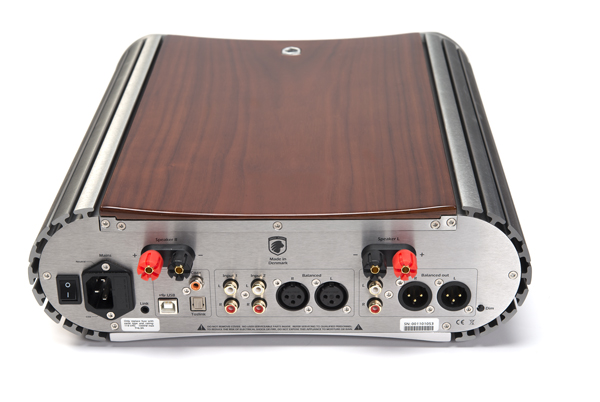
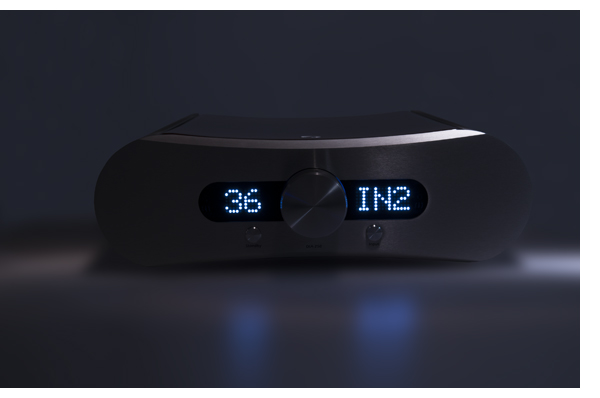
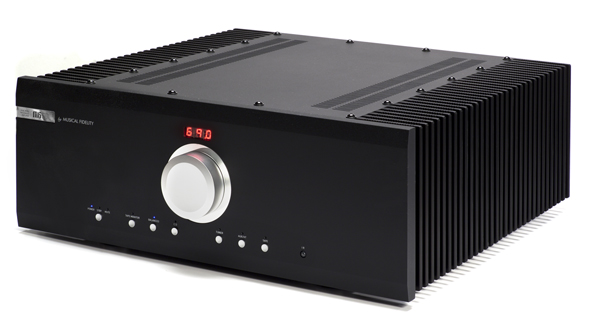
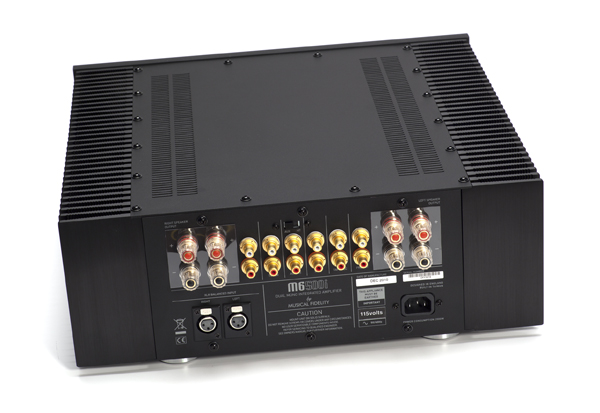
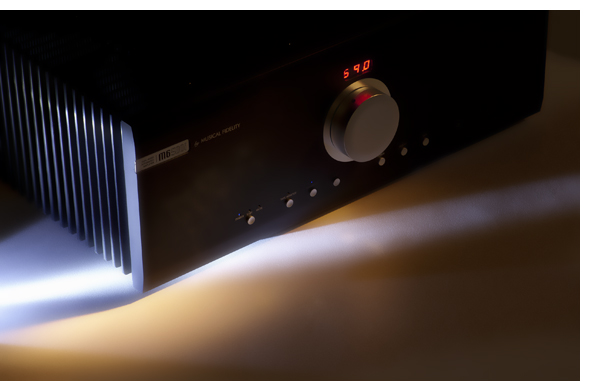
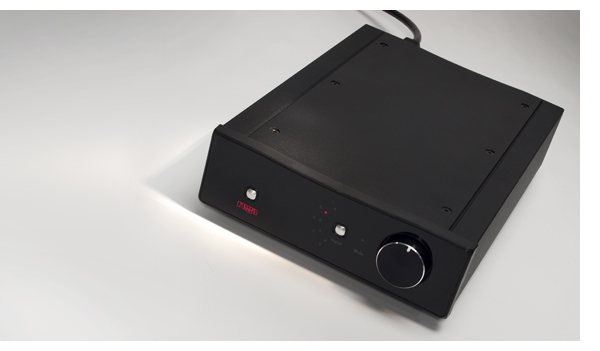
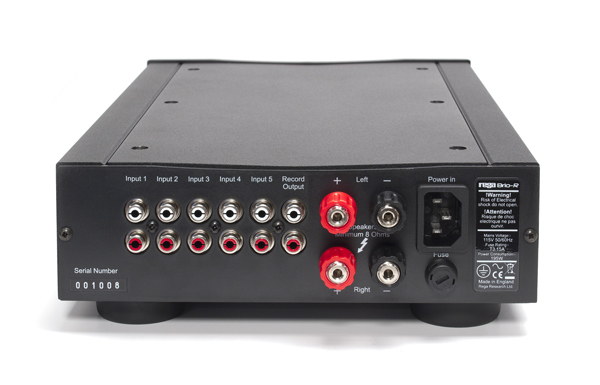
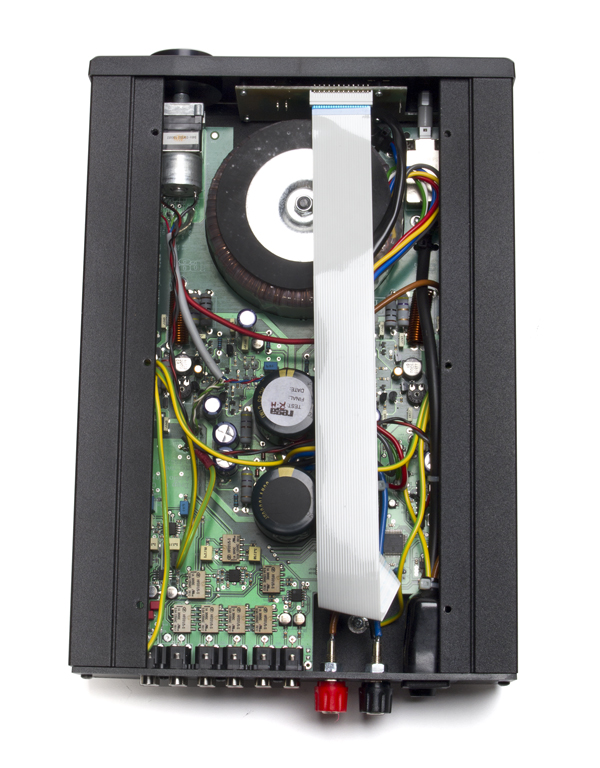
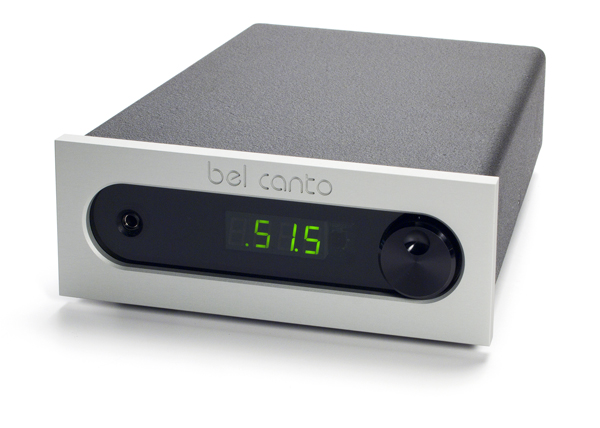
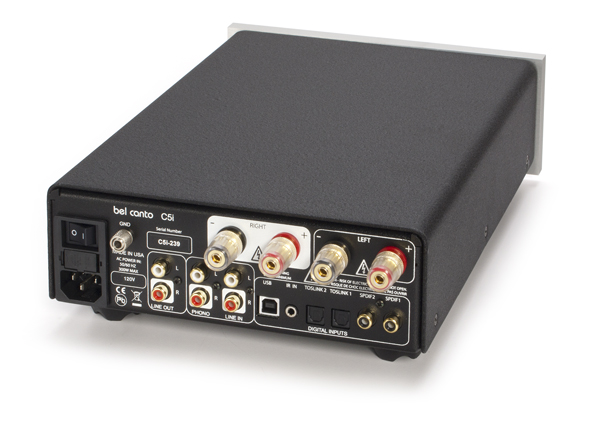
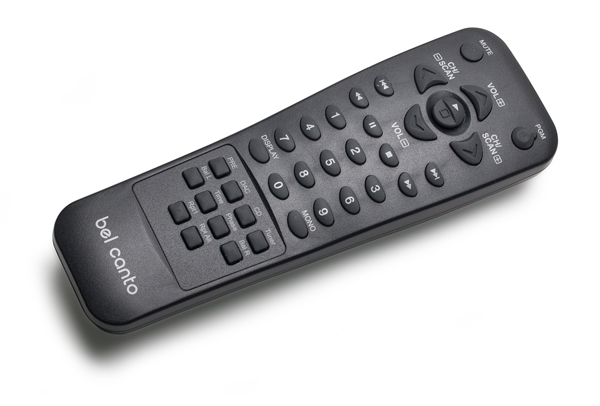

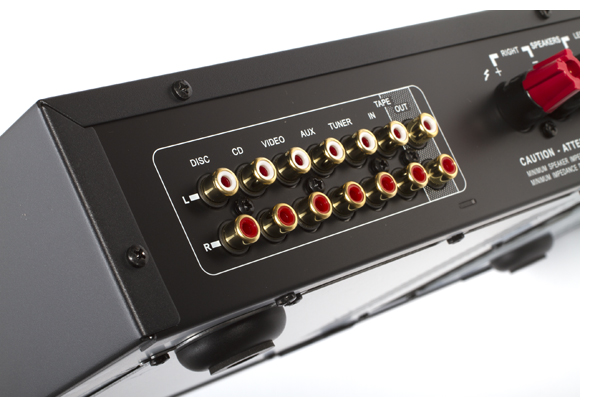
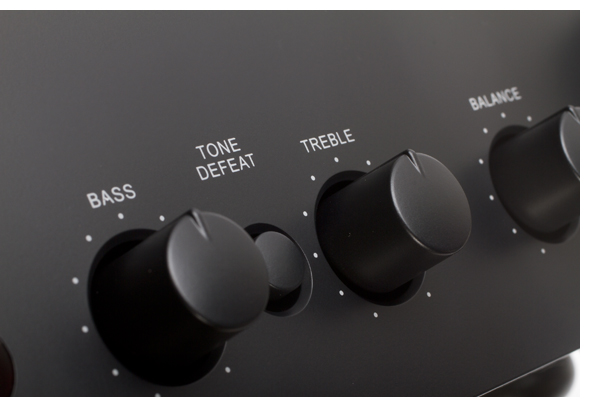
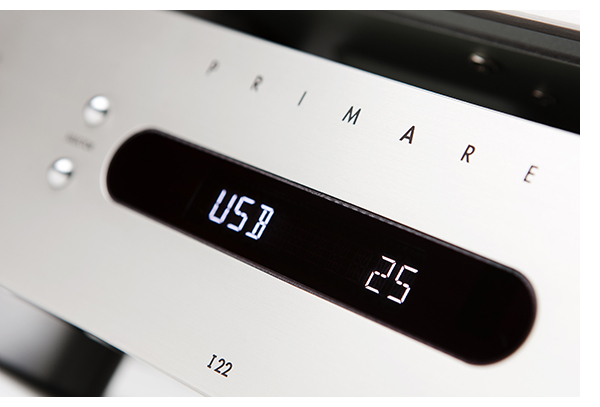 Incorporating a DAC inside an integrated amplifier has been going on for some time now, with mixed results, and the Primare I22 is a product arguably aimed more at the music lover who likes to keep things simple.
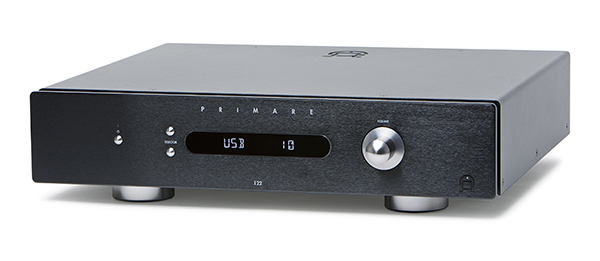 The ins and outs
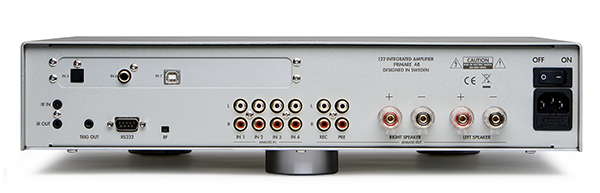 Like every other Class D amplifier we’ve tested, the I22 does respond incredibly well to an upgraded power cord and line conditioning. Adding a power cord and the EVO 3 line conditioner from ISO TEK removes a layer of glare and cloudiness that you might mistake for the sonic signature of the amplifier, giving the I22 an even smoother, more natural sound.
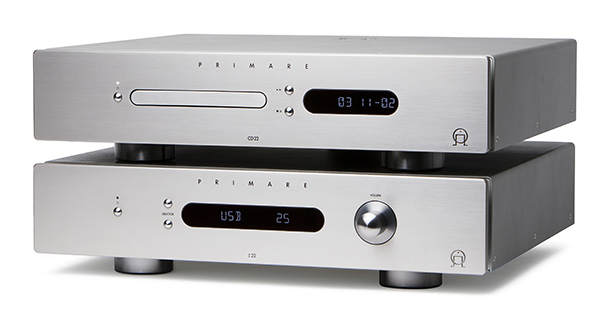 Simple, stylish, sonic excellence
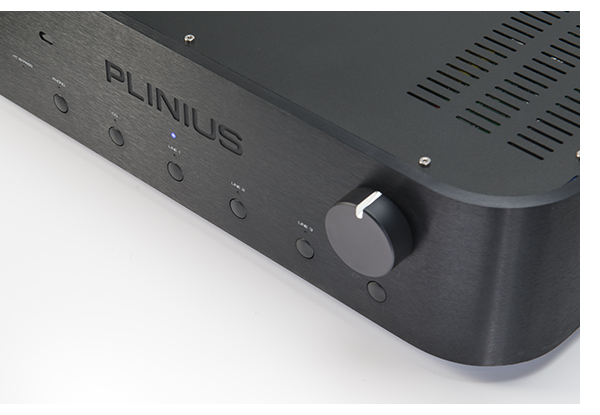 In case Plinius is a company that has slipped under your radar, they hail from New Zealand, and have been making incredible products for years now.
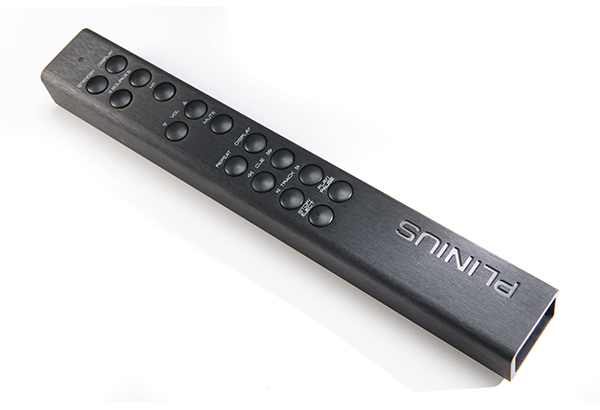 Further listening
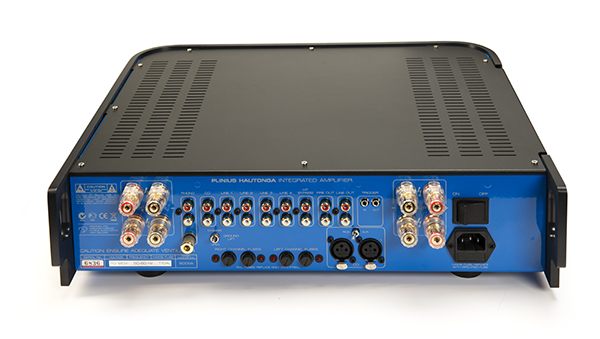 Rounding out the picture
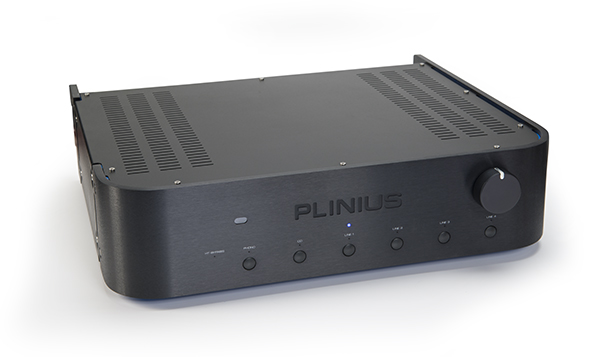 The Plinius Hautonga Integrated Amplifier
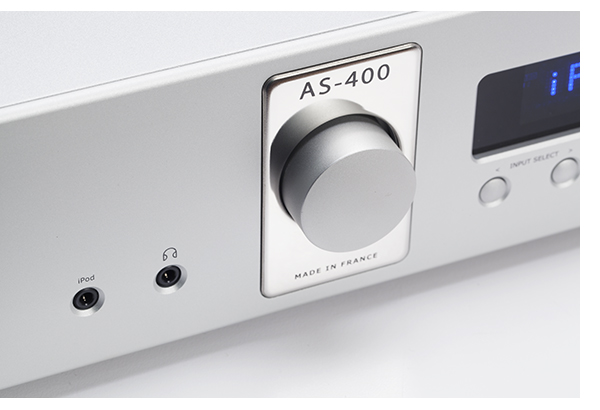 Micromega of France, enjoys a very respectable presence here in the US, and has been introducing new products with a vengeance recently.
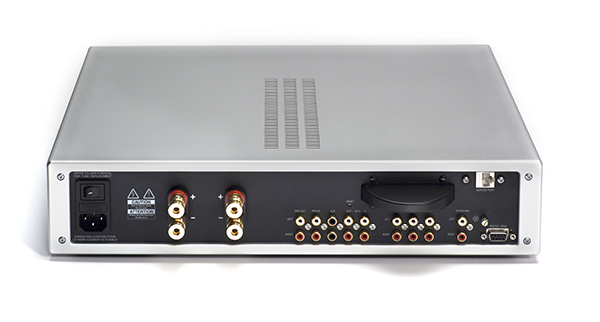 Trust that first impression
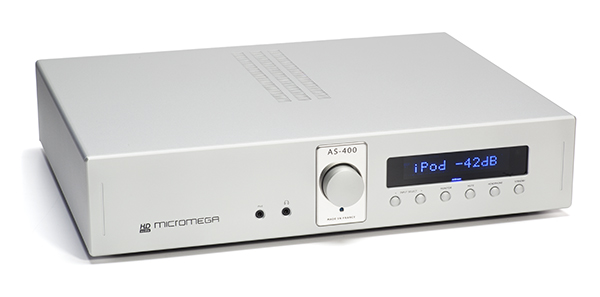 Additional Listening
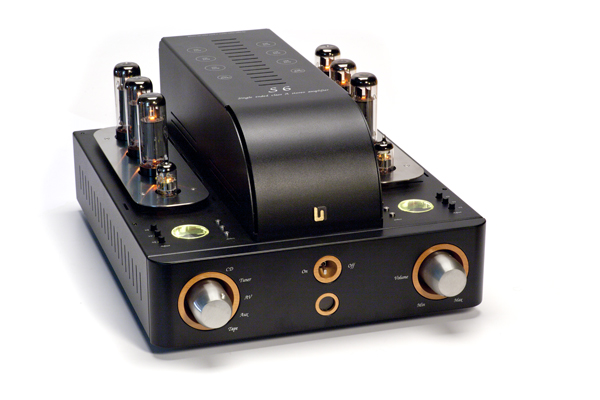 Perhaps the most enjoyable part of the hifi journey is discovering something new, especially on a heavily traveled road. It’s like discovering that cool coffee shop down the street, only to find that it’s been there for years and you just passed it by. The same could be said for the Unison Research S6 integrated amplifier, now in production for over a decade.
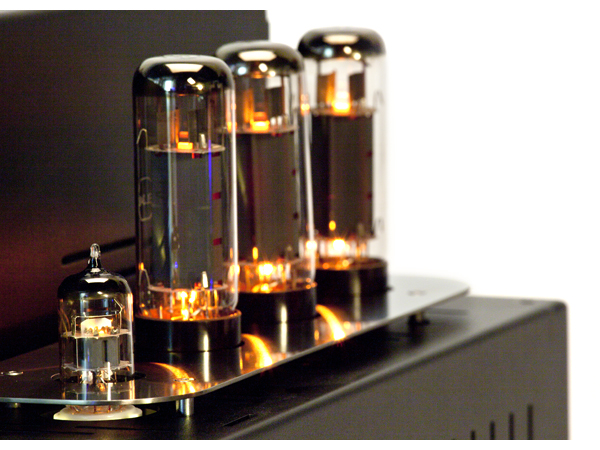 Standard issue tubes continue to improve and the current TungSol EL34’s supplied with the S6 proved close enough to the megabuck vintage EL34s on hand for comparison, that for all but the most fanatic and well heeled tube roller, you can rest assured the S6 sounds great right out of the box. The controlled biasing combined with not running the output tubes terribly hard should make for ample tube life. The 12AX7 driver tubes should last in the 10,000 hour range, making this an easy amplifier to live with long term.
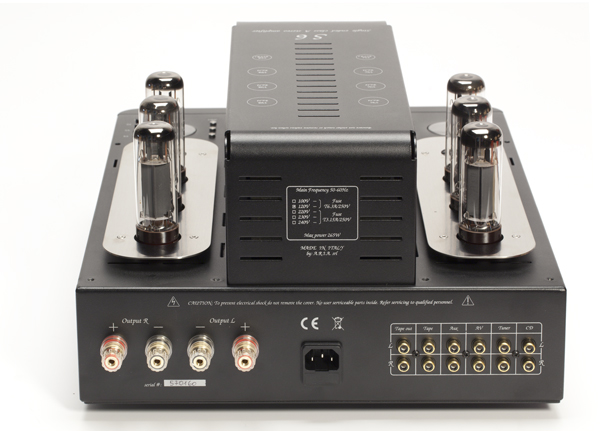 Mightier Than Its Power Rating Suggests
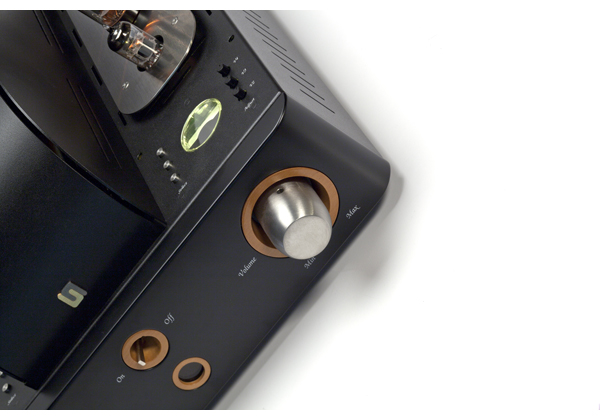 Simplicity, Form and Function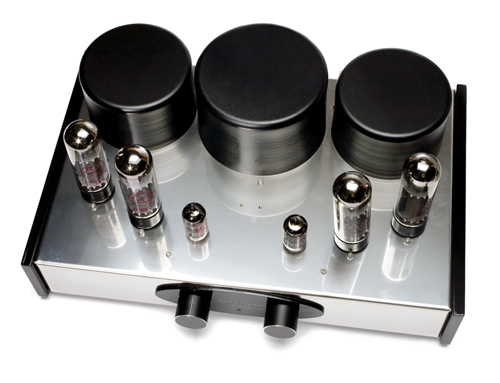
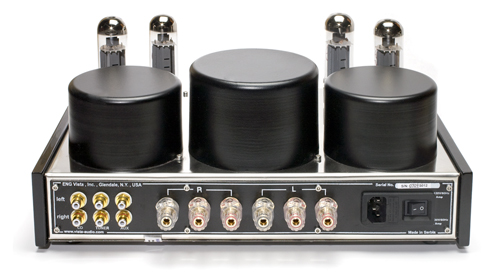
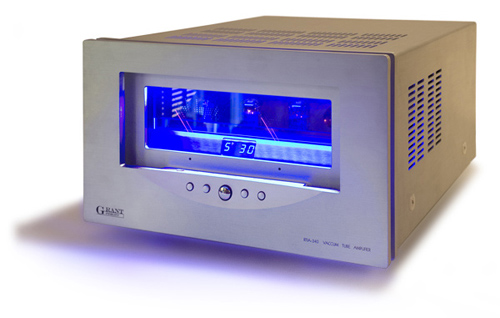 If you like tube amplifiers that hanker back to the glory days of audio with a big, beefy chassis and huge output transformers, the Grant Fidelity Rita-340 is for you. It’s so robustly built that even the careless handling of the UPS guys couldn’t stop it! The substantial crate arrived, looking like it had been dropped off the top of my garage roof, but after I dusted off the Rita and fired it up it worked perfectly and it has worked flawlessly for the past six months. I think this should settle any build questions you might have about this amplifier; anything that can survive that kind of abuse should be fine in everyday use.
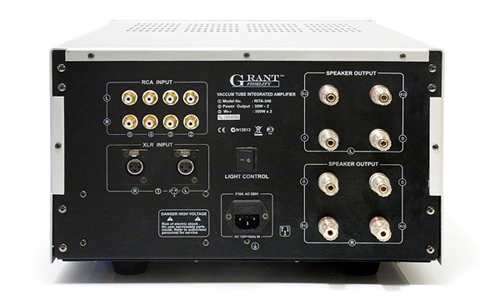 There are two sets of speaker outputs on the rear panel, and while the amplifier is rated to drive speakers from 4-8 ohms, with a tap for 4 and 8 ohms and a common ground. The speakers I tried had varying impedance and I did not notice any issues driving anything.