Waxahatchee – Ivy Trip

Katie Crutchfield, who performs under the guise of Waxahatchee, is what it might sound like if a bundle of nerves could talk.

On her group’s third and most structured album, Ivy Tripp, the Alabama native takes stock of circumstances, possibilities, and worries from close-up perspectives informed by first-hand experience and imagined scenarios. Dealing with relationships and expectations, Crutchfield addresses themes to which most 20- and 30-somethings can easily relate in a clever fashion largely free of irony yet loaded with sharp-tongued directness. She navigates the balance between keeping her distance and getting intimate, and when accusations fly, doesn’t spare herself from blame.

While Crutchfield observes love from a cautionary stance, she refrains from viewing it with a jaundiced eye. Since the band’s 2013 breakout and largely solo-based Cerulean Salt, she’s also gained more confidence, which is on display throughout the more put-together record. Waxahatchee’s lo-fi roots remain visible, yet many songs call for a full band, and some even rock out with the four-on-the-floor beats and dynamic thrusts. Each claims ownership of a subtle hook or wordless melody. Crutchfield’s modest country-tinged voice emerges as a fuller instrument, too, with her phrasing weaving between dips and divots created by spare bass lines, humming organs, and stair-climbing percussion.

Against raw and exposed arrangements, the vocalist often seems as if she’s singing thoughts to a best friend or delivering a break-up notice to an ex amidst the commotion at a bar. And where Crutchfield could appear overly fragile and insecure on past efforts, the 26-year-old comes across with deeper maturity and self-assuredness here. She’s still confessional, openly vulnerable, and occasionally sad, yet she also expresses unmistakable determination and punk-derived toughness.

“You’re less than me/I am nothing,” she repeats on the fuzz-coated scrawl of “<,” demonstrating both the will to knock herself down a notch and float above the ruinous fray of a wrecked romance. On the chiming bash-and-pop of “Under a Rock,” Crutchfield confronts insatiability and expendability as she evaluates her role and future. Similarly unflinching, the beautifully minimalist piano ballad “Half Moon” reflects the vocalist’s penchant to evaluate states of affairs with painful honesty. “Our love tastes like sugar/But it pours all the life out of me,” she sighs in a tattered tone, resigned to accepting loss and moving on.

Indeed, Ivy Tripp might be pockmarked with moments of despondency and uncertainty, yet the record never wallows in despair. Crutchfield often gives reason for optimism in spite of outlying challenges. She takes space to locate her bearings on the rubbery “Poison,” admits a need for companionship the deceivingly innocent “La Loose,” and relishes peacefulness on the acoustic “Summer of Love,” a devotional tune accented with the natural sounds of the outdoors and a barking dog.

“I’m not trying to have it all,” Crutchfield sing-states with authoritativeness on the back-and-forth emotional teeter-totter that is “Breathless,” before closing the serious dirge with a frolicking la-la-la coda that could’ve been pulled straight out of the hills scene in The Sound of Music. It’s the mounting echo of an intelligent artist that may not know exactly what she wants, but who realizes sorting through anxieties ultimately lead to finding one’s identity. —Bob Gendron

Purchase this on vinyl from Music Direct HERE…

And STREAM it from our friends at TIDAL HERE…

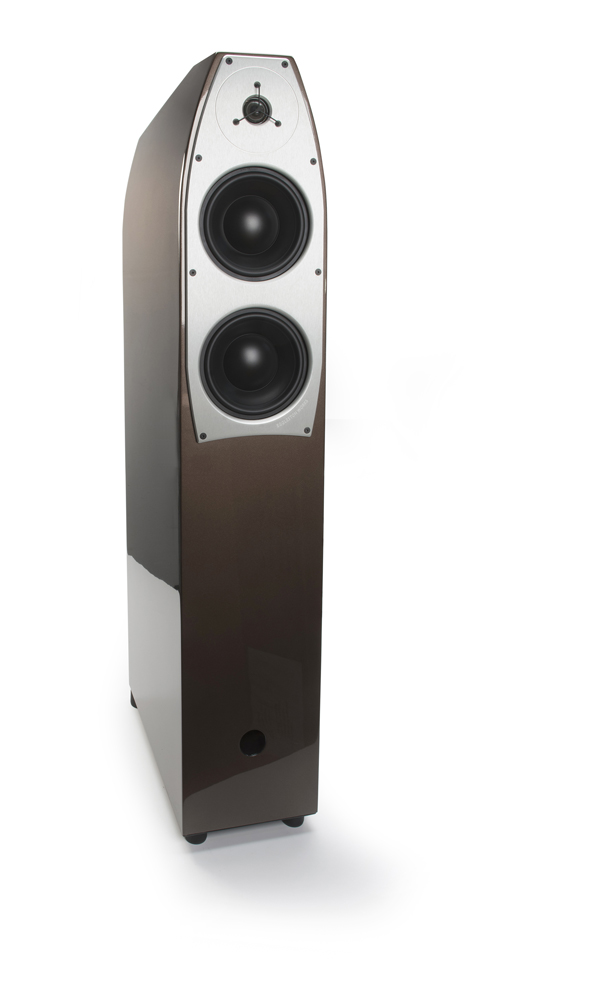
Dali Epicon 8 Speakers – Preview

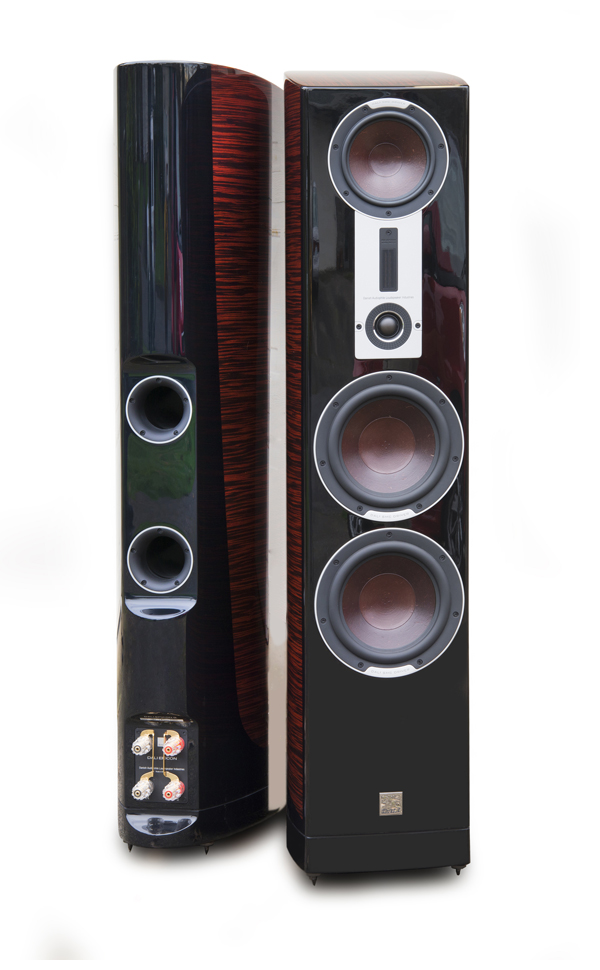
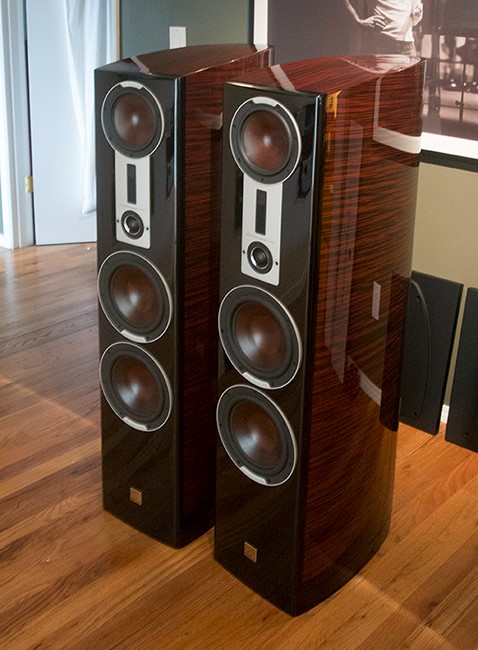
A recent visit to the Dali factory in Denmark revealed a nearly 250,000 square foot facility full of highly skilled workers dedicated to every aspect of loudspeaker design and construction.  The stylish cabinets and sophisticated drive units are all built and tested in house.  And the result in their flagship speaker is stunning.  These speakers sound as wonderful as they look, perhaps better. Dali calls the Epicon 8 a “3 + half-way” system, utilizing a ribbon supertweeter for the uppermost segment of the frequency spectrum.

Unlike most other speaker manufacturers, who usually cross the ribbon tweeter over at a much lower level (usually in the 4,000 – 5,000hz range) Dali crosses their supertweeter over at a nearly inaudible 15,000 hz level, eliminating the LF breakup and brittleness often associated with ribbon tweeter based design.  The result is brilliant, with a smoothness we’ve never heard from a speaker of this nature.  Our review will be live shortly, along with a chronicle of our factory visit. – Jeff Dorgay

Dali Epicon 8 Speakers

$20,000/pair

www.soundorg.com

www.dali-speakers.com

WireWorld Pulse 2 interconnects – Preview

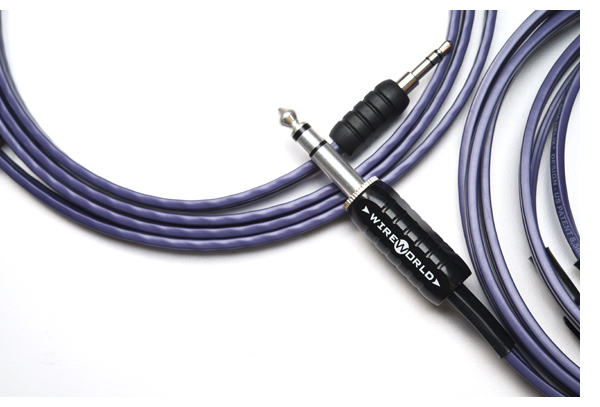
Wanna make that $1,400 Astell & Kern player sound a lot better?  Grab the new WireWorld Pulse 2.  In a world of mega expensive cable, that everyone loves to complain about, a mere $40 will take the sound of your portable player to a new level, whether you are using it in a high performance automotive system or just plugging into your home system. The same can be said for the $116 headphone cable, which we are using with excellent result on our OPPO PM-1 headphones.

WireWorld takes their designs seriously, using the best materials and assembly.  They produce some of the world’s finest cables, yet the Pulse 2 combines their capabilities in a cable that is accessible and affordable.  We’ve yet to hear such a modestly priced cable make such a big difference. Now, let’s go out on our favorite internet forum and argue about it!

WireWorld Pulse 2 interconnects

$40, $116

www.wireworldcable.com

Harman Kardon 730

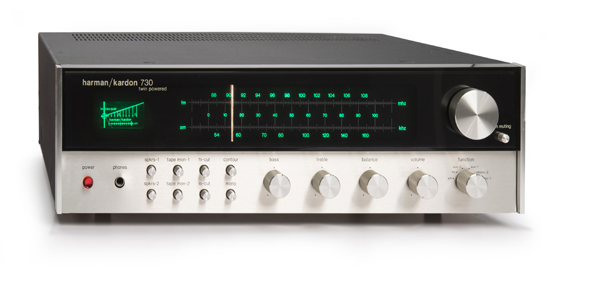
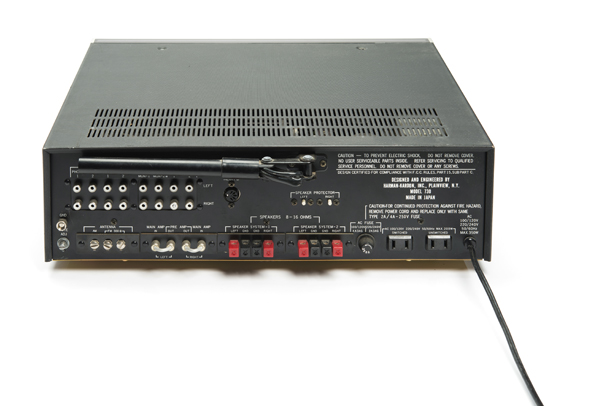
When I was graduating from high school in 1976, what I wanted most was a Harman Kardon 730, a pair of JBL L100s and a Technics SL1200 turntable.  That was my dream system.  The 730 went for about $400, the JBL’s slightly more and the Technics with a Shure M91ED around $350, so for about $1,200 you could put together a pretty rocking system. Revisiting the 730 with a pair of L100s and my somewhat geeked out SL1200, I’m still amazed at just how musical, valid and relevant this combination sounds.

Perusing my favorite internet forums, the 730 is described as warm by some and dark by others.  Through both the JBL L100s, L26s and the contemporary Dali Rubicon 2s, I’d call the 730 just right.  Yes it is a bit on the warm side, but for vintage solid state, I’ll take this any day over the Pioneer, Sansui and Kentwood’s of the day.  I’d even give this one a nod to the receivers in my stable from Marantz with similar power ratings.

Don’t let the 40-watt per channel rating fool you.  Truly dual mono in construction, with two separate power transformers and power amplifier boards, the 730 renders stereo images like crazy.  Connecting the system together with modestly priced AudioQuest cable (which is light years beyond the crap we had in the 70s) and plugging into a Running Springs Haley power conditioner takes this vintage ride into the current century with a sound that easily outperforms any of the $500 – $600 integrated amplifiers you might buy today.  And they don’t usually include a phono stage or a tuner.

Even though the 730 has relatively modest tuner specs, here in Portland, Oregon it pulled in quite a few stations, near and far, along with delivering incredibly good fidelity.  Should you be living in an area with decent radio stations you will be pleasantly surprised at just how good plain old FM radio can still sound.  And if you have this experience, Sirius XM will be an even more dreadful experience than it is now.

Pairing up our Thorens TD-125, refurbished by Vinyl Nirvana and an Ortofon 2M Black and SME 3009 makes for a spectacular analog experience that reveals more music than I ever remember this receiver capable of back in the 70s.  Low and high frequency extension is excellent, painted on top of an incredibly quiet background, again proving that a nice mix of new and old technology can be a good thing indeed.

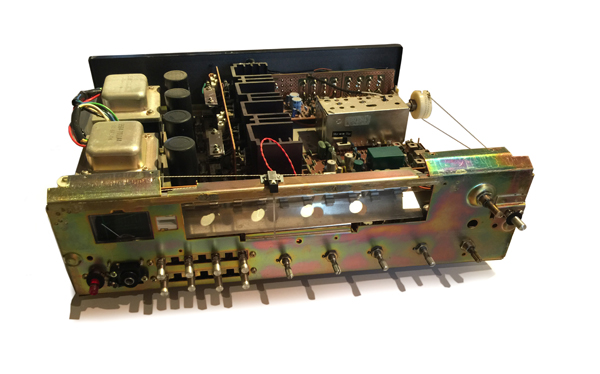
The tweakasaurus that can’t leave well enough alone can bypass the circuit breakers protecting the output devices, resulting in more transparency but less margin for error.  Should you go down this path an accidental crossing of the speaker terminals will fry the output stage.  Local vintage dude, Kurt Doslu from Echo Audio in Portland, Oregon warns that the output stages were somewhat prone to failure anyway, but that the semiconductors are still readily available.  While you’ve got the hood open, I suggest doing a full recap (or at least the power supply) and keep this one around forever.  Another weakness in the 730, as with all 70s receivers is the fuse type dial lights.  If the one you’ve found or purchased has functioning lights, never fear, they will fail soon.  A set of green LED replacements will save you the frustration of future disassembly.  The red, lighted power switch is another story – take that to a professional unless you are a champion at the game Operation.

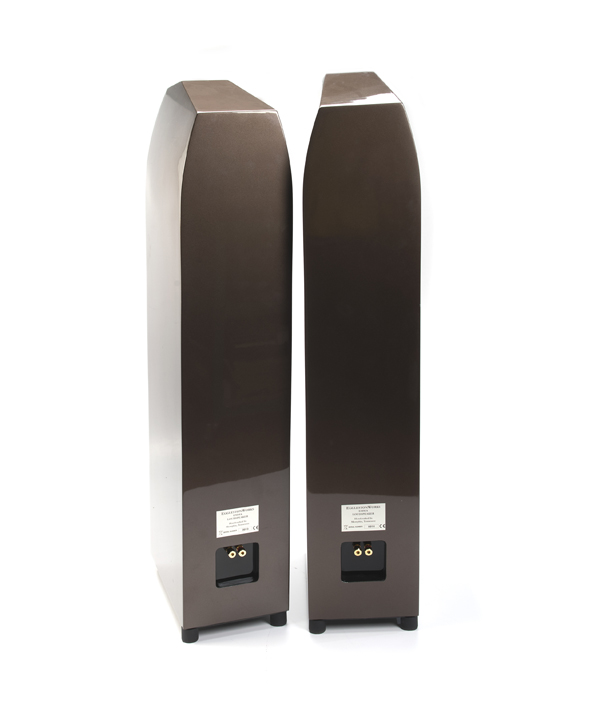
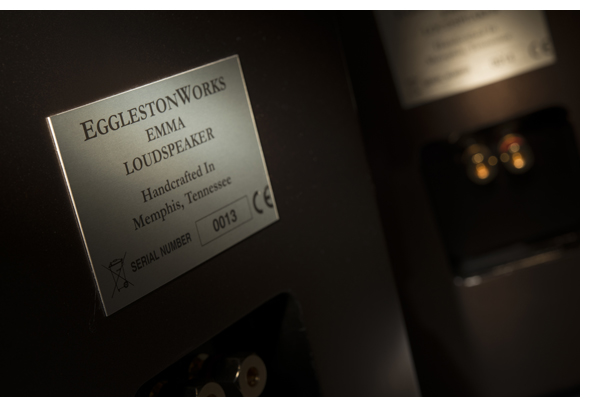
The manual states that the 730 can power 8-16 ohm speakers, but can even power one pair of 4-ohm speakers without problem and the 91db Eggleston Emma speakers in for review turn in a pleasing performance.  Though not able to drive them with true potency, the 730 is able to push a pair of Magnepan MMGs to a decent background level.

With parts readily available, strive for a unit with as close to perfect cosmetics as possible.  Capacitors are relatively easy to find and replace, a front panel, not so much.  A beater 730 can go for as little as $50, while a mint example shouldn’t cost more than $200.  Plan on spending about that much again to make it perfect electrically, if you have a great vintage technician at your disposal and considerably less if you are a proficient DIY’er.

Whichever way your journey takes you, the Harman Kardon 730 will make an excellent cornerstone to an enjoyable system while keeping within a reasonable budget. – Jeff Dorgay

Gryphon Kalliope DAC – PREVIEW

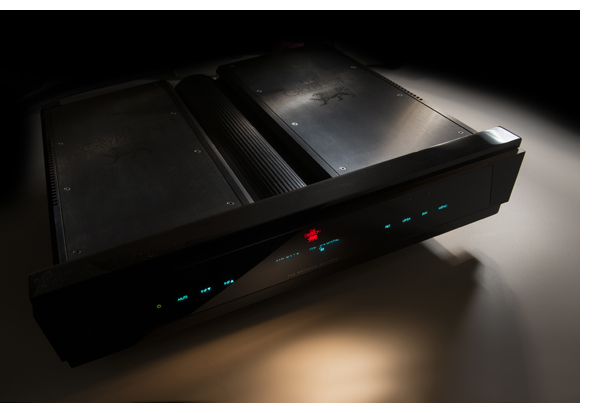
Flemming Rassmussen builds some of the most technologically advanced audio components in the world and some of the most beautiful.  The casework, bathed in black with its fine extrusions only hint at the miracle inside. Able to accommodate every kind of digital file now available, the Kalliope takes no prisoners.

We’ve just finished the photos and begun critical listening, but it’s instantly apparent that the Kalliope is something special indeed, even at first blush it is one of the finest DACs we’ve had the pleasure to audition.  With effortless dynamics (thanks in part to 12 farads of reserve in the power supply) and a complete lack of graininess, the Kalliope makes you look at your turntable and think why bother?  Review in process.

Gryphon Kalliope DAC

$26,600

www.Gryphon-Audio.dk

Octave HP700 Preamplifier – PREVIEW

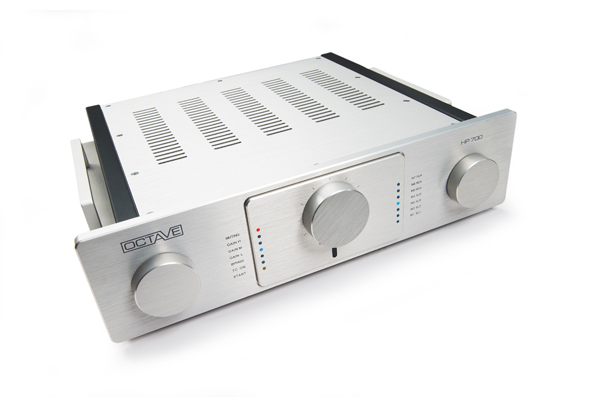
Some of you might freak out that the HP700 features tone controls, but Octave has included those and more in their flagship HP700 Preamplifier.  Like their Phonomodule we reviewed a couple of years ago, the HP700 takes a modular approach, offering a wide variety of phono modules, RCA and XLR input modules and RCA or balanced XLR output modules, allowing you to customize it to your system.

Basically a vacuum tube design, the HP700 utilizes an enormous, external power supply, sophisticated voltage regulation and soft start circuits, with Octave claiming a 20 year life for the tubes. Electrical, mechanical and aesthetic design are beyond reproach, making the HP700 a true destination preamplifier.  A perfect companion for their sublime Jubilee monoblocks. Full review in process.

Octave HP700 Preamplifier

$16,000

www.octave.de/en/htdocs/verstaerker/hp700.php

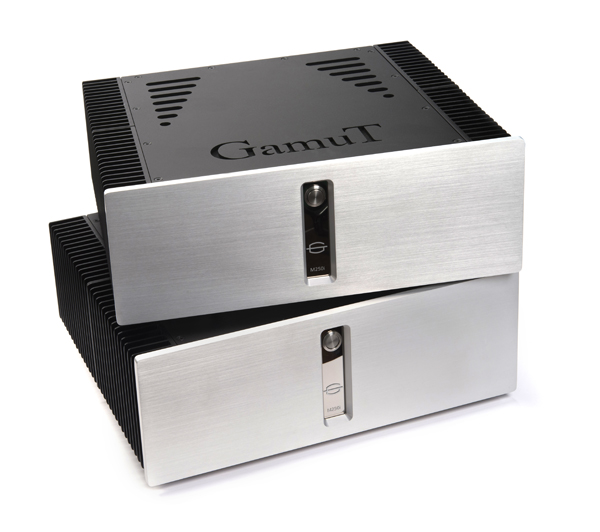
GamuT M250i Mono Power Amplifiers

It’s my turn to get in on all the GamuT fun. Our publisher has been using GamuT speakers for years now and managing editor Rob Johnson is smitten with the D3i preamplifier.

Of the few manufacturers that build a full complement of electronics and speakers, they voice things differently. Burmester, for example, produces speakers that are somewhat forward, punchy and a little tipped up on the bottom and the top, yet the electronics are very warm sounding, almost tube-like, though fully solid-state.

GamuT however, is somewhat different. The speakers have an incredibly natural voice, and the electronics even more so. Even though their electronics and speakers produce perfect synergy, as you might expect because their components are much more neutral, tonally speaking, you do not have to have an all-GamuT system to achieve great results. Though you just might want to for simplicity’s sake.

Like the average Dane, the M250i is slim. 84 pounds (38kg) is substantial, but not what you’d expect a 250-watt per channel (into an 8 ohm load) that doubles into 4 ohms and still produces 900 watts into 2 ohms. Lifting the cover with the GamuT logo, it’s easy to see why; the power supply is huge! Unlike some solid-state amplifiers that require a huge bank of output devices to produce high power, GamuT uses two really big MOSFET transistors per channel, capable of passing 400 peak amperes of current each. Naim also takes this approach with their 500 series amplifier and the result is very special. Two transistors means no device matching is necessary, with none of the associated problems. Less is more.

While on that subject, the M250i has an interesting bit of simplicity or complexity, depending on how you look at it. On the rear panel, there are two sets of speaker outputs that you might mistake to use to bi-wire a pair of speakers. Don’t do it. One has a traditional resistor and coil output filter, as many solid state amplifiers do, more suited to ESL speakers and those with more difficult impedance loads, while the other outputs (the ones closer to the heatsinks) are direct coupled outputs. GamuT claims that either way, you can’t hurt these amplifiers, but I did follow their lead when using my pair of Quad 63s.
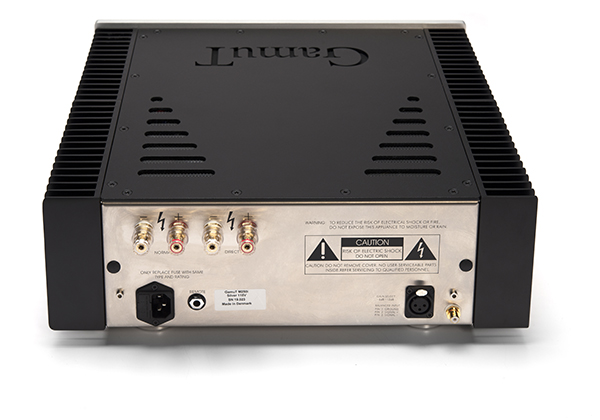
Inputs are via RCA or balanced XLR, and this is a fully balanced amplifier, so that mode will provide the best results. It’s worth mentioning that it is tough to tell the difference in sound using the ARC REF5 preamplifier, which sounds equally good through it’s balanced, and RCA outputs––and I have equally impressive results with my CJ Act Two preamplifier, which is RCA only.

Danes are usually somewhat reserved, but the GamuT manual is not only well written but also pretty amusing to read. They make great points about setup, cables and gain, mentioning that “at 4 ohms, full output power is more than 151,000,000,000,000,000 times larger than the input noise power.” A cursory listen confirms that these monoblocks are indeed quiet.

Not only does this provide a fatigue-free sound, but I’m sure this simple design contributes to another wonderful aspect of the M250i: it sounds incredible at low volume. Amplifier genius and mad scientist Nelson Pass likes to say that if the first watt isn’t great, the rest don’t matter. The M250i exemplifies this philosophy. Make no mistake, when you want to crank AC/DC or Skrillex, the M250i is fully capable. The cannon shots at the end of “For Those About to Rock” are awesome and have the necessary “crack” upon ignition without blur.

Mated to my Vandersteen 5A speakers, which are just slightly warm tonally, the M250i proves a perfect match for the rest of my system, utilizing an Audio Research REF 5 preamplifier. For decades I’ve been a fan of a great tube preamplifier mated to a powerful solid-state power amplifier to reap the rewards of both. The M250i does not disappoint in any way.
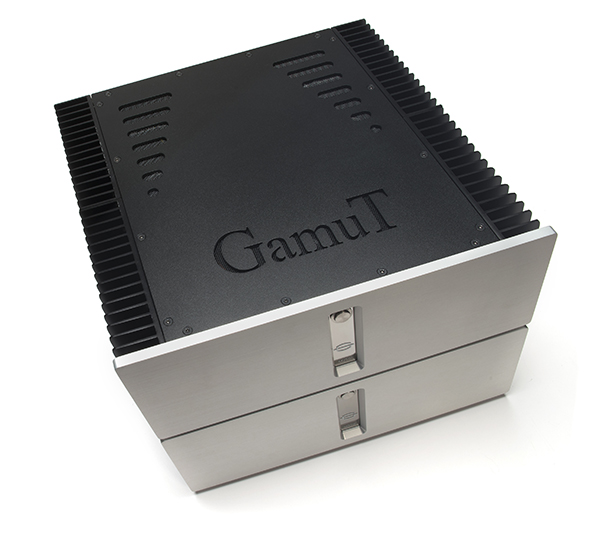
Never edgy or strident, the M250i’s feel a little foggy when powered up from ice cold. They only draw 50 watts in standby mode, so unless your energy habits have you immersed in guilt, I say leave them plugged in all the time. Otherwise, expect about 30 minutes before they reach full capability.

Unless you have the world’s most inefficient speakers, your ears will run out of headroom before the M250is will. Even listening at brain damage levels, these amplifiers do not run overly hot, so you will not be able to heat your listening room with them. Even after exhausting my record collection, I find it impossible to overdrive or overheat the GamuT amplifiers. I am most impressed at how they fail to draw any attention to themselves – they merely let the music flow.

What I do notice is the way these amplifiers render the finest of detail without ever sounding harsh, strident, or particularly solid-state in character. Well-worn recordings feel brand new again. A TONE favorite, the Crash Test Dummies’ Give Yourself a Hand, is full of sonic surprises. With extra overdubs and little vocal anomalies floating all around my listening area, it is almost like consuming something illegal. The only thing I didn’t really get to explore was the depth of the M250i’s bass response, as my Vandersteens only need the main power amplifier to go down to 80hz. But our publisher put them to the full test.

Spending way too much time with the entire Neu! catalog offers up the same results with jangly guitars and driving rythym in full force. Not happy to stop there, a couple of evening’s worth of Eno’s Ambient series, finishing up with the classic Ambient 1: Music For Airports is marvelous. Eno’s gentle touch on the keyboard is even more delicate than I remember, with decay that seems to go on forever. Even this vacuum tube lover finds plenty to love here, and it really has me considering a pair for myself, especially in light of just having bought 16 KT120 tubes!

The GamuT amplifiers are a statement product, and for all but the most insane audiophile, should easily be the last power amplifiers you’ll need to buy. They offer musical delight with no negatives whatsoever. Enthusiastically recommended.

Additional listening – Going all GamuT

After discussing the performance of the GamuT M250i amplifiers with Rob and Jerold, we all agree that they stand on their own as world-class power amplifiers. In the context of tube and solid-state systems, they integrate easily into whatever components you happen to be using. Thanks to their high current capability, they drive any speaker with ease. Though class AB in design, their lack of grain reminds me of a class-A amplifier, or the Burmester 911.

The M250is join a very elite group of solid-state amplifiers that just reveal music, not really sounding like transistor amplifiers or vacuum tubes. As one of the few manufacturers that can successfully build electronics and speakers with equal prowess, a complete GamuT system is wonderful. And for someone wanting an incredibly high performance audio system without the anxiety of trying to choose the right amp, preamp, speakers and digital player, I suggest an all-GamuT system. Complete the system with a set of their power cords, interconnects and speaker cables – one stop shopping!

Mated with their preamplifier and the recently reviewed RS5 speakers provides a highly compelling and dynamic system that can play anything you can throw at it with ease. Mixing it up with different amplification proves more different than better or worse. The Audio Research GSPre and GS150 offer up a bit more holographic, three dimensional presentation, while the mighty Pass Xs Pre and Xs300 monoblocks present a slightly warmer tonal balance and a little more slam. Keep in mind that these are hairsplitting differences; you won’t go wrong either way.

Of course the M250is sound lovely with my reference GamuT RS5 and S9 speakers. I’ve heard the M250is at a number of trade shows, and the match with GamuT speakers is as close to perfection as it gets. Just as these monoblocks work well in tandem with other preamplifiers and source components, they should be able to drive anything. Torturing them with Quad, MartinLogan and Acoustat ESLs is a breeze, and they work equally well with the Epicon 8s from Dali we recently had in for review as well as the Dynaudio Evidence Platinum speakers. I even lugged them to a friend’s house with a pair of old Apogee Divas! Nothing presents a problem to these high current powerhouses.

Because Mr. O’Brien’s Vandersteen 5A’s are passively crossed over at 80Hz, I spent quite a bit of time examining the bass character of the M250is. Whether I was enjoying “Dark Side of the Moon” or “Bitch Better Have My Money,” these amplifiers provide weight, control and fine detail. A perfect balance is struck in texture, never under nor overdamped, something that is easy to notice with speakers like the GamuTs, which reproduce ultra low bass with ease, and often a hallmark of massive solid-state amplifiers.

Great as the M250is are with GamuT speakers, they are particularly good with the current Quad 2815s too. These speakers are mercilessly revealing and finicky to get good sound from, yet the GamuT amplifiers deliver a presentation that is smooth and dynamic, along with being controlled and forceful in the lower register––something not easy to achieve with the Quads. The thundering bass line in Bowie’s classic “Fashion” was wonderful to experience, yet in the middle of the dissonant piano solo in “Aladdin Sane,” the bass line is well articulated, holding its own space brilliantly between the keyboard and Bowie’s vocal. These are indeed special amplifiers, no matter what speakers you own and whatever your musical choices might be.

-Jeff Dorgay
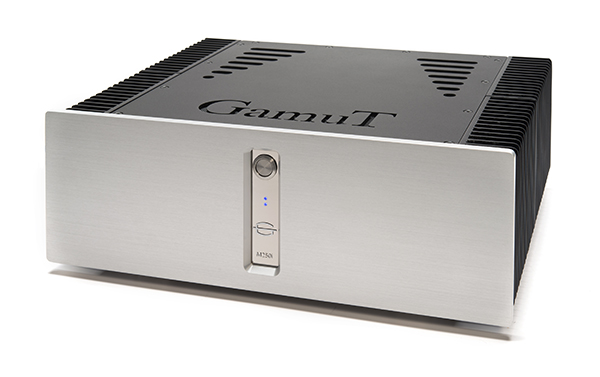
The GamuT M250i Monoblock Amplifiers

$28,995/pair

www.gamutaudio.com

Peripherals

Analog Source             SME20 turntable/SMEV Tonearm, Sumiko Palo Santos cartridge

Digital Source Simaudio MOON 750D

Phonostage                  Audio Research REF Phono 2

Preamplifier                Audio Research REF 5

Cable                           Nordost Frey

Speakers                      Vandersteen 5A

Lightning Bolt

For more than two decades, Lightning Bolt has embraced barely controlled chaos as a secret ingredient and ear-shredding volume as an invisible third member of the band.

Legendary in noise-rock circles, the Rhode Island duo made its name by embracing underground principles and pushing them to extremes on both album and, particularly, in performance. Drummer Brian Chippendale and vocalist/bassist Brian Gibson frequently eschew stages in favor of setting up in the midst of the crowd on venues’ floor. They’ve also played kitchens and sidewalks, donned crazy wrestling and serial-killer masks during shows, and generally avoided anything related to convention.

While the group’s non-traditional thinking serves it well during anything-goes concerts—in which the element of surprise, frenetic tempos, and blaring decibels are the only givens—it obscures the band’s talents on album. Ever since its self-titled 1999 debut, Lightning Bolt has refused to record in a studio with proper high-fidelity gear, instead releasing lo-fi material that sounds as if it was captured in a cardboard box. Avant-garde aesthetics aside, the approach seemed to resemble unnecessary self-sabotage.

Peeling back the curtain on the collective’s tumultuous assault and manic array of fuzzed-out distortion, rampaging grooves, and free-jazz-inspired percussion, Fantasy Empire functions as a long-needed lightbulb moment. Recorded at Machines With Magnets studio, Lightning Bolt’s sixth proper album doubles as a deserved breakthrough for two musicians whose terrifying precision, intensity, and rumble can finally be heard full bore. Music that previously came across as a jet-speed muddle of thwacks, thuds, and turbulence now possesses honest-to-goodness detail and dynamics.

Volatile tunes such as the wood-mulching masher “Over the River and Through the Woods” and yowling stomper “King of My World” retain all the madness of previous work, yet also emerge as genuine songs with identifiable structures and (gasp!) textures—not simply abstract excursions into fury and pandemonium. Whether on the electric-can-opener riff that underlines the onslaught dubbed “The Metal East” or the berserk rhythms getting sawed off in all directions during the epic “Snow White & 7 Dwarves Fans,” Chippendale and Gibson maintain a focus and discipline that set them apart.

They’re also wise enough to realize the importance of breathing room, and balance the attack with decelerated intervals. Subtle additions, like loops and reverb, further contribute to the sense that Lightning Bolt has officially transcended art-project status and elevated itself to a band that’s now as good on record as it is on the stage—whatever the latter might represent on any given night. —Bob Gendron

Lightning Bolt
Fantasy Empire
Thrill Jockey, 2LP or CD

Order the Vinyl From Music Direct here:
http://www.musicdirect.com/p-315582-lightning-bolt-fantasy-empire-vinyl-2lp.aspx

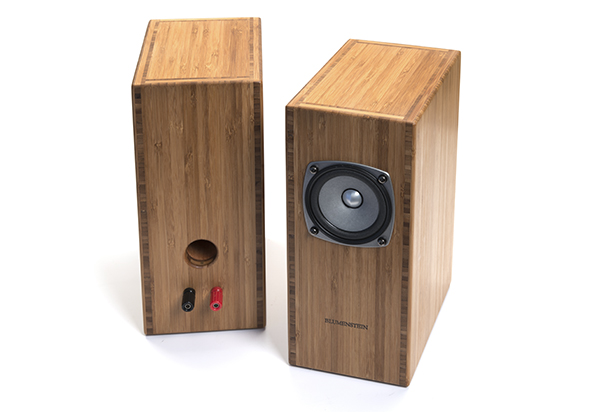
Blumenstein Audio 2.2-Channel Speaker Package

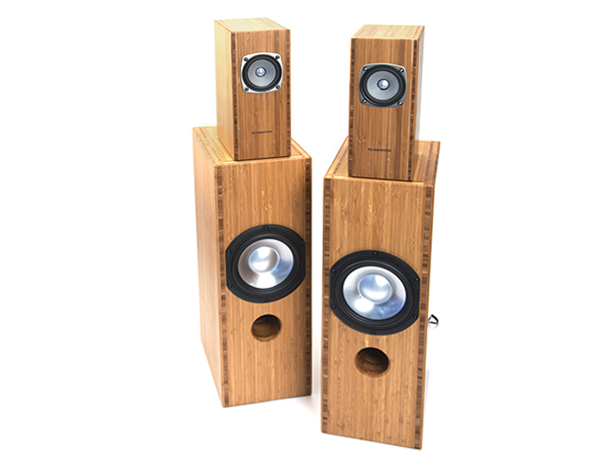
The modest-looking speakers from Blumenstein Audio belie the capabilities contained therein.

We’ve reviewed the Seattle company’s Thrashers, speakers light on looks but heavy on ready-to-rock, garage-grade power. The somewhat more refined single-driver Orca Classic monitors, paired with one of Blumenstein’s Dungeness Classic subwoofers, impressed our staff.

Combining the new Orca Mini monitors with two of Blumenstein’s new powered Dungeness Max subwoofers takes the system to the next level. Having two subs in the 2.2-channel system—which starts at $1,800—augments the Orcas with greatly improved low frequencies. Though matching Orca stands are available, each subwoofer begs you to set an Orca on top of it (placing vibration-dampening material between the units, of course). And with separate enclosures, the subwoofers and monitors can be independently toed-in, and there’s plenty of room atop each subwoofer cabinet to slide the monitors forward or backward.

Hull and Rigging

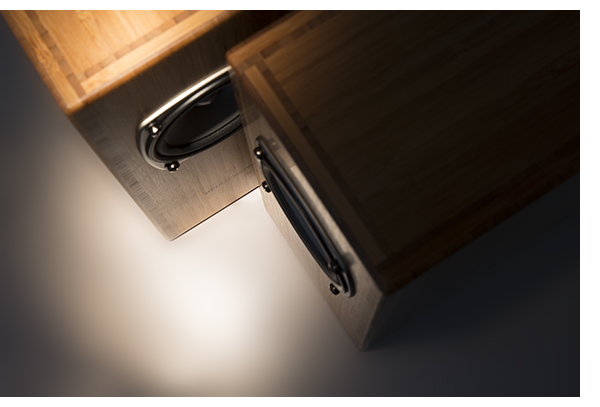
Blumenstein offers its cabinets—made from nothing but wood, glue and finish—in either birch wood or bamboo. The latter option is available with natural, caramelized, or two-tone finishes. Blumenstein uses non-toxic linseed oil instead of varnish to give the wood a delicate sheen.

The front-ported Dungeness Max has a rectangular footprint of 7.75 by 11.25 inches, which makes it easy to slide in between furniture, and with a height of 22.5 inches, it can fit easily under a desk or table. The Max features a 25-watt built-in amplifier and Blumenstein says it will reproduce frequencies as low as 27 Hz.

The Orcas sport a single pair of binding posts on the back for banana plugs, spades or bare speaker wire. As a powered subwoofer, the Dungeness Max has a knob on the back that controls power and volume. A second knob below that adjusts the crossover point from 60 to 180 Hz. Then comes the wiring…

Blumenstein offers a few ways to connect the subs into an audio system; the easiest requires simply running parallel split sets of speaker wires from a single amp terminal directly to the Dungeness and the Orca;my biggest complaint is that the subwoofer binding posts are tiny, spring-loaded connectors, like those on my old NAD 3020 integrated amp. While easy to use, they’re so small that they limit the gauge of wire you can use.

If you have a preamp with line-outs and a standalone power amp, the amp will drive the Orcas directly, while you connect the Dungeness to the preamp using RCA cables. When using two subs, the left one connects to the left preamp line-out and the right one connects to the right line-out.

Diving In

With two standalone Orcas used as desktop monitors placed about two feet away, the sound is mighty impressive. The lone driver does a very good job with imaging, projecting convincing audio into the soundstage. During the Zero7 song “Destiny,” the Orcas present Sia Furler’s voice fatigue-free and with nuances that reflect the emotion of her performance. Other instruments panned far right and left float into the periphery, beyond the plane of the speakers.

Of course, a speaker this size does have bass limitations. With the subwoofer pair connected, low notes join the acoustic presentation. The ability to adjust the toe-in of the subs independently and the crossover point allows you to tailor bass response to your preference without affecting the Orcas.

With an Orca atop each Dungeness Max and the resulting columns about 10 feet from my listening seat, the Orcas deliver a convincing sonic image, with vocals remaining slightly warm yet highly believable. Compared to near-field listening, the experience is akin to moving back several rows in an auditorium. There’s a bigger overall picture, but with broader dispersion, the density and tangibility of the musical elements decreases. The Dungeness Max subs create solid and tuneful bass, but larger listening rooms—like mine, at 17 by 20 feet—might be a bit too much for them to tackle. In a bedroom, den or smaller-sized living room, they offer very satisfying bass, room-filling sound and a highly enjoyable overall musical presentation.

With a wide-dispersion driver, the Orcas are not too fussy with placement, and because they’re small, the speakers are easy to adjust. For the subs, you can employ simple tweaks of placement and volume to generate just the right amount of low-end augmentation for your needs. The combined system proves incredibly versatile and fulfilling. With hours of listening, I need to keep reminding myself that the Orcas start at just $500 per pair.

Yes, there are better and more resolving speakers out there. However, the efficient Blumensteins offer a very high performance-to-price ratio. By selling unnecessary components like speaker grilles and stands as optional accessories, Blumenstein is able to offer the Orca speakers at a very reasonable cost, allowing those on a tight budget to start with a stereo pair and then add subwoofers later.

For those with $1,800 on hand, the discounted 2.2-channel package is an especially good choice. While this system doesn’t offer the refined look some buyers may be after, the simple beauty of the wood finish will appeal to many, and the sound quality you’re getting for the price makes the entire system a major consideration.

Additional Listening

By Jeff Dorgay

As an advocate of single-driver speakers—longtime TONE readers might remember that I started out with a pair of Lowthers as my reference speakers—I find something totally beguiling about them, though they are often misunderstood, perhaps because of their deceptive simplicity.

You might think that the appeal of single-driver speakers is a complete no brainer, because they don’t have crossovers for the audio signal to contend with, but in my experience with single-driver speakers, the power you feed them is everything. Because these speakers have such a delicacy about them—and the Orcas are no different—picking the wrong amplifier will give you dreadful results. Much like with OTL amplifiers, the result is usually either magical or somewhat flat. And if you’ve had the latter experience, you didn’t do it right.

Interestingly, both sets of Blumenstein speakers I’ve heard here at the TONE studio have sounded incredibly good with the $90,000-per-pair Pass Labs Xs300 monoblocks I use as my main reference. They also sound spectacular with a vintage Harman Kardon A-500 integrated tube amplifier. Oddly, the 300B-based push-pull amplifier from Nagra does not produce magic with the Orcas, though the 845 SET monoblocks I have on hand do. And so it goes, my personal favorite amplifier for driving these exquisite little speakers is the SIT-2 First Watt amplifier (also by Pass Labs), which produces 10 watts per channel from a single gain device. (Look out for our upcoming long-term review for more details.)

When you get it right and you don’t tax the Orcas with Audioslave at maximum volume, you will be shocked at just how deep into the music these little speakers let you hear. If you aren’t going desktop/near field, I suggest a room about 11 by 14 feet or thereabouts.  Music that is more vocally focused, without massive dynamic swings, proves enveloping. The first Crosby, Stills and Nash album is absolutely dreamy, as is Yim Yames’ Tribute To. For that matter, anything mostly acoustic or with sparse vocals will truly blow you away through this system, which reveals just how much music is lurking in your favorite recordings.

Just as you wouldn’t drag race a 400-cc sport bike against a liter bike, don’t expect the Orcas—even with the subwoofers—to blast AC/DC at concert-hall levels. But with the right recording, these speakers will not only shine but also make you appreciate the journey more than you ever thought possible, especially for the price. If you’ve never had the single-driver experience, I can think of no better place to begin your journey than with the Blumenstein Orcas. You may never want to leave.

Blumenstein Audio 2.2-Channel Speaker Package

Starting at $1,800

www.blumensteinaudio.com

In Search of the Ultimate Listening Chair

I’ll bet you have more than a few sets of great interconnects and power cords, but you probably don’t have a great listening chair. For the guys in the audience, this might be a good bonding experience to have with your wife or girlfriend. They will never see it coming when you say, “Hey, let’s go furniture shopping!” Seriously though, a great chair will not only make your listening environment more stylish, it will eliminate listener fatigue, which ultimately leads to more musical enjoyment!

I must admit to being a furniture snob. Many years ago, I dated a Herman Miller sales rep and while she never acquired a taste for KISS, I really dug all the cool furniture in her apartment. Hence, another spendy thing to be obsessed with and I want to drag you down with me.

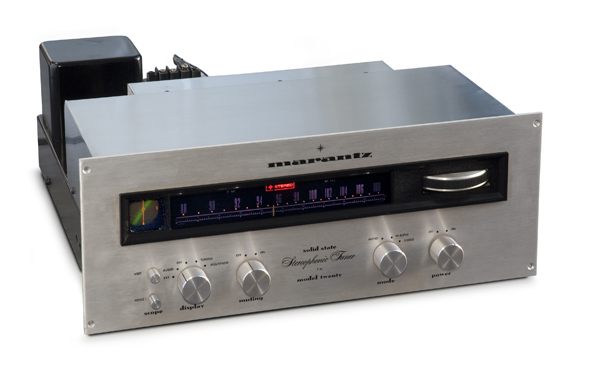
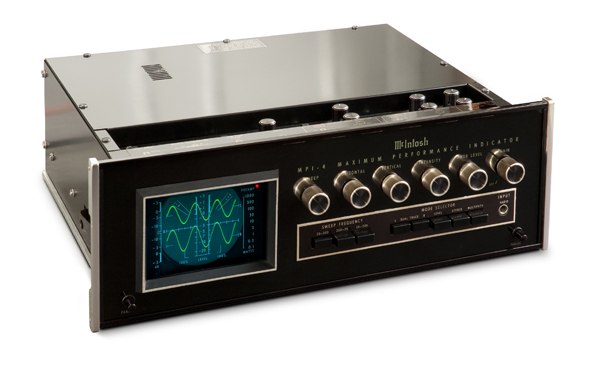
The focus here is on the classics, from the 30’s to the 90’s, but we also threw one new chair in the mix. My only chair shopping rule is, don’t buy a knockoff chair (or a Louis bag), no matter how good it looks. While you can get fakes for half price or less, they are made of inferior materials and don’t hold up. Consequently, knock off chairs are worth nothing on the used market. A quick check of EBay revealed most of these chairs selling for about 60-80% of their sticker price and some of the really old ones (just like McIntosh tuners…) are going for more than what a new one is worth.

Are you sitting down? Sorry, I couldn’t resist that one.

If you are uninitiated to the designer furniture world, don’t worry. It’s just like music, find something you like and go for it. However, prepare to spend some money. We are talking $2,000 – $5,000 big ones for a great chair. Choose wisely and you will still have it 10 years from now (or longer), after many expensive power cords have come and gone.

Here are a few of my favorites – all are available at Design Within Reach. (www.dwr.com)  Fortunately, we have a showroom here in Portland, and they were kind enough to let us mull around, take pictures and ogle. If you aren’t comfortable buying something like this out of a catalog, they may have a showroom near you, and if you live in a major city, chances are good that Herman Miller, Knoll and the other manufacturers have an office near you as well. DWR usually has these in stock and ready to go, and should you have to wait, it’s usually less than a month. If you deal directly with Herman Miller or Knoll, be prepared to wait as long as 12 weeks, which is typical in the contract furniture world. And you thought waiting a week or two for that new amplifier sucked?

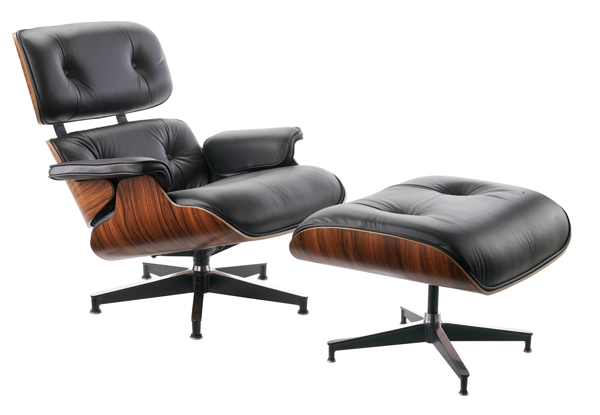
Eames Lounge Chair and Ottoman by Herman Miller,  $4850 and up (finish dependent)

This is probably the most recognizable piece of designer furniture on Earth and quite possibly the most copied. Originally designed by Charles Eames and his wife Ray in 1956, this is one that never goes out of style. This is the chair I’m buying before there are any more expensive power cords in my studio. If you are feeling really loose with the Master Card, you can pick up the 50th Anniversary Eames Chair that features a Santos Palisander veneer.

What is that you ask? Well, back in the 60s, the Eames chair used to use a bit more exotic veneer, which made each chair completely unique. But HM is a very environmentally friendly company, switching to walnut veneer quite a while ago, however this made the chairs slightly more uniform. The Santos Palisander veneer is somewhat exotic, but is a harvested wood, so you can sit in the height of coolness and not worry about destroying the rainforests.

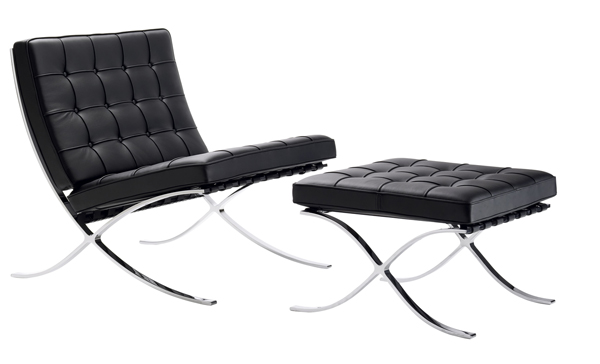
Barcelona Chair by Knoll,  $5,427   (Matching Barcelona Stool, $1654 addl.)

Designed by Ludwig Mies van der Rohe for the 1929 International Exhibition in Barcelona, (hence the name) this is another chair that looks like a million bucks in your living room or listening room. A good friend of mine that used to work with John DeLorean at GM in the 60’s quipped that they had so many of these in the GM design department, they used to use them as saw horses!

For my money, they should have sent DeLorean to jail just for that!  But seriously, this is a mega stylish chair that photos do not do justice to. The cushion is hand made from a single Spinneyback hide and feels fantastic. A pair of these together makes a great, albeit expensive love seat that will look fantastic in front of your speakers.

Available in black or white, avoid the white one like the plague. It gets dirty immediately, and should you decide to make a seating change, no one will buy a used white Barcelona chair. Ever. Besides, black goes with everything!

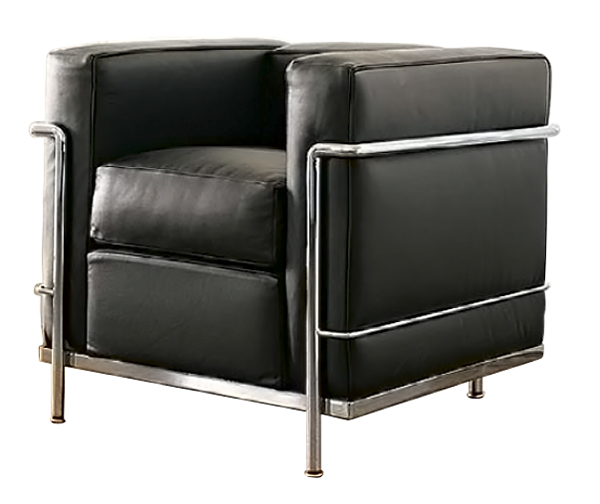
LC2 Grand Comfort Petite Model Armchair by Cassina  $2,902 – $4,560 (finish dependent)

When they say Petite, they mean it. If you are larger than about 5’10” and weigh more than 200 pounds, you will start to feel cramped in this one, gorgeous as it is.  These were originally designed to be used on cruise ships, hence the compact size. Another design from the 20’s, The Le Courbusier chair and sofa have probably been knocked off more than any other. The sofa is about 7k, looking just like the chair, but with three cushions instead of one.

The height of modern design in its day, you will see this chair in a number of museums around the world as well as being part of the permanent collection in the Museum of Modern Art in NYC. One of my fanatical car collector buddies has one of these in his listening room with his Bugatti parked behind it!

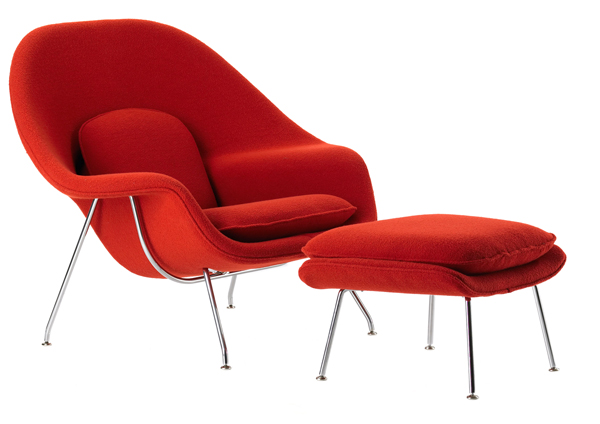
Womb Chair and Ottoman by Knoll  $1,036 – $5,043 (finish dependent)

Another Knoll classic, created by Finnish architect and designer Eero Saarinen in 1948, the womb chair was part of a design challenge to make a chair to curl up in. I can personally vouch for this as I used to fall asleep in my neighbors womb chair all the time.  This one does not offer the best positioning to listen to your system in, but it’s a great headphone chair!  Add a cool table from the DWR catalog or your favorite equipment rack and you can look forward to hours of headphone bliss.

The womb chair is available in black, crimson or pumpernickel and is fairly large, so it will require a good amount of space around itself not to feel crowded. The base features an extremely rich multi-layer chrome plating and looks right at home next to a stack of vintage McIntosh gear.

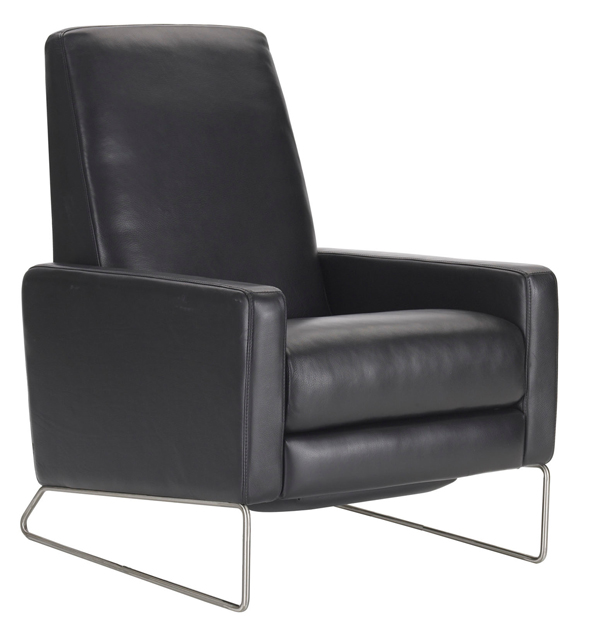
Flight Recliner, by Jeffrey Bernett  $2,125 – $2,595 (finish dependent)

Even if your taste is still more towards the traditional Barcalounger, you can probably use a bit of a style update. The Flight Recliner is a contemporary chair, designed exclusively for DWR in 2005 by Jeffrey Bernett, so this is the only one in the group that you can only purchase there.

The bonus feature here is that it is a recliner, so it can be a hifi chair or a TV chair!  It doesn’t get any better than this and it is available in four leather colors as well as fabric, with a lifetime warranty on the frame and suspension.

There you have it.  We all like to upgrade things, so I respectfully submit these five chairs, for your listening and lounging pleasure. No matter which way you go, a good chair or couch will really make your listening sessions more enjoyable. Just don’t spend too much cash on this stuff, or you won’t be able to buy any more power cords!

Issue 70

Features

Old School:
The Harmon Kardon 730

By Jeff Dorgay

Personal Fidelity:

Aurender Flow

By John Darko

Cardas EM5813 Ear Speakers

By Mark Marcantonio

995:

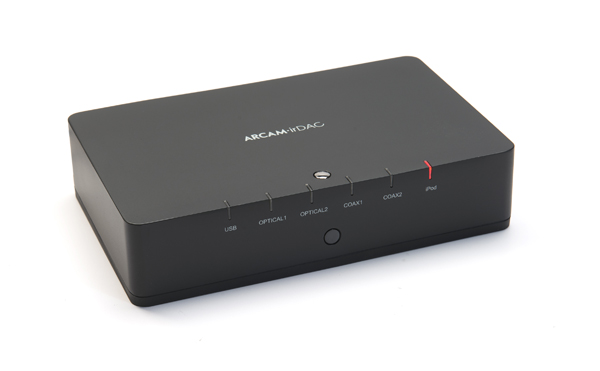
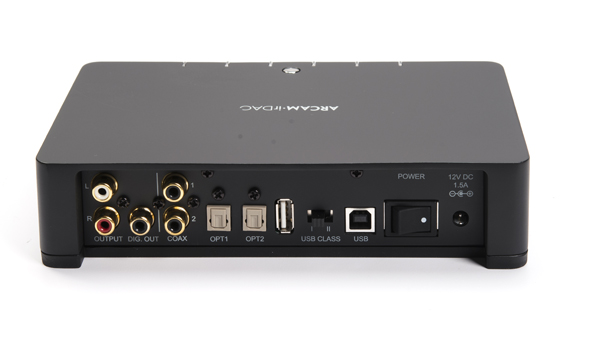
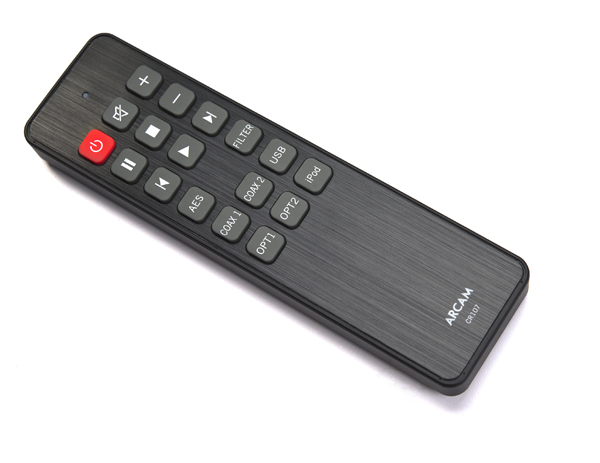
Arcam irDAC

By Mark Marcantonio

TONE Style

Wino:
Winter Whites
By Monique Meadows

Ortofon DS-1 Digital Scale

Snap-on LED 2000 Work Light

GIK Freestand Acoustic Panel

RecordWall-it

Hello Kitty Fruit Roll Ups

Power Girl

Music

Live: Lloyd Cole plays Portland’s Alberta Rose Theater
By Jeff Dorgay

Spin the Black Circle: Reviews of new Pop/Rock and Country Albums
By Bob Gendron, Andy Downing, Todd Martens, Chrissie Dickinson, and Aaron Cohen

Jazz & Blues: Anouar Brahem, Jack DeJohnette, and Mahanthappa
By Aaron Cohen and Jim Macnie

Audiophile Pressings: Grateful Dead , and Two from Don Henley
By Jeff Dorgay

Gear Previews

GamuT M2250i Mono Power Amps

Dali Epicon 8 Speakers

Octave HP 700 Preamplifier

Wireworld Pulse Cables

Naim Mu-So

Gryphon Kalliope DAC

Reviews

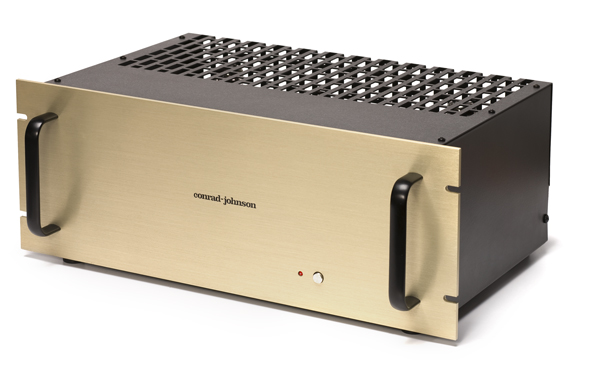
Conrad-Johnson LP125sa+ Power Amplifier
By Andre Marc

GamuT D3i Dual Mono Preamplifier
By Rob Johnson

MOON by Simaudio Neo CD Transport
By Mark Marcantonio

EgglestonWorks Emma
By Jeff Dorgay

Glanz Tonearm
By Richard H. Mak

From the Web

VPI Classic 2

Ortofon 2M Black

Sometimes I Sit and Think, and Sometimes I Just Sit

Courtney Barnett makes it virtually impossible to listen to her outstanding full-length debut while doing something else.

Forget about experiencing it as background noise, or even texting as it plays. You could call it one musician’s foolproof way to defeat attention-deficit disorder and today’s easily distracted, multi-tasking audiences. Yet Barnett isn’t out to change the way people listen by pulling a stunt. Instead, the magnetic pull of her Sometimes I Sit and Think, and Sometimes I Just Sit owes to a savvy combination of witty songwriting, evocative melodies, concise arrangements, and sly deliveries that comes around too infrequently in an ego-centric age absent creative gatekeepers.

Akin to the most memorable “Seinfeld” episodes, the Australian native showcases a knack for transforming common occurrences and everyday thoughts into meaningful observations and deep think pieces. She conveys insightful outlooks and brainy details in rambling albeit simple, conversational turns of phrases that wouldn’t be out of place at an unassuming neighborhood pub. Free of excessive jargon and forced irony, Barnett refreshingly avoids satirical postmodernism. She’s also not solely preoccupied by love or 21st century dating—or, at least, not yet so permanently scarred that she fully gives into the topics—expanding her outlook toward larger issues encompassing human interaction, integrity, responsibility, and self-worth.

Via rhymed couplets and snappy descriptors, Barnett possesses the relatable consciousness of a smart novelist. And through her tangle of stripped-back pop hooks, deadpan singing, and bounding garage-rock grooves, she exhibits the gruff appeal and winking humor of a rough-around-the-edges bartender—a profession she knows well, having worked full-time in a Melbourne tavern until February 2014. In her off hours, the art-school dropout utilized honed her artistry, headed an indie record label, and cobbled together enough songs for a succession of self-released EPs reissued last year as The Double EP: A Sea of Split Peas. Critically acclaimed appearances at major music festivals followed. Yet none compare to her achievements on Sometimes I Sit and Think, and Sometimes I Just Sit.

Placing a fresh spin on the adage “leave them wanting more,” Barnett reshapes the apparently ordinary into incidents infused with aha moments, unexpected revelations, and candid admissions. Seemingly plain on the surface, her vignettes skirt obvious conclusions. She challenges anyone within earshot for their undivided attention on the album-opening “Elevator Operator,” which skips along to a contagious beat and Barnett’s matter-of-fact sing-speak vocals that begin the second the song starts. In less than three-and-a-half minutes, she sketches vivid profiles of two characters to the extent their habits, moods, and identities are fully formed. An aptly surprising ending clinches the tale, which ostensibly involves routine and shallowness but goes further to address expectation, awareness, and perspective—themes that course throughout the record.

In Barnett’s universe, features often seen as trivial signify larger concepts. Cracks in the wall and patterns on the ceiling beget revelations about a relationship in “An Illustration of Loneliness (Sleepless In New York).” Communicated with equal parts spunk and bite, Barnett’s backing band curls snake-like rhythms around her half-lazy, half-droopy singing. On the country-folk strummer “Deprestron,” she both flips the script on the charms traditionally associated with suburbia and confronts swept-under-the-rug circumstances connected to property sales. In the process, Barnett assails not only real-estate customs that encourage buyers to bury history, but myriad practices and procedures that cause people to lose sight of feelings and responsibility.

Indeed, the singer employs understatement and nuance to imply there are serious costs and consequences connected to habits that remain out of sight and behaviors taken for granted. “Dead Fox” grapples with environmentalism, waste, and consumption as Barnett contemplates fruit sold in the market, trucks that pass by her, and animals slaughtered for her food. “Kim’s Caravan” is similarly subversive, its slowed pace and echoing distortion indicative of the song’s weighty meditations on culpability and exploitation. As she does many times on the album, the 26-year-old utilizes simple notions—and identifiable situations—to express broader points in astute manners.

Barnett also understands how to have fun. She takes shots at indecisiveness and facades on the catchy “Nobody Really Cares If You Don’t Go to the Party,” ringed with driving guitar riffs, nasal accents, and spunky vibes. During the spring-loaded “Aqua Profunda!,” the singer dizzily recounts an encounter with an attractive stranger at a swimming pool and wraps anxiety, desire, embarrassment, and disappointment up into one hilariously sincere two-minute story. And on the tongue-in-cheek “Pedestrian at Best,” Barnett lashes out at pretense, sanctimonious, and presumption with savage impact.

At its core, the stomping song recalls the rawness, insistence, and volume of mid-period Nirvana, the group whose chords Barnett learned when she first picked up a guitar. If Sometimes I Sit and Think, and Sometimes I Just Sit is any indication of the Australian singer’s trajectory, countless young upstart musicians will be sitting at home and using Barnett’s work in the same way during the years to come. -Bob Gendron

You can purchase this here from Music Direct:

And you can stream it at TIDAL here:

OPPO HA-2 Headphone Amplifier Flyby

We just popped OPPO’s HA-2 headphone amplifier out of the box and it’s a beauty. Here’s a quick peek.

Looking more like something Q would give James Bond to trounce an enemy than a piece of consumer electronic gear, the HA-2 goes a long way at upping the style points and decreasing the nerd points for portable audio, and that’s a wonderful thing.  I know that big wad of gear, rubber banded together with all the cables hanging out has always been a conversation killer when I’ve been on a plane.

With a Sabre DAC included, two gain settings and convenient charging options, the HA-2 joins OPPOs growing fleet of awesome, yet affordable line of gear.  Watch for a full review in Issue 71 of TONEAudio.

More tech info here:
https://www.oppodigital.com/headphone-amplifier-ha-2/

Hi-Fi Centre Grand Opening

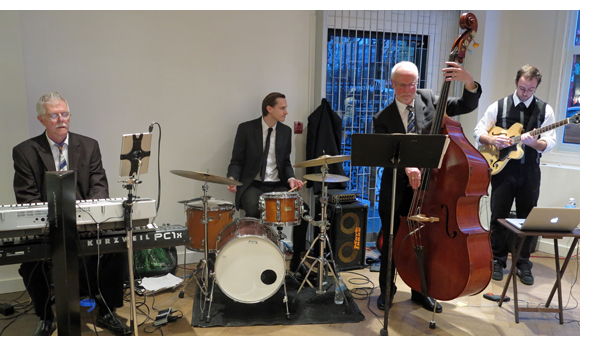
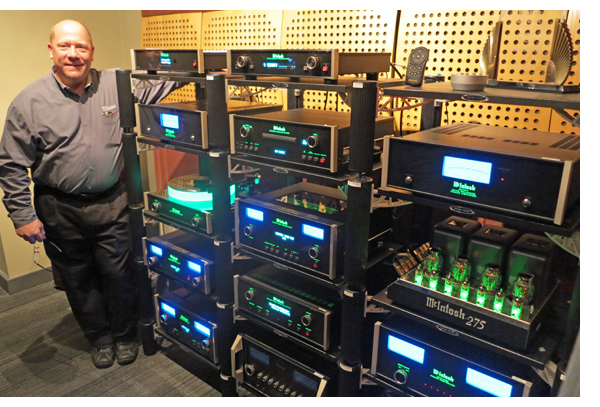
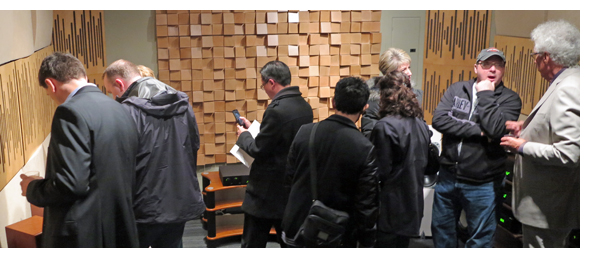
February 27, 2015 proved an unexpectedly warm and sunny day in Vancouver, Canada – the perfect foreshadowing for an equally stunning experience that evening at Hi-Fi Centre’s grand opening celebration. With a veritable Who’s Who of audio experts and equipment on hand – along with live music, food, and drinks – the event felt more like a mini-version of the Rocky Mountain Audio Festival than a store-opening party. Representatives from AudioQuest, Auralic, Bowers & Wilkins, Bryston, dCS, McIntosh, Totem Acoustic, Transparent Audio, Vienna Acoustics, and other manufacturers were there to answer any questions about their products. And of course, we enjoyed the chance to meet many local hi-fi enthusiasts. Clearly, Hi-Fi Centre has built a loyal customer following.

During my tour of the facility from Igor Kivritsky and opportunity to talk with him about the new space, it didn’t take long to realize the magnitude of work culminating in this celebration. The explanation requires some backstory.

Hi-Fi Centre in Vancouver, Canada, has remained a family-owned business since 1984, when Igor’s father, Alex Kivritsky, founded the store and began selling audio equipment. As Igor describes the history of Hi-Fi Centre, his father invested a total of $30,000 – the cost of many one-home hi-fi systems the store sells today – to lease the original 1,600 square foot location and purchase inventory. Working seven days a week for two years, Alex and Igor built upon the store’s humble roots.

Over time, the store space expanded in the same way a patchwork quilt does. Many improvements took place over time, continually maximizing the materials and space available. Igor remembers fondly the day in 1994 when the business next door, a leather jacket retailer, moved out and allowed Hi-Fi Centre the opportunity to expand to 4,500 square feet. Eventually, Alex transferred to Igor the store’s helm, and together they continued to build their business. Beyond Igor’s own family, Hi-Fi Centre’s 10 employees are like extended family. Half of them have remained with the company 10 or even 20 years. With that much experience under their cumulative belts, customers can be assured of helpful and knowledgeable advice.

As growth continued, though, one challenge remained consistent. Their showroom resided in an older building which was never designed with acoustics as the priority. Sonically retrofitting that space remained a tall order. After much consideration about further improvements possible at the old location, the family ultimately decided to break with the past. They wanted to establish a new location, built from the ground up, to give customers a fantastic musical experience and to showcase the full sonic potential of each piece of equipment they sell.

Igor chuckles at times as he describes the process of making the new store a reality. While he tells the story in a humble and lighthearted way, it’s clear that a lot of thinking went into the new 5,000 square foot layout. His first challenge was finding the right location. Igor describes his first encounter with the new location as an immediate attraction for “a shell of a building with columns that were actually in all right places – like a blank canvas!” Seeing the theoretical potential, he then set to the more difficult task of designing the layout.  Igor jokes, “I’m no architect,” but for several weeks, the FloorPlans Pro iPhone app served as his constant companion on the commuter train to and from work, helping him turn his ideas into tangible plans. He also jokes about the many hours he spent wandering around Restoration Hardware stores in search of new ideas to make the vision a reality.

His first goal was to make the store feel less like a retail space. As he put it, “I wanted it to feel more like a living space than a listening room — not just a space for audiophiles, but for entire families.” Experiencing the store illustrates the extent to which he achieves his goal. It’s clear they pulled out all the stops to optimize and future-proof their retail space. In addition to large open spaces near the entry, four acoustically-optimized listening rooms are nestled within the facility. Each room features comfy sofas, dim lighting, and an uncrowded layout despite all the gear within. It’s easy to forget you’re in a store. The only hint of the outside is a porthole-like window in the door of each listening room. Like being on a ship under the water line, the room is very comfortable on the inside, so being on the other side of the porthole has, um, very little appeal.

Blended among each room’s comfort-leaning amenities is specific treatment for the best acoustics for the space. Igor describes emailing his room dimensions and photos to Vicoustic, having them determine the ideal solution for each space, and taking the leap of faith that their results would meet his expectations. Ultimately, it exceeded them. The resulting room treatments look rather like modern art, with form equally important to function. According to Igor, $10,000–$15,000 dollars in audio treatments grace each room. He sees the expense as a long-term investment since it allows the audio gear within to reach its full sonic potential, and lets customers hear what the equipment is truly capable of.

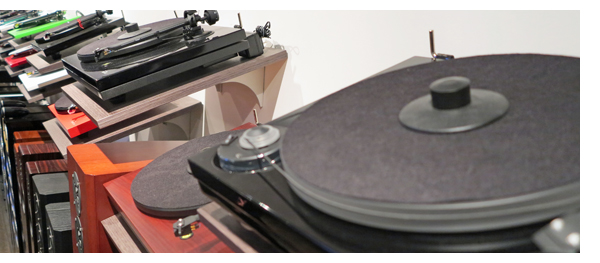
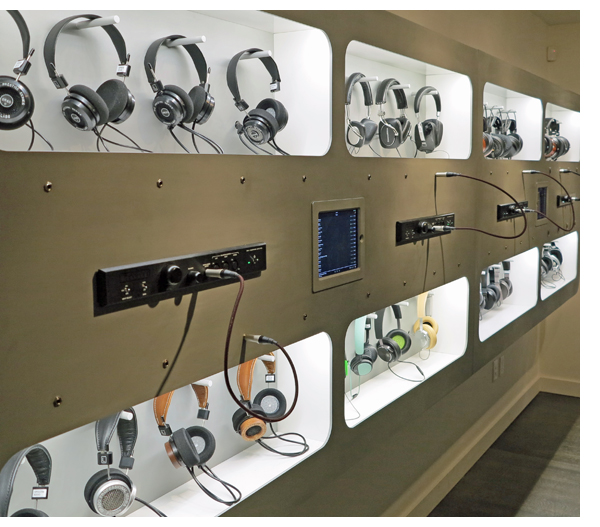
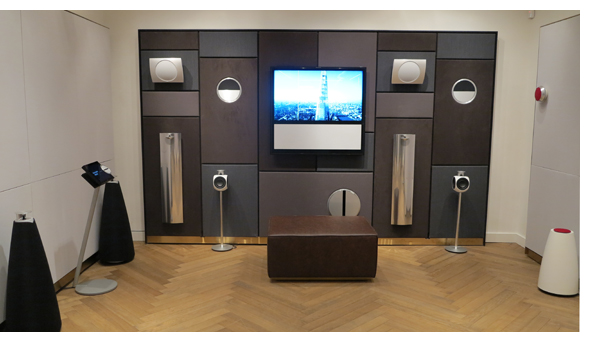
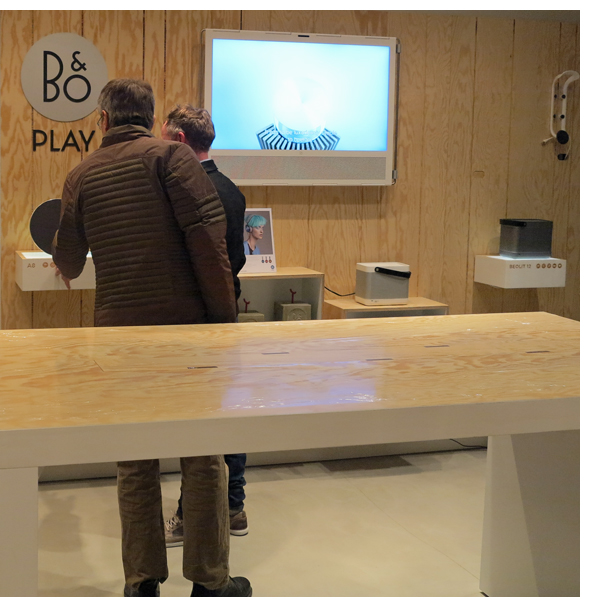
Beyond the listening rooms, the store offers a hands-on wall of headphones, an additional wall dedicated to turntables, a home theater space, and an enormous glass case for viewing cartridges and other small items. Additionally, a large space in the front of Hi-Fi Centre is inspired by the Bang & Olufsen store design concept, creating the open and inviting feeling of a museum. In all, the store offers a very engaging customer experience throughout, and Igor indeed succeeded in meeting and exceeding his own design goals.

While Hi-Fi Centre sells fantastic home theater solutions, Igor notes that their team’s sales focus today still echoes the roots of the company: two-channel stereo systems. Once a customer chooses a system, it is part of Hi-Fi Centre’s service to deliver it, set it up, and help place speakers for the best sound. As Igor puts it, “Before we leave the room, we want to know everything is working right, and the new owners have a smile on their face.”

I asked Igor if he experienced any systems or rooms which were particularly difficult to set up. In response he provided a personal story. Early in the relationship with his girlfriend (now his wife) he decided to surprise her with an upgrade for her old boom box. He carefully set up the small integrated amplifier and placed the speakers into the room where they offered the best sound. When she arrived home, Igor got a reaction he didn’t expect. She was not happy about the obtrusive nature of the large system in her small apartment. With their relationship in the balance, he pleaded for her to put in a favorite CD before passing a final judgment. According to Igor, she soon had a huge smile on her face. Similarly, he finds many Hi-Fi Centre customers reluctant to have speakers jetting out into the listening space after setup, but more often than not, the best possible sound wins out over the small intrusion in living space.

Igor’s eyes twinkle as he shares a postscript to the story. He describes his wife’s discerning audio insights today. When the married couple moved into a bigger home, she wanted larger and more resolving speakers. After listening to the newly set-up household system, she paused, then pointed at the temporary bare-wire speaker cables being used. Hearing sonic limitation, she said, “And when do we get the real speaker cables in here?” It seems audiophile genes run throughout the family.

If you’re in the Vancouver area, be sure to drop by Hi-Fi Centre, meet the team, and check it out for yourself. You’ll be glad you did! – Rob Johnson

www.hificentre.com

Another Day Another Time

Initially trumpeted by critics as an Oscar contender and a thematic relative of the Oscar-winning directors/screenwriters’ smash O Brother Where Art Thou?, the Coen brothers’ 2013 film Inside Llewyn Davis failed to win over public interest.

The soundtrack, designed to channel the vibe of the Greenwich Village folk scene in 1961 and anchored by contemporaries such as the Punch Brothers and Justin Timberlake (who starred in the movie), disappeared nearly as quickly from view.

It seemed, however, the project’s overseers knew such an undertaking would remain under the radar. Having admitted as much, and to create additional buzz, the Coen brothers and producer T Bone Burnett staged a benefit concert at New York’s Town Hall in September 2013. The affair featured actors and musicians from the film as well as a cadre of artists that trade in the sort of roots fare—old and new, traditional and original—connected to or informed by the scene that attracted Bob Dylan to the East Coast and, ultimately, changed the course of culture.

While such one-time events often poorly translate to records and video, Another Day Another Time: Celebrating the Music of “Inside Llewyn Davis” retains a curious allure thanks to the consistency of style and performances. A host of marquee names—ranging from Joan Baez and the Decemberists’ Colin Meloy to Elvis Costello and Jack White—supply star power and bow with expectedly solid turns. Highlights include Baez delivering a stark “House of the Rising Sun” and White, refreshingly free of shtick, transforming his own charmingly innocent “We’re Going to Be Friends.”

Yet this acoustic-based set succeeds most between the lines, via several up-and-comers that take full advantage of the platform. Carolina Chocolate Drops singer Rhiannon Giddens transcends what she’s shown thus far with her main group on the antebellum-informed “Waterboy” and Celtic standard “S’iomadh rud tha dhith orm/Ciamar a ni mi ‘n dannsa direach.” The arresting readings reveal a voice pregnant with gospel, texture, grace, and power. Similarly, the manners in which the Secret Sisters dial up tender harmonies on the mournful “Tomorrow Will Be Kinder” and Lake Street Drive skit through “You Go Down Smooth” give more reason to be optimistic about the health of traditional-minded folk in the 21st century.

And while he’s already familiar to Americana aficionados Punch Brothers member Chris Thile again proves he’s ready for an even bigger stage throughout. Along with Gillian Welch, who is superb both in small (“The Way It Goes”) and ensemble pairings (“Didn’t Leave Nobody But the Baby”), Thile functions as the evening’s jack-of-all-trades. He grooves with his main group on “Rye Whiskey” and shines in a variety of settings in which he carries the instrumental weight.

At more than two hours, the 34-track collection occasionally suffers from momentum losses. The Avett Brothers stick out as revivalist pretenders and actors Oscar Isaac and Carey Mulligan add little to the proceedings. Still, the spirit of the past, promise of the present, and hope of the future in the form of Welch, Thile, Giddens, and Co. make it easy to overlook such temporary flaws.  —Bob Gendron

Various Artists

Another Day Another Time: Celebrating the Music of “Inside Llewyn Davis”

Nonesuch, 3LP or 2CD

Purchase this from Music Direct on Vinyl here:

Stream in 16/44.1 at Tidal here:

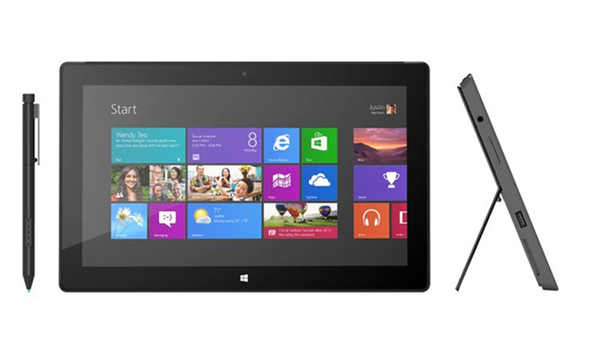
Microsoft Surface 3 Pro

As a dyed in the wool group of Apple enthusiasts, it’s tough to ignore the new Surface 3 Pro from Microsoft.  We can argue the Windows vs. Mac interface until we become exhausted, so let’s leave that out of it, shall we – that’s a great way to waste hours of your life on an internet forum some evening.
From a strictly hardware perspective, both the Apple MacBook Air and the Surface 3 Pro fall down for the power user, only offering 8GB of memory as the maximum.  And, neither allows you to upgrade the memory once you’ve made your choice, so there’s no point in getting less than 8GB.  However, if you can live with 8GB, the Surface is an intriguing way to bridge the gap between laptop and tablet in more ways than one.

First, the Surface 3 Pro is almost a pound lighter than the 13-inch Mac Book Air, though its screen is an inch smaller – not a deal breaker, but those doing a lot of intense Photoshop or Excel work will grudgingly give up that extra inch, begging the question, why don’t these guys make a 17-inch version?  Where some audiophiles like to argue that bits are bits, many computerphiles will argue that pixels are pixels.  However, the Surface 3 Pro’s screen looks a lot more like the Retina display on the MacBook Pro, with more snap and saturation than what’s fitted to the MacBook Air.

Connectivity is roughly the same, as is processor speed – the Mac using the Intel i7 processor and the Surface 3 Pro the i3, i5, or i7, depending on model chosen.  Again, computer geekazoids will argue this point, but casual use of Word and Photoshop proved equally perky on both platforms.  The Surface 3 Pro claims a battery life of 9 hours, losing a bit of ground to the MacBook Air, but still more than enough to go from New York to Europe with ease.

The keyboard is critical to any laptop, and unlike all of the dreadful iPad keyboards we’ve auditioned, the keyboard/case cover offered with the Surface 3 Pro is exceptional, feeling better than the Apple laptop keyboards albeit with keys a little bit closer together – but not too much to stop you from typing frantically.  What the cute ads don’t come right out and tell you is that the keyboard is another $129, pushing the top model over the $2,000 mark and straight into MacBook Pro Retina territory.  Food for thought.

Extra touches abound that make the Surface 3 Pro a highly sophisticated portable computing platform.  The ability to fold it into a tablet, and one that is slightly larger than an iPad is extremely useful.  Using both a Mac Book Pro and an iPad on trips, the ability to have one device that only weighs 1.76 pounds than can perform both duties is very enticing indeed.

Even though Microsoft’s Surface 3 Pro is a better portable computing device than the MacBook Air, dedicated Mac users probably won’t switch. – Jeff Dorgay

Microsoft Surface 3 Pro

$799 – $1,999

www.microsoft.com

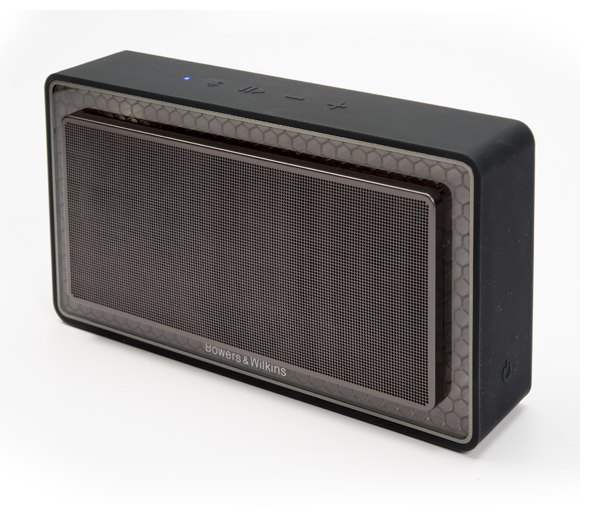
Bowers and Wilkins T7 Portable Speaker

Listening to Bryan Ferry’s recent release through the T7, it hits me.  Bowers and Wilkins has finally outdone Apple.  The fit, finish, quality and packaging exceed everything I’ve come to know and love from the Cupertino giant. Like Apple, B&W completely understands that in order for a product like this to be fully integrated into your life, it needs to be seamless in every way – and the T7 succeeds brilliantly. You’d expect one of these to be in a Grammy award ceremony gift bag.
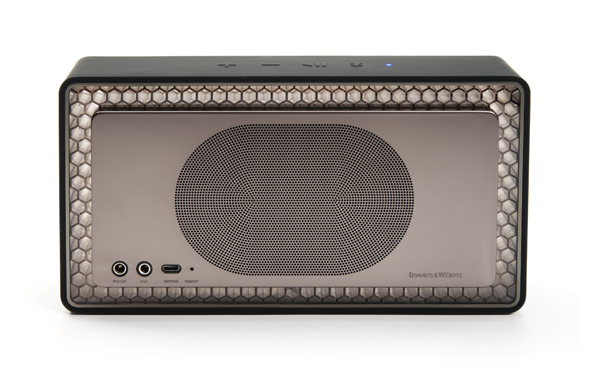
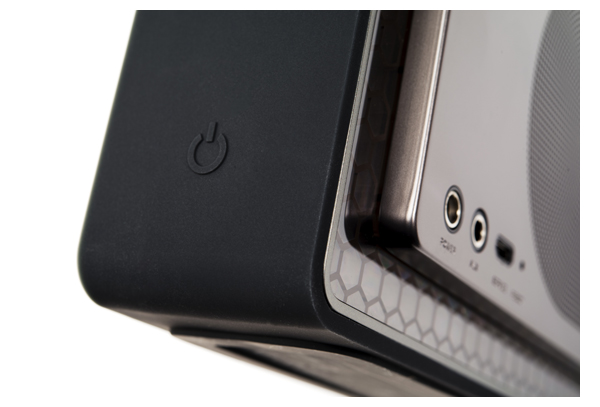
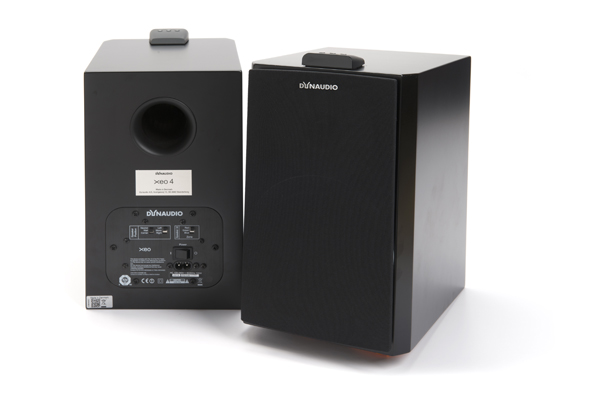
An iPad like quick start guide is included, but setup is as easy as pairing a phone with your car’s audio system.  Plug it in, turn it on, hit the Bluetooth button on top of the T7, enter the code in your device’s Bluetooth menu and go.  It’s that quick and that easy to enjoy music on the T7.  Those with non-Bluetooth devices can connect to the T7 via the analog mini jack on the rear panel, though this does take away from the compact ethos of the device.  Just for giggles, we hooked up a VPI Nomad turntable, going from the mini headphone jack out on the Nomad to the T7 and it made for a pretty cool, impromptu record spinning session.

Streaming 16/44.1 content via Tidal through the T7 provides the highest quality playback, yet streaming 320kb/sec MP3s from various streaming provider isn’t all that bad either –the T7 does have enough resolution to tell the difference.  Fortunately, the T7 uses the latest aptX Bluetooth drivers for the best sound possible.  Unfortunately Apple isn’t using this Bluetooth protocol yet, so you’ll get even better sound from your Android phone or other device so equipped.

With 12 watts per channel, the internal class-D amplifiers power a pair of bespoke 2-inch drivers with a pair of square, auxiliary passive bass radiators that produce ample low frequency output, especially in light of the T7s diminutive size.  This can be augmented somewhat when put on a tabletop or on the corner of room, to pick up additional room gain.  Brad Roberts’s deep baritone on the classic Crash Test Dummies track “mmm mmm mmm mmm” is easily convincing with plenty of weight to adequately convey his quirky vocal style.

The T7 does have some limitations, but they are to be expected with such a diminutive enclosure.  You won’t be playing Iron Maiden at earsplitting levels, but Pat Metheny at a moderate level will thrill you.  Kept within reasonable limits, the T7 is impressive, throwing a large soundfield into the room. Fortunately, battery life isn’t a limitation.  We can confirm the claimed 18 hour battery life, so the T7 should outlast any party you can throw.

The only quandary facing the potential T7 owner is the price, at $349 it is a premium product and priced thusly, leaving you with the ultimate question:  supreme portability or the ability to play bigger and louder.  If you want B&W quality and ease of operation in a tiny package that you can put in a suitcase and take with you wherever you are, the T7 is unmatchable.  However, those really wanting to rock the house and have the additional counter space to do so will be better served with a B&W Zeppelin for $399 – but you can’t take it with you easily. I know I want one.  – Jeff Dorgay

www.bowers-wilkins.com

Dynaudio XEO 4 speakers

Dynaudio made a big splash with their wireless XEO speakers two years ago, but their engineering staff has not been sitting on their laurels.  The new second generation speakers feature more wireless bandwidth, better drivers and more extensive tuning.  Our recent visit to the Dynaudio factory in Denmark found their engineers intensely involved in wireless development, so you know this is a solid path for Dynaudio’s future.
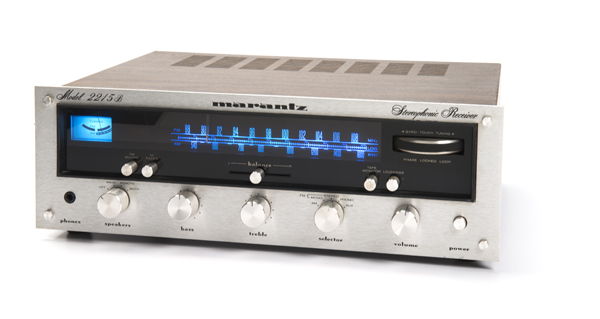
The new XEO range, introduced at this year’s Munich High End show builds on Dynaudios initial success, making wireless audio a much higher performance option than ever before.  Watch for a full review soon.

Dynaudio XEO 4 speakers

$4,000/pair

www.dynaudio.com

Marantz 2215B Receiver

Every now and then, smaller is better.  Such is the case with a lot of the Japanese receivers from the ’70s.  Pioneer, Marantz, Sansui and the like were on a power race similar to the Cold War of the same period, releasing receivers with more and more power all the time. Some of the large models went up to and even exceeded 200 watts per channel, yet their smallest offerings had a special, almost delicate sound.
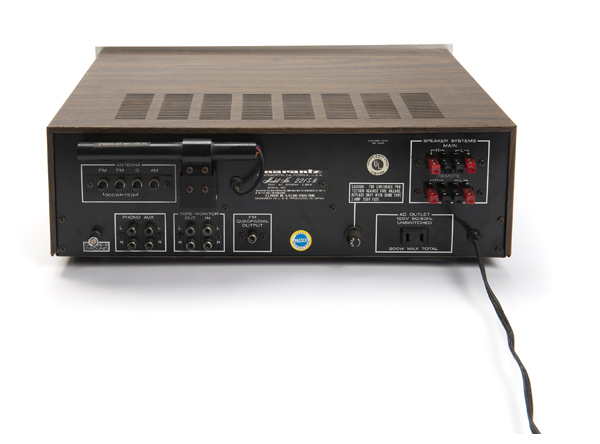
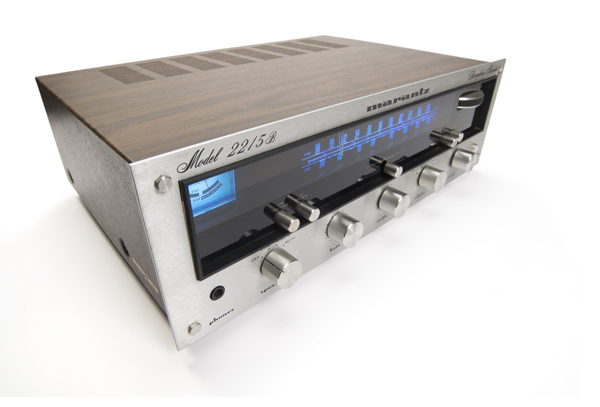
Two of my personal favorites were the Pioneer SX-424 and the Marantz 2215.  In this case, we have the later 2215B model, and while you can start a major argument on any hifi forum as to which model was better, the 2215B is still pretty sweet indeed.  Without schematics and parts count in front of me, I’ll go out on a limb and guess that with these amplifier sections, in the early days of solid state, simpler was definitely better.

In tandem with the pair of NOS JBL L26 speakers I wrote about back in issue 49, the mellow sound from the 2215B is beguiling in the sense that it’s not quite as warm as a Dynaco Stereo 70/PAS 3 combination, yet is still very smooth.  When listening to a modern 24/96 recording via the OPPO 105 disc player, the Marantz’s modest power rating is fairly easily exceeded, even at a modest listening level.  Yet, with your favorite classic rock records found in the budget bin or thrift store, played via a Shure M44 cartridge which is already somewhat warm and round in its presentation, nothing sounds bad at all.  Even the Eagles classic Hotel California (there, I admitted it) sounds pretty damn inviting, but whatever your fancy, the 2215B will never come across as harsh – even with an early-generation CD player.

15 watts per channel won’t power a pair of Magnepans, but a pair of Klipsch Heresy’s, JBL’s or even a pair of Dynaco A25 speakers makes for an incredibly pleasant system that might even have you questioning why you’re chasing the hifi grail in the first place.  Keep it simple and you’ll be well rewarded.

Blending the old and new worlds even further, streaming from Spotify, with its slightly underwhelming 320kb/sec audio quality, is definitely embellished by the lack of resolution that this vintage Marantz offers.  This makes the 2215B a perfect anchor for a dorm room, garage, office or den system.  Its bass and treble controls are especially useful, extending the capabilities of whatever inexpensive speakers you might pair up with it, and the phono section is surprisingly quiet.

The FM Tuner section, while not as good as the legendary Marantz tuners, is still quite good –– and if you live in a market where there are still good stations to be heard, the 2215B fits the bill.  Local stations with a modicum of signal strength here in the Portland area are clean and clear, with more than ample stereo separation.  Way better than what you’ll ever experience with satellite radio.

As with any piece of vintage gear, try to shop for the cleanest one you can find cosmetically, as all the trim parts are long gone –– it’s like trying to buy parts for a Porsche 356. Those vintage items that have the nice bits command a premium price, making a $50 budget find a $400 receiver in a hurry.  The example you see here fetched a price of $215 on Ebay and not only features a slew of new capacitors under the hood, but a fresh set of aftermarket LED lights, assuring that the blue Marantz glow will be intact for years to come.

– Jeff Dorgay

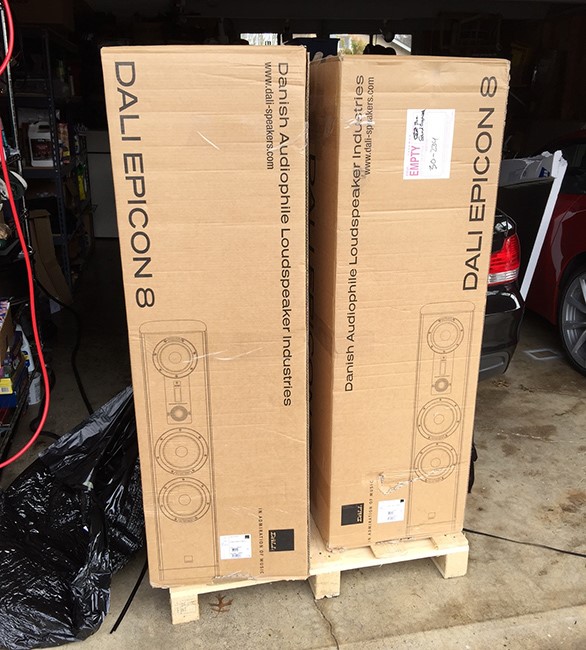
Unboxing Dali Epicon 8 Speakers!

It’s always a pleasant surprise to see a new set of speakers arrive at our door! I asked managing editor Rob Johnson to come over and help me get these beauties from Dali out of their boxes and into the listening room. Here are a few photos my wife Pam took of life behind the scenes of a product review…
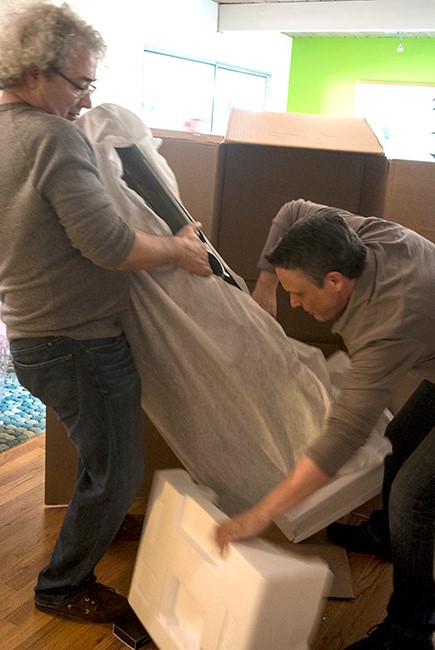
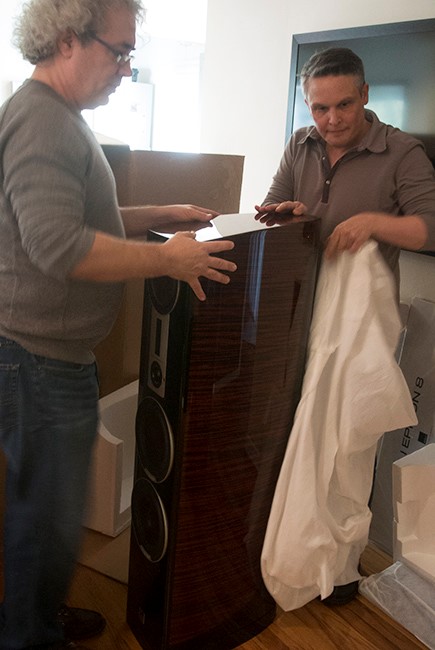
Yes, these are some substantial  speakers, weighing in at 105 pounds (47.5 Kg) each. Here we are, attempting to look muscular. Clearly, it’s time to hit the gym again! Speaker ports can serve as much-appreciated handles.

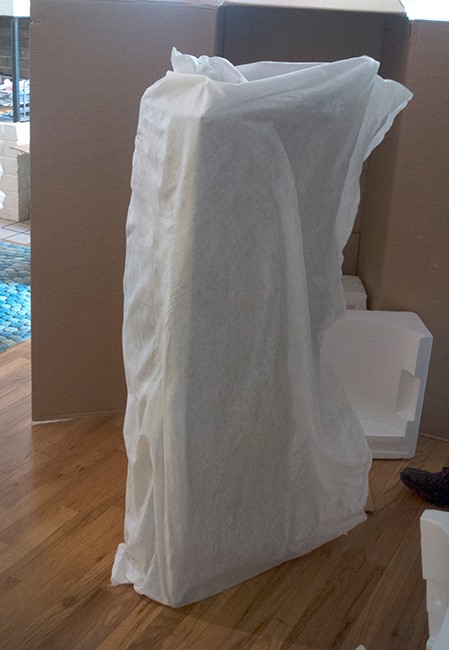
Getting ready to unveil our guests from Denmark…

First glimpse of the gorgeous wood finish…

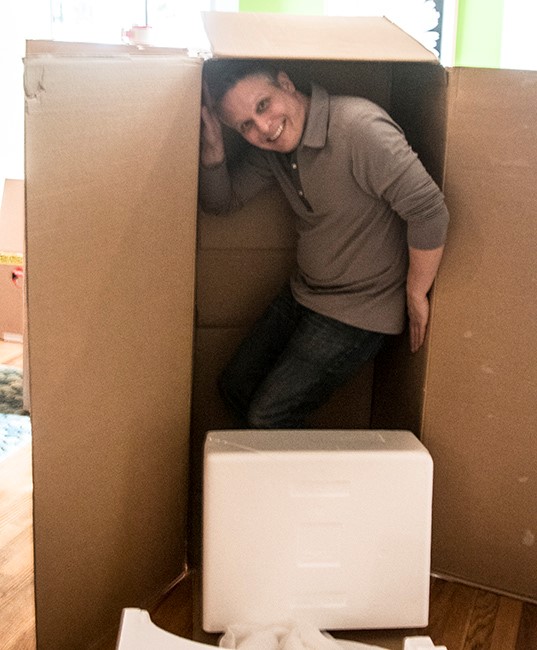
Here’s Rob, considering a trip back to Denmark in the Dali box. Hmm…I guess that explains what happens when TONE staff go missing.

Here’s the pair of speakers, free of their crates, and ready to have their bases bolted on. We’re excited to get to work on this review!

Bob Dylan – Shadows in the Night

Bob Dylan’s 2009 album of holiday standards could be seen as an example of the Bard having a little fun with the public, but make no mistake: Shadows In the Night, the 73-year-old’s stripped-down set of songs largely popularized by Frank Sinatra, is no laughing matter.

Nobody is going to argue that Dylan’s weather-beaten, gravel-textured voice belongs on the same level as Ol’ Blue Eyes’ baritone, Tony Bennett’s crooning, or even many of the contemporaries that tackled Sinatra projects. Yet the Minnesota native’s measured, cautious pace—and equally importantly, elastic phrasing, gentle timbre, and seeming self-awareness of his own abilities as a balladeer—begets an emotional honesty lacking on many of the forgettable Great American Songbook efforts released during the past several decades. Via restrained arrangements and resigned moods, the music often falls in line with several of Dylan’s better late-career records—including parts of Time Out of Mind and Love and Theft.

Focusing on Sinatra’s alone-at-the-bar saloon fare and wisely steering away from upbeat swing, Dylan succeeds in peeling away the big-band layers to leave minimalist arrangements that frame his vulnerability, regret, and loneliness. He expresses the latter feelings by taking his time with the lyrics, be it stretching syllables like taffy or drawing out spaces between words.

Having eliminated the traditional string elements—and save for three tunes, the horns—Dylan needn’t compete with a band. Rather, one complements him, with his longtime touring mates supplying discreet backgrounds salted with country and blues flavors. Donny Herron’s aching, gliding pedal-steel guitar lines mirror the singer’s loneliness on material such as “Full Moon and Empty Arms” and “What I’ll Do.” Dylan even manages to bring fresh perspective to “Autumn Leaves” and “That Lucky Old Sun,” investing each standard with a sense of tragic certainty Shakespeare—surely, a peer in spirit—would’ve appreciated.

Captured at Capitol’s Studio B, a location Sinatra frequented, Shadows In the Night claims no overdubs or separate tracking. Dylan and Co. recorded live, with no headphones or vocal booths. What’s in the grooves is basically what went down, and most songs were completed in one or two takes. The resulting intimacy and spontaneity lend further credibility to an album that, by looking to the past, speaks volumes about the need for more musical truthfulness in the present. —Bob Gendron

You can purchase the vinyl HERE at Music Direct…

And, you can stream it on TIDAL Here…

MartinLogan Motion 35XT Bookshelf Speakers

Many people know MartinLogan for its svelte, even avant-garde-looking electrostatic floorstanding speakers, which have earned the company a large and dedicated fan base. But, like a good scientist at work, MartinLogan does not rest on their laurels, continuing to experiment with new designs, like the Motion 35XT, that give potential customers great sound for the dollar. These speakers are designed to sound great as a stereo pair or with other speakers in the Motion line as part of a home-theater setup.
Under the Microscope

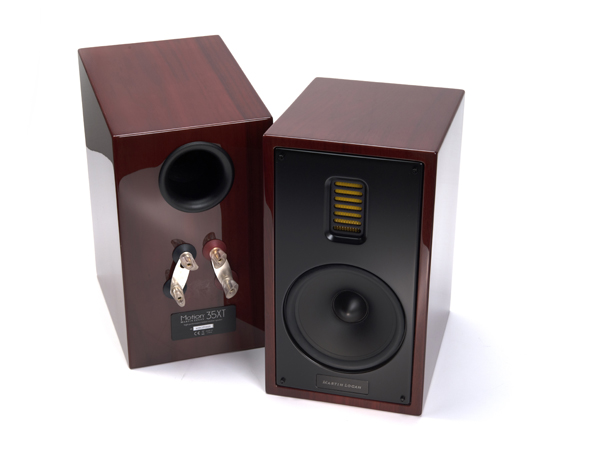
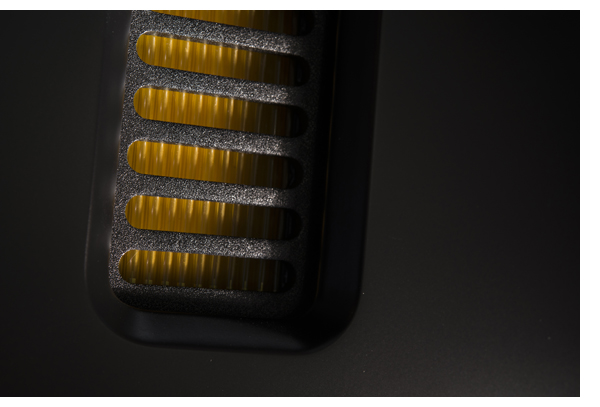
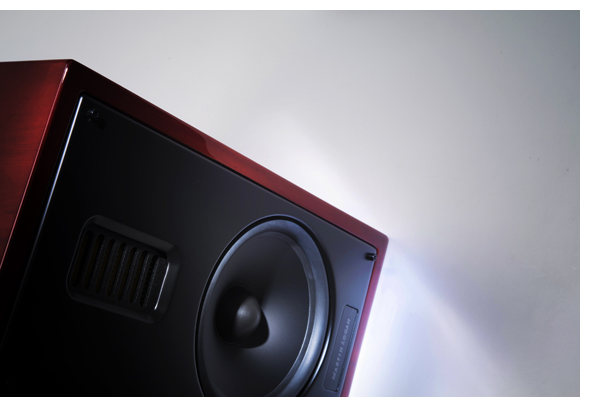
These mini Martins combine the brand’s Folded Motion Transducer tweeter with a more conventional-looking 6.5-inch woofer sporting an aluminum cone and ported out the back. The 35XT specifications state that the frequency response ranges from 50 Hz all the way up to 25 kHz. Into a 4-ohm load, they can handle amplifiers delivering 20 to 250 watts. Each speaker measures 13.5 inches tall, 7.6 inches wide and 11.8 inches deep, including the length of the binding posts. With solid construction and a substantial magnet for drivers, each weighs in at 18.5 lbs, which is relatively hefty for speakers this size.

Appearance-wise, the speakers don’t command the sculpture-like attention that their big electrostatic brothers do; the XT form factor is nondescript by comparison. ML finishes the cabinets in piano black or black cherrywood gloss. The last visual element to consider is the metal perforated grilles, which lend the speakers a look similar to ML’s electrostats, though they are magnetically attached and can be easily removed if desired. (Sonically, I found little difference with the grilles on or off.) But if you have small children who enjoy pushing elevator buttons and doorbells, the exposed center of a woofer cone can look mighty tempting.

Experimentation

As with ML’s ESL speakers, the XT’s manual offers concise setup instructions. Each speaker comes with four adhesive pads for easy grip on a shelf or a speaker stand. Once the general location is determined, ML suggests toeing in the speakers directly at the listener, which works splendidly in my listening room with the tweeters at ear level. The size of your room will determine how close you place the speakers to the side walls to maximize imaging and bass performance.

The speakers are easily connected to an amp, with ML’s oval-shaped five-way binding posts making light work of torquing down the speaker cables without damaging the cable or binding post. Two sets of binding posts allowing for bi-wiring or bi-amplification, should the listener prefer that configuration. The binding posts are offset on the speaker body, which makes this task even easier, whether you choose bi-wire or single-wire operation.

Testing in Vivo

The MLs immediately impress with their ability to disappear into the soundstage and music drifting in all directions around the speakers. The resulting sound portrayal enables a wide left-to-right stereo image complemented by an equally compelling sense of depth. Depending on the recording, there are some instances where musical elements project well in front of the speakers.

The 35XTs uncover a lot of fine detail and nuance in recordings, which contributes to the sense of ambient sound around them. At the same time, they do not lean toward ear-singing fatigue, a testament to ML’s years of ESL design and voicing. In the context of gear at my disposal, female vocals retain a natural, non-exaggerated musical presence, as demonstrated through Pink Martini’s album Hang On Little Tomato. Cymbal shimmer, horns blasts, harp plucks and piano notes showcase the speakers’ high- and mid-frequency extension.

As with most small-box designs, bass has its limits, so those craving deep and powerful bass might consider alternate or supplemental speaker options. Below 50 Hz, bass loses its growl through the 35XTs and a subwoofer like those offered by ML will pick up the slack. But what bass the 35XTs do reproduce comes in tight and tuneful. Like a seat further back in an auditorium, drum impacts sound quite real, but they lack an up-close level of punch and slam. Electronica tracks from Deadmau5 and Armin Van Buuren offer plenty of snap and excitement.

The balance of all these elements proves delightful during long listening sessions. These speakers do offer some surprises, as guitar strums and background vocals spring forth from the blackness and into the periphery.

Perpetual Motion

Though ML is known better for its more expensive ESL speakers, it’s marvelous to see the company price a set of speakers under $1,200, putting them into the reach of many audio enthusiasts seeking high-quality monitors. The gloss-finished wooden cabinets and metal speaker grilles alone give the outward impression of a more expensive design. And of course, fantastic sonics for their price point reinforce that assessment.

Used as a stereo pair, the ML 35XT speakers offer a lot of sound for the dollar. Other than limits to bass frequencies, the rest of the audio spectrum proves very enjoyable. The speakers may even beguile a listener toward couch-lock, repeating the phrase, “Okay, I’ll play just one more song.”

For those who want a stereo pair of speakers now, but are considering a home-theater setup in the future, it’s also great to know you are preserving your speaker investment. If budget allows later for the floorstanding version of the XTs, the smaller speakers can always be utilized as surrounds. In that scenario, a user can also rest assured knowing that the common drivers used in the Motion XT series speakers will offer a perfectly synergistic match. Our publisher has also mentioned that the XTs work very well as rear speakers in a multichannel system with MartinLogan ESLs as the front channels.

By simply filling out the warranty card and sending it to ML within 30 days of purchase, an owner receives a five-year insurance policy against problems with the speaker, which underlines the company’s commitment to its customers’ long-term satisfaction—whether an owner chooses the high-end or entry-level models. With that level of confidence behind the speaker, and the marvelous sound they produce, these ML speakers are a great option to consider.

Martin Logan Motion 35XT bookshelf speakers

MSRP: $1,200 per pair

www.martinlogan.com

PERIPHERALS

Digital sources Mac Mini    dCS Debussy    JRiver Media Center 20    Tidal music service
Analog source SME 10 turntable with SME 10 tonearm and Dynavector 17D3 cartridge
Amplifiers Burmester 911 MK3    Benchmark AHB2
Preamplifier Coffman Labs G1-A
Speakers Sonus faber Olympica III
Cables Jena Labs
Power Running Springs Audio Haley     RSA Mongoose power cords
Accessories ASC tube traps    Mapleshade Samson audio racks

iFi Audio iPhono Mini Phonostage

When the little iFi iPhono box first landed on my desk, I thought it was my wife’s new iPhone. From its outer appearance to its packaging to its name, the iPhono could indeed be mistaken for an Apple product. The $399 iPhono is part of the iFi Microline series of affordable palm-sized products made by the U.K. firm Abbington Music Research (AMR). It was designed by Thorsten Loesch using technology trickled down from AMR’s nearly $12,000 Reference PH-77 phonostage. The iPhono may be small, but it is loaded with features that you will be hard pressed to find in other similarly priced phonostages.
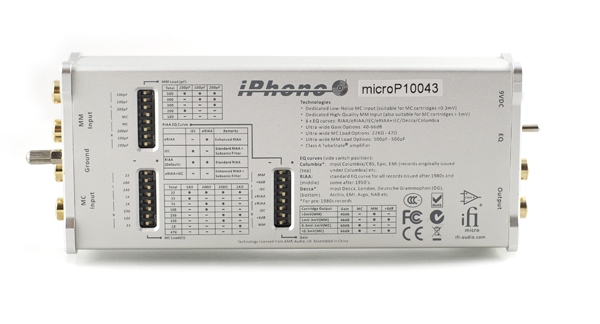
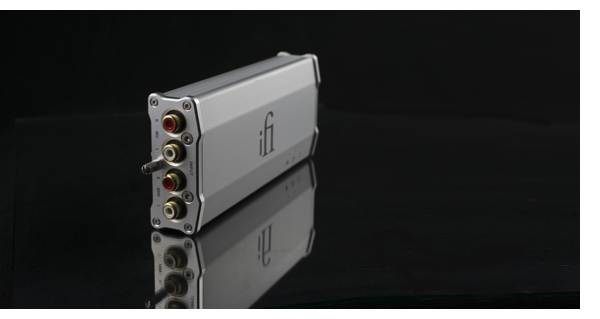

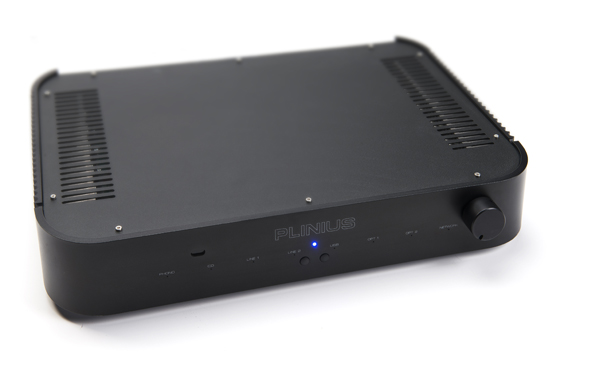
The iPhono offers both MM and MC inputs with 40 dB and 60 dB of gain, respectively. The underside of the device has three banks of DIP switches that offer myriad adjustments. You can even add an extra 6 dB of gain to the MC inputs, for compatibility with 0.3 mV output cartridges. The MM section features five capacitance choices (100 to 500 pF) to help match your phono cable, and the MC loading choices have an equally wide range, with settings at 22, 33, 75, 100, 250, 300, 1K and 47K ohms. Don’t know which settings to use? Let your ears be your guide.

Furthering its appeal and flexibility, the iPhono makes the RIAA, Columbia and Decca curves available. This is a feature rarely seen on phonostages priced less than $5,000 and is very impressive in this application. As many users may not be familiar with these curves, start your journey with the DIP switches located at the rear for the standard RIAA setting, since the vast majority of modern LPs are produced with this equalization. In general, unless you are playing a pre-mid 1950s recordings, you should be safe with the standard RIAA setting. As with all things audio related, it is better to spend time enjoying the music, so if a particular record sounds better to your ears with any given equalization setting, there is no harm in using it. (Once you get comfortable and feel more adventurous, you may want to research the various online descriptions of the different EQ curves.)

In terms of performance, the iPhono meets my number one requirement of a great phonostage: It is quiet. Unlike most phonostages in the sub-$500 category, the iPhono does not portray noticeable white noise or hum. However, the iPhono is not without its imperfections. While it can run MC cartridges as low as 0.3 mV, it failed to deliver enough dynamic contrast and rhythmic pace when playing large-scale orchestral performances via my 0.29 mV Sonic Lab Ultra Eminent BC cartridge. The results were much better when paired up with the Dynavector XV-1T (0.35 mV) and the Clearaudio Goldfinger (0.9 mV). I found that cartridges with an output level upwards of 0.4 mV provided the most favorable response.

The iPhono does have a couple of other minor shortcomings. Its diminutive size positions the RCA inputs extremely close together, making some RCA plugs difficult to insert. Also, the owner’s manual is overly simplified, making it difficult to decipher the various DIP switch combinations.

But sonically, the iPhono exceeds all my expectations for a phonostage of its size and price. Compared to the $599 Project Tube Box Phono SE II, the iPhono is considerably less warm, with a wider frequency response and great high-frequency extension. It lacks the harsh graininess associated with competitively priced solid-state phonostages and carries some of the organic characteristics of the much more expensive AMR PH-77, doing so without grain or edginess.

The iPhono is a fantastic anchor for your first analog setup. Few others can compete with its sonics and there is nothing near it’s price that can compete with its feature set. It also offers a great way to experiment with the various EQ curves for those with a wide range of recordings in their collection. All of this considered, we are happy to award the iPhono our last Exceptional Value Award of 2014.  -Richard H. Mak

Issue 69

TONEAudio Issue 69

TONEAudio’s Music Annual

By The TONE Staff

A complete list of our record reviews for the past year along with a comprehensive
overview of our concert coverage and artist interviews, with an issue by issue listing
at the end. A perfect recap for your record purchases this year! Keep this one on
your tablet or smartphone to jog your memory.

And this year as a special bonus, we include an interview with Slack Key Guitar legend, Makana!

Cover by Jeff Dorgay

Plinius Inspire 980 Integrated Amplifier

New Zealand’s Plinius Audio has a track record of delivering products that offer great sound for the dollar—and its Inspire 980 certainly offers a lot, especially for $4,450. In addition the power and preamp capabilities of a standard integrated, it also features an onboard MM phonostage and an internal DAC. With all those elements built in, this beauty can serve as a fantastic system hub—just add speakers and sources.
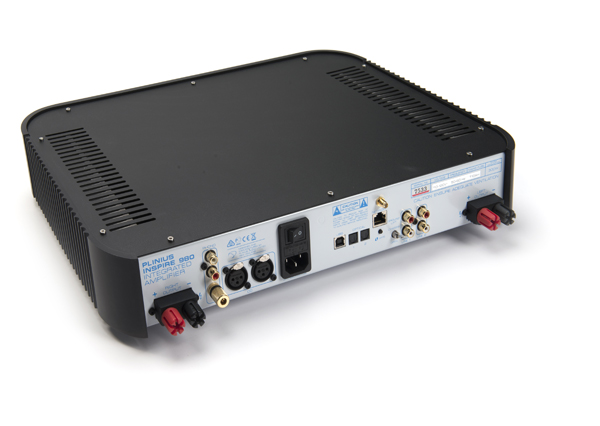
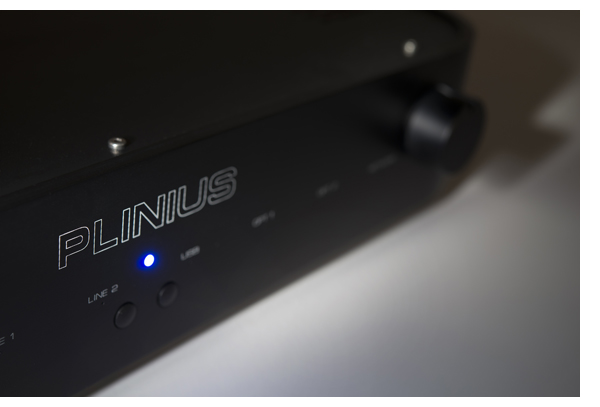
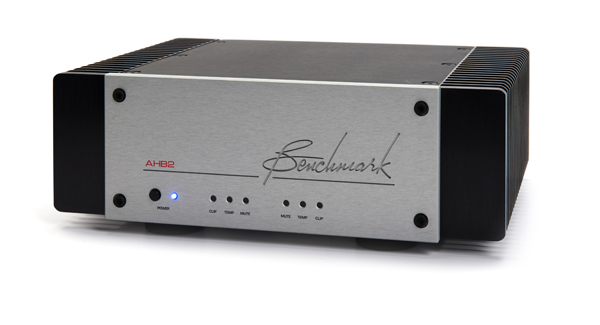
As with other Plinius products, the 980 features simplistic aesthetics, despite a wealth of internal capabilities. The smooth, bead-blasted aluminum faceplate is interrupted only by a volume knob and two buttons to toggle source selection. The 980 comes with a remote, but the $7.99 Plinius Arataki app (available on the iTunes store) makes controlling the unit from your listening chair even easier.

The unit’s dimensions are modest—about 18 inches wide, 14 inches deep and 3 inches tall—though the slender frame is somewhat deceptive when lifting the unit. It weighs in at a surprising 22 pounds, a result of its burly transformer and the breadth of electronics its versatile capabilities require. The unit’s Class A/B amplification section delivers 80 watts per channel into 8 ohms and roughly 100 watts into 4 ohms. While I’m used to a reference amplifier offering much more juice, the 980 has no trouble holding its own. It maintains command of the Sonus faber Olympica III speakers and leaves me not wanting for extra power.

Setup? What Setup?

As one would expect from this four-in-one integrated, the setup process is quick. Just plug in sources and speakers and start listening. Its back panel accommodates a turntable, two optical inputs and two single-ended line-level sources. There’s also a set of XLR inputs for a CD player, plus an Ethernet port and a USB input for networking from computer-based audio sources and DLNA-capable devices. As a nice bonus, the 980 also offers a wireless connection option.

I will note that the RCA inputs for the line-level sources are bit close together, making large-diameter interconnects a tight squeeze. My only other complaint is that my spade-terminated speakers wires present a challenge with these biding posts. The spades I use are actually soldered to the rest of the speaker wire, so they aren’t exactly flexible and so they must be inserted from underneath, as the binding posts are at the very base of the unit’s short frame and have very little clearance. I have to place the 980 at the rear edge of my rack so the cables can dangle downward instead of kinking. Of course, using bare wire or non-soldered banana terminations would not present this problem.

Sonic Notes

After the break-in period, the Plinius sounds neutrally voiced, with little glare, grain, or stridency. Regardless of source or the quality of the recording, I find the sound extremely easy to live with. It does not romanticize music or lean towards euphony. There’s just a slightly forgiving and relaxed quality to the sound, which strikes a delicate balance between warmth and stark realism.

With its internal 24-bit/192-kHz DAC employed, the 980 remains very tuneful. Compared unfairly against more expensive dedicated DACs, it offers a little less ambient detail and refinement; however, it does manage to render even poor recordings in a musical and enjoyable way. To my ears, Norah Jones’s vocals on “Don’t Know Why” were recorded a little hot, meaning that crescendos sometimes have an ear-tingling singe. During CD-quality digital playback, this stridency is somewhat diminished, giving the song a greater sense of musicality.

The 980 has no noticeable roll-off among high frequencies. On Hélène Grimaud’s rendition of Rachmaninov’s “Piano Sonata No. 2,” key strikes in the upper region have the requisite plink, ring, and ambient decay. With complementary bass prowess, the 980’s portrayal is deep and punchy with a solid grip on speaker drivers, especially on rock tracks like Electric Six’s “Dance Commander.” The Plinius delivers the full energy of this song with little (if any) compromises.

The soundstage portrayed—front-to-back layering, perceived width, and extension beyond the speakers—also proves excellent. Though I listen to Chris Isaak’s “Go Walking Down There” in regular rotation, I find myself startled by the 980’s portrayal of the cymbals panned to the far left and right of the recording; in my listening space, the sound bursts into the room. While the crash, shimmer and decay of the cymbal strikes may not have all the nuanced resolution of a more expensive and dedicated DAC (like the dCS Debussy, for example), what’s there is nicely rendered.

The phonostage section proves to be another really nice addition, given the price tag of the 980. While it’s limited to MM cartridges and has a fixed loading and gain, it is a wonderful feature to have incorporated in such a compact package. With all the experience Plinius has building great phonostages, like its marvelous Koru, there is undoubtedly some trickle-down technology lending the 980 solid analog playback. (See “Additional Listening” for notes on the phonostage performance.)

A Lot to Love

The Inspire 980 costs $4,450, which is not chump change. But given the quality of all the elements within—amp, preamp, DAC and phonostage—it’s actually something of a value-oriented purchase. Yes, you can get greater realism and refinement from more expensive standalone equipment, like Plinius’s own reference-level products. But from a price-performance standpoint, the 980 is a great option. For those who don’t need wired or wireless home networking capability for music retrieval from a networked drive, the Inspire’s little brother, the 880, offers the same functionality and sonics as the 980, but for $3,650.

If you have limited space to dedicate to your hi-fi system or if you simply want to scale down the number of components in you audio arsenal, this all-in-one component offers a lot to love. The 980 is also well suited as a launching point for prospective buyers who might be looking to upgrade to a larger system down the road. Given all of its capability and versatility, I can easily recommend this component—and I’d even put it on my own short list.

Additional Listening

By Jeff Dorgay

Every Plinius product we’ve auditioned has been fantastic, and the 980 continues that tradition.  As Rob is a MC-only guy, I wanted to spend some time listening to the 980 with the Ortofon 2M Black MM cartridge, which is currently mounted to the refurbished Thorens TD-125 table (courtesy of Vinyl Nirvana) and revitalized SME 3009 tonearm (courtesy of SMEtonearms.com).

As a listener who loves analog as much as digital and as someone about to move to a small space, I will say that the Plinius 980 is a fantastic solution for those wanting to keep sound quality way up and the footprint way down. Streaming music from the Meridian MS200, which is barely the size of a glasses case, and using my turntable makes this a true desktop situation. A 15-foot run of Cardas Clear speaker cable (admittedly worth more than the amplifier) and the Franco Serblin Accordo speakers round out an amazing system in my 11-by-13-foot living room.

Don’t sell yourself short on the MM thing; there are quite a few $600 to $1,000 MM cartridges that, if you aren’t going to drop thousands of bucks on a table, will fit the bill very nicely. I’m partial to the 2M Black, which mates flawlessly with the Plinius. Having spent a lot of time with the massive Plinius Class-A monoblocks, the apple doesn’t fall far from the tree with the 980. The Accordos perform their best with a lot of current and the 980 delivers the control necessary to really rock these small but mighty speakers.

But most importantly, the phonostage is dead quiet and, like the rest of the amplifier, it does not exaggerate or embellish. The Ortofon 2M has a similar sound, so if that’s your fancy, I can’t suggest this cartridge highly enough. Those wanting a bit more mellow/warm/euphonic sound should consider the Grado Reference Master 1 Moving Iron cartridge. With a 5-mV output and requiring 47K loading, the Grado will add a bit of warmth to your system’s tonality, which is especially useful if your record collection consists of mostly jazz and classic rock.

Whatever your taste, the Plinius Inspire 980 is a fantastic bargain, especially for those utilizing both digital and analog sources. An external DAC and phonostage of this caliber would easily set you back $1,000 each, so it’s like getting an 80-wpc integrated amp thrown in for $2,450—not to mention all that cable you won’t need. Enthusiastically suggested!

Plinius Inspire 980 Integrated Amplifier

MSRP: $4,450

www.pliniusaudio.com

PERIPHERALS

Digital Source Mac mini     dCS Debussy
Analog source SME 10 turntable with SME 10 tonearm
Amplifier Burmester 911 MK3
Preamplifier Coffman Labs G1-A
Speakers Sonus faber Olympica III
Cables Jena Labs
Power Running Springs Audio Haley power conditioner and RSA Mongoose power cords
Accessories ASC tube traps    Mapleshade Samson audio racks

Benchmark AHB2 Power Amplifier

The first thing you notice about the new Benchmark AHB2 is its diminutive size. Even with feet and binding posts, it’s only about 11 inches wide, 4 inches tall and 9 inches deep. And the heat-sink fins account for about a third of that width, making it even more incredible that Benchmark was able to jam so much oomph into such a small body. Regularly lifting amps that leave my back barking for Tylenol, I chuckle with relief when carrying the 12.5-pound AHB2 to my audio rack.
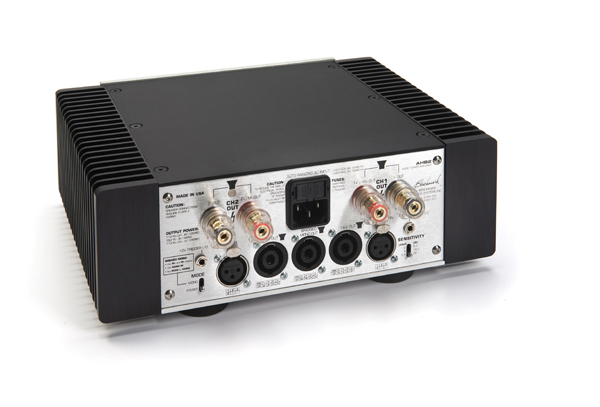
At about $3,000, the Benchmark AHB2 is a substantial investment, and it certainly demonstrates many musical characteristics one would expect at this price point. But the amp’s size makes it appealing when shelf space is limited or when you simply want to minimize your gear real estate. If more power is desired, you can buy a second AHB2 and configure them as monoblocks.

Benchmark offers the unit with a black or silver anodized faceplate and black heat-sink fins. A studio version is also available, with a wider front plate to fit equipment racks. Other than its tiny power button, the front of the amp has no other controls, just a few LEDs to indicate aspects of operation. Each channel has three LEDs to indicate clip, temperature and mute. In the event of an amp overload (which happened once during my testing), the amp shuts itself down and the LEDs indicate the nature of the problem. Powering the unit off, waiting a few seconds and pressing the power button puts the amp back into operational mode.

Setting the Benchmark

As Benchmark products are used regularly in recording studios, all of the AHB2’s connections are balanced. A couple audio designers have explained to me that balanced XLR connections usually prove superior to single-ended RCAs, since XLRs offer inherent noise canceling and they won’t come loose once clicked into place. If the rest of you’re system doesn’t offer XLR connections, Benchmark also makes cables and adapters.

Setup is fairly straightforward: Connect a preamp and speakers, ensure the stereo/mono toggle is set to the desired position, and then set the three-position sensitivity switch to match the signal levels from your preamplifier; the sensitivity switch also optimizes the amplifier’s gain for controlling volume from your preamplifier. Because of the amp’s size, its back panel can get crowed, making connections a little tricky—especially with my speaker cables, which have soldered spade connections that don’t bend. As such, I have to place the amp at the back edge of my audio shelf so the cables can hang below the amp (though I’ve had this same problem with other amps I’ve tested).
The AHB2 also offers twist-lock NL4 ports for speaker connection. Benchmark says NL4s provide lower resistance and higher current handling than connection via binding posts, as well as a more secure connection. As most speakers don’t have an NL4 connection option, Benchmark makes speaker cables with NL4 connectors for the amp side and standard connections for the speaker side.

Once everything is connected, simply push the power button on the front panel to activate the start-up sequence. When configured as a stereo amp, the AHB2 pushes out 100 watts into 8 ohms and double that into 4 ohms. For those wanting a 12-volt trigger for remote power-up, the AHB2 has you covered.

The AHB2 features a Class-AB/Class-H design (hence its name), which facilitates bridging a pair of the amps to use as monoblocks, pushing 380 watts into 8 ohms. This scenario is very useful if your speakers need some extra juice and you want to provide a dedicated amp for each, or if you want to drive a center-channel speaker in a home-theater setup. When using this setup method, consult the manual to ensure the proper connections and settings.

Meeting the Benchmark

Among Benchmark’s design goals for the amp were extremely low distortion and quiet operation. From the get-go, the amp lives up to its design specs by providing a very clean presentation. The Benchmark does a good job of layering vocals and instruments in all dimensions, with each element supported by a solid and convincing image. The amp’s designer, John Siau, is quick to mention that the third goal was to achieve a ruler-flat high-frequency response—and the AHB2 is completely flat all the way up to 200 kHz. Siau says these qualities are vitally important in delivering high-resolution performance.

As desired in a studio setting, the sonics from the AHB2 are neutral, and in my home setup, there is no observable emphasis in any particular frequency range. I would not characterize the AHB2 sound as warm or romantic, though it’s not stark or emotionless either. Between these two ends of the spectrum, the amp leans toward the latter but with a sweeter top end. Those seeking an amp that emphasizes fullness and richness that will augment slightly thin sound from your preamp or source might consider other amp options. But if accurate portrayal is a listener’s goal, this Benchmark does the trick.

When reproducing poor-quality recordings, the AHB2 does a nice job of limiting digital glare. Lucinda Williams’s album Car Wheels on a Gravel Road demonstrates the AHB2’s ability to offer edge-free portrayal of vocals with a very fluid midrange. Her voice resides upfront in the soundstage and it is well separated from the instruments accompanying her.

Regardless of music type, bass through the Benchmark offers a taught presentation with the snap and punch one expects from percussion. Depeche Mode’s “Personal Jesus” is engaging through the AHB2, with all the subtle synthesized sounds popping into position in the soundstage. This makes me curious about running a pair of the amps as monoblocks—which still wouldn’t take up the rack space of a single traditional amplifier.

The Benchmark brings to life the voice of the Martin Logan Motion XT35 bookshelf speakers. Considering its recording-studio applications, it makes a lot of sense that this amp pairs well with smaller stereo monitors. Combined with the speakers I have on hand for testing, the AHB2’s sound flavor profile remains consistent.

In the case of the AHB2, system synergy is an important factor to consider, since no amp is universally perfect for all speakers. For large and demanding speakers, a prospective AHB2 owner may need more power. In the case of the AHB2, you can add another unit and configure the two amps as monoblocks.

Additional Listening

By Jeff Dorgay

I was curious to hear how Benchmark’s design ethos of compact products would translate into designing a power amp. A couple years ago, the Devialet shattered my bias that amplifiers had to be massive to sound good, and so today I find myself much more open-minded to smaller amps like the Benchmark.

My initial exposure to the AHB2 was at this year’s Rocky Mountain Audio Fest, where Benchmark was playing the amp in an all-Benchmark system that included its new mini-monitor speakers. Back in my own listening rooms, the AHB2 did a fantastic job driving the KEF Blades, Dynaudio Evidence Platinums and even my Acoustat 2+2s, which are notoriously tough to drive, though a pair of AHB2s would have been even better for the 2+2s.

As both my reference systems are balanced, I actually prefer the XLR connections of the AHB2. If you’re working with single-ended RCAs connections, the Cardas adaptors are my favorite. I agree with Rob’s conclusions on tonality, etc., and will add that the AHB2 definitely has the bass drive necessary to achieve convincing full-range performance, even from big speakers.

In the end, the Benchmark AHB2 can become a great anchor to your system, offering high performance in a compact box. With an extremely neutral tonal balance, you can use it straight, or warm it up with a tube preamplifier, should that be your preference. Either way, the AHB2 is a stellar performer from a company known for excellence.

Benchmark AHB2 power amplifier

MSRP: $2,995

benchmarkmedia.com

PERIPHERALS

Digital Sources Mac mini, dCS Debussy DAC    JRiver Media Center 20    Tidal music service
Analog source SME 10 turntable with SME 10 tonearm and Dynavector 17D3 cartridge
Amplifier Burmester 911 MK3
Preamplifier Coffman Labs G1-A
Speakers Sonus faber Olympica III, Martin Logan Motion XT35
Cables Jena Labs
Power Running Springs Audio Haley power conditioner    RSA Mongoose power cords
Accessories ASC tube traps    Mapleshade Samson audio racks

Justin Townes Earle

Loneliness—and the fears that accompany the threadbare emotion—has long served as the inspiration for innumerable pop songs. The subject also provided the jumping-off point for many classics in the traditional country canon, with singers such as Hank Williams, George Jones, and Waylon Jennings making careers out of the sound of being despondent and continuing their erring ways en route to less-than-ideal circumstances.

Yet as many artists discover the hard way, it’s one thing to sing about forsakenness and another to truly understand what it means to be on a first-name basis with the feeling. The profound sadness tied to solitary existence and lingering heartsickness cannot easily be faked. The late contemporary singer-songwriter Jason Molina, who passed away in 2013 at the age of 39 from alcohol-induced organ failure, knew such deep-seated ache, sorrow, and isolation all too well. You can hear it on many of the remarkable records he made under the banners of Songs: Ohia and Magnolia Electric Co. Molina’s is a haunting beauty, a torment that reaches deep into listeners’ souls and doesn’t let go.

Justin Townes Earle can relate to such sentiments. Abandoned by his musician/actor father, Steve, when he was just two, he became addicted to hard drugs at a time when most of his peers were still busy worrying about their Little League stats. Multiple rehabilitation stints, at least one high-publicity arrest, and several near-death experiences later, the 33-year-old appears to finally be finding inner peace, having kicked chemical substances and gotten married within the past 18 months.

The release of Absent Fathers—the bookend to the equally strong Single Mothers, issued in October—goes further to suggest the foggy gloom long surrounding the younger Earle’s world is lifting. Spare, relaxed, and moody, the ten-track set primarily clings to downbeat hues and understated rhythms. Songs such as the crawling, stare-at-the-clock lament “When the One You Love Loses Faith” and stripped-to-the-bones “Day and Night” rightly focus on Earle’s low-key voice, a pliable instrument teeming with weariness and anguish yet too stubborn and invested to give up.

Rather than wallow in the melancholy of troubled thoughts, busted relationships, and abused freedoms, Earle’s weary deliveries convey a relatable compassion and unmistakable authenticity made even clearer by unfussy production. On the strolling “Least I Got the Blues” and languid “Slow Monday”—where the sluggish passing of time only serves to cause Earle to damn himself for acting a fool—country-laced pedal-steel guitar lines stretch across big-sky horizons and accentuate the singer’s unsettled state of mind. Picking up the pace on “Someone Will Pay” and R&B-etched “Call Ya Momma,” he ditches whiskey-nursing deliberation in favor of something approximating moving on.

“Why do you always think the worst of me, babe?” Earle asks during “Why” as a full band supplies a steady beat and honky-tonk accents. Like most of the record, the concise tune finds Earle mired in despair of one sort or another. But it also witnesses the singer considering other perspectives and contemplating better possibilities, the heartache a necessary stopover on the way to the hopeful catharsis intimated throughout the outlines of the subtly powerful Absent Fathers. —Bob Gendron

To purchase this album on vinyl from music direct, click here

If you’d like to stream it on Tidal first, click here

2014 Product of the Year – Personal Fidelity

The OPPO amp and phones get our overall award this year because they offer unbeatable performance for the dollar, but the Woo Audio headphone amplifier gets the nod because it’s so over the top.  It’s the most amazing headphone amplifier period, end of story – and it should be for $16,000.  And with a pair of 300B tubes it produces enough power to drive a pair of high efficiency speakers to glory.  So don’t think of it as a $16,000 headphone amp.  Think of it as a $125k pair of Wavac amps that you stole for 16 grand that just happen to drive headphones too.

Woo Audio WA234

www.wooaudio.com

2014 Product of the Year – Amplifier

Steve Deckert has been building some of the world’s finest tube amplifiers forever, and he’s still one of the best-kept secrets in high end audio.  Until you talk to someone who owns one of his amplifiers, that is.  Just try and pry it from their cold, dead hands.

His Zen Monoblocks put out 60 watts per channel, cost a cool $12k a pair, and are worth every penny. The Zen Mystery Amplifier, is a single channel design producing 40 watts per channel and has a lower price tag of only $5,695.  Decware amplifiers all carry a lifetime warranty, but the odds of your ever needing to take advantage of it are very slim.  These amplifiers are hand built and tested 110%.

As for the sound, there’s nothing like a Zen amplifier.  If you can live with 40 watts per channel, these are the most glorious 40 watts you will ever hear.

Decware Zen Mystery Amplifier

www.decware.com

2014 Product of the Year – Accessory

While we’ve all been arguing about whether to align our phono cartridge to Loefgren A, B or Baerwald spec, Acoustical Systems has gone back to the drawing board, looking at the problem from a new light: updating phono cartridge alignment from the perspective of modern designs, materials and stylus profiles.

The result is their UNIDEN alignment geometry, implemented with their SMARTractor.  Nope, you won’t find this profile for free on your favorite internet forum; you’re gonna have to buy it.  Granted, $795 is a little spendy for a user with one table and one tonearm, but we guarantee you will never hear a more profound improvement to your analog system than this provides for anywhere near this price.

The reduced distortion provided by the UNIDEN alignment is a revelation, a quantum leap beyond what you’ve been using.  Before you buy some wacky-priced piece of wire, buy a SMARTractor.  You won’t regret it.

Acoustical Systems SMARTractor

www.vanaltd.com

2014 Product of the Year – Preamplifer

A companion to their Xs power amplifiers, the Xs preamplifier is a tour de force in every aspect.  And like the Xs amplifiers, the Xs preamplifier has that slight bit of warmth, magic, and tonal saturation you might expect from a “cost is no object” vacuum tube linestage, but there are no tubes inside!

Kiss your tube-related problems goodbye forever, and say hello to incredible flexibility and the ability to drive any power amplifier with ease.  If the Xs is like every other Nelson Pass product we’ve owned or reviewed over the last 30 years, chances are it will never leave your equipment rack to visit the Pass mothership.

This should be the last preamp you ever buy.

Pass Xs Preamplifier

www.passaudio.com

2014 Product of the Year – Speaker

I’m proud to say that Dynaudio’s flagship Evidence Platinum speaker has also been my reference for this year and looks like it will continue to be so for some time to come.  For $85,000 a pair, said speakers should be without compromise, and the Evidence Platinums deliver the goods.  They feature full-range frequency response, massive dynamic range, natural tonality and are easy to drive with anything from 15wpc on up.

And of course, being Danish, the Evidence Platinums are a visual work of art as well as an auditory one.  You’ll need a fairly good-sized room for them to fully work their magic, but you will be rewarded with a musical destination that you never need to leave.  There’s no reason to spend over twice as much on a pair of Wilsons, once you hear the Evidence Platinum.  And you’ll have a much easier time convincing your wife to put them in the living room, too.

Dynaudio Evidence Platinum

www.dynaudio.com

2014 Product of the Year – Budget Component

It shouldn’t be possible to make something this good, this inexpensively, but Lounge Audio is a small but mighty California company that is building a great reputation with this killer phonostage for analog lovers on a tight budget.

At some point, as they grow and take on more operating expenses, these babies will ultimately get more expensive, so grab one now while they are priced at $300.  Whether you have a basic or mega system, you owe it to yourself to hear what can be accomplished when sound quality is the only goal.  And when Lounge Audio becomes a household word, remember, you saw it here first!

Lounge LCR Phonostage

www.loungeaudio.com

Grand Opening Part Two at AVSF

Hey San Francisco music and audio lovers:

On January 15th 7:30 to 10:30 p.m. Audio Vision San Francisco will be having a continuation of our Grand Opening Party featuring MOON by SimaudioAudio Physic GmbH loudspeakers, Woo Audio Headphone Amps, Abyss Headphones , MrSpeakers Headphones, Nordost Cables Power and Signal, DEQX Speaker/Room Correction Processors and PONO Music Players. It’s a free event featuring libations and prizes!!

Count on major demos and they will be featuring one Special Room dedicated to just headphone listening! BRING YOUR MUSIC!

For more info, go to http://www.audiovisionsf.com

The Latest High Resolution Format From Meridian Audio

Wave of Industry Support for Meridian’s MQA at CES Signals Change in Music Quality for All
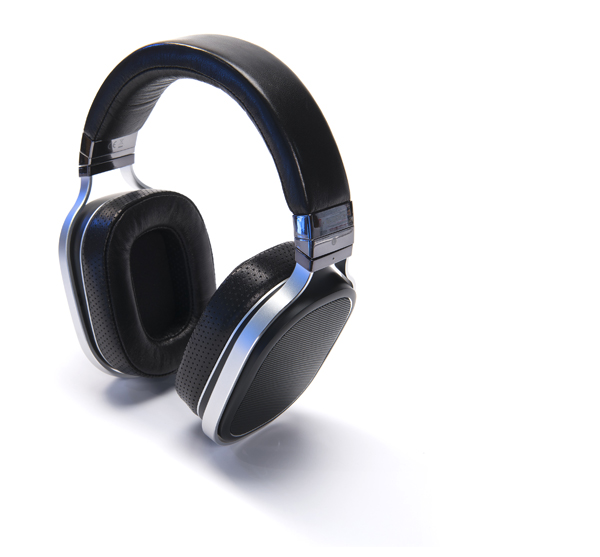
Meridian Audio announces rising industry support for its revolutionary MQA (Master Quality Authenticated) technology, launched last month at The Shard.

After the spectacular launch the music industry, hardware providers and content distribution companies are aligning with MQA and its assurance of supreme sound for music fans.

Following 7digital’s announcement of support in December, other companies already in advanced discussions include: Imagination Technologies and its Caskeid wireless multi-room audio IP platform; Onkyo, the Japanese electronics giant; Arcam, the British hi-fi manufacturer; and TIDAL, the high fidelity music streaming service from the Aspiro Group, currently available in US, UK and Canada. TIDAL will also be integral to the MQA demonstrations at CES, streaming MQA music files through the updated Meridian Sooloos digital media system.

Commenting on this wave of support for MQA, Bob Stuart, Meridian Audio co-founder and pioneer behind the new technology said, “We are delighted to be in discussions with such highly respected brands. We are also progressing our work with the music labels, who continue to drive forward MQA content discussions, and we expect them to make announcements in early 2015.”

Callers to the MQA by Meridian suite can experience MQA-encoded music in action, as well as meet the audio design experts behind this revolutionary music format.

http://www.meridian-audio.com

TONEAudio’s Products of the Year 2014

Another year has zoomed by and we’ve had the privilege of listening to a lot of great gear to report on.  Choosing a Product of the Year always carries the dilemma as to whether we bestow the title on something relatively unobtainable, or something modestly priced that we feel offers such over-the-top performance that it can’t be beat by a long shot.  Over the years, we’ve done both, and this year we’re taking the latter approach with the OPPO HA-1 headphone amplifier and their PM-1 phones.

We like to keep the trophies to a minimum in the hope that they remain meaningful, and we’ve actually handed out fewer than last year, with only five items in the Publisher’s Choice column.  As we’ve said in the past, we are always on a quest to help you find the most intriguing products for your short list, so on one level, everything we’ve taken the time to review is award worthy.

Check out the Oppos and other TONEAudio Products of the Year in our Spotlight section!

Cheers,

Jeff Dorgay

2014 Product of the Year – Digital

After years of screwing around with iTunes, Pandora, Spotify, etc., we’re still left with the agony of choosing convenience over quality.  Now, with Tidal, we get a major song catalog that’s constantly evolving, as well as an incredible catalog of music videos delivered at 16/44.1 resolution.  For 99% of us, this is incredibly cool, and while no one at Tidal is ’fessing up, I’ll bet that they will be offering high resolution downloads at some point in the future.

For all but the most dedicated music collectors, this is the way to finally free yourself from physical media.  There will always be those who want to thumb through album covers romantically, and you can still do that.  But now the music lovers who would like access to a ton of music with audiophile quality can have their cake and eat it too.

This is the best twenty dollars a month you will ever spend.  And Tidal is only in its infancy.

Tidal Music Streaming

www.tidalhifi.com

2014 Product of the Year – Analog

Roger Gibboni builds great stuff, and at $8,500, his PA-1 takes on the world’s finest.  An all-vacuum tube design gives you the option to modify the gain (and overall tonality) by a bit of tube swapping, and the controls are all on the front panel to keep the hardcore analog enthusiast happy.

Proudly crafted by hand in the USA, the PA-1 is as much of a work of art underneath the chassis as it is on the outside.  With an input for MM and MC, the PA-1 could be used as a two-input phonostage, if you were so inclined.  But in the end, it’s the sound that will win you over.  Gibboni has achieved the perfect balance, incorporating the tonal saturation that tubes are famous for (without overdoing it), a dead quiet background and dynamic swing that will knock your socks off.

Its only limitations are RCA-only outputs and essentially one input, but if you only have one table, the PA-1 renders sound quality that you’d expect from a $30k phonostage.  And that’s why it’s our analog product of the year.

Rogers PA-1 Phonostage

www.rogershighfidelity.com

2014 Product of the Year – Overall

OPPO has been producing award-winning disc players for years now, producing components that not only sound the part, but look, feel and are packaged like components costing a lot more.  If the HA-1 headphone amplifier had a McIntosh or a Meridan badge on the front panel, you wouldn’t even blink at an $8,500 price tag.  It’s an absolute steal at $1,195, including a DAC, streamer and line level preamplifier –– with a headphone amplifier that, by itself, is worth more than the $1,195 asking price.

Coupled with the $1,095 PM-1 planar magnetic headphones that give the competitors a major run for their money, these two components not only give you a world class personal audio system for a tick over two grand, they give you the foundation for a fantastic two-channel hifi system as well – just add your favorite power amplifier and speakers.  With fully balanced XLR outputs as well as RCAs, the HA-1 is compatible with everything. And it’s so good, we’d even suggest the HA-1 as a system anchor even if you aren’t a headphone enthusiast.  There’s no better building block for a reasonably priced, high performance audio system than the OPPO HA-1.
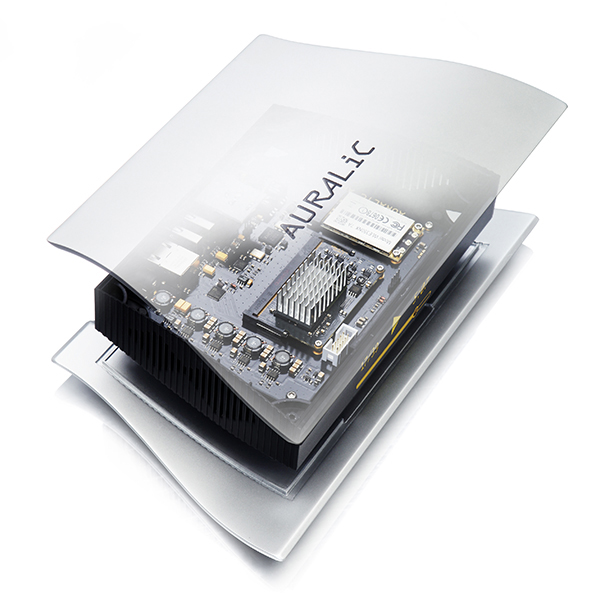
OPPO HA-1 Headphone Amplifier and PM-1 Headphones

www.oppodigital.com

AURALiC adds DSD 256 capability to the Aries

AURALiC’s award winning ARIES High-Resolution Wireless Bridge now offers streaming DSD256 [Quad-Rate DSD], putting the streamer on the bleeding edge of technology.
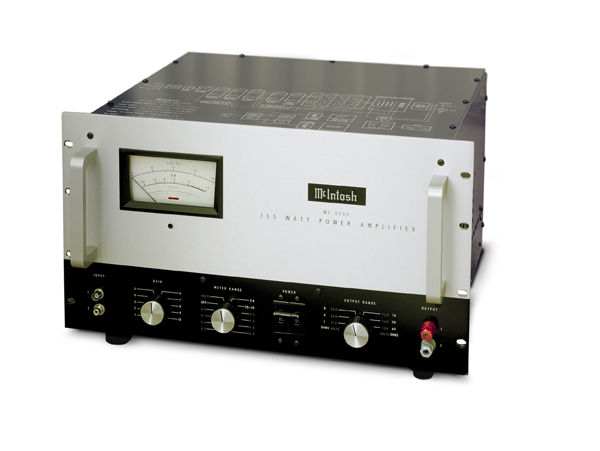
AURALIC North America Inc. and its parent company, AURALIC LIMITED, are pleased to be the first to offer DSD256 [Quad-Rate DSD] music streaming over Wi-Fi. This technology, though not available yet commercially, is four times the rate of DSD and doubles the resolution of DSD128 (Double-Rate DSD). It’s also the most cutting-edge high-resolution recording format.

The upgrade, available via firmware, is the latest in a series of ongoing improvements to AURALiC’s Lightning DS Control Software, introduced at last year’s CES, and its ARIES Hi-Res Steaming Bridge, which connects to a consumer’s DAC via USB and continues to be the industry’s only system able to stream DSD, Double-Rate DSD and DXD wirelessly.

The addition of DSD256 capability follows AURALiC’s recent integration of TIDAL full-resolution music streaming to ARIES, thereby eliminating the need for a computer connection to access the service. USB playback is another function recently added to AURALiC’s streaming platform.

AURALiC will continue to support its customers by adding more functionality to the ARIES Wireless Bridge in the future.

Click here to go directly to the AURALiC site….

Old School: Sean Brady’s Vintage Favorites

In this issue, Sean Brady from Audio Video Choices in Phoenix, Arizona is our guest columnist.  Though Brady has been in the hifi world for quite some time, he’s always understood the value of accepting the customers’ old gear on trade.  As many an audio enthusiast will tell you, “you have to get rid of the old before you can bring in the new.”

For many of us, cherished preowned gear is a great way to enter the hobby – not only from a financial standpoint, but from an ecological standpoint as well.  It’s definitely green thinking to recycle rather than just unbox something new.

Through the years, Brady, like the rest of us, has a few pieces that have become favorites to own, sell and share with the rest of us.  Here’s what an audio vet has to say:

Radio Craftsmen C500/500A

My first choices are two amplifiers that bookend the the production of vintage tube amplifiers. The Radio Craftsmen C500/500A Williamson Triode is a subtly refined Williamson triode amplifier. Using a pair of Mullard KT66 output tubes, 15 watts are available with an ultra-wideband response of +/- 1dB from 10Hz to 50kHz. Tube rectification, octal-based 6SN7 tubes for front end/driver, and high quality transformers are utilized in this classic implementation of the Williamson amplifier circuit.

Radio Craftsmen was founded in Chicago in 1947, around the same the time as  McIntosh, Fisher, Scott, and Harman Kardon. The C500A was designed in 1953 by Sid Smith, the same Sid Smith that went to work for Marantz in 1954 to design their famous tube amps, preamps, tuners, and crossovers. Even by today’s standards, the C500 is clear and sweet with superb musical performance. And the description of its performance in the original brochure reads like something you would find for a modern amplifier.

McIntosh MC-350o Amplifier

Next, the king of amplifiers (for me anyway), is a majestic pair of ultra-rare McIntosh MC-3500 designed by Mile Nestorovic. The MC-3500 is the limited home version of the McIntosh MI-350 industrial amplifier – a true piece of industrial art. Rated at 350 watts per channel, Stereo Review magazine revealed an astonishing 500-watt output at 0.08% distortion on the test bench.

These big Macs are the only vintage tube amplifiers that I have ever heard give a great ride to the demanding Wilson MAXX loudspeakers. (We usually pair the MAXX with solid-state amplifiers possessing major current reserve.) The MC-3500s have tremendous low-frequency extension and control with seemingly unlimited headroom. The effortless dynamics and smooth extended high end are so musically involving, it’s tough to believe these are vintage amplifiers.

For a little perspective, in 1968 a pair of 70-watt Marantz Model 9 amplifiers cost $780 when the McIntosh MC-3500 pair was $2200! To this day, this is the most powerful tube amp McIntosh has built.  At one time the Grateful Dead used fourteen MC-3500 amps in their famous “wall of sound” system, and they were loaned to the Woodstock festival as well.

Marantz Model Twenty FM Stereo Tuner

The exquisite Marantz Model Twenty FM Stereo Tuner, the first solid-state Marantz tuner after the legendary tube 10B, with arguably superior reception and sonics to its predecessor, features an oscilloscope for monitoring center of channel tuning, multipath, and audio output. The scope even has an external audio input. A world class tuner (still) it is preferred by many to the 10B, as it requires less frequent adjustment. This was made by Saul Marantz and company in Woodside, New York.

Electro-Voice Patrician loudspeaker

The Electro-Voice Patrician loudspeaker is one of the largest home systems at 325 pounds! Here is how E-V described it: “Let’s start at the bottom (as much as an octave below most other woofers). Our thirty-inch diameter Model 30W woofer reproduces 15 Hz fundamental at full volume without doubling. Nothing less than a live performance can compete with the sound you hear and feel from this giant speaker.”

Over a decade of engineering refinement has made this E-V Model SP12 woofer unexcelled in mid-bass performance (and it’s also an uncommon value as a full range speaker from 30 to 15,000 Hz.

It takes this sophisticated team of compression driver and patented diffraction horn to fully satisfy the rigorous demands of the treble range. There’s no smoother combination than the E-V T25A compression driver and 8HD horn.

Ruler flat from 3,500 to 23,000 Hz! But extended range is just one of the benefits of the T350 VHF driver. Its exclusive throat and horn design spreads undistorted highs to every corner of your listening area. Delightful!

These unusual components have been combined in the Patrician 800 – often acclaimed as the world’s finest loudspeaker system. $1,095.00 in traditional cherry cabinetry. It’s waiting to be challenged by the most powerful, widest range amplifier you can buy. Listen. The difference you hear is what high fidelity is all about!

Revox A700

Many regard the Revox A700 as a thinly disguised Studer professional analog reel recorder, as this machine is well built with the performance to match. It was very advanced for its time and  remains so today. This $3000 machine has three speeds – 3.75/7.5/15ips – and records two tracks on ¼-inch tape. At 15 ips the frequency response is 30Hz to 22kHz +2/-3 dB with signal to noise at 65 dB or better. High end reel-to-reel has a very natural sound, with no stress or congestion.

McIntosh MPI-4

Yes, we need a bright, shiny object with lights and switches, Let’s not forget the McIntosh MPI-4 is a laboratory-grade instrument. It provides the facility to continuously monitor the quality of the performance of a stereo system. The MPI-4 can sample and display signals from the tuner, preamplifier, and power amplifier without reconnecting cables. Signals are displayed on an oscilloscope screen calibrated with scales for tuning, measurement, and testing.

As a tuning aid, the instrument is a guide to exact FM station selection and precise tuning. The screen displays FM signal strength, modulation percentage, and multipath interference. Audio signals may be viewed for stereo balance, strength, phase, and channel separation. Output power of the power amplifier can be seen at any instant during program performance, or stored to develop a trend over several minutes.

With the addition of test discs, the MPI-4 can show compliance and trackability of a phono cartridge, frequency response of the preamplifier and power amplifier, audio distortion, and stereo speaker balance.

In one of its operational modes, the MPI-4 becomes a dual trace oscilloscope, and when operated thusly, the left and right stereo channels appear simultaneously, yet separately, on the screen for direct comparison. Featuring a  “triggered sweep,” the MPI-4 permits the viewer to choose a single tone and lock it on the screen for careful inspection and measurements.  In the ‘60s no righteous system was without an MPI-4, but this is still a very valuable tool today.

– Sean Brady

Four Favorite Upstarts

In the ten years of TONE’s history, we’ve seen a lot of new products come and go, but a few great ones have stuck.  It’s been fun to watch these four companies grow and mature, but it’s equally fun to wind the clock backwards and take a look at their humble beginnings.

ModWright SWL 9.0

Approx. $1,200

Back when the high performance audio segment of CES was held at the Alexis Park hotel in Las Vegas, I met a nice guy from Portland that had made a name for himself modding CD players named Dan Wright.  He had just started building his own preamplifiers, and had converted the entire basement of his house into a very tidy, organized workshop.  His first product that came into my world was the SWL 9.0 linestage.  It was a tidy box with great sound.  So much so, that I got rid of the Conrad Johnson PV-12 that I had been using in favor of this newcomer.

Shortly after our encounter, Wright moved into his own facility, started hiring employees and expanded his product line considerably.  Now a force at the major hifi shows, ModWright has become a well-established company, but that original 9.0 still stands out as an incredibly good bargain.  Wright still services them, and when you can find an owner willing to part with one, the SWL 9.0 makes for an incredibly good anchor to your hifi system.

Coffman Labs G1-A

$5,495

Another Portland local, Damon Coffman hails from the medical equipment industry, yet his passion for music and design led him to build his own preamplifier after a life long quest for better sound.

The G1-A combines the best of retro and contemporary design, both inside and out.  Coffman auditions and hand picks what he feels are the best sounding NOS (new old stock) components, combined with contemporary parts, depending on application to create the G1-A.  With an onboard MM/MC phono stage and headphone amplifier, the G1-A is an incredibly versatile performer, like some of the great, full function preamplifiers of audio’s past, from McIntosh, Audio Research and C-J.

A new G2 is in the works, and Coffman has also put his stamp on the Prautes headphone amplifier from Cypher Labs, but this is where it all began.

PrimaLuna ProLogue 1

$1,095 (when new)

I began my hifi writing career at The Absolute Sound, and instead of the boring NAD integrated amplifier I was supposed to review for my first article, Robert Harley called one day (about two weeks after the ProLogue 1 appeared on the cover of Stereophile) and asked if I wouldn’t mind reviewing the ProLogue 1 instead.  Oh boy, would I, I thought.

This little tube integrated amplifier was built like nothing I’d ever seen for just over a grand, and it sounded pretty damn good too.  I got my first byline in the audio world and editor Harley left in, what would be a ubiquitous quote in PrimaLuna’s marketing campaign heard round the world.  “How does it sound? It sounds bitchin!”  11 years later, PrimaLuna amplifiers still sound bitchin, and their product line has grown tremendously.

Audeze LCD-2 Headphones

$995

www.audeze.com

About seven years ago, when the headphone renaissance was just beginning, Audeze burst on the scene with a planar magnetic headphone that took everyone by surprise.  They not only cracked the ceiling with a $1,000 headphone, they produced a pair of phones with a sound that was, up until now, limited to the likes of electrostats like Stax, which are still nearly impossible to purchase.

They’ve done an update to the basic design, making them even better than ever.  Though the product line has expanded and they’ve gone through some growing pains, Audeze has held the line on the LCD-2s price, making them a best buy and a head to head competitor with OPPOs $995 PM-1, another titan.

– Jeff Dorgay

10 Favorite Headphones from HiFiGuy528

Though Mike Liang is no longer part of our staff, now that he’s gone on to be national sales manager for Woo Audio, he’s still the biggest headphone enthusiast we’ve ever met.  Between his YouTube channel, where he’s always unboxing new phones, and his own personal headphone collection of over 120 pairs, he’s a maniac.  And he’s definitely heard enough cans to have a solid opinion on what he loves.  Here’s his list.

AKG K3003

$1,499

http://us.akg.com/akg-k3003-overview-us.html

The AKG K3003 comes in two flavors, with and without Apple iOS 3-button in-line remote.  It is a reference-class 3-way design featuring one dynamic and two balanced-armature drivers in a tiny stainless steel housing.  The interchangeable sound-tuning filters (bass boost, reference sound, high boost) make these IEMs incredibly flexible.  The build quality is top notch and the sound is absolutely stunning.  The K3003 reveals more musical detail than I’ve ever heard in a universal fit IEM.  Pairing it with the Astell&Kern AK120II, I constantly ponder why I really home Hi-Fi system.

Sony MDR-CD900st

About $200

www.sony.com

Sony is not a newcomer to the world of high-end headphones, yet often their coolest stuff never makes it here to the States.  The MDR-CD900st is a perfect example.  On the outside it looks a lot like the consumer-grade MDR-v6, but don’t be fooled.  The CD900st is a completely different animal in the sound department and more comfortable than its doppelgänger.   Its sonic signature is relatively neutral.  As the saying goes, “garbage in, garbage out” – so the better your source, the more you will be impressed.  In fact, this model is a studio monitor “officially” only offered in Japan through Sony Professional Division.  But our Japanese friends on Amazon can get you a pair for around $200 USD.  The MDR-CD900st is a gold nugget in the sand – a gem that is worth digging up.

Sennheiser HD700

$799

www.sennheiser.com

Big soundstage, crystal-clear highs, tight bass, fast response, easy to drive, and extremely comfortable are all traits of the Sennheiser HD700.  Many of the design cues and materials used in this second-to-the-top model are derived from the company’s most technologically advanced headphone – HD800 (which will set you back almost twice as much).  For better or worse, the HD700 is more forgiving than HD800, meaning the low-resolution music in your collection will be a lot more enjoyable than listening through the flagship HD800. If you are on the fence about getting into personal audio, give the HD700 a listen on a good quality DAC/amplifier and you’ll see why the hobby is so strong.

RHA T10i

$199

www.rha-audio.com

Reid Heath Acoustics is a relatively new headphone company based in Glasgow, Scotland.  My first experience with their products was the MA750i; it was love at first listen, and I felt it should cost more – a lot more.  The new T10i is even more impressive for only $199 – only a slightly higher price than the MA750i.  The T10i is made from injection-moulded stainless steel which is impressive at this price point.  Another impressive feature is the tuning filters that are similar in effect to the ones that the $1499 AKG K3003 uses.  Yes, you can change the sound by changing between reference, bass boost, and treble boost filters.  This functionality makes the RHA T10i an incredible value.

Beats Solo2

$199

http://www.beatsbydre.com

The new Beats Solo2 is a completely new design from the ground up. The stereotype that Beats headphones are kids’ overpriced neck candy – with below-average sound quality – no longer applies.  The new Solo2 sounds much more natural and is greatly improved over the model it replaced: the Solo HD.  Gone is the sonic signature that dogged early Beats designs; muffled midrange and boomy bass that overwhelms the rest of the music is a thing of the past.  The Solo2 sounds clean, clear, natural, and has tight punchy bass that sounds great with a wide variety of music genres.  Give the new Beats Solo2 a try before you dismiss it.  Honestly, you may not find a better portable headphone for $199.

Audio Technica ATH-M50x

http://audio-technica.com/

$200

The M50 has been around for a long time and shares equal popularity with the Sony MDR-7506 among audio professionals.  Audio Technica took a trusted old friend and gave it the modern features users have been demanding with the new M50x.  The ear pads are upgraded for extended comfort; the cable is now detachable and comes with coiled, straight, and a short one for mobile use.  The M50x sounds much like the M50, which is a good thing for those loving the sound of the old, now upgraded with more functionality.

Focal Spirit Professional

$349

www.focalaudio.com

Focal is known for their incredible Utopia loudspeakers for the home listening room as well as a full line of studio monitors used by sound engineers around the world.   The Spirit Professional is part of Focal’s family of headphones – Spirit One and Spirit Classic.  Don’t let the low $349 price tag fool you, as the Spirit Pro shares a lot of DNA with Focal’s multi-thousand dollar studio monitors.

B&O H6

$399

www.beoplay.com/products/beoplayh6

Bang & Olufsen practically invented the concept of audio gear featuring high style, so it’s no surprise they’ve contributed heavily to a segment of personal audio often referred to as “fashion headphones.”  The BeoPlay H6 is no stranger to this world, bringing aluminum ear cups, a genuine leather headband and lambskin-covered memory foam earcups together in a sexy and luxurious design.  But the most amazing part of the equation is that the magicians at B&O pulled it off for such a low price.

All would be lost if these were just a pretty pair of phones, but they’ve got the sound quality to make them much more than “just a pretty face. The H6 may have you rethink the fashion headphones segment.

Beyerdynamic T51

$299

http://europe.beyerdynamic.com/shop/t-51-p.html

The new T51i is a closed-back headphone featuring memory foam pads for extended comfort, blocking out environmental noise while on the go. First and foremost, it’s high quality; audiophile sound comes from the Tesla drivers

that are derived from its much-pricier sibling – T5p.  The “i” signifies Apple “made for iPod/iPhone/iPad,” while MFI certification means you can control your iDevice and take phone calls right from the 3-button in-line remote.  At $299, the Beyerdynamic T51i has Hi-

Fi sound without the Hi-Fi price.

MrSpeakers Alpha Dog

$599

https://mrspeakers.com/product/alpha-dog-headphone/

Dan Clark, AKA MrSpeakers, modifies the modest $129 Fostex T50RP to a headphone rivaling some of the best headphones on the market – at only $599.  One of Dan’s modifications is replacing the ear cups with a 3-D printed housing.  MrSpeakers Alpha Dog is the world’s first 3-D printed headphone.   Dan also swaps the stock ear pads for custom lambskin pads that are extra thick and pillow-like comfy.  In fact, the only thing left from the original Fostex are the heavily modified planar magnetic drivers and the headband that holds the headphone together.  Before you spend $1K or more on a headphone, you need to give the Alpha Dog a listen first.  Thank me later by taking me out to dinner with the money you saved.

A few of my favorites:  Jeff Dorgay

While I’ll be the first to admit I’m not a headphone guy, Mike’s enthusiasm is overwhelming, and I can’t help but admit I’ve caught some of his fever.  I don’t have anywhere near the collection he has, but I do have a few of my own favorites as well.

Oppo PM-1

$999

www.oppo.com

HiFiMan and Audeze are major players in the planar magnetic headphones, but even though Oppo is a bit late to the dance, their contribution is stunning.  Like all other Oppo products, the PM-1 offers world-class performance at a reasonable price, yet no corners are cut.  This is the Oppo magic.  While the PM-1s are obviously tailored to be a perfect match with their own headphone amplifier, the PM-1s sound fab with every amp I’ve plugged them into, and they are also incredibly efficient and easy to drive from an iPhone or iPad, making an external amp an option only for the most maniacal.  A definite plus for someone who is on a plane 40 times a year.

Koss Pro 4aaa

About $50 on the secondary market

www.koss.com

Though no longer made, the original Pro 4aaa from the late ’70s is just as cool as hooking up an old pair of Advent or JBL speakers to a vintage receiver.  If you were there the first time around, grab a pair of these on Ebay, put on Dark Side of the Moon, and head back there for half and hour.  You’ll see what I mean.

Beats Solo 2 Special Edition

$249

beatsbydre.com

I agree with Mike’s take on the Solo 2s and share his respect for this brand.  Beats always gets a bum rap by snooty audiophiles, but after listening to more than a few pairs, I’ve become a staunch supporter.  And these feature a Hello Kitty motif.  What could be better, I ask you?

Sennheiser HD650

$499

www.sennheiser.com

Sennheiser’s latest HD700 and HD800 phones are definitely more resolving than my workhorse HD650s, but especially when upgraded with a better cable from your favorite headphone aftermarket vendor (I suggest the cable from ALO Audio) about half of the darkness that surrounds this model is gone, and that makes them a hell of a lot more listenable.  They lack the ultimate resolution of the HD700 and HD800, but for long listening sessions are still one of my favorites, being entirely fatigue-free.

Issue 68

Features

Personal Fidelity:

Bowers & WIlkins T7:  The ultimate portable speaker

By Jeff Dorgay

995:

The iPhono mini phonostage

By Richard Mak

Old School:

The Marantz 2215B

By Jeff Dorgay

TONE Style

The Wino:  Four Modern table wines from Portugal
By Monique Meadows

Sony Short Throw 4k Projector

QNap TS569 Pro

Nintendo Pokeball

Chocolate Guitars

Microsoft Surface 3Pro

Luchador Bottle Opener

Music

Current Releases:

2014’s Best Pop and Rock Albums
By Bob Gendron

Jazz & Blues
By Aaron Cohen and Jim Macnie

2014’s Best Rock And Multi Disc sets
By Bob Gendron

Previews

VPI Classic 2 Turntable

Pass XA160.8 Monoblocks

Dynaudio XEO 4 Wireless Speakers

Reviews

Benchmark AHB2 Power Amplifier
By Rob Johnson

Simaudio MOON 820S Power Supply
By Jeff Dorgay

MartinLogan Motion 35xt Speakers
By Rob Johnson

Rega DAC-R
By Jeff Dorgay

Plinius Inspire 980 Integrated Amplifier
By Rob Johnson

TONEAudio’s 2014 Products of the Year

Franco Serblin Accordo and PMC twenty.26

Two amazing but radically different speakers for about 13 grand

By Jeff Dorgay

Twelve thousand dollars will buy you a really nice used car these days or a really posh weekend at the Monaco Grand Prix.  It will also buy you a great hifi system, so if you’re dropping twelve large on the speakers alone, the expectation is high.

The two speakers observed here more than fit the criteria and go about their business in a completely different way, with different design goals, aesthetics and overall sound.  Both will be equally enticing to their prospective owner, so this is not a “shootout,” as there would be no winner.  Sales 101 says “define the customer,” and there’s no better challenge than selling high dollar hifi.  It’s rarely a case of better or worse, but almost always a case of “what flavor will it be?” If you can put your finger on your priorities, the choice will be crystal clear.

One speaker hails from England, the other from Italy.  Both come from two of the top minds in speaker design.  Recently deceased Franco Serblin was the man behind Sonus faber and Peter Thomas, former BBC loudspeaker designer and principal at PMC both take a high tech as well as a high touch approach to their speakers.  Each rely on a different set of criteria and in their own way remain true to the musical presentation.

The Franco Serblin Accordo

I spent a ton of time on this review, perhaps too much, looking for that magical combination of speakers and amplification that would lead to more of a full range performance experience with the Accordos, to no avail.  The required clarity came during a test drive with the Lotus Elise.  While I wasn’t zooming around corners as fast as I could with a Porsche Boxster S or my own BMW Z4 (both cars having over twice the horsepower than the little Lotus), the communication the Lotus provides is sublime, in a league of its own.  A similar conclusion was drawn driving a new Dodge Challenger, with the big Hemi.  More powerful, yes. More interesting, more engaging, not necessarily.  To my Challenger loving friends, don’t despair, I do love this car.  Stepping out of the Challengers driver seat, with a fresh bouquet of tire smoke at my back the epiphany struck me over the head like a lug wrench – these are a brilliant pair of loudspeakers, but not everyone will get them.

Not everyone will love the Accordo, but much like the legendary Quad 57 or the original Sonus faber Guarneri, if you love what the Accordo excels at; incredible midrange definition, exquisite rendition of texture and a HF register that is smooth, distortion free with a complete absence of grain – nothing else will do.  If you liked the original Guarnari, think of the Accordo as a continuation of this philosophy.

Forget Metallica.  If you want to rock the house, buy something else.  Slipping an early Japanese pressing of Bowie’s Aladdin Sane on the turntable and listening to his discordant piano solo glide between these tiny, almost invisible transducers gave me goose bumps.  Forget a big room too.  These speakers don’t have much deep LF output to begin with, so placing them in a large room makes them work way too hard, and adding a subwoofer takes away from the design ethos. As excellent at the REL and JL Audio subwoofers at my disposal are, they just don’t quite have the delicacy required to augment the Accordos, they always sounded better by themselves, even though I wished they had more bass at times.  (There is always the Sonus faber Stradivari, considered by many to be Serblin’s masterpiece, but that’s another story for another day.)

The Accordos will not be for everyone at $12,995 a pair, but they will be everything for the right person.  Much like a Wavac SET amplifier that only delivers 9 watts per channel and has a $60,000 price tag, it’s about quality.  It’s about an exquisite rendition of sound within a range that you won’t get anywhere else unless you spend a lot more money.  These speakers are truly precious, and the longer you listen to them; the more they unravel the nuances of your recordings in a way that you may have not thought possible.

Next up, the PMC twenty.26….

Jeff Dorgay’s 9 Favorite Amplifiers

While many people argue that speakers are the anchors of an audio system, I will always contest that the power amplifier is just as critical (if not more so) to a system’s overall sound. A great amplifier can make a mediocre pair of speakers come alive, but a great pair of speakers powered by a mediocre amplifier still sound mediocre. In celebration of the power amplifier, I decided to list a few of my favorites from over the years, in no particular order. Hit us up on Facebook with your favorite power amp. We always love to hear from readers.

Audio Research D-79

From $3,250 to $6,000 (for the D-79C mk. II)

Many audiophiles have said that the D-79 is the best amplifier that ARC ever built. With a massive power supply for its modest 75 watts per channel, the D-79 drew 750 watts from the AC line at full output. All four versions of the amp utilize a matched pair of 6550 output tubes with an additional 6550 as a voltage regulator, though each iteration of the amp uses a different input, driver and phase splitter complement of tubes.  Personally (after all, this is a favorites issue), I prefer the additional warmth of the original D-79 with 12AX7 tubes.

These still run about $3,500 for a super-clean version, and unless ARC itself updated the power supply in the last 10 years, it’s going to need an overhaul—and it’s going to be expensive. This remains a wonderful amplifier, with big dynamics, a massive soundstage and tons of sheer grip. Ralph Lauren once said every man should own a 12-cylinder car. I submit that every true audiophile should experience a D-79.

www.audioresearch.com

Mark Levinson ML-2 Monoblocks

From $3,000 to $6,000 per pair

Much like the ARC D-79, the ML-2 monoblocks from Mark Levinson were big and beefy. Designed by John Curl and Tom Colangelo, these Class-A monoblocks ran hot. While they were only rated at 25 watts per channel into 8 ohms, they did double that into 4- and 2-ohm loads, making them a perfect match for the Magnepan Tympani 1Ds that graced my listening room in the early 1980s.

Since no replacement sheet metal is available, go for the cosmetically cleanest pair you can find. There are still a few people who can work on these, so get yours checked and rebuilt, stat!

www.marklevinson.com

Conrad-Johnson MV-50

About $1,000

Not CJ’s first tube power amplifier, the MV-50 was introduced right at the beginning of the ’80s and quickly became a staple of hi-fi stores carrying the brand. It offers 45 watts per channel of tube power and a magical midrange that would define the company for years to come. Using a pair of 6CA7 output tubes per channel, this understated, champagne-colored beauty made music like precious few other amplifiers could.

Those wanting a bit more modern CJ sound can have their MV-50 sent back to the factory to have the power supply rebuilt and premium CJD Teflon capacitors installed in the circuit to bridge the gap between old- and new-school sound. It’s a brilliant piece of gear either way.

www.conradjohnson.com

Pass Labs Aleph 3 and Aleph 5

About $1,000 and $2,000

Nelson Pass likes to say that he creates amplifiers with “the sound of tubes minus the hassle.” When referring to the early Aleph amplifiers with heat sinks as the entire case, local hi-fi dealer Kurt Doslu likes to say, “Don’t play catch with it.”

All kidding aside, this single-ended, full Class-A design provides 30 watts of tube power with all the midrange magic of my beloved MV-50 but with major bass control and a dead-quiet background. It’s a combination you’ll either love or hate, but it will definitely become an addiction if you are on the love side of the equation. Pass builds everything like a tank, so these babies run forever. And the company can still fix the Aleph 3, so you can send yours back to Pass for a tune up anytime.  Should you want a little more juice, the Aleph 5 produces 60 watts per channel, but slightly less sweet than the lower powered model.

passlabs.com

Pass Labs Xs 300 Monoblocks

$88,000 per pair

Moving from past to present, my current reference amplifiers are also from the mind of Nelson Pass. I make no apologies for being a Pass fan, and the last few generations of big Pass Class-A amplifiers have been wonderful; however, there was always that slight bit of delicacy that the Aleph 3 possessed, with its single output device, which was tough to find in the big amplifiers.

Those familiar with the design philosophy of Mr. Pass know that he is a fan of the less-is-more school of thought, but you just can’t achieve high power without a little bit of complication. But the Xs 300s bridge the gap, making big power with no sonic compromises. Drawing 1,000 watts of power for each channel, they will alter your carbon footprint somewhat, but for sound this glorious, isn’t it worth installing some LED lightbulbs as an offset?

passlabs.com

Burmester 911 MK3

$32,000

In issue 32, I called the 911 MK3 “the best solid-state amplifier ever made.” And though a few things have come down the road that exceed the performance of the 911 (you can bridge them together for even more power, which changes the game somewhat), it is still one of the finest solid-state amplifiers I’ve ever had the pleasure to use. While not quite as liquid as the mighty Pass Xs monos, the 911 is probably the most Class-A-sounding Class AB amplifier I’ve experienced; it is only one chassis and draws considerably less AC power.

Much like the Porsche automobile sporting the same name, the Burmester 911 offers a large dose of what the money-is-no-object amplifiers do, but for a lot less—just as the Porsche 911 has similar performance to the much more expensive options from Ferrari and Aston Martin.

www.burmester.de

Rega Brio-R

$995

Rega’s little amplifier that can is an integrated that pumps out 50 watts per channel into 8 ohms and has an outstanding MM phonostage built in. For those of you who loved the original Naim Nait, here is an amp in a similar vein, but with enough power to drive quite a few more speakers.

The Brio-R, like my favorite Pass amplifiers, features a tonality leaning towards the warm side and while not quite tubey in nature, it will never be mistaken for a harsh, etched solid-state amplifier. The midrange is yummy, but there is still enough extension and slam to get the dynamic contrasts right. If I were on a tight budget and didn’t want to sacrifice sound quality, this is the one I’d choose and would match it up with a pair of MartinLogan Aerius speakers from my favorite used hi-fi store.

www.rega.co.uk

Nagra 300p

$16,900

Okay, so I have expensive taste. But if we’re talking about favorites, I’ve never listened to a Nagra product that I didn’t like. The 300p is especially dear to me, as I had the privilege of seeing the prototypes coming right off the drawing board a few years ago when I visited the factory.

The 300p uses a pair of 300B output tubes per channel in a push-pull configuration, producing about 20 watts of power per channel—much better than the average 9 watts per channel that an SET design with a single output tube can muster. This topology is implemented to great effect, as the 300p is as mellifluous as any SET I’ve experienced and far less affected by speaker load. Topping it off, the 300p is dead quiet and produces way more low-end heft than you would expect from a 20-wpc tube amplifier. It’s kind of costly going in, but this is an amplifier that you will pass on to your grandchildren.

www.nagraaudio.com

Decware Zen Mystery Amp

$5,695

I was going to include the Decware Torii amplifier that I’ve been using for some time now as my last favorite on this list, but then a new package arrived from Steve Deckert.  Though it’s not nearly broken in yet, the Zen Mystery amp takes the basic design of the Zen monoblock amplifiers, puts them on one chassis with a slightly lower output (40 watts per channel vs. 60 for the monos) and offers a healthy drop in price to boot.

For those who need a bit more push over the cliff than the 25 watts per channel that the Torii delivers, but can’t afford the $11k pricetag of the monoblocks, the ZMA will be your pot of gold.  Much like the Torii, this is one of the most incredible amplifiers I’ve ever experienced.  With more power, the ZMA has a much wider range of speakers it can work well with.  If you want an amplifier to last the rest of your life, call Decware and get in the queue for one of these.

Mark Marcantonio’s 7 Cheap and Cheerful Favorites

As the guy on the TONE staff who covers some of the more “reasonably” priced gear, I am a big fan of trickle-down technology. Amazing things are happening at the high end of the audio food chain, which means that what was once reference-grade technology is now available in much more affordable and even entry-level components. And so the pool for high-quality but inexpensive gear is growing. I’ve had the opportunity over the last few years to audition and review a lot of amazing examples. What follows are seven of my standout favorites.

Shunyata Venom 3 Power Cord

$125

So, it’s time to replace those stock power cords sticking out the back of your recently upgraded system, but the thought of saving up some serious cash for just one replacement cord at a time makes you ill. Try a different approach. The Venom series power cords from Shunyata Research are designed for budget-conscious yet discriminating listeners, and it was developed as a way for users to affordably upgrade their entire system. For just $125, each the Venom 3 power cord has been widely praised for providing great value.

The company’s president, Caelin Gabriel, has put together all the critical elements: Shunyata-specified CDA 101 12-gauge oxygen-free copper, slow and steady cryogenic treatment, 100-percent aluminum shielding and brass connectors—the same base features found in the company’s excellent Helix series power cords. Don’t believe your ears? Hook one up to you high-definition television and see the improvement in color saturation and black level. My entire system receives its juice via the plum-colored Venom 3.

shunyata.us

Magnepan MMG

$599

With so much mystique surrounding panel loudspeakers, there’s no better place to start than with Magenapan’s entry level speaker.  The MMG can only be purchased directly from Magnepan, and thanks to their eliminating the dealer markup, you get a remarkable speaker for a very reasonable price.  While the MMG lacks the treble extension of the ribbon tweeter in the higher priced models, they are much easier to drive, making them a fit with a much wider (and less expensive) range of amplifiers.

The most interesting aspect of these speakers is that they will provide pleasant, room filling sound with a mass market receiver, yet they really come alive with a big, high current solid state amplifier, so they can be the last component you replace as you move down the upgrade path.

Magnepan has recently introduced a “Super MMG,” featuring a center bass panel for $1,200, and while it reveals more music than the original (which is still offered), it takes away from the mega budget ethos of the MMG.  The original MMG is perhaps one of the best buys in all of high end audio, and still the one I suggest to all my friends.

Audioengine D2 24-Bit Wireless DAC System

$599

For those in search of a quality but budget-friendly solution for wirelessly transporting music from their computer/server in one room to their audio system in another, Audioengine offers the two-piece D2 wireless DAC system. It consists of a sender and a receiver unit, with a range of 100 feet. I found clean, quality sound at 70-plus feet and through several walls.

The 24-bit, 192-kHz asynchronous DAC of the receiver unit is controlled via the PCM1792A chip. The D2 does a very good job for a budget DAC at extracting the inner details from various recordings. The system does a particularly good job of resolving female vocals like Kathleen Edwards and mallet-played percussion instruments. And the DAC section is definitely not an afterthought. Users with multiple systems can add as many as three receivers. The D2 system continues Audioengine’s streak of impressive but affordable gear.

audioengineusa.com

Peachtree Audio nova220SE Integrated Amplifier

$1,999

Musical, powerful, solid and sexy are all words that accurately describe the Class-D nova220SE integrated amplifier. Sporting 21st-century input choices (USB, two optical and a coaxial), along with a very respectable built-in ESS Sabre 24/192 asynchronous DAC, the nova220SE is a digital-music-lover’s dream. Making the amplifier section sound even sweeter is a tube buffer in the preamp section.

At 220 wpc into 8 ohms, the nova220SE has no problems holding a solid grip on the notoriously power-hungry Magnepan 1.6s, even when the loads drop into 2-ohm territory. Skip the worries about careful speaker matching with this chip-based amplifier section; it plays nicely with at least five very different speakers types. And with a built-in DAC, the nova220SE a financial and sonic bargain.

www.peachtreeaudio.com

Rega RP1 Turntable with Ortofon OM5 Cartridge

$450

Looking for a turntable to start your vinyl journey? Head straight to the Rega RP1. Take it from someone who was in this mode a few years ago, when I wanted to reacquaint myself with analog but needed to stay on a slim budget (though the stunning Rega P9 at the TONE studio had me thinking of taking a second job). The RP1 has more than satisfied my thirst.

Ridiculously easy to setup and ground-wire free, the RP1 does all the basics right. Later on, one can move up the cartridge ladder from the solidly performing Ortofon OM5. (I’m currently running the Super OM40 with excellent results.) With the RP1, Roy Gandy of Rega has created a turntable that both the vinyl-curious youth and the reminiscing rest of us budget audiophiles can enjoy for years to come.

www.rega.co.uk

Lounge Audio Phonostage

$300

Though I’ve only heard it at the TONE studio, the Lounge Audio LCR MKIII phonostage deserves every bit of the praise that publisher Jeff Dorgay wrote in his review. It’s warm, grain-free sound belies its miniscule $300 price tag. Designer Robert Morin nailed the RIAA curve reproduction, which the phonostage does with a wide variety of cartridges. Whether part of Jeff’s budget system or six-figure reference system, the Lounge makes a fine impression with a wide soundstage, excellent pace, and a surprising low-end frequency response.

With this phono pre, you can take the extra $800-plus you would have spent on another option and put it towards a finer cartridge or speakers. This little wood box perfectly illustrates how satisfying budget audio can be.

www.loungeaudio.com

Golden Ear Technology Triton Seven Speakers

$1,400 per pair

On rare occasions, I can’t stop thinking about a product long after the review is over. The Triton Seven is one such example. No matter what room I placed them in during my review, the speakers managed to make the space their own. With surprisingly full bass response (down to 29 Hz) and terrific imaging, these speakers caught my attention and didn’t let go.
If the whole family is to share one system, the Triton Sevens could very well be the nirvana speakers. Whether hip-hop, metal, acoustic, jazz or symphonic music, these slim towers play each with enthralling gusto. Need them to be a part of a home-theater setup? No problem—they’ll give you enough dynamics, clear vocals, and bass response to have you skipping the purchase of a subwoofer. If I could turn back the clock, I would have bought the review pair and dealt with the wife’s scorn.

www.goldenear.com

– Mark Marcantonio

Rob Johnson’s 7 Long-Term Favorites

I’ve been meaning to update my 20-year old car, but the love of music, and buying the audio gear that reproduces it, keeps getting precedence. Fueled by a life-long passion for audio, my reference system has evolved over the course of many years starting with a Sony boom box at age 12. During all those years many pieces came and went. As with many kindred audiophiles, the very slow process of sonic improvement involves selling the weak link component and buying a better one, whenever saving, horse-trading, or sweat equity makes purchases possible.

With so much great gear out there, it’s exceedingly difficult to skinny-down my own “favorites list” to a scant seven components. However, a few have stopped me in my tracks, arrested my desire to flip them, and elevated the performance of my reference system with a synergistic contribution aligning with my personal sonic preferences. Each of my favorites have taken long-term residence in my home due to their fantastic sound, marvelous build, and exceptional reliability – all equally important. In each case, I’ve purchased those pieces of gear as my budget permitted. Putting my money where my ears are is the greatest compliment I can give to any audio component, and I want to thank the manufacturer of each piece for their dedication, passion, and hard work producing something that brings so much musical joy to my life.

Sonus faber Olympica III Speakers
$12,500
www.sonusfaber.com

The Sonus faber Olympica III floorstanding speakers are beguiling for their astonishing sound as well as their dashing good looks. While they have limited capability for producing the lowest bass frequencies, they won me over with their organic sound, incredible ability to produce a three-dimensional sonic image of any well-recorded performance, and the almost tangible way the drivers re-create instruments and vocals. Sonus faber creates their own drivers in-house, and therefore can wrap them in an ideally mated cabinet design. Listening to Johnny Cash’s American IV album through these speakers still proves revelatory.

Closing my eyes, Olympicas can provide me the momentary illusion that Cash himself is sitting in the living room. In a world of cost-no-object speaker designs, $12,500 is a very fair price for speakers of this quality. While Sonus faber produces even higher-end speakers, the Olympica IIIs demonstrate very little compromise and reveal all the nuance of components upstream – even when those components might be more expensive than the speakers themselves.

Burmester 911 Mk3 Amplifier
$29,995
www.burmester.de
Of the amps I’ve enjoyed over the years, the Burmester 911 Mk3 stands strong as a current favorite. First, the Burmester’s outward appearance demonstrates not only gorgeous aesthetics, but incredible attention to every detail. Beautifully crafted heat sinks and an equally elegant ventilated top panel hint at the musical beauty locked within. However, the 911’s voice confirms it immediately. Sound reaches ever so slightly to the warm side, but with detailed reproduction that captures every nuance of a recording. With 350 watts of solid-state power into 4 ohms there’s plenty of juice for virtually any speakers mated with it. Crystalline highs, beguiling mids, and a tight, controlled, musical bass leave no frequencies un-pampered. Along with the delicate sound reproduction comes a soundstage that extends away from the speakers in all directions. Vocalists stand out front, ambient details stretch to the sides of the speakers and though the rear wall behind them. This Burmester is a marvelous amp and certainly one that has proven itself worthy of standing the test of time, in both my system and our publisher’s.

SME Model 10 Turntable and Model 10 tonearm
$8,100
www.smeltd.uk

While SME’s 20 and 30, exceed its capability, the model 10 proves itself a workhorse with sonic reproduction, and a show pony in aesthetics.  Yes, it was love at first sight. The SME model 10 turntable looks like a modern sculpture. Though it’s an entry-level turntable in the SME family, the model 10’s build quality does not reveal any shortcuts. With a unique vibration dampening system beneath the heavy platter, records spin uninhibited. A screw-down record clamp holds vinyl to the platter with a tight grip allowing the tonearm and cartridge to pull each nuance from the record grooves. Mated with a matching SME 10 tonearm and a great cartridge, the ‘table offers a wonderfully organic analog experience. The model 10 also offers an upgrade path for those who seek it. The SME V tonearm takes it to an even higher level of musical reproduction.

Oppo BDP-103 Blu-Ray Player
$499
www.oppodigital.com

Price-performance wise, Oppo’s players are a pinnacle of achievement. At $499, the BDP-103’s produces stellar video and audio reproduction. On the video side, rendering of Blu-Ray discs and streamed video content offer a wonderfully crisp and colorful picture. On the audio side, 7.1 surround sound proves equally remarkable. As another plus, the BDP-103 is a very good Redbook CD/SACD player or transport when used solely in an audio capacity. With a wireless or Ethernet internet connection, BDP-103 enables streaming directly from Netflix, Pandora, and other sites as well as music streaming from a NAS. There are more resolving (and more expensive) players including the 103’s brother the Oppo BDP-105. However, for a one-box unit that serves so many purposes in a home audio-visual system, I find myself hard-pressed to suggest another player that does so much, so well, at its price point.

Jena Labs StreamDancer USB cable
$500/5 feet
www.jenalabs.com

As with power conditioners and vibration control, speaker and interconnect cables can have a sonic impact on system sound. The more revealing my reference system has become, the more the subtle differences between cables become evident. After experimenting with many to find the best synergy for my own system, my quest led me to a USB cable from Jena Labs. Made of braided, liquid nitrogen immersed, high-quality copper, all the Jena Labs cables are hand-made in Oregon. The cable enables wonderfully natural, rich sound, plus great extension of lows and highs without any harsh etch that can accompany higher frequencies with some cables. I keep several other high quality USB cables on hand for testing, but none get as much dedicated listening time as the Jena Labs USB.

Ultimate Ears UE18 Custom In-Ear Monitors
$1,350
www.ultimateears.com

When traveling on planes, custom in-ear monitors are a best friend. Not only can they seal out the sounds I don’t want to hear, but they allow me to pipe into my head exactly what I do want to hear. With a tight ear seal keeping unwanted sound out, they can enable great sonics at a lower volume, reducing ear strain. I purchased my pair UE18s three years ago, and still use them many times a week at the gym, on walks, riding mass transit, and during all my travels. The fit is perfect, and the sound they produce offers a very detailed, but non-fatiguing quality. With a snug-fitting IEM hugging the ear canal bass is robust and tuneful, with great mids and highs elevating the sense of musical enjoyment. I also enjoy JH Audio JH16 IEMs, but the UEs were my first custom IEM purchase and they have proven durable well beyond my expectations. I love their sound as much today as I did when they first arrived in the mail.

Ultimate Ears Custom Ear Plugs
$179
www.ultimateears.com

At the same time I sent my earmolds to Ultimate Ears to make UE18 IEMs, I also had them make for me a matching set of custom ear plugs. I love recorded music, but of course, have a passion for live music too. These provide the perfect way to protect one’s valuable hearing, but not completely muffle the sound of the performance.  UE’s ear plugs are made of a firm but flexible translucent material that seals the ear canal perfectly, just like their IEMs do. Because the ‘plugs are designed to maintain a neutral sound, it’s rather like having a volume knob for your head. No Frankenstein-esque bolts are needed though. To accomplish this feat UE offers each owner a choice of small filter inserts that slide into the earplugs and reduce external volume by 9, 15 or 25dB. Those who need varying levels of hearing protection for different environments can buy all the filters and change them easily on-the-go. I use the -15dB inserts every time I go to a show.

-Rob Johnson

Light Harmonic Geek Out 1000 DAC and Headphone Amplifier

Building on their momentum of successful Kickstarter and Indiegogo campaigns, Light Harmonic added to their Geek Out line of products: the remarkable Geek Out 1000, designed to drive larger headphones. Those seeking a similar DAC/amp device designed to support in-ear monitors should check out the Geek Out 720 or other products in the Geek Out lineup.

For such a tiny device, Geek 1000 offers substantial prowess for anyone exporting files from his or her computer using a USB 2.0 port. Light Harmonic includes with the Geek Out a 6-inch USB cable – and the computer’s USB port powers the device – so you are ready to rock as soon as you open the box. The sound continues to improve after many hours of break-in.

What makes the Geek Out special? First, the tiny one-watt Class A amplifier nestled within the beautifully anodized aluminum frame puts out plenty of juice to power larger headphones like my Sennheiser HD-650 and Audeze LCD-X. It’s important to heed Light Harmonic’s warning to turn down the volume when starting a listening session. They are not kidding here, as this little gizmo is capable of driving headphones to piercing levels. Given the tiny 2.5” x 1.25” x 0.3” dimensions of the Geek Out, there is only room for 3.5mm output jacks. For cans equipped with ¼” plugs, an adapter is required. Dual jacks offer the ability to load 47 or .47 ohms.

Second, the built-in DAC supports digital audio files across the resolution spectrum, all the way up to 32-bit/384 kHz and DSD 128. Light Harmonic’s philosophy of design does not include up-sampling capability. They feel the best sound comes from the decoding of native digital files. Tiny LED lights on the Geek Out provide an indicator of file resolution. While most of the lights are white, a satisfying blue LED indicates the throughput of a DSD file. As you might expect, the better the file quality, the better the sound – so break loose those high-resolution files and give the Geek the digital bits it deserves.

With the DAC and amplification capabilities working in tandem, sound though the Geek Out proves shockingly good. Immediately after starting the music do I find myself bathed in opulent sound. In headphone listening sessions through both my Mac Mini and Windows-based laptop using iTunes or JRiver Media Center 20, the Geek Out indeed eeks out tuneful detail in bass, mids and highs. The sound is very smooth without the stridency that can sometimes accompany high frequency information. Bass is very deep and punchy, and smooth vocals project forward in the stereo image.

Geek Out 1000’s volume is controlled by up-and-down buttons on the side of the unit. Pushing both of the buttons at the same time puts the Geek Out into what Light Harmonic dubs “3D Awesomification” mode. This setting projects the stereo image forward a bit rather than portraying it in a virtual plane directly between the ears. A second blue LED indicates the activation of this sound mode – and it is fun to experiment with the 3D option.

If you do not listen to headphones all the time, the aforementioned .47ohm output gives the Geek Out ability to connect with your full-sized stereo preamplifer or integrated amp via a 3.5mm to RCA stereo adapter cable. I had to give this a try using the Geek Out’s USB adapter to export from a Mac Mini, and a Jena Labs adapter cable to connect the Geek’s output to my reference system.

Looking at the tiny Geek Out, which is so small and light that connected audio cables leave it suspended in mid-air, its appearance versus my larger and heavier reference components is almost cartoonish. I flash back to childhood images of Popeye’s stick-figured girlfriend, Olive Oyl, suspended in a hammock. Instead of resting though, imagine tiny and delicate Olive Oyl joining a herculean professional football team and scoring a touchdown.

I preset my mental expectations on par with the sonics I’d expect from a $300 DAC and hit the play button. Well, I found my jaw hanging after the first few notes. This little marvel puts out fantastic sound, especially when using native DSD or jRiver Media Center to upsample CD-level files to DSD.

Unfairly comparing Geek to reference DACs many times its price, like Light Harmonic’s own DaVinci DAC, more money does buy a user more refined sound with additional detail, air, and nuance. For a mere $300 though, Geek does an amazing job holding its own among highly resolving components in the audio chain, and it pushes upward the conceptual apex of price-performance.

It’s easy to recommend the Geek Out 1000. Whether you use it to drive larger headphones, or just use it as a DAC, your computer-based audio system may have found a new, budget-conscious best friend.  -Rob Johnson

Light Harmonic Geek Out 1000

MSRP: $299

lhlabs.com

More thoughts on the “Wife Acceptance Factor”

Motivated by my friend Kirsten Brodbeck-Kenney’s article on the same subject that you can read here, I must say I agree with her, but for some different and more wide-ranging reasons.

Having sold hifi years ago, I remember customers getting all excited about a system only to say, “My wife will never go for it.”  Granted, there are a lot more attractive speaker choices these days, but this was always a bullshit line, and my friends that sell automobiles say the same thing.  It’s usually a way to get out of wasting a salespersons time on things you can’t afford – throw your wife or girlfriend under the bus because she’s not there.  This is even more of a bullshit line because if you’ve been paying any attention at all to the person you’re married to or cohabitating with, you should have a really good idea as to what they deem acceptable or not.  And if you don’t, you’ve got way bigger problems than what speakers to try and put in the living room.

I can’t tell you how many people’s homes I’ve visited with massive televisions, and when I ask the fateful question, “how did you ever get that monster past your wife,” the answer is almost unanimous – “she’s the one that wanted it.”  Which leads me to believe that women aren’t the firewall between guys getting cool stuff and not getting cool stuff.

We’ve made fun of the dreaded WAF on more than one occasion, and our first cartoon in issue two of TONEAudio, drawn by world renowned New Yorker cartoonist Liza Donnelly says it all.  Her feminist sensibilities have always helped to make light of our wacky audiophile world.

Ask any Meridian Sooloos dealer how many $15k Sooloos music servers they’ve sold and who the ultimate buyer was – it’s almost always been the gentleman customers’ wife or girlfriend that perked up when she saw how easy to use and engaging the Sooloos is.  It’s the same reason I have used their server since day one and continue to this day, even though there are better sounding choices out there. I really just want to listen to music, and though I’m engulfed in technology all day long, I’m tired of screwing around with it.

We’ve been seeing a similar response to the Devialet; men and women are tired of having that big rack system and loom of cables in their home.  Back when that was the only option, we had to deal with it, but after years of high performance gear that doesn’t look like something stolen from the set of a Mothra vs. Godzilla movie, there are clearly more stylish choices available.

How and why we buy

However, the further ranging issue here is how we shop for things. Having attended a number of hifi shows and events across the world, I tend to gravitate towards the women in the audience because I’m always curious what level they are participating.  They are usually kind partners in crime, hanging out with their significant other because they love gear, reluctant partners that would rather be anywhere else but here or women that own and appreciate fine audio. The first group is always affable and further discussion usually reveals that they love music and more often than not are leaned on heavily during set up because they have more acute hearing than their buddy that’s obsessed over said gear in the first place.  The second group is no fun at all, and the final group is incredibly intriguing to me because my limited experience with female audiophiles reveals an entirely different consumer.

Some broad sweeping generalizations

Granted, my experience with female audiophiles is limited, but much like my female friends that ride motorcycles and love automobiles as much as I do, I’ve noticed a similarity in approach.

The women I’ve chatted with see the hifi system as a means to an end – a way to listen to and enjoy music, and they tend to make a higher initial purchase than most men I’ve talked to.  Where guys more often than not are really caught up on the gear, and the constant upgrading of the system, women tend to actually enjoy their systems more.  One female customer I talked to at an event said, “If I need a $50k system to get the job done, show me why and if it makes sense I’ll write the check.  Don’t sell me a $10k system and then try and get me to keep upgrading it, I’m not interested.”

Talk to the average hifi guy and the first words out of his mouth tend to be bragging about his system, how it’s the best and how it kills, destroys, annihilates (etc. etc.) everything else out there, especially the substandard gear you own.  I’ve never had this conversation with a female audio or auto enthusiast.

My friend Kathleen Thomas, who works for AudioQuest recently said on Facebook, “Is the man cave the room with the shittier hifi?”  And I’d have to agree.  Most so called man caves I’ve had the unfortunate pleasure of visiting were chock full of neon beer signs and a stereo system I wouldn’t give to my neighbors kids.  Now a dedicated listening room, that’s another story, albeit a luxury relatively few people can afford.

In the end, will we see more women interested in hifi?  I certainly hope so, because our industry needs more enthusiasts if it’s going to survive, but the bigger problem (and a great subject for a whole series of articles) is really free time.  Male or female, we live in a more accelerated world from hifi’s humble beginnings back in the late 1950s.

While we are bombarded with more data streams than ever before, perhaps it’s a better reason than ever before to sit back, relax and listen to some of your favorite music without distraction – something that both sexes enjoy.