



 While vacuum tube and solid-state amplifiers continue to improve, the gains have been for the most part evolutionary rather than revolutionary at this stage of the game.
Class D amplifiers are a whole different game – much like the introduction of the compact disc, early efforts were harsh and highly unmusical. But Class D has matured. Perhaps not into the voluptuous shape of a pair of giant VTL or ARC monoblocks, but not the skinny runway models they used to be.
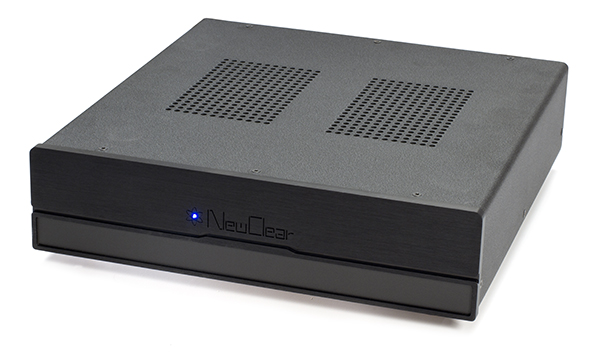
The NC1000L is a dual mono design, built around the latest ICE Power modules and is essentially two power supplies and two separate mono amplifiers sharing the same chassis. It features balanced XLR and single ended RCA inputs, both going in via a pair of high quality Lundahl transformers. The NC1000L delivers 501 watts into an 8-ohm load and doubles that into 4 ohms. Magnepan lovers, this amplifier is your new best friend. And that’s exactly where I began this review, with my Magnepan 1.7s. This amplifier’s enormous power reserves light up these wonderful, but power hungry speakers – giving them a true semblance of dynamics, even playing fairly heavy rock. Led Zeppelin’s “No Quarter” never sounded better on the 1.7s.
Oodles of power
Many say the “first watt” is the most important, however I feel they are all important. I also prefer a lot of power to not so much. There are a number of classic low power amplifiers, all of which have a tonal magic about them: the Wavac EC-300, the Pass Aleph 3, the McIntosh MC-30, etc., etc. And as much fun as they’ve been at very low levels, if you don’t have efficient speakers, those amps run out of steam fast. Ultimately, dynamics are just as important as tonal accuracy, or any of the audiophile parameters that try to convince us that we are hearing reality through our stereo systems – even with music that you don’t think demands it.
Low powered amplifiers are always fun to take for a spin, but I always go back to high power at the end of the day, and the NC1000L delivers the goods. I mentioned Magnepans at the beginning of the review, and after about a month with both the 1.7 and 3.7, unless you are going to drop upwards of $15k on an amplifier, the NC1000L is the amplifier for you – at an introductory price of $2,600.
We can argue the merits of a “dealer direct” product versus one sold through normal distribution channels and whether a $2,600 amplifier sold this way really needs to be compared to a $5,000 amplifier sold with the costs of distribution attached to be fair. No problem. The NC1000L stands up handily to everything we’ve heard in this price category. It doesn’t have the sweetness of say, a McIntosh MC275, but you can’t drive a pair of inefficient speakers with an MC275 either. No disrespect intended to either manufacturer, the amount of clean power available with the NC1000L easily justifies its price. With this much power on tap, I could not play the NC1000L loud enough (without risk of brain damage) to explore the boundaries of their claimed “graceful rounded waveforms at clipping.”
 Under the hood
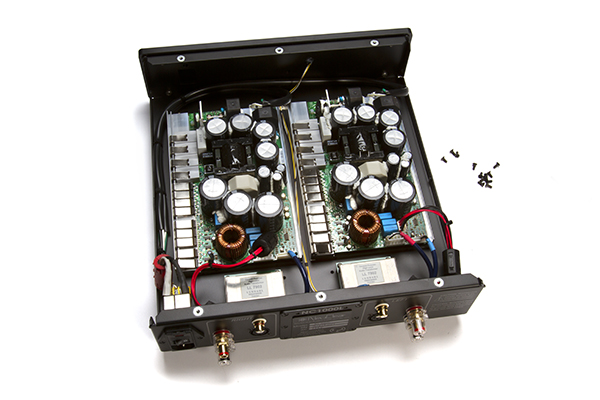
Popping the top of the thick, 14-gauge chassis and thick front panel reveals a tidy layout. Each amplifier has it’s own separate board, with power supply and ICE module self contained. The layout is tidy, and my only concern for sonic degradation over time is the screw terminals used to bring in power an input signal. However, I have seen this approach taken in much more expensive amplifiers and speakers, some ten times the cost of this amplifier.
The NC1000L doesn’t take long to settle into a groove – it doesn’t need hundreds of hours to sound its best. The slight bit of solid-state haze at initial power up vanishes after about three days of 24/7 operation at modest volume. Its miserly 28 watt current draw at idle lends itself to leave powered up continuously without guilt.
A real pleasure
Thanks to the NC1000Ls balanced XLR and single ended RCA inputs, it will work with whatever linestage or preamplifier you have handy. After trying about ten different examples from my recently rebuilt Conrad Johnson PV-12 up to the $60,000 Indigo Qualia linestage, the NC1000 merely revealed the character of what was in front of it, with plenty of resolution to discern the differences between front end components with ease.
The NCl000L does fall short of spendier competitors is resolving last bit of detail in the upper registers, but this is not a fair comparison. Auditioning similarly priced products in the 50-100 watt per channel range, the NC1000L is without peer. The presentation is very neutral and if like, me you desire a bit more warmth or romance, you can always mate the NC1000L with your favorite tube preamplifier and season to taste. I did just that with my vintage Conrad Johnson PV-12 (recently rebuilt by the CJ factory with a full compliment of CJD Teflon caps, so it’s not that vintage sounding) and was in affordable hifi heaven. Man I wish I could have had this amplifier back in the days of my Magnepan Tympanis or Acoustat 2+2s!
This amplifier throws a very wide soundstage, thanks in part to it’s dual mono design, with well delineated imaging, but again not quite as much front to back depth as something with vacuum tubes in the circuit, yet low level detail is excellent. Listening to the title track on Joni Mitchell’s The Hissing of Summer Lawns is fantastic, with the gentle percussion bits floating well outside of the speakers with Mitchell’s multi-layered vocals well separate from the bass line anchoring the tune.
Timbral complexity is also well represented, as Mitchell gets a bit shrieky on “Shadows and Light.” This is a track that can deteriorate into a ball of midrange on an amplifier unable to handle complex passages. The NC1000 does an equally good job with the violin, reproducing this delicate image with aplomb.
The NC1000s ability to drive speakers with a low impedance or a complex load is better than any Class D amplifier we’ve yet sampled, where many early Class D designs were more like an SET amplifier with many speakers, horribly rolling off the top end when the match was less than stellar. The B&W 802 Diamond speakers always prove tough for the Class D amps we’ve reviewed in the past, but he NC1000L passes with flying colors. There really was no speaker at our disposal that was problematic for this amplifier.
As with many ICE powered designs, the NC1000L excels at the low frequency part of the audio spectrum. Cranking up Bassnectar’s “Boomerang” with the 802 Diamonds felt like a subwoofer was added to the system now offering a serious punch to the chest at high volume levels. Ditto with Prince’s “Billy Jack Bitch.” And of course, the heartbeat at the beginning of Dark Side of the Moon was pretty cool too. The massive power is well controlled, giving bass instruments a natural response that does not sound overdamped.
Speaking of cool, the NC1000 stays nice and cool, even when pushed to punishing SPL levels, and under normal operation, shouldn’t use much more electricity than a light bulb.
Nod to the new guys
If the market is an indicator, it will be tough for the crew at NewClear to keep building these amplifiers for this price forever. Other manufactures have done incredibly well with the factory direct approach, and considering this amplifier is so underpriced at this point, our hope is that as NewClear grows and has to amortize those costs, this amplifier will still be a solid product. But for now, this understated black box has to be one of the year’s best bargains. If 500 watts per channel sounds like your way to party, get in on the ground floor.
The NC1000 does its job simply and effortlessly, serving the music all the while. It easily earns one of our Exceptional Value Awards for 2013.
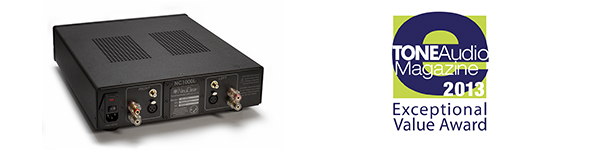 The NewClear NC1000 power amplifier
MSRP: $2,600
Peripherals
Analog Source AVID Volvere/SME V/Sumiko Palo Santos Presentation
Digital Source dCS Paganini, Sooloos Control 15
Preamplifiers Conrad Johnson PV-12, ARC REF5SE, Burmester 011
Phonostage Simaudio MOON LP810
Speakers Magnepan 1.7 & 3.7, GamuT S9, Dynaudio Confidence C1 II, B&W 802D
Cable Cardas Clear
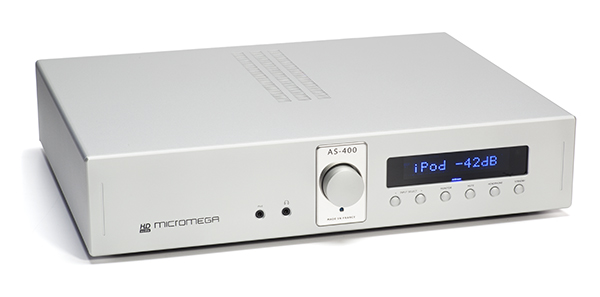
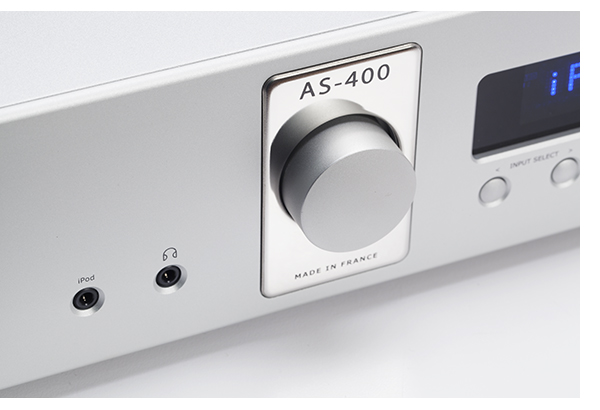 Micromega of France, enjoys a very respectable presence here in the US, and has been introducing new products with a vengeance recently.
 Trust that first impression
 Additional Listening
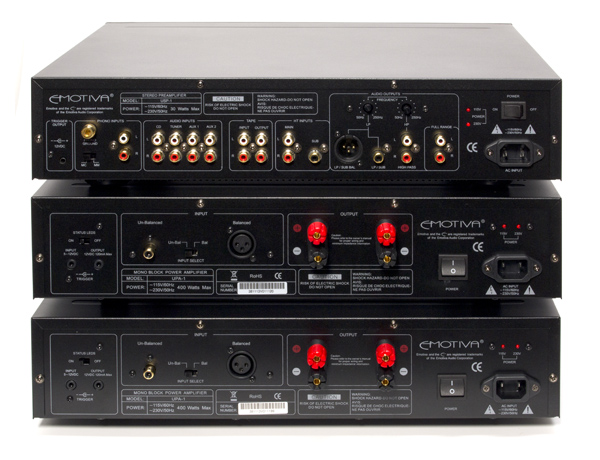
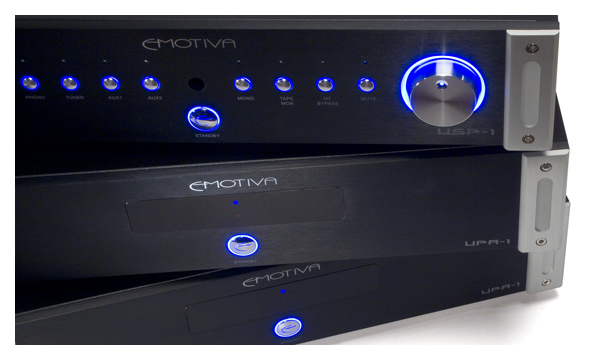 In an audiophile world where individual components have five (and sometimes six) figure price tags, the concept of being able to get a preamplifier and a pair of 200-watt mono amplifiers that use discrete circuitry instead of just being Class-D for under $1,200 is refreshing. You may have guessed that such components are manufactured offshore and sold direct to you from the manufacturer; both methods are necessary to keep costs down to this level. However, due to the high praise that greets Emotiva products, it appears that the company makes quality control a main priority.
 Easy Listening
 Taking a Spin
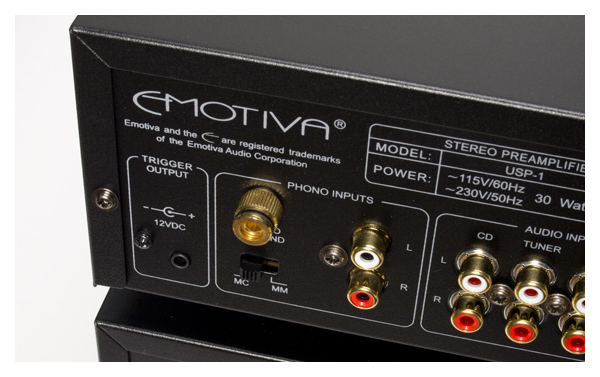
 Emotiva USP-1 Preamplifier and UPA-1 Amplifiers
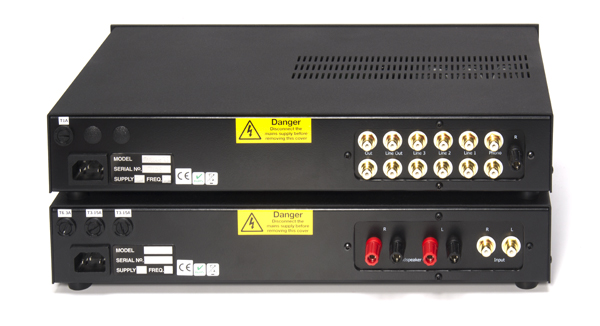
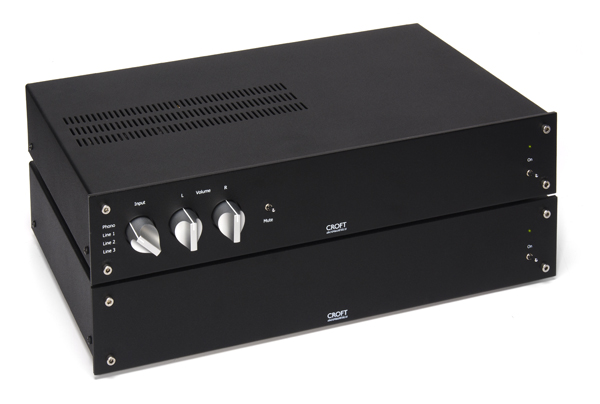
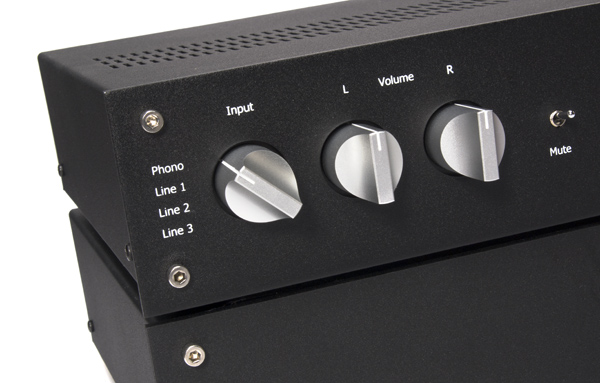 For those of you that have been waiting for the next series of Croft amplification products, they are back with their Micro 25 preamplifier and Series 7 power amplifier. In case you aren’t familiar, don’t feel out of touch, Croft has always been one of the smallest of British hifi manufacturers, but worth seeking out if you are interested in high performance at a very reasonable price. The two components you see here are only $1,395 each.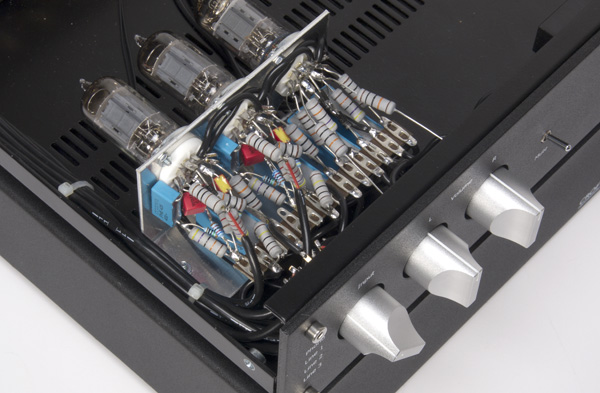
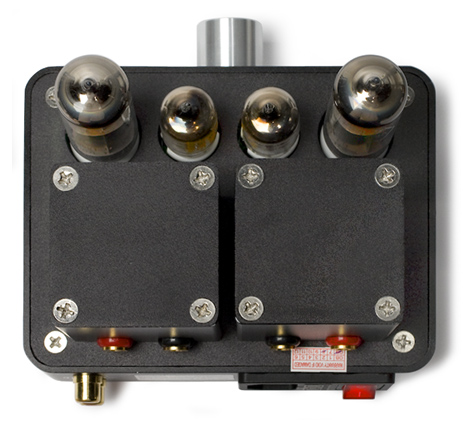
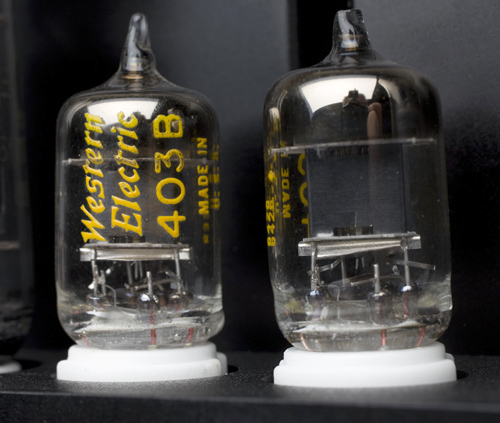
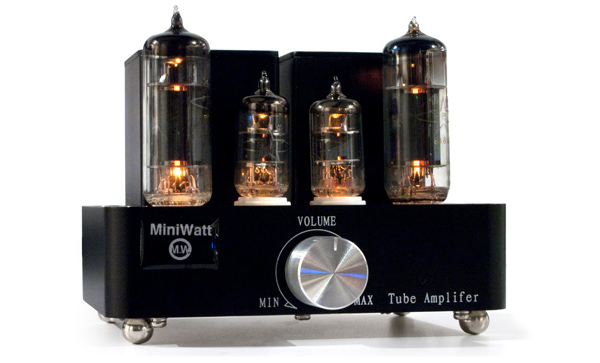 No matter what your position in the audiophile game, you need a MiniWatt. This is one of the most fun pieces of gear I’ve seen in about fifteen years. (The last time was when the Antique Sound Labs Company sold their $99 tube monoblocks…) The MiniWatt is a 2.5-watt per channel tube amplifier that weighs a couple of pounds and only takes up about a 6 x 6 inch footprint on your desk, about 15 x 15 centimeters for our friends in the rest of the world.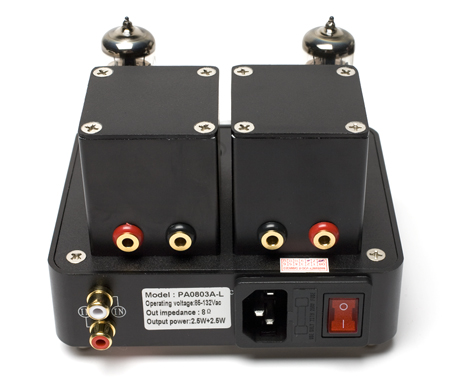
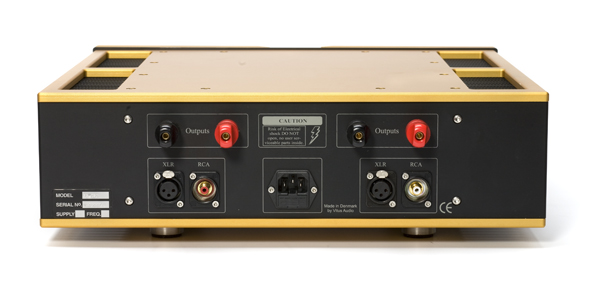
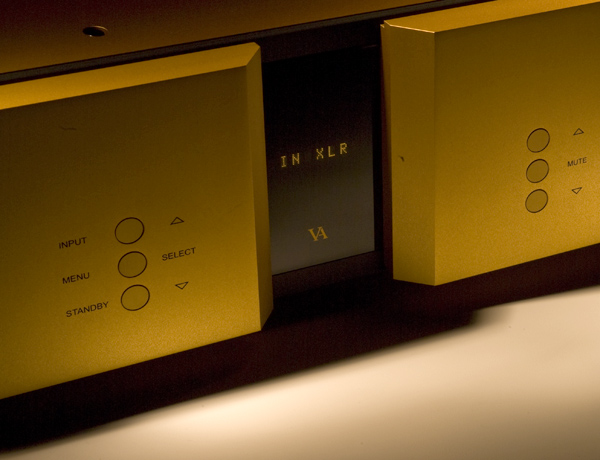 The Vitus Audio SS-050 is a very high performance, yet minimalist integrated amplifier. Tipping the upper end of the price scale at $26,500, this is another destination product, and with one XLR and one RCA input, must be made part of a system that has only two sources. I imagine that this should pose no problem for the average person who has an analog source and a digital source.
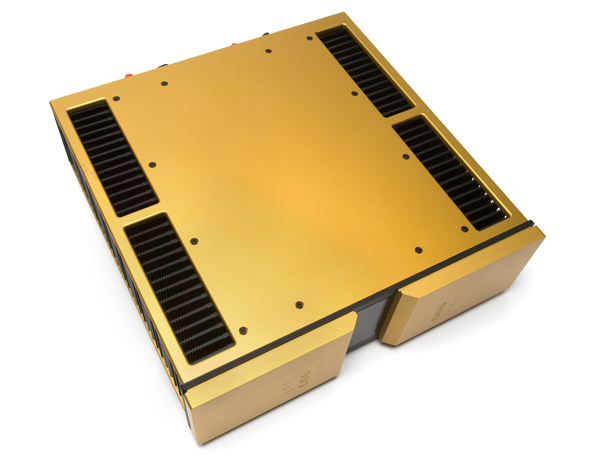 As with any solid-state amplifier that has been in transit for some time, the SS-050 took about 48 hours to open up, stabilize and sound it’s best, though it was more than pleasant out of the shipping carton. After spending a few weeks with the amplifier and going through regular power cycles, it takes about 30 minutes to fully stabilize in normal play.
 I just happened to be listening to the complete set of the current AC/DC remasters on vinyl, so the first track I played on the Vitus based system was “Live Wire” from the High Voltage album. The guitar lead-in on this piece instantly struck me, as I could hear the speakers in whatever cabinet Angus Young was using to record with rattle, much clearer than ever before. Next up was “Night Prowler” from Highway to Hell. Again, I was impressed with not only the weight, but also the subtle texture and roundness of the opening bass riffs in this track. When I turned this up, perhaps too loud, the placement of the snare drum remained rock solid, just in front of the soundstage on the right side, and did not fall back into the mix. However, when I went back to my early stamper originals, it was plainly obvious that these records were produced from digital safety masters; another layer of detail was now available.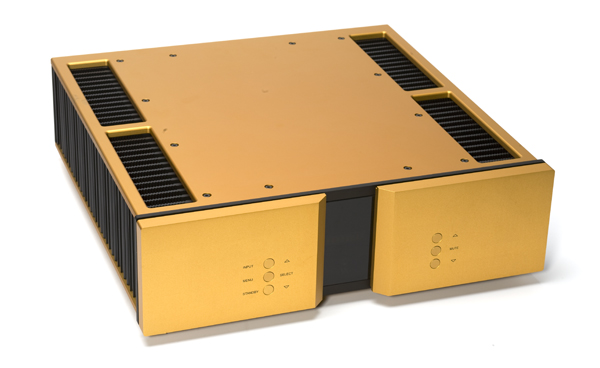
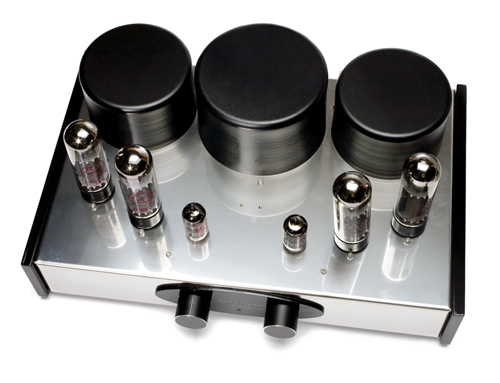
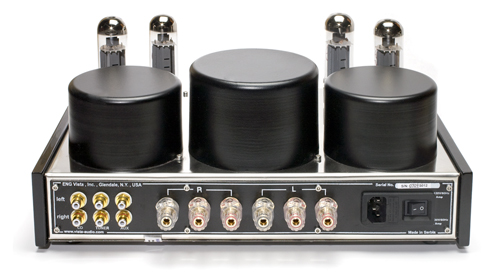
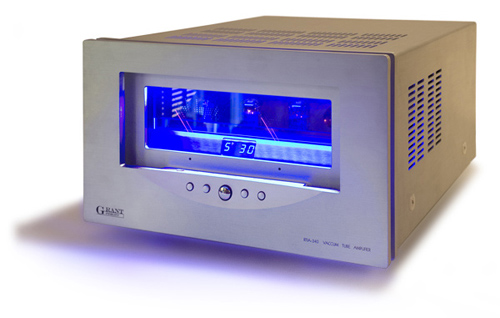 If you like tube amplifiers that hanker back to the glory days of audio with a big, beefy chassis and huge output transformers, the Grant Fidelity Rita-340 is for you. It’s so robustly built that even the careless handling of the UPS guys couldn’t stop it! The substantial crate arrived, looking like it had been dropped off the top of my garage roof, but after I dusted off the Rita and fired it up it worked perfectly and it has worked flawlessly for the past six months. I think this should settle any build questions you might have about this amplifier; anything that can survive that kind of abuse should be fine in everyday use.
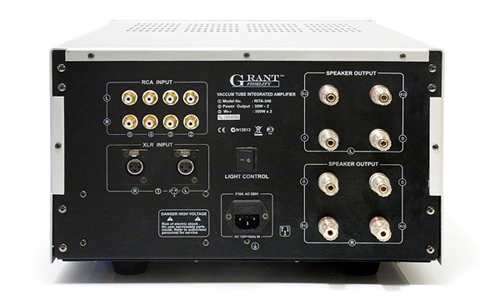 There are two sets of speaker outputs on the rear panel, and while the amplifier is rated to drive speakers from 4-8 ohms, with a tap for 4 and 8 ohms and a common ground. The speakers I tried had varying impedance and I did not notice any issues driving anything.