Devialet D-Premier Integrated Amplifier

We are honored to have the opportunity to receive the first D-Premier integrated amplifier/DAC from Devialet in the United States for review.  It will be featured in our February 20 issue, but for now, we’re giving our readers the opportunity to ask some questions and share a bit of the review process as we head towards production.  We will be doing this going forward with select reviews to give you more of a chance to interact with us.

And, to answer the main question that is probably on your mind, it DOES sound as good as it looks, perhaps better!

Rega Isis CD Player

Rega has established a solid reputation over the last thirty years now for building reasonably priced components packed with value beyond their price point. Rega turntables have always been a triumph of function and simplicity, with a legion of fans that span the globe. Founder Roy Gandy is a champion of giving his customers high performance without a high price tag, and didn’t even start building CD players until about ten years ago. His sense of humor is evident in their website, where it’s mentioned that Rega was “the last major high end company to build a CD player.”

About that same time Rega also introduced the P9 turntable. Then $4,000 and now $5,000, ten years later (with the tonearm upgraded from the RB900 to RB1000 status), this was Rega’s only entry into more expensive components. One of my reference turntables for the last few years, the P9 is a very special table, offering performance well beyond its pricetag, just like every other Rega product.

In 2008 that trend was continued with the introduction of the IOS phono stage and later on in the year, the Elicit integrated amplifier. Something was definitely up at Rega. Though still very reasonably priced in market terms, at about $3,000 each, these components were still a considerable step up from the Fono and Brio.

A visit to the Rega factory this year revealed a company more committed to performance and value than ever. Rega is a fantastic mix of 21’st century modernization and early 20th century craftsmanship, with their own spin applied. Towards the end of our tour of the plant, the group I was with was taken to an assembly room where something very different was going on.

A $9,000 CD player, from Rega?

That’s not a typo. Yes, that’s right, $9,000 for a Rega CD player. But it’s a very special CD player. In the past, Rega has always been fanatical about offering the highest value they feel that they can build. Because they only outsource a tiny percentage of their production, they have become very efficient and eliminate multiple sources of markup that eventually get passed on to the consumer.

They have not varied from their chosen path with the ISIS a single millimeter, however the focus has changed somewhat. The ISIS is the first product Rega has built that has not had a target cost attached to it; it’s simply the best player that Gandy and his staff feel they are capable of building, with cost no object. Coming full circle to Rega’s core values, the pricetag is only $9,000. The average Rega customer that’s been raised on P3 turntables and Apollo CD players ($800 and $1,000 respectively) is freaking out at the thought of a $9,000 CD player from their favorite British HiFi manufacturer. Has Roy Gandy gone mad?

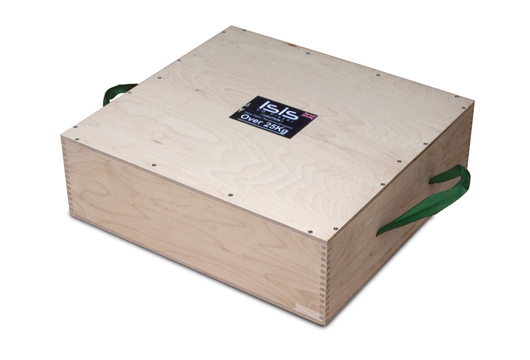
If anyone should be freaking out, it should be the manufacturers of CD players in the $20 – $50k range. It’s definitely a contender and in typical Rega fashion, offers value way beyond its price point. Even if you haven’t had the chance to see them assembled at the factory, the minute you open the box, the attention to detail is apparent.Rega crate

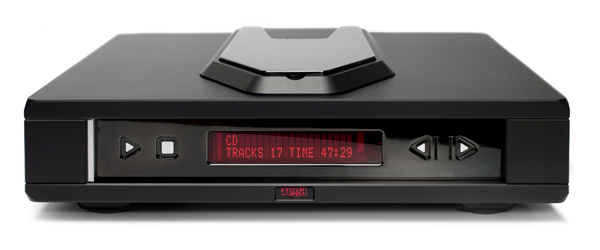
The ISIS comes packaged in a very sturdy yet tasteful mini-crate with the ISIS logo cut in the high-density, closed cell foam internals. It gives you the feel that something special is inside, without being extravagant. When you remove the 55-pound (25kg) CD player from the box, you know it. The massive aluminum chassis reveals a look not unlike past Rega players, with their famous “spaceship” top loading door and red LED’s on the front panel, but seriously fortified all the way around.

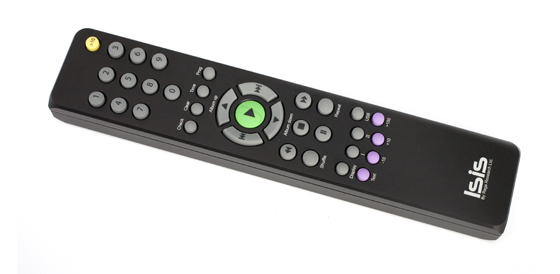
In addition to the player, a substantial billet remote control is included that is on par with what you would expect with the world’s finest audio gear as well as a pair of high quality RCA interconnects and a substantial power cord. I would value both of these items in the $500 – $1,000 range if you bought them as aftermarket items. A very nice touch I’d say, but I’d love to see you being able to have the option of them being terminated with XLR’s.Rega remote

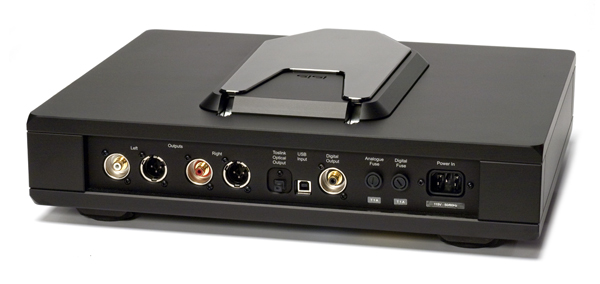
Which leads us to something else you’ve never seen from Rega, a pair of balanced XLR jacks on the back panel. This takes advantage of the ISIS having fully balanced, differential circuitry throughout. There are also standard RCA outputs for those requiring it. The DAC in the ISIS uses a pair of Burr Brown PCM 1794 D to A converters running in parallel dual mono mode. Analog and digital stages have their own separate power supply transformers and there are ten individual voltage regulator stages in the digital section along with another ten for the analog stage. This is indeed a very serious bit of digital hardware.

Those worried about the viability of the CD format and getting your player serviced in the future, fear not. Inside the owner’s manual, there is a signature from the technician that assembled your ISIS, another tech that QC’d the electrical and mechanical systems and the tech that tested and archived not one, but two spare laser units. I think it’s safe to say that the ISIS will last longer than most of its owners and I appreciate this attention to detail, with CD transport mechanisms getting scarcer all the time.Rega rear view

An outstanding DAC that happens to play CD’s, or the other way around?

As the market for high performance CD players is probably nearing its end, Rega gives you the option to use the ISIS as a USB DAC as well. Personally, I’d love to see an SPDIF input on this player, but considering the recent success of the Ayre USB DAC, I’m guessing this is not a deal breaker for the current crop of audiophiles that are more computer based.

While you might be clinging on to your shiny discs for now, the ISIS gives you the options to go both ways and that’s what makes the ISIS such a great value. The DAC performance of the ISIS was also outstanding when streaming files from my Mac Book Pro via the USB input, which is switchable from the front panel or the remote. The only serious drawback to the ISIS is it’s inability to read 24bit/96khz files and this may be the Achilles heel for someone wanting to make this player part of a more computer based system. With 24/96 files becoming the new standard, this will limit your music choices going forward. Personally, I see the ISIS in the same light that I do my Naim 555, a statement CD player for someone with a large collection of physical media.

Which $800 bottle of wine would you like with your dinner?

With the ISIS in short supply worldwide, the question everyone has been asking me is how does is stack up ultimately to the five figure players I have here as reference components? Damn good, I say. Comparing the ISIS to my reference Naim 555 was an interesting study in presentation. It was a big help that we had the ultra revealing YG Acoustics Anat II speakers around for the duration of the review. As part of a six-figure reference system, the 555 still had the ultimate edge in terms of overall analog-like smoothness, but not by a large amount.

Interestingly, the edge went slightly in favor of the ISIS in terms of tonal contrast and transient attack. When listening to the cymbals at the beginning of “Euthanasia Waltz” on Brand X’s Livestock CD, the Rega player offered slightly quicker attack on the leading edge, but didn’t decay as smoothly as the Naim. However, when comparing the playback of this track to the Wadia 781i, the ISIS had a definite edge in upper end refinement, though it did not have quite the subterranean bass slam of the Wadia. (Neither does the $32k Naim player)

But this level of tonal contrast is what I kept coming back to with the ISIS and I would say that is it’s shining virtue. It has more than enough extension at both ends of the frequency scale to keep the fussiest audiophile happy, with plenty of weight to the presentation, but much like the YG Acoustics Anats, the ISIS has a delicacy about it that few players at any price match. Acoustic instruments have a layer of texture that is unmistakable with the ISIS and makes the player a lot of fun to listen to. Spinning “Down On the Farm” from Guns N’Roses The Spaghetti Incident, you can really distinguish the difference between Izzy Stradlin’s guitar setup and Slash, better than I’ve ever heard on this disc. And of course your favorite female vocals will sound just fine.Rega lid open

Tonal accuracy is also a strong suit with the ISIS. Lovers of acoustic music will notice the extra layer of detail and tonal body that the ISIS provides. Going back through some of my favorite jazz standards from Miles Davis, John Coltrane and Sonny Rollins underscored what a fantastic job this player does at nailing the tonality of acoustic instruments. Naysayers of high end digital will be taken back at how natural this player sounds with violin and piano.

Of course we’re splitting hairs here, but that’s the kind of things that people purchasing five figure CD players do. A bit of madness if you will, but all good fun. The ISIS is a player that allows you to make that last jump to where you become immersed in the music, instead of thinking “this is really good for digital.” Again, there are only a handful of players at any price that achieve this lofty goal.

Perhaps not for the typical Rega customer

The Rega ISIS is a digital audio player that is worthy of being on the top shelf with the world’s best components. I own a couple of those players myself, and after extensive listening and close comparison, this player delivers the goods. If you own one of these players, you probably won’t be trading in your Naim, Wadia or Meridian player for the ISIS, but that’s not who I feel this player is aimed at. If you are someone who has always lusted after one of those $20 – $50k players, but can’t or won’t write that check, the ISIS is the way to go. I’ve had the privilege of listening to most of the world’s best CD players, some with pricetags that you’d swear should be on the window of a Porsche instead of a CD player and I feel the ISIS will deliver 95% of the performance of the five figure players for nine grand. It’s well worth the asking price; If I had to start over, I’d buy an ISIS, pocket the other $20k and go shopping for a nice used Boxster.
boxster

With that in mind, the Rega ISIS has stayed true to their core values by offering a product that offers the best performance in its price class. This is why we chose this player as our Digital Product of the Year for 2009. It makes a stellar match to their new OSIRIS amplifier, that will be reviewed in the December issue of TONEAudio. And, yeah it’s that good too.

The Rega ISIS CD Player

MSRP: $8995.00 (USD)

Manufacturers Information:

www.rega.co.uk
www.soundorg.com (US Distribution)

Peripherals

Preamplifier: Burmester 011 Preamplifier

Power Amplifier: Burmester 911mk. 3 Amplifier, Rega OSIRIS Amplifier

Speakers: YG Acoustics Anat II Studio

Cable: Shunyata Aurora Interconnect, Shunyata Stratos SP spkr. cable

Power: Running Springs Dmitri Power conditioner, RSA HZ power cords

Mini Watt Amplifier: Take a Fresh Look at HiFi

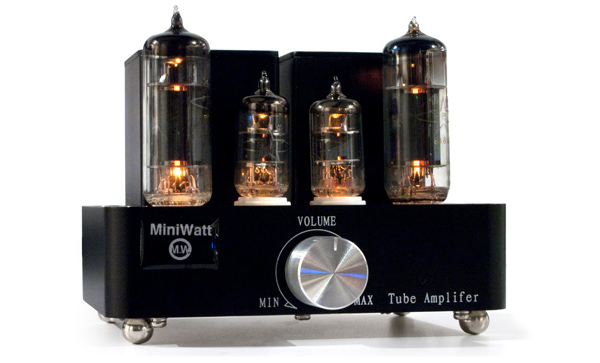
No matter what your position in the audiophile game, you need a MiniWatt. This is one of the most fun pieces of gear I’ve seen in about fifteen years. (The last time was when the Antique Sound Labs Company sold their $99 tube monoblocks…) The MiniWatt is a 2.5-watt per channel tube amplifier that weighs a couple of pounds and only takes up about a 6 x 6 inch footprint on your desk, about 15 x 15 centimeters for our friends in the rest of the world.

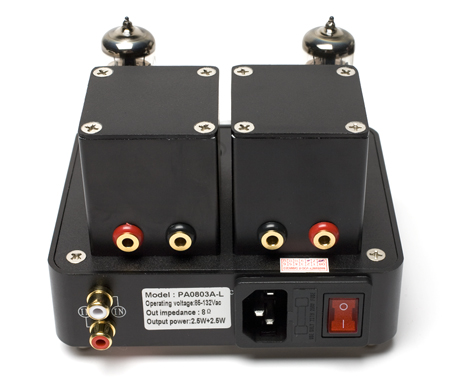
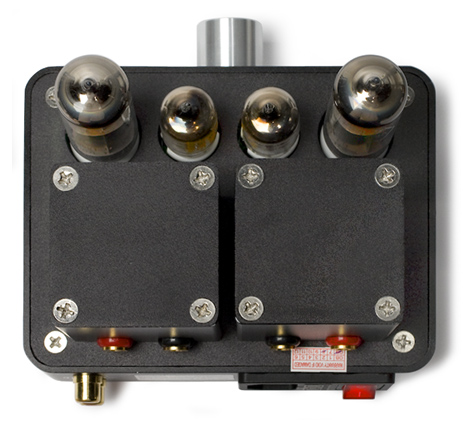
It uses a pair of 6J1 and 6P1 tubes and a self contained AC power supply. The rear side of the transformers have banana jacks wired directly to them for your speakers and there is one set of RCA jacks to plug in an analog source. ALOAudio and their retail store 32 Ohm Audio is the exclusive American distributor for these little jewels, and when I stopped by their store last week, they weren’t even open and people were already buying them. “Wanna take one home?” Ball asked me as I was surveying the new store. Look, shiny thing!mini watt rear

Hurry up and plug it in

I wasn’t even half way to my car when I thought of hooking the MiniWatt up to my Zu Essence speakers that have a sensitivity of almost 100db. Knowing the luck I’ve had with Zu’s and 2A3 amplifiers in the past, I knew that this would be a rocking combination. The minute I hit the door, the MiniWatt was plugged in to the living room system, with the tubes warming up.

For the nerdtrons in the audience, I hooked the MW up with a pair of Zu’s Libtec speaker cables and a pair of Furutech Reference III interconnects to my Marantz Pearl SACD player. You think I’m crazy hooking up about $4k worth of ancillaries? It didn’t stop there, I had a spare Shunyata Python CX power cord, and so I was now ready to roll with the whole setup plugged into a Running Springs Haley power conditioner.

FYI, for those considering the MiniWatt to be the hub of a “budget” system, it works great that way too. Later on, after the amplifier was fully evaluated, I broke out the $50 Pioneer 563 Universal Player and my favorite $100 Polk Audios and was still very impressed with the performance.mini watt top

2.5 watts can accomplish a lot

Powering the Zu’s the MW was able to blast. I zipped through some of my favorite metal discs and was amazed at how loud I could play Van Halen with this tiny amplifier. TONEAudio writer Jerald O’Brien stopped by for an adult beverage and thought I was using the Lavardin integrated amplifier that is also in for review. He was pretty surprised when I told him it was just the MW. “I thought that was a new headphone amp!” he remarked.

We proceeded to spin more discs and after some jazz and vocals, it was evident that this tiny tot was no mere toy amplifier; it delivered the goods. Because this amplifier has the tubes driven in ultralinear mode and those are some pretty small output transformers, it’s slightly grainy, but that’s judging it against my Bottlehead 2A3 monoblocks, which are silky smooth and with some upgraded 2A3’s will set you back a couple thousand bucks. You’ll never touch tubey goodness like this for $229.

What impressed me the most about the MW was the amount of bass power and control it had, which wasn’t limited to the Zu’s. Going through another cache of tracks from Pink Floyd, Genesis and Spock’s Beard, we were convinced that the MW could really get down. I also had a ton of fun using it as a desktop amplifier with a pair of KEF XQ20’s that feature their Uni-Q driver and are very coherent. Soundstaging on my desk between my 30” Apple Cinema Monitor was wide, wide, wide and dynamics remained excellent, even with speakers only having an 88db sensitivity. Near field listening has its benefits.

Pondering the Zu’s again, which have a nominal impedance somewhere around 14 ohms, I thought the MW just might be a good headphone after all and gave my Sennheiser 650’s a try. Again, excellent luck, so this could also work as a headphone amplifier for some phones. I didn’t get a chance to give this configuration extensive testing, so it might not work with every situation, but if you buy a MW I suggest giving your phones a test drive while you are at it. It’s small enough to carry into the bedroom for some late night listening with your iPod and favorite phones.

More performance

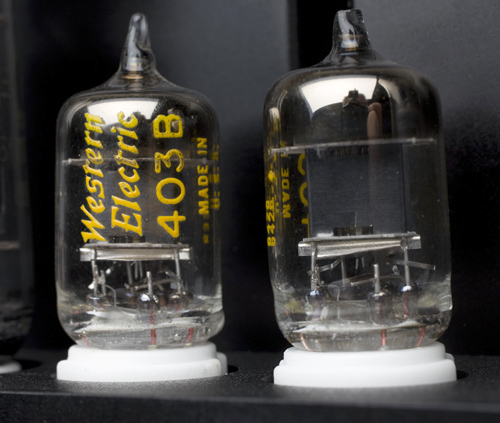
I suppose you could get crazy and mod the heck out of the MW, (and this could be a future article because I have a hard time leaving well enough alone) but an easy upgrade is to spend another $45 and get the “upgraded tube set” from ALO which includes a pair of Russian tubes to replace the 6N1’s on the outer left and right, while the two middle tubes are replaced with a pair of vintage Western Electric 403, which is a 7 pin mini pentode tube.

This made a big difference in the overall sound, increasing the soundstage about 25% and eliminating some of the grain that was present in the upper midrange/lower treble range. This is definitely the best $45 upgrade you will ever hear, so I suggest just ordering your MW from Ken with the better tubes, you won’t regret it.Mini watt upgrade

Award winning fun

I am happy to give the MiniWatt amplifier our Product of the Year award in the “Budget Audio” category. This is a great amplifier, period. If you are just starting out in HiFi, you can make a pair of single driver, high efficiency speakers, add a source and be digging music on a pretty tight budget that you will really enjoy and our world definitely needs more products like this. And I can’t think of a more fun way to enter the world of vacuum tube audio if you haven’t yet.

This little amp is the real deal folks. Highly recommended.

– Jeff Dorgay

The MiniWatt Amplifier

MSRP: $229, updated tubes, $30 additional

USA Importer:

Ken Ball/ALO Audio, www.aloaudio.com

MiniWatt home page: www.miniwatt.com.hk

Neko Audio D-100 DAC

Digital Excellence:
The Neko Audio D100 DAC

With the DAC making such a big comeback in the last year especially, the market is heating up again, much like the early 90’s when it seemed everyone had a DAC for sale.  But then, DAC chips took a leap up in quality and a big leap down in price; single box players started to rule the day.

Fast forward to 2009 and the DAC is back, but for a different reason.  Computers and portable music players have people wanting to integrate those sources into their systems, while many are replacing their CD players entirely in favor of using a laptop or computer based music server as a primary source component.

There are some old and new players back in the game, almost all with excellent results.  Of course, the extreme high end has latched onto this again with a handful of mega DAC’s in the five-figure range, but I believe the excitement is at the $1,000 price point.  We have had the good fortune to review quite a few different models in this range, but for now, one stands head and shoulders above the rest, the D100 from Neko Audio at $1,295.

Digital Direct to You

Like Benchmark and a few others, Neko gets the job done at a reasonable price point by going direct to the customer, avoiding the traditional dealer network.  Considering the added cost and time of establishing such a dealer network, this makes the D100 much more competitive.

Because the D100 is so small and relatively lightweight, it is easy and inexpensive to ship.  Adopting the current business model of a number of other high-end audio companies that sell direct, there is a 30-day money back guarantee for the D100.  I doubt there will be many asking for a refund.

The only caveat is that Neko Audio is a newcomer to the industry, so they do not enjoy the reputation and legacy product support that a company like Naim, Wadia or Meridian does.  But for this kind of money, I feel it’s worth gambling on the new guy in town.

A New approach

Where most DAC’s use a series of op amps or some form of active circuitry in their analog sections, the D100 is unique in the sense that it uses high quality passive components and a pair of Jensen transformers in the output stage.  Digital conversion is done with a pair of the ubiquitous Burr Brown PCM1794’s operating in mono.

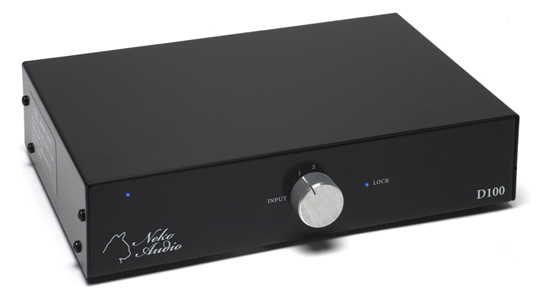
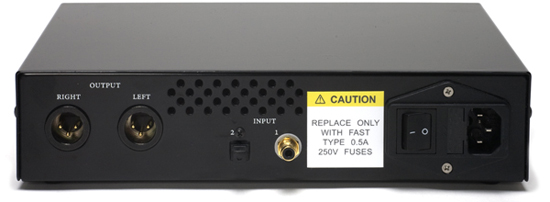
The D100 keeps it simple, with a small case (10.5″ x 2.5″ x 6.5″) and minimal controls.  There is an on/off switch on the back, inputs for RCA SPDIF and Toslink with a selector switch on the front panel.  For now, designer Wesley Miaw has chosen to forgo a USB input, but says that this will be implemented in the next version at a higher cost.
Because of the output transformers, the output is balanced XLR on the D100.  You can use adaptors or purchase RCA to XLR interconnects directly from Neko Audio at a very reasonable cost.  My reference system is balanced today, so I plugged in a pair of Shunyata’s newest Aurora interconnects and got to work listening.  Having spent a lot of time recently with the PS Audio Digital Link III, the Benchmark DAC-1 and the Cambridge DAC Magic, I was very anxious to see how the D100 would stack up.  As always, my main references were the Naim CD555 and Wadia 781i SE, which can also be used as a DAC.

Natural Digital

It’s rare that these two words go together and even more rare at this price point, but the D100 is a stellar performer.  Long-term readers of TONEAudio know that I’m not a flavor of the month reviewer, and seldom gush about anything, but the Neko Audio D100 is damn good.

To sum it up in one word; natural.  When you are playing the digital game at the $1,000 price point, the words “it sounds really good for digital” usually end up falling out of your mouth, but the D100 is the first DAC at this level that I’ve found truly musical in the sense that I would a decent turntable.  Though I have a ton of megabuck digital hardware here, I started my audition of the D100 with my Wadia 170i, my iPod full of uncompressed music.

Vinyl resurgence notwithstanding, I could be just as happy with a Wadia 170i and this DAC as I would any turntable/arm/cartridge and phono preamplifier at this price point, so the D100 passes the ultimate test for me.

An unfair comparison

When I spoke with designer Wesley Miaw on the phone, he wanted to know what differences I found between the D100 and the more expensive digital components.  The real gap between the D100 and the money no object digital, is a lack of ultimate resolution and dynamics, but more often than not (and especially at this price point) this can be a good thing with digital.  Personally, I would always rather err on the side of musicality than go the other way with too much detail in all but the most transparent systems.

Listening to vocals and acoustic instruments was a treat on the D100 and even after day long listening and Photoshop sessions, I never walked away from this DAC feeling the slightest bit fatigued.  If I had to compare the sound of the D100 to something, it would be my Harbeth Monitor 40.1’s. They too lack a slight bit of ultimate detail, but do such a great job with the midrange and have such a natural sound, I find myself forgetting about the rest of the fine points and concentrating on the music instead.  It’s rare when any digital component can do this at any price.  Sure, when I drop a disc in the Naim CD555, I see what’s missing, but the D100 is great digital that you can live with that doesn’t cost a princely sum.

Sonic signature

I spent the majority of the review period using the D100 with my Sooloos music server.  With 5000 CD’s on tap, I was able to cover a lot of musical ground in a relatively short period of time.  I suspect eliminating the opamps from the circuit and going with the output transformers has a lot to do with the grain free, almost slightly warm presentation that the D100 achieves.  If I didn’t know any better, I’d swear there was a pair of 12AX7’s under the hood!  But the great news is that there isn’t and you won’t be at the mercy of the tube pirates to have this sound.

The overall tonality of the D100 is rich and engaging.  When listening to my favorite classic jazz cuts (Sonny Rollins, Miles Davis, John Coltrane, etc) I instantly keyed in on the portrayal of acoustic instruments in a real space.  Cymbals sound smooth, with a lot of air and the proper amount of decay, never crunchy.

Yet the D100 had enough punch and dynamic drive to keep me happy listening to Metallica, Tool and Mastodon.  This isn’t a wimpy sounding DAC at all.  Much like a Koetsu phono cartridge, the D100 embellishes slightly, but in a good way.  It allows great recordings to shine, but helps a bit with the less than stellar recordings.  For most of us with less than perfect music collections, I can’t see this ever being a problem.

d100-rear3

Variables and other system synergies

I made it a point to use the D100 with a number of other transports, from my budget Pioneer 563 up to the Wadia 781SE.  Because this DAC does not have a USB input, computer audio fans are limited to using the Toslink input only, unless your computer has an SPDIF output like my HP TouchSmart does.  Music played from my MacBook Pro via Toslink was very good, but a step down from the SPDIF input; the presentation shrunk somewhat in all dimensions, but this is no fault of the D100, this is the sacrifice you pay with Toslink on any DAC.

Should you have an older CD player in your system, the D100 is definitely your ticket to ride.  Everything from the Pioneer 563 to a friend’s Rega Planet 2000 player was improved substantially by adding the D100 to the mix.

Top Gun, at least for now

As we all know, computer years are even shorter than dog years, so there could be a new contender in six months.  However, if your taste in sound at all mirrors mine, and you value tonal correctness and musicality above all other parameters, the Neko Audio D100 is the DAC to beat for reasonably priced digital excellence.  This DAC put on an admirable performance stacked up to the mega buck stuff and for those of you with a system in the $2,000 – $30,000 range; this may be all you ever need.
I am happy to award the Neko Audio D100 one of our Exceptional Value Awards for 2009 and hope that Mr. Miaw has continued success.  Keep an eye on this guy; he’s got some great ideas.

The Neko Audio D100 DAC

MSRP:  $1,295    Factory direct, 30-day return policy

408-476-3276

www.nekoaudio.com

Peripherals:

Digital Sources Naim CD555, Wadia 781i SE, Sooloos Music Server, Pioneer 563, Rega Planet 2000, McIntosh MS300 music server

Electronics Burmester 011 Preamplifier, Burmester 911mk. 3 Power Amplifier

Speakers MartinLogan CLXw/pair of Descent i subwoofers

Cable Shunyata Aurora interconnects, Shunyata Orion Speaker cables, ALO Audio Digital cable

Power Running Springs Dmitri and Jaco Line conditioners, Shunyata Hydra 2 line conditioner, Running Springs Mongoose power cords, Shunyata Anaconda VX power cords

Accessories Burmester V1 and V3 racks, Finite Elemente Pagode signature racks, Manley Massive Passive Studio Mastering Equalizer, Manley Skipjack,  Shunyata Dark Field cable elevators

Peachtree Nova

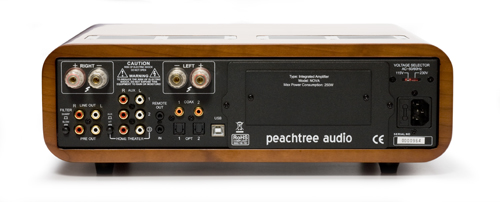
When Peachtree Audio brought out their Decco amplifier/DAC combination two years ago it was an amazing product for $800. It featured a 50wpc integrated amplifier with a tube in the input stage to add a little bit of warmth to its basic 16/44 DAC smoothing out some of the digital grunge. It featured a slot on the back for a SONOS controller and a decent headphone amp on the front panel. Anyone wanting a basic system only needed to add a digital source, some inexpensive speakers and voila! Instant HiFi. The sound quality was excellent for the price point but if you moved up on the speaker food chain, you could hear the limitations of the Decco pretty quickly.

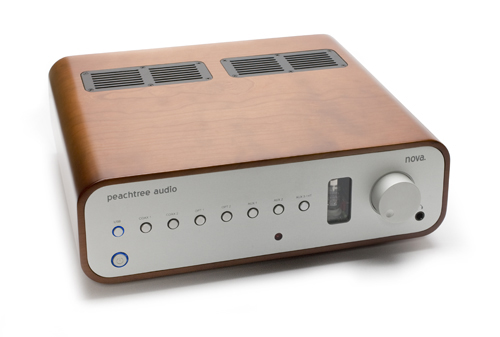
The guys from Peachtree didn’t let the initial success go to their heads with their sophomore effort the NOVA. At first glance it looks almost identical to the Decco, but it has been improved in every way. This is a serious piece of HiFi gear, folks.

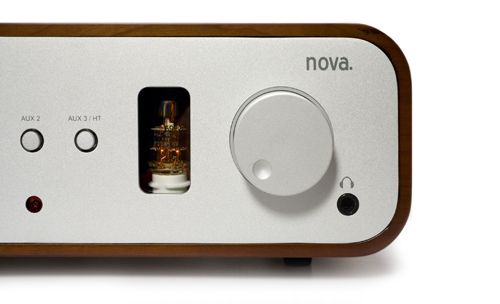
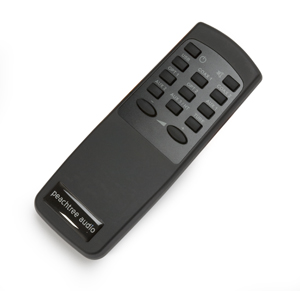
The amplifier’s power has been upped to 80 watts per channel and they kept the tube in the preamplifier, offering you the option to switch it out of the circuit, running the amplifier all solid-state. It uses a single 6922 and for the life of me I wouldn’t know why you would want to do remove it from the signal path, because it still adds a welcome touch of warmth and body. If you swap that 6922 for a vintage NOS Mullard, the NOVA takes another big step in the musicality department and one exotic tube won’t break the bank. But the switch it is a very cool convenience feature, if you just happen to blow a tube late one evening and don’t have a spare you can just push the button on the remote and you are back in business. A very nice touch.

The outer case of the NOVA is available in a gloss black, rosewood or cherry finish. Our review sample came in cherry and was very attractive. When powered up, the NOVA’s power button glows red until warmup, then becoming blue, with whatever input you’ve selected pulsing with a blue glow until the signal is playing. The buttons have a damped feel to them, but the volume control feels somewhat benign. Of course none of this will matter if you use the handy remote control, and at this price level, I’d rather see a manufacturer scrimp in the feel department to maximize the sonic capabilities and that’s exactly what has happened in the NOVA.

Very versatile, plenty of inputs

The NOVA has three sets of analog inputs, with one of them switchable as a HT pass through, a pair of RCA S/PDIF digital inputs, a pair of Toslink digital inputs and a USB input. There is a fixed level output and a variable output, which allows you to use a powered subwoofer with the NOVA or just use it as a preamplifier, feeding a different power amplifier. There is one pair of speaker outputs, with the standard Chinese plastic coated binding posts. I’m not a fan of these but on a $1,200 integrated I can certainly live with them.

The slot for a Sonos still exists and I can’t think of a better match for a Sonos system than the NOVA. This has to be the most painless way to ingrate a music server into a 2-channel system. The front panel features a standard ¼-inch headphone jack and offers first class sound. I had the opportunity to use the new Sennheiser HD 800’s and was very impressed with the NOVA’s performance on a pair of headphones worth more than the NOVA itself! For the headphone listeners in the audience, I had no problems driving my Grado GS1000’s, Sennheiser 650’s and AKG K701’s; the NOVA’s headphone amplifier is very versatile.NOVA web rear

However, the NOVA’s digital versatility was what impressed me the most. Using the budget Pioneer 563 and a Marantz Pearl K1 CD players as transports, I also had the Wadia 170i and a Mac Book Pro connected to the NOVA to give it a thorough workout.
The NOVA has taken the biggest step up from the Decco in the DAC department, now featuring the ESS 9006 chips from SabreDAC, the company that supplies McIntosh with the 9008 chips used in their MCD 500. Those expecting the performance of the Mac for $5,000 less will be disappointed, but if you are looking for a very musical DAC with an integrated amplifier thrown in, you will be pleasantly surprised.

Thanks to the analog inputs, I spun some records as well, adding the Cambridge Audio 640P and my modded Technics SL-1200 to the mix, again proving what an excellent all around achiever the NOVA is. Thanks to this flexibility, the NOVA should be able to cover any future expansion plans you have for your system.

The Sound

I started my listening sessions with the NOVA with my recently acquired set of Spica TC-50’s because they offer incredible performance for the dollar (If you can find an unmolested pair) and possess a degree of resolution that you’d be hard to match with today’s’ budget mini monitors under $1,500 a pair.

If you’ve been around the HiFi world for a long time, you might remember when the NAD 3020 integrated amplifier hit the scene. For about 200 dollars, it was amazing in it’s ability to offer serious high quality sound for such a low priced amplifier and held its own with separates costing a lot more. Perhaps the (highly overused, these days) phrase “giant killer” came from reviewers listening to that famous little integrated. The NOVA does well to hold up this tradition.NOVA web overhead

To round out the review, I used a number of monitors from KEF, Snell, ProAc and Harbeth to investigate the amplifiers’ performance with more upscale speakers before the NOVA ended up in my living room system, paired with the ZU Essence speakers. The Zu’s are a little unfair because they have a sensitivity of almost 100db, so most anything can push them to way more than adequate levels, but they are an excellent reference because they are so detailed and offer great midrange tonality. If an amplifier is going to fall down, the Zu’s are merciless at revealing its shortcomings. Again, I was highly impressed with the combination and pairing the NOVA with the Zu’s provided incredible dynamic range. The NOVA is much cleaner sounding throughout the range than its predecessor and the extra power goes a long way to make it compatible with a much wider range of speakers.

The NOVA worked particularly well with ERA’s D5 mini monitors (also available from Signal Path International) and at $995 a pair, makes a pretty unbeatable combination. There’s no way you can get close to this level of sound quality at a mass market shop for $2,000. Watch for an upcoming review of the D5’s.

After extensive listening, all of the NOVA’s sins are those of omission. It could certainly use more refinement in the highs and control in the lows. But then it would cost $4,000. The difference between the NOVA and the higher priced gear is in the fine details. When listening to solo piano or violin recordings, the extreme highs became somewhat brittle and the level of tonal richness that you would expect with higher priced gear was absent.
Also, overall soundstage shrunk compared to the MCD 500 or the Marantz Pearl. This was expected though, as these players are $6,000 and $3,000 respectively.

When comparing the NOVA with an inexpensive transport to a number of CD players in the $800-$1,200 range, it was consistently as good or better. The minute you switch to Pearl Jam or Yello, your worries will disappear.

Well worth the pricetag

And remember, you are getting a preamplifier, headphone amplifier, power amplifier and DAC for $1,200! I dare you to come even remotely close for twice this amount of money with separate components.NOVA web remote

While the NOVA was an exceptional performer no matter which way I used it, I think the killer application is as the hub of a computer based playback system, because the NOVA’s USB implementation is excellent. I enjoyed this amplifier the most when playing uncompressed WAV files from my Mac Book Pro. With the low price G4 Mac Minis are fetching on eBay, you could build a complete music system that you could control from your iPhone for peanuts. A Squeezebox would also be an excellent choice.

Playing within its abilities, the NOVA will never cease to amaze you.

The NOVA is an outstanding value

The Peachtree NOVA offers so much performance and versatility for $1,195 that it is more than worthy of one of our Exceptional Value awards for 2009.

Whether you are an audiophile on a budget, need a great second system or are sending your kids off to college; anywhere you need high performance audio without a stack of components, the NOVA is the best suggestion I can make. I’ve never used the word best in TONEAudio’s history, but this is the best budget HiFi component I’ve ever had the pleasure of using. – Jeff Dorgay

The Peachtree Audio NOVA

MSRP: $1,295

Manufacturers Information
Signal Path International
909-309-4884
www.signalpathint.com

Peripherals

Digital Sources Pioneer 563, Marantz Pearl K1 CD player, McIntosh MCD 500 CD player, MacBook Pro, Squeezebox, QSonix music server, Wadia 170i

Analog Source Sound HiFi Technics SL-1200, Cambridge Audio 640P, Sumiko Blackbird

Speakers Zu Audio Essence, Harbeth Monitor 40.1, ERA D5, Spica TC50

Cables Audience AU24 S/PDIF digital cable, Zu Libtec Speaker cables, ED 422 interconnects

Accessories Shunyata Hydra 2 power conditioner, Shunyata Venom power cord¬¬¬¬

The Boulder 1008 Phono Preamplifier

Introduced in 2002, the Boulder 2008 phono preamplifier caused quite a stir and was considered the top of the analog mountain by many. With three inputs and variable EQ options for older recordings, it left no bases uncovered. It still remains king to many people, but at $33,500 out of reach for all but the most well heeled audiophiles.

In November of 2009, Boulder announced their 1008 phono stage at a price point of $12,000. While not a budget component by any means, the 1008 is on par with similar offerings from ARC, Aesthetix and a number of other players in the $10K realm. Utilizing a lot of the technology from the 2008, it features a single chassis design and only two inputs, with the additional EQ functions already built in. The low cut filter only has a 20hz option (where the 2008 is switchable between 5hz, 10hz and 20hz), but the 1008 is still balanced from input to output. In addition to the EQ and low filter selectors, there is also a mono button on the front panel for use with mono recordings. The Boulder 1008 is ready for anything you can throw at it, if it’s on vinyl.
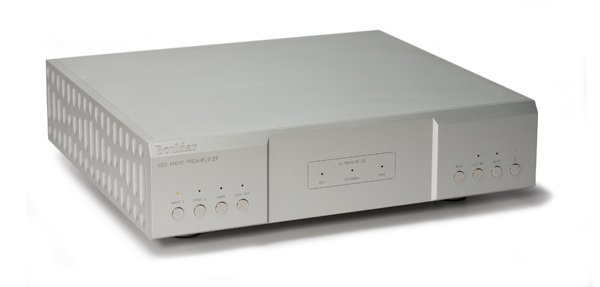
Boulder web-full viewA peek inside the box reveals Boulder’s meticulous construction and outside, their flawless casework. Though light by Boulder standards at 32 pounds, the 1008 is a bit more manageable than it’s larger brother, but equally potent. (And it still weighs as much as some power amplifiers I’ve reviewed.) A one-chassis design, the 1008 still features dual mono construction throughout and heavy duty shielding on the power transformer to isolate it from the rest of the circuitry. Thanks to 70db of gain, and a noise floor that redefines quiet, you should be able to use any phono cartridge available, no matter how low the output with no issue. The MM input features 44db of gain, and allows for adjusting the capacitive load as well, so the 1008 is infinitely configurable to suit your needs.

The 1008 offers two pairs of balanced outputs as well, so that the 1008 can not only run into your linestage, but the second set of outputs can drive your choice of recording device. I used the 1008 with my J-Corder/Technics RS-1500 open reel deck and made some superlative copies of my favorite analog tracks. At 15 i.p.s., the result was dead quiet, capturing almost all of the magic of the original. Digital captures with the Nagra LB were also fantastic, going from balanced out of the Boulder into the balanced inputs of the Nagra and this has proven a great way to get more of my vinyl collection into my Sooloos digital music server.

Setup

Operating the 1008 is very straightforward, thanks to Boulder’s well-written and illustrated instruction manual. I wish more manufacturers’ would follow their lead, offering some decent color photos. I have no bigger pet peeve in the audio world than purchasing a component with a five-figure price tag that has a cryptic instruction manual.

As my review sample came straight from booth duty at this years’ Consumer Electronics Show, it did have some hours on the clock, and while it sounded fantastic out of the box, did continue to improve for the next 100 hours or so.
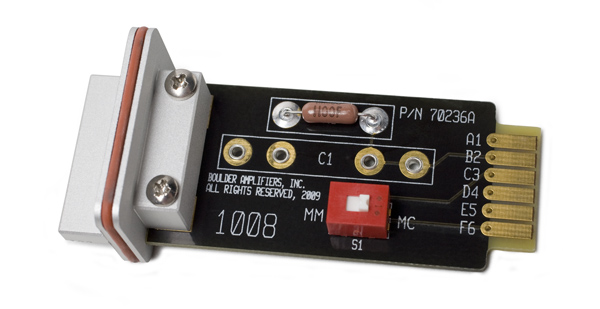
Boulder web-Pers cardOther than placing the 1008 on my rack and plugging it in to a Running Springs Dmitri power conditioner (with Shunyata Python CX power cord, as all of my other low level components are), the only setup necessary was changing the loading on input two to low gain via a switch and unsoldering the 100 ohm resistor from the removable “personality card”, so that I could investigate the moving magnet and moving iron cartridges in my collection from Clearaudio, Grado and Soundsmith. The other cartridges used on input one were the Lyra Skala, Dynavector XV-1s and the ZYX Omega, reviewed in issue 28 of TONEAudio. I briefly auditioned the Clearaudio DaVinci, but found its slightly forward presentation not to my liking with the 1008.

Because the inputs of the 1008 are also balanced, it is to your advantage if you can have your favorite tonearm cable re-wired to a balanced configuration. Like headphones, a phono cartridge can be connected in a true balanced configuration, and though I had excellent results with the supplied Boulder XLR>RCA adapters, (you must use the Boulder adapters to keep phase correct on the inputs), going all balanced offered even a little more “blackness” to the backgrounds.

Massive, like a boulder

Boulder electronics are known for dynamics and resolution, and the 1008 is worthy of the name on the front panel. Not expecting much out of the Boulder, five minutes out of the box, still (literally) ice cold from the UPS truck, I had just thrown a copy of Supertramp’s Crime of the Century on the Raven TWO with the ZYX cartridge. I was not prepared for what I was about to hear; while the volume was down fairly far for the opening track, I cranked up the volume somewhat and the first sax blast on “Bloody Well Right” set me back in the couch. With dynamics like this on a garden variety album, I couldn’t wait to get some hours on the clock to really see what the 1008 was capable of.

Though the larger Boulder phono stage, the 2008 is held in awe by most people, reviewers and mere mortals alike, I’ve never been fortunate enough to get a great demo of this piece, so I had no preconceived notions with the 1008. However, once it was on continuously for a few days, it just kept opening up further for another week.

Where my reference Nagra VPS/VFS with Red Wine Audio Black Lightening is no slouch, and with accessories approaches the price of the Boulder, I firmly believe they will appeal to different listeners. Even with the battery supply, the Nagra gets to about 95% black in backgrounds but the Boulder goes slightly further. When listening to large-scale classical music, this preamp really has a lot of grunt.

Much like a race car with massive brakes, what surprised me about the 1008 was it’s ability to stop on a dime. It handles the swing of a kettle drum perfectly, reproducing just the right amount of air and resonance after the strike, yet coming directly to a full stop without sounding bloated. As my knowledge of classical music is mostly confined to the tried and true warhorses, I won’t bore you with my selections, but suffice to say that tonality is spot on with the 1008 and that should you purchase one of these, you will not be disappointed.
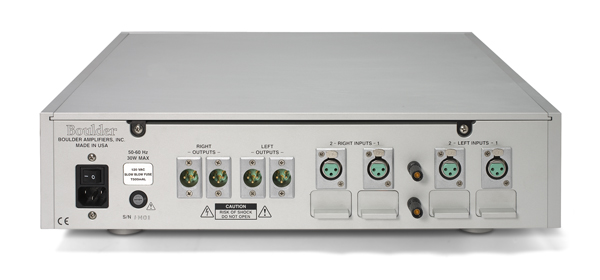
Boulder web-rear viewMoving back into my comfort zone, I revisited the Supertramp album that I began my evaluation with and was impressed at how much bigger the sound had grown in all three dimensions, very impressive. Next stop, the recent remasters of the Kraftwerk catalog. The driving beats in Tour De France were pounding, and at extremely high level, starting to shake my building. Thanks to that 20hz low pass filter, I was able to drive my system to discothèque levels without a hint of feedback. This also came in handy with moderately warped records. With a system that extends to 20hz, recorded anomalies that were not a problem when my system bottomed out at around 30hz now are front and center. The filter worked well without diminishing the subterranean bass drive of the system.

Yet light as a feather

I’ve noticed that some gear capable of tremendous dynamic swings can sacrifice weight for detail. While this can be very exciting in the initial listening sessions shortly after bringing said gear home from the dealer, it can soon become exhausting if not outright annoying.

This is another area that the 1008 does not disappoint. Good out of the box, once fully broken in and stabilized, I was always surprised at how much low level detail and low level texture was always on tap. Interestingly, this is what had me listening to more classical and acoustic music for this review than in many of my past articles. That extra bit of resolution on tap just made classical music so much more enjoyable, that I found myself actually buying some new classical albums to listen to during the review period!

The 1008 was also able to recreate an uncanny sense of height when listening, and this is one of the toughest things for a system to get right, or even achieve at all. When switching back to the EAR 834P (one of my favorite affordable phono stages), everything just seemed to line up laterally, with all energy coming from the soundstage at the same height. I noticed this very distinctly while listening to Steve Earle’s Townes LP. Instantly upon switching from the EAR to the Boulder, not only did each instrument get it’s own, very distinct space, the banjo felt as if it was slightly higher off the ground than the guitar and Earle’s voice was placed right between the two.

Of course, the Boulder costs almost ten times more than the EAR, but the point is that this 12 thousand dollar phono stage is not a case of spending a lot of extra money, only to get a fancy case and a modest improvement in sound. The improvement is huge. If the rest of your system is up to the task, the Boulder will offer performance concurrent with its price tag.

The 1008’s tonal balance is as near perfect as I’ve had the chance to experience. Where my reference Nagra adds just the slightest drop of body to the sound (not that that’s a bad thing for 99% of my record collection), the Boulder neither adds nor subtracts anything. At the same time it does not commit the ultimate audiophile sin in my book of overdamping everything at the expense of transient attack. Acoustic bass sounded just right, and electric bass had the right amount of bounce. While some may describe this as clinical, I prefer to call it neutral. Again, if you’d like a drop of warmth that can certainly be adjusted by your choice of cartridge.

Additional functionality

If you are using a high-end MM cartridge or a Moving Iron cartridge from Grado or the Soundsmith, the 1008, will extract every bit of detail the cartridge is capable of. I happened to have all three on hand and was amazed at how much these cartridges were able to deliver. My current favorite, the Clearaudio Maestro Wood, mounted on the Technics SL-1200 with Sound HiFi mods and SME 309 arm consistently amazed listeners with its big sound through the Boulder preamp. What’s the point of having a second phono input if you don’t take advantage of it?
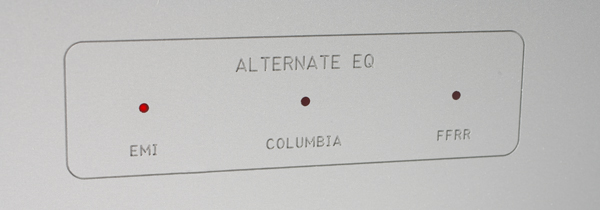
Boulder web-eq closeBoulder rounds off their design with a few extra touches that make the 1008 a great choice for the real vinyl connoisseur. There is a separate EQ selector for early Columbia and EMI records as well as the early Decca ffrr recordings. While I don’t have many of these records in my collection at present, should the 1008 become part of my reference system, I would no longer shy away from them in the future.

Conclusion

The Boulder 1008 does everything right and nothing wrong. If you think you need vacuum tubes to get depth and delicacy in a top shelf phono stage, think again. You can say goodbye to tubes forever and not miss a molecule of music with the 1008. In anything but an extremely forward sounding system and all but the most harsh phono cartridges, it should be a perfect match. Personally, I think those of you in the audience with a cartridge on the slightly warm side of the tonality equation (DV XV-1s, Koetsu RSP, ZYX Omega, etc) will be in vinyl heaven, able to get the body you are used to, with an extra dose of slam and dynamics thrown in for good measure.
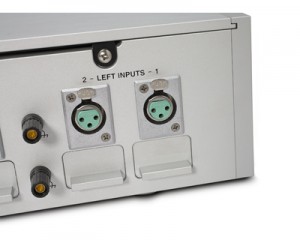
Boulder web-input closeFor the vinyl enthusiast that dreams of owning a Continuum table and Boulder 2008 phono preamp, but will never be able to scratch together $200k, trust me, combine the Boulder 1008 with your favorite $25k table, arm and cartridge and go to bed with a big smile on your face.

The Boulder 1008

MSRP: $12,000

Manufacturer: Boulder Amplifiers www.boulderamp.com

Peripherals

Turntables Spiral Groove SG-2 w/Triplanar, TW Acustic Raven Two with SME iV.Vi and SME 309 arms, Acoustic Signature Analog One Mk. III with SME iV.Vi arm, Technics SL-1200 (with Sound HiFi mods) and SME 309 arm

Cartridges ZYX Omega, Lyra Skala, Clearaudio DaVinci, Dynavector XV-1s and 17D3, Sumiko Blackbird, Grado Statement, Soundsmith “The Voice”, Clearaudio Maestro Wood

Preamplifier Burmester 011

Power Amplifier Burmester 911 MK.3

Digital Source DCS Paganini stack

Speakers GamuT S-9

Cable Shunyata Aurora (interconnect), Shunyata Stratos SP (speakers), Furutech Silver Arrow and AG-12 (tonearm)

Power Running Springs Dmitri and Maxim power conditioners, RSA HZ and Mongoose power cords, Shunyata Python CX power cords

Best sound at T.H.E. Show

Somewhere between the odds and ends at T.H.E. Show, just down the street from the Venetian, where CES is featuring most of the high performance audio, there is a beacon of light. Well, sound, actually.

Should you be attending T.H.E. Show, do not miss the Blue Light Audio exhibit in Room 4044. Jonathan Tinn is has a stellar exhibit, that is by far the best sound at the show.

On display is his new Wave Kinetics reference direct drive turntable with a Durand tonearm and the Ortofon MC A-90 cartridge, the Playback Designs MPS-3 player darTZeel amplification and the amazing Evolution Acoustics MMMicroOne speakers.

The most amazing thing is that this six figure reference system is driving a $2,000 pair of speakers (not a typo) and the combination is fantastic. With solid bass down to 35hz, these small but stylish speakers threw a huge soundstage, with a tonality so realistic, you’d be hard pressed not to think you were listening to at least a $10-15,000 pair of speakers.

So, even if you only have 20 minutes to spend at T.H.E. Show, drop in the lobby and see the wonderful ladies from The Montreal Salon Son & Image Show (you can’t miss them, they have blue hair) and stop by Room 4044. You won’t be disappointed.

McIntosh MR88

Sometimes, one longs for the hi-fi simplicity of the 1970s. Back then, FM radio functioned as the prime source of listening for many a music lover. AOR FM was in high gear, and people just tuned into any number of stations to get a music fix. Those with audiophile leanings often invested in a separate tuner to optimize the FM sound quality. Often, a manufacturer’s top-of-the-line tuner represented the best and most highly engineered product in its whole line. Companies such as Yamaha, Pioneer, SAE, Kenwood, Sansui, Marantz, Technics, Sony, and McIntosh waged a high-stakes tech war to see who could develop the king of the airwaves: A tuner with clean, clear reception coupled with good sound.
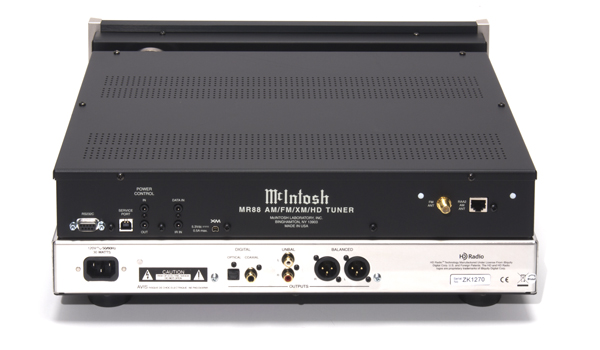
MR65B, MR71, MR74, MR78…MR88?

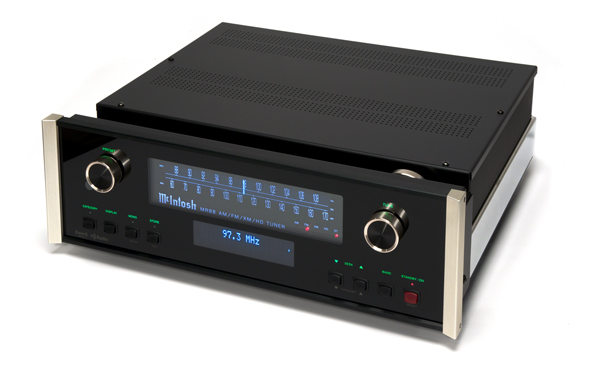
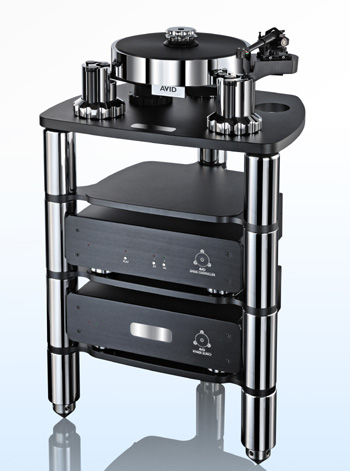
At first glance, I mistook the MR88 for a classic McIntosh model, with the stellar MR65B and MR74 coming to mind. The $4,000 unit’s cosmetics are distinctly retro. A tuning knob connected to a flywheel, a glass tuning dial, and an illuminated dial pointer reinforce the traditional McIntosh appearance. But any analog suggestions are instantly dispelled upon power up: A window displays station frequency, shows station call letters, and scrolls RBDS text when the unit is switched on.

The MR88 is basically an all-digital DSP device that uses every manner of technological wizardry to deliver terrestrial or satellite signals in crystal clear, noise-free fashion. It even has an spdif digital out that can be sent to your favorite DAC, via a coax or Toslink cable. Various other provisions make the MR88 a thoroughly modern, future-proof component. An RS232 port is at the ready for communicating with an external control device; a service port allows for firmware upgrades; an IR input, power control input, and output for receiving and sending trigger signals to and from other McIntosh components round out the prudent touches.

Master of the Frequency Domains

Once installed and warmed up, the MR88 was put through its paces as an analog-only tuner. A default receiving mode will automatically select the HD feed from many stations, but setting it to receive the non-HD signal is easy. I connected the unit to my preamp using the greatly appreciated balanced outputs; an outdoor antenna was connected via an F-connector located on the back of the tuner.

While my standby Kenwood KT-8005 grabs about 15 stations with a strong low-noise and low-distortion signal, the MR88 claimed 18. A local jazz station, KMHD, came in strong and clear, as did KQAC, the local classical station. Both provided many hours of pleasurable listening through the MR88. Its ability to throw a convincingly deep and wide soundstage fooled more than a few listeners into thinking a CD was playing. However, the tuner’s greatest strength lies elsewhere.

Switching to back the default Auto receiving mode, the listener will hear a blending of the analog and digital signals that provides the best sound quality. Stations with HD broadcasting capability come in with noise-free clarity. The user also gets a much wider bandwidth with HD. Compared to the analog signals, bass extension goes lower and high frequencies extend further. iBiquity Digital Corp., the purveyor of HD technology, touts the sound as CD quality. A slight exaggeration, as the signal is basically an audio compression codec combined with an enhancer called SBR (spectral band replication). The latter replicates higher frequency content by transposing harmonics up from the lower and mid-frequencies at the decoder. Theoretically, SBR is based on the principle that the psychoacoustic part of the human brain tends to analyze higher frequencies with less accuracy, thus any harmonic phenomena associated with the spectral band replication process needs only be accurate in a perceptual sense, and not technically or mathematically exact.

Such myriad handling of the signal yields a slightly artificial aspect to the sound that owes to the nature of the format, not the MR88. Purist audiophiles might not fully endorse the sound, but average listeners should be quite pleased, especially considering the added content currently available on HD. As you move up and down the dial with the handy remote, you can hear the tuner first grab the analog signal and then switch over to the HD broadcast. Once the transfer occurs, one instantly perceives the increase in clarity and bandwidth. Moreover, there’s a dramatic reduction of noise on marginal signals. Employing this mode, the number of listenable stations in my area rose to 35 due to the HD2 and HD3 broadcasts.

AM, XM: The MR88 Does It All

Fans of Howard Stern and Major League Baseball broadcasts, rejoice. The MR88 is also XM Satellite Radio enabled, further increasing the content options and variety. As with AM and FM, the MR88 allows users to program up to 20 preset XM channels.

Want more? The MR88 also does wonders with the AM band. News, weather, talk, and sports are here for the taking. And AM reception quality is no afterthought. An innovative AM antenna deemed the RAA2 connects to the tuner via 20 feet of network cable, enabling optimum antenna positioning and mounting. Aficionados will recognize the approach as a far cry from foldout ferrite rods, ubiquitous on the back panels of most old-school tuners.
Speaking of the old school, adding more digital to the mix often yielded poorer sonics. While I experimented by using the digital out to my DAC, and comparing the sound quality with the balanced analog out signal, results were mixed. The most satisfying overall sound was obtained through the analog output stage.

Can streaming audio on the Internet replicate what the MR88 accomplishes? Some might be tempted to think so. But the MR88 is a different animal. From the comfort of a sofa, you can enjoy favorite FM broadcasts, listen to HD Radio content, dive into XM Radio, and get the weather report without moving so much as the remote control.
Indeed, the MR88 is a substantial audio component that’s steeped in McIntosh tradition. Sturdily built with a giant power supply, great fit and finish, wonderful looks, and excellent performance, it offers a thoroughly modern and forward-looking take on the traditional AM/FM tuner.

MSRP: $4,000

McIntosh Laboratory, Inc.
2 Chambers St.
Binghamton, NY 13903-2699
(800) 538-6576
mcintoshlabs.com

Avid’s Anniversary Turntable

Avid HiFi, clearly on a roll after releasing their stellar Pulsare phono stage (watch for the review here, shortly) has topped their line of turntables with the Limited Edition Anniversary model, of which only 10 will be made, in celebration of their 10th anniversary.
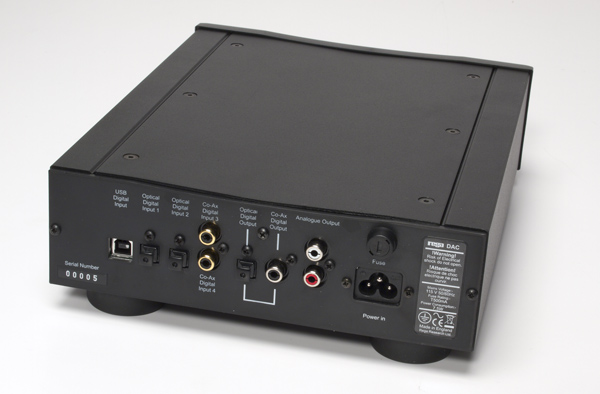
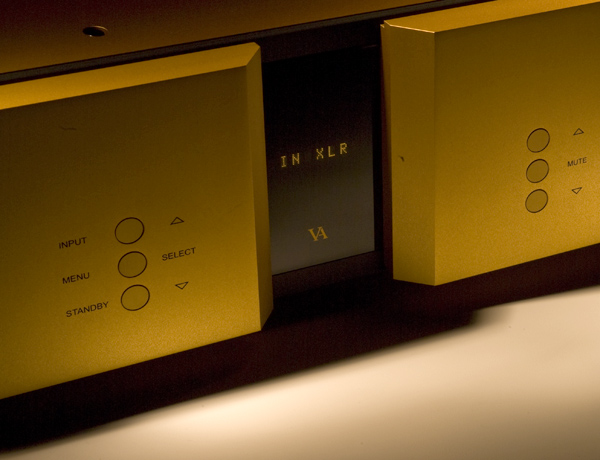
This table is a step beyond their Reference SP and comes with a dedicated stand that will hold the table, the Reference SP power supply (now split into two separate enclosures) and a shelf for a phono stage. The cost is £20,000. It looks to be a massive setup, that should be the highlight of any analog lovers system. I’ll have a full report when I visit the AVID factory in February.

http://www.avidhifi.co.uk/turntable_anniversary.htm

Nerd alert! It’s time for CES again…

Now that we’ve all had a bit of holiday cheer, it’s time to head to Las Vegas for the mecca of the electronics world – CES. While TONE will be concentrating on the high performance audio at the Venetian, with the launch of TONEPhoto on the horizon, we will be spending some time at the main hall as well.

As always, CES is a chance to catch up with our industry partners, readers and check out the latest and greatest goodies. We will have a report on CES and next weeks’ NAMM show in the February issue of TONEAudio, so stay tuned.

Hope to see you there!

* Photo courtesy of Liquid Image….

TONEAudio Magazine Issue 34

Features

Gregg Allman: Soul Survivor
By Jaan Uhelszki

Jefferson Airplane: Remembered and Recorded
By Ben Fong-Torres and Jeff Dorgay

Budget Gear: The Furutech GT40
By Jerold O’Brien

Journeyman Audiophile: The Cary Xciter DAC
By Rich Kent

Old School The Conrad-Johnson MV 50
By Jeff Dorgay

Dealers That Mean Business Audio High in Mountain View, California
By Jeff Dorgay

Tone Style

TASCAM DR-2d Great digital portable

Ralph Lauren Sporting Collection

Samsung’s Galaxy Tablet: The Tablet Wars Commence

The iPlunge: Boost your iPod

The Beer Snob Three fresh brews for the holiday season

Music

Live Music: Grinderman, The Raincoats, Beatallica and The Black Crowes

Current Releases:
Fresh Releases in the Pop/Rock World
By the TONE Staff

Audiophile Pressings
By Jeff Dorgay

Recording of Special Merit
Two New Recordings From Exhibit Records
By Jeff Dorgay

Italian Alternatives
Six to Explore
By Anne Farnsworth

Downloads
A Classic from Keith Jarrett, The latest from Brian Eno, and a remix from Gwyneth Herbert

Previews

Conrad Johnson PH3SE Preamp

Nagra MSA Power Amplifier

Simaudio Moon i-700 Integrated

Reviews

First Watt J2 Power Amplifier
By Steve Guttenberg

The Audeze LCD-2 Phones
By Jeff Dorgay

Chord’s QBD76 DAC
By Jeff Dorgay

EXCLUSIVE: The New Estelon XA Speakers
By Jeff Dorgay

PMC DB1i Speakers
By Todd Sageser

Ultimate Versatility: The McIntosh C500 Control Center
By Jeff Dorgay

EXCLUSIVE: First US Review, The New REGA DAC
By Jeff Dorgay
SLUMMIN’
Classics on the cheap

The REGA DAC is here!

Early this morning, the UPS Grrrl dropped off the highly anticipated DAC from REGA.

To some audiophiles, another DAC is certainly no big deal, but to those familiar with REGA, you know that Roy Gandy gets things done at his own pace and only when he is happy with the results. This new DAC uses the Wolfson chipset (similar to what is used in their Apollo and Saturn CD players) and a buffer circuit similar to the one employed in their flagship Isis CD player. As with their other digital products it is substantial, both from a physical standpoint (this little box is very hefty when you pick it up!) and the amount of functionality it offers. The DAC has a pair of RCA SPDIF digital inputs, a pair of optical digital inputs and a USB digital input.

Rear view

While the REGA DAC accepts digital source material in 16, 20 or 24 bit word length, at sample rates from 32kHz all the way up to 192kHz, it does not upsample. Though a point of argument for some, the implementation is good here and initial listening with high res files has been pleasing. The only potential turnoff for computer audio users is that the USB input will not play high resolution files. Similar to Simaudio and a few other manufacturers, they have chosen to concentrate their effort on the SPDIF inputs for now as a way to get high resolution digital files into their DAC.

Another very intriguing function offered with the REGA DAC is its ability to choose between five different digital filters, with one of them an apodizing type. This will drive you crazy or lead to better digital playback, so I’ll leave the end users to sort this one out. Either way, I think it’s a nice touch to give the user the option.

A full review is under way and will be included in our last issue of the year, due out right at Christmas time. For our United States readers, the REGA DAC should start arriving in your dealers next week. If you’ve been considering adding a DAC to your system, I highly suggest an audition. I think you will be pleased at what REGA has to offer at a very reasonable price of $999. Stay tuned for more information.

http://www.rega.co.uk

TONEAudio Magazine Issue 33

Features

Holiday Gift Guide

The 2010 Exceptional Value Awards

The 2010 Product of the Year Awards

The 2010 Publisher’s Choice Awards

2010’s Best Rock & Pop Albums
By Bob Gendron

Recordings of the Year
By Jeff Dorgay

Reviews

The dCS Paganini Stack
By Jeff Dorgay

The Grado Statement 1 Cartridge
By Jeff Dorgay

The ARC REF 2 Phono Stage with a visit to ARC
By Jeff Dorgay

Vitus Audio SS -050 Amplifier

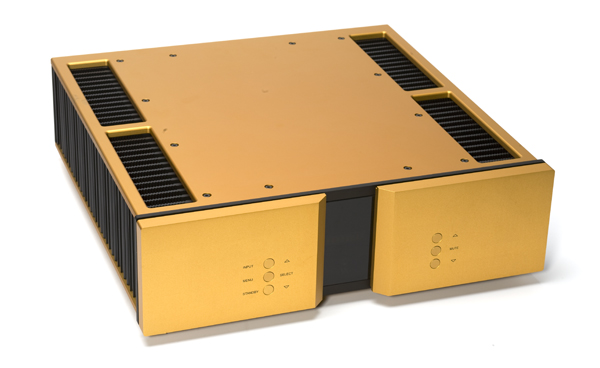
vitus-openingThe Vitus Audio SS-050 is a very high performance, yet minimalist integrated amplifier. Tipping the upper end of the price scale at $26,500, this is another destination product, and with one XLR and one RCA input, must be made part of a system that has only two sources. I imagine that this should pose no problem for the average person who has an analog source and a digital source.
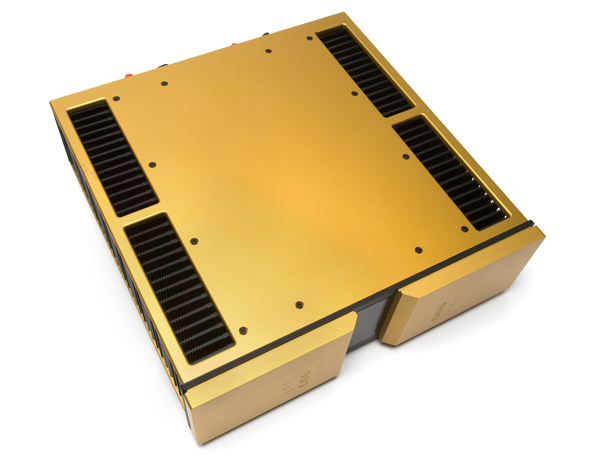
Make sure your rack is adequately braced, as the SS-050 weighs 90 pounds. It’s a very compact yet dense piece of hardware with a huge power supply and some fairly massive heatsinks. Identical in appearance to the SS-010 amplifier, which produces 25 watts per channel in pure class-A mode, the SS-050 only remains class-A for the first few watts, going on to ultimately produce 100 watts per channel. Judging by the warmth of the sound and touching the outer case, it might be biased closer to class A than designer Hans Ole Vitus cares to admit.

An equal, if not higher amount of attention to detail is paid on the inside of the amplifier as well. Starting with the highest quality parts is only the beginning. Every resistor, capacitor and transistor is hand sorted and matched to assure only the best of the best exist in the Vitus amplifier. When I talked to Hans-Ole Vitus at this years CES show, he smiled and said, “You should see what we don’t use!”

Setup

With two inputs and an IEC power cord socket, it doesn’t get easier than this. I made it a point to feed the SS-050 with a dedicated 20 amp circuit, while the Naim CD555 was connected to a different AC line and the Nagra VPS/VFS phono stage remained battery powered. As the Nagra sounds best through its balanced outputs and the Naim does not have balanced outputs, these two high quality sources were a perfect match of the SS-050.

vitus-overheadAs with any solid-state amplifier that has been in transit for some time, the SS-050 took about 48 hours to open up, stabilize and sound it’s best, though it was more than pleasant out of the shipping carton. After spending a few weeks with the amplifier and going through regular power cycles, it takes about 30 minutes to fully stabilize in normal play.
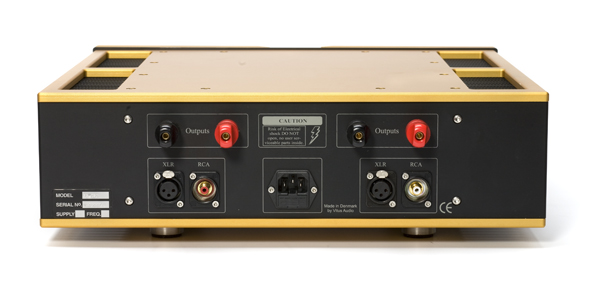
The high current delivery of the SS-050 was a perfect match for my MartinLogan CLX speakers, however the lack of a preamplifier output, did not allow me to use my Gotham subwoofer with the SS-050, ultimately eliminating the CLX or the YG Acoustics Anat II’s that also required a high level output to drive its powered subwoofers. Keep this in mind if you have this requirement; if you love the Vitus sound, you will need one of their separate preamp/power amp combinations for this application.

Fortunately, the GamuT S-7’s were in for review at the time and these proved to be a fantastic match with the Vitus amplifier, as did the Harbeth Monitor 40.1’s. Those with a high performance full range loudspeaker will enjoy the powerful delivery the SS-050 offers. I’ve never heard the big Harbeth’s sound better than they did with the Vitus amplifier.

The sound

The highest strength of the SS-050 is the inner detail and lack of grain it presents. While some might prefer the somewhat dreamier, more romantic presentation of the SS-010 monoblocks, they are only 25 watts of pure Class-A power, somewhat more limiting in speaker options. 100 watts per channel just offers more opportunity to mate the SS-050 with different speakers.

This amplifier is solidly on the top of the mountain with the worlds best; one of a small handful that sounds like neither solid state nor vacuum tubes. On one level, it has no sound at all; merely presenting the music it’s fed in a completely honest way. Of course, the downside to all this honesty is much will be required of your source components.

vitus-rear viewI just happened to be listening to the complete set of the current AC/DC remasters on vinyl, so the first track I played on the Vitus based system was “Live Wire” from the High Voltage album. The guitar lead-in on this piece instantly struck me, as I could hear the speakers in whatever cabinet Angus Young was using to record with rattle, much clearer than ever before. Next up was “Night Prowler” from Highway to Hell. Again, I was impressed with not only the weight, but also the subtle texture and roundness of the opening bass riffs in this track. When I turned this up, perhaps too loud, the placement of the snare drum remained rock solid, just in front of the soundstage on the right side, and did not fall back into the mix. However, when I went back to my early stamper originals, it was plainly obvious that these records were produced from digital safety masters; another layer of detail was now available.
While AC/DC can’t be the ultimate judge of fidelity, it does reveal whether an amplifier has grunt fairly quickly. If an amplifier can’t really rock, what’s the point? I suppose for those of you in the audience that aren’t metal heads, a similar amount of stimulation would be necessary from your favorite large orchestral piece from Mahler or perhaps Shostakovich.

I’ve been in somewhat of a Mussorgsky mood lately, and one of my favorite demo tracks is “The Warrior Captain” performed by the Netherlands Wind Ensemble. While starting out very delicately, when the thunderous solo vocal enters the mix, it is tough for less refined amplifiers to retain the airiness of the wind instruments, while keeping the vocals out in front. The SS-050 passed this test with ease.

So how about some Monkees in the midst of all this? Much as I love the Monkees, most of their music is poorly recorded, but this is always a great test to see how well a very resolving piece of gear does with a terrible recording. I must say that the Rhino remaster of the Monkees’ Headquarters never sounded better. Thanks to all the inner detail of the Vitus amplifier, I heard some great overdubs on “The Girl That I Knew Somewhere.” The point here is that while the SS-050 possesses a high level of resolution, it will not be limited to the 20 “audiophile pressings” in your collection to give its all. Of course, the best recordings will be spectacular, but even the average recordings in your collection will reveal more than you’ve heard before. A tough challenge to meet, indeed.

Though it is a somewhat worn out audiophile cliché, that is often overused, the SS-050 is truly an amplifier that adds or subtracts nothing (or at least very precious little) to the recording; it just pulls everything that is available out so you can hear it. If you’ve ever compared the sound of a very dirty record, to one that you’ve just spent time meticulously cleaning, this is the effect the SS-050 will have on your music collection.

High frequencies are delicately rendered, without a hint of graininess. Overtones sound clean, with cymbals and percussion sounding correct without being overdone. Acoustic bass again has the correct amount of natural resonance without being loose and whumpy, yet without making the mistake of being overdamped. This is a trap that many solid-state amplifiers make and while this may appeal to a segment of audiophilia that is looking for really tight bass, is not what an upright bass sounds like in a room. All the way through the frequency spectrum, the SS-050 always retains a delicacy that many think solid state is not capable of producing, and was only reserved for vacuum tubes.vitus-front 34

The Bottom Line

The only limitations of the Vitus Audio SS-050 amplifier are in terms of flexibility. If you require more than two inputs and need to integrate a powered subwoofer into your system, you will have to pass on this amplifier. However it’s sound quality is without peer. I put the SS-050 up at the pinnacle of solid-state amplifier design that in many ways surpasses the best vacuum tube designs I’ve heard, yet having none of the inconvenience associated with tubes. This amplifier will sound just as good 25 years from now as it does today. And when you consider that over that period of time, you will have bought about 10 sets of 6550 output tubes, the SS-050 becomes a much more practical investment.

If you are looking for the anchor to an ultimately minimalist system, this amplifier should be at the top of your list. And it is available in silver and black as well as the bright gold you see here.

The Vitus Audio SS-050 integrated amplifier
MSRP: $26,500
www.vitusaudio.com

Peripherals

Digital Source Naim CD555/PS555

Analog Source Nagra VPS/VFS

Turntable Spiral Groove SG-2/Triplanar/Dynavector XV-1s
Cable Shunyata Aurora interconnects, Shunyata Stratos SP speaker cable

Power Running Springs Dmitri and Maxim power conditioners, RSA Mongoose power cords

Speakers MartinLogan CLX, Harbeth Monitor 40.1, GamuT S-7

Octave MRE 130 Monoblocks Keeping the Studio Warm!

The Octave MRE 130’s arrived straight from the Rocky Mountain Audio Fest and they’ve been not only keeping the TONEAudio studio warm, but providing some great sound! Their 130 watts per channel of KT88 power has so far proven to drive all of the speakers we have on hand with ease.

We reviewed the Octave V40SE integrated amplifier earlier this year and observed a perfect balance of vacuum tube virtures; an open airy sound, yet powerful and controlled. Like the V40SE, the MRE 130’s offer up a weighty, dynamic powerful performance and do not suffer the tonal colorations that some amplifiers possess.

The MRE 130’s have an MSRP of $18,000 per pair. We will have a full review shortly.

For now, you can find out more about the MRE 130 here.

Estelon Speakers have arrived – update!

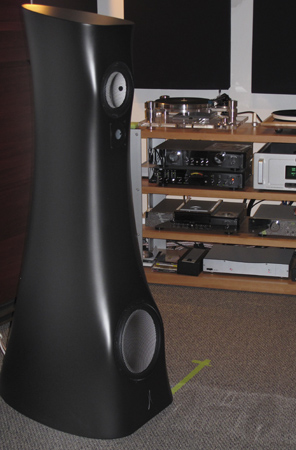
While there were a lot of familiar faces at this year’s Rocky Mountain Audio Fest, these gorgeous matte black speakers from Estelon took me by surprise. Haven’t heard of them? Don’t feel bad, no one has, but company founder Alfred Vassilkov has been the brain trust behind numerous other loudspeaker and crossover designs in Europe for over 25 years. Now he brings this wealth of knowledge to a fresh design of his own.

As you can see from the shape, this is definitely a new twist on speaker design. A scientist, first and foremost, Vassilkov has addressed many of the issues that have plagued past designs and has even started with a proprietary crushed marble based composite material for the enclosures you see here.

And the sound? We’ll know more next week when Alfred arrives to fine tune the speakers in my listening room, but he was getting great sound at the show, and that’s no small feat. In the relatively small rooms of the RMAF, partnered with Lamm gear, Kubala-Sosna cable and Running Springs power conditioning, their setup had a very open feel, with plenty of weight on the bottom and a clarity that I’ve never heard with ceramic drivers before.

So stay tuned, there will be a full review in the December 23 issue of TONEAudio…

estelon 1UPDATE: Nov. 31

While everyone else in the neighborhood was out hunting for Halloween candy, I had a treat of my own. Alfred and Bill from Estelon were here optimizing speaker placement here in our studio. I’ll buy my own chocolate bars. The hard work paid off; after removing a bit of room treatments, and some careful positioning the speakers disappear in the room perfectly. Now that they have been playing continuously for the last five days all is well. I look forward to spending the next two months listening intently.

TONEAudio Magazine Issue 32

Features

Iggy Pop Steals the Show at New York’s ATP Festival
By Bob Gendron

Budget Gear: The Virtue Audio Piano M1 CD Player
By Jeff Dorgay

Journeyman Audiophile: The Consonance XBB Turntable
By Jeff Dorgay

Old School Slaying Nakamichi’s Dragon
By Jeff Dorgay

Tone Style

The Batmobile A perfect copy of the original

Polk Audio’s Atrium Speakers: Take great sound outside

The Aida Case for the iPad: More like a proper laptop now

The Leica X1: A lot of M9 inside

iPod Nano: Mighty mite!

The iPort CM-IW2000: Mount your iPad to the wall in style

The Dyson DC31 Mini Vac

NuVision’s 55″ FX5 Superslim LCD Television

Music

Live Music: Bob Gendron Braves the Crowd at ATP, Todd Rundgren gives his fans a rare treat and the Hold Steady

Current Releases:
Fresh Releases in the Pop/Rock World
By the TONE Staff

Audiophile Pressings
By Jeff Dorgay and Bob Gendron

Club Mix
New release exploration!
By Scott Tetzlaff

Recording of Special Merit
Bob Dylan Bootlegs, Vol. 9
By Bob Gendron

Previews

Audio Research PH6 Phono Preamp

Octave Phono Module

Octave Phono Module

Reviews

Gallo Acoustics Nuclues Reference 3.5
By Steve Guttenberg

B&W’s first headphones..
By Richard Colburn

Top of the Mountain: The GamuT S-9 Speakers
By Jeff Dorgay

Loving the Loricraft A tale of another RCM
By Jeff Dorgay

Dali Lektor2 Speakers
By Marc Marcantonio

Massive and Precise: The Acoustic Signature Analog One Mk. III
By Jeff Dorgay

SLUMMIN’
Classics on the cheap

Exclusive-The Rega RP1

RP1-1Rega met the budget turntable challenge in 2006 with their entry-level P1 turntable, offering the budding vinyl enthusiast a way to join the Rega camp with a brand new table and Ortofon OM5e cartridge for only $400. While Rega has always been one of the best values going in turntables, inflation and world currency markets have taken their toll everywhere. I remember purchasing my first Planar 3 turntable (back in 1979, without cartridge) for $389. Those were the days.
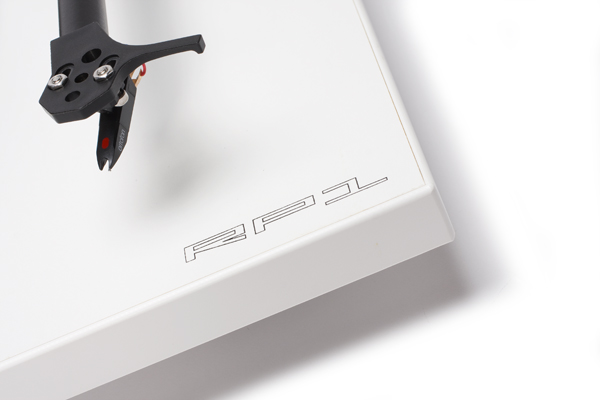
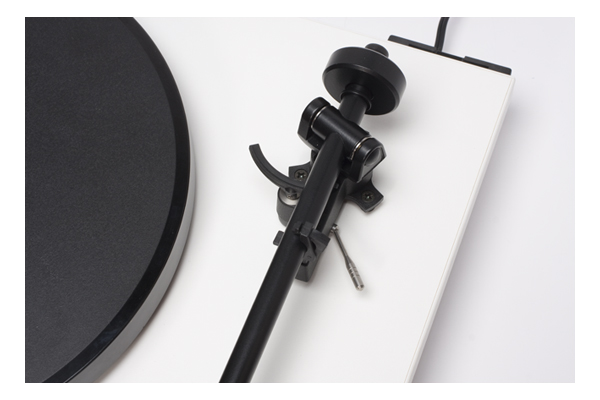
The P1 was a strong seller, though the table did draw criticism for its MDF platter, which did not yield the best wow and flutter specs. Many P1 owners spent an additional $65 and quickly upgraded to the glass platter that used to come on the older versions of the P2, with a definite improvement.

Rega founder Roy Gandy is a mechanical engineer to the core and is always looking for a way to improve his products. When I visited the Rega factory last summer and again this spring, Gandy made it a point to tell me how much thought goes into his entry-level turntable. (Though he wasn’t spilling the beans about the RP1 in March…) “Every fifty cents that you spend at this price point is a challenge, and it’s always a great exercise to see just how much performance can be incorporated into the final design.”

Enter the RP1 four years later than the introduction of P1 and with only a $50 increase in MSRP; this table is a massive improvement. In all aspects the RP1 is now on par with the P2, but more about that as we continue… Now I know why Roy Gandy’s Acura NSX has a heavy layer of dust on it, he’s been spending a lot of late nights in the lab.

Keeping it simple

Rega has always stood for simplicity, but in recent years, they’ve added some stylish finishes to their turntable range, especially the P3 models that are available in a rainbow of colors. For the RP1, they stripped it to the bone, and have three finishes available; white, grey and platinum, which looks like white with just a tinge of grey mixed in.

There is no external power supply like the P3-24, which allows the turntable speed to be changed at the push of a button. If you want to spin 45’s, you’ll have to take the platter off and move the belt manually to the other groove on the pulley, just like in the old days. The new RB101 tonearm uses a three point mounting platform, just like the rest of the Rega tonearm range, and utilizes composite materials as in the RB301 arm.
RP1-2
Unbox and go… almost

There’s no easier turntable on Earth to set up than the RP1. It comes with the cartridge already mounted. Breaking out the Clearaudio test record and portable strobe showed the speed to be spot on at 33 r.p.m. The OM5e has a tracking force range of 1.5-2.0 grams with a suggested tracking force of 1.75 grams. If you slide the counterweight all the way up to the ridge at the back of the tonearm, you will have a tracking force of 1.8 grams. Bias/antiskate was left at the factory setting of just over one gram and I was spinning my first record in about five minutes. This is the perfect table for vinyl newcomers; anyone can set it up.

In my hurry to start spinning records I did notice some inner groove distortion on the first few records I played. Checking the cartridge setup with MoFi’s Geo Disc revealed that the alignment was indeed off a tiny bit. I’ll chalk that up to being bounced around on a variety of carriers between the UK and my doorstep. However, a quick adjustment was all it took to put things right and five minutes later I was back to Neil Young.

The sound and some comparisons

Having owned every turntable Rega has produced so far except for the P7, the lineage was apparent as I played the first track. The RP1 has a substantial helping of the “Rega Sound”, with speedy attack, and a clean midrange. I had saved some 24/96 digital samples of playback from the P1 (courtesy of my Nagra LB digital recorder) and there was no mistake that the RP1 is a major step up. Listening to samples of both turntables playing selections from The Netherlands Wind Ensemble’s Beethoven Wind Music, the dramatic reduction in wow and flutter in the new table was instantly apparent. Flute and oboe had a woodier, more solid texture to them. In case you don’t have a copy of this record around, a more accessible selection would be Jethro Tull’s “Song for Jeffrey” from their Living In The Past album. You should be able to draw the same conclusion with Ian Anderson’s flute playing.

RP1-3The combination of an improved platter and bearing are a big hit on the RP1. Listening to samples from both tables on the MoFi edition of Genesis’ Trick of the Tail had the RP1 again trumping the P1 in bass weight on “Squonk” and HF definition and delicacy on the title track. Cymbals definitely had a smoother decay on the RP1 as well.
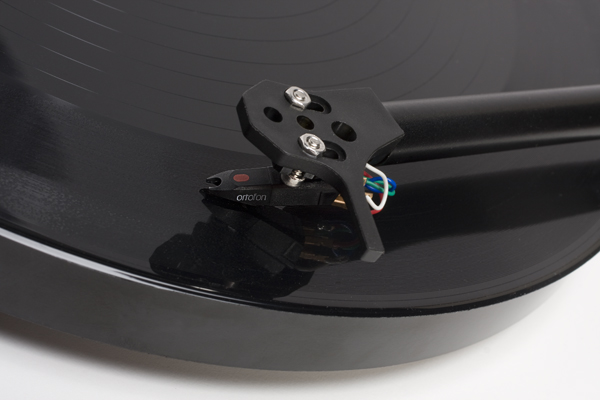

Borrowing a friend’s P2 with an identical OM5e installed, allowed for a real-time comparison. The ARC REF Phono 2’s identical inputs, gain and loading could be set identically for both tables allowing a rapid switch between them, minimizing aural memory losses. I was also able to compare the RP1 with the standard platter and the glass platter of the P2. Since Rega is discontinuing the P1 and the P2 in favor of the RP1, feeling that it provides comparable performance to the P2, I must concur with their findings. Even on my reference system, featuring a $12,000 Audio Research REF Phono 2, these two tables are too close in performance to hear a difference with the supplied cartridge. I think that speaks volumes for the performance of the new RP1.

Rega has done a lot of work on their new phenolic resin platter and again, this is a success. Repeated swaps between it and a standard Rega glass platter were impossible to define, so even though your brain might be telling you that the plastic platter can’t work, it does. The familiar felt turntable mat that has been with Rega turntables since the beginning is present and accounted for on the RP1, though I suspect the new platter’s textured surface provides a better mat to platter interface than the old glass platter did on the P2 and P3.

Numerous comparisons between the new platter and the glass platter on the RP1 was inconclusive; you can spend the extra dough on a glass platter thinking you are getting an “upgrade” but I couldn’t hear it. The only area that the P2 bested the RP1 slightly was when I swapped the OM5e for the (almost $400) Denon DL-103R moving coil cartridge. I suspect this was due to the RB-251 tonearm on the P2’s tighter production tolerances than the arm on the RP1. Using a $400 cartridge with a $450 turntable may be negating the “budget” concept of the RP1 though. And remember, I was hearing a miniscule difference on a six-figure reference system.

Substituting the new Croft Micro 25 preamplifier and Series 7 amplifier currently in for review ($1,395 ea.) and a pair of the KEF XQ20 speakers ($1,995 pr.) for my reference system made for a more realistic showing of the RP1. I also spent a fair amount of time with the RP1 plugged into my Marantz 2275 receiver and JBL L-100 speakers with excellent results. In both of these systems, the difference in sound quality between the RP1 and the P2, with identical cartridges was non-existent. Those looking for a great table on a budget can feel very confident with the capabilities of the RP1. And the handful of RP1 owners that will feel the need to upgrade, spending a few extra hundred dollars on a more resolving cartridge will also be justified, the table is that good.

After extended listening sessions in three very different levels of systems, the RP1 definitely delivers a solid helping of analog magic. When comparing the Rega to the sound of the OPPO 83SE digital player, the Rega table definitely had the edge over digital playback, sounding much more open and natural.
RP1-4
A great place to start your analog journey

While plenty of budding audiophiles will argue to the ends of the Earth over the merit of the RP1 versus a few other contenders that are similarly priced, the fact is that the RP1 offers solid performance, excellent value and is a great place to start listening to vinyl. Remember, while the others are discussing minutiae, you could be spinning records, and isn’t that what it’s all about?

The Rega RP1
MSRP: $449

www.rega.co.uk (UK)
www.soundorg.com (US)

Peripherals

Croft Micro 25 preamplifier, Series 7 amplifier, KEF XQ 20 speakers, Running Springs Haley
AudioQuest Columbia interconnect and speaker cables

Great day at Conrad Johnson…

Spent the day Wednesday with Lew Johnson and Bill Conrad at the Conrad Johnson factory. It was a great time getting to see where many of the legendary amplifiers and preamplifiers I’ve owned were built and got to meet the rest of the staff as well.

But the best part of the visit was to watch my MV-50 be rebuilt with the new CJ C-1 Capacitor upgrades and have the power supply upgraded to current specs, replacing the 33 year old electrolytic capacitors with new, polypropylene capacitors. Johnson pointed out that my MV-50 “should easily last another 33 years, if not longer” thanks to the new caps.

Watch for a full report in the “Old School” section of TONEAudio in December. In the meantime, if you have an older C-J amp or preamplifier that you’d like to have upgraded, click here for details:

http://www.conradjohnson.com

MSB pushes the boundaries of USB sample rates!

MSB Technology of Aptos California announces that they have “recently achieved a milestone in computer music server performance” with the introduction of their new 384khz USB input, breaking the 192khz barrier. It works with iTunes and other players, with HDMI input in the works.

Their national sales manager, Vince Galbo says that this “makes high resolution audio future proof.”

You can hear it for yourself at the upcoming Rocky Mountain Audio Fest in Room 513. Click on the image to visit the MSB site.

Fiscally Sound in San Francisco!

aboutphotosThursday, October 28th, 2010, 7:30-9:30 pm: AudioVision San Francisco presents the 3rd installment of its Fiscally Sound Event. An evening event featuring 2 moderately priced systems which include Cardas Signal Cables , Nola Loudspeakers, Finite Elemente Isolation/Support Products, Spiral Groove & Hanss Turntables, Lyra Cartidges and Audio Research Tube Electronics .
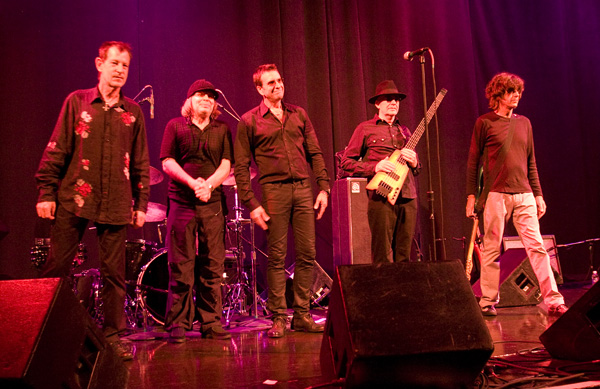
A seminar will be presented by representatives from each company. Refreshments will be served and a drawing will be held for some free goodies! Come in for a wonderful and informative evening. RSVP: (415) 614-1118 or [email protected]. AudioVision SF, 1603 Pine Street, San Francisco, CA 94109.

Please click here to view their website:

www.audiovisionsf.com

The Fixx – Indiana

Just after one of the roadies poured a glass of red wine and set it on the drum riser, The Fixx took the stage promptly at 8:00 p.m., opening the show for Todd Rundgren at the Clowes Memorial Hall in Indianapolis, Indiana on the anniversary of 9/11 to a venue that was only filled to half capacity. In these days of mostly forgettable opening acts, those that didn’t make the first part of the evening’s show missed a great performance.

Original lead singer Ty Curnin fronted the lineup of mid 80’s Fixx members Jamie West-Oram on guitar, Adam Woods on drums, Dan K. Brown on bass and Rupert Greenall on keyboards, so the audience saw the iteration of the Fixx that became a radio and MTV staple in the mid 80’s right down to Greenall’s vintage Yamaha DX-7 synthesizer.

Playing a set that lasted just over an hour, The Fixx delivered some of their biggest hits, but also treated the fans to some deeper cuts. Opening with an atmospheric version of “Deeper and Deeper”, a bonus track from the 2003 remastered version of Reach The Beach was a perfect example of this approach, which also included “Driven Out” from Calm Animals and “Fatal Shore” from the Elemental album. They even slipped in a track, “Yesterday” that while not listed in any Fixx discography, could be from their upcoming album, Something Ahead of You. British understatement at its best.

There were plenty of Fixx fans in the audience, and they were treated to a headliners performance. Brown took a robotic position on bass, barely moving throughout, but the rest of the band clearly seemed to be enjoying themselves, with fair share of nods and smiles between songs. Just before the band broke into their biggest hit, “One Thing Leads to Another”, Curnin took a gulp of wine, smiled and said, “This is still my favorite.” Finishing to a standing ovation with “Red Skies”, the band ducked backstage and came out for one more tune, “Secret Separation.”

The band has a few dates left on their current tour, so if this was one of your faves from the 80’s, you won’t be disappointed. It’s like they never left.
Fixx_2

ATP Festival coverage part two

Who needs lyrics? Instrumental bands–and the myriad ways such artists engage in dialogue without vocal support–flourished during the second day of the 2010 ATP Festival in upstate New York. But before all was said and done, two veteran noisemaking groups, Shellac and Sonic Youth, each featuring underground icons, had something to say, literally and figuratively. Here’s an hour-by-hour report. A full summary, with other insights, dozens of photos, and an in-depth take on the gathering’s atmosphere and success, will appear in Issue 32.

ATP_2-2The members of Tortoise are pushing buttons, lightly skimming drums and cymbals, and creating what could be a composition designed for playback on a hi-tech calculator. Nothing about the Chicago quintet ever changes, including its disposition, a mix of stoic and serious. Counting producers and engineers amongst its fold, Tortoise approaches jazz-rock fusion with an audio geek’s focused sensibility, the completely instrumental songs alternatively ambient and direct, fading and flowing, squealing and soothing. Jeff Parker picks out the occasional staccato passage on guitar, prompting Douglas McCombs to respond with a thicker bass line. Once a tune finishes its course, Tortoise shifts positions, exchanging seats on the drum kit or manning a second percussive stool, or picking up the mallets and preparing for a turn on the vibraphones. The band’s liquid funk, outré blues, and modulated electronics give off a pastel glow that’s not dissimilar from the purple hues of the overhead lighting. However cerebral and dependable, the experience is best ingested in small doses.

ATP_2-36:16 p.m.: Kim Gordon lounges on a couch in the main lobby. Few fans notice her, though she does take a moment to check her cell phone. She looks as if she’s ready to stroll around the block; nothing about her presence shouts “rock star.” Indeed, one of the biggest appeals of ATP is the sense that everybody–bands, press, fans–are equals. Aside from a small interview staging area, there’s nary a sign of the separation present at other major festivals. No VIP section, no overpriced cabanas, no stages named after a video-game console. Moreover, the laid-back environment and existence of the Criterion cinema further lends to a cozy, unhurried vibe one can’t even get at the Pitchfork Music Festival. The small amount of people is also a huge plus, making access simple, quick, and easy.
7:01 p.m.: Motorifik! Billed as Hallogallo, guitarist/composer Michael Rother and bassist Aaron Mullan converge in an intoxicating conversation with Sonic Youth drummer Steve Shelley. Nearly four decades ago, Rother flipped the conventions of art-rock music on its side with Neu, an influential and pioneering electronic band that bridged his native Germany’s Krautrock heritage with exotic European timbres. Neu’s impact is still felt in the work of U2, Radiohead, Wilco, and others, and while watching Rother calmly operate behind a table packed with gadgets, pedals, plugs, wires, cords, and boxes, and performing Neu material for the first time in 35 years, the importance of his band’s legacy becomes transparent. Rother’s heavily treated guitar sounds as if it is an aural laser that inhales helium gas and exhales a gorgeous array of soothing tonalities.
ATP_2-4
Seldom staring out at the enraptured crowd, the trio maintains constant eye contact with one another, the direct glances serving as communicative cues for when a groove should be switched into another gear. Shelley is a model of precision, pounding out tom-dominant beats that contrast with Rother’s processed melodies and Mullan’s slumbering bass burble. The steadily building “Hallogallo” stretches toward trance dimensions; “WeiBensee” begins as introspective film music before a heartbeat pulse creeps in and gets washed by soft ride-cymbal crashes, the arrangement doubling as a faint mist. Throughout, Rother’s frequency-shaping tunes exude a hesitant urgency and finessed poise. All the concentration pays off in the form of a tremendous marriage of traditional to modern, the songs distinguished by excellent cornering and obsessive attention to detail. Clearly, a product of German engineering. If circuitry had a human voice and soul, Neu is what it would sound like.

ATP_2-58:24 p.m.: Todd Trainer holds up a portable snare drum in front of guitarist/vocalist Steve Albini’s microphone, the drummer moving around the stage as Shellac begins an epic version of “The End of Radio.” Before the cleverly on-point song concludes, Albini reverently mentions legendary broadcasters Vin Scully, Jimmy Piersall, and Studs Terkel while chastising hate-mongering hacks such as Rush Limbaugh. Albini is in the process of delivering a somewhat impromptu monologue about the history of radio to an imagined alien civilization that sprouts up 10,000 years from now. It’s one part sincere apology and nine parts sarcastic, truthful observation of what the medium has become and how society has let it, and its content, go to waste. As Trainer walks about, flinging drumsticks at ceiling tiles and giving new meaning to “little drummer boy,” the Shellac singer wittily references Jonathan Richman’s “Roadrunner,” Eddie Money’s “Two Tickets to Paradise,” and an annoying Verizon slogan in mocking radio’s commercial excesses, crass promotions, and cliched Top Ten lists. It’s an inspired piece of rock theater, and the song bristles with the combination of seething anger, push-and-shove momentum, tightrope tension, and offbeat humor that infuse pertinent Shellac songs such as “Steady As She Goes.” In just 45 minutes, the Chicago trio verges on stealing the show away from the bigger-name headliners, thanks to immaculate, dry, crisp sonics and unbridled intensity. Albini and seemingly cuddly bassist Bob Weston (each accomplished recording engineers) play through trademark silver amps distinguished by one large knob and audiophile-grade tones. The music swerves and dives, pausing and resuming at unconventional intervals, and erupting with an intentional imbalance of murderous intent and comical relief.
ATP_2-6
When he’s not doing his best Street Fighter impression, kicking and twisting with guitar in hand, a spiteful Albini grabs the microphone stand as if he’s a bookie shaking down a delinquent gambler. He spits as he barks and shouts lyrics, the effect savage, gnarled, and ferocious. Coated with a metallic sheen, the group’s rhythms and riffs evoke the torque and sound produced when a large screw is forced into a too-small hole on a sheet of reinforced steel. Weston’s instrument gurgles and throbs like a clogged drain, and Trainer brutalizes his drums, hitting with such might that his sticks look as if they’ve been gnawed by a pit bull. It’s ugly, acidic, and caustic–and thoroughly energizing. For the uninitiated, Shellac is revelatory; for repeat listeners, the set is over much too quickly.

ATP_2-79:20 p.m.: Kelley Deal stands on her tippy-tippy toes to sing “I Am Decided” and assumes that posture throughout the Breeders’ disappointing performance. After taking extra time to set up an armada of effects pedals, keyboards, and other related gear, the Breeders treat their slot as a band practice where anything goes. Little about the quintet suggests they’ve given any thought to their material in a while. Neither Kelley nor her more famous twin sister, Kim, prove competent on guitar, and frivolous pop fare like “Bang On,” “Divine Hammer,” and “We’re Gonna Rise” amateurishly drift on by. Several tunes fumble with skeletal arrangements that share more in common with fragments than whole songs. Unconcerned and lackadaisical, Kelley appears oblivious to the band’s hollow state. Only the surf-dipped “Tipp City,” slinky early 90s hit “Cannnonball,” and a country-bluegrass rendition of “Driving on 9,” during which the Breeders are joined by a guest violinist, register any vitality. The rest is goofy, sloppy, unremarkable, and, particularly after Shellac, boring.

ATP_2-810:54 p.m.: The three guitarists in Explosions In the Sky simultaneously plunge their hands against the bodies of their instruments, swiping the strings with gusto while they all lean and jump forward at once. It looks as if the sight could be choreographed, but the display is simply an outpouring of the emotion and conviction that the wordless Austin quartet brings to its hybrid of gentle dream pop, bursting cosmic rock, and intermittent instru-metal heaviness. Seen on the stage floor in the dark, the band’s lengthy arc of flashing effects pedals looks like a miniature version of an airport runway lit up at night. Deploying sustain, delay, distortion, wah, and volume effects, the group’s ambitious compositions are true to the band’s name. Harmonically driven songs conjure images of meteor showers, lightning storms, the aurora borealis, rocket launches, and solar eclipses. Laden with texture and color, individual notes shoot and spark, the trickles of reverb coalescing and forming choruses of sound that glow like stars against a deep-black sky. The members close their eyes for a majority of the concert, losing themselves in dynamic washes of controlled feedback and moody atmospherics. Tempos thrust forward and reverse, melodies flutter, and when crescendos reach an agitated state, the eventual detonations are often cushioned by a comforting softness. Explosions In the Sky revels in the areas found between light, shade, and darkness, and the band’s widescreen sonics allow abrasive passages to seamlessly merge with quieter, wispy sequences. During climaxes, sudden depth-charge booms function as avalanches, knocking over the geometrical shapes that the band so carefully assembles. Imagine a tranquil sea progressively discharging a steady river of water that, once heated and collected, bears down on a compromised dam and leaves nothing in its wake. Extremely impressive, and wonderfully executed.

ATP_2-91:07 a.m.: Sonic Youth attacks the riotous “Death Valley ’69” with a fervent menace that suggests the band is on the run from a desert madman. Lee Ranaldo, Thurston Moore, and Kim Gordon exuberantly shout into the microphone as the psychedelic ramalama boils to a fever pitch, drummer Steve Shelley pounding out a circular romp on the drum kit as a sign that the group needs to round up the wagons. Playing with vicious energy and rampant urgency, the iconic New York art-rock quartet appears to be in an especially blustery state of mind. What’s immediately obvious is how far the band has come as accomplished musicians. The older, wiser Sonic Youth not only possesses the enviable disposition, freak-out experimentalism, and cool factor of the ensemble’s early days, it also has the effortless capacity to spin thickets of imaginative noise and patchwork quilts of combustive rhythms into discernible songs. Gordon pounces with dont-mess-with-me feminist attitude on “The Sprawl.” “Cross the Border” turns wild in a hurry, Moore sensing the excitement and jumping with childlike glee as the tune dangerously races around the bend, its manic thrash pace inspiring an active mosh pit. “Catholic Block” leaves its mark like a graffiti tagger does on a subway car. Similarly, the rush of New York’s bustling downtown– the cabs, horns, trains, pedestrians, vendors–can be heard on the sensory-blurring “Stereo Sanctity.” The band carves out plenty of space for adventurism, with “Eric’s Trip” finding Moore assailing a modulated, hollowed-out bass and “Hey Joni” whirring to groundswells of corrosive feedback. Hot-rodded guitars cough, wheeze, burp, and gurgle. Pieces of wood double as makeshift bows that are dragged across frets and necks. Alternate tunings bring forth unexpected shifts and twists. Sonic Youth handles and shapes the seemingly discordant mix like aural putty, undaunted by the possibilities and renewed by the potential of what’s to come. What a homecoming.

ATP Festival: Day one coverage…

The Scientists fizzled, Mudhoney wailed, Iggy Pop and the Stooges sheared heads, and Sleep deadened eardrums. Attracting a mix of youthful hipsters and older rock fans to New York’s rural Catskill Mountains region, the first day of 2010’s All Tomorrows Parties Festival is in the books.

Having started Friday with four bands each respectively performing one classic album onstage, the three-day gathering in upstate New York is inarguably the most intimate of the major music fests. No corporate signage exists, security consists of stagehands, attendance is capped at fewer than 3,000 people, and a majority of concertgoers remain onsite at Kutshers dilapidated hotel, a surreal setting that conjures unmistakable visions of “The Shining” and “Friday the 13th.” More on the fest’s atmosphere, vibe, music, and logistics will appear in the print version of this report in Tone 32. For now, here’s an hour-by-hour wrap-up.

6:06 p.m
.: Fans ring a swampy pond situated on the hotel’s grounds. Sitting, smoking, and drinking, the sight is akin to a camping trip that doesn’t involve any outdoor activities other than playing cards and comparing notes on favorite bands. Judging from the relaxed vibe, one would never be able to guess that a rock festival was taking place. Yet there’s also something very creepy about the scene, no doubt produced by Kutshers backdrop of peeling paint, filthy windows, moldy smells, mildewed carpet, and the sense that, save for ATP, this place remains closed for the majority of the year. There’s no better location for filming a slasher film.
bob_2
7:17 p.m.: Tony Thewlis picks up a whiskey bottle and uses it as an impromptu slide for his guitar—as well as a blunt object that he smacks against the body of his instrument. The Scientists are performing their first-ever U.S. show, and as an acknowledged influence on many of Sub Pop’s early bands as well as New York’s downtown scene, expectations and curiosity levels create a buzz throughout the audience. Yet the Australian post-punk quartet fails to deliver. Devoid of personality and primarily flat, the band ignores the crowd and clings to a volley of monotonous beats. Frontman Kim Salmon occasionally shakes the microphone stand and chokes up on his vocals, coming across like a back-alley predator sniping at innocent passersby. Steeped in rustling reverb, tough swamp-country tones, and barbed-wire rolls of slash-and-burn guitar notes, the Scientists generate a downward spiral of cacophony that yields a rumbling grind but feels entirely one-dimensional. Without a word, the group allows Blood Red River to take its course, and while its impact on musicians such as Jon Spencer is clear, the lack of elasticity and purpose convey that the States could’ve waited another 30 years for the Scientists’ debut.
bob_3
7:58 p.m.: Steve Turner isn’t even a minute into “Chain That Door” and he’s already busted a guitar string. No matter. Perfection doesn’t belong anywhere near Mudhoney’s joyous spree of ramshackle garage rock, swiveling rhythms, or gutbucket blues in reverse. Turner and fellow guitarist Mark Arm give everyone ample opportunity to dance, and it would’ve been nice if somebody would have thought ahead and brought a few lampshades to the party. Every song from the band’s landmark 1990 Superfuzz Bigmuff Plus Early Singles sounds as vibrant as it did two decades ago. “Sweet Young Thing Ain’t Sweet No More” moans, groans, and growls as Arm spouts off about a girl in transition from being a wide-eyed child to a realistic teen, with the consequences of liquor, drugs, and late-night soirees greeting her as she leans over a toilet bowl. “Touch Me I’m Sick” rages with insistence and festers like an itchy scab that doesn’t quit bleeding once it’s picked. Turner’s slide playing and flanged notes contribute to the zany shimmy on uptempo fare and spray beer-soaked grime onto slower material such as “Mudride,” which finishes in a heap of feverish noise thanks to wah-wah pedal effects that function as the blasts from a sci-fi ray gun.

bob_4The provocative “Halloween” injects filthy sludge by way of syringe before Arm, preparing for his close-up, deftly moves out of the way of an out-of-control crowd surfer that nearly kicks him in the face. The band plays on as if it’s an everyday occurrence. “In and Out of Grace” captures Mudhoney’s knack for driving melodies, the song wrestling with itself until it gives way to a brief Dan Peters drum break that’s straight out of a classic surf song. Arm no longer yelps as loudly as he once did, but there’s nothing wrong with his attitude or wail—or their ability to convey frustration, desperation, and dissatisfaction with a knowing wink. Witty humor underlines nearly every tune, with “You Got It (Keep It Out of My Face)” emphatic albeit slackjawed and “If I Think” jeering at the leftover residue from an emotional breakup. Nothing that another drink won’t solve. Point taken.

bob_59:20 p.m.: Iggy Pop lands onstage as if he’s just been shot out of a cannon. James Williamson batters his guitar, Mike Watt throttles the bass, and the Stooges charge into Raw Power with manic delight. At 63, the animated Pop seems more animal than human, his sinewy body riddled with grainy lines that resemble those found on a cut of flank steak. He sways his hips, punches imaginary foes, and enthusiastically dives at the feet of his mates, getting right up in the faces of the fans in the front rows that egg him on to escalate his wild antics. Pop responds by writhing and flailing, throwing microphone stands, pushing speaker monitors into the P.A. system (an action that causes nervousness amongst the stagehands attempting to re-steady the speakers), jumping into the crowd, and yelling for his band to keep up. Watt, Williamson, and company are more than up to task. From a crouched stance, Watt watches the entire spectacle with a sense of invested intensity, much like an overzealous football coach barking at his team to annihilate the opponent. Williamson is all business, manhandling his guitar and reeling off searing solos that further spike Pop’s adrenaline. Steve MacKay remains off to the side, yet his blaring saxophone fuels the music’s free-jazz irreverence. “Search and Destroy,” “Your Pretty Face Is Going to Hell,” and “Penetration” are pure unadulterated kicks to the stomach and uppercuts to the head. The explosions of unfettered volume, storming violence, and pummeling riffs are as inspiring as they are threatening. “Gimme Danger” bristles with deadly sensuality, a characteristic epitomized by Pop’s physical movements and primal shrieks. He invites “freaks” and “spazzers” up onstage for a chaotic “Shake Appeal,” yet this communal showing is topped by “I Got a Right,” during which the iconic singer shouts “Do you feel it?” and demands an answer. Anyone within the premises that doesn’t feel the passionate fury that the Stooges are throwing down isn’t alive.

bob_6A harsh, demanding “I Wanna Be Your Dog” finds Pop wrapping the microphone cord around his neck while his cohorts turn the pounding music into an all-out blitzkrieg. The sonic torrent pushes the personalized “Open Up and Bleed” to the limits until everything threatens to collapse. Lights go up but the Stooges aren’t done. “Funhouse” swaggers with big-band R&B inertia and the closing “No Fun” wallops the senses, hitting hard and aggressively before sending Pop off with a huge smile after he takes one last tumble over the hands of a sweaty crowd that’s eager to give him his much-deserved victory lap. The bar for the remainder of the weekend is set extremely high. Will ATP 2010 be like Pitchfork 2009, when the Jesus Lizard performed on the first night and rendered the rest of the festival light by comparison? Bet on it.

bob_711:21 p.m.: How does a band follow the Stooges? If you’re Matt Pike, you slow down the pace, up the decibel level, and utilize volume as a mesmerizing narcotic. Far removed from both the style and presence of the Stooges, Sleep captivates with almost unimaginable amounts of heaviness. The reunited stoner metal trio’s foundation-shaking riffs and bowel-moving low-end thunder literally move the air in the room to the extent that anyone within the premises can feel the hairs on their arm moving from the vibrations. Dry ice fog and dense lighting shroud the band, whose psychedelic doom renders any vocals inaudible. This is all about the art of the drone and the dirge, and the committed virtuosity of the heavily tattooed guitar god Pike, who, with one swipe of his hand, unleashes a distorted chord that seems to hover for days. While playing Holy Mountain, Sleep treads as if scaling a glacier, taking its time, refusing to go fast, and steadily climbing up its way to the top. All that seems to be missing is the gong. Distinguished by titanic grooves, tectonic tension, and perception-changing feedback, the down-tuned thunder of overdriven sonic mulch such as “The Druid” and “Inside the Sun” appear to unfold in slow motion, coming into existence much like a fissure spits out lava on the ocean floor, whereby the presence of water distorts the rapidity at which the liquid is actually being released. Indeed, Sleep is playing in real time, and it’s this altered sense of reality that makes the group’s brand of sonic hypnotism and monolithic heaviness all the more impressive. Positively transfixing—and quite possibly the loudest show you’ll ever experience.
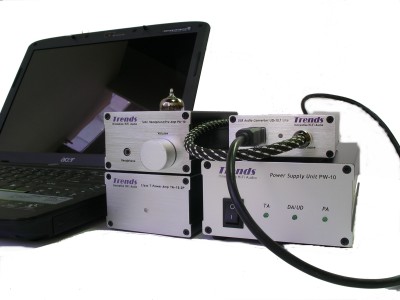
TONEAudio’s coverage of the ATP festival

Music editor Bob Gendron and I are here in upstate New York at Kutsher’s Country Club, covering the ATP (All Tomorrows Parties) Music Festival. Scroll down to the On Tour section or click here to read our coverage of Friday night’s bands: The Scientists, Mudhoney, Sleep and of course, Iggy Pop and the Stooges.

More to follow in the next day or so, along with a full feature in issue #32.

Off to ATP!

Music Editor Bob Gendron and I are headed off to the ATP music festival at Kutsher’s Country Club in Monticello, New York this weekend, so stay tuned for commentary and lots of pictures. Iggy Pop and the Stooges will be playing Raw Power in its entirety, Sleep will be performing Holy Mountain and that’s just the beginning!

Check back for updates and if you’d like to attend the festival, there are still a few tickets available. We’ll be watching for you.

www.atpfestival.com

New Pornographers

The recent performance of the New Pornographers on their Together tour was more like a musical than just a concert performance. The nine band members treated the Canadian crowd to a healty mixture of new and old tracks with their set lasting just over two hours. Considering the high level of band/audience banter, it was more like a screening of The Rocky Horror Picture Show!

When the two opening acts (Imaad Wasif, The Dodos) were through, singer/guitarist Dan Bejar opened up the NP set with “Myriad Harbor”, well supported by Neko Case taking the female lead. The audience mobbed the stage and added enthusiastic background vocals to “Up In The Dark”, “Sing Me Spanish”, “Techno” and “Crash Years.” Fortunately for this evenings audience Case was able to make the show, as she was held up by her flight and unable to make Wedneday’s show.

The Vogue’s intimate setting, combined with the crowd’s reaction to Case’s presence made for a highly interactive evening. At one point when a half naked man on the balcony got carried away, Case nonchalantly commented, “…How is it that this man can bear his chest in public, but I cannot? …That ought to be for the beach only…” And then the band launched right back into song, unfazed.

Though the breaks during their set involved many topics of conversation, the New Pornographers performed the way they do best – with humor, theatrics and a safe choice of music – their fans favorite picks. And it didn’t hurt that they concluded with two lengthly encores of “Challengers” and “Testament to Youth in Verse.”

Chord Indigo in house!

We’ve managed to get our hands on Chord’s new Indigo DAC. Complete with wireless capability and a built in iPod dock, this looks to be one of the most versatile digital control centers available. This is a very fashion forward DAC, addressing every possible need.

Full review to follow!

Trends Audio introduces the Combo 10

Combo10Front_AThe masters of high performance miniature HiFI, Trends Audio, just released their new Combo 10 system, consisting of their UD-10.1 USB Audio Converter, PA-10 Tube Headphone Amplifier, TA10.2 Class-T Amplifier and PW-10 Power Supply as well as the required cables to assemble the system.
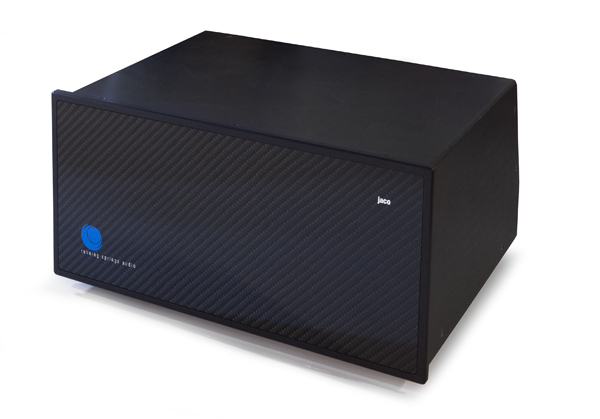
We have reviewed the amplifier and the headphone amplifier previously, with excellent results, so we look forward to bringing you a full review soon. Regardless of whether you need a great desktop system, or would like to power a pair of high-sensitivity floorstanders (they work great with our Zu Essence reference speakers!), Trends Audio is one of the best bargains in HiFi.

You can learn more at: http://www.TrendsAudio.com

TONEAudio Magazine Issue 31

Features

A Private Session With A&E’s Lynn Hoffman
By Jeff Dorgay

Budget Gear: Logitech’s Squeezebox Touch
By Rich Kent

Journeyman Audiophile: The Wadia Power DAC 151
By Jeff Dorgay

Old School Fix My Dual!
By Jerold O’Brien

Tone Style

Toronto’s Hockey Hall of Fame A Great Reason to Go North
By Bob Gendron
In Defense of 2.1 A great way to pair up a television to your 2ch. system

The Beer Snob Returns!

iPhone 4

Five Finger Footwear

The Dyson DC31 Mini Vac

Smart’s Electric Drive

Music

Live Music: The TONE Staff Covers The Scorpions, Wolf Parade and Lady GaGa

Current Releases:
Fresh Releases in the Pop/Rock World
By the TONE Staff

Audiophile Pressings
By Jeff Dorgay and Richard Colburn

Club Mix
Summertime Funk!
By Scott Tetzlaff

Recording of Special Merit
Mellencamp’s Latest, In Mono…
By Bob Gendron

Previews

The Sonus Faber Fenice

The Loricraft Record Cleaner

Reviews

The Audio Research DSi200
By Steve Guttenberg

The Goldring Legacy MC Cartridge
By Lawrence Devoe

Conrad Johnson’s TEA2 SE Phono Preamplifier
By Jacob Heilbrunn

The Shuguang 6CA7 “Treasure” Vacuum Tubes
By Jeff Dorgay

The Verity Finn Speakers
By Jerold O’Brien

The Simaudio MOON 300D and 750D DAC’s
By Jeff Dorgay

SLUMMIN’
Garage Sale Madness

More reviews on Blu-Ray Definition

For all of the TONEAudio readers that would like to read some movie reviews and perhaps some home theater/AV as well, stop by Blu-Ray Definition. We’ve decided to team up with BRD publisher, Brandon DuHamel and cross pollinate a bit. I’ll be writing a few hardware reviews and giving you my take on some of my favorite movies, new and old.

There’s a lot of great content over there, so we encourage you to take a peek! Just click here.

We revisit the new Haley and Jaco from Running Springs

Running Springs_1I’ve been using Running Springs power line conditioners with excellent luck for just over five years now and have upgraded my current reference system to their flagship products, the Dmitri (for all of my line level components) and the Maxim (for my power amplifier, on a separate 20 amp circuit), while the Haley that I purchased quite a few years ago is still working well in system two.
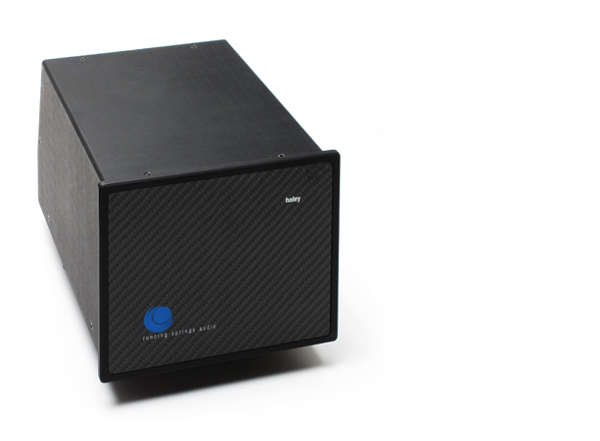
Recently, Running Springs has made a series of upgrades to their line of power conditioners, the Duke, Jaco and Haley that encompass more than the carbon fiber face plates you see on the front. The squishy, sorbothane feet have also been replaced by new, carbon fiber feet and there are a couple of carbon fiber damping plates inside as well. But the biggest improvement comes from the addition of their new platinum foil capacitors. RSA designer Dan Babineau said, “These were all simple but effective changes that make a marked improvement.”

Running Springs_2Definitely, a cost effective improvement
The cost increase over past models is about $500 on the Jaco and $400 on the Haley, and a direct comparison between the old models and new reveals the current spec units better in every way. The new models are not light years ahead of the old, but when listening side by side, the current version does present an even lower overall noise floor, with less AC grunge getting through and less resulting grain in the overall presentation. In essence, the new versions take you closer to the performance of the Dmitri and Maxim.

Current RSA customers that need to have the latest, greatest version do not need to sell their current product. The factory offers an upgrade for the earlier models; the Haley can be updated for $350 and the Jaco $500. These are factory direct upgrades (to keep the cost reasonable) and you will need to contact RSA to get a return authorization. This upgrade is not restricted to the original owner, even if yours was purchased used, the price is the same.

The best part of the upgrade is that the unit once upgraded, will not only receive a full factory check up, but an additional 3-year warranty. It’s like buying a certified pre owned used car.

Conclusion

Running Springs continues to raise the bar in power line conditioning and their latest upgrade renews their commitment to their customer base as well. Highly recommended.

Manufacturers Information

www.runningspringsaudio.com

MSRP: Haley ($1,899 – $3,499) Jaco ($3,599 – $4,599) depending on configuration

Audio High Sponsors Beethoven Series

Robert SilvermanStarting this September 9, high end audio dealer Audio High in Mountain View, California has teamed up with pianist Robert Silverman to present an eight concert series of all 32 Beethoven piano sonatas. Audio High owner, Michael Silver said that the entire series of performances will be recorded and distributed as CD’s and high resolution digital files. All proceeds from the concerts (and recordings) will be donated to the Stanford Children’s Hospital.
You can learn more about this charitable event and the concert schedule here.

Fantastic Value From Clearaudio:

full tabelIf you pose the question, “What turntable should I buy for $1,500?” on an internet forum, have your hazmat suit on and be prepared to be bombarded with insults and advice. You’ll get suggestions from all over the audio spectrum; new, used, and modded this or that. Of course, everyone knows what’s best for you and God forbid that you question any of the self-proclaimed experts should you choose not to take their advice.
All spirited debate aside, two of the top choices seem to be the Rega P5 and the VPI Scout. While I must admit my bias goes more towards the Rega than the Scout (I’ve never been a VPI fan, though I’ve owned a few), I’ve even tried the highly modded Technics SL-1200 with good results and currently have a vintage Denon direct-drive table sitting on top of one of my equipment racks that’s spinning records rather nicely, so I’d like to think I’m not too closed minded.

However, the $1,500 price point is probably the hottest part of the turntable spectrum, because it represents a healthy jump up from a strictly budget turntable; by the time you add a decent phono cartridge in the $500 – $1,500 range and a similarly priced phono preamplifier, you’ve invested a substantial amount of change to support your vinyl habit. But you will get a huge jump in performance from the budget LP spinners as well. For many, this is the sweet spot where many will stay and for good reason.

I submit a new guest to the party – the Clearaudio Concept. Priced at $1,400 without cartridge, the Concept brings a lot of Clearaudio’s engineering excellence to the table at a price that most audiophiles can afford. To sweeten the pot, Clearaudio dealers are offering a package price when you purchase the table with the Concept MM cartridge for an additional $100, or step up to the Concept MC for $2,000. These are the only two cartridges that ship from the factory preinstalled, however your friendly neighborhood Clearaudio dealer is offering a 20% discount on any Clearaudio cartridge purchased with the table.

As the Clearaudio Maestro Wood MM cartridge was already in my reference fleet of cartridges, it made perfect sense to investigate here rather than with the bottom of Clearaudio’s cartridge range. For those unfamiliar, the Maestro Wood is Clearaudio’s top moving magnet cartridge that has an MSRP of $1,000. Definitely at the top of the price range for an MM cartridge, but remember, you won’t need to have a Moving Coil preamplifier or other step-up device, so the Maestro is indeed a bargain.

Speed is easily switched between 33, 45 and 78 r.p.m. with the selector switch on the left side of the table. While you will probably want a different cartridge to accommodate your 78 collection, the Concept could easily be pressed into service as a “78 only” table at minimal cost, if you have a large collection. Definitely another plus.

Top shelf construction

The Concept is a belt drive table, featuring a DC motor that is powered by a wall wart power supply. The platter is made of the same “POM” material that is used on their Innovation tables, albeit not as thick as the Innovation platter. The tonearm looks stunningly familiar to the Schroeder arms that also use a magnetic bearing in the place of a traditional bearing. This is the debut for a new series of magnetic bearing tonearms that will begin to be featured on some of their other turntables in 2011. If this is the entry level model, I can’t wait to listen to the models further up the range.

cartIf you buy the Concept with one of the cartridge options, it will arrive with the cartridge installed and optimized at the factory, so all you will need to do is install the counterweight and set the tracking force. Be sure to hold the tonearm with one hand while installing the threaded counterweight, as it fits very snugly and could damage the arm otherwise.
The factory VTA and anti-skate settings worked perfectly for the Maestro, and setting tracking force was a snap with the Clearaudio Weight Watcher scale. A quick check of the speed with Clearaudio’s Speed Light confirmed that everything was perfect. This is another table, like the Rega’s that will have you spinning records in about 10 minutes.

The sound

The Concept has a very neutral overall sound, with a weight and openness that I’ve yet to experience at this price point. I’ve used the Maestro Wood on a number of different tables at various price points and it is one of my favorite MM carts, offering a high level of detail and punch, without being harsh.

Listening to Madeleine Peyroux’ latest release, Bare Bones on MoFi, you’ll notice that this record, like her others have somewhat of a loose, natural, whumpy, almost underdamped sound in the lower registers. Where the Scout tends to overdamp the bass and the P3 doesn’t have quite as much bass there, the Concept comes through with enough weight to reproduce this accurately. I was as impressed with the quantity as well as the quality and definition of bass that this table was able to extract from the grooves.

It’s rare that a table at this price point has enough low-level detail to really define the hall characteristics of the recording, but again the Concept passed with flying colors. Extended listening to Neil Young’s Live at Massey Hall on Classic Records, or Cream’s 2005 Royal Albert Hall performance opened up a level of three-dimensional sound that I didn’t expect.

Close up 2During a moment of temporary madness, the Maestro was swapped out for Clearaudio’s $5,500 DaVinci MC cartridge, a master of detail retrieval. Granted, the small but mighty Concept did not offer as big a presentation as it did when mounted to the Clearaudio Innovation we reviewed a while back, but it wasn’t bad. If you are a real vinyl fanatic, I don’t think this table would be out of it’s league with your favorite cartridge in the $1,000 – $2,000 range if you care to take it that far, so this is definitely a component you won’t easily outgrow.

Extra credit

For those of you in the audience that can’t resist the urge to tweak your gear, here’s an easy upgrade for the Concept, take it off the grid! After the first peek at that inexpensive wall wart, I suspected that there was room for improvement with this table. A quick trip to Radio Shack confirmed my findings; making a custom cable for my Red Wine Audio Black Lightning power supply and running the Concept on pure DC made a marked upgrade to the sound.

Not quite convinced to drop another $700? Grab a pair of MN-918 6V lantern batteries from Batteries Plus (http://tinyurl.com/2a6tncx) and wire them in series for 12VDC. The middle post of the plug going to the table should be positive, which you can easily verify with a voltmeter. If you don’t have a voltmeter, you’ll know it’s wrong if the table spins backwards, so don’t put a stylus down on the record until you confirm the direction.

The first track played for comparison was “Day Dream” from Allen Toussaint’s The Bright Mississippi. Immediately after switching from AC to battery, the music comes alive with more texture and low-level resolution. Toussaint’s’ piano went from being constrained inside the space of the speakers to being about two feet beyond the speaker boundaries, with the other instruments having a better delineated space. I had similar luck with solo vocals and any other recordings having a lot of low level, airy passages. If you find yourself wanting to take the Concept to 11, this is an easy, no fuss upgrade. While you’re at it, pick up Clearaudio’s Concept clamp; this too wrings a bit more performance out of the table, especially with slightly warped records and is only an additional $100.

Conclusion

Whether you power the Clearaudio Concept with the standard issue power supply or take it a step forward with pure DC power, I feel this table is the new benchmark in its price class. It combines simple setup with stunning good looks and performance to match. We are happy to award the Clearaudio Concept one of our Exceptional Value Awards for 2010.

ExValue Award09
Manufacturer’s Information

www.clearaudio.de
www.musicalsurroundings.com (US distribution)

Peripherals

Preamplifier: McIntosh C500
Power Amplifier: McIntosh MC1.2kw monoblocks
Speakers: B&W 805D with JLAudio Gotham subwoofer
Cable: Cardas Clear

Sonus Faber’s New Flagship: Fenice

Sonus faberIf you are a lover of mega-speakers, be sure to read Ken Kessler’s article about his visit to luxury speaker manufacturer Sonus Faber in issue 31.  These beauties have a $150k price tag and only 30 lucky people will be able to purchase a pair!  As is typical with SF, they are an object of beauty…
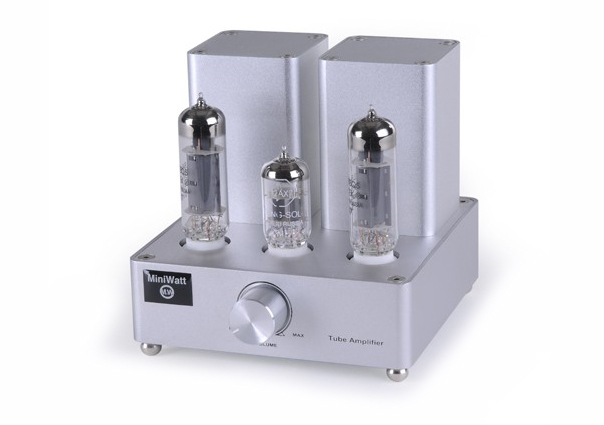
Wayne Coyne of the Flaming Lips

As witty and fun in person as he is on record, Flaming Lips frontman Wayne Coyne is full of big ideas. With his band having just released Embryonic and an updated version of Pink Floyd’s Dark Side of the Moon, he reflected on the process of putting out two records in such a short time and how the group decided to take on such a classic recording.

While available as an iTunes download since December, the album will be available on LP this Saturday in honor of Record Store Day, for $24.

TONE: How long was the Dark Side project in the making?

WC: As we were finishing Embryonic, the iTunes management wanted some exclusive bonus tracks for the iTunes store, and quite frankly, we didn’t have any. I posed the question of us doing Dark Side of the Moon because I knew my nephew’s band (the White Dwarfs) was very familiar with it and I knew it could be really fun. Ten minutes later, the Apple guys were happy with the idea and we were off.

TONE: Were there any snags in the production? Did you hit a point where you felt that perhaps you had too much of a mountain to climb?

WC: When we got together in the studio, it all fell together relatively quickly and was pretty painless. It was the same thing with Peaches; she raps a lot but she’s a crazy singer. Her vocal to “Great Gig in the Sky” was fantastic – that’s a tough one for anyone to pull off.

TONE: Who decided to have Henry Rollins do the voiceovers? Are you guys big Rollins fans, or did you just decide at lunch that he was the man?

WC: We already knew Henry and we all agreed he would be perfect if his schedule would permit. When we ran it past him, he responded almost instantly. It was all done remotely. We sent him the music and he sent back the tracks we needed, along with plenty of alternates to choose from. Henry is a great guy to work with.

TONE: It was very cool that you took such a creative perspective on Dark Side by making it such a different piece of music. It’s good to see that you just didn’t go Dream Theater on it.

WC: (laughs) Well, we wanted to make sure it had our stamp on it.

TONE: Having recently finished Embryonic, was it grueling to put out another record two months later? Was it tough to keep two very different streams of creativity straight in your brain?

WC: Actually, Embryonic was released in a relatively short time for us—only about three-to-four months. By the end of the record, we had been going in a certain direction with the things we learned from the Embryonic sessions, so the new direction with Dark Side was a fairly easy transition.

TONE: The current tour shows dates from March to June here in the US. Are you guys taking some time off now?

WC: We have more things to announce, but we can’t chat about that right now. When I talked to someone about the idea of doing Bonaroo this year, it was on the Internet in 30 minutes and pretty much all around the world instantly. So we are definitely on the roster, but I’m hesitant to let anything out right now, as I know it will be on Facebook in about 8 minutes.

TONE: Will the Lips play Dark Side anywhere else besides at Bonaroo? Speaking of that fest, Steve Martin is going to be playing banjo there. Will you guys invite him up onstage to collaborate? That would be trippy!

WC: Now that’s a great idea. Let’s formally announce right here that we will try to get Steve Martin to perform a song with us at Bonaroo. And we will be performing DSOM in its entirety at Bonaroo. If you get a chance, listen to Steve Martin’s autobiography, which he narrates on iTunes. It’s very interesting and lends a lot of depth to his personality. We listened to it on a long road trip recently and it was much more engaging than Obama’s autobiography.

TONE: How has Dark Side been received? Has it added to or distracted from the material on Embryonic, seeing that both records were released so closely together?

WC: Good question. So far, our fans seem to be enjoying both records equally. It’s always our hope that you can enjoy the spectrum of what we do. I’m glad people still love and talk about Yoshimi Battles the Pink Robots, but I always hope they will enjoy the latest work as well.

TONE: Was Steven Colbert a pretty cool cat when you recently played his show? Is he a big Flaming Lips fan?

WC: Playing the “Colbert Report” was great. Steven is an outstanding host and a really hard-working guy. He’s there before you are, making sure everything is in its place, etc. A lot of the guys on his staff are big fans too, so it was a great experience.

TONE: Do you get tired of people referring to you as a psychedelic band? I always like to think of the Flaming Lips as a highly complex band.

WC: I look at the psychedelic label as just the ability to be a little more creative with what we do, not sticking to a particular song structure or music structure. I’m 49 years old, so my interpretation of psych is perhaps a little different than some of our fans in their 20s who don’t have the same perspective on the Grateful Dead or punk rock. But it’s still more of a creative way to look at things.

TONE: You made a comment a while back, saying, “Hovering above complete failure gives you a lot of creative freedom.” I’d hope you guys are doing a bit better than that these days.

WC: In order for us to live our dream of making music, touring, and the like, you have to have a certain level of organization and discipline to make it all work. We have to keep everyone fed, so they can keep making music.

Photo, courtesy J.Michelle Martin-Coyne

The Clearaudio Concept Turntable

While known for their megabucks, state of the art turntables that can run into the six figure range, Clearaudio has produced a winner for the audiophile that doesn’t have a fortune to spend with their new Concept turntable.  Priced at $1,400, it is a belt drive table that features a tonearm that I’d expect to pay $1,400 for alone, utilizing a magnetic bearing with outstanding build quality.

Clearaudio dealers have been offering a package price on select Clearaudio cartridges bundled with the table.  As I just happened to have a Clearaudio Maestro Wood moving magnet cartridge sitting on the shelf, it was the perfect match for the table. (I believe you can buy the two as a set for $2,200)

The full review will be up on the Gear section of our website shortly, but I think the Concept is the new heavyweight champ in the $1,500 turntable range.  Stay tuned for more info…

Marco Benevento Trio Live

After reviewing his latest album Between The Needles And Nightfall a few issues back, I was certainly up for seeing Benevento’s trio live at the best sounding venue in the Northwest; like the record, I came away impressed with the performance and the sound. Benevento’s recent albums showcase his ability to create magic, sonic landscapes, but the live show is a different story.  This jazz trio is really a jam band in disguise.  Benevento uses a series of effects pedals at the feet of his baby grand piano, and just like a guitarist, uses them to great effect.  At times, his sound went straight to the PA system, and others, he routed them through an ancient vacuum tube practice guitar amp with a great result.

This performance kept the strong melodic backbone of the recordings, but the way the drummer and bassist kept their lockstep rhythmic foundation was reminiscent of  a precision fusion band more than a traditional jazz trio.  Whether they were performing some of the original  material off the latest album or covering Amy Winehouse’s “You Know I’m No Good”, the band held the audiences rapt attention.  They stretched out quite a bit but never let go of the tension created between the melody and the attack. The crescendos  “The Two Of You” and a few others felt like a sonic wave crashing off the walls of the club.  As a relief from that tension, Benevento played a few tunes on his toy piano, replete with comical stage antics while still being pummeled by the rhythm section.

Marco Benevento is a joy to see live.  He has an amazing ability to compose songs that have memorable melodies that translate well to a forceful, if slightly unorthodox fashion on stage.

MiniWatt’s Latest: The N3!

n3_silver_frontFor those of us that have relatively large power amplifiers, one watt probably wouldn’t make much if any difference at all, but when you’re in the low watt (i.e. under 10 watts per channel) camp, every bit counts, and quality is everything. In case you missed all the buzz about the MiniWatt S1, we were very enthusiastic about it when it was reviewed about a year ago.  Click here to read our past review.  The original MiniWatt S1, barely tipped the scales at $229, and the new N3 is still a killer bargain at $378.
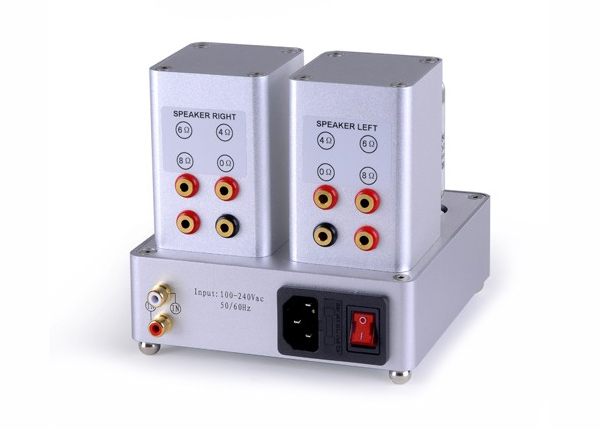
The new N3 not only has 3.5 watts per channel, as opposed to the 2.5 watts per channel of the S1, it uses a very different circuit.  Now, it features a more classic tube lineup, using a 12AX7 as a driver and a matched pair of Sovtek EL84’s as output tubes.  The single volume control remains on the front panel, but turning the amplifier around back, you will notice that there are now 4, 6 and 8 ohm taps for speaker outputs.  This is very handy to optimize the amplifier to your speakers.  Again, with 3.5 watts per channel, you don’t want to lose power on speaker mismatch.  If you are a budding audiophile and aren’t familiar with this concept, try all three taps to see which one provides the most effortless sound with your speakers, that’s the one to go with.

Currently, the only place in the US to purchase the MiniWatt N3 is from ALO Audio, (www.aloaudio.com)  which just happens to be in my hometown of Portland, Oregon.  Non US shoppers can purchase directly from MiniWatt’s online shop. (www.miniwatt.com.hk) After some initial listening, Ken and I discussed the merits of the new amplifier over a couple of most excellent chili dogs at Zach’s Shack, which is right across the street from his storefront.  If you are anywhere near Portland, I highly suggest a short drive to pick one up in person and grab lunch at Zach’s while you are at it.  There’s a lot of great record stores here in Portland…

Setup

The N3, like it’s predecessor is a snap to set up.  As long as matched output tubes are used, the bias does not need to be futzed with, though the manual does not specify how to adjust bias if you have an unmatched set of tubes. For now, I suggest just buying a matched pair when the time comes.  MiniWatt claims up to five years on the output tubes and up to ten years on the driver.  You’ll probably make a change in your system before that!

Most of the review took place with my Zu Essence speakers that feature a sensitivity of 98db. While the N3 will drive less efficient speakers, I’d really make a high sensitivity speaker my first choice with a few watts per channel if you want serious volume.  With a speaker like the Zu’s or perhaps a pair of vintage Klipsch speakers, you can really rock out with 3.5 watts per channel.

Fortunately, the N3 does not use an external power supply, but features an internal switching power supply that can be reset to any voltage in the world.  This is good for two reasons:  you won’t lose or confuse yet another wall wart and you can use a real power cord (which is not included with the N3).  I used a Shunyata Venom ($125) with excellent results and felt it kept within the budget ethos of the amplifier.   The rest of the reference system was rounded out with Zu Libtec speaker cables, and a Rega Apollo CD player.

Big Sound

n3_silver_rearWhile I’d like to rave about the extra watt, the N3 is really more about quality.  Comparing the two amplifiers side by side, you immediately notice the extra body and three dimensionality of the Mini Watt’s latest offering.  The easiest comparison will be your favorite solo vocals;  listening to some of my favorites from Johnny Cash and Anya Garbarek, the new amplifier sounds as if I moved my speakers a few more feet apart instantly.  Once the amplifier had about 100 hours on the clock, it improved a bit, with acoustic instruments having slightly more body.
Small tube amplifiers lend themselves to acoustic instruments and the N3 is no exception. Digging out some Michael Hedges tracks, this amplifier does a great job at capturing Hedges plucky, dynamic style and while having enough headroom with the Zu’s to make the presentation convincing.

Probably the only area that the N3 falls down somewhat is deep bass.  This is probably due to the compact power supply more than anything, because the circuit design is sound. If you’re thinking that a 3.5 watt amp can’t have bass grunt, the 2 watt per channel Decware Zen has it in abundance, but is almost $800.  Horsepower costs money.  For most people the N3 will be fantastic.  When playing some of my favorite club tracks or heavy rock favorites, I noticed that the Zu’s didn’t quite lock into the room as much as they have with other amplifiers, but 95% of the time I didn’t notice.

If you don’t have a pair of Zu’s or some other single driver high efficiency speaker, the N3 excels at being part of a great desktop system.  Used in conjunction with the iMac on my desktop and a pair of their N2 full range speakers ($799), the MiniWatt system offered up a huge share of fun.  Thanks to it’s single driver design, the N2 doesn’t waste any precious power in a crossover network and allows the maximum amount of midrange detail to come through.

Conclusion

MiniWatt has hit another home run with the N3.  They still make the S1 for those on a super tight budget, but if you’ve got the extra $150 in your wallet, I highly suggest stepping up to the N3.  If there’s a better sounding tube amplifier on the market at this price point, I haven’t heard it yet!

Watch Gene Simmons Sunday on A&E’s Private Sessions

Just had a fantastic time chatting with the host of A&E’s Private Sessions, Lynn Hoffman this afternoon.

Every bit as warm and friendly in person as she appears on VH-1 Classics or Private Sessions, Lynn shared quite a few insights on her career, handling rock stars and what she’s listening to today.  Watch for the full interview in issue #31, due out around August 17.

In the meantime, check out her show on A&E this Sunday morning (9 a.m. EST./8 Central), when she hosts Gene Simmons from KISS and Gene Simmons’ Family Jewels.  Here’s a clip that will give you an idea of what’s in store:

http://www.youtube.com/watch?v=LaT_3W66I2A

TONEAudio Magazine Issue 30

Features

The Big Four: Metal Giants Together at last
By Bob Gendron

Tom Petty and the Heartbreakers: They Got Mojo Risin
By Ben Fong-Torres

Budget Gear: Mordaunt Short Aviano 6
By Mark Marcantonio

Old School The JBL-L100 Century
By Jeff Dorgay

Behind the Scenes With Metal Photographer Mark Latham
By Bob Gendron

Tone Style

The Panasonic Lumix DMC-ZS7

Mighty Light and Mighty Light HD

The ZDock for your iPod

Skooba Design’s Cable Stable DLX

The Magna Cart Flatform Truck

Altec Lansing IMT 320

KISS Picture discs

Music

Live Music: The TONE Staff Covers Tom Petty, Jeff Beck, Crash Test Dummies and more…

Current Releases:
Fresh Releases in the Pop/Rock World
By the TONE Staff

Audiophile Pressings
New Releases from MoFi and Music Matters Jazz
By Jeff Dorgay and Richard Colburn

Alternative Divas
Give Patricia Barber a rest!
By Jeff Dorgay

Time Flies…1994…2009
The Oasis box set
By Bob Gendron

Sony’s Legacy Setlist Series
By Bob Gendron

Downloads
Some new high res files from Reprise and HD Tracks
By Jeff Dorgay

Previews

NuVision Lucidium Television

ARC’s REF Phono 2

Reviews

Headphone Planet: Decware Headphone Amp and New Phones From Phiaton
By Jerold O’Brien

First Review! The Magnepan 1.7
By  Steve Guttenberg

The AudioQuest LeoPard Tonearm Cable
By Jeff Dorgay

PS Audio’s Perfect Wave Transport and DAC
By Lawrence Devoe

The EAT KT-88 Vacuum Tubes
By Jeff Dorgay

The Verity Finn Speakers
By Jeff Dorgay

The Keith Monks Ruby Record Cleaning Machine
By Jeff Dorgay

SLUMMIN’
Sex Pistols

jeff beck

Here’s a few extra shots of Jeff Beck from the current tour…

Full review in TONEAudio #30, out shortly!

WEB-Jeff Beck_2

Definitely a master of focus.

WEB-Jeff Beck_3

Three songs into the set, the master is starting to have a great time…

WEB-Jeff Beck_4

tom petty at Milwaukee’s Summerfest

There was no mistaking it for Bummerfest this evening…

Tom Petty and The Heartbreakers exploded onto the Marcus Ampitheather’s main stage and had the crowd up in arms.  Music Editor Bob Gendron covers the show fully in issue 30 of TONEAudio, but here are a few extra photos for you.  After a brief reschedule, the Heartbreakers’ tour is in full force for the rest of the year, so if you are a fan, grab some tickets, you won’t be disappointed.

TP-web 2

Both Petty and Mike Campbell had a great time changing guitars frequently….

TP-web 3

And, what rock show would be complete without the double neck?

TP-web 5

Getting on the download bandwagon

I have to say, I’ve been having a great time downloading high resolution digital files from Naim, HDtracks.com and others over the last few weeks.  In case you haven’t noticed, we’ve added a new section for downloads right next to our audiophile pressings section in the magazine.  With so much more music becoming available this way, it’s exciting to keep on top of it.

We’ll continue to expand this section going forward.  Any suggestions, just drop us an email…

Conrad Johnson’s new ET3 preamplifier

The folks at C-J have just announced a replacement for their entry level “Classic” preamplifier, the ET-3. Utilizing much of what they’ve learned building their flagship GAT, the ET-3 is also a hybrid design, utilizing a 6922 tube and MOSFET follower.

Pricing has not yet been announced, but we are expecting it to be somewhere in the $2800 – $4000 range.

Watch for a full review as soon as we can get our hands on one!news_ET3_Front-1

TONEAudio Magazine Issue 29

Features

The Rolling Stones: The Exile Super Deluxe Edition
By Bob Gendron

The Journeyman Audiophile: PrimaLuna ProLogue 1: Still Bitchin’
By Jeff Dorgay

Budget Gear: The Shunyata Hydra 2
By Jeff Dorgay

Old School Cassettes are still pretty cool
By Jeff Dorgay

Music Mastering The Art of the Transfer
By Steve Guttenberg

Tone Style

The B&W Zeppelin Mini

Nike’s Zoom Kobe V Shoes

Leica’s V-Lux 20

New Merch from Club Devo

The Flip MinioHD Video Recorder

Lexar’s Fastest Memory and Reader

Star Wars Cookie Cutters

Music

Live Music: The TONE Staff Covers Peter Gabriel, Ratt, Shelby Lynne, The Decemberists, Jonsi, Tegan and Sara and more…

Current Releases:
Fresh Releases in the Pop/Rock World
By the TONE Staff

Audiophile Pressings
The Velvet Underground, Sonic Youth, Yes and more.
By Jeff Dorgay

Jazz and Blues
By Richard Colburn

NEW! HD Downloads: Reviews and interviews with Peter Frampton and Gwyneth Herbert
By Jaan Uhelszki and Jeff Dorgay

Previews

Simaudio Moon 750 CD player/DAC

Naim HDX Music Server

The Squeezebox Touch

Reviews

Headphone Planet: Earbuds or Earduds?
By Bailey S. Barnard

Clearaudio Innovation Turntable and TT-2 Tonearm
By Jeff Dorgay

The Hegel H100 Integrated Amplifier and CDP2A CD Player
By By Jeff Dorgay

The J-Corder RS-1500
By Jeff Dorgay

The Electrocompaniet EMP-1M
By Jeff Dorgay

COVER: Naim’s UnitiQute
By Jeff Dorgay

The Dynaudio C4 Confidence Speakers
By Jeff Dorgay

The ZVOX 575 Soundbar
By Mark Marcantonio

SLUMMIN’
Sheet Music

Record store day almost here!

In case you didn’t know, Saturday, April 17 is Record Store Day. Record stores around the country will be having a lot of special merchandise in their stores, starting Saturday, and much of it in very limited supply.

We are launching some new record reviews over the next week, so stay tuned. And we have an interview with Wayne Coyne of the Flaming Lips as well.

Now get your butt over to your favorite record store on Saturday and show some support!

TONEAudio Magazine Issue 28

Features

The Stooges: Raw Power Just Won’t Quit
By Bob Gendron

The Journeyman Audiophile: The Octave V-40SE Amplifier: Refinement and Finesse
By Jeff Dorgay

Budget Gear: The DecWare Zen: Two of the Best Watts You’ll Ever Buy
By Jeff Dorgay

Time Warp: A Story of Cars, Cops and Slayer’s Decade of Aggression Live
By Bob Gendron

Tone Style

Ducati All Stars: Rockin the Roxy

The TONE Beer Snob: What You Should be Drinking

Apple’s iPad is the Future of…

The Steinway Lyngdorf System

The Quadraspire Q4EVO: A High Performance Rack That Won’t Break The Bank

More Goodies From Fred

Music

Live Music: The TONEStaff Covers John Mayer, Xiu Xiu and Kasey Anderson.

Current Releases:
Fresh Releases in the Pop/Rock World
By the TONE Staff

Audiophile Pressings
Jimi Hendrix, Humble Pie, Grant Green and more.
By Richard Colburn

The Music of Blaxploitation Cinema
By Anne Farnsworth

Previews

PS Audio’s Perfect Wave Transport and DAC

Acoustic Signature’s Analog One Turntable

Verity Audio’s Finn Speakers

Reviews

The Music Hall DAC25.2
By Marc Marcantonio

The Fosgometer
By Jeff Dorgay

The Meridian/Sooloos Control 10
By By Jeff Dorgay

Mark& Daniel’s Maximus Diamond+
By Mark Marcantonio

The PMC Fact 8 and Factory Tour
By Jeff Dorgay

The Manley Jumbo Shrimp Preamplifier
By Todd Sageser

The ZYX Omega X Cartridge
By Jeff Dorgay

SLUMMIN’
The Original iPod

Micromega’s Airstream Provides an Elegant Solution

Micromega frontThis is a controversial product to say the least. For many of you wanting to extend your digital music network, the $99 Apple Airport express is a great, low-cost way to add a pair of powered speakers somewhere into your environment. However, it is not an audiophile solution. At the other end of the spectrum, we have Micromega, with their $1,499 Airstream, which functionally does no more than the Apple Airport. We could have the same argument comparing the $300 Squeezebox to the $8,500 Sooloos music server. They both do the same thing, stream digital music files, but there’s more to the story.
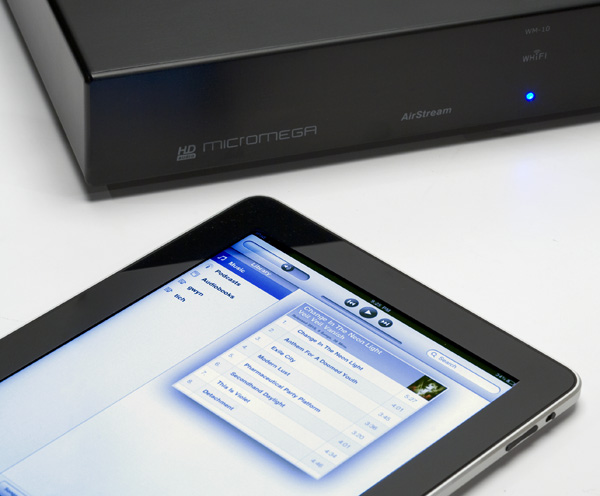
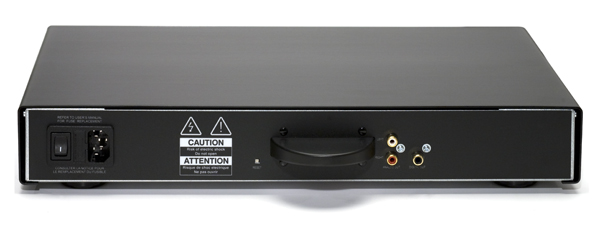
It is extremely difficult to use the Apple Airport Express in a non-Airport network environment. Personally, I’ve never been able to get one to integrate seamlessly in my own network, so for the duration of this review, I used a spare MacBookPro with about 300 mb of Apple Lossless, .wav and MP3 files for the duration of my test.

What’s in the box

The interesting paradox is that the Airport Express will probably need some support to make it work properly, and your chances of getting it are slim. If you purchase the Airstream from a Micromega dealer, your chances of getting dealer support are high, but you probably won’t need it. Next to the Sooloos, this is the easiest digital-music product I’ve ever used.

Setup is very easy. Plug the Airstream in any of your systems’ high-level inputs, turn it on and search for “Airstream” with your Mac or PC. It works well with either. If you are more adventuresome and have an AirPort-based network, you can use the AirPort Utility to change the address of the Airstream and make it join your existing Mac network. This might be handy if you have a large collection of music on a remote server somewhere that you’d like to access with the Airstream. I must admit, however, not feeling brave enough to be up to this task.

I found the easiest way to use the Airstream was to leave it in the stock configuration and use my MacBook Pro to control the music from my living room. That’s really the essence of the Airstream: keeping it simple. An added benefit of using the Airstream in this mode is that it isn’t taking bandwidth away from your primary network. In the past when using a laptop or Squeezebox on the same network as the rest of the house, it’s been easy to get dropouts in the music stream, should my daughter decide to download an episode of Family Guy in the middle of my favorite song. With music and computer data on separate channels, this is eliminated.

With your system set up in this manner, Micromega features an app that you can download to control all of this with your iPhone/iPod touch. For those with a remotely located server, this will make using the Airstream remotely even more fun. This will allow you the ease of controlling the Airstream from the bath tub, or wherever else you happen to be within its range. The iPod app makers I contacted all indicated that they have iPad apps soon to follow, so I anticipate using the Airstream via the iPad will be an oustanding music server environment.
Micromega-iPad
A sound improvement

Best of all, the difference between the sound of the Airstream and a standard AirPort Express is substantial. Just eliminating the switching mode power supply from the equation, by not having an AirPort Express anywhere near your system, is a big plus to start. The Airstream uses a much more expensive R-Core transformer and beefier analog power supply in addition to a custom designed digital processing clock that drives jitter specification errors dow to very low levels. Time bases jitter processing errors seem to be very audible to the brain; Micromega has 25-years of digital design experience and saw this obvious area for improvement. Putting the components in a proper box with RCA outputs also makes it easier to use the Airstream with an adequate pair of cables, rather than the eighth-inch mini jack from the AirPort Express. Eliminating the Ethernet connection also helps. Using the AirPort while running network data and a printer attached via USB makes for relatively lousy sound quality.

My only gripe regarding the Airstream is that I would have liked to see Micromega use a smaller case, something more like the size of a Naim HiCap power supply, for several reasons: it might have shaved a few bucks off the bottom line, it would free up more rack space, and it would look like there is more in the box.

However, a quick listening comparison reveals that there is a big difference in sound quality between the AirPort and the Airstream. There is a definite lack of graininess to the presentation that is present in the Airport, and more smoothness to the high end. I would draw a similar comparison to the difference in playback between my $85 Shure M97 and my $1,000 Lyra Dorian cartridges.

The native DAC inside the AirStream is a sophisticated Cirrus Logic 4344 24/192 design nestled inside a Marvell custom made chip-set that will allow native extended-bit conversion to be accomplished once Apple switches their iTunes music offerings over to high-res files. Micromega-rear

At present, because the Airstream relies on Apples Airtunes wireless transmission protocol, it will only play 16bit-44khz files native via iTunes and will downsample any high res files you might be collecting on your hard drive.

Is it for you?

Of course, the question on everyone’s mind is, “Is this thing worth $1,500?” Like everything, beauty (and convenience) is in the eye of the beholder. If you aren’t concerned with ultimate fidelity, you can probably get by with an Airport Express. But if you want a better sounding, more audiophile product, the Airstream is excellent. Designer Daniel Schar has 30 years of digital circuit design experience and it shows in the end result.

I see two standout scenarios for the Airstream, both of them good. Paired with your laptop or even a Mac Mini with a large hard drive, it could make for an excellent budget music-server system. If you are a network whiz, or have access to one, the Airstream could be an excellent remote client for a Sooloos, QSonix or other music server in another area of your home.

The bottom line is that if you want the convenience of using a product like this right now, with far better sound quality than the Airport can provide and that offers the convenience of fitting on your equipment rack, I think the Micromega Soundstream is a worthy product.

The Micromega Airstream

MSRP: $1,499

Manufacturer website: www.micromega-hifi.com

US/North America contact: www.audioplusservices.com

Enjoying the Apple iPad

While I’ve barely slept in the last 36 since the iPad arrived, we’ve all been putting it through its paces.

So far, it’s a winner. While it may be a laptop substitute for some, I think this device (like other Apple products before it) will define a new category of electronics. Read the full review below in the Spotlight section and let us know what you think.

The Wi-Fi only models, available in 16-64gb capacity are on most retailers shelves right now. Even if you aren’t buying today, you should stop by and check one out. But it might be tough to resist once it’s in your hot little hands. 3G models (requiring a seperate data plan, $30/month) will be available later in the month.