


Issue 115

Cover Story:

Awards!

The Moscow HiFi Show
-By Misha Kucherenko

Old School: The Mark Levinson No. 26 Linestage
-By Jeff Dorgay

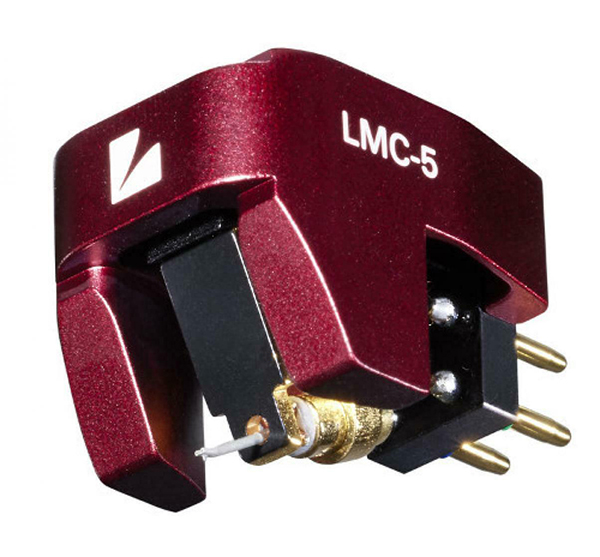
Cartridge Dude: The Luxman LMC-5

Mine: It Should Be Yours

Music

Playlists:  We share our readers choices from around the world

Future Tense

Gear in our immediate future

Issue 114

Cover Story

Cutting Edge Digital:
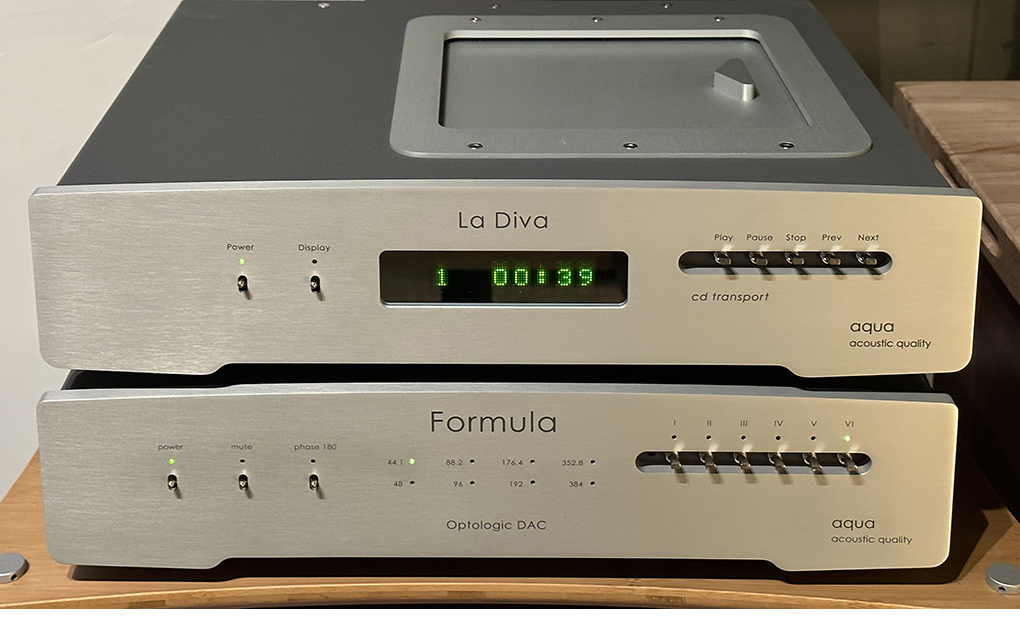
The latest DAC and Transport from Aqua Audio

Features

Old School: Sony TC-355 Reel to Reel
by Scott M. Frary

1095: SONY SACD player for $159!
by Jerold O’Brien

The Audiophile Apartment: The Luxman’s SQ-N150 Integrated

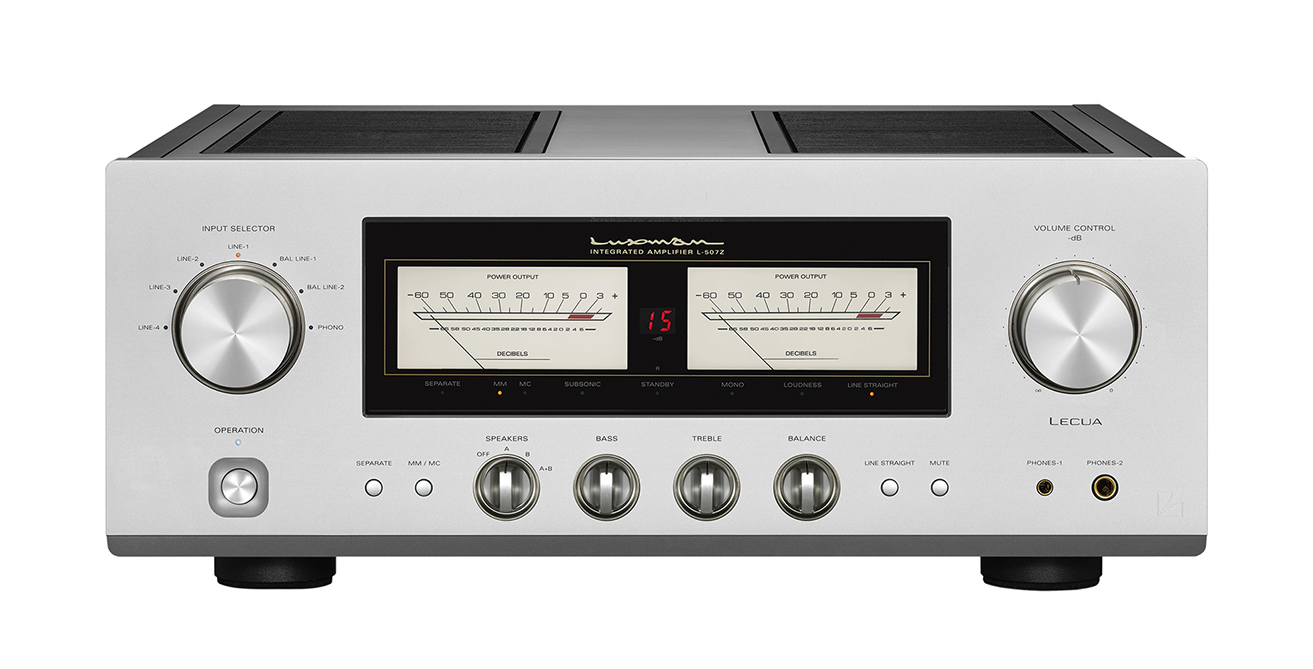
Journeyman Audiophile: Luxman’s New L-507Z Integrated

Headphone Arts:  Focal Clear mg

Short Take: The Nordost Grounding System
by Lawrence Devoe

Mine: It Should Be Yours
The MOONSWATCH by Ken Kessler

Swill: Kiss Cold Gin
by Jeff Dorgay

Future Tense: Gear in our immediate future

Reviews

the dCS Vivaldi ONE/APEX – By Jeff Dorgay

Music

Playlists:  We share our readers choices from around the world
Jim Macnie lists his 10 favorite Jazz albums

The XSA Labs Vanguard – a new paradigm.

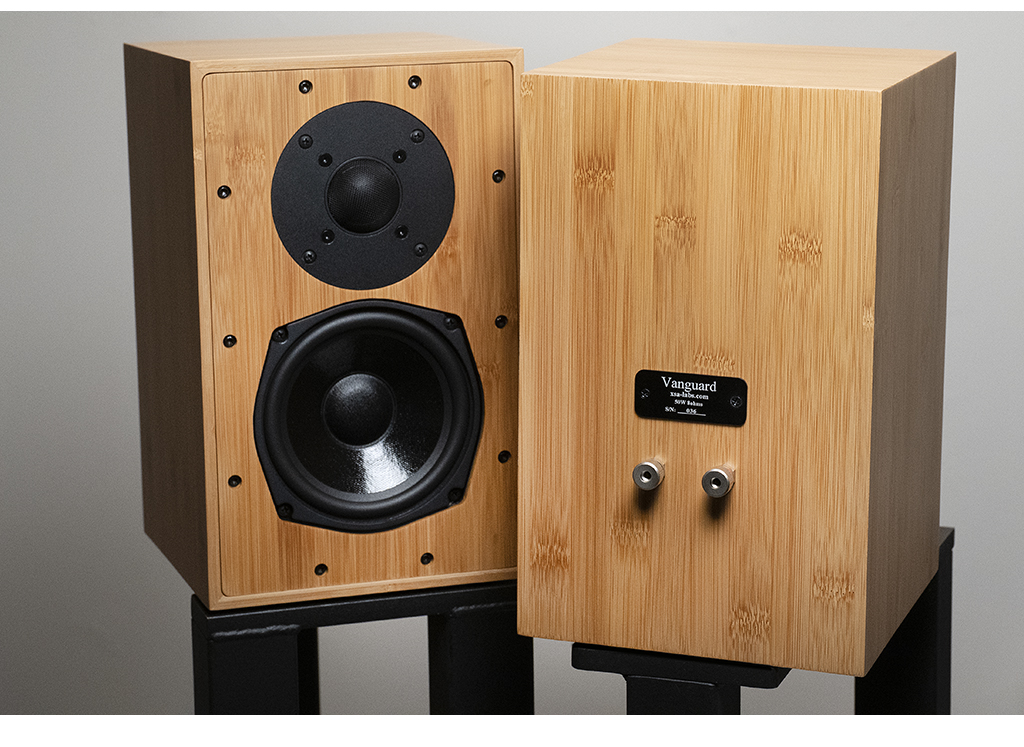
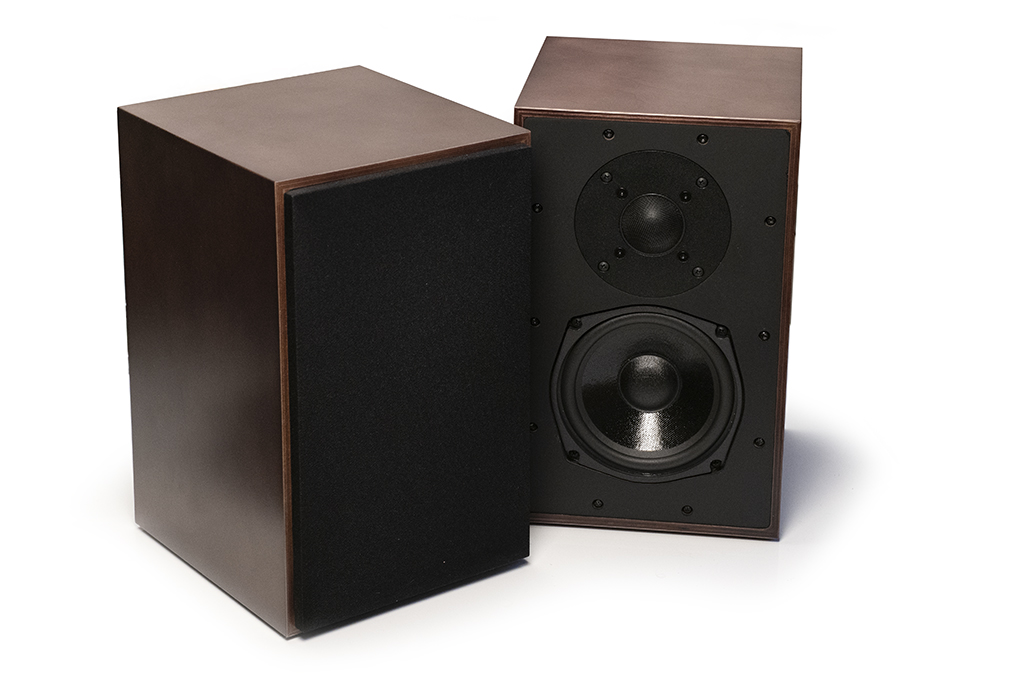
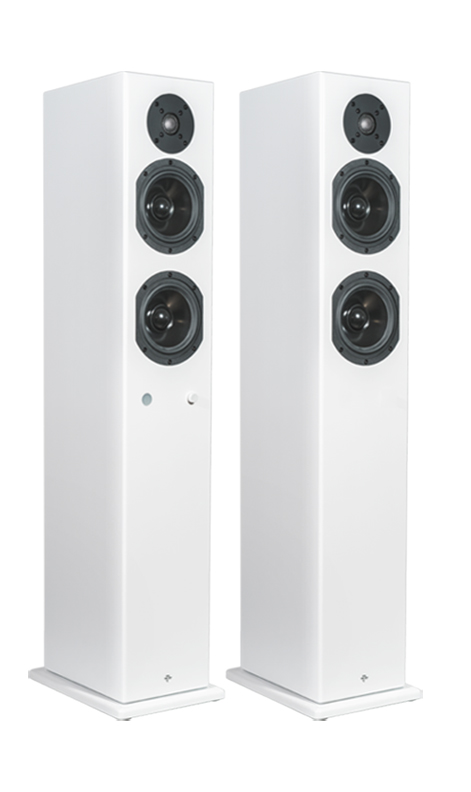
In case you’re wondering, XSA stands for “eXtremely Sexy Audio,” and the Vanguard monitors you see here, done up in bamboo are certainly that. Those of you that work with wood on a regular know how hard bamboo is to work with and get it to look right.

Bamboo is the carbon fiber of woods – it’s hardness is much tougher to cut and machine to tolerance – one mistake and you’ve blown it. Careful inspection of the cabinet corners and the cutouts for the drivers is a real work of industrial art. Sexy indeed.

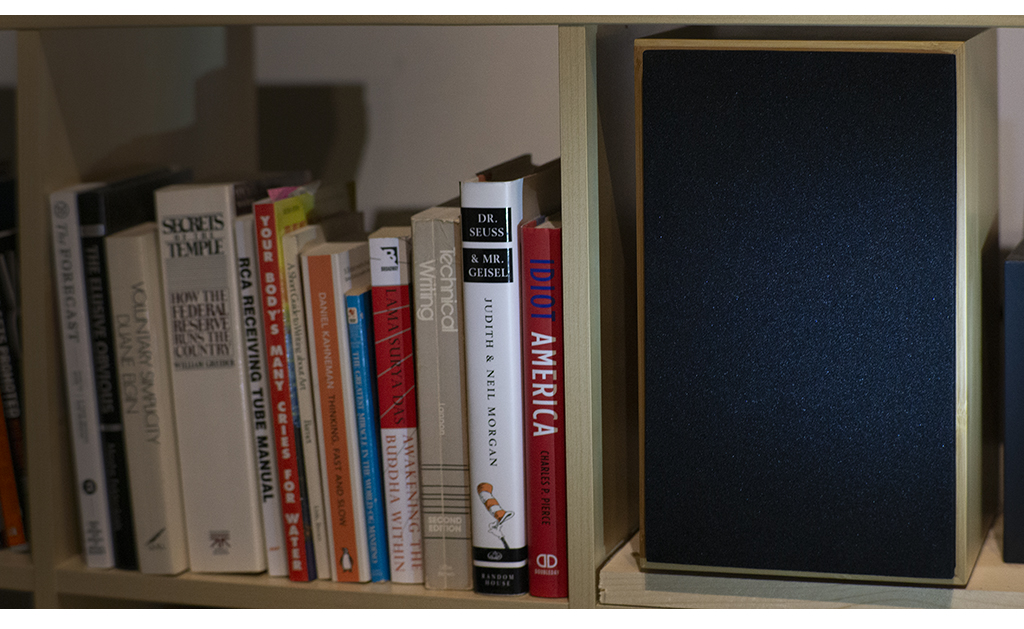
Listening to the rich vocal harmonies in Crowded House’s Woodface brings the capabilities of this great little speaker immediately. They deliver a huge sound field, that is deep and wide. Top to bottom is pretty good for such a small speaker as well. With grilles removed, it’s easy to see the homage to the LS3/5a, but I suggest that this is a different beast. And for $799 a pair, a beast you just might want to welcome into your home.

The Vanguard is about an inch and a half deeper than the LS3/5a cabinet; designer Dr. Viet Nguyen makes this choice to get a bit more bass extension from the 5.25” treated paper cone woofer. Moving from boomer rock to 90s obscurity, with Crash Test Dummies’ “Just Chilin’” reveals where the bass rolloff is – but again, this is an impossible feat for any small speaker. However, in a smaller room the fundamental is still there. Moving back almost a decade to the Dummies’ “Superman’s Song” is where the Vanguards shine. They keep lead singer Brad Robert’s deep voice perfectly blended with the light background vocal of Ellen Reid.

Playing music that doesn’t push the Vanguards out of their sweet spot is a revelation. Winding up this listening session with Elvis Costello and Burt Bacharach’s “I’ll Never Fall In Love Again,” from the Austin Powers soundtrack is truly groovy baby.

A Bit of back story

The BBC LS3/5a monitor has been a staple of small room audiophilia for decades. This diminutive monitor, in a small-ish room with the right electronics does such a fantastic job achieving a natural sounding midrange, you forget about what it doesn’t do. Because the BBC engineers were using it as a location recording monitor, their goal was to get the voices right. I’ll bet they had no idea their creation would become such a cherished thing. Measurement geeks will complain to the stars about a lack of bass and treble extension, and rolled off highs – yet when you sit in the chair and listen, it’s hard to not come away amazed and smiling.

There have been a number of BBC licensed LS3/5a variations over the years, all with a somewhat different sound. Several manufacturers like Harbeth, have done their own updated variation on the theme, and while not following the design exactly, keep with the spirit. Most of these speakers run in the $2,500 – $3,500 range and are all well-crafted. Just as we can have a heated discussion about which version of the 12AX7 tube is “the best,” the same can be said for the LS3/5a and the speakers it’s inspired.

Back to the future

While it’s always fun to respect the past, drivers and crossover components have improved dramatically over the years, and what used to cost megabucks is now much more approachable. Dr. Nguyen’s hard work came to the attention of Mark Schifter, (an industry vet  who’s influenced a number of great brands over the years) who is not only a main collaborator on this speaker, but the LSA 50, 60, and 80 – another group of speakers offering tremendous performance and value.

If you’d like a little bit more tech perspective on the Vanguards, there’s a lively discussion over at Superbestaudiofriends.org, illuminating more of Dr. Nguyen’s design decisions, and of course, measurements. However, measurements don’t tell the whole story, and they don’t speak to the natural tonality that these speakers deliver. Just as most reasonably priced EL-34 tube amplifiers deliver a slightly warm overall sound with a slight bump in the upper bass/lower midrange (to great effect I might add), all of the LS3/5a speakers I’ve heard are goosed in a similar manner. Some not so much, yet it’s always there if you listen for it.

The Vanguards don’t have this pronounced effect, delivering what is arguably a slightly more transparent midrange. I admit to being biased towards a warmer sound, mating the Vanguards to a tube amplifier is more my cup of than a budget solid-state amp. Where the LS3/5a’s combined with a tube amplifier can be too much of a good thing with certain pairings, the Vanguards are lovely. Of course, you must be the final judge.

A quick peek inside the Vanguard reveals high quality crossover components, and less of them. Where the BBC licensed speakers use 11 components, Dr. Nguyen’s design makes do with 6. Claimed sensitivity is 84.5dB/1-watt, but thanks in part to this reduced parts count, the Vanguard is incredibly easy to drive. 25 Watts per channel will get you rocking.

Running the gamut

You’ve probably seen massive amplifiers powering small speakers at hifi shows to deliver higher than expected performance. You might consider this “cheating,” yet it does reveal just how much a budget speaker can deliver. Taking this approach, listening began with the dCS Vivaldi ONE-Apex, Pass Labs XS Pre and a pair of Pass XA200.8 monoblocks, all connected with Cardas Clear cable.

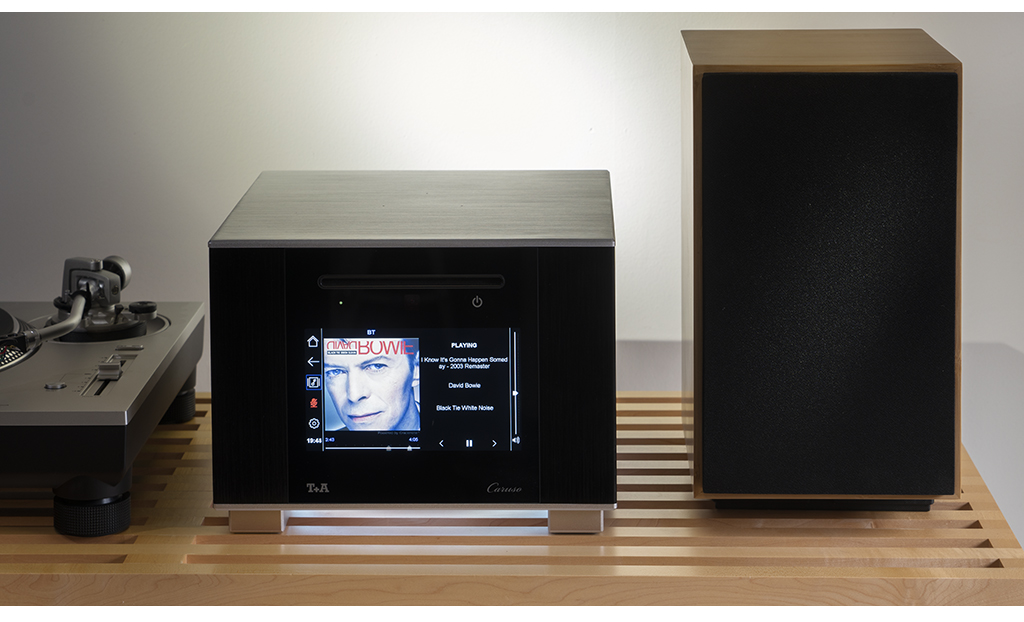
I’d be lying if I didn’t say this was pretty awesome, albeit unrealistic. After trying several different amplification choices, the two I settled on for most of this review were both realistic matches. The $1,299 LSA VT-70 (EL-34 powered), and the ($4,100) T+A Caruso R (solid-state, all in one) delivered great performance, and both make great partners for these speakers. While the T+A Caruso R is three times the cost of the LSA amp, it does feature an integrated tuner, DAC, CD player, streamer and MM phono stage. Together with the Technics SL-1200G, we are awarding this combination one of our two system of the year picks for The Audiophile Apartment.


Investigating the vintage path, the Vanguards also work well with the vintage components we have on hand from Sansui, Marantz, and Nakamichi, though keep in mind these speakers resolve enough detail that you will detect a bit more “wooliness” with older gear.

Substitutions

Many audio enthusiasts love mating mini monitors to a small subwoofer to extend total system response. Most listening was done in an 11 x 13-foot room and a 12 x 18-foot room. As you might suspect, the larger room benefitted more from a bit of LF augmentation, though with careful setup, it worked in the small room as well. However, resist the urge to combine the Vanguards with a budget subwoofer. The detail that they do resolve in the lower register will be lost in the lack of transient speed that always comes along with a cheap subwoofer.

That being said, the SVS Micro ($899) and the REL Tzero MKIII ($499) both make an excellent match for these speakers, but that’s another movie. You do not need to have a subwoofer to enjoy these speakers.

In Perspective

In a day where some speaker manufacturers charge more to custom paint a speaker cabinet than Porsche charges to paint your car a unique color, no one at XSA is getting rich building these speakers. Even if these cabinets were made from MDF (and they wouldn’t sound nearly as good) $799 would be an incredible bargain. To keep it a fair fight, because these speakers are only sold factory direct, they should be compared to speakers costing twice as much – yet they still deliver superb performance.

As a reviewer, it’s easy to lose your way, trying to convince the audience that they need to spend more, more, more, and if you don’t, you can’t play. It’s also easy to lose sight that anything beyond a pair of wireless buds for your smart phone is a luxury on one level, because that’s all you really need to be a music lover. Investing more than that in your hifi system is still a luxury, no matter what level you are engaged.

Some of the most passionate audio enthusiasts I’ve encountered over the years have been those that put a $2,000 – $10,000 system together with extreme care, working hard to achieve the maximum value with every component.

Whether you are putting together your first major system, downsizing from a big system, or putting an additional system together in another part of your living space, the Vanguards are a great pair of speakers that are more than worth the price asked. Should you purchase a pair, I hope you enjoy them as much as I do – they are staying.

$799/pair

www.xsa-labs.com


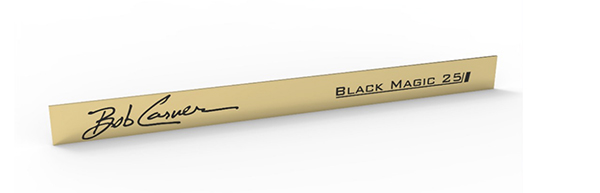
The Carver Black Magic 25

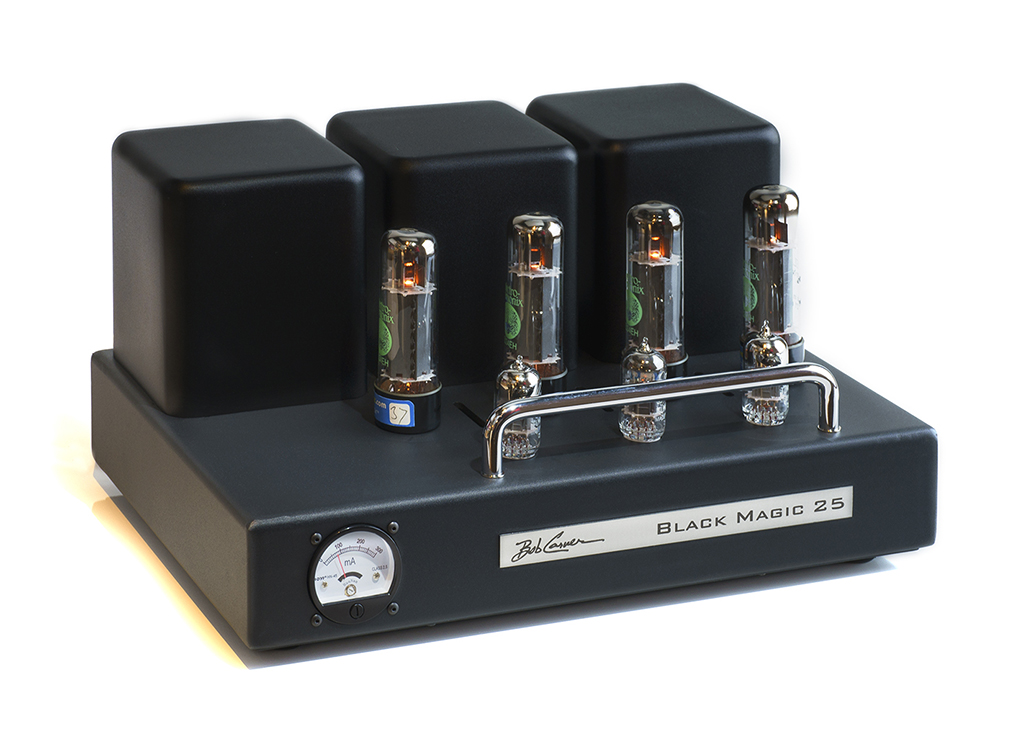
Sometimes less is more, especially when it comes to vacuum tubes. There’s always something special about a low-powered tube amp and a pair of fairly sensitive speakers. Bob Carver’s latest, the Black Magic 25 is a perfect example. Sporting a fairly compact chassis size and tube compliment (1-12AU7, 2-12AX7’s, and 4-EL34s) the Black Magic certainly made some great music here, paired with our Zu Dirty Weekends and the Heretic A-1614s.

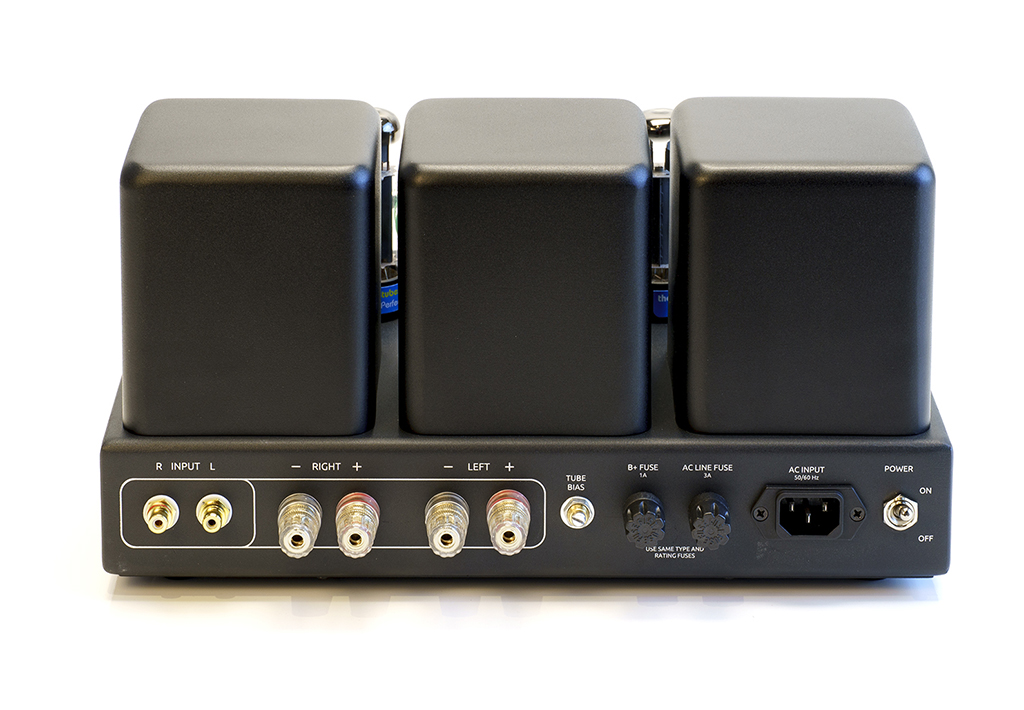
Build quality is robust, yet sparse, and the amplifier is a cinch to use. There is a handy meter on the front panel that can be used as a tube tester, as well as for setting the output tube bias. Carver claims that their unique circuit means you don’t need matched output tubes, yet our experience with only one bias control for four tubes suggests otherwise.

The amp runs cool, and provides a sound not as romantic as a vintage Mcintosh, Marantz or Dynaco amp, yet still delivers plenty of tubey, midrange magic that you’d expect. And of course, with only three input tubes, you can roll em’ if you’ve got em’ to fine tune and experiment.

Thanks to careful design, this little jewel plays louder than you would expect a 25Wpc amp to play, even with less efficient speakers like a pair of Harbeths, or your favorite LS3/5a variation on the theme.

Definitely a good thing in a small package!

https://www.bobcarvercorp.com/black-magic-25

REL Raises The Bar

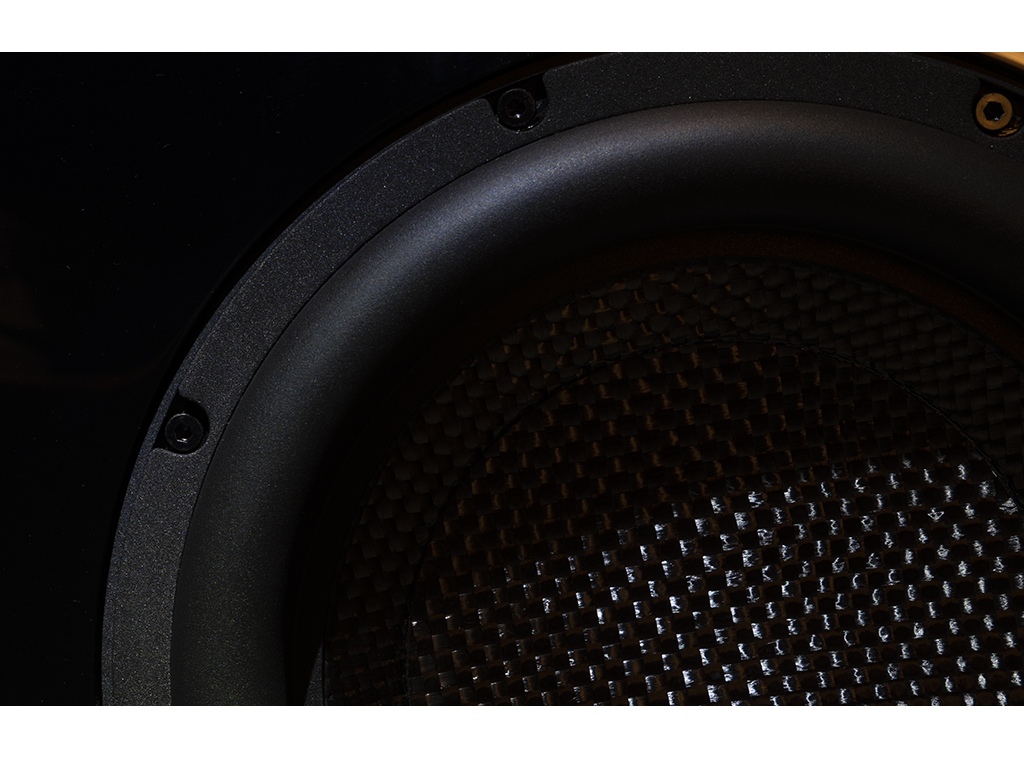
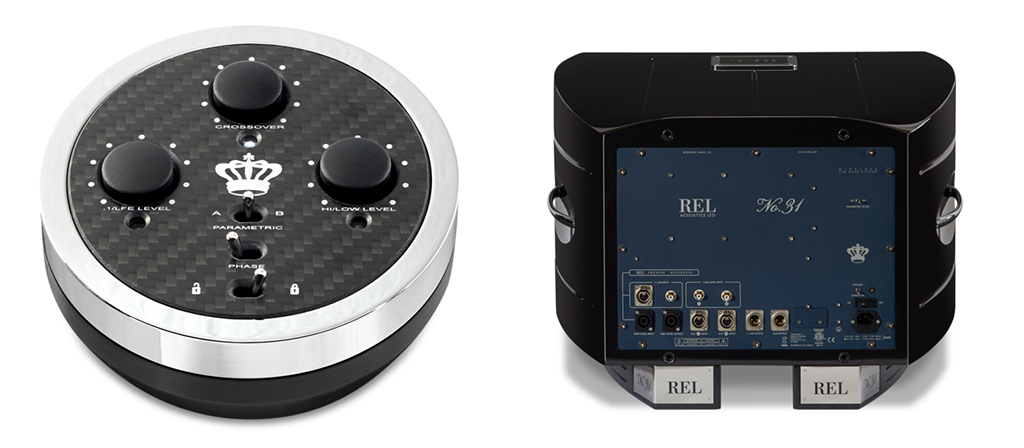
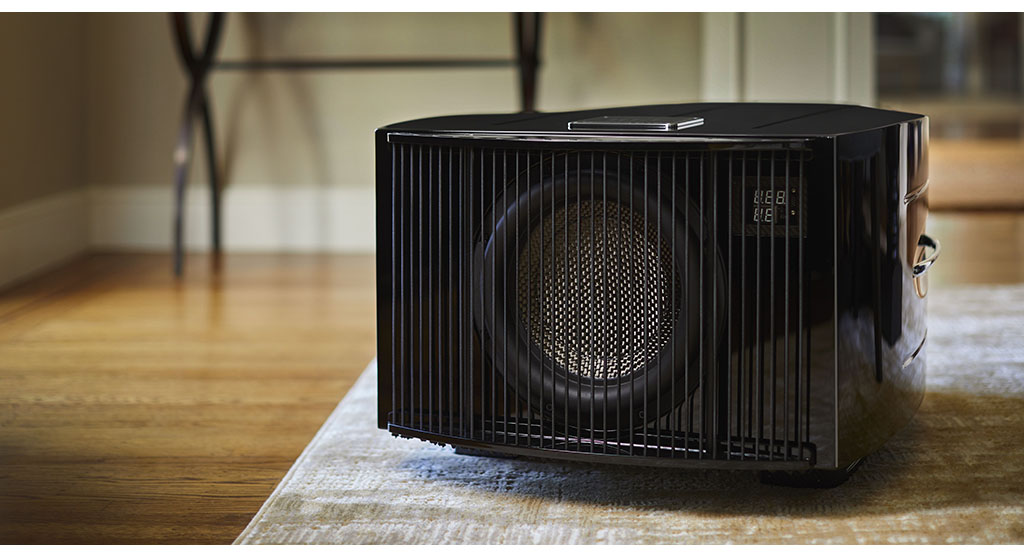
The new no.31 Reference Subwoofer is a substantial improvement.

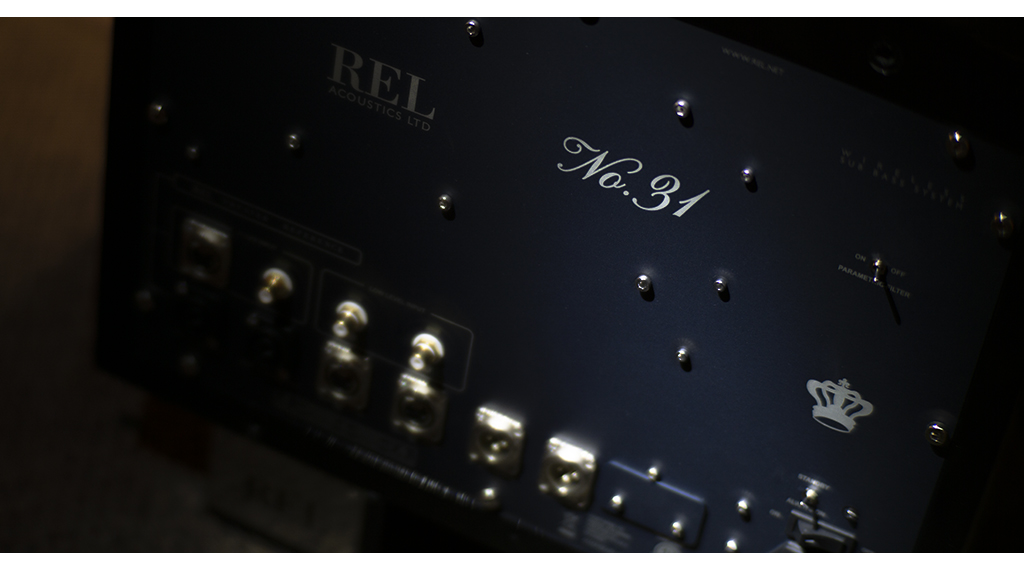
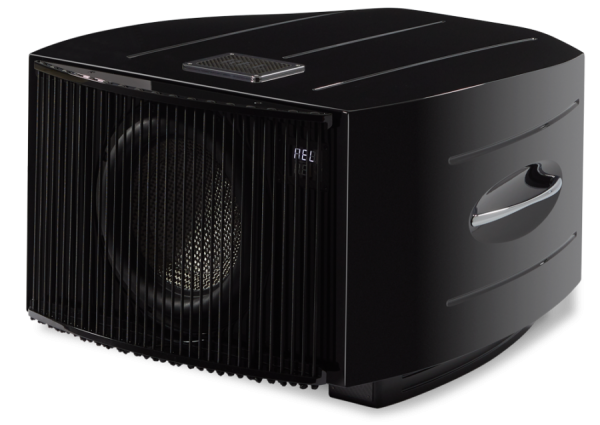
If you aren’t paying close attention, you might easily mistake REL’s new no.31 subwoofer for one of their outgoing reference models. Upon close inspection, aside from the new super-coolio carbon fiber badge, the rear facets of the cabinet top are beveled – a further effort to refine the shape and eliminate resonance.

We often discuss break-in time in terms of days and hours, yet the difference between the no.31 and RELs past is immediate. The no.31 is faster, more nimble. If you only think of the low-frequency augmentation provided by a subwoofer as a single sonic shade, be prepared to have your paradigm reset.

Those familiar with the effect of adding one (or more) REL subwoofers to their system, will be equally impressed. John Hunter and his team have pushed the possibility of what a subwoofer can add to a high performance audio system further than ever.

$7,000 ea.

Please click here to visit the REL site, for full specifications. We’ll have a full review shortly.

Aqua Audio LaDiva CD transport and Formula xHD DAC

If you are still committed to the compact disc, Aqua Audio’s LaDiva transport and Formula xHD DAC is the loveliest combination I’ve had the pleasure to listen to. Period.

We currently use their LaScala DAC in system two with excellent results. Good as the LaScala is, this combination is an entirely different movie.

Long before the days of streaming, the Naim CD555/PS555 was our digital reference, and it was fantastic – but it played CDs and nothing else. Fortunately, you can add other digital sources (including Aqua’s excellent LIN Q streamer) to this stack and take care of everything digital but SACDs.

Much like vinyl is an old format refined to the hilt, I submit the same approach for the compact disc. The Aqua combination is liquid, lush, organic, and highly engaging. Where my other digital reference, the dCS Vivaldi ONE, resolves a bit more detail, the analog-like quality the Aqua pair provides feels more like listening to top-notch analog. There’s a little more tonal saturation, and It’s so inviting. If you’re of the maximum detail persuasion, it might not be for you, but this pair will fool you every time into thinking you just might be listening to a record. That’s the highest praise we can offer.

If you have an extensive collection of CDs that you have no intention of getting rid of and you want an end-game player, I can think of nothing finer.

www.aquahifi.com (mfr)

https://www.facebook.com/arcadiaaudiomarketing (NA distributor)

Issue 113

Cover Story

American Muscle:
Two Great Tube Power Amps from BAT and ARC

Features

Old School: McIntosh MC3500 Power Amplifier
by Ken Kessler

1095: LSA 0.5 Phono

The Audiophile Apartment: The Parasound P 6 Preamplifier

Journeyman Audiophile: Luxman’s New L-507Z Integrated

Headphone Arts:  Dekoni Ear Pads

Short Take: Pro-Ject RCM

Mine: It Should Be Yours

Future Tense: Gear in our immediate future

Reviews

Audience Front Row Cables – By Kevin Wolff
Pass XP-27 Phonostage – By Laurence Devoe
On With The Show! A quick recap on The Pacific Audio Fest
By Greg Weaver/photos by Greg W and Angela Cardas

Music

Playlists:  We share our readers choices from around the world
Setlist:  Todd Cooperider sees Eric Clapton

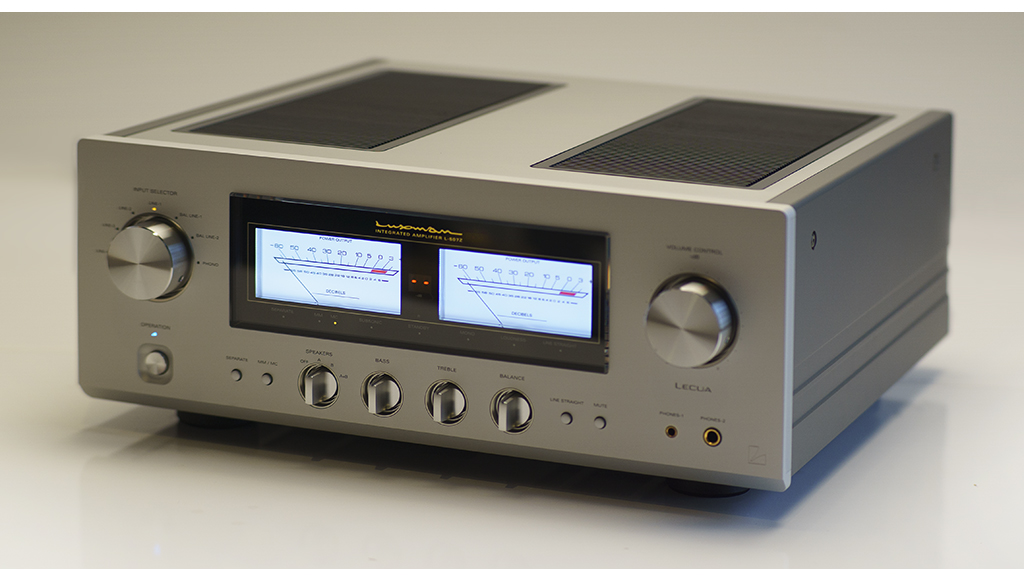
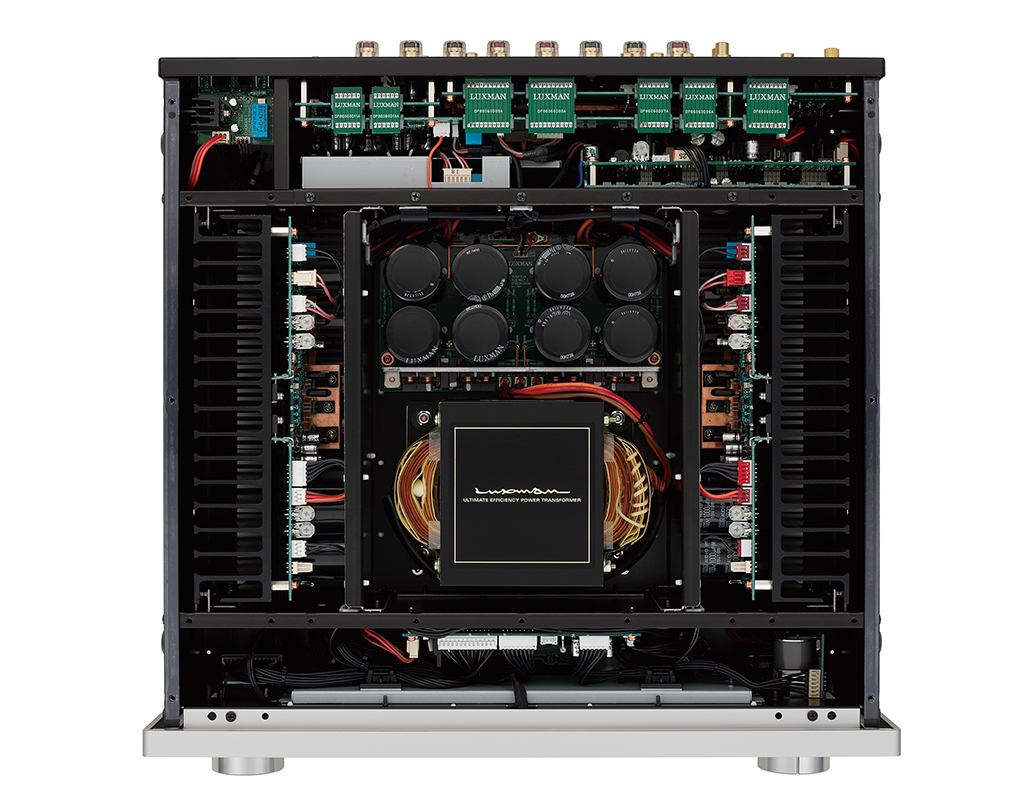
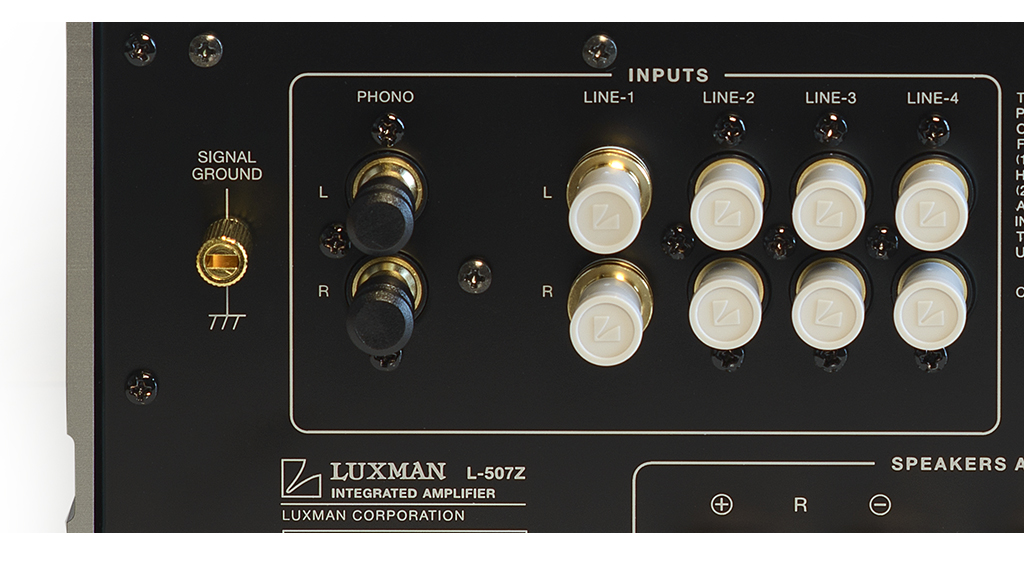
The Luxman L-507Z Integrated Amplifier

The Luxman L-507Z integrated amplifier marks the beginning of an entirely new “Z”series of amplifiers.

In typical Luxman fashion, they have borrowed heavily on tech from their flagship separates. Their website says, “The L-507z joins Luxman’s integrated amplifier range with numerous advances and features our newly designed “LIFES1.0” distortion canceling feedback engine. “LIFES” is a significant evolution from “ODNF” circuitry, which has long been a key advantage of Luxman amplifiers since its 2010 introduction in our X-series. The robust L-507z marks the beginning of Z-Series, all being developed to include this latest “LIFES” high-quality amplification system, a core technology also shared with our new flagship M-10x stereo/mono power amplifier.”

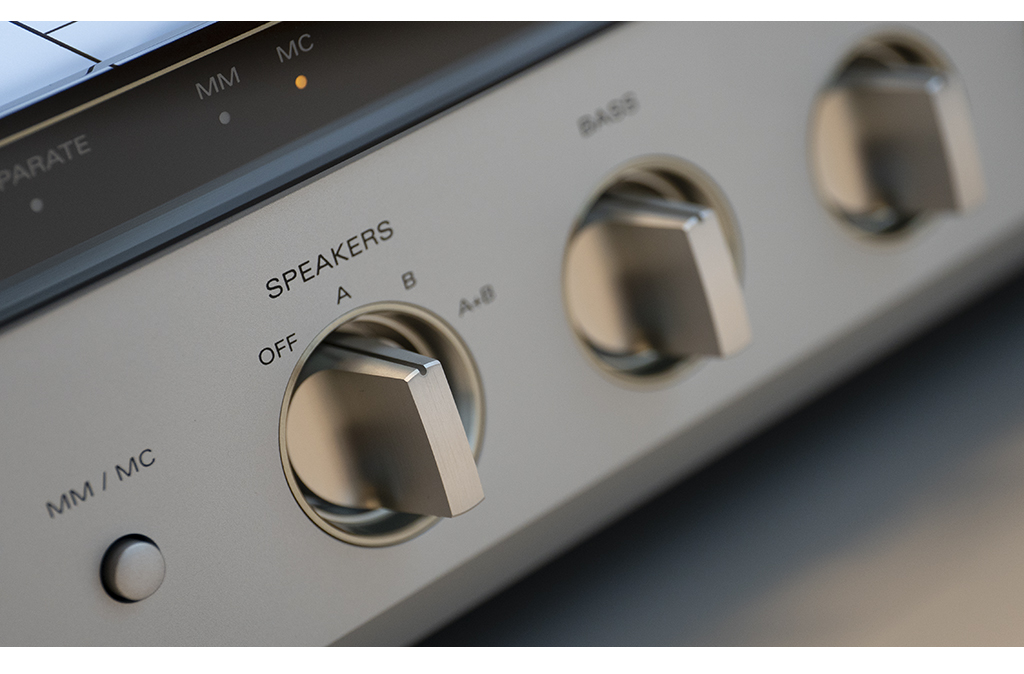
Bottom line, this amplifier sounds fantastic, and with 110 Watts per channel (into 8 ohms) can drive nearly any speakers with ease. We’ve got a full review on the way shortly but suffice to say that Luxman excels at delivering the quality of separates in a single box. If you want world class sound without needing a rack full of gear, this is the way to go. In addition to the rest of the amplifier updates, the MM/MC phono section is also improved.

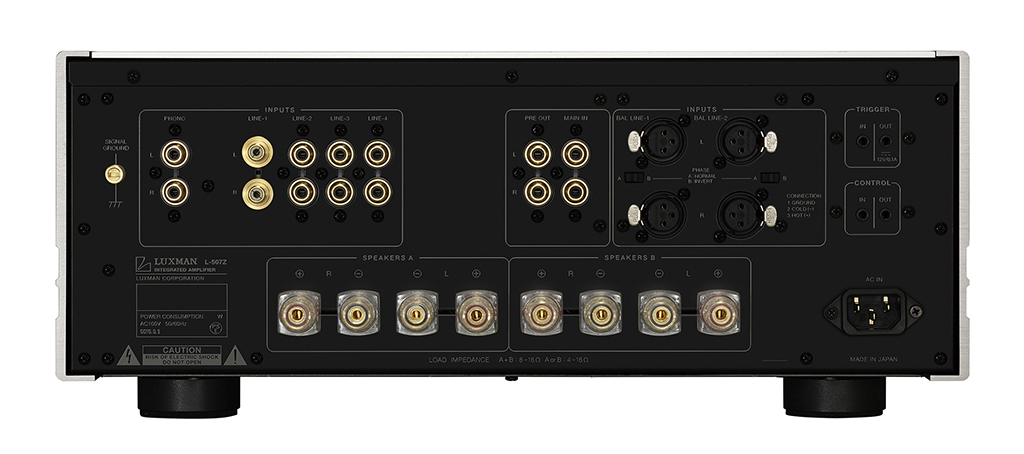
A nod to personal audio enthusiasts, the front panel is now equipped with a standard 6.3mm stereo headphone(s) jack and a new 4.4mm “Pentaconn” type. This stereo 4.4mm connection makes “quasi-balanced”, connection possible, featuring separate left and right channel ground returns.. Even the famous output meters now offer a red, LED readout in the center to indicate volume level. All of these subtle changes make for a major upgrade. The507z is the perfect anchor to a high-quality music system.

$8,995
Luxmanamerica.com

Updated Utopia Phones from Focal

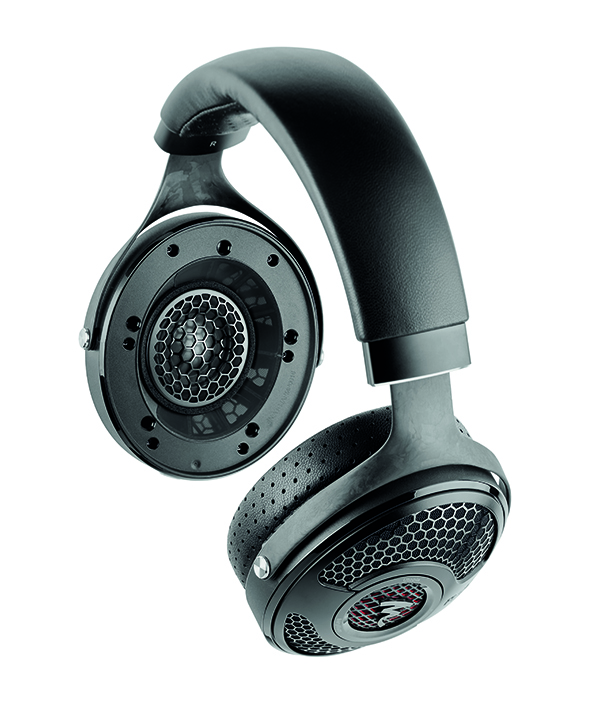
Constantly striving for sonic excellence, Focal has just announced a new, improved version of their top-of-the-line Utopia headphones. Now referred to as the 2022 Edition, the new phones are an evolution of sonic and aesthetic performance.

Here’s what they’ve told us so far, we’ve got a review pair on the way:

A new voice coil was developed for the new Utopia. Former-less Aluminum (material of previous Utopia voice coil) and copper to improve the reliability – approx. 30% of copper and 70% of aluminum (because aluminum is a lighter material).

Sonic upgrade: Focal changed the driver grill, with the ‘M’ shape grill (Pure Beryllium) that they developed with Clear Mg. The new grill perfectly follows the shape of the dome and driver inside, so it reduces the gap between the driver and the grill. Reducing the gap helps in the linearity of the frequency response, mostly for trebles. The M-shaped drivers and M-shaped grills enable even clearer and more accurate musical reproduction.

Design overhaul, so this more clearly looks like the flagship model of Focal’s headphone family, with its distinctive honeycombstyling. This is NOT just about looking good: the honeycomb design enables a more open sound, with greater driver movement.

Lighter design for greater listening comfort – by using forged, recycled carbon yokes.

Handcrafted in France in Focal’s specialist headphone atelier, which has received significant investment since Focal launched the original Utopia.

These are premiering at CanJam this weekend, where you can see them in the Focal Booth – F3/F4/F7/F8.

And if you need a pair right now, you can purchase them here:

headphones.com/products/focal-utopia

https://www.moon-audio.com/focal-utopia-2022-headphones.html

https://www.crutchfield.com/p_091UTP2022/Focal-Utopia-2022.html

For more info, Focal has a new section of their website all about the new 2022 edition. We certainly can’t wait to hear them and compare to our current reference Utopias. Please click here:

https://www.focal.com/en/headphones-0/headphones/for-home/utopia-2022

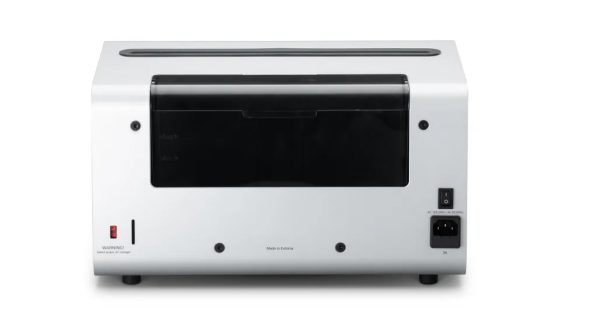
The Degritter Record Cleaner

This is more of a long-term review, but in a good way.

After living with the Degritter for some time now and having cleaned a ton of records with it, the out of the box love has grown. At about $3,000, this is the best one going for our money. The reason we say “about $3,000” is because the original price was $3,200, the price of the new soon to be released Mark II version is also $3,200, but there are still a few first gen machines for sale on retailer shelves at a slightly discounted price.

You know I’m not one to throw that B-word around loosely. However, I’ve owned a lot of RCMs over the years. Please notice the use of the word “own.” This journey began in the late 70s with an original Nitty Gritty and started a regimen of vinyl hygiene that’s stayed in place. We went through a few Nitty Gritty’s, a Keith Monks (both on loan and a buy) nearly all of the VPI machines, a ClearAudio RCM, a Loricraft, the Kirmuss, and the Systeme Deck.

The base VPI 16.5 that’s been around since current CEO Mat Weisfeld was only a figment of his father Harry’s imagination is still not a bad way to go for the budget minded record collector. But ultrasonic cleaning is the way to go to get your records super clean. Ten years ago, I might have commented that “you could buy a lot of vinyl for $3,200” but today not as much. Considering what records cost these days – especially if you have a lot of rare items, or an extensive collection of remastered discs, keeping them pristine is the best money you can spend.
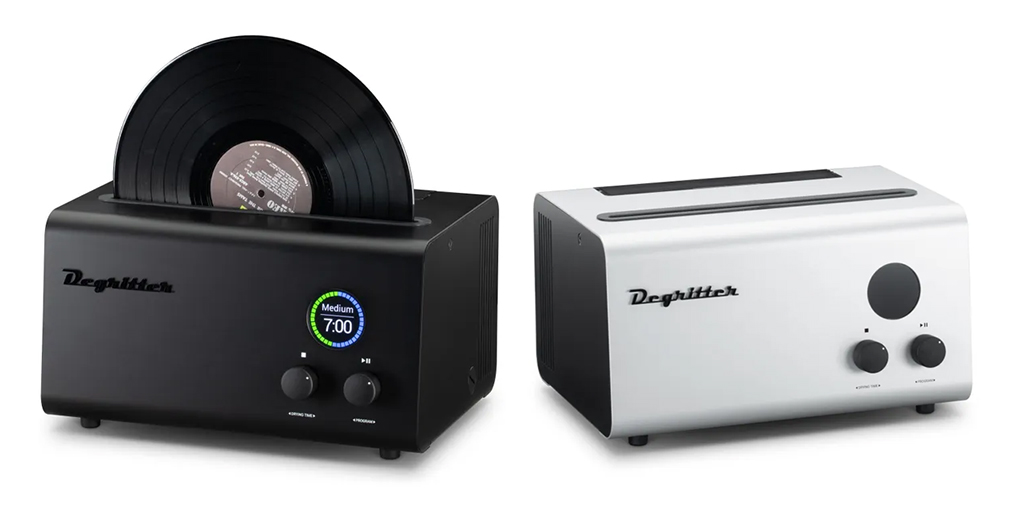
If you’ve ever read an article on vinyl in the mainstream press, they love to wax poetic about the classic sound of vinyl, with all the ticks and pops. Forget that – it’s not part of the true vinyl experience and it doesn’t have to be. Especially if you have a Degritter

Hands down the most user-friendly model going

You can take a quick peek at the step by step operation, here at the Degritter website. (https://degritter.com/products/mark-1/). You can also download the well-written manual, which will give you an even better idea of how the Degritter works.

It does its job with distilled water, the ultrasonic process takes care of the rest. If you have really dirty records, they do supply their own cleaning fluid that you can add to the wash tank, which should be changed every 30 records anyway. It’s not the worst idea to save the really dirty ones for a single batch.

Once the water tank is filled, all that needs to be done is load your favorite record, choose the cleaning mode, and push the go button. There are three modes, QUICK – 2 min/15 sec., Medium – 3 min/45 sec and HEAVY, 6 min-45 seconds. As most of my records are either very clean, going beyond medium was never necessary. In the past when using another ultrasonic cleaner, and buying more bargain records prone to filthy surfaces, the VPI 16.5 was used for an initial cleaning, then a pass through the ultrasonic.

A search for some really scummy records at our local used record store put the Degritter’s maximum cleaning ability to the test, and it passed with ease. This leads to the next great thing about the Degritter – it’s the quietest RCM going. While my Degritter is in a separate room where the main turntables in my system reside, behind a closed door, this still is a RCM you could listen to music with while cleaning records and not be annoyed.

It’s ability to perform the cleaning and drying cycle unattended makes cleaning records as painless and unobtrusive as can be. Nothing more boring than sitting above the VPI, scrubbing, and squirting and making a moderate mess. Again, convenience and refinement has a higher price tag. The seasoned record collector will love the ease of operation, and a clean, dry record to drop in a fresh archival sleeve when you’re done. Fantastic.


Odds and ends

The Degritter also allows you to set how high the water/cleaning fluid rises on the record, so that it doesn’t soak the label. They also offer adaptors for 7 and 10-inch records that will let you maintain these records. As I only have a handful of 78s, I did not try to clean them, but will ask the Degritter people if this is possible. Stay tuned.

Finally, this machine really caters to the vinyl enthusiast that is going to clean a LOT of records. Filters and accessories are very inexpensive, and the spare wash tank is a great touch. If you’re going from a big batch of dirty records to not so dirty, or brand new records, you can just pop a new tank in and keep cleaning while you rinse out the first tank.

The lack of sound

Every fluid and vacuum RCM we’ve tried always leaves a tiny bit of residue, even after a second distilled water wash only. It’s not the end of the world as we know it, but if you have a highly resolving system, you might hear a slight bit of swishing noise, almost like a faint hiss from a tape deck with a lot of wow and flutter. The ultrasonic method has none of this.

Even with a brand new record, (which we always suggest you clean anyway) the level of surface noise eliminated by the Degritter is almost like putting a better grade of tubes in your phono preamplifier. That kind of thing.

If you add a Degritter to your vinyl setup, you will never have to reminisce about those “clicks and pops” again. And that’s a wonderful thing. PS: The Degritter was one of our two Product of the Year winners in the accessories category. Highly recommended.

www.degritter.com

High End by OZ is now distributor for Lansche Audio

Lansche Audio is pleased to announce High End by Oz, based in Norwalk, Connecticut, as its official distributor for North America.

High End by Oz LLC. is a high-end audio distributor covering North America with some of the finest high-end audio products from around the world. The addition of Lansche Audio to the portfolio further expands our state-of-the-art offering in the North American market.

Lansche Audio was founded in 1990. Its production facility is in Konstanz, Germany.  Company co-founder Rudiger Lansche studied electrical engineering. A passionate violinist, he has been involved in the development of loudspeaker systems for over 40 years. He has developed the plasma tweeter (the basis for the Corona ion tweeter) decades ago – this is what lies in the heart of Lansche speaker design.

The launch of Lansche speakers to take place in the upcoming Capital Audio Fest scheduled to take place on 11/11- 11/13 2022 in Rockville, Maryland.

They invite you to experience Lansche Audio speakers through our dealership network in North America.

www.highendbyoz.com

Totem Kin Play Towers – More of a GREAT thing

I’ve been living with a pair of Totem’s Kin Play monitor speakers for almost two years now. Needless to say I love em.

However, a recent dog related accident, had one of them toppling off the (what I thought was unmoveable) filled, Sound Anchors stands and dinging a corner. This had me re-thinking priorities, but as I mentioned, the sound of the Kin Play speakers was fantastic for our bedroom system, allowing streaming music via AirPlay with the built-in DAC, or 2.1 video sound.

Enter the Kin Play Towers. Bigger sound, more bass, and more power! 200 Wpc to be exact. Now I can crank up the sound level even higher when watching F1. Life is good. And, even though they are made in black, the satin white blends into a small space exquisitely.

We will have a full review in issue 114, but there’s no way these are going back to the Great White North. If you need a compact, yet powerful and highly functional pair of powered tower speakers, the Kin Play Towers tick all the boxes.

$2,250/pair at your Totem dealer. Tell them I sent you.

www.totemacoustic.com

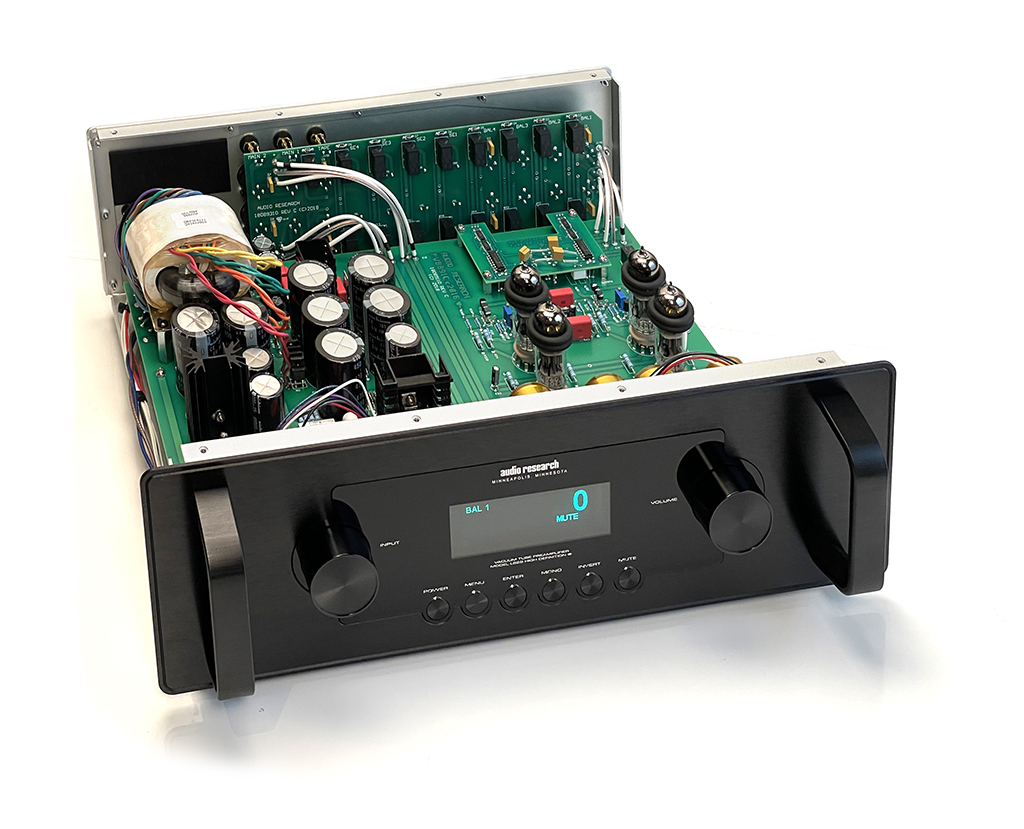
The Audio Research LS-28SE

Somehow, Audio Research is remembered too often only for their Reference series of components. (i.e. the most expensive), yet the LS series is still incredibly good, always incorporating the benefits of R&D from the REF series.

Time and current parts/shipping issues have pushed the price of the LS preamplifier to an even $10k, where the REF 6SE is now $17,000. Inflation doesn’t tell the whole story – back in 1989 when the original hybrid FET/Tube LS-1 was launched at $1,679 only pencils out to about $4k in today’s currency, seems at first blush that the LS-28SE might be overpriced.

However, the original LS-1 was a single ended line stage, where the LS-28SE is fully balanced, all of the switched controls on the front panel are now replaced by microprocessor driven controls, and most importantly, the sound is much closer to the REF than ever before. So much so, that comparing the LS-28SE to a friends REF 5 (that retailed for about 12k back in 2009) really reveals where the progress has been made. Where the prior LS-27/SE had a pair of 6H30 tubes, the 28SE has four.

For all but those with the biggest ambitions, the LS-28SE is an end of the road preamplifier. We’ve got a full review in the works, and some comparisons with past ARC preamplifiers to put it in better perspective. Regardless, the legacy is intact with the LS-28SE.

www.audioresearch.com

Zu Audio Dirty Weekend 6

Zu is back with the latest edition of their Dirty Weekend speakers.

If you’re not in the know, these are like a winery releasing a small batch of some of their best stuff, but not for crazy money.

The catch is you have to get them while they are available. Like a pop up store. We’ve got the last version and they are out of this world good. Highly recommended.

https://www.zuaudio.com/loudspeakers/dw6

Ella’s Latest: A must hear

A couple of years ago it was a German recording. Lost tapes of a 1962 show that caught Ella in some kind of prime (yes, she had several, as committed Fitzgerald fans know) were found and released, and from the crazed swing of “Jersey Bounce” to the sublime diction of “Mr. Paganini,” it was a jewel.

So is this new find, a Bowl/Berlin confluence from the summer of ‘58 that finds the singer’s voice limber, playful, commanding, fiery and thrilling…to say the least. I guess a case could be made that those adjectives could correctly be used during much of the icon’s career, but here listening on the back porch on a 2022 summer night, the blend of craft and esprit she brought to the Hollywood Bowl is euphoric.

Her famed songbook series was on its fourth installment, and it had just earned her a Grammy for Best Female Vocal Performance. Irving Berlin’s “Blue Skies,” “Isn’t This a Lovely Day” and “Remember” were probably pinging through the heads of ticket-buyers when the First Lady of Song, backed by a contingent of brass, reeds and strings helmed by the album’s conductor Paul Weston, stepped up to the mic to sweep everyone away. “As you listen to the band, don’t cha get a bubble? As you listen to them play, don’t cha get a glow?” The opening of “Let Yourself Go” is a good place to point your ears. Team Weston is taking the advice of the song’s lyrics, bouncing the beat like transcendence could be part of every bar.

Ella grabs the vibe and doubles down through many of these performances. Dash and drive fight it out with zing and zip as she conveys the anticipation of a night on the town in “Top Hat, White Tie, and Tails.” And the brass section’s brio meshes nicely with the singer’s vocal acrobatics on “Heat Wave.” The occasional indictment that Fitzgerald lacked sufficient dramatic skills to convincingly convey despair is swept to the side here, too. Her quaver sets a forlorn tone on “Russian Lullaby” (a duet with the harpist) and the poignancy is palpable when she speaks from behind a broken heart in “You’re Laughing At Me.” But the ballads are in the minority here. By the time the giddy swag of “Alexander’s Ragtime Band” closes the deal, we’ve all been reminded that Ella set the bar high when it came to dispensing exuberance. Artistry abounds on this must-hear find.

Issue 112

Cover Story

A Chat With Al DiMeola:
Saturday Night, The Beatles, and much more!


Features

Old School: Stax SR34

Cartridge Dude: The Skyanalog G-2

1095: The Music Hall Analogue A3

The Audiophile Apartment: Auto return with the Technics SL-1500C

Journeyman Audiophile: The Focal 936K2 Speakers

Short Take: The Naim HiCap DR

Reviews

The REL T/9X Subwoofer
HiFi Rose RS 150B Streamer/DAC/Preamp
Rega Elicit Mk.5 Integrated Amplifier
LAB12 Melto 2 Phono Preamplifier

On With The Show! A quick recap on Munich Hi End 2022
By Mario Dolinar/photos by Mario D and Angela Cardas

Music

Playlists:  We share our readers choices from around the world
Setlist:  Sean Zloch sees Roger Waters
Jim Macknie on JAZZ

Mine: It Should Be Yours

Future Tense: Gear in our immediate future

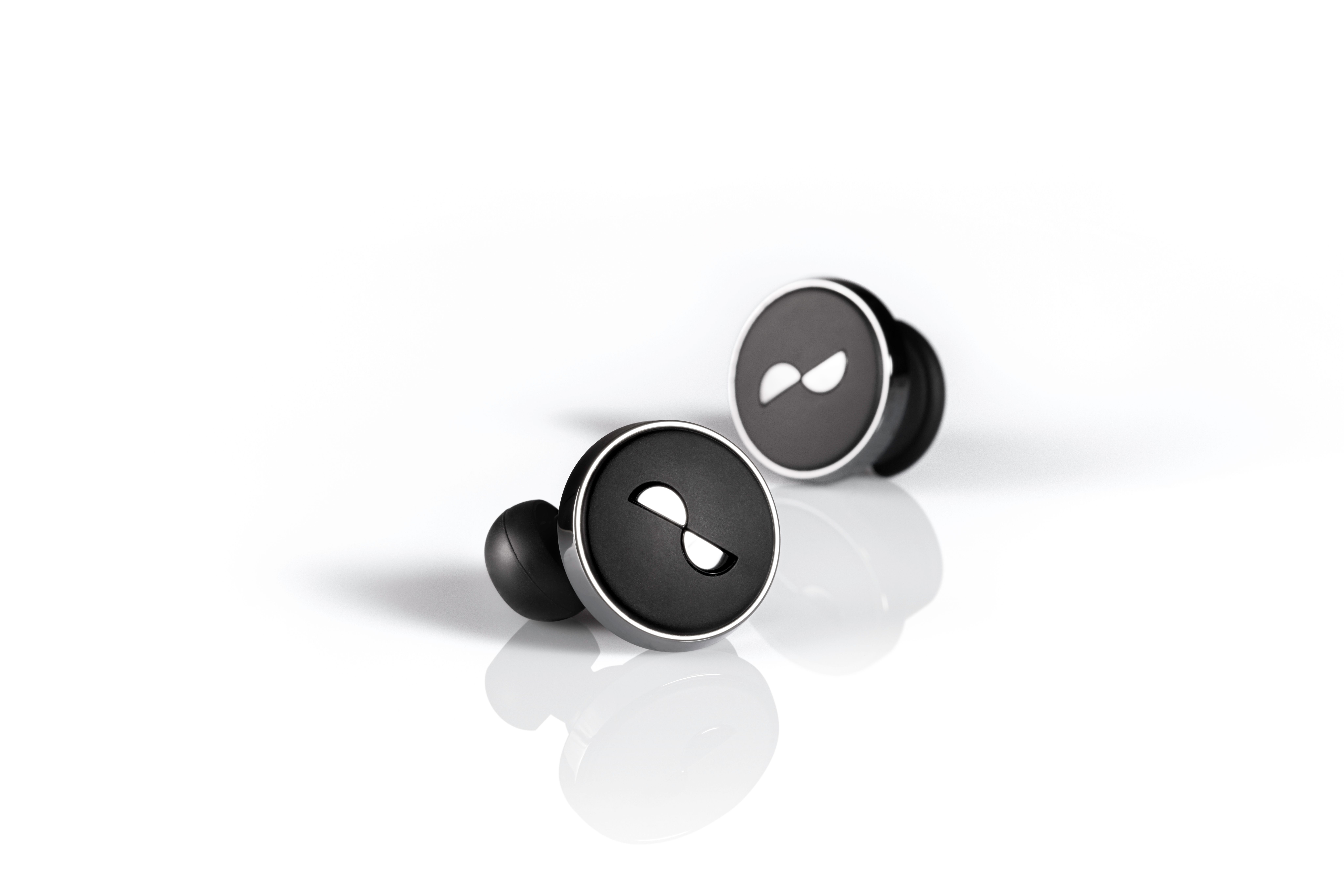
New buds from Nura feature Dirac…

We are anxiously awaiting a review sample of these new ear buds from Australian manufacturer Nura. The following is their release info:

The NuraTrue Pro is designed to deliver audiophile-grade sound with the convenience of a wireless earbud, by combining lossless audio with Nura’s award-winning personalized technology for perfectly balanced sound. The Dirac Virtuo spatial audio solution adds a new dimension to the enthusiast-grade sound, turning the high-end headphone audio experience into a speaker-like immersive sound experience that puts listeners in the studio to hear music as artists intended.

“The NuraTrue Pro delivers uncompromised sound fidelity with its cutting edge technologies and innovative design,” said Mats Oberg, Chief Commercial Officer, Dirac. “Dirac Virtuo elevates the experience further with its uncompromised spatialization. We ensure that standard stereo sound is spatialized with high accuracy, bringing out the spatial cues that already exist in stereo recordings. Users enjoy an immersive audiophile-grade sound with standard stereo content, without requiring any specific streaming platform.”

The award-winning Dirac Virtuo solution employs a high-resolution binaural room impulse response technology to restore speaker crosstalk and correct the stereo soundstage. With Dirac Virtuo, sound seemingly comes from a pair of premium stereo speakers in front of the listener, rather than from inside their head – creating a truer, more accurate stereo soundstage than regular headphones can deliver.

“In designing the NuraTrue Pro, we adopted a ‘no compromise’ philosophy that applies to all aspects of the product, from audio performance through to product design and user experience,” said Dr. Luke Campbell, CEO and Co-Founder at Nura. “In keeping with that philosophy, it is natural for us to adopt Dirac Virtuo to deliver the highly demanded spatial audio to our users, crafting a premium experience that ensures nothing gets between you and what matters most, your music.”

Dirac Virtuo is also supported by the headphone industry’s most common chipsets and frameworks, including Qualcomm, BES, and MediaTek. By enabling spatial audio natively in wireless headphones, Dirac ensures manufacturers like Nura can differentiate their offerings in a highly competitive market, and consumers can enjoy immersive, high-quality sound from standard stereo content – for elevated music listening, gaming, and movie watching experiences.

In addition to Dirac Virtuo and lossless audio over Bluetooth, the new NuraTrue Pro wireless earbuds feature Nura’s award-winning Personalized Sound technology which measures a user’s hearing to create an individualized EQ; the new Nura ProEQ for manual EQ fine-tuning within the companion app; four microphones including a bone conduction sensor for crystal clear voice calls; wireless charging through any Qi-compatible charging device; and up to eight hours of playback on a single charge, with an additional 24 hours from the included charging case.

Here’s a link to their early-purchase Kickstarter program:

https://www.kickstarter.com/projects/nura/nuratrue-pro-lossless-audio-earbuds-with-personalised-sound

Acora SRC-1 Speakers

Acora’s Scott Sefton opened the door with their stand mount SRB speakers a while back, delivering a lovely experience. Even their stand mount speakers generate a lot of low-frequency energy from a compact enclosure.

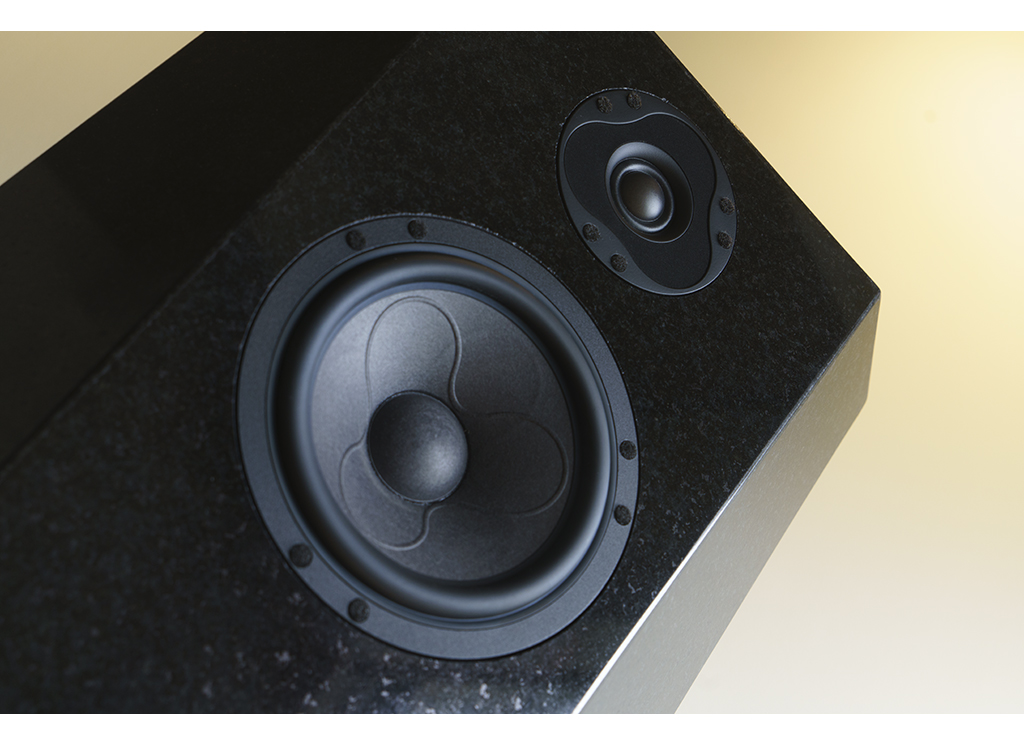
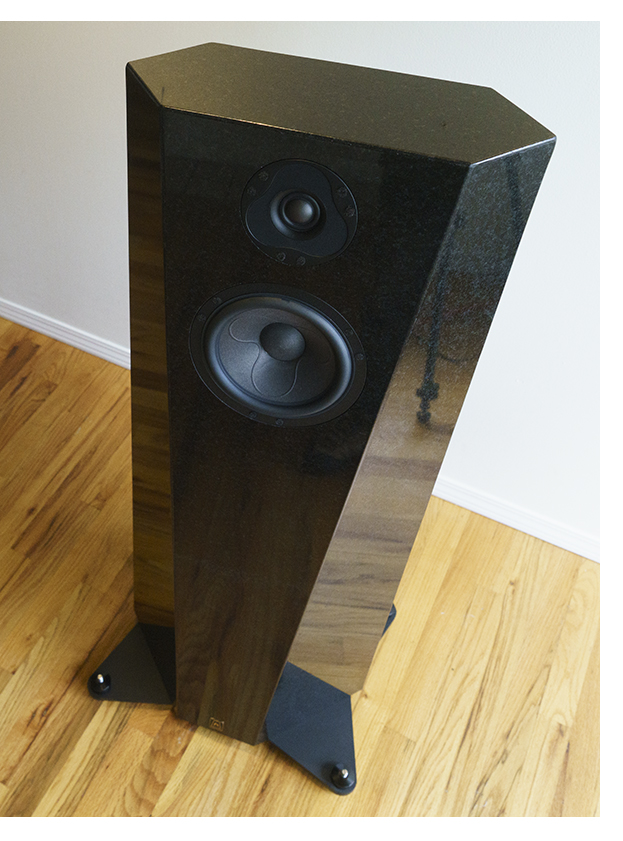
Like a well tuned, high-performance car, it’s not just one aspect of the speaker that excites the senses. Still, a system that all parameters have been carefully optimized from driver choice to crossover components to their inert cabinets – made entirely of granite.

Valerio Cora, the man who designs the Acora speakers, chooses different driver combinations for each of their three loudspeakers for best effect. A casual look makes it seem like he’s merely added a larger woofer and then two in the bigger SRC-2 model. This is not the case.

Where the SRB uses a beryllium tweeter, the SRC-1 features a soft dome tweeter. This accounts for the SRC-1 sounding slightly less forward than the SRB. It’s not a huge difference, much like moving back about five seats in a good hall. The largest speaker in their range offers more bass extension and dynamic ability as well. In this respect, the Acora speakers remind me of a Magnepan or the old Acoustat ESL speakers in that you choose the speaker for the size room you intend to place it in.

All three speakers share a family sound delivering a relatively similar performance when used in the correct sized room. Other a little bit of ultimate bass extension, the SRB in a small room at modest to loud levels sounds remarkably similar to the bigger Acora models in progressively larger rooms. This is no small engineering feat.

Rather than make you wait to the end, here’s the money quote: the SRC-1 is the most neutral speaker I’ve had the pleasure of listening to. We are keeping these to become part of my living room reference setup because they are such a great place to start when reviewing other components. They are that good. Will they be the speaker for you? Read on and see if this approach makes sense. I’ll do my best.

Lack of coloration

Everyone perceives sound differently (just as we do color), and everyone has different goals for their HiFi system. If your priorities lean towards tonal accuracy, it’s easy to get too much of a good thing, ending up with strident speakers that wear on you after extended periods in the listening chair. At times, that extra dose of resolution that catches your ear at a HiFi show or in a dealer showroom is too much in your room after a few long days. Hyper detail can be a cruel and painful addiction.

The SRC-1s do not suffer from this issue in the slightest. The closest comparison that comes to mind is the 3000 series Boulder monoblock amplifiers. They are highly resolving yet not fatiguing, imposing no sonic signature of their own. You can listen to them all day without the slightest bit of fatigue or boredom. They offer an unmatched clarity that is unfortunately out of reach for most music lovers at just over $300k per pair. You can’t get that much money for both of your kidneys. At $28,000/pair, the SRC-1s are not out of reach. Easter’s coming; sedate a family member after dinner, snatch a kidney, bam. They won’t miss it.

After 17 years of publishing TONE, we’ve talked to many of our readers via various channels, and you’ve been telling us that a lot of you possess systems in the $50k – $100k range. If you’ve been planning on building a system around this kind of sound, I highly suggest the SRC-1 for many reasons.

Season to taste

Because music is so personal, most of us usually prefer “a sound.” The Acoras let you play it straight, go for a bit more resolution, or a bit more romance simply by switching the components. The Boulder 866 integrated the T+A 2500 and the combination of the Audio Research REF 80S/LS-28SE all provided a more neutral voice during extended listening sessions. The ARC combo is the most resolving of the group, creating a soundfield that is deep, deep, deep. Nagra’s Classic Pre and Amp offered just a touch more dynamic drive than the ARC pair, with slightly more presence in the lower registers but still closer to what we’d consider natural/neutral.

My reference Pass XS Pre/XS Phono/XA 200.8 monoblock combination delivers a warmer tonal balance. Still, the extra current drive helps the SRC-1s produce an even larger sonic landscape than the previous components. Even warmer still, the PrimaLuna EVO 400 Monoblocks (with KT-150 tubes) shrink the sonic space slightly but add tons of personality, embellishing the midrange as a classic tube amplifier is wont to do.

Acora’s 90.5dB/1-watt sensitivity rating only tells part of the story. These speakers are very easy to drive with anything. Should you be an audio enthusiast that loves single-ended triodes, again, the SRC-1s provide a lovely presentation. Bringing the CARY 805 monos front and center produces a very colored but oh-so-magical SET vibe to the party. Going through a long playlist of vocal and acoustic tracks proves immersive and beguiling. If your musical taste is heavily weighted in this direction, you could happily live here.

It will be tricky to find electronics that will out resolve the SRC-1s unless you have Ferrari money at your disposal. The good news is, whether you purchase a pair of SRC-1s as the endcap on your audio system or use them to explore a wide range of components, cables, and recordings, they are incredibly versatile.

Further listening

The Acora speakers will bring a lot of “wow, I didn’t hear that before” or “I didn’t hear it like that before” moments. Rather than bore you with what seems like an endless barrage of record reviews, forcing my questionable musical taste upon you, suffice to say, these speakers will keep you riveted to your listening chair for hours.

The more time spent listening to these speakers the more challenging it is to describe the lack of sound and voice they possess. Treble is extended but not harsh, tizzy, or tipped up, and bass is equally extended, with a high level of resolution. All but the most hard-core electronica listeners should find the lower registers of these speakers more than adequate.

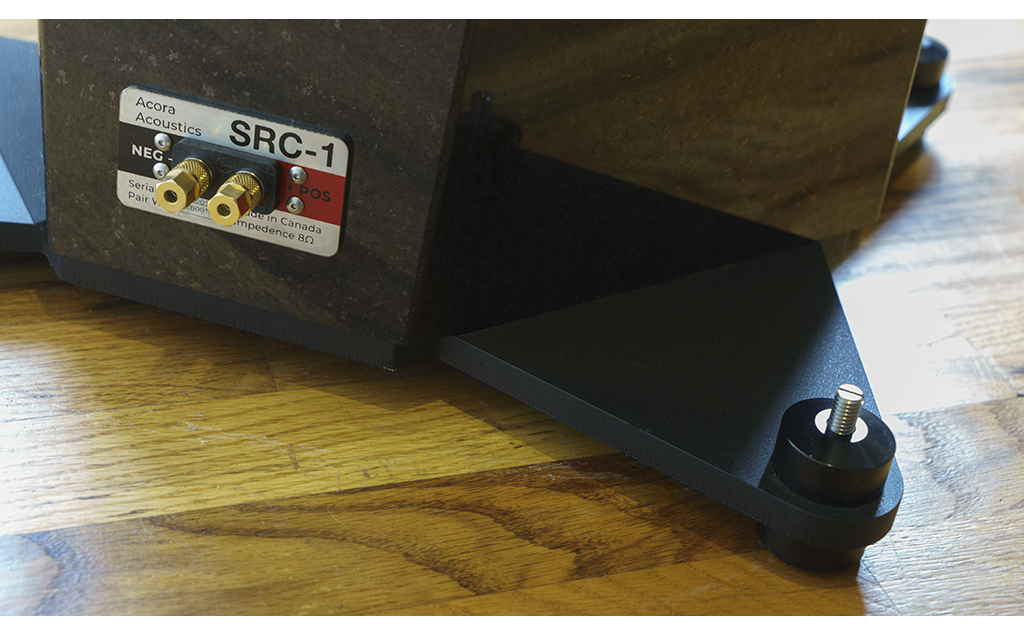
Interestingly, Acora suggests no toe-in for setup, and while this seemed a little counterintuitive at first, it works wonders. Bringing the speakers a little closer in (we ended up about 6 feet apart in the small room and 8 feet apart in the big room) and eliminating toe-in dramatically increases horizontal image size and image precision. At 246 pounds each, get a friend to help you to place the SRC-1s before you install the spikes, or you could damage something. You might jump to the conclusion from my pictures that I have the speakers “set up wrong,” because the screw adjusters are showing. What I’ve done here, and I suggest for anyone with hardwood floors, is to use the black cups that normally would screw on top here, (and finely finished they are) to use OVER the spikes, acting like pucks. As I have an older home and wasn’t quite sure just how much weight per square inch would work, I decided to be safe rather than sorry.

At the beginning of the review, there was a passing reference to planar and electrostatic speakers. I have always had an admitted bias towards coherence over almost anything else, and in this aspect, the Acoras excel. They feel like a single-driver speaker, but with extension and dynamics. Combined with the inert cabinet, these speakers disappear in the room like few others.

And, those cabinets

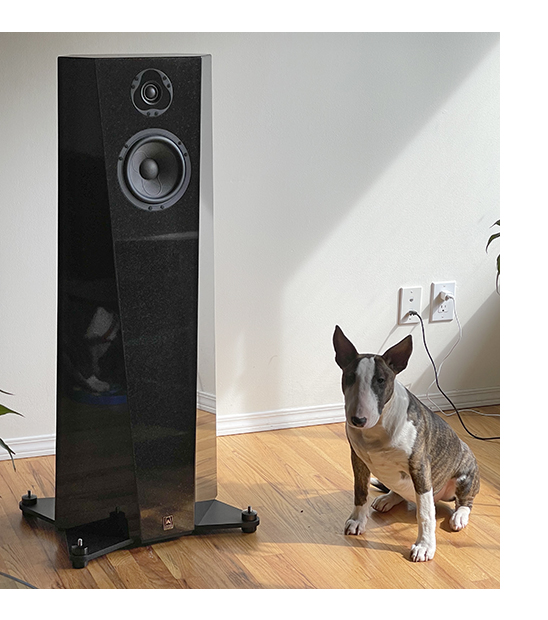
Now that I have a wily pair of Bull Terriers zooming around my house, pet-friendly speakers have become more of a priority. Lucy and Ricki’s massive teeth can’t touch that granite enclosure, and at almost 300 pounds each, they can not tag-team them to the floor either. I’m guessing the same amount of non-destructibility applies to those of you with toddlers as well.

The granite also makes for an incredibly inert way to mount drivers – making for an enclosure that simply lets the drivers do their thing. While companies like Sonus faber, Harbeth, and others “tune” the cabinet to work with their drivers, once you hear the purity of Acora’s approach, you’ll always hear the cabinets elsewhere, at least to some extent. (And I say this as a Harbeth and Sonus faber owner.)

Practicality aside, the SRC-1s are beautiful. Not entirely as black as the Spinal Tap album cover, they still have some detail in the black, looking absolutely beautiful when light hits them. They are austere enough that they should work within any décor, though they probably lend themselves to a more modern room. As does everything black. The amount of time and precision to cut granite to this level of accuracy should not be overlooked either. The cabinet joints and driver cutouts are perfectly executed.

Are they your cup of?

The toughest part of writing about products like this (i.e., ones you really like) is not sounding like a fanperson. But, I genuinely hope that if the description of the SRC-1s sounds intriguing, you’ll seek out a pair to listen to. These really have been a favorite. Very few speakers can serve double duty as a reviewing tool yet provide hours of musical enjoyment when not in gear evaluation mode.

Having a speaker with such a natural presentation on its own makes for a $28,000 pair of speakers you can keep around for a very long time – maybe forever. When you consider the expense of buying and selling multiple pairs of $10k speakers (and losing a few thousand bucks every single time) putting the SRC-1 in your system and getting your sonic moods satisfied by merely changing electronics is a pretty good value at the end of the day. Actually an Exceptional Value Award.

www.acoraacoustics.com

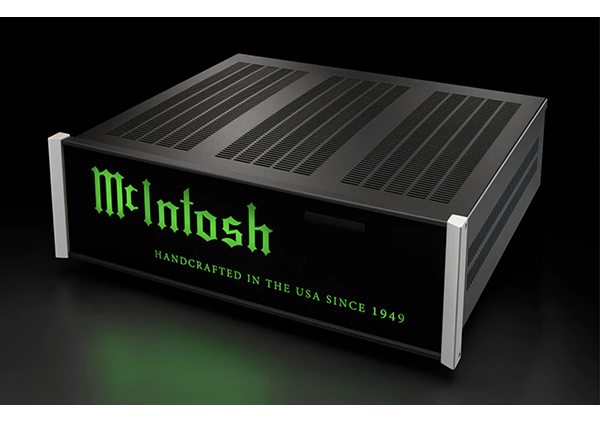
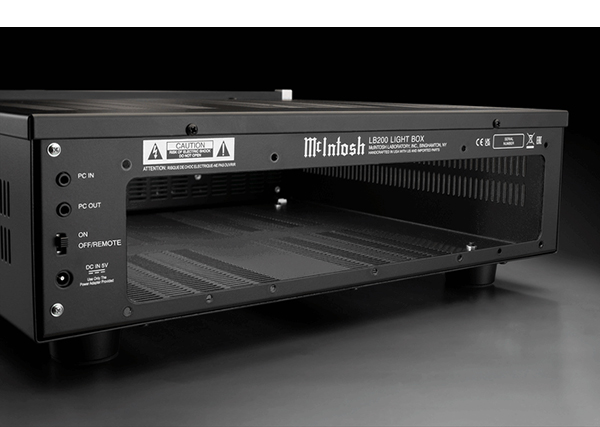
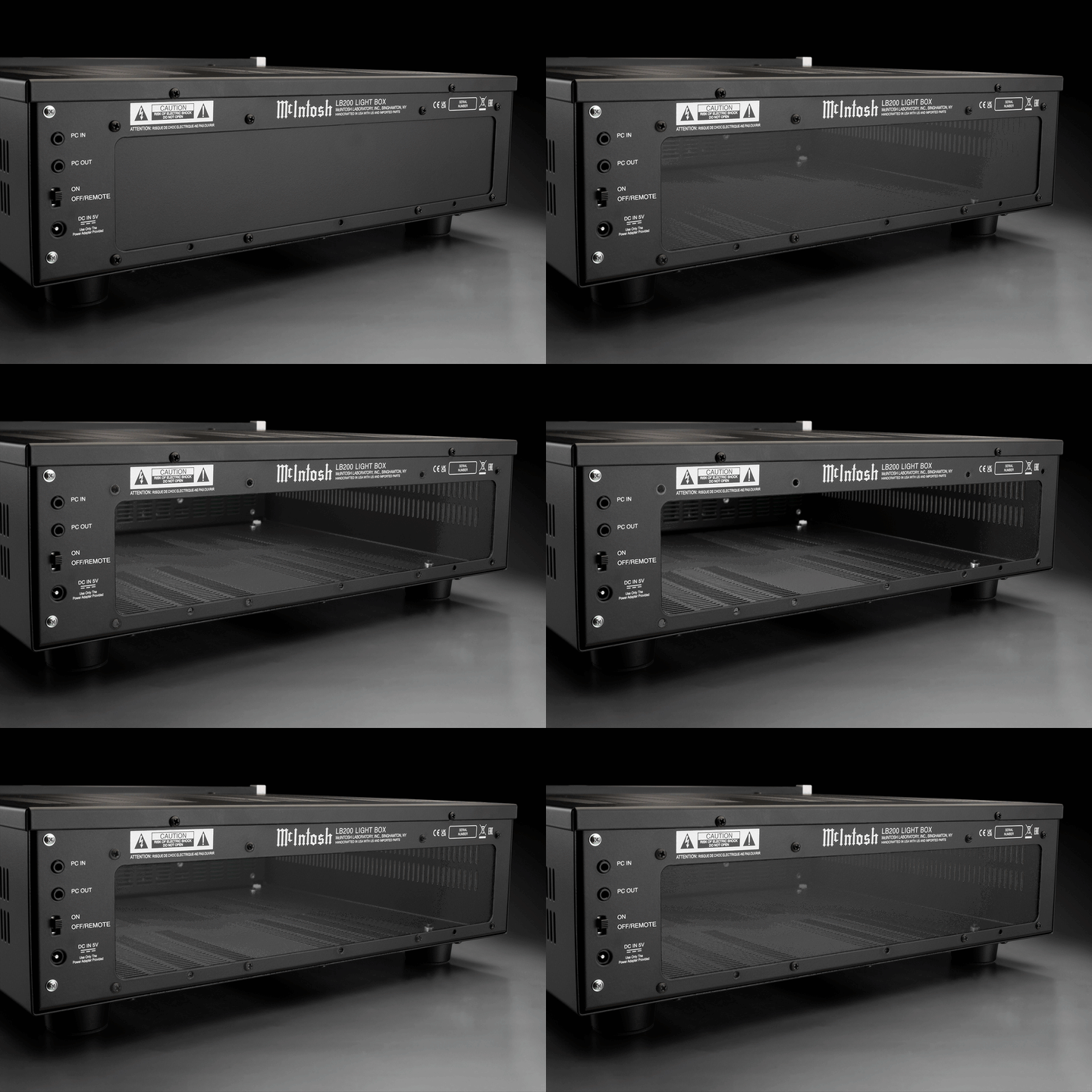
A Box of NOTHING from McIntosh: The LB200

The first hifi system I experienced was comprised of McIntosh components, so I’ve been a fan for about 50 years. I’ve owned my fair share of Mc gear over the years, and love my MC275.

I kept my mouth shut when the McIntosh people published press photos with turntables on the same shelves as speakers. “We’re just doing it to look photogenic,” they said. I kept my mouth shut earlier this year when they released $7,500 worth of wood slabs, passing them off as vibration control devices. “They are made by a very prestigious, environmentally conscious furniture manufacturer,” they said. I even kept my mouth shut when they released that rubbish $500 wifi thing – which I actually bought so we could get one in for review sooner than later. BTW, you can’t even read the logo on it – guess you have to pay four figures now at Mc to get a legible logo.

Today I got the press release for the new LB200 Light Box that retails for $1,500. And guess what’s inside? NOTHING. No really. NOTHING. This is fucked up. Really fucked up.  “Have you spent a lot of time creating a beautiful McIntosh system ONLY TO HAVE IT TARNISHED BY A NON PREMIUM COMPONENT?” Are you kidding me? Now if this were $199, or better yet a GIVE AWAY with Mc systems, hell yeah. I know how Mc lovers love big racks full of stuff with the logo and the meters. The more the merrier at that point.

But $1,500 for this thing, really? I could see if they brought back the neon McIntosh clock that used to hang in dealers for say, $300 – $500. That would have been cool. This thing doesn’t even tell the time. It just has the McIntosh logo on it. That’s it. “Handcrafted in the USA with US AND IMPORTED PARTS.” So basically, they are buying the front face plate with the LED assembly for three dollars in China, and taking the casework they already are building for standard sized Mc components.

I have never said anything overly negative about the industry I love, a brand I grew up with (and respected until today) and love but this is just too much. I can never own a piece of McIntosh gear again. I don’t care if it’s a mint pair of MC30s at a reasonable price. This is so wrong on so many levels. And it’s a major slap in the face to other companies that actually make decent (yet NON-PREMIUM) components that actually have something in the fucking box for $1,500.

I don’t EVER want to hear another comment about this product or that product “not being worth the money,” as long as the McIntosh LB200 exists. The good news is that the value of everything made in high end audio that actually has COMPONENTS inside is now worth double. Cables aren’t worth the money? Shut up.

This is the best that the new owners of McIntosh can come up with? Really?

As William Shatner and Henry Rollins once said: “I can’t get behind that.”

PS:  Really not pulling your legs here. NOTHING inside:

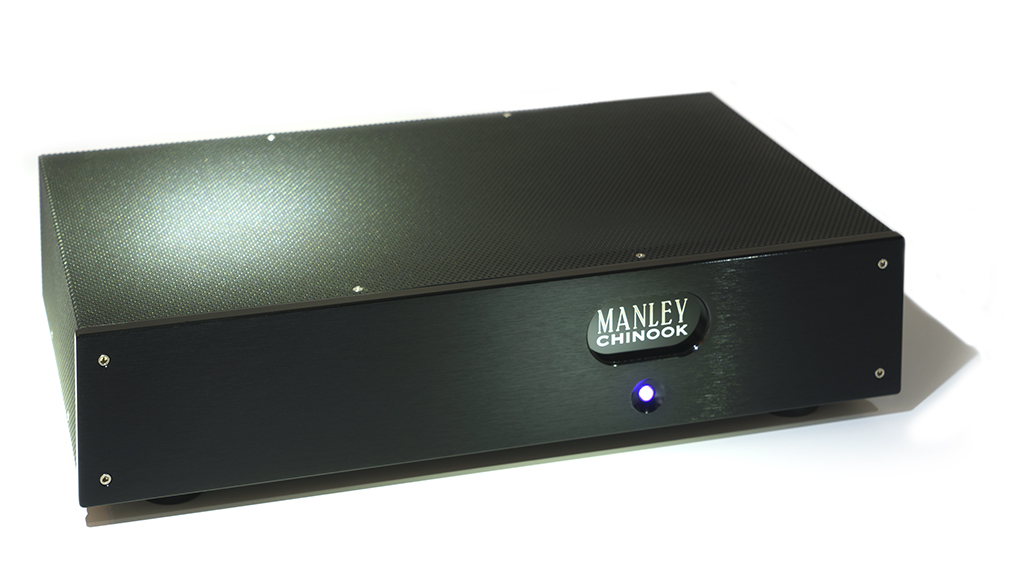
Manley Labs Chinook Special Edition mk.II Phono

Many a vinyl enthusiast has envisioned owning a Manley Steelhead phono preamplifer.

It’s a killer phono stage, with tons of adjustments, and inputs for three turntables. How cool is that? It also features a volume control, and a single line input, so you could use it as your system’s front end. Just add your favorite DAC, power amp and roll.

Not everyone needs three inputs, or has close to $10k for the current Steelhead. EveAnna Manley and Kevin Deal of Upscale Audio are two of the coolest cats in hifi, and have they got a deal for you. $2,899 gets you an “Upscale Audio Edition” Chinook.

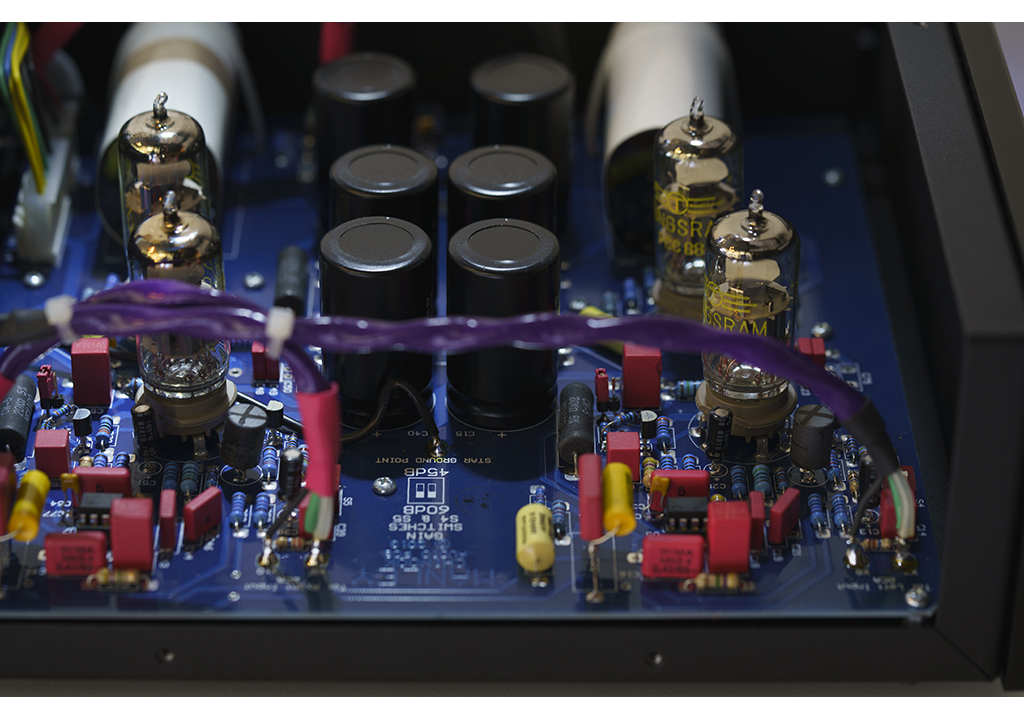
This single input, single chassis, MM/MC wonder has a lot (a lot, a lot) of Steelhead DNA inside. Most $3k phono preamps weigh about as much as an iPad these days, and are big on empty space when you open the case. The Steelhead is built just like all the other pro gear Manley is famous for (i.e. reliable…) and Mr. Deal hand picks the tubes. Just look at the inside of this beauty!

Should you be a PrimaLuna owner, you know that they don’t make a matching phono preamplifier, and cool as the regular Manley Chinook is, it only comes in Manley purple. (not that I don’t love purple, but if you’re trying to be all matchy-matchy, it doesn’t work) So, Kevin and EveAnna made a series of these in black or silver to match your PrimaLunas, or whatever gear you happen to have in black or silver, in case you can’t wrap your brain around purple.

We’ve got a full review in the works, but the short story is: Big, dynamic, quiet, and three-dimensional. It’s way beyond wow for the price asked.

You can go right here to purchase one. Tell them we sent you. Highly recommended.

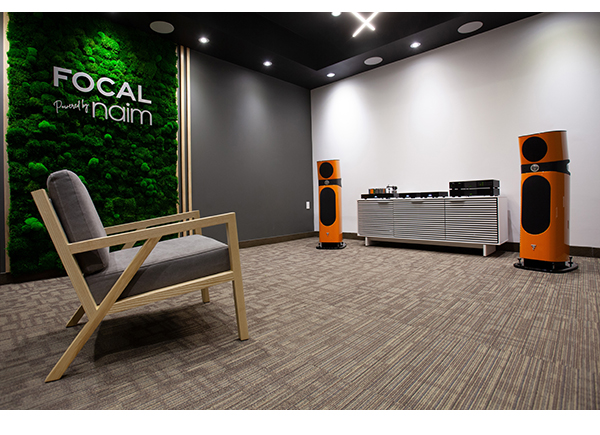
New Focal Powered by Naim Spaces in Barrie and Winnipeg

The Vervent Group, that unites Naim and Focal has opened two more “Focal Powered by Naim” stores in Canada. Winnipeg and Barrie to be precise. This is an incredible way to experience the full depth of these brands, along with their personal audio products. It’s a big win for new and seasoned audio enthusiasts.

Focal Powered by Naim Barrie takes place in the EQ Audio Video store, led by Edward O’Herlihy, an expert in audio solutions for more than thirty years. Focal Powered by Naim Winnipeg moves to Creative Audio in St. Boniface’s French Quarter, a store run by audio enthusiast Jeff Kowerchuk.

CUSTOMER EXPERIENCE IN THE SPOTLIGHT

Through their global network of stores and shop-in-shops, Focal and Naim put their customer at the center of their attention and offer them an authentic experience. Discovery of complete systems and high-end products, sound advice and listening experiences. They allow you to fully grasp the quality of Focal and Naim sound and to project yourself at home with a hi-fi or Home Cinema solution.

FOCAL POWERED BY NAIM BARRIE

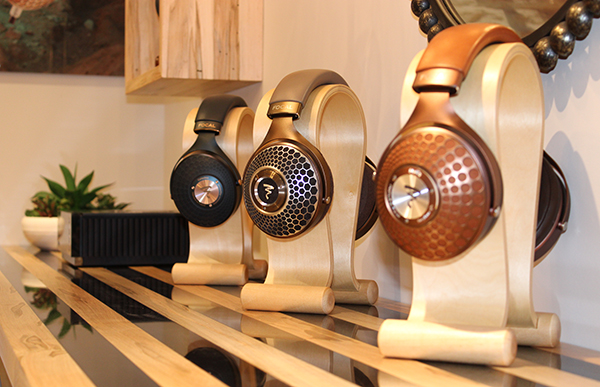
Close to the Barrie Molson Center, this shop-in-shop invites you to discover the World of Focal and Naim and test products via the four demonstration rooms of the luxurious EQ Audio Video store and a headphone bar with Focal’s headphones for a unique listening experience.

Highlighting the space will be the exclusive Focal Naim 10th Anniversary Edition system. It includes Focal Sopra N°2, Naim NDX 2 – NAC 282 – HICAP DR and NAPSC – NAP 250 DR for $48,000 USD and $62,400 CAD. The system includes all the connections you need, including a pair of Naim’s top-range Super Lumina speaker cables.

Focal Powered by Naim Barrie

130 Saunders Road, Units 5,6,7

Barrie, Ontario, L4N 9A8

Email: [email protected]

Website: https://www.focal.com/en/focal-powered-by-naim-barrie

Located in the Creative Audio store, Winnipeg’s Focal and Naim shop-in-shop offers immersive listening in its two demonstration rooms, as well as more intimate listening at its Focal headphone bar. Designed around sharing, the space presents hi-fi and home cinema products of excellence but also unique finishes, such as the Focal Sopra N°2 speaker available in its Electric Orange finish.

Focal Powered by Naim Winnipeg

7-353 Provencher Boulevard Winnipeg, Manitoba R2H 0G8

Email: [email protected]

Website: https://www.focal.com/en/focal-powered-by-naim-winnipeg-0

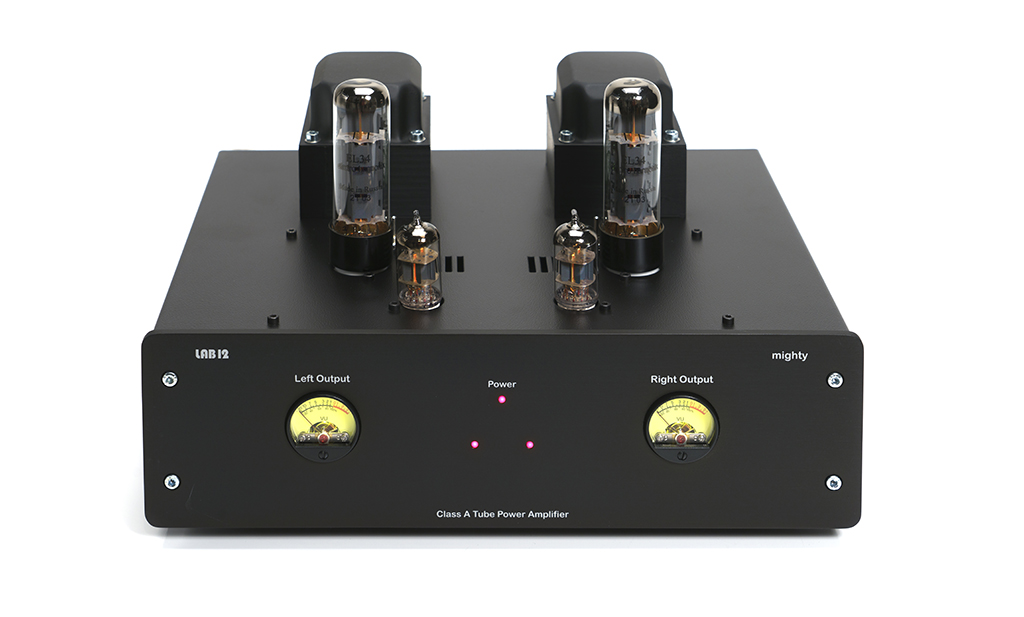
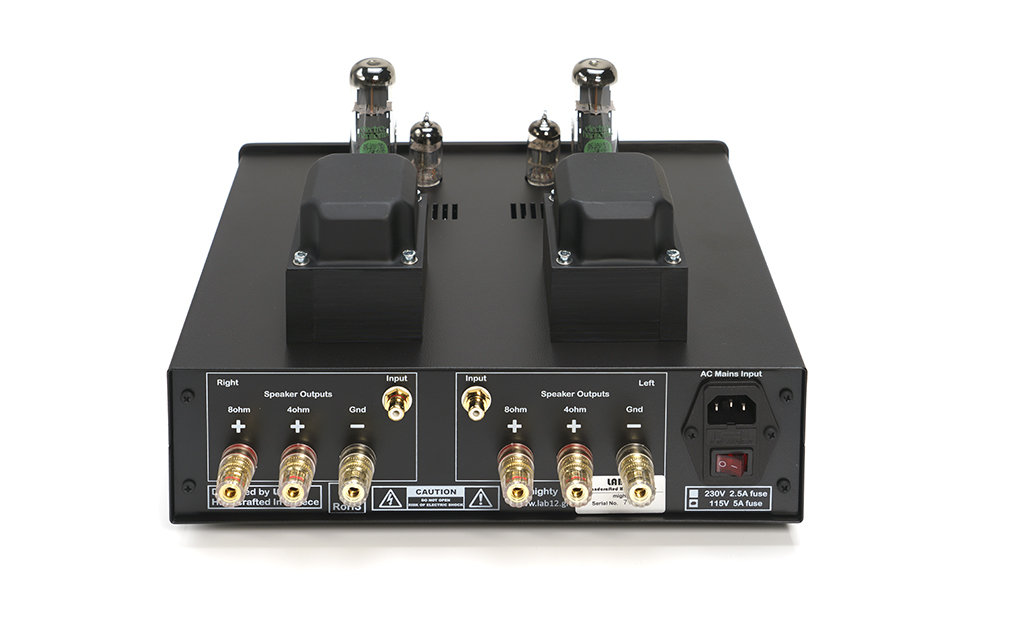
Lab 12 Mighty Power Amplifier

Don’t let the small footprint of this 10 Watt per channel fool you.

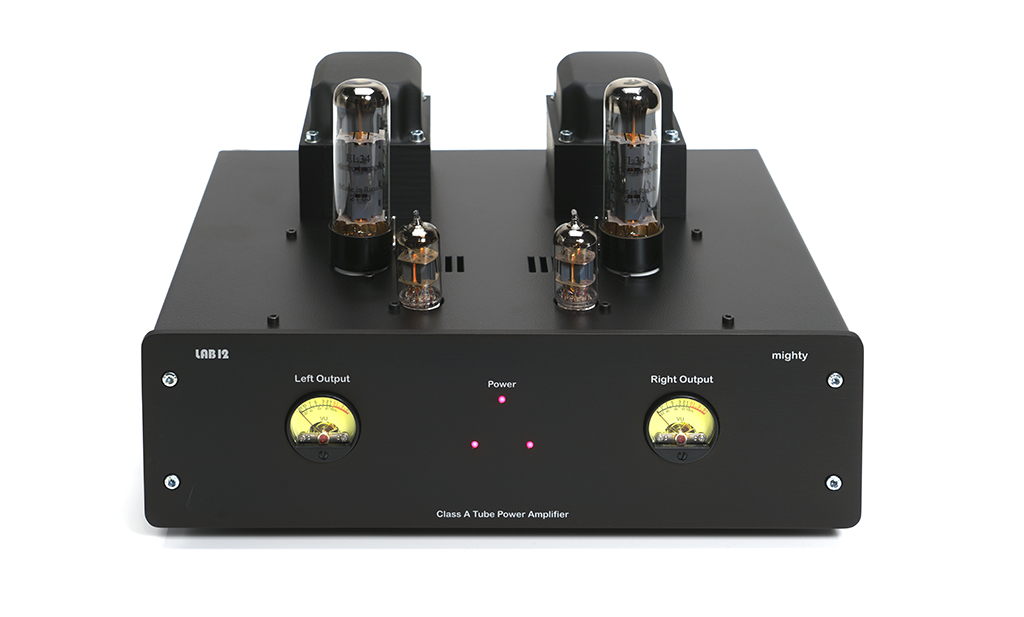
Even though it has a modest output, this single ended Class-A amplifier can be used in ultralinear or triode mode. It ships with a pair of EL34s, but can also be used with 6550 or KT88 output tubes. We tried them all and it’s more of a different, than better sound. (of course, our personal favorite is the EL34) A pair of 6NP1 dual-triodes round out the tube compliment. Simple.

From the coolio power output meters to the glowing tubes, this amplifier is a dream come true for anyone using efficient, high-sensitivity speakers. Thanks to The Heretic Speaker Company’s A614s, there’s an incredibly musical system playing in room 2 these days.

Though we did cheat a bit, using the Pass XS Pre and dCS Vivaldi ONE digital player to establish the Mighty’s performance envelope, moving to a more reasonably priced front end (the Naim Uniti Headphone Amplifier used as a DAC/PRE) is just as enjoyable. Even with less sensitive speakers (the Eggleston Nico EVOs, with an 87db/1Watt rating), the Mighty still delivers great, low volume listening.

With a single pair of RCA inputs, it’s easy to put in your system, and the sound is robust. The epitome of tubey-ness, the Mighty is a wonderful blend of new and old, providing a massive soundfield, well controlled bass, and a luscious top end. This is one you can listen to all day.

$2,190

www.lab12.gr (factory)
www.fidelisdistribution (US Distributor)

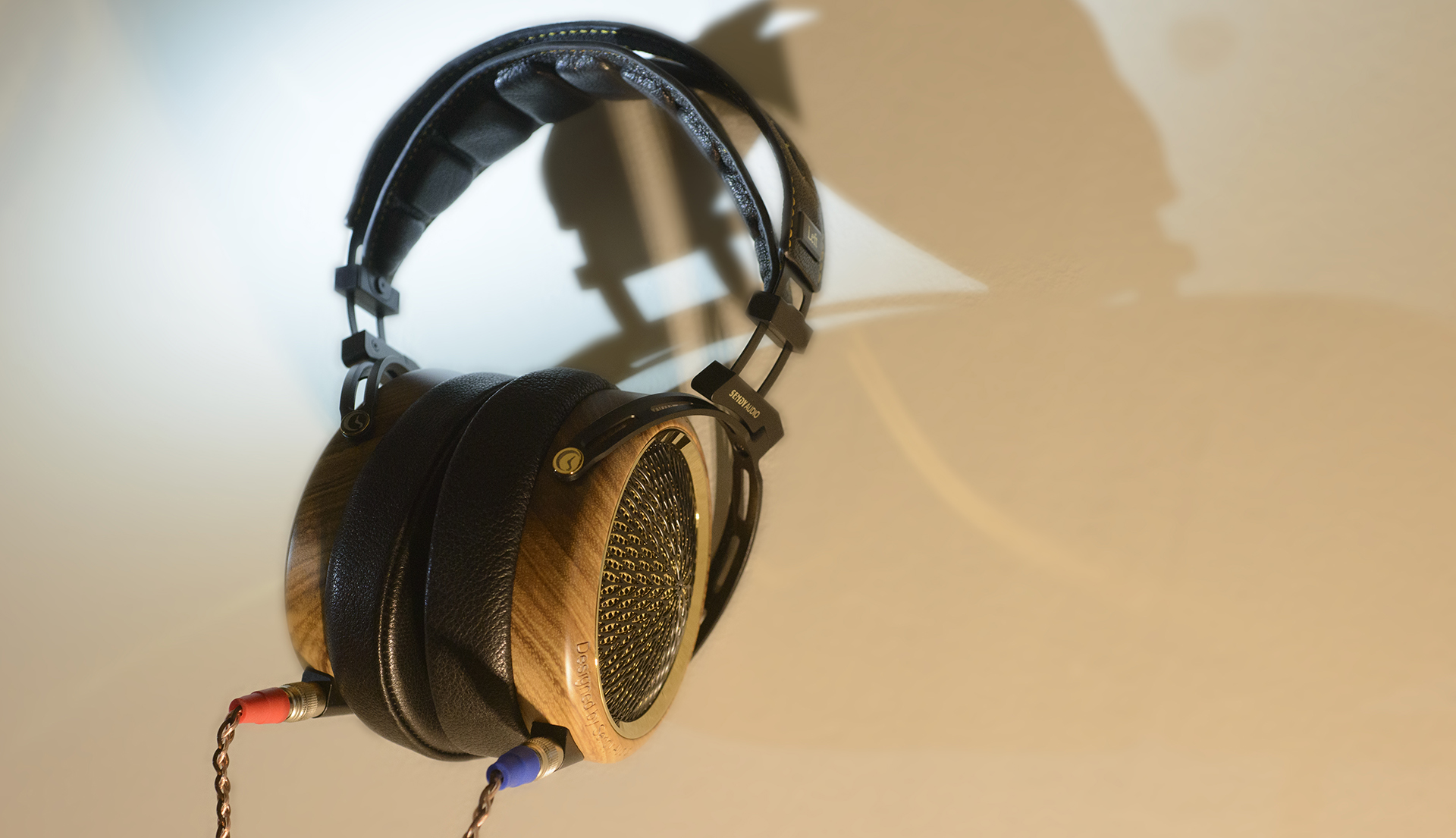
The Sendy Audio Peacock Headphones

A few strums into Al DiMeola’s new live recording, Saturday Night in San Francisco is all it takes to reveal the delicacy these new phones from Sendy Audio possess. It wasn’t that long ago, there were a few mega-expensive electrostatic phones, and Audeze. Times have changed. While not having the last 5% of sheer speed and transparency that the best ESL phones have, the Peackocks are extremely musical and inviting overall. There’s a slightly warm tonality going on here that will keep them on your head for a long time.

Build quality is high, and the packaging lovely, but not overdone – and not overdone to the point where you might worry that too much effort went into the packaging. A quick look at the Sendy website shows how much thought and engineering prowess has gone into the drivers in these phones.

Switching from DiMeola to some classic Soul II Soul shows these phones can produce some major bass. If your musical taste leans towards house, hip hop, and electronica – the Peacocks might just be your new favorite musical tool.

But don’t think the Peacocks are Beats reincarnated. Regardless of genre, they deliver a high level of musical satisfaction. Their pleasing rendition and utter lack of distortion makes whatever music you love accessible. The midrange is clean, and the top end transparent.

They ship from the factory with a mini headphone plug, but Sendy includes ¼-inch and balanced adaptors. Putting these phones through their paces with everything from an older iPhone to our Manley reference headphone amplifier shows the Peacocks incredibly easy to drive. That’s great news no matter where you are on your personal listening journey.

Full review soon – highly recommended.

$1,499/pair

www.underwoodhifi.com

Lyle Lovett’s latest

If you’re in the mood for some musical comfort food, consider Lyle Lovett’s recent release – 12th of June.

If you’re a fan of his 1989 release, Lyle Lovett And His Large Band, and the 1992 follow up, Joshua Judges Ruth, this record picks up the same groove those records put down. Much like the opening of Large Band, Lovett begins this record with a short, snappy, uptempo instrumental that gets your ears warmed up for the rest of the journey. It feels as if this could have easily been release six months later.

Lovett is a musical chef that combines blues, country, Americana, and a little bit of jazz on the side to create a musical dish that’s mmm, mmm good. The title is a tribute to his twins born on June 12, how can you not love this guy?

The songs are great, with titles like “Pants is Overrated” (about his twins and their diapers), and “Pig Meat Man.” “Bring it to me on a great big platter – I’m a pig meat man, I like bacon and ham (with toast and jam).” You just want to call him up and go to Denny’s for a Grand Slam.

The record is fleshed out stylistically and texturally a lot like the Large Band record, and that’s a good thing. Featuring longtime collaborator Francine Reed, (who incidentally has just announced her retirement) the record flies by, perhaps too soon. This record is exquisitely recorded, and the musicianship first rate. Lovett’s voice doesn’t sound like its aged a day, even though a decade has flown by since we last heard from him. Let’s hope it doesn’t take this long for the next one.

12th of June is out on all formats, but if you need to live with it a bit before you buy a vinyl copy, it is also streaming with all the majors.

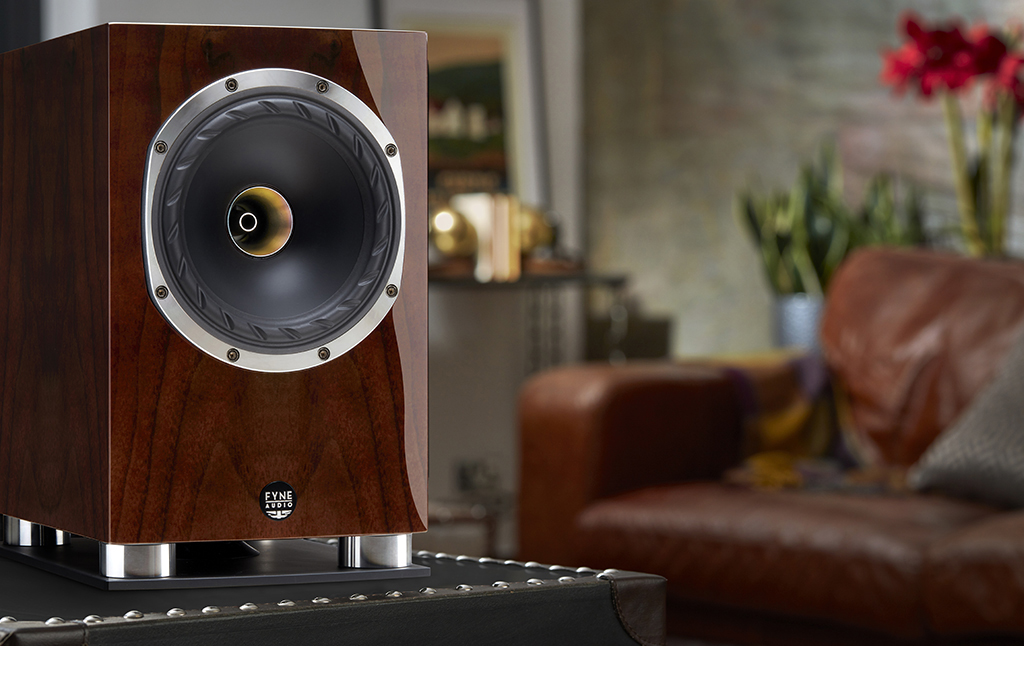
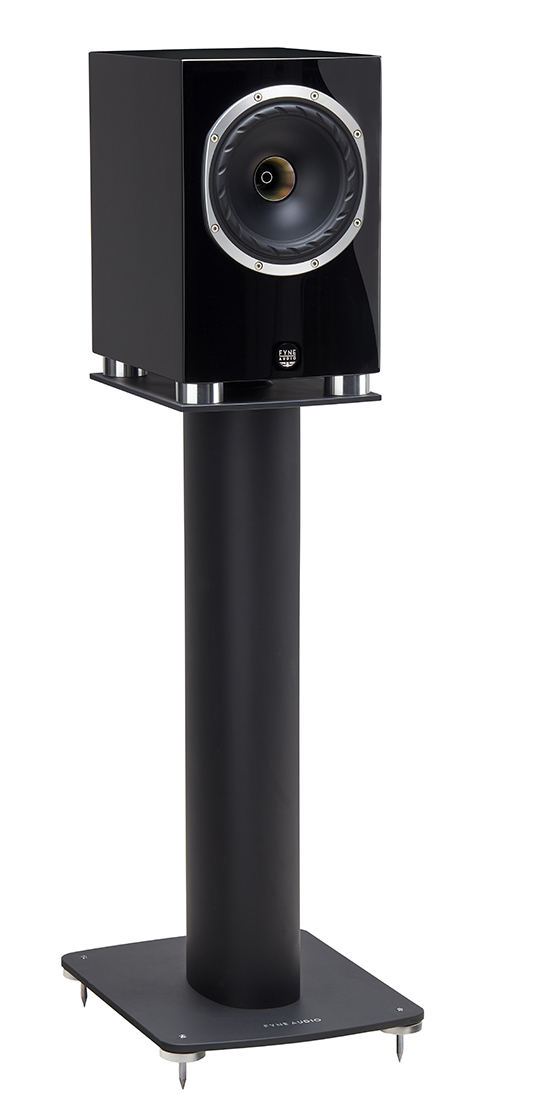
The FYNE 500SP

Small speakers can rarely energize a good-sized room with full-range sound. This is always the magic that is FYNE.

Featuring the coherence that usually only comes with electrostatic speakers, the time-aligned, coaxial driver of the FYNE speakers delivers a seamlessness that you might expect from a pair of vintage Quads, with a serious dynamic punch as well. Without the inherent graininess that plagues the other small speaker darlings – i.e., KEF and ELAC. (I say that with all respect, as a former Blade and LS50 owner) And it comes in an enclosure that isn’t even a cubic foot. At $1,995 a pair, these speakers are a mega value. The FYNE speakers are in a league of their own.

Tracking through Aphex Twin’s Syro album, the 500SPs generate a vast sound field in all three dimensions in our 15 x 26-foot main listening room. Only about 6 feet apart and 4 feet from the rear walls (with about 10 feet to each side), the small FYNEs open up, rendering layer upon layer of musical detail. Perhaps this isn’t the absolute sound, but music with a dense, atmospheric vibe needs this kind of presentation to engage you thoroughly.

Similarly trippy records from Yes, Art of Noise, and Steven Wilson are just as compelling. If you are a music lover who craves a spacious, dynamic sound at this price point and form factor, the FYNE 500SP should be at the top of your list. The toy piano in Gruppo Sportivo’s “Blah Blah Magazines” jumps way out in front of the speakers, showing how immersive the 500SPs are.

Superb standards

Switching it up, The Ginger Baker Trio’s Going Back Home reveals more insight into the level of nuance the SP500s deliver. Combining Baker’s powerful yet airy drumming, Bill Frisell on guitar, and Charlie Haden on bass, these speakers prove their prowess with acoustic instruments. There’s so much texture here in Baker’s drumming, and Haden’s runs up and down the neck of the acoustic bass, you’ll swear you’re listening to a much larger (and much more expensive) set of speakers. The extension and resolution of the lower frequencies are stunning with the SP500s.

Female vocal lovers will be equally delighted with the resolution the SP500s deliver. A long playlist of current and classic vocalists reveals the FYNE speakers are equally competent here. Though audiophiles have a tendency to lean on female vocals to judge speaker character, switching to male vocals is where many speakers fail to deliver. Johnny Cash’s “Delia,” from his original American Recordings, is always a go-to track because of his husky vocal delivery. Speakers lacking low-end reinforcement make Cash sound like a busboy with a lightweight character. The 500SPs allow this character to be the menacing executioner that the song portrays.

Again, our favorites fall to just about anything by Tom Waits or Buddy Guy. I’m sure you have your favorite demo tracks to see how well these speakers work in this context.

Finally, the 500SPs can play loud when the mood strikes. Watching the meter needles on the 100 Wpc Nagra Classic Amp hit 0dB on peaks made a thunderous presentation indeed when listening to Mott The Hoople’s “All the Young Dudes.” FYNE suggests amplifiers in the 30 – 120 Watt per channel (60 Watts, continuous), and we agree.

In a moderately sized space, you may never explore the upper reaches of these speakers’ dynamic capabilities. Your only limitation will be with bass-heavy material. The big drums in Peter Gabriel’s “The Rhythm of the Heat” are able to bottom the woofers at high volume, and this kind of punishment will probably be frowned upon should you return your damaged speakers to FYNE for repair.

This is the double-edged sword of the 500SP. In addition to their impressive tonal characteristics, this is a very low-distortion speaker as well. It makes for fatigue-free listening, but approach high sound pressure levels slowly at first, so you can find the overload point for your system and your ears. You will be surprised at the high sound pressure level the 500SPs can produce.

Choose your voice

Overall, the SP500s are a touch forward in their presentation but not harsh or strident. Thanks to a 90db/1-Watt sensitivity, they don’t need a massive power amplifier to make music at adequate listening levels. A well-designed crossover network, with a first-order slope going up from the 1.7kHz crossover frequency and a second-order slope going downwards, is a massive contributor to the smooth vocal character and lack of artifacts in the crossover region. However, their high level of resolving power allows them to shine with higher quality components. This leaves the music lover a wide range of options. You may find yourself pairing the FYNE speakers with more expensive components than you initially thought practical.

Rega’s Brio-R remains one of our favorite high-quality integrated amplifiers for just under $1,000 and is our starting point for this review after the initial break-in. A Prima Luna ProLogue 1 and the Luxman N-150 Neo Classic rounded out the picture for vacuum tube amplification choices. The T+A Caruso R and Cyrus Cast ONE both feature Class-D amplification, though the digital amplifiers start to become too much of a good thing.

The 500SPs resolving ability makes them less than perfect for older vintage solid-state amplifiers and receivers only because they tend to expose the flaws in the components upstream. Giving them a go with a re-capped Marantz 2270 feels a little dull, though putting them in a system with a set of freshly rebuilt Nakamichi 600 components (a distinct step up back in the day) made for a charming overall effect.

However, we all like something different. But, if you have a digital amplifier, you’ve been warned. The 500SPs relative neutrality gives you a wider range of options than most speakers at this price level to fine-tune the voice of your system, a definite plus.

Because of their wide dispersion and a downward-firing port between the cabinet base and bottom, these are incredibly easy speakers to place in your room. They are top performers in an environment where the speakers can’t always go in the optimum spot for perfect sound. If you don’t opt for the FYNE stands, go for the most massive, rigid ones that make sense for your wallet and décor. Flimsy stands will compromise bass extension and quality.

One thing unique to the FYNE speakers is their fifth ground lug on the back of the speakers. FYNE claims it will “ground the driver chassis and eliminate amp or cable born RF interference.” While the TONE studio is a big, metal building (essentially a Faraday cage), we don’t usually have this problem. However, in the house’s unshielded environment, taking advantage of this did make a slightly noticeable – and positive effect. A nice touch, indeed.

While the review set arrived in gloss black, gloss white, and gloss walnut is also available. The finish quality is exquisite. The 500SPs are designed and built in the UK. It shows. If you’ve spent any time at all with modestly priced speakers that hail from China, you’ll notice that the fine details are not executed as well as they are here.

Should you put a pair of 500SPs in your system, the only thing you might consider after you’re used to the speakers is a pair of high-quality jumpers to connect the woofer and tweeter, if you aren’t using bi-wired speaker cables. Jumpers from Tellurium Q and Cardas both added another margin of HF smoothness that is worth exploring.

It’s easy to give the FYNE 500SPs one of our Exceptional Value Awards for 2022. Every aspect of these speakers is flawlessly executed within the price point.

www.soundorg.com (US distributor)

www.fyneaudio.com (Manufacturer)

Joni Mitchell: Live at Carnegie Hall – 1969

When I was a little kid, I remember listening to albums from my parent’s collection that that have stuck with me throughout the ups and downs of life.

Throughout her career as a songwriter, painter and musician, Joni Mitchell has never made any excuses about being a strong Canadian woman, expressing herself in her art and music. Perhaps those memories of Clouds on that 60’s record player help me enjoy and appreciate The Hissing of Summer Lawns even more today. Mitchell’s Blue and Ladies of the Canyon are two of my favorite late night headphone listening albums – I’ll never shy away from that emotional journey. Her unique voice, distinct guitar sound are never far from my turntable.

The 3 album box set of Joni Mitchell’s career-changing debut at Carnegie Hall saw its first-ever release late in 2021 and I was fortunate enough to land the 180-gram, three LP, snow white vinyl version. This jewel is a must have for dedicated Joni fans.

From the first time you hold the beautiful but heavy jacket, to immersion in the music, Live at Carnegie Hall’ captures a time and place in history. When a 25-year-old Joni Mitchell stepped on stage in her long vintage skirt on February 1, 1969 in front of a packed house, it was her first major concert.  Her partner at the time, Graham Nash sat in the audience along with her parents and Bob Dylan. Her debut album, Song to a Seagull had been released less than a year prior, produced by David Crosby. This Canadian was new to California, but familiar with performing at coffee houses and nightclubs. But this was big.

The black and white photo on the cover features Mitchell, pin-straight hair down her back, sitting at a Steinway, 3 mic stands, and her trademark Martin D-28 Dreadnought laying on an otherwise empty stage. If a picture could tell a story, this one certainly sets the tone for what a treasure that jacket holds, captured on vinyl. Joel Bernstein’s candid photographs, Mitchell’s handwritten changes to the set list and lyrics to Blue Boy offer a glimpse into that night in New York.

For first play, this gorgeous white vinyl went onto my reference Acoustic Solid Vintage Exclusive with a low-output Dynavector DV-20X2 cartridge. The album begins with an appreciative crowd and Mitchell opening the 19 song concert with “Chelsea Morning. According to the notes written by Graham Nash, she had started the song, but had to stop.The crowd, in support of the important event they were witnessing, gave her a Valentine which she held up, smiling on stage. You can hear the nervousness in her voice as she acknowledges this kind gesture, but the initial hesitancy melts away when she settles into “Cactus Tree.”  From that moment on, she sounds relaxed, confident and in her element both in her voice and instruments as she bares her heart and soul on that famous stage. She is almost apologetic for her piano playing but nails it on “Blue Boy.”  Her lighthearted banter in between tracks sounds more like a conversation she is having with a small intimate crowd instead of addressing the 3,600 seats in front of her. On side 2, (my personal favorite track) the stellar a Capella rendition of “The Fiddle and The Drum” follows her explanation of what it was like to be a Canadian living in America during this incredibly important time in history.

The second set starts with “Marcie”, a song for a friend. The initial nerves are a distant memory, and her voice confidently holds the listener’s attention. Immersed in the music, Mitchell continues her musical storytelling. Dedicating “Morning Morgantown” to her parents, there is a realization that this young woman, alone on stage, has her friends and family there to support her during her first big show, not a seasoned professional who was accustomed to performing to large crowds. The second set ends with a medley of “The Circle Game, and Little Green.” There is a poignant edge to her description of the latter track as being “about a little girl.”  At that time in her career, not much was known about her personal struggle after surrendering her daughter for adoption in 1965. Perhaps only a few people in this crowd knew Mitchell’s longing and heartbreak. As she fluidly shifts between the 2 songs, the emotional connection to her story deepens, drawing your focus to the fusion.

The fifth side contains her encore, starting with “Michael From Mountains,” closing the show with “Urge For Going,” after she retunes her guitar and acknowledges how far it is from Saskatoon to Carnegie Hall. Her delightful fingerpicking on the final track draws the listener in as her voice delicately lifts and swells, describing a Sasketchewan winter.

The vibrato in her voice, the sound of fingers plucking steel strings and the voices of the crowd singing with her on Get Together are clearly heard, even when in the background, reflecting the talent of Bernie Grundman’s mastering. Overall, this live recording is dynamic and well balanced without taking away from the artist alone on stage. The exquisite layers and passion behind the music are attained in this album. From the first play, this peek into music history has quickly become a frequent flyer on my TT.

Live at Carnegie hall, 1969 is a gift from a place in history that needs to be remembered as a time of change and uncertainty. This album not only pulls the listener back to late 60’s free spirit hippy culture that embraced my parents, but draws you in with honest vulnerability and creativity. The special place I have for Joni Mitchell and her music throughout my life, in my collection and in Canadian music history, just grew by leaps and bounds. Two very enthusiastic Canadian thumbs up.

www.jonimitchell.com

Issue 111

Cover Story:

We pay tribute to the Bowers & Wilkins Zeppelin:
A product that defined a market segment

Features

Old School: The ESS AMT-1b
-By Jeff Dorgay

Cartridge Dude: The BENZ LP-S

1095: Gear for Just over a G
The LSA LS 50 Signatures

Merch Table: Relics From Rock’s Past

Mine: It Should Be Yours

Music

Playlists:  We share our readers choices from around the world
LIVE!  Emily Duff covers Aimee Mann
Jim Macknie on JAZZ

Future Tense

Gear in our immediate future

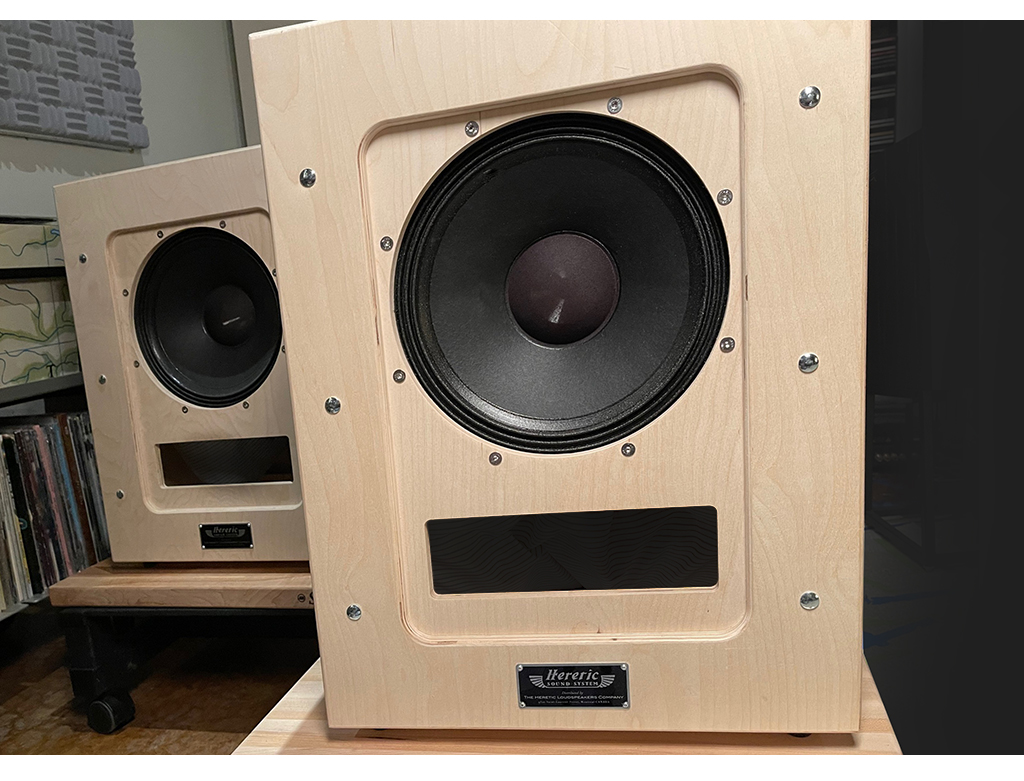
The Heretic A614 Speakers

Warning, these speakers tend to keep you cemented in your listening chair. The Heretics are “album side” speakers if that makes sense.

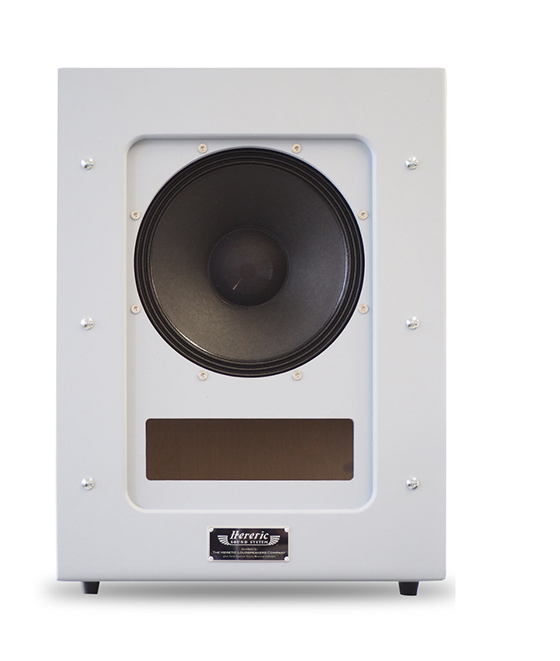
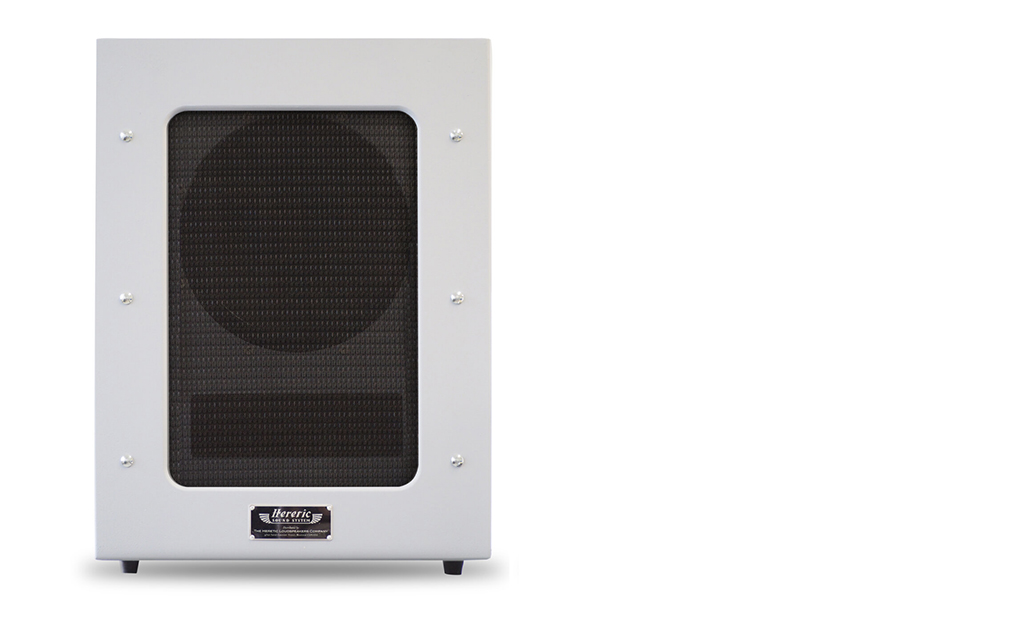
Spinning Nightmares on Wax’s In A Space Outta Sound, the dub heavy, trippy vibe is intoxicating. Next up, Propellerheads Decksanddrumsandrockandroll. Again, the whole album goes by without the slightest urge to make a playlist. The bass line in “Oh Yeah?” is so much fun. The 12” coaxial driver combined with the ported cabinet adds up to a very organic, tuneful (yet not overdamped) bottom end.

If you’ve looked at Heretic’s website (www.thehereticspeaker.com) you’ll notice the famous shot of EMI studios, with the Beatles in the control room. They are listening to what looks like the larger Heretic A612, but these are actually Altec drivers in the cabinets. Robert Gaboury, the man behind the Heretic has taken this 12” coax and the Altec cabinet design and brought it into the modern age, to produce a speaker that is really a pleasure to listen to.

Powered by the Lab12 Mighty amplifier, which only produces 10 watts per channel, these speakers sporting a 97db/1-Watt sensitivity rating barely make the cool, circular VU meters move from rest. Seriously, how often do most of you listen to music at a 97db level? It’s unbelievable that this pair of speakers, combined with a $2,400 power amplifier can create such an expansive and immersive musical experience. But it does. Pricing is TBA right now, but they will be under $8k/pair for the smaller 614s, reviewed here.

Quick, adjective barrage

All of those audiophile cliches we’ve heard a million times over truly do apply to the Heretic A614s, but they are one of those rare speakers that provide instant fun. If you’re a persnickity audiophile, you’ll find things to nitpick, but then you will no matter what you’re listening to. These won’t be the speakers for you.

You can look at these speakers one of two ways – you can be fussy and point out the small things they don’t do (as you would with every single other speaker made) or you can sink into the vibe and just enjoy them. To give you a reference point of where I’m coming from (because saying a speaker is “fun,” really doesn’t give you much to go on…) my short list of fun, under $10k/pair speakers are in no order, The Vandersteen 1C, The JBL L-100 Century Classic, The Magnepan SMG, A nice used pair of MartinLogan CLS’s, The Harbeth C7s, The Zu Dirty Weekends.

Speakers that are not necessarily the last word in audiophile speakers, but ones that you can sit around all evening listening to music with, have a great time, and not have to engage the audiophile part of your consciousness that feels the need to dissect everything.

Quick setup

Thanks to their relatively light weight – about 40 pounds each, with a profile of 19” wide, 15” deep, and about 26” tall, you can move the Heretics around and set them up easily by yourself.
Having used these in small (10 x 13 foot), medium (11 x 18 foot) and large (15 x 26 foot) the Heretics deliver great results anywhere, though you will get a little bit more bass loading in an extremely small room, that may or may not work to your advantage.

While these speakers come with feet attached for use on the floor, I had the best results getting them about 13” off the floor. Custom stands are on the way, but for now a pair of heavy Sound Anchors stands with 1.25 thick butcher block boards work splendidly. A little blu tack between the boards and the stands really helps too. Getting that tweeter up a little higher than ground level makes for a lot less mid-bass bloom/roundness and gives up nothing on the bottom end. This also helps the Heretics to create a larger soundstage, eliminating a lot of reflection right from the floor.

Because the originals have that EMI heritage, the push for some Beatle’s was just too much to resist, and considering it’s that time of the year here in America again, Revolvers’ “Taxman” was perfect. These speakers do such a great job at holding the bass line rock solid, the drums in place and a clear view of all the harmonies – it’s incredible. And incredibly enjoyable. Whether you prefer the stereo or mono Beatles, this is a treat. Switching it up for Cheap Trick’s “Taxman, Mr. Thief” is equally rewarding. And this is not an awesome recording by any stretch. Yet the slightly round bottom end of these speakers gives a little bit of help to the average recordings in your collection. Again, that fun thing.

For those of you that haven’t been following my ongoing narrative, one of my biggest hot buttons is coherence. Thanks to the coaxial tweeter, these speakers sound like a big single driver speaker with extension. The crossovers are well designed, as the transition from woofer to tweeter is as good as it gets – seamless and free of grain. Regardless of what kind of music you enjoy, these speakers do a fantastic job rendering it.

Vocals are transcendent with the Heretics, both in terms of tonality and the way they can decode layered harmonies. The Heretics are highly natural in their presentation, and again thanks to the high sensitivity, nothing is ever working hard to produce sound – resulting in low distortion and fatigue. These are speakers you can listen to all day without becoming the least bit tired.

Amplification

Don’t let the sensitivity rating fool you, even though these speakers don’t need a tremendous amount of power to play really loud, it’s a quality thing. A few obvious choices (the Cary 805 SET monos, the Line Magnetic 815) didn’t provide killer results, yet the 4 watt per channel Finale is out of this world good. As mentioned at the beginning of this review, Lab12s Mighty (10 watts per channel) is also fantastic. Our Pass First Watt SIT-3 was also a stunner. This amplifier is very speaker sensitive, but in this case, the match is perfection. This single ended solid-state amplifier delivers about 92% of the texture and depth of the best tube combinations, with a bigger image, and a lot more slam on the low end. So, again – big fun with these speakers. And there’s still about five or six amplifiers to try.

Perhaps we were cheating a bit at first, using the Pass XS Pre, XS Phono and dCS Vivaldi One with Vivaldi Clock, but even when bringing the associated components downstream in keeping with you’d probably expect to be in a system with a pair of speakers in this price range, the results are still excellent. The only thing tried that was less than awesome was our vintage Marantz 2270. This just sounded flat.

The rest of the story

Looking at the Heretic site, you’ll see there are several other finishes available, and you can order the speakers with or without grilles. If you have munchkins or pets, seriously consider the grilles. Our review pair came in the natural finish.

Gaboury says that the cabinets are made from 12mm Canadian ultra-premium birch plywood. The website says, “Because of tone. Tone comes from rigidity, lightness, and compliance, but not too much.” Rather than go on and on, if there is any way you can give these speakers a listen, if you share some of my listening priorities, I think you will really enjoy the Heretics. Should you have a larger room, or need more bass extension, they also make the A612, which is the same driver in a cabinet with more volume.

Sensitivity remains the same, but there is an additional half octave of bass extension. When Mr. Gaboury catches up with orders, he’s promising to send us a pair. For now, provisionally, I am purchasing the review pair, but I may hold the checkbook close to the vest until I hear the bigger model. I’ve got the room. Either way, these speakers have provided some of the most fun I’ve had in a long time just hanging out and listening to music for its own sake. You’ll only need one or two of your favorite tracks to decide if they are the droids you want.

For now, highly recommended, and #toneaudioapproved.

www.thehereticspeaker.com. (manufacturer)

www.fidelisdistribution.com. (importer/distributor)

But wait, there’s more

At the end of this review, designer Robert Gaboury had a bit of spare time in the middle of getting ready for Axpona, to fill me in on the fine details of how these great speakers came to be. Here’s what he has to share:

First thing, the ductless design.  Thiele/Small parameters are used to predict and accurately simulate low frequency behavior of transducers in closed and vented box. These days, all designers (including me) use software simulation in the development of loudspeaker enclosures.

However, T/S parameters were derived in the 1970s, meaning that Altec designers, when designing the 614 and 612 (1940 something) « utility cabinets » , which are ported, used another method to calculate vent area relative to enclosure volume. I found this fascinating, and decided 3 years ago to investigate, out of curiosity, what was happening.

Nowadays, we all want the best possible low frequency extension in the smallest air volume and most contemporary speakers use vented boxes with transducers designed especially for this. This is usually a tube in a box, and by adjusting area and length (along with enclosure volumes and transducer’s T/S parameters), the box is tuned to « load » the transducer at the lowest possible frequency. Loading happens when the air in the box opposes the cone motion, and at this point (the tuning frequency), the cone motion is nil and vent output is maximal. Below that frequency, the driver is unloaded, moves a lot, yet produces no sound, because the air pressure just escapes the port, out of phase with the driver, creating an acoustic short-circuit.

In recent years, passive transducers have been used when we want to tune a box to a lower frequency that would be practical with a tube (i-e, the tube is too long to fit in the box). This means that modern drivers are made to work in small boxes and generate ample LF. And accuracy in the mid-band is often sacrificed (I’d say always) a consequence of the quest for LF, because in order to allow a small transducer to resonate at – very – low frequency, the cone must be heavy. I simplify a bit, but think of a 1973 Buick Electra hitting potholes, versus a Lotus formula car… The Buick will resonate at very low frequency – and take a long time to settle, but won’t handle as well as the Lotus. As you can guess, the Lotus is a lot stiffer.

Back to the enclosure: a vent tube is always tuned to a specific frequency, say 42 Hz.  I found out, using simulation, that a ductless vent (such as the old Altec) is not precisely tuned. In fact, it is tuned to a much broader frequency band, which is highly desirable:  no « one-note » bass.

Also, a super stiff suspension is very desirable for medium (vocal range) definition. Think Lotus. So, if you accept the notion of a big transducer, a big box and ductless designs, something interesting is possible: musicality. That is Heretic.

Second thing: co-ax design, re-invented. Older professional coax drivers such as Altec 604 (and others) use a compression driver mounted in the woofer voice coil. The downside is the compression driver, which has a large dome (usually 3 to 4 inches). In the Heretic, the dome is quite small, almost as small as a modern tweeter, yet, it is horn loaded by a short aluminum horn, itself loaded with the woofer’s membrane, acting as a waveguide. Smaller dome means smaller mass, means higher resonant frequency (think Lotus), means very good extension – much better than older Altec 604 for example.

Third thing: serial crossover network. This alone is, for the designer, guaranteed headache. Because the woofer and tweeter are connected in series, the network logic is inverted. If you want to fix something in the high frequencies, you must act on the LF section. It like writing with your left hand in front of a mirror. Yet, when (and if) you get it right, it has a level of coherency not possible to achieve with normal parrallel networks used in 99% of all loudspeakers.

For me, designing Heretic was something extraordinary because it opened up a box of ideas that was shut and sealed somewhere in the 1970s, when acoustic suspensiuon was the « in » thing. For me, performance and musicality are two sides of a same token. Along with low mass and tight handling. That’s heretic.

Bob Carver at Axpona with their newest…

Stop by the Carver room at Axpona to see their latest.

As you may or may not know, Bob Carver is back, with a great team of engineers and craftspeople to implement his latest visions. Company director of operations, Jim Clark, will be in room 1410 at this week’s Axpona, answering questions and showing off the new goodies.

Need questions answered right now?

Call Jim Clark at (815) 323-0898

[email protected]

Silent Angel’s New Power Supply

Audio and network components that use small, switching power supplies can be very detrimental to your system’s sound. Silent Angel has a great solution that is compact, and offers 12V/1A, 12V/3A, 5V/1A, and 5V/3A outlets for those devices.

This is a great way to get those noisy wall warts out of your system. Cost is $1,599.

We’ve got one on the way, so we’ll keep you posted ASAP.

www.silentangel.com

Pro-Ject Audio Adds Balanced Option…

We really loved the Pro-Ject DS2 phonostage. All solid state, multiple gain and loading options. Great sound, killer price. Now it’s better.

Pro-Ject has just announced their new DS3B, for balanced. With all the circuitry re-designed, and a fully balanced circuit, this award winning phonostage is even better. A fully balanced output stage makes it that much easier to have the turntable on the other side of the room, closer to your record collection, and further away from the speakers. That’s a win all the way. And…The DS3B features full discrete circuitry, no op amps!

Intro price is 599 Euros, so probably about $699 US. Check your Pro-Ject dealer for final pricing. Silver and Black front face plates available, along with three choices for end caps: black, cherry, and walnut.

Look for a review in the very near future.

www.project-audio.com

Luxman’s First Cartridge in 40 Years!

Luxman’s new LMC-5 MC cartridge is their first cartridge in 40 years.

Luxman USA’s Jeff Sigmund says that this new reference is “the result of two years, taking every aspect of cartridge design into account.”
The generator features a cross mounted iron core with symmetrical windings for superior separation. It features a nude, square shank diamond with Shibata profile, mounted to a .5mm aluminum cantilever.

The LMC-5 delivers 0.4mv output, and has a suggested loading impedance of greater than 40 ohms. Recommended tracking force is 2.1 to 2.3 grams.

We’ve got one in house, and it’s sounding fab. We’ll have a full report shortly.

Should you be attending AXPONA next week, stop by the Luxman exhibit in the Prosperity room.

www.luxmanamerica.com

Change in Carver Biz Model

Just announced today:

In order to stay competitive, Bob Carver Corp. will now be selling direct only. Back orders will be filled in the next 30 days, and new things are on the horizon very soon. Changes in business climate and associated supply chain issues are dictating this change.

If you have questions on existing orders, etc., please contact Jim Clark.

[email protected]

Nancy Sinatra and Lee Hazelwood on Vinyl…

Light In The Attic announces the definitive, first ever reissue of Nancy & Lee, the iconic 1968 duet from Nancy Sinatra and Lee Hazelwood.

The latest installment from LITA’s Nancy Sinatra Archival Series, Nancy & Lee is available to pre-order now on vinyl, cassette tape, CD, 8-track, and digital formats and is set for release on May 20th.

Album features timeless hits “Some Velvet Morning,” “Sand,” and “Summer Wine,”plus two bonus tracks, including “Love Is Strange,” available now on all digital platforms.

LP and CD editions offer a new interview with Sinatra, plus never-before-seen photos.

Limited-edition merchandise capsule, including autographed items, now available for pre-order exclusively at Nancy’s Bootique at NancySinatra.com

An Easier Way to Buy HiFi From Naim and Focal

Sometimes, one of the most challenging parts of assembling an audio system is sifting through all the choices.

Right before COVID hit us, Naim and Focal had been putting together several Naim/Focal boutiques. Their goal is to establish a range of stores worldwide, where you can view, and most importantly listen to, a number of systems featuring both brands. Including their award-winning line of headphones. As we are pulling out of this global pandemic, they are picking up the pace again.

This is critical, because there are so many choices today. While many of us enjoy the audiophile as contact sport aspect of the hobby, an equal number, if not more music lovers would just like to purchase a great music system and get on with it. Regardless of where you sit in the crowd, the Naim/Focal oases are beautiful to behold, and will give you a lot of concentrated seat time with the brand.

As part of this scenario, they’ve put together this “10th Anniversary Edition” system, to celebrate the 10 years these brands have been together. The total cost is $48,000. Should you choose to go with Naim’s Fraim system to house everything, the total cost will be about $5,500 more, but there is no more elegant way to display Naim components than the Fraim system. It provides stability, isolation, and modularity. (So, it’s easy to add a turntable and keep it all tidy.)

The entire system is anchored by a special pair of Focal Sopra No.2 Speakers that come with concrete sidewalls, and a front baffle that looks like tin. Having visited the Focal factory, and seeing the level of detail that they provide for custom orders, these are sure to be very unique. The only way to get a pair of Sopra No.2s in this finish is to buy the anniversary system.

The system is powered by Naim’s NAC 282 Preamplifier, NAP 250 Power Amplifier, with matching NAPSC and HiCap DR power supplies. Naim’s award winning NDX 2 music server/DAC takes care of source materials. Those wanting to add a turntable, will have to provide their own, but the NAC 282 has five Naim connectors, as well as two RCA analog inputs. Naim fans that haven’t heard the 282 will be surprised at how much of the 500 series DNA is present here.

Even though it doesn’t affect the sound quality, it’s of major interest that to match the special finish of the Sopras, Naim has produced the components for the Anniversary Edition in a new medium grey finish. Naim has never produced anything but the standard black face, so this is incredibly cool. And, all the required cables are needed.

While I haven’t heard the anniversary system per se, I have heard these components in standard black finish with the Sopra No.2 in standard finish, and this is a top-notch system indeed. We have also spent a lot of time with the entire Sopra No.2s here as well.

Granted, nearly $50k might be more than your current budget – all the more reason to stop by one of the Naim/Focal shops and give a listen to the full product lineup. Who knows, you might only need a pair of headphones, or you might be enticed by one of the big Utopias? You never know. What’s so exciting about this concept, is the idea of being able to experience so much of it and truly make an informed purchase.

Though mail order hifi has become the de rigueur way to buy, there’s nothing like going to a hifi salon to peruse their wares. And the Naim/Focal stores have been tip-top. It really helps take the guesswork out of the process, and now you have the opportunity to purchase something that looks as unique as it sounds. Here’s to hoping Naim and Focal produce more of these special edition products.

It’s been great to watch these two industry leaders forge such a great partnership over the last decade. From the MuSo products, to their new headphones, and all of the current electronics and speakers, the synergy is there for all to see, and hear.

www.focal-naim.com

The Aqua Audio LaScala MKII Optologic DAC

If you are a music lover wanting to upgrade your digital front end, but don’t necessarily want to spend $20k – $100k, consider the Aqua LaScala.

This one ticks all the boxes. Beautiful build quality and execution in every way. A dreamy tube/MOSFET analog stage. High performance FGPA digital decoding (without digital filter) so it won’t become obsolete. The list goes on, and you can read our review here, or you can click here to go to the Aqua site for the fine details.

This one has been on the rack for some time now, and its been going head to head with some pretty expensive challengers – all costing a lot more. This one gets our vote for the DAC that is right on the tail of six figure DAC performance for about $8,500 (check your dealer for exact price with all the wackiness going on in the world right now)

A bevy of inputs and outputs, as well as an 12S bus, means you can connect anything. There are a pair of RCA outputs as well as a transformer coupled pair of XLR balanced outputs. If you have both inputs on your amplifier or preamp, try them both. The RCAs are slightly crisper, and the transformer coupled balanced outputs just slightly warmer. You’ll prefer one over the other, but you won’t know till you plug them in!

The Aqua was our Digital Product of the year two years ago, and it still stands its ground. We’ve used it with everything from a $100 garage sale CD player up to a dCS Vivaldi transport with equally great results. Not to mention, Aqua offers a great CD transport, as well as their LinQ streamer.

You’ll never say “this sounds really good for digital” again. It just sounds fantastic and musical.

The Harbeth C7ES-3 XD

In years past, the “British sound,” especially in terms of loudspeakers, more often than not, was referring to the monitors from the BBC era.

A huge part of the design brief was to get the voices right, and the rest would follow along. This has always made for a musical speaker, that in some cases was not always dynamic enough to rock the house. Today, things are a bit more modern.

The Harbeth Compact 7, now in its third generation – the XD stands for Extended Definition is a winner. The previous generations have always been one of the most musically engaging, compact speakers going. The new model builds on the strengths of the old, adding more punch and resolution, without throwing the lovely midrange they are famous for under the bus.

Regardless of what you listen to, these 6-ohm speakers use Harbeths’ patented RADIAL2™ bass/midrange unit and their own dome tweeter. Weighing just over two stones, they are easy to move around, and with a great pair of stands offer a very full-range experience indeed.

Rated at a 6-ohm nominal impedance, the C7ES-3XD is easy to drive, whether you have tubes, transistors, or a vintage variation on the theme. 25 watts or so will have you up and running, a little extra doesn’t hurt if you have a larger room, or like higher volume levels.

They are available in cherry, walnut, and tamo ash (extra spiffy)

Standard cherry finish is $4,890/pair, while the two upgraded finishes are $5,190/pair

Our full review is here.

Fidelis Distribution is your connection in the US, please click here.

And, here is a link to the official Harbeth site.

The JBL L-100 Classic

There’s nothing in audiophile world that compares to the JBL L-100. They’ve probably sold more of these than every other speaker manufacturer combined. A true classic.

Show just about anyone a picture of a pair of L-100s (especially with orange grilles) and you’ll probably get an enthusiastic “yeah, I had a pair of those” from a wide range of people from a certain age group.

And they are still out there, popular as any muscle car of the same vintage. Some are really rough and a good pair will set you back $1,000 – $1,500 these days. Fortunately, we had a pair of clean originals to compare to the new Classic 100. No other audio reviewer bothered to make this comparison. But, we always do our homework. If you’d like the in-depth comparison, please click here.

If you just want to rock, get on down to your favorite audio dealer that offers JBL and buy a set. If you’re on the east coast, try Audio Classics, the Midwest, give Music Direct a call, and if you’re out west (the home of the L100) call Kevin Deal at Upscale Audio. All three of these dealers are TONE approved and will take great care of you.

So many classic things from years past often get reborn lacking the character of the originals. In the case of JBL’s Classic 100, the speaker has been improved in every way, and is one of the most fun rock & roll speakers going. Indulge yourself.

The Naim SuperNait 3

Nearly every audio manufacturer make a few products that take advantage of all their core competencies, and offer so much value, they become legendary. Naim’s Nait integrated amplifier now the SuperNait 3 is the perfect example of this philosophy.

At $5,699 this amplifier delivers 80 Watts per channel, and borrows heavily from Naim’s expertise in their flagship line, costing much more. Even though there has been a recent price hike from $4,995 when we reviewed it a year ago, to $5,699 now, this amplifier is still one of the best values going.

With an integrated MM phono section, this is the perfect amplifier for anyone craving a system with high performance, yet low box count. Add a turntable, streaming DAC, and your favorite speakers to make it a party. The MM phono is more than competent enough for vinyl enthusiasts with a table/cartridge combo in the $500 – $3,000 range.

The amplifier offers RCA and Naim connector specific inputs, the ability to biamp with another power amplifier, and offers an input for an external power supply. This is truly the key to the SuperNait 3. We’ve owned and reviewed every version, and while they are all fantastic performers out of the box, the performance jump from an external supply is not subtle. Especially if you have current hungry speakers, or really like the volume level up high.

The sleek, spartan, green and black Naim look is a modern take on the aesthetic that goes to the company’s beginning. A rack full of current and vintage Naim always goes together swimmingly.

There’s an in-depth review here, if you are so inclined, but if you’re just doing some quick recon, put this one on your list. We bought the review sample, and gave it an Exceptional Value Award for 2021. If you don’t have a great set of speakers yet, most Naim dealers can hook you up with a great pair of Focal speakers to go with. We had fantastic luck with the Sopra no.1s and the Kanta no.2 and no.3

naimaudio.com

STAX SRS-3100 System

Decades ago, when many music lovers were rocking out to a $50 pair of Koss Pro 4AA phones (or a $299 pair of ESP-9 Electrostatic phones if you had crazy money), Stax of Japan was making killer electrostatic headphones that cost as much as a Honda Civic of the current day. Today, Stax still makes some of the world’s finest, and most expensive headphones.

Now that $5,000/pair headphones are no longer anomalous, Stax has begun producing electrostatic headphones with a very modest price tag attached.

Enter the SRS-3100 system. This includes the SR-L300 Earspeaker and the SRM-2525 driver unit. Retail price is $995.

Watch for a full review very soon, but out of the box, these are impressive. But what would you expect from a company that has been making the world’s finest headphones for decades?

www.staxheadphones.com

The Harbeth 40.3 XD Speakers

Enjoying music and audio is almost a spiritual journey. Some will even tell you it is. Your musical taste, hearing, budget, and where you are on your journey will determine how you will voice your system, and what components you will most likely gravitate to.

Past experience with the smaller Harbeth speakers has always played to smaller music. You can’t crank up Led Zeppelin, or Tool on a pair of C7s to the point where it is convincing. As a Harbeth owner, honestly, I’d rather play “The Rain Song” on my JBL L-100 Classics than my C7s, good as they are. Switch it up to Crosby, Stills, & Nash, or Joni Mitchell and the Harbeths prove more engaging. Much more engaging. Choices, choices.

The big Harbeth, the Monitor 40, now the M40.3 XD is an entirely different experience. The top Harbeth speaker has the weight and the depth to play any kind of music, at any volume level you need. You can play Tool loud – and get into it. But these speakers do so much more.

Forget all the audiophile stuff – for a minute

Walter Swanbon owner of Fidelis Distribution, the US distributor for Harbeth tells me the current 40.3 XD “is much more tube friendly,” and we talk about our mutual friend, the late Art Dudley. Hanging up the phone, wacky as it seems, the 40.3 XDs start their audio journey here with a pair of vintage Cary 805 SET monoblocks in the living room system. Maybe I was being possessed by Art for a little while, maybe I was having a wacky free will moment of the most counterintuitive kind. But this is a glorious combination.

Damn, if this doesn’t sound fantastic. The 40.1s were never tube adverse, but it was definitely a more diffuse perspective with a lack of bass control, that wasn’t worrisome, unless listening to someone like Jaco Pastorius or Stanley Clarke who plays a bass guitar as a lead instrument. Yet the new 40.3 XD is a more modern sound, even with these vintage 50 Watt per channel vintage SET monoblocks. Swapping the 300B driver tubes for a set of the new Western Electric 300B (review in process) tightens up the presentation even further – to a point that if you were building a serious chill out system, you’d love the combination for the win. At least at modest  to medium volume levels.

Going further in this direction, our PrimaLuna EVO 400 monoblocks, fitted with KT150s (normally a bit snappy for my liking) are just right with the big Harbeths. These amplifiers turn the 40.3 XDs into serious rock and roll machines, with close to 200 watts per channel of tubey goodness. Going through the classics from Led Zeppelin, Van Halen and some Who tracks is almost too much fun. The combination of tonal accuracy combined with a touch of saturation from the tubes makes the 40.3 XDs feel like they are the size of a Marshall stack.

The fun doesn’t stop there.

Switching to a high-current solid state amplifier made all the difference in the world with this kind of program material. Back when the 40.1s were here, my reference amplifier was the Conrad-Johnson Premier 350, and it really took control of those big woofers, creating a more modern sound. Even with the new found tube friendliness, the 40.3 XD is a different speaker entirely with a high quality solid-state power amplifier.

Unplugging the PrimaLunas and plugging in the Nagra Classic Amp brings a different perspective entirely. Listening to the bass line in the Beatles’ “Baby You’re a Rich Man,” is an entirely new groove. Through the tube amplifiers, it’s powerful and pleasant, but it becomes present with the Nagra in the system. Ditto for the Pass and Parasound amps. The extra grip from a large solid-state amplifier gives up about five percent of the midrange saturation, but adds about 200% in texture through the low frequency range.

All of this sonic intoxication leads to a day long binge listen of the Beatles. There’s so much resolution going on in the current XD version, you might just find yourself discovering information you missed previously. The extra punch in Paul’s bass, those Ringo fills you kinda heard before, and those harmonies.

Handle with extreme care

Many manufacturers of fine speakers include soft, cotton gloves to unpack them. Harbeth does not, and for good reason. The ultra-smooth finish on the Monitor 40.3 XDs are tough to get a grip on. They are just large enough (15 x 17 x 29.5 inches) and weigh just enough (84 pounds each) that you really want a pair or rubbery gloves with the grippy texture on the fingers. And a pair for the friend that helps you move them.

Normally, an 84-pound speaker isn’t the end of the world, but these are just large enough in girth, that they are a little awkward to move. Because the Harbeths have such a nice finish, and relatively thin wall cabinets, you need to handle them like a big, British, Faberge egg, that’s kind of square-ish.

Should you use the exceptional TonTräger stands that Fidelis Distribution imports from Germany and retail for this model at $1850/pr and suggests (and I do too), unless you have King Kong sized paws and Kung Fu grip, get a friend to help you unbox these and gently lower them into position on top of the stands. Keep said friend around for positioning them once on the stands too, one false move and they will tumble off the stands. Gravity’s a bitch when you watch your 23-thousand-dollar speakers tumble to the ground. Maybe this is why the 40.1s I received for review back in 2008 were less than pristine by the time I got them. Hmmm.

The Paradox of the Monitor 40.3 XD

These speakers play like massive Compact 7s, with more dynamics, more detail, and much more bass. However, like a C7ES-3 XD, these are still somewhat nearfield speakers. (Like all of the Harbeth speakers, they both feature the unique patented RADIAL2TM cone material in the midrange drivers for low mass and controlled resonance.) But… they sound their best in a large – ish room, so they can have room to breathe on their sides. Sure, you can put the Monitor 40.3 XDs in a small to medium room and they will sound great, but much like a pair of big electrostats, if you can do your best to minimize the side wall boundaries, you’ll enter a completely different world. And what a nice, inviting world it is.

Great as all this is, as hinted at the beginning of this evaluation, the Monitor 40.3 XDs really rock. Alan Shaw will probably spit out his afternoon biscuit at tea when he reads that I’ve been playing AC/DC, Van Halen and Aerosmith at punishing levels, but it’s so much fun. The 40.3 XDs move serious air, yet keep their composure. The big Harbeths not only play loud, they do it with grace, and in a linear fashion. Where some speakers have a sweet spot in terms of volume level, the 40.3 XDs don’t change their overall tonal balance going from whisper soft to brain damage loud. Yet they grab you again at the end of “Janie’s Got a Gun”  as Joe Perry’s backing vocal wafts in and out of the track – did I ever hear that before?

As we said in our awards issue, as great as the smaller Harbeths are, the 40.3 XD is Alan Shaw’s masterpiece. You should hear them.

The Harbeth Monitor 40.3 XD

Cherry – $22,500/pr.

Walnut / Rosewood / Exotic Ash – $24,500/pr.

www.fidelisdistribution.com

Peripherals

Analog Source Rega P10/Apheta 3

Digital Source dCS Vivaldi ONE

Phono Pre VAC Renaissance

Power Amp PrimaLuna EVO 400 Monos

Cable
Cardas Clear and Clear Reflection

THE HiFi OG™ part one: I still love streaming

The recent skirmish with Neil Young and his bandmates has brought a new round of discussion about ethics surrounding streaming and streaming services. I’m not interested in re-kindling that argument.

I respect Young, CSN, and Joni Mitchell for all taking a stand. They were some of the original musical protesters, and their songs still ring true today.
However, this is just about the act of streaming. And why I enjoy it so much. If you’ve been reading our pages for a long time, you know we jumped on board with this concept when the original Sooloos music server was a $15k buy in. To stream your own discs and files. Crazy, but the Sooloos, now Roon interface is still the gold standard for my world.

I miss the interaction

As much fun as it used to be spending a day at the record store, combing through all the new and used records, how many times did you go to your favorite record store(s), and not find what you were looking for? Not that you probably didn’t still buy twice as many records as you planned on – way guilty as charged here.

For those of you lucky enough to frequent incredibly friendly and financially viable record stores, you might have gotten turned on to new artists by the staff, or by in-store performances. Sure I miss concerts, but I really miss going to Music Millennium here in Portland and seeing a new band up close do four or five songs right in the store. It’s gonna be a long time before that’s happening again, if ever.

How much is convenience worth?

The fun yet frustrating part of record shopping is being enough in the know to buy records you want to keep. Back when new records were under $10, and used records well below that, a few bad choices were merely absorbed in the ever growing record collection.

I wish I was at a point in time where I could just spend endless hours in the record store crate digging. Nah. I don’t. I’ve always had too much on my plate to spend a whole day to find a couple of albums. I don’t like camping either. And so it goes.

Once ROON came along, and then integrated itself with Qobuz, Tidal, and whatever other streaming service you might use, finding more music became interesting again. ROON remains the key to musical enjoyment, especially if your musical enjoyment is heavily weighted by musical exploration. I don’t care how old or young you are, once a few thousand albums (regardless of format) pile up, it gets harder to keep them all straight.

The video and radio stars are both long dead

Some of us of a certain age discovered new music via FM radio, and still others with MTV. Often, you had to stay up late with either format, but that’s where the treasure was buried. But now with ROON, it’s an absolute blast to select one track, no matter what the genre or artist and let ROON go from there. Their random playback algorithm beats everyone else when it comes to staying close to the original groove you started with. It’s eerie at how the machine reads my mind at times.

You may enjoy music for different reasons than I do – it’s all good. But if you share my love for musical exploration, and reminiscing, you really should consider making ROON, Tidal, and/or Qobuz part of your world. Much like the way the original Sooloos found tracks in your collection that you hadn’t heard in ages, combining this with the entire catalog at Qobuz and Tidal is wonderful. I enjoy nothing more than working away and hearing a track that was off my radar for some time. Which can often lead to digging through the virtual crates and adding another 30 or 50 albums to my library. Some will make it to physical media, others will be like movies – experiencing them once or twice will be enough.

I truly hope vinyl will always be with us. But that’s another movie and a different script. And I can say without question, with the last two years being fairly discouraging of close social interaction, the ability to easily explore a ton of new music has truly saved my sanity.

The PrimaLuna EVO 300/Floyd Design Integrated

The new PrimaLuna EVO 300/Floyd integrated amplifier begins its journey here with a PrimaLuna EVO 400 power amplifier (loaded with KT150 tubes) beside it on the rack. The dCS Vivaldi ONE has a high-quality variable output stage, making for a perfect front-end component to allow easy comparisons, as the EVO 400 is a power amplifier only. Aimee Mann’s “Humpty Dumpty” gets the evaluation off to a start, as it has on every other review I’ve written in the last 17 years.

The MoFi SACD offers a large soundfield in all three dimensions, and Mann’s voice is front, center, large, and breathy. This $7,399 integrated amplifier makes a heck of a first impression. As we’ve had a lot of great integrateds here in the last two years, mainly in the $7,000 – $12,000 range, there is a lot of competition at this price. Some offer onboard phonostages (A high-quality MM phono can be installed in your EVO 300 at the cost of $299, and it’s very good); others concentrate on a built-in DAC. Some have both, others have neither. And they all sound pretty good. There’s a lot of homework to be done. The EVO 300/Floyd leaves the choices to you.

Listening to PrimaLuna’s latest amplifier reminds me of the last time I visited the Louvre. Admiring all the different works of art from such a diverse pool of creativity made me think about amplifiers and how they all sound so different. Measurement geeks that say they all sound the same be damned. Different devices, different topologies all have a different sonic fingerprint. Here, we have something unique.

Your slice of heaven

Possibly one of the most significant discussions we as music lovers have when assembling an audio system is the merits of vacuum tube versus solid-state amplifiers. (And the relative subsets within these categories.) More often than not, tube designs possess an edge when recovering microdynamic information in a recording, and similarly, solid-state amplifiers usually have more current reserve, a higher damping factor, and more control over a speaker’s woofer cone. Hence tighter, more powerful bass response.

Many audiophiles have declared their piece of audio heaven mating a tube preamplifier with a solid-state power amplifier to get the airy delicacy that tubes produce and the extra bass control, dynamics, and current drive of a solid-state power amplifier. While other hybrid designs usually use a pair of tubes as buffer or driver stages to add a bit of warmth, the EVO 300 Floyd brings together a vacuum tube preamplifier and solid-state power amplifier on a single chassis. The result is sheer genius.

Herman van den Dungen, the man behind PrimaLuna, reveals that this hybrid integrated amplifier is designed with a twist. Though it sports a vacuum tube preamplifier section, with six 12AU7 tubes, and a solid-state Mosfet power section, don’t look for a pair of pre-out/power-in jacks on the rear panel. It is not meant to be broken apart into individual sections. On one level, why would you? Both sections have been designed to mate perfectly with the other, and the use of switching or jumpers would only degrade the sound. Tape deck and subwoofer fans fear not, there is a variable output for your sub and a pair of fixed outputs for your reel to reel deck!

As Mosfet devices come the closest to approaching the voice that tubes provide, it’s a natural match, and because there are no output tubes to replace, a re-tube will not be expensive. 12AU7s are plentiful, and even if you feel the urge to roll tubes, NOS 12AU7s aren’t nearly as costly as 12AX7s.

Getting into it

If you’ve never experienced a PrimaLuna amplifier – they are pretty heavy, and well packaged. However, where the EVO 400 all-tube amplifier tips the scale at almost 70 pounds, the EVO 300/Floyd is 55 pounds. Even though the usual massive output transformers are lacking, a dedicated 500VA transformer is on deck for the power amplifier section, and the preamplifier uses a pair of smaller, dedicated power transformers for the tube section.

Removing the bottom cover is a visual feast for the parts geek/aficionado. A cursory look reveals an expensive ALPS volume pot, along with resistors and capacitors from Nichicon, Rubycon, Kemet, Takman, DuRoch, and others. This is the kind of stuff that one usually finds lurking in amplifiers costing 3-5 times as much.

PrimaLuna’s vacuum tube amplifiers are all built with point-to-point wiring (except for the small auto-bias board that eliminates the need to bias the output tubes) and feature a fanatic level of attention to detail. Those arguing point to point wiring can’t compete with the consistency offered by printed circuit boards have never looked inside a PrimaLuna! The EVO 300/Floyd still uses point-to-point wiring, but there are three PCBs now. These boards are 2.4mm thick with 105um gold-plated copper traces, for maximum longevity and highest signal integrity.

Fit and finish elsewhere is equally fantastic. PrimaLuna has always set the standard for execution, using their signature dark blue metallic for the chassis, mated to a thick aluminum front panel with silver or black anodizing. The only thing feeling out of place on recent PrimaLuna products is the control and selector knobs. The rough, pebbly finish does not look as “finished” as the smooth ones used in earlier PL products. This is truly my only complaint with the EVO300/Floyd, but it is something that other PL owners have talked about online. Perhaps offer an upgraded, machined pair of knobs as an add-on?

Around the back, there are five line-level RCA inputs. Unlike the EVO separates, where moving to the 400 series brings balanced capability, the EVO 300 and 300/Floyd only feature RCA inputs. You can only fit so much onto a chassis at some point, and this won’t be a deal-breaker for most.

Finally, PrimaLuna offers a full-function, machined aluminum remote that is again a class leader. You won’t find this level of detail on a nearly $20,000 Audio Research Reference preamplifier. Even better, PrimaLuna’s remote will work with the full range of their components, so if you happen to have an older PL CD player or their EVO DAC (read our review here), you can control everything with one remote. It’s a nice touch that comes with 20 plus years of building components with a human element.

Tomato, tomato?

The EVO 300/Floyd has a rated output of 100 Watts per channel into 8 ohms, and 150 Watts into a 4-ohm load. Early reviews in the UK and European press that are putting it on the test bench reveal closer to 120 Watts into 8 ohms and about 180 into 4 ohms. My EVO 400 reference amplifier delivers 88 Watts per channel and can be switched into triode mode (albeit only producing 50 Watts per channel with KT-150s), offering more flexibility where the ultimate in LF “slam” is not a necessity.

This is more a “different” than a “better” comparison. Listening to both topologies side by side, the lineage is obvious. Thanks to the extra current drive that the hybrid amplifier provides, it will deliver better results with a broader range of speakers. Nothing is off limits with the EVO 300/Floyd. It will even take hold of a pair of Magnepans with ease. HiFi News (and occasional TONE contributor) correspondent Ken Kessler mentions that the EVO 300/Floyd did a great job driving his Wilson Audio DAWs – a speaker that requires a high-quality amplifier.

Carefully listening to tracks with dense mixes and highly layered vocals, such as Todd Rundgren, Crowded House, CSN, and others, shows the hybrid amplifier giving up little quarter to the all-tube EVO yet painting a slightly deeper, more dramatic sound field. Solo acoustic instruments and vocal pieces nod slightly to the tube amp, but heavy rock and large-scale classical pieces favor the Floyd. Again, remember I’m splitting hairs here. This is an incredibly well accomplished product.

Hours of listening underlines what an enjoyable product this is, and at times you might find yourself wanting to lift that top cover to see what’s really in there. We’ve got a pic, so you don’t have to – the EVO 300/Floyd does have a solid-state output stage. PrimaLuna has done a better job combining tubes and transistors on one chassis than anything we’ve come across. This amplifier has not made a single misstep while here. I can’t imagine anyone having buyer’s remorse after taking the plunge. This amplifier has an overall tonality incorporating the inner detail and spaciousness that you would typically associate with an all-tube design.

Feed your head

In addition to adding a MM phonostage, the EVO 300/Floyd sports a ¼” headphone jack on the front panel. You merely need to push the HP/LS switch on the right side to disable the speaker outputs when listening with headphones.

PrimaLuna powers the headphone jack with the full amplifier, so you are not listening to an inexpensive OP amp powered headphone module. Auditioning a wide range of phones on hand from Focal, Grado, and Sennheiser was indeed satisfying. All but the most obsessed headphone listener will not feel the need for an outboard amplifier – further increasing the value proposition or the EVO 300/Floyd.

But why go hybrid?

Telling the story of the EVO300/Floyd on the PrimaLuna home site, van den Dungen (with his usual wry sense of humor) asks the question, “PrimaLuna, what are you doing now?” The answer is complex, but this amplifier is a valuable addition to the PrimaLuna lineup. If you are an audio enthusiast that only wants a vacuum tube setup, PL has you covered. However, if you have a pair of speakers that could use that extra bit of current capability only a solid-state amplifier will deliver, then this amplifier is the perfect solution.

Maybe you’re a tube lover with limited space, or you’re just tired of buying so many tubes. Again, the EVO300/Floyd is the winner. Sonic taste is as wide as the Grand Canyon; you may prefer the hybrid’s voice over anything else. Considering how easy the PrimaLuna amplifiers we’ve owned and reviewed are on tubes, you may never even need to re-tube your EVO300/Floyd. 10,000 hours on a set of 12AU7s in a PrimaLuna or even more wouldn’t surprise me in the least.

As I’ve said many times before in these pages, I love integrated amplifiers because they save you a set of interconnects and a power cord when building a system, making them a supreme value. To that effect, I am thrilled to give the EVO300/Floyd one of our first Exceptional Value Awards of the new year. This is an amplifier you can build a high-performance system around and keep for a long time. Considering that my PrimaLuna ProLogue One is still going strong after 20 years, you can take that one to the bank.

https://www.primaluna-usa.com/primaluna-evo-300-hybrid-integrated-amp

https://www.primaluna.nl/hybrid/evo-300-hybrid-integrated-amplifier/

Peripherals

Digital Source dCS Vivaldi ONE, HiFi Rose 150

Analog Source Technics SL-1200/Denon 103/Pass XP-27

Speakers Sonus faber Stradiveri, Eggleston Nico, Acoustat 2+2

Cable Cardas Clear Relection, Tellurium Q Black II

The SVS PB-1000 Pro and SB-1000 Pro Subwoofers

Here’s a twist for you. Normally, I’m always comparing cars to hifi gear. But not this time.

There’s a great burger place in my neighborhood called Killer Burger, that plays metal music most of the time and their burgers all have great names. My favorite burger is called “the fun guy.” That’s what the 1000 Pro series subwoofers are from SVS. The fun guy. Big fun.

If you haven’t heard of SVS, they aren’t far away. No other audio company is more ubiquitous in the world of social media. Not JBL, Not McIntosh Group. None of them come close. They are always doing cool product giveaways, group chats, instructional videos, and just plain entertaining stuff. They even posted a video the other day of the PB (ported) 16-Ultra sub knocking down a platoon of plastic army men with the bass ports. How cool is that?

I had to try this for myself, so I set up some army men and cranked up some Public Enemy through the PB-1000 we have here for review. About 20 seconds into “Fight the Power,” I’d slain them all. I told you that hifi should be more than charts and graphs.

Fun guys indeed

Billie Eilish’s recent release, Happier Than Ever, is full of deep, rumbling bass lines. It’s a testament to the SVS engineering team and production team’s prowess. These are some incredibly good subwoofers for $599 and $799 respectively.

Thanks to a 12-inch driver with a massive voice coil, and a 325-Watt Mosfet amp that gets the job done, whether you’re a music lover, movie goer, or both. If you have the space, and the budget, SVS gives you a $50 discount on a pair of SB’s and $100 on a pair of PB’s, free shipping, and they offer financing with Affirm. Top that with some of the best customer service in the business and you have no excuse for not having a system with serious bass extension.

The difference?

The PB-1000 Pro is the “ported box,” and the SB-1000 Pro is a “sealed box.” If you’re a new audio enthusiast, and aren’t familiar with the differences, the difference in enclosure makes for a different way to tune the woofer. A sealed box subwoofer doesn’t go quite as low as a ported box (all things pretty much equal as they are here) with the SB going down to 20Hz and the PB to 17Hz.

The bass characteristic of the ported PB-1000 Pro is a slightly looser and less defined, but a little more powerful. The SB-1000 Pro reproduces bass with a slightly taughter voice. There’s no better or worse here, but if you are watching more movies, you might prefer that extra bit of authority that the PB gives up when listening to bomb blasts, cannons, and the like. However, if you listen to more jazz, you might prefer the slightly more resolving presentation the SB offers when listening to a fretless electric bass, or a standup acoustic. It’s cool that SVS offers you the choice.

I listen to such a wide range of program material, I can have a great time with either. Not sure? If you have the extra room for the PB-1000 Pro, you can get port plugs (free of course, from the fun guys at SVS) and split the difference. This gives you the option to let the ports move a little more air when you’re watching your favorite movies, and plug them up when you’re feeling a little more audiophile-y.
Setup – part 1
Some people don’t realize that setting a subwoofer up for maximum bass extension, minimum upper bass bloat, and a seamless blend to your main speakers takes a bit of time to finesse. Those that blame “boominess” on the subwoofer, just don’t have them set up properly. That’s no fun.
Without the front grille, the SB-1000 Pro is nearly a 13” cube, making it easy to place just about anywhere. The PB-1000 Pro slightly larger, is about a 19” cube. You can find the full specs of both subwoofers here on the SVS site.

Working with both, in a side by side comparison, the first choice is always a corner placement if you can. Again, pay close attention to the transition from lower bass up through mid-bass and how it responds to your room. Find your favorite piece of music that has a lot of LF content that you are very familiar with. Get ready to play the track over and over, moving the box ever so slightly out from the corner until it no longer feels overly heavy.

Advanced setup

Should corner placement not work, go for placement up against the wall. Try starting about a foot away from the wall and do the same thing, though you will probably have to turn the level up a little higher. With 325 watts on tap, you can still pull this off with ease. If your room is reasonably symmetrical, do the same thing on the other side of the room.

Here’s what makes the 1000 series easier to use than the rest. In addition to their built-in DSP processing, they’ve made it something you can adjust from the convenience of your listening chair. This is awesome for two reasons: it’s a time saver and you can fine-tune the setup just right from your exact listening position. Just download the SVS app to your tablet or smartphone. I use this app with my PC-4000 and 3000 Micro subwoofers, and it’s a snap to use.

In addition to allowing you to set crossover frequency and level, the SVS app gives you a parametric EQ and the ability to save multiple setups. It’s like having the 1, 2, and 3 buttons on your car’s adjustable seats. Make it easy for different people or different moods.

The 1000 series can be wired with high level speaker connections, line level outputs from your preamplifier, or as a .1LFE channel for your surround/multichannel system. If that’s not convenient, you can add the SVS Wireless adapter. Of course, you can adjust all this from the rear panel of the subwoofer, but it’s so much more fun to do it from your phone!

If this feels a bit daunting, you can head back to the SVS website, where they have a number of great tips, and YouTube videos that will assist you in the finer points of subwoofer setup. These are well-executed, offering great information for audio enthusiasts at all skill levels.

Further advantages to the DSP

But the true advantage of DSP is that is gives you more placement options than subs that lack DSP. You can look at this two ways – the purist audiophile approach or what makes the most sense for your environment. We can’t always put speakers and subwoofers exactly where they need to sound perfect and let everything else fall by the wayside. Living your life comes first.

DSP will make up for nearly all of the room anomalies, getting you so much closer, and in some cases better without a lot of moving subwoofer(s) around. I still advise you to do as much physical optimization beforehand, but you’ll be amazed at the difference of your system’s sound before and after you run the DSP.

Thanks to said presets, if you happen to be an audio enthusiast that uses multiple speaker setups, or want to mix it up now and then, being able to store a few setups makes it a lot easier to engage multiple speakers. Using a pair of stand mounted monitors for a more intimate system, or perhaps swap for some large floorstanders, or drag a pair of Magnepans out? Easy, and I did just that, trying the 1000 series subs with a pair of small Maggies, a pair of Sonus faber Lumina 1s and a pair of Focal Arias. All were easy to mate with the SVS subs. I wouldn’t hesitate to use them with anything.

Final thoughts and listening

Hundreds of hours spent putting both subwoofers through extensive listening, with many different speakers proves them to be musical and of high quality. These are the easiest subwoofers to use on the market, and that’s as fun as hifi gets. Grab a pair of SVS 1000 series subwoofers and be the fun guy to everyone, except maybe your downstairs neighbors. Another Exceptional Value Award winner, to be sure!

The SVS PB-1000 Pro and SB-1000 Pro

Price: $799 and $599

svsound.com


The new Fozgometer is here…

Musical Surroundings just announced their new Fozgometer V2 azimuth range meter, a unique tool to optimize phono cartridge azimuth for the best sound from your HiFi system.

To achieve the best performance, your phono cartridge’s azimuth must be properly calibrated. Today’s Line Contact and Micro Line styli have a very small groove contact area as compared to elliptical styli, thus requiring finer adjustment. Correct azimuth alignment assures the highest channel separation and best channel balance, providing outstanding sound and imaging.

The Fozgometer V2 incorporates a sensitive “Log Ratio Detector” to measure the channel separation and channel balance of your phono cartridge. It features higher sensitivity, greater accuracy, a new meter design, and AC or battery power for more accurate azimuth calibration.

The original Fozgometer was introduced in 2010 with almost 5,000 sold worldwide. We’ve used ours with excellent result. #toneaudioapproved.

For more information contact: [email protected]

Last minute shopping with REL

REL 2022 Price Increases, Effective 01.15.2022

REL has been forced to raise their prices for all the usual reasons (400% shipping increases and an average of 21% per model cost increases). We’re lucky, they’ve decided to only pass on a portion of it so the biggest cost increases are 10% and some (T/5x) are as little as 3%, while others (T/9x) haven’t gone up at all. Serie S will see a 10% rise so the S/812 goes to $3,299, the S/510 up to $2,749.

Special Offer is Almost Over: For those of you in the U.S. you have just a few days left to buy them on their December Serie S Special, thereby saving you $600 on the S/812 and $450 on the S/510 compared with they’ll run you in just a couple weeks. Don’t say we didn’t warn you.

Issue 110

Cover Story:

Awards!

Features

Old School: The Dynaco Stereo 400
-By Jeff Dorgay

Cartridge Dude: The Ortofon Concorde Century

1095: Gear for Just over a G
The Dynaudio Emit 10 Speakers

Shanon Says: Shanon McKellar discovers the York phono stage

Merch Table: Relics From Rock’s Past

Mine: It Should Be Yours

Music

Playlists:  We share our readers choices from around the world

Future Tense

Gear in our immediate future

Why High-End Audio Gear and Luxury Goods Are Strange Bedfellows

To the segment of the high-end audio industry trying to reposition components as luxury goods, I have a message: you’re barking up the wrong tree. To the new entrants trying to create “curated luxury goods experiences,” I submit that you’re wasting your time. No, I’m not trying to be a jerk. I’m actually trying to help.

As someone who’s spent an incredibly disproportionate amount of my income on audio gear since I turned 14 and who has been writing about said equipment for more than two decades, I have gotten to know many audio enthusiasts around the globe. My love of automobiles has also introduced me to another segment of affluent consumers. In addition, my first wife’s parents were incredibly wealthy and put me in touch with people in their network. While I may not be a total expert, I have relevant data points to share from four decades of experience. And, being the human equivalent of a fox terrier, I always ask questions. Here’s what I’ve learned.

Many of our industry’s best companies possess a level of passion for visual and electronic design that matches the intensity of any of the world’s finest automobile manufacturers. They also have the same density of thought. But a difference occurs downstream. Almost no one thinks you’re awesome because you bought a $100k DAC. (Guilty as charged.) In our influencer-driven, ADD world, hi-fi doesn’t have the same cache of a new Porsche GT3 or a Patek Phillipe watch. Sorry, but it’s true.

Don’t believe me? Tell 100 non-audio people you just bought a pair of Sonus faber speakers. (Again, guilty.) I’ll bet a healthy sum that nobody will even know what you’re talking about, other than you got a pair of speakers. Tell the same 100 people you just bought a new Rolex and they will all be impressed or possibly start a conversation with you about watches or jewelry. Tell 100 people you just bought a new Harley, Ducati, or Porsche 911, and you’ll probably have at least a dozen new friends that want to hang with you.

Why? One reason is because hi-fi isn’t transportable. You can’t take it to lunch and show it off or attend a cars-and-coffee event, casually trotting over to the pack after getting out of your new toy. Like it or not, part of the appeal of owning luxury goods is getting to brag about them and being included in a community. Hi-fi doesn’t work that way. For example, telling 100 Porsche owners you just bought a new GT3 might start a minor argument about whether you bought the right one with a manual gearbox or Porsche’s excellent PDK automatic. No matter which option you chose, you’re still a god in that universe. Tell 100 audiophiles you just bought a $50k turntable, or even better, upgraded your system with $50k of premium wire, and 97 of them will tell you why you’re an idiot and why their $4,000 system is far better than your mega system. The issues run deeper.

Because they are often experience-driven and time-challenged, high-income earners don’t spend major cash on high-end audio systems. On rare occasions, I’ve met a few people with means that love to hang out with friends, relax, and listen to music. Some are members of the Greater Toronto Area Audiophile Club. I know there are more, and I’ve seen a few groups on Facebook that I’d love to meet when travel eases again. But assuming that someone who owns a nice car or a collection of nice cars (or watches, cameras, wine, etc.) will automatically want to buy a mega audio system, even if it is branded a “luxury good,” is just wrong.

Maybe it’s because music is a deeply personal thing. It might also relate to high-end audio’s exclusionary nature. In order to derive the most pleasure from a system, you must sit in the sweet spot. Alone. In silence. That’s not something everyone wants to do. Most people would rather go to a concert. Or go on vacation. Granted, the recent COVID lockdowns and limits on mobility have contributed to a couple of terrific years in the industry. Still, I’m curious how many will upgrade their systems with equal enthusiasm when it’s relatively safe to travel again.

Where does that leave us?

The future of audio isn’t bleak. There are more and better choices than ever before. The point of entry for serious sound is far less expensive than any other time in history, and the proliferation of online retailers and used-gear vendors has made it easier to acquire last year’s toys. I’ve always said well-loved, pre-owned gear is a great way to start an audiophile journey.

A good friend who has been an audio retailer for as long as I’ve been buying gear once said: “My average customer is like you, a person that makes a decent living, that spends way too much of it on his hi-fi system. Where do I get a mailing list for that?”

While that doesn’t make for exciting social media, I suspect the world of high-end audio will still thrive the way it always has: by way of enthusiasts and enthusiast publications. Keep passing the word around.  -Jeff Dorgay

Issue 109

Cover Story:

Three Integrated Amplifiers from Audia Flight

Long term reviews of BAT REX 3 Preamplifier
and REL Carbon Special Subwoofer

Features

Old School: The Pioneer RT-707 Reel to Reel Deck
-By Ken Kessler

The Audiophile Apartment: The PrimaLuna EVO 100 DAC
-By Sean Zloch

1095: Gear for Just over a G
We check out the SVS SB and PB-1000 Subwoofers

Shhhh…. Systems for low level listening
T+A’s Caruso R and matching speakers

Merch Table: Relics From Rock’s Past

Mine: It Should Be Yours

Music

Playlists:  We share our readers choices from around the world

Jim Macnie on Jazz

Review: Nancy Sinatra’s BOOTS re-issue
-By Pam Griffin

Future Tense

Gear in our immediate future

The EJ Jordan Marlow Speakers

Listening to Al Green’s “Let’s Stay Together” is increasing the gravitational pull of the couch the minute I hit the play button. If you’ve never heard a good single driver speaker, you might just freak out. In a good way.

There is something so special about the absence of a crossover network, and all the artifacts that come along with even the best ones – you don’t realize it until it’s missing. And the EJ Jordan Marlows are great single driver speakers.

Moving on to Keith Jarrett’s The Koln Concert makes this particular listening session even more of a treat. There’s a silkiness to the piano that feels absent or forced on other speakers. Where something like a big pair of Wilsons, Focals, or Magicos almost seem hyperdetailed, there’s a relaxed detail here. You can’t have a speaker that is more coherent than one with a single driver.

No, you shouldn’t trade in your Grande Utopias just yet. If you are a true audio enthusiast, this is a pair of speakers you should own, just to have the experience – even if you have a massive pair of floor standers. Just as there are certain watches you should own if you are a watch collector, and certain motorbikes you should take for a spin if that is your passion – I submit you should own a pair of Marlows, and build a system around them.

At about $2200/pair, the Marlows are on the low end of the price scale, if you’re looking at LS3/5As, and even if you go upscale to their CE version (about $300/pair more) these are more than fairly priced. The CE model features pure copper binding posts that will allow you to use speaker cable with spade lug ends, and offer additional damping inside. Our review concentrates on the standard Marlow model, which can only work with banana termination. This was easy as our reference living room system uses Cardas Clear Ultra cables, with banana plugs.


Amplifier choices

EJ Jordan states the Marlows will produce 86db with one watt – and with no crossover to absorb any power, they are more efficient than other speakers with a similar sensitivity. If you are familiar with Nelson Pass’ theory of the first watt – (if the first watt doesn’t sound great, the rest won’t either) the Marlows are incredibly easy to drive. Staying with that train of thought, starting the listening with the First Watt F3 amplifier that is optimized for single-driver speakers is positively heavenly. The Marlows gave their most extended performance with this amplifier – delivering the most solid, extended bass response and hf response.

A handful of tube amplifiers on hand also prove excellent, but different. The PrimaLuna ProLogue One (30 wpc, EL34 tubes) a warmer, mellower, almost fatter sound, than the Octave V110SE, which is more neutral, yet more dynamic. The conrad-johnson CAV54 mk 2 in our living room system is right down the middle, in terms of dynamics and extension, but proves to be the most three-dimensional experience. My Dynaco Stereo 70 is yet another sonic journey. See why these are so fun?

Back to the music

Now, you don’t have to be an obsessed audiophile to love the Marlows. Hook them up to your favorite integrated and sources and just enjoy them. A pair of 4-inch drivers will only move so much air and play so loud. You can’t rock the house with Zeppelin, but you might just be surprised at how loud these will play in a small-ish room. That’s not really what these are about though – the Marlows are definitely a quality over quantity decision. They provide satisfying results in our 13 x 18 foot room, but were even more lovely when moved to our back room that is only 11 x 13 feet.

On a pair of Sound Anchors 24” stands, about 6 feet apart, finding the perfect spot from the back wall to balance the bass and upper bass just right is critical. Plan on the better part of the day to really optimize these, if you don’t you will find the Marlows only average, and it’s not their fault. You can drive a 43 horsepower Austin Healy Sprite rather spiritedly down a country road, provided you don’t waste a single one of those horses.
The same approach applies to the Marlows. Use decent quality sources, a good amplifier, good cables and be relentless with the setup and they will make magic for you. If your musical taste does center more around vocals, string ensembles, and modest rock/jazz selections without the most major dynamic swings, these speakers will give their all. Going back to “Quiet Houses” from the Fleet Foxes s/t debut, and way back to “Helplessly Hoping” from the Crosby, Stills, and Nash debut both serve up equal levels of excitement. These speakers are all about subtle delicacy, providing a very immersive listening experience at a moderate volume.

Much like a pair of Magnepan SMGs, the bass response that the Marlows offer up is detailed and solid. Listening to the acoustic bass intro to Rickie Lee Jones’ “Easy Money” (especially in my smaller room) is more than compelling enough to have you lamenting what you’re missing. Ending the evaluation with Right Said Fred’s “I’m Too Sexy” is a ton of fun – as he proclaims his sexiness, the way RSF’s drawl eases into nothingness has me re-thinking the fidelity of this track.

Familiar look, yet different internals

If you aren’t paying careful attention, the BBC inspired styling cues of the EJ Jordan Marlow speakers might fool you into thinking you were looking at another LS3/5A. Yet these small British speakers couldn’t be more different. Because they are not under license from the BBC, the Marlows are not held to the same design constraints.

They are meticulously made, yet these compact speakers utilize a single 3.93 inch (100mm) full range Eikona driver. If you click here to go to the EJ Jordan site and poke around a bit, you’ll find out that their designer, Ted Jordan is a powerhouse of speaker engineering. The Eikona driver is assembled at Scan Speak with critical parts originating in the UK.

A major variation on the theme

I’ve never thought of LS3/5As as wooly or boxy (though they are a bit colored, especially through the mid bass range), but always as fun, very engaging, very musical small speakers that deliver a certain magic in a small room – in a near field situation. Thanks to my friend Erik at Gig Harbor Audio, I’ve even heard the LS3/5As rock in a medium sized room with a good subwoofer.

going back to my pair of reference LS3/5As, I’m now ruined by the clarity that the Marlows provide. I hope the folks at Jordan won’t be too upset with me, but with a pair of REL TZero Mark IIIs staring right at me (with 6-inch woofers, easily able to keep up with the small Jordan cones) it begged to be investigated. I won’t tell you that you must have a pair of small REL subs to enjoy the Marlows, but as someone who uses them with a pair of LS3/5As, you might really dig this combination. It’s a different vibe than the Marlow’s alone, yet with some care, it was easy to tune the RELs to come in ever so gently on the bottom where the Eikona driver rolls off. If your musical taste heads more towards electronica and more full scale music, it’s cheating doing it this way, but really fun. It’s almost like using a pair of Quad 57s (guilty of that sin as well) with subs.

It’s also worth mentioning here that Marlow suggests their stands that are optimized for these speakers. Though my Sound Anchors do, in fact have the solid plate that Marlow advises against. Rather than blu-tack them down as with any other speaker with a more dense, thick wall cabinet, digging a set of Finite Elemente Cerebase pods out of the toolbox, brought a cleaner sound overall. I suspect that going a step futher with the Jordan stands will offer every bit these speakers have to offer.

A must have

Whether you are building a compact, yet high-performance system for a small room, a second system, or even just want to keep a pair of these around for when you’re in the mood for a different drive, the EJ Jordan Marlows are one of the most enjoyable speakers we’ve had the pleasure to listen too. These may just end up back here at some point on a permanent basis.

www.ejjordan.co.uk