


I’ve been looking for one of these for years now!
The legendary Marantz 8B was one of the best sounding amplifiers of the 60’s and I
am anxious to start probing around to see what it can do. More copy to follow.






I’ve been looking for one of these for years now!
The legendary Marantz 8B was one of the best sounding amplifiers of the 60’s and I
am anxious to start probing around to see what it can do. More copy to follow.
As always, there was a lot of excitement to be found at the 2009 CEDIA expo in Atlanta.
Even though CEDIA is considered by most to be an AV and multichannel show, the 2
channel vendors were out in full force. But the most exciting thing I experienced at the
show was the Burmester audio system for the new Porsche Panamera.
The Burmester sound system has to be the audio bargain of the 21st century.
Burmester had a gorgeous blue metallic test sample of the Panamera on hand for everyone
to sample and it was effortless, no matter what music was being played. With a total system
output of 1000 watts, you can rock to your hearts content in the Panamera.
The system is a $5,690 upgrade in the standard and 4S model Panamera and only
a $3,990 upgrade in the Turbo model.
We also had the opportunity for a second helping of the Panamera later Friday evening
at Audio, Automation & Theater, in Atlanta. In collaboration with Porsche Cars North
America and Burmester, they brought another test car to their event (along with a few other
choice cars from their fleet) for their customers to audition. This is a dealer that knows
how to do it right, so watch for a feature on AA&T in our December issue.
Burmester has promised a test car, so that we can have a full review as soon as the Panamera
becomes available, but if you are in the process of ordering one, the Burmester system
is a MUST. As much as I love the sound of a Porsche engine revving through it’s range, this
mobile stereo system could easily make me forget about the engine!
Now you can take the enjoyment of your Burmester system on the road. Here’s to Burmester’s
success and my hopes that they will soon engineer a system for the 911 and Boxster!
Picked up my Beatles’ Mono box tonight as my local record shop was closing and as part of the deal, got one of the rare 7″ singles of their Seattle interview in 1964.
While poorly recorded, it’s a fun look back into the history of the Fab Four. The interview is typical Beatles, with the press asking stupid questions, “do you ever get tired of performing?”, “are you disappointed with the low concert turnout here in Seattle?”, etc, etc.
But the guys handle it with typical aplomb, and make fun of the interviewers in such great form, that they don’t even know they are being messed with. If you can find one of these, it’s definitely worth a spin.
The question of whether to power your HiFi system with tubes or transistors has plagued audiophiles for years, with each camp having valid reasons why which is better, but in the end we love what we respond to most strongly; measurements and specs be damned. Up until I found peace and happiness with an all solid-state system from Burmester, I’ve always enjoyed the combination of a tube preamplifier and solid-state power amplifier for years. It started in 1981 when I mated my Threshold 400A power amplifier to a Conrad Johnson PV-2a.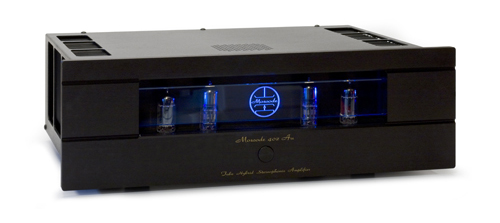
However, to flash forward, hybrid power amplifiers that usually combine a tube driver stage with a solid-state output stage have always been somewhat rare but usually very special products indeed. One of the most special is the Moscode 402AU that we have here for review. Moscode designer George Kaye doesn’t have just any hybrid; he was the first to develop a tube input/MOSFET output stage amplifier, the legendary New York Audio Labs Moscode 300. It was a great amp for the day, but was ultimately limited by the generic quality of parts used at the time that are upgradeable today. As designer George Kaye said, “That was my state of the art at the time. It took 20 more years to refine the Moscode to todays level.”
Today, the 402AU is not hampered by the “cloudiness” that used to plague MOSFET amplifiers of all kinds. The circuitry is up to date and this amplifier features a big, beefy power supply to go along with some other innovative features. This $6,495 power amplifier puts out a very healthy 200 watts per channel into 8 ohms in a dual mono design. As you remove it from its shipping carton, you can feel the quality inside.
Popping the top panel reveals a massive power supply, gold plated circuit boards, (hence the AU in the model designation) and careful attention to detail everywhere you look. It’s obvious that a lot of care was taken in building these amplifiers.
Available in brushed silver, or a black anodized finish (the color of my test sample), the 402 AU has a clear, etched glass front plate with the Moscode logo that glows soft blue along with the four driver tubes, right up there where you can see the glow. Pushing the center mounted power switch on the front panel starts the blue glow blinking for about two minutes until the amplifier is ready to operate, with the outputs staying muted.
Though it sounds good right from startup, once broken in the Moscode takes about 45 minutes to open up all the way, but it’s worth the wait! And for those of you that need to listen in absolute darkness, you can shut the front panel lights off, but I think it’s way too cool to do so…
Straightforward setup
The rear panel is basic and to the point, with Cardas RCA jacks and Edison Price speaker binding posts. Hats off to George Kaye for including these high quality binding posts that accommodate spade or banana ends, instead of those dreadful plastic coated binding posts that many manufacturers are going to. Hooking up my reference Shunyata Stratos SP speaker cables (that are a bit on the bulky side) was a snap.
During the initial 100 hours I spent on burning the 402AU in, I used the supplied, basic power cord to get a baseline read on the sound. Once that was established, I switched to a Shunyata Anaconda cord that powers everything else in my system, so I could make a valid comparison to other components in my system. While it certainly will perform well with the stock power cord, I highly suggest a premium power cord with any high current, high power amplifier to get 100% of what it is capable of. For the review period, the Moscode had a dedicated 20amp line all to itself.
While the Moscode has a pair of single ended RCA inputs, I had excellent success with both single ended and balanced (with XLR adaptors) preamplifiers. I made it a point to use the Moscode with everything from my vintage Audio Research SP-9 all the way up to the Burmester 011. It worked well in every situation I auditioned it and was not particularly swayed by different choices of interconnects either. It had enough resolution that I could easily tell the differences between whatever cable I was using, but nothing in my arsenal from Shunyata, Cardas, Furutech or the others wouldn’t work. The Moscode gets high points for being a great chameleon and not having any system synergy issues.
I had the same luck with speakers. As is customary here, I like to try any power amplifier in question with at least five or six speakers that vary greatly in efficiency as well as difficulty to drive. My Magnepan 1.6’s and MartinLogan CLX’s are both very revealing speakers at their respective price points, yet can be somewhat difficult to mate with an amplifier. Again, the Moscode did a great job with both speakers and would be an amplifier I would suggest wholeheartedly should you own either of these speakers. Having just finished two issues almost completely full of speaker reviews, I went beyond the normal call of duty and probably auditioned the Moscode with about 20 different speakers.
It’s safe to say that this is an amplifier you can live with for a very long time and should not have to trade in if your taste in speakers should change down the road. And if you need more juice, you can operate the amplifier in BiAmp mode, which parallels the inputs for two channels of equal power, one for the highs and one for the lows, however I had no trouble driving my reference speakers with just one amplifier.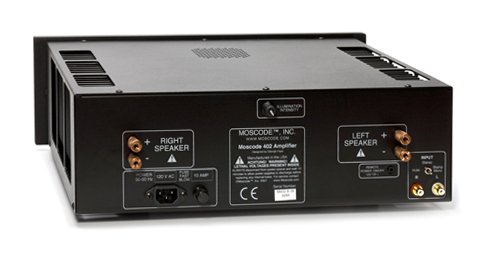
Glorious sound
When I earned my living as a commercial photographer and had to go to numerous press checks, when my work was being printed, the age-old argument over “correct color” and “pleasing color” always came up. I have always preferred the printed page to be slightly shifted towards the red, warmer side than the blue, colder side and I like audio the same way. Sure, if we can achieve that perfect balance, that would be ideal, but I’ll take a slight dose of tonal richness over sterility any day of the week.
However, it’s tough to just get that ever so slight drop of “tubiness” into the mixture without spoiling it and coming up with a sound that is colored, gooey and rolled off. It only takes a few percent of magenta or cyan to ruin yellow and here Kaye has succeeded brilliantly. Everything I listened to during the review period had the slightest bit of tonal richness that I enjoyed tremendously. Drum heads sounded very life-like and stringed instruments had a realism that is rarely heard in an amplifier at this price point.
Where a tube power amplifier usually goes too far for my taste, (especially at this price point) and ends up getting a little whumpy in the bass department, the Moscode keeps it tight. Probably has a little bit to do with George Kaye being a bass player… Acoustic instruments had an extra dose of palpability thanks in part to the tubes up front. It’s hard to get around em. And the female vocal lovers in the group will really love this amp too. This is one that lets you get lost in the performance.
Two things really stood out with the Moscode. It’s ability to throw an incredibly deep soundstage and the amount of low-level detail it possessed. I spent a lot of time listening with the Harbeth Monitor 40.1’s and these speakers will not reveal front to back detail with a mediocre amplifier. When listening to the latest MoFi CD release of Beck’s Sea Change, I had stuff spinning all over the room as if I had a pair of surround speakers. Very cool.
Live recordings are always fun to listen for hall ambience to place the players in a distinct acoustic space and my favorite test record of late is Classic Records’ remaster of Neil Young’s Live at Massey Hall. If you’ve had the pleasure to listen to this on a great system, you know how big this record sounds. But another favorite of mine is Jacqui Naylor’s’ Birdland: Yoshi’s East/West. You can hear the depth in the audience on this one. When the people are clapping and clinking their glasses, you can hear the depth in how close or far away from the stage as well. A lesser amp just puts the claps up on the same plane with the stage. Just another day as a HiFi nerd, but something that jumped right out at me when listening to the Moscode.
All this talk about detail and tonality is somewhat meaningless without grunt. Grunt is the fourth dimension in my book. The Moscode possesses a lot of grunt without giving up finesse and that’s what makes it such a special amp. Whether you are listening to a full symphony or blazing guitars loud, the Moscode doesn’t lose its fine-grained ability to pluck the details out of the mix. This amplifier passes the ultimate test – after about 20 minutes you are under it’s spell and you’ll find yourself wanting to just keep spinning whatever kind of discs are in your collection. Unless you have very inefficient speakers, I can’t imagine needing more than one of these amplifiers.
One last trick
For those of you that can’t leave well enough alone, the front panel of the Moscode flips down and exposes the tubes. The 402AU comes from the factory with a pair of 6H30 tubes in the V101 and 201 positions and a pair of 6GU7’s in the V102 and 202 positions. As long as you replace them in identical pairs, you can tube roll to your hearts content. I must warn you though, if you lean the least bit towards adult ADD, this could be the ball of catnip that keeps you from enjoying the music, so don’t say I didn’t warn you. While I did not do a ton of tube rolling (because I really liked the sound straight from the factory) I did swap the factory 6H30’s for a pair of NOS 6H30’s that used to reside in one of my BAT preamplifiers and this is definitely a worthwhile upgrade. The 6H30 tube is very powerful and robust but can be slightly harsh. The older versions of this tube have all the power and less grain. A good pair of these will set you back about $4-500, but they do take the Moscode to an even higher level of inner detail without any harshness.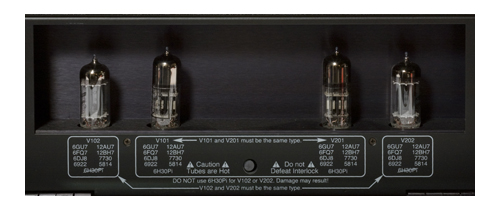
Interestingly, you can use 6922/6DJ8 tubes in all four positions, but you can only use the 6H30’s in the inside two sockets. This added flexibility assures that you should be able to get tubes for the 402AU no matter where you are.
33 1/3 days to make up your mind
Another part of the Moscode’s secret charm is that it’s sold factory direct. If this amplifier were sold through the traditional dealer network, it would probably cost about 33 1/3 % more. Though I normally am on the side of the traditional retail channel, smaller manufacturers selling direct evens out the playing field and allows them to be more competitive. Best of all, you have 33 1/3 days to return it (in the condition you received it of course) should it not be for you, but I’m guessing this is one you’d have a hard time to walk away from. Don’t have them send you one if you aren’t ready to write the check. George Kaye did mention that they have started selling the 402AU through select dealers, and the pricing will stay the same.
If you need a high-powered amplifier that sounds wonderful and is not the least bit fussy, I can’t suggest a better choice than the Moscode 402AU. I love this amp and purchased the review sample for permanent duty as a reference component here in the TONE studio. I’ve heard many an audiophile and audio critic discuss where the “point of diminishing returns truly is” and this is and amplifier that you will have to spend quite a bit more money to get this combination of power, resolution and musicality.
Manufacturers Information
Moscode
74 Cotton Mill Hill, Suite A124
Brattleboro, VT 05301
1-877-797-8823
www.moscode.com
Peripherals
Preamplifiers C-J ACT2/series 2, Burmester 011, ARC SP-9 and SP-17, Nagra PLL, Red Wine Audio Isabella, BAT VK-32SE, McIntosh MC2300
Digital Sources Naim CD555, Wadia 781SE, Sooloos Music Server
Analog Sources Spiral Groove SG-2 w/Triplanar and Dynavector XV-1s, Nagra VPS phono stage with VFS platform
Speakers MartinLogan CLX, Magnepan 1.6, Harbeth Monitor 40.1, Verity Audio Sarastro II, GamuT S-7, Zu Audio Essence
Cable Shunyata Anaconda power cords, Shunyata Stratos SP speaker cables, Shunyata Aurora interconnects
Power Running Springs Jaco and Dmitri Power conditioners
Old School: Love Those LED’s, The SAE2200
By Jerold O’Brien
Simon Drake Talks About Naim’s Music Label: Embracing Past and Future Technologies
By Jeff Dorgay
Budget Gear: The Rotel RA-1520 Integrated and RCD-1520 CD Player
By Mark Marcontonio
Dealers That Mean Business: We Visit Nuts About HiFi
By Jeff Dorgay
A Visit To Rega: Roy Gandy’s Model of Efficiency
By Jeff Dorgay
An Afternoon with the Focal Grande Utopia EM
The B&W Panorama
The Olympus E-P1
DSLR Performance, Compact Size
TomTom For The iPhone
The Sound of the Future Radio
WiFi Is Here, By Ben Fong-Torres
Red Eye’s Remote Control System for your iPod
Little City Coffee
Phish Promo Pint Glass
Live Music: The TONEStaff Covers The Montreux Jazz Festival,
Sunn O))) and Coldplay
TONEAudio Obscurities
Favorite recordings from the vault
By The TONEAudio Staff and Audio Industry Friends
Current Releases:
Fresh Releases in the Pop/Rock World
By the TONE Staff
Audiophile Pressings Presented by Music Direct
Beck, Boz Scaggs, Rickie Lee Jones, The Cars and more.
Bang & Olufsen’s BeoSound 5
Naim Uniti
Nagra LB Recorder
Sennheiser HD800 Phones
Snell K7 Speakers
DCS Paganini Digital Playback System
PrimaLuna’s Dialog 7’s: Can We Talk?
By Hood McTiernan
A Year With The MartinLogan Spire
Long Term Test
By Jeff Dorgay
The Harbeth Monitor 40.1’s
By Jeff Dorgay
The BelCanto REF 500 Monoblock Amplifiers
By Lawrence Devoe
BAT VK55SE
By Jeff Dorgay
Oppo’s BCP-83 Universal Player
By Rich Kent
The Marantz SA-K1 Pearl SACD Player
By Jerold O’Brien
Top of the SACD Food Chain: The Wadia 781i
By Jeff Dorgay
Trends TA 10.2 Amplifier
By Jeff Dorgay
SLUMMIN’
Paradigm and HK Classics
Never say never. Technically, Trent Reznor hasn’t uttered that loaded “n” word, but the Nine Inch Nails leader has repetitively claimed that he is waving goodbye to future touring. Fortunately, for select fans in New York, Chicago, Toronto, and Los Angeles, the vocalist already changed his mind by choosing in late July to wrap up what he’s deeming the band’s final tour with a series of intimate shows and anything-goes sets. Only time will tell whether Nine Inch Nails take the stage again. Yet even if they don’t return, the band’s second concert of its two-night stand at Chicago’s Aragon Ballroom offered plenty to savor.
Over the course of 140 minutes, Reznor and Co. supplied everything a concert of such magnitude should: Deep cuts (“Ruiner,” “Right Where It Belongs v2.0”), inspired covers (Gary Numan’s “Metal,” Joy Division’s “Dead Souls”), surprise guests (Bauhaus legend Peter Murphy, making his third consecutive onstage appearance with the group), a healthy dose of favorites (“March of the Pigs,” “Wish,” “Gave Up”), and a pervading sense of atmosphere. And of course, energy to spare. If not for an 11 p.m. curfew, it seemed as the quartet would’ve continued playing late into the night. Part of that is due to an earned chemistry.
Nine Inch Nails’ current configuration—Robin Finck on guitar, Ilan Rubin on drums/keyboards, Justin Meldal-Johnsen on bass, Reznor on guitar/keyboards/vocals—has grown more assured since its early summer tour. Rubin, for example, didn’t blink when Reznor, showcasing a carefree enthusiasm that permeated the performance, fell into his drum set in the middle of “Piggy,” causing stage hands to scramble and reassemble the pieces as the song continued its downward spiral. Together, the quartet balanced taut control with flights of reckless abandon, with Finck and Reznor exchanging feverish distortion on a truly searing “Burn” and channeling palpable menace on a massive-sounding cover of Pere Ubu’s “Final Solution”—a tune further pushed to dramatic extremes by the leather-clad Murphy who, despite his 52 years and somewhat humorous resemblance to Neil Diamond, remains a master showman capable of shaking his hips and shimmying his shoulders with the conviction of a young clubgoer. As far as influences on Nine Inch Nails’ oeuvre, Reznor couldn’t have chosen a more apt guest.
Not that the band needed much help. Rather than strictly focus on its aggressive material—a move that undoubtedly would’ve pleased the moshing faithful—Nine Inch Nails created aural mise en scene via use of dynamic contrasts and material that drew from every facet of its career. And so, the paranoid electronic gristle of “I’m Afraid of Americans” shared space with the robotic soul of “Metal,” and the violent sonic throb behind “Mr. Self Destruct”—itself bridged by a foreboding albeit soft break—conjoined the massive doom and gloom evoked by the slithering “Reptile.” Realizing the gig’s import, Reznor attacked the microphone as a bloodthirsty shark would a floating piece of meat, his jaws chomping at words on “Survivalism” with a rhythm that paralleled the blinding flashes of the strobe lights.
Yet the quartet also found momentary serenity in a series of mellow, classically oriented pieces. Colored by the shadows and bathed with darkness, “La Mer” and “The Frail” functioned as textured mood setters, each leading up to the amelodic withdrawal “I Do Not Want This,” on which Reznor beat piano notes until they resembled the striking of a steel anvil. But then it was momentarily back to a quieter realm, with stand-up acoustic basses and twilight synthesizers affording penetrating self-reflection that underscored themes of isolation, displacement, and dread. Such minimalism doubled as a cocoon out of which Nine Inch Nails emerged anything but unscathed, the restrained tones serving to magnify the impact and intensity of the ferocious volleys that followed.
“Nothing can stop me now” hissed Reznor on “Ruiner,” his declaration ringing true in a manner that, given the band’s passion and the frontman’s history of reversing previous decisions, makes it difficult to believe that years down the line, they won’t be back for another round. And not soon enough.
Setlist:
Home
The Beginning Of The End
Survivalism
Heresy
March Of The Pigs
Piggy
Metal (Gary Numan cover)
Ruiner
I’m Afraid Of Americans
Burn
Gave Up
La Mer
The Frail
I Do Not Want This
Gone, Still
Right Where It Belongs v2.0
The Way Out Is Through
Wish
Mr. Self Destruct
Suck
Echoplex
The Good Soldier
Dead Souls (Joy Division cover)
Reptile (with Peter Murphy)
Strange Kind Of Love / Bela Lugosi’s Dead (Bauhaus covers with Peter Murphy)
Final Solution (Pere Ubu cover with Peter Murphy)
Encore 1:The Hand That Feeds
Head Like A Hole
Encore 2: Hurt
Now that the dust has settled, the folks at the Montreux Jazz Festival are starting to release video highlights of the show. If you didn’t get a chance to partake, this is the next best thing. Every Friday, they are releasing another concert.
This week’s feature is Kool and the Gang, check it out and the others here:
It was fantastic to spend the last few days in Denmark with the folks at Bang & Olufsen. We will have a full story next issue, going over the plant and their history in detail.
Though the Danes are very warm hosts, we ended our journey at the ICEBAR in Copenhagen. The interior is kept at 25 degrees F, with drinks served in solid ice, this is the by far the “coolest” place to have a drink in Copenhagen.
Pictured with me is Bailey Barnard from The Robb Report and thanks to Geoffrey Morrison from Home Entertainment Magazine for taking the photo!
http://www.icehotel.com/Content/AbsolutIcebar/Copenhagen/
I’ve been eyeing one of those $300 universal remotes for years now, but at the back of my mind kept thinking about the marriage of the iPhone/iPod Touch and all of my other devices around the house. You can have the Red Eye for $188.
The future is here, it’s cool and affordable. Most of all, it’s straightforward to use. Well, it’s almost here. The Red Eye from ThinkFlood will be in stores sometime in October, just in time for the holiday shopping season. While you are picking one up for yourself, I suggest buying one for anyone in your family that has more than two remotes laying on their coffee table; they will love you for it.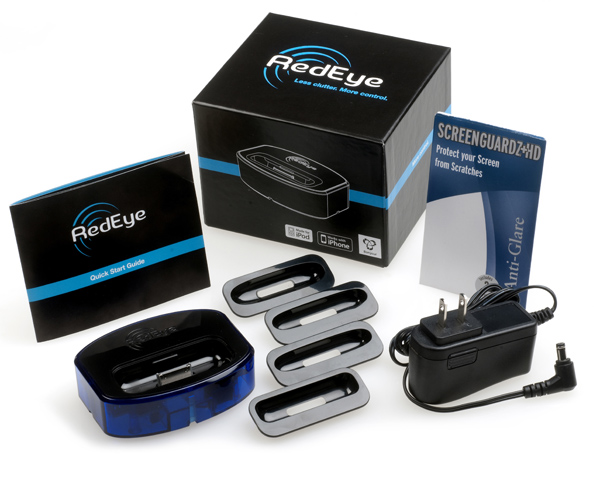
The only catch is that you need an iPhone or iPod touch to use it. Even if you don’t have an iPhone or iPod Touch, I’d suggest jumping off the cliff for at least an iPod Touch, as you can pick them up refurbed on the Apple Store for about $150. Who cares if you don’t need an iPod, this is the most exciting thing I’ve seen since AV gear started coming with remote controls attached.
Those needing an extra rationalization to buy the latest cool thing, here’s a point to ponder: If you have about seven remote controls lying about, that’s at least 14 AAA batteries you are throwing in the garbage once or twice a year. (Maybe more, if you are a mega channel surfer) If you are buying Duracell’s in a four pack at Walgreens, the Red Eye will pay for itself in two years and that’s about 50 icky batteries you haven’t dumped in the garbage can. See, now you’re an environmentalist and an economist; how cool is that?
The principle behind the Red Eye
Once you program the Red Eye for your devices, when it gets a signal from you iPhone/iPod Touch, it’s base station (that is no bigger than a standard iPod dock, but in a cool transparent blue) will send the corresponding signal that used to come from your remote control, to your CD player, preamplifier or other device. The Red Eye dock also serves as a charger for you iPhone/iPod, so that you will always have it charged and easy to spot. More organization, great stuff!
By the time the Red Eye is out on the market, they should have a large database of built in remote control codes that you can easily download. But for the companies that don’t release their remote codes, or the occasional off the radar device, the Red Eye will “learn” the commands by a simple push of the button. You only need to go into the setup screen and push the “learn command” button on your iPhone.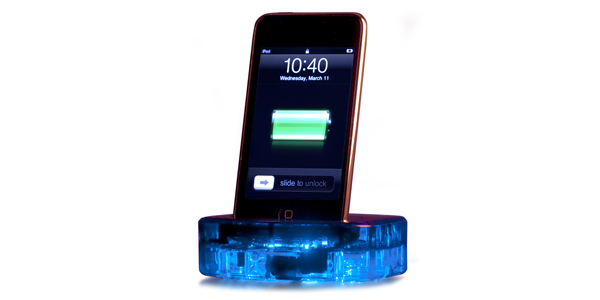
Easy networking
In the event that you don’t have a wireless network in your house, your iPod device can connect to the Red Eye via an “ad hoc” network. There are complete instructions for that on the Red Eye website, and it usually will not take more than going to the System Settings>Wi-Fi and selecting the Red Eye network. Now your iPod device will see the transmitter. However, if you do have a wireless network, you can link the Red Eye to your network and expand the range of where you can command your empire. This can be very useful if you like to listen to music on the system downstairs while you are lounging in a bubble bath upstairs. When the phone rings, just push the pause button and carry on!
Now the real fun begins
Once you have all of the remotes in your world entered into your iPod device, you can customize how you use these devices and tap the full power of the Red Eye system. The next step is to set up activities for each one of them. The more complex your system, the more you will appreciate the Red Eye, as will members of your family that aren’t as technically savvy. 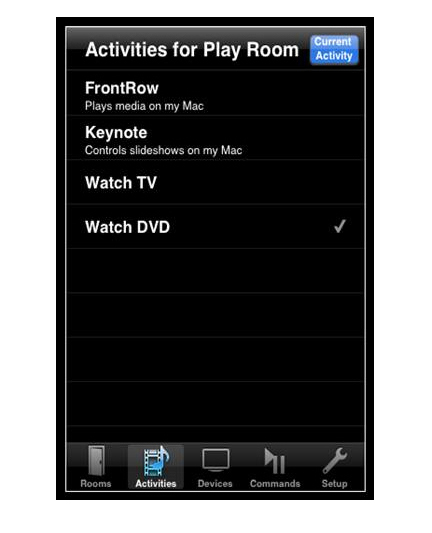
It’s worth mentioning that the Red Eye will integrate into your lighting system if you have one, so when you want to “Watch a DVD”, you can program your system to open the drawer, change inputs to play the disc player, eject the tray and dim the lights. I told you that you needed one of these.
Even the staunch 2-channel enthusiast will love this. You can mix devices on one panel. For example, as part of the control structure with my Naim CD 555, I added a volume up and down button (that actually control my Burmester Preamplifier) so I don’t need to switch screens when listening to this player. I’ve done the same thing for all three of my disc players and it has made my system much easier to use.
Accessory of the year
With the rest of the accessory articles in the queue for the year, I can spill the beans and let you know the outcome in November right now. The Red Eye will be getting our Product of the Year award in the accessory category. This is by far the most useful HiFi accessory I’ve ever come across. Almost anything that is controlled by an IR device can be managed with the Red Eye. Now you can kiss all of that remote control related clutter goodbye.
If they can only make it control the garage door opener, I’ll be in Heaven.
The Red Eye will hit the market in early November, just in time for the holiday shopping season. You can get more information from their website at:
Wish I could take credit for finding this bit of humor, but I tip my hat to recording engineer Eliot Mazer. Here’s a funny bit from BBC Comedy on YouTube:
http://www.youtube.com/watch?v=pehHOqx7JXg&feature=player_embedded
Enjoy!
Well known to music and headphone lovers all over the world, Sennheiser is taking to the streets of North America, exposing their wares to the public at various music related events and retailers. They’ve enlisted a team of very attractive male and female spokesmodels to demonstrate their headphones and according to their Facebook page, seem to be making great progress spreading the word.
Heck, I’d rather buy headphones from pretty girls rather than the dorks at Best Buy any day of the week. And Sennheiser does make great stuff, so you can’t go wrong.
I certainly hope this is the beginning of the new wave of hifi marketing…
For the fifth consecutive year, Chicago’s Grant Park played host to the resurrected Lollapalooza Festival this past weekend. Three days, more than 125 bands, and a combination of steady rain (Friday), high humidities (Saturday) and brutal temperatures (heat indexes climbed to 100 degrees on Sunday) greeted a collective sold-out total of 225,000 concertgoers.
The downtown lakefront setting, musical diversity, and something-for-everyone choices continue to ensure that Lollapalooza remains one of the country’s top destination festivals. Along with Chicago Tribune Rock Critic and NPR “Sound Opinions” co-host Greg Kot and Tribune contributor Andy Downing, TONE Assistant Music Editor and Tribune contributor Bob Gendron helped cover the event for his hometown paper. Their reports for the Chicago Tribune can be accessed via the links (to the Tribune) below.
Unfortunately, I couldn’t stay in the UK a couple of extra days, but here’s what I missed out on at Tom Tom Audio’s latest event, held at the St. Michaels Manor Hotel in St. Albans. In addition to the great HiFi that was set up, including a sneak peak at the new Naim standalone DAC, they had quite a few new and vintage Bentley automobiles on hand for the crowd to enjoy.
And If you will notice, there were women attending this event…

I just spent some time interviewing James for a forthcoming article in TONEAudio about “Dealers that do it right”, so look forward to hearing more about this shop that offers tremendous service, combined with an equivalent amount of passion for the gear and the music. Watch issue 23 for the full story. I won’t miss this one next year!
And if you are anywhere near St. Albans, book an appointment to meet James, even if you don’t need new gear just yet.
Here’s some more pictures from the event:
http://forums.naim-audio.com/eve/forums/a/tpc/f/48019385/m/5542938227
And a link to TOMTOM Audio:
Had a fantastic time at the Meridian factory in Cambridgeshire yesterday with Bob Stuart and his crew.
The full factory tour included every aspect of the company, including their extensive R&D facility along with their anechoic chamber where everything is measured. Having just been at the BBC the day before, I probably won’t ever visit two anechoic chambers in the same week again!
I was blown away by the size and scope of the facility as well as the attention to every phase of the construction of Meridian products.
The day ended with a visit to their home theatre room, featuring the outstanding 10k Meridian projector that some of you may have seen at this year’s CES show. Thanks to new calibration techniques, they’ve taken this system to new heights of performance, and it is by far the most impressive video display system I’ve ever seen.
And, I got to see the Sooloos Music Servers being built and meet everyone involved with Sooloos design and programming. Watch for some exciting Sooloos news in our next issue.
Yesterday, Alan Shaw of Harbeth Speakers took me to the BBC research centre at Kingswood Warren. Just outside London, this quiet location is where many significant developments in the world of audio, TV and radio were produced, not the least of which, the legendary BBC monitors like the LS3/5a…
Here you see me in my best spokesmodel pose, holding a large pile of research and measurements that were done on the LS3/5a and other speakers in the range, complete with the engineers notes, photos and measurements. I even got to see the first LS3/5a prototype!
Very cool stuff and a lot of history here….
Madeleine Peyroux took the stage Thursday night after Allen Toussaint thouroughly warmed up the crowd. She delivered a very warm and romantic set, not at all unlike what fans have grown accustomed to on her records.
While the performance was excellent, it did not deviate terribly from the set list that I had seen when she stopped in Orgon a few months earlier this year. The band was tight and did not miss a beat, however the Oregon performance at the beginning of the tour was more lively.
Here in Montreux, Peyroux was playing it safe, perhaps knowing this show was being recorded and filmed?
Regardless, the fans got a nice mixture of her last two albums along with a number of her original compositions from her current record, Bare Bones, which features all original tunes.
John Scofield took the stage in Montreaux last night with a very different band than the one he was touring with just a few months ago when he came through town for the Portland Jazz Festival.
Touring to support his recent release, Piety Street, which has much more of a gospel feel, the band consisted of Jon Cleary (vocals, piano, Hammond B3 organ); Donald Ramsey (bass); Ricky Fataar (drums) and Scofield on guitar..
The band played most of the tunes from the album, and the evening had a very laid back feel, in contrast to Scofields usually more free form guitar escapades, with him adding some occasional background vocal tracks. However, the set was not without a few great Scofield guitar solos, which kept the audience very entertained.
The Miles Davis hall had a perfect ambience for this music and the live mix was excellent. If you love jazz, Montreux should be on your calendar for next year!
Couldn’t resist, but this is that famous place and it certainly has its charm. Off tonight to the Miles Davis hall (Below) to see John Scofield and the Piety Street band. Curious to see how the lineup has changed since the Portland Jazz Festival in March.
Switzerland is awesome and I bought electronics from a very nice French lady. Nerds always share a universal language! More pics to follow and tomorrow we are off to the Nagra factory to see their latest offerings!
Staff writer Todd Sageser took a trip to Indianapolis in early June to visit Indy Audio Labs for a few days.
Indy Principal Rick Santiago introduced Todd to his partner Ted Moore and the guys spent a good deal of time listening to many of the classic Aragon and Acurus products, including a 2 channel system with the Aragon 28K pre-amp driving 8008ST and 3002 amps. Source material included a variety of CDs and downloads from HDtracks, streamed through a Roku M1000 Soundbridge. Todd was impressed with the openness and sheer dynamic capability of the Aragon product with a variety of speakers.
In a 2.1 studio control room system, the Aragon SoundStage Pre-Amp/Processpr drove a 8008×5 amp for the studio monitors and an Aragon Palladium monoblock easily handled a pair of Shure subwoofers.
Finally, in a home theater system, the new Aragon Stage One Pre/Amp processor fed an Acurus 125×5 5-channel Home Theater Amp. Even with some modest Klipsch speakers, the image and sound quality blew away anything from the home theater receivers that were sitting on the shelf for comparison.
Ted and Rick in the control room with new Aragon processor.
What’s up next? Expect to see Aragon and Acurus return to separate branding. Also, there are some great new remote-control capabilities in development, where Rick and Ted will be getting to use their specialized engineering skills.
Todd plans to make regular visits to hear what develops and Indy Audio Labs will be sending Todd some beta product to listen to. The guys have promised that Tone will be the first to get their new products for review!
Tomorrow morning and it’s on the road again, or rather in the air again!
Headed over to Switzerland to tour the Nagra factory and take in a few evenings of music at the Montreux Jazz Festival. Stay tuned for daily updates, this should be a very interesting trip.
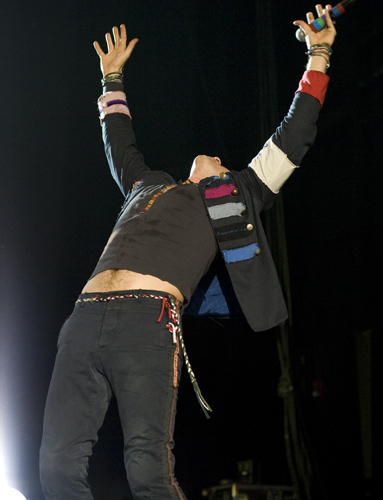
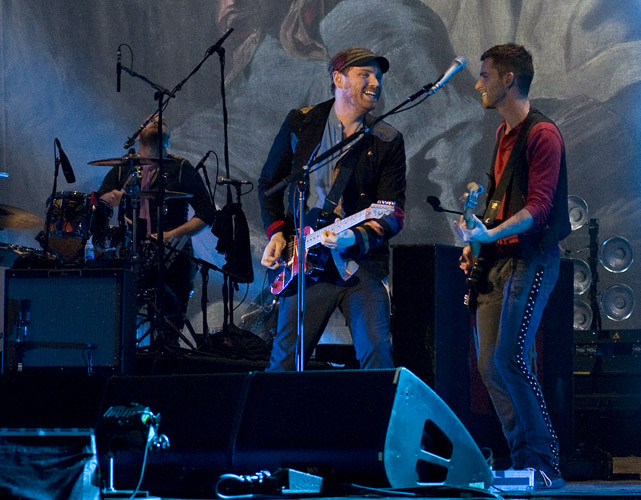
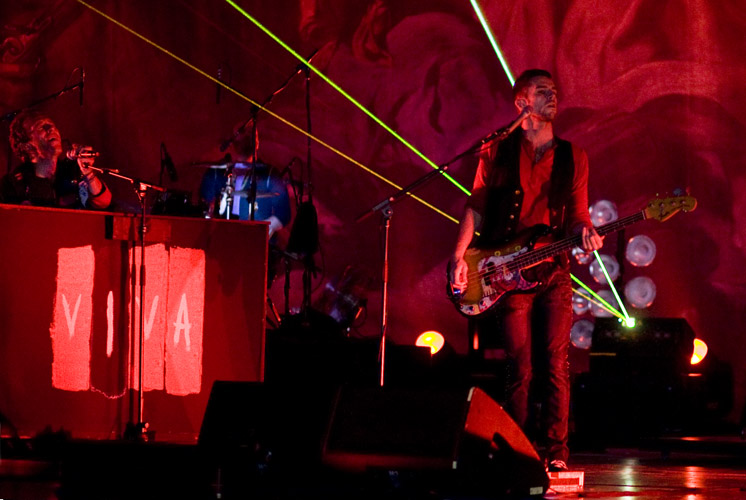
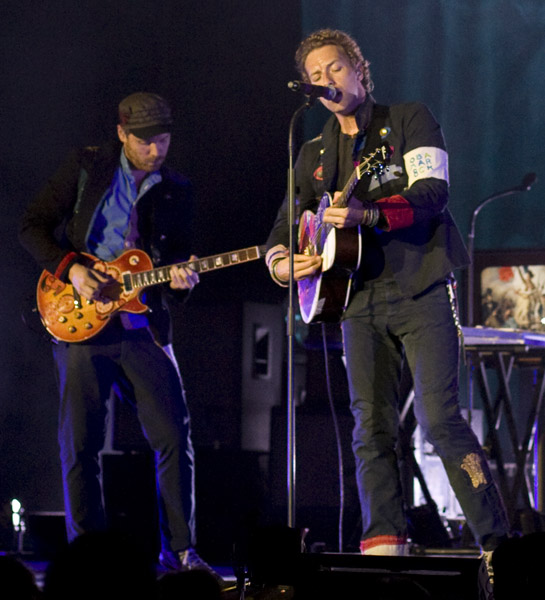
Here’s a few extra shots from the Coldplay show at the Clark County Ampitheater. Review and more pics to follow in issue 23.
Tribute: Michael Jackson Remembered
By Sally Smith Clemens
Old School: Adcom’s GFP-555 Preamplifier
By Mark Marcontonio
Budget Gear: The Moon i-.5 Series
By Mark Marcontonio
The Journeyman Audiophile: Taking
The Technics SL-1200 to the Max.
By Jeff Dorgay
Leica Rolling Stone: The Rocking World of Jim Marshall
By Jeff Dorgay
A 1975 KISS Adventure
I Dreamed I Was On Stage With KISS in My Maidenform Bra
By Jaan Uhelszki
Inside Neil Young’s Archives: A Chat With L.A. Johnson
By Bob Gendron
McIntosh at 60! : A Visit to Mac Headquarters and a Chat With
CEO Charlie Randall
By Jeff Dorgay
The Aston Martin DBS w/Bang & Olufsen HiFi System
Yeah, It’s That Good
Splash Some Color in Your Living Room
The Art of T.Scott Stromberg
Simpsons Stamps
Fun While it Lasts. DOH!
The HP 110XP Netbook
Leave your MacBook at home
The Rebirth of Marantz
The Reference Series Components are Fantastic
Live Music: The TONEStaff Covers Recent Shows
By Elton John, St. Vincent, The Allman Brothers,
Reeves Gabrels and David Byrne
The Art of Music
Ben Fong-Torres discusses the creation of the Allman Brothers
Famous Live at The Fillmore East Album cover.
By Ben Fong-Torres
Current Releases:
Fresh Releases in the Pop/Rock World
By the TONE Staff
Julian Lage From Guitar Prodigy To A
Smashing Debut
By Jesse Hamlin
Audiophile Pressings Presented by Music Direct
Beck, Carly Simon, Chicago, The Doobie Brothers, Neil Young,
Alice Cooper and more.
Woodstock 40th Anniversary Releases
One more for the road
By Bob Gendron
On Choosing Great Demo Music
How to decide what to play, when
By Jeff Dorgay
Reviews
The Burmester 061 CD Player
Art for the Ears Indeed
By Jeff Dorgay
Fosgate Signature MM/MC Phono Stage
By Randy Wells
Clearaudio’s DaVinci Cartridge
By Jeff Dorgay
The BAT VK-55SE Power Amp
By Jeff Dorgay
The Grant Fidelity RITA-340 Tube Integrated
By Jerold O’Brien
DarTZeel CTH-8550 Integrated
By Jeff Dorgay
Shunyata Aurora Interconnects
By Jeff Dorgay
60th Anniversary Classics from McIntosh
By Jeff Dorgay
Sound & Style: The Verity Audio Sarastro II Speakers
By Jeff Dorgay
Sanders Magtech Power Amplifier
By Rich Kent
JL Audio’s Fathom F110 Subwoofers
By Jeff Dorgay
The Morel Octave 5.2 Speakers
By Jeff Dorgay
PMC TB-2i Speakers
By Hood McTiernan
Focal’s Diablo Utopia Speakers
By Jeff Dorgay and Hood McTiernan
The ZU Essence Speakers: Crank Em Up!
By Jeff Dorgay
Headphone Planet: Carat Topaz Amp and Polestar USB Cable
By Jerold O’Brien
SLUMMIN’
Nak 550 portable and Pioneer 563 Universal player
If you’d like a bit more interactive experience with us and our readers, join us on Facebook chat. Rather than subject you to the trolling of a forum, we’ve decided to set this up in more of a “salon-like” environment. We’ll be discussing new gear, upcoming reviews, new music and whatever else is on your mind.
You can join at:
http://www.facebook.com/group.php?gid=102224501230&ref=mf
Stop by and say hello when you have time, we look forward to hearing from you.
After a very nice visit with the folks from Quadraspire racks http://www.quadraspire.co.uk/ we were off to see Sir Elton John. Full report in the next issue of TONEAudio,due out on the 26th of the month. Now, it’s off to the REGA factory and owner, Roy Gandy’s home to get a sneak peek at the latest gear they are soon to release.
Major announcement on Tuesday so stay tuned!
Had a great visit at the Chord Company, makers of excellent British cables. These guys take their manufacturing quite seriously and build everything in house, no offshore manufacturing here!
The plant is spiffy and ther work is great. You can’t find a bigger group of music lovers than the Chord folks and the proof is in the final result. Watch for a review soon..
After a great morning at the Chord Company, we were takento visit stonehenge… The most amazing thing is that it’s just off the freeway! Either way the view is breathtaking and the folks at Chord are wonderful.
Watch for a full factory visit story soon!
The rumors are confirmed. On September 6th at 8pm, at the Akron Civic Theater in Akron, Ohio, TR will perform this album in it’s entirety. This is a first, as TR has never performed this record in its entirety live, so some of the tracks have been concert staples for years. In addition to current bandmates Kasim Sulton, Jesse Gress and Prarie Prince, he will be joined by Greg Hawkes (The New Cars) and former Utopia bandmate Roger Powell.
Rundgren’s wife Michele told us that “The fans were just crazy for this show to happen; it’s all their doing.”
Count on major coverage in the October issue of TONE, we’ll be there before, during and after the show!
You can get more information or purchase tickets at:
We are all excited that Neil Young chose to run Bob Gendron’s article about his new box set in the news section of his website. You can check it out here:
Feast your eyes on this baby!
We just got Dartzeel’s latest integrated amplifier in for review and it is truly a thing of beauty. 230 watts per channel and inputs for just about everything. It even comes with a super cool USB key to activate it.
Watch for a review soon. This is a truly amazing amplifer. Also available in black for those of you that aren’t crazy about gold.
If you are a big Bob Dylan fan and would like a great news feed, check out www.expectingrain.com
This shoud keep you busy for a little while!
For those of you that enjoy the sound of high performance (engines, that is), Club Mix columnist Scott Tetzlaff is waiting for qualifying to start soon for the Monaco Grand Prix.
Stop by www.formula1.com to keep track of who’s going to be where on the grid Sunday morning.
Hey, we can’t just geek out with stereos all the time!
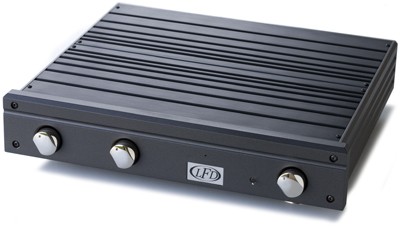
I had my first experience with LFD in 1998 when I purchased their Mistral amplifier on the suggestion of my dealer, Gene Rubin, of Gene Rubin audio. It was such a good amplifier, that even after upgrading my analog front end to five-figure territory, I was still very pleased with the Mistral.
Last year, Gene sent me the LFD Zero LE III, which was basically a Mistral with higher quality parts throughout. At $2,495 it was an incredible bargain and even at the current price of $3,195 this is still one of my favorite integrated amplifiers. I am still haunted by the high level of performance by that modest, minimalist amplifier and regret not buying the review sample.
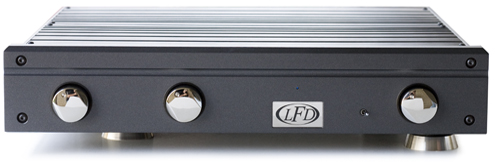
The current offering from LFD, the NCSE (New Chassis, Special Edition) has taken their design even further using Vishay bulk-foil resistors, Shinkoh tantalum resistors, silver internal wiring and a very robust case that adds eight more pounds over the LE III. The faceplate is unusually thick for a British integrated and is similar to what you might see on a big American monoblock.
The four rubber feet from previous versions have now been upgraded to three isolation devices that consist of a viscoelastic foot that fits into a milled aluminum cup. Power output has taken a jump to 70 watts per channel, up from 60wpc in the LE II and 50wpc in the original Mistral. Even with the power increase, the LFD runs cool to the touch, so it will easily fit in tight spaces without a problem.
Act now!
At $7,500, the NCSE is not inexpensive, but there is an introductory price of $6,000. LFD had a similar pricing policy with their past models, so if you are intrigued, I suggest getting in at the beginning of the production cycle before the price goes up or something else wacky happens in the currency markets.
LFD is a low profile company that takes pride in hand assembling their amplifiers, but part of what makes the NCSE so special, is that designer Richard Bews assembles each unit personally. Every aspect of the amplifier exudes craftsmanship with understated elegance. The compact size and dark grey casework will blend into your decor quite nicely. If you need the approval of your audiophile buddies that own gargantuan amplifiers and huge heatsinks, the NCSE may not pass muster, but the minute you turn it on, I guarantee they will be impressed.
Items for the wish list
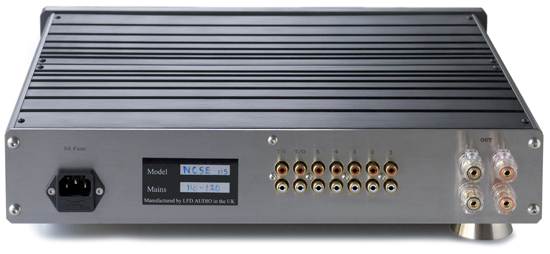
I only have two complaints with the NCSE; the lack of a remote control and the crowded rear panel. I can certainly understand the purist approach taken by LFD, eliminating every bit of unnecessary circuitry from the main board, but an amplifier at this price point should provide a remote, even if a very basic one with volume and mute options.
The RCA jacks and speaker binding posts are very close on the rear panel, too close to use some premium cable with the amplifier, and this amplifier’s performance is worthy of the best cable you can afford. The speaker binding posts are so close together that many of the larger cables will be difficult if not impossible to use with spade lugs. If you do not have a lot of room behind the LFD, sticking to banana plugs will be best.
The NCSE features five line level RCA inputs along with a tape monitor input and output. As you can see from the front panel, there are no markings for the various inputs, so you will have to commit your sources to memory. A phono stage is not available as an option, so an outboard phono stage will be necessary for LP lovers. I found excellent synergy between my Lehmann Black Cube SE and the NCSE, using Audience Maestro interconnects.
On to the good stuff…
Anyone who has owned or used LFD gear knows that these criticisms are minor and those willing to forgo some functionality in search of performance won’t find any of this an issue. As with past LFD amplifiers, the NCSE required about three days of continuous play to settle into its character and sound its best. Initially, I found the presentation slightly laid back, but with a very wide-open soundstage that spread out behind the boundaries of my room. Once adjusted to this new perspective, I was reveling in the detail, noticing the sizes and shapes of the presentation in my favorite records.
The NCSE was a fantastic match with the Harbeth Monitor 40.1’s (which you can also get from Gene Rubin), doing what only the best gear does – offering ever bit of nuance your recordings have to give without sounding analytical or harsh. Many have called the LFD amplifiers “tube-like” and I think the NCSE comes even closer to that description than its predecessors.
After hearing “Prophecies” used in the film Watchmen, I had a hankering to go home and listen to my Nonesuch pressing of Koyaanisqatsi. Even though it had been a while since I last listened to this LP, I was immediately struck by the fact that I could make out individual voices in the choir and follow each person all the way through certain passages. While listening to folk-singer Sarazin Blake’s newly repackaged 2007 CD, The Air Your Lungs Forced Out, I was treated to a wealth of information that was downright surprising, relishing the way Blake’s guitar amp would make the snare drum rattle and buzz on certain notes or the way the four musicians would move and shift their positions slightly throughout each tune.
When auditioning the LE III, I was always impressed with the quality of low bass information present, but the NCSE offered more extension and slightly more warmth. On the new MFSL LP pressing of Linda Ronstadt’s Prisoner in Disguise, Kenny Edwards’ bass sounded unusually rich and full without being boomy or over-extended. Low frequency information continued to be tactile and textured throughout a variety of recordings, with just a little more pluck, a little more flesh-against-string and a little more interaction with room boundaries clearly evident.
Into the sunset…
Boxing the NCSE back up at the end of the review, I’m reminded of the ongoing conversation I’ve had with fellow audiophiles about the “Golden Years” system, the one that you retire with after you are finished keeping up with the Joneses and playing the upgrade game. This is an amplifier that I could live with forever. If sound quality is your priority and you can forgo the remote control, I highly suggest the LFD NCSE.
The LFD NCSE integrated amplifier
MSRP: $7,500 (introductory price, $6,000)
Where to purchase in the US:
Fidelis AV (the US importer) www.fidelisav.com
Gene Rubin Audio www.generubinaudio.com
Bob Mould arrived at Chicago’s Old Town School of Folk Music on the last Sunday in March with the intention of playing an intimate solo acoustic show in support of his new Life and Times (Anti) album. Yet as he’s done throughout his career, the iconic singer/songwriter/guitarist deviated from the script.
Joined by bassist Jason Narducy, a veteran member of Mould’s touring band, the former Husker Du frontman treated the sold-out crowd to an invigorating career-spanning set that culminated with the 48-year-old musician plugging in an electric guitar that spit distortion in a venue renown for quiet and restraint. With his voice in pristine shape and emotions running high, Mould’s gray whiskers and bald head were the only obvious indicators of his status as indie-rock’s elder statesman. Whether excited to test out material from the new record-his second in 13 months-or simply charged by the thrill of delving into his rich catalog, Mould remained engaged from start to finish.
Dressed in a navy blue shirt and blue jeans, the workman-like vocalist didn’t come to chat. “You know me and talking. It’s just better to go…,” he announced before launching into a caustic rendition of “Poison Years,” one of five tracks drawn from 1989’s celebrated Workbook. Similarly, “Brasilia Crossed With Trenton” found him rocking back and forth at the microphone while choking the lifeblood from his guitar, his facial expressions a mess of agitation and disillusion. After he finished the epic tune, mental exasperation forced him to move to another place. “We had another one from Workbook but I’m feeling trapped by my past,” he admitted in the midst of the 90-minute concert.
Mould’s past proved nothing if not cathartic. His cracked falsetto and nasal accents produced the illusion of vocal echoes on “Wishing Well,” a track propelled forward by wavy chords and Narducy’s nimble accompaniment. “See a Little Light” shook and swayed, its bright tuning indicative of the cautiously hopeful lyrics. “Favorite Thing,” a gem from Mould’s days in the 90s pop-rock trio Sugar, jangled with anticipation. “If I Can’t Change Your Mind” persuaded with ringing melodies and magnetic hooks. Throughout, Mould tailored the strumming to each song’s needs. As his right arm loosely dangled over the instrument’s body, his right hand alternately stabbed, snapped, scraped, and swiped at the strings.
Few artists know how to get more from less. Primarily avoiding solos, Mould built songs up to a breaking point and brought bruised narratives into the forefront. Raw and vulnerable, a number of his newest songs seamlessly blended in with time-tested classics. Seething frustration poured through the deceptively mellow “The Breach,” an introspective number that, like many others on this night, tried to make sense of the disconnect, fallout, regret, anger, and ache that stem from troubled relationships.
In this regard, few songs were better than the bittersweet kiss-off “I’m Sorry, Baby, But You Can’t Stand In My Light Any More.” Questioning himself as much as the behavior of his discarded partner, Mould sang “I always find the broken ones/What does that say about me?,” hitting on a subject that has forever been a staple of great pop music.
If you ever doubted the value of buying a $35 case for your iPhone or iPod touch, here’s the proof. All it takes is a nudge from an unsuspecting terrier’s nose and your iPhone is crashing to the tile floor. This 30″ drop yielded a $200 repair.
Don’t think you’ll be headed to the Apple Store for a replacement either. You only get ONE $199 iPhone 3G if you are an existing iPhone customer. Perhaps the advertising is a bit misleading? I wish the freindly guy at the Apple Store would have told me something like “guard this baby with your life, because the next one will set you back $600…” And like other cell phones at the AT&T store, you can’t buy an insurance plan for your iPhone.
The good news: you can have it repaired from Apple for (you guessed it) $200, or if you are very technically inclined can get a kit to repair it yourself for $65. Usually up for a challenge, I backed down on this one, as my iPhone 3G is only a few months old.
Lesson learned, be careful with your iPhone 3G.
For those of you that were fans of the Aragon and Acurus brands, they are making a comback! Ex-Klipsch employees Rick Santiago and Ted Moore have purchased the brand and will be starting on new products ASAP. We will be finding out shortly what, if any plans they have for repairing legacy product.
TONEAudio staff writer Todd Sageser will be taking a trip to their lab very soon and we will have a report on what the new owners are up to. There are some rumors that they will be bringing on another big name or two in the engineering department, so we’ll let you know as soon as a decision is made.
We wish them the best of luck.
Just got back from Los Angeles and a few days behind the wheel of the Aston Martin DBS with Club Mix editor Scott Tetzlaff. The goal was to evaluate the Bang & Olufsen stereo system for the next issue of TONEAudio, but the hidden agenda was to evaluate the thrust of the 510 horsepower, 6-litre V-12 under the hood.
Best of all, on the way home, our pilot on Southwest Flight 500 informed us that we were traveling on a brand new airplane. New car smell and new plane smell all in one weekend!
If you would like some more information about this beauty, just click the link:
If you love tubes as much as I do, you know the lure of finding great NOS tubes. There aren’t that many lurking in garage sales anymore, so the chance of finding a cache of Mullards or Telefunkens for five bucks is slim to non-existent. Even the old ham radio operators know about eBay now and price their booty accordingly.
The designer and end user face the same dilemma; where to get the good tubes without breaking the bank. Many love the sound of the old Telefunkens, Mullards and Phillips 12AX7s, but the best examples can fetch 200 – 300 dollars on the right day. Just like buying parts to restore a vintage Porsche 356, there are only so many NOS parts to go around and those remaining get more expensive by the day. Fortunately all but the very best 12AU7’s are still below 100 dollars each, but again as supply goes down and demand goes up, the end result is inevitable.
New New Stock
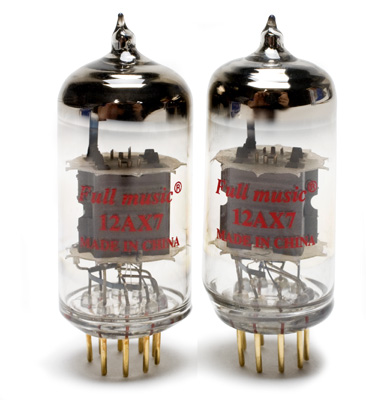
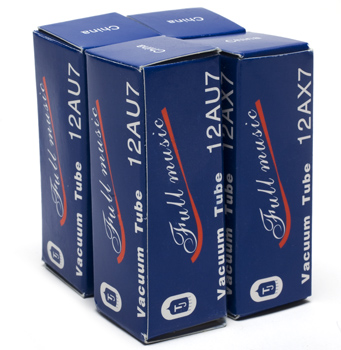
Having had excellent luck in the past with the TJ Music 300B’s, I was anxious to try their small signal tubes and was pleased with the results. The folks at Grant Fidelity are now the North American importers for these tubes and you can see their full selection at www.grantfidelity.com These are brand new tubes, manufactured in Tianjin City, China.
Both the 12AX7 and 12AU7’s are 55 dollars each and for an extra 10 dollars per tube you can get the standard 30-day warranty extended to 12 months. If you listen to your system fairly frequently, I suggest spending the extra 10 dollars, as tubes will usually fail around 1000 hours if they do not exhibit immediate defects.
First test: Phono
The low noise requirements of a moving coil phono preamplifier seemed like the best place to start with the TJ’s, if they could pass this test, I figured they would probably ace serving as driver tubes. Unfortunately, my Nagra VPS phono stage uses a 12AX7 and a 12AT7, so I’m going to keep my fingers crossed that TJ comes out with a 12AT7 (and a 6922) soon.
The Nagra VPS is a rare component that does not respond well to tube rolling. I’ve yet to use a vintage NOS tube that has done a better job than the standard, handpicked EH tubes that Nagra chose for duty in this preamplifier. Swapping the EH 12AX7 for a very expensive Telefunken just muddied up the midrange and switching to a Mullard slowed down the presentation and increased background noise.
The TJ was a much different story, this tube showed an improvement across the board. Dynamics were increased, with extension at both ends of the frequency scale, without any harshness. I dragged out a few favorite warhorses that I’ve heard quite a few times to make the judgment as easy as possible. Right from the first record, Dire Straits Communique, I was impressed. My copy of this is just an average pressing that you can purchase in any used record store for about $5 and is somewhat compressed. Just swapping in the TJ 12AX7 gave this record much more impact and I was hearing some low level detail throughout the record that I had to strain to hear before. Moving on to the second Chicago album (the current Rhino remaster) had the same result. When using the stock 12AX7, the horns in “25 or 6 to 4” seemed to be on the same plane as my MartinLogan CLX’s, but with the TJ 12AX7, the horns jumped out of the speaker plane and were right in front of me, with the image having much more front to back dimensionality.
 Second test: Driver
The next step was to pop a pair of TJ 12AX7’s and 12AU7’s in one of my Prima Luna Dialogue 7 monoblocks while leaving the other one as it came from the factory. This time switching to the Harbeth Monitor 40.1’s, I played a handful of Classic Records recent mono jazz releases and switched back and forth between the left and right channels, both receiving the same mono signal, leaving no doubt to the change.
In case you are not familiar with the Prima Luna amplifiers, they are somewhat on the warm, lush side of the tonality scale, which is more often than not a good thing. You can get a slightly more modern tube amplifier sound by swapping the KT88’s for some NOS Tung Sol’s or similar, but those tubes are fetching upwards of 250 dollars each these days. That shakes out to almost half the original purchase price!
Fortunately, you can get very close to the same effect with the TJ’s. If you like the more vintage sound of the Prima Lunas, stick with the stock tubes, but if you would like more punch, this is a great investment that won’t break the bank.
TJ’s for me!
The only thing that can’t be verified at this time is how long these tubes will last. My experience with current stock Russian and Chinese tubes has shown a lifespan of about 3000-4000 hours with a failure rate of about 25%, so this will remain a question mark for now. I’ve been running the 12AX7 in my Nagra VPS, which sees about 12 hours a day duty and my trusty Radio Shack stop watch is up to about 1400 hours with no problems so far. I’ll be sure to report back in about a year, when I’ve run the clock beyond the 5000-hour range.
For now, the TJ’s are highly recommended if the tonal changes I’ve mentioned sound like a plus to you. I’ve always had great luck with the folks at Grant Fidelity, so you can shop with confidence.
You probably don’t know Rick Carr… But he could use a little help.
An employee at the MartinLogan speaker company, Rick has been recently diagnosed with small intestinal cancer. Unfortunately, he’s in stage IV and his prognosis is that this is “treatable but not cureable” and the doctors are giving him about two years to live.
MartinLogan has donated some speakers that you can buy a $20 ticket to win. If you are interested, please go to http://www.rickcarrbenefit.com and buy a ticket and a chance to win a pair of MartinLogan Purity speakers or a Depth i subwoofer. (2 pairs of Purities and 2 Depth i’s will be given away)
Even if you don’t need speakers, and can spare the cost of a CD this week, we at TONE join with Rick’s family to ask for your help. Anything you can do will be greatly appreciated.
Thank you.
Last weekend I had the opportunity to visit the YG acoustics factory in Denver, Colorado. For those of you not familiar with YG, they have been running a series of ads in Stereophile and a few other hifi magazines with the headline “The Worlds Greatest Speakers.” It’s a bold claim, but after two days of listening and watching them build speakers, I’d easily say that they are worthy of a spot in the top five.
Just to clarify, I’ll go as far as to say their Anat Reference 2 Professional is at the top of my top five list, but we all have our personal favorite and I have not been able to spend time with the Grand Utopia from JM/Focal yet. So I’m happy to add YG to the list of world class contenders.
Watch for an upcoming review and interview soon. And if you are shopping for the ultimate destination in speakers, I suggest adding YG Acoustics to your audition list.
Despite its relatively short history, Mastodon has rightfully emerged as one of the 21st century’s most mesmerizing bands. The Atlanta metal quartet has progressively raised the stakes on each of its four studio efforts, the most recent of which, Crack the Skye, finally garnered the group overdue mainstream attention-and an impressive debut on the Billboard charts. The elaborate record is only the latest mind-boggling statement from a band that isn’t afraid to challenge itself or its audience.
Such ambition was on display April 30th at Chicago’s sold-out Metro, where Mastodon began the dizzying 100-minute show by playing Crack the Skye from beginning to end. With film images related to the concept album’s narratives flashing on a screen behind them, the members focused intently at the task at hand-namely, mastering the array of tempo shifts, revolving vocal passages, and complex fills demanded by the material. Speaking not a word to the crowd, Mastodon created an aura-rich atmosphere rife with roaring volumes, corrugated rhythms, and trance-inducing intricacies. Dynamic and stormy, it was the equivalent of being dragged feet-first into a turbulent spirit world.
Holding his bass at a perpendicular angle to the floor and bending backward, singer Troy Sanders struck his best Phil Lynott poses while continually trading vocal duties with guitarist Brent Hinds. His head branded with a jagged tattoo, Hinds shouted lyrics like an under-siege ship captain barking orders to his crew. Along with guitarist Bill Kelliher-a fellow misfit whose rat-tail hair, mutton chops, and scruffy mustache perfectly sum up the band’s refreshingly carefree attitude towards trends and conformity-Hinds juggled a cornucopia of choppy riffs, spacey hooks, and pointillistic leads. While the duo did their share of shredding and thundering, spaciousness and restraint were also in order.
“Quintessence” benefited from ample breathing room before embracing spongy drones that kicked the song into another stratosphere. Hinds’ nimble finger picking on “Divinations” sent the tune into a series of rollercoaster spins, turns, and dives. And a deliberate intro to the four-part epic “The Czar” came on as an ambient wash, with Hinds and Kelliher’s complementary notes taking on the shapes and textures of falling snowflakes. In terms of merging technical precision, soulful dexterity, and reckless abandon, a better hard-rock guitar tandem doesn’t currently exist.
Perched behind a modest drum set and seated on the floor (sans riser), virtuosic drummer Brann Dailor held it all together. Wrists and arms in constant motion, he kept time and added accents with a technique that combined equal parts power and finesse. On occasion, Dailor pulled double duty, contributing harmonies to “Crack the Skye” and auxiliary psychedelic touches on “The Last Baron.”
If the first half of the concert was music of séances, spells, flashbacks, dreams, and myths, the blustery second half functioned as a crushing blitz of Mastodon’s heavier side and thematic probe of earthly creatures and natural elements. Exploring its evolution in reverse order, Mastodon tore through songs from its first three records by starting with the free-for-all “Bladecatcher” before breaking the a-chronological sequencing by climaxing with “Hearts Alive.” In between, the band threw Southern punches (“Colony of Birchmen”), triggered sonic avalanches (“The Wolf Is Loose,” anchored by Dailor’s kit-mashing), and invoked man-versus-monster tussles (“Seabeast”). On this night, Mastodon left no doubt as to what party proved victorious.
Old School: Bringing Back the Naim NAIT 3R
By Marc Phillips
Budget Gear: Anthem’s Integrated 225
By Jerold O’Brien
The Vinyl Anachronist: Cambridge Audio’s
Phono Preamplifier – Respect Yourself
By Marc Phillips
Maiden Flight: The Premiere of
Iron Maiden’s FLIGHT 666
By Bob Gendron
Caelin Gabriel of Shunyata
Takes Us on a Tour of Their Facility
By Jeff Dorgay
Metallica’s M4 Jacket
Warm Up and Rock
Chrysler’s GEM Peapod
Finally, a Car for Your iPod
Cool Tees:
Celebrate With Some Fresh Gear
The Olympus E-30
You Can’t Always Get What You Want
Metal Ring Tones of Death,
Ray-Ban Wayfarer Sunglasses and a
Caffine Boost Via the Butterfinger Buzz
Sonic Lighter: Raise Your Favorite
Flame With This App
Live Music: The TONEStaff Covers Recent Shows
By Brad Paisley, India.Arie, John Scofield, Spinal Tap,
Chick Corea, Calexico and Keith Jarrett
Current Releases:
Fresh Releases in the Pop/Rock World
By the TONE Staff
Club Mix: A New Crop of Beats From
Some Favorites and the New Guys on the Scene
By Scott Tetzlaff
Audiophile Pressings Presented by Music Direst
Pearl Jam, Marshall Crenshaw, Sonny Rollins, Otis Span,
John Hammond, Plack Sabbath, Louis Armstrong and
John Coltrane
The Burmester 061 CD Player
Art for the Ears Indeed
By Jeff Dorgay
Burmester’s 082 Integrated
A Perfect Balance
By Jeff Dorgay
The PNB Audio Groove Master
By Jeff Dorgay
McMini: The McIntosh MC252 Power Amplifier
By Rich Kent
The Naim SuperLine Phono Preamplifier
Analog Mountain Top
By Jeff Dorgay
An Affordable Reference From Furutech
By Jeff Dorgay
AV123 X-Head Headphone Amplifier
By Marc Phillips
Boxless Beauty: The Gradient Helsinki
Series 1.5 Loudspeaker
By Marc Phillips
Mulitpurpose Digital: The McIntosh MCD500
By Rich Kent
An Ear Opener From Rega: The Exact 2
By Jeff Dorgay
SLUMMIN’
Eartha Kitt and Gear Classics
Black leather, long hair, tattoos, and smiles united under the golden mosaic roof of the NY Hammerstein Ballroom to feel the heavy metal thunder of Black Label Society. On April 10th The NYC chapter members brought on the SDMF (Society Dwelling M.F.’s) attitude as BLS performed the new greatest hits CD/DVD, “Skullage”. Representing the West Coast (San Francisco, CA) as a Metal enthusiast and performer it was a treat to begin my recent NY trip attending this bash. Having seen the sold out opening show of the tour back in my home town at the Fillmore on March 6, I was impressed that Zakk Wylde and company had fine-tuned the show and camaraderie even further. Edsel Dope’s band, Dope got the party started with some of his originals, including “Addiction” and finished with a mixed bag of covers, ranging from Billy Idol’s “Rebel Yell” and NWA’s “Fuck the Police.” Shots were delivered to the band via a Hustler dancer, inviting the crowd to join the after party at the Hustler Club.
Sevendust took the stage next with master metal frontman Lajon Witherspoon. They played their hits and covered metal standards “Master of Puppets”, “Walk” and closing out with “We Die Young” , pouring out a lot of energy to pump up the crowd even further. Just before BLS took the stage, they played Patsy Cline’s “Crazy” as intro music. I had a great time singing along with this one, but it did seem to confuse some of the audience. I chalked it up to Wylde’s Southern influences.
Then, the enormous BLS banner hit the floor and the siren kicked in; they hit the stage and opened with “Black Mass Reverends.” Wylde’s voice was heavy with reverb as he ripped away on his new orange Gibson “Zakk Wylde ZV Buzzsaw” guitar, one of only 50 produced. Nick Catanese lived up to his title of “evil twin guitarist” scorching riffs on his PRS guitars, with the backbone of BLS, JD Deservio on bass and drummer “Louisiana Lightning” cranking out some thunderous beats. Wylde went on to blast out his hits, “Destruction Overdrive”, “Stillborn”, “Blessed Hellride” and “Suicide Messiah” with he and Catanese using their double stacked Marshalls to blow the roof off the Ballroom.
Zakk swears on every tour he will play the tribute song “In This River” dedicated to the late Dimebag Darrell Abbott (Pantera). Wylde, put the chest pounding metal studs side of his personality down for a few minutes as he sat down at the piano to play this tribute to his good friend; the piano adorned with a BLS American flag and two large photo banners of Abbot. “Fire It Up” was laden with multiple crowd delights. Black Label icon beach balls were tossed into the crowd frenzy as t-shirts were shot out of a CO2 cannon. Zakk ended the blaze by soloing ala Randy Rhodes style with the Flying V over his back and with his teeth. A blistering Star Spangled Banner further unleashed Wylde’s guitar playing soul while touching many hearts in the Big Apple.
Leslie West of Mountain appeared as a special guest proving he still has a great voice. West, Wylde, and Catanese all unleashed impressive guitar solos, with both BLS guitarists using double neck guitars. Following the Mountain special was “Concrete Jungle” and the infamous finale of “Stillborn”.
The BLS NYC Chapter shined their faithful colors with hours of metal mayhem, admiring Zakk Wylde as the Metal Messiah and frequent gestures of respect went back and forth between the bandmates. Thankful pointing gestures to the power that be, personal Wylde hugs and lots of one on one eye contact with the fans in the front row were soaked up as Wylde made his exit.
It’s always great to see guys this talented have a dose of humility. I think it’s safe to say that Zakk Wylde’s Black Label Society successfully destroyed and conquered NY’s Hammerstein Ballroom this evening.
Several hundred guests packed the 9th floor and roof (though most stayed inside in the chilly weather) of Nashville’s ICON condo building in the Gulch Tuesday night for the launch party of One Revolution Entertainment. With a record label, publishing company and other music business interests, One Revolution is the brainchild of Dean Miller, Nashville recording artist and the son of the late country legend Roger Miller.
Nathan Barlowe, front man of the Rick Rubin-produced Luna Halo, sported a newly-dyed semi-Mohawk, while Nashville Music Guide publisher Dan Wunsch, in his ubiquitous baseball cap, worked the room looking for stories and advertisers and beer. Fine young saxman Eddie Vance brought his band up from Oxford, Mississippi to provide a night of funk, fusion and mellow pop radio covers.
The ladies looked fabulous as they always do at Nashville music industry parties, and the food from Maggiano’s was stellar. Also on hand were One Revolution Entertainment’s first two signings, Nathan Lee and Rob Blackledge, both of whom are singer/songwriters whom owe more of a nod to classic rock and Americana than country.
Indie labels popping up on every corner in Nashville, but One Revolution is a little left of center and may be just what Music City needs. The festivities were enjoyed by all, with One Revolution making its presence known in style.
– Rick Moore
Well, we’ve been bashing it on and off for years, but I’ve got a feeling that we are on to something good after all.
The kind folks at Sound HiFi in the UK (www.soundhifi.com) have sent us their power supply upgrade and adaptor plate to mount an SME tonearm to the workhorse SL-1200. I’ve always felt the arm (and its dreadfully dark wiring) was the weak link in this table, combined with the relatively primitive power supply. The Sound HiFi mods promise to fix this, and from looking at the goodies in the box, I’m confident. The armboard is a work of beauty!
Most importantly, the directions for installing the power supply upgrade are concise, well photographed and in color! Impressive.
Proprietor Dave Cawley is a cool cat that did not make outlandish claims either. When we spoke, he said, “Look, it’s not a world beater, but I think you will find the Technics deck with the SME arm very interesting. I made the first one for a customer that had an older SME arm. I had no idea he would mount a current 309 on the 1200, but it works very well.”
Stay tuned and we’ll keep you posted. (Photo courtesy of Sound HiFi)
Christopher Guest, Michael McKean and Harry Shearer kicked off their “Unwigged and Unplugged” tour in Vancouver, BC last night and played this evening at Portland’s Keller Auditorium. Watch for a full report next week when issue 21 of TONEAudio is ready for download.
But we will tell you this much; if you are even a little bit of a fan of Spinal Tap or The Folksmen, this is not to be missed.
If you are a jazz lover and haven’t heard of Eastwind Imports, that’s reason number one to head over to their website. The proprietor Hajime Sato is one of the friendliest guys in the business and he specializes in nearly impossible to find Japanese import CD’s that were originally recorded in Japan. We’ve reviewed a few of their discs over the last year and every one I’ve had the pleasure to listen to has been of exquisite quality.
Reason number two to zip over to Eastwind Imports, they are now starting to carry LP’s! When Hajime first opened his shop, I asked him if he would be carrying vinyl and he told me, “as my business improves, I will do my best to stock some vinyl; I love it!”
Keep your eyes on our music reviews, as we have about ten new titles from Eastwind that we will review shortly. In the meantime, head over to Eastwind Imports and grab a few LP’s!
Slugs are a way of life in the Pacific Northwest and here’s our way of sharing a little bit of our culture with you. To keep the slug mood rolling right along, it’s time to spin John Hiatt’s Slug Line. Hey, what else could we play after seeing this little monster? Just so you know, this one is about 9 inches long!
What a better way to start Easter morning than cranking up the 8-track deck? There’s plenty more where this came from!
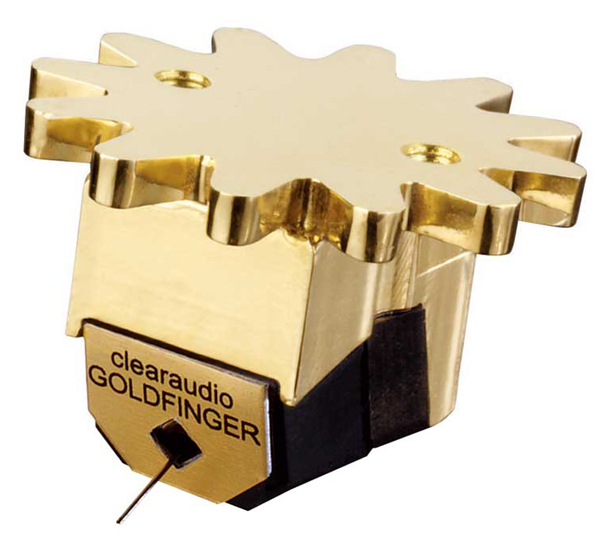
The recently updated version of Clearaudio’s Goldfinger cartridge weighs in at 18 grams; a heavyweight by any measure and in part due to the body being made from 16 grams of pure gold. The coils making up the generator are also wound from 24 karat wire. This cartridge will require a heavier than standard counterweight, so even if your wallet is up to the task, be sure your tonearm will be also be up to it. The big question is what does the GF2 bring to the dance and do you want it as a partner?
If one accepts the principles of audio Darwinism, then Clearaudio cartridges have survived because they have continued to adapt to the higher resolution playback systems that can brutally expose the flaws of moving coils, cantilevers and stylus tips. In the 1990’s, the Clearaudio Insider Wood changed how I listened to vinyl. It extracted information from the well-traveled grooves of my lps that had been kept waiting in the wings for the proper cues.
When the original Goldfinger was released in 2006, I took the Clearaudio plunge again with some trepidation. The Goldfinger was heavy and I was always nervous about its vulnerable, exposed canteliver; not to mention the high sticker price (about $8,500 back then). I lived with the Goldfinger for 3 years. It rejuvenated my record collection, particularly discs that I have had since the 1950’s and 1960’s. When the GF2 was announced, my curiosity was piqued and I was anxious to see how much higher Clearaudio had raised the bar.
Setup
I followed Clearaudio’s suggestion and let the GF2 play for about 100 hours with a load of 47k ohms before switching to 200 ohms and eventually settling on 100 ohms. VTA was set to be level, with the body of the cartridge perfectly parallel to the platter. The cartridge was mounted on a VPI HRX with the 12.7 arm, rim drive, and the SDS speed controller. Nordost Valhalla interconnects went between my Pass X-ONO phono stage and Pass XP-3 linestage.
From the beginning, I could hear something special with the cartridge and it improved considerably over time. After some experimentation, I settled on the factory tracking force setting of 2.8 grams. The GF2 has an output of .9mv, so it should be very easy to mate with most MC phono preamplifiers.
A definite improvement
Though I could not compare the cartridges side by side, as I had to remove the original Goldfinger and remount the GF2, less than 24 hours had elapsed between auditions. I felt that after three years of listening to the original on a daily, its sonic signature was well burned into my memory. What the original did best was bring out the subtle details in my favorite recordings without being harsh and etched; it still had that lovely analog warmth.
The GF2 takes all of these characteristics to the next level with no downside. Groove noise is lower with the detail and warmth of the original still in place. However the GF2 peels one more big layer away from the presentation, offering a more holographic soundstage with the images and placement of acoustic instruments having a better and more realistic size relationship than before.
Voice reproduction is the standard that I use for auditioning any component that I am seriously considering. The GF2 does the best job in exploiting the human quality of vocal recordings that I have ever heard in my system. On the opening cut of the Tony Bennett and Bill Evans Album (Analogue Productions Original) “Young and Foolish” has a touch of Tony’s vocal rasp that is perfectly reproduced by this cartridge. The unique qualities of Sheila Jordan’s voice (Sheila, Steeplechase Records) are characterized by her wavering around the notes which she eventually hits; another bulls-eye for GF2.
Sonny Boy Williamson’s Keep it to Ourselves (Analogue Productions Original) was recorded in a hotel room in Copenhagen. It has an immediacy that few studio recordings can match, including the sound of spittle on the harmonica and the accompanying tap of leather-soled shoes on a wooden floor. The GF2 does an amazing job at retrieving these details as well as the extraneous room noises present.
The GF2 was equally at home with big orchestral recordings. The opening of the legendary Solti/VPO recording of Wagner’s Das Rheingold (Decca) exposes an unearthly progression of low string chords that gradually build to a crescendo before the first Rhinemaiden’s voice is heard. This effect is nearly inaudible with lesser cartridges but is rendered beautifully by the GF2. The original 3-microphone Mercury recordings are another great way to road test the GF2; it and the original model were the first to tame the aggressive Dorati recording of Aaron Coplands’s Rodeo on Mercury.
For those of you that delight in microdyamics, Mamba Percussions (Pierre Verany) is one of my touchstone albums for many years. It features unusual South American instruments and a big soundspace. The GF2 brings these sounds at you with an immediacy that is rhythmically engaging and an in-your-room image that is the essence of “being there.”
If you can’t find this album (no surprise, it never jumped off the shelves in its hey-day), there’s still the old reliable Jazz at the Pawnshop (Proprius). I rarely make it past the first track, just because the performance and musical values of this venerated 1970’s set are a cut below. However, there is something to be said for listening to something repeatedly on many different analog setups that makes it easy to judge a new component. Putting that aside, you will hear standing bass articulation which was mercifully overpowered by the upfront reed and percussion players when heard through lesser phono transducers.
How does it sound with the new WB pressing of the first Van Halen album? For that, you will have to wait until our publisher gets his hands on a Goldfinger, as that is not my cup of tea.
Excellence with a few caveats
Even if this cartridge is well within your budget, there are still a few items to consider before you call your favorite analog dealer and order the GF2. Tonearm matching is critical; not all arms can handle such a heavy cartridge. The fragile, exposed cantilever demands great care in mounting and stylus cleaning. Finally, your phono stage must be fairly flexible in loading to acommodate the break in procedure and ultimate loading. What worked best in my system may need some fine tuning in yours to achieve perfect tonality.
For those of you that find the GF2 intriguing but are not quite ready to spend $10k on a phono cartridge, the Clearaudio Stradivari offers a decent helping of the GF2 sound for $3,500. I use one with excellent results on my second table. (a VPI Aries with flywheel, HRX Acrylic Platter/Stabilizing Ring, and running into a second Pass X-ONO). For those who have already invested in a Clearaudio cartridge, many retailers offer an upgrade path that makes moving to either of these cartridges that much easier.
In summary, many would not consider a $10k cartridge a “best buy.” However, if you audition this cartridge in a properly set up playback system, be prepared to redefine your priorities. I suspect you will immediately begin working on a strategy to amass the requisite capital for its purchase.
The Clearaudio Goldfinger v.2
MSRP: $10,000
Musical Surroundings
5662 Shattuck Avenue
Oakland, CA 94609
510-547-5006
www.musicalsurroundings.com
Peripherals
Turntables VPI HRX w/12.7 Arm/Rim Drive, VPI Aries w/10.5i Arm w/Flywheel, SDS Controllers
Phono Cartridges Clearaudio Goldfinger v.1, Clearaudio Stradivari
Phono Preamplifiers Pass X-ONO (2)
Preamplifier Pass XP-20/Lexicon 12HD-B
Power Amplifier Pass X-350.5/Pass X-3
Speakers Martin Logan Summit/Stage/Script-i/Descent-I (2)/Descent (2)
Interconnects Nordost Odin/Valhalla
Speaker Cable Nordost Odin
Power Cords/Conditioning Nordost Thor/Nordost Odin/Valhalla
Vibration Control Black Diamond Racing
Room Treatment Echo Buster/ Corner busters/Bass Busters/Double Busters
The Pacific Northwest music scene has been steadily embracing a pure party music aesthetic over the last year or so, and in that spirit the Yogoman Burning Band delivered a loose and exuberant set in front of a friendly, eclectic and enthusiastic crowd at the “World Famous” Kenton Club in North Portland. Yogoman, based in Bellingham, Washington and led by drummer Jordan Rain, mixes reggae, rhythm and blues and soul into a familiar package. Their fun and celebratory performance was the perfect match for the first warm spring night after a particularly long and grueling winter in this region.
It was a treat to see Sarazin Blake in person after being recently introduced to his latest album, The Air Your Lungs Forced Out. He stood at the rear of the stage and adapted his usually folk-tinged guitar rhythms to the traditional reggae upstrokes, giving Rain (who placed his drum set right at the front edge of the stage) the reigns. Rain also sang lead vocals with a perfectly relaxed tone that makes this music a perfect antidote for the end of a hectic day. Bassist Norah McLaughlin, trumpeter/cornet player Joel Ricci, saxophonist Thomas Akihiro Deakin, trombonist Mars Lindgren and guitarist Josh Holland crammed themselves onto the small stage and provided the audience with an unusually high caliber of musicianship.
You can find out more about Yogoman Burning band by checking out their MySpace page, where you can get more information on their new album, City of Subdued Excitement, MP3 downloads and tour information.
Please note that all TONE and TONE related text and images are copyright © 2005–2025 TONE Magazine and The Audiophile Apartment. The RSS feed provided is for personal, non-commercial use only.
If you are not reading this content in your news aggregator, RSS reader, or direct, then the site you are looking at may be guilty of copyright infringement. If you locate this anywhere, please contact [email protected] so we can take action immediately.