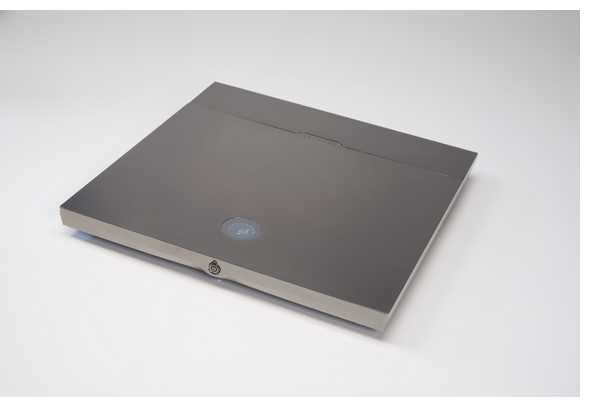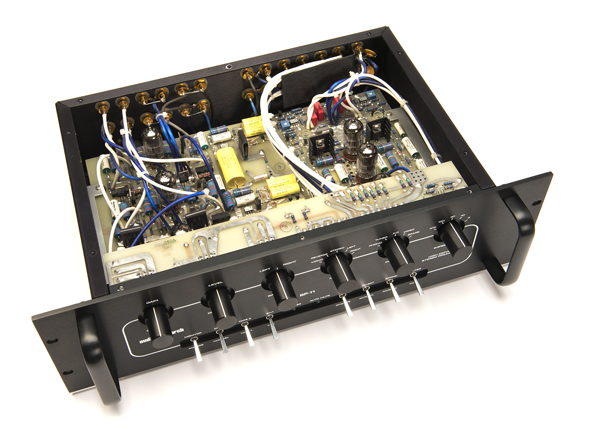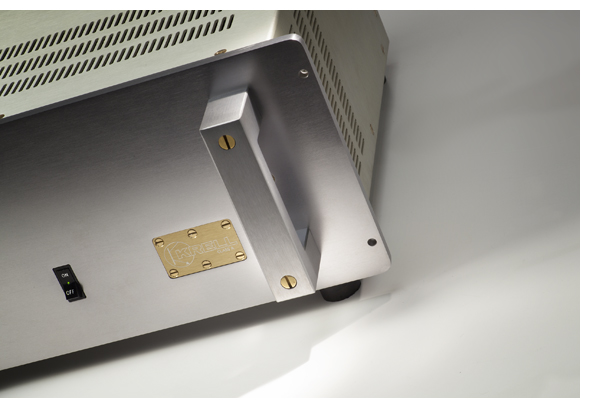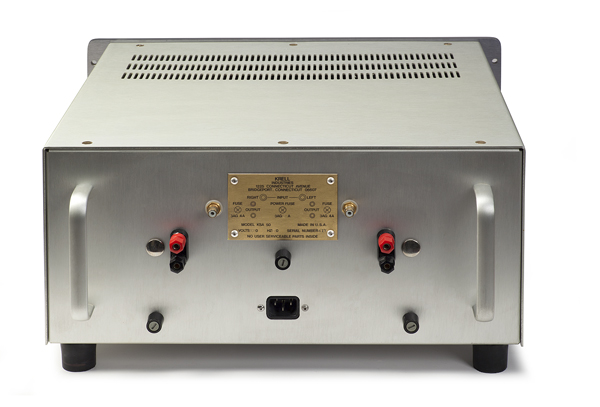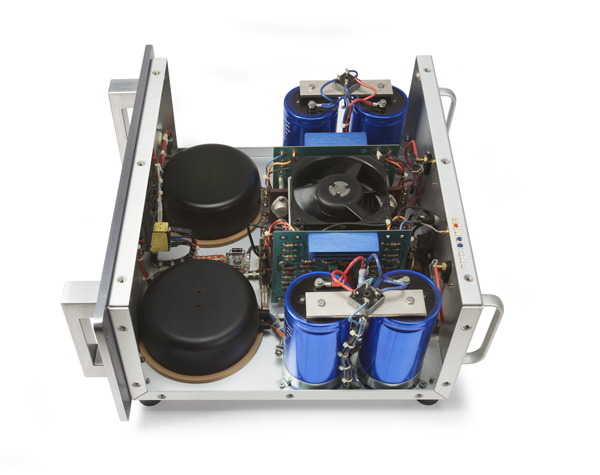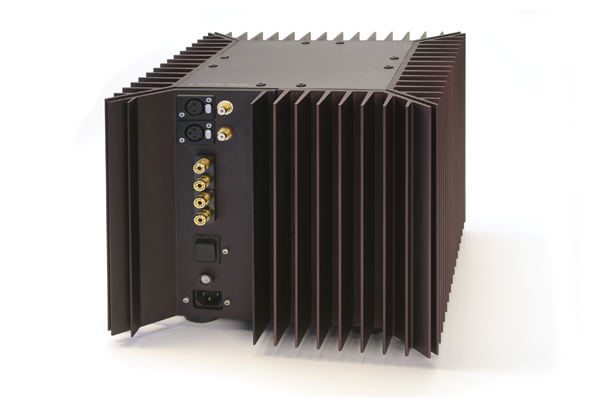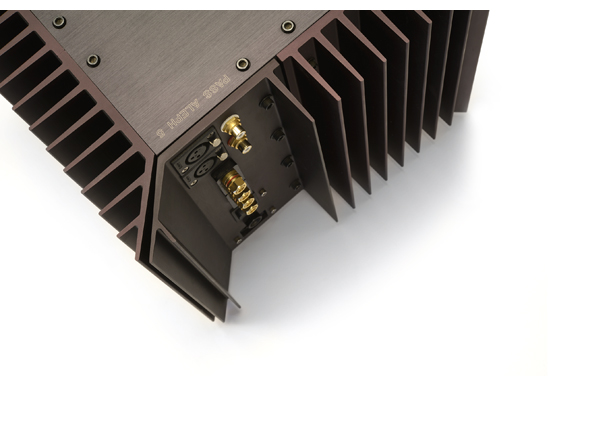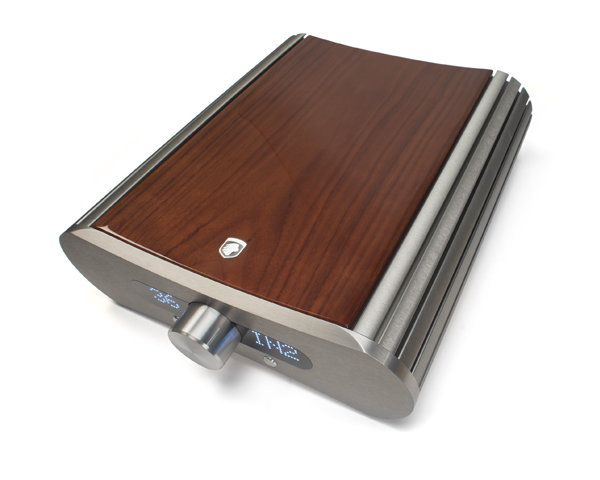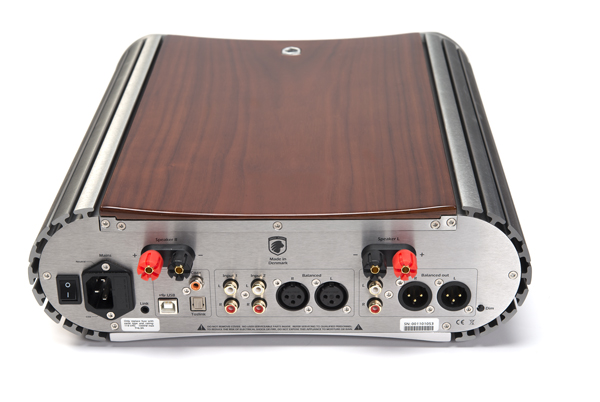




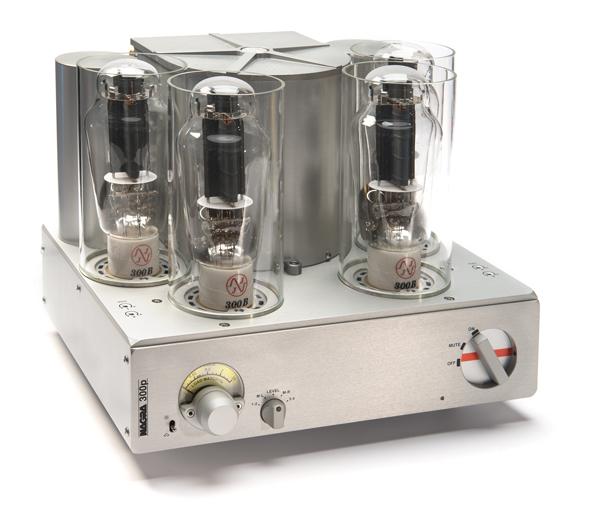
Nagra 300p Amplifier

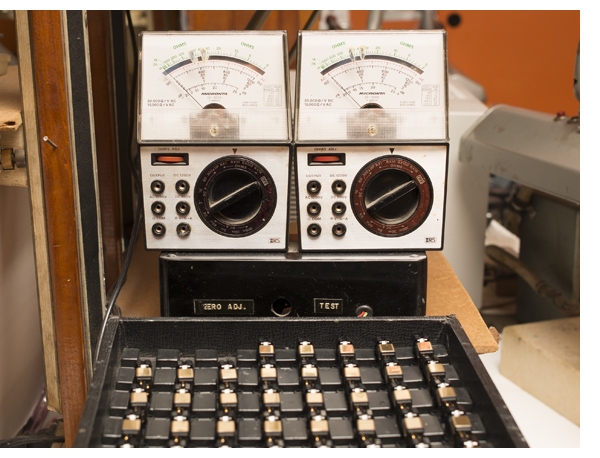
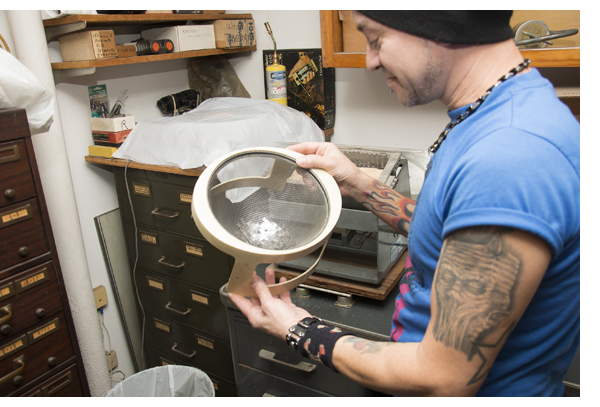
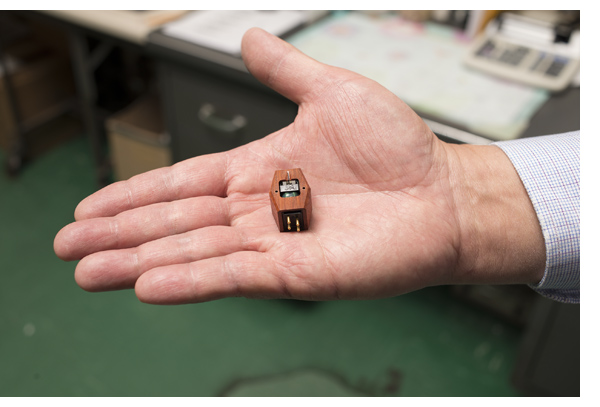
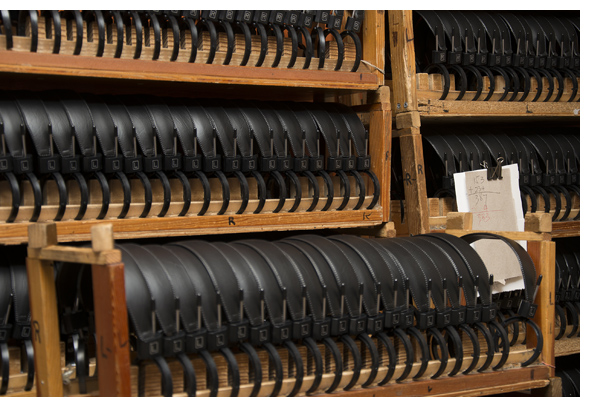
A visit to Nagra is a very special thing indeed. The factory is cleaner than a hospital, with highly organized workstations populated by happy and highly skilled workers calmly assembling some of the world’s finest audio gear. There’s almost a reverence about the place, and with the Montreux Jazz Festival nearby, there’s always plenty of access to fantastic live performances as an absolute reference.

On my last visit a few years ago, Nagra had something special in progress. The company’s engineers were just finishing the final prototype of a new vacuum-tube power amplifier—a push-pull design featuring a pair of 300B output tubes and producing 20 watts per channel.

“With the wideband output transformers designed for the 300p, [the amp] has incredible control for a 300B design,” explains Nagra’s Matthieu Latour. “And it will surprise you with the wide range of speakers it will drive.”

Surprise Indeed

Magic is more like it. Toward the end of the title track of Pat Metheny’s Offramp, as Naná Vasconcelos’ gentle, twinkly percussion bits intertwine with Dan Gottlieb’s delicate brush work, it’s clear that this amplifier is able to capture the essence of what fans of the 300B SET sound clamor for, while exhibiting plenty of substance and control. From the top to the bottom of the frequency spectrum, especially the lower end, it’s instantly obvious that this amplifier has none of the shortcomings that plague even the best SET designs.

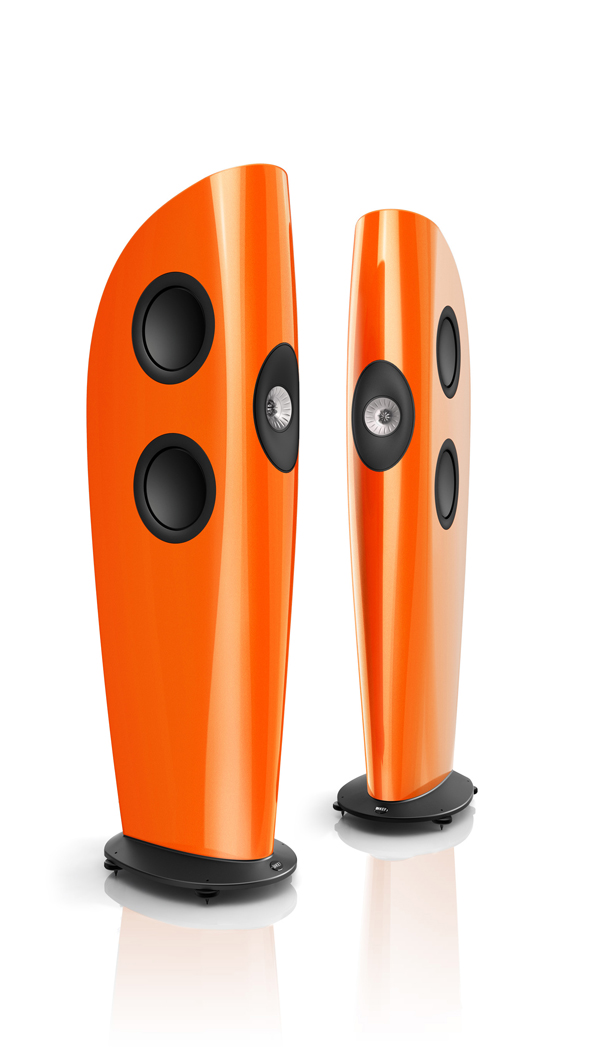
Steve Rodby’s signature acoustic bass has major weight and texture through this amp; you can almost feel his hand run up the fretless neck as the notes glide out into the soundstage. This is even more spectacular when you consider that the 300p is not driving a high-efficiency set of horn or single-driver speakers, but my reference KEF Blades. Though fairly efficient, with a 90-dB-per-watt sensitivity rating, the Blades require an amplifier with current reserve and low-end grip—something the 300p provides with ease.

Massive Attack’s “Karmacoma,” with its deep, slippery beats, underlines how well the 300p can take control of the Blade duos eight total woofers, moving some serious air without the presentation becoming weak or smeared. An equally enjoyable performance is rendered with selected tracks from Deadmau5, Skrillex and Tosca. This compact amplifier delivers potent bass response.

Beyond Bass

Ellen Reid, the female vocalist behind the Crash Test Dummies, produced a solo album in 2001 called Cinderellen. Reid stretches out a bit further as a lead vocalist here and most of the tracks are grittier than typical CTD fare. On “Defense of the Wicked Queen,” the 300p achieves a perfect balance between her complex voice and the accompanying piano. The 300p is a master of pace and timing, allowing the Blades to disappear effortlessly into room.

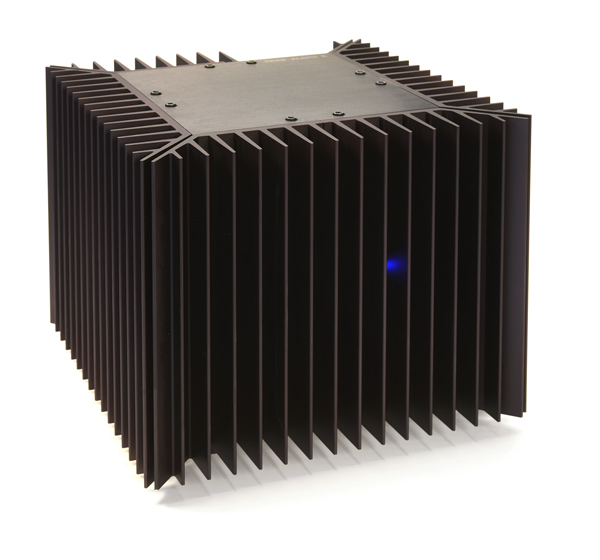
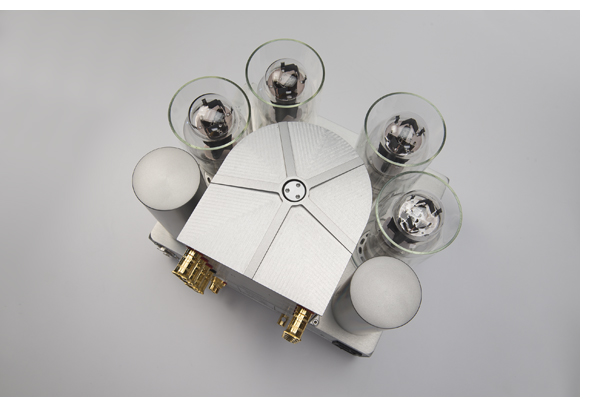
Much of this is the result of the attention to detail that Nagra paid when producing the amp’s output transformers, which are wound in house at Nagra. The rest comes from the prodigious power supply that is the foundation for the 300p, which has a nearly 11-by-11-inch footprint and weighs 31 pounds. Fortunately, Nagra ships it with the output transformer modules packed separately to avoid damaging the amplifier during shipping. As is the case with every other Nagra product we’ve had the pleasure to own or review, no detail, no matter how small, goes unnoticed.

At $16,900, the Nagra 300p is not inexpensive. Those thinking in terms of watts per dollar are missing the gestalt of this masterpiece. In the context of products from, say, Shindo or Audio Note, the Nagra is an absolute bargain—and is produced by a company with 60 years of experience and a comprehensive support staff, ensuring your Nagra products will always be in top shape.

As Ella Fitzgerald coos “April in Paris,” the luscious midrange depth of the 300p rivets your attention to the musical performance, and when Louis Armstrong joins her on the latter half of the track, awash in texture and tonal richness, it’s so easy to forget about the gear completely and just dig this classic tune. And that is the essence of the 300p: It always gets out of the way and celebrates the music.
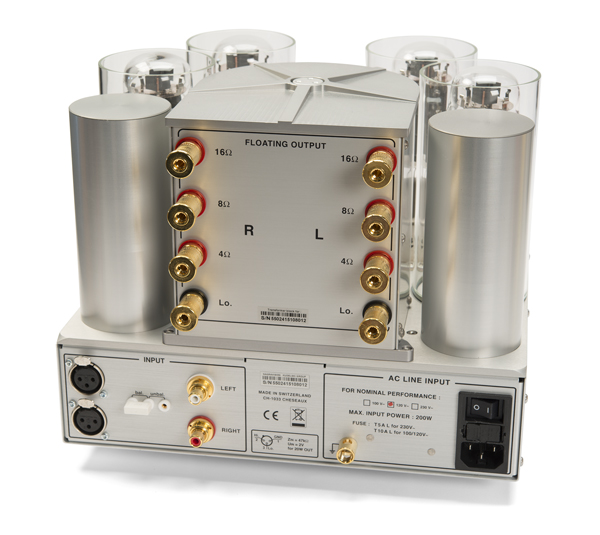
Nuts and Bolts

As mentioned earlier, the 10.9-by-10.8-inch chassis has the same form factor as many of the other Nagra components, such as the PL-L preamplifier, PL-P phonostage and the new Jazz preamplifier, which we are now reviewing. It’s a basic, classic look that never goes out of style and pays homage to the famous Nagra field recorders of years past. I’ll stick my neck out and postulate that you will either gravitate to the Nagra design ethos or you won’t. If you fall into the latter camp, preferring massive boxes with enormous rack handles, the 300p is not for you.

Those of you who do appreciate the compact elegance and performance that is Nagra will revel in the sound of this petite music machine, and I suspect that you’ll do so for some time. This is not an amplifier to purchase casually, only to sell on Audiogon three months later. Like a fine watch or a Leica camera, the Nagra 300p is a treasure—something to be handed down to the next generation. Viewed in the light of permanence, the purchase price becomes somewhat irrelevant.

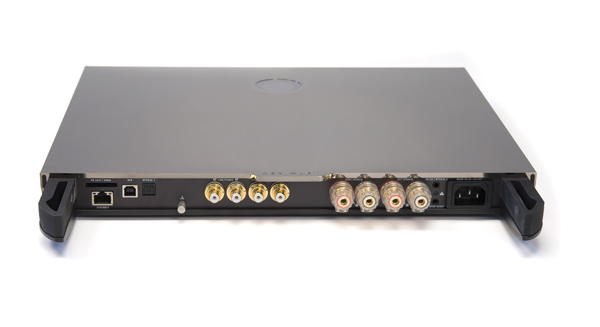
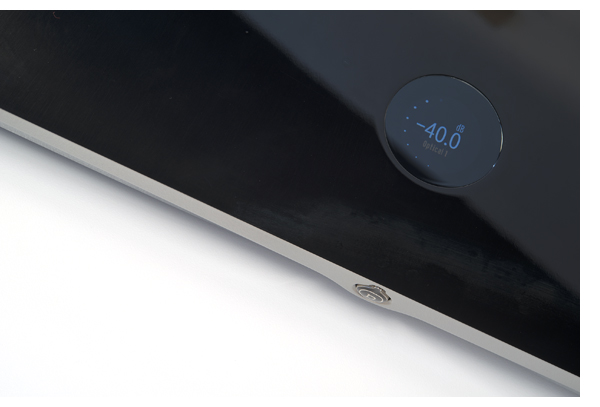
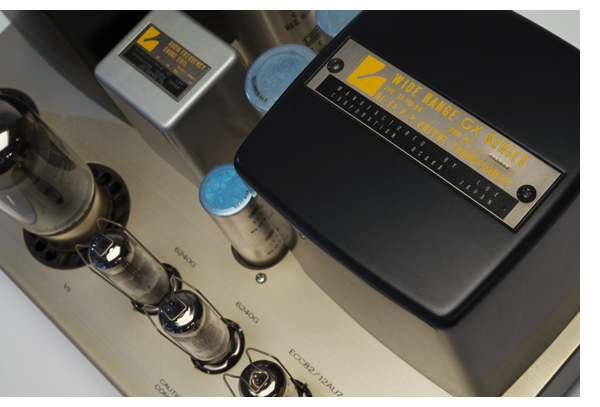
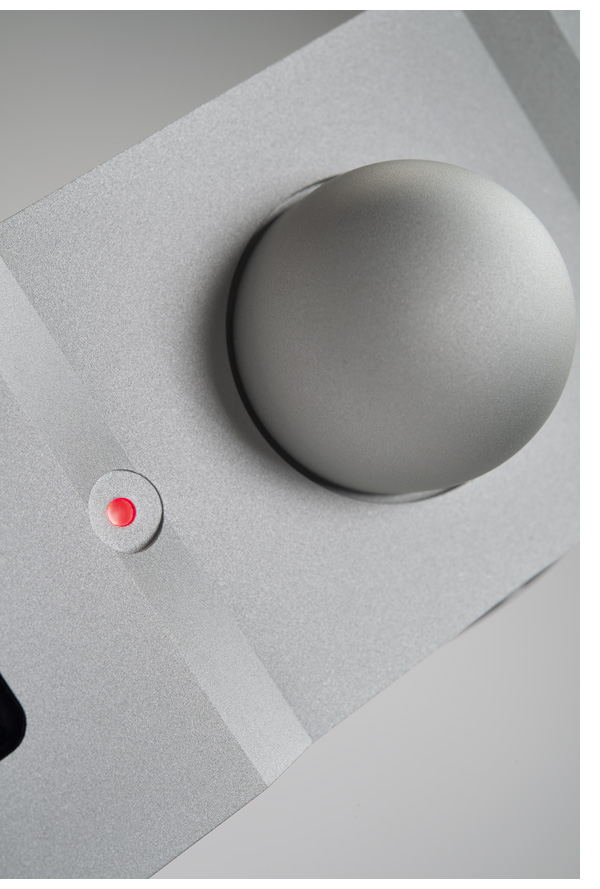
The front panel of the 300p features a slightly modified version of Nagra’s famous modulometer, which displays power output, allows biasing of the output tubes and assists with setting the load factor to optimize the amplifier for the speaker load being driven.  All of this is quite handy and helps the owner get the most performance from the amplifier. The rear panel is equally Spartan, with user-selectable RCA or XLR inputs and output taps, suitable for driving 4-, 8-, or 16-ohm speakers.

Particularly interesting is the hybrid design of the 300p, with its solid-state input stage and power supply that work harmoniously, offering a wide bandwidth and incredibly low noise. Past pure-tube 300B designs we’ve auditioned have been on the noisy side compared to a push-pull EL34 amplifier, but the 300p is nearly dead silent when I press my ear up against the tweeter of the Blades—highly impressive.

Stepping up to the Focal Maestro Utopia speakers that have just arrived for review, with their 93-dB sensitivity rating, makes the 300p seem almost supercharged, with twice as much headroom on tap. But the amp really comes into its own with the 100-dB ZU Audio Soul Superfly speakers, which are able to coax near-stadium-level volume and dynamics out of the 300p’s 20 watts per channel. The ZU’s 16-ohm impedance provides a benign load, transferring power easily from amplifier to speaker.

Surprisingly, the 300p can still drive the 85-dB Harbeth Compact 7s to a very reasonable level without breakup in a small to medium sized room. The Nagra now seems worlds apart from my 9-watt-per-channel Wavac amplifier.
Quality First

In the end, it’s about tonal purity and richness. Just like the small dog with a big heart that acts like it’s a Labrador, the Nagra 300p feels like a big amplifier until it is pushed to its absolute limit, which will ultimately be determined by your room and speakers.

I’m able to fool more than one guest into thinking that my 300-watt-per-channel Pass Xs 300 monoblocks are playing, when in fact the Nagra amplifier is what’s behind the music. The inner detail that this amplifier is able to reveal continues to impress, even after a couple of months of listening. Acoustic guitars have much more heft and resonance, with quicker attack and longer, more gradated decay.

Tube rollers will find intrigue with the 300p; however, the hand-matched JJs that are supplied provide an excellent balance of tonal purity, dynamics and extension at the frequency extremes. Should you have a few extra thousand dollars lying around and feel inclined, a recent vintage set of Western Electric 300Bs or EAT 300Bs, though expensive and tough to find, will take the 300p even further, providing even more inner detail.

Those wanting to simplify even further can purchase this amplifier as an integrated—called the 300i—for $21,250, eliminating the need for a linestage. Both units come supplied with Nagra’s VFS (Vibration Free System) platform to minimize interaction with the room environment. As with all other Nagra components we’ve used, the VFS is highly worthwhile, offering slightly quieter backgrounds and a more open soundstage, allowing you to peek even further into the musical picture. Perhaps it’s the large filament structure on the 300B tubes, but the VFS seems to make a greater improvement on Nagra preamplifiers than it does on others, so make sure and use it with your 300i/300p.

Regardless of which power tubes you settle on, if you have a pair of speakers with the necessary sensitivity for the Nagra 300p to offer enough dynamic range, this can certainly be your destination amplifier—and become the heirloom that the Nagra engineers intended.

Nagra 300p amplifier

MSRP: $16,900 ($21,250 for the 300i integrated version)

www.nagraaudio.com

Peripherals

Analog Source AVID Acutus REF SP turntable    TriPlanar tonearm    Lyra Atlas cartridge
Phonostage Indigo Qualia
Digital source dCS Vivaldi stack
Preamplifiers Nagra Jazz    Audio Research REF 5SP    Robert Koda K-10
Speakers KEF Blade    Focal Maestro Utopia    Zu Soul Superfly
Cable Cardas Clear
Power IsoTek Super Titan

KEF Blade Loudspeakers

Time flies when you’re having fun. And the fun hasn’t stopped since the bright orange KEF Blades arrived in our studio almost a year ago. Let’s cut to the chase, shall we? For those of you who skip straight to the conclusion anyway, we’ll save you the bother. We’re giving the KEF Blades one of our Exceptional Value Awards for 2013, and they are one of our most enthusiastic choices.

Giving a $30,000 pair of speakers an award for exceptional value? You heard right. Often, newcomers to the scene can build a “giant killer” product because, during the infancy of such products, manufacturers can cut corners on things like casework, support, inventory, etc., and actually build a $5,000 box for $2,000. Everyone freaks out, thinking they are getting something for nothing, but should said company make it past the first round, the price goes up, often dramatically.

Has the luster fallen from this product? Hardly. But business is business and parts are parts. There really is no way to cheat death, taxes or cost accounting. However, there is another way to build exceptional value into a product, and that requires a company with depth. This is precisely the approach taken at KEF with the Blades.

Having been in the speaker business since dinosaurs roamed the streets of London, KEF is a real speaker company with decades of engineering and manufacturing expertise. (For a complete history, I highly suggest TONE contributor Ken Kessler’s excellent book, KEF – 50 Years of Innovation in Sound.) KEF also produces speakers in large enough quantities to enjoy an economy of scale that smaller manufacturers cannot. If the company produced 10 pairs a year and asked $100k for them, I’m positive they would sell. However, being able to amortize the raw research and development of the Uni-Q driver across a wide range of models makes the $30k price of the Blades feasible.

Granted, 30 grand is still a lot of money for a pair of speakers. (Those thinking this is sheer insanity are also free to tune out now.) But if you’re the kind of audiophile and music lover who would enjoy six-figure speaker performance for 30 grand, I enthusiastically submit the Blades. If you’ve had the chance to experience the small but amazing KEF LS-50 speakers, you know KEF can work miracles for $1,500. And I’ve listened to my share of six-figure speakers over the years, so I’ll stand by this decision.

Major Drive

The meter needles bounce fervently on the Pass Xs 300 power amplifiers as I crank Steel Panthers’ “Death to All But Metal,” and my listening room is all smiles—the Blades can move serious air when asked. Having the opportunity to use the Blades with about 30 different power amplifiers, ranging from low-powered SET’s to massive monoblocks, I have found that the key to successfully interfacing with the Blades is twofold: first is current drive; and second, yet equally important, is amplifier quality. The Uni-Q driver is not ruthless, but it is highly revealing of the signal path, so a substandard amplifier or source component will be revealed. This accounts for some of the comments I’ve heard on the Blades (e.g. “they don’t have enough bass” or “they sound kind of bright”), yet I submit that this is the character of the electronics connected to them.

The deep notes on the album 11i, from the Supreme Beings Of Leisure, confirms what the Stereophile Test Disc reveals: With a bit of room gain on my side, I’m getting solid low-frequency response all the way down to 25 Hz. Again, some kudos go to the Pass Xs 300s, which have been bass monsters with every speaker I’ve mated them to, so it’s like stacking the deck. However, even with the 20-watt-per-channel Nagra 300p, the Blades produce prodigious bass, though they can’t play as loud as they do with 300 plus watts per channel at their disposal.

Tracking through White Zombie’s Supersexy Swingin’ Sounds leaves no doubt that the Blades move major air, and do so in a chest-pounding kind of way. KEF marketing director Johan Coorg and I are convinced that we need two more speakers for a quad setup—and I’ve got the quad open-reel deck at the ready.

In a Word, Coherent

For those just tuning in to TONEAudio, I’ll reiterate that my personal bias has always been towards electrostatic speakers, full-range ESLs in particular. I’ve always been able to forgo that last bit of extension at both ends of the frequency range to get that luscious, reach-out-and-touch-it midrange, which a great ESL does more convincingly than anything.

Compared to my Quad ESL 57s, the Blades give up precious little in terms of overall coherence, bass response and their ability to play loud, damn loud. At a point where the 57s would liquefy and my Acoustat 2+2’s would lose any sense of soundstage depth, the Blades are solidly hitting their stride. Even at incredibly high volume, these speakers hold their poise like few others I’ve experienced.

This gives the bright orange Blades you see in the photos the ability to disappear in the room in a way few speakers at any price can. Too many large, multi-driver speakers I’ve experienced sound exactly that way—sitting in the listening chair, it’s as if you can distinctly hear the woofer, midrange and tweeter.

Just as you might with an ESL, you’ll fall in love with the Blades after listening to your favorite vocalist. Listen carefully to David Lee Roth’s closely miked vocal in the classic Van Halen tune, “Ice Cream Man.” His voice is rich with echo and larger than life, going way beyond the speaker boundaries, while Eddie Van Halen gently strums along on acoustic guitar off to the left of center, perfectly capturing the intimacy of this performance.

In addition to the high coherence that these speakers provide, they also have a very low level of distortion and thus fatigue. This is a speaker that reveals the finest nuance, allowing me to evaluate different components with ease, yet is also a speaker with which I love to just sit and listen to music for pleasure, even after a 12-hour day of component reviews. This is the highest compliment I can pay the Blades—they have promoted many late-night listening sessions after the work at TONE was done.

Setup and Placement

Auditioning long- and short-wall placement with the Blades in my 15-foot-by-25-foot listening room reveals the long-wall placement to be the winner, offering up the biggest, widest soundstage—highly reminiscent of the MartinLogan CLX speakers that I enjoyed as a reference for many years.

It didn’t take much time to figure out that placing the speakers roughly 10 feet apart (from center to center of each Uni-Q driver) and about 4 feet from the wall was the optimum spot; the Blades are incredibly easy to set up. Thanks to the extra-wide dispersion, something you don’t get with an ESL, the Blades offer a fantastic presentation on and off of the listening-room couch. Even sitting down on the floor, well off center, you can still enjoy the music.

The short wall proved trickier to optimize in my room, requiring the Blades to be further out into the room to avoid bass bumps. Following Coorg’s suggestion, I didn’t toe-in the speakers when they were on the short wall and that worked well. Long-wall placement worked best with a few degrees of toe-in and delivered a wider, deeper soundstage than short wall placement in my listening space. As with any speaker, I suggest optimizing for low-frequency coupling first and letting the stereo image fall where it will.

Lurking Behind Those Orange Cabinets

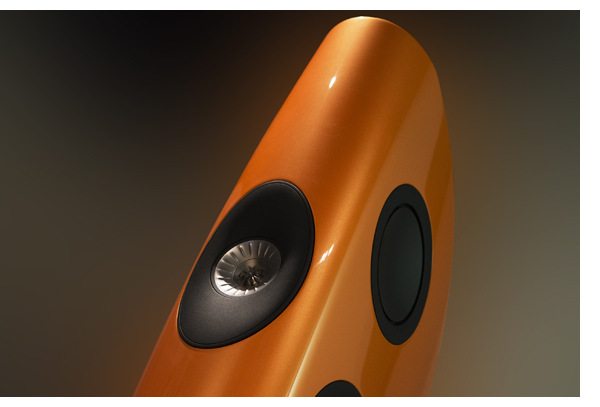
Though the Blades curvy shape is purpose built to minimize resonances, it has probably been the biggest hit with my non-audiophile friends. The speakers are almost unanimously appealing to both men and women, with most women gravitating to the orange and other brighter colors and most men preferring white or black. But hey, if you’re going to get funky speakers, I say paint them a funky color.

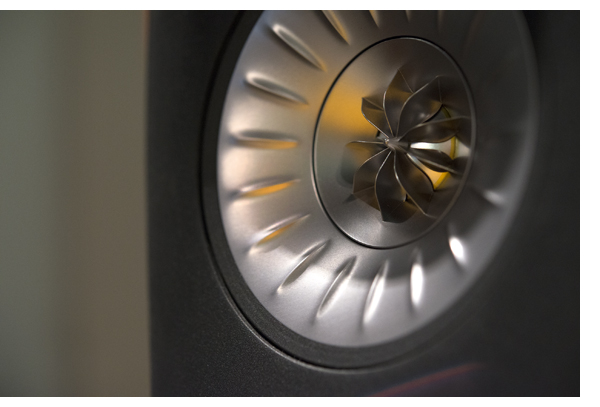
More technologically speaking, the Blades four 9-inch woofers are symmetrically placed in the vertical and horizontal planes so that the center of their output radiates from the center of the Uni-Q driver, further reinforcing the “point source” concept. The crossovers feature mild order slopes and, from our hands-on experience, we can confirm that they are indeed incredibly easy to drive with nearly any amplifier producing about 15 watts per channel or more. Those wanting further, more in-detail commentary can click here. There is more tech talk and a few video clips of Blade designer Jack Oclee-Brown outlining the bass cabinets and the KEF concept of “single apparent source,” which is the underlining principle of the speaker system.

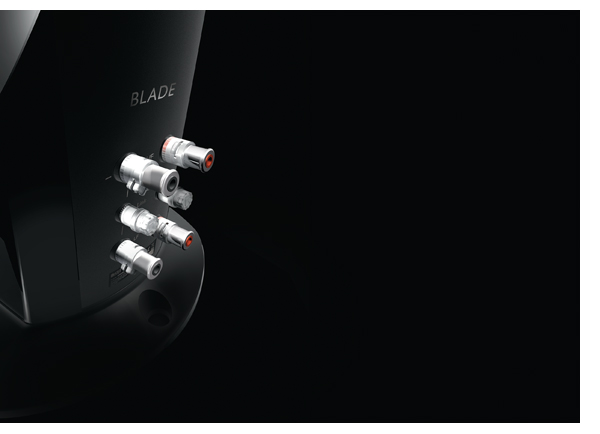
A welcome favorite feature of the Blades is their lack of jumpers between the Uni-Q and the woofers. It always seems shortsighted to build a $30k pair of speakers with cheesy jumper wires or strips that you have to replace later anyway. All that is required with the Blades is merely tightening two jumpers on the rear face of the speakers and getting on with the show. Bravo, KEF; no jumpers to lose or upgrade later.

A Great Long-Term Choice

Winding up this review with Wang Chung’s To Live and Die in L.A. soundtrack, I realize that these speakers work well with everything in my music collection, no matter how inspiring or cheesy. The KEF Blades are not fussy audiophile speakers that are limited to a short list of audiophile favorites in order for them to give their all.

Having the privilege of listening to them for the better part of the year worked well on many levels: Not only have I purchased the Blades to be my new reference speakers, but having them on hand also gives me the opportunity to put them through their paces with so many different combinations of amplification, making it that much easier to get a solid handle on their performance.

The Blades are easy to set up and work incredibly well with almost all amplifiers, making them a great choice for a system anchor from which you can build and improve as your time and budget allow. After a year of living with these speakers, I just don’t see the need to spend more money on a speaker—ever. And, to us at TONE, that level of value deserves an award.

KEF Blade loudspeakers

MSRP: $30,000

www.kef.com

Peripherals

Analog Source AVID Acutus Reference SP turntable    TriPlanar tonearm    Lyra Atlas cartridge via Indigo Qualia phonostage
Digital Source dCS Vivaldi stack    Sooloos C15    Aurender S10     Light Harmonic DaVinci
Preamplifier Audio Research REF 5SE    Robert Koda K-10
Power Amplifier Pass Labs Xs 300s    Burmester 911    Nagra 300p    Octave Jubilee monoblocks
Cable Cardas Clear     Nordost Frey
Power Running Springs Dmitri    IsoTek Super Titan
Accessories Furutech DeMag,    GIK acoustic treatments     Audio Desk Systeme RCM

Devialet 110 Amplifier

Two years ago, Devialet defined the high-style/high-performance audio category with its D-Premier amplifier, which provides high power and functionality in a single sleek and sexy package—proving that a component worthy of display in the Louvre can also deliver music to appease the most sophisticated of audiophiles. We had one of the world’s first review units of the D-Premier, which we reviewed back in issue 35, and we came away highly impressed, as did every other reviewer that had the privilege of living with this French masterpiece. The initial demo at the 2011 Consumer Electronics Show was a knockout, and the D-Premier is one of those rare components that is so visually stunning that it grabs your attention from across the room.

And it does not disappoint when unpackaged. The D-Premier proved it could drive any load with ease, never losing its composure. With 350 watts per channel on tap and with the ability to be bridged for mono configuration and used with multiple units for even more power, it is endlessly scalable.

While we saw the $16,000 purchase price as an incredible bargain, considering that the D-Premier includes a full-function preamplifier, DAC, streamer and MM/MC phonostage in one compact chassis, this is still out of the reach of some audiophiles with more modest needs.

Enter Devialet’s 240, 170 and 110 models, each with less power and capability, for those wanting high-quality sound in Devialet’s distinctive form factor. John Bevier, director of sales for Audio Plus Services (the North American importer of Devialet), notes that all four Devialet models utilize the same amplification circuitry and that they sound identical, with the difference between the models one of more power, so even the entry-level 110 does not sacrifice anything in terms of quality.

Focusing here on the 110, which is priced at a comparatively reasonable $6,500, I feel that it is an excellent place to begin your journey with Devialet, and a great destination for all but the most power-hungry music lover. For an additional $1,200, you can add the Devialet Air streaming board, adding full wi-fi access to and control of the 110 via your iPhone or Android phone.

Again, keep in mind that you are getting a full-function preamplifier, with tone controls (more about that later), a 110-watt-per-channel power amplifier, a 24-bit/192-kHz DAC, and a MM phonostage built in—not to mention all the cables you don’t have to buy or the rack space you’ll save. The 110 is easily mounted on wall with an accessory wall bracket that works somewhat like the ones used to mount a flat-screen TV.

Spinning LPs

The Devialet configurator, found on the company’s website, allows you to optimize the 110 to your needs. One of the two analog inputs can be configured as a phonostage and, while the flagship D-Premier is prepared for moving-magnet and moving-coil cartridges, the 110 is limited to MM duty, which should be more than adequate for most users, especially in light of how many great MM cartridges are available these days.

A cursory run-through of MM carts on hand reveals excellent compatibility with the Ortofon 2M Black and Bronze, as well as the NOS Ortofon VMS Mk. II cartridges. The higher-output Grado Master 1 cartridge also proves highly compatible, with an excellent balance of dynamics and high-frequency extension. The only MM cartridge in my stable that is not immediately compatible is the Rega Exact II, mounted to the Rega RP6 turntable. Because maximum phono level can be adjusted down to 1 mV, the Devialet 110 works particularly well with Grado’s .5 mV output moving-iron cartridges, as they have a 47k impedance.

Settling in with the Ortofon 2M Black, mounted on the VPI Classic 1 turntable, is a ton of fun. Spinning XTC’s classic song “When You’re Near Me I Have Difficulty” proves enlightening, with a wonderfully lush three-dimensional soundstage. Even though the Devialet works in the digital domain, upsampling everything to 24/192 first and then applying the RIAA equalization in the digital domain, there is no sacrifice in the analog magic—perhaps this is the future after all?

Cycling through a wide range of musical fare proves as enticing as it is on my all analog systems, and great results are achieved with a MC step-up transformer, with the phono gain set to maximum, this time utilizing a .5 mV Sumiko Palo Santos cartridge and the SME 10 turntable. Dylan’s Blood On The Tracks (courtesy of the latest remaster from Mobile Fidelity) is glorious. The acoustic guitar on the intro of “Simple Twist of Fate” has plenty of air and texture, with Dylan’s voice gently wafting into the mix—underlining the fact that you can use a turntable costing more than the Devialet 110 and be very, very satisfied with the results.

Controlling Tone

Fortunately, the tone controls in the Devialet 110 are also configurable, and act more like a two-band parametric EQ than just standard bass and treble controls, which is perfect for slightly bumping up a rolled-off phono cartridge or taming a slightly bright or boomy speaker. The bass control can be set from 20 Hz to 500 Hz, and the treble control can be set from 1 kHz to 20 kHz, which works well at taming the slight mid-bass bump that the KEF LS-50s have in my 10-foot-by-13-foot home listening room (aka room three). Room treatments would just not fix this issue, but a slight decrease in the 90 Hz level cleans things up nicely, letting the system play much cleaner than it could before.

The combination of modest room treatments and a slight tonal correction makes the Devialet 110 incredibly adaptable to a wide variety of environments. These are the most effective tone controls I’ve ever used this side of a Cello Audio Palette, and they add tremendous value to the Devialet 110. Once you become accustomed to using these controls, you will be forever spoiled.

Master of the Digital Domain

In addition to offering a USB and two optical inputs, the Devialet 110 features a pair of line-level inputs that can be configured as analog inputs, a phono input or a pair of S/PDIF inputs, along with the two straight digital inputs, making the Devialet 110 incredibly flexible. Digital files can also be streamed via Ethernet or wirelessly, if the streaming board is installed, as it is in our review sample.

Every option works flawlessly. Streaming files from the Meridian Digital Music Server (formerly Sooloos), via MS200 network bridge and optical connection, passes 16-bit/44.1-kHz files and 24/96 files with notable ability. The Aurender S10 serves up 24/192 files, which sound fantastic through this amp.

Roberta Flack and Donny Hathaway’s duet “Where is the Love?” clearly illustrates the Devialet’s ability to resolve fine detail, while not crossing the line into overly analytic or fatiguing digital, keeping these two delicate voices in distinct spaces throughout the recording. Discs played through the MSB digital transport reveal an even greater sense of ease, suggesting to this writer that there’s still some life in those shiny discs after all.

Ample Amplification

The 110 watts per channel, rated into 6 ohms, prove up to the task of driving all of the speakers here, and the Devialet even does an acceptable job with the Magnepan 1.7s, though they do give a more grandiose performance with the more powerful D-Premier. All the other speakers, with sensitivity ratings ranging from 85 dB per watt to 92 dB per watt, sound marvelous.

KEF’s small but amazing LS-50 speakers are an incredibly synergistic match for the Devialet 110 in listening room three. This combination, in concert with some modest room treatments from GIK, delivers a huge soundstage that on some music lacking the lowest of bass notes or massive dynamic swings goes a long way toward fooling me that someone snuck the Blades into this small listening room!

A perfect example of this is Seu Jorge’s version of David Bowie’s “Rebel, Rebel,” from the Life Aquatic soundtrack. This gentle vocal rendition, along with acoustic guitar and a bit of surf rolled in the back of the mix, sounds open and spacious, feeling so much bigger than the system suggests.

Thanks to the Devialet’s ADH amplifier topology, which uses a Class A stage to set the amplifier’s voice in tandem with a Class D stage to do the heavy-duty amplification, results in an extremely neutral character with no embellishment. The 110 always feels natural and dynamic, no matter what the program source, and on the rare occasion that I am able to drive it to clipping, the effect is gentle.

Best of all, you can set the maximum power level of the Devialet 110, so that when you’re away, your kids can’t destroy your tweeters, even if they choose to have a house party. A quick trip back to the configurator and it’s handled.

A Brilliant Success

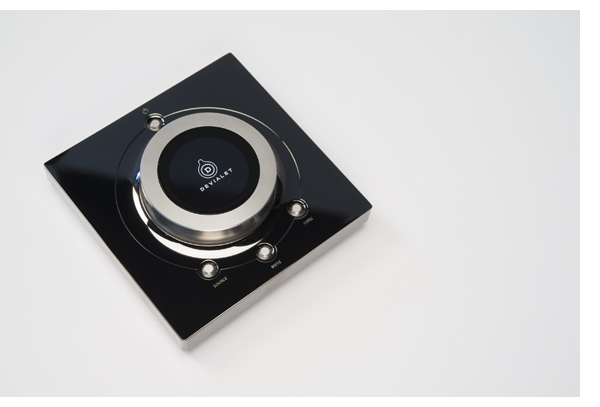
The Devialet 110 succeeds on every level. Aesthetically stunning yet understated, it will easily integrate into any décor scheme, though its beautiful black finish begs to be displayed. The equally attractive remote can be used anywhere in the immediate listening area and is a joy to use, yet the app for Android and iPhone/iPad operating systems makes it easy to control anywhere—perfect for when you’d like to lounge somewhere else in the home and have background music going.

The only disadvantage to using the app is that it is limited to input control, volume level and mute. It would be nice to see an upgrade so that balance and tone controls could be accessed from your phone.

For the music lover that doesn’t want to sacrifice sound quality for aesthetics, I can think of no finer choice than the Devialet 110, except maybe one of the higher-powered units, should your speakers require it. The journey doesn’t end here, either. The 110 will be easily upgradable via software as the Devialet engineers develop new functionality, so this is an investment you can live with for the long haul. Lifestyle is no longer a dirty word when it comes to hi-fi.

Devialet 110 Amplifier

MSRP: $6,500

www.devialet.com

www.audioplusservices.com

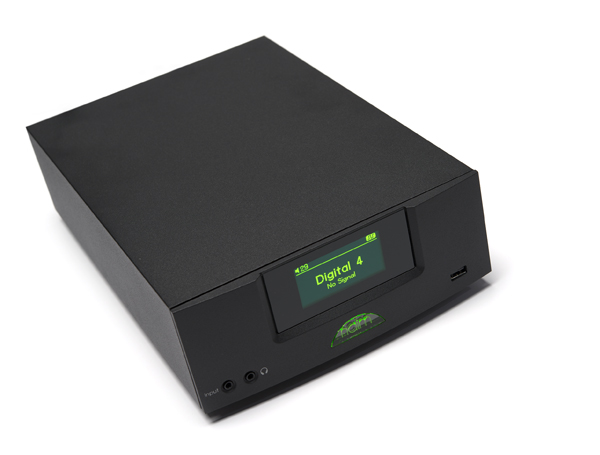
Naim UnitiQute 2 All-in-One Player

When Naim introduced its all-in-one UnitiQute player a couple years ago, everyone here went bonkers over the damn thing, drawing the obvious references to the legendary Naim Nait. The original Nait, with only 15 watts per channel, came packaged in a similarly sized (i.e. small) chassis and had the ability to drive a pair of moderately sensitive speakers to musical heights not experienced for that price tag. Back in the mid 1970s, a Naim Nait fetched about $699 at your favorite hi-fi dealer, but it was worth every penny to those who owned it. Today, a spotless example still commands nearly the same price and loyalty. That’s product longevity.

The original Qute substituted a high-quality DAC for the phonostage and allowed streaming, in addition to providing an FM tuner and a sweet sounding 30-watt-per-channel power amplifier. Adjusted for inflation, this is still a bargain at $1,995—especially if one takes into consideration all those power cords and interconnects that you won’t have to buy. You can read our review of the original UnitiQute here.

The Qute 2 nudges the sticker price up slightly, to $2,195, with a substantial increase in power. It’s more robust 50-watt-per-channel amplifier gives this mighty product even more system flexibility in terms of the speakers it can power.

The Qute 2 is a perfect solution for anyone wanting a compact yet high-performance component, essentially a receiver, that can power your favorite pair of speakers and call it a day. It is tastefully styled, well built and highly functional. And best of all, it’s easily expandable, should you desire to build a more elaborate system at some point—a hallmark of Naim products. Those living in a small space will appreciate the subwoofer output, making it easy to add a sat/sub speaker system with a powered subwoofer. This is almost always ignored on even more expensive all-inclusive components.

A Little System Matching

As part of a compact high-performance system, with the KEF LS-50 speakers, the Qute 2 proves impressive, however, it does require a few days of constant play to sound its best. Right out of the box, the sound is slightly constrictive, but it opens up quickly. I push the Qute 2 even harder by replacing the LS-50s with a pair of 3-ohm MartinLogan Aerius i speakers, which are notoriously tough to drive, and the Qute 2 doesn’t miss a beat.

Listening to Graham Parker’s 2001 release Deepcut to Nowhere quickly reveals the Qute 2’s ability to create a believable three-dimensional soundstage and maintain rock-solid pace, which are Naim hallmarks. A similar effect is realized when listening to the last set of remastered Beatles CDs. At the beginning of “All You Need is Love,” the violins, horns and chorus all have a distinct placement between the speakers, while John Lennon’s vocals stay anchored slightly stage left and McCartney’s signature bass brings up the foundation of the track.

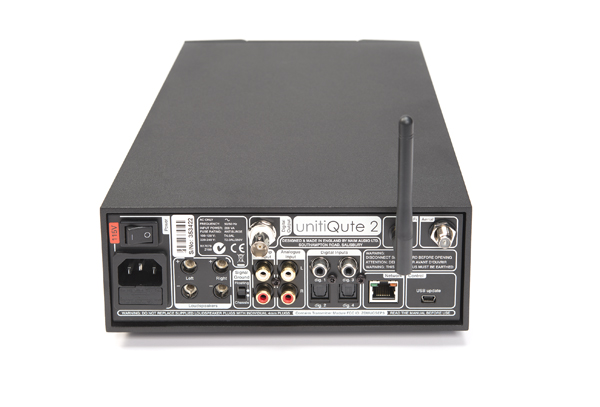
It should be noted that, for the Qute 2, you will need a pair of speaker cables with banana plugs on at least one end, as the Qute 2 is pressed for real estate on the rear panel. Like the Wadia Intuition we recently reviewed, the Qute 2 only has space for a pair of banana plugs. On one level, this pays homage to Naim’s past and keeps the setup tidy. There wouldn’t be any room for massive audiophile plugs behind this petite amplifier even if the clever Naim engineers could squeeze a pair of binding posts back there. We ran the same pair of AudioQuest Meteor cables that were used on the original Qute review with excellent results. Long gone are the days that you have to use Naim’s own speaker cables to properly interface with your speakers.

When keeping things at a reasonable pace and volume level, there is nothing in the TONEAudio arsenal (or my own collection of speakers) that the Qute 2 can’t push effectively. Bringing back a friend’s Qute reveals that the original still possesses a bit more midrange sweetness (which can easily be taken for coloration, depending on what side of the fence you’re on), but the extra power far outweighs a smidge of midrange magic for this reviewer, who really does like to rock.

Broadening the perspective and taking advantage of the Qute 2’s analog input, I add a Naim StageLine phonostage and a Rega RP6 turntable with Exact cartridge to the system, nearly doubling the cost of the Qute 2/LS-50 combination—which will also double the pleasure for the analog lover. Spinning the recent MoFi remaster of the Allman Brothers’ Eat a Peach is a ton of fun, and the Qute 2 delivers more than enough resolution to provide a great analog experience.

It certainly resolves enough musical detail to easily discern the difference between the $2,000 Rega table and the $500 Pro-Ject I also have on hand. With the Rega in the mix, the soundstage is more expansive in all three dimensions, with a more airy, fleshed out and better-defined upper register. Don’t let this compact package fool you; the Qute 2 has far more substance than its small size suggests. It’s a full-bodied Naim component in every sense.

The Qute 2 is Apple friendly, so it will snag the digital bitstream from you iPod or iPhone, making it easy to take advantage of your music collection. MP3s with 320 kbps play back with startlingly good clarity. Upping the game to CD-quality files demonstrates just how good the iPod can be in an audiophile environment when loaded with better software.

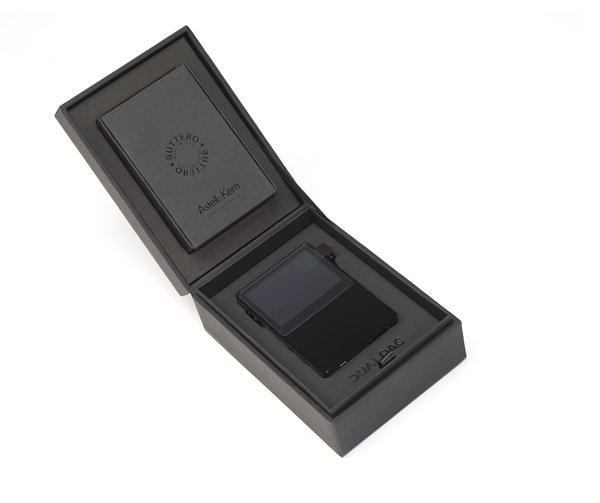
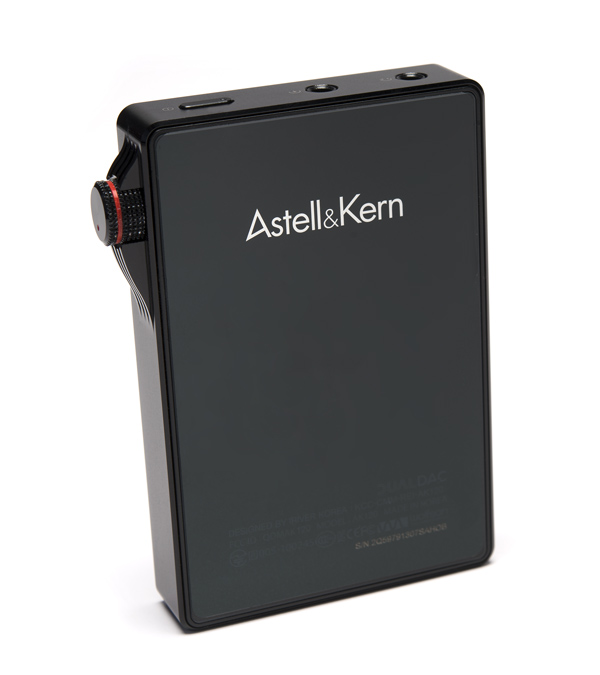
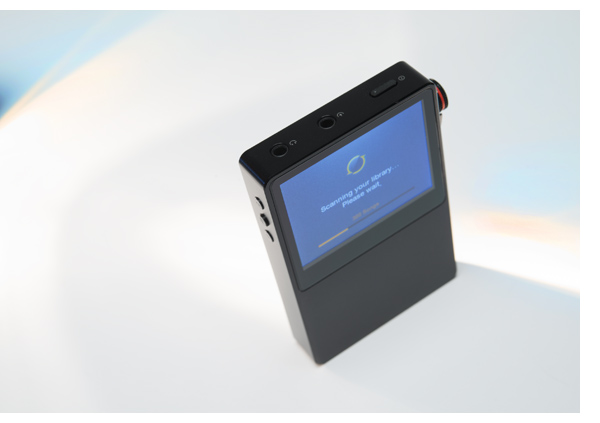
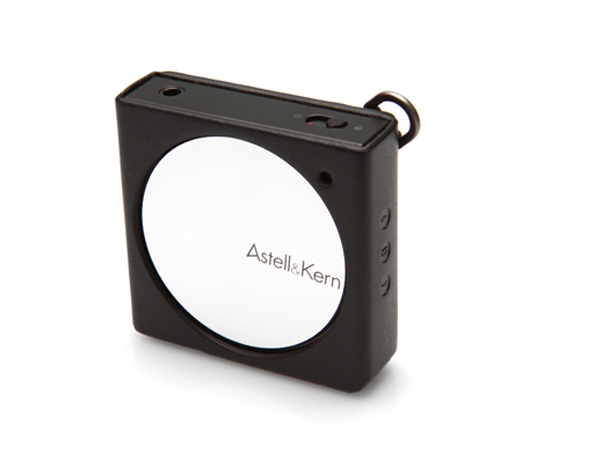
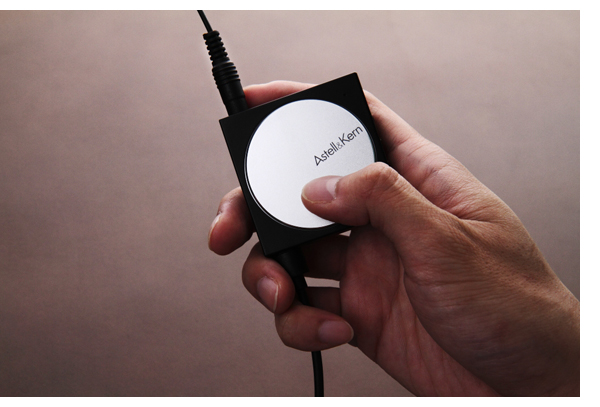
Taking advantage of the Qute 2’s high-resolution DAC makes listening to high-res audio files via the Astell&Kern AK100 and AK120 portable players a real treat, and this arrangement is in keeping with the compact ethos of this component. Listening to the slinky vocals on the recent HDtracks download of Joni Mitchell’s Hissing of Summer Lawns reveals layer upon layer of detail when compared to the original CD rip.

A Joy to Use

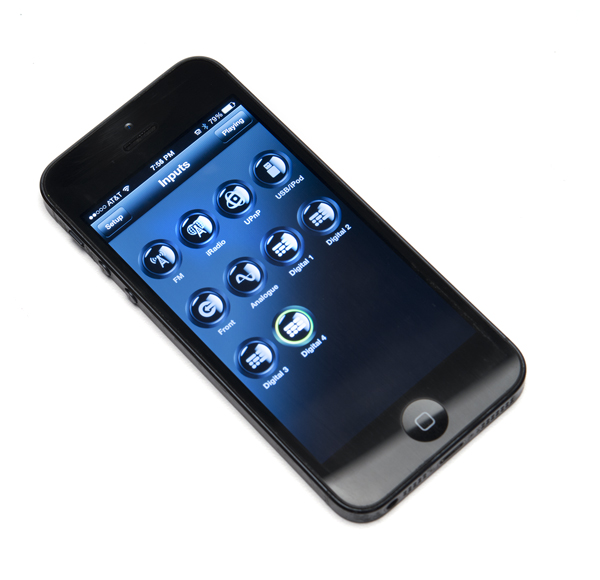
Even though the Qute 2 features a wide range of functions, it is surprisingly easy to use. While it is critical that you don’t lose the remote, as none of the functions can be accessed from the front panel, the app that is available for iPhone users is far more handy and convenient to use, giving a graphic display of the Qute 2’s functions. When synced with your home network, the Qute 2 app allows you to control inputs and volume anywhere within range. This comes in handy when the phone rings, and it also means you can have one less remote control lying around.

Once the Qute 2 is powered up, a quick run through the front panel allows you to optimize its settings. You can select relevant sources and choose big or small speakers; the bass rolls off a tad for small speakers, giving you some extra headroom in the process. Should you be leaving the Qute 2 unattended, I suggest taking full advantage of the maximum volume setting, which will save you from blowing a tweeter or upsetting the neighbors.

If seven digital inputs and an analog input aren’t enough, you can also use the USB socket on the front panel to play music from a USB flash drive. You can also summon files from an UPnP music server via a hardwired connection or via the built-in Wi-Fi. Naim suggests a hardwired connection for best digital performance and we concur, especially if your music collection consists of CD-quality and HD-quality digital music files. Those with large collections of low-res MP3s will not suffer terribly from the wireless connection, should a wired connection not be convenient. Those not streaming digital files, or if you’re just listening to music via a CD player (like Naim’s excellent CD5si, which we currently have in for review), can still use the Wi-Fi antenna to connect your iPhone to the Qute 2 for full remote functionality.

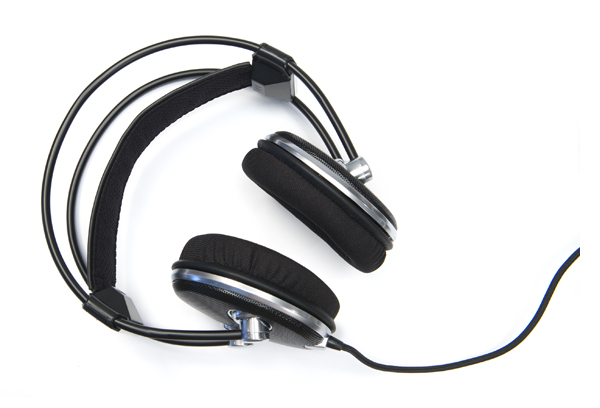
Running the Qute 2 through a gaggle of different headphones reveals that the on-board headphone amp is up to snuff and that it will drive all but the most difficult headphones with ease. The only ones we really had trouble with are the HiFiMan HE-6 headphones, which are notoriously tough to drive with even some of the world’s best dedicated headphone amplifiers, so no fault there. Those of you with Sennheiser, Grado, Audeze and Beats phones will thoroughly enjoy the headphone performance of the Qute 2.

Last but not least, the built in FM tuner (DAB for our European friends) does a spectacular job foraging for signals, providing high-quality sound in the process. Those having decent FM stations nearby will be pleasantly surprised at just how good the Qute 2 sounds in this mode—far better than satellite radio any day. Adding a modestly priced Terk antenna to the Qute 2 further improves performance.

Little It Can’t Do

After living with Naim’s UnitiQute 2 for a couple of months, I have found that its luster remains. The quality of sound provided is utterly fantastic and the range of functionality is tough to beat.

Though not packaged in as sexy of a shape as the Wadia Intuition, or the Devialet 110 also featured in this issue, the Qute 2 is mega-affordable and keeps with the easy-to-use yet high-performance ethos that we think the high-end audio industry desperately needs. For less than a top of the line Bose system, you can pair the Naim UnitiQute 2 with a great set of speakers and have a serious hi-fi setup. And for all the same reasons we found the original UnitiQute worthy of merit, we award the Qute 2 one of our Exceptional Value Awards for 2013.

Naim UnitiQute 2

MSRP: $2,195

www.naimaudio.com (company website)

www.soundorg.com (U.S. Importer)

Peripherals

Digital Sources Meridian Media Source 200    Astell&Kern AK120 portable player    Naim CD5si
Analog Source Rega RP6 turntable    Exact cartridge    Naim StageLine phonostage
Speakers KEF Blades    KEF LS-50    Harbeth Compact 7    MartinLogan Aerius i
Cables AudioQuest Colorado interconnects and Meteor speaker cables

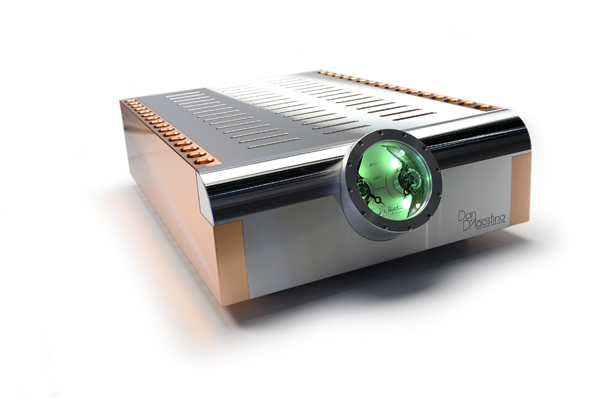
D’Agostino Momentum Stereo Amplifier

Flanked by the wall of monstrous amplifiers here for evaluation, the compact D’Agostino Momentum stereo power amplifier stands out from the pack. As the Hammond organ solo in Mighty Sam McClain’s “Too Proud” crescendos from the softest touch to full force and back, the sound, awash in texture and decay, takes me to that magical place where I’m truly convinced that I’m not just listening to a hi-fi system; this is real music unfolding in front of me.

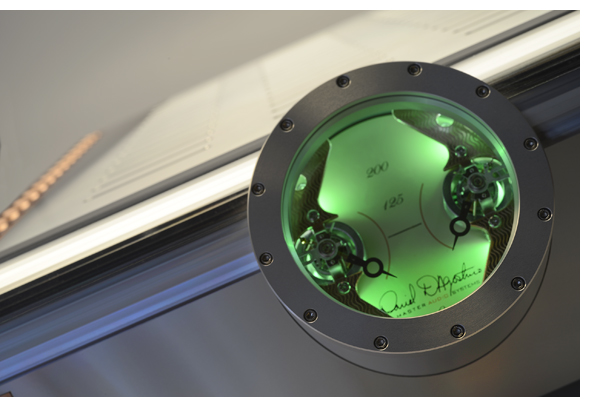
Even at high listening levels, when pairing the Momentum with my reference KEF Blades, the dual indicator needles of the amp’s sexy lime-green power meter barely come off of their rest stops—and I pause, wondering if perhaps they are defective. This amplifier seems to have an endless reserve of power on tap, along with thunderous but controlled and defined bass response. Remember, this amp is from the same man that gave us Krell amplifiers in the 1980s—amplifiers that redefined what solid-state amplification could achieve.

Luckily, I still have an original Krell KSA-50 on hand for comparison (covered in the Old School column in issue 53), and I enjoy jumping in the time machine to revisit the inception of this mighty amplifier. All of the Momentum’s core attributes are here in the KSA-50. While Krell amplifiers always received much fanfare for their prodigious bass response, the KSA-50 also has a smooth, grain-free top end, with a wealth of inner detail to boot. Comparing these two amps is a lot like comparing an early Porsche 911 to a current model; driving them back to back brings home the level of refinement that’s taken place over the years.

He’s Done It Again

The D’Agostino monoblocks, released about two years ago, caused quite a stir in the industry. Even at $55,000 a pair, they made believers out of everyone who heard them. The Momentum Stereo, priced at $30,000, makes this performance available to a more prudent and space-conscious audience. Best of all, should you decide that the extra juice of the monoblocks is necessary, you can send your stereo amp back to the factory and have it converted to a monoblock. Then just add the second monoblock, which makes for and easy and cost-effective upgrade from the single-amp solution.

At the risk of deterring you from spending more money with Mr. D’Agostino (unless you have terribly inefficient speakers), I will say that you may never need to go with the monoblocks. All of the speakers at my disposal are in a sensitivity range of 86 dB to 90 dB per watt, and no matter how far I crank the volume, I never hear even the slightest hint of compression or clipping. And I do listen to my music fairly loud on occasion.

Going back to the recent LP remaster of ZZ Top’s Tres Hombres, I do just that—and as great as the massive drums and guitars sound through the Momentum, the telltale bit comes at the end of the track, when Gibbons’ guitar gently fades over a bed of wind chimes tinkling in the air. Wow! The incredibly detailed three-dimensional perspective again fools me into thinking I’m listening to an actual musical object floating in space. But the real test comes when I play “Sam the Wonder Dog,” from the first Stereophile test CD, which has the neighbors’ dogs howling away!

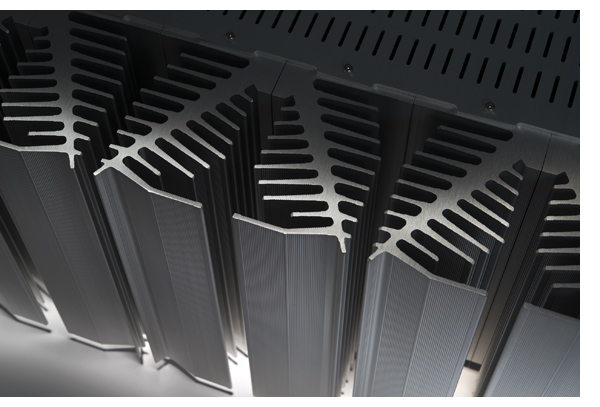
We could go on and on about all the technology that makes the Momentum so special—from the unique design of its heat sinks to its two big banks of 69-MHz output transistors—but you can read all of that on the D’Agostino website here.

I should note that our review sample spent time at a few trade shows, so it arrived fully broken in and ready to go, so I can’t comment on how long a fresh amplifier takes to sound like the review sample.

A Sight to Behold

Don’t let the diminutive form factor of the Momentum fool you. This slender amp is all business, weighing nearly 100 pounds. We normally don’t hesitate to pop the top off of most amplifiers, but the Momentum’s case has no exposed screws, so rather than risk a highly embarrassing call to D’Agostino, I decide to settle for pictures of the amp’s gorgeous exterior.

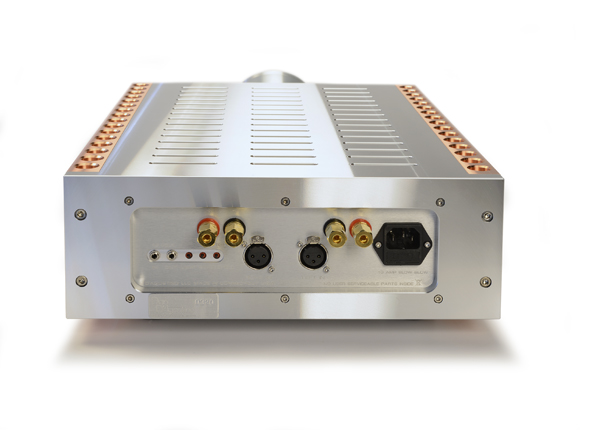
And gorgeous it is. The entire chassis, save for the side-mounted heat sinks (machined from copper billet), is all CNC machined from solid aluminum. Chances are high that you will be spellbound by the refined-steampunk look of the Momentum.

Rocking SBTRKT’s self-titled album brings the listening room alive with major beats that punch you in the stomach, yet the finesse of the Momentum creates a massive ball of sound that feels like multi-channel audio emanating from only two speakers. With the music approaching club volumes, the Momentum’s needles now move in earnest, inching halfway up each side of the power meter—but there’s still plenty of juice on reserve. Again, the KEF Blades crank out heavy, controlled bass that you feel as much as you hear.

Highly Sophisticated

Much like the sports cars of the early 1980s, most power amplifiers were one-trick ponies that don’t offer anywhere near the same amount of finesse as today’s best designs. What makes the Momentum amplifier so dandy is that it offers no compromise in any aspect of sound reproduction or even day-to-day use. Thanks to some new power-management circuitry from Mr. D’Agostino, the Momentum only draws one watt when in idle mode—which is less than an iPhone charger!

D’Agostino doesn’t list a spec on power draw at full output, but being a Class AB design (a radical departure in itself for Mr. D’Agostino), this amplifier probably only draws about 500 to 700 watts from the AC line, which means that it doesn’t require anything out of the ordinary in terms of power. After hours of play at relatively high volumes, the copper heatsinks get warm to the touch, but nothing like any of the Class A amplifiers at my immediate disposal.

But again, all the technology under the hood of the Momentum stereo amplifier is lost on this writer the minute that the music begins to play. After months of listening to the Momentum with a plethora of ancillaries, I find it completely without fault of any kind, on any level.

Listening to the hardest rock or the subtlest solo vocalist, this amplifier delivers power, punch and nuance, all with equal aplomb. The best amplification components I’ve experienced make it impossible to identify them with your eyes closed. The Momentum is one of these rare amplifiers that will leave you scratching your head, with a non-existent sound signature that resembles neither tubes nor transistors. The Momentum is in very rare territory indeed.

Grooving on “Twisting with James,” from the Dr. No soundtrack, the drumming stays right in the pocket, while the full-on surf guitar and sax easily occupy their own private space in the soundstage. Cranking both sides of Judas Priest’s Screaming For Vengance on LP usually leaves me desperate for some earplugs, but the Momentum reproduces the layers of driving lead guitars so effortlessly, keeping the voicing of Glenn Tipton and K.K. Downing’s guitar distinctly different. This is something that many amplifiers cannot achieve, especially at high volumes. It’s metal at its finest.

Spinning a pile of Motown records, settling on some Supremes, I find it intriguing to hear how much detail lurks in these classic tunes. The Supremes’ collaboration with the Temptations, “I’m Gonna Make You Love Me,” is fantastic; it not only reveals the vocal stylings of these legendary artists, but it also puts some meat on the bones of the presentation. This tune now has a solid bass line that was not apparent before.

The percussive sounds at the beginning of Tom Waits’ “Town With No Cheer” hang in the air effortlessly, as the bagpipes fade to Waits’ young, vibrant voice, which keeps a subtle distance from the harp and accordion playing in the background. This sense of space is what separates the Momentum from lesser amplifiers, this delicacy again making it so easy for the amplifier to just disappear and become a conduit for whatever music is being played.

Geeky Bits

While the Momentum definitely benefits from adding premium cable, as does any great amplifier, it is not overly cable sensitive when it comes to power or signal cables. However, its highly resolving nature allows the differences between various cables to come through loud and clear. The Momentum does not prove highly sensitive to the various power-line conditioners on hand, either—a testament to the high integrity of its power supply’s design. The Momentum does experience a slight increase in high-frequency smoothness and liquidity when plugged into either the Running Springs Maxim or the IsoTek Super Titan conditioners (both via a dedicated 20-amp circuit), but this effect is nowhere near the dramatic difference experienced with some even more expensive amplifiers.

Perhaps the only piddly complaint with the Momentum is that, because it’s such a compact amplifier, the rear panel reveals a sparse complement of connectors: 12-volt triggers, a pair of XLR inputs and a pair of copper binding posts that do not allow for banana plugs. It’s all tucked in fairly tight quarters, so those with massive speaker cables may need to rethink their termination. I would highly suggest adding the stylish aluminum base that D’Agostino developed for the amplifier. The base will assist in cooling and get the amplifier up off the floor or shelf, providing much easier access to the speaker terminals.

Around front, the power switch hides underneath the crown jewel of the Momentum, the magnificent power meter, which is backlit in bright green. If there were ever a place that the term “audio jewelry” applied, it’s here. I suspect that this amplifier will be as compelling to look at years from now as it is the day you remove it from its padded flight case.

The day of $30,000 amplifiers is here to stay. While some will whinge about the price, the question remains: Does this amplifier provide performance and build quality in keeping with the price asked?

To that ultimate question, the answer is unquestionably yes. We’ll even stick our necks out and say that the D’Agostino Momentum stereo amplifier is possibly one of the best amplifiers available at any price. If you don’t believe me, I suggest you take one for a test listen.

Momentum stereo amplifier

MSRP: $29,000 (silver); $31,500 (black)

www.dagostinoinc.com

Peripherals

Analog source AVID Acutus Reference SP turntable    TriPlanar tonearm    Lyra Atlas cartridge
Digital source dCS Vivaldi stack
Phonostage Indigo Qualia
Preamplifier Audio Research REF 5SE    Burmester 011    Robert Koda K-10
Speakers GamuT S9    KEF Blade    Dynaudio Evidence Platinum    Focal Maestro Utopia  Sonus faber Guarneri Evolution
Power IsoTek Super Titan
Cable Cardas Clear

Luxman’s Luscious MB-3045 Monoblocks

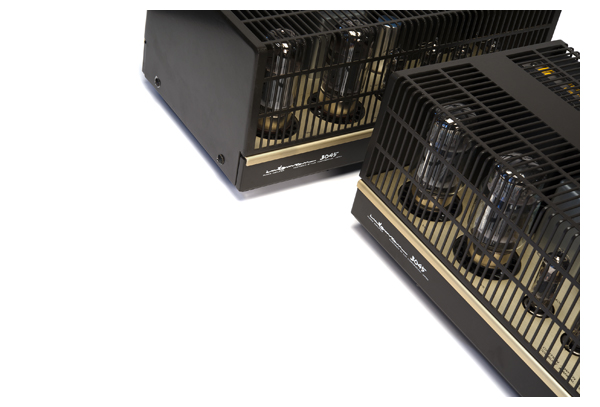
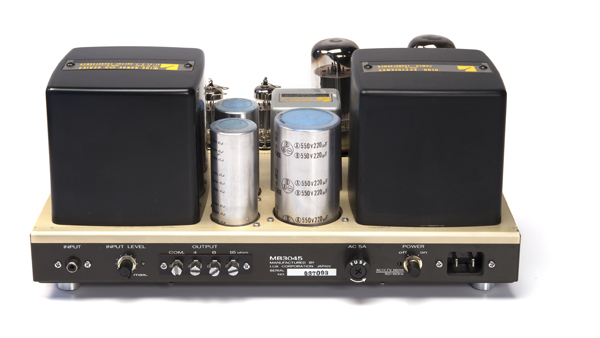
The sound of a classic vacuum-tube amplifier always beckons, and a recent trip to Echo Audio in Portland turned up a pair of gorgeous Luxman MB-3045 monoblocks. When Echo owner Kurt Doslu coyly told me to “check out the new arrivals,” he knew I would find the catnip on the shelf. And there they sat, staring back at me.

“This is the cleanest pair I’ve seen in a long time,” Doslu laughs. The hook is set and I can’t escape. Clean they are, indeed—and knowing that tube mastermind Tim DeParavicini designed these in his younger years, when he was at Luxman, makes them even more inviting.

The big but—and there’s almost always a big one with all things vintage—is that the 8045G triode output tubes that NEC made specifically for this amplifier are tough (if not impossible) to find. And those who do have the tubes want way too much money for them, as is usually the case with such rare and sought after items. So unless you have a stash of the 8045G tubes yourself, you may have to pass on these particular Luxman monoblocks, should you ever come across a pair in working or restorable order.

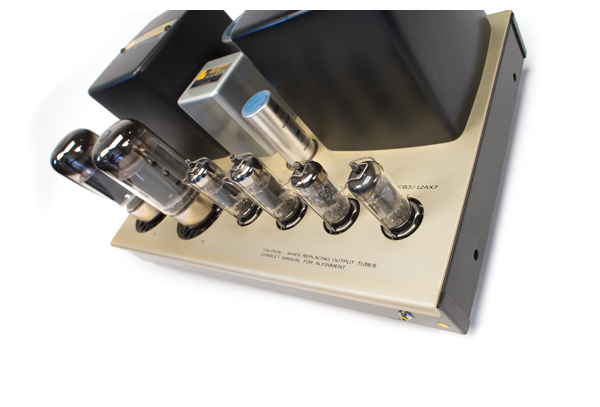
But then Doslu pulls me back in. “These have had the factory modification, so they use KT-88s,” he informs me. Of course, the 6240 driver tubes for the amp are as tough to find as the 8045Gs, but multiple sources reveal that the 6CG7/6FQ7 tube is a suitable replacement.

You Had Me at Hello

Some say the magic of these amplifiers is in the 8045 tube, which others say is no more than a 6550 with internal jumpers. And there are others still who claim that Luxman’s expertise in winding output transformers is the key to its success with amplification.

Not having heard a pure pair with the original tubes myself, I can’t be sure. But I can tell you that the configuration of this pair is indeed seductive, and I’m sure these lovely monoblocks are more than the sum of their parts and the creative ethos behind them.

The Luxman MB-3045s are relatively compact, measuring just 8.5 inch deep, 14 inches wide and 6 inches tall. The front panel has only a bright-orange power indicator (the lit vacuum tubes also indicates that the juices are flowing). Around back, the configuration is relatively Spartan: a simple barrier strip for speaker output, with 4-, 8-, and 16-ohm taps, a solitary RCA input jack and a level control, along with a two-prong power cord receptacle. It should be noted that the original power cord supplied with the amps are rather wimpy, so an upgraded chord is a good idea.

Built from 1975 to 1978, the MB-3045s feature a caged chassis, with the matching chassis finished in chocolate brown (as in our samples here), or in black. It appears that the black ones are tougher to find, but they don’t look quite as vintage.

Shaking the Cobwebs

Having sat on the shelf at Echo for some time, these amplifiers need a few solid days of playing to reveal their true character. They sound very dark and withdrawn at first run through the MartinLogan Aerius i speakers in my home listening room. However, after about 50 hours, the Luxman monos come to life in a present, palpable way that never disappoints.

Listening to the Tom Waits classic “Jockey Full of Bourbon” reveals a dense musical landscape, with bongos out front and Waits’ signature gravely voice hiding behind the projected plane of the speakers. No matter what your favorite type of vocal recording, these amplifiers portray a tremendous sense of depth and space. While some of the lack of extension and control at the frequency extremes may be a result of this amplifier not being a “pure” example with the original NEC triodes, it still performs admirably and it’s overall tonal character is enticing.

Romping further through multiple tracks of jazz, rock and blues uncovers a slightly loose and somewhat warm character to the MB-3045s. You’ll never mistake these for a Stereo 70, but you’ll also never mistake them for contemporary amplifiers from ARC. Think early PrimaLuna and you’re getting close.

Should you Buy Them?

Which brings us to the eternal question that plagues all of us who love vintage tube gear: Do you get the reliable Mazda Miata or do you go for the period-correct Austin-Healey Sprite—which, while more problematic, has the perfect vintage feel?

The $1,800 price tag on this pair is incredibly reasonable, and they’ve had the conversion done, which makes tube matching a lot easier. As far as finding a perfectly clean vintage pair of tube amplifiers goes, I consider myself quite lucky for coming across these.  – Jeff Dorgay


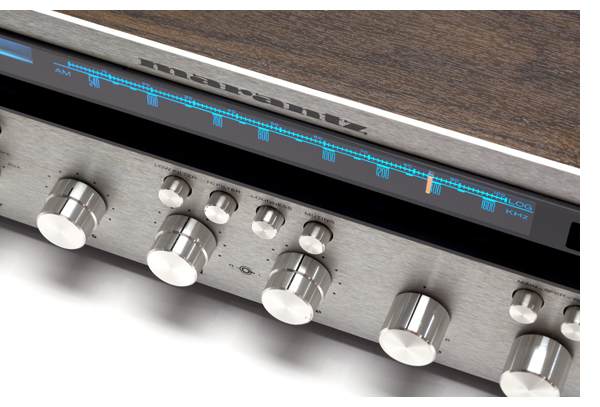
Marantz 2245 Stereo Receiver

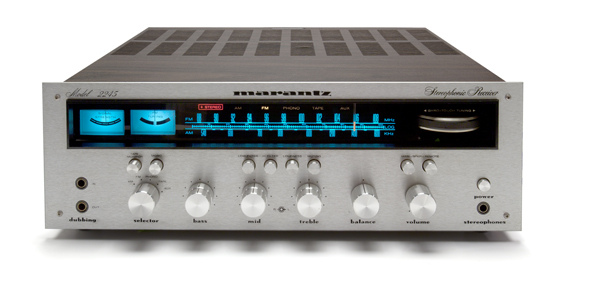
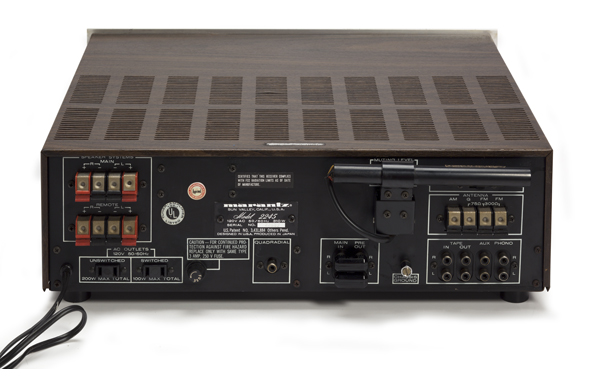
My best friend bought this Marantz 2245 receiver in 1973 while serving in the US Navy. It was purchased along with a pair of JBL-L100s and a Dual turntable. Traveling around the world with him during his tour of duty, this classic system finally settled in California and served him well until the late 90s, when it gave way to a modern home-theater system.

He recently called and asked me if I wanted the receiver and speakers, along with an H/K Rabco ST-7 turntable. How could I resist? I fondly remember selling these things when they were new. In the receiver wars of the mid-70s, Marantz was a big player, and very successful in battles with Sony, Pioneer, Sansui, and Kenwood.

The 22XX series stands as Marantz’s first serious foray into the receiver arena. The 2245 represented the mid-level model, and the little brother to the 2270. Still, the former touted more guts, better features, and a better tuner section than the entry-level 2230. It originally sold for $449, a premium price compared to the Pioneer SX-828 and Kenwood KR-5150. The Marantz also sounded, offering a slightly warmer sonic presentation along with decidedly more elegant cosmetics that many enthusiasts favorably compared to those of McIntosh.

With the exception of a short service visit in the 1980s, during which it had several resistors replaced, this example is bone stock and without modifications. A little cosmetic cleanup brings its beauty back to life. Yep, this sucker is heavy, tipping the scales at just over 30 pounds. After removing the simulated wood-grain cabinet, a peek at the innards reveals a fairly large transformer and highly organized electrical layout.

To keep with this column’s theme, a pair of Energy C2 bookshelf speakers and an iPod plugged into the AUX input served my initial listening tests. I pushed the power button for the first time with trepidation. Fortunately, no smoking transistors or loud bangs from aged capacitors—now well past their freshness date—interrupted my sessions. A simple test of the FM section with a dipole antenna shows the 2245 still capable of locking on to most of my favorite stations with healthy signal strength and low background noise. Admittedly, it’s not on par with the era’s best tuners, but it passes muster.

More pleasingly, the somewhat warm and friendly tonal balance I remembered is back in full force—a good thing. It’s for this reason that Marantz receivers rank above other solid-state units from the same period. Adding the JBL L-100s makes for an instant 70s party flashback. Considerable listening discloses a soft low-frequency presentation and lack of a coherent three-dimensional soundstage. But remember, none of us were even thinking about stuff like that back in the early 70s. We were just smoking weed and blasting Hendrix.

A Technics SL1200 turntable with Audio Technica AT-110e cartridge adds vinyl capability to this journey to the center of my mind. Here, bass stays soft, and dynamics somewhat limited, but there’s more resolution and the vintage system now possesses more of a three-dimensional soundfield than I recall. You certainly can’t buy something this good for $449 today, to say nothing of what this jewel would cost if adjusted for inflation.

A perfect-condition Marantz 2245 still fetches close to $449, and one with minor cosmetic flaws sells for about $100-$150 less. Avoid bargain-basement models unless you happen to be in the right place at the right time and know you are stealing it.

Audio Research SP-11 preamplifier

Residing at the top of the heap for at least three decades, Audio Research Corporation preamplifiers are almost default purchases for certain types of tube lovers.  ARC preamps are adventurous in their technology yet conservative in execution, so they appeal to audiophiles who like to minimize risks.  They’re perfect for listeners who want state-of-the-art sound, while knowing that the maker will still be in business at the end of the listening session.  And the unit won’t self-immolate.

Such “steadiness” wasn’t always so, as owners of the most important in the SP series, the SP-6, will recall.  That preamp went through so many revisions that it became a totem, almost a stand-up comedian’s joke, for high-end instability (commercial, I hasten to add, not electrical).  By the time the SP-11 arrived, however, Audio Research was in possession of almost Mercedes-Benz-like gravitas.  With today’s Reference models, including the current REF 5 SE and REF 10, ARC purchases are no-brainers.

When the SP-6 arrived in 1978, Audio Research had already earned a place at the front rank of high-end manufacturers—remarkable when you consider that the company was only eight years old.  Founder William Z. Johnson’s company made a rapid transition from modifier of Dynaco units to a distinctive brand with its own circuits and its own look; the earliest preamps actually shared faceplates and chassis with Dynacos.  The SP-6 marked a big break from modded Dynas, while the SP-10 of 1982 introduced two-chassis topology with separate power supplies.

In October 1985, ARC unveiled the SP-11 at the price of $4,900, which signified another evolutionary step from its all-tube forebears. (Note that the price is equivalent to $10,600 in today’s money, pegging it not far off the price of a REF 5 SE.)  This unit was a hybrid, foreshadowing the mature, apolitical and now fairly standard practice of exploiting the best of both worlds.  And while I’m aware that there are cultists who would happily debate into the wee hours the merits or demerits of tube versus solid-state rectification, I am not one of them.  I’m more concerned with the end than the means.

For the SP-11, ARC devised a preamp in which every active stage used a triode tube and a FET; the total complement was six 6DJ8s/ECC88s.  The resultant marriage was the blessed mix of valve sound with solid-state noiselessness and distortion that’s impressive even by 2013 standards.  Indeed, everything about the SP-11 will allow anachrophiles to insert it into any system you can put together today, with one exception:  It predates our current fetish for fully balanced operation, so it has no XLR outputs.

That, however, is as moot a condition as all-tube versus hybrid, and there are plenty of products on the market today without the balanced option—including a few from ARC itself.  I certainly wouldn’t let it preclude the acquisition of a mint SP-11 if one were to come my way.  (Indeed, I’d love to hear TONE publisher Jeff Dorgay’s SP-11 side-by-side with a REF 5 SE.)  And a mint one has to be worth $4,000 of anyone’s hard-earned pay.

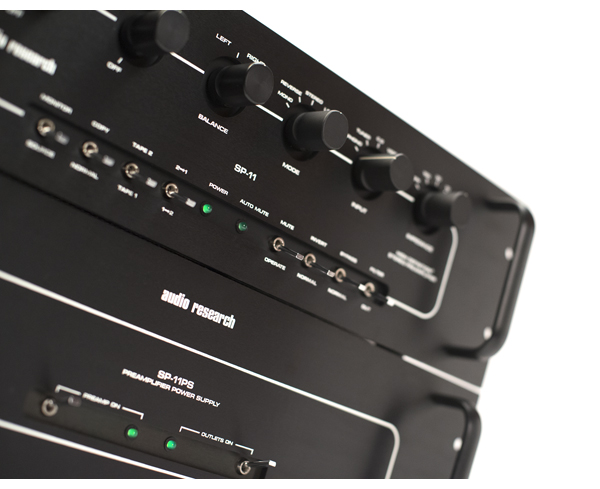
Just look at the faceplate:  It gives you everything you could want in a full-function control unit, and then some.  Like a precious few tweaky units out there, the SP-11 provided separate level and gain controls, which allowed ultra-fine tuning of the volume setting to suit the dynamics of the source.  This also prevented overload in a unit, which launched during the first two years of the existence of CDs, while still showcasing LP playback—and many were the jolts when switching from one to the other without adjusting the gain, before everyone got used to the higher output of CDs.

One soon learned how to accommodate sources of wildly differing output, how to exploit the two controls for the lowering of background noise levels and other stages of flexibility not seen in preamps prior to more recent models that allow users to pre-set the levels for individual sources, such as the REF 10, assorted examples from McIntosh and others with on-board microprocessors.  With the SP-11, one set the general volume with the gain and fine-tuned it on an as-needed basis with the level control.  Both controls employed 32 detent potentiometers.

Its five inputs were labelled phono, tuner, CD, video and spare, while its birth in a transitional era is revealed by a separate rotary with five impedance settings for phono, and another for mono/stereo/reverse/left-only and right-only.  Further control beyond the minimalism of contemporary rivals from, say, the British included a row of toggles selecting tape monitoring, tape copy, choice of either of two decks for playback, dubbing in both directions, mute, bypass, polarity inversion and the insertion of a subsonic phono filter.  Use of the bypass switch avoided all circuitry except gain, volume control and output buffering.  It also deactivated the balance control, a rotary positioned between level and source select.

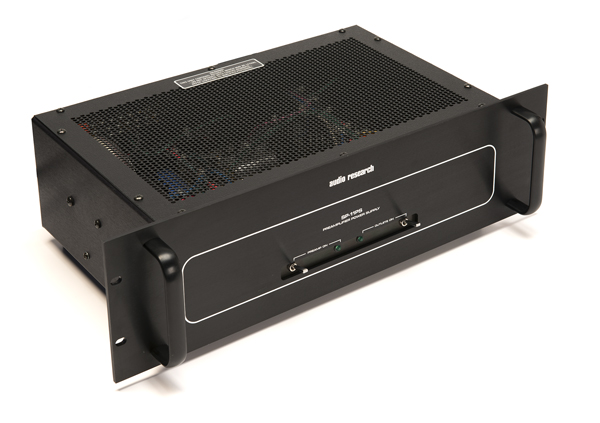
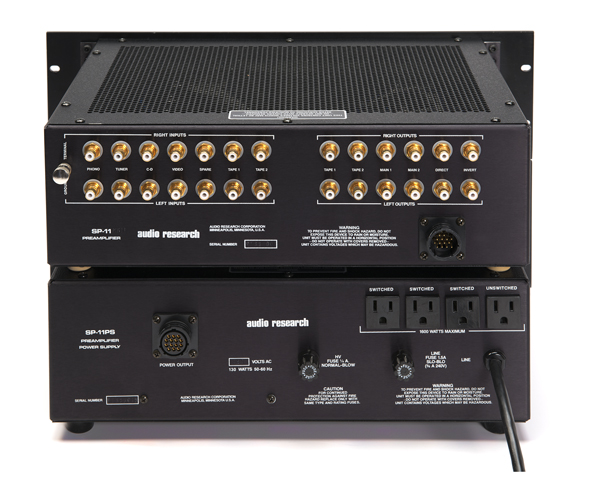
At the back, as still practiced by ARC, are rows of gilded RCA phono sockets, seven pairs for sources including the tape decks, and six pairs for the two main outputs and tape-record connections.  The identically sized power supply provided on/off and activating or switching off of the four auxiliary sockets on the back (three switched and one un-switched).  This would have probably been blanked off in export markets, and I suspect most hardcore audiophiles in the United States would have avoided their use on purist grounds.  But the convenience was undeniable, especially for single-switch power-on operation.

Also still employed by ARC is a warm-up period from switch-on, so one need never suffer nasty bangs—and as this was likely to be used with big power amplifiers, it’s a precaution worth applauding.  What was notorious about the SP-11, despite its hybrid DNA, was a lengthy warm-up period, needing a good 15 to 30 minutes to sound good, and a few hours to sound its best.  It always reminded me of a great red wine, one   that didn’t truly reach its drinkable best (from opening) until an hour or two had passed.  And, yes, I know that there are those who will argue that the only reason wine tastes better at the end of the meal is because you’ve had more to drink than when you started.  As one with the willpower to decant my reds three hours before drinking, I know that’s not the case.

While Dorgay will insert into his own hands-on experience with a mint SP-11 in a 2013 context (see “Additional Listening” below), I am content to recall that it sounded less warm than the SP-10, and less tube-y, which is as it should be.  Equally, the SP-11 would in no way be mistaken for a solid-state preamplifier, yet it offered the precision, silences and precise bass attributed to transistor control units.  I also recall that the phonostage was an utter delight, especially with MCs of relatively high output that could exploit its 47k-ohm setting, and work well enough with its 76 dB of gain.  It was and is a magnificent device, an all-time great.

ARC’s Dave Gordon tells TONE, “Terry Dorn and I are guessing that we produced around 3,000 SP-11s, totalling the original and the Mk II together.”  And to wind up collectors, he adds, “Of those, we produced 100 champagne gold Mk IIs exclusively for our distributor in Taiwan.”  When the SP-11 in Mk II form reached the end of its production, the retail price had only ascended to $5,995.

Dave also noted, “I think it was pretty unusual to see a tube preamp with a phono bandwidth of 100k and a linestage bandwidth of over 200k in 1985.”  Hear, hear. -Ken Kessler

Additional Listening

By Jeff Dorgay

I agree wholeheartedly with Mr. Kessler that a mint SP-11 is not at all out of place in a modern system today, and he’s spot on for the price of a mint unit.  Fortunately, a call to my good friend Jonathan Spelt at Ultra Fidelis, in Milwaukee, Wisconsin, yielded the one you see in this article for slightly less.  It even included the factory’s original, dual-box packaging—essential if you are paying top dollar.

In the context of a six-figure system, the SP-11 (mine is a Mk II version) holds its own with the REF 5 SE and REF Phono 2 SE that I use as daily reference units.  Granted, the newer models offer up more frequency extension, dynamic slam, and a bit more inner detail, but the vintage pre is so damn good in every way, I could easily live with an SP-11 and ignore what I’m missing.  A little help from Kevin Deal at Upscale Audio resulted in a great set of NOS tubes, taking my SP-11 to an even higher level.

And the phonostage is fantastic.  As more and more rack space seems requisite these days, it’s wonderful to revisit this concept of a great linestage and phonostage all in one chassis, much to the chagrin of the wire barons.  I defy you to find anything this good built new today for anywhere near this price.

SME 3009 Tonearm

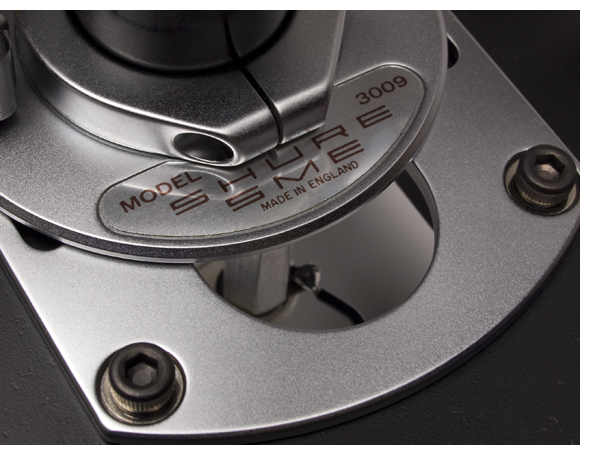
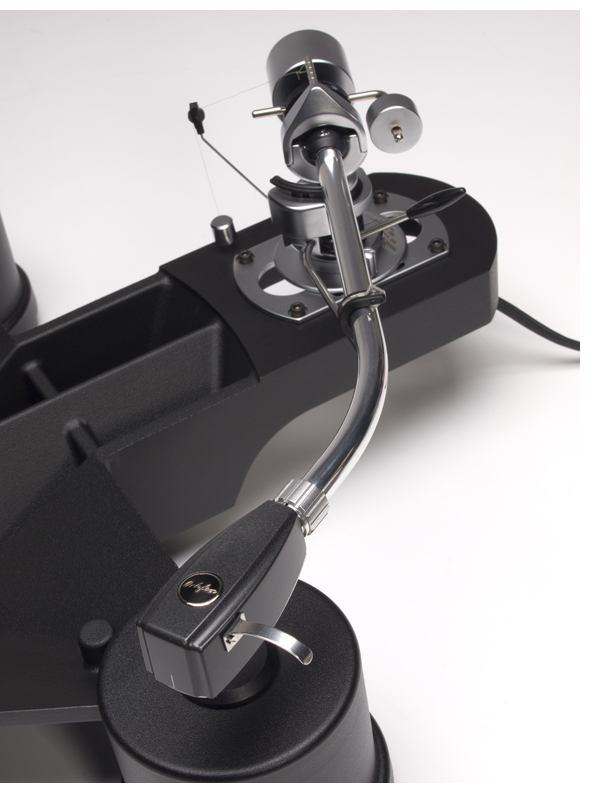
Depending on when you start the counting, last year marked the 50th anniversary of the SME 3009 tonearm. Ignoring both xenophobia on the part of the British and envy on the part of everyone else, it remains the most successful high-end tonearm of all time, and is the template for superior “universal” tonearms able to handle a wide range of cartridges on an equally wide range of “motor units.”

Indeed, many audiophiles still swear by it, and with good reason: Despite it being associated, in the minds of many, with high-compliance moving-magnet cartridges because of strong associations with Shure, it was, in fact, designed with the then-dominant, heavy, low-compliance Ortofon moving-coil cartridges in the SPU series. Moreover, the first headshells used with the 3009—prior to the arrival of the familiar, drilled-out SME design—were Ortofon shells with SME badges on the front. Due to his unfailing honesty and integrity, SME founder Alastair Robertson-Aikman found it mildly disconcerting that the headshell-mounting system became known colloquially as the SME mount; Ortofon deserved the credit.

As a result of the arm’s ability to accept the heavy, low-compliance MCs we so love today, its performance is not that of a 50-year-old arm but of a still-viable contender. That’s the reason why boxed, second-hand examples in mint condition can command $500 at UK audio flea markets. The arm is simply remarkable.

It stayed in production until 2003-04, but not because the superior Series V supplanted it; both models ran concurrently for almost 20 years. The cost difference between an SME Series II Improved and a Series V kept the former in production for its value as an entry-level product. Robertson-Aikman felt the more affordable M2 was its true successor.

After four decades, total sales neared a half-million units. I trust TONE readers will immediately let me know if there’s a separate high-end tonearm that comes anywhere close to that figure. The SME 3009 was, and is, the most popular and influential quality tonearm in history. Even the near-elliptical tonearm cut-out served as the default arm aperture for countless manufacturers that supplied armless decks, from Garrard to Thorens to Technics.

Founded in 1946 by Robertson-Aikman, SME made scale models and parts for the model-engineering trade and hobbyist model builder. Robertson-Aikman, above all an engineer, was also a music lover able to construct his own system. He told me “the Series I precision pick-up arm was envisaged in the autumn of 1958. It came about because my burgeoning interest in hi-fi had reached the point where I was dissatisfied with what the market offered. At that time, the Scale Model Equipment Co Ltd, as SME was then titled, had a useful precision-engineering capability built up over the preceding 12 years. I recall going into the small tool room and asking if we had any aluminium tube.

“By the spring of 1959, a prototype was in use, and it was decided to show it to the then-Senior Technical Editor of Gramophone Magazine, Percy Wilson, a man of great enthusiasm and some useful ideas.” Asked what he thought of its commercial possibilities, Wilson replied that he and one or two of his friends would like to own one. Crucially, he told Robertson-Aikman, “Perhaps an annual turnover of as many as 1,000 pieces might be possible.”

Robertson-Aikman remembers it well: “I particularly recall this estimate because in the week of one of his visits, not so long before he died, we built 1,000 units and were averaging 750 units per week.”

After re-tooling the Series I, by then three years old, Robertson-Aikman replaced it with the Series II in 1962. Instead of a steel arm tube, the Series II used a polished, bright-anodised aluminium arm tube, 9.5mm in diameter with a wall thickness of 0.56mm. The Series II stayed in production for 10 years. “And for much of the time,” Robertson-Aikman notes, “there was a backlog of more than 2,000 units.”

In 1973, SME met the demand for an arm of lower mass than the Series II with the Series II Improved, which also offered, for the first time, a fixed headshell version. All of the same basic family ran for the next 30 years. By 1982, with the sudden burst in popularity of the moving-coil cartridge with lower compliances and higher tracking forces, Robertson-Aikman recalls that “cartridge developments precluded a ‘one size fits all’ philosophy.” It led to the creation of the even more sophisticated Series V.

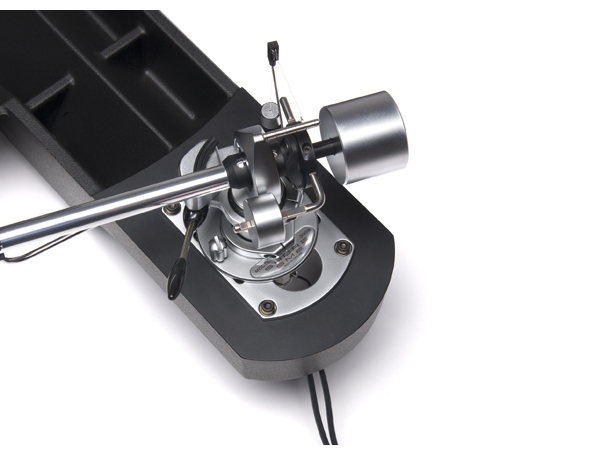
Common to all are “J”-shaped arm tubes, the methods of applying tracking force, fully-protected ball-races for the vertical axis, and 0.13mm-radius knife-edge bearings in chrome seatings for the horizontal axis. Precision is such that accurate tracking force up to 1.5g can be applied without a tracking-force gauge. Two counterweights were available, of 64g and 77g, allowing the use of very heavy cartridges, up to 32.5g. SME employed a hanging weight on a thread to set adjustable bias corresponding with tracking force, via notches on a rail. One popular option was the FD200 fluid damper for the Series II and later models. Users delighted in the most coherent and thorough owner’s manuals ever seen in audio, as well as niceties such as a baseplate that allowed the arm to slide forward or back for set up with a supplied protractor. All of the arms were fitted with damped cueing devices, and VTA was easily set thanks to the adjustable arm height.

Collectors know the SME 3009 enjoyed numerous variants, especially the 3012 12-inch model. But others exist to tantalize completists. The original 9-inch 3009 is identified by enthusiasts as 3009/1 or 3009/2 to indicate which model series is which, as well as “3009 Series II Improved.” Then you have fixed headshell or removable; a Japanese version that’s 10 inches in length from pivot to stylus; gold-plated limited editions; variations in the form of cable connectors; choices of counterweights; and confusion in the US, where some called the 3012 a “16-inch” arm because it included the counterweight and headshell.

Half a century later, SME 3009 arms are cherished with an intensity matched by few other vintage components: the Quad “57” electrostatic, the McIntosh MC275, Marantz tube amps, and Revox’s G36 spring to mind. But, as Stereophile icon J Gordon Holt once said, “You never forget your first SME.”  -Ken Kessler

Official Factory Production Statistics

Series I: 1959-1963, approximately 10,000 built

Series II: 1963-1973, approximately 180,000 built

Series II Improved: 1973-2003, 260,484 built

Publisher’s Note:  For those wanting to restore their 3009 to (and even beyond) its original glory, look no further than smetonearms.com. The site has the world’s largest cache of NOS SME parts and will restore your arm with loving care.

Krell KSA-50 Amplifier

Among my many life-changing “firsts” I recall—like the first time I had Beef Wellington (September 5, 1972) or received a copy of Meet The Beatles (March 10, 1964)—I will never forget the first time I heard the name “Krell” in a manner unconnected to the film Forbidden Planet.  I was attending a minor hi-fi show in Kent, in Southern England, and one of high-end’s odder characters, a fellow US expat named Alex Raffio, came up to me and told me to prepare myself for hearing “the greatest amplifier in the world.”

One day, Alex’s story will be told, in the same tome that will include the tales of John Iverson, Ira Gale, Jim Bongiorno and other world-class audio eccentrics, but that must wait. However “unusual” Alex might have been, his observation was correct.  For the next decade or so, as far as the British market was concerned, Krell would own that region’s high-end solid-state market.  And that was at a time when the Linn/Naim bloc ruled it with an iron fist.

Ironically, one of the earliest to recognize Krell’s brilliance was John Atkinson, then the editor of Hi-Fi News & Record Review. The irony?  He was as responsible as any for encouraging, or at least not containing, the Linn/Naim tyranny.  Thus his conversion to true high-end hardware—imported, no less!—was one of the first cracks in that duopoly’s xenophobic control of the UK market.  Equally crucial would be his move to the US to edit Stereophile.  I tell you this because Krell did not take the US, its home country, by storm from the outset.

Eventually, the impact that Krell’s original, genuine Class-A power amplifiers had on the global high-end scene, outside of its American homeland, would also matter as much in the States.  I am in no doubt whatsoever that the UK market discovered Krell before the US market, a belief confirmed by its founder, Dan D’Agostino, even though Krell was, at that time, a fellow traveller of speaker-maker Apogee.  When the great history of audio is written, the tale will tell how that pairing—just like Linn/Naim, Audio Research/Magnepan and other great duos—shared their nascent growth.  Simply put, the early Krells were the only amps available that could deal with the 1-ohm impedance of the full-range ribbon Apogee speaker.

At the time, Class-A solid-state amplification was nothing new in either the US or the UK, Krell having followed J E Sugden and Mark Levinson.  The difference was in the power, because the heat and bulk of Class-A amplifiers restricted them to ratings typically below 25 watts.  What Krell did was to apply Class-A topology, with its freedom from transistor-switching distortion, to amplifiers that could keep up with the non-Class-A powerhouses of the day from Threshold, Phase Linear, and Marantz, with ratings typically of 250 watts/channel.

Atkinson, by then a committed Krell user, having fallen in love with the KSA-50 he reviewed in August 1983, immigrated to the US in 1986.  In that article, he called the amp “a paradigm shift of the finest kind.”  What converted Atkinson, previously a professional bass player, was hearing deep, authentic bass utterly non-existent in systems powered by weedy little British amplifiers.  Lower-octave resolution was one of his defining areas in sound reproduction, and the Krell managed it in a way that was alien to the British.

Another critical area was that of soundstage, which the British “didn’t believe in.”  In the early 1980s, UK reviewers thought that this was merely a US obsession with no foundation in reality, especially because a revered Linn-Naim setup was totally a “2-D” experience.  In Atkinson’s seminal review, he described the soundstage as “wicked big.”  Eventually, other UK journalists became Krell fans, including Martin Colloms and Jimmy Hughes.  But the US—then in the thrall of The Absolute Sound—would soon realize what it was missing.

[NOTE: If this example of the Brits showing Americans what they had right under their noses sounds a bit presumptuous, please remember that the British played almost as big a part in reviving the then-moribund genre of the blues as did our own Paul Butterfield, Canned Heat and John Hammond, while the Beatles probably did more in their early days to glorify Motown than Berry Gordy ever could have dreamed.  Alas, the reverse doesn’t work:  The British are perhaps too jaded to realize what they have, so Americans reminding them that they once possessed the world’s finest postal system, produced the greatest affordable sports cars, etc., has no impact.]

Whatever the reasons for Krell’s slow start in the US and its rapid rise in the UK, it was the company’s third amplifier—the aforementioned KSA-50—that made Krell accessible to a wider number of listeners than those who could afford Krell’s KSA-100, let alone its KMA-200 monoblocks.  Recently, I was able to spend a few weeks with an as-new KSA-50 acquired by a friend.  He invested the same amount in a full restoration that he paid for the unit.  The resultant performance reinforced the notion that we haven’t progressed very far in three decades.

My fellow “Saturday Morning Sad Bastard” Jim Creed found the KSA-50 for £600 ($960) on eBay, but when it arrived, we were in for a shock.  Much of the original hardware—fuse holders, original terminals, etc.—was missing, and the innards had been tampered with in a manner that strayed so far from the original spec that it needed a complete overhaul.

Checking the serial number, the importer realized that this exact unit had been owned by a notoriously weird British reviewer—one of those benighted souls who bought into the BS of employing such psycho-tweaks as sticking foils and magnetized screws to the amp.  It is to the credit of both Krell and the importer that they were able to source every single part to undo the damage.

Presented with a now-pristine example of the Krell, I inserted it into a system consisting of an SME turntable with a 3009 tonearm and vintage Supex cartridge, my oldest CD player (six years younger than the Krell), a circa-2010 Audio Research Ref 5 preamp, and Wilson Sophia 3 speakers.  The KSA-50 was right at home, reminding me that back in the day audiophiles like Atkinson often paired Krell amps with Audio Research tube preamps.

Aesthetically, the KSA-50 is an amp of the “functional” school.  Though beautifully made and featuring nice details like a brass name-plaque hand-engraved with a pantograph, it remains a utilitarian amplifier.  The front panel comprises simply an on/off switch and an LED to indicate when the power is on.  Inside are hefty, potted toroidal transformers and massive capacitors the size of beer cans that flank a large fan to keep this true Class-A beast cool.  Its rear-panel fittings are suitably robust.

Although I tried the KSA-50 with current speakers, I couldn’t resist unearthing my cherished Scintillas (a superb modern facsimile is offered by Australia’s Apogee Acoustics, www.apogeeacoustics.com).  These speakers are probably best fed by the KSA-100 as a minimum, but, as I am no headbanger, the KSA-50 was more than ample.

Firing up the Apogees, with vintage Krell-power, is a near-religious experience for me, because many years ago this pairing introduced me to the most elevated reaches of high-end performance.  To hear that the duo is still formidable 30 years later is as revelatory as my initial exposure, in that the experience is an indictment of all that has happened since:  The combination would still earn a 5-star rating today from any listener who is free of prejudice.

As Atkinson noted with utter clarity and precision, the bass is fluid, deep and natural. Inappropriately, given audio snobbery’s still-dominant preference for jazz and classical as the most legitimate arbiters of a system’s worth, I played what I consider to be some of the most seductive, impressive drum sounds of the past 50 years: glam rock from the likes of The Glitter Band, Mud and other trashy but fun pop music of the 1970s.  The impact was palpable. And turning to the easier-to-drive Sophias, it was enough to create those sensations that home cinema users experience with powered, vibrating seating—only my chair is conventional and the floor is a 3-foot thick layer of concrete on terra firma.  The smallest Krell can cause just about any speaker to move a lot of air.

For the luscious, fluid decay that endears listeners to Class-A performance as much as amps at the sweet top-end, I wallowed in the thunderous double drum kicks and powerful electric bass on “Rock’n’Roll Part II.”  This appeared in the cavernous soundstage that paved John Atkinson’s road to Damascus so many years ago.  The band’s claps and “hey-hey” chorus stand proudly stage right; the sizzling fuzz guitar stage left.

Nothing about the Krell KSA-50 sounds “vintage” in any way.  It possesses all of the qualities that we demand in modern equipment, including speed and attack, clarity and transparency, and—if not so much with the Scintillas—a sense of limitless power and unharnessed dynamic contrasts.

Alas, Jim sold the KSA-50 to a lucky swine who paid him £1,500 ($2,400) for his fully restored example.  The original 1983 price was $1,800.  Even today, the Krell KSA-50 behaves like a current $5,000 solid-state amplifier of universally recognized pedigree.  And $5,000 just happens to be the current equivalent of $1,800 in 1983.  So if you come across a KSA-50 in working order for under $2,500, grab it.  At the very least, it will heat a small room. -Ken Kessler

Thorens TD 125 Turntable

For some of us, it’s the Rodney Dangerfield of the Thorens family of turntables. The barely-remembered TD 125 Mk II, though cherished when it was current, rarely figures in audiophile reminiscences, heated bar debates or lists of all-time greats. I used one for many years with an SME 3009 arm, and wish I still had it, so I am as guilty as any of dissing this gem. Aah! The glories of hindsight!

Despite its status when new, the TD 124 was but one of a number of superlative turntables mortally wounded by the Linn LP12, aka the Sondek. Equally, with the passage of time, it has been overshadowed by its Thorens-made predecessors, both above and below it in price, and by its disproportionately expensive descendants.

Among collectors, the hot Thorenses include the TD 124 at the top irrespective of one’s audio politics, the TD 150 for realists (and for me, the most important turntable in audio history after the AR Universal), and – for those lucky enough to be filthy rich and tenacious – the later Reference and Prestige behemoths. All are superlative decks, but the TD 125 just may be the most balanced, the sanest compromise, and the easiest with which to live.

Born in 1968, the Thorens TD-125 (Mk I, of course) directly followed what most enthusiasts would rightly nominate as the Swiss/German firm’s single greatest achievement: the TD 124, rather than the similar TD 150 of 1965. Appropriately, a perfectly-restored, serviced and installed TD 124 will, as of 2013, still give most record spinners a run for their money. However, only the most deluded apologist would argue that this idler-drive/belt-drive hybrid is either as quiet as, or as dynamic as the pure belt-drives that followed the TD 124 – let alone the “budget model” TD 150 that sold alongside it. And that includes the TD 125.

According to Gerhard Weichler’s Thorens: the Fascination of a Living Legend (2006), the TD-125 was born of a number of causes, a perfect storm demanding a new flagship model. Thorens was moving factories from Switzerland to Germany, the TD 124 was nearing the end of its life as a viable product after some 100,000 had been made, and the latest stereo cartridges demanded greater refinement. The TD 124 was most assuredly a child of the monophonic 1950s and its time had surely come.

Not unaware of the phenomenal success of Edgar Villchur’s $68 AR turntable of 1961 (and regardless of its almost laughable price advantage over any import), Thorens introduced the TD 150 in 1965. It was, for all intents and purposes, a better-built AR, with the added appeal of accommodating a choice of tonearms. The TD 150 is the direct link between the AR and the Ariston RD11, which became the Linn LP12, and I’ve heard them outperform the much costlier TD 124. But that’s another tale.

At this stage, it’s worth informing you of the three turntables’ original prices. The only contemporary guide I have showing all three – TDs 124, 150 and 125 – is the 1970 Hi-Fi Yearbook, published in the UK. I believe that the pound (£) of 1970 was exchanged at around $4=£1, so convert if you must, but the point of this illustration is to indicate where each turntable fit into Thorens’ range.

In this guide, with prices including taxes and rounded to whole pounds, and without tonearms, the TD 124 retailed for £45, the TD 150 sold for £30 and the then-new TD 125 cost a heady £70. That should make you want to hop in a time machine, because £70 some 43 years ago was equal to only £900-£1000 in today’s money. And that’s only US $1500 in 2013 smackers….

Because the TD 150 was an entry-level turntable, and the moneymaking flagship TD 124 was on its way out, a more substantial belt-drive – call it a TD 150 on steroids – was an obvious solution. Moreover, given the rapid growth of solid-state technology in the 1960s, Thorens was inspired to add to the TD 125 something not applied to the TD 150: electronic speed control.

It truly was a beefed-up TD 150, based on the same topology of a small motor driving a pulley and belt beneath the platter, a basic plinth, a full-length armboard, controls at the front, available with or without factory-fitted arm. The electronic speed adjustment upped the controls count, so it featured, in addition to on/off and speed adjustment of +/- 2%, aided by illuminated strobe visible through a window at the front. Speed control was accomplished with a linear potentiometer, and an AC generator with the frequency controlled by a Wien-bridge oscillator.

Despite the addition of electronic speed control – another slider controlled the cueing lift/lower if the turntable had the factory-fitted TP 25 tonearm – the deck was still a simple, classic three-speed design. Three-point suspended subchassis, uncluttered undersides, a removable full-length arm-board that presaged that of the LP12 (and which could even accommodate a Rabco parallel tracking arm), the TD 125 was inescapably the direct link between the TD 150 and the LP12.

Thorens did improve on the TD 150 with the TD 125 in a number of other areas, not least thanks to greater mass and more robust construction. Isolation of the various elements was superior, while the switching of power on/off and speed changes were achieved electronically rather than mechanically as on the earlier models. The two-section platter consisted of the 12in section fitted over the smaller subplatter around which the belt was positioned. The mat was a sculpted rubber affair that, in the post-Linn era, most users replaced with something offering better contact between LP and platter, such as simple felt.

As for its basic construction, the TD 125 employed a cast aluminium top section that supported the main bearing, platter, and armboard. The motor, the electronics, and the lamp to illuminate the strobe were fitted to a pressed steel panel that formed part of the plinth. Rubber washers ensured no metal-to-metal contact. The TD 125 was visibly distinguished from the TD 150 not merely by larger size, but by the aluminium strip that ran across its front, containing the rectangular controls, with a black main top surface, in contrast to the TD 150’s predominantly metal top plate.

As for the suspension, it consisted of three conical springs in adjustable cups. For disco use – yes, over 40 years ago – the TD 125 could be converted with rubber damping spheres in place of the floppier springs. A properly set-up TD 125 is fairly floppy, but not comically so, but the added rigidity for club use was advisable.

By the time the TD 125 was replaced in 1976 by the more sophisticated TD 126, it had achieved Mk II status, thanks to changes in factory tonearms from TP 25 to TP 16, refinements to the electronics and other detail improvements. The TD 126 was much more complex, and possibly less successful because, by 1977, the Linn hegemony was in full swing. How many TD 125s in all forms were produced, though, is hard to determine, but it should be noted that, in 1975, along with the TD 160, Thorens manufactured 500,000 turntables. Yes, a half-million.

The good news is that TD 125s are plentiful. I see them frequently, in great shape, for prices in the $200-$600, but perfection means spending around $900-$1000. I love it with the SME 3009, and had a blast with the Infinity Black Widow, but it’s also a perfect playground for Grace and Audio-Technica arms of the period. What you get for your money is a turntable with evocative 1960s styling, excellent isolation from footfalls, generous space to accept most 9in arms, and – above all – a sound that settles nicely between the romantic and the hygienic.

Of this I am confident: if you were to listen to a system blindfolded, with a TD 125 at its heart, fitted with a modern arm and cartridge such as an SME M-2 arm carrying a Denon DL-103R, you’d be forgiven for thinking that it was a $6000 front-end. Silky, detailed, open, with a deep soundstage … be glad this remains vintage hi-fi’s best-kept secret. -Ken Kessler

Pub. Note:  Taking Mr. Kessler’s advice a step further, a great source for ultra minty TD-125s is Dave Archambault at www.vinylnirvana.com He’s always got tables in stock, or can refurb/repair yours if the mood fits.  And, he’s got a true craftsman making hardwood plinths that can create something from mild to wild for your restored beauty, giving it a better look than the day it left the Thorens factory.  Dave restores them all with tender loving care, so give him a shout. (and tell him we sent you!)

PS Audio Power Plant P300

During high-end audio’s early days, power from AC lines was never suspected of gremlins. But like every other aspect of music reproduction, it, too, came under scrutiny. In the mid 70s, rumblings suggested the best sound could be had late at night—after most everyone had gone to bed.

Now, fast-forward a decade to the mid 80s, when Tice Audio power conditioners were considered state-of-the-art. However, for the most part, they were nothing more than high-capacity isolation transformers that solved some issues plaguing the AC line. Indeed, it was PS Audio that actually approached the problem from a different angle, but not until another decade later.

Instead of merely filtering the AC line in a passive mode, the company’s P300 takes the AC power and regenerates fresh AC by way of a DSP oscillator coupled to a high-current amplifier that essentially operates at one frequency. Utilizing high negative feedback—generally, a no-no for a wide-bandwidth power amplifiers but fine in this application because of the narrow bandwidth—results in freshly generated AC that, in comparison to what emanates from the outlet, remains relatively free of distortion. It’s a novel approach, especially considering that the P300 delivers balanced AC power known to minimize hum.

When introduced in the late 90s, the P300 had a maximum output capability of slightly over 200 watts. It was unable to work with a large power amplifier, or really any amplifier, for that matter. But if you plug your preamp and CD player (DACs or phonostages work too, as long as they have low-current demands) into the P300, the results are impressive. The change is akin to cleaning the picture window in your living room the morning after your uncle smokes his way through family game night.

Of course, the P300 sucks power. It’s like constantly leaving on a 300-watt light bulb. Still, there’s an unmistakable upshot in sound quality for source components. Just don’t overtax the P300, or it automatically shuts down. Connected to my vintage Audio Research SP-10 mk.2 preamplifier, the P300 delivers the goods. The noise floor is lower, with less grain through the audio range. The cumulative effect is similar to going from new, inexpensive Chinese tubes to a handpicked, matched set of NOS Telefunkens. Not bad for $500.

PS Audio continues to improve and upgrade the Power Plant series of power conditioners, and publisher Jeff Dorgay has its top P10 in one of his two reference systems. The newest design claims enough current capacity to run a large power amplifier, and plenty of additional features make it a dream to use, and our review is in progress.

But the P300 is where it all began. My pristine example cost $500 from San Diego’s Blackbird Audio Gallery (www.blackbirdaudiogallery.com) and is typical of the price a very clean P300 fetches on the used market, a testament to PS Audio’s build quality and product philosophy.

Revox A77 and B77

Along with the boom in killer headphones and headphone amps, the past few years have turned up another unexpected revival. It was clear to all – upon hearing the insultingly poor ear-buds supplied with iPods – that there was an opportunity to revitalize a moribund audio sub-genre. Stand-alone DACs, bad-ass Japanese direct-drive turntables, and a few others are enjoying rebirths, too. But who would have predicted a comeback for reel-to-reel tape?

It never was a populist format, however often magazines like Playboy featured them in “bachelor pad” layouts in the 1950s and 1960s. They were owned mainly by the hard-core audiophiles of the day, those with 1) enough money to feed them open-reel tape, which never was affordable in the manner of the later cassettes, let alone CD-Rs, 2) no aversion to a conscientious handling regimen as irritating as that of LPs, and 3) an appetite or need for the ability to record. And costly pre-recorded open-reel tapes were always of limited appeal.

As for the comeback, it is primarily a high-end phenomenon. Opus 3’s astonishing pre-recorded tapes cost as much as 10 CDs or four audiophile LPs. Rebuilds and upgrading from specialists like Gold Sound and United Home Audio are serious investments. Finding blank tapes is such a chore now that even used tapes, to record over, have value: I saw a vendor selling used 10½in Maxells for $10 each at the recent AudioJumble in Southern England.

When tape recorders moved from tubes to solid state, the bulk and the weight reduced slightly, though the size of the tape reels a machine could handle determined how small it could go. But the cooler running and quieter operation made open-reel decks a shade more attractive, and the genre survived well-past the arrival of the cassette. But by the 1990s, you would see reel-to-reel machines mainly in systems belonging to those with vast libraries of tapes, or to anachrophiles who simply prefer archaic means of sound reproduction.

Among the most popular – and deservedly so – of the solid-state open-reel machines were the Revox A77 and B77. Like the equally coveted all-tube G36 that it replaced, the A77 launched in 1967 falls under the heading of “semi-pro,” and was equally popular at home and the studio. Pros loved them because they were compact and relatively portable.

A77s and B77s arrived in time for hi-fi’s period of greatest desirability, the mid-1960s to the late 1980s, and were the decks of choice among European audiophiles They vied mainly with Tandberg, Grundig, Uher or Ferrograph, while Americans had a greater affinity for Crown, Ampex, and select Japanese models from Sony, Dokorder, TEAC and Technics.

For most, though, Revox was the Rolex Oyster of tape decks, in every sense of the analogy: ruggedness, functionality, and exclusivity, but without insane pricing. Note that last bit: its status was not a matter of cost, as prices of upscale open-reel-tape decks were close from brand to brand, the main exception being the always-dearer Nagras. In 1986, for example, a B77 Mk II at $1999 was similar in price to a Sony or TEAC with 10½in spool capability.

As for Revoxes in retrospect (and as is the case with different versions of any vintage item), you will find not only factions for either A77s or B77s, you’ll even find those who prefer Mk I B77s versions over Mk IIs and vice versa, or A77 Mk IIIs over Mk IVs. As both A and B are closely related, the smart money would be placed on the later B77 as the model that may be the nicer to use in the modern era.

What the A77 delivered of its tubed predecessor, in addition to electronic instead of mechanical switches, silence and cool running, was a superior three-motor, direct-drive tape transport system. Its innovations included a capstan motor to drive the tape at constant speed, with the other two motors overseeing the tension of the feeder spool and constant tension for the take-up spool. Rewind and fast-forward speeds were exceptional, too, the winding was admirably smooth, and braking was electromagnetically servo-assisted.

Depending on your needs, pro or domestic, Revox offered quarter-track or half-track formats, and speed choices of 3¾ips/7½ips, or the high-speed 7½ips/15ips configuration. Variants also included half-track, quarter-track and slow-speed versions 1 7/8ips. Details included precise relay controls; accurately calibrated and illuminated VU meters; a four-digit tape counter; photo-electric end-of-tape switching; easy access to the heads for adjusting, cleaning or de-magnetizing; plug-in circuit boards for easy maintenance or upgrades; separate output for headphones with dedicated volume and balance controls; switchable EQ (NAB for recording and both NAB and IEC for playback), plus special features for editing. Inputs included switchable high/low Mic, Radio and Auxiliary.

Specs were remarkable for a machine measuring only 15½x16x7in, compared to console types found in studios. The signal-to-noise ratio was stated as better than 58dB at 7½ips and 56dB at 3¾ips, with crosstalk better than 45dB in stereo undistinguished by today’s standards, but a recent listen to master tapes on a mint B77 proved it to be more than good enough for “high end” usage.

FROM A TO B

After the A77 ended its run with Mk IV status, Revox unleashed the B77 in 1979/80. It was smoother to operate, better-sounding, more generously equipped, and more reliable. Revox built the B77 around an aluminum die-cast chassis. Like the A77, it housed three AC asynchronous motors, the capstan controlled by a tachometer head that read a series of pulses created by the teeth on the circumference of the motor, their rate compared against the frequency of an internal oscillator. This ensured superlative speed accuracy, while reducing wow and flutter. The A77’s relay controls were supplanted by transport controls overseen by solid-state logic.

A three-head machine like the A77, the B77 also had space to accept an optional fourth head, enabling the unit to be compatible with for slide-projector synchronization. Also provided by the B77 were sound-on-sound, adding echo or reverb to an existing track, “Duoplay” when both recorded tracks are used simultaneously but to play back different material, and “Simuplay” for synchronizing music on one track with speech on another. The Revox B77 also provided a splicing block with built-in cutter fitted to the front panel, audible tape shuttling and, in the Mk II, built-in vari-speed control +/-10%, equal to a pitch change of two semi-tones.

Slightly larger than the A77, it still occupied a space of only 17¾x16¼x8¼in. Performance gains over the A77 affected every area, from wow-and-flutter to crosstalk to S/N ratio. As far as I can gather, only one functional sacrifice was made when the A77 morphed into the B77, in that customers purchased the B77 with either NAB or IEC equalization, not both.

REVOX B77 IN THE 21st CENTURY

Like any vintage open-reel decks, all have suffered the ravages of time and wear; besides checking out the electronics, tape decks have mechanical elements that need replacing, and tape head wear is a primary concern. What makes the Revoxes so appealing is that they shared much with their Studer-badged professional siblings, so they’re more rugged than most. And sonically, they are among the most domestically-acceptable open-reels – by that, I mean in terms of price and dimensions – that can ape the brilliant sound that keeps so many exhibitors at recent hi-fi shows demonstrating with open-reel tape.

Some might think that there may be a US-vs-Europe divide at play, and I appreciate that many brands use hot-rodded TEAC/TASCAM or Technics reel-to-reels at shows. Conversely, a number use Nagras, which – like the Revoxes – are as Swiss as William Tell. Comparing eBay.com with eBay.co.uk reveals similarities in pricing, too: parts donors from under $100 to good, median buys for $500 and perfection for $1000.

Revox users are well-supported by specialist repair services, particularly for spares. Dedicated web sites can provide information ranging from servicing, such as www.revox.freeuk.com, to hot-rodding, as well as sourcing fully-refurbished machines beyond those you might find on eBay. We heartily recommend a few evenings studying the lore on www.taperecorder.co.uk and www.reeltoreel.de/worldwide/B77.htm before you go crazy with eBay.  Pub. Note: For our Stateside readers, I suggest perusing www.tapeheads.net as well.

Whatever route you might pursue, the Revox’s style, reputation, build-quality, smooth operation, configuration options, and ergonomic brilliance, and – it must be added – sheer “Swissness,” captured the hearts of many thousands of aficionados. Enjoy one for an evening and you’ll hear why. -Ken Kessler

Harman Kardon Rabco ST-7 Linear-Tracking Turntable

Welcome to Kludgeville, aka the H/K Rabco ST-7 linear-tracking turntable.  Introduced in the mid 1970s and selling in fairly high numbers, the ST-7 was a brilliant product, which eventually crashed and burned because of reliability issues and a changing marketplace.  It and its sibling ST-6 and ST-8 models introduced linear tracking, or tangential tracking, to a wide audience of music lovers seeking to extract that little bit of extra magic from the record grooves.

Tangential arms were nothing new at the time.  Companies like Rek-O-Kut, Ortho-Sonic and Burne-Jones had fielded products of this nature as early as the mid-1950s.  However, it wasn’t until the mid-1960s that a somewhat commercially viable tangential-tracking turntable, the Marantz SLT-12, became available to the buying public.  As valiant an attempt as the Marantz was, it was doomed to fail as a successful business venture, due to various mechanical problems.

Enter Rabco, the Maryland-based manufacturer of the now-famous SL-8 and SL-8E tangential-tracking tonearms.  Somehow, Rabco figured out a way to make these arms relatively reliable, despite their mechanical complication (i.e. two electrical motors).  These arms found their way onto many of the revered turntables of the early 1970s, like the Thorens TD-125 and Technics SL-1100.  Rabco even marketed a complete linear-tracking turntable in the form of its ST-4 model.  At the time, the ST-4 retailed for $159, while the more sophisticated SL-8E retailed for $169.  These prices weren’t out of line by any means, considering that a garden-variety belt-drive turntable at the time sold in the vicinity of $115.

Even though Rabco was reasonably successful, the company eventually sold out to Harman Kardon.  By 1975, the acquired brand was manufacturing the ST-7, which was embraced momentarily by its dealer network.  I actually owned an ST-7 in 1975 and enjoyed it immensely, but its complication led to frustration and I passed it on to another owner.  So here I am now with a nice example of an ST-7 and it’s working pretty well.  How did this happen?

About a year ago, I was the recipient of three gifts from two friends: a Marantz 2245 receiver, a pair of JBL L100 speakers and the ST-7.  The Marantz and JBLs were easy to sort out and get up to excellent working condition.  However, the ST-7 sat on a filing cabinet for months before I even plugged it in.  I know that getting this thing up to new-operation condition was going to take a lot of patience, so that is what was exercised.  After plugging it in, various problems came to light.  It needed thorough cleaning, extensive lubrication, new belts, new indicator lamps and many, many adjustments.

I said welcome to Kludgeville and that is not an understatement.  Removing the platter and top panel of the ST-7 reveals a mechanical nightmare that would do Rube Goldberg proud.  And just about everything is adjustable.  But those adjustments must be made just right or the thing simply won’t function properly.

So, over a four-month period, I deal with one issue after another, often creating another issue, which created another.  There were times when I just wanted to hit it with a hammer and be done with it, but I persevered.  Eventually I got it to play records without either malfunctioning or going out of adjustment.  And even though I had the owner’s manual, I was missing the all-important cartridge-alignment gauge; luckily, wonders of modern technology fixed that for me.  A company called Shapeways makes a 3D-printed version of this gauge that works like a charm.

Before putting the ST-7 into service, I did a couple of tweaks that worked out well.  I did some internal damping of the metal casework and I installed a GEM Dandy turntable mat.  I also replaced the crummy molded RCA plugs with high-quality gold-plated copper models.  Another tip for good operation is getting the table to be perfectly level; I have a handy bi-directional mini level that works perfectly for this task.  I use a Shure V-15 Type III cartridge for all of my listening.

First impressions are very promising—the ST-7 keeps its speed stability well and exhibits little signs of rumble.  A tap on the chassis does produce an audible thunk, but that is not too bothersome.  Who smacks their turntable while listening anyway?  The tonearm tracks perfectly straight across all the records that I play, and the end-lift/shut-off mechanism performs flawlessly—promising indeed.

Going with period music, I decide to play nothing but 1970s records.  First up is Chick Corea’s album Crystal Silence (ECM).  The lengthy composition “Sometime Ago/La Fiesta” is thoroughly enjoyable, exhibiting a nice clean treble presentation and good rendering of Flora Purim’s vocals.  Next up is “Miles Beyond,” off of the Mahavishnu Orchestra’s Birds of Fire album (Columbia).  There is excellent punch on Billy Cobham’s drums, Rick Laird’s bass lines are clearly delineated and John McLaughlin’s guitar has incredible bite, while Jerry Goodman’s violin does not irritate.  I move on to the Jan Hammer Group’s album Oh, Yeah? The title cut is very busy with synthesized bass, bass guitar and bass drum, but the ST-7/V-15 combination unravels all of it.

By this time, I’m into the smiley-face/toe-tapping region of listening.  For the final album, I tee up In Praise of Learning by Henry Cow.  Yes, I realize that admitting to listening to Henry Cow is akin to admitting that you set cats on fire or throw bricks at school busses, but I like the music.  The song “Beautiful as the Moon – Terrible as an Army with Banners,” a paen to oppressed working classes, sounds as good as I remember it sounding when I played this very same record on my original ST-7.  If I remember correctly, the cartridge I had on that one was a Fidelity Research FR-1 MK II.  To achieve similar results with the refurbished table is not too shabby.

If I can criticize the reproduction of this particular ST-7, it is that the lower registers are lacking in weight compared to some modern tables, and the front-to-back staging is a bit compressed and two dimensional.  On the plus side, you get a big, steady left-to-right image, great focus and absolutely no mis-tracking.

Owning one of these turntables is not for the faint of heart.  You either have to be mechanically adept or know a technician who can deal with the various trouble spots.  Most of all, one must have patience.  However, once you have it sorted out, the ST-7 is easy to use, it sounds pretty darn good and it has looks that are way past cool.  I’m keeping this one, which will be mated to the Marantz/JBL system, where it will live happily ever after—at least until it goes out of adjustment.

Pass Labs Aleph 5

The Aleph 5 amplifier probably won’t win any beauty contests. It’s a basic black cube surrounded by heat sinks, and the only indication that it’s operating (aside from its temperature after it’s been on for a while) is a single blue LED. This retired model is a far cry from what you could purchase from Pass Labs today. I suppose the nearest amp in the current Pass lineup is the comparatively gorgeous XA60.5 monoblock. Both the 60.5 and its forebear deliver 60 watts per channel of pure Class A power into 8 ohms.

But isn’t the older model just what angry audiophiles clamor for? Internet forums are filled with people bashing high-end audio companies for making beautiful-looking amplifiers with expensive casework. “I don’t want to pay for all that. I just want good sound—and it want it cheap.” Well, Mr. Audio Curmudgeon, step right up. The Pass Aleph 5 is the perfect amp for you.

Passing It On

I honestly can’t think of a single person who has done more to probe the limits of solid-state amplification than Mr. Nelson Pass. Since the inception of Threshold Corporation back in the 1970s, he’s been on a continual quest to perfect the art and science of solid-state amplifiers. Threshold was one of the first companies (if not the first) to manufacture a truly refined solid-state amplifier. The company quickly rose to the top of the heap with pure Class A amplifiers like the 400A, as well as with its various patented Stasis designs. Threshold products were built with care, looked good and sounded great.

After Pass retired from Threshold, he rethought amplifier design—and the seeds for Pass Labs were sown. In 1991, he released the first Aleph product, the Aleph 0, to widespread acclaim. This and subsequent Aleph models were unusual looking, but they won the press and dealers over by virtue of their outstanding sound quality. I remember visiting a number of high-end retailers in the ’90s and seeing these Aleph products on display while sales people raved about the sound.

The subject of this column is the Aleph 5, which is a single-ended Class A effort that succeeds on virtually every level. The design brief for this product is as ambitious as I’ve ever seen for an amplifier design. The output section is a patented design, which is exceptional for its simplicity in that there are only two gain stages. Typical solid-state designs have four or five gain stages. Remember, every stage takes a toll on sound quality. The Aleph 60 offers absolutely no adjustments, and neither bias nor DC offset can go out of whack unless something catastrophic happens—hardly likely given the robust character of the amp’s power supply, which uses a 600-watt toroidal transformer and filter capacitance totaling 120,000 uF. This is a robust amp indeed. And for such a compact cube, it’s quite heavy.

Hooking up the Aleph 5 is easy. The back panel features the AC input socket, the on/off switch and a set of gold-plated binding posts, plus single-ended RCA and balanced XLR inputs. I chose to run the amp balanced throughout my listening sessions.

One word of caution: this amplifier runs HOT! Give it plenty of ventilation and breathing room. Pass recommends that, if you have one of these or happen upon one that hasn’t been looked over by either the factory or a good technician, you do so in short order. Thankfully, Pass offers full support for all Aleph products.

Ready, Set, Go

After giving the amp about an hour of warm-up time, I play my usual compilation discs just to make sure that everything is operating as it should. It quickly becomes apparent that, following the warm up, this amplifier gets to the music’s essence without delay. I find myself with a total lack of “yeah, buts” as I go through the initial listening phase.

Every selection I play has a harmonic integrity and an overall richness of character that reminds me of the better tube amps I’ve heard. However, there is a level of grip in the low bass and a linearity in the mud bass (my phrase) that a lot to tube amps just can’t correctly handle. The Aleph 5 also exhibits the vaunted midrange bloom that tube amps are noted for, but it does so with a bit more speed and gusto. The high-frequency region is smooth yet offers as much detail as one could possibly want.

As I listen at length, all of my audiophile selections sound fabulous and have air and space, as well as wonderful bass and shimmering highs. But these recordings bore the heck out of me, and so I quickly realize that I need to take off the audiophile hat and start enjoying myself. This amplifier basically says to me, “Stop analyzing and start with the head bobbing,” which is not to imply that the amp exhibits any kind of coloration; it simply makes music. This should be a fun hobby, right?

Since prog and fusion are what pushes my buttons the hardest, that is the sonic sea upon which I eventually set sail. First up is the DVD-A recording of King Crimson’s album Red. This is the best version I’ve heard of this masterpiece and, with the Aleph 60 in play, I’m able to hear Bill Bruford’s unique snare drum tuning with all of its dynamic punch. On the live selection “Providence,” John Wetton’s signature bass sound is captured intact. The same goes for the self-titled first album from Emerson, Lake & Palmer. The big, fat and tactile Hammond organ is right there in all its majestic fullness.

I’m a big fan of moe., and so I thoroughly enjoy the band’s album The Conch. On “Wind It Up,” the interplay of the two guitar soloists is especially revealing in that it shows not only the style of playing but also the slightly different sound each player pours out.

One of the most under-appreciated guitar players out there today is Derek Trucks. I honestly don’t know why. I’ve followed him for quite a while and he keeps getting better and better. My favorite album by him is Songlines, which is a fascinating collection of excellent compositions. It’s not the greatest recording, but with the Aleph 5 delivering the music, who cares? Every bass line, every cymbal crash and every biting staccato guitar run is perfectly portrayed.

Just as I finish up my time with the Pass, the newly reissued version of Freddie Hubbard’s Red Clay LP shows up on my doorstep, giving me a chance to fire up the turntable and feed the Aleph 60 some analog goodness. The track “Delphia” never sounded so good as it sounds here. I’m especially pleased with the way the Aleph presents Lenny White’s cymbal work, which is sweet and detailed.

In the same package as Hubbard’s album is Rory Gallagher’s self-titled album, his first after his time with the band Taste. I push the Aleph 5’s limit with some of the songs on this record. Here, and only here, the lone shortcoming of the Aleph 5 shows up: The amplifier clips—but I’m encouraged by the fact that it doesn’t fall apart. Rather, it behaves like a tube amp in that it becomes soft and compressed instead of ragged and distorted. This is something I could live with long term.

As my speakers have a sensitivity of 90 dB and as I have a relatively large room, the Aleph 5 is sufficient for 95 percent of my listening. However, if your speakers are in the 84- to 87-dB range and you listen loudly in a large room, some extended demo sessions should be in order before purchasing this amp, which listed for $3,800 about a decade ago.

Analysis Aside

This review may sound decidedly non-audiophile to you—which it is. I don’t waste much time trying to deconstruct every small nuance of the various recordings I play through this amp, because it sounds so compelling that I forget about all of that analytical nonsense.

Every once in a while, you’ll stumble upon a product that at first seems unlikely to turn your crank. The Pass Aleph 5 is just one of those products. It’s not going to win any beauty contests, but it’s technically sophisticated and thoroughly accomplished.

Sennheiser HD 414 and 424

With headphones now regularly tipping the scale with four-figure price tags, it’s always interesting to revisit the (then) $29.95 Sennheiser HD 414. Introduced in 1968, the HD 414 was exciting, not only for its open-air design, which was a first, but also for its bright yellow foam ear pads. Remember, this was 1968, and many audiophiles were listening to big, bulky, dark green Koss Pro4s.

The lighter design of the HD 414s made for more comfortable listening sessions, but with one unexpected side effect—now Mom and Dad could hear the trippy lyrics to all those Jefferson Airplane tunes you were rocking out to. The earlier versions of the HD 414s had an impedance of 2,000 ohms, and so they presented an easy load to the receivers of the day. So, to keep this exploration true to form, we begin with a vintage Marantz 2270.

Jimi Hendrix’s “If 6 Was 9” comes across as solid as ever, with the quiet, subtle whispering in the background. These details are often tough to hear on an average system utilizing speakers, and they remind me why so many of us turned to headphones at an early age. It was always about a more detailed and intimate performance, compared to what speakers (especially the speakers of the day) could muster.

The vocal purity of these phones is good but not excellent. They do have an overall smoothness, making it easy to ignore the slight veil, until you try a pair of contemporary phones. A pair of current HD 650s, equipped with an updated cable from ALO Audio, instantly brings the listener into the 21st century. The HD 650s are more resolving across the spectrum. It is worth noting that, like the new phones, the HD 414s do respond dramatically to better cable. While the $200 ALO cable doesn’t make sense for a pair of NOS phones, using the stock cable that came with the HD 650s for the HD 414s makes for a very inexpensive (i.e. free) upgrade from the 40-year-old supplied cable.

The overall experience with these recently purchased NOS HD 414s is excellent; they are highly listenable heaphones, indeed. You can buy a pair for anywhere from about $15 per pair to $100, for a NOS pair like the ones pictured here. The replacement ear foam pads are about $12 per set, and though they are no longer made, NOS drivers are still available, commanding prices as high as $75 each.

Moving up to the HD 424

The early ’70s brought the HD 424 to the lineup, with a price tag of about $80. The signature yellow pads remain, and the HD 424s are slightly more efficient than their predecessor, yet the overall sound quality through the Marantz remains more similar than different. The HD 424 has a more spacious soundstage and better resolution of deep bass.

Spinning Justin Timberlake’s “That Girl,” from his recent album, immediately reveals a bass groove that the HD 414 can’t muster. The newer phones also do a better job with the room ambience and applause, giving an even airier feel than the HD 414s.

Acoustic fare is more of an equal match. Piano riffs from Keith Jarrett at the Blue Note are rendered with good texture and decay, along with a soulful helping of Jarrett’s grunts on the track “You’d Be So Nice to Come Home To.” Here, switching back to the older HD 414 better reveals the progress made with the 424s

Like with the HD 414, the yellow ear pads are both reasonably priced and readily available—which is a good thing, as the pads in the pair we purchased on eBay had the consistency of bee pollen, falling apart as we removed them from the box. Replacement drivers are tougher to find.

Importance of the Amp

Both the HD 414 and HD 424 work well at modest volume with a laptop, iPhone or iPod, though those craving high volume will want an outboard amplifier. Trying everything from a Cypher Labs AlgoRhythm Solo up to the ALO Audio Studio Six proved that these vintage phones possess at least the resolution to discern between amplifiers. Sennheiser’s own DAC/amplifier also proves an excellent partner, albeit a somewhat expensive one at $1,999.

Both phones respond well to upgraded amplification, revealing more music. However, the major shortcoming of these vintage phones is their lack of dynamic range, which dense recordings make more apparent. Examples like Bowie’s Outside, Nine Inch Nails’ The Downward Spiral or either of the Grinderman albums clearly show that these phones can only be turned up so far. And maybe that’s a good thing.

Grab ‘Em and Go

Whether you are a major headphone enthusiast who would like to add a few vintage phones to your collection or you are just entering the world of personal audio, both of these Sennheiser phones are more than worthy. As with any vintage product, find the cleanest, best taken-care-of pair you can—there are enough of these floating around that a pristine example will only set you back a few extra bucks. Plan on replacing the foam pads and see if you can score a better cable, and you’ve got a great recipe for headphone fun.  -Jeff Dorgay

Quad ESL Loudspeakers

Expectations have changed over the decades.  In the 21st century, we demand amplifiers that deliver copious amounts of power with ease.  Loudspeakers?  We insist on dynamic range unimagined in the 1950s—beyond even what the horns of the day could deliver.  Levels?  100 dB+ capability is the minimum.  Bass? We expect our sound systems to loosen brickwork.  And yet a speaker that could do none of those things, let alone handle an amplifier willing to feed it 30 or more watts, remains a permanent fixture in every knowledgeable audiophile’s Top 5 of the Greatest Components in History.

At least, it does for those who have heard the British marvel, even if they weren’t around when the original Quad ESL went out of production in the early 1980s, to be replaced by the equally miraculous ESL63.  But the Quad ESL—aka the ’57 by its fans, if not by Quad itself—remains the milestone, despite the ’63 reaching down lower and going louder.

One has to be in his or her early 70s to be able to recount the impact the Quad ESL had when it first appeared nearly a half-century ago.  The finest speakers of the day—the still-with-us Klipschorn, the nascent AR range, the best of Tannoy—were and are fine performers, but the Quad did something that had nothing whatsoever to do with power handling, bass extension or maximum SPLs:  It sounded real.

It remains, for many, the most natural-sounding speaker ever produced, a full-range electrostatic designed in the mono era, but which made the transition to the stereo era with such ease that there are those who today find it hard to better.  My dear friend David Chesky, who knows a thing or three about recording, cherishes a pair he had rebuilt by one of the many specialist firms who keep the Quads alive long after the company itself stopped servicing them.  They remain his standard, positioned next to a baby grand in his living room.  I believe Art Dudley of Stereophile is a devotee.  And the first time I met Gayle Sanders, the co-founder of MartinLogan, some 25 years ago, he told me that the Quad was his yardstick.

I certainly will never part with mine.

Styled to look like a room heater, the metal-grilled Quad, from about 80 Hz or 90 Hz on up, delivers neutrality that remains uncanny to ears that have learned to tolerate coloration, however minuscule or even euphonic.  Many thousands of the 54,000 sold still survive, so one doesn’t have to search far to hear them.  Any collective of like-minded music fanatics will number at least one who has a pair.  The experience is unforgettable.

Their influence, despite being a full-range electrostatic and therefore not something easy to imitate, is widespread.  In addition to inspiring Sanders, they surely must have been in the back of the designers’ minds when the Dahlquist DQ-10 was taking shape—and that’s a dynamic speaker, not a panel.  Mark Levinson used stacked pairs as the basis for his HQD, which employed a pair of Quads per channel, mounted vertically, with the sound augmented by a cone woofer and ribbon tweeter, a speaker one maven tells me has yet to be bettered. And if that’s not enough, Quad 57s in quantity provided the sound in SME’s Music Room, until their successor, the ESL 63, arrived.

Why?  Because they can sound so open and transparent as to redefine neutrality in an audio context.  They reveal all a system has to offer.  The price you pay is in the lack of level and extension.  But, as the designer Peter Walker always maintained, like Rolls-Royce and its horsepower figures, the performance was always “adequate.”

As the first commercially and sonically successful full-range electrostatic loudspeaker, the Quad was so radical and so far ahead of its time that one must marvel at the perspicacity of many of the 1950s audio critics who recognised this from the outset—which is not to say that it was an immediate hit, certainly not at £52 each (or roughly £2,200/$3,450 in today’s money).  But many embraced it, even though it was, in the context of the period, a freak.

Because the Quad ESL was unique, Walker recalled that, “It just competed against other loudspeakers, and it wasn’t as loud, so people who wanted to shake the windows didn’t buy a Quad electrostatic speaker.”  This affected sales, especially in the USA, where rooms were larger.  But, as Walker also noted, “It wasn’t very good with American high-powered amplifiers, which would just bust ‘em, spark ‘em to bits.”

When stereo arrived, it gave the Quad a boost, because it meant that the task of filling a room was shared by two speakers.  For stereo, it proved a revelation, suffering less of a hot seat than most dynamic speakers.  The performance was (and remains) so convincing, despite its bass and level constraints, that the original ESL stayed in production until 1985, overlapping with the Quad 63 introduced in 1981.

Difficult to manufacture, easy to destroy with too much power, the Quad ESLs need the same gentle handling one would apply to driving a pre-WWII automobile. Used properly, with a mind-set appropriate to the era, the Quads will delight.  I suppose one could buy multiple pairs, say six or eight panels per channel, if one was desperate to hear them delivering high levels, but a subwoofer à la the HJQD would still be required.

For people like Chesky, Dudley and a legion of devotees, a simple pair will do the trick.  You just keep the levels down, and feed them something with which they synergize to perfection—better than the Quad IIs of the day are the Radford STA15s or STA25s.  Set them a third of the way into the room. Close the door, sit in the apex of the triangle and play whatever you like, though Walker will be looking down from heaven with a scowl if it’s anything other than unamplified classical music or maybe jazz.

In my experience, nothing matches them for vocals.  The closest I’ve heard to their sense of realism are Apogee’s Scintilla, the BBC LS3/5A and the Stax electrostatic speakers, especially the F81.  The Quads deliver pinpoint imaging, and they truly “disappear” within the soundstage they recreate.  The spread is so seamless that one is hard-pressed, with eyes closed, to locate them in the room. Treble is sweet, transients fleeting, textures palpable.

Even if you have no desire to own a pair, do try to hear them.  If one were to create a list like those ‘50 Things To Do Before You Die,’ then the Quad ESL 57 would figure on ‘50 Hi-Fi Components You Must Hear Before You Die’.

When asked in the 1990s how he would he have improved the speaker, Walker admitted that he was limited by the technology of the day, and that he did the best he could at the time.  “Would I have made it bigger?  Well, then it would have upset a whole lot of people who wanted a small speaker.  Would I have made it smaller?  No, because then you wouldn’t have enough bass.  It was roughly the right size.”

Which is a typically understated, entirely English way of describing a frickin’ masterpiece.  -Ken Kessler

ORIGINAL QUAD ESL SPECIFICATION:

Frequency Response:                 45 Hz – 18k Hz

Impedance:                                 15 ohms

Mains Consumption:                  6W

Dimensions:                               33x25x3in (WHD)

Weight:                                      35lb

Original Price:                            £52

Numbers produced:                    54,000

Ken Kessler is the author of QUAD: The Closest Approach, the official history of the company.

Klyne SK-5A Preamplifier

TONEAudio publisher Jeff Dorgay handed me this handsome preamplifier from the 80s with a sly look on his face. I vividly remember Klyne from the late 80s and early 90s. It was a small company that received high praise from the audio press and in-the-know enthusiasts, yet its products were tough to find.
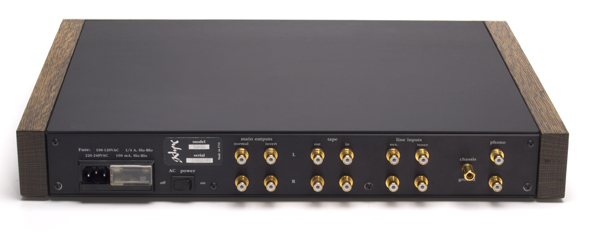
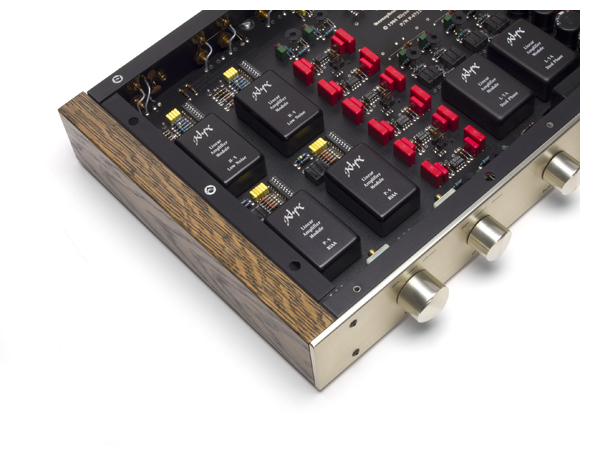
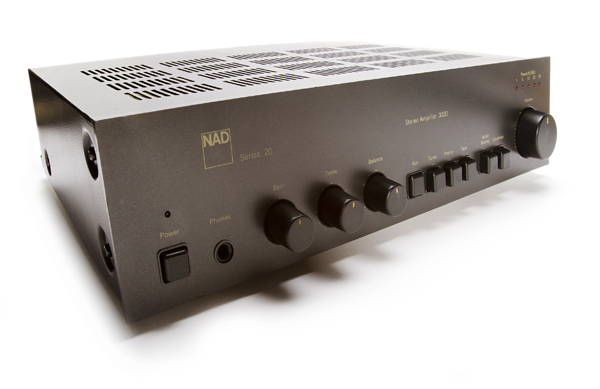
The manufacturer had a small dealer network and did not advertise. The SK-5A pictured here originally sold for $2,795, putting it on par with what Audio Research, Mark Levinson, and a few others charged for their top preamplifiers.

This particular unit was manufactured at the dawn of the CD era in 1984—and with only three high-level inputs: aux, tuner, and tape. Indeed, the Klyne is a vinyl lover’s dream. The onboard phonostage offers a wide range of MM and MC settings with adjustable gain, loading, and capacitance. You can even install your own custom resistors if the onboard settings don’t match your cartridge. If that isn’t enough, behold the settings for high-frequency contours that damp the high-frequency resonant peak exhibited by many moving coil cartridges. Many of today’s standalone phono preamps lack this functionality.

Fully stabilized in 24 hours, bass slam and image depth are nothing short of amazing; it’s hard to believe this preamplifier is 25 years old. Since it features minimal current draw, you’ll want to always leave it on for best results. Once fully powered up, the Klyne offers a silky smooth presentation—but not the kind of smoothness you get from a preamplifier trying too hard to sound tube-like. Harmonic structures in the upper registers are just right: neither dull nor slow, but full of low-level resolution. These aspects cause the listening experience to be something very special. The unit delivers the type of harmonic richness that, after trudging through sterile silicon trenches, today’s finest high-end solid-state gear takes so long to produce.

And there’s plenty under the hood: A big circuit board with a layout that, save for Burmester products, is the most meticulous this writer has seen. Three pair of Linear Amplifier Modules figures prominently into the mix, as do a power-supply section and multiple banks of capacitors. Klyne even built-in its own noise filter, and this coming years before power-line conditioners became part of the audiophile vocabulary.

The Klyne SK-5A holds its own when compared to today’s gear. Only slightly lacking in ultimate detail and soundstage design when compared to several leading tube preamplifiers, the unit doesn’t shortchange dynamics and often exceeds its contemporaries in this field. Plus, it has a phonostage.

Both the vintage Acutex 421STR and a current Denon DL-301 offer an excellent level of transparency—one well beyond what’s expected from a modern $1,000 phonostage. Considering that a clean SK-5A can be had for about $1,000, it represents a true bargain.

I’m still scratching my head as to why Klyne never took off in the marketplace. You’d easily pay $5,000 -$6,000 today for such preamplifier performance—and one without a phonostage, to boot. If you can find a unit for sale, grab it. I’m keeping mine.

Stan Klyne currently makes new preamplifiers to order, and happily services existing products. My serial number reveals that this unit qualifies for a full capacitor upgrade (about $1,000), which will make it a truly modern preamp that yields the extra resolution and ultimate clarity that it currently lacks.

NAD 3020 Integrated Amplifier

I recently bought an original NAD 3020 integrated stereo amplifier for $66 on eBay. As soon as I hooked it up to my Dynaudio Contour 1.1 speakers, I remembered why the little amp took the audio world by storm in the late 1970s.

My first encounter with NAD came when I worked as a high-end audio salesman at New York’s Sound By Singer. We started selling NAD receivers in 1978, a year before the 3020 was introduced. Japanese-designed and -manufactured brands of the time were gorgeous, and NAD’s gray plastic faceplates weren’t winning any beauty contests. That didn’t bother my customers one bit; they loved NAD’s simplicity and glitz-free appearance. In fact, young, hip audiophiles perceived NAD as the higher-quality alternative. But the sound is what really differentiated NAD from the majors. With NAD, you could feel like the engineers were running the show.

What paired with the 3020, Snell Acoustics’ model J and K speakers, and to a lesser extent Boston Acoustic A40s, were popular with NAD customers, and there was a sprinkling of Rogers LS3/5A fan boys scooping up 3020s. And since the little amp was launched a couple of years before the compact disc arrived, the Rega Planar 2 served as the go-to turntable.

The 3020 may have been rated at a mere 20 watts per channel, but it had 3 dB of headroom. Hence, it could deliver 40 watts into 8 ohm loads, 58 watts in 4 ohms, and 72 watts into 2 ohms for brief periods of time. I doubt you can find a receiver today that safely drives 2-ohm loads.

Peter Tribeman, NAD’s US president at the time of the 3020’s introduction, recalls the original demo at the Consumer Electronics Show. He hooked the 3020 up to four pairs of floor-standing AR speakers in parallel. The latter presented an absolutely brutal load (1.1 ohms) for the 3020, but the little amp experienced no problems. Crowds were amazed, and the feat was duplicated at many other 3020 demos, which established the brand as a serious player in a field dominated by giant Japanese electronics companies like Denon, Onkyo, Pioneer, Sony, and Yamaha. A few months later, the CES demo was repeated at the New York Hi-Fi Show. I wound up with a bunch of newly hatched audiophile customers sold on NAD.

Tribeman, who currently runs Atlantic Technology and Outlaw Audio, also delights in revealing what he calls the “Benign Error,” which played a large role in the 3020’s allure. Strangely enough, it was a mistake in the layout of the original circuit board. According to Tribeman, the “Benign Error” produced unintended “L-R crosstalk,” which somehow generated more low-level detail and ambience. The “Benign Error” was eliminated in the second-generation 3020A model, and with it, some of the original’s appeal. More 3020As sold than 3020s. By the time Tribeman left the company, NAD had sold more than a half-million 3020s around the world.

The Sound by Singer staff had high hopes for the 7020, the receiver version of the 3020. But that model had serious reliability problems—as did many NAD products that followed in its wake. Early CD players sounded exceptional for the money, yet they kept crapping out. NAD became plagued with quality-control issues through the 1980s and into the 1990s. However, some of its products escaped such a fate, which is probably why the company maintained a very positive reputation.

Indeed, the biggest surprise of listening to my “new” 3020 came via the phono preamp. The sheer scale of the sound and dynamics were far beyond what I expected. It’s not the most neutral-sounding pre you’re going to find, and it’s not all that quiet. But the music’s weight and solidity make up for any transparency deficiencies. Or maybe it’s the midrange’s grainless ease that I find so beguiling—even tube-like. Tom Jones’ Praise & Blame studio LP is recorded live to analog tape, and the 3020 brings it all home. Jones may be in his 70s, but he isn’t taking any prisoners on the session. While the amp sounds sweet with CD, it really comes into its own with vinyl.

Sure, a lot of my early NAD customers eventually moved up to higher-end gear and became card-carrying audiophiles. But the 3020 was the gateway drug that fueled their addiction. I can still hear why.  -Steve Guttenberg

Headphones under $100: Grado SR80i & Pioneer SE-A1000

In the world of high-end audio, Benjamin Franklin generally doesn’t get you too far—no wonder his lips look pursed in his portrait on the $100 bill. There are some exceptions, including the Grado SR80i and the Pioneer SE-A1000 headphones.

Compared to “big iron” hi-fi solutions, a good set of headphones and a good portable source can provide a great deal of musical fulfillment for a fraction of the cost. Plus, unlike 600-watt solid-state monoblocks, a headphone enthusiast has the luxury of taking audio equipment on the road. Not breaking our backs or the bank, we had the opportunity to bring two budget-conscious pairs of headphones to the testing room to see how far $100 can take a listener in the journey to sonic nirvana.

Grado SR80i

Like most Grado headphones, the SR80i features an open-back design, which means that the headphone does not contain the sound. For these Grados, the back of the ear cup is perforated plastic. If doing some high-volume jamming on public transit or a plane, users should be mindful that their music will be audible to others. Of course, the listener can also expect external noise to leak in.

The 80i headphones retail for $99. Grado made several wise choices when designing this model, economizing the production cost and build and focusing on sonic attributes. The adjustable, synthetic leather headband is light and passes the Goldilocks test: Not too tight and not too flimsy; it’s just right. For me, the stock foam ear pads, which sit directly against the ears, have a tendency to get warm, uncomfortable and a bit itchy during longer listening sessions. However, cost of production needs to be reduced somewhere and I’d much rather see the shortcut affect the ear pads than the eardrums.

The Grados terminate with a 1/8-inch mini-jack, but they come with a 1/4-inch screw-on adapter. Powering the SR80i headphones with an iPod Classic, a portable ALO Audio RX MKII headphone amp or my Coffman Labs G1-A reference preamp, I find that the sound is extremely good for the money.

Grado’s SR60i, one step down from the 80i, is another great value headphone at $79. However, if you can stretch your budget slightly, the 80s prove a worthy step up. I compare the two headphones side by side and find that the 80 offers a slightly different sound profile—one that feels like moving several rows forward at a live performance. Bass is a bit more defined; highs are more revealing and seem a bit more forward in the mix. There’s also a slightly better sense of virtual soundstage width and depth. For those who prioritize a more relaxed presentation, the 60i may be a good fit. For those who prefer to feel closer to the action, spend the extra $20 to get the 80i. If you take good care of them, the minimal additional cost may be the best long-term investment you can make.

At this price point, it’s very hard to criticize the sonics of the SR80i. In absolute terms, higher-priced headphones like the Sennheiser HD 650s offer a heftier build and added comfort, along with more lifelike and nuanced musical reproduction, but at five times the price.

Are these the best headphones under $100? It’s a subjective question and depends a lot on a user’s sonic preferences and whether an open-back design works best for their listening scenarios. But if you choose to take the leap of faith and bet your money on the SR80i, you will not be disappointed with their sound.  – Rob Johnson

Pioneer SE-A1000

Another economical headphone option is the Pioneer SE-A1000, which deftly combines a comfortable form factor with good sound. While the MSRP is listed as $149, sources like Amazon offer them for under $60.

Pioneer made an obvious effort to make these headphones comfortable. Two parallel, plastic “poles” curve between the earpieces over the top of the head to support the classic headphone shape. These supports do not adjust in length to accommodate different head sizes. Instead, the users adjust the headband via the cloth-and-synthetic-leather top piece, which acts a bit like an upside-down “head hammock.” The headphones rest snugly but comfortably with the subtle tightening of elastic under this headband, providing minimal tension against the top of the head. The overall look and feel is a bit plastic—but for a budget headphone, performance is paramount to comfort.

The SE-A1000’s cloth-covered ear pads are large and spongy and envelop the ear. The resulting solution proves light and comfortable, even for long listening sessions. While open-backed, the ear cups do a pretty good job keeping outside noise in its place. With a quiet background, a listener can pipe in their favorite music at low levels, or jack up the volume a bit for added punch. For those wishing to take their headphones on a stroll around the city, these ones are a bit large.

In addition to the included carrying pouch and the 1/4-inch adapter, Pioneer gives the extension cable a flexible cloth covering. I find that this sheath helps reduce tangling. The headphones also include an attached Velcro strap to make it easier to fold the cord up neatly when not listening, or when you simply want to shorten the cord temporarily.

These Pioneers produce good sound, as one would expect from a company that has spent so many years in the audio industry. Connecting them directly to an iPod Classic, with lossless audio files, provides plenty of juice. From this source, music is generally relaxed and easy on the ears, and it still retains the musical nuances you want to experience with your favorite songs. These headphones are a huge leap beyond the standard iPod ear buds.

When provided more power though an external headphone amp, the Pioneers deliver a bit more aggressive musical voicing. Bass improves with greater presence, but as with all open-back designs, there are limits to the bass punch. Male vocals are especially well rendered and enjoyable. Higher frequencies seem a little more forward and slightly bright to my ears. Especially noticeable at higher volumes, this characteristic can create a bit of stridency and sibilance on some female vocals. But there also can be upsides to that touch of forwardness. Cymbals often provide a meaningful sonic capability test. With a good source, the SE-A1000s do a really nice job of reproducing the strike, ring and ambient decay of cymbals. In this case, the pronounced highs add flavor to the recorded musical experience.

For their capability-versus-expectation value, the Pioneer SE-A1000 headphones have many upsides and present few quibbles. Especially for those who prefer a more forward musical presentation, the SE-A1000s prove themselves very worthy of your audition.  -Rob Johnson

Peripherals:

Headphones Sennheiser HD 650    Sony MDR7506
Headphone amplifiers "Coffman Labs G1-A preamp/headphone amp    ALO Audio RX MKII portable headphone amp"
Sources Marantz TT-15 turntable    Audio Research CD3 MKII CD player    iPod Classic (7th generation)
Miscellaneous Cypher Labs AlgoRhythm Solo DAC    Running Springs Audio Haley power conditioner    Cardas Golden and Golden Reference/Mongoose power cords   Jena Labs interconnects    Mapleshade Samson rack

Tosca – j.a.c.

Richard Dorfmeister of Kruder & Dorfmeister is half of Tosca, and his influence on this record is clearly obvious, given its ethereal rhythms, heavy yet lazy bass lines, and a soundstage full of ambient effects that stretch way beyond speaker boundaries.

j.a.c. was mastered at Caylx Studios in Berlin. Combining ultra-quiet surfaces and spreading the tracks out over three slabs of vinyl, this album breathes in a way the CD does not, and gives the music a much more open, organic feel. There is much dynamic range here; it begs to be played at club levels. The original CD is even slightly quieter, but feels more compressed through the midband and high frequencies, sounding crunchier and more digital on top.

Vide, “Zuri,” with its opening percussion and cymbal play. Where the CD sounds lifeless and flat, the LP possesses a much more realistic timbre. When the acoustic guitar eases into the mix, it has a very distinct space on the LP. On the CD, it is decidedly vague, sounding almost out of phase.  This is typical of the entire album, going back and forth between LP and CD, with the analog always getting the nod for palpability.

If you’re a fan of The K&D Sessions, you’ll want to add j.a.c. to your vinyl collection. -Jeff Dorgay

K7, 3LP

Snoop Lion – Reincarcerated

You can take the boy out of hip-hop, but you can’t take the hip-hop out of the boy.  Snoop’s current record has more of a reggae flavor, but there are plenty of hard-hitting grooves here to keep loyal fans satiated. If anything, this album sounds like it was influenced more by Katy Perry than Bob Marley.

And much like his legendary Doggystyle (perhaps the most well-recorded hip-hop record in history), Reincarcerated is brilliantly recorded, and mastered by Sterling Sound.  Some care is put into this one.

Combining very quiet surfaces with an extremely solid bottom end, the LP outperforms the CD across the spectrum, with that same expansive soundstage that Snoop has always provided.  You may not dig Snoop Lion’s current direction; if you don’t, you probably don’t care about what formats are available. However, if you find Reincarcerated to be your cup of tea, the LP is clearly superior to the CD.  -Jeff Dorgay

RCA, 2LP

NWA – Straight Outta Compton, 20th Anniversary Edition

Ground zero for gangster rap, Straight Outta Compton set the tone and style for everything else that followed, with explosive dynamics and lyrics that stand the test of time 20 years later.

The original LP is one of the better early hip-hop records in terms of production, showcasing Dr. Dre’s skills even then.  Those wanting more high-frequency extension and a bigger soundstage will enjoy the original LP. By contrast, the CD is the only choice if you crave the maximum, hardest-driving beats; it has crushing LF energy.

The current remaster squashes most of the dynamic swing out of the record, and while the high frequencies aren’t terribly rolled off and the surfaces quiet, there is no punch, ultimately robbing the album of the energy it requires to get the messages across. The only saving grace is the fourth side, with bonus tracks from Bone Thugs-N-Harmony and Snoop Dogg, as well as a live version of “Compton’s in the House.” But you can get these tracks on the remastered CD, too.  -Jeff Dorgay

Profile, 2LP

De La Soul – 3 Feet High and Rising

Sounding like they were taped via a cassette recorder placed in front of an AM radio, the original digital and LP copies of this hip-hop classic sound positively dreadful, with not much useful information above about 5khz. The new “remastered” version has to be better, right?

Wrong.  It sounds even more lifeless and rolled off, as if someone recorded the original on a cheap tape deck, re-broadcast it on AM radio, and then taped those results on a cheap cassette recorder.

In short, this is the worst vinyl pressing we’ve heard in years, and a huge waste of thirty bucks.  Pass.  -Jeff Dorgay

Tommy Boy, 2LP

Astell&Kern AK120 Mobile Music Player

By now, you’ve likely heard of Astell&Kern. The sub-brand of Korean electronics manufacturer iRiver launched late last year, with its $700 AK100 mobile touchscreen player capable of delivering 24-bit/192-kHz music, thanks to a single Wolfson WM8740 DAC and the ability to store up to 96 gigabytes worth of audio files.

The AK100 is not the first portable hi-fi player to market— HiFiMAN has some worthy players based on Sabre DACs—but it is certainly the first one to have successfully married high-resolution playback with iPod-like usability and simplicity. With its new AK120 portable player, Astell&Kern has upped the ante.

At $1,300, the AK120 is not for everybody. It is about a grip more expansive than the 160-gigabyte iPod classic, but the 5-ounce AK120 is slightly smaller than an iPod classic and only 3 grams heavier. Also, with a brushed-aluminum shell and a complimentary Italian leather sheath, the AK120 has the look and feel of a luxury product. Its 2.4-inch touchscreen—no, you can’t watch movies or look at photos—allows you to easily browse your music, with a proprietary Astel&Kern interface that is every bit as easy to use as Apple’s iOS. A sturdy side-mounted volume knob and buttons for power, play/pause, forward and rewind supplement the touchscreen controls. The AK120 does offer Bluetooth connectivity, but with wireless playback you will of course lose most of the fidelity you gained when forking over a paycheck to have full-resolution music in your pocket.

Double the Fun

The AK120 offers two of the Wolfson DACs (one per channel), as well as twice the capacity of its predecessor. The new player has 64-gigabytes of internal storage, plus slots for two 64-gig microSD cards, bringing its total capacity to 192 gigabytes. That’s twice as much storage space as the AK100, 32 gigs more than an iPod and 64 gigs more than HiFiMAN’s top-of-the-line player. That translates into about 1,000 tracks with 24/192 resolution.

Music is supremely easy to load onto the AK120. You can use iRiver’s iTunes-like software to organize and upload your music, or you can simply drag and drop files onto the device, as you would with an external hard drive. When not using the iRiver software, just have the AK120 do a library scan and it will find the music you uploaded, organizing everything by artist, album, genre, etc. After a 6.5-hour charge (via a supplied Mini-USB-2.0 cable), you’ve got as many as 14 hours of consecutive listening to look forward to.

If you’re so inclined, you can also use the AK120 as an external DAC. Just connect the Mini-USB cable to your computer and connect the device to your home system using AK120’s 1/8-inch optical output located next to the headphone jack.

Just Add (Good) Headphones

You wouldn’t play your five- or six-figure home stereo system through a pair of speakers you bought at Walmart, so get yourself a decent set of ear cans or buds to pair with the AK120. Astell&Kern recently announced its first headphones, a $200 pair of ear buds, which I haven’t heard yet, but I imagine they’ll do the job just fine.

The Grado GR-8 ear buds ($300), quickly reveal the extra depth and detail that the AK120 delivers. A 24/192 version of Pet Sounds from HDtracks (www.hdtracks.com) has levels of clarity and precision that I’ve never experienced without being glued to a listening chair. Anxious to take this obviously remarkable player to an even higher level of performance, I reach for my reference AKG 3003 ear buds ($1,300). This now $2,600 portable music system has me dancing around my apartment, with my girlfriend and her little Bichon Frisé looking at me like I’ve lost my mind. (If they could only hear the musical realism being delivered to my eardrums…)
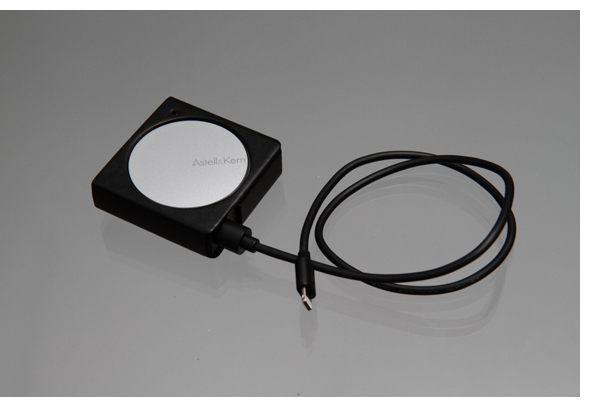
On “I’ve been Waiting for the Day,” Brian Wilson and the boys sound as good as I’ve ever heard them. The complex vocal harmonies are easily identified, as well as being distinct from one another; yet, they still remain a cohesive part of the overall mix. The low doo-doos in the left channel and the high ahh-ahhs in the right channel are crystal clear and detailed, with Wilson’s lead vocals still prominently front and center. Then, during the bridge, the flute dances around my head, displaying the ability of the AK120 to portray a real three-dimensional soundstage. As the strings lead out of the final verse, an anticipatory silence ensues that is then interrupted by the bang of the floor tom before the gusto of the whole arrangement explodes back in. With the right headphones, the AK120 will change your perception of portable audio.

“You didn’t think that I could sit around and let him work…”

TONE publisher Jeff Dorgay has confessed to me on a few occasions that Pet Sounds is not his favorite album. While this iconic record may not suit his musical tastes, I have a feeling that the AK120 will at the very least have him oohing and aahing at the extremely detailed and nuanced production, which the HDtracks version highlights even further. Jeff also has bigger and better full-size headphones at his disposal, so he’ll be able to take the AK120 to even higher levels of fidelity. Let’s see if this player wins him over like it has won my affection. -Bailey S. Barnard

Additional Listening

By Jeff Dorgay

Not on a boat not on a goat. I still hate Pet Sounds. Even the $110,000 dCS Vivaldi can’t get me closer to this rock classic that it seems everyone but me adores.  Now listening to the HD Tracks 24/192 version of Roberta Flack and Donny Hathaway, that’s a different story.

The AK120s $1,300 pricetag has a lot of people freaked out. It’s been a topic of incideary discussion on many an audio forum, but I submit those people don’t get the product.  It’s not a $1,300 iPod, and yes you could buy a Mac Book Air and have a bigger screen, but that won’t give you a pocket sized player with high res capability and the sound of a much more expensive desktop player.

You are paying a premium for the size and cool factor, but the AK120 does deliver the goods in terms of sound quality. Comparing it directly to my favorite reasonably priced digital player, the Oppo 105 (also about $1,300) the AK120 holds its own.

Goin’ Mobile

Personally, I’ve enjoyed the AK120 the most on the road, demoing high performance audio systems from Burmester, Meridian and Naim.  A recent test drive of the new Range Rover Sport, with the 23 speaker Meridian system proved breathtaking, now able to take full advantage of what high resolution audio can deliver.  Equally exciting results were had on a recent short trip in a new Porsche Cayman S, decked out with the latest Burmester system.

While it might disappoint my fellow Porsche aficionados, the Burmester system can overpower the mighty Porsche six cylinder engine behind the seats and really rock.  Cranking up the latest HD Tracks release of the Rush catalog at speed, taking full advantage of the additional resolution was fantastic.

And that’s really what the AK120 is all about.  It’s a high tech, high performance marvel that’s priced accordingly.  You’ll either love it or hate it.  Love it and bought it.  Check and mate.

Astell&Kern AK120 mobile music player

MSRP: $1,300

www.astellnkern.com (available for purchase through iRiver: shop.iriverinc.com)

Grado Labs Factory Tour

A Brooklyn Success Sixty Years in the Making

Sitting with a rather antsy John Grado in the third floor listening room at Grado’s factory in the Bay Ridge section of Brooklyn, one gets the sense that the storied manufacturer of headphones and phono cartridges has not been this busy in decades. Grado, who took over the company from Uncle Joe; the inventor of the world’s first stereo moving coil cartridge back in 1953, has a reputation for being incredibly blunt and candid with his thoughts on all-things audio, and it’s a perspective with a  lot of weight behind it.

Apple’s iTunes celebrated its tenth anniversary this past April and the folks at Grado will be the first to admit that the impact on their business was profound; the first three years of their headphone business in the early ‘90s was a real struggle and Grado admits that they made no money. The explosive growth of the iPod and portable audio has turned what was a struggling part of their business into a major revenue source and based on all of the product that was awaiting shipment, it is clear that Grado is running at full capacity.

With the exception of the iGrado and their in-ear models (GR10, GR8, and the iGi) which are manufactured in China, everything else Grado makes is manufactured in the United States and the company goes to great lengths to market that aspect of their business.

The Grado “factory” in Brooklyn is a converted unassuming multi-story home/fruit store/machine shop that Grandpa Grado purchased in 1918 and with the exception of the steep and narrow stairways, almost every inch of the building is used to maximize the cramped space.

The basement machine shop where headphone molds are produced, and the deliberate and patient work required to produce their award-winning phono cartridges takes place looks dated and it is hard to imagine how the technicians are able to produce thousands of headphones and cartridges each year in such an old-school set-up, but the reality is that the dedicated employees get it done with great efficiency.

The cartridge and headphone assembly stations are split up over multiple floors and while it all seems a little chaotic with so many employees working on seventeen phono cartridge models and ten different headphone models, the amount of product that gets produced on a daily basis is rather astounding.

Grado may not be selling as many phono cartridges these days compared to the 1970s and 1980s, but business has picked up significantly from 1990 when their business dwindled to 12,000 units for the entire year.

“In the 1970s, we were producing 10,000 phono cartridges a week and were back-ordered for six months,” remarked Grado when we broached the subject of vinyl’s resurgence. “1980 was certainly the peak for us when we were still selling 10,000 cartridges a month, but with the advent of digital audio, that business took a major dive and by the mid-90s, we were certainly in a bad situation.”

While Grado is thrilled with the newfound interest in vinyl, he takes it all in stride and is realistic about business ever returning to past levels.

“We sold 60,000 units in 2005 and our issue now is keeping anything in stock. It’s a real challenge to have enough stock for dealers, and sufficient parts to meet demand,” replied Grado.

Grado’s most popular cartridges are still the Prestige Gold1 ($220.00) and Prestige Green1 ($80.00) and while audiophiles have prized the more expensive wood body Platinum and Sonata models for their punchy and colorful midrange, the millennials that have Grade up at night are sticking with the entry-level cartridges for now.

“Let’s be honest. The current generation of kids doesn’t even know what a hi-fi store is and they are far more comfortable shopping online for a pair of headphones or their first phono cartridge. This is a generation that grew up with Beats by Dre and an iPod and while we’re excited to see them interested in vinyl as a format, it is still very niche. These kids are not running out and spending $3,000 on their first turntable, but we are in a good position because we sell high-quality cartridges that are affordable and are compatible with a lot of good tables and phono preamps.”

While the growth in cartridge sales has Grado swamped, John Grado is surprisingly less optimistic long-term of about the growth of headphones sales.

“We’ve had ten years of growth and it has certainly put our business on solid footing for the future, but we’ve already seen the headphone market begin to plateau and with so many new products entering the market, we have had to take a step back and rethink what we plan on offering in the future.”

Grado has a number of new headphone models in the development stage; an acknowledgement that not every customer wants a pair of open-ear headphones, and there are plans to ramp up production of their headphone amplifier which has taken a backseat to the insane demand for their headphones and phono cartridges.

Grado’s marketing approach has also changed thanks to the efforts of Marketing Director, John Chen, who has been extremely active building relationships with manufacturers like VPI who offer table packages with Grado cartridges and headphone amplifier manufacturers such as Woo Audio who sell Grado headphones on their website and display at trade shows.

Grado has an enormous and loyal base of brick and mortar and online retailers that have made the brand a global success story, and while online sales now account for 75% of total product sales, the company has no plans of abandoning the retailers who have been loyal for so many decades.

Grado doesn’t do the audio show circuit, but there is no shortage of their products at shows and compared to more expensive products from competitors such as Audeze, AKG, and Sennheiser, the venerable SR60i which I schlepped around the globe for almost ten years before they were stolen somewhere between Eilat and Jerusalem, are a major bargain.

The more expensive “corkscrew” Grado headphones such as the RS1i (reviewed in the current issue) and the GS1000i offer a more transparent window into the sound with more potent bass response and better detail retrieval, but all of the Grado products share a similar house sound that has made them popular with music lovers around the globe.

John Grado may be correct that the headphone business will eventually begin to swallow itself and products will become a commodity and consumers will ultimately vote with their wallets, but he is far too busy to worry about that eventuality at this point in his life. The graduate of John Jay College who wanted to spend his life as a lawyer has instead spent decades selling the art of sound reproduction and that’s a Brooklyn story with a happy ending.  -Ian White

New Premium Amp and Disc Player from Yamaha

It’s exciting to see Yamaha get back to their high performance roots with the new AS-3000 integrated amplifier and matching CD-S3000 disc player, which also offers SACD playback and USB DAC functionality.

These beauties combine style cues from the 70’s (square buttons, big power meters, etc) with 21st century build quality to produce a pair that offer flagship performance.

We’ve just started our listening tests, but are initially very impressed.  The AS-3000 has an MSRP of $7,995 and the CD-S3000, $6,995.  The amplifier produces 100 watts per channel and has switchable tone controls, along with a MM/MC phono stage.

Stay tuned!

Click here for more product information.

Plinius SA-Reference Power Amplifier

Located in New Zealand, Plinius has been making great components for years, and the brand has a loyal customer base that sings the Plinius praises on most of the audio forums. And with good reason. Every Plinius product we’ve had the privilege to audition at TONEAudio has always exceeded expectation.

The company’s top-of-the-line power amplifier, the SA-Reference, is no different. Plinius has always stood for great value and high performance, but this amplifier is in an entirely different league. Tipping the scale at 125 pounds and costing $20,900—both reasonable figures compared to some of its competitors—this is truly a destination product. Every SA-Ref is hand built and tested in the New Zealand factory. These massive amplifiers are available in a finish that Plinius refers to as “linishing,” and is offered in a black or silver anodized color as the one you see here. With large and conveniently placed handles on both the front and rear of the amp make it easy enough for those who aren’t Olympic deadlifters to move the amp into place.

Flanked with distinctive heat sinks on both sides, this Class-A masterpiece lives up to its nature by producing a lot of heat. But, in comparison to my reference Pass Xs 300 monoblocks, the heat is manageable. For those feeling a bit greener, there is a switch on the front panel that allows the amplifier to be run in Class-AB mode, which drops the idle power consumption down from 1,100 watts to 184 watts. During the course of this review, I leave the amplifier on in AB mode all the time, switching to Class A at the beginning of the day. This shortens the time to thermal stabilization and dramatically cuts power consumption. Operated thusly, the SA-Ref takes about 30 minutes to come out of the fog and do its thing.

At first blush, the difference in sound quality going from A to AB doesn’t seem as great, but extended listening validates burning the extra electricity. Again drawing the comparison to the Pass amplifiers, the SA-Ref goes from great to sublime in Class-A mode. I say drive a few less miles or keep the lights low if you’re feeling guilty about the power consumption. Your ears will thank you.

Major Microdynamics

Even with a musical selection that is relatively lacking in dynamics, like the Zombies’ “Tell Her No,” the wealth of texture that the SA-Ref provides will have you immediately under its spell. A similar effect is achieved with Neil Young’s classic bootleg Time Fades Away. This recording has lackluster quality at best, yet when delivered via an amplifier that can extract so much musical detail, the music feels closer than ever without sounding etched. On the title track, the piano in the background is usually almost indecipherable, but the combination of the SA-Ref and the $85,000-per-pair Dynaudio Evidence Platinum speakers gives this flat recording some depth, helping those small, fun details rise to the surface.

Let’s face it—we all have records in our collection that we love, even though they might live up to audiophile standards. The SA-Ref goes a long way towards making a wider range of your music collection more enjoyable—and that’s a great thing.

Going upscale with source material reaps even bigger rewards. Tracking through a 24-bit/192-kHz version of Neil Young’s Harvest reveals precious levels of detail and ambience, which bring new life and renewed clarity to this brilliant recording. The grungy, distorted guitar at the beginning of “Alabama” blasts off the walls of my listening room. I can almost hear the grill cloth on Young’s guitar amplifier move—fantastic. It’s this wealth of nuance that makes the SA-Ref a world-class component.

Admittedly, this reviewer is a huge fan of Class-A solid-state amplifiers; the additional tonal warmth (over most Class-AB amps), combined with the tremendous bass grip of properly designed amps, makes you wonder if the glass bottles are really necessary. The SA-Ref is one of these rare amplifiers indeed.

Plenty of Punch

The SACD of the Art of Noise’s Daft features a lot of trippy, spatial effects, with organic and synthesizer sounds floating around all three axis of the soundstage via the dCS Vivaldi digital player. The track “Who’s Afraid (of the Art of Noise)” is perhaps the biggest sounding of the bunch, with playful female vocals thrown in the mix far left and far right, with plenty of giggling and heavy breathing punctuated by the occasional “boo, boo” added for good measure. No, this amp won’t necessarily reveal the tonality of a Stradivarius violin, but it is big fun—and through an amplifier that can’t throw a massive soundstage, this recording sounds incredibly dead. The SA-Ref passes this test easily, with the big Dynaudios disappearing in the listening room like a pair of minimonitors.

On Elvis Costello’s duet with Burt Bacharach, “What’s Her Name Today?” the piano floats slightly in front of the imaginary line between the tweeters, with the strings just behind Costello’s voice, which takes on a height that makes it feel like he’s standing in the room singing. Every breath of his delicate falsetto, which grows to a major bellow at the end, is reproduced with just the right amount of dynamics and effort, again suggesting the real thing.
When I switch the program to heavy rock, the SA-Ref delivers the goods. And what better way to prove it than with the Audio Fidelity 24 Karat Gold CD of Judas Priest’s Hell Bent For Leather? Cranking the ARC REF 5SE preamplifier up to 70 (forget about 11) drives the KEF Blades, which are now back in the system at bone-crushing levels. While I find myself looking for a lighter to hold up, the SA-Ref motors through.

After about an hour of listening at levels well beyond reasonable and prudent, sifting through Black Sabbath, the Black Keys and Black Country Communion, I turn down the volume to reflect. My ears have given up, but the SA-Ref simply cannot be pushed to clipping when driving a pair of speakers with 88 dB or 90 dB sensitivity ratings. And so—while they are unsuitable matches for an amplifier of this quality—I bring out the power-hungry Magnepan 1.7s, just to probe how far the SA-Ref can be pushed.

Should you manage to push this amplifier to clipping, it does so softly and gently, with only a slight reduction in the overall soundfield. Fortunately, if you require this much power, the SA-Ref can be converted to mono operation with the flip of a switch on the rear panel. It is now capable of delivering 1,000 watts into an 8-ohm load and 1,800 watts into 4 ohms. The SA-Ref is a model of simplicity, allowing balanced XLR or standard RCA inputs, and it proves compatible with all of the preamplifiers at my disposal, from Audio Research, Burmester, Conrad-Johnson, Nagra, Robert Koda and Simaudio.

The Art of Relaxation

As days roll by with the SA-Ref in the system, it is clear that this is one of the few solid-state amplifiers that combines a freedom from distortion with effortless dynamics, and that it can just get out of the way of the music and quickly get you into the relaxation zone. And isn’t that the ultimate pleasure a premium hi-fi system should provide?

Pressurizing the sound room can be captivating for many listeners, but those subscribing to the “first watt” philosophy of sound will not be disappointed either. Even at low volume, the SA-Ref has plenty of finesse and acquits itself like a low-parts-count, low-power amplifier, providing a richness of tonal contrast that will make you want to pop the top to see if there really aren’t some tubes lurking inside. I briefly return to the Black Keys and discover that the guitar on the gentle intro of “Lies” just floats between the speakers while dripping with echo and decay.

Easing back into the couch with Arnold Bax’s Symphony No. 4 is even more soothing. That extra power on tap, combined with a very neutral tonality, makes this amplifier a delight when delivering large-scale orchestral pieces. It paints a big soundscape with both width and depth, and it is able to keep the smallest details rendered while easily and adequately capturing the scale of even the loudest passages.

A Little Comparison Shopping

How does the SA-Ref stack up to some of its similarily priced competitors? Quite well, in fact. The Pass Xs300s are a bit unfair, as they break the bank at $84,000—and, in all honesty, when I switch back and forth, the Pass amps take the lead in terms of resolution and a more dreamy, more realistic presentation. The SA-Ref sounds slightly etched and small in this unfair comparison.

However, when I go back to a couple of comparably priced competitors—the Burmester 911 MK3 ($29,900), the D’Agostino Momentum Stereo ($29,000) and the Audio Research REF 250s ($25,000 per pair)—the SA-Ref holds its own to the point of simply differing from these other amps. It would be like comparing the Audi S4, BMW M3 and Mercedez AMG C Class, which are all high-performance machines, to be sure, but each has its own take on how said performance should be delivered.

When paired with all the speakers at my disposal—KEF Blade, GamuT S9, Dynaudio Platinum and Focal Maestro Utopia, which are all reference speakers in their own right—the SA-Ref provides a sound slightly warmer than the tubed ARC monos can, yet not quite as warm as that of the Burmester. The D’Agostino is probably the most neutral of the four, but these are very, very fine hairs we are splitting here. Considering that the SA-Ref will set you back a comparatively less expansive $22,000, it really is a bargain for the sticker price.

In the End…

…We’re all dead, but while you’re still living and possessing decent hearing and cash flow, I highly suggest considering the Plinius SA-Ref amplifier. If you want a destination amplifier that can convert to monoblock (should you need more power at some point) and if you love the concept of a Class-A solid-state amplifier that will never need tubes replaced, this just might be your baby.

SA-Reference Power Amplifier

MSRP: $20,900

www.pliniusaudio.com

Peripherals

Analog Source AVID Acutus REF SP turntable    Lyra Atlas cartridge    TriPlanar tonearm
Phonostage Indigo Qualia
Digital Source dCS Vivaldi stack    Sooloos Control 15    Aurender S10
Preamplifiers Audio Research REF 5 SE    Burmester 011    Robert Koda K-10
Speakers GamuT S9    Dynaudio Evidence Platinum    KEF Blade
Cable Cardas Clear
Power IsoTek

Bel Canto C7R DAC Integrated Amplifier

For audio fans who believe sonic reproduction should be heard but not seen, a large-scale component system just isn’t practical.  Many component systems require significant space and can be obtrusive in a main living area or in a small room. For those individuals, Bel Canto’s e.One series just may be your entrance ticket. The e.One series makes available components of substantial capability but petite form factor.

We had the opportunity to test the C7R. It’s a bit challenging to categorize this unit given its versatile combination of features and functionality. While Bel Canto’s website labels it a “DAC Integrated Amplifier,” the nomenclature proves understated since the unit offers quite a bit more functionality than the name summarizes. If “under-promise and over-deliver” represents the goal of the product name, Bel Canto has set itself up well to exceed user expectations.

Under the big top?

Well, perhaps a better descriptor for the C7R is the “small top.” Unboxing, examining, and reading the manual for this Bel Canto leaves a user with a degree of amazement. Like a multitude of circus clowns cascading forth from a Volkswagen Beetle, the capabilities of the C7R just keep emerging. How could such a small box host such an array of functionality?

The C7R measures a placement-friendly 8.5” (216mm) wide, 12” (305mm) deep, and 3.5” (88mm) high. The entire package weighs in at a mere 13 lbs (6.5 kg).  Inside, the Bel Canto’s amplifier offers 60 watts at 8 ohms, and double that into 4 ohms.

The C7R’s back panel is a marvel of space usage and planning, enabling a generous number of input options. For the digital realm, this Bel Canto packs five digital inputs into the back panel including two SPDIF and two TOSLINK connections supporting 24/192 resolution. Complementing those is a USB input enabling 24/96. All of these signals are converted with its built-in DAC.  An AES/EBU digital input option would be a welcome addition, but it’s not available on the C7R. Perhaps there just wasn’t space for it!

Analog fans will also appreciate how the Bel Canto delivers. The expected RCA input is flanked by an MM phono input. While an MC input is not included as part of the package, it’s still hard to fault the C7R too much considering all the versatility it does offer.  On top of this, somehow, the team at Bel Canto managed to squeeze in an FM tuner with 10 user-chosen presets.

In addition to the rear panel speaker outputs, the Bel Canto features an RCA line output which can be configured to enable home theater bypass capability. As a really nice bonus, C7R includes a quarter-inch headphone output on the front panel.

Three rings? No, just one!

Controls on the unit body are minimalistic. After power is connected, a short boot-up process leaves the C7R ready for action. A single wheel on the right side of the front panel, with a handy indentation for one-finger speed-spinning ease, controls both volume and input selection. An inward push on the wheel center brightens the left-side input selection display, and the subsequent wheel movement glides through the input options making selection a breeze. Another push of the wheel switches to the volume control, and that transition is acknowledged with a brightening of the digital volume readout. For such a small unit I applaud Bel Canto for making the display large enough to read from across the room.

The digital display assigns each input a default abbreviation for easy identification as a user toggles among them, but the C7R does allow the user to create personalized four-letter words – well, perhaps I should say ”abbreviations.”

The need for a large display becomes clear once the user examines and uses the remote control. Like the back panel of the C7R the remote has a well-executed layout which makes many options adjustable from a favorite listening chair. In addition to volume, mute, input selection, phase selection, and digital source controls, there’s an option of FM station scanning and a few extra buttons enabling balance adjustment.

Taming those lions

With so much functionality to choose from, it’s easy to assume the setup process for such an animal bears some sharp claws and pointy teeth. Therein lies the irony of the C7R.  The experience is mostly plug-and-play with intuitive labeling on the back panel.

Connecting a USB computer music server, a digital coax input from a CD player, a line-in from a Light Harmonic DaVinci DAC, and a Marantz TT-15 turntable with a Clearaudio Virtuoso MM cartridge, the back gets mighty crowded. With the addition of large, braided Jena Labs Twin 15 speaker cables, the C7R‘s rear panel transforms in appearance from a few-vined garden to something resembling wild shrubbery.

Impressively, unlike many DACs I’ve experienced, the Bel Canto’s DAC requires no special drivers to install. Once the USB connection is made from the computer to the C7R, Windows 7 and JRiver Media Center recognize it immediately. Once the C7R is selected in JRiver’s playback, music starts without delay.

It took some assistance from the user manual to become familiar with all the setup features and to get everything working. All things considered, though, the learning curve never feels steep. The trickiest elements are saving FM radio presets and custom labeling inputs. Once completed, though, the user isn’t likely to make too many changes. Consider it a tiny amount of pain resulting in a lot of pleasure.

The flying trapeze

Once hooked up and configured the Bel Canto is ready to swing. Starting with the analog output of Light Harmonic DAC connected to the C7R, in my initial impressions of the Bel Canto I noted its smooth, non-fatiguing and refined sonic signature. It would be a mistake to classify it as laid-back, though. The sonic portrayal is one of energy and drive when the music dictates. Even when pushed to maximum volume, C7R shows little strain or stridency.

Pink Martini’s song “Una Notte a Napoli” begins minimally with piano and spoken vocals, later exploding in crescendo adding more vocals, harp, horns, guitar and percussion. The Bel Canto allows all instruments to sing out from the mix, while keeping vocals very present and out front. China Forbes’s vocals render beautifully, preserving the recording’s detail and delicacy.  Compared with my reference, the soundstage width and depth truncated somewhat, and some detail like cymbal decay, or the subtle sound imparted by the recording space, are reduced. But then again the C7R is one-fifth the cost of my amp and preamp combination, demonstrating Bel Canto’s extremely good price–performance ratio.

My Piega P-10s are normally fed 500 watts into 4 ohms, so I reduced my expectations of bass punch, heft, and control with the C7R’s 120 watts swapped in. Even in this system’s context the Bel Canto performs admirably with deep, tuneful, and defined bass. With less power-hungry speakers like NHT Super One bookshelf model on hand the C7R offers quite a bit of punch. Albeit in this case, the Bel Canto reveals all the NHT speakers’ shortcomings. Clearly, the C7R can encourage and enable great sound from high quality loudspeakers and deserves to be paired with them.

Using the Bel Canto’s built-in DAC, the sound remains quite impressive. While 16/44.1 material piped in from a CD player’s coax output portrays some digital glare, better quality digital sources reward the listener. USB sound though the C7R emerges detailed, with a rich and pronounced presence.

When I listen to radio stations at home, it’s usually a digital stream from the computer and not a native FM broadcast. So it’s a lot of fun to fire up the Bel Canto’s tuner and listen to Portland’s KGON and KNRK as a radio station was first intended to be heard. With the included antenna, the C7R has no problems getting a solid lock on FM signals and filling the living room with opulent sound.
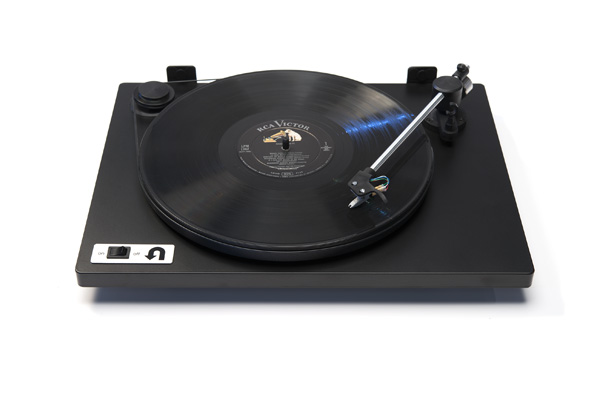
As Queen’s “We Will Rock You” started pouring forth from the radio, I ran for the Sennheiser HD-650s to give the C7R headphone output a test drive. The Bel Canto’s sound is very engaging and one I could listen to for many hours with minimal ear fatigue. It’s a fantastic bonus to the C7R’s great all-around package.

Spinning plates

The MM phono stage is another welcome surprise.  Listening to Eric Clapton Unplugged, or Beck’s Sea Change MoFi pressing, the Bel Canto demonstrates its ability to expand the soundstage beyond the speakers. Music retains a non-fatiguing quality with the preservation of detail. The C7R’s sonic rendering provides very good bass and highs, and a very satisfying overall musical experience. Green Day’s “Holiday” shows that the C7R can get up and go when pushed, transmitting the energy of the performers.

In absolute terms, compared with my reference phono stage, the Bel Canto has a few limitations. The overall sound is slightly veiled, and instruments are not separated as well across the soundstage. It just doesn’t sound as close to a live music experience. I need to keep reminding myself that the Bel Canto – of which the phono stage is just one facet – costs $2,995 in total. Especially if you listen to digital sources primarily, the included phono stage is a big bonus for those with a vinyl collection or those about to start one.

You pay for the whole seat, but need only the edge.

Mated with the right set of speakers and a good source, the Bel Canto is a stellar performer, especially from a price–performance point of view. For $2,995 the C7R gets you a high quality amp, linestage, DAC, FM tuner, MM phonostage, and a headphone amp. It’s a phenomenal value. The task of finding all those components, near this quality, for under that price tag would prove exceedingly difficult – if not impossible. On top of that, the C7R wraps everything in an attractive, compact, and user-friendly package. Given all its versatility and fantastic sound, for the price the Bel Canto C7R is easy to recommend.
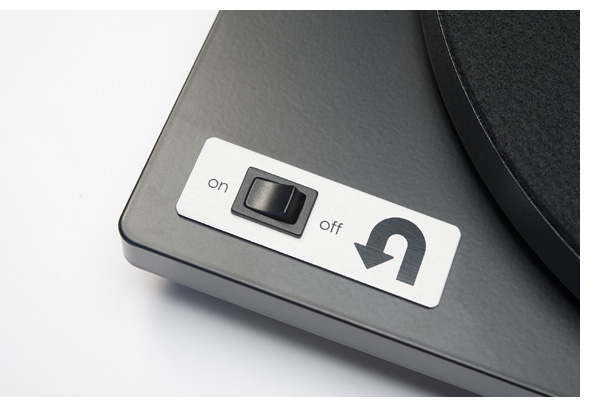
Bel Canto C7R DAC Integrated Amplifier

MSRP: $2,995

www.belcantodesign.com

Peripherals

Speakers Piega P10    NHT Super One
Amplifier Mark Levinson 335
Preamplifier/Phonostage Coffman Labs G1-A
Analog Source Marantz TT-15 Turntable with Clearaudio Virtuoso MM Cartridge
Digital Sources HP Desktop computer with Windows 7 and JRiver Media Center 19   Light Harmonic DaVinci DAC    EAD 9000 Professional Mk 3
Cables Jena Labs Valkyrie and Symphony interconnects    Jena Labs Twin 15 speaker cables    Cardas Clear USB cable
Headphones Sennheiser HD-650
Headphone Amplifiers ALO Rx Mk 2   Coffman Labs G1-A
Power Conditioner Running Springs Audio Haley    Cardas Golden and RSA Mongoose Power Cords
Accessories Mapleshade SAMSON racks and shelves    ASC TubeTraps    Cathedral Sound room-dampening panels

Gato Audio DIA-250 Integrated Amp/DAC

Part of the mission here at TONEAudio has always been to remain on the lookout for magnificent hi-fi gear that not only performs well but is also a piece of visual art able to blend into any décor. Gato’s amplifiers caught my eye at this year’s Munich show, where I met importer Michael Kelly (of Aerial Acoustics), who was very proud of Gato’s latest creations. And lovely they are.
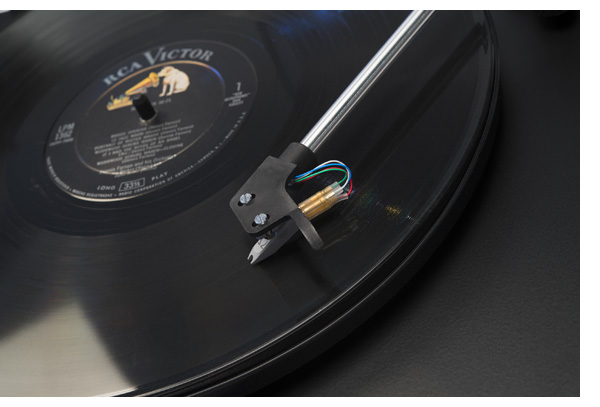
Hailing from Denmark, the DIA-250 features a small form that is remarkably able to contain a 250-watt-per-channel Class D amplifier and a 24-bit/192-kHz DAC, doing so at a very reasonable price of $4,500. Those requiring more power can step up to the DIA-400, which offers 400 wpc and has an MSRP of $6,000.

With ease and precision, the DIA-250 implements Class D amplification and upsampling signal conversion—two technologies that are big personal preferences of mine. It also provides major input and output flexibility to allow your system to grow, should the need arise. With a pair of balanced and XLR analog inputs to go along with USB, TOSLINK and S/PDIF digital inputs, the DIA-250 is a fantastic system hub. It also includes balanced and RCA variable outputs for those requiring an additional power amplifier or amplified subwoofer. HT bypass is also included for those needing to make the DIA-250 part of a multichannel setup, a feature sometimes overlooked.

Its gentle, curved shape—which combines brushed aluminum extrusions and a highly polished wooden top panel—is stunning, with one main control in the center to adjust volume level and two tastefully small buttons to select inputs and switch the amplifier into standby mode. The slightly blue-tinted display is easy to read from across the room, and it can be dimmed via an adjustment on the rear panel, or set to switch off completely after a few seconds. For those unhappy with the font choice, I submit (perhaps from a 50-something’s perspective, guilty as charged) that this feature is handy beyond belief, especially when living with a component for a long time. Those tiny readouts on other components might look a bit more stylish at first, but if you can’t read them, then what’s the point?

Setup, Sources, Speakers

I utilize a plethora of digital sources to evaluate the DIA-250, from a modest OPPO BDP-103, all the way up to the $36,000 dCS Vivaldi transport, with a few music servers and a MacBook Pro thrown in for good measure. All sources perform flawlessly, regardless of the chosen input.

With all of the digital sources being upsampled to 24/192 and then decoded by the DIA-250’s Burr-Brown PCM1794 converters, the sound is decidedly old school—and, for these ears, it is highly musical. My former digital reference, the Naim CD555, uses this setup brilliantly, proving that it’s all about implementation when it comes to the digital world.

Along with a variety of digital sources, the latest vacuum-tube phonostage from Van Alstine ($1,295), combined with a Rega RP3 turntable and Exact MM cartridge, proves an excellent match, giving analog and digital sources an equal voice during playback. The smooth character of the DIA-250 proves a perfect fit when spinning the latest releases from Music Matters Jazz, which I find enthralling. Lee Morgan’s trumpet on The Gigolo solidifies the fact that analog remains king, even on a journeyman rig like this. As much as I enjoy the digital section of the DIA-250 and its convenience, I would still highly suggest adding an analog front end to a system built around it.

The only area that the DIA-250 falls slightly short of its higher priced, Class-A or vacuum-tube competitors is in the area of image depth, but this is still endemic of the breed to some extent. And the DIA-250 is delivering music to the $85,000 Dynaudio Evidence Platinum speakers, which are not likely what this amp would be paired with—though you could with good result. For its $4,500 price tag, this is indeed a rocking little amplifier with integral DAC. Pair it up with your favorite speakers in the $3,000-to-$10,000 range and your music server of choice and you’ve got all the ingredients of an incredible system on a relatively reasonable budget.

Moving a bit downstream with the $8,500-per-pair Paradigm Signature S8 speakers also proves highly synergistic. The DIA-250 controls these tower speakers with aplomb, providing a rock-solid bass response and smooth highs. Combined with the S8s 92-dB sensitivity, the DIA-250 never feels the least bit strained, even at concert-hall levels.

Those using a sat/sub system will appreciate the additional flexibility of the variable outputs. The DIA-250 handles the JL Audio Fathom in-wall subwoofer mated to a pair of KEF LS50s with ease, so any powered subwoofer on your wish list should match equally well. And those of you using a REL subwoofer will have no problems connecting through the speaker outputs.

Getting Better All the Time

Class D continues to not only get more natural in its ability to reproduce sound but also in its ability to drive complex speaker loads. Just a few years ago, many Class D amplifiers were as finicky as any SET amp, but they have since come a long way. Full-range ESL and Magnepans are equally easy to drive with the DIA-250, though if you really like to push your Maggies, I suggest spending a few extra bucks and going for the DIA-400 to have the extra headroom at your disposal.

Regardless of which Gato amplifier you choose, Magnepan owners will be impressed at the amount of grip and drive these amplifiers provide. All too often the Class D/Magnepan combination comes across with a lack of timbral engagement, sounding somewhat flat—but that is not the case here.

Spinning the Volume Control

When I crank Metallica’s classic self-titled black album in a 24/96 format, it becomes instantly apparent that the Paradigm/Gato combination can satisfy those craving high sound-pressure levels. The first drum thwacks in “Wherever I May Roam” are highly convincing, pushing me back in my listening chair like the Maxell man. Bowie’s Scary Monsters keeps the classic-rock groove rolling and exposes yet another facet of the DIA-250: its ability to effortlessly uncloak inner detail. Robert Fripp’s guitar work on “Teenage Wildlife” is reproduced brilliantly, easily occupying its own space in the far left of the soundstage, while Bowie is anchored dead center in the mix.

Leaning heavily on an old audiophile classic, Dave Grusin’s “Sun Song,” from the recently remastered XRCD, reveals just how smooth this Class D amplifier and DAC combination can be. The opening triangle clangs float in the air, gently filling the room with sound. It’s amazing how far this amplifier technology has come in the last few years—saying Class D and DAC in the same sentence is no longer an audiophile faux pas. The delicate brushwork on Dave Holland’s “Overtime” is equally enthralling, and the extremely low noise floor of the DIA-250 enhances this effect.

The Bottom Line

The Gato Audio DIA-250 ticks all the boxes: It’s compact and gorgeous, and it sounds great—and, best of all, it’s priced right. With a comparison review in process between the DIA-250 and its companion, the higher-powered DIA-400, we look forward to hearing more of what Gato Audio has to offer. Whatever your power needs, both of these amps are highly recommended.

DIA-250 Integrated Amp/DAC

MSRP:  $4,500

www.gato-audio.com (factory)

www.aerialacoustics.com (US Importer)

Peripherals

Digital sources Meridian Control 15 server    Aurender S10 server    dCS Vivaldi transport    Oppo BDP-103    MacBook Pro
Analog source Rega RP3    Exact cartridge    AVA Phonostage
Speakers KEF LS-50    Magnepan 1.7    Paradigm S8 Signature    KEF Blade   Dynaudio Evidence Platinum
Cables Cardas Clear

Phasemation PP-1000 MC Phono Cartridge

My quest for the Phasemation PP-1000 cartridge started four months ago, when I was perusing photos from a good friend’s recent excursion to Asia and the exotic analog setups he saw on his journey. Most were the usual suspects in mega analog systems: the Koetsu Onyx Platinum, Lyra Atlas and Clearaudio Goldfinger. However, one cartridge stood out—the Phasemation PP-1000, which I initially mistook for a Denon DL-103R. My friend informed me that the Phasemation is extremely popular in Asia at the moment.

I had the good fortune to talk to Nobuyuki Suzuki, the president of Phasemation, who offered insight into his company’s products. He revealed that the designer behind the PP-1000 is Satoshi Kanno, who has 30 years of cartridge design under his belt. One of his premier creations in the 1980s was the JVC Victor MC-L1000, a benchmark in its day. Phasemation’s parent company, Kyodo Denshi Engineering Co. Ltd., has been making precision measuring equipment and OEM step-up transformers for over a decade now.

Suzuki-san makes it clear to me that accurate portrayal of acoustic space is Phasemation’s primary goal, with a strong emphasis on the relative positioning of voices and instruments within that space. Like many listeners, he wants to know where the musical instruments are located and he wants to feel their presence during playback. The key to good cartridge design is “to increase the electric-generation efficiency of the cartridge mechanism,” he says. In layman’s terms, that means Phasemation is trying to achieve the highest output with the smallest coil possible. The specs indicate that the company has succeeded: the PP-1000 produces an output of 0.29 mV, with an internal impedance of only 4 ohms. (Lower impedance reflects fewer coil windings.)

“The specs do not necessarily reflect the actual efficiency of the cartridge,” says Suzuki-san, “because it is not representative of the entire audible frequency spectrum. The PP-1000 is a well-designed cartridge because it is able to deliver an efficient output at all the frequency ranges that express music.”

In this regard, the PP-1000 does seem to produce a much higher output level compared to the two similar cartridges I compared it with. When paired with the Burmester 100 phono preamp, the PP-1000 requires only 60 dB of gain to achieve the same volume level as My Sonic Lab’s Ultra Eminent BC, which has an output of 0.29 mV, or the ZYX Universe II, at 0.24 mV. Interestingly, the 0.29-mV PP-1000 produces a volume level comparable to my 0.56-mV Lyra Atlas, which goes to show you can’t judge a cartridge by its specs alone.

Setup and Break-in

Removing the PP-1000 from its exquisite Rosewood box, I take note of its rather large size. It has one of the largest cartridge bodies I have ever seen: 22 mm by 17 mm by 14.3 mm, with a close resemblance to Denon DL-103R, as I mentioned. This large body makes it more difficult to achieve optimum alignment. While the cantilever itself is not small, it is hidden somewhat within the body, making visual alignment rather difficult, reminding me of the Kondo IO-M cartridge and the Dynavector 17D3, which are equally difficult to align. The PP-1000 is one of only a handful of cartridges I have mounted that requires the mirror reflection of a mounting template like the Uni-Protractor. Those using a non-reflective template or protractor will find this process much more difficult, though not impossible.

The instruction sheet does not specify a torque tolerance for the mounting screws, something I wish all cartridge manufacturers would note. My experimentation yields optimal results at 0.6 to 0.65 pounds per inch, which I gauge using a precision micro-torque meter. This measurement is consistent with the readings that Nakasukan-san of ZYX provided me a while ago for the Universe II cartridge. If the torque is too high, the music becomes tense and agitated, with a reduction in ambience; if it’s too low, the cartridge comes loose.

Phasemation recommends setting the tracking force between 1.7 and 2.0 grams; my review sample sounds optimal at approximately 1.86 grams. This cartridge is considered low compliance (8.0 x 10 (e-6) cm/dyne), but Suzuki-san says the PP-1000 is relatively unaffected by the mass of the tonearm and that it can be used with any tonearm on the market.

During this review, I use the DaVinci Master Reference Virtu and the Schroder TA-1L tonearms mounted on a TW Raven AC turntable. The PP-1000 only requires about 10 hours of break-in to sound great—much less than the 20 to 50 hours that most cartridges require for the cantilever suspension to settle. This greatly affects frequency extension and makes the overall presentation feel more relaxed. The PP-1000 remains stable at an input loading of 100 ohms, which should make it easy to integrate with any MC phonostage or step-up device.

The Magic

As the needle lands on the record surface, the PP-1000 immediately displays a lively and transparent sound quality. Tonally, it does not sit at the romantic end of the spectrum, a space typically occupied by Kondo and Koetsu cartridges, yet the PP-1000 does not veer towards the analytical side, like my reference Lyra Titan i. The Phasemation renders music without any artificial warmth or coloration. I sample everything from the operatic Victoria de los Angeles’ “Ich liebe dich” (EMI ASD 651), to the folky Brothers Four’s “Try to Remember” (Columbia CS 9179) to the modern indie rock of the Lumineers’ “Ho Hey.” The PP-1000 always renders vocals with natural sibilance together with human imperfections, but not the point of sounding lean or hard.

On Erick Friedman’s Virtuoso Favorites (RCA LSC 2671), and Maurice Gendron’s Schumann Concerto (Philips 835 130 AY), the PP-1000 delivers a rich and full-bodied sound with plenty of harmonic decay, although the cartridge may not have the last word when it comes to rendering the details embedded in these two recordings. The My Sonic Lab Ultra Eminent BC has a faster transient response in terms of the subtle intricacies of string instruments, and the Goldfinger Statement and the Kondo IO-M make the strings sound smoother. The PP-1000 has more rawness and less tonal contrast, but without ever being coarse or flat. You will hear the good and the bad with this cartridge.

True to its design goals, the PP-1000 renders holographic images with solid rigidity, where instruments occupy their rightful place firmly rather than with a faint haze, and without any overlap or smudging of the edges. Benjamin Britten’s Young Person’s Guide to the Orchestra (Capital SP8373 Cisco Reissue) does a fantastic job revealing tonal contrasts. It’s as if the instruments are appearing right in front of your eyes with a realism you can almost feel. The already wide soundstage of the recording is stretched ever so slightly with the PP-1000, and it extends further beyond the space confined by the walls of my listening room, with layering and rightful proportions.

The second movement of Shostakovich’s Symphony No. 11 (EMI SLS 5177) portrays the grim events of the bloody Sunday massacre and subsequent uprising that took place in St. Petersburg in 1905. The performance is not for the faint of heart and it grips the listener with power and intensity. The PP-1000 renders the mass strings with texture in a perfect rhythmic pace that reflects the intensity of Paavo Berglund’s conducting endeavor, without ever being laid back or rolled off. Percussive instruments are solid, with good definition and bass texture. While the PP-1000 does not have the explosive dynamism of the Goldfinger Statement and the V2, nor the frequency extension of the Universe II, it does shift your focus to the music itself by delivering a fundamentally realistic performance that closely resembles the characteristic of the Lyra Olympos cartridge.

Delivering on its Promise

Realism is not a word I use lightly. It represents more than lifelike instruments and vocals. It is the cohesive musical force of instruments coming together in such a way that you forget about the individual parts of the performance. The unique combination of liveliness and vivid presence of the PP-1000 makes it difficult for me to identify the component parts of the music portrayed.

Those using a rim clamp or large center clamp on their turntable should be aware that the large footprint of this cartridge will have you jumping up quickly at the end of the record and being extra careful at the beginning, as you would with an Ortofon SPU or Ikeda cartridge.

While the PP-1000 may not be the most dynamic, the most detailed or the most romantic cartridge I have heard, it holds its own among cartridges many times its cost, delivering an immediate and realistic performance that only a few cartridges can best. With an MSRP of $3,800, the PP-1000 is significantly more attainable than the other premium cartridges I have on hand. If anything, the PP-1000 is underpriced. It has many qualities that rival the big boys and it delivers a level of satisfaction I’ve never experienced in this price category. I will be keeping the PP-1000 as a permanent reference.  -Richard Mak

PP-1000 MC Phono Cartridge

MSRP: $3,800

www.phasemation.com

Peripherals

Analog sources JC Verdier La Platine Vintage    TW Raven AC
Tonearms Schroder TA-1L    DaVinci Master Reference Virtu
Phonostages ARC Reference 2    M Acoustics FM-122 Mk II    Burmester PH100
Power amplifier McIntosh MC2KW
Preamplifier McIntosh C1000
Speakers Dynaudio Temptation
Cables Purist Audio Design Aqueous Auries and Venustas
Accessories McIntosh MPC1500

Apogee ONE

Those not well versed with the world of professional audio may not be familiar with the name Apogee. Founded in 1985, Apogee Electronics is highly regarded by audio professionals and recording musicians for its advanced, high-performance AD/DA converters and audio interfaces. Apogee’s award-winning audio interface, the Symphony, is widely considered to be a reference standard in major recording studios around the world.

The new ONE is the latest portable audio interface and microphone from the company, which is based in Santa Monica, Calif. The original Apogee ONE is packed to the gills with pro-friendly features: A/D and D/A conversion at 24 bit/44.1 kHz (or 24 bit /48 kHz); a 1/8-inch stereo output for headphones or unbalanced powered monitors; an internal reference condenser microphone; line-level instrument outputs; and microphone connectivity via breakout cable—not to mention Apogee’s legendary recording quality. But it only works with Mac computers.

The new ONE, priced at $349, is designed to interface with most Apple products, including the iPad, iPod touch, iPhone, and Mac computers, and it comes with all the necessary accessories and interconnects in the box. The device—which is just over 6 inches tall and 2 inches wide and less than an inch thick—is encased in die-cast aluminum housing for improved durability. It boasts recording and playback at 24/44.1 and 24/96, and it also allows for battery operation, so you can create studio-grade quality recordings wherever you go.

Why, ONE, Why?

Now, you may be wondering why TONEAudio, a consumer audio magazine, is reviewing a device made for professionals—or amateurs who want an easy and convenient way to record their music? While there is often crossover between the people who make music and the people who listen to it, we audiophiles always have our eyes out for new pro technology that might trickle into our home or mobile systems at some point. Recent examples of this occurrence include Benchmark’s DAC1 and DAC2—studio-grade DACs that made the crossover to the home hi-fi world.

Setting up of the ONE requires running Apogee’s Maestro 2 application on your Mac computer, but that’s it—you don’t need the software after the initial setup configuration. When using the ONE as a DAC/amp with headphones and your Mac computer, no batteries or external power are required. It is bus-powered via USB for this configuration. For iOS mobile devices, a pair of AA batteries is all you need to power the ONE.

If you haven’t already noticed, there’s been no mention of Windows so far. That’s because, like all current Apogee products, the ONE runs on Apple devices exclusively. Sorry, Windows fans.

And the Sound?

While there are a lot of DAC/amp combos on the market today, most are not iOS compatible—and most aren’t also a microphone. But for the purpose of this review, we’re more concerned with the audio output than the input.

So how does is sound? When paired with my iPhone 5 and Focal’s new Spirit Classic headphones, the sound from the ONE is absolutely stunning. It has no trouble driving the headphones well beyond my comfort level, doing so with plenty of headroom to spare. The ONE has a, dare I say it, ruler-flat response. Its performance is on par with some desktop DAC/amps that are many times more expensive. Mind you, the ONE is powered by a pair of AA batteries with an iPhone as the source—and the whole rig fits comfortably in my front pocket.

Moving on to balanced-armature in-ear headphones—the 8-ohm Sony XBA-4 in-ear monitors—I do not hear any noise or hiss, which is also the case when the music is paused and the volume all the way up. It’s just dead quiet! Through the ONE, Lady Gaga’s new album Artpop sounds alive and dynamic. Its low noise floor allows the music to come through with depth, dimension and just the right amount of decay.

Get Up and Go!

What I love most about an iOS DAC/amp system is that I can travel with my 64-gigabyte iPad (128-gig iPads are also now available) as my main computer. With the help of the ONE, I can listen to high-quality music files from my iPad—and it sounds great. It’s a no-brainer for audiophiles who travel a lot and don’t want to lug around their MacBook. Not a road warrior? Not a problem. The ONE also works great as an audio engine for a clean and simple rig on your bedroom nightstand—or anywhere. -Mike Liang

www.apogeedigital.com

Astell&Kern AK10 Portable Smartphone DAC

In the past year, a healthy section of the audiophile headphone community has gone gaga for iRiver’s Astell&Kern AK100 and AK120 portable media players. And rightly so—they’re both terrific. But what if you are committed to music playback on your phone or you want to extract better sound quality from MOG, Spotify, Rdio or Pandora?

Cheekily borrowing from KEF’s exhortation to “Hi-fi your computer,” Astell&Kern is now inviting us to hi-fi our smartphones. The South Korean manufacturer has essentially gutted its AK100, stripped out the file storage and playback and shrunk it down to the size of a matchbox. The result? The $299 Astell&Kern AK10—a super-portable headphone amplifier and DAC for your existing iPhone 5/5S/5C, 5th-gen iPod touch, Samsung Galaxy S3/S4, or Galaxy Note 2/Note 3. Users of iPhone 4/4S note: Support for a 30-pin connector is apparently coming soon.

An elastic band straps the AK10 to the back of your phone, and the device’s diminutive size doesn’t impede taking a phone call while on the move. The AK10 offers iPhone folk onboard transport controls: the silver disc on the face attenuates volume; buttons for play/pause, previous and next are found along one side. Inside, a Wolfson WM8740 chip takes care of digital decoding, while the all-important headphone socket output impedance is reportedly much lower than the AK100’s 22 ohms—the Astell&Kern engineers have the AK10’s output down to a very respectable 1.1 ohms, so it will play nicely with a broader range of headphones.

There’s just enough juice on tap for Mr. Speakers’ Mad Dogs over-ear headphones, and the circuit is sufficiently quiet to accommodate C-Ear X custom in-ear monitors. However, I note the biggest improvement with V-Moda’s Crossfade M-100. With the AK10 on digital decoding and headphone duties, Laurie Anderson’s “Only an Expert” comes across as more refined and better separated than when listening via my iPhone’s headphone output, which is washed out and congealed compared to Astell&Kern’s natty digital audio interpreter.

Astell&Kern supplies a USB OTG (on-the-go) cable for Android phone users. Google’s latest Nexus 5 doesn’t recognize the AK10—such is the hit-and-miss nature of Android’s USB audio code. No such recognition issues are present with a Galaxy S3. The AK10 affords the Samsung smartphone greater sound-quality amelioration than the iPhone. Samsung smartphones aren’t the best-sounding units around, tending to deliver a softer, more diffuse musical presentation. Astell&Kern-ing the S3 allows James Murphy’s epic, pulsing remix of David Bowie’s “Love Is Lost” to regain its poise and definition, even when played back via a Spotify stream—terrific.

With iOS 7 now leaking digital audio to Lightning or camera-kit-connected USB DACs, the AK10’s competition is rapidly stiffening. Case in point: An iPhone 4 with Apple’s Camera Connection Kit has no trouble parsing ones and zeroes to an HRT microStreamer or Resonessence Labs Herus. The Herus is tonally the meatiest of the three but has been largely rejected because it draws too much power from the iPhone when volume levels are pushed close to maximum. The less power-hungry HRT presents no such troubles; it sounds crisper, relying more heavily on transient incision than the AK10, which sounds smoother and more laid back.

The AK10’s internal rechargeable battery means it won’t burden your smartphone with power draw. Users will find themselves listening for longer with the Astell&Kern dongle than with the aforementioned USB DAC hacks. And onboard transport controls ice the Astell&Kern cake.

Powerful, well-featured rivals to the AK10 include Cypher Labs’s Theorem 720 DAC and CEntrance’s HiFi-M8, and while they might be ideal for the Audeze or Hifiman user about town, their brick-like size prohibits them from being slipped into pants pockets. If on-the-go portability is of high priority and you’re prepared to compromise a little on raw power, the AK10 could be the phone solution you’ve been waiting for.  -John Darko

AK10 portable smartphone DAC

MSRP: $299

www.astellnkern.com

U-Turn Audio Orbit Turntable

First and foremost, the people at U-Turn Audio are to be commended for bringing a domestically manufactured turntable to market at an unbelievably low price. The Orbit, which is manufactured in the USA, is completely manual and comes with an Ortofon Omega cartridge ready to play records. At $179, this represents a miracle of sorts.

I have to admit that I was a bit skeptical of this product being any good. After all, how good can a brand new sub-$200, plug-and-play turntable be? The Orbit quickly dispels visions of cheap analog-to-USB-to-MP3 toys, thanks to the virtue of its decent build quality and good performance. Moreover, it offers those unfamiliar with analog playback an inexpensive and uncomplicated way to find out what the fuss is all about.

The fit and finish on the Orbit is unexpectedly good at its price point. The plinth is made of a “high performance” plastic that is non-resonant and painted with semi-gloss black paint. The platter is CNC-machined MDF finished with black textured paint and covered with a felt mat. Surprisingly, the tonearm is a unipivot affair and features silver-plated internal wiring. (The other domestically manufactured unipivot tonearm that comes to mind is VPI’s JMW, whose starting price is around $1,000.)

The Orbit’s motor is a low-voltage AC synchronous device with a machined pulley allowing for 33- or 45-rpm playback. Supporting the Orbit are three rubber feet/isolators to keep structure-born vibration from interfering with playback. The whole package is topped off with a clear molded dust cover attached at the rear with a pair of hinges. U-Turn also supplies a pair of RCA cables for the left/right outputs. There is no ground wire, as the Orbit is internally grounded.

Setup couldn’t be easier: simply install the platter, mat and string the belt, and you’re off.  One feature that is missing from the Orbit is a cuing lever. This cautions the owner to use a steady hand when lowering and lifting the tonearm. The Orbit reminds me of the very first Rega turntables—no frills (just turn the record at the right speed), no strobe, no automatic functions, no anything but playing the record.

Listening to the Orbit begins on headphones through a newly restored Apt Holman preamp, renowned for its good phonostage and quiet operation. Nothing untoward is revealed during this first stage—no groans, no creaks and no emphasis of surface noise, with excellent isolation. Giving the plinth a vigorous knock with my knuckle yields no transference of the shock to the tonearm—pretty impressive, though there is the slightest bit of inner groove mis-tracking on difficult selections. However, re-balancing the tonearm and setting the tracking force to 1.8 grams, as recommended by Ortofon, cures this anomaly.

Putting the Orbit into my main system is a bit of a shock, because the turntable it replaces is a superb performer. But, as listening progresses, certain characteristics are revealed; the Orbit is a little light in overall dynamic heft, but it’s certainly quick on its feet. The presentation is that of swiftness and agility, yet there is some congestion in the mid-bass region, especially when the bass guitar and drums are at an energetic pace. A change of interconnects easily solves this problem, and changing out the supplied RCA cables for a pair of $59.95 KAB/Cardas interconnects brings detail to the congested areas and also renders a larger and more stable soundstage. Now I feel that I’m hearing more of Orbit’s capabilities. Another characteristic that becomes plainly audible is the overall absence of rumble. The arm/cartridge interface is a good one, with precious little woofer pumping, regardless of program material..

Tchaikovsky’s Manfred Symphony (Michael Tilson Thomas conducting the London Symphony Orchestra on CBS Masterworks) is the first selection and the hall ambiance seems a bit truncated compared to the big boys, but the overall character of the strings and woodwinds is believable. Moving on to Al Di Meola’s Land of the Midnight Sun (Columbia Records), the Orbit unravels the frenetic pace on “Suite-Golden Dawn” handily, with Alphonse Mouzon’s drum attack and Jaco Pastorius’ bass lines intertwined with Di Meola’s staccato guitar riffs.

Next up, Vintage Trouble’s LP, The Bomb Shelter Sessions. On the cut “Still and Always Will,” Ty Taylors voice is clearly presented above the pounding drums of Richard Danielson and Rick Barrio Dill’s muscular bass. Crosby, Still and Nash’s first album (Rhino Records, 180g edition)proves a bit more difficult. The guitar sounds and vocal harmonies are well done, if a bit compressed on the Orbit. Finally, I try an old stalwart of mine, Tommy Newsom, Live From Beautiful Downtown Burbank. This is a direct-to-disc (Direct-Disk Labs) recording cut at a very high level. Even on an inner track like “Lay Down Sally,” the blatting horn section presents no problems in the tracking department and the Orbit continues to impress.

Tweaking a bit further, replacing the felt mat with a GEM Dandy mat from George Merrill, who is no stranger to turntable building, brings back a lot of missing musical foundation, and the soundstage becomes more focused. But isn’t my tweaking sort of subverting the basic premise of the Orbit? Well, yes and no. The entry price is $179. Adding the RCA cables and the mat bring it to $299, still a bargain for a brand-new table if you eliminate the DJ tables that are out there. When looking at the belt-drive competition, there’s the Pro-Ject Debut Carbon at $400 and the Rega RP-1 at $445—still more than the tweaked Orbit. A neophyte audiophile would add the tweaks over time as he or she became more familiar with analog playback. The upgrades reveal that the basic platform of the Orbit is a good one.

The inevitable question as to choice is, “What about vintage?” Being no stranger to vintage turntables, I can say that going that way is a crapshoot. Yes, if you get lucky, you can score a great turntable at a great price. But face facts, these things are 30 and 40 years old. The moment they break, the bargain goes out the window—nice to have a warranty, no? Even buying a new dust cover for a vintage table can cost $150. Comparing a Dual 510 on hand, a semi-automatic belt drive model made in the late 1970s, fitted with a NOS Stanton 600e cartridge seemed a perfect foil for the new contender.  The printed specs on each table were identical and about $175 was invested in the vintage piece, though the Dual had the edge in lower wow and flutter, on sustained piano notes.  For now, slight edge to the vintage table.

Using the same GEM Dandy mat on both turntables, the Dual/Stanton combination has more precision in its playback, especially in the low-bass and mid-treble regions. However, the Orbit’s has character in its favor. Indeed, each table provides different presentations and there is no clear winner for 175 bucks. Some people would prefer the Dual/Stanton, while others would prefer the Orbit/Ortofon. Further investigation demands the same cartridge on both tables, but that’s another story for the Analogaholic section of our website.  Stay tuned.

Back to tweaking – adding the RCA cables and mat to the Orbit brings us to $299. What would adding a better cartridge bring to the Orbit? The Ortofon 2M Red is available for $99 and was named an Absolute Sound Product of The Year in 2010. Okay, we’re now at $399 for a really tweaked-out Orbit. Can it go toe-to-toe with the Pro-Ject or the Rega? I can’t answer that yet, but I have a feeling that it would acquit itself very well.

Reviewing the Orbit is a pleasant surprise. It demonstrates that, with thoughtful engineering and good materials, a thoroughly competent entry-level turntable with only the essential ingredients for LP playback can be offered at an excellent price point. Combined with the possibilities of tweaking and upgrading over time, budding audiophiles can now experience the joys of record playing without risking a major out-of-pocket expense. Kudos to U-turn Audio for being brave enough to offer the Orbit to a crowded market. I have a feeling that we’ll be hearing more from this company in the years to come.  -Jerold O’Brien

Orbit turntable

MSRP: $179

uturnaudio.com

PS Audio NuWave DAC

Working as a DJ for hire in the eighties, I was exposed to more than my share of New Wave songs, upturned collars, pastel colors, and hair gel. During those years the early CDs started taking hold. With them came forth the digital music revolution for the consumer, challenging the dominance of beloved records and cassettes. While analog will forever have a place in the hearts of audiophiles, the raw convenience of digitally stored files enables and maintains a solid grip. Digital-Analog Converters (DACs) today bring forth a great deal of musical pleasure from the latest high resolution digital files and also breathe new life into older standard CD-quality 16bit/44.1kHz material.

With all my fond memories of the New Wave era, the NuWave moniker on PS Audio’s latest budget DAC has a lot to live up to. Could it provide the same high level of musical enjoyment I associate with my past?

The Ghost in You

The NuWave carries high quality internals, though it serves as the entry level DAC in PS Audio’s product line. Its big brother, the $3,995 PerfectWave, has handed down one of its strengths – its low-jitter clocking circuitry – to its smaller sibling. The benefit of this capability is pulling from the source the best possible digital stream to be processed. From there it is sent to the analog section which is fueled by a very substantial power supply; then it’s translated into music.

Close to Me

On close inspection, the NuWave is a petite 14” long x 8” wide by 2.5” high. It weighs in at around 12 pounds. Once placed on a shelf the front profile is quite modest. The metal case of the test unit is coated in a matte black finish. Silver is also available from PS Audio. The front panel has aesthetically pleasing curved edges wrapping around to the sides.

Buttons on the front, and the PS Audio logo on the left side, glow blue. With some equipment I’ve experienced, LEDs have the potential to scorch a retina, but not with the NuWave. In this case, the overall appearance is both pleasant and subtle.

The package does not include a remote, which makes sense given the basic in-and-out philosophy of the NuWave’s build. There’s not a lot to adjust or control after a source is selected and a standard or up-sampled signal chosen. One additional LED indicator notes whether the PS Audio has a solid lock on the signal.

I was surprised that no USB cable comes with the NuWave. You’ll definitely want to have that on hand for setup. I found the Cardas Clear USB a good match. PS Audio does include a very basic power cord, but it’s likely one you will want to upgrade later to get the most from the unit.

One Thing Leads to Another

Physically connecting the NuWave to the rest of the audio system proves straightforward. The PS Audio offers three inputs for digital sources including USB, S/PDIF coax and TOSLINK. The USB connection provides the greatest flexibility for high resolution files and will serve most users as the best option for computer-based music. While there is not an AES/EBU digital input on this DAC, the RCA coax input serves well as a secondary input source from CD players and other devices with a stereo digital output.

Despite the small size of the unit, this DAC has both balanced XLR and RCA outputs giving it helpful flexibility in an audio system.

With all cables connected, it’s a simple matter to choose the input source from the front panel selector button. If only one source is connected, the NuWave defaults to it. If multiple sources are connected to the DAC and one is playing, NuWave’s autoscan feature will pick the input receiving a signal.

Once that’s done, the user has another toggle to select one of two modes. “Native” mode creates a straight pipe from the source so a 16 bit/44.1kHz signal remains exactly that.  Another option is 24bit/192Khz up-sample mode. PS Audio recommends that users try both and decide what sounds best to them. Most of my listening took place on the “native” setting.

Work for Love

Once physically connected to sources, the final step is configuring a bit of software. PS Audio claims the NuWave acts in a plug-and-play fashion with a Mac computer, but a bit more human intervention is required for Windows-based systems. First, a driver must be downloaded from PS Audio’s website and saved to the computer. Once that driver is installed, a quick visit to the Windows 7 control panel’s “Sound” settings offers the PS Audio DAC as an output option. A right-click of the mouse gives a user the option to make the NuWave the default recipient of the audio signal.

Once complete, JRiver needs a small adjustment too. Clicking on the Player menu, and selecting “Playback Options,” a window opens which allows the user to make a few more minor changes. The “Playback Device” pull-down menu allows a user to select the NuWave as the default for music output.  On the same window, I selected a larger buffer size than the default setting to encourage and maintain the best streaming quality. Accepting these changes and closing the configuration windows, the only remaining step is selecting what music to enjoy.

In total, the configuration process took no more than five minutes, with most of that time consisting of driver download and installation. PS Audio does a nice job here to make the setup process streamlined for the NuWave DAC owner.

PS Audio suggests leaving the DAC powered on all the time so that it maintains optimal readiness for the best sound.

We Got the Beat

Testing begins with CD-quality source files. In the spirit of this review’s theme, it seems only fair to begin with Blondie’s “Heart of Glass” which many consider the first true New Wave song. Given the age of the recording and the CD’s limitations of a 16bit/44.1kHz signal, the right-to-left soundstage exceeds my expectations by extending well beyond the speaker limits. Perceived front-to-back layering is reasonable; however, it’s not the NuWave’s strength. Debbie Harry’s voice is recessed into the mix and when blended with the guitars and drums the result remains largely two-dimensional. This characteristic seems consistent throughout my Redbook CD test tracks.

Rock This Town

Stray Cats frontman Brian Setzer and his Orchestra provide a good test for the sonic portrayal of guitars, drums, and horns. His remake of “Rock This Town” offers significantly more polished recording quality than the original, though still limited to CD-quality. The NuWave captures all the energy and excitement of the performance.

The NuWave’s decoding process leaves the music enjoyable and fatigue-free. However this characteristic exists at the expense of some detail. In comparison with other, more expensive DACs on hand, the woodiness in saxophones diminishes. Bass, while quite deep, is not as tight. Similarly, the complex sounds of cymbals are truncated to a significant degree in comparison with the impact, ring and decay I’m used to hearing. Vocals are a bit hot in the mix. But at the NuWave’s $995 price tag, these are relatively minor quibbles considering what you do get. Especially from a price-performance perspective the PS Audio does a mighty good job and has the finesse to hold a listener’s attention through hours of listening.

Dancing With Myself

As the saying goes, “garbage in, garbage out,” so playback shifted to test higher resolution material. Though the NuWave there’s a huge sonic improvement in virtually every attribute.

For example, Stevie Ray Vaughan’s “Texas Flood” on 192kHz throws an impressively huge soundstage, both wide and tall. Vocals remain front and center where they should be, while drums step to the rear. The richness of the guitar on “Dirty Pool” reveals the level of emotion entrapped in the recording.

Similarly, Bob Marley’s “Is This Love” in 192kHz emerges with deep, plucky bass. Well-rendered, sonically convincing drum and tambourine pour forth. Background vocals complement and showcase the emotional undertones in Marley’s voice. This is especially evident during “Redemption Song.” While vocals remain a bit forward, individual strums of the guitar are almost tangible.

NuWave’s rendering of Norah Jones’s “I’ve Got to See You Again” layers vocals, piano, strings and percussion adeptly blended together in a cohesive and compelling sonic experience.

For those who have a lot of high resolution digital content, the NuWave will surprise you with its capability. If you don’t have high resolution content yet, you owe it to yourself to try it!

Make a Circuit With Me

After spending time with several DACs over the last couple months – the Chord Chordette Qute ($1,800), AUARALiC Vega ($3,500) and Light Harmonic DaVinci ($30,000) – some interesting comparisons emerge. Although a native 44.1kHz signal may not be a stellar source, each of these DACs takes what bits it’s given and outputs highly enjoyable, refined sound. At a cost multiple times more than the NuWave, a user should expect more from them.

When listening to high resolution content, the gap does shrink a bit and the NuWave showcases what it’s capable of resolving. It’s a big step up from CD-quality experience. The NuWave won’t unseat the other DACs, but it leaves a listener with a very satisfying musical experience for a small fraction of the price.

In essence, more money buys a user additional capabilities like DSD decoding, variable output, custom filters, and/or a remote. It also enables more natural sounding, three dimensional and nuanced portrayal of the music. In the case of the DaVinvi, opulently so, but at 30 times the price.

Take Me, I’m Yours

Caveats considered, the PS Audio offers a lot of value and does a very good job providing a no-fuss setup and usage experience. It offers all the basic functionality most users need a DAC to do, and the sound is mighty good for a component under a thousand dollars.

The Smiths made famous the New Wave classic song, “How Soon is Now?” How apropos for this review. For those seeking a high quality DAC under $1k, especially those who want to delve further into high resolution digital content, give the PS Audio NuWave DAC a try and you might find it in your home system sooner than you think.

PS Audio NuWave DAC

MSRP: $995

http://www.psaudio.com

Periperherals

Speakers Piega P10
Amplifier Mark Levinson 335
Preamplifier Coffman Labs G1-A
Digital Sources HP Desktop computer with Windows 7 and JRiver Media Center 19   Light Harmonic DaVinci DAC    EAD 9000 Mk3 DAC    Genesis Digital Lens    dCS Purcell
Cables Jena Labs Valkyrie and Symphony interconnects    Jena Labs Twin 15 speaker cables    Cardas Clear USB cable
Power Conditioner Running Springs Audio Haley
Power Cords Cardas Golden and RSA Mongoose
Accessories Mapleshade SAMSON racks and shelves    ASC TubeTraps    Cathedral Sound room-dampening panels

AURALiC VEGA Digital-Audio Processor

Vega is the name of one of the brightest stars visible from Earth. If you live in the Northern Hemisphere, there’s a very good chance that you regularly witnesses its vibrant twinkle. Sometimes called the Harp Star, Vega lies in the constellation Lyra, which resembles the harp used by the mythological Greek musician Orpheus. According to legend, nobody could turn away from the music once Orpheus started playing his harp. The Hong Kong–based manufacturer AUARALiC has set the bar sky high for its Vega DAC if the product is going to live up to its lofty name.

Preparing for Launch

Despite all the features under its hood, the Vega has modest dimensions. It measures 11 inches wide, 9 inches deep and 2.6 inches high, and it weighs just 7.5 pounds.

It’s easy to be impressed with the multitude of connection options this DAC offers. They include USB, AES/EBU, S/PDIF Toslink and S/PDIF coax. This array of options not only provides flexibility for use in virtually any audio system but it also helps future proof the Vega. Even if an audio system evolves with varying components, the Vega will always have a home somewhere in the chain.

It’s important to note that the USB input is capable of accommodating PCM 32-bit/384-kHz files, while DSD 64 steams at 2.8224 MHz and DSD 128 streams at 5.6448 MHz. The other inputs are limited to 24-bit/192-kHz files. Perhaps “limited” isn’t really the best descriptor since that resolution is certainly a huge step up from the 16-bit/44.1-kHz quality of standard CDs.

For outputs, the Vega offers both single-ended RCA and balanced connections. As a huge bonus, it also offers a variable output volume. For those who listen to music in the digital realm only, it’s possible to hook the Vega directly to the amp and effectively use it as a preamplifier. For users piecing together a new audio system around the Vega, it’s nice to have the option to get by without a preamp and associated cables, so you can put your hard-earned dollars to work elsewhere in the audio chain.

All Systems Go

While the star Vega is 25 light years away, the AURALiC Vega is a just a few feet away, connected to my computer via USB. I try all of the Vega’s connections, except the Toslink, and find that they each provide very good sound. However, the high-speed USB from my computer proves the best overall option, given its maximum sampling rate and its ability to stream a variety of formats including DSD, lossless and WAV. The stock USB cable that comes packed with the Vega puts forth good sound, but a reasonably priced aftermarket USB cable like the Cardas Clear provides a noticeable improvement.

AURALiC includes a driver disc for computer setup and a detailed set of instructions to get everything configured. Despite the manual, I encounter some trouble getting my computer to recognize the AURALiC. It takes quite a bit of finagling with the Windows 7 sound settings to get the computer to make the connection. I’m sure the experience varies depending on the computer, operating system and type of digital files being transmitted. But after 30 minutes of frustrated troubleshooting with everything connected, the Vega proves itself worth the wait.

Liftoff!

As with other AURALiC products, the Vega has a sleek and futuristic appearance. Its front panel sports a single knob and a darkened screen from which all information is conveyed to the user. When the Vega is powered up and connected to a digital source, four amber indicators appear: power, selected input, signal type/bitrate, and volume level, the latter of which displays the numbers large enough so that they can be read from a listening position 10 feet away. When powered down, the Vega goes into standby mode to keep critical elements warm for optimal sound at the next power-up.

While the Vega’s operations menu is accessible by pushing and twisting the knob on the front panel, I find that the remote control is the most effective way to make changes. All the adjustments you’d expect from a remote are there at the ready, but two unique capabilities capture my attention.

The first offers access to four digital filters, which impart slight sonic variances to the analog outputs. If using DSD files, two additional filters appear. AURALiC offers recommendations for the type of music best suited to a particular filter, but I find that trial and error is the best way to determine the preferred setting.

The second noteworthy feature allows adjusting digital clock settings. The Vega defaults to Auto, with Course, Fine and Exact settings also available. The latter two are available on the menu only after the DAC has been warmed up for an hour or so. Experimenting with the higher clock settings on low-jitter signals, I notice a bit more smoothness, imaging depth and detail when using a USB source. Just as the Vega manual warns, when the Vega’s coax input receives a lower-quality jittered signal from my computer’s coax output, the AURALiC is not able to maintain the higher level of precision, which results in some skipping. Once again, the larger USB “pipe” proves itself the best source, so I recommend taking advantage of it.

One of the major technological highlights of the VEGA is its utilization of a Femto master clock, that features an aerospace grade crystal oscillator.  It does take an hour of warm-up time for the clock to fully settle and deliver optimum performance. While the VEGA sounds great upon power up, there is a marked improvement once stable, with soundstaging and imaging performance tightening up.  Because it uses so little power, we suggest leaving the unit powered at all times.

Identical to the Taurus headphone amplifier we reviewed recently, the VEGA uses the same Orfeo Class-A output stage modules.  These are patented by AURALiC and have an impressive open loop distortion figure of less than .001%, allowing the VEGA to output 4 volts RMS at a very low output impedance (4.7 ohms at the RCA output and 50 ohms at the balanced output), giving it the ability to drive any power amplifier to full volume with ease.

Achieving Orbit

All features aside, the Vegas delivers impressive sound.  Like Orpheus’s harp, the Vega proves difficult to turn away from once I start listening. Other than the $20,000 Light Harmonic DaVinci DAC, I’ve never wanted to permanently swap out my own digital front end for a piece of review equipment. Other, newer DACs offer some strengths over my pieces of reference gear, but not enough to wholly unseat them.

With setup complete, it seems apropos to test the Vega on some space-themed music, and so I start with Dark Side of the Moon. Any decent stereo equipment reveals the footstep sounds during “On the Run,” which move left and right in the soundstage. However, the sonically perceived front-to-back movement can get buried by some digital equipment. The Vega does a great job digging out those details. Air’s song “Venus” has the ability to throw a very wide soundstage, which the Vega portrays well. Perceived musical boundaries wrap around my listening area, enveloping the space with sound.

Using the Vega in DSD mode, I find that Norah Jones’s song “Lonestar” sounds better than I’ve heard it rendered digitally. The combination of high-resolution format and a great decoder provides some unexpected pleasure. I enjoy listening to the album Come Away With Me, but at a CD-level bitrate, vocal passages can expose some stridency. The AURALiC tames that down, rendering Jones’ voice in a smooth, lifelike and extended manner, and with a significant reduction in that “wince factor.”

When using the JRiver Media Center 19 to send a DSD stream to the Vega, I find it worthwhile to increase JRiver’s buffer settings via the pull-down playback menu. With the smaller default buffer setting, the recording interpreted through the AURALiC has a tendency to skip. Standard CD recordings, like the B52’s “Planet Claire” or Bill Laswell’s “Galactic Zone,” consistently get an audio makeover through the AURALiC. Especially when setting the JRiver software to output a 192-kHz signal, the Vega does a fantastic job coaxing out improved sound from the subterranean bass from Laswell’s guitar.

Willie Nelson’s voice on Stardust proves equally beguiling. Vocal presence remains at the front of the soundstage, extending forward into the room with an almost physical presence. Guitars and percussion retain a similar level of realism and palpability.

Listening to several hours of classical, jazz and blues recordings, I am never disappointed with the Vega. Regardless of the music thrown at it, the Vega consistently excels at bass retrieval and reproduction of high notes, while maintaining a generally neutral sound. In my setup, the Vega never seems to over emphasize any particular frequency. With this blank canvas to work from, the user has the opportunity to use the digital filter and clock settings to slightly tailor the sound to their liking—and experimentation proves a lot of fun.

While the Vega’s sound is not as smooth, refined, nuanced, and three-dimensional as the $20,000 Light Harmonic DaVinci, the AURALiC more than holds its own for its price, delivering great sound for its class. I could live with it happily.

Among the Stars

Can the AURALiC VEGA serve as a northern star in your home audio system? In short, the answer is yes. For all its versatility and raw audio prowess, the Vega is worth serious consideration if the $3,499 price is within your budget. With a future-proof design and variable volume output, the Vega is likely to remain in your audio system for years to come, which makes it a great investment for those who love the convenience and sonics of high-quality digital music. Like Orpheus’ audiences, I suspect that you will find it difficult to turn away from the Vega once you start listening.

VEGA digital-audio processor

MSRP: $3,499

www.auralic.com

Peripherals

Speakers Piega P10
Amplifier Mark Levinson 335
Preamplifier Coffman Labs G1-A
Digital Sources HP Desktop computer with Windows 7 and JRiver Media Center 19   Light Harmonic DaVinci DAC    EAD 9000 Mk3 DAC    Genesis Digital Lens    dCS Purcell
Cables Jena Labs Valkyrie and Symphony interconnects    Jena Labs Twin 15 speaker cables    Cardas Clear USB cable
Power Conditioner Running Springs Audio Haley
Power Cords Cardas Golden and RSA Mongoose
Accessories Mapleshade SAMSON racks and shelves    ASC TubeTraps    Cathedral Sound room-dampening panels

Peachtree Audio deepblue Bluetooth Music System

Some audio fans crave a stereo experience courtesy of multiple components. Of course, more equipment means more money. Plus, each component needs its own power cord, interconnects and shelf space. For those who seek a smaller, more portable home-audio experience—or for those who simply want a more manageable music system outside of their primary listening room—a single-box wireless audio product, like the Peachtree deepblue, is a great solution.

The elliptical cabinet of the deepblue measures 8 inches tall, 6 inches deep, and 16 inches long, and it is slightly flared at the bottom. The unit weighs a substantial 16 pounds. This form factor makes this Peachtree portable and it can bring a lot of sound to any size room.

The deepblue’s facade comprises a black plastic case with a metallic grille, which extends the full width and height of the unit. The result is slightly cheap looking, but those who believe sound is more important than appearance will easily forget the unit’s aesthetic. The grille protects the forward-facing drivers neatly packed behind it. On each side of the unit resides a small tweeter placed above a midrange driver. These four drivers flank a centered 6.5-inch woofer. Thanks to the deepblue’s onboard amplifier, the package can put forth a hefty 200 watts.

Peachtree’s design for button controls on the deepblue is a model of simplicity. There’s a power button nestled between a volume up and a volume down button. That’s it. And that’s all you really need. The deepblue’s remote control enables a few additional and helpful adjustments. In addition to selecting standby power and volume from the remote, the user can adjust the unit’s bass output for various types of music or preference. It’s also nice to have the ability to adjust bass to compensate for placement near a wall or inside an enclosure, which sometimes result in bass “loading,” or boominess.

Connecting the Equipment

The only wires a user needs to contend with for the deepblue are the power cord and the mini-jack auxiliary stereo connector. This 3.5-mm input allows users to connect an external source manually. But for those who want to scale down to just the power cord, deepblue also accommodates Bluetooth pairing with devices like an iPad, iPhone, or a computer, as long as those devices support A2DP Bluetooth audio. The remote also enables source switching so that the listener can choose between the connected auxiliary source and the Bluetooth source from the comfort of a listening chair.

Bluetooth setup is very simple: activate Bluetooth on an external music source; press and hold the deepblue’s power button for five seconds (or just press the remote control’s “Pairing” button for two seconds); and then the unit’s light flashes slowly and initiates the coupling process. Peachtree notes that the deepblue has a maximum Bluetooth range of around 30 feet, although obstructions and walls can reduce that distance.

Those who opt for Bluetooth and commit their phone as the music source need not worry about missing a call while enveloped in the listening experience. The deepblue recognizes the call and will fade and stop the music, alerting the listener. Once the call is complete and disconnected, the unit resumes playing music. It’s a marvelous capability and it works flawlessly.

Testing Bluetooth functionality on an iPhone 4 with iOS7, I find that the process is just as easy and seamless as advertised. After holding down the “pairing” button on the remote at 15 feet away, the deepblue flashes its blue LED and “Peachtree BT” appears among the connection options on my phone. After I touch that source listing on the phone and after a brief pause, the phone connects. Selecting some music on the phone produces immediate and good quality sound from the Peachtree.

With a Bluetooth source, the paired communication enables the remote to advance or pause the song playing. So, when listening to the Police’s album Synchronicity, it’s easy to skip the song “Mother” before it has a chance to claw its way out of the speakers. When I test this functionality, the remote has some trouble interfacing with my iPhone 4’s controls, but I’m sure newer mobile devices will have less of a problem.

Diving In

Being accustomed to a large stereo reference system, I reset my expectations for the single-box deepblue. After much listening, I’m mighty impressed with what’s achievable for the $399 cost of the unit. Even in my large listening space—17 feet deep by 20 feet wide by 10.5 feet high—the deepblue puts out plenty of sound to fill the room without any perceivable strain. Whether the source is a Bluetooth-paired phone with songs ripped at 128 kbps, an iPod with lossless files or a CD player connected to the auxiliary port, the sound remains very good. The better the source material the more the Peachtree rewards the listener.

Given the deepblue’s design as a compact, single-box unit, a listener can expect inherent limits in stereo imaging and soundstage. All musical elements sound compressed together; however, considering that limitation, the deepblue offers a reasonable soundstage.

The deepblue’s portrayal of music remains generally relaxed, but it is not without punch. Throughout hours of listening to many types of music, stridency is limited. High frequencies, in some cases, sound a bit rolled off, but there’s still plenty of treble to satisfy most listeners. Vocals are nicely rendered and very present in the mix, but some vocal test tracks expose a bit of sibilance. Regardless of music type—be it classical, jazz, electronica or rock—the balance of instruments remains very well portrayed.

Even through a Bluetooth connection, the cymbals on the Dave Brubeck Quartet’s “Blue Rondo à la Turk” offer a surprising amount of sparkle and decay, which appropriately jump out from the overall mix. Playing Big Bad Voodoo Daddy’s debut album tests the Peachtree’s ability to handle a multitude of simultaneous instruments and vocals—and it does not disappoint. It’s still easy to pick out each instrument sonically, despite the limited soundstage separation.

Exploring the Depths

As mentioned earlier, the bass adjustment is a lot of fun to experiment with. While a small physical box has some limitations in the lowest frequencies, the Peachtree is definitely no slouch. Jean Michel Jarre’s album “Rendez-Vous” leads in with a hefty, synthesized bass roar. With the deepblue’s bass turned up, even at 15 feet away, the sound causes the sofa to vibrate slightly and unexpectedly.

On some tracks, I enjoy listening with the bass accentuated a bit, though some boominess and muddiness is occasionally the result. The overall sonic presentation is tighter with a solid, stable surface beneath the unit. For testing, I place the deepblue on a 26-inch-tall spiked speaker stand, allowing the tweeters to hover near ear-level. For home listeners, some placement experimentation is worth the time to find the balance that best serves a user’s needs and preferences.

Hidden Treasure?

The Peachtree deepblue is not a system intended for audiophiles seeking the greatest level of stereo reproduction, imaging and nuance. It is designed to be a simple, plug-and-play solution to fill any room with music. It meets its intended goals very well, and then some.

At $399, the deepblue offers very good sound for its price point. Notable benefits are authoritative bass, enough horsepower to play at substantial volumes and solid rendering of all music types. This Peachtree does all of this with great user-friendliness. Plus, a listener can place it anywhere an electrical outlet is near. For those seeking a flexible, unobtrusive and turnkey audio solution, do yourself a favor and check out the Peachtree deepblue. You might find it to be a perfect fit.

deepblue Bluetooth Music System

MSRP: $399

www.peachtreeaudio.com

Periperherals

Digital Sources HP Desktop Computer with JRiver Media Center 19     iPod Gen 7    iPhone4 with iOS7,    Audio Research CD3 MKII    Light Harmonic DaVinci DAC
Cables Jena Labs Valkyrie and Symphony interconnects    Jena Labs Twin 15 speaker cables
Power Conditioner Running Springs Audio Haley
Power Cords Cardas Golden and RSA Mongoose
Accessories Mapleshade SAMSON racks and shelves    ASC TubeTraps    Cathedral Sound room-dampening panels

Going beyond two channel…

Have we lost our minds?  Are we turning into a home theater magazine? Gasp!

Well, you can’t always sit in the dark and listen to Patricia Barber, can you?  If the answer is no, and you love to watch movies and more, the Anthem MRX 510 is the answer.  With seven 100 watt channels of power and Anthems ARC room correction, it’s never been easier.

Review in process, but we’ll spill the beans, we love this thing!

www.anthemav.com

The Phonon SMB-02 Headphones

Listening to the gentle, guitar and bass opening to Meshell Ndegeocello’s version of “Please Don’t Let Me Be Misunderstood,” the Phonon SMB-02 headphones instantly impress, with a nice, big, wide soundstage and natural sound.  And this is just via my iPod with 256kb/sec MP3 files.  Listening to the same album again, ripped from vinyl is another world entirely, expanding in every direction.  With the MP3 files, the soundfield is confined to the space directly through my ears and while sounding good, I am fully aware of headphones on my head.  High quality digital files expand the boundaries considerably and it’s easy to forget about the phones and concentrate on the music.  A similar result is realized with high resolution files from HD Tracks.

With a current MSRP of $350, these are not budget phones, but not crazy money either.  The packaging is fairly straightforward, but the build quality is high, with the SMB-02s feeling and looking more expensive than the price tag would suggest.  The design aesthetic is clean and tidy, the SMB-02s are not a major bling headphone, putting the emphasis where it counts, on performance.

Straight from the box, the initial sound is relaxed and only slightly constricted and a brief break in of about 50 hours of fairly dynamic music at a moderately high level takes the slight edge off the out of the box stuffiness.

The SMB-02s are very easy to drive, and are highly compatible with your favorite smartphone, tablet or laptop, which should have more than enough power to produce adequate sound pressure levels.   Unlike some more demanding phones, this feature alone makes the SMB-02s a perfect choice for the personal listening enthusiast that wants high quality headphone sound, but isn’t ready to make the jump to a dedicated headphone amplifier right away.

Viva la difference

However, the high resolution of the Phonon phones easily demonstrates the virtue of upgrading your headphone rig.  While the SMB-02s spent a lot of time playing Apple Lossless files from my iPad with good result, the ALO Audio Pan Am, AURAliC Taurus Mk. 2 and the ALO Audio Studio Six all paired up with these phones, revealing more music in the process.  While the $2,000 Taurus and $5,000 Studio Six were over the top, they do illustrate that the SMB-02s are indeed a premium set of headphones.

When compared to the Sennheiser HD800 and Audeze LCD-2 phones through the Studio Six, the SMB-02s reveal their limitations in terms of ultimate resolution and dynamics, clearly showing that the top phones are still worth their mettle.  When listening to the 45rpm version of Peter Gabriel’s Security, via the AVID Acutus Reference SP/Lyra Atlas/ARC REF Phono 2 SE combination, drums hit harder and transients in general have a more crisp feel.  It is worth noting that it does require stepping up to the Taurus or the Studio Six to hear a major overall difference between the SMB-02s and the high dollar phones, and at the same time, it is nice to know that these $350 headphones have a lot of potential waiting to be unlocked for those just having an iPod, stepping up to better amplification.

Across the board good

Listening to a wide range of music from classical to hip hop and electronica reinforce the even tonality of these phones.  If comparing them to a speaker, the one that comes to mind is the Vandersteen 2Ce Signature.  Like this famous loudspeaker, the SMB-02s do everything right and nothing wrong.  They nail timbre, and acoustic instruments sound correct.  Those preferring acoustic music will not be disappointed by a frequency response that is tilted one way or another, while fans of heavy rock will enjoy the truly full range response, especially the level of resolution in the lower registers.

The bass grooves in Mr. Scruff’s latest, Heavy Metal, are solid and free of muddiness or overhang, as is the heartbeat at the beginning of Pink Floyd’s classic, Dark Side of the Moon. HF response is equally smooth and extended without being harsh.  Combined with the SMB-02s light weight both physical and aural fatigue are kept to a minimum – these are phones you can wear for extended listening sessions without discomfort.

Conclusion

Auditioning the Phonon SMB-02 headphones with a wide range of source material and headphone amplifiers, they prove to be one of the finest all around choices we’ve experienced.  While many headphone enthusiasts collect a stable of headphones, with some being better at one aspect of sound reproduction than others, the SMB-02s true strengths are that they perform a wide range of tasks incredibly well.

Combining that with the fact that they are easy to drive, and offer a high degree of musical satisfaction with even an iPod or smartphone as a musical source, makes them an excellent (perhaps one of the best) choices for someone wanting one great pair of headphones.  And for now, US buyers can only get them in New York at Stereo Exchange, so I suggest giving them a call to get your own pair. Even those with a major stable of phones will want to add the SMB-02 to their collection.

And for this reason, we award the Phonon SMB-02 headphones our first Exceptional Value Award for 2014.

The Phonon SMB-02 Headphones

MSRP: $349

www.phonon-inc.com (factory)

www.stereoexchange.com (US Contact)

Vandersteen updates the model 1…

Sometimes you forget about that awesome thing that was right under your nose (or ears) all along.

The Vandersteen 1 has been around for decades, living in the shadow of its more popular sibling, the model 2.  But for so many reasons, this might be the all time killer budget speaker.  Now at $1,149 a pair, the upgraded 1Ci model is still an 8-inch, two way floorstanding speaker system that really rocks.  And with a 90db sensitivity, it mates perfectly with your favorite low to moderate power amplifier.  The combination with our reference VanAlstine Ultravalve tube amplifier is scary good.

Watch for a full review soon…

www.vandersteen.com

Why we refuse to predict the future!!

I write very few actual rants in this space or in TONEAudio‘s publishers letter for good reason:  I want this to be fun.  I’ve always felt that the minute we bring our personal baggage into the editorial, it really stops being fun.  I don’t care if audio writers from across the pond disagree on how to set up a turntable or how to rip digital audio files.  Really, I don’t. And I care way less about it when they make it a personal bitchfest.  BORING.  I’d much rather talk about anything but audio at that point.

But the one tired subject that does push me over the edge is the constant waste of bandwidth on articles dealing with the future of the hifi industry. I’ve spent a lot of time on an airplane over the last ten years, going to trade shows, visiting factories and talking to both dealers and end users about this stuff, tirelessly.  Music and hifi has been the major obsession in my life since about age 13, so you’d think I’ve got at least a bit of a handle on it, right?  Well, kind of.

However, as much as those of us in the audio press would like to think we are all so plugged in, we really aren’t and here’s why:  our filter is too small.  Way too small.  It’s simple math.  There are 317 million people in the United States alone, and as of the other day, TONEAudio is read in 129 countries, so how can we possibly know what everyone is thinking, doing, or purchasing.  Really?

I get it.  It makes for great Google numbers to print “the sky is falling” editorial copy about how the industry is dying, or no one listens to music anymore, or there is no good music, etc., etc., etc. This ends up being terribly inaccurate at best and self-serving at the worst.

First thing I remember from news writing 101, was “never assume anything.”  Considering that many of us know 50 – 100 people and maybe have a peripheral reach of a thousand people, how can we possibly make these broad, grandiose speeches, declaring the rise or fall of anything?  I know I can’t, and I won’t.  My data is way too skewed.

Most of my friends are music and hifi fanatics (like minds, eh?) so any data I would cull from them would be useless to the readership at large.  I can’t believe how many people I know that own six figure hifi systems and own thousands, if not tens of thousands of albums, so it would be equally easy to think it’s all ducky going forward from where I sit.

Having visited more than my share of manufacturers that are somehow, in spite of all this death-speak, managing to ship every box they can build, I’ve reached the conclusion that someone has to be buying this stuff.  And with new manufacturers like Sonos, Peachtree and others having similar success stories, I fail to accept that the light at the end of the tunnel is a train. But then, that’s not terribly compelling copy, is it?

My challenge to my colleagues for 2014?  How about some insightful commentary, instead of just going for the low hanging fruit.  Remember, almost all of you were right there proclaiming (with equal certainty) the death of analog twenty years ago.

Issue 60

Features

Old School:
Dynaco PAT-5

By Jerold O’Brien

Journeyman Audiophile

Ortofon TA_110 Tonearm

By Jeff Dorgay

Dealers That Mean Business

We Visit HiFi Hawaii

By Jeff Dorgay

Personal Fidelity:

Audeze LCD-X Headphones

By Rob Johnson

Sennheiser HDVD 800 Amp/DAC

By Mike Liang

TONE Style

The Wino
Post Holiday Picks

By Monique Meadows

Nikon Df Camera body

Sens “Smart” Umbrella

By Rob Johnson

Women On Men

The Fine Art of Kristin Bauer

Hello Kitty Bluetooth Speaker


Music

Current Releases:

Fresh Releases in the Pop/Rock World
By the TONE Staff

Audiophile Pressings

Jazz & Blues
By Jim Macnie & Aaron Cohen

Bob Gendron’s 25 Top Rock and Pop Albums for 2013

20 Music Treasures to Savor
By Bob Gendron

Previews

Thorens TD 206 Turntable

Yamaha A-S3000 Amplifier and CD-S3000 disc player

Benchmark ABH2 Power Amplifier

VPI Nomad turntable

Anthem MRX 510 Receiver

From the Web

Naim DAC – V1 and NAP 100 Amplifier

PrimaLuna DiaLogue Premium Preamplifier

Reviews

PrimaLuna DiaLogue Premium Power Amplifier
By Jeff Dorgay

Rogue Audio Sphinx Integrated
By Andre Marc

VPI Classic Direct Turntable
By Jeff Dorgay

Van Alstine Fet Valve CF Preamplifier
By Jerold O’Brien

Focal Maestro Utopia Speakers
By Jeff Dorgay

Updated Phono Pre From Parasound

Parasound’s new Halo JC 3+ adds independent load adjustment for moving coil cartridges, as well as enhancements to the dual-mono phono module circuit boards, and increased power supply capabilities. The JC 3+ circuit comes from the designer of the legendary Vendetta phono preamp, John Curl.

We reviewed the JC 3 about two years ago, very favorably.  You can read that review here.

The new JC 3+ promises to be a great evolutionary step, we should have one for review soon.

www.parasound.com

Gary Numan – 78/79 Box Set

A relative newcomer to the reissue scene, British-based Vinyl 180 is concentrating on a small stable of artists from the 80s and 90s that are thankfully anything but traditional audiophile fare. We’re talking albums by Gary Numan, The Cult, and Dead Can Dance, to name a few.

Limited to 500 copies, this four-LP Numan box set includes his first three albums, Tubeway Army, Replicas, and The Pleasure Principle, along with The Plan, the latter a 1984 release that features demo material from Tubeway Army, recorded in 1978. While the box set is tough to find in the U.S., Vinyl 180 is planning to release these albums individually in the near future.

In comparing these pressings to the U.S. originals, the new releases are clear winners. While a decibel or two louder than that on the earlier versions, the dynamic range does not seem to be compromised, though there is a slight “smile” to the EQ curve that emphasizes the deep bass and the very highest treble. Loaded with synthesizers and drum machines, the U.S. originals are fairly murky, with Numan’s vocals buried behind a wall of keyboards and cool, obscure electronic sounds.

With the additional information on tap, Numan’s genius is more evident. All but those with the most forward/revealing systems should welcome the additional resolution.  -Jeff Dorgay

Vinyl 180, 180g LP Box Set

Faust – Faust So Far, Faust IV

No discussion of Krautrock would be complete without Faust, the legendary band started in 1970 and produced by Uwe Nettelbeck. The devotion of collectors and fans becomes clear the moment you log in to eBay and try to purchase original copies of the group’s early works. Most times, the bidding starts at around $100 per LP.

Alas, the lowdown on these reissues is mediocre. Though both are done on different labels, it’s unfortunate that a few of the dollars spent on the excellent cover-art reproductions weren’t diverted to recording and pressing quality. Neither of these LPs sound like they were pressed from anything close to the analog master tapes, and while the bearded guys did a little bit better job of taming the glare, the imprint’s pressing is so noisy, it doesn’t really matter.

For now, if you’re just discovering the joys of Faust, head to your local record store or take your chances on eBay. Thumbs down on this pair.  -Jeff Dorgay

4 Men with Beards (Faust), Capitol (Faust IV), 180g LP

NEU! – NEU!, NEU 2, NEU 75, NEU 86

Fresh from seeing NEU! founder Michael Rother at this year’s ATP festival, revisiting the studio remasters from this pivotal German duo that first worked together in Kraftwerk (his creative partner, Klaus Dinger, passed away in 2008) was a true pleasure, particularly considering how many bands NEU! inspired.

Those just after the essence of the NEU! sound will probably be happy with the four individual albums at $36.99 each, but the hardcore fan should invest the extra $50 and purchase the limited-edition box set, which also includes a t-shirt, a stencil, and extra goodies. (Bob Gendron will have a full review of said import box in Issue 33.)

The sound quality of all four records is incredible, echoing founder Rother’s comment about achieving “the best musical result.” The discs are pin-drop quiet, (essential to the NEU! experience), with long, airy pauses and gentle synthesizer riffs over NEU!’s signature 4/4 beat. Rother explains on his website ( HYPERLINK “http://www.neu2010.com” www.neu2010.com) that the copy of the previously unreleased NEU! ’86 was produced from the original masters and multitrack tapes. The care and precision he took producing these records is evident the second you lower the stylus.  -Jeff Dorgay

Groenland Records, 180g LP

Foreigner – Foreigner

The good news is that this is by far the best that Foreigner’s self-titled album will ever sound. Digital lovers interested in the SACD and analog enthusiasts after the vinyl are in for a sonic treat. The bad news is, it’s Foreigner. But far be it from me, a guy who still loves KISS ALIVE!, to criticize anyone’s music taste. (Now there’s a record MoFi should remaster, but I digress.)

Rob LoVerde has done his usual meticulous job of getting the maximum amount of detail from the master tape without compromise. If you grew up listening to this band on the radio in the 70s, you will be amazed at the amount of musicianship presented here.  This pressing reveals layer upon layer of vocals, guitars, and, of course, the Roland Space Echo intro on “Starrider” didn’t even sound this good when you were really baked.

Normally, I’d say friends don’t let friends listen to Foreigner. But if you must, this is the version you want.  -Jeff Dorgay

MoFi, 180g LP and SACD

Kate Bush – Hounds of Love

Audio Fidelity’s recent release of Kate Bush’s biggest record is a definite audiophile triumph. These days, while everyone is listening to Eva Cassidy, Patricia Barber, and the like, it’s easy to forget about one of contemporary pop’s most innovative female vocalists. Originally released in 1985, Hounds of Love has sold three million copies worldwide, and its big hit, “Running Up That Hill,” was in constant MTV rotation.

Audio Fidelity principal Marshall Blonstein indicated that the label will release The Sensual World and received the green light to produce more of Bush’s catalog. “We’re in on Kate Bush,” Blonstein recently told me, also underscoring that this LP was produced from the original master tape provided courtesy of Abbey Road.

The pressing has plenty of the analog magic. While I only had a garden-variety U.S. pressing available for comparison, the AF release offered a tremendous step up in every aspect. Kevin Gray and Steve Hoffman did a fantastic job at keeping the air on this recording intact. Bush’s breathy vocals are no longer buried in the mix as they are on domestic LP pressing and CD, and the overall sound field is quite larger. Best of all, this disc is exceptionally quiet, which ideally suits the music.

For those unfamiliar with the recording, the first side is labeled “Hounds of Love,” almost entirely comprised of hit singles, and distinctly flavored with pop arrangements. The flip side is labeled “The Ninth Wave” and is much more ethereal and experimental. These tracks feature more vocal processing and electronic effects, not unlike what you might expect from Peter Gabriel or Thomas Dolby.

To celebrate the trippiness of the record, AF pressed it on light violet vinyl and gave it a tie-dye coloring. So, whether you’re a long time fan or need to break out of the same-old female vocal doldrums, Audio Fidelity’s pressing of Hounds of Love is a great place to start.  -Jeff Dorgay

Audio Fidelity, 180g. LP

Grateful Dead – The Warner Brothers Studio Albums

If you are even a casual Grateful Dead fan, you should click on the album cover shown here and immediately buy this box set. Mastered at Bernie Grundman Mastering by Chris Bellman, the fellow responsible for the outstanding Neil Young box set released earlier this year (and too many other great audiophile pressings to count), this collection of the Dead’s first five studio albums is a must.

The Dead may well have been the first audiophile rock stars, always picky about every facet of the sound quality of their music, even down to using McIntosh amplifiers for their PA system. Reflecting such meticulous detail, this set is housed in a pop-art orange box containing updated liner notes that include some great era photos of the band members as well as some of the charts used to record the various tracks, both features offering further insight into the group’s creative genius/madness.

If you are searching for originals, our resident collector says the group’s self-titled debut was available on the Warner GOLD label in both stereo and mono versions; average prices for near-mint versions are $75 and $150, respectively. First pressings of Anthem of the Sun and Aoxomoxoa on the Green Warner 7 Arts label are the only ones to use the same original mix as the pressings in the box set. A quick listen to any of the CD versions reveal almost two different albums. Workingman’s Dead is a very rare find on said label and can command $100. American Beauty is also on this imprint, yet more common to find, with a mint version only fetching $30.

These records were played and enjoyed, so $27 each for this level of quality is truly a bargain, especially with pristine artwork. Music Editor Bob Gendron will have an in-depth review in Issue 33, but if you just need a snapshot of the sonics, the answer is a big YES. These five records finally do justice to the underrated studio recordings of the Grateful Dead.  -Jeff Dorgay

WB/Rhino 5LP box set

Audio Research REF Phono 2

In the past two years since the Sooloos music server has entered my life, I must admit that the music-lover side of my personality has been dominating my audiophile side.  I’ve always loved vinyl, but having 7000 CD’s that you can mix and match to your hearts content has gotten, well, addictive.  Add two world-class digital front ends to the mix (the Naim CD555 and now the dCS Paganini) and it gets tougher to stay on the analog bus every day.  Who really wants to screw around with VTA anyhow?  Let’s play some more Slayer.

Analysis paralysis is equally virulent to the avid audiophile as well as the reviewer; it’s easy to sample too many wares and get lost somewhere along the journey.  And this has happened to me more than once.  A number of combinations have brought me close to analog bliss, which I thought would last forever. But in the end, the convenience of the Sooloos/dCS had me saying, “I’ll clean that pile of records tomorrow…”  Then another change, and that fleeting happiness was lost again.

I was lost but now I’m found

Joe Harley from Music Matters was the man that saved me.  At last year’s CES, he and his partner Ron Rambach said, almost in unison, “Get the new ARC REF and stop screwing around.”  Shortly thereafter, I had a chance to hear the REF in Harley’s system and I was pretty overwhelmed (in a great way) while listening to quite a few of his test pressings from the current Blue Note catalog as well as some of his past efforts on AudioQuest records.  This was truly the analog magic I’d been seeking.

Everything I heard that evening left me feeling like I was listening to a great surround-sound mix, except it was coming from two speakers, not six or eight.  Best of all, the second I closed my eyes, those speakers were gone and I was swimming in a gigantic fish bowl of sound.

About two years ago when we reviewed the PH7 phono preamplifier, I asked ARC’s Dave Gordon if they would ever produce another REF phono stage. “Not at present,” he replied, “but we haven’t ruled out the idea of another REF if there is enough demand.” And here we are, two years later with the REF 2.  I must extent my heartfelt thanks to all of you who kept the pressure on ARC to produce the REF 2.

Past vs. Present

The original REF Phono had a massive compliment of tubes, using 11 6922’s in various locations, a 5AR4 rectifier tube and a 6550 along with another 6922 to perform voltage-regulator duties, as they have done in some of their other designs.   The new REF Phono 2 utilizes four 6H30 tubes along with a FET input stage, as they have in the PH5, 6 and 7.  Gordon said, “Using tubes at the input is just too noisy; the input FET’s are the only way to get that low-level signal to emerge from a black background.”  The REF 2 Phono also uses solid-state rectifiers but retains the 6550 as a voltage regulator, this time in conjunction with another 6H30 tube.

The original REF Phono had a pricetag of $6,995 and the current REF Phono 2 costs $11,995. This is a substantial increase in price, but the new version offers quite a bit more under the hood as well as on the front panel, which is available in silver or black finish.

ARC has made an interesting style change with the REF Phono 2, the top panel is now a grey smoked acrylic, allowing full view of the tube complement.  Those wanting the traditional metal top panel can order their preamp this way at no additional charge.

While the original REF Phono for all practical purposes had one input, you could switch between a low-gain and a high-gain input via a rear panel switch, so using two turntables was not terribly convenient.  The new version has been designed from the ground up to be a two-input phono preamplifier, using microprocessor controls to switch between inputs.  ARC has incorporated the large vacuum-fluorescent display from their other components to excellent use here.  You can view input, gain, loading and equalization at a glance from across the room.  The remote control will also allow you to see how many hours have elapsed on the tubes, and those who are driven crazy by lights in their “deep listening” sessions can dim or completely darken the display.

Another big change in circuitry is the REF Phono 2’s fully balanced design.  Though its two phono inputs are single-ended, the preamplifier is balanced throughout and offers single-ended RCA and balanced XLR outputs.  For those doing any recording of their vinyl via tape or digital means, it’s worth noting that I was able to drive a recorder from the single-ended outputs and send the balanced outputs to my Burmester preamplifier with no degradation in performance.  The resulting captured files were fantastic, being fed straight from the REF into my Nagra LB digital recorder or Technics RS-1500 open reel deck.

Interestingly, even though the REF Phono 2 only draws a maximum of 140 watts from the AC line, it has a square 20A IEC power socket.  I’m assuming that this helps to make a more solid connection to the power cord, also showing that no detail was left unexamined in the creation of ARC’s flagship phono stage.

Needs a little time to cook

Like every other component I’ve auditioned with a large compliment of Teflon capacitors, the REF is going to take 500 hours to sound its best, and ARC even suggests 600 hours in the owner’s manual.  For the naysayers in the audience who feel break-in is pure poppycock, I had a unique situation with the REF that verifies this concept beyond doubt.  My initial review sample had made a few stops before it got here, so I was able to sidestep the break-in process and begin evaluating it immediately. The REF sounds OK  directly out of the box but there is substantial improvement after 100-200 hours.  It really comes out of the fog right around 350 hours, getting even better until the 500-hour mark.  Fortunately, ARC includes a timer linked to the display on the front panel to help you keep track.  It’s critical to note that you have to pass a signal through the unit during these hours; just keeping the unit on is not enough.

As the REF I was using was the one from ARC’s demo room, when I decided to purchase the review sample, Gordon insisted that they send me a brand new unit from production and that I return the review sample. This, of course, caused some anxiety as I did not want to go through the break-in process with a component that I use daily.  Fortunately, I was able to keep the review unit for a couple of weeks while my new REF racked up hours.  It did provide a unique opportunity to compare a fresh unit to one with almost 1,000 hours on the clock, and the difference was staggering.  The fresh, out-of-the-carton sample sounded flat and lifeless when compared with the fully broken-in unit, with everything else being the same.

If you aren’t enthused about running up 500 hours on your exotic (and expensive) phono cartridge just for break in purposes, I suggest the Hagerman IRIAA.  Unlike so-called “cookers,” this is a passive device that attenuates the signal from a high-level input and applies an inverse-RIAA curve so that your CD player now presents a signal that mimics what comes from your phono cartridge.  Unless you are completely OC, I’d suggest getting one of these handy little devices and let the REF rack up at least a couple hundred hours before listening, if you can bear it. You can buy one as a kit for $29 or a fully assembled one for $49 here: http://www.hagtech.com/iriaa2.html I can’t suggest this device highly enough.  Remember: 300 hours equals about 450 albums.  Do you have that kind of patience to hear what your REF is really capable of?  I know I don’t.

Adjustable and compatible

While I’ve heard many great phono preamplifiers over the years, ease of adjustability makes or breaks the sale for me because I’m always auditioning phono cartridges. If you are a set it and forget it person, this may not be as big of a deal.  I’m guessing that most analog devotees willing to spend a dozen big ones on a phono stage have more than one turntable and a few different cartridges around to listen to mono recordings, perhaps some 78’s, early Deccas, or they would just like to have an a cartridge with a completely different tonality at their disposal.   With two inputs, each can be configured as high (68db) or low (54db, check both of these) gain, adjustable loading (50, 100, 200, 500, 1,000, 47k and custom) and switchable EQ (RIAA, Columbia and Decca) all from the remote. That’s as good as it gets.  If you have a plethora of cartridges in your collection, the REF Phono 2 is a dream come true. Now you can geek out with ease.

All this talk of multiple turntables brings me to my two minor complaints about the REF Phono 2: the single ground post is a pain and I wish it had three inputs.  Honestly, I wish it had four inputs, but I don’t expect anyone else to share my madness.  Every cartridge I used with the REF sounded so good that I just didn’t want to go back to any of the other phono preamps on my rack.  Even my modest Rega P25 with Shelter 501 II revealed so much more music through the REF than it ever had before, I just didn’t want to take a step backward.

Dynamics, Tone, Texture

The debate on live versus real sound seems to be a hot topic these days, with one faction claiming their HiFi system is more real than real, while the others shake their heads in denial saying that any attempt at reproducing sound in inherently flawed.  I submit that with the right music (especially music that is more sparse than complex) and the right system, it can get scarily close to sounding like the real thing.

Dynamics are a big part of the equation. You need a system that can go from 0-200 in a heartbeat without distortion or overhang.  Those who feel that you have an inadequate “audio vocabulary” need not worry; when it’s wrong you know it.  When a system or component lacks the necessary horsepower to deliver full-spectrum dynamic contrast, your ears and brain object instantly.  The REF passes this test with ease, offering up a large dose of weight and grip that is apparent the minute you play your favorite record.  I went through some of my favorite classic rock warhorses (Led Zeppelin, The Who, Genesis, etc.) and was instantly taken aback by how much more raw power these discs now possessed.

Classical-music lovers will also appreciate the combination of dynamics and low-end grunt, coming a step or two closer to convincing you that you are there after all…  Regardless of what might be on your top 10 list, the REF Phono 2’s ability to completely get out of the way of the music and present acoustic instruments in such an incredibly accurate way will astonish you record after record.

In comparing a few other top phono stages from Aesthetix, Boulder and Burmester, they all offer up their own take on musical reproduction, from warm and romantic to analytical.  The perfect one for you will be that which bests suits your musical taste and achieves the best synergy with your system.  I must say the REF Phono 2 was a perfect match for my reference system, offering up just that drop of tube warmth that I really enjoy without sacrificing any resolution that a few of the other contenders also possess.  If you want a phono stage more on the warm, gooey and romantic side of the tonal scale, consider the IO or the Zanden.  Conversely, if you’d like a somewhat more analytical presentation, the two solid-state options from Boulder might be your cup of tea.  Having listened to them all extensively in the past year, the REF 2 Phono was the one that gave me the biggest dose of everything. And it has a relatively small tube complement that is easy to source.  As the 6H30 really doesn’t offer a lot of options for tube rolling, I suggest just calling ARC when you are ready for new tubes, which they claim last about  5,000 hours.

Much like a power amplifier with a massive power supply, the REF Phono 2 has an uncanny ability to keep low-level details intact.  I’m sure this was due in part to its incredibly silent background as well as its hybrid design.  This is where the all-tube phono stages really fall down; they just can’t achieve this kind of silence.  Again, classical- and acoustic-music lovers will pick up on this instantly.  If your source material is of high enough quality, it adds to the sense of realism, with instruments coming right out at you in space as they would in real life.

Perhaps the most intriguing aspect of the REF 2 Phono, though, is its uncanny ability to delineate texture, again giving the nod to acoustic-music lovers.  Granted, it’s always nice to hear more electric-guitar growl on your favorite rock record, but the REF 2 Phono always allowed me to hear further into my favorite recordings, electric or acoustic.

Finally, that gigantic soundstage I heard at Joe Harley’s house was always present in my system as well.  When playing Cream’s live recordings from their 2005 Royal Albert Hall performances, my speakers disappeared completely. and thanks to the additional dynamic range of adding a second Burmester 911 mk. 3 power amplifier to my system, I felt that this was as close as I would ever get to having Eric Clapton in my listening room.  A good friend who has a multichannel version of this recording said that he doesn’t get this much depth on his 5.1 setup!  I rest my case.

I’m back and I’m diggin it

The ARC REF Phono 2 has renewed my love for analog, plain and simple.  It has all of the qualities that I value in a phono preamp: a stunningly low noise floor, massive dynamics and tonal realism in spades.  And it is extremely easy to change gain and loading, making it an excellent tool for evaluating cartridges, as well as being a complete blast to listen to.  A great side benefit of having the REF in my system is that the 24/192 digital captures I’ve been producing have been better than ever, so this phono preamplifier has had a positive impact on the digital side of my system as well.

If you are shopping for a statement phono preamplifier, I can’t think of a better choice than the ARC REF Phono. Considering some of the other choices in the $15,000 – $25,00 range, it’s actually quite a value, which is why we’ve given it our Product of the Year award in the analog category.  I’m truly happy to be this excited about analog again.  -Jeff Dorgay

Audio Research REF Phono 2 Phono preamplifier

MSRP:  $11,995  (available in silver or black)

www.audioresearch.com

Peripherals

Turntables Spiral Groove SG-2 w/Triplanar VII    Rega P9     TW Acustic Raven Two w/SME 309
Phono Cartridges Lyra Skala    Clearaudio DaVinci    Grado Statement 1    Dynavector XV-1s     Shelter Harmony and 501II
Preamplifier Burmester 011    McIntosh C500
Power Amplifiers Burmester 911 mk. 3    McIntosh MC1.2kw’s
Speakers GamuT S-9    YG Acoustics Anat II Studio    MartinLogan CLX w/Gotham subwoofer
Cable Shunyata Aurora Interconnects    Shunyata Stratos SP Speaker Cable    Cardas Clear Interconnects and Speaker Cable
Power Running Springs Dmitri and Maxim power conditioners      Running Springs Mongoose and Shunyata Python CX power cords
Accessories Shunyata Dark Field Cable Elevators    Furutech DeMag    Loricraft PRC-3 record cleaning machine    MoFi Record Cleaning Products