





 With Magnepan introducing their new 1.7 to replace the 1.6 that has been a staple of their line for about 15 years, many loyal Magnepan owners are probably asking themselves if they should make the move and upgrade to the latest. Knowing how slow Magnepan is (or perhaps cautious and conservative) with upgrades; there is certainly some promise on the horizon for this new speaker that will now feature a “quasi ribbon” driver for the bass panel as well. However, the original 1.6 is still a solid speaker with a lot of life left in it and let’s face it, who wants to sign up for shipping a hundred pounds and going through the audiogon hassle, right?
This hesitance by Magnepan to offer constant product updates is what has kept their resale high. A quick glimpse at Audiogon reveals that a used pair of 1.6’s can still command $1,200, though this will probably drop now that the 1.7’s are hitting the market. Considering a new pair would only set you back $1,699 at your local dealer, even if you paid retail, this is unheard of value.
But, audiophiles are like terriers, always sniffing around for something newer and better. I’m going to stick my neck out and guess that there are going to be a lot of used 1.6’s on the market for the next year or two and they will probably be a lot less than $1,200. Let’s face it, how many of you really want to deal with shipping these monsters, right? What if you could just easily improve what you already have, or perhaps score a great used pair of 1.6’s locally from someone who has lobsters in their pants, itching to buy 1.7’s?
Those of you that have 1.6’s are infinitely familiar with the speakers strengths: a big, big soundstage and exceptionally good upper bass performance along with perhaps the best coherence in the Magnepan line because they are only a two way speaker. The 1.6 also has its weaknesses, primarily the huge power requirements, limited dynamics and a haziness to the overall presentation compared to an electrostatic.
Pros and cons weighed in, if you have enough amplifier power, the Magnepan 1.6 is still one of the best values in high-end audio. But, there’s plenty of room for improvement, as we shall see.
Typically, I am not a fan of modding gear, but in a case like this where the basic engineering of the product is so robust, that swapping a few carefully chosen parts for ones of considerably higher quality, while not disturbing the original design ethos can take the product to a much higher level, I’m ready to get out the soldering iron. And that’s exactly what this mod does.
Enter the Ninja
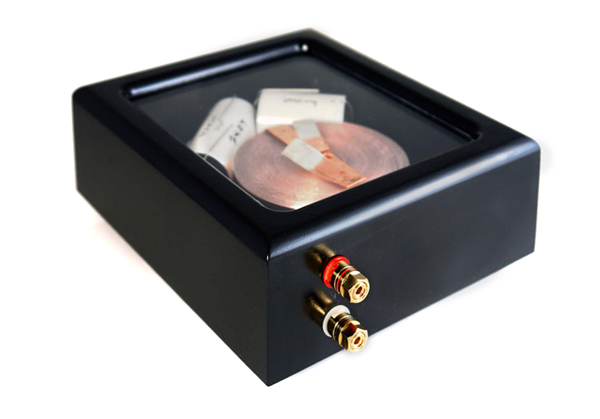
Sean at the Skiing Ninja can take you to the next level of Magnepan performance, with his crossover upgrade. Taking the crossover out of the panel itself solves a few issues. No longer pinched by space requirements, the small external crossover abandons the relatively inexpensive parts used in the stock crossover and replaces them with copper foil inductors, Sonicap capacitors and a point to point wiring scheme. A pair of these gorgeous little boxes will only set you back $595 and is plug and play. 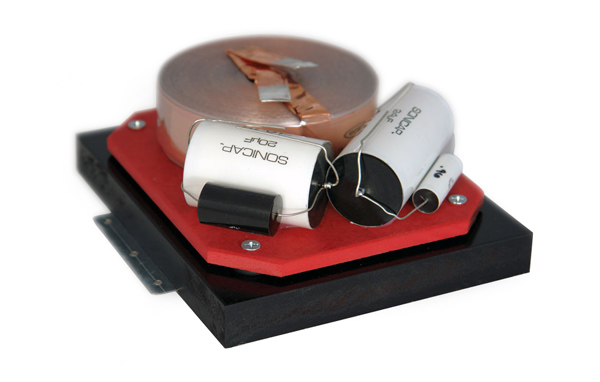
You will need to do a little bit of brain surgery, but you should be able to have the crossovers swapped in about an hour for both speakers. If you’ve never modified a piece of gear, you might be a little queasy about taking a pair of diagonal cutters to the crossover networks in your 1.6’s, but trust me, you’ll be glad you did.
The Ninja crossovers arrive in a tidy little box that is about 8 x 8 x 3 inches and can be ordered in a range of colors. I went for basic black and that worked just fine. You will have to remove the black panel that contains the fuse holder to get at the crossover inside. Of course this will void your warranty, but I’m guessing by now your speakers are out of warranty anyway. I also chose to abandon the original bi-wiring concept of the speakers, which I always felt was another weakness, requiring the pain of more banana plugs. Granted, many Magnepan owners swear by the bi-wiring method of connecting them, but the Ninja approach works much better and is much easier to attach decent speaker cable to.
Saying goodbye to the fuse felt a little scary, but again, the sonic gains outweigh the slight bit of protection the fuse offers. Just make sure you have plenty of clean power on tap… Once the old crossover is removed and the new one in place, via four spade lugs you are ready to roll.
A sonic revelation
Those big teflon capacitors will take about 500 hours to sound their best, so out of the box you will only notice a slight improvement in focus and midrange clarity, but at the 200 hour mark, the speakers sound like a blanket has been lifted from them, and they will improve steadily until about the 500 hour mark. To be sure I wasn’t just a victim of the placebo effect, I borrowed a friend’s stock 1.6’s so a direct comparison could be performed. Fortunately, the 1.6’s are pretty easy to move back and forth.
The improvements are substantial, but I found the biggest gain was in the midrange clarity. Now the 1.6’s were getting more into the electrostat range, with that haze in the original speaker a thing of the past. Playing your favorite vocal tracks will really bring this home. When listening to Johnny Cash’s “Delia’s Gone” from American Recordings, he goes from singing in the other room on the stock speakers to slightly in front of them, with much better separation between Cash’s vocal and his acoustic guitar. Same thing with John Hiatt on the title track of Slow Turnin, Hiatt’s voice comes right out of the mix where it had been somewhat buried in the past.
Though not quite as dramatic, as the capacitors break in, you will notice an even better blend between the woofer and tweeter panels, giving these speakers a higher degree of coherence. They sound a lot more like Quad 57’s (albeit much more robust ones) now in terms of the “midrange magic.”
As a result of this the mid/tweeter ribbon driver is less pronounced than in the past, giving everything from the midrange up less grain. It’s readily apparent, but having the originals handy made it that much easier to discern. Your favorite violin or piano disc should expose this immediately. I used the new disc from The Jung Trio on Groove Note records, Dvorak Trio in F Minor, Op. 65 and was amazed at how much more realistic the violins sounded, again thinking about my Quads while listening.
I had an equally satisfying experience when going through my favorite Keith Jarrett albums. The piano took on a more natural texture, with more nuance than before. It was much easier to hear the hall size when listening to the Sun Bear Concerts, thanks to an increase in low level detail, letting the piano’s notes fade off into the background with finer gradation than before. Again, a quick swap back to the stock speakers put things in perspective right away.
Last but not least, there is more texture in the lower bass region and even the upper bass speed is improved. The speaker just sounds faster overall with more bass weight and attack. A quick frequency sweep did not reveal the panel going any deeper, but the bass sounded more natural throughout the range. No, you still can’t play Snoop Dogg convincingly with the Ninja mods, but I’m guessing that isn’t why you bought Magnepans in the first place. Those of you that live on a steady diet of female vocal music will be spellbound by this increase in performance.
More of what you love with no guilt
Whether you’re a long term 1.6 owner who would like more performance, or someone who cashes in on the wave of people trading up to 1.7’s, the Skiing Ninja modified 1.6’s are a fantastic speaker, offering incredible performance at a bargain price. I wouldn’t be surprised if these even outperform the new 1.7’s. 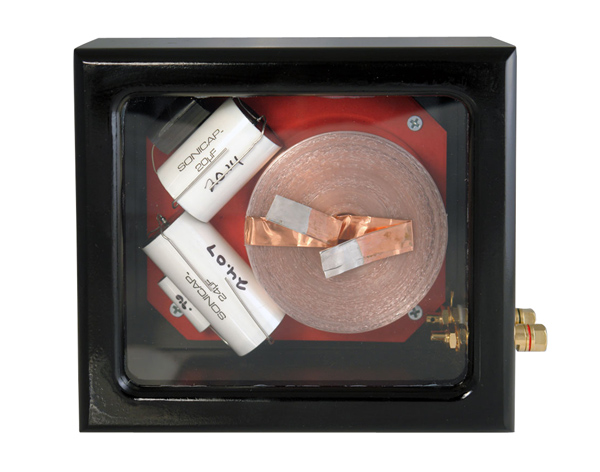
The Ninja mod builds on all the strengths of this speaker and has no drawbacks. Using the modded speakers with my reference McIntosh MC1.2KW’s, they consistently held their own in a six-figure reference system as long as I was listening to music that played to their strengths.
I can’t think of a better upgrade to a system based on a pair of these speakers for anywhere near $600. If anything, once you get the Ninja crossovers in place, you might be looking for a better/bigger amplifier to take advantage of the increased resolution. And cool cat that he is, the Ninja gives you 60 days to audition the mod with a money back guarantee. I can’t imagine anyone sending these back.
Highly recommended.
The Skiing Ninja Magenpan 1.6 mod
MSRP: $595
Peripherals
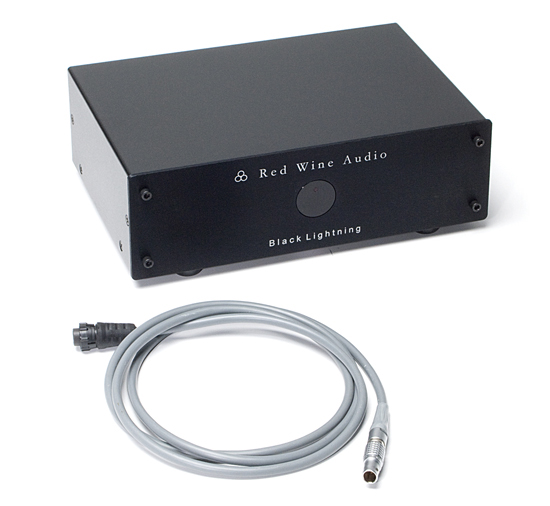
Analog Source TW Acustic Raven TWO turntable w/SME iV.Vi arm, Dynavector XV-1s cartridge and Nagra VPS phono preamp with VFS platform and Red Wine Audio Black Lightning power supply.
Digital Source Naim CD555
Preamplifier Burmester 011
Power Amplifier McIntosh MC1.2KW monoblocks
Cable Shunyata Aurora interconnects, Shunyata Stratos SP speaker cable
Power Running Springs Dmitri and Maxim power conditioners
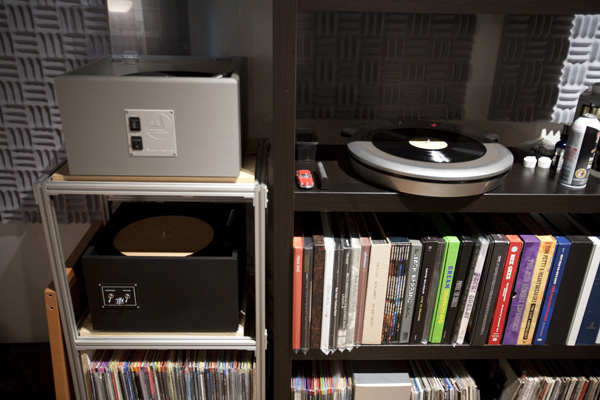 Just drop by any internet forum and you can make enemies instantly by bringing up the subject of record cleaning. LIke every other aspect of the HiFi hobby/obsession, you can do this on a few different levels, and your budget can determine the results. I’ve seen plenty of DIY ways to clean records (with most of them ending in tears, or at least ruined records), but nothing that works consistently or convincingly.
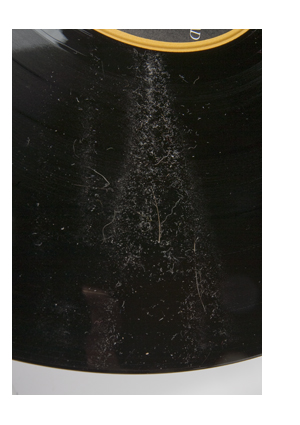 See that gigantic pile of dirt? Grab a handy can of compressed air and blow that right off the record. This will make it that much easier for your RCM to get right at the tough dirt and it cuts down on the crud that sticks to the cleaning pads.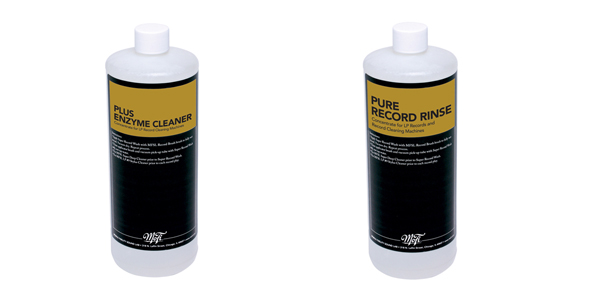
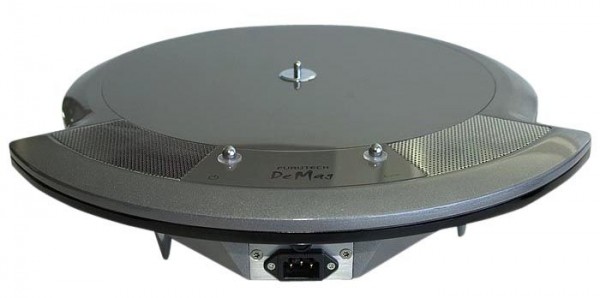
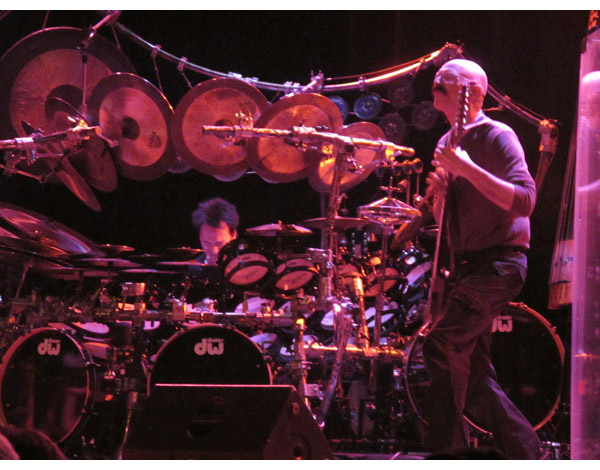
 Even though the audience was a bit nonplussed by the performance, the musicians were strong enough to pull off the unexpected in a commanding fashion. I guess one could sum the evening up in Bozzio’s own words at the onset of intermission: “It’s obvious we don’t have any prepared material tonight. Think of what we are doing as though it were an instant soundtrack.”
 By Jeff Dorgay
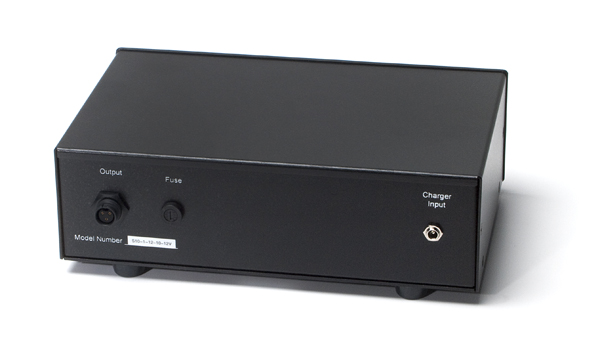 I am a big believer in clean power, and the validity of good power cords, but I’ve never had this much improvement from any power cord or line conditioner. I currently use the Running Springs Dmitri line conditioner on the front end of my system (and a Running Springs Maxim on a separate 20 amp line for my power amplifier) and I feel this product is the top of the mountain in power line conditioning products. I would compare the difference plugging the Nagra into the Black Lightning to be an equivalent jump in performance I experienced when I plugged the rest of my system into the Dmitri from the wall. Background noise decreased dramatically, dynamics increased substantially and the upper registers got smoother, yet more defined.
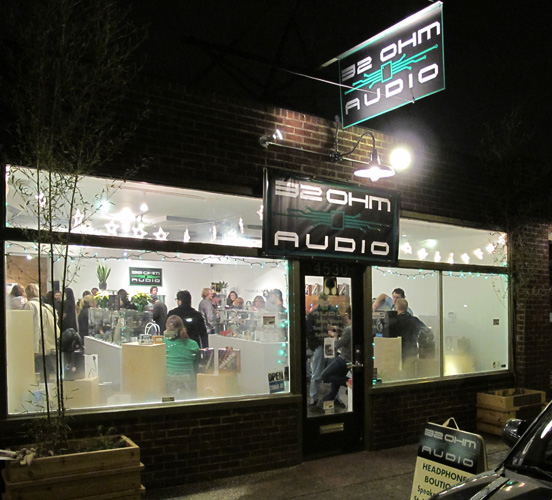 While CNN and Fox News are both presenting their own version of the economic collapse, the Christmas shopping season is alive and well here in Portland, Oregon at the world’s first exclusive headphone boutique, 32 Ohm Audio. I know nothing warms my heart like seeing people out in force, buying audio gear!

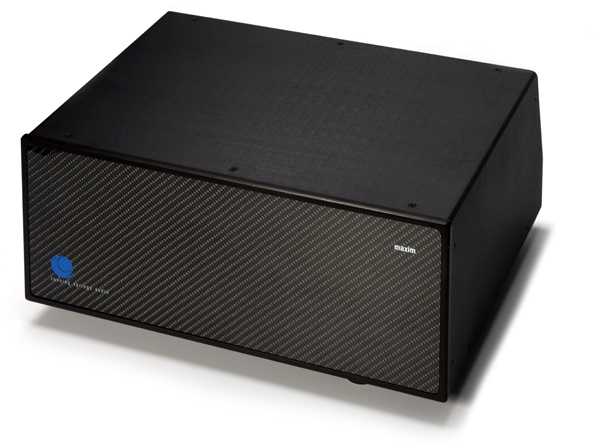 As a long time owner of Running Springs power conditioning products, I was very anxious to hear the effect of their newest power conditioner, the Maxim on my system. Unlike a number of other power product manufacturers at the recent Rocky Mountain Audio Fest that made outrageous claims for their power products (two of which have already been returned to their companies already), RSA designer Dan Babineau simply told me, “If you like your Dmitri, the Maxim uses the advancements I made going from the Haley/Jaco/Danielle series of our products to the Dmitri, but with additional filtering. It’s been optimized for high power/high current amplifiers.”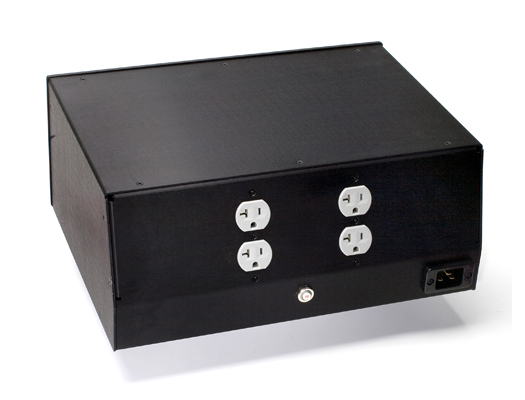
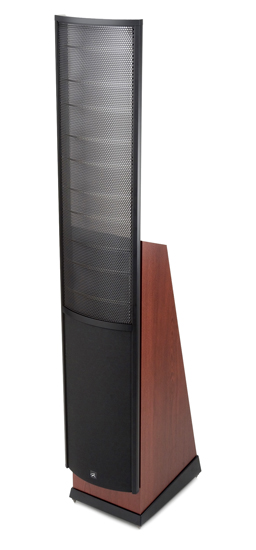
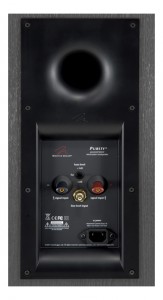
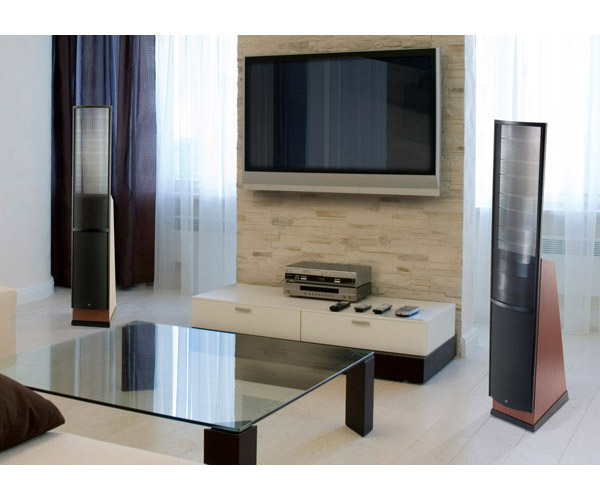 In the last few years, MartinLogan has received a lot of praise for their hybrid electrostatic designs, mating their legendary electrostatic panel to a dynamic woofer. In the case of the Purity, it’s a pair of 6.5-inch woofers in a very compact package that will only take a 10 x 15 inch patch of your living area.
 Ed. Note: This review was published in late 2008, but we somehow failed to upload it this spring when the site was overhauled. Our apologies!
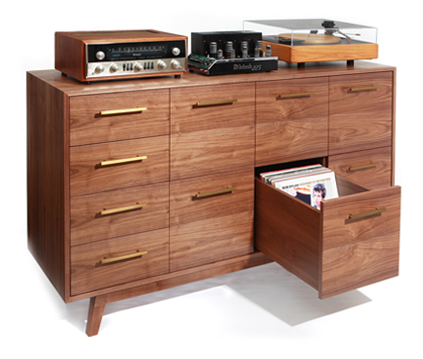 Last year we featured what I consider to be the ultimate record cabinets, from Atocha Design. These are custom, made to order cabinets that you can have configured to suit your record (and CD) collection. If you’ve been wanting to treat yourself to something special this holiday season, now’s the time to do it…
 Connon Price of TUNE HiFi in Seattle has just informed us that Pat will be stopping by a day early for the clinic, so feel free to drop in on Thursday to check out the DAC, NaimNet gear and get started on your upgrades.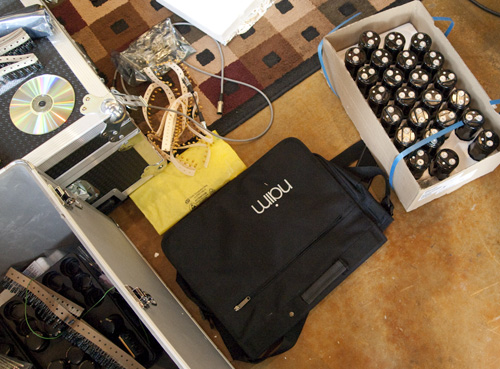
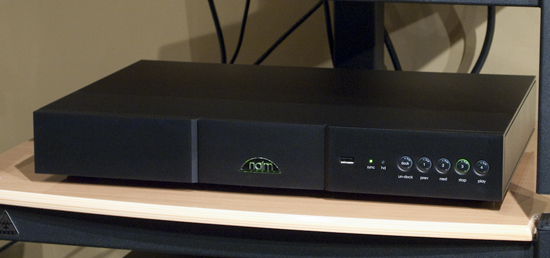
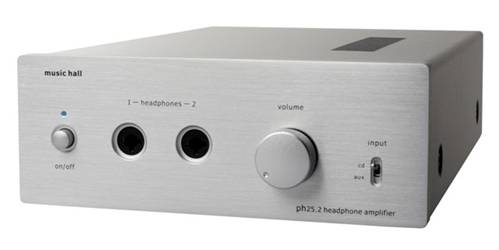 amplification has been a technique for achieving unequaled sound quality in hi-end component audio since the advent of the transistor. While kicking around ideas for our new headphone amp we thought, why not try this same technique in a single component? We built one up and were blown away by the increased detail, clarity, and presence the design offered. The tube hybrid headphone amp was born. Hand assembled using the highest quality parts available the music hall ph25.2 will have you singing along with your favorite artists. A full featured headphone amp in a beautiful and solid chassis.
  Doing their bit to stimulate the economy and promote better digital sound, the US distributor for REGA, The Sound Organisation is promoting their version of a “Cash for Clunkers” program. Bring in your old CD or DVD player and get a 15% discount on a new Apollo player, or 25% off on a new Saturn player. This is a pretty sweet deal and it’s running until the end of the year.
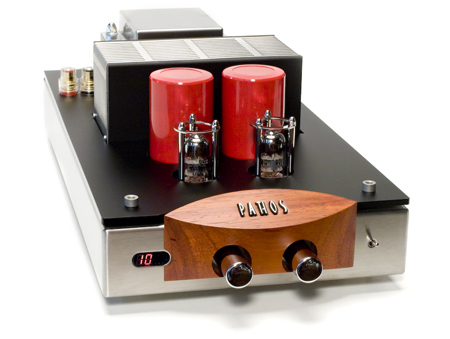 I’ve always been a fan of Pathos Acoustics fusion of Italian style with technology, while always yielding very musical results.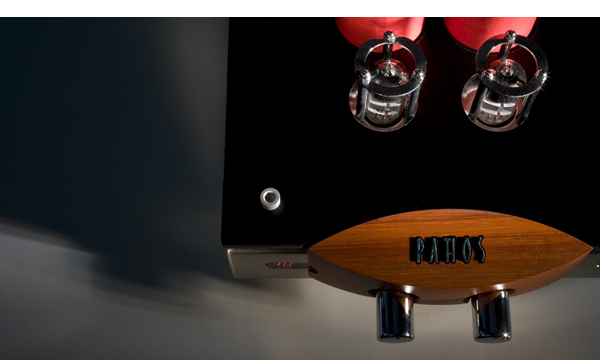
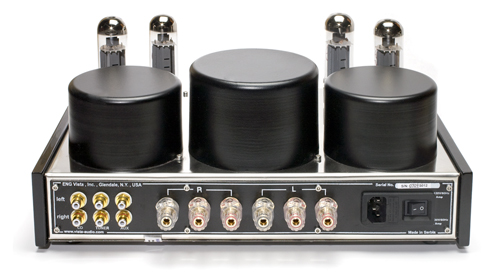
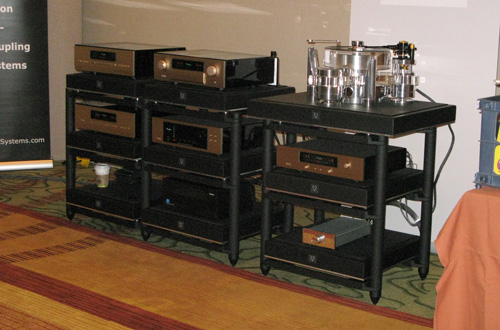 Another great day at the Rocky Mountain Audio Fest. Fest owner/presenter Marjorie Baumert announced that the Fest is go for next year and possibly as far as 2012. So, next year, show your support to convince Marjorie to stay on board!
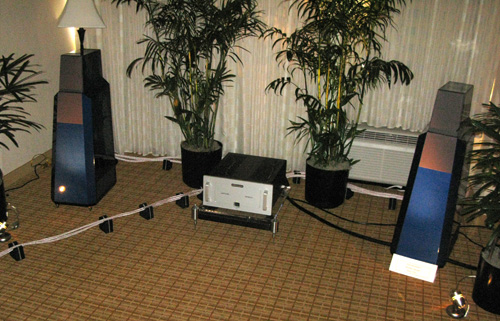 The folks at Shunyata, Vandersteen and Audio Research also did a very good job at defying the room acoustics, getting good sound out of a small room, bringing in some heavy duty room treatments and careful attention to setup. Just slightly off camera, they had a full bank of diffusors that did a great job at taming the room, along with a heavy dose of Shunyata’s latest Aurora cable, which we will have a full review in the next issue of TONEAudio.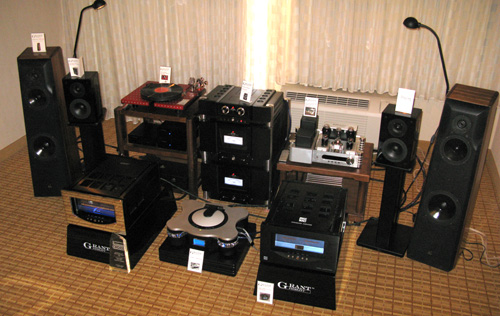
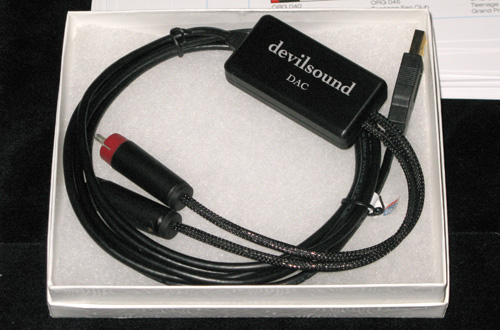 For me, the coolest products at the show were the “Devil Dac” shown in the Luxman room by Philip O’Hanlon, and a new battery powered DAC that will pull the digital bitstream from your iPod (just like the Wadia 170i) from the folks at ALO Audio and GR9 Technologies.
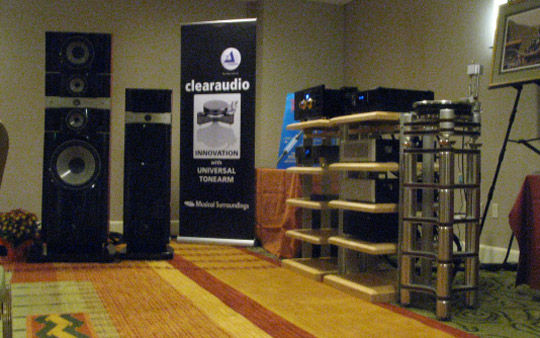 The Rocky Mountain Audio Fest got off to a great start in Denver today, with a very chilled out start time of noon, which was a benefit for exhibitors arriving from the East Coast and Europe.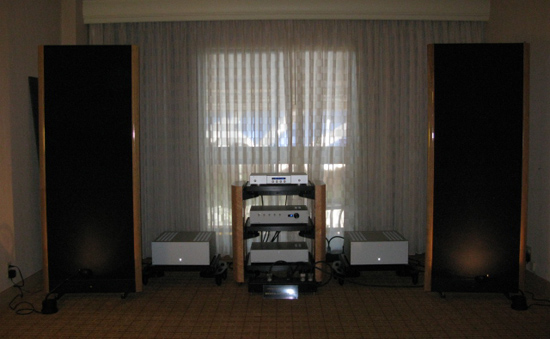
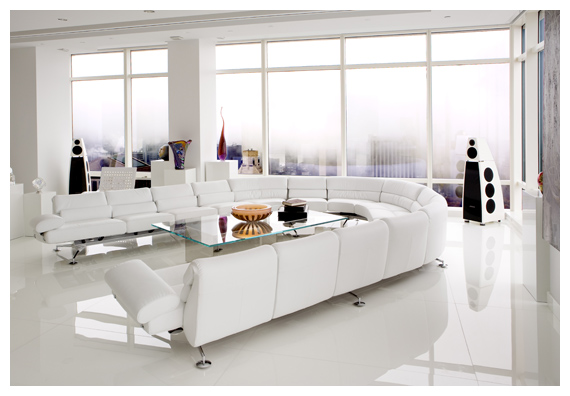 If you’ve always admired Meridian HiFi products, but wanted more than the standard black and silver, their new Meridian Select service is for you. With so many furniture finishes available today, their new palette of colors allows you the ultimate in customization. Utilizing the K5 selection of the RAL color system, (the most popular system in Europe today) there are now 210 metallic and non metallic colors to choose from. The system is a result of Meridian responding to their customers wishes for a broader range of product color options to integrate with their interiors.
 Of course, it was difficult to miss any action given the enormous screen and its continual projections of Bono’s continuous posing, preening, and prancing. Displaying a knack for drama that any award-winning thespian would envy, the charismatic vocalist carefully matched messianic hand gestures and facial expressions with the music’s breaks and choruses. If not for occasional traces of self-knowing humor (his flippant kissing of video cameras, sardonic smiles, and cock-of-the-walk gait), the pomp and circumstance would’ve come perilously close to unintentional parody and self-aggrandizing arrogance.
 Alas, U2’s pacing, sequencing, and all-things-to-everyone concerns torpedoed what could have been great but which settled for being a cut above average. While Clayton and drummer Larry Mullen Jr. put on a rhythmic clinic, and the always-dependable Edge made the myriad treble-rich guitar melodies, effects, and orchestrations seem effortless, there was no salvaging tedious numbers such as “Your Blue Room” and “Unknown Caller,” tunes whose atmospheric qualities are better experienced on record. Cover snippets—The Clash’s “Rock the Casbah,” The Police’s “King of Pain”—tacked on to the end of songs derailed momentum and didn’t always fit with their mates. And while the scale of the stage was partially accountable—there’s certain risk involved in building a set so massive that it considerably shrinks the members’ physical proportions even for those watching from premium seats—the band’s collective energy remained lukewarm until towards the end of the 130-minute extravaganza.
 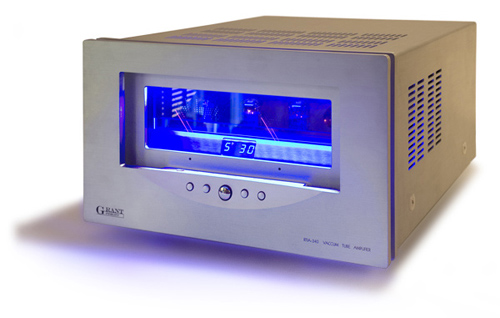 If you like tube amplifiers that hanker back to the glory days of audio with a big, beefy chassis and huge output transformers, the Grant Fidelity Rita-340 is for you. It’s so robustly built that even the careless handling of the UPS guys couldn’t stop it! The substantial crate arrived, looking like it had been dropped off the top of my garage roof, but after I dusted off the Rita and fired it up it worked perfectly and it has worked flawlessly for the past six months. I think this should settle any build questions you might have about this amplifier; anything that can survive that kind of abuse should be fine in everyday use.
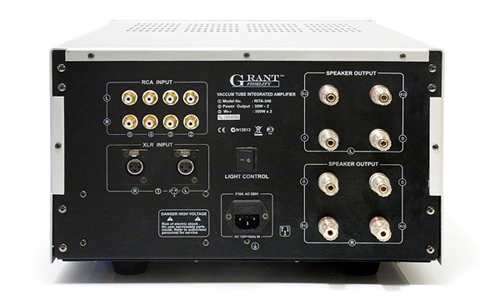 There are two sets of speaker outputs on the rear panel, and while the amplifier is rated to drive speakers from 4-8 ohms, with a tap for 4 and 8 ohms and a common ground. The speakers I tried had varying impedance and I did not notice any issues driving anything.