


Totem Acoustic Forest Loudspeakers

One of the most exciting aspects of high-end audio is finding an unassuming product that delivers big results. Totem Acoustics has a well-deserved reputation for producing small speakers with a big sound. If you’ve experienced a Totem demo at a hi-fi shows, you know the company demonstrates a habit of playing its entry-level speakers more often than the flagship models, as if to reinforce this message.

My personal fun with the Totem Forest speakers began with the first track I played, Joe Walsh’s “Life’s Been Good.” The review pair arrived courtesy of an East Coast Totem dealer rather than directly from the Montreal factory, so some of the break in was already complete. A solid week spent listening to classic rock, served up via the McIntosh MS750 music server, handily finished the break-in period.

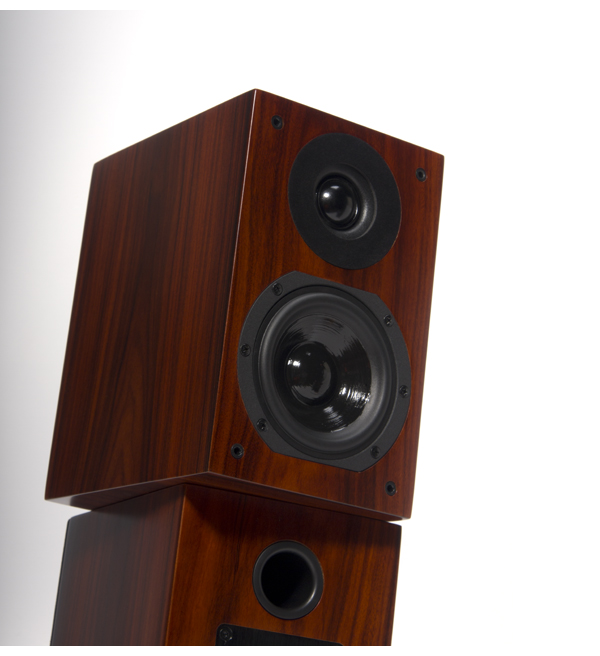
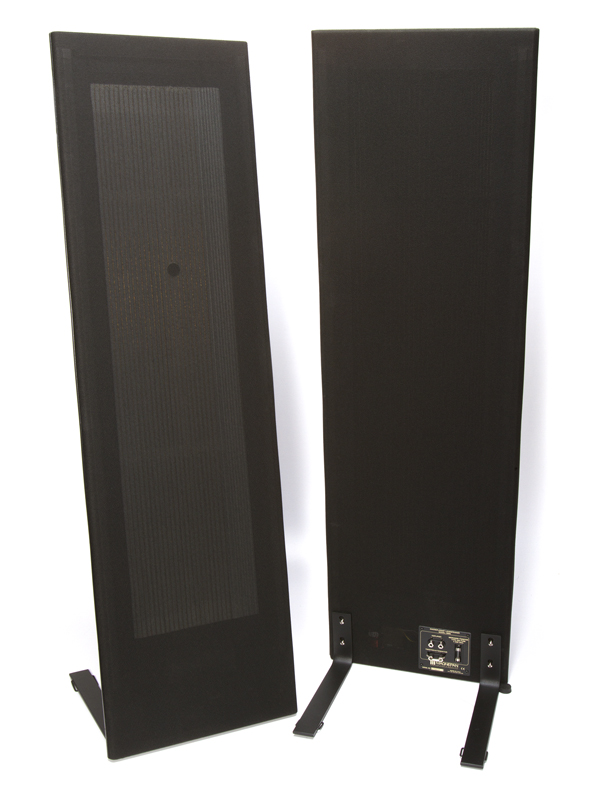
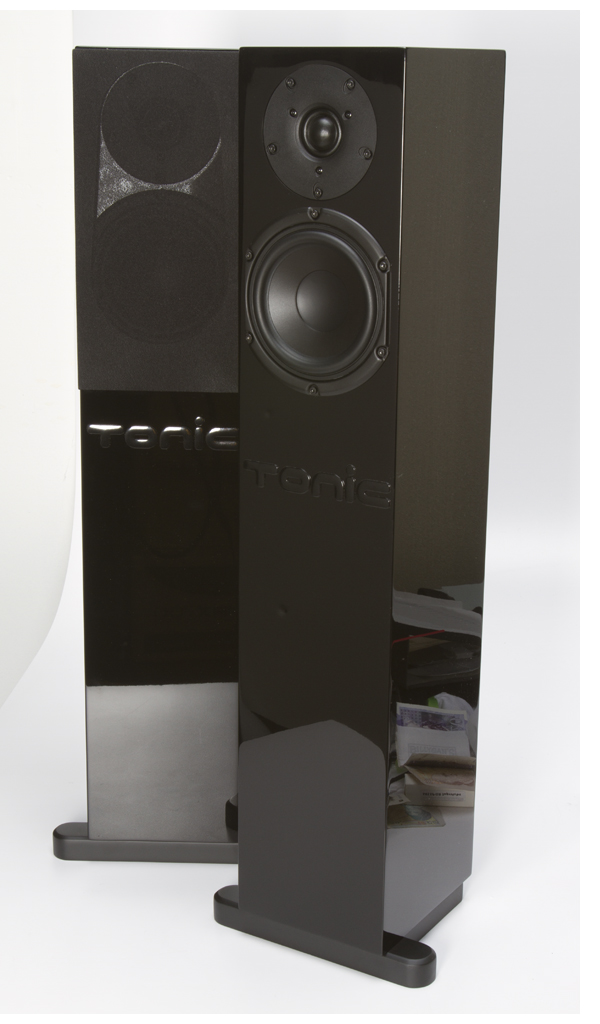
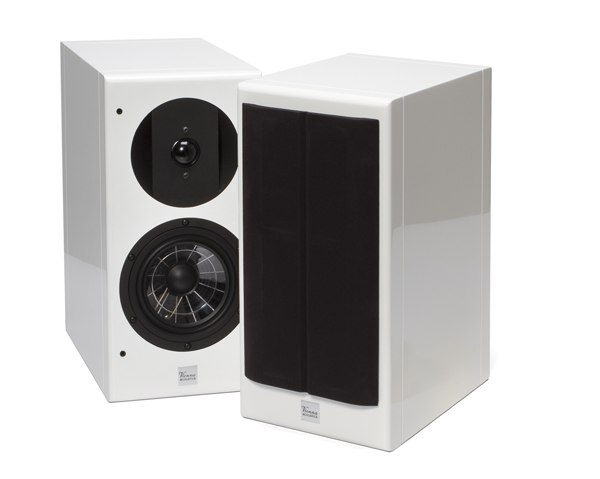
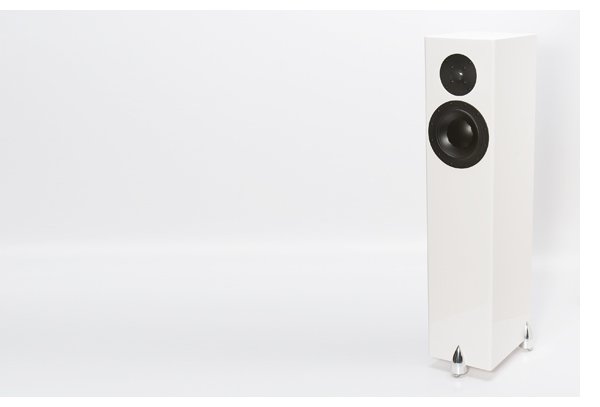
Not that I minded looking at the speakers in the meantime. My Forests were finished in Ice, a high-gloss finish that has the slightest tinge of gray, and part of the family of four “design” high-gloss paint finishes that include Dusk, Sky, and Fire. (Black, Blue and Red). They are also available in white satin and three wood finishes: black ash, mahogany and cherry. Finish quality on the review pair was as smooth as anything coming from the Wilson factory, a highly impressive feat for a $3,500 pair of speakers.

Unique Approaches

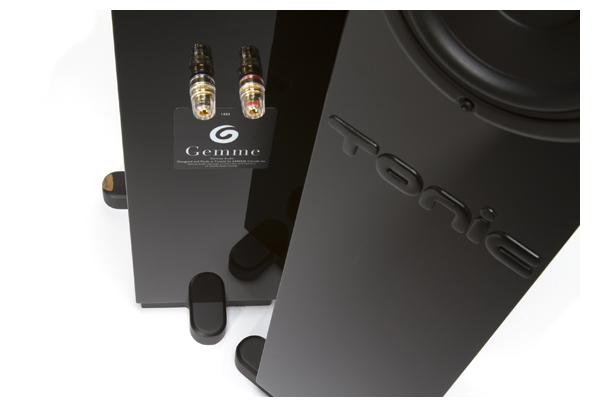
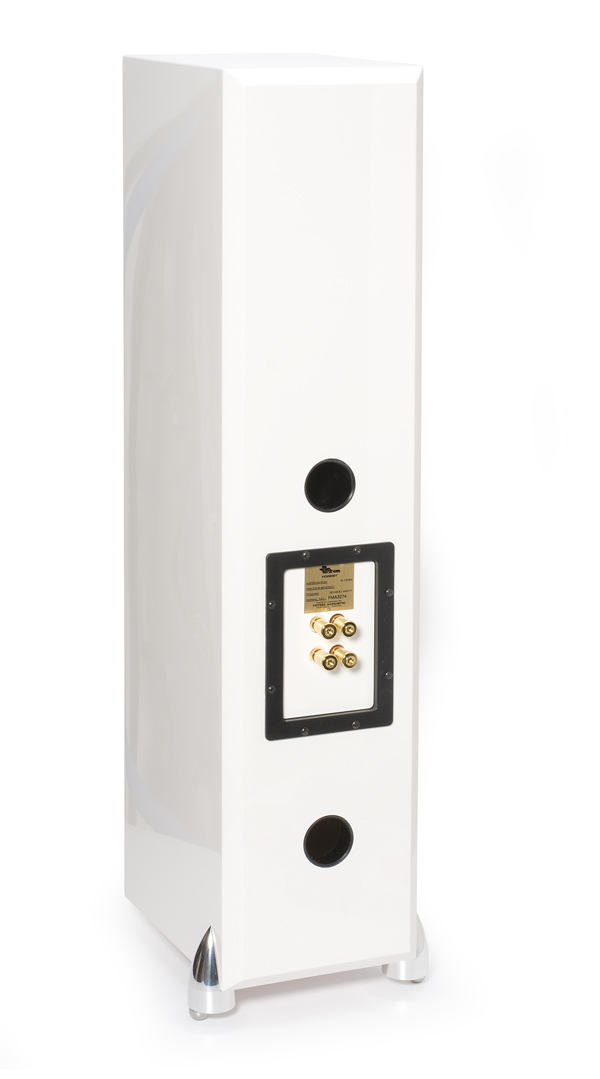
Totem’s preference to call its speakers “columns” underlines the distinctive aspects that make up the Forest. The color gives the Forests the appearance of being larger than the 7.7 x 34.3 x 10.6″ (195 x 870 x 270 mm) measurements suggest. The rounded front edges are different than many of Totem’s other models. And instead of utilizing conventional spikes to mechanically couple the speakers to the floor, designer Vince Bruzzese took a novel approach. A trio of aluminum “Claws,” with balls arrayed in a triangle pattern, comprises a very solid base. Functionally, the balls act like spikes and decouple the speaker from the floor.

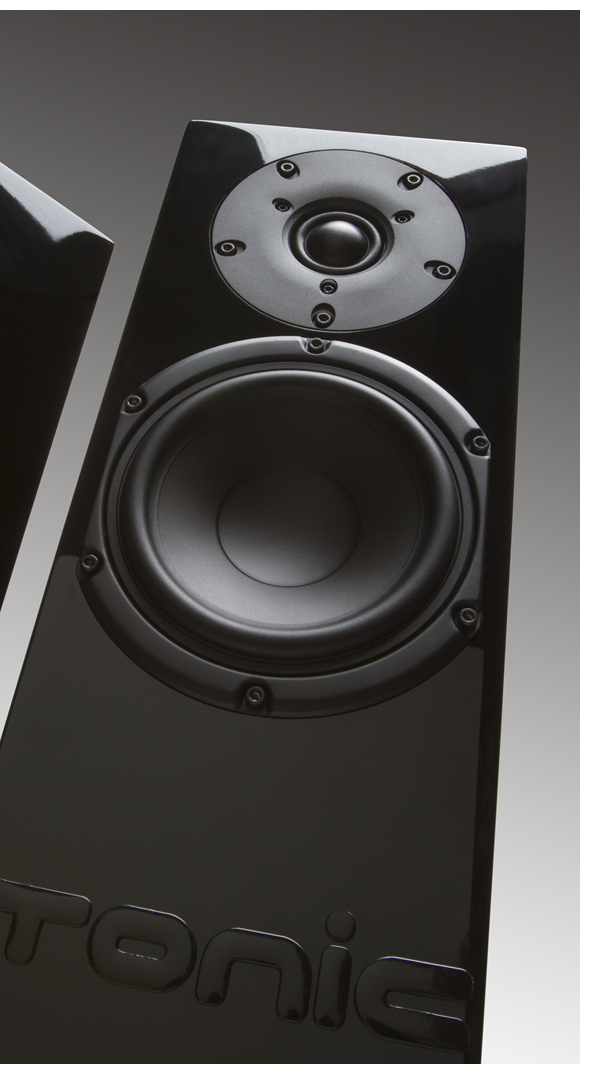
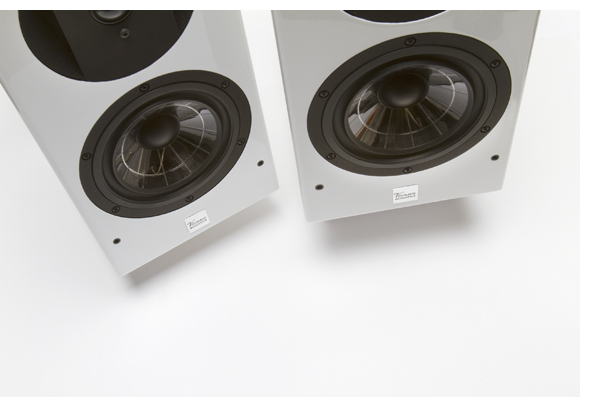
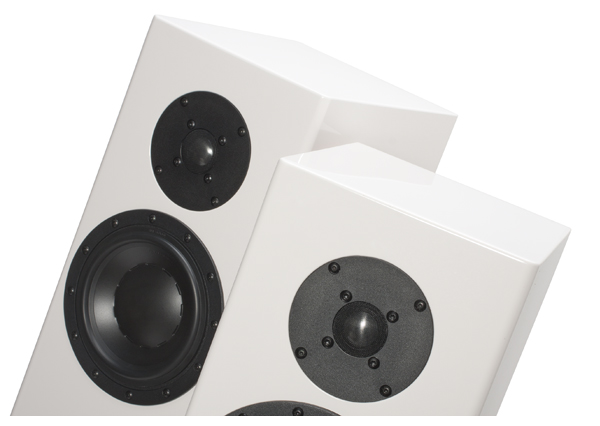
The Forest is a two-way design, featuring a 6.5-inch (165mm) woofer and a 1-inch (25mm) chambered aluminum dome tweeter, with a second-order crossover at 2.5 kHz. Drivers are neatly flush mounted, and according to the well-written manual, should be listened to without grilles. Totem is firm in its belief that grilles are optional. Unless you have small children or shed-prone pets, they will probably be unnecessary.

Peeking inside the cabinet reveals the same level of attention to the finer details. The interior is sprayed with borosilicate damping material instead of stuffing foam. Similarly, the crossover network is also robustly built with top-quality components and heavy wiring.

Straight-Ahead Setup

The Forests spent the most time in my 13 x 19 foot family room, which has an 8-foot ceiling. During the initial weeklong break-in period, the speakers were randomly placed but still threw a very convincing three-dimensional soundfield. These are not finicky speakers.

Listeners that spend a few hours on placement will reap tremendous rewards, as careful setup techniques yielded even better sound. In my room, the Forests ended up three feet from the rear and side walls, with my listening position about 8 feet back. Wide dispersion is a Totem hallmark, and the Forests were one of the few speakers I’ve experienced that did not require toe-in alignment. (Not that they sounded overly harsh with the toe-in array.) The wide dispersion also helps when listening casually from another room. Guests were always impressed at how good the Forests sounded, even when used as background entertainment.

Important note: The Forests’ imaging performance suffers if you have to place them too close to the rear or side walls. If possible, give the speakers at least 18–24 inches from any wall. Their rated power handling is 50–200 watts, with a nominal impedance of 6 ohms, making the Forests easy to drive with solid-state or vacuum tube electronics. I got great results with the AudioEngine N22 amplifier and vintage Marantz 2230B (22–30 watts per channel), so if you currently don’t have the budget for speakers and speakers, the Forests provide a great foundation on which you can build.
Taking Care of Business

Thanks to the surfeit of power supplied by the i-7 amplifier, it was easy to put the Forests to task. In most instances, your ears will give out before the speakers do. When listening to the Pixies’ “Allison” from Mobile Fidelity’s remaster of Bossanova at high volumes, the Forests still maintained the placement of the individual guitar tracks without experiencing any soundstage collapse.

If required, the Forests produce serious bass, but you will need to spend time fine-tuning them to your liking. A mass-loading compartment is located in the bottom of each speaker, and I found the perfect balance by placing about eight pounds of sand in each one. The upshot of utilizing the loading option instantly materialized on the music sources. Don Williams’ deep, gravely voice became tighter and better defined with the sand in place. And the thunderclaps in “Gaia,” from James Taylor’s Hourglass, carried a lot more weight than expected.

Instrumental pieces posed few challenges. John Berry’s sweeping, percussion- and horn-driven soundtrack to Dances With Wolves requires speakers with a wide soundstage in order to pull off the connection to the wide-open Dakota prairie. The French horns in “Journey to Fort Sedgewick” arrived with sublime tonality. And while the Forests admirably handled the percussion and detailed bass line in “Pawnee Attack,” the track illustrated the speakers’ understandable limitations. A small speaker can only move so much air, and the cut forced me to scale back the volume.

Dialing down the volume and switching the program material to Wilco’s 2009 self-titled album, I found the harmonies on “You and I” taking on a magical character. Whether you prefer Johnny or Rosanne Cash, listeners that favor male or female vocalists will enjoy the midrange body the Forests offer.

While the Forests proved an excellent match with vacuum-tube electronics, just like the Mites and Rainmakers that I have used extensively, they were a much better match with my modded PS Audio Trio C100 integrated amplifier than the aforementioned two examples proved to be. Your amplification choice shouldn’t be a limiting factor.

Final Call

Equally pleasant at low and high volume levels, Totem Acoustic Forests offer a highly musical experience for a modest price. They play well with the three major amplification types: solid-state, vacuum tubes, and Class D.  Factor in the ease of setup and a gorgeous pair of cabinets that come in a wide range of finishes, and you end up with a perfect recipe for a fatigue-free speaker that’s enjoyable to look at as it is to hear.
Additional Listening:

With so much attention placed on the stratosphere of hi-fi components, it’s always thrilling to hear something as engaging as the Forests at a price that most audiophiles can afford. Per Totem’s instruction, I used no toe-in on the speakers and put them about six feet apart (tweeter center to tweeter center) in my main listening room, which measures 24 feet wide and 16 feet deep. Placing them about four feet from the rear walls minimized sidewall interference. The Forests had a perfect balance of midrange clarity and sacrificed nothing in the bass department.

Even though these speakers are slightly on the lower side of the sensitivity scale, at 87db, the 45-watt-per-channel Conrad Johnson MV-50 C1 and 25-watt-per-channel Pass Labs M2 had a much easier time driving the Forests than they did my Magnepan 1.6 or Vandersteen 2CE speakers, which have similar sensitivity specifications. Since 25-40 watts will only get you so far, a quick swap for the new Simaudio Moon i700, with 175 watts per channel, offered me the ability to play my favorite metal and large-scale classical tracks without strain—at least until things got very loud.

The key term with these speakers? Balance. The Forests’ top-to-bottom coherence caught me off guard in the initial listening sessions. I wasn’t missing my panels, yet the Forests moved a serious amount of air when I wanted to get wacky with the volume control. By comparison, the Magnepans can be very beguiling when listening to solo vocals, but don’t rock with authority. The Forests ably captured vocal nuances and spatial cues, but also had the speed and weight necessary to thoroughly enjoy records like Electric Wizard’s Dopethrone.

Indeed, the Forests’ strong suit relates to how they offer a healthy dose of resolution without crossing over to the dark side of harshness. However, the speakers will reveal shortcomings in your gear if it is not up to par. Connect the Forests to a budget solid-state integrated and you will probably be disappointed. But don’t point your finger at the Forests. Spend a few extra bucks on some worthy components (I suggest a nice tube amp), some decent cable, and I suspect you will share my amazement in hearing that $3,500 speakers can sound this good. TONE is proud to award Totem one of our first Exceptional Value Awards for 2011.  -Jeff Dorgay

The Totem Forest

$3,495 per pair

www.totem-speakers.com

Peripherals

Analog Source Rega RP1 w/Ortofon Super OM40    Simaudio 5.3
Digital Source McIntosh MS300 Music Server    Simaudio D300 DAC
Amplifiers Simaudio Moon i7    Vista Audio i34
Misc Shuynyata Venom 3 power cords

Polk Blackstone TL2 and PSW111 Speaker Combination

One of the biggest concerns facing the audio industry is how to lure new converts to the wacky world of gear. These days, the higher end of the high end will easily set you back six figures. That’s not only out of reach of Joe Six-Pack, it’s out of reach of most rational humans that don’t earn seven figures. At TONE, we continue to provide more coverage of entry-level and vintage gear for good reason; we all have to start somewhere. But it doesn’t have to be a bad thing. You can get satisfying sound on a tight budget, and the Polk Audio Blackstone TL2s will stretch your audio budget further than anything I’ve ever experienced.

Since its emergence in the mid-70s, Polk’s mantra to offer high-end sound without matching high-end pricing has remained the same. On a recent visit to its corporate headquarters in Baltimore, Maryland, I saw and heard a number of its latest efforts, including a new flagship speaker in the $5,000 per pair range. But the most exciting thing I saw was the Blackstone TL2 speakers you see here.

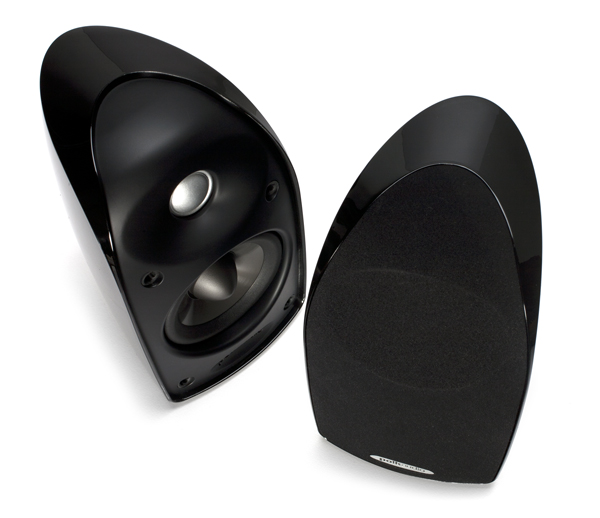
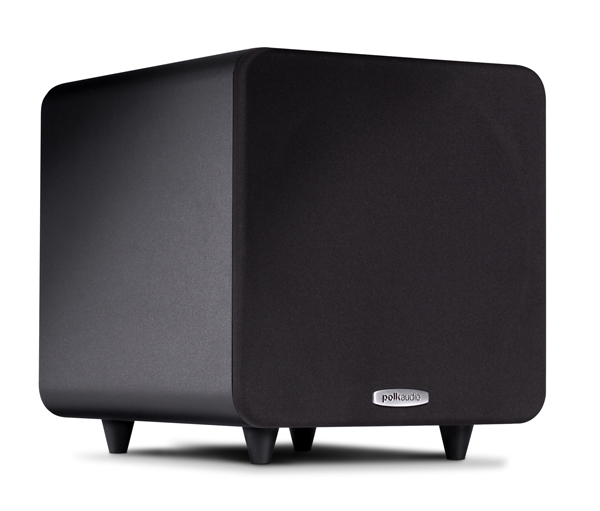
For $99.99 each, you get a pair of tiny satellite speakers that use a 3 ¼-inch-long throw woofer and ½-inch silk dome tweeter in a tiny cabinet weighing only about 3 pounds that I guarantee will blow you out of your chair, ala the old Maxell cassette man, when they are mated with the matching PSW111 subwoofer ($299.99.) So, for $500, you can have a rocking set of speakers that won’t take up much space in your living area.  Add a great vintage 70s receiver for $200 to $300, and you still have enough money left from a $1,000 bill to grab a decent used turntable.

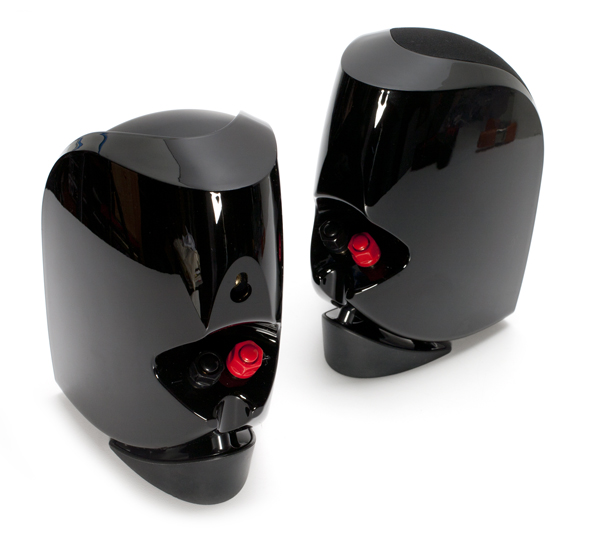
Five- and six-figure speakers are pretty normal in our world, so it’s incredibly cool when you hear something this amazing for $500. For the stylistically inclined, rest assured that these speakers look as great as they sound. Their curved cabinets should fit any decor, whether you use them with stands or mount them to the wall or ceiling.

How Does Polk Do It?

Beginning with its RM 3000 system, Polk entered the world of small satellite main speakers with a powered subwoofer in the late 80s. The tiny speakers and their powered subwoofer listed for $700 and redefined what a sat/sub system could do.  They may not have invented the genre, but they certainly moved to the head of the class in short order.  More than 20 years later, Polk remains at the forefront, building a better system for $200 less. Of course, some of this is due to offshore manufacturing, but most of the credit goes to the experienced design team located in their Baltimore.

Employee turnover is very low at Polk, and a majority of the staff has been with the company for decades. Such depth of experience makes it a lot easier to build a substantial base of knowledge. Every aspect of Polk speakers is designed from the ground up, which also helps in a situation like this, because instead of trying to build a box around off-the-shelf components, Polk’s engineers designed everything to solve the specific problem of making a high-performance speaker fit in a small enclosure.

Just like Polk’s larger speakers, the TL2 uses a ring radiator tweeter that is similar to that used in its LSi floorstanding speaker systems. The company’s Time Lens system of aligning the woofer and mid bass on the same plane gives the speakers a high level of coherence, making them sound much like a single-driver speaker but with the performance advantages of a two-way system. (Read about the TL2’s other unique features here: http://www.polkaudio.com/homeaudio/blackstonetl/technology.php)

Set-up Options

Polk offers three different ways to use the TL2/PSW111 combination. No matter what your amplification situation, it’s a breeze to utilize. The system can be used with your speaker level outputs, line level outputs, or, if you have a multichannel home-theater system with an LFE input, that will also work.

The TL2 claims a low-frequency response spec of -3db at 125Hz, but you can take advantage of room gain by placing the speakers in the corner of the room or near the rear walls. They will even work well on a bookshelf, though imaging performance may suffer. The PSW111’s LF crossover setting is variable from 60Hz to 150Hz. A 60Hz setting is too low for the TL2s and leaves a hole in the upper-bass response, but start at that level so you can slowly bring up the subwoofer level and presence.

Should you lack sophisticated measurement tools, play a few bass-heavy tracks and fine-tune the level and frequency crossover controls until the speaker system has sufficient bass weight without the subwoofer sounding rough or boomy. You’ll know you’ve nailed it when you get full-bodied bass response from the tiny speakers and can’t really tell where the sub is located in the room. If you have access to test tones, you can get a great feel for where the satellites stop and the subwoofer takes over, making it easier to concentrate on overall system smoothness.

Mind-Blowing Sound

Any pre-conceived notions you may have about small speakers will vanish the minute you play music through the TL2s. Having heard more than my fair share of outright lousy inexpensive (under $1,000/pr.) speakers, the TL2s are a treat, even for those of you with champagne taste and budgets. Initially staying in the budget groove, I plugged in my used Pioneer SX-424 receiver that I picked up for $60 on eBay for last issue’s “Slummin” column. Using 50-cent-per-foot Radio Shack speaker wire and a used Denon 3910 universal disc player (also purchased on eBay for about $200) made for a highly impressive budget system, and a great place for any music lover to start their journey.

Even with 15 watts per channel, the little Polks played authoritatively. When listening Alice in Chains’ Jar of Flies, I could crank “I Stay Away” to (small) room-rattling levels. A brief stint with favorite tracks that have a lot of LF energy will help you optimize the subwoofer to perfection and attain more musical enjoyment.

As much fun as the TL2/PSW111 combination is with a vintage receiver, I wasn’t ready for the big jump in sound quality I got when stepping up to better electronics.  First, I swapped the SX-424 for the Cambridge Audio 840P (a 90-watt-per-channel solid-state integrated amplifier) and then, for the Croft Series 7 tube preamplifier, and finally, the Micro 25 hybrid power amplifier. Each took the sound quality further than the preceding setup. Indeed, the TL2s are extremely revealing speakers.

Suffice to say that, when mated to the $2,500 Croft setup, the Polk combination more than held its own. Connecting it to world-class electronics revealed imaging performance and reproduction of spatial cues that I expect from speakers costing much more. Granted, with the dCS Paganini stack driving the system, you could now easily hear the speakers’ limitations, yet they still made no missteps. The only errors were those of omission. But if you don’t listen to music with huge dynamic and frequency extremes, you may never miss a thing. Once properly setup, bass from the three-speaker system boasted excellent detail; this was not a case of hearing just one-note bass thump away. I was particularly excited listening to Marcus Miller’s new A Night In Monte Carlo, which contains several great bass solos.

The mids are natural and open, neither squawking nor beaming. Fans of vocal music will be thrilled with the large helpings of coherence. Listening to Anja Garbarek’s “Big Mouth” on her Smiling and Waving proved a joyful experience. The shifts in her timbral character as she goes from a highly processed background vocalist to a cleaner, main vocalist were easy to track with the speakers, as they never lost control of the electronic instrumentation in the background. Ani DiFranco’s live version of “Amazing Grace” from Living in Clip was another fun song that the TL2s aced. DiFranco’s complex vocal stylings fall flat and lose natural resonance on unresolving speakers. But the Polks sailed right through, delivering a rich performance. And if you are sick and tired of Nils Lofgren’s “Keith Don’t Go” (and let’s face it, who isn’t?) but hooked on plucky acoustic guitar music to serve as test material, try DiFranco’s “Gravel”–you may have a new favorite test track.

And if it’s power you want, it’s power you’ve got. I was consistently impressed with how loud these little speakers played without breakup. Though many of us believe that you can only get “big sound from big speakers,” the TL2/PSW111 combination renders such thinking obsolete. Even when spinning some of my favorite heavy tracks from Led Zeppelin, UFO, and Deep Purple, I was able to push these speakers extremely hard before distortion started to set in. And yes, I dialed up the volume up to levels that would certainly cause the average apartment or dorm dweller to get angry looks from neighbors.

Finally, the Polks do something that almost no budget speaker does well: They offer up a liberal share of resolution at low volumes. And in tackling this challenge, they do an even better job with tube amplification than solid-state. Even at quiet conversation levels, it was easy to discern the differences between Robert Plant and his backing vocalists on the recent Band of Joy. This degree of dynamics and contrast reveals a high level of linearity that I’ve never had the pleasure of experiencing at this price.

Oh, and for those looking for the ultimate computer system, the TL2s perform incredibly well when used nearfield on a desktop. With the subwoofer under your desk, the TL2s throw a huge soundstage. Matching them with the latest MiniWatt three-watt amplifier served as a perfect choice, as it coupled tube warmth with the speakers.

You Know You Want ‘Em!

I’ve rarely heard a pair of $1,000 speakers, let alone a $500 set, which possesses this level of balance. You need the subwoofer to make them sing, but it’s worth the extra money. The $600/pair Silverline Minuets are also excellent, but don’t have the TL2/PSW111’s bass grunt or cheaper price. The Polks win the day.

If I were starting my hi-fi journey today, these would be the speakers I would buy. The Polk TL2/PSW111 combination offers everything a music lover could want: Great imaging, weighty LF performance, tonal accuracy, and the ability to play loud when required. And they are solid enough that, should you join the ranks of dedicated audiophiles, you will be able to go through a few rounds of electronics upgrades before you start thinking about a better pair of speakers. The TL2s are that good; they may just stay in your family forever.

Polk Audio’s claim of “Big Speaker Sound Without the Big Speakers” is spot-on.  TONE is eager to award the TL2/PSW111 speaker combination one of our Exceptional Value Awards for 2011, and they will be the speaker to beat for one of our Product of the Year Awards this December. Enthusiastically recommended.

The Polk Audio TL2 speakers and PSW111 subwoofer

MSRP: $99.99 ea (speakers), $299.99 (subwoofer)

http://www.polkaudio.com/homeaudio/blackstonetl/index.php

Peripherals

Digital Source Denon 3910    dCS Paganini stack
Analog Source Dual 1219/Grado Red    Rega P3-24/Denon 103
Amplification Pioneer SX-424    Cambridge Audio 840P integrated amplifier    Croft Series 7 preamplifier/Micro 25 power amplifier
Cable Audio Art IC-3, SC-5    Radio Shack speaker cable

Nagra MSA Amplifier

Swiss hi-fi manufacturer Nagra built its reputation on the ability to produce high-quality audio components in very compact casework. The company has continually honed its engineering and design skills, making every speck of space in pro audio gear count. Such expertise has resulted in consumer gear that looks very similar to pro gear.  Indeed, when I visited Nagra’s factory last summer, the MSA amplifier was in its final design stage. Prototypes sat on the table, along with another new amplifier that uses 300B vacuum tubes.

Unfortunately, with its “bigger is better” philosophy, the U.S. market has been a bit reluctant to embrace Nagra. Nothing could be more shortsighted: Nagra gear often outperforms the stuff in the large boxes. We’ve used quite a bit of its gear as reference components over the years, and the sound quality has always been first rate. The MSA power amplifier is yet another example of the firm’s engineering prowess.

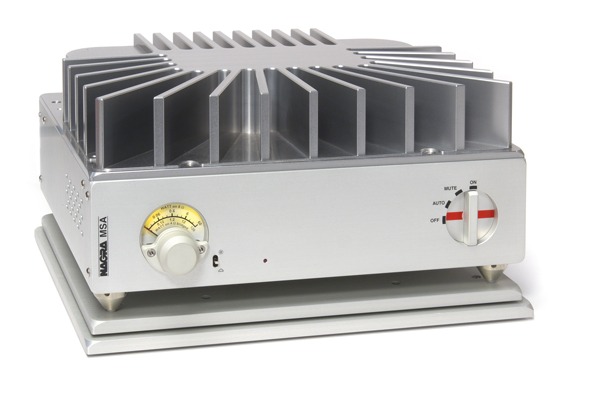
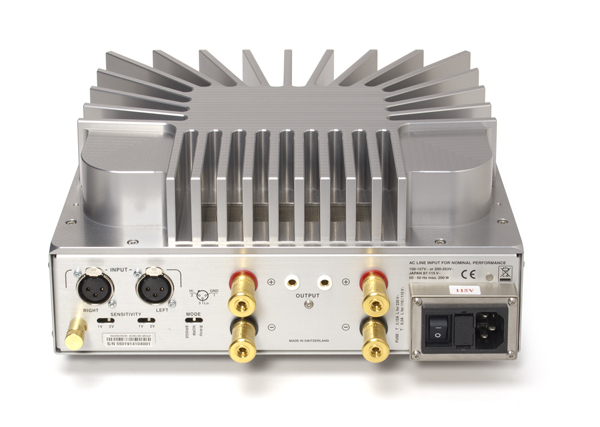
The current MSA amplifier utilizes a single pair of power MOSFET output transistors and is completely symmetrical from input to output, featuring only a pair of XLR input connectors. Should you need single-ended RCA inputs to accommodate your preamplifier, Nagra supplies a pair of Neutrik adaptors in the boxs. The amplifier also has a pair of switches that adjust input sensitivity to 1V or 2V for maximum output. It’s a handy feature, especially if you have an older preamplifier that doesn’t have a lot of gain, or if you’d just like to optimize the volume control range of your preamplifier. The MSA is also designed to be used as a bridged monoblock, so listeners requiring more power can easily add a second amplifier and double the power output.

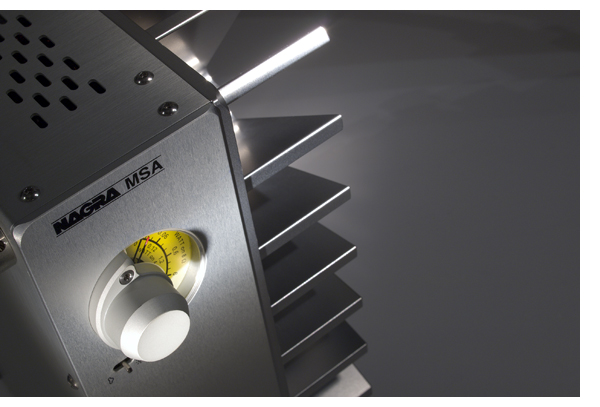
Requiring the same amount of rack space as the Nagra PL-L preamplifier (11 x 9 x 4.6 inches), VPS phonostage, or CDP CD player, the $11,750 MSA takes advantage of Nagra’s VFS Vibration Free Support platform to further improve sonics. Unlike the pyramid-shaped PSA amplifier, rated at 100 watts per channel and outfitted with an LED display to indicate power and clipping, the MSA adds the familiar Nagra modulometer power indicator along with a red LED to indicate clipping. These touches prove very useful, especially when playing heavier music, as the MSA does not sound harsh when driven to modest levels of clipping.  An optional cover is available to hide the heat sinks, but they are such a functional piece of modern art, it’s a mystery as to why anyone would want to cover them up. A familiar rotary switch used for on, off, mute, and “auto” functions rounds out the styling cues.

Initial Impressions

At just 21 pounds, the MSA is easy to unpack and set up. Thanks to the gigantic heat sink located on top of the amplifier, it runs cucumber cool. Even when pushed hard with heavy metal favorites, it barely got warm to the touch. The MSA does not require much space to keep it within operating limits.

My review sample already had some hours on the clock, but my experience with past Nagra gear has been that it only requires 50-100 hours of break-in time. Much like any solid-state amplifier, the MSA opens up and sounds its best after being powered up for a few hours, and can be left in the “on” mode all the time, or the “auto” mode where it will slip into standby mode after a few hours. In the interest of being green, the MSA draws only one watt of power in standby mode.

Top, Bottom, and In Between

Having lived with the Nagra PSA power amplifier for a few years, it’s fair to describe its “sound” as extremely neutral. The PSA adds or subtracts little, if anything, from the presentation. This characteristic may be good for some. But for anyone looking for a bit of tonal embellishment, it may not serve as a proper fit. I’ve always preferred the sound of the PSA with the PL-L tube preamplifier, as the latter claims an ever so slight warmth to its presentation, making the two a highly enjoyable and musical combination.

While the MSA stays true to the Nagra philosophy of signal purity, there is an additional dose of signal purity and delicacy to the presentation. It might be due to the single pair of output transistors. Currently under review, the First Watt M2 also uses a single pair of MOSFET output transistors and has a sonic signature that’s not unlike the best vacuum tube SET amplifiers I’ve experienced. The difference with the MSA? It possesses the low-level detail of the world’s finest SETs, yet also maintains the grip and control associated with a great solid-state amplifier. An outstanding combination, it underscores my philosophy that, with solid state, you can have it all.

Granted, some users will need the extra bit of power that the PSA brings to the table. My reference GamuT S9 speakers have an 89db sensitivity rating, and unless I played fairly compressed rock music (for example, Def Leppard’s Pyromania) I rarely pushed the MSA to its limits. Even when cranking the band’s “Rock, Rock (Till You Drop),” I remained impressed at the ease the MSA exhibited, even with its little red LED almost solid in appearance. The Nagra owner’s manual does not list the latter as a “clipping indicator,” per se, but as a warning that the output stage is passing more than 9 amps of current. I can push the PSA harder, but it was not as composed at the limit as the MSA. For those with more refined musical taste, the MSA should provide more than enough juice.

Balanced in all aspects of performance, the MSA excelled with pace and reproduction of inner detail. When listening to DEVO’s “Blockhead” from Duty Now For the Future, the underlying synth riff never got buried in the mix, as it’s wont to do with lesser amplifiers—especially during the chorus, when the band members yell “Blockhead!” Should classic DEVO not be your liking, Keith Jarrett basically achieves the same effect as he sings along in a trademark disjointed manner while playing piano.  During one of his improvisational bursts in “No Moon At All” from the 2010 duo album Jasmine, Jarrett’s voice floats right above the keys as it does when you hear him live. Since he uses a standard Steinway on the performance, it was easy to compare the tonality between the recorded instrument and my Steinway. The MSA displayed perfect tonal realism with acoustic instruments.

Furthermore, Charlie Haden plays bass on Jasmine, underscoring the MSA’s quick transient attack and delicacy. You can hear every move of Haden’s fingers sliding up and down the neck of the bass. And while the MSA was long on texture, it did not run out of steam when asked to produce prodigious bass, either. Playing deejay and spinning club-music favorites from Kruder and Dorfmeister, as well as the recent Hotel Costes 14, featuring some great tracks by Tosca, I was stunned at how well the diminutive amplifier controlled the woofers on my reference speakers.

But what takes the MSA into another realm is its ability to resolve subtle spatial cues. No matter what my choice of program material, I always managed to hear those little sonic treats that only come to life on the world’s finest amplifiers. An extra layer of guitar here, one more overdub there: These are the things you either forget about when using a lesser amplifier or, your brain attempts to fill in the gap. But when you hear them through your speakers, you know you are indeed listening to something special.

As it did with the other Nagra components with which I’ve paired it, the VFS platform ($1,925) added more clarity to the MSA’s overall presentation, most notably on low-level acoustic passages. Admittedly, the VFS did not make as dramatic of a difference with the MSA as it did with my VPS phono preamplifier, no doubt due to the vacuum tubes in the VPS being more sensitive to outside vibration. I highly recommend first getting intimately familiar with the MSA and auditioning the VFS at a later date.

Style and Performance

If you are looking for a high-performance music system that needs to fit in a compact space, I can’t suggest the MSA highly enough. This one is a precious jewel, offering a level of refinement only heard from some of the world’s best (and most expensive) solid-state power amplifiers. Adding the PL-L preamplifier makes for a genuinely formidable combination. And while 60 watts per channel isn’t everything to every audiophile, if you have a pair of speakers with the efficiency to optimally operate with this level of power, you will likely find the MSA an enchanting wonder.

Nagra MSA Power Amplifier

MSRP: $11,750  (VFS Platform, $1,925)

www.nagraaudio.com

Peripherals

Analog Source Rega P9/Shelter 501II    Audio Research REF 2 Phono
Digital Source dCS Paganini Stack    Sooloos Music Server
Preamplifier Burmester 011    McIntosh C500
Speakers GamuT S9    B&W 805D
Cable Cardas Clear
Power Running Springs Dmitri

Silverline Audio Minuet Supreme Speakers

Mini-monitor speakers have long been audio’s little darlins—easy to place, reasonably prices, aesthetically pleasing. As evidenced by an unofficial website (www.ls35a.com),  the Rogers LS3/5a BBC monitors still inspire cult reverence. Not that longstanding judgments against small speakers have gone away. Critics maintain that they get lost in larger listening rooms, suffer from limited bass extension, and don’t generate enough air or image. Alan Yun apparently remains oblivious to such noise.  His company, Silverline Audio, a breeder of high-performance speakers, has given birth to the “runt” of the litter, the Minuet Supreme.

The Minuets Move In

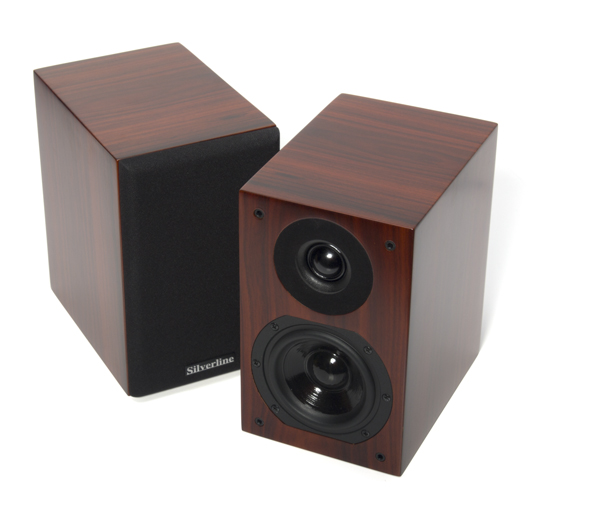
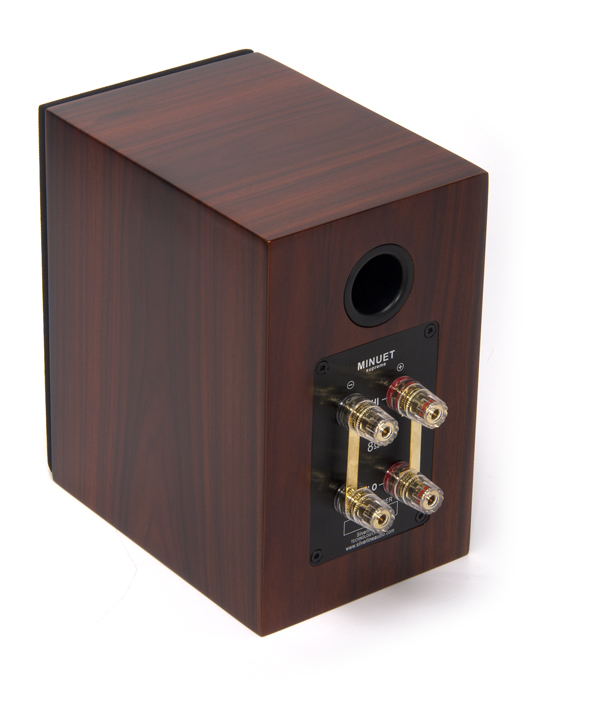
Given the hernia-inducing weight of some high-end equipment, it was a welcome relief to receive a 15-pound carton that a mere mortal can easily hoist. While unpacking these little beauties, I was impressed with the handsome rosewood vinyl veneer, high-quality speaker terminals, and compact size (9″ x 5.5″ x 7.25″). On the surface, nothing seems unusual about the Minuets’ design. These are 2-way rear-ported bass reflex transducers with nominal 8-ohm impedance and claimed frequency response of 60–28,000 Hz. A 1″ silk dome tweeter and 3.25″ paper-pulp cone mid/woofer, protected by a removable black grille, cross over at 3500 Hz. The cabinets seem well braced, and yield a dull “donk” when rapped.

Setting up the Minuets was a piece of cake. They settled solidly, aided by Blu-Tack on my spiked 28″ Target speaker stands, loaded with 60 pounds of lead shot. The Minuets can be bi-wired, which is how I  hooked them  up for this review. After a few days of serious break-in, the Minuets wound up 5 feet from the front wall, 6 feet from each side wall, and 10 feet from the comfy couch in my 15’ x 21’ x 8’ listening room.  They were placed 8 feet apart, and angled about 30 degrees toward the listening position.  I did most of my listening with the grilles removed.  However, if you have curious children or pets, leave the grilles on; the small sonic differences are not worth risking any damage to the drivers. And sure, my front end electronics—Pass XP-20 preamp and XA-100.5 monoblocks—and associated interconnects, power cords, and speaker cables (Nordost Odin) were overkill. But I had to hear what the Minuets would do with my best stuff.

Minuets Sing and Dance

When first hearing a speaker, I want know how it reproduces small ensembles and solo instruments. Since small groups and soloists can actually fit into many listening rooms, playing such music remains my favorite assessment of the speaker’s ability to recreate “reality.” In handling Duke’s “In a Sentimental Mood” from Mark Levinson’s Live Recordings at Red Rose Music, the Minuets had Chico Freeman’s sax and George Cables’ piano sounding just as I imagined they would in an intimate lounge. Another test came courtesy of James Boyk playing Prokofiev’s challenging Sixth Piano Sonata off 20th Century Masters, a track that boasts great dynamic range and percussive effects. No sweat for the Minuets; the piano was life-sized and appropriately brilliant.

Good recordings of vocal groups help evaluate a speaker’s capacity to pick out individual players. I cranked up Ann Savoy and Her Sleepness Knights belting out “If Dreams Come True,” where Savoy sings upfront and is backed by violin, guitar, piano and upright bass. The Minuets had no trouble keeping tabs on each instrument, particularly the dancing bass. I continued with a big-band Latin number, the self-titled cut from Pacquito d’Rivera’s Tropicana Nights on Chesky Records, a 96kHz/24-bit download brimming with in-your-face dynamics and pace. The Minuets did the tricky salsa footwork without missing a step.

If I get lucky, a new component always leads to at least one magic moment. Aptly, the Minuets came through during the holiday season, when conveying the spaciousness of John Rutter’s “Nativity Carol” as performed by the San Francisco Choral Artists on Star of Wonder. The song features the natural warmth of a mixed chorus pitted against a hearty pipe organ in a large hall; Silverline Audio’s itsy-bitsy speakers never got lost reproducing the fantastic details.

Similarly demanding, Wagner’s “Das Rheingold” opens with a sustained subterranean organ pedal and low strings. Despite its age, Georg Solti’s 1958 Decca recording remains unsurpassed in its evocation of the primordial orchestral chords. I played the cut several times just to be sure that I wasn’t becoming delusional about the extended clean bass that the mighty mites emitted. Nope: A personal reference for 30 years, Sheila Jordan’s Sheila LP sounded as fresh and lifelike as ever, with Jordan’s voice and the accompanying upright bass right there in my room.

Maybe Size Doesn’t Matter

Totem Acoustic’s original Model 1s were the last mini-monitors to hold sway in my system. That was about 20 years ago. While I’ve always had a soft spot for the 1s, they never got me all the way up the stairway to audio heaven. The Totems handle upper and midrange quite well, but shortchange the bass extension and image size.

After living with the Minuets, I have good reason to rethink my opinion on mini-monitors. These little guys sound much larger than they have a right to sound. Voice reproduction, an important personal criterion for assessing a speaker, was warm and natural. High frequencies were extended in a good way, and not edgy or analytic, a compliment to Silverline Audio’s choice of tweeter and crossover implementation. The Minuets’ ample bass and astonishing height and depth of image came as huge surprises.

Of course, there are a few practical considerations that should be taken under advisement. The speakers can produce pretty big sound, but their sensitivity (88db) is lower than that of many larger speakers. Silverline recommends amplifiers ranging in power from 10–300 watts RMS. During the review, I substituted Pass amps with outputs of 30 to 150 watts per channel. Pushed to near- realistic levels, the Minuets sang best for their supper when fed by amps capable of at least 100 watts per side. Before purchase, try auditioning the speakers with your own amplifier to be sure it is juicy enough to properly drive them. And since the Minuets are light in weight, they require solid stands to provide critical isolation and stability.

The Minuets are not labeled “Supreme” for nothing. These proverbial little Davids weren’t embarrassed by anything I threw at them. No, you won’t get the huge soundstage made possible by big panels. But you will get fabulous sound in the critical octaves and a satisfying sense of space. For those interested in home theater applications, Silverline Audio makes a compatible center channel. Just add another pair of Minuets, season with a compact subwoofer, and sit back and enjoy. What a bargain.

Bel Canto e.One FM1 Tuner

We live in an era of audio contrasts. Digital disc players and music servers coexist with vinyl playback systems like lions and lambs. Reel-to-reel and cassette tape decks appear headed for white elephant status. FM radio, the only other major analog holdout, remains under siege from satellite and Internet broadcasting. So why bother with a new analog FM tuner?

I posed the question to John Stronczer, CEO of Bel Canto Design. A self-confessed FM fancier, he sees the creation of the FM1 as a “challenge,” a device that applies his company’s advances in digital-signal processing to taming the occasionally wild analog FM signal. Stronczer wisely resisted the temptation to “throw in” HD Radio because of its inferior compressed sound.  He’s convinced that there are enough audiophiles who will appreciate the fruits of Bel Canto’s labor and prefer the superiority of honest analog FM sound. The performance of the FM1 should prove him correct.

The Wonderful World of FM Radio

My long love affair with FM radio started with a Dynaco tuner in the 1960s and was fueled by stations like Chicago’s WFMT. Leaving the city’s bitter cold for Augusta, Georgia’s humid heat, I found that my FM options had also gone south. To fulfill the need for high quality cultural programming, I turned to two local public radio stations.  Unfortunately, they reside in the low rent district of the FM band. Their weaker signals led to the acquisition of quieter, more sensitive FM tuners—including those from Magnum Labs, Fanfare, Day Sequerra—and supporting them with excellent antennas.

Of course, listening habits change over time. After discovering digital music servers, I started spending more time with Internet radio and less with my beloved analog FM tuner. The good news about digital music servers is that they access thousands of radio stations that cover all genres. The bad news: highly compressed signals (usually 128 kbps or lower) that reduce frequency response and channel separation. While I didn’t miss analog FM’s snap, crackle, and pop, I missed its air and dynamics. Enter the FM1, Bel Canto’s first serious foray into the world of analog FM tuners.

FM1 Crosses My Threshold: The Magic Box

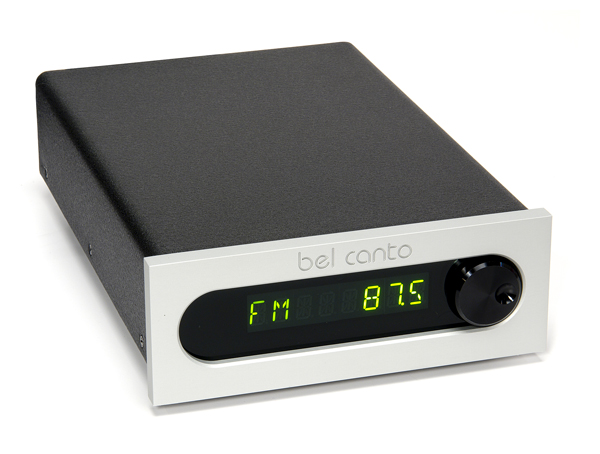
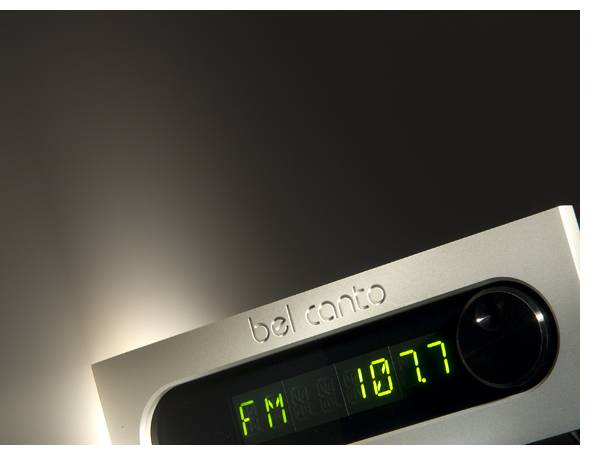
Aesthetically, the FM1 shares the compact, understated façade of its e.One stable mates.  A multifunction knob selects broadcast mode, station frequency (call letters and program data when available), and signal strength. The supplied remote can store 10 preset channels and controls other compatible Bel Canto equipment. Pushing the “tuner” button enables forward and reverse channel selection, operation display, and forced mono for noisy stations.

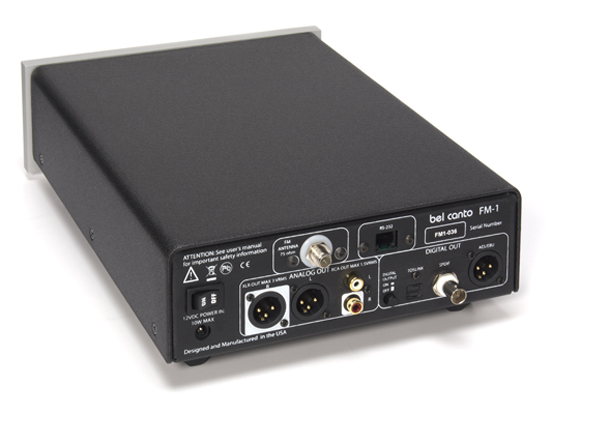
On the back, the rear panel is cleanly laid out. From left to right, there is a power switch; an input for the basic outboard power supply or optional VBS1 (virtual battery) and LNS1 (line power supply); XLR or RCA analog ouputs; an antenna input; an RS-232 control port; and bank of digital outputs (SPDIF/BNC, Toslink, and AES/EBU). The “magic” in this little box comes from its sophisticated digital signal processor (DSP) that massages the raw FM signal. After digital processing, the signal can be routed to analog or digital outputs (as a 96kHz/24-bit data stream). This onboard technology is an offshoot of Bel Canto’s extensive DSP research. I listened through both balanced and unbalanced analog outputs feeding my Pass preamp, and through the digital coaxial outputs into a PerfectWave DAC.

The most critical and time-consuming part of setting up the FM1 is described in the concise user’s guide under the heading “Choosing Your Antenna.” The supplied wire antenna is intended to ensure proper functioning of the FM1, but not for critical listening.  As my housing subdivision falls between rural and urban in terms of broadcast signal strength, I followed the company’s recommendations to the letter. I also placed a Magnum Labs Signal Sleuth between the antenna lead-in and the FM1. The Sleuth greatly aids the cause of public radio stations found at the far left of the FM band.

The Listening Sessions: The Sounds of Silence

It took nearly two hours to set up my two antennas. A Fanfare FM-2G antenna took turns with a Winegard multi-element Yagi, the latter as ideal for single-family homes as the former component is for apartment dwellers. The FM1 is more sensitive to antenna selection, orientation, and placement than just about any tuner I’ve used. I regretted not being able to use an oscilloscope to assist in the tedious but essential process of antenna adjustment. Fortunately, the FM1’s signal strength display readout on the front panel offers considerable help with antenna orientation.

Greater Augusta sports 18 analog FM stations that have Internet counterparts, enabling a direct comparison of both broadcast methods. The Fanfare whip antenna retrieved 12 stations suitable for listening; the Yagi got all 18 and was used for most of the critical sessions. While the FM1’s signal strength indicator ranges from 0 to 100, a reading of at least 40 is needed to prevent the tuner defaulting to Blend (reduced channel separation) mode. With either antenna, only 8 stations hit the necessary target: My two public radio favorites and six popular music stations.

FM noise, the Achilles heel of analog stereo broadcasts, was minimal for the strongest stations. Bel Canto’s latest design is the quietest tuner I’ve ever heard. Public radio stations sounded better than their pop counterparts that typically EQ their signal for “boom and sizzle” aimed at car and portable radios. The FM1 mercilessly exposed such differences in broadcast techniques, just as a good tuner should.

My “aha” moment came when comparing Internet broadcasts from a Logitech Squeezebox Touch connected to a PerfectWave DAC. The analog broadcasts had a slight hiss, but their air, imaging, and warmth easily bested that of the highest-quality digital stations. Voices sounded more natural on the FM1 and lacked the pervasive tubiness of many Internet sources.  After many A/B comparisons, I was hard pressed to detect a consistent difference between the FM1’s digital and analog outputs—both sounded excellent. Best overall sound came from balanced operation.

To further experiment, I retrieved my old Fanfare FM-1A from storage. After hooking it up to the same antennas and playing it through balanced outputs, the tuner picked up all of the stations that the Bel Canto unit captured. The Fanfare did a creditable job with dynamics and imaging, yet its noise level, even on the best stations, registered noticeably higher than that of the Bel Canto and intruded on my enjoyment of the music.

Signing Off

Like a first date, many of us fondly remember FM radio as a gateway to new life experiences. The top FM stations had the best sound and programming capacity that went far beyond that of our home music libraries. These stations also served up rare recordings and live concert broadcasts.

So, before you conclude that $1500 is too steep an admission price, consider that it’s a one-time cash outlay compared to the ongoing and rising expense of annual digital subscriptions with high-speed Internet portals. And, in the end, remember, you’re footing the bill for lower fidelity.

Bel Canto’s FM1 is evolutionary in its handling of FM noise. It breathes new life into your stereo system, regardless of its vintage or price point. Analog FM remains a viable audio option, and will be around for the foreseeable future. If you live in a metro area blessed with strong, clear FM stations and highly varied programming, the FM1 presents one of the best modern arguments in support of the radio medium that I’ve ever heard.

Bel Canto e.One  FM1  FM Tuner

MSRP: $1,495

www.belcantodesign.com

Peripherals

Digital Sources Esoteric P-03    D-03    G-Orb    UX-Pi    Logitech Squeezebox Touch     Meridian Sooloos   PS Audio PerfectWave
Analog Sources VPI HRX w/12.7 arm, Rim Drive    VPI Aries w/10.5i arm, flywheel, SDS Controllers
Phono Cartridges Clearaudio Goldfinger v.2    Clearaudio Stradivari
Phono Preamplifiers Pass XP-25, XP-15
Preamplifiers Pass XP-20    Lexicon 12HD-B
Power Amplifiers Pass XA-100.5    Pass X-3
Speakers Martin Logan CLX, Stage, Script-I, Descent-I (2), Descent (2)
Interconnects Nordost Odin and Valhalla
Speaker Cable Nordost Odin
Power Cords/Conditioning Nordost Odin and Valhalla    Running Springs Audio Dmitri and Maxim
Vibration Control Black Diamond Racing
Room Treatment Echo Buster, Corner Busters, Bass Busters, Double Busters

ZZ Top – Deguello

I was a little scared to lower the tonearm on Rhino’s pressing of this 1979 set after my dreadful experience with Rio Grande Mud, but this one brought my faith back. (This leads me to believe that my copy of Rio Grande Mud is defective. I’ve had much better than average luck with audiophile pressings over the years, so perhaps my number was up.) Everything you love about ZZ Top is here in spades: big blazing guitar riffs, grumbling bass lines, and powerful albeit sparse drumming that has made this band famous. How can you not love a record that not only features “Cheap Sunglasses” and “I’m Bad I’m Nationwide” as well as deep cuts such as “Hi Fi Mama” and “A Fool For Your Stockings?” While some might dismiss the fare as party music, the playing on Deguello is top-notch, replete with guitar sounds that could easily be mistaken as those of Stevie Ray Vaughan. When these guys weren’t clowning around, they were damn good musicians.

Dusting off the original pressing revealed an overall flatness and fairly high level of surface noise. The new Rhino version offers mega dynamics, with Gibbons’ guitar cutting through the grunge and now front and center. Frank Beard’s drumming is also much cleaner, with the cymbals enjoying huge helpings of decay and smoothness.

My only complaint? Rhino didn’t pay the same level of attention to the album’s packaging as it did with Rio Grande Mud. The cover came apart in my hands as I removed it from the shrinkwrap. Tough to swallow for collectors that really obsess over replication, and for $25, we deserve better.  –Jeff Dorgay

Rhino, 180g LP

ZZ Top – Rio Grande Mud

Back before the two front men in ZZ Top had massive beards and kicked their space shuttle into autopilot, the Texas trio really rocked. Need evidence? The band’s second album, Rio Grande Mud, is a blues-rock powerhouse. Bassist Dusty Hill’s rendition of “Francine” sounds like Ted Nugent turned up to 12, and guitarist Billy Gibbons demonstrates serious grit.

Unfortunately, this record is flat. While the sticker on the cover talks about all the care that went into the pressing, the highs are muffled and shallow. It sounds like the LP was transferred from a cassette tape, not a master tape. If the label read “Friday Music,” I wouldn’t be so surprised, but given that Chris Bellman at Bernie Grundman did the work and claims an excellent track record, I’m reserving judgment until another copy is procured. -Jeff Dorgay

Rhino, 180g LP

Ted Nugent – Cat Scratch Fever

Bolstered with confidence from my recent experience with Friday Music’s remaster of Robin Trower’s Bridge of Sighs, I decided to give the label’s offerings another spin, especially considering it just pulled another one of my 70s favorites out of the vault: Ted Nugent’s Cat Scratch Fever, the record that in 1977 made the Nuge an ubiquitous presence on rock radio.

A quick switch between the Friday version and my early stamper original reveals the former being quieter and smoother—definitely a job well done by Kevin Gray this time. While most of us have heard the title track more than enough, Cat Scratch Fever boasts a handful of great tunes that did not get much airplay before 10 p.m. Thanks to the extra air on “Death By Misadventure,” you’ll now hear more drumming finesse as well as a few extra layers of background vocals where, previously, there was only one fat background vocal track. And “Live it Up” has way more cowbell than on the original. (I’m not kidding.)

Combine these improvements with dead-quiet surfaces and zero inner-groove distortion, and the results maximize the heaviness of this rock classic; Friday’s edition is a major success. Let’s hope Gray and Co. soon get their hands on Free For All and Ted Nugent. That said, the packaging is sub par. The cover is dreadfully reproduced, very yellow with so much contrast it looks like the color separations were made from a color copy made at Kinko’s. But I’m guessing you aren’t buying a remastered copy of Cat Scratch Fever for the album art.  – Jeff Dorgay

Friday Music, 180g LP

The B-52’s – The B-52’s

Much as I love the B-52’s, I forgot just how awful this record sounded. And really, there’s excuse for the shortcomings. In 1979, the CD was still years away, but you’d never guess by giving this new wave classic a cursory listen. Compression is king; cymbals are crunchy and the soundstage is flat and two-dimensional. To make matters worse, the group’s signature “Rock Lobster” tune is plagued with inner-groove distortion. Arrgh.

MoFi’s Silver Label version instantly trounces the standard issue pressing. During the opening “Planet Claire,” there’s a great bongo track that is all but lost in the mix on the original. The remaster gives the aforementioned instruments plenty of room to breathe along with the vocal tracks. This pressing has oodles of bass energy; by comparison, the original sounds like a system with the subwoofer off and seems to roll off around 80hz with no weight. (Like all of the early Van Halen albums.)

And “Rock Lobster” now sounds incredible. Vocalists Fred Schneider and Cindy Wilson now have a much more distinct sound, especially when experienced after hearing the original pressing, on which they just blend in to be one, fat vocal track. And all traces of inner-groove distortion are banished on both sides of the LP, a testament to the care put into this pressing.

MoFi’s Silver Label is just getting started; the label has many interesting titles in the queue. Who needs another copy of Kind of Blue anyway?  -Jeff Dorgay

MoFi Silver Label, 140g LP

INXS – Kick

It’s somewhat ironic that MoFi kicked off its new Silver Label with a mainstream pop title, but a sense of humor is always welcome in this wacky business. According to Josh Bizar, head of marketing for Music Direct, owners of the MoFi label, “While we can’t always put our hands on the original master tape for the Silver Series, as we do with our standard pressings, we get as close as we can, and on some of these records, we’ve actually managed to get the original master. The big difference is that these records are mastered and cut in real time on 140g vinyl instead of 180g vinyl. The quality is still to the high level you’ve come to expect from MoFi.”

When Kick was released in 1987, the LP was on its way out the out door, and though many records were still recorded and mastered on analog tape, most of the vinyl getting pressed was mediocre at best. Originally produced by Chris Thomas (Pretenders, Elvis Costello) and mixed by Bob Clearmountain (Van Halen, Doobie Brothers), Kick proved no exception; revisiting my original pressing revealed CD-like sound, with healthy doses of compression and treble boost. MoFi’s version still has a touch of HF boost, but it’s a huge improvement over the analog original and miles ahead of the CD. The radio and MTV classic “Need You Tonight” doesn’t even feel like the same tune. Replete with added spaciousness, you can hear lead singer Michael Hutchinson’s vocal stylings much easier and, like the rest of the album, there is now a healthy dose of LF energy.  The bass is consistently heavier throughout, giving this record a much fuller sound, perhaps the most so on “Mystified” and “New Sensation.”

Should you find yourself in a totally 80s mood, Kick is fun to revisit as it’s chock full of familiar hits and finds INXS was at the top of its game. It’s amazing at how much more music there’s on this record that many of us never heard the first time around. And after spinning both sides, it’s clear that MoFi has kept their promise. The surfaces are just as quiet as any of the label’s recent half-speed-mastered LPs, and while the latter still possess extra degrees of ultimate smoothness, the results are excellent and worthy of your hard-earned cash.  And for any collectors concerned about cover quality, the printing is first-rate, too.  – Jeff Dorgay

MoFi Silver Label, 140g LP

Iron and Wine – Kiss Each Other Clean

Though not a remastered album, the newest record from Iron & Wine is certainly produced to high audiophile standards. Mastered by Greg Calbi, Sam Beam and Co.’s latest has much more of a pop feel than his past effort, The Shepherd’s Dog, which possesses more of a folk/Americana flavor. Longtime fans may even be taken back at the approach, which at times takes a turn down a highly ambient path. Those encountering Iron & Wine for the first time may be equally surprised, provided they explore the group’s earlier works.

If you didn’t know better, you might think Brian Eno had a hand in this record instead of resident Iron and Wine producer Brian Deck. It’s a very cool departure, but Beam doesn’t go so far out of his orbit to completely abandon the sound that originally put him on the mainstream radar a few years ago. A cursory listen to “Half Moon” anchors you to the band’s past.

And the recording quality is outstanding. Calbi has taken care not to push up the levels and squeeze the life out of the intimate recording. From the start, on the opening “Walking Far From Home,” the bass rattles the floor while the entire record has a very wide, lush soundstage reminiscent of the best studio creations of the 70s.

As a bonus, a CD is included for the iPod and music server generation. Once again, it’s nice to see the major labels nail it. And with vinyl sales up again in 2010, it would be great to see the $20 LP-and-CD combination become the norm. Sign me up. – Jeff Dorgay

Warner Bros., 180g LP and CD

Art Pepper – The Complete Art Pepper At Ronnie Scott’s Club: London 1980

Pure Pleasure always does a great job of bringing obscure treasures to light. In the case of rescuing Art Pepper’s legendary shows at Ronnie Scott’s in 1980, the label has struck pure gold. Originally recorded for the long-defunct Mole Records, these records became nearly impossible to find and, if you did manage to locate them, incredibly expensive. This remastered 7LP set includes both Mole releases as well as 17 previously unreleased tracks, courtesy of Pepper’s wife having uncovered the lost material.

The performances are simply fantastic. Pepper’s playing is awash in nuance, and the Milcho Leviev Quartet is in constant sync with the saxophone master. Moreover, the audience is so quiet that you almost forget the music is played before a crowd. And, there’s only a slight duplication of material, with “Red Car” and “Ophelia” played at both the June 27 and 28 shows. However, the different renditions, performed on back-to-back days, reveal Pepper’s genius. His audience banter, also preserved on the albums, adds to the fun and realism.

As for the sound? Studio-like, with the venue’s dimensions perfectly recreated. All 14 LP sides are immaculately clean; not a click or a pop anywhere, and BIG dynamics throughout. Better still, the liner notes claim that the records were made “using multi-microphones in a straight stereo mix with no noise reduction, limiting, compression or EQ.”

The set also includes a booklet with photos, program notes, and commentary—great for any aficionado. Whether you are a completist that owns practically everything, or a relative newcomer to jazz or analog, this box set should be in your collection. -Jeff Dorgay

Pure Pleasure Records, 7LP Box Set

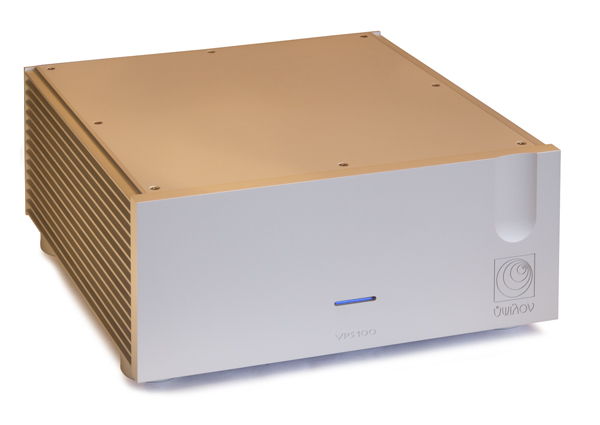
Ypsilon VPS 100 Phono Preamplifier

Greece is known for a number of things. It’s the origin of western democracy. It was overtaken by the Romans. It’s constantly feuding with Turkey. It’s got beautiful islands. And most recently, it experienced rioting over its bankruptcy. But stereo equipment? It’s no secret that there are hard-core Greek audiophiles, but the last thing I would ever  associate Greece with is the production of high-end audio gear. I couldn’t have been more wrong.

Ypsilon electronics, for example, is aiming to become one of the big dogs in the stereo world. It boasts an array of transformer-coupled preamplifiers, phonostages, and amplifiers whose sonic achievements are nearly as staggering as their price, which is to say that both are very high. Based in Athens, the company is headed by technological whiz Demetris Backlavas, as genial a soul as you’ll ever meet in the high-end industry.

Past and Present Transformed

Ypsilon, like its importer Brian Ackerman of Aaudio Imports—who is based in Parker, Colorado, and who is an indefatigable audiophile—does not do things by half-measures. The fit ‘n finish of its units are impeccable and understated. The most bling you’ll see is a steady blue light that emits from the front panel. But inside is a plethora of whiz-bang technology that represents, in many ways, a unique fusion of past and present.

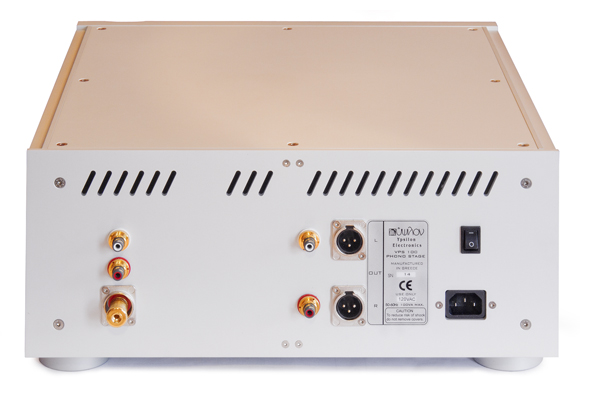
The $26,000 Ypsilon VPS 100 employs a hefty outboard transformer to step up the tiny phono signal. The external transformer is matched in gain to the cartridge you’re using. The upside is that the match should be perfect; the downside is that you may need more than one transformer if you’re using multiple arms and cartridges. Yet the build quality of the transformers appears to be exemplary.

You may well find yourself using more than one transformer, and if so, you can also use loading plugs with them to change the impedance. Depending on which transformer you’re using, the amount of gain varies. I found the MC-16 to be the most versatile. In theory, lower gain transformers mean fewer windings and purer sound. In addition, Ackerman recommends utilizing the Stage III Concepts Analord Prime phono cable from the transformer to the Ypsilon unit itself. I took his advice and discovered that the Analord Prime offers mesmerizing performance. It is fast, spacious, and refined. Unequivocally recommended.

Zero Capacitors

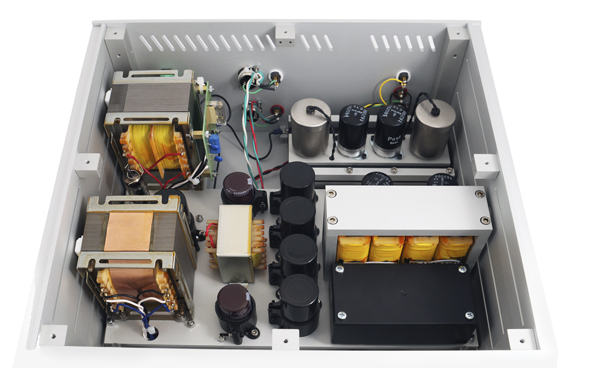
Inside, the VPS 100  has two Siemens C3g tubes for the gain stage and a 6CA4/EZ81 tube rectifier. Ypsilon’s main claim to fame is that it doesn’t use capacitors in the signal path or anywhere else. Capacitors, you may recall, do two things: store and release energy. A small industry has developed around creating ever-more transparent and fast capacitors that eliminate what sounds like the smearing of music in preamps and amplifiers. But Ypsilon apparently decided to perform an end-run around the capacitor issue. It’s returning to the pre-capacitor age when transformers and lots of chokes did the job. Only Ypsilon’s transformers are made in-house and feature amorphous cores. In other words, they’re supposed to sound superior to any capacitor. Do they? Judging by the performance of the Ypsilon phonostage, the answer is a resounding yes.

Effortless Sound and Performance

Whether the Ypsilon is flatly superior to any phonostage in or above its price class will always be subject to dispute. But the phonostage, to which I’ve listened for nearly six months, possesses some remarkable characteristics. Its most notable trait is its transparency to the source—an ability to project back, up, sideways, down, revealing aspects of LPs that, frankly, had never been previously apparent. It also has an extremely organized sound.

Some of these attributes first came to me while listening to a scintillating LP titled The Black Motion Picture Experience, picked up for a cool $20 at Los Angeles’ Record Surplus, one of the last major purveyors of used vinyl. Featuring cuts such as “Super Fly,” “Freddie’s Dead,” and “Across 110th St.,” it offers a stern test of any stereo system. The Ypsilon passed the exam with flying colors. Perhaps its most striking feature related to the sheer scale it reproduced. The Ypsilon seems to offer another octave of air on top, allowing it to produce a tremendous amount of detail with ease. Soprano voices, choirs in the background, and cymbal strikes all emerged from stunningly black backgrounds. They were also precisely located, no mean feat when you’re talking about a 1970s LP with a large cast of characters and instruments. The Ypsilon was never ruffled.

Similarly, on Richard Betts’ prized Highway Call, the Ypsilon managed to take a recording that can sound slightly compressed and inject it with a dose of air. In that it beautifully separated the drums and guitars and voices from each other, the Ypsilon gave the sense of a live band playing. It provided a much closer connection to the music, allowing that critical part of the brain to turn off and just enjoy the sound.

Moreover, the size of the soundstage can become almost hallucinatory. For all its transparency, which is as good as I’ve ever heard, the Ypsilon doesn’t thin out the sound at all. On the contrary, drum whacks come through with awe-inspiring heft. So do double basses on orchestral recordings, like Stravinsky’s Firebird conducted by Antal Dorati on a legendary Mercury pressing. The union of extreme detail, coupled with massive presence, really has to be heard.

There’s an immediacy to the sound, a lack of restraint, and a sense of a time delay having been removed when the Ypsilon is in my system. The Ypsilon, you could say, sounds unencumbered. It allows the music to float out in an ethereal way. Consider the album Sam Cooke at the Copa, an old mono on RCA Victor. The Ypsilon bestows a real sense of the club in which Cooke sings. And the soul legend’s voice sounds divinely inspired. Almost—dare I say it?—live. Ditto for the Miles Davis recording of “My Funny Valentine” on the Prestige album Cookin’ With The Miles Davis Quintet. The extent to which it sounds as though the muted trumpet, plangent and tinny, hovers in the room is remarkable. The Ypsilon appeared to capture every last nuance and shading.

Tales of Brave Ulysses

The most breathtaking sound that I heard with the Ypsilon came courtesy of an Oscar Peterson and Jon Faddis recording on Pablo. Peterson, the heir to Art Tatum, possesses an incredibly virtuosic style. Notes can spray out like a geyser when he tinkles the ivories. On “Lester Leaps In,” the speed and full sound of the piano are simply the best I’ve experienced. The Ypsilon conveyed the piano’s harmonic overtones with astounding fidelity.

These pluses, it must be said, were not immediately apparent. It took months for the phonostage to break in. Some pieces don’t seem to require much run-in time. The Ypsilon is assuredly not one of them. At times I wondered whether its performance would ever pick up. But my guess is that the wire in the transformers just takes eons to burn-in. In fact, I’m not at all sure that the unit has finished its odyssey.

Like the ancient Greek hero Ulysses, it’s taking its sweet time to reach its home destination. But the path that leads to it is sheer bliss. The Ypsilon is as pure as it gets. It is not a good phonostage. It is a superb one. But beware: If you audition the Ypsilon, you will almost surely be unable to part with it.  -Jacob Heilbrunn

Additional Listening:

To fully understand the enthusiasm put forth in this review, it is important to mention that the reference system used to evaluate the VPS 100 is truly staggering, both in capability and the care spent setting it up. On a recent visit to Jacob’s house, I was instantly taken back by the Wilson X-2’s and matching pair of Thor subwoofers. You don’t see that kind of hardware at the average audio society event. While the four Classe CA-600M monoblocks and Messenger Reference Tube preamplifier were indeed impressive, just behind the system—and in an isolated room—sits a Continuum Caliburn with a pair of Cobra arms. One arm is optimized for stereo playback and features the AirTight PC-1 Supreme; the other is outfitted for mono with a Lyra Titan Mono. To put it mildly, there is no weak link in the reproduction chain.

Having listened to most of the cuts referenced in the review here, I concur with all of Jacob’s conclusions. Again, the most impressive aspect of the Ypsilon is the effortlessness of its presentation. The moment the tonearm is lowered onto the record, the concept of listening to a music system disappears from your consciousness, allowing you to enjoy music reproduced without limitation. And that’s truly what high-end audio is all about.  —Jeff Dorgay

Ypsilon VPS 100 Phono Preamplifier

MSRP:  $26,000

US Distribution:  Brian Ackerman

www.aaudioimports.com

(720) 851-2525

Peripherals

Analog Source Continuum Caliburn w/2 Cobra tonearms    AirTight PC-1 Supreme (Stereo)     Lyra Titan (Mono)
Preamplifier Messenger
Power Amplifier Classe CA-M600 Monos (two more for subwoofers)
Speakers Wilson Audio Alexandria X-2 w/Thor Subwoofers    Magnepan 20.1
Cable Jena Labs
Power Isoclean Supreme Focus
Accessories Stage III Concepts Analord Prime Phono Cable

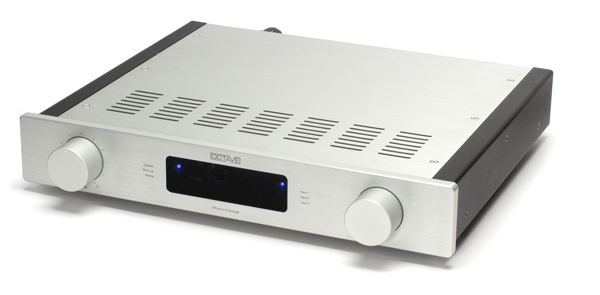
Octave Phono Module Preamplifier

One of the toughest things audio enthusiasts face is knowing when to stop hunting for a different piece of gear. How many times have you planted your feet, determined to stick with your favorite preamplifier du jour, only to fall in love with a new power amplifier that needs XLR inputs where previously, you only had RCAs or vice-versa? Perhaps a second turntable makes sense, but you don’t want to abandon your current phono preamplifier for something different that only has one input. And so it goes.

I’ve always enjoyed Naim’s modular concept of adding a larger power supply to increase a system’s performance, but German manufacturer Octave takes things even further, allowing you the option of choosing your input sources as well as your output choices. And, like Octave’s power amplifiers, there is an external power supply upgrade, which in this case, is a passive device that offers additional capacitance. Old timers may remember this arrangement in the Dynaco Stereo 400 power amplifier.

Many Modules

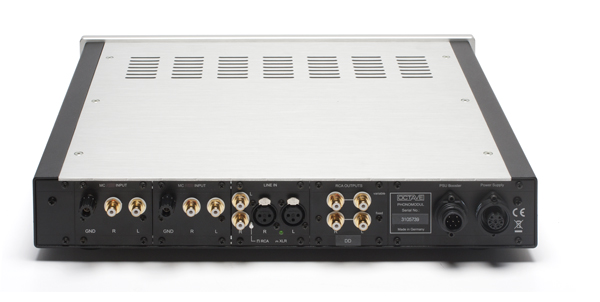
Octave’s Phono Module and power supply sell for $4,500, but the price does not include any input or output modules. One high-level input module can be switched between XLR or RCA jacks, which makes for an extremely versatile option. You get three different choices exist for the phono inputs. The MM module with RCA inputs offers 38db of gain, with 1k and 47k input impedance, and costs $450. Two (RCA and Balanced ) options exist for the MC modules, offering 58 or 65db (switchable) gain along with a subsonic filter that can be enabled, with a 3db cut at 20hz. Loading is adjustable in 13 steps, from 62 ohms to 1000 ohms.  There is one MM module with 38db of gain, with 1k and 47k loading settings. The aforementioned modules sell for $600 each and are preset with the subsonic filter engaged. Finally, the standard MM and MC modules both feature RCA jacks, but there is also an optional module with a set of balanced XLR inputs that provides the best performance in terms of lowest noise—provided you don’t mind switching to a balanced input cable for your tonearm.

Should you need a high-level input, add a module. While you can only use one input at a time, this $600 board features an XLR and RCA input that’s switchable via a small pushbutton. And, there are three choices for output modules: A standard RCA version is $450 with fixed and variable outputs; two DD (direct drive) modules are designed to drive a power amplifier directly, making the Phono Module a full-function preamplifier. The latter carry an $800 pricetag, and come with a choice of two RCA outputs or one RCA and one XLR.

Take a deep breath and sort your options; these choices make the Phono Module sell for somewhere between $5,400 and $7,500, depending on configuration. Plus, you can always change the setup. For more configuration information, visit this link to the Octave site, with all the specs along with more pictures:

http://www.octave.de/en/htdocs/verstaerker/phonomodule.php

Setup and Configuration

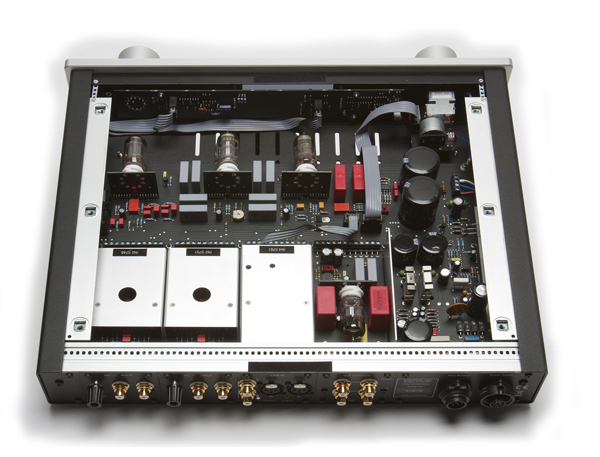
When you’ve made your final module decisions, remove the corresponding blank panels with a Phillips screwdriver and gently insert the modules. To make things user-friendlier, Octave has given the output module one more pin than the input modules so you can’t make a mistake. The pins going into the main circuit board must be tightened down with a jeweler’s (or other very small straight blade) screwdriver. Install the tubes, connect the external power supply, and you are ready to roll. The Octave manual is one of the most concise I’ve had the pleasure of reading, so even a novice audiophile will have no trouble assembling the Phono Module.  And, should you change your mind in the future – the module configuration can be easily changed, that’s the beauty of the Phono Module.

Regardless of your configuration, there will be three tubes on the main circuit board. The ECC88 (6922) is used for the output buffer, an ECC81 (12AT7) makes up the main amplification stage, and an ECC83 (12AX7) is used for the input stage. Octave suggests using “a high quality, low noise” tube for the latter position; the Phono Module came with a set of JJs installed. The DD output module in the review unit also had an ECC88 on board, making for a total of four tubes under the hood.

The Phono Module is a hybrid design that uses high-quality, low-noise Op amps for additional buffering where needed. Designer Andreas Hoffman made the decision to keep the output impedance low, but as a side benefit, the overall noise floor is very low as well. A number of manufacturers have taken this approach to incorporate the tonality of vacuum tubes with the flexibility of solid state. The resulting tonal balance is very neutral—perhaps too much so for vacuum-tube enthusiasts that want an abundance of bloom. If you didn’t know better, you might not even think the Phono Module had tubes inside. The Octave is close to perfection: It doesn’t sound like tubes or solid state, just music, and can be adjusted to your taste.

Thanks to the Octave’s wide range of gain and loading adjustments, I easily optimized my plethora of phono cartridges. After a number of trials, I settled on the Denon 103R with the AVID Volvere SP/Triplanar and the SoundSmith Sussurro Paua with the Rega P9.

Who Says You Can’t Make a Great First Impression?

Listening began with Robert Plant’s current LP, Band of Joy. I was immediately taken by the excellent portrayal of space offered by the Phono Module, which kept Plant’s voice well separated than that of support singer Patti Griffith, without ever causing her to fall into the background of the mix. Even with the budget Denon cartridge, the sound was spacious, with excellent bass control. While planning to jam some classic Plant (via Classic Records’ remasters of the Led Zeppelin catalog), I got sidetracked by the doorbell and our music-loving UPS deliveryman. When he spotted the ORB’s Metallic Spheres LP inside a box he handed me, he felt like parking the brown van and hanging out for a while. We traded Pink Floyd stories for a few minutes and he assured me that the bass on the ORB record was killer. “I don’t even own a CD player,” he proudly said, but I finally convinced him he had to deliver everyone else’s packages or else my neighbors would be torqued at what brown wasn’t doing for them today.

However, such passion made for a good excuse to pass on Zeppelin and spin the ORB. The UPS dude was right: the record does have excellent bass, and the Phono Module did a fantastic job of capturing the impact of the deep, synth bass throughout. No matter what I played, the Phono Module always had plenty of weight on tap.

Stepping up to the SoundSmith Sussurro Paua proved a good combination even if it offered a bit too much of a good thing for my system. There was resolution galore, yet the overall presentation came across as slightly two-dimensional, sounding remotely digital—almost more like a great 24/96 digital recording rather than pure analog. The AVID Acutus Reference SP with Koetsu Urushi Blue was exactly what I was looking for, a combination of high resolution and a small helping of tonal warmth. It made many a classic rock favorite come alive. MoFi’s pressing of Santana exploded with the Koetsu and, as it’s already extremely quiet, the cartridge supplied great dynamic contrast.

Great as a Phono Preamplifier or a Linestage

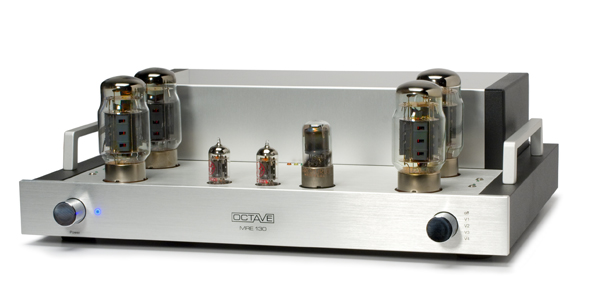
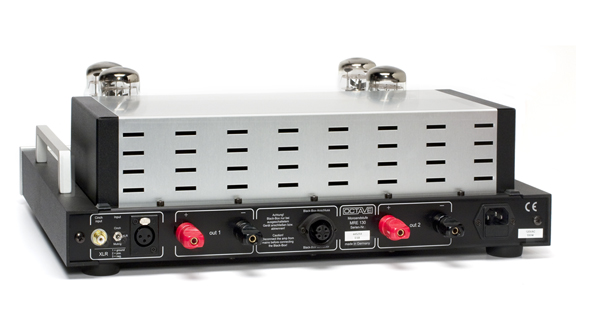
Thanks to the RCA and XLR outputs, the Phono Module worked well with the amplifiers at my disposal, its neutral character staying true with every power amplifier with which it was mated. It’s also worth noting that it didn’t have any problem driving fairly long (6-meter) interconnects through either the RCA or XLR outputs. And while it achieved more magic with Octave’s MRE 130 monoblock amplifiers (as you might expect), you should be able to smoothly blend the Phono Module with your current power amplifier.

The Power Module represents the best choice for the analog lover with two turntables and only one digital source—or even the analog purist who doesn’t require a high level input and instead wants to go directly to a power amplifier. Initially, I thought its only shortcoming was its inability to allow adjustment of the three phono inputs (ala the Aesthetix Rhea or ARC REF 2 Phono) from the listening chair. But then I concluded that I was just being a lazy American. Extra microprocessor controls would add to the cost and designer Andreas Hofmann feels that this would degrade the sound somewhat.  In retrospect, Octave made the right choice. At its current price, the Phono Module has few—if any—peers. Pushing it towards $10k would invite stiffer competition.

Time to Roll

Excellent as the Phono Module is in stock form, upgrading the tubes brings tremendous sonic benefits regardless of your preference. Variations on the input tube will effect the overall noise floor more than the other tubes (hence Octave’s suggestion at using a very low-noise tube here) and the output tube seems to impact the overall tonal character more than the other two. Ditto if you have the DD module installed, using the Phono Module as a linestage as well. The buffer stage did not make as much difference, but in all fairness, there aren’t many exotic 12AT7s on the market.

Should you prefer a bit warmer, more romantic sound, the NOS route is the way to go. Your favorite Mullard or Telefunken tubes will give the Phono Module more midrange magic but sacrifice high end extension and even a little bit of bass definition.  There’s no free lunch. If you enjoy the character with the stock tubes, but would like more resolution, I suggest the EAT tubes. These are definitely my favorite favorites, offering incredible detail, super low noise, and a big overall sound. If you only feel like buying one $225 tube, replace the input tube—it further drops the noise floor in this already super-quiet preamplifier. A bonus if you have a premium phono cartridge.

The external power supply booster, the only option I didn’t explore, is still in the design phase.  If it performs anything like the Super Black Box on the Octave MR 130 monoblock amplifiers currently in for review, it will take the Phono Module another large step forward in performance.

Superlative Performance

Regardless of your needs, if you have more than one turntable or plan on adding more than one in the near future, making the Octave Phono Module the cornerstone of your system won’t leave you painted in the corner. Its understated exterior design and overbuilt interior assure that it will perform flawlessly as your system changes. Without question, this is definitely a preamplifier with which you can grow for years to come. We are happy to award it one of our Exceptional Value Awards for 2011.  -Jeff Dorgay

The Octave Phono Module

MSRP:  $5,400 to $7,500 (depending on configuration)

Contact:  www.octave.de (Manufacturer)

www.dynaudiousa.com (US Importer)

Peripherals

Turntables AVID Acutus Reference SP w/SME V    AVID Volvere SP w/Triplanar VII    Rega P9 w/RB 1000"
Cartridges Koetsu Urushi Blue    SoundSmith Sussurro Paua    Shelter 501 II    Denon DL-103R
Power Amplifiers Octave MR130 monoblocks   Burmester 911 mk.3 monoblocks     McIntosh MC 1.2K monoblocks
Speakers GamuT S9
Cable Cardas Clear
Power Running Springs Maxim and Dmitri power conditioners

SoundSmith Sussurro Paua Cartridge

Two years ago, TONE awarded SoundSmith our Analog Product of the Year award for its cartridge aptly named The Voice, a moving iron design that retails for just under $2,200. Everyone who had a chance to audition it in our reference system was astonished by its ability to deliver such a high level of performance for such a reasonable price. After 15 minutes of listening, some of the most experienced audio enthusiasts expressed surprise at the cost, expecting it to be higher.

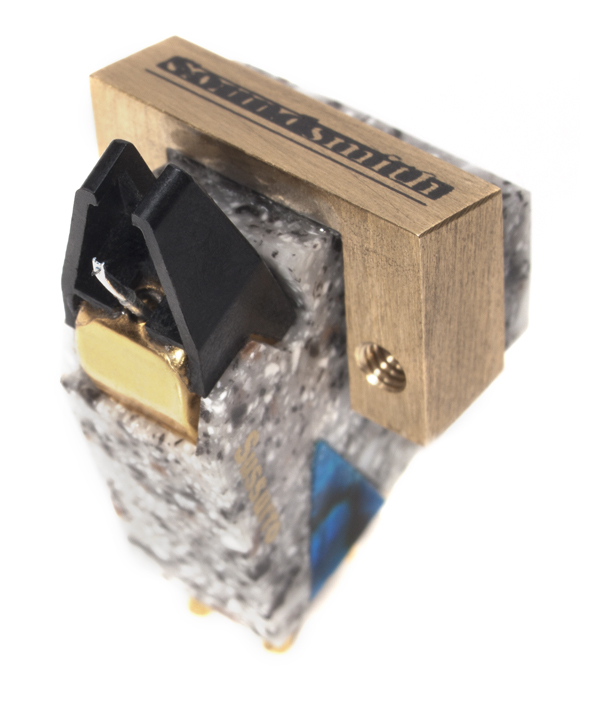
Well, déjà vu is setting in. In a day where $20,000 phono cartridges exist and $10,000 cartridges are relatively common, the Sussurro Paua is priced at $3,495. Every unit is hand-built and optimized by SoundSmith owner Peter Ledermann. It’s a low-compliance cartridge and works equally well in both my SME V and Rega RB1000 tonearms.

While most audiophiles tout the superiority of moving coil cartridges, the Sussurro Paua’s moving iron design allows the stationary magnet in the cartridge to be held rigidly in place, with only the cantilever moving. This results in a much lower moving mass—hugely contributing to the cartridge’s incredible transient attack.

Sussurro or Paua?

SoundSmith’s website reveals two cartridges, the Sussurro and the Sussurro Paua. The former is pricier, at $4,495. Which one is right for you? Both have relatively similar specs. But where the Paua uses a nude contact line diamond, bonded with SoundSmith’s “secure mount” technique to a dual mode aluminum alloy cantilever, the Sussurro features a single – crystal ruby cantilever/stylus assembly. The latter design results in even higher trackability (the Paua is no slouch in this area) and the ability to extract even more information from the grooves.

Chris Sommovigo, SoundSmith’s director of sales and marketing, calls the Paua “a bit more sultry.” I agree. These very characteristics appealed to my built-in bias of liking my system ever so slightly on the warm side of neutral. Not warm, syrupy, and lush; that tends to be slow and lacking detail. Yet, just like my favorite shade of yellow: A color that isn’t 100 % yellow, but 100% yellow with about 3% of red mixed in. I’m talking just the tiniest bit of warmth.

Set-up Basics

The Sussurro Paua differs from The Voice in a few ways. Instead of having standard 47k loading, it works in a range of 1,000–4,000 ohms. For best results, SoundSmith suggests that loading not go above 5,000 ohms. I found 2800 ohms to be optimum, but those only having a 1000-ohm option on their preamplifier should not shy away from the cartridge. Ledermann feels 1000 ohms is the tipping point, “below 1000 ohms tends to lower the HF response and above 1000 ohms tends to accentuate it.”  Breaking it in with 1000-ohm loading while waiting for custom-loading resistors to arrive from Audio Research didn’t give me hives. And I could have easily lived with the Sussurro Paua loaded thusly if custom loading was not an option.  And as Ledermann mentioned, it does depend on the recording, so I’m glad I have both at my disposal.

While most moving iron cartridges have a fairly high output (in the 2mv range), the Sussurro Paua is unique in the sense that it is a low-output design: .3mv. Again, fewer windings on the coils help reduce the mass and add to signal purity. As an added bonus, the cartridge features a six sided sheilding system, resulting in very low background noise. The Sussurro Paua is definitely one of the most quiet phono cartridges I’ve had the privilege of using.

If you’ve ever had the chance to meet SoundSmith president Peter Ledermann at a hi-fi show, you know he’s a major analog braniac. He’s kind of like Yoda, always thinking of ways to make the whole system better. His new EZ-Mount system (patent pending) features four sets of thumbscrews, made from different materials (nylon, aluminum, stainless, and brass) that vary in weight from one gram per pair to a little more than six grams per pair. Such options allow you to dial in just the right amount of mass at the end of your tonearm. And, as Ledermann mentions on the company’s website: “Now it only takes two hands to mount a cartridge.” No, it’s not as stylish as a pair of small Allen Head screws, but it’s an excellent solution to a vexing problem.

Once you utilize the EZ-Mount system, you’ll happily forgo fashion. Sommovigo mentions that the Paua “is a bit more forgiving in the setup than the Sussurro.” While I am unable to comment on the direct comparison, the Paua is indeed a snap to set up. I can’t imagine this cartridge proving tough for even those with moderate analog skills— especially in the case of an SME user, where the adjustment protocol is so straightforward. Since VTA on the Rega P1000 arm can only be roughly adjusted with spacers, I suggest starting with a 2mm spacer that can be purchased at a local Rega dealer or online from Music Direct.

Tracking force is listed at 1.8 to 2.2 grams, and while starting squarely in the middle of the range worked well, the SME arm tended to navigate the toughest portions of my favorite test tracks at 1.95 grams. The RB 1000 also responded to tracking very close to the 2.2-gram limit. All tracking force measurements were made with the ClearAudio Weight Watcher digital scale.

Nailing the Fundamentals

The Sussurro Paua handled all of the basics with ease. Spot on tonality? Check. Acoustic instruments possessed a perfect balance of tone, attack, and detail. When listening to Miles Davis’ Kind of Blue, or for that matter, any favorite Miles albums, his trademark horn took on a truly three-dimensional feel, with an extra measure of texture that will fool you if you close your eyes for even a few seconds. It’s here where that drop of warmth works to your advantage. I spun a handful of cursory piano and violin records that again reinforced just how natural the Sussurro Paua sounds. Once you put 20 or 30 hours on the Paua and double-checked the setup, perhaps with a slight bit of readjustment, I recommend trying a few of your standby acoustic tracks.

The excellent musical texture extends to the frequency extremes as well. Staying in the Miles/John Coltrane groove proved a divine experience. The 200g Classic Records pressing of Kind of Blue rendered the cymbal decay without any steps in the gentle gradation; the music just seemed to disappear into the black. Acoustic bass was perfectly rendered, with a thickness of tone that made the instrument absolutely convincing. Standing in the other room, the sound was as close to real as I could imagine. Bass? Neither over- nor under-damped. And the midrange came as close to ideal as you’re going to get unless you start seriously thinking about spending five figures.

Most importantly, the Paua is a fantastic tracker. I couldn’t throw anything at it that it couldn’t handle, and the cartridge sailed through tracks that have given a few more “pedigreed” cartridges a hard time.

Finding the Scooby Snacks

You know a component is great when you revisit old favorites in your collection and they seem new again. The Sussurro Paua makes this happen. Listening to the 200g reissue of Led Zeppelin’s IV, I went straight for “Stairway to Heaven.” While the patron at Wayne Campbell’s local music store would highly frown upon my opinion, I’m so sick of this overplayed song that the Paua would really need to unearth fresh sonic treasures to make me change my mind about ever hearing it again. But that’s exactly what the cartridge did. Robert Plant’s voice never possessed more delicacy, and the revelation forced me to reexamine the entire Zep catalog. Jumping back to the opening track of Led Zeppelin II, “Whole Lotta Love” exploded, yielding a greater contrast between Plant’s quiet, ethereal screams and John Bonham’s propulsive beats during the psychedelic drum solo than I’d ever experienced.

Sometimes you have to go where the music leads you. As much fun as it is exploring new releases with the Sussurro Paua, I kept getting dragged back to the warhorses in order to hear the differences, digging for tidbits of new details in old favorites that I’d missed before. No matter what path I took, I was always rewarded with a Scooby Snack—an extra helping of Jimi Hendrix’ distortion; a smidge more shimmer in Shelley Manne’s drumming; more cowbell on “Don’t Fear the Reaper.” The Paua continually impressed. This cartridge invites long listening sessions. I always find resolution intoxicating, but never at the expense of smoothness.

One for You, One for Me

The Paua is the ying to my Koetsu’s yang. On recordings that are slightly harsh or flat, the Koetsu Urushi’s extra help of warmth goes a long way in making such LPs more enjoyable, and occasionally, you just want to cheat and get more saturation in the mix.  But for recordings at the top of the food chain, the Paua is the go-to cartridge. If I had to live with just one cartridge, I would choose the Paua, because it offers more with a wider range of the recordings in my collection. As it stands, the cartridge will be happily employed spinning records in the future, as we have added it to our reference fleet.

My time spent with the SoundSmith Sussurro Paua has been grand. Ledermann has created a true analog masterpiece—no small feat given the price. While the Paua is by no means a “budget” cartridge, it certainly has me thinking about the two $10,000 phono cartridges (the Lyra Olympos and the Clearaudio Goldfinger) and wondering if they really need to stay there. Regardless of your system’s performance level, the Sussurro Paua is worthy.  -Jeff Dorgay

The SoundSmith Sussurro Paua

MSRP:  $3,495

www.sound-smith.com

Peripherals

Turntables AVID Acutus SP Reference/SME V    Rega P9/RB1000
Phono Preamplifiers Audio Research REF Phono 2    AVID Pulsare    Red Wine Audio Ginevra
Preamplifier Burmester 011
Power Amplifier (2) Burmester 911 mk. 3 monoblocks
Speakers GamuT S9
Power Running Springs Dmitri and Maxim    RSA HZ and Mongoose power cords     Shunyata Python CX power cords
Cable Shunyata Aurora I/C and Stratos SP
Accessories Furutech DeMag    Loricraft PRC-3 record cleaner

Koetsu Urushi Sky Blue

Three of my favorite things come in bright blue: Smurfs, rare Porsche 911’s (only a few came from the factory in Mexico Blue), and Koetsu’s Urushi Sky Blue phono cartridge. To most audiophiles, Koetsu summons up a vision of analog exotica that defies definition and affordability. Produced by hand and in small quantities, these Japanese beauties are the stuff of waiting lists and privilege, with the cost of top models inching towards $20,000. But you don’t have to drop five figures to get a substantial helping of what Koetsu offers.

Every Koetsu cartridge features hand-wound coils and hand-carved bodies from various woods and stone, which determine the ultimate tonality of each model. Various models use different wire for coil windings, and alternate magnet materials give each a unique sound. The lacquer finishes even impact the final result. Here, the Urushi Sky Blue utilizes a rosewood body with Samarium-Cobalt magnets and a set of silver-plated coils. Packaged in a simple but elegant wooden box, it runs $4,300.

Tech Basics and Setup

The Sky Blue is a low-compliance cartridge (5 x 10⁻⁶ cm/dyne) that works best in higher-mass arms. I achieved very distinctive results in two tonearm/turntable combinations at my disposal. The Avid Acutus Reference SP/SME V offered better dynamics and more weight, with the cartridge exhibiting tremendous low-level detail thanks to the nonexistent level of mechanical noise. The Rega P9 proved completely different, with plenty of pace and inner detail, but somewhat less definition and a mellower lower register. Warmth definitely crept in, but at the expense of resolution. Overall, very pleasing, but this cartridge changes its character depending on the platform on which it is mounted—and more drastically than others that I’ve tried.

Suggested tracking force is listed at 1.8 – 2.2 grams and, true to form, I found optimal tracking to be just slightly past 1.9 grams. It’s worth noting that this cartridge is relatively easy to set up and not as sensitive as some with regards to ultra-fine adjustment. And it still gave a great showing slightly off the optimum setup point. Output is a low, but not unreasonable .4mv, so it should be compatible with most high-gain phono preamplifiers (about 60db and up). I preferred 200 ohm loading with the ARC REF 2 Phono, with 500 ohms a bit dark. I experienced similar results using the AVID Pulsare phonostage.

Chameleon-Like

Balance and delicacy are the Sky Blue’s key qualities. At first listen, it’s easy to dismiss the Urushi as slightly soft, but it doesn’t take long to realize that you are hearing tonal gradations, often more subtly than ever before. Most of my Koetsu experience has come with friends’ SME 20 and 30 tables. I admit that I was somewhat taken aback when fitting it to the AVID Acutus Reference SP. The presentation was transformed, replete with a full measure of nuance (this, I was used to) but with an extra level of dynamics (this, I was not).

Moving through various music food groups with familiar material again revealed a level of fine detail without being too forward or harsh. My personal bias tends to favor just about anything that is ever so slightly on the warm side of neutral. Warm, slow, and syrupy gets boring, especially on a high-resolution system. But let’s face it: Most records boast less-than-phenomenal sonics, which is why you need more than one table/arm cartridge setup.

However, because most records are less than perfect, the Koetsu makes a fantastic daily driver. Although I have a couple of cartridges that have more ultimate resolution and are incredible with ideal recordings, I can’t play the first Boston album with either of them. “Foreplay/Long Time” sounds awesome when played on the Koetsu, and this is a true test of a cartridge’s merit.  Throw some of your worst-sounding records at a phono cartridge to see what it’s made of, I say. Patricia Barber sounds great on just about any analog setup, but who cares? And even if you are a classical music lover, chances are you’ve got a pile of recordings that are far from perfect. The Sky Blue’s slightly rich character goes a long way at making mid-80s DG recordings more palatable.

On the pop front, listening to Yim Yames’ Tribute to… was a treat. It’s exactly the kind of music with which this cartridge excels. Yames’ vocals and mandolin balance perfectly, and with an added bit of ambience lost on a few lesser cartridges, the overall presentation was extremely realistic and made me feel as if I were sitting in an empty theater, tenth-row center. The banjo performance on the cover George Harrison’s “Love You To” was sublime; the hauntingly realistic level of three-dimensionality the Koetsu brought forth stunned me. I had the same experience with the recent Jung Trio album on Groove Note. Piano and violin were rendered with an extra fine layer of detail; I’ve never heard a more natural rendition of a violin in my system.

Like Sleeping on 1500-Thread-Count Sheets

If you’ve slept on ultra-high thread-count sheets, you know how the bedding just seems to disappear as you sink into the bed and makes it that much easier to relax. That’s what the Sky Blue does with music. The tonal gradations are so smooth, and combined with a high ability to unravel dense recordings, it’s easy to stop thinking about gear.

To achieve this experience, cue up Shriekback’s “The Reptiles and I” from Big Night Music. While the lead vocal is airy and over processed, it goes flat without a healthy dose of resolution on tap. At the same time, synthesizers and bongos float out of phase with no specific location before disappearing into the room boundaries. None of this magic was present on the digital version of the album, even when played through my dCS Paganini stack.

MoFi’s recent release of Linda Rondstadt’s Simple Dreams revealed similar results. It’s a fairly dense recording, with an incredibly wide soundstage and various instrument tracks judiciously sprinkled in the mix. For those craving “pinpoint imaging” in their stereo system, the song should satisfy even the fussiest audiophile. It’s one of those tracks where you go from hearing Ronstadt breathe at the outset before her voice swells, producing an immersive experience that will have you searching for non-existent surround-sound speakers.

Many Koetsu owners comment on the cartridges’ ability to minimize surface noise. Perhaps this is due to Koetsu’s unique stylus profile that rides the groove in a slightly different spot, yet it was definitely something I noticed with records that are known to be on the noisy side. Minimal clicks and pops seemed to possess a similar intensity, but low-level groove noise was lower overall.

Comparison and Conclusion

If the Sky Blue has a weakness, it’s the slight softening of leading transients. The cannon shots in AC/DC’s “For Those About to Rock (We Salute You) didn’t quite have the punch that they had with the Lyra Skala. Still, the slightly thin tonal balance of Bon Scott’s voice on “Night Prowler” had a little extra body, a welcome benefit. So remember: What the analog gods give, they also take away.  However, this cartridge did such a great job with everything else, I rarely gave the slight loss of ultimate dynamics a second thought. Detail fanatics may not find this shortcoming acceptable, but again, it depends on your taste, system, and recordings.  Think of the Lyra Skala (another one of my favorites) as a Stratocaster and the Koetsu Urushi Sky Blue as a Les Paul Custom. And the Koetsu Rosewood Signature Platinum is somewhere in between, but that’s another review.

Koetsu cartridges are usually somewhat tough to find, but Acoustic Sounds carries a larger stock than anyone in the States. If you decide you need one of these exquisite transducers, give the Kansas-based company a call sooner rather than later. Otherwise, the wait for restock may prove unbearable.  And once you get your hands on one, you’ll see why these special cartridges have such a dedicated following.  – Jeff Dorgay

The Koetsu Urushi Sky Blue Cartridge

MSRP: $4,300

www.koetsuusa.com

Yay: Luscious presentation, low surface noise, easy set up

Nay: Slight lack of ultimate dynamics

OK: Expensive, but not outrageously priced

Peripherals

Amplification Burmester 011 preamplifier 911 mk. 3 power amplifier
Phono Preamp ARC REF 2 Phono    AVID Pulsare
Speakers 'GamuT S9"
Cable Cardas Clear
Power Running Springs Dmitri and Maxim    Mongoose and HZ cords
Accessories Furutech DeMag    Loricraft PRC-3 Record Cleaning System    MoFi Cleaning fluids

Conrad Johnson ET3SE Preamplifier

“It just sounds right.” Conrad Johnson’s longtime motto is simple and true. After all, the company counts a loyal following and a 30-plus-year history of producing some of the audio industry’s top amplifiers and preamplifiers. C-J’s ART, ACT 2, and GAT preamplifiers have won almost every award the press bestows, and many of the world’s top audio journalists agree that these preamplifiers are the best in class.  Considering how infrequently we all agree on anything, that is high praise indeed.

Of course, the C-J sound has changed a bit over the years. ART preamplifiers have always had a huge, three-dimensional soundstage with boundless weight to the presentation, while the 6H30 tube-based ACT 2 (my personal reference for many years) is slightly more dynamic and arguably more tonally correct. The current GAT offers the best of both worlds. It has the size and weight of the ART with the speed of the ACT 2, and is a hybrid design, using a composite triode gain stage (via one 6922 tube per channel) and a MOSFET buffer stage.

If you’ve been lucky enough to own or sample the GAT, you know it’s a truly spectacular preamplifier, albeit with a hefty $20k pricetag. The big news is that, for those wanting high performance on a lesser budget, the ET3SE offers much of what C-J learned with the GAT. During a recent factory visit, Lew Johnson showed me the internals of the ET3SE and pointed out all the similarities to the main circuit board of the GAT, which he had on-hand for direct comparison.

“As you can see, there is a lot of shared technology here. The ET3SE is sort of a baby GAT,” he said, with budding enthusiasm. “Here’s what’s really special. The phonostage is essentially the TEA-2SE that you just got done reviewing, and it’s all on one chassis. And, as you can see, we’ve incorporated a healthy dose of our CJD Design Teflon capacitors.” The main differences between the top-of-the-line GAT and ET3SE? The size of the power supply, the complexity of the stepped attenuator controlling the volume level, and the sophistication of the composite triode stage.

In a sense, the ET3SE offers about a quart and a half of the GAT’s sound for less than a quarter of the price. It lists for $4,000 without phonostage and $5,500 with a built-in phonostage. The high-gain version features 54db of gain, and is suggested for cartridges with an output of 1.0mv or less; the low-gain version features 40db of gain and is optimized for cartridges greater than 1.0mv, though most high-output moving coil and moving magnet designs usually fall in the 2.0–5.0mv range, which should be perfect. We reviewed the high-gain model.

It should be noted that non-SE versions are available for $2,500 and $3,350, respectively, but lack the high zoot capacitors. Johnson mentions that while the GAT preamplifier uses 23 massive 2.0uF/350v CJD Design Teflon capacitors (at a retail price of about $250 each), the ET3SE uses a handful of 4.0uF Polypropylene capacitors bypassed by .15uF Teflon capacitors.  This arrangement has the bypass capacitor dominating the sound of the main cap, but “there is no free lunch, the pure Teflon arrangement remains audibly superior.”

If past C-J phono and linestages we’ve heard are any indication, you can expect the non-SE versions to have a somewhat warmer tonal balance with less extension at the frequency extremes; more of the “Classic C-J sound,” if you will. Should you purchase a non-SE model, you can always send it back to the factory for the upgrade, but it will end up costing a few hundred bucks more than the cost of a normal SE model. While I’m spending your money, I highly suggest going all the way and purchasing the SE version. You won’t regret it.

Clean Design

The front panel is free of knobs, utilizes the same round numeric display for volume as past C-J preamplifiers, and comes in any color you like, as long as that happens to be classic C-J champagne anodized aluminum. Like all C-J preamplifiers, the ET3SE is a single-ended design, complete with RCA jacks for inputs and outputs. For 99% of ET3SE owners, this should not present a problem, as the model had no issue driving a 25-foot pair of interconnects without signal degradation. (I’ve had similar luck with my ACT2.)

On top of the splendid aesthetics, the ET3SE is extremely flexible, boasting five high-level inputs as well as the phonostage. It also has a tape loop, or as C-J likes to call it, an “external processor loop.” If you have a tape recorder or outboard equalizer, this is a great way to switch it in and out of the amplification chain when not in use. I employ a Manley Massive Passive studio equalizer when working on restoring my vinyl collection, so this is one of my favorite features. My only complaint? I would love to see a second pair of main outputs for those who use a powered subwoofer.

The only downside to the SE model with all those Teflon capacitors is that it really does take 500 hours to sound its best, just like my ACT 2. But once it’s finally broken-in, the ET3SE opens up and offers a surprising amount of performance for a preamplifier in its given price range. At first glimpse, the ET3SE sounds slightly compressed, with a constricted soundstage. It begins to come out of the fog at about 150 hours, with the presentation making a big jump right around the 300-hour mark before showing further improvement between 300 and 500 hours.

Mix and Match

Most of my listening was spent with the recently upgraded MV-50C1, a unit that last summer went back to the C-J factory to have a full complement of CJD Design Teflon capacitors and similar power supply upgrade. While Johnson pointed out that my “new” MV-50 does not possess the last bit of frequency extension offered by its current tube amplifiers, it’s still damn good, retaining all the magic that the MV-50 had in its day, with a lot more bass grip and high-end clarity that it did when brand new.

I also made it a point to drive a handful of other amplifiers, both tube and solid-state, all with excellent luck. Nelson Pass’ First Watt M3, a single-ended, class-A solid-state design, proved to be an awesome combination with the ET3SE. I’ve been using C-J vacuum-tube preamplifiers with solid-state power amplifiers to great success since the late 70s when I first mated the C-J PV2 with a Threshold 400A, another of Pass’ fine designs. Nothing has changed; it’s still a great pairing.

Because the ET3SE is a model of simplicity, it warms up quickly and uses a basic remote to change functions and volume. The attenuator “clicks,” just like the one on my ACT2; it’s a friendly, familiar sound. The remote is a stripped-down plastic model—cheaper when compared to the billet aluminum remote that higher-end C-J preamplifiers use—but it helps keep the cost more reasonable. If you must have the billet remote, the folks at C-J can sell you one as an accessory.

That Big C-J Sound

Once the break in period was complete and I got down to serious listening, I became amazed at how much this preamplifier is capable of delivering! During casual listening sessions, and when using less than the most pristine software, it was easy to get fooled into thinking I was listening to one of C-J’s top preamplifiers.

The size of the soundstage instantly caught my attention. Left to right, images extended beyond the speakers’ boundaries, and there was an abundance of front-to-back depth as well. Not as much as with the ACT 2, but much more than I expected. And thanks to that ever so slight warmth to the ET3SE’s character, its extra tonal body goes a long way with digital playback, especially on discs that sound less than perfect.

The Motorhead concert set Better Motorhead Than Dead: Live at Hammersmith features a somewhat flat recording of Lemmy Kilmister’s voice. But through the ET3SE, his timbre on signature tracks such as “Love Me Like A Reptile” and “Ace of Spades” had extra presence that was both pleasant and welcome. The ET3SE is just one of those preamplifiers that makes your music collection come alive, especially after it gets an hour or two to fully warm up.

Moreover, the preamplifier’s hybrid design strikes a perfect balance, offering a punchy sound that will have you clamoring to try and define. Whereas some hybrid designs end up representing a compromise, the C-J blends the best of both worlds—extremely quiet, providing healthy tonal contrast, yet powerful and controlled, with weight and accuracy at both ends of the tonal spectrum.

For example, Trey Gunn’s recent I’ll Tell What I Saw features a ProTools-heavy mix, and its massive bass riffs can get muddy in a hurry. Yet the ET3SE sailed right through, keeping the bottom solid and on track, while maintaining the integrity of the powerful percussion. I was equally stunned when enjoying a 24/96 high-resolution copy of Talking Heads’ Fear of Music, a fairly dense album that exposes the beginnings of bandleader David Byrne’s obsession with Brazilian rhythms. Again, the ET3SE did an outstanding job of keeping the pace tight and maintaining the dynamic impact.

Phono Fantastic

For audiophiles that long for the good old days when preamplifiers contained a great phonostage, the ET3SE comes up roses, especially if you don’t want a rack full of gear and cables. On analog, I used the Oracle Delphi V/SME 309/Lyra Dorian combination for a majority of my listening. But even when I experimented with cartridges in the $2,500 range, they never made me feel as if the ET3SE’s internal phono stage was outclassed.

To get a read on more budget-conscious cartridges, I tried the Rega P3-24 with a Dynavector 17D3, but the relatively low output (.3mv) pushed the noise floor of the ET3SE’s phono section. The higher output (.6mv) Lyra Dorian proved a better match. Even the additional .1mv of the Shelter 501II offered superior results when compared to the 17D3, which seems to fare better with phonostages offering at least 60db of gain.

One of the most pleasing aspects of a great internal phonostage is that one need not worry about synergy between phonostage and linestage, or the optimum interconnect cable. Given that the TEA2SE outboard phonostage is $4,000, the ET3SE’s level of phono performance is amazing.

Suffice to say, it was easy to get lost listening to records for hours on end with the ETSE3. When used in conjunction with the MV-50, Oracle turntable, and B&W 805Ds that reside in System Three, the C-J caused me to always come away highly impressed at the quality and amount of true high-end sound available at a price that won’t force you to make your kids attend community college.

Extra Credit

Those who can’t stand to listen to anything in its stock form should consider rolling the tubes in the ET3SE. The phonostage uses three 12AX7s and the linestage one 6922. While I was able to get a significant jump in performance by using the EAT tubes reviewed in this issue, three add $775 to the price of the ET3SE, and they burn away, whether or not you are using the phono input. A more cost-effective upgrade can be had from purchasing one premium 6922 tube for the linestage (again, I suggest the EAT tube). As good as the ET3SE is, it goes to 11 if you swap the stock tube for the EAT.

True Value

I am proud to award the Conrad Johnson ET3SE a 2011 Exceptional Value Award. For many audiophiles, this preamplifier will be all you ever require, offering great sound, top build quality, and immense flexibility for $5,500. I defy anyone to find a more musical combination of preamplifier and phonostage for this price.

The Conrad-Johnson ET3SE Preamplifier

MSRP:  $4,000 without phonostage, $5,500 with

www.conradjohnson.com

Peripherals

Digital source dCS Paganini Stack    Sooloos Music Server
Analog source Oracle Delphi V/SME 309/Lyra Dorian    Rega P3-24/Shelter 501III
Power Amplifier Conrad Johnson MV-50C1    Octave MR130SE
Speakers GamuT S9    B&W 805D    Verity Finn
Cable AudioQuest SKY
Power Running Springs Dmitri and Duke

Luxman SQ-38u Integrated Amplifier

Sometimes, there’s no substitute for tradition or heritage. Consider: The original Luxman SQ-38 integrated amplifier debuted in 1963 and followed by the SQ-38D in 1965. The SQ-38u is, in fact, the eleventh incarnation of the design, and the new model looks every bit like vintage hi-fi even as its insides reflect modern thinking.

History aside, I was relieved to hear that the SQ-38u sounds like what it is: A vacuum tube integrated amplifier. A lot of contemporary tube gear sounds more or less like solid-state. Not the SQ-38u. And while it’s certainly not the least bit dated or slow sounding, you’d never mistake it for a transistor amp. It’s too holographic, tonally sweet, and pure. But if solid-state sound is what you’re looking for, Luxman offers a tasty selection of SS integrated models from which to choose. The company also offers a matching PD-171 turntable ($6,000) and D-38u CD player ($4,000) for buyers interested in maintaining the retro look.

You Can Look—And Touch

Of course, the appeal of the SQ-38u’s machined front panel—and its cluster of metal knobs and switches—is more than skin deep. Just like the good old days, the controls have a perfect feel. There are eight knobs in all: An A/B speaker selector; Separates On/Off (controls the rear panel preamp output jacks); Input Selector; and a silky-smooth Volume Control; Bass and Treble; Phono Cartridge Gain; and left/right Balance. Three switches—Low Cut (rumble filter), Mono/Stereo, Tape Monitor—are flanked by a headphone jack and mute button. The metal chassis is sheathed in a handsome wood case, and the little remote control simply handles volume and mute.

Connectivity isn’t generous but it’s certainly adequate, and the connectors are comprised of high-quality materials. You get five pairs of RCA inputs: Rec Out/Monitor; Pre-Out/Main-In jacks; and two sets (A & B) of speaker binding posts. The tube complement runs to four EL 34 power tubes, four 12AX7s, and three 12AU7s planted within the 15.7″ wide by 7.7″ high by 12.2″ deep chassis. The SQ-38u weighs a very solid 44 pounds. It’s built!

The all-tube phono section handles moving magnet as well as low- and high-output moving coil cartridges, the latter two options via step-up transformers. Built-in phono preamps are rare on today’s integrated amps, especially tube models, so I was eager to test out the SQ-38u’s vinyl playback abilities. The sound was yummy, and brought out the best on Blondie’s debut LP. I forgot how perfect a fit singer Debbie Harry was in the band, and the record contains the sort of music that’s best enjoyed turned up loud. Everything I love about analog sound was just that much more delicious with the SQ-38u in the system. Tube noise? Commendably low.

Unlike those on most integrated amps, the headphone amp isn’t based on a little op amp. Rather, this bad boy uses the tube output stage that drives your speakers, albeit padded down with just one resistor to play headphones! That’s right: You get the same sound from your headphones as the speakers. Extremely dynamic and very transparent, the SQ-38u’s headphone sound is far and away the best I’ve heard from an integrated amp. The Luxman had no trouble driving difficult models like the Hifiman HE-6 planar magnetic headphones. Suffice it to say that the SQ-38u is completely on par with my $1,050 Woo Audio WA-6SE tube headphone amp.

Tone controls? Wow, it’s been a long time since I last used a high-end product with bass and treble controls, and those on the SQ038u are the same as those on the original 1963 design. Subtle gradations of bass and treble shifts can make less-than-stellar-sounding recordings, like Bruce Springsteen’s Darkness on the Edge of Town CD, more listenable. I dipped the treble down to eleven o’clock, and the bass up to 1:30. Much better. Once I really got into the music, I realized what I’ve missed from the Boss’ more recent albums: The band doesn’t sound like a band anymore. On Darkness, Springsteen is playing with a band of brothers. The SQ-38u brought out the best of them without highlighting the recording’s harshness.

Better still, when I played an audiophile recording with real spatial depth—as opposed to digital reverberation—the SQ-38u unleashed a fully three-dimensional soundstage. Puente Celeste’s Nama, a CD from MA Recordings, is recorded “live” with no overdubs and on a pair of custom microphones; the sound was palpably alive. The disc ideally captures the sound of musicians playing in real time, listening, and reacting to each other. A pure thrill, as the sound went beyond mere hi-fi.

Moving and Grooving

I initially listened to the SQ-38u with a pair of Zu Soul Superfly speakers (reviewed in Issue 35), which proved a match made in heaven, but later used my Zu Essence speakers. Duke Ellington’s Blues In Orbit SACD bounded out of the Essence models with rare gusto. The music may have been recorded a half century ago, but it was alive and kicking as if made yesterday.

Inspired, I dug out Rhino Records’ Beg Scream & Shout box set: Six CDs loaded with the very best Motown, Stax, and indie soul, from gems like Jackie Wilson’s “Baby Work Out” to one of my all-time favorite party tunes of the 1960s, the Bar-Kays’ “Soul Finger.” This music is all about energy and drive. Could the SQ-38u deliver? In a word, abso-funk-en-lutely! I couldn’t stop jumping around, just like I did when I was a teenager hearing these tunes for the first time. Never once did I think about transparency or palpable imaging.

For the last great live Stones album, 1995’s Stripped, I switched over to Dynaudio’s C1, a more precise-sounding speaker than the Essence. Soundstage focus is also superior, and the SQ-38u surprised me with its weight and gravitas. Quieter, acoustic-based tunes like “Wild Horses,” “Angie,” and “Love in Vain” were reach-out-and-touch vivid, and claimed to-die-for intimacy. Harder-rocking tunes such as “Street Fighting Man” and “Like a Rolling Stone” felt, to a certain degree, reigned-in. Power wasn’t the issue. The SQ-38u played loud enough, but dynamics were perceptively scaled down and blunted the Stones’ full-frontal assault.

Shifting gears, on Brian Eno’s Ambient 4: On Land, ever-shifting soundscapes and churning atmospheres glide over squeaking, fluttery accents. There’s a lot going on, and the depth of the stage mesmerizes. Solid-state amps produce the textures but suppress the space. The Luxman made the album come alive, offering up an immersive experience, which is how this recording should be experienced.

From tubes, I want romance, and the SQ-38u delivers. I’m not a fan of tube amps that try to go toe-to-toe with solid-state amps in regards of control and razor-flat response. Hence, when I compared the SQ-38u with my Parasound JC-2 preamp and First Watt J-2 (25 watt x 2) amp while listening to Nusrat Fateh Ali Khan and Michael Brook’s Night Song, the solid-state versus tube sound contest didn’t produce a clear winner.

The JC-2/J2 unfurled a more precisely focused soundstage, with more taut bass, but the SQ-38u gave me more of Ali Khan’s 300-pound heft. Pardon the cliché, but the tube sound possessed more palpable body and roundness. To be sure, the CD sounded great with both components. It’s just that the SQ-38u shaved off a tiny bit of the CD’s edge. The Luxman sounds less like a hi-fi component, and more like live music; the JC-2/J2 is more tuneful and rhythmically agile.

Gimme Some Truth

Some otherwise fine amps can’t supply the essence of music. They may be transparent, image well, and uncork many a recordings’ full dynamic range, but the sound still misses the mark. Musical truth separates this Luxman from the pack. The SQ-38u zeroes in on the music and satisfies the soul.

Additional Listening:

Regardless of whether you choose its solid-state or vacuum tube models, Luxman seems to have captured the market in terms of providing a warm, somewhat romantic sound. Akin to the company’s L-590A II integrated (reviewed in Issue 13), the SQ-38u is a modern classic, with vintage styling cues and tone controls. There’s even a cool, tiny yellow LED in the volume control that blinks while the amplifier warms up.

While I also had a pleasant experience with the Zu speakers, my little slice of heaven came courtesy of B&W’s 805D speakers. Their highly resolving nature, smoothed ever so slightly by those EL-34 output tubes, made for a delicious presentation. My recently restored JBL-L100s also made for an intriguing albeit more vintage-sounding system.

Caveat: If you are looking for the last word in vacuum tube resolution, look elsewhere. But if you’d like to stop stressing out over what vinyl pressing you need to locate, the SQ-38u is what you want. Its phono stage is killer. All three positions (MM, MC-low, MC-high) work equally well, but the combination of a Rega P9 with Shelter 501 proved irresistible. The Denon 103 comes in a close second.

Granted, a 30-watt-per-channel tube amplifier can’t be everything to everyone; it won’t play heavy rock or major orchestral works at anywhere near realistic volume levels with most speakers. But if you’d like to get off the audiophile roller coaster and just enjoy the majority of your music collection without hassle, I can’t think of a better choice than the SQ-38u. It’s a magic amplifier that offers the perfect blend of tube romance without the layer of murkiness that plagues vintage tube designs. I can see why it has been such a popular model for so many years. Highly recommended.  –Jeff Dorgay

Manufacturer Information

Luxman SQ-38u

MSRP: $6,000

www.onahighernote.com (U.S. importer)

Peripherals

Analog Source VPI Classic turntable with van den Hul Frog cartridge
Digital Sources Ayre C-5xe MP Universal Player    Oppo BDP-83 Special Edition
Preamplifiers Parasound JC 1 preamp    Whest 2.0 phono preamp
Amplifiers Parasound JC     Pass Labs XA100.5    First Watt J2
Speakers Dynaudio C-1    Zu Essence    Mangepan 3.6
Cable Zu interconnects and speaker cable    Analysis Plus Silver Oval interconnects

This Mortal Coil – It’ll End In Tears

For totally 80s Goth fans, this Morrissey-meets-Twin Peaks effort is sure to please. This Mortal Coil, consisting of Dead Can Dance and the Cocteau Twins members, along with other artists from the 4AD roster, is very interesting to say the least.

Like so many 80s and 90s releases, used CDs of It’ll End In Tears are cheap, plentiful, and possess relatively poor sound quality. By comparison, the LPs are tough to find on local store shelves. Amusingly, a few Goth record store clerks I encountered in Portland couldn’t hold back a smile when I asked for the album on vinyl.

ORG again adheres to its consistently high level of quality and production sensibilities. Whether or not This Mortal Coil is your cup of tea, the label should be applauded for producing another creatively outstanding record that’s not just another boring audiophile female vocal set. Pressed in Holland by Furnace MFG, the LP is dead quiet from start to finish, with a very smooth and sultry top end. The silent surface also helps expose the multiple layers of vocals and strings, adding to the songs’ overall creepiness. And I mean that in the best possible way. For those requiring an even more exclusive edition, ORG pressed 500 copies on white vinyl. —Jeff Dorgay

ORG Music, 180g LP

The Afghan Whigs – Gentlemen

If missed buying the Afghan Whigs’ Gentlemen on vinyl the first time around upon its original 1993 release, rest assured that this remastered version of what is considered by many to be the band’s best and most musically sophisticated effort needs to be part of any record collection. And while the CD can be had for a few bucks, it doesn’t do justice to the layered guitar work, driving beats, and textural atmosphere that feels like it could be right at home on a Brian Eno and U2 collaboration. Indeed, the LP is where it’s at.

While the Cincinnati-based group never got the popular recognition it sorely deserved before calling it a career in 2000, word later got out. A quick perusal of eBay reveals the quartet’s albums selling for $30-$100, with harder-to-find EPs shooting towards $250. Two record stores in my area were even selling less-than-pristine copies of Gentlemen for $40. A few eBay merchants are vending this new pressing for $30, but you can grab it from most online vendors for $20 and it includes a foldout of the album art, complete with lyrics.

The magic is apparent right from the beginning: The tambourine level on the opening “If I Were Going” comes out from above the wind noise, floating about 8 inches from the front of your face while the lead and rhythm guitars blaze in sync with lead singer Greg Dulli’s voice before gently fading back out on the intro of the second song, the title track. All of the extra ambience and depth add to the tension, and at the same time, show off the precision with which this record was created at Memphis’ legendary Ardent Studios. Highly recommended. —Jeff Dorgay

High Speed Soul Records, 180g LP

Gladiator: Music from the Original Soundtrack

Largely thanks to enduring themes of persecution, freedom, and heroism, Gladiator counts itself as one of the new millennium’s blockbuster movies. Yet Hans Zimmer and Lisa Gerrard’s score has as much to do with the film’s impact as the visuals or narrative. Initially, the collaboration between the veteran film composer (Zimmer) and pop singer (Gerrard) seemed an odd pairing. But as Dead Can Dance fans knew, Gerrard is not a typical pop vocalist. The resultant score sounds nothing like conventional Hollywood Roman extravaganzas, ala Spartacus or Ben Hur.

Presented on this 2LP set in spectacularly huge orchestral sound, you can readily hear Gerrard’s otherworldly contributions to Zimmer’s punchy, pungent tonal palette. The 17 selections provide contrasting albeit evocative styles, ranging from exotic Middle Eastern harmonies (“The Wheat”) to more conventional brassy martial music that echo Gustav Holst’s The Planets (“The Battle”). The overall tone tends toward somber, so the need for three side changes provides welcome breaks in the prevailing mood. And the level of musicianship produced by Gavin Greenway and the Lyndhurst Orchestra is first-rate—as is the ethereal female vocalist who intermittently appears during the proceedings. As expected, the records’ surfaces are spotless and the packing superb.  —Lawrence Devoe

London/Original Recording Group, 2 180g 45RPM LPs

Falla – The Three Cornered Hat Ballet; La Vida Breve: Interlude and Dance Teresa Berganza, mezzo/Suisse Romande Orchestra/Ernst Ansermet

Manuel de Falla was one of Spain’s most popular 20th century composers. This rousing 2-LP set from ORG shows why. His Sombrero de tres picos (or Three-Cornered Hat) is a spirited ballet with clear echoes of its flamenco roots, beginning with opening olés and castanets. It’s complemented by a cameo appearance—complete with birdcalls—from the great Spanish mezzo-soprano Teresa Berganza. Swiss conductor Ernest Ansermet, leading his personal band, the Suisse Romande Orchestra, premiered the piece in 1919, which helps makes this 1961 recording the definitive reading. It’s obvious from every bar recorded here that Ansermet possessed a natural affinity for Spanish music. I have the original London blueback recording, long considered a sonic spectacular.

ORG reissued this classic over four LP sides, and also included two selections from Falla’s opera La Vida Breve. The advantages of the 45RPM mastering and silent surfaces are plain as day. The label’s engineers also tamed the brightness that was typical on some early London LPs. Just listen to “Miller’s Dance” with its pounding rhythms and massed strings, the saucy quote from Beethoven’s 5th Symphony, or the concluding “Jota,” with its sharp brass attacks and bass drum thwacks. As good as the original recording was—and still is—ORG managed to improve a legendary recording that I did not think could be bettered. Spanish music aficionados need to put this LP set on their short list of essential purchases.  —Lawrence Devoe

London/Original Recording Group, 2 180g 45RPM LPs

Ataulfo Argenta/London Symphony Orchestra – Espana!

Most classical devotees know that Espana! features legendary Spanish conductor Ataulfo Argenta leading the London Symphony Orchestra in a program of so-called “Spanish” blockbusters. But, ironically, only one piece is penned by a Spanish composer (Granados, Danza Espanola) while the others are by a Russian (Rimsky Korsakov, Capriccio Espagnol), German (Moszkowski, 5 Spanish Dances), and Frenchman (Chabrier, España). The LP was initially issued in the United States as one of the index recordings of London Records’ vaunted “blueback” series, known for its demonstration-quality sound. Original bluebacks often sell for hundreds of dollars but, truthfully, many are overly bright or have serious groove noise that’s readily audible on high-end turntables.

This ORG reissue has ­dead-quiet surfaces that would not be very meaningful if the sound quality was not up to that of the original issue. It is. And because ORG spread the program over three sides (the fourth repeats Capriccio Espagnol and Danza Espanola) and issued the set at 45 rather than 331/3RPM, the sonic benefits are immediately apparent. Beginning my listening with Capriccio Espagnol, the most popular selection, was a real thrill. From the opening brass chords and the subsequent massive pulse, the selection represents orchestral playing at its best. And while you have to get up and change the LP sides twice more, you will do so eagerly in anticipation of hearing the other works. If the original blueback is a classic, this limited-edition, Bernie Grundman-mastered set is a classic-beater in every sense of the term. —Lawrence Devoe

London/Original Recordings Group, 2 180g 45RPM LPs

Dead Can Dance – Spiritchaser and Into the Labyrinth

Mobile Fidelity handled the SACD remastering of these albums a few years ago with excellent results. If you are a Dead Can Dance fan and into vinyl, these records are guaranteed to please. For those not completely familiar with MoFi’s new Silver Label, its LPs are still pressed at RTI in California and under the same conditions as the imprint’s 180g Original Master Recordings—with the same skilled people at both ends of the process. However, there are two main differences between the two product lines.

According to Mobile Fidelity’s John Wood, Silver Label titles will use “the best tape available” instead of only the original master, as they do with all Original Master Recordings. This qualification opens the field and maintains MoFi’s impeccable dedication to getting all the detail from the original tape. In addition, the mastering process for Silver Label LPs is performed in real time; ORM titles are half-speed mastered. Finally, Silver Label records are pressed on 140-gram vinyl instead of the 180-gram vinyl format used for ORM albums. The good news for vinyl lovers is that the lower price of Silver Label pressings ($22.99 vs. $29.99 for single records, $34.99 vs. $39.99 for double album sets) makes them easier on the wallet as well.

Technology and economics aside, these Dead Can Dance releases represent an unqualified success. Having extensively listened to the SACDs, I can’t imagine these records sounding any better, even if they were mastered at half-speed. The backgrounds are perfectly silent, and the high end exquisitely smooth. The nod goes to MoFi when comparing the new pressings against my original vinyl copies. But when pitting the analog against the SACDs (which MoFi actually mastered), digital wins out.

Both Dead Can Dance albums feature ultra-wide dynamic ranges and subterranean bass groove; the LPs are fantastic, but this is clearly a case of high-resolution digital having an edge. The minute I pushed the “play” button to begin Spiritchaser, the extra air on the SACD grabbed me. The new pressing does an admirable job reproducing the bass line in “Song of the Stars,” yet switching to the SACD is akin to adding a subwoofer to my system and yielded genuine room-shaking grunt.

Completists should grab both versions. But if you have a great digital front end, you may find yourself just slightly a bit disappointed with the presentation on the analog records, especially if you possess a system capable of reproducing that last octave of bass. —Jeff Dorgay

Mobile Fidelity Silver Label, 140g LPs

Boston – Boston

Another ubiquitous 70s rock record, Boston’s self-titled album garnered the band a monumental legion of fans that had no idea that it would take the band almost a decade to release a sophomore album.  Friday Music hasn’t made any major missteps here; the record is basically quiet, but it’s just as bright as the original, and relatively flat. Adding insult to injury, my copy was slightly off center. Again, such faults are inexcusable when being asked to pony up $30 for an LP.

The worst news for those that already shelled out for Friday’s pressing? Boston sold 17 million copies and, as a result, I was able to pick up a clean used copy for four bucks at a local store. And it sounds just as good as the reissue. For those keeping score: Grand Funk, yes; Boston, no.  —Jeff Dorgay

Friday Music, 180g LP

Grand Funk Railroad – We’re an American Band

Few rock anthems received more airplay during the 70s (and, for that matter, in the 80s) than “We’re an American Band.” The song remains a classic-rock radio staple. As one of Todd Rundgren’s earliest production efforts, this Grand Funk Railroad record has less of the signature Todd “sound” than his later attempts, but that’s a debate for internet forums.

Comparing Friday Music’s We’re an American Band to an early stamper yellow original pressing amounts to a dead heat. The yellow vinyl original still has the edge in top-end smoothness as well as more low-level detail. The discrepancy in smoothness is most evident on Side One’s “Creepin’.” On the original, the high hat rather effortlessly fades into oblivion, while the effect on the new orange pressing (not yellow when you do a side-by-side comparison) is slightly grainy. Similarly, the reissue’s dynamics fall slightly short; when the train roars across the soundstage on “The Railroad,” it doesn’t as forcefully jump out of the speakers. But the Friday LP receives the nod as you get closer to the center of the record; inner-groove distortion is definitely higher on the original.

It also appears that the Friday version is cut at a slightly lower level than the original, always a good thing. Moreover, the amount of tape hiss in the presentation convinces me that Friday utilized the actual master tape, just as advertised. However, while the pressing is quiet and the jacket printed on decent stock, it’s unfortunate that the cool red and blue “We’re an American Band” stickers aren’t included; they would’ve been a nice touch.

If you have a mint original of We’re an American Band, there’s no reason to buy another copy. But if this LP is one of your favorite rock records and your original is not up to snuff, or you happen to be starting over with vinyl, forget those black vinyl copies in your used record store. Friday’s orange edition is a worthy addition.  —Jeff Dorgay

Friday Music, 180g LP

Silent Running Audio’s Ohio Class XL+² Equipment Platforms

If you haven’t fully addressed vibration control in your audio system, that means you still have a final frontier to conquer. And the SRA Ohio Class XL+²  platform is a great place to start your quest. I’ve seen my fair share of DIY attempts: granite slabs, maple boards, sand boxes, and inner tubes to name a few, many piled up like Dr. Seuss contraptions. While any of these alleged solutions will change the sound  of your system, I’ve yet to hear one that consistently reveals more music throughout the frequency range. Often, gains are made in one area at the sacrifice of another.

Until now. And trust me, I was highly skeptical until the very end. The cable world is renowned for its empty promises, and the field of vibration control is no different. Most of it is hit-and-miss. If you peel back the curtain, precious few anti-vibration vendors have any real credentials to back up their products.

Kevin Tellekamp, the brains behind SRA, is a music lover and audiophile, but he also has an extensive background in math, physics, and acoustics. Oh, and he holds more than 50 worldwide patents on vibration control. His “day job” involves solving vibration-related issues for NASA and the US Military (hence, the ship-related product names) along with some other very high-profile customers. At the time of this review, Tellekamp was working with a NYC hospital to isolate its CT scanner from intruding vibrations in order to increase its resolution.

Component Couture

Each of SRA’s Ohio Class XL+²   equipment platforms is a made to order component. SRA takes many things into account when performing the necessary calculations to optimize a platform, for the given piece of equipment. The result is perfectly suited to your gear and according to SRA, their designs are “future proof.”

Each Ohio Class XL+² is designed and manufactured with a specific component in mind, but should you change or upgrade, as audiophiles have a habit to do, the platform can be recalibrated for the new item, at no cost to it’s original owner.  In the rare case that this is not possible, a very aggressive trade in allowance will be made, provided your platform is still in excellent condition.

SRA currently has a database with thousands of different pieces of gear on file, but as Tellekamp pointed out, “if it’s not in our database, we’ll get the measurements.”

They call this Component Specific Design, and even take into account the exact type of footers used by each equipment manufacturer.  Because of this, additional cones, balls, etc. and any kind of additional mass loading is not recommended as it will diminish the component specific design of the SRA isolation unit. Tellekamp is quick to point out that the Earth vibrates somewhere near 3 hz, “What on Earth, weighs more than the Earth? Mass loading is simply not effective.” Another critical aspect of the SRA designs is that they do not use any material in their products whose performance decreases over time.  As anyone who has used a vibration control product using Sorbothane knows, this material compresses relatively quickly and loses its ability to damp vibrations, especially when stacked within an enclosure per Tellekamp.

Each Ohio Class XL+²  is hand built and because of the different parameters involved can range in price from about $1,000 each to as much as $8,000 each.  Lead-time from order to delivery is usually about a month.  Tellekamp and his team consider every part of the design, including the room, and how its products interface with their surroundings. Be it rack based or floor based application, SRA always concentrates on three main problem areas first, regardless of any special circumstances, they are:  Air-born energy, Floor based energy and equipment born energy, which proves to be largely dependent on the first two, but there are some residual vibrations internally from power transformers, etc.

The pair of platforms I received for my Burmester 911 mk.3 amplifiers cost $3,000 each and arrived in massive wood crates. Packaged more carefully than the $30k Burmester amplifiers they would be supporting, their construction quality immediately became evident; workmanship and finish are flawless. My review samples came in high-gloss black, but three standard colors are available and the platforms can be done in two optional custom colors for an additional cost. Tellekamp sent me another email stating, “They take about 2-3 days to achieve final effect, enjoy!”

A Vexing Moment

At this stage of the game, I was still highly skeptical.  With a 12-inch thick concrete floor and a solid-state amplifier, how could I be subject to vibration issues? Tellekamp was quick to correct me, “Vibration will travel quickly through this floor. Stand at one end in your bare feet and have someone bounce a golf ball at the other end, you will feel it unless there are deep voids or saw cuts separating the solid mass.”

Not wanting to risk the sound changing in the slightest by powering the amplifier on and off, a friend slid the platform into place under the first 911, while powered.  Now, listening could begin in earnest!

In the middle of listening to some recent Blue Note remasters, I could immediately hear a darker background with instrument decay having a wider degree of contrast.  Of course, this is where even the most seasoned listener may suspect that the mind is playing tricks – that new upgrade has to sound better.  Moving on to a number of tracks that I was very familiar with, the change with the SRA platform was almost spooky. Everything I played possessed a more organic, relaxed feel, and didn’t come at the expense of any of the dynamic punch my system offers.

Over the next few days, these effects increased, and I felt psyched out by the whole experience. Every time I played something that I’ve heard many times before, more music came to the fore. It was time to make to the switch to the 911 that wasn’t supported by the SRA. What a difference. The soundstage collapsed somewhat and there was a level of cloudiness to the presentation that I hadn’t noticed before. Everything sounded slightly more electronic and less natural. The effect was akin to unplugging the amplifiers from the RSA Maxim power conditioner and plugging straight into the wall.  Think about the impact being similar to the effect of making a substantial upgrade to a component. For example, when listening to the same phono cartridge on my Rega P3 and P9, the tonality is similar. But the P9 retrieves more detail and offers more dynamic contrast.
With a pair of identical amplifiers at my disposal, it was incredibly easy to go back and forth for comparison rather than to have to rely on aural memory. Because at this stage of the game, you want to believe that the shiny new thing makes a difference.  And fortunately, the difference is not understated—the SRA platform offers a marked improvement in every way and takes nothing away from the musical performance when in place.

So, what’s in the Box, Doc?

Though I’ve seen some hints and glimmers at what lurks inside the SRA platform, I still don’t know.  But whether it’s some kind of unobtanium goo from Area 51 or a gigantic wad of Hubba Bubba, it works even better than claimed and like the monolith in 2001, it’s well camouflaged.

After spending considerable time with the SRA platforms, I consider them essential to my system’s performance and would put the effect on par with what I’ve achieved with careful attention to power line conditioning.  If you have a system capable of great resolution and dynamic swing, you will notice about 50% of the effect that the SRA platforms offer instantly and the rest in about 48 hours.  It’s not subtle.

While I can’t suggest placing the Ohio Class XL+²  underneath your amplifier(s) highly enough, I would also suggest optimizing the rest of your system first, so that you can take full advantage of what the SRA platform has to offer.  If you still have major room or setup issues, the added benefit of this component will not be as evident.  Much like adding premium cable to your system, if you still have a big plasma screen between your speakers, or a large area of bare floor, these are much bigger bang for the buck improvements that need to be addressed first.

SRA will be sending us one of its Craz racks in the near future for evaluation, and we’re very anxious to observe the improvement it makes to the rest of the reference system. For now, I give the SRA Ohio Class XL Plus 2 platforms my highest recommendation. If you own a high-performance audio system, I guarantee it will offer a level of performance you didn’t know existed.

The SRA Ohio Class XL+²  Equipment Platform

MSRP:  Equipment dependent

www.silentrunningaudio.com

Peripherals

Analog source AVID Acutus Reference SP w/SME V and Koetsu Urushi
Digital source dCS Paganini (4 box stack)    Sooloos Control 15
Preamplifier Burmester 011
Power Amplifier Burmester 911 mk. 3
Speakers GamuT S9
Power Running Springs Dmitri, Maxim and power cords
Cable Shunyata Aurora

NAD PP 3i Phono Preamplifier

Now that it costs about $75 to gas up your car, a $199 phono preamplifier is a real bargain, especially one that digitizes your vinyl collection via the onboard USB connection.. If that isn’t enough, the NAD PP 3i even has a line input so that you can digitize your cassette collection (and 8-tracks). The PP 3i comes with Mac/PC compatible AlpineSoft’s VinylStudio Lite software or it can be downloaded with a quick visit to the NAD website , allowing you to save WAV files of your favorite albums; that’s another review for another day.

The PP 3i is powered by an included 24-volt wall wart and is always on. It only draws a couple of watts from the power line, so those worried about being green can sleep easily, knowing that leaving the PP 3i on 24/7 won’t cause glacial meltdown. Setup is straightforward, with no switches or added ephemera. You just power it up, plug in your turntable, and roll.

Begin Your Vinyl Journey

If you are just dipping your toe into the waters of analog, the PP 3i is a great place to begin building your budget analog front end. The PP 3i has inputs for MM and MC cartridges, surprising given this price. While there are only a handful of budget MC cartridges on the market, the NAD’s match with Denon’s DL-110 ($139) proved amazingly good.

Three budget turntable/cartridge combinations put the PP 3i through its paces: The AudioTechnica AT-LP120 (now discontinued for a new model with a phono preamp/USB link built-in) with Denon DL-110 MC cartridge; the new Rega RP1 turntable with stock Ortofon OM5e MM cartridge; and a freshly refurbished Dual 1219 from Fix My Dual, fitted with a brand-new Grado Red cartridge. A pair of Audio Art IC-3 interconnects ($110) transferred the signal to the Croft pre and power amplifier combination, both played through the latest Klipsch Heresy III loudspeakers.

What Does $199 Get You?

Amazingly, a lot more than I expected.  While we won’t be having a detailed discussion about finesse, air and extension, this little box did a very respectable job at getting the analog essence to the speakers. The onboard phonostage in the Croft preamp was still miles better than the little NAD, so I did what any self-respecting slacker would, and lowered my standards.

Swapping the Croft amp and preamp for a few vintage 70s receivers revealed that the NAD outperformed a couple (the Pioneer SX -424 and 535), was on par with another (Harmon Kardon 330), and fell a bit short of what was on board with the Marantz 2230. Honestly, in the day where four- and even five-figure cartridges are more commonplace than one might think, just the fact that this thing even plays music for $199 is pretty impressive.

Excels With Digital Transfers

While you might get a little bit more soundstage depth with something like the Bellari VP130, it costs more, is a lot noisier, and it won’t digitize your vinyl. Even if you don’t use the PP 3i to play music in the context of a budget hi-fi system, which it does well, its real strength is its ability to capture some of your favorite LPs for enjoyment in your car or on your iPod. So shell out another 30 bucks (or half a tank of gas) for the full version of VinylStudio and get to work.

And this is the real strength of the PP 3i, folks. If you are a true vinyl enthusiast, you will obviously end up going for much more, but ripping a stack of your favorite LPs to your iTunes library couldn’t be easier. VinylStudio makes it painless to chop your tracks up into album format and add metadata. Surprisingly, less-than-audiophile-quality records transferred to iTunes in the Apple Lossless format sounded as good if not a little better than ripping their CD counterparts, at least on a budget system.

The fun didn’t stop there. Digitizing some of my favorite hip-hop treasures from cassette yielded results that were as equally as good as the vinyl rips. Not only is Cash Money’s Where’s the Party At? now available in my iTunes library, I’m revisiting K-Tel’s Super Hits of 75 from my 8-track collection, too. Plug your 8-track deck into the high-level input and connect the PP 3i to your laptop via USB, and you are in business.

You Need It

No matter the degree of your vinyl obsession, I suggest buying the NAD PP 3i. It’s a perfect entry-level phonostage with benefits for the neophyte, and it works well to digitize some of your analog rarities. Plus, it comes in handy should your megabucks phonostage have to make a return to the factory for repairs. Some music is always better than none.  -Jeff Dorgay

www.nadelectronics.com

Red Wine Audio Ginevra LFP-V Edition Phono Preamplifier

When “Perfect Sound Forever” debuted in 1983 in the form of the CD, I doubt that anyone seriously imagined the LP would still be with us in 2011. The compact disc immediately ignited an analog/digital debate among hardcore audiophiles, and while true believers on each side are still holding tight, it’s the CD, not the LP, whose future remains uncertain. No wonder many analog loving audiophiles continue to upgrade their turntables, tonearms, cartridges, and phono preamplifiers.

If you happen to be in that group, Red Wine Audio’s luscious new Ginevra LFP-V Edition Phono Preamplifier should be on your short list. It’s a fully discrete Class-A FET gain stage/buffered tube output, passive RIAA equalization network, and battery-powered design. And that makes the Ginevra the first tube design I’ve seen that doesn’t work off AC power. That said, it’s not all that tubey, and there’s no overt electronic signature. Indeed, the Ginevra’s sound is totally organic. It has substance and weight, so it sounds like live music.

Intriguing Design and Construction

Red Wine founder Vinnie Rossi favors the 6922 (E88CC) dual-triode vacuum tube, and uses it in most of his designs. If you like to experiment with “tube rolling,” feel free to try some 6DJ8/ECC88, 7308/E188CC, 7DJ8/PCC88, 6N23, 6H23, 6N11 or 6GM8 tubes. Since the Ginevra uses just one tube, it won’t break the bank to keep a few tubes on hand, allowing you to change the sonic flavor when the mood strikes.

Moving-magnet cartridge gain is spec’d at 40dB and loaded with 47k ohms. Moving coil gain, at 60dB, is moderate, so owners of really low-output coils may not have enough juice; Rossi recommends using a step-up transformer if you need more gain. Moving-coil loading options are 75, 82, 90, 100, 350, 500, 1k, and 10k ohms, settable via internal DIP switches, and load sockets for individual resistors are provided for owners that prefer custom loads. While separate connectors for moving magnet and moving coil cartridges are provided, the owner’s manual cautions against connecting both types of cartridges at the same time.

It should be noted that Red Wine doesn’t just pack the Ginevra with a bunch of “D” cells and call it a day. No, the preamp boasts state-of-the-art 25.6-volt “Lithium Iron Phosphate” (LFP) battery technology. These low-impedance battery packs are exclusively manufactured for Red Wine Audio and designed for long life. The battery pack includes a built-in, custom-designed cell management board that balances individual battery cells, both optimizing reliability and battery pack performance. The pack is also user-replaceable, and doesn’t require any soldering to install.

Best of all, the Ginevra completely operates “off-the-grid,” meaning the preamp is electrically decoupled when it runs off the battery supply. A full charge lasts approximately eight hours, but for all-night parties or background music, you can run the Ginevra off the AC power supply. The battery charges whenever you play the preamp with AC power and when you switch off the Ginevra.

The Ginevra’s nicely machined, anodized black front panel is the preamp’s most interesting design feature—it’s a very plain-looking black box. The unit measures a scant 12″ wide, 9″ deep, and 3.5″ high. Sans the separate battery charger, it weighs 8 pounds. Giving a determined nudge to the power button triggers an internal relay that disconnects the charger’s negative and positive AC feeds to the preamp. And the “piezo” switch, with a rated cycle life in the millions, is made in Israel with aircraft-grade aluminum.

Let the Listening Commence

I listened to the Ginevra with a few tubes: the standard JJ Electronic Russian 6922, which possess a sweet demeanor; a similar-sounding Holland-made Amperex 6DJ8; and a significantly more aggressive Sovtek 6922. A $225 EAT ECC88 tube that comes with an attached red anodized heat sink upped the resolution a notch or two over the others, but Rossi’s stock tube is very listenable.

With my VPI Classic turntable and van den Hul Frog low-output moving-coil cartridge at the ready, the Ginevra’s gain definitely proved lower than that of my Whest TWO phono preamp. Still, I never felt like I needed more gain. The Whest is no slouch, but it’s distinctly cooler-sounding and leaves a lot of music on the floor. The Ginevra is grainless, sweet, and beguiling—this preamp is not the sort that dazzles with displays of audiophile “speed,” “detail,” or “resolution.” It’s much more musically honest. Treble is purer, better, and more natural than I’ve heard from most SACD and DVD-A discs. Moreover, the Ginevra is very quiet in battery mode; switching over to AC raises the noise level. Hence, I ran with battery juice most of the time.

The importance of power supply design in phono preamps also can’t be overstated. Rossi’s battery pack delivers pure DC current just perfectly, which is crucially important when amplifying miniscule voltages generated by phono cartridges. Since the preamp automatically decouples from the AC line when operating on battery power, Ginevra owners will never be tempted to buy pricey power cables or power-line conditioners.

With the Ginevra, record surface noise, clicks, and pops are not necessarily lower in level, but they recede into the background more than they did with my Whest. And the Ginevra’s deft portrayals of the quieter parts in music are remarkable in their own right; dynamic shadings and expressive nuance really shine through. In short, music sounds more natural and less like hi-fi. Always a good thing.

I also love the way the Ginevra allowed the sound of Egberto Gismonti’s guitar on his Duas Vozes to radiate in three dimensions. Each pluck and every strum fill the studio space to holographic effect. In addition, Nana Vasconcelos’ evocative vocalizations and palpable percussion accents populated a broad and deep soundstage.

In listening to the Persuasions’ We Came to Play, the Ginevra absolutely nailed the ensemble’s a capella sound. I hung around these guys at a few Chesky recording sessions, so I have a good fix on their individual voices and group vibe. I closed my eyes and the Persuasions simply appeared—voices, foot shuffles, thigh slaps, finger snaps, the entire package. This session record led me to The Intimate Ellington, which starts off with Duke talk/singing “Moon Maiden” and gently playing a celeste keyboard. I’ve spun this LP countless times, and this much I know for sure: Hi-fis rarely get this close to sounding so expressive and downright human.

Making a Tangible Musical Connection

Moving on to more contemporary recordings, like Tom Jones’ all-analog, live-in-the-studio Praise & Blame, put a big smile on my face. Jones is no youngster, but his pipes are in great shape, the bluesy, gospel-infused record is loaded with great tunes. By comparison, the Cowboy Junkies’ Trinity Revisited sounded cooler, brighter and, well, more modern. Its more upfront nature, sparkly treble, and tighter, more direct-sounding bass stood in sharp contrast to the older, all-analog LPs in my collection. Don’t get me wrong. The Junkies’ record is nice, but the Ginevra’s sweet temperament didn’t smooth over the differences.

Paul Simon’s brand-new So Beautiful or So What is likely a digital recording (the LP comes with a free 96/24 download), but it’s a delight nonetheless. The material is wonderful, and the sound clear and clean, with the musical connection on LP is a wee bit stronger than what I gleaned from the high-resolution file. The Ginevra also lit up the English Beat’s stellar I Just Can’t Stop It LP. The ska revivalists’ beats are as nimble as they come, and the band’s tunes are tops. Bass definition was excellent, tuneful, and rich.

I couldn’t stop putting LPs on the platter. Giorgio Moroder’s dense synthesizer tapestries drifting through the Cat People soundtrack kept me up late at night. The record’s high-frequency shrieks and sputtery flourishes floated high above the rest of the soundstage, and I couldn’t get enough of the throbbing beats and eerie whooshes. All so 1982! Those were the days, before the CD came onto the scene.

Satisfaction Guaranteed

If you’re in the market for a phono preamp that’ll get you closer to the by-the-number sound of the better solid-state alternatives, the Ginevra probably ain’t it. But if you’re like me, you might be in love at first listen. And while the LFP-V is sold factory-direct with a 30-day satisfaction guarantee, I can’t imagine many customers ever sending their units back. -Steve Guttenberg

Red Wine Audio Ginevra LFP-V Edition Phono Preamplifier

MSRP: $3,000

http://www.redwineaudio.com/

Peripherals

Analog Source VPI Classic turntable with a van den Hul Frog cartridge
Digital Sources PS Audio PerfectWave DAC & Transport    MSB Technology Platinum DAC & Data CD Transport    Oppo BDP-83 Special Edition
Electronics Parasound JC 2 and Pass Labs XP-20 preamps    Whest TWO phono preamp   Pass Labs XA100.5 and First Watt J2 power amps
Speakers Dynaudio C-1    Mangepan 3.6    Mangepan 3.7
Cable XLO Signature 3 interconnects and speaker wire     Zu Mission interconnects   speaker cable     Audioquest Sky interconnects

Red Wine Audio: A Brief History and Factory Visit

While I’ve worked in the high-end audio business for more than 30 years, I haven’t visited many factories. I’m always fascinated by audio designers, and have interviewed hundreds of engineers, but most of my chats were done over the phone. Which made my visit to Red Wine’s 2,400-sqare-foot factory in Durham, Connecticut that much sweeter.

I met Red Wine Audio founder Vinnie Rossi at the 2010 Rocky Mountain Audio Fest and was immediately impressed by the sound of his designs. He’s definitely an audiophile, and that’s not always the case with audio engineers. He’s also young, just 31 years old—interesting given that nowadays, under-40 audiophile entrepreneurs are pretty rare.

Rossi started Red Wine in 2005 in the basement of his home, initially building battery power supplies for Tripath Class T power amplifiers, and modding Squeezeboxes and Toshiba DVD players. He also designed high-speed laser transmitters and receivers for fiber optics systems before going off on his own. He holds an Electrical Engineering degree from the State University of New York, and designed software for Lucent Technology and Bell Labs.

Functional Sophistication

Red Wine components’ elegant functionality belies their technical sophistication. Rossi’s creations are all battery-powered, and he favors high-current, low-output impedance Lithium Iron Phosphate (LFP) batteries that use organic materials. He feels that his latest 25.6 volt LFP battery pack provides the ideal combination of performance, safety, reliability, and environmental friendliness—more than any other rechargeable battery technology.

Rossi doesn’t just love batteries because they’re quieter than conventional AC powered gear; he claims properly implemented battery power supplies can deliver substantially higher instantaneous current than AC power supplies. And Rossi’s battery pack packs a wallop.

Even when plugged into an AC power outlet, Red Wine components are completely decoupled from the AC power grid and the noise associated with computers, air conditioners, and motors. So there’s no need to use power conditioners with Red Wine products; they already have the purest available source for DC power. Moreover, Rossi’s customers definitely don’t need to buy pricey power cords, especially those that sell for more than Red Wine components.

Rossi is a big proponent of 16-bit, non-oversampling digital-to-analog converters. Sure, the newest 192-kHz/24-bit DACs specifications look more impressive on paper, but Rossi thinks most sound “quite sterile and artificial.” Red Wine’s 16-bit DAC works with sample rates up to 192 kHz, but it will only playback with 16-bit resolution. Rossi will soon offer a 192-kHz/24-bit DAC as an option, but all Red Wine components with DACs will still have the 16-bit, non-oversampling converter on board. That way, users can toggle between the two DACs. Despite being a trained engineer, Rossi’s strong feelings transcend technical precision. “Accuracy isn’t my first priority, I just want my components to sound good,” he says.

Born In the USA

Always looking to improve his designs, Rossi offers performance-enhancing modifications for older Red Wine products for modest fees. Red Wine isn’t the only high-end company to offer such services, but when the upgrade costs are significant, the firm offers existing owners a 100% trade-in value when they move up to a more expensive Red Wine component. Traded-in products are fully reconditioned, tested, given new batteries, outfitted a new tube, and backed by a full five-year warranty before being sold at a discount on the company’s Web site.

Unfortunately, many American high-end companies have moved production “off-shore”—exactly where Rossi could have built Red Wine products for a fraction of what it costs in Durham. But that’s not why he got into the business. He needs to oversee every detail of his products. Red Wine circuit boards are fabricated by hand, a process that allows Rossi to build custom versions of components. He also enjoys talking with his customers and doesn’t want Red Wine to ever grow to the point he can’t maintain that connection. Rossi personally answers questions or troubleshoots any problem.

Due to increasing demand, Rossi moved Red Wine into its current space in early 2010. It’s bright and clean, and thanks in large part to the presence of Alexis Chen, has a great vibe. She assists Rossi with the building of all Red Wine products. The chassis is the only part not built in the Red Wine factory. A New Jersey company supplies the metalwork. Rossi selected the contractor because the manufacturer handles everything—folding the sheet metal, painting, anodizing, CNC machining the faceplate, and laser etching—under one roof.

Reason to Visit

During my factory visit, Rossi demonstrated a prototype of his new CD player. It’s battery powered, uses the 16-bit, non-oversampling DAC, and tube output stage. While rare, the player’s DAC will have a USB digital input for easy hookup to a computer. When used in such a manner, you can actually turn off the CD transport part of the player. Rossi calls it “an off-the-grid CD player,” and he’s hoping it will be in full production later this year. A bigger power amp is also in the works.

I’ve been disappointed by the sound of many a manufacturer’s listening room, but Rossi’s is amazing. I put on a great-sounding CD, Preservation Hall Hot 4 With Duke Dejan, and quickly nailed Red Wine’s sound: no edge, grain, or glare, but the detail is just there, as it is in real life. The entire system, including Rossi’s prototype CD player, is battery powered, so it’s super-quiet, and the dynamics effortless. Dejan’s vocals were perfect, and the Red Wine’s midrange was spot-on. But when you’re listening to a system this good, you can’t break down the sound into bass, midrange, and treble. Rather, it has a more organic, complete quality, and the imaging, with great recordings, possesses a solidity that goes beyond hi-fi.

Rossi’s digital playback has a very analog sound, but his Scheu Analog Premier mkII turntable with a Scheu Classic mkII tonearm and Dynavector 20XL cartridge sound was even better. We jumped from Louis Armstrong to the Fleet Foxes to Thom Yorke. The Red Wine sound was even more present and full of life. A keen listener, Rossi opts for musicality over hi-fi “detail” and “resolution.” Judging by the results, I’d say he’s definitely on the right track.

Best of all, Rossi’s sound room is open everyone. He just asks that interested parties to call in advance to set up an appointment. You can listen to any component, and Rossi encourages prospective customers to bring in any piece of gear and compare it to Red Wine components. And you’ll have to supply your own wine, of course.

-Steve Guttenberg

Octave MRE 130 Monoblocks

Merely mentioning that you still listen to vinyl records in casual conversation amongst non-audiophiles almost always invokes a raised eyebrow. And if you try to explain the thrill of vacuum tubes, people that don’t give you a dog-like stare will surely move you to the penalty box. But as vacuum tube fans know, current designs continue to advance like the Energizer bunny, with the best examples light years ahead of the humble beginning of the Williamson circuit from the 1940s. In 1955, the Heathkit version of the original circuit claimed to have “performance far beyond the finest speaker systems available.”  Much has improved since then.

Hailing from Germany, the Octave MRE 130 monoblocks look straightforward in terms of aesthetics. But they’ve also combined a few unique features, along with meticulous attention to detail, to create a pair of power amplifiers that sit at the top of their class. The standard MRE 130 monos run $16,000 per pair, and thanks to external power supply modules ($7,500 additional per pair), allow for the option of taking their stunning performance even further.

The most distinctive aspect of these amplifiers is the substantial redesign of the classic pentode amplifier circuit. The first part of the Octave approach is its power management system, which not only provides a soft start for the tubes, but also furnishes a separate supply that is optimized for the input stage—as well as another for the output stage and a third section that takes care of the additional current requirements of the pentode circuit. In addition, an electronic protection circuit protects the amplifier from damage, should tube failure occur while remaining audibly transparent.

While Octave has only been distributed in the United States for a few years, the company began in 1968 when founder Andreas Hoffman’s father began a transformer-winding factory in Germany. Hoffman started building solid-state amplifiers in 1975 and turned his attention to tubes in 1977. In the years that followed, his products won numerous awards in Europe and Asia.

The MR 130 amplifiers are rated at 100 watts per channel into an 8-ohm load and 130 per channel into 4 ohms. Available in silver or black, the MR 130s are substantial at 46 pounds (22.7kg) each, but not so heavy that they need more than one person to lift.

Setup

Removing the tube cage reveals a complement of two 12AU7s (ECC82C) and a 6C5 as driver tubes, with a quartet of 6550s for the output stage. They can also be configured with KT88s. The review pair came with KT88s installed, and Octave was thoughtful by including two spare power tubes. The company should also be praised for producing one of the most comprehensive and well-written manuals in the industry. It offers background on the design, a thorough explanation of how to properly bias the tubes, and finally, for the technically inclined, measurements.  Hoffman has indicated that future versions of the MRE 130 have been slightly modified to ship with a 6SN7 in the place of the 6C5, to make it easier to find replacments, but assured me that there is no change in sound.

Once the tubes are installed in their respective sockets, the output tubes need to have proper bias set. Five LEDs indicate bias status. A middle green LED indicates correct bias, while a yellow one to the left of center glows with an underbias situation and a yellow one to the right indicates overbias. An orange LED all the way on the far left is used when installing a fresh set of tubes. Finally, a red LED on the maximum far right position only lights when a tube is defective.

The remainder of the setup is straightforward, with two pairs of easily accessible speaker binding posts and a pair of RCA and XLR input sockets. Input type is selected via a switch, and the inputs can be shorted as well, so you can change cables without causing amplifier or speaker damage. XLR connectors are offered, but the amplifier is not fully balanced, as Hoffman doesn’t feel that it’s a superior way to design a tube amplifier.

Although the manual states that output tubes can take “up to 300 hours to sound their best,” my review samples had just come from the Rocky Mountain Audio Fest, where they had about a week on the clock. I did not hear a change in amplifiers’ sound character during the test period, other than that of initial warm-up. The MRE 130s require about 45 minutes to sound their best.

It’s also worth mentioning that an output tube failed during the course of this review, and while such an episode may have caused drama with other amplifiers, the MRE 130 simply went quiet. The corresponding red LED lit up to indicate the defective tube. Once the latter was replaced, the MRE 130 went back to performing flawlessly.

Listening Impressions

Beginning with a handful of audiophile classics, I was instantly struck by the soundstage depth and fine detail offered by the MR130s. The LP of the Fleet Foxes’ debut encapsulated such characteristics, keeping the band members’ harmonies wonderfully separated. And the title track from the new Fleet Foxes record, Helplessness Blues (reviewed this issue), proved quite a treat as well. The heavily layered vocals were easy to pluck from the main musical line, as they floated above and in front of the big bass drum in the background.

John Fogerty’s version of “I Put a Spell on You” from Creedence Clearwater Revival’s self-titled album (45RPM Analogue Productions version) proved equally captivating. Shortly thereafter, the band’s “Suzie Q” equated to retro treat, with the lead guitar distinctly defined in the far left channel, full of glorious distortion as Fogerty chimed in and out of the right channel. Yet the bass guitar sounded diffuse, hanging back behind the performers. It was as if bassist Stu Cook was off playing in another room.

While most tube amplifiers impart a glorious sense of pace and a generous measure of air, they usually falter in the area of bass control. But the MRE 130s did not fall victim to the common problem that plagues all but the world’s best tube amplifiers— proof that Hoffman’s power-supply design is highly successful. The funky bass lines in George Michael’s “Hard Day” from Faith arrived with just the right amount of weight and grip, and without losing control. Keep in mind that this song usually overwhelms most tube amplifiers and ends up boomy.

I was equally impressed with the deep bass performance of the MRE 130s when grooving to George Clinton’s “Why Should I Dog You Out?” from The Cinderella Theory. If you have speakers capable of delivering major low-frequency extension, the MRE 130s will step up to the plate. Depth and dimension were definite specialties of the MRE 130s even if they weren’t the equivalent of my Burmester 911 mk.3s. But the Octaves were about to make some big performance gains.

Increasing Performance: Step One

Users not interested in experimenting with different tube configurations will enjoy the MRE 130s as outfitted at the factory. However, if you are a maniacal tube enthusiast that always searches for more performance, rest assured that more is on tap. Towards the end of the review period, the new KT120 power tubes were released. And while this model isn’t a plug-in replacement for every amplifier that utilizes 6550 or KT88 tubes, Hoffman assured me that the MRE 130s’ power supply was up to the task of this particular tube’s increased current demands.

Hoffman also claims that, without redesigning the amplifier, it really won’t produce much more power than with the stock KT88 tubes. Yet, with the KT120s installed, the sound quality tremendously improved on both ends of the frequency spectrum. Bass became deeper and tighter, with even better control than before. The MRE 130s already exhibited some of the most controlled bass I’ve ever heard from a tube amplifier, and with the KT120s, they offer even more grunt.

At the other end of the spectrum, more air circulated around cymbals than before.  Heading back to the CCR catalog, the high hat cymbals seemed to float better while the overall sound achieved a heightened level of refinement. Acoustic instruments became fleshed out with more body; the more complex sounds of the violin and piano took another step towards reality. Originally recorded to two-track 30 i.p.s. tape, Liz Story’s Steinway on her Solid Colors LP suspiciously sounded like the one in my living room.  The amplifiers did an excellent job of letting me just forget about the gear and get lost in the musical presentation.

While the MRE 130s came with a pair of JJ ECC82s (12AU7) installed in each unit, swapping them out for the new Pvane 12AU7s from Shunuang yielded more delicacy. Substituting your favorite NOS tube may change the tonal character of the amplifier, but the new Pvane tubes did not alter tonality. They simply dropped the noise floor of an already very quiet tube amplifier even further, and peeled off a layer of grain that I didn’t previously know existed.  If you do nothing else to your MRE 130s, I highly suggest making this small change.

Step Two: Adding the Big Black Boxes

After becoming thoroughly familiar with the MRE 130s in their stock form and then again with upgraded tubes, another big performance jump came via the Super Black Box, which incidentally, is silver. While a pair of Super Black Boxes add $7,500 to the MRE 130s’ price tag, the improvement is major—and well worth it. As you might suspect from such a substantial upgrade, the soundstage immediately became larger in all three directions, the upper register had more clarity, and the bass possessed even more heft and control.

Whereas Naim gives you the opportunity to add a completely different power supply, the Octave Super Black Box is a giant capacitor bank tethered to each amplifier by a massive power cord and connector. Once powered up, the Super Black Box has a blue status indicator—just like the power amplifier. Should you feel the need to disconnect them, a yellow LED glows for approximately two seconds, indicating the discharge. Hence, you will not be exposed to any harmful voltage when unplugging them.

Digging through deep tracks to locate old-school synthesized bass, I dusted off Edgar Winter’s Jasmine Nightdreams. The second cut, “Little Brother,” has a fairly loose and whumpy albeit powerful bass line that was much more agreeable with the Super Black Boxes in place. The song lost some looseness but not the character of the bass.  I discovered the same effect when playing “Word Up!” from Korn’s Greatest Hits, Vol.1. The driving bass line attained more authority and punch than before, an experience that led me to revisit most of the initial tracks I used to determine the MRE 130s’ character. A definite transformation.

Still, the improvements afforded by the Super Black Box went beyond bass performance. The three-dimensional aspect of the presentation increased to the point that I felt as if I were listening to surround sound. Kraftwerk’s Tour de France took on an uncanny sense of depth that normally requires an analog source to achieve. I found myself listening start-to-finish to several albums in the digital format that I normally experience one or two tracks at a time before moving on. The MRE 130s’ resolution healthily expanded, as did the jump in dynamic range.

Hoffman also told me that one of the side benefits of additional power-supply capacity lowered the amplifier’s output impedance, which accounts for its spectacular bass performance. Such extra capacity also gives the MRE 130s’ the ability to more easily drive difficult loads. I had no problem driving my MartinLogan CLX speakers or the Magnepan 1.6s, each notoriously tough to drive with tubes. Without the Super Black Boxes in place, the MRE 130s ran out of juice with the Magnepans and rolled off the highs with the CLXs. This upgrade is a must if you plan on using these amplifiers with either speaker.

Before adding the upgraded tubes and Super Black Box, the MRE 130s took a back seat to my Burmester 911 Mk. 3 monoblocks in terms of imaging and delicacy. But, after I made the changes, the Octave units held their own in these areas when played within their limits—very impressive for a pair of amplifiers that cost one-third as much as the Burmester gear.

Conclusion

While I can’t imagine using the Octave MRE 130s without the Super Black Boxes now that I’ve had the experience, they are fantastic amplifiers without the add-ons, and Octave is to be commended for giving the end user the opportunity to work their way up to a statement product.

The Octave MRE 130 monoblocks should satisfy all but the most power-hungry systems. If 130 watts per channel is not enough, Octave also produces floor-standing Jubilee monoblocks, which we will audition in the near future. If you’ve always wanted the benefits of tube amplification without any of the drawbacks, these amplifiers are for you.

Octave MRE 130 Monoblock Amplifiers

MSRP: $16,000/pair; Super Black Box: $7,500/pair

www.octave.de

Peripherals

Analog Source AVID Acutus Reference SP w/SME V and Koetsu Urushi Blue
Digital Source dCS Paganini (4 box stack)    Sooloos Control 15
Phono Preamplifier ARC REF Phono 2    Octave Phono Module
Preamplifier Burmester 011    McIntosh C500
Speakers GamuT S9    MartinLogan CLX    Magnepan 1.6    B&W 805D
Cable Cardas Clear
Power Running Springs Maxim and Dmitri power conditioners    RSA and Shunyata power cords
Accessories Furutech DeMag    SRA Ohio Class XL+² equipment platforms   Loricraft PRC -2 record cleaner

Audio Research PH 6 Phono Preamplifier

As you might guess, a company like Audio Research doesn’t stay at the top of the heap by making willy-nilly model changes just for the sake of cranking out a new box. Upgrades have to be demonstrable.  I’ve had my hands on almost every phono preamplifier in the Audio Research lineup for the past 25 years, including the phonostage in the legendary SP 10 preamplifier. It’s always exciting when something new is under the hood.

The $3,495 PH 6, along with the PH 8, which will be reviewed later this year, is the latest addition to ARC’s award-winning phono preamplifier line. Its price represents a $1,000 increase from the previous PH 5, but considering the improvements in power supply and different topology, offers a completely new design.

While the LP was in serious decline during the late 80s, ARC still included a top- quality phonostage in its preamplifiers. Until then, included phonostages consisted solely of vacuum tubes. In the early 90s, when the LS (linestage) series began production, ARC’s outboard phonostages, beginning with the PH 1 and PH 2, were solid state, but the PH 3 (and later PH 3SE) started down the current path of hybrid design by utilizing low-noise FET transistors for the input stage, coupled to a tube output stage. The benefits of such a design make for a quieter phonostage than one that is all tubes; it also cuts down the tube compliment, boosting long-term reliability.

Tech Basics

Having replaced the PH 5, the PH 6 has a number of significant changes, the most visible being the switch from a tube compliment of four 6922 tubes to a pair of 6H30 tubes–also used in ARC’s REF Phono 2, my current reference phono preamplifier. Though ARC is not making any claims, my experience with the 6H30 in other preamplifiers is that this tube tends to be very robust, so tube life should be fairly long. And since there aren’t a lot of variations on the 6H30 theme, I suggest sticking with the factory-approved tubes.  When replacement time does come (probably around 5,000 hours), a new pair from ARC will only set you back around $100. Consequently, no tube rolling was done during the course of this review.

The rear panel is straightforward, with RCA jacks for input and output; this is a single-ended design, and unlike ARC’s higher-end products that feature fully balanced design.  The PH 6 has only one input and output, and a fixed gain of 58 db, but loading is configurable in steps of 100, 200, 500, 1000, and 47k ohms from either the front panel or handy remote control.  A mono switch is also included for those that boast mono record collections yet lack a mono switch on their linestage. Cosmetics are classic ARC, with the option of a natural or black anodized front panel flanked with massive rack handles and a series of lime green LEDs that indicate function and loading.

Past and Present

ARC’s Dave Gordon recently told me that “while our customers are very loyal, many of them wait two models to upgrade.” After rustling up my PH 3SE from staff member Jerold O’Brien and a PH 5 from a friend, a long weekend listening session revealed the steady upgrades that led to this current model. So, in case you are wondering if it’s time to trade up, here’s the scoop.

The PH 3/PH 3 SE models definitely have more of a vintage sound quality, with a warmer overall tonality, not necessarily a bad thing. One of my favorite MC cartridges happens to be the high output (2.5mv) Blackbird from Sumiko. At $1,099 it offers great dynamic range and high resolution for the price point, but when paired with most solid-state phono preamplifiers, it is too forward for my tastes. I’ve never had better phono preamp/cartridge synergy than mating the Blackbird with the PH 3 SE, and the preamplifier’s overall musicality still makes it a great used value.

The PH 5 has a more “modern” sound, with more transparency and dynamic slam, but constitutes a better overall match with cartridges possessing a more neutral to even slightly warm tonal balance. The ARC was amazing with the Grado Master 1 and Shelter 501 II cartridges, and thanks to the loading controls on the front panel, made it easier to experiment with a wider ranges of cartridges than the PH 3 SE, which requires you to solder different loading resistors in place. Remember, 20 years ago we did not have the plethora of cartridges we do today. Who knew?

If you are familiar with either or both of these great phonostages, you might consider the PH 6 the “Goldilocks” of the bunch–it’s just right. Well, it was for me anyway. I really enjoyed the balance it served up, as it possesses even more resolution than the PH 5. Yet it claims a dose of tonal richness that the PH 5 doesn’t have. On many levels, it reminds me of the excellent PH 7 that we reviewed about a year ago, but for a lower price.

Of course, every vacuum tube has somewhat of a “signature sound,” with the 12AX7-based preamplifiers perhaps the most lush, the 6922 somewhat less but still unmistakably “tubey” sounding, and the 6H30 more dynamic and forceful. However, ARC has done a fantastic job at creating a circuit that is tonally gratifying and yet, never sacrifices musicality.

Sound vs. Value

With so many excellent phono preamplifiers in the $1,000-$1,500 range, stepping up to this price range, and the PH 6 in particular, offers significant advantages, the main being resolution and clarity. When listening to live acoustic music in a decent environment, it allows nothing to stand between you and the music. Think of the layers of electronics, wire, and listening room anomalies–all adding their own cloudiness and distortions to the presentation you hear in your listening chair–as if they were thin sheets of semi-transparent fabric. A significant upgrade to your system will sound as if you’ve removed a few sheets of fabric between you and the musical presentation at hand. When comparing the PH 6 to some of my favorite phonostage examples in the $1,500 range, this experience clearly became the case: the music was that much more believable when played through the PH 6.

This effect wasn’t limited to acoustic music. While the PH 6 did a tremendous job with the nuances of Keith Jarrett’s acoustic piano work, listening to Herbie Hancock’s Head Hunters felt livelier as well. And although many dedicated audiophiles raise an eyebrow at heavier rock music, it represents another torture test that separates mediocre components from the excellent. A wall of Marshall amplifiers is just as tough to capture as the scale of as a symphony orchestra. Both require a level of dynamics and weight, allowing the listener to forget about the system and delve into the music. I found the PH 6 to be as adept at capturing the nuance in the layered guitars of the recent High on Fire album as I did during the loudest bits of Mahler’s F.

Further Listening

After a couple hundred hours of run-in time and experimenting with various cartridges, most of the final listening was done with the Rega P9/RB1000 and the Lyra Dorian, Sumiko Blackbird, and Shelter 501 II. The latter are all about the same price and in line with what I expect someone to pair with a phonostage of this quality. However, the PH 6 has such a high enough level of performance that cartridges costing twice as much will deliver sheer excellence, so you have room to expand your analog capabilities with this preamp should you require it.

Much like the REF Phono 2, I found the hybrid FET/vacuum tube combination without fault, producing a very quiet backdrop for my favorite analog recordings. You’ll have to put your ear right up to the tweeter and crank up the volume way past normal listening levels to hear the most faint sound coming from the PH 6. I guarantee that it’s quieter than the background of any LP you own. Combined with the punchy, dynamic sound of the 6H30 tubes, the music reproduced by the PH 6 features a good level of dynamic contrast and weight. On pristine recordings, you might mistake the PH 6’s sound to be CD quiet. Yet it still has enough analog magic to let you know that you aren’t listening to digital.

A Worthy Successor

The PH 6 is an excellent phono preamplifier, offering excellent sonic performance, build quality, and value. In comparison to other phono preamplifiers, both models costing considerably more and less, its price is spot on. The PH 6 also stood up well when compared to ARC’s top-of-the-line REF Phono 2; the lineage is immediately evident. The only potential limitation of the PH 6 may be related to the 58 db gain figure when combined with a handful of very low-output cartridges below .4mv. However, considering the range of excellent cartridges above that figure, finding something you like should not prove difficult.

When going from regular, to large, to super size (PH 6, PH7, REF Phono 2), the listener will find the tonal qualities to be very similar, each increasing model offering more dynamic range, and more low level detail and increased resolution, along with increased functionality. Taking these points into consideration, it’s easy to see why ARC continues to enjoy such a loyal customer base. So whether you are a new customer or legacy customer waiting to trade up, you will enjoy the PH 6.

– Jeff Dorgay

Audio Research PH 6 Phono Preamplifier

MSRP:  $3,495

Manufacturer contact:  www.audioresearch.com

Peripherals

Analog sources AVID Volvere SP w/Triplanar arm and Zu Denon 103 cartridge    Rega P9 w/RB1000 arm    Lyra Dorian    Sumiko Blackbird   Shelter 501 II cartridges
Preamplifiers Conrad Johnson ACT 2/series 2    Burmester 011
Power Amplifiers Burmester 011    Octave MRE 130 monoblocks
Speakers GamuT S9    B&W 805D    Magnepan 1.6
Cable Shunyata Aurora I/C    Stratos SP
Power Running Springs Dmitri and Maxim line conditioners
Accessories Furutech DeMag    Loricraft PRC 2 record cleaner    MoFi fluids

Canned Heat – Boogie With Canned Heat

Complete with groovy 60s psychedelic album art, Canned Heat’s second album is anything but. It’s pure blues, containing perhaps the band’s most memorable tune, “On the Road Again,” featuring great guitar and harp work that comes through loud and clear on this reissue. The rest of the record, consisting primarily of Canned Heat originals, is equally as much fun, especially the group’s intro to “Whiskey Headed Woman.”

While this pressing sounds ever so slightly crunchy on the high end, Tony Hickmott, the head of Pure Pleasure Records said that he used the UK analog master tape and did the work at Abbey Road, “figuring the UK tape probably had less wear than the US version.”  The end result is remarkable for being over 40 years old.

The record boasts the trademark kind of spacious separation that graced records from its era, but vocals are clean and the electric guitar claims plenty of bite. I did not have a mint original for comparison, but my Columbia House copy—purchased in the late 70s—sounds terrible, overly compressed and somewhat rolled-off. Most repressings from late 70s sound similar and sell for $10 or less.

The Pure Pleasure reissue maintains the label’s high standards. The LP is flat, very quiet, and the artwork faithfully reproduced without having any of the heavy contrast buildup so often introduced by other reissue labels. With mint copies of the Liberty label original inching towards $100, this Pure Pleasure version is a safe bet and good deal at $35. —Jeff Dorgay

Pure Pleasure, LP

XTC – Skylarking

The feud between producer Todd Rundgren and XTC, which transpired during the recording of Skylarking, has been exhaustively covered in myriad articles and in several books over the past two-plus decades. Yet, buried in each band member’s liner-notes prose on this deluxe edition of their 1986 epic is that, in retrospect, Rundgren was actually much more of a genius than they realized at the time. Not that some bad feelings don’t remain. In closing his essay, vocalist/guitarist Andy Partridge can’t resist taking one last parting passive-aggressive shot at Rundgren: “Thanks Todd, time wounds all heels.”

On a more pragmatic level, Partridge mentions that while neither XTC nor Rundgren know what became of the master tape, they found some alternates that were used instead; Partridge refers to it as a “sales tape.” Moreover, he claims that the original as well as all subsequent remasters (Mobile Fidelity’s mid-90s CD release included) were all produced out of phase, and that this new version is finally correct and features the tracks in their original intended order, with the missing “Mermaid Smiled” in the 11th position.

While the additional groove width and velocity certainly give this set some much-needed dynamic range, it still sounds slightly mechanical—as if it’s produced from a high-res digital copy. Partridge also notes that this version is “approximately 30% better than the MoFi.” But a quick comparison reveals that the audiophile imprint’s 16/44.1 disc was handled with extreme care, and claims a naturalness to the midrange that even this analog pressing can’t quite match.

However when comparing the 45RPM set to average vinyl pressings that fetch between $5 and $15, the new version boasts improvement in all aspects. It has considerably more punch and more depth; the three originals in my collection are fairly compressed. Surface noise is greatly reduced in this version, too, and since this record hails from the early Geffen years, you know what that means.

So, $45 bucks gets you a competent mastering job (no mastering credit is given), quiet surfaces, and the original banned artwork—a girl part on the front cover and a boy part on the back cover—along with photos and commentary that will likely amuse and entertain loyal fans. —Jeff Dorgay

Virtual 180 Records, 2 45RPM LPs

ABBA – The Vinyl Collection

Pop fans, this one’s for you: All eight ABBA studio records plus a ninth LP containing extra tracks. The latter record, ABBA Tracks, features the five A-side singles not included on the original studio albums, a selection of B-sides, plus a rare track, “Put On Your White Sombrero,” that first saw the light of day in the late 90s. A 50+-page booklet delves into the band and albums.

The Vinyl Collection is notable in that all of the albums are exact replicas of the original Swedish editions. Hence, three of the earlier LPs contain inner sleeves featuring Swedish advertisements. Of course, in listening, it quickly becomes evident that this is not an audiophile box set. Then again, ABBA was never an audiophile band—the group was recorded and mixed for radios, cheap record players, and the mass market. So the sound is a little lacking in dynamics, which boast something along the lines of a “wall of sound” approach. On the plus side, the records here are sourced from the original analog masters. The sonics won’t blow your socks off, but the bass is a mite fuller and the mids a touch more detailed than the original issues. The pressings are appreciably quiet.

Yet what matters most is that this box set is a testament to the purity of pop and my assertion that “Dancing Queen” is the best pop single the world has ever seen. Go ahead—have the time of your life. –Paul Rigby

9LP Box Set

Lard Free – III

In technical terms, Lard Free was a French prog-rock group. However, such a description is slightly oxymoronic given that the band boiled down to one man—drummer and synth specialist, Gilbert Artman—accompanied by a host of additional artists that populated the collective’s three excellent albums on a rotating basis.

And while the music may be prog, it’s only so in the loosest sense. 1977’s III, the band’s best record, is centred around a synthesizer core and owes much to the Krautrock sensibilities of Tangerine Dream and early Pink Floyd. Shades of the latter surface in spades: Plenty of organic instruments such as guitar, drums, and clarinet betray the band’s earlier jazz inflections. Add a sprinkling of Can’s harder-edged style, and you’ve got a fair summation of the outfit’s capabilities.

The new edition of III contains a 24” x 12” poster that includes (on the flip side) two sets of notes (in English and French) detailing the band’s history as well as a selection of rare photos and art. During playback, the 70s vintage sound is very audible. Caveat: The mastering lacks the dynamic clarity that characterizes modern-day audiophile pressings; there is no dramatic instrumentation that hits you in the face. What you have instead is a warm, friendly remaster with rolled-off upper frequencies that provide a unique sense of time and place, and add to the character. One could easily describe the master as “authentic.” And yes, this also means that the original mastering engineer had a fine old time panning the stereo image from the left to the right with gay abandon.

Drenched with a psychedelic fugue, hypnotic looped synth sections, and deep, dark percussive effects, III demands to be played whilst wearing flares, staring into your lava lamp, and eating questionable biscuits. Fire it up. –Paul Rigby

Wah Wah, LP

Japan – Quiet Life

This new reissue is aptly timed: Music On Vinyl created a back-cover tribute to Japan bassist Mick Karn, who passed away this past January. It is here, too, that you realize that this is no ordinary reissue as the track listing reveals that the original single-disc LP has grown into a 3LP package on limited red vinyl.

Unravelling the bonus tracks breaks down to this: Out of the four extra sides, there’s the UK 7” version of “Quiet Life” and a special remix of “Life In Toyko” from The Very Best Of Japan; a remix of “Life In Tokyo” from the album collection Assemblage and a 12” extended remix of “Quiet Life”; a 12” version of “I Second That Emotion,” three further versions of “Life In Tokyo”; “A Foreign Place” (the B-Side of the “Quiet Life” 7” single); a 12” version of “Fall In Love With Me”; and three Steve Nye remixes of “All Tomorrow’s Parties,” “I Second That Emotion,” and “European Son,” all found on the rare Singles Compilation previously issued in Japan (the country, that is). You also get the Japanese lyric insert found in the original LP issue.

Holland-based Music On Vinyl has the benefit of owning and running its own pressing plant. There are definite advantages, and two positives stood out after just a few seconds. First, the pressing is dead-quiet, ranking up there with Mobile Fidelity’s standards. The presentation offered tremendous clarity; Karn’s bass and David Sylvian’s voice emerge from an inky blackness. Second, the recording yields impressively deep bass that helps drive the music forward. Low-frequency output can be a real diaphragm-mover given the right hi-fi rig. The album’s cohesive nature has also been measurably improved because the instruments occupying the broad soundstage now have more room to manoeuvre, providing a sense of calm and ease. Even if you have the original issue, you’d be wise to consider this upgrade. –Paul Rigby

Music On Vinyl, 180g 3LP

Supertramp – Breakfast In America

Universal has finally given Breakfast In America the special treatment it deserves via a deluxe version that contains analog and digital remasters of the original album plus a slipcase of goodies, to boot. You get the album on 180g vinyl plus CD; a second CD that features live tracks from 1979 and which are presented in an intimate, splendidly raw manner; and a DVD that features videos of singles from the album and rare footage broadcast on the classic, late-night UK cult-music show The Old Grey Whistle Test. Finally, there’s a 60-page hardback book replete with interviews, photographs, lyrics, poster, replica concert ticket, patch, and program.

The whole lot is stuffed within a hard slipcase cover; what’s more, the vinyl and CDs are contained in a separate, heavy-gauge gatefold cover. Compared to the original pressing, the cover art is vastly improved with a clearer, more vivid series of colors and slightly more space afforded to the band’s name at the top. The photo of the band on the back cover is also brought into better focus.

I compared the new remaster to the 1979 original. From the first few seconds of the opening track, “Gone Hollywood,” the remaster revealed a more sumptuous presentation. Universal’s reissue is much more relaxed, and sounds suitably matured. Framed by an absolutely enormous soundstage, every instrument and vocal is surrounded by so much air that you might be prompted to reach for a coat and scarf. Bass has been lifted and fattened, while previously over-sibilant passages are eradicated with a midrange and treble blend that’s now appreciably extended. The latter effect is ably shown off during the first minute of “Take The Long Way Home,” on which the lower-frequency range of the featured piano exhibits real power and the accompanying harp displays startling dynamics.

The digital version also wows. In this era of overly compressed and/or excessively peak-limited CDs, it was a joy to hear a quieter mix that allows natural volume levels to reveal new details. Nothing less than a party in a box. –Paul Rigby

A&M, 180g LP + 2CD + DVD Box Set

Etta James – At Last!

Before you drop the needle on the groove, look at the sleeve. It is a perfect duplicate. No modern ephemera, no barcodes, no modern label logos, no modern dates. Aesthetically, this is a “perfect” reissue. And listening to the recording proves equally fascinating as you can hear a real tussle going on with the remastering.

Speakers Corner obviously wanted to retain as much of the atmosphere and flavor of the original recording as possible, keeping James’ signature strength, power, and “bad girl” delivery. You can effortlessly hear James’ rasping, guttural power on the remaster. At the same time, however, you can also hear the German imprint wishing to push the technical boundaries as much as possible. And the label accomplishes this goal with a vastly improved soundstage as well as a richer, broader vocal. James really flowers here, her emotional texture conveying a deep understanding of the lyrics and a close relationship to the song itself.

But the real magic happens when the audiophile imprint’s two aims clash. Sparks fly; you can clearly hear James play with the microphone. She moves around it like Cassius Clay dancing around his opponent in his prime. Listen to her stand away from the mic, giving some distance as she strikes a high note and before moving back in to tackle a softer line. Then, she surprises you. She darts in and hits you with a massive, volcanic eruption—a primeval shout that literally whacks the needle into the red and slams the signal to the ceiling. Even the Speakers Corner remaster can’t cope, and this is the point where the mastering engineer must think, “OK, that’s it. This is the line. This is where we stop.” Because, to process and develop the signal any further would take away James’ passion.

And that’s what we have here: Pure, unadulterated passion. There’s no covering, no skin, no protection. It’s bare, vulnerable. It could shrivel up in front of you or blast you in a moment’s notice. Etta unleashed. –Paul Rigby

Speakers Corner, 180g LP

The Clash – The Clash

The Clash’s 1977 debut has always been a source of confusion given the presence of conflicting UK and US versions. This reissue focuses on the US edition, with the logo on the top right-hand side of the sleeve as opposed to the UK copy, which places it on the bottom right. As some may remember, the US version came out nearly two years after the British edition. Industry observers believed the Clash too severe for American audiences, a misbegotten opinion that led to the UK LP becoming the highest-selling import record in US history.

Not happy with only delaying the American release, Epic Records also decided to alter the track listing. “Deny,” “Cheat,” “Protex Blue,” “48 Hours,” and the original version of “White Riot” were removed in favor of “Clash City Rockers” (a 1978 A-side), “Complete Control” (a 1977 single), a re-recorded “White Riot,” “(White Man) In Hammersmith Palais” (another 1978 UK single), “I Fought the Law” (a 1979 UK EP cut), and “Jail Guitar Doors” (a ’78 UK B-side). The replacements gave the US version an intentional “best-of Clash” feel.

Close listening reveals that the LP’s mastering has stood the test of time. There’s energy, rage, and power by the bundle, plus an under-produced claustrophobia, especially on the guitars, which sound like they want to burst out into extended upper-midrange splendour but never do, thus enhancing the overall tension. This pressing is also nicely executed, with a quiet background that yields a great sense of clarity—well, as much clarity as is possible with a bunch of blokes exploding all over the soundstage. A bonus 7” with “Groovy Times” and “Gates of the West” is included with the package. Essential. —Paul Rigby

Music On Vinyl, 180g LP

Fleetwood Mac – Rumours

After years of delay, Fleetwood Mac’s 1977 blockbuster Rumours finally made its way to the pressing plant—the Pallas plant in Germany, to be exact. True to its past performances, Pallas has done an exquisite job on these four vinyl surfaces. Though the cover printing has picked up a bit of contrast from the original, it’s printed on heavy stock, and there’s evidence of spot varnish having been applied. Very nice touch. Steve Hoffman and Kevin Gray have performed the remastering duties, and Hoffman has chosen to include a different inro to “Gold Dust Woman.”  Fittingly, then, the record retains some of its original relationship-related controversy.

Those who have been waiting for this reissue since 2006, the year a few test pressings slipped onto the market, will be rewarded the second they drop the tonearm on the opening track. It sounds scrumptious. Thanks to the almost CD-quiet backgrounds, you hear much more of Mick Fleetwood’s percussion. On “Dreams,” Lindsey Buckingham’s backing vocals have considerably more space than they do on early pressings. A smidge of tape hiss creeps into “Songbird” at the end of the second side, but that’s not a bad thing. It actually reinforces the material’s analog greatness. Moreover, Christine McVie’s voice never sounded better and, thanks to the extra grooves made possible by the 45RPM extension, possesses more delicacy than the original pressings. “Songbird” is the best example of low-level detail; the following track, and beginning of the third side, “The Chain,” offers up the best example of dynamic punch. “I Don’t Want To Know” comes a close second.

The best news? Warner Bros.’ pressing is flawless from beginning to end. This is definitely the super-sized version of Rumours: It goes beyond big sound. You can just feel this record breathe, in and out, while listening to tracks that you thought you knew like the back of your hand. Wait until you experience the new information that’s available. And the soundstage is massive. If the music doesn’t float well past your speakers’ boundaries, it’s time to go shopping for a new stereo.

So, take a trip back to 1977 when Stevie Nicks had small breasts and Buckingham sported big hair. If you’ve got a rare, early first-stamper pressing, you may not need to add this one to your collection unless you are really obsessive compulsive. But if you love Rumours (and almost everyone does) and you don’t have a flawless copy, this edition is worth every penny. A 180g 33-1/3RPM version is also available for around $25. But fairly priced at $45 for four sides, the deluxe audiophile edition is the way to go. —Jeff Dorgay

Warner Bros., 180g  45RPM 2LP, 33RPM 1 LP

Pro-Ject Essential Turntable

Pick up a TV guide these days in the UK, look in the back, and you’ll almost assuredly be hit by advertisements for USB-outfitted “miracle turntables” that promise to transfer your vinyl to data for iPod, car, or computer use. Plus, you get an independent platform to play treasured wax. Oy vey. These toys give vinyl a bad name by arousing the suspicion that vinyl really is a dinosaur and all these weird types that bang on about sacred grooves must be in the pay of the hi-fi industry. And yet, the jump from poorly constructed rubbish to audiophile fare isn’t far. Witness the $250 Pro-Ject Essential, the cheapest audiophile deck on the market.

Structurally, the plinth is constructed of MDF with semi-isolating rubber feet. The platter is also created from MDF and sits on a reasonably performing, toughly built bearing. And the single tube-pressed unipivot tonearm is superior to the glued-on headshell type. For such a low-cost turntable, manufacturing has been closely monitored.

Be careful during setup, however. Approach the ‘table gently to avoid pulling on the delicate signal leads connected to the unipivot housing. In order to provide a low center of gravity (which should help with LPs suffering from a touch of warping), the counterweight is low slung. An Ortofon OM 3E cartridge completes the main portion of the deck; not surprisingly, an Ortofon 2M Red reportedly transforms the Essential’s performance. It is also possible to swap another OM stylus to upgrade the cartridge at minimal cost; the bodies are identical.

Laurence Armstrong, managing director of Henley Designs, which acts as the UK distributor for Pro-Ject and design partner for the Essential, confirms that “Everything bar the belt, which is bought in, has been machined in the Pro-Ject factory, even the screws that hold it together. The deck has a far eastern economy of scale with European build quality.”  John Paul Lizars, from Sumiko Audio in the US has also jumped on the bandwagon with the Essential, so by the time you read this it will also be available there.

A Curate’s Egg

After unpacking, all you have to do is attach the belt, add the anti-skate weight and the arm weight, place the mat on the deck, plug in everything, and you’re away. You’ll be finished in 15 minutes. The Essential also comes with a dustcover, which I left off to improve overall sound quality during tests.

Because of the low cost, the Essential is a curate’s egg: Design shortcuts yielded a few foibles. First, the belt sits on the outside of the platter and is a bugger to fit. You need full 3D handling to stretch the belt over each pulley and the outer platter. Also, accidental knocks can twang the belt off the platter. Not vastly important, but potentially irritating. Second, the unipivot arm—by its very nature and because of its inherent design—requires gentle handling. If you’re too rough, it will leap out of its housing. Not a big deal during use and again, at most, irritating.

My third criticism is more a window of opportunity than a drawback. The platter mat should, at your earliest convenience, be consigned to the dustbin and replaced. Better feet isolation should also be considered, as should disposing of the lid and associated hinges to reduce distortion. Suffice it to say that the Essential is a tweaker’s dream and will reward low-cost albeit ingenious sonic improvements. Armstrong agrees.

“We’ve found that swapping the platter mat for a leather mat increases the platter mass, improving speed stability,” he says. “Squash balls under the feet on a solid shelf works well as does a trampoline effect under the deck to create a suspended sub-chassis—unipivots really like that.”

An Easy Listen

What you certainly don’t get with the Essential is any great bass—although this may have more to do with the low-cost cartridge. When playing the Human League’s early electronica masterpiece “Being Boiled” from Travelogue, bass control was minimal and bass weight non-existent. But, you do get detail. Pro-Ject certainly made the best trade-off here. Indeed, details, partly the result of using a unipivot arm, are available in spades; vocals oozed personality.

Midrange and treble fared best via organic instruments. Tripping through Neil Young’s On The Beach, cymbals had a surprising amount of lightness and fragility while an acoustic guitar brimmed with texture and a vivid energy that kept the ear involved. What little bass existed tended to live in the crossover between lower midrange and upper bass frequencies. On more rocking tracks, bass guitar possessed a tremendous grip (considering the unit’s price), while lead electric guitar also tracked well. All the instruments were easily delineated, and instrumental separation proved remarkable given the ‘table’s price point.

Spinning “Lush Life” from John Coltrane And Johnny Hartman’s self-titled album, the basic Ortofon cartridge impressively tackled the rigors of the saxophone and notably maintained control of potentially chaotic frequencies all the while portraying the instrument’s requisite energy. Imaging was only decent, yet the soundstage possessed greater body and depth than that of some $500 CD players.

When playing Stevie Wonder’s ‘”I’d Cry” from the original Tamla LP I Was Made To Love Her, I couldn’t believe how much music came forward. Any ingrained pops and clicks were placed in the background, speaking volumes about the deck’s information retrieval—more expensive budget turntables could learn from it.

A Real Steal

Whether you’re looking to get back into vinyl or are approaching the medium for the first time and have a restricted budget, the Pro-ject Essential is highly recommended. For the price, the turntable screams value: It boasts all of the required basic features and, more importantly, provides an arresting and involving playback—a solid foundation for a top-quality budget hi-fi system.  -Paul Rigby

Pro-Ject Essential

€172 (Black)

€195 (Various colours)  $299 US, both finishes

www.henleydesigns.co.uk

www.sumikoaudio.net

Peripherals

Preamplifier Aesthetix Calypso
Phono Icon PS3
Power Icon MB845 Monoblocks
Speakers Quad ESL-57 (Slightly Modified)
Cables Avid SCT    Avid ASC

Magnepan MMG Loudspeakers

While we shy away from audiophile clichés, the Magnepan MMGs are truly one of the best values in hi-fi. These days, $600 dollars will buy you a pair of speakers that are more than likely built in China and resemble toys that belong in a Happy Meal rather than your living room. Not so the MMGs.

In the past, Magnepan’s entry-level speaker was only available direct from the factory, keeping costs to the bone and dealer markup out of the picture, but now they will be on your dealers showroom floor. Equally generous, Magnepan allows for a very liberal trade-in during the first year (full purchase price in most cases) should you move up the ladder to one of its larger speakers. Product manager Wendell Diller points out, “We actually don’t get many pairs back. They usually end up in a second system or passed on to a family member.”

What the MMGs offer—quite possibly better than any product (save the new Rega Brio-R integrated amplifier) we’ve reviewed with a budget price tag—is a serious helping of genuine high-end sound. Properly installed, and matched to room and amplifier with care, the MMGs give you the best swig of champagne on a beer budget that you’re likely to encounter in high-end audio.

Setup and Amplifier Matching

I initially used the MMGs in my small living room (11 x 17 feet, 8 foot ceiling) with excellent results. Their light weight and small size makes them easy to experiment with different listening positions. At only 1.25 inches thick, the 14.5 x 48-inch panels weigh about 15 pounds each, so you can move them back up against the walls when not doing critical listening and bring them back out to proper position for serious sessions. Yes, imaging will suffers somewhat, but even against the walls, the MMGs can still be used for background music. They are available in off-white, grey, or black with natural, black, or oak trim. Back in black is the way I’d go.

Once the MMGs had about 200 hours of play, I broke up listening sessions into three distinct categories. The first utilized speakers with budget receivers that can be purchased used for under $100. The Pioneer SX-626, Marantz 2235, and a few other vintage 70s receivers I had on hand would not drive these speakers to any kind of realistic volume level without issue. At best, I kept going to Radio Shack for fuses; in one instance, I looked for my fire extinguisher. The Nakamichi TA-2A, featuring an amplifier section designed by Nelson Pass, proved the exception.

The next group featured the recently reviewed Croft Micro 35 preamplifier and a vintage Nakamichi PA-7 power amplifier. The latter is a solid-state design, again with Nelson Pass’ STASIS topology, and can be procured for about $700 on the used market.  A number of other great power amplifiers that can be had for under $1,000 will also mate well with the MMGs, which respond as well to quality as quantity of watts. While only 50 watts per channel, the robustly constructed Rega Brio-R integrated did a splendid job driving these speakers. I did not have such luck with any of my lower-powered tube amps. This has always been my experience with Magnepans. Tubes yes; low power, no.

Finally, to probe what the MMGs were capable of delivering, I tried the Simaudio 600i and 750D CD player/DAC. The combination is 20 times the cost of the MMGs yet truly showed what the little speakers could do given superior source components. If you have electronics at this level and always wanted to sample the Magnepan sound, the MMGs will make for a good show; they certainly have enough resolution.

In my smaller room, the speakers ended up about six feet apart with very slight toe-in, and located about three feet from the rear wall for the best sound. If you are working with a room this size and can accommodate them, add a pair of 2 x 4 foot GIK 242 panels about 2 feet in front of the speakers. They absorb the first reflection from the sidewall and help expand the left-to-right stereo image beyond the speaker boundaries.

Room gain was my friend, offering slightly more bass in the smaller room. Still, I preferred the MMGs in my main listening room (16 x 24 feet) on the long wall. This kept the speakers well away from sidewall boundaries. The small amount of lower bass I lost in transition was well worth the expanded stereo image.

Prepare to Settle In

Foghat’s “Take It or Leave It,” from Mobile Fidelity’s edition of Fool for the City, painted a wide aural canvas. The rock classic spread out well beyond the speaker boundaries and revealed solid echo traits. Because they have enough mid-bass energy, the MMGs do a surprisingly good job with this type of music—provided there is enough power and you keep the volume reasonable. Another great example of the wide-stereo effect came courtesy of Chicago’s “Prelude to Aire” from Chicago VIII. Most percussive elements were again floating well beyond the speaker boundaries and possessed substantial depth. I also highly recommend Explosions in the Sky’s recent Take Care, Take Care, Take Care. Its ethereal soundscapes are full of minute details and reverb-drenched guitars that will bounce all over your listening room.

The MMGs really shine on music that has a slightly limited dynamic scale. Queue up your favorite minimally accompanied vocalist and hear the MMGs strut their stuff.  The Bad Plus’ “Nirvana” (from For All I Care) had an ideal balance of airy vocals and instrumental richness, with a slight touch of compression—a good thing in this case since it didn’t push the speakers beyond their capabilities. “Long Distance Runaround” from said album proved equally enjoyable, with great plucky acoustic bass riffs that played to the major strength of all Magnepan speakers: the ability to resolve mid-bass texture.   Vocalist Wendy Lewis’ voice hung between the speakers as the piano remained off to the right, with excellent decay. By not asking the MMGs to go terribly deep or play incredibly loud, I fooled a number of non-audiophile listeners that thought we were auditioning more expensive speakers. Of course, music lovers locked into traditional audiophile female vocal fare will not believe their ears, either. The MMGs amaze in the manner in which they disappear.

Switching to Genesis’ Lamb Lies Down on Broadway quickly revealed the shortcomings of the MMGs. When the first big synth bass riff kicks in on the title track, it simply wasn’t there. Whether you are listening to Pink Floyd or Eminem, you aren’t going to get deep bass. But the bass that you do get is very high quality. And that’s what makes the MMGs the most musically involving speakers I’ve heard for the money. To wit: Their performance with the Beastie Boys’ Hot Sauce Committee Part Two, on which they magnified many cool tidbits buried in the mix.

All types of panel speakers have been justifiably accused of providing a “one person” sweet spot. The MMGs are guilty as charged. However, the real limitation is that the sweet spot is more restricted in the vertical axis than in the horizontal. Much of this is due to the fact that the MMGs don’t have the sheer panel area of larger Magnepan models. I’ve experienced the same effect with smaller speakers from MartinLogan, so this is not endemic to Magnepan. But again, keeping the MMGs within their comfort zone provides stellar results.

Yes, your favorite box speaker may offer better off-axis performance, but it will not give you the gigantic soundstage and natural midrange offered by the MMG when you sit up straight in your listening chair. It’s a trade-off, but one I’d happily make for this level of resolution—and certainly, price. And the MMGs’ resolution impressed me the most. While it’s unlikely they would ever be used in this category, the speakers easily resolved differences between the $6,000 Simaudio i-7, $8,000 600i, $12,000 700i integrated amplifiers during last issue’s comparison test—an impressive feat for any speakers, much less a $600 pair.

An Auspicious Start to Any High-End Audio Journey

If you crave a high-quality music system on a tight budget, the anchor is no further away than Magnepan’s Web site. Played within their limits, the MMGs provide a rich musical experience that will hook you in your quest for better sound—just as the company’s products have done for many other audio enthusiasts.

With only minor limitations, the MMGs communicate musical fundamentals like nothing else in their price category. The only downside? They require careful attention during setup to sound their best, and their high resolution will reveal shortcomings in the rest of your system. However, on many levels, that’s what high-end sound is about. And the rewards far outweigh the minimal effort required to get the MMGs sounding their best. To put it another way: The MMGs deliver the goods better than any other speaker I’ve experienced at this price.

Magnepan MMGs

MSRP:  $599

www.magnepan.com

Peripherals

Analog Source Rega P9    Denon DL-103R   Avid Pulsare phonostage
Digital Source Simaudio Moon 750D
Amplification Simaudio Moon 600i
Cable Audioquest Columbia

Klipsch Heresy III Loudspeaker

While the original design of the Magnepan MMG harkens back to 1969, Klipsch goes back even further, to 1946, when it took a unique path for high-performance speaker design: the loaded horn. Beginning with the legendary Klipschorn—inspired by large horn speakers used in theaters—Klipsch utilized horn-loaded compression drivers for the midrange and tweeters, along with a folded horn for the woofer.

Originally introduced in 1957 to be used as a third channel for the era’s three-channel recordings, the speaker was initially deemed “heresy” by critics that viewed it as a violation of designer Paul Klipsh’s fully horn-loaded design. Legend has it that such reactions led to the speaker’s name. Unlike the gigantic Klipschorn, the Heresy III uses a more traditional direct-radiating 12-inch woofer and a much more compact box. At only 24 inches tall, 15 inches wide, and 13 inches deep, the Heresy III packs a wallop. It’s intended to be placed close to the rear wall, as to not intrude on your listening space.

Note: When I began this review, the Heresy IIIs were $749 each, just falling within the cost parameters of our all-budget issue. But now that every speaker is custom produced to order in Cherry, Walnut, or Black Ash veneer (all requiring a 3-4 week waiting period), the price has risen to $799 each. So, yes, we are making a slight exception. But where else can you get a custom-produced, hand-built, US-made pair of speakers for such dough? By such criteria alone, the Heresy III qualifies as one of the best values in speakers today.

Rocking in Five Minutes

The Heresy IIIs are ready to roll the minute you unpack them. After investigating numerous placement options, I advise sticking with the factory’s suggestion of placing the speakers close to the rear wall (a foot or less is great). However, I felt that corner loading was a bit much, as it made for whumpy bass. The spec sheet claims a frequency response of +/-3db from 58Hz-20kHz, yet a cursory listen to test tones revealed solid bass output between 45 and 50Hz. Thanks to a 99db sensitivity rating, you can use the Heresys with any amplifier.

Just like I did with all of the other speakers reviewed in this budget issue, I started my listening with a stack of 70s receivers. The Heresy IIIs proved an amazing match with them all, offering much better sound than you would expect from such minimal investment. The best pairing came with a mint NAD 3020A that just received a full refurbishment at NAD. How apt: Many an audiophile started their journey with the 3020A. Its high-current design offered a level of resolution that the other receivers couldn’t match, and yet it can be obtained for under $200.

Audiophiles might not expect a pair of box speakers placed low and close to the wall to offer up any kind of substantial imaging, but the Heresy IIIs defy convention. The soundstage extended well beyond the speaker boundaries, while a generous helping of vertical dispersion added to the experience.

Mmmmm…Tubes

While the Heresy IIIs use a horn midrange and tweeter, they don’t have the “honk” that accompanies most horn-loaded speakers. The mids and high ends are smooth, with drivers blending in a seamless, coherent manner. They will make your favorite vintage solid-state receiver sound much better than you ever thought it could while your choice low-powered tube amplifier (current or vintage) will redefine budget audio fun.

In the end, my choices centered on the Woo Audio WA6 and the Conrad Johnson MV 50A1 recently rebuilt at the CJ factory. The SET amplifier yielded a slightly larger three-dimensional presentation, but the CJ had both more extension at the frequency extremes and a more palpable midrange. Both models drove the Heresy IIIs louder than I needed. Time spent with the Dynaco Stereo 70 and PAS 3 preamplifier also made for highly enjoyable encounters.

Dynamics Make the Difference

The Heresy IIIs offer up a very natural sound. Still, the one aspect that’s usually missing from a low-budget system is the ability to play loud and clean. As the polar opposites of the Magnepan MMGs—which possess a seamless midrange presentation but can’t really rock—the Heresy IIIs give up a little bit of coherence yet have the capacity to play heavy duty rock and roll at reasonable levels. I couldn’t even think about spinning SunnO))) at anything above a whisper on the Magnepans. And the small woofers in the otherwise excellent Paradigm Millenia Ones can’t move enough air to get the job done. But on the Heresy IIIs, I wasn’t three minutes into “Etna” and my neighbors were already throwing things over the fence. Next time, I better close the door.

Subsequent metal explorations left me with the same conclusion: These speakers can really rock without any of the compression that occurs with a less-efficient speaker that’s mated to a modest power amplifier. Playing 99db speakers with a 40-watt-per-channel tube amplifier (and its warm distortion characteristics) is like having 1000 watts per channel on tap for 89db speakers. Because the Heresy IIIs play so loud and cleanly, they actually pose a slight threat to your hearing. After an hour of Ozzy and Dio classics, I noticed a slight buzz in my ears. So proceed with caution if you buy a pair.

Just as a high-powered amplifier can make moderately efficient speakers light up, the same holds for high-efficiency speakers. They take the burden away from your amplifier and no matter what music you enjoy, deliver an ease that you just can’t get from a pair of mini monitors. Another side benefit? The Heresy IIIs can play at low volume levels and retain their resolution. Even if you aren’t a metalhead, you’ll be surprised at how lifelike acoustic and vocal records sound, even at soft volumes. Plus, the Heresy IIIs are as linear as they are dynamic. When listening to complex music, the speakers did not lose their poise; they transmitted fine details at every volume level.

A Solid Choice

The Klipsch Heresy IIIs constitute a consummate blend of vintage and modern sound in a package that’s easy to drive and effortless to integrate into your listening room. No matter where you are on your hi-fi journey, these speakers provide a constantly engaging and truly thrilling musical experience. And, considering they are built with care by one of hi-fi’s true pioneers, you can’t go wrong.

After living with the Heresy IIIs for several months and listening to a wide range of music, I found no blatant shortcomings—especially considering the price. Sure, I’d love to see them made out of solid wood like they were in the 50s, and some better binding posts would be nice. But these accoutrements would add to the cost and don’t affect the sound.

One of the secrets to any good loudspeaker at any price is its ability to convey natural reproduction of the critical mid frequencies. The Heresy IIIs handle this job better than most competitors, and by adding a huge dynamics at well under $2,000/pair, they’re an unqualified success. I know this much: I need a pair.

The Klipsch Heresy III

$1,598 per pair, any finish

http://www.klipsch.com/na-en/products/heresy-iii-overview/

Peripherals

Analog Source Rega P3-24 w/Rega Exact 2 cartridge
Digital Source Simaudio Moon 750D    Sooloos Music Server
Amplificatio Woo Audio WA6    Rega Brio R
Cable Audioquest Rocket and Columbia

Gemme Audio Tonic G5 Loudspeaker

The name of Gemme Audio’s Tonic G5 loudspeaker is perfect. In jazz, the phrase “minor tonic” refers to the home chord containing a minor third along with a major sixth and seventh for compositions in a minor key. And seeing that the model is more modest than the Canadian company’s Katana and TantoKarbon offerings—yet shares the same high-gloss black finish and cabinet construction—the compact speaker riffs on the musical concept of making the most out of minor scales.

Sharing technology from Gemme’s highly successful Vflex line, the $699 G5 sports a smaller 5.5-inch doped paper woofer crossed over to a 1-inch soft dome tweeter at about 3.2khz, all via a single-order network. While it claims a somewhat low sensitivity of 86db, the G5 is easy to drive with relatively low output. Gemme states the in-room LF response goes down to 45hz, a mark that I had no trouble verifying when playing test tones. It’s yields impressive performance for such a diminutive box, helped in part by Gemme’s “Pressure Reflex” design, which restricts the airflow in the port and creates a venturi effect. Designer Robert Gaboury mentions that doing so “makes for a nice, fast bass boost.”

Painless Break-In and Setup

The G5s proved extremely room friendly. After running them for 50 hours and experimenting with positioning in my 15×20-foot room, I placed them three feet from the sidewalls and about 2.5 feet from the back walls, each 7 feet apart from one another. A matching black plinth on the bottom of the speaker makes it easy to use the supplied black chrome spikes. I achieved optimum imaging balance between both axis with the speakers toed in at about 5 degrees. This isn’t a tough speaker to setup and, much like my Vandersteen 1Cs (also a 2-way, single-order speaker), provided engaging sound when not aligned just so.

I experienced no problems with a variety of amplifiers—tube and solid-state, large and small—but the G5s really grooved with the PrimaLuna DiaLogue 7 monoblocks, especially in triode mode. While the latter generates less power than pentode mode (40 watts per channel vs. 70), it played to the G5s’ strength and added to their large presentation, especially when they were moved to a smaller room, where the extra 30 watts weren’t a big deal.

Listening

I couldn’t resist starting my serious listening with Medeski, Martin & Wood’s Tonic. The primarily acoustic live album challenges most speakers in terms of resolving a sense of the live space. Thanks to their excellent soundstaging abilities, the G5s were up to the task, especially on “Buster Rides Again.” On the song, Medeski’s piano is front and center, Wood’s acoustic bass is off to the left, and Martin’s drums figure prominently to the right of center stage. At least, that’s how everything should be.

Moreover, this recording sounds artificially big; many comparably priced small speakers lose the recording’s spaciousness, making the trio sound like they are in a closet. Not so the G5s. Their speed and dynamics captured the occasional rap of the drum sticks against the drum kit, nailed the cowbell, and offered a lifelike reproduction of audience participation, adding to the illusion of reality.

To determine whether the G5 could deliver with rock, I cued up Porcupine Tree’s “The Start Of Something Beautiful” from DeadWing, listening for bass compression at high level. Again, I came away impressed with how much air the little woofers could move before breaking up. A similar effect happened when playing “Immune” from Godsmack’s self-titled album; I just ran these little speakers out of gas. Turning the volume down slightly on the disc’s “Voodoo” yielded better results, as vocalist Sully Erna was placed dead center in a haunting manner that suited the album’s mood. Less bone crushing than a large pair of floorstanders, these speakers possessed quite a bit more punch than the Magnepan MMGs reviewed in this issue.

The G5s won’t win any awards when it comes to reproducing a full classical orchestra, but what small speaker does? However, on small-scale recordings like Telemann’s “Sonata #2” from Jerry McCoy’s Dialogues With Double Bass, the musicians were spread across the soundstage in proper scale with generous room ambiance. Kudos to the Gemme’s superb tweeter; the higher-register string sounds came across naturally, with no indication of breakup or edginess. Such smoothness was evident regardless of music type and represented one of the speakers’ greatest strengths. Whether it was the bite of slide guitar or the crash of a cymbal, the G5’s tweeter always stayed on the path of musical accuracy rather than veering off and artificially ringing.

A Gem

The G5’s compact stature may require an adjustment to your listening position, as the tweeter is only about 30 inches off the floor. The sweet spot in a first-order system is usually more critical than those in speakers that use more traditional crossovers. It’s easy to get too much HF bleed through in the woofer, which leaves the speaker sounding muddy and muffled. So choose your listening chair accordingly. I ended up liking the sound presented when sitting on my floor.

A compact floorstander always presents challenges to speaker designers, and at $699, there are always tradeoffs to be made. In the case of the G5, all of the important boxes on the build list were confidently checked. These speakers offer a top-notch finish and faithful musical qualities as well as a beautifully rendered midband with a smooth upper treble and sense of space—and enough bass extension for most small-to mid-sized rooms. Combine such positives with above-average dynamics and a speaker that works well with modest-power solid-state or tube amplification, and you can see why Gemme Audio’s latest creation should be on your short list – this is a lot of speaker for $699.

Gemme Audio Tonic G5 Loudspeaker

MSRP: $699

www.gemmeaudio.com

Peripherals

Analog Source Rega P5 with Sumko Blackbird
Digital Source Mac Mini with Rega DAC
Preamplifier Audio Research LS3
Power Amplifier PrimaLuna DiaLogue 7 monoblocks
Cable Audience Au24 (speaker and IC)
Power Conditioning Running Springs Elgar

Arcam rDAC

The concept behind a DAC is simple. It follows the same logic related to separating the pre and power stages of an amplifier to improve the latter’s overall sound quality. Isolating a DAC from its sister CD transport and connecting the two via a single cable should, in theory, enable each piece to work at its best as independent units. Such an arrangement eliminates the need of worrying about single-box downsides like electrical cross contamination and other associated distortions.

The technique also yields benefits in that a DAC can serve as a useful upgrade to a trusted CD player. In this setup, the user retains the original CD chassis, utilizes the transport, and plugs in the new DAC, effectively overriding the built-in DAC. In addition, a DAC can also plug into your computer, allowing you to take your PC as a serious digital source—possibly for the very first time. Great multi-taskers, DACs can enhance your audio-visual experience as well. Just attach a DAC to your DVD player or even a set-top box.

Arcam’s new rDAC is one such multi-purpose unit that, in this particular case, is the result of a unique partnership—and one in which a high-quality technological pedigree is instilled within.

“We’ve always had a strong partnership with dCS. Ten or 12 years ago, we built an integrated CD player with dCS, using the company’s Ring DAC technology, blown onto a single chip. We talked to them again about an USB-sourced DAC that dSC had developed. As a result, the rDAC has an asynchronous USB input which allows us to take control of the timing of the USB output of any PC device.”

So says Arcam Senior Engineer Andy Moore, who was tasked to tackle the horror source that is your basic computer. The problem is, your average PC system isn’t optimized for actual digital audio transfer.

“The PC tends to render audio over to the USB input,” confirms Moore, “goes off and does something else, realizes that the memory buffer is starting to run low, and then chucks another load of audio at the USB output—which results in all manner of jitter and timing errors. An asynchronous DAC takes control of it. Like a metronome, the asynchronous DAC says, ‘Give me data: now…now…now…now…’ You’re retiming the output of the PC, thus reducing the jitter errors to a factor of 50 to 100. The goal is to clean the data up before you turn the ones and zeroes into audio.”

Coaxial and optical inputs are also included on the rDAC, but the company recommends that, while fine for CD players and other external fittings, you do not plug your PC into the optical port, as doing so will trigger the return to audio chaos. Internally, the rDAC features a Wolfson WMA741 (the same as the Arcam’s top-of-the-line CD player), multiple staged regulation to provide a clean power supply, and a tidy layout for reduced cross-board interference. The front of the small cast-aluminium and largely inert chassis—spanning just 6.3 x 4 x1.6 inches and weighing only 1.5 pounds— features a row of source lights: USB, Optical, Coax, and Wireless (not actually available on this particular model). A rubberized, non-slip neoprene plate forms the chassis floor and acts as a deadening facility, reducing microphony.

The power supply, a “mere” wall-wart, has a “noise-rejection” supply, designed to reduce distortion. At first glance, this aspect could have been seen to be an obvious weakness to the overall design. But Moore is both re-assuring and slightly dismissive. “As it is, it wouldn’t have improved sound quality with the supply pushed back in the chassis and hooked up to a top quality power cable.”

Lend An Ear

My tests included a range of WAV lossless files ripped using the audiophile-friendly Exact Audio Copy software (www.exactaudiocopy.de). I listened via a Dual Core PC, running Windows Vista, with a trusted pair of Boss MA-12 active speakers. I inserted the rDAC between the MA-12s and the PC, with a USB plugged into the rDAC and the PC.

Playing Steve Jansen & Richard Barbieri’s “Ringing the Bell Backwards” from Stone To Flesh via the Arcam resulted in a dramatic widening of frequency bandwidth. Featured synthesisers, especially those with string emulations, came into true focus while the bass exhibited a newly rounded personality with accompanying power. The soundstage was wider and higher, augmented by a greater degree of instrumental separation that allowed the ear to concentrate on the detail rendered by each instrument.

When auditioning Carol Kidd’s “A Nightingale Sang In Berkeley Square” from Dreamsville, the PC’s midrange sans the rDAC was positively one-dimensional, claustrophobic, and restricted. Turning to the rDAC afforded the vocal performances a more emotional presentation, as acoustic guitar solos became more precise and incisive; cymbal-induced treble traits were now light as a feather. Moreover, the bass had room to move, allowing space to act as a melodic foundation.

Moving to my reference hi-fi and hooking up the well-received budget Cambridge Azur 650C CD player via the coaxial socket made immediately evident the Arcam’s fight against distortion. Although the Azur is a great value performer, the rDAC removed more distortion from the chain, resulting in a relaxed presentation that was easier on the ear—even on overly peak-limited CDs such as the Sugababes’ R&B-oriented Angels With Dirty Faces. Such greater degrees of focus allowed the performances additional chances to showcase their mettle. Bass sounded more natural, and upper mid and treble frequencies proved foot-tappingly musical.

Again and again, the rDAC found the heart and soul of jazz, as on the disc version of the Kidd album. Previously, pianos sounded relatively lifeless. Now, they skipped along like a smooth tap dancer. In addition, acoustic guitar solos had a real metallic edge and vocals served as a reminder that the human voice is made up of multiple parts and tones.

The More the Merrier

As a computer-related DAC, the Arcam box is a no-brainer. Utilizing dCS technology, it transforms USB-sourced data into a quality signal, providing computer users with a whole new sonic perspective. The rDAC also proves worthy in a hi-fi system. Hell, this little box would do wonders for your satellite box and DVD player, too. At this price, it’s a steal. The only question you need to ask is: “How many should I buy?”

Arcam rDAC

$479, €343

www.arcam.co.uk

Peripherals

Digital Source Cambridge Azure 650C
Preamplifier Aesthetix Calypso
Amplifiers Icon MB845 Monoblocks
Speakers Boss MA-12    Quad ESL-57 (Slightly Modified)
Cables Avid SCT    Avid ASC

IsoTek EVO 3 Sirius

Clean power is one of the most essential parts to any hi-fi system’s success. Many audiophiles claim that they already have clean power because they are either close to a generating facility, far away from it, or have dedicated lines; I’ve heard all the reasons. And I’ve also heard the most common argument—that a well-designed power supply in an audio component doesn’t need additional help.

Unfortunately, if you subscribe to any of these beliefs, you are just plain wrong.  I’ve had the opportunity to audition hundreds of components during the last six years and have yet to hear a single one that hasn’t benefited from proper power-line conditioning. Ah, but there’s a catch.

I’ve also had the chance to try countless power products and only found one that follows the Hippocratic oath of “doing no harm” to the signal. Often, it’s easy to mistake a lowered noise floor for transient edges being shaved off, or tonality slightly altered, thus accentuating a particular frequency range and making the conditioned sound different—but not better—overall. It’s no wonder that after a certain period of time, the system happens to sound better when plugged straight into the wall again, and the honeymoon is over.

But it doesn’t have to be that way. A good power-conditioning product should remove distortion artifacts from the AC power line, lower the noise floor, and keep its collective hands off of instrument tonality. And that’s precisely what the EVO 3 Sirius does. Following a brief listen when visiting the US importer, The Sound Organisation, I asked for a review sample. And after a few weeks of listening with various combinations, I am highly pleased with the results.

The Dilemma

Power supply sections are some of the most obvious places where budget hi-fi components cut costs. If you lift the cover on your favorite megabucks amplifier, you will usually find a massive power transformer and banks of filter capacitors that help turn AC power into DC. But these components cost big money and large, high-quality capacitors can fetch hundreds of dollars—each. Ironically, due to their power supply limitations, least-expensive components often best respond to power conditioning. However, more often than not, a person with a $4,000 system isn’t going to invest in a $5,000 line conditioner as their next upgrade. (Actually, it wouldn’t be a bad idea.)

At $995, the IsoTek EVO 3 Sirius is a great place to start tapping clean power. It won’t break the bank, and as your system goes, you can add a second EVO 3 or one of IsoTek’s larger units. The company also carries a complete line of power cords, which provide additional gain. Yet the EVO 3 is where you want to begin. Sound Organisation president Steve Daniels encouraged me to try the power cords I had on hand and commented, “You’ll see a marked improvement no matter what mains cable you use.”

The EVO 3 uses a standard 15A IEC power cord, but IsoTek’s products are also available for 220/240-volt applications with UK and EU plugs. The model reviewed here offers six standard 110-volt outlets, all isolated from each other. Maximum current draw is rated at 10 amps, so the unit operates well with all but the largest power amplifiers.

Try This At Home, Kids

Most audiophiles like results that they can quantify and process. Here is an easy test to see if you need power conditioning (you do) and if said conditioning is actually doing anything (it should); the tools and methodology are inexpensive and simple. Procure a 50-foot extension cord and run it well away from your system into another room of your house, plugging one end into your system and the other into a common AC-powered hand drill.

First, listen to your favorite piece of music, preferably a selection with acoustic instruments and a fair amount of “air.” Now, turn the drill on and observe the effect that this has on your system’s presentation. You should hear the soundstage compress a bit and a layer of haze materialize as a result of the noisy drill motor. Finally, repeat the process with everything (including the drill) plugged into the EVO 3. Problem solved.

The Lack of Sound

Eliminating noise from the line is the easy part, but the most critical aspects of power-line conditioning concern the preservation of dynamics and keeping complex tonality in check. Listening to a wide range of components, tube and solid state, it became obvious that the EVO 3 did no harm to the signal. Music sounded livelier when the components were plugged in to it rather than directly to the wall. It’s also worth noting that the EVO 3’s effect was such that it passed muster with my non-audiophile friends. All detected the same enhancements and described them in relatively the same way. No, this isn’t a mere tweak that you’ll struggle to hear.

Jesse Sykes’ Oh, My Girl provided a great workout for the EVO 3. The delicacy of Sykes’ complex and somewhat gravely voice is easy to dilute if the system is not up to speed, and with the EVO 3 removed from the system, her lead vocals (and accompanying twangy guitars) lost substantial dimensionality. While the EVO 3 worked incredibly well with the PrimaLuna Prologue Premium vacuum tube amplifier, it brought higher levels of musicality to the solid-state Emotiva combination (also reviewed in this issue) as well.

The biggest surprise occurred when plugging my dCS Paganini stack into the EVO 3, currently on a dedicated 15-amp line. Immediately, the sound became “less digital.” This characteristic was most apparent and dramatic during the playback of 128kb/sec Rhapsody files. Again, the overall presentation became more liquid and analogesque. Granted, a 128kb/sec bitstream will never sound like an LP. But with the EVO 3 in place, it was much more pleasant and far less grainy.

Plug One In

The IsoTek EVO 3 Sirius provided consistent results, regardless of the equipment used. It will lower the noise floor of your system, and improve dynamics and low-level resolution. Exactly what a power line conditioner is supposed to do. Here’s one of the best upgrades you can make. Plus, knowing that you are plugged into clean power simplifies the other aspects associated with fine-tuning. Highly recommended.

IsoTek EVO 3 Sirius

MSRP: $995 US, £299 UK

US:  www.soundorg.com

UK:  www.isoteksystems.com

Peripherals

Analog Source Rega P9 w/Sumiko Palo Santos cartridge
Digital Source Denon 3910    Simaudio 750D    Naim DAC    dCS Paganini
Preamplifier McIntosh C500    Emotiva USP-1
Power Amplifier Conrad Johnson MV-50C1    Emotiva UVA-1    PrimaLuna ProLogue Premium (integrated)    Simaudio 600i (integrated)
Speakers B&W 805D    Magnepan 1.6    Klipsch Heresy III

Rega Brio-R Integrated Amplifier

Too bad the folks at Rega aren’t in charge of balancing the trade deficit. While a substantial amount of modestly priced hi-fi is now produced in China, Rega continues to make solid designs built by hand by skilled craftspeople in its UK factory. That the company produces a 50wpc integrated amplifier with an excellent phonostage is quite admirable; that the firm does it at this level without going to the Far East is nothing less than incredible. Rega’s main man, Roy Gandy, is fond of saying that Rega likes to build products that offer top performance in their respective class. But this time, Rega hit the ball way out of the park.

Longtime Rega enthusiasts might be surprised that the price of the Brio-R is $300 more than that of the previous model, which has been around for about 12 years. However, the new version offers substantial gains even as it occupies a much smaller footprint. Think of the $895 Rega Brio-R as the Lotus Elise of integrated amplifiers; it’s not quite what you’d expect until you get behind the wheel. And yes, the “R stands for remote.

Make sure to use both hands when unpacking the Brio-R. The compact box is fairly heavy, weighing in at about 20 pounds. Peaking inside shows that Rega didn’t allow a square millimeter of space to go to waste. The Brio-R features the same enclosure as the Rega DAC we reviewed earlier this year, the shared approach keeping costs low and quality high. No detail is left to chance; the remote-control circuitry is even given its own separate power supply to ensure signal purity. Poking around inside reveals one pair of output transistors per channel, high-quality film caps, and a very short signal path.

Small Yet Strong

Despite its smaller box, the new Brio packs a bigger wallop than its predecessor. And there’s never been a more perfect example of specs not telling the whole story. While the previous Brio 3 is rated at 49 watts per channel and the new model at only 50 watts per channel (73 watts per channel into 4 ohms), Rega claims the new output stage can reasonably drive outputs “as low as 1.7 ohms.”

Indeed, while the last Brio struggled with low-impedance speakers, the Brio-R effortlessly sailed through. Driving a pair of Magnepans usually translates into the kiss of death for most small integrated amplifiers (and a few larger ones, as well), but the Brio-R did a very respectable job of powering the notoriously power-hungry MMGs reviewed in this issue. It’s also worth noting that my Cambridge Audio 740C (rated at 100 watts per channel) was not up to this task. Moreover, the Rega had no problems driving my vintage MartinLogan Aerius. A reasonably priced integrated that can tackle Magnepans and MartinLogans without problem? High marks are in order.

Like the prior Brio, the Brio-R features an onboard MM phonostage, also improved in sound quality and sensitivity. In the past, users that didn’t utilize a Rega phono cartridge complained about a lack of gain in the phonostage, an issue that required serious twisting the volume control to achieve reasonable listening levels. With a sensitivity of 2.1mv, the Brio-R had no troubles reaching full volume at the 12:00 level when outfitted with a Sumiko Blackbird cartridge, which boasts an output of 2.5mv. Thanks to its quietness, I was even able to use a Grado Master1, which has an output of only .5mv (47k loading). Doing so necessitated setting the volume at almost 2:00 for the maximum level, but the Brio-R remained up to the task.

Setup and Controls

The Brio-R will have you listening to music in a jiff. The spartan front panel shares the same design brief as the Rega DAC, with a power button on the left, volume control on the right, and a button that requires a touch to toggle between inputs. The mute control is only accessed via the remote, which also allows for volume level and input switching.  And the Brio-R can only be turned on and off from the front panel.

Around back, five inputs and a fixed level output made for an excellent match with my recently restored Nakamichi 550 cassette deck, which incidentally is almost the same size as the Brio-R. For the tapeheads, the output has a level of 210mv.

The only caveat? Input one is the phono input and not marked as such. Plugging in a line-level source here will cause a hateful noise at best and blown tweeter at worst, so proceed with caution. If you’re not a vinyl enthusiast, get a pair of Cardas RCA caps, if for no other reason than to prevent a mishap. Rega turntables do not have ground wires. But if you’re using a ‘table that has one, the ground screw is underneath the amplifier’s rear face.

The Brio-R uses a standard IEC AC socket, so those that enjoy swapping power cords can geek out all they want. However, the RCA jacks and speaker binding posts are so close together that some cables will not be compatible. And while the average consumer that purchases a Brio-R may not step too far into the world of premium cables, the amplifier is good enough to warrant doing so. Given the restricted space, speaker cables with spades are almost out of the question; grab bananas or banana adaptors.

Sounds Like Separates

Resolution often sets separate components apart from integrated amplifiers. The Brio-R has an overall clarity that I have never experienced at this price—and I’ve heard my share of much more expensive pieces that struggle to sound this good. After all, only a handful of sub-$3k amplifiers provide true high-end sound; the Brio-R belongs at the top of that short list. It truly sounds like separate components.

At the beginning of John Mellencamp’s “Sweet Evening Breeze” from Human Wheels, a Hammond organ faintly enters from the far back of the soundstage, barely registering a whisper. Other inexpensive integrateds I’ve sampled (except for the PrimaLuna ProLogue1) don’t resolve this. Or, what does come through is flat and on the same plane as the rest of the music—a blurry rendition. Oingo Boingo’s “Nothing Bad Ever Happens” from Good For Your Soul has similar textures, with multiple layers of guitars and keyboards that, via substandard gear, blend together and smear. By yielding genuine dimensionality, the Brio-R is a budget component that you can listen to for hours on end, fully engaged in the presentation.

The amp claims a fair share of headroom as well. Whether listening to KISS, with or without a symphony orchestra, the Rega didn’t run out of steam until played at very high volumes. Switching to the 99db sensitivity Klipsch Heresy IIIs (also reviewed this issue) resulted in a completely different situation. This combination achieved near rave-level SPLs with Nine Inch Nails’ The Downward Spiral. The opening drumbeats to “Big Man With a Gun” were big and powerful, yet the little Rega didn’t seem to break a sweat.

Your favorite speaker with a sensitivity rating of between 87–91db should prove a more than acceptable match for the Brio-R’s power amplifier section.

Vinyl Adventure

The phonostage in the Brio-R should prove a perfect match for anything in the $100-$600 range and when used with the Rega RP1 and its Performance Pack, an upgrade that includes the Bias 2 MM cartridge. The latter features a tonal balance slightly tipped toward the warm side of neutral, helping less-than-stellar LP pressings sound their best.

For example, a friend that brought over budget treasures purchased for fewer than $3/each couldn’t believe the performance wrought by the RP1/Brio-R combination. Again, the Brio-R’s phonostage offers excellent resolution and a very smooth upper register. And while the RP1/Bias combination turned in a great show, switching to the P3-24 and Blackbird offered a substantial helping of “what the analog fuss is all about.”

Good Things Do Come in Small Packages

The Rega Brio-R sets the benchmark for an $1000 integrated amplifier and then some.  While it’s easy for those that regularly hear the world’s best (and often most expensive) gear to get excited about great sound, it’s truly thrilling to hear this level of sound quality from an amplifier with an $895 price tag. Music lovers on a budget no longer have to sacrifice quality. This one could make a crazed audiophile out of you where you least expect it.

The Rega Brio-R

MSRP:  $895

www.soundorg.com (US)

www.rega.co.uk (UK)

Peripherals

Digital source Simaudio 750D    Cambridge 650BD
Analog source Rega RP1 w/Bias 2    Rega P3-24 w/Sumiko Blackbird
Speakers Magnepan MMG    Klipsch Heresy III    Vienna Acoustics Hayden Grand     Spica TC 50
Cable Audioquest  Columbia
Power IsoTek EVO3 Sirius

Vienna Acoustics Haydn Grand Symphony Loudspeaker

Known for naming its speakers after famous German composers, Vienna’s latest model should be rechristened the Schenker or the Jabs—as they were the two German guitarists whose music I blasted at the beginning of the review process. Small speakers often struggle to play rock music, so, to gauge potential, the Scorpions’ Blackout and Love at First Sting were first on my agenda. Powered by the mighty McIntosh MC1.2kw monoblocks and capable of delivering 1200 watts each, what better way to start a listening session?

Pondering KISS’ Alive! as my next choice, I instead stayed with Schenker, this time Michael Schenker from UFO, while turning the volume control perilously higher for a majority of Lights Out, the band’s powerful double live set. As I completely ignored the 180-watt maximum power rating on the spec sheet, the thought of reaching for my checkbook to buy the Vienna review samples crossed my mind. But not for the usual reasons; the meters on the MC1.2kws were moving way up the scale. You probably won’t hook your Haydns up to a pair of 1200-watt behemoths, but if you do, rest assured that their robust construction is up to snuff.

High Tech, Easy Setup

These elegant $1,800 mini-monitors have a small footprint. They are only 6.85 inches wide, 10.4 inches deep, and just over 14 inches tall. With the appropriate stands, perfect for a small-to-medium-size room. My review pair arrived in an optional piano white finish that was simply beautiful. No part of these understated speakers is done by chance. Featuring a 6-inch woofer made from the company’s clear X3P material and latest-generation 1-inch soft dome tweeter, the Hayden also takes advantage of enhanced technology gleaned from Vienna’s top-of-the-line speakers.

The Haydn’s unique wedge bass port places the tweeter directly in the front of the angled port. Successfully eliminating port noise, which can be a problem with small monitors featuring a high excursion woofer, the Haydn delivers the goods when called upon to reproduce lower bass frequencies. Kraftwerk’s “Boing Boom Tschak” is an excellent test for such a task. Many small, ported speakers make a muffled groan when asked to handle the deep bass on this record, but the Haydens sailed through without issue. The MC1.2kws were reading about 600 watts on the power output meters before the woofers hit their stops—indicating an end to the madness.

Bass fun aside, paying careful attention to speaker rake is key to extracting the maximum performance from the Haydns. Tilting them back slightly, about a degree at a time, reveals a spot where they just disappear from the listening position. As a result, the soundstage dramatically increases. If you have DualLevelPro on your iPhone, you can quickly get the speakers within a half-degree of one another. You’ll know when you have it right: the stereo image will extend well beyond the speaker boundaries. If it’s not perfect, the image just hovers between the speakers. Take 30 minutes, and grab a friend to help, and you will be in heaven.

After getting read on the speakers, I replaced the MC1.2kws with the Conrad Johnson MV-50C1. This EL-34 powered amplifier produces 45 watts per channel, more than enough for all but the most ambitious listening. It proved an excellent match for the Haydns’ 89dB sensitivity. Similarly, the Rega Brio-R (also reviewed in this issue) made for an excellent solid-state choice and logged a fair amount of listening time as well.

Fatigue Free

While I preferred the scrumptious match of the CJ amp with the Haydns—I really enjoy the hyperrealism of listening nearfield with a pair of high-performance monitors driven by a great vacuum tube amplifier—the Haydns’ smooth albeit resolving soft dome tweeter was never harsh. So those with solid-state amplification need not fear. Audiophiles that love solo vocalists will be very pleased with these speakers. To wit, play Keren Ann’s recent 101. The breathy, expansive vocals will melt even the most diehard Patricia Barber fan and really show off the midrange clarity offered up by the Haydens.

When moving to electronica from Deadmaus, Kruder & Dorfmeister, and Tosca, the music underscored the small speakers’ ability to produce a substantial amount of bass, even in my main listening room (16 x 24 feet). “Bug Powder Dust” from The K&D Sessions goes very deep. Yet the Haydns captured most of the fundamental tone, with a bit of sub-harmonics as well. The single 6-inch driver performed impressively, yielding solid bass reproduction and quite a bit of texture. Of all the speakers we auditioned for this issue, the Haydns were the only pair that went toe to toe with my Magenpan 1.6s in terms of upper bass detail—no small feat. I was consistently surprised at the amount of low-frequency oomph they mustered.

Great small monitor speakers also excel at pinpoint imaging, and the Haydns didn’t shirk in this area, either. Listening to the soundtrack to the 1981 animated classic Heavy Metal, the main vocals of “All of You” hovered out in front of my face, with the guitars far behind the imaginary line between the speakers. Moreover, the spacey electronic effects were distinctly placed from left to right, without ever losing the bass line.

As much as I punished these speakers at the beginning of the review, they did an equally excellent job playing music at very low levels—a great example of their linearity. Should you happen to be an apartment dweller that lacks both space and the luxury to really wind up your system, these speakers can keep you very happy until you don’t have neighbors behind your adjoining walls.

While I wouldn’t generally pair 89dB speakers with an SET, the Haydns were so easy to drive, my 9-watt-per-channel Woo Audio amplifier proved a delicious partner. Listening to Tomita’s Live at Linz, 1984–The Mind of the Universe at low-level in the nearfield made me feel like I was sitting in a gigantic pair of headphones, with synthesizer effects sounding as if they were coming right from the middle of my head.

Please Please Me

If you have a modest-sized room and won’t miss that last octave of bass, the Vienna Acoustics Haydns practically have no faults, especially at this price. There are a handful of small monitors that offer more bass and resolution, but they cost three-to-five times as much. Kept in the context of the components with which they will probably be paired, these speakers should be able to satisfy the fussiest of budget audiophiles. And, considering their small size, multiple finish options, and fact that they present a load that is easy to drive, the Haydens’ versatility seems to know no bounds.

Vienna Acoustics Haydn Grand Symphony Edition

MSRP: $1,850/pair (standard finish) $2,000/pair (piano white and rosewood)

www.vienna-acoustics.com

Peripherals

Analog Source Rega P9 turntable    Sumiko Palo Santos cartridge
Digital Source Sooloos Control 15    dCS Paganini
Preamplifier McIntosh C500    Croft Micro 25
Power Amplifier McIntosh MC1.2kw    Conrad Johnson MV-50C1    Croft Series 7   Rega Brio-R (integrated)
Cable Audioquest Columbia

KC and the Sunshine Band – KC and the Sunshine Band

Back in July 1975, when roaming Milwaukee’s Summerfest grounds, trying to sneak into Shank Hall for a beer, and searching out heavy rock while wearing the quintessential “Disco Sucks” t-shirt, it would have been unconscionable for me to own KC and the Sunshine Band. Even thinking about it would have been the equivalent of suicide amongst peers.

But in retrospect, it’s an amusing record. With so many 70s rock platters being remastered to death, I applaud Mobile Fidelity for having the guts to step so far out of the audiophile box and produce something this much fun. And since I happened to have an early pressing on hand for comparison—Columbia House sent it as a Selection of the Month and I forgot to return it, honest—I was surprised at just how good this reissue sounds.

MoFi Silver Label, 140g LP

Of course, what really makes this record click are the three hits you know by heart: “That’s the Way (I Like It),” “Boogie Shoes,” and of course, “Get Down Tonight.”  Heavy with funk riffs and analog synth fills, KC and the Sunshine Band finally has some solid bass response—even if TONE’s art director caught me goosing up the Gotham subwoofer’s level control when cranking “Get Down Tonight.” Given the additional bass energy, most of the murkiness from the original is gone, leaving behind some serious dynamic range. The original is so heavily compressed for radio play that it doesn’t have more than a couple of dB total.

The end result moves to the top of my audiophile pressing guilty pleasure list.  You know you want it too. —Jeff Dorgay