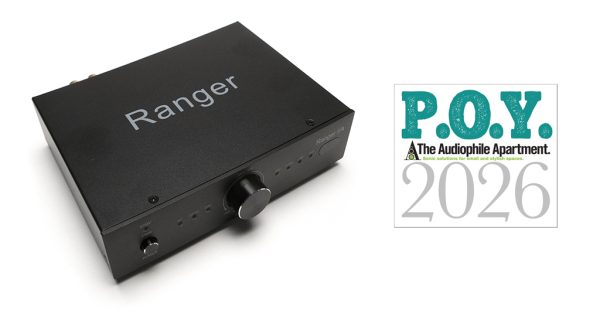
REVIEW – The Ranger Audio I/A Integrated
The crew at Ranger HiFi has been winning awards left and right for their small but mighty speaker systems at $299 and $149 per pair, and some great cables at $99. So it made perfect sense to see a compact integrated with similar performance. But this small and this inexpensive? Impressive indeed.
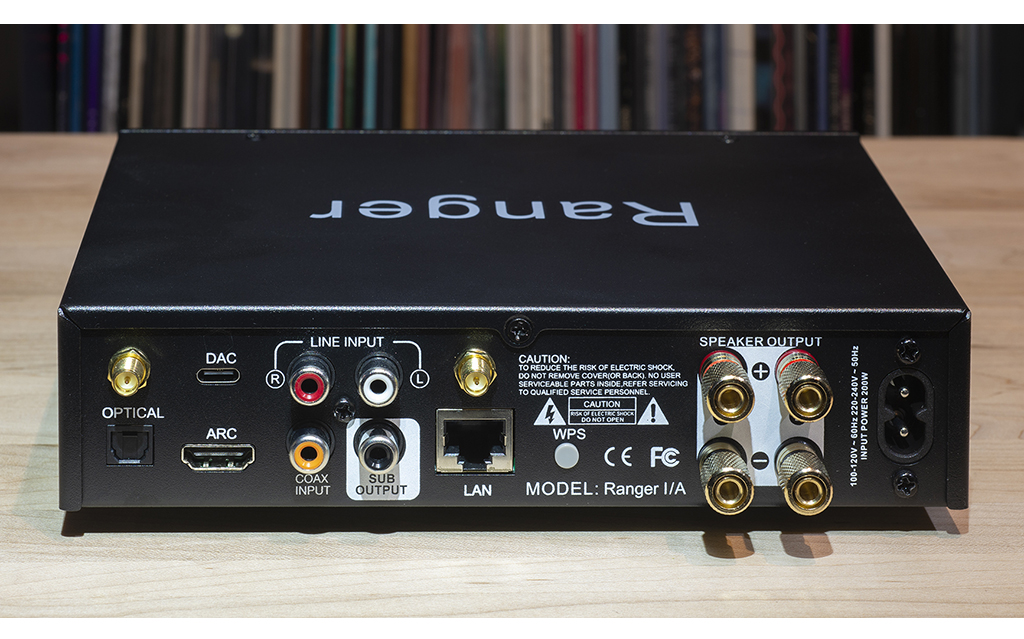
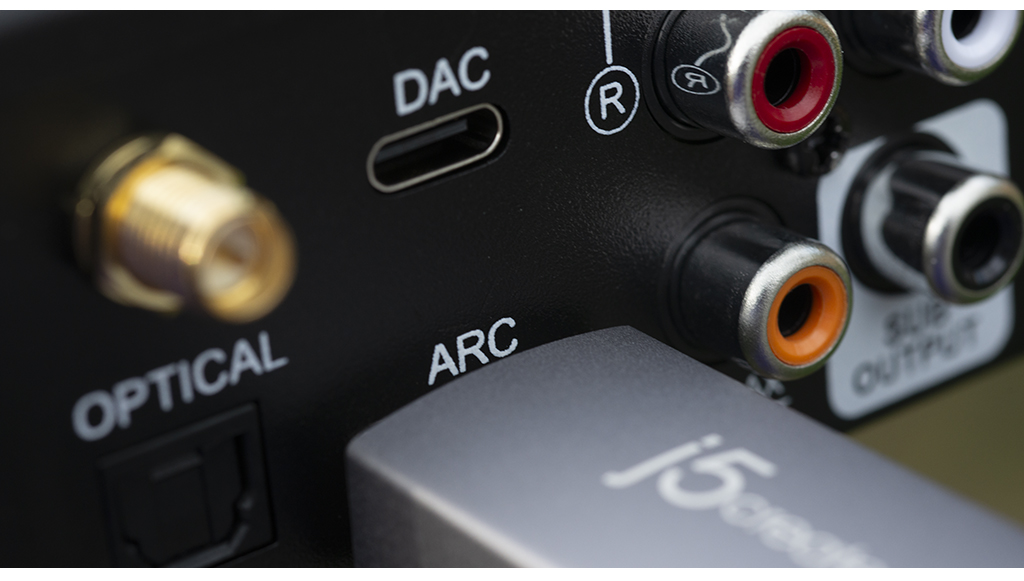
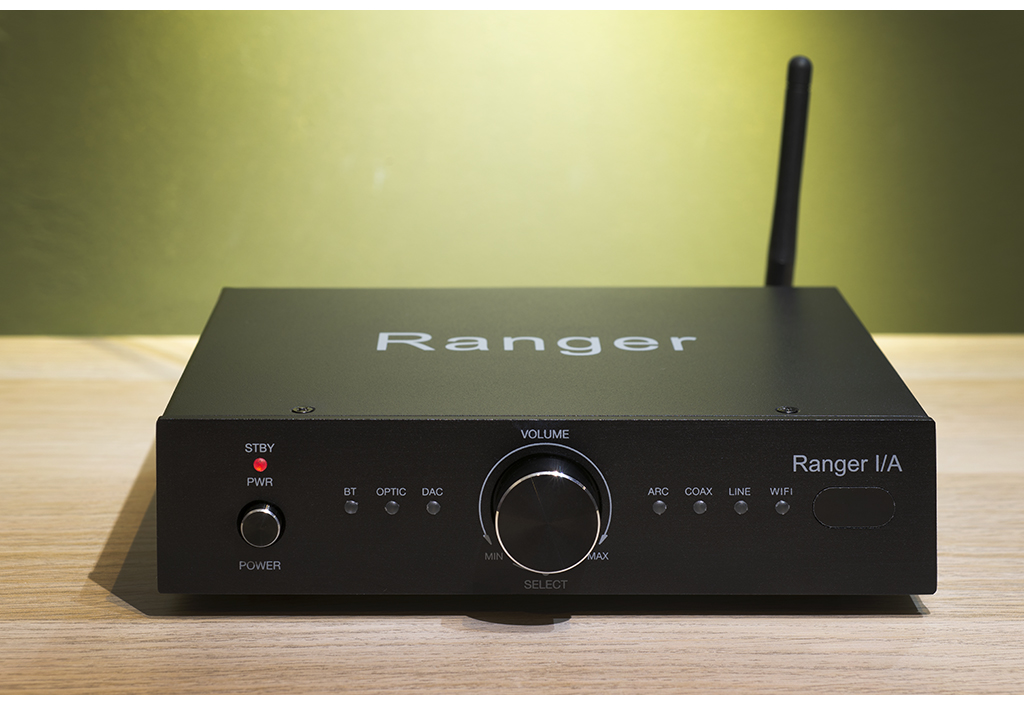
Smaller than a Stephen King novel, the I/A is a marvel of simplicity. With a central volume control that doubles as an input selector when you push it in, makes it a snap to use. Around back, there is a single pair of speaker outputs, wifi and BT antennas, optical, SPDIF, and USB inputs to connect to the internal DAC. There’s even a variable output for a powered sub – perfect for a Caldera subwoofer. Wherever space is at a premium, the I/A gets the job done without calling attention to itself.
Get in the game reasonably
A major part of the Ranger ethos is to hook you up with an amp, pair of speakers, sub (if you decide to go there), and some cables to build a basic system for well under $1,000. Mission accomplished, especially when these days spending a G at Best Buy will barely buy you a premium soundbar. Here’s where the factory-direct model really helps the entry-level audiophile. Of course, they make a great combination, but listening actually begins out in my garage system, with a recently acquired pair of Vandersteen 1s. And some gnarly vintage BMW bumpers to polish. By the time I finished the project, I was highly impressed with the I/A.
The 37.5 watts per channel into 8 ohms proves way more than enough power for the 90db/1-watt speakers, and much classic rock was enjoyed. With and without a Caldera 10 subwoofer. Midway through the initial garage sessions, the Vandersteens were swapped for a pair of SVS Ultra Evolution Towers (about $3k/pair) with equally excellent results. Swapping the I/A in and out for a few vintage receivers always had me putting the Ranger back in the system.
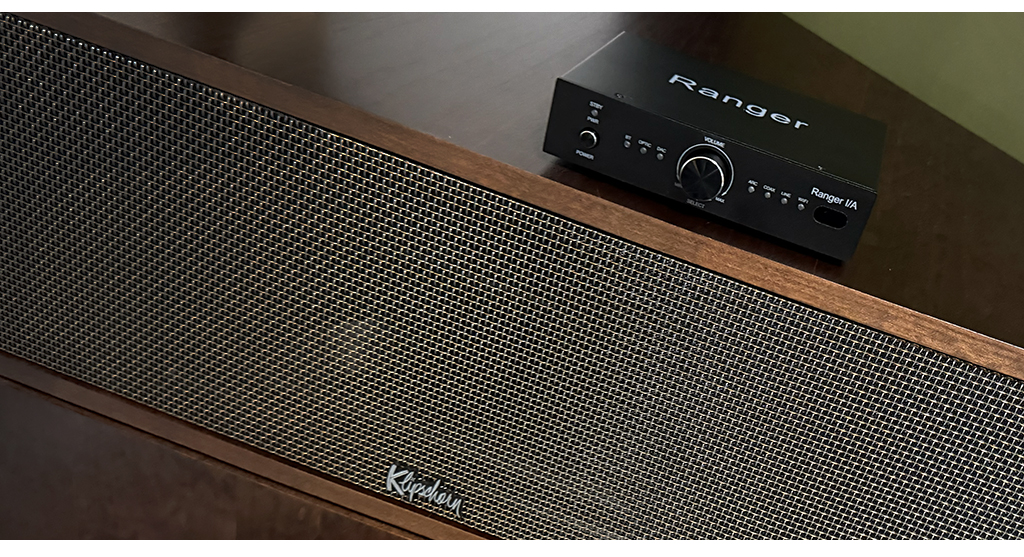
Moving the I/A into a tiny system with the $149/pair Ranger L/S speakers, sans subwoofer, reveals another exciting aspect of the I/A – tone controls. You have to access them from the remote, so don’t lose that tiny remote. A quick look at the spec sheet confirms the tone controls boost and cut at 100Hz and 10kHz. Just like the ones on your favorite ten-thousand-dollar Luxman integrated. I like em. Especially with an older pair of vintage speakers, or something small like the little Ranger speakers. With them being on the remote, you don’t even have to tell your fussy audiophile friends you’re using them. I even dropped it in the system with the mighty Klipschorns. Not bad at all.
The sound
That you can get decent sound from something with a $199 price tag is a major miracle in itself. Overall, sonically, the I/A is fairly neutral and delivers a fair amount of bass drive, with a solid, smooth upper end. It doesn’t have the resolution of that ten-thousand-dollar Luxman, but it gets the fundamentals right. The only thing the Ranger lacks in an ultimate sense is a huge amount of depth. However, putting things in perspective, comparing it to a handful of vintage stuff that you’d probably pay $500-$800 for, it’s way better. And, Schifter makes it a point to let me know that the amplifier is built around the popular Infineon Engine chip. They’ve done a handful of measurements, and if you are willing to live with a little bit more distortion, the Ranger is capable of about 80 watts per channel into 8 ohms. That explains its dynamic ability.
Keeping the budget groove going, a vintage Technics SL-1100 with a Fozi phono and a SONY ES player (with optical out) that I bought at a local estate sale for $50, proving yes, you can put together a musical system for just under a thousand bucks if you put some thought into it. Thanks to an ARC input, you can also make your Ranger I/A the hub of a great 2.1 system for your TV. Pretty cool.
Tracking through a wide range of music, the I/A delivers delightful sound. It’s quiet, punchy, and creates a wide soundfield. If you compare it to gear that costs 10–30 times as much, the only thing lacking is the level of fine detail it renders. Yet, in the context of a $500-$2,500 system, it’s fantastic. While this amplifier is so good, you should hand a few of them over to your favorite 20-somethings that aren’t into audio just to get them rolling.
Even those having a mega system should have one on the shelf just because. Expensive shit breaks now and then, and you don’t want to be without music. How about the times when you are trying to hunt down a system gremlin and need a different amplifier to pinpoint the problem, but you don’t want to disconnect your entire system? I’m buying the review sample for that very reason.
To make a long story short, the Ranger I/A is a tremendous value and a great way to build a music system on a tight budget. You gotta start somewhere, and this mighty little amplifier gives enough to get you in the game and engaged. That’s it in a nutshell.
Spoiler alert
Because it’s only a week away from when we post awards, I’ll clue you all in – this amplifier is getting one of our Product of the Year awards at The Audiophile Apartment. I can’t think of an amplifier we’ve put our hands on in years that delivers this much music for this little money. I still remember those components that got me excited about audio 50 years ago. 50 years from now, Mark Schifter and I will be dust – for a long time. I hope a few people will have the same fond memories about the Ranger I/A when they remember what got them excited about assembling a music system for the first time.
Should you be attending the Florida Audio Expo on Feb 20-22, we will have the Ranger components set up as one of the two budget systems assembled to illustrate that you can put a good starter system together for a very reasonable price. If you’re in the neighborhood, please stop by.