

The Pass XS Preamplifier

Pub. Note: This was originally published about 11 years ago, but with our upcoming review of the replacement model, we thought it would make sense to make this easier to find, as we compare it to the new XS Pre 2.

Of the thousands of tracks auditioned during the Pass XS Preamplifier’s stay here, Lou Reed’s “Vanishing Act” sums it up perfectly. As he sings/speaks, “It must be nice to disappear…” the words to describe the XS Pre appear. It just disappears, calling no attention to itself, perhaps the toughest thing for an audio component to do.

Just like buying a car, test driving a premium audio component is usually a shorter first date than you’d like. In the end, it requires a certain leap of faith, and if you blow it, it’s going to cost you dearly. Much as I love Pass products, if you decide that the $38,000 XS Pre isn’t for you, there will be a stiff penalty, should you turn it over for something else. Like any other five figure hi-fi component, putting this two-chassis beauty back on the secondary market after a few months of use will be an expensive proposition unless you have an incredibly forgiving dealer, used to you doing this kind of thing on a regular.
The good news is that the above mentioned scenario probably won’t happen. I’d even go out on a limb to bet about 100 to 1 odds that it won’t. I’ve been using the XS Pre for over a year now, and I’ll do my best at describing it so that you won’t make a misstep.

First, and most importantly, where the Pass XS and XA series amplifiers have an ever so slight tip towards the warm side (which I happen to prefer) of what I’d call neutral tonality, the XS Pre is as close to having a straight up, 12 o’clock, right in the center neutral tonal rendition as I’ve ever experienced. The only other preamplifier I’d put in this category is the Boulder 3010, and to a slightly lesser extent my other reference, the Robert Koda K-10. Either of these preamplifiers cost as much as a gently owned BMW M3, and each is phenomenal performers.

Special and then some
Today there are a lot of incredibly competent preamplifiers, many costing less than the XS Pre and a few costing even more. Now and again, a component is so overwhelmingly good, that it’s an express elevator ride to audio heaven. My Conrad Johnson GAT2 is one of those preamplifiers too, but it’s got vacuum tubes, and only sports single ended RCA inputs and outputs so that it won’t be everyone’s idea of heaven.


The world’s finest preamplifiers that I enjoy impart little to no signature of their own to the music, yet they offer a bigger, broader, weightier presentation than a system is capable of without a preamplifier involved. This is a unique bit of magic that don’t completely understand because, in a perfect world, you would think that just going straight from your DAC or phonostage (provided it had a level control) would bring you closer to the music than running everything through another box and set of cables.

Good as the dCS Rossini DAC and Clock combination is on its own, running a pair of Cardas Clear interconnects directly from the dCS pair to the XS300 amplifiers sounds smaller, less focused and pale in comparison to putting the XS Pre in my reference system. How can this be? Especially considering Mr. Pass (the creator of the First Watt amplifiers – champions of the “less is more” approach to circuit design. Inserting the XS Pre in the signal path is not subtle. Again, this preamplifier does not change the tonal character or balance a molecule, yet everything enlarges. Dynamic range increases to the point where transients explode from the speakers where they merely had punch before, and the soundfield created by the system becomes much larger in all three dimensions. The sonic presentation goes from big and satisfying without the XS Pre to being engulfed in a tornado of sound. This effect was observed with every power amplifier connected, from a modest Conrad Johnson MV60SE up to the mighty XS300 monoblocks, so this can’t be a mere “impedance matching” kind of thing.

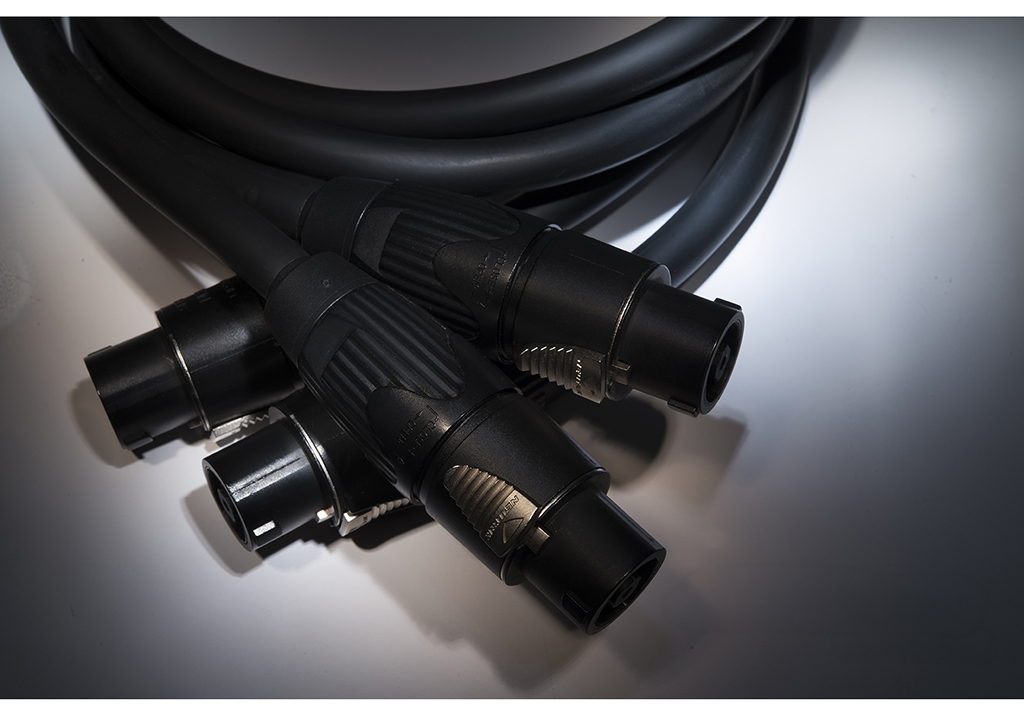
We’ve had the opportunity to use the XS Preamplifier together with the matching XS300 monoblock amplifiers to excellent result, paired with the XS Phono, making for an unbeatable combination of dynamics, tonality, and ease of use. There truly is nothing I can find fault with this trio. Ok, it’s all pretty heavy. That’s it. Fortunately, the XS Pre only weighs 80 pounds, and it is distributed between two chassis, the power supply, and the actual preamplifier circuitry. The two are connected by the same massive umbilical cords used in the XS Phono and the XS 150/300 power amplifiers. Terminated with Neutrik connectors, these are beefy cables indeed. 100,000µƒ of power supply capacitance per channel only hints at the power reserves available.
Nelson Pass and his crew have repeatedly said that they build components that they like, above all else. While many know the man with the name that adorns the faceplates as “the man” at Pass Labs, he is the power amp man. Wayne Colburn has designed all the Pass Labs preamplifiers and was given a clean slate (and pretty much a blank check) to design a companion preamplifier for the XS monoblock amplifiers. Rather than bore you with a long list of common audiophile clichés, he has succeeded on every level.

Incredibly versatile

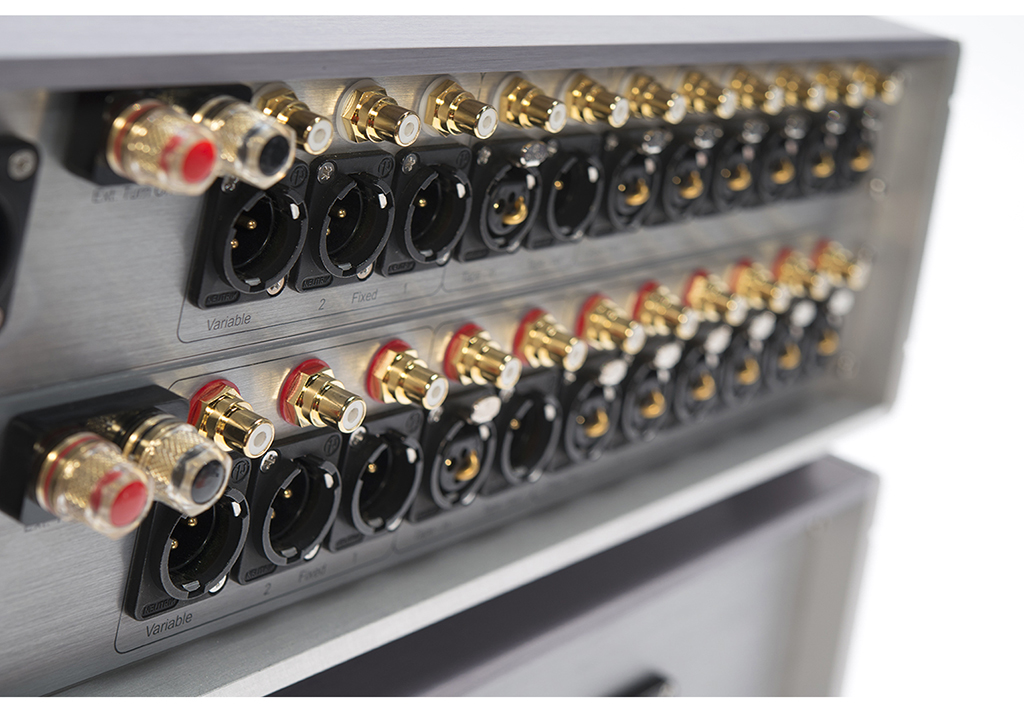
Lovely as the XS Pre is with a full compliment of Pass components, it is equally engaging with every other power amplifier we’ve had here at TONE in the last year or so – single ended or balanced. The XS Pre circuitry is fully balanced, but it features balanced XLR and single ended RCA inputs and outputs.
As a review tool, the XS Pre is without peer. It is effortless in its delivery and consistent in sound quality, providing a similar sonic picture with balanced or single ended connections. Even if you don’t review hifi gear, this kind of flexibility offers a much wider range of options as your system and tastes change. With the XS Pre offering such a neutral rendition, it is a perfect system anchor, letting you mix, match and experiment elsewhere.

Because the XS Pre doesn’t manipulate or alter the tonal character of the music it delivers, the usual list of tracks to describe bass, treble, and imaging are almost irrelevant. Laurie Anderson once said, “Paradise is exactly like where you are right now, only much, much better.” That’s the XS Pre. It’s much, much better. Add the concept of never having to retube, along with the headache that a new set of tubes can cause, makes it a component you can just leave powered up and forget about it. Matter of fact, there is no power switch.
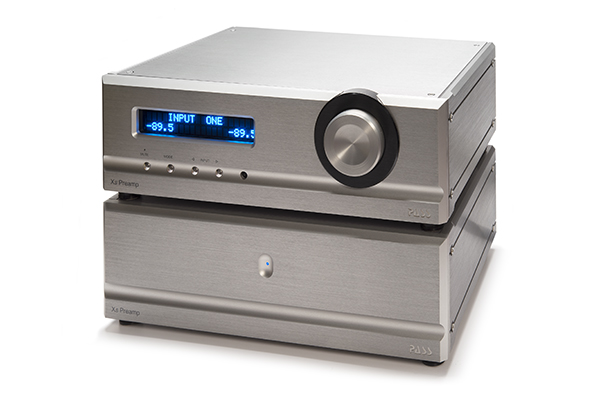
Setup is straightforward, provided you have two extra rack spaces and can separate the two boxes a bit, to keep every possible bit of noise at bay. Once powered up, the XS Pre took about four days to come all the way out of the fog from being fresh out of the box. As with any component, there is a slight bit of stiffness at initial turn on, but it dissipates quickly.

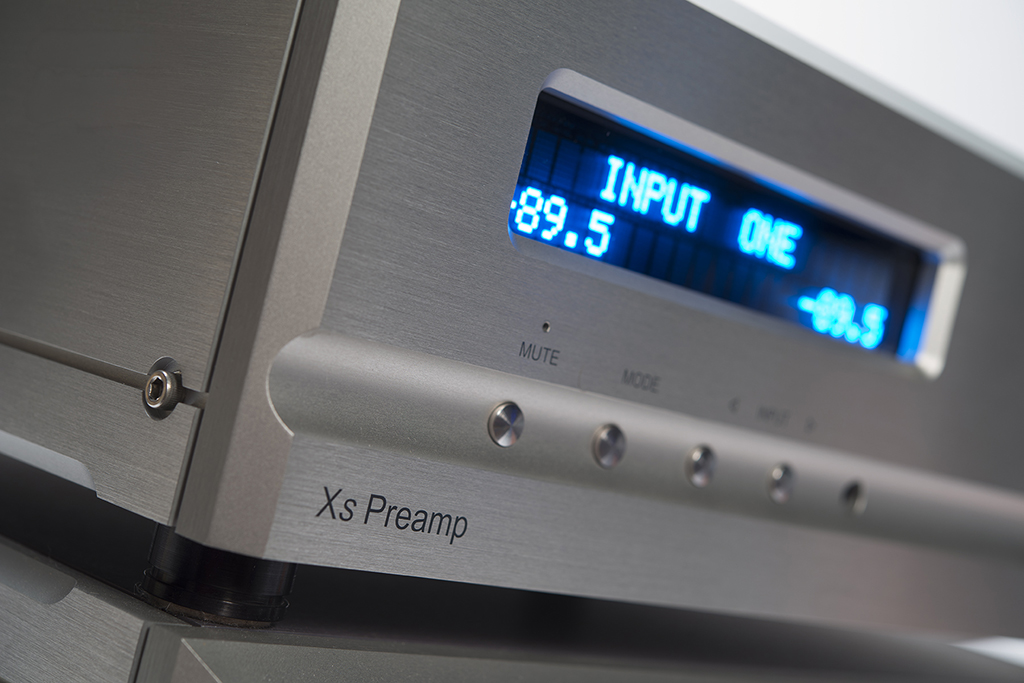
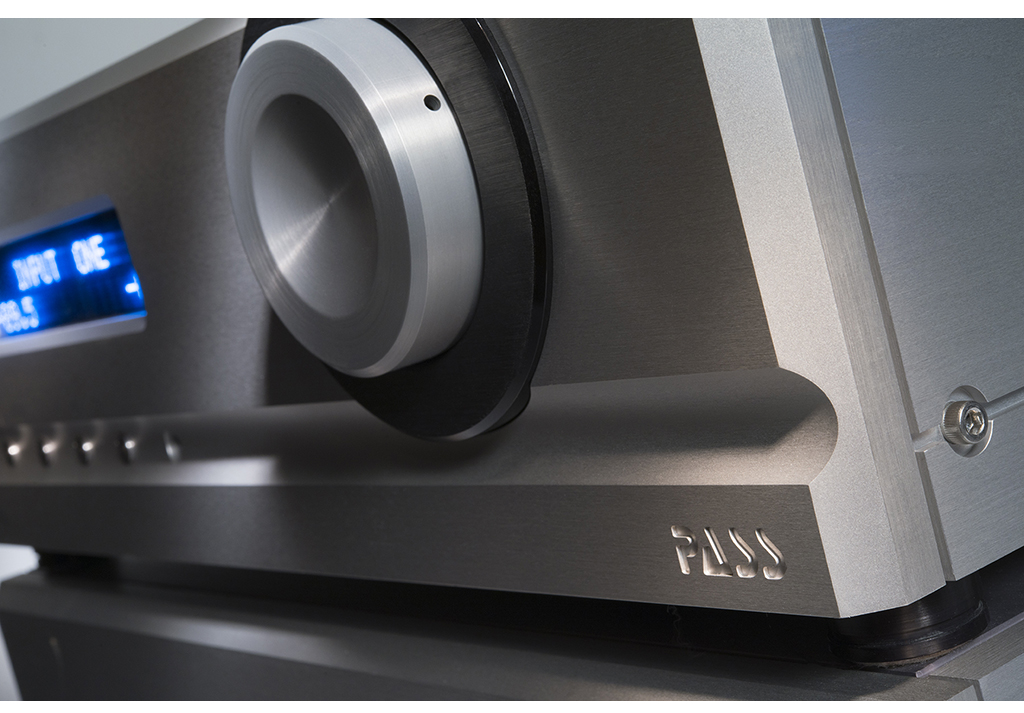
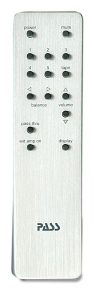
The front panel has a large volume control and a display friendly to read from across the room. Pass provides a simple, efficient aluminum remote that matches the casework of their other products, and this too is easy to use. The volume control has a wide range of operation, so even the most sensitive power amplifiers will have ample volume control range.

A keeper

Ultra high performance has a price, and there are a lot of great preamplifiers in the $10,000 – $20,000 range; even Pass makes one. (The XP-30) After living with a number of them, the XS Pre delivers an experience that you can’t get for $20k. That’s its justification. If you are looking for the last step up and a final justification, it’s worth every penny asked. This may be tough to swallow for some of you in the audience, but you can’t have a Ferrari 458 for $50k either. Like the Ferrari, the XS Pre will take your breath away if you have the room, system, and software to support it. And I’m guessing if you have 38 large, you do.

The Pass XS Pre does its job so effortlessly and so well if it doesn’t hit you on the head with the first track you play, just take it out of your system for about 90 sec. It’s like someone put the valet key in your Dodge Challenger Hellcat and the horsepower is gone. This is one of the purest hifi experiences I’ve had in over 15 years of reviewing components. Long term, I have even more enthusiasm for the XS Pre – every day it convinces me how special it is.


The Pass XS Pre Preamplifier

$38,000

www.passlabs.com

Peripherals

Analog Source            AVID Acutus Ref SP/SME V/Lyra Atlas, Grand Prix Audio Monaco 2.0/Tri-planar/Lyra Etna, Brinkmann Bardo/10.1arm/Koetsu Jade Platinum

Digital Source             dCS Rossini DAC and Clock, Gryphon Kalliope

Phonostage                  Pass XS Phono

Power Amplifier         Pass XS 300 monos, Pass XA200.8

Speakers                      GamuT RS5i, Focal Sopra no.3 w/2-REL 212, MartinLogan Neolith

Cable                           Tellurium Q Silver Diamond, Cardas Clear
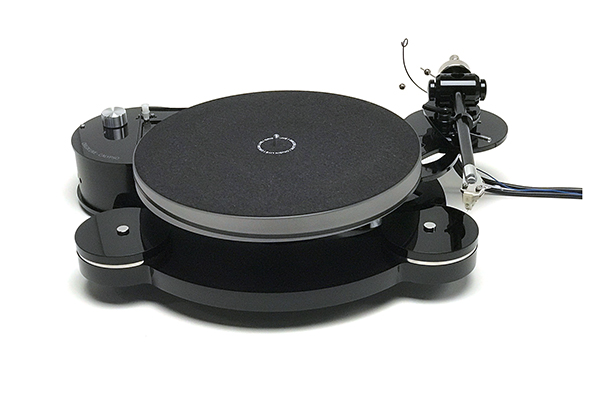
Origin Live Calypso Turntable and Encounter Tonearm

There seems to be a lot of options at the cheap and cheerful as well as the crazy money ends of the analog spectrum.

However, the analog lover that wants to make a solid step up from their budget deck often has to search a bit harder to find a solid performer without mortgaging their future too substantially. The Origin Live Calypso at $2,400, along with their Encounter Tonearm for $1,500 is one we can highly recommend. We are almost finished with a full review that will be in issue 85.

You can read a bit more about it here.

Those of you in the United States can purchase one from Audio Revelation. Please click here to contact them.

Channel Islands PEQ 1 mk.2 Phonostage

Tracking through an old MoFi favorite, Yes’ Close to the Edge, via the nearly $60,000 combination of Grand Prix Monaco 2.0 turntable, TriPlanar tonearm and Lyra Etna cartridge, it’s hard to believe it’s all playing through a $995 phonostage.

The soundstage is massive, and the dynamics convincing, with a great deal of fine detail. The musical presentation here is hardly budget. After a long listening session, accompanying audiophile pals are all left stunned.

With so much excitement surrounding the mega phonostages, with five figure price tags, it’s easy for those of us in the press that have so many cool toys at our disposal that not everyone can drop twenty thousand dollars on a whim. It’s equally easy to think that you can’t enjoy vinyl without taking a second mortgage on their house, or deny your kids a college education.

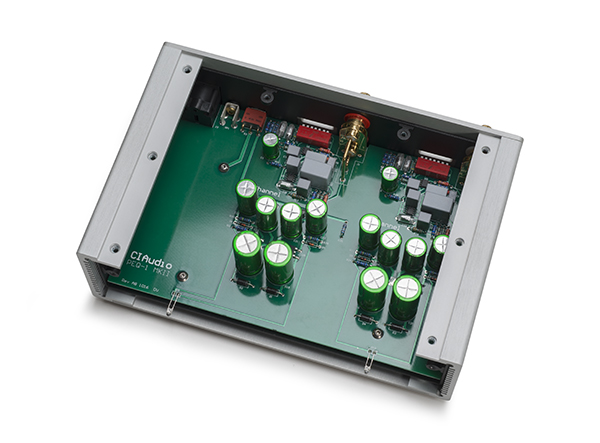
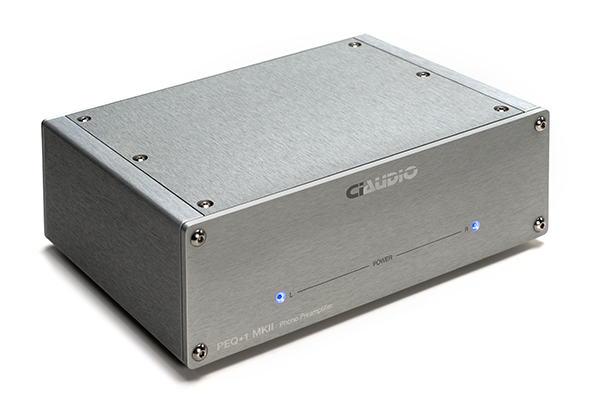
Dusty Vawter, the man behind Channel Islands Audio has always built first rate gear at reasonable prices, but he’s outdone himself on the PEQ 1 mk.2. At just $995, this tiny phonostage offers performance way beyond what you might expect from the price tag, or the size of the enclosure. Talking to Vawter on the phone, it’s clear he’s pulled out all the stops on this one. “It’s super quiet,” he says in his typical understated fashion. Handpicking some very special op amps and meticulous attention to board layout is what gets the job done here.

Quality touches are everywhere, from the carefully machined chassis (quite a few steps up from what CI has done on past products) to the Cardas input and output jacks. The power supply features Nichicon Muse capacitors along with Vishay 2% polypropolyne caps in the signal path along with Takman metal film resistors. This is the kind of stuff you see under the hood of five-figure components.

All Business

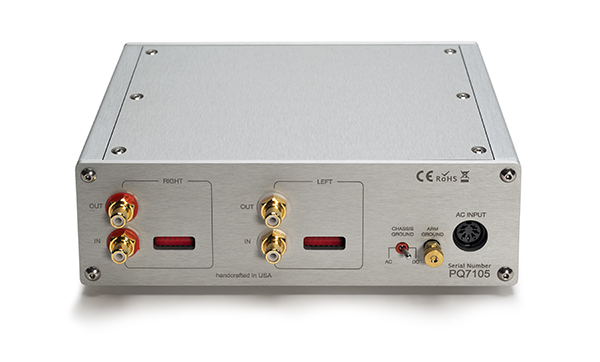
What you don’t get is a huge chassis, an elaborate display, and the ability to change settings from the comfort of your listening chair. If you’re a music lover on a tight budget, you want performance, not goodies and the PEQ delivers. A bank of DIP switches on the back (CI even includes the tool to set them – nice touch) give you 100, 1000, 10k and 47k loading options, along with 100pf, 270pf and 370pf capacitance loading. Two more switches adjust gain for MM(45db) and MC(60db). Finally, a subsonic filter is also available.

Some of you might snipe about the limited loading options. You can only get so much for $995, and if you’re putting a system together, there are plenty of cartridges that will work within these parameters, so choose accordingly and you’ll be just fine. Or, for a nominal charge, CI can provide custom gain and loading. Call them for an up to the minute quote. In addition to the Gold Note cartridges on hand, the Lyra Delos, Grado Statement Platinum 2, and Ortofon Quintet Blue cartridges all turned in marvelous performances with the PEQ at it’s standard settings.

This little box is heavy – eight pounds to be exact. And that’s without a power supply. Utilizing a wall wart for now, Vawter says that the new, upgraded AC-15 MK111 dual mono power supply for just $299. Experience with past CI products has shown that their upgraded power supplies are always a great thing. Watch the TONE website for a follow up, as he’s promised to get us one as soon as they are available.

Moving to a more reasonable system, the PEQ is used with a Rega Planar 3/Elys 2 combination as well as my new personal favorite, the Technics SL-1200G with Gold Note Machiavelli cartridge. Fleshed out by a pair of Quad 2812 speakers and the PrimaLuna Dialogue HP integrated amplifier, the PEQ is still a stunner.

Nothing you Don’t Want

As with most solid-state components, the PEQ needs about two days to fully stabilize. It sounds great out of the box, but you will notice a slight relaxation to the mood after it’s been on for two days. Upper mids and highs all become much more homogenous in their presentation, and you’ll be wowed again.

The low noise floor makes the task of digging maximum information from marginal records a breeze. Of course, the PEQ does a lovely job with your favorite audiophile pressings, but on really dreadful, slightly compressed records, there is still a bevy of detail at your disposal. Todd Rundgren’s Something/Anything? is a perfect example of this. Reaching for the MoFi version of this, the PEQ deftly reveals the multitrack wizardry here, and there’s even some bass! TR fans know what I’m saying.

Of course, the PEQ does not replace my Pass XS Phono. You get what you pay for with the big box in every aspect of musical reproduction. However, the Channel Islands PEQ goes about the business of amplifying low level analog signals effortlessly, and without drawing attention to itself; visually or audibly. Regardless of your musical taste, there is nothing it can’t handle with aplomb. When the listeners from the beginning of this article were asked to describe the PEQ in one word, they almost all unanimously said “balance.” The second word was “value.”

The level of musical finesse and enjoyment that the PEQ does offer is unmatched by anything I’ve yet experienced at anything near this price. Even if you were planning on spending close to $3k on a phonostage, give the PEQ a spin. If your love affair begins here, that’s a lot of extra money for a better cartridge or some more records. Channel Islands factory direct model (with 30-day return guarantee) assures maximum value. All CI products carry a 5-year warranty, and I can speak from personal experience, CI gear doesn’t break.

I can’t wait to hear this with the upgraded power supply, but even on the merit of the box stock PEQ 1 Mk.2 phonostage, we award it one of our Exceptional Value Awards for 2017. I’m keeping the review sample as our $1,000 – $3,000 reference.

The Channel Islands PEQ 1 Mk.2 Phonostage

MSRP: $995

www.ciaudio.com

The Brinkmann Audio Bardo Turntable

Closing the door on a Porsche 911, clicking the shutter on a titanium bodied Leica camera, that’s German engineering excellence, baby!

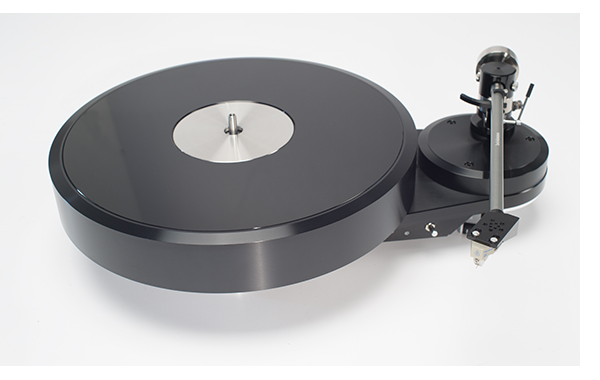
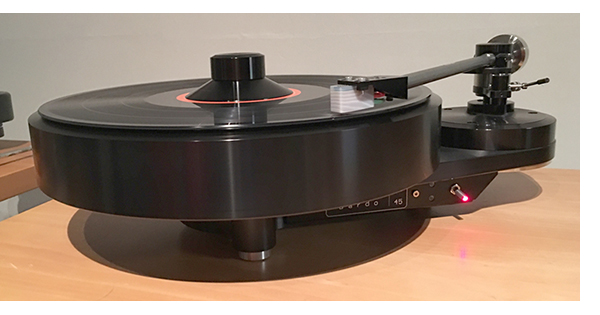
If you love that level of precision to go along with whatever high-performance product that suits your fancy, you’ll freak out just watching the 10.0 tonearm on the new Bardo lower ever so gently onto a waiting LP. This is such a precise, delicate action, the stylus cantilever on the Koetsu Onyx Platinum barely deflects at all. Those of you wanting to install a mega cartridge on your Bardo can rest assured it is up to the task.

As Adrian Belew’s trippy, reverse tracked, overdubbed vocals in “Big Electric Cat” go all the way from the edges of my speakers, out about seven more feet to the walls of my listening room, with detail galore, it’s easy to fall in love with this table. The Koetsu Onyx Platinum cartridge that costs as much as the Bardo puts forth a more engaging performance than it has here in any of my other reference turntables. Here, here for synergy. During the review period, everything from a Shure M97 to the Koetsu has been taken for a test drive, but the Japanese masterpiece wins the day. Everything on hand works exceptionally well with the Bardo. However, this table is fully up to the task of a $10k premium cartridge. It’s that good.

Living with Brinkmann’s direct drive Bardo for the last few months has been nothing but joy. This table is incredibly easy to set up, stays set up and is equally easy to use. With direct drive coming back in vogue these days, there are a few other DD tables on the market, but they are both considerably more expensive than the Bardo. Thanks to a change in their distribution scheme, and a Brinkmann USA office in place, the German manufacturer is now able to be much more price competitive, and that’s a great thing for analog lovers. The Bardo table/10.0 arm was still a fantastic deal at $13,500, but at $9,900, this is a straight out bargain for those wanting a world class, destination analog deck.

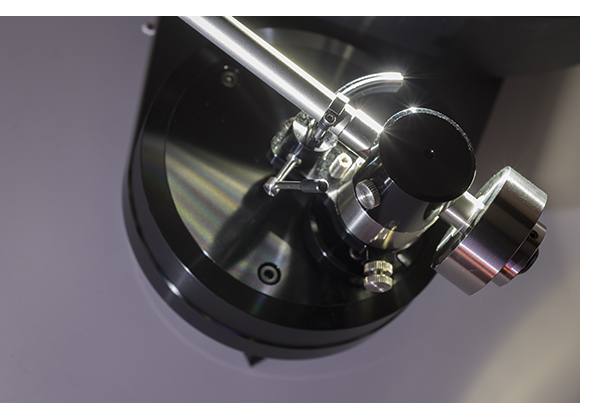
Should you want the benefits of Brinkmann’s direct drive expertise, but already have your favorite tonearm on hand, Brinkmann can supply whatever arm board you need. Ordering a Bardo sans tonearm will only set you back $7,000. Considering what a great job they do with their tonearm, which Helmut Brinkmann refers to as a hybrid unipivot design (and you can read more here http://www.brinkmann-audio.com/main.php?prod=tonarm100&lang=en) both mechanically and visually, it seems pointless to use another arm. But you can if you want to. To clarify the “hybrid” moniker, Helmut Brinkmann tells us that “his proprietary design uses Swiss-made gimbal bearings in the vertical plane and a bespoke unipivot in the horizontal.”

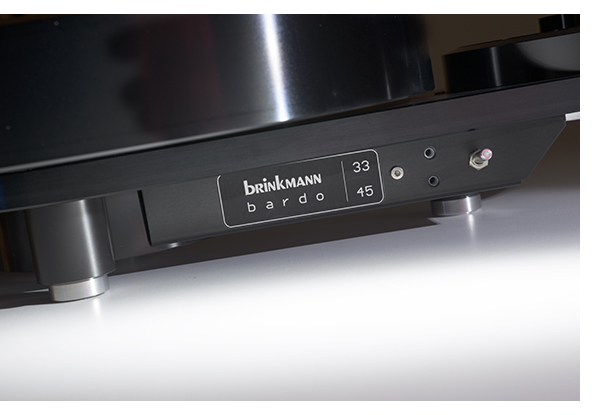
Multiple connectivity options make this beautiful table even easier to integrate into your system. Our review sample arrives with standard RCA connections going from table to phono preamplifier, but you can also opt for balanced XLR connections (this will take a little longer for delivery, as the RCA’s are standard issue), or a 5-pin DIN socket. Modifying an existing Brinkmann arm to a Din connector will set you back an additional $180. Handy if you already have a premium tonearm cable in your arsenal.

A further performance upgrade is available with the optional RoNt vacuum tube power supply ($4,190) for those wanting still more performance. A few Brinkmann owners have commented that this is not a subtle improvement, so look forward to a follow-up review sometime next year.

More music

The easier a turntable is to use, the more likely it is to get used. The Bardo takes up a small footprint and being a non-suspended table, you may want to install one of the better isolation bases, like the ones from SRA; it all depends on your room and taste. My floor is relatively inert and thanks to an SRA Scuttle rack, I felt no need to improve on the Bardo’s placement in my room.

Going way back to the obscure bin, an old favorite, Tim Curry’s Fearless is an album full of slick late 70s production, with some of rock’s favorite sidemen backing up Dr. Frank-n-Furter in his alternate career as a serious musician. The bass line in this record has always sounded somewhat vague, yet when portrayed by the Bardo, it’s rock solid. Actually, everything played on the Bardo has an uncanny sense of pace to it. The nearly $40k AVID Acutus REF SP and SME V has a little more weight in the lows and delicacy in the highs, but the Bardo is unbeatable at its price point.

Direct drive is not a dirty phrase

It goes without saying that a lot of the resolution the Bardo offers comes from meticulous build quality and attention to detail. Much of the major pace and timing accuracy this table delivers comes from the direct drive system. Utilizing Feickert’s iPhone app to check speed accuracy reveals most belt drive turntables to be relatively close to spinning at 33.33 r.p.m., but there is a fair amount of variation on the theme.

Watching the real-time speed graph for the Bardo, it’s near flat across the board. The phrase “rock solid” definitely applies here. Because Brinkmann implements direct drive the opposite way that the legendary Technics tables did, the result is much more to the liking of a modern audiophile.

Technics DD tables, initially designed for the broadcast world, used a high torque motor, hammered into speed accuracy by a quartz lock control mechanism, resulting a lot of motor “cogging.” This is what happens in the small spaces in the 360-degree rotation of the motor that don’t always have power applied. Unfortunately, this aggressive speed control did exactly the opposite of what was intended. Pulling out my SL-1200, with the excellent TimeStep power supply and a stock SL-1200, tracks played on the Brinkmann get progressively flatter in terms of three dimensionality, going back to the TimeStep equipped 1200 and then a stock one. It’s easy to see how the early direct drive tables got pooh-poohed, and I can see how easy it was to be seduced by the Oracle back in the early 80s.

Mr. Brinkman’s low torque approach, coupled to a heavy platter and world class bearing makes for smooth sailing. It takes about 8-10 rotations to get up to full speed, which is about the amount of time that it takes for the tonearm to set, and once you shut the power off, it rotates for a long time before coming to full stop. Brinkmann’s research led him to the current lead crystal platter insert in the aluminum platter, making for a major increase in resolution over one strictly machined from aluminum. Brinkmann spends a tremendous amount of time on materials research alone, and on his website, he claims this goes all the way down to the fasteners used to hold things together! The proof is in the listening; this is a very refined design.

Controlled ease

The presentation of the Bardo is indeed unique. Record after record has an ease and freedom from fatigue, again because of the excellent speed accuracy this table offers. Friends with canine hearing claiming perfect pitch that can hear a plethora of speed issues on every table I’ve ever reviewed were not only dead silent listening to the Bardo but they were also outright complimentary. Violins take on a magical realism with this table because of that speed accuracy.

You’ll probably key in immediately to how great your rock records sound, should you be a fan of this genre. The Bardo does a great job in the bass performance, but if you live on a strict diet of Zeppelin, you might not notice the subtleties of this table quite as much as the classical listener preferring soloists and small ensemble music. Sampling this fair gives the Bardo a near reel to reel tape like transparency.

Our choice for Analog POY

Here’s why the Brinkmann Bardo is our choice for 2016 Analog Product of the Year; it offers tremendous value, build quality, sound quality and ease of use. I’ve listened to my fair share of $100,000 plus turntables and have always walked away unimpressed. You can buy a pretty major hi-fi system for $100k, and I suggest if you take that path, you put the Bardo on top of your rack. Seriously, other than a few audio reviewers and a couple of hedge fund managers that got a screaming deal, who owns a $100,000 turntable anyway?

Wacky as it might sound, the $10,000 – $20,000 category is the hottest category for “destination” turntables. There are a handful of great tables costing 2-3 times this much (like the SME 30, the AVID Acutus REF SP and a few others), and they do reveal more music for sure. But again, the Brinkmann Bardo presents so much music, especially with your choice of awesome $5,000 – $10,000 cartridge, I’ll stick my neck out and say that most of us could live happily ever after right here.

If you’re currently using a table in the $3,000 – $5,000 category, you will be floored at just how much more musical information and nuance that the Bardo can shed light on, that if you have the purchasing power, this won’t be a difficult decision.

I’ve purchased the review sample and plan on spinning a lot more records on the Bardo. It’s simple, elegant, yet high-performance design has captured my enthusiasm. Should you be planning on buying a table in this price range, I not only recommend the Bardo, I sincerely hope you will audition one, and see if you enjoy it as much as I do.

The Brinkmann Bardo Turntable

MSRP:  $9,900 with Brinkmann 10.1 tonearm ($260 savings, purchasing the bundle)

http://brinkmann-audio.com

Peripherals

Phono Cartridge                    Koetsu Onyx Platinum, Ortofon Cadenza Black

Phonostage                            Pass XS Phono

Preamp                                  Pass XS Pre

Power Amps                          Pass XS 300 monoblocks

Speakers                                GamuT RS5i, MartinLogan Neolith, Quad 2812

Cable                                      Tellurium Q Black Diamond speaker and interconnect,

Power cords                           Cardas Clear

The Okki Nokki Record Cleaner

Vinyl lovers spend a lot of money on tonearms, cartridges, and phono stages in the effort to pull the most sound from the record grooves. However, none of these audio components can deliver their maximum performance if the record itself is a limiting factor.

Minute particles in the grooves of dirty records can diminish sonic quality, adding unwanted pops, snaps, and surface noise to the music. Even new, seemingly clean records are hampered by debris left over from the pressing process. Yes, simple record cleaning brushes can help this problem, but if the brush itself is not completely clean, it can introduce new debris – or worse – grind it back into the delicate record grooves. But nothing beats a good wet cleaning for the best possible result.

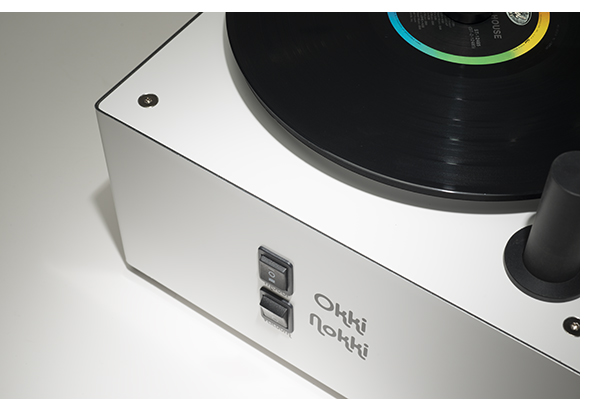
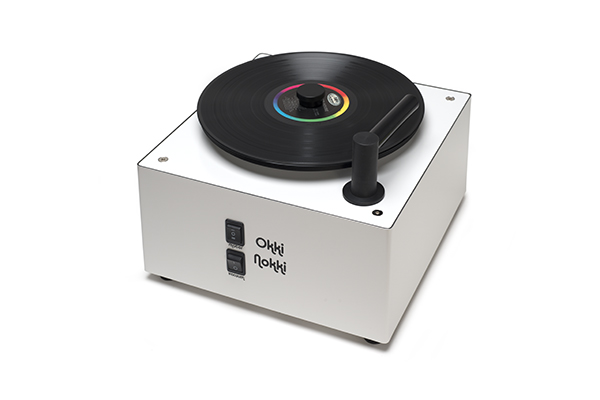
Based in The Netherlands, and imported by VANA Ltd in the USA, the team at Okki Nokki addresses this ongoing problem with their newly updated RCM-II record cleaning machine. Designed to loosen and suck out any grime present on the record surface, rather than simply re-distributing it, the Okki Nokki simplifies the cleaning process as much as possible.

The Okki Nokki package contains everything needed to start cleaning records within minutes. The main cleaning unit, which holds the platter and vacuum motor, a bottle of cleaning fluid concentrate, vacuum wand, and a cleaning brush. The team at Okki Nokki also includes an instruction booklet and links to an online video to demonstrate proper usage. The recommended clear acrylic dustcover is available separately for $50.00

The 50ml of cleaning concentrate is formulated for dilution into a liter (roughly a quart) of water. I find a pair of narrow-tipped, refillable mustard or ketchup squeeze bottles – like those you might see in a diner — serve very well for fluid dispensing and storage. If you chose to go this route; make sure to label the bottles. I don’t think this solution would be appetizing on French fries.

With fresh cleaning solution at the ready, place a record onto the Okki Nokki platter, clamping it down with the included aluminum record clamp. After flicking on the switch for clockwise rotation, about a tablespoon of cleaning solution should be dribbled onto the record. Applying the record brush against the vinyl surface evenly distributes the cleaning solution, starting the process simultaneously. After about five rotations, switch into counterclockwise motion for a few rotations, offering extra thoroughness in loosening any stray particles.

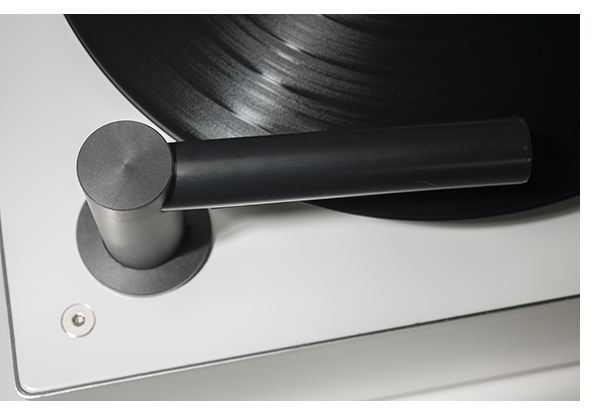
With the scrubbing process done, it’s time to remove the debris-filled solution from the vinyl surface. Merely switch the record cleaner back into clockwise motion, and turn on the vacuum motor switch. Pushing down lightly onto the vacuum wand, it rotates itself into position against the record surface for maximum effectiveness. Once the wand sucks itself into place, there’s quite a good seal against the record surface and no physical intervention is required – just let the record spin a few times. The combination of the vacuum, and the soft cleaning band on the underside of the wand, remove any loosened particles and leave the record surface completely dry. When turned off, the vacuum motor whir subsides, and the spring-loaded vacuum arm pops up off the record, swinging out of the way on its own.

For those vinyl fans who enjoy buying pre-owned records, or who have a lot of old records in their collection, it’s a good idea to purchase a second Okki Nokki vacuum arm. The wands are easy to swap, plus there’s no sense in rubbing old dirt into new vinyl. Save the “clean” arm for your new records, and keep the “dirtier” arm handy for the big jobs.

If a lot of records are shined up in one sitting, the dirty fluid reservoir inside the Okki Nokki may get full. There’s a tube on the rear of the cleaner that facilitates draining should it become necessary. With occasional record cleaner usage, most of the residual fluid will evaporate on its own.

Listening to records before and after cleaning, I find there’s a reduction in unwanted hiss, snaps, and pops, plus some improvement to the overall musical presentation. The Okki Nokki certainly lives up to its design goals.

At a price of $499, the Okki Nokki isn’t cheap, but considering its robust build quality, and features, it represents a very worthy investment for the vinyl enthusiast. The Okki Nokki can help preserve your record collection, get the best sound from it, and also save some wear and tear on your precious cartridge. After such a great experience with the Okki Nokki, I purchased the sample unit. I have a lot of records to clean!

www.vanaltd.com

The Brinkmann Audio Bardo Turntable

Closing the door on a Porsche 911, clicking the shutter on a titanium bodied Leica camera, that’s German engineering excellence, baby!

If you love that level of precision to go along with whatever high-performance product that suits your fancy, you’ll freak out just watching the 10.0 tonearm on the new Bardo lower ever so gently onto a waiting LP. This is such a precise, delicate action, the stylus cantilever on the Koetsu Onyx Platinum barely deflects at all. Those of you wanting to install a mega cartridge on your Bardo can rest assured it is up to the task.

As Adrian Belew’s trippy, reverse tracked, overdubbed vocals in “Big Electric Cat” go all the way from the edges of my speakers, out about seven more feet to the walls of my listening room, with detail galore, it’s easy to fall in love with this table. The Koetsu Onyx Platinum cartridge that costs as much as the Bardo puts forth a more engaging performance than it has here in any of my other reference turntables. Here, here for synergy. During the review period, everything from a Shure M97 to the Koetsu has been taken for a test drive, but the Japanese masterpiece wins the day. Everything on hand works exceptionally well with the Bardo. However, this table is fully up to the task of a $10k premium cartridge. It’s that good.

Living with Brinkmann’s direct drive Bardo for the last few months has been nothing but joy. This table is incredibly easy to set up, stays set up and is equally easy to use. With direct drive coming back in vogue these days, there are a few other DD tables on the market, but they are both considerably more expensive than the Bardo. Thanks to a change in their distribution scheme, and a Brinkmann USA office in place, the German manufacturer is now able to be much more price competitive, and that’s a great thing for analog lovers. The Bardo table/10.0 arm was still a fantastic deal at $13,500, but at $9,900, this is a straight out bargain for those wanting a world class, destination analog deck.

Should you want the benefits of Brinkmann’s direct drive expertise, but already have your favorite tonearm on hand, Brinkmann can supply whatever arm board you need. Ordering a Bardo sans tonearm will only set you back $7,000. Considering what a great job they do with their tonearm, which Helmut Brinkmann refers to as a hybrid unipivot design (and you can read more here http://www.brinkmann-audio.com/main.php?prod=tonarm100&lang=en) both mechanically and visually, it seems pointless to use another arm. But you can if you want to. To clarify the “hybrid” moniker, Helmut Brinkmann tells us that “his proprietary design uses Swiss-made gimbal bearings in the vertical plane and a bespoke unipivot in the horizontal.”

Multiple connectivity options make this beautiful table even easier to integrate into your system. Our review sample arrives with standard RCA connections going from table to phono preamplifier, but you can also opt for balanced XLR connections (this will take a little longer for delivery, as the RCA’s are standard issue), or a 5-pin DIN socket. Modifying an existing Brinkmann arm to a Din connector will set you back an additional $180. Handy if you already have a premium tonearm cable in your arsenal.

A further performance upgrade is available with the optional RoNt vacuum tube power supply ($4,190) for those wanting still more performance. A few Brinkmann owners have commented that this is not a subtle improvement, so look forward to a follow-up review sometime next year.

More music

The easier a turntable is to use, the more likely it is to get used. The Bardo takes up a small footprint and being a non-suspended table, you may want to install one of the better isolation bases, like the ones from SRA; it all depends on your room and taste. My floor is relatively inert and thanks to an SRA Scuttle rack, I felt no need to improve on the Bardo’s placement in my room.

Going way back to the obscure bin, an old favorite, Tim Curry’s Fearless is an album full of slick late 70s production, with some of rock’s favorite sidemen backing up Dr. Frank-n-Furter in his alternate career as a serious musician. The bass line in this record has always sounded somewhat vague, yet when portrayed by the Bardo, it’s rock solid. Actually, everything played on the Bardo has an uncanny sense of pace to it. The nearly $40k AVID Acutus REF SP and SME V has a little more weight in the lows and delicacy in the highs, but the Bardo is unbeatable at its price point.

Direct drive is not a dirty phrase

It goes without saying that a lot of the resolution the Bardo offers comes from meticulous build quality and attention to detail. Much of the major pace and timing accuracy this table delivers comes from the direct drive system. Utilizing Feickert’s iPhone app to check speed accuracy reveals most belt drive turntables to be relatively close to spinning at 33.33 r.p.m., but there is a fair amount of variation on the theme.

Watching the real-time speed graph for the Bardo, it’s near flat across the board. The phrase “rock solid” definitely applies here. Because Brinkmann implements direct drive the opposite way that the legendary Technics tables did, the result is much more to the liking of a modern audiophile.

Technics DD tables, initially designed for the broadcast world, used a high torque motor, hammered into speed accuracy by a quartz lock control mechanism, resulting a lot of motor “cogging.” This is what happens in the small spaces in the 360-degree rotation of the motor that don’t always have power applied. Unfortunately, this aggressive speed control did exactly the opposite of what was intended. Pulling out my SL-1200, with the excellent TimeStep power supply and a stock SL-1200, tracks played on the Brinkmann get progressively flatter in terms of three dimensionality, going back to the TimeStep equipped 1200 and then a stock one. It’s easy to see how the early direct drive tables got pooh-poohed, and I can see how easy it was to be seduced by the Oracle back in the early 80s.

Mr. Brinkman’s low torque approach, coupled to a heavy platter and world class bearing makes for smooth sailing. It takes about 8-10 rotations to get up to full speed, which is about the amount of time that it takes for the tonearm to set, and once you shut the power off, it rotates for a long time before coming to full stop. Brinkmann’s research led him to the current lead crystal platter insert in the aluminum platter, making for a major increase in resolution over one strictly machined from aluminum. Brinkmann spends a tremendous amount of time on materials research alone, and on his website, he claims this goes all the way down to the fasteners used to hold things together! The proof is in the listening; this is a very refined design.

Controlled ease

The presentation of the Bardo is indeed unique. Record after record has an ease and freedom from fatigue, again because of the excellent speed accuracy this table offers. Friends with canine hearing claiming perfect pitch that can hear a plethora of speed issues on every table I’ve ever reviewed were not only dead silent listening to the Bardo but they were also outright complimentary. Violins take on a magical realism with this table because of that speed accuracy.

You’ll probably key in immediately to how great your rock records sound, should you be a fan of this genre. The Bardo does a great job in the bass performance, but if you live on a strict diet of Zeppelin, you might not notice the subtleties of this table quite as much as the classical listener preferring soloists and small ensemble music. Sampling this fair gives the Bardo a near reel to reel tape like transparency.

Our choice for Analog POY

Here’s why the Brinkmann Bardo is our choice for 2016 Analog Product of the Year; it offers tremendous value, build quality, sound quality and ease of use. I’ve listened to my fair share of $100,000 plus turntables and have always walked away unimpressed. You can buy a pretty major hi-fi system for $100k, and I suggest if you take that path, you put the Bardo on top of your rack. Seriously, other than a few audio reviewers and a couple of hedge fund managers that got a screaming deal, who owns a $100,000 turntable anyway?

Wacky as it might sound, the $10,000 – $20,000 category is the hottest category for “destination” turntables. There are a handful of great tables costing 2-3 times this much (like the SME 30, the AVID Acutus REF SP and a few others), and they do reveal more music for sure. But again, the Brinkmann Bardo presents so much music, especially with your choice of awesome $5,000 – $10,000 cartridge, I’ll stick my neck out and say that most of us could live happily ever after right here.

If you’re currently using a table in the $3,000 – $5,000 category, you will be floored at just how much more musical information and nuance that the Bardo can shed light on, that if you have the purchasing power, this won’t be a difficult decision.

I’ve purchased the review sample and plan on spinning a lot more records on the Bardo. It’s simple, elegant, yet high-performance design has captured my enthusiasm. Should you be planning on buying a table in this price range, I not only recommend the Bardo, I sincerely hope you will audition one, and see if you enjoy it as much as I do.

The Brinkmann Bardo Turntable

MSRP:  $9,900 with Brinkmann 10.1 tonearm ($260 savings, purchasing the bundle)

http://brinkmann-audio.com

Peripherals

Phono Cartridge                    Koetsu Onyx Platinum, Ortofon Cadenza Black

Phonostage                            Pass XS Phono

Preamp                                  Pass XS Pre

Power Amps                          Pass XS 300 monoblocks

Speakers                                GamuT RS5i, MartinLogan Neolith, Quad 2812

Cable                                      Tellurium Q Black Diamond speaker and interconnect,

Power cords                           Cardas Clear