






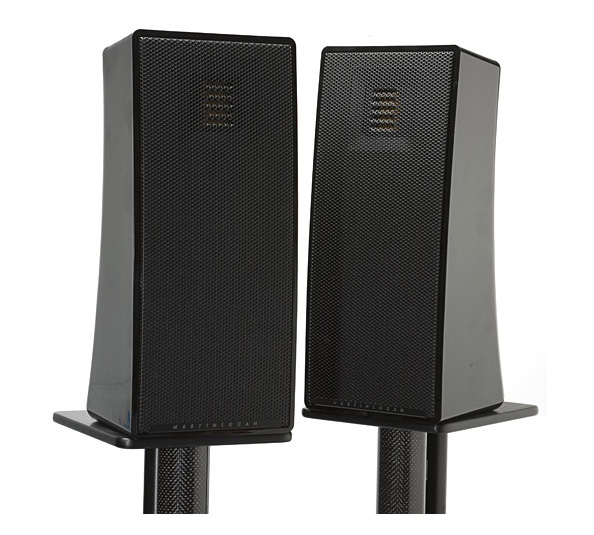
 I must admit, I’m almost never impressed with what I hear at audio shows, and it’s not for the manufacturers’ lack of trying. It’s always tough to hear anything decently at a show, even if the room is set up fairly well. But at last year’s CEDIA convention, there was something that really blew me away, the final prototypes of MartinLogan’s new Motion series, especially when I saw how tiny they were.
While MartinLogan is well known for their electrostat speakers, they have been making great strides with their ATF planar tweeters over the past few years, the Motion series uses the same air motion technology for their tweeter that was made famous by ESS in the 1970’s. The air motion driver has made a big comeback in the past ten years, showing up in flagship speakers from Dali and Burmester to name a few. Because of its folded ribbon nature, this tweeter has the speed of a panel speaker, offering the transparency that MartinLogan is famous for, but in a much smaller form factor.
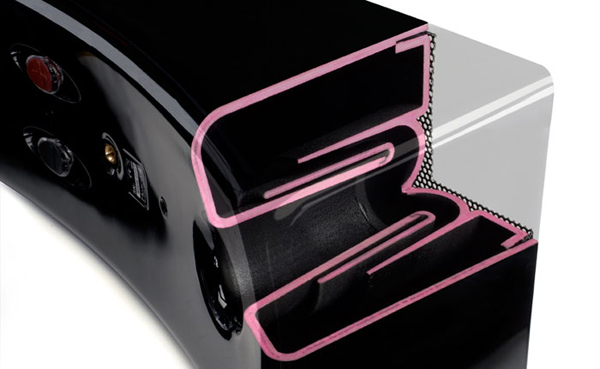
Only about 5 x 5 inches and just over a foot tall, MartinLogan managed to stuff a 4 inch woofer with a folded bass port into this tiny, curvy enclosure along with the new tweeter. The Motion 4 has a rated sensitivity of 90db/1watt, but it is very easy to drive. I used these speakers exclusively in my living room system to see how well they would work in a small environment.
Setup
I used the speakers about 9 feet apart (2 feet from the side walls, 18 inches from the rear wall) on a pair of carbon fiber Whitworth stands, with a tiny bit of blu-tack between the speakers’ base and that of the stands. The Motion 4’s also have a mounting flange for wall mounting, which should prove handy in a compact surround sound system. I also made use of one of their new Dynamo 700 wireless subwoofers that we will feature a detailed review on soon. Suffice to say for now, it’s another home run from MartinLogan, providing outstanding performance, value and perfect integration for the Motion 4’s. I would highly suggest one of these to round out a full range system based around the Motion speakers, whether it is two-channel or multi channel.
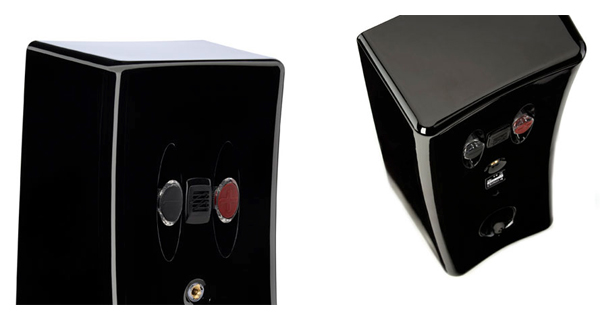
The Motion 4’s have some recessed binding posts that are easy to get at if you are stringing something similar to zip cord or the basic upgraded wire that a lot of home installers use. Those wanting to use somewhat higher quality cables need to be sure they are terminated with banana plugs. Spades of any kind will not work, due to the recessed nature of the binding posts. The Motion 4’s only weigh 6 pounds each, so I can’t imagine using mega speaker cables with these speakers anyway.
The Audioquest Colorado speaker I used for my listening sessions was probably a bit overkill for this application, but it worked great and did provide better sound that later switching to $1/foot Radio Shack speaker wire could offer. The bottom line is that these little speakers are capable of a healthy dose of resolution. The rest of the reference system was rounded out with a Naim Uniti (50w/ch solid state) all in one receiver, which allowed CD’s, FM, Internet radio and my iPod to be used as sources and the Prima Luna Prologue 1 vacuum tube integrated (30w/ch) along with a Denon 3910. For those that will be using the Motion 4’s as the start of a two channel system, rest assured that they are easy to drive with tubes or transistors, making this speaker even more versatile.
The Sound
In a small room with corner placement, the Motion 4’s have a surprising amount of bass on tap, much more than their LF range spec of 75hz would suggest. Adding the slight warmth of the Prima Luna to the mix made me wonder at first if a subwoofer was even necessary, and if you aren’t listening to Pink Floyd at bone crushing levels, you might not either. MartinLogan concentrated on making a great speaker that only goes down to 75hz cleanly rather than a mediocre speaker that goes down to 50hz, sacrificing everything else to get that last bit of ultimate bass. Remember, adding a subwoofer to a speaker with lousy midrange isn’t HiFi.
The key to appreciating and enjoying this speaker is how much quality it offers, and for those of you that have MartinLogan speakers in your main listening room and perhaps need a second system, or would like to build a small home theater system in another room, you will be pleasantly surprised at how much of the core ML sound is on tap here.
I went through a fair share of my classic rock favorites, Dire Straits, Pink Floyd, The Doobies, etc. to get a good feel for how these little speakers would perform on music that I know like the back of my hand. Friends and family members were all amazed at the natural sound the Motion 4’s possessed, and a couple of MartinLogan owners were equally impressed.
Again, the key to this speaker is the midrange performance and transparency, they offered. Cymbals sound incredibly right and these speakers do a great job with solo vocals as well. I never really felt like I was listening to a pair of “budget” speakers. Those listening to a steady diet of jazz and classical music will notice a slight bit of grain in the upper mids, but that’s being really fussy. Again, remember, these are entry-level speakers, not a pair of CLX’s.
At the end of the test, my $35 Pioneer receiver from the 70’s was substituted for the Naim, to see how these speakers would perform in an “extreme budget” system, and they passed the test quite handily. While they are capable of high resolution and will shine with better electronics, the Motion 4’s will offer a lot of sound with anything you hook them up to.
The speakers are very robust and even with a 35-watt amplifier at my disposal; I was amazed at how loud they would play in my small room. When I got wacky with Megadeth, Metallica and Korn, I could tell they needed more oomph, but that’s what that Dynamo subwoofer is all about. If you add one of those to the mix, even the most hardcore metal head should be very happy indeed.
A Breakthrough
When I heard the Motion 4’s in front of a pair of CLX’s (playing through some very nice gear from McIntosh) at CEDIA, I was really impressed. While many of the people in the room exclaimed, “are those the big speakers?” I knew they weren’t the CLX’s, because I own a pair, but they certainly didn’t sound like, are you ready…
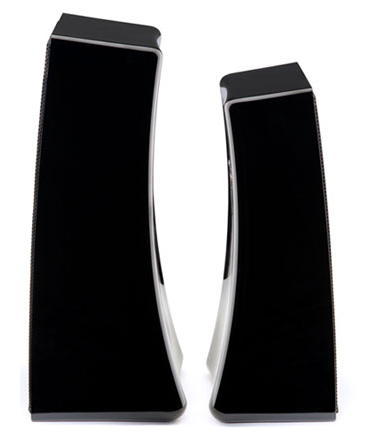
A $500 pair of speakers. That’s right. A pair of Motion 4’s will only set you back $500. Though my head is usually up in the clouds listening to five figure speaker systems, this is truly a breakthrough in budget speaker performance. No one on the staff guessed the price on the Motion 4’s; the closest bid was $800 a pair. Having just recently reviewed a number of small monitor speakers in the $1,500 – $3,000 a pair range, these speakers have got to be one of the best buys in high end audio today. Add that Dynamo 700, which is wireless ready, and you’ve got an amazing speaker system for under $1,200, and a great foundation to a system in the $2,000 – $3,000 range.
If we are going to get more people excited about the world of HiFi, this is definitely what we need a lot more of. I am very happy to award MartinLogan one of our Exceptional Value Awards for 2010. Don’t let the price fool you; the Motion 4’s are worthy of the MartinLogan name on the box.
-Jeff Dorgay
The MartinLogan Motion 4
MSRP: $499/pair
www.martinlogan.com
Peripherals
Amplification Naim Uniti, Prima Luna ProLogue 1
Digital Sources Denon 3910, Oppo BDP 83
Cable Audioquest Colorado
Power Shunyata Hydra 2, Shunyata Venom power cords
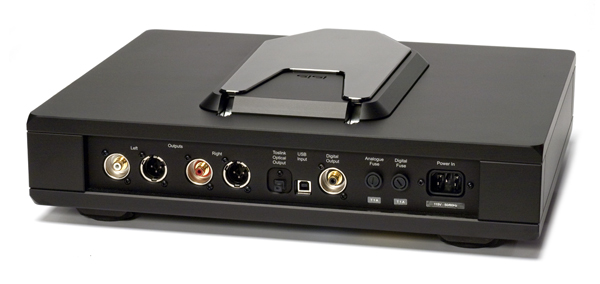
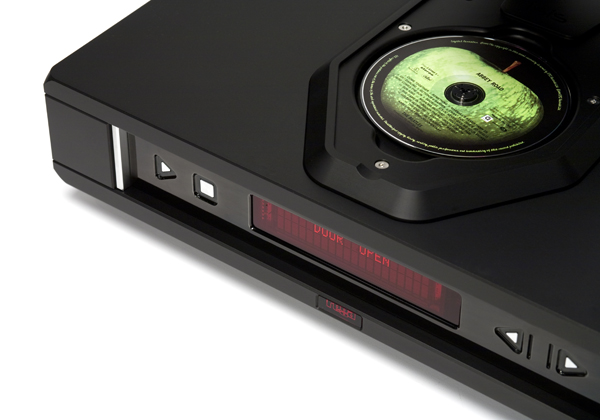
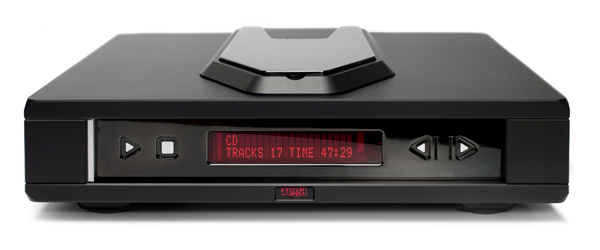 Rega has established a solid reputation over the last thirty years now for building reasonably priced components packed with value beyond their price point. Rega turntables have always been a triumph of function and simplicity, with a legion of fans that span the globe. Founder Roy Gandy is a champion of giving his customers high performance without a high price tag, and didn’t even start building CD players until about ten years ago. His sense of humor is evident in their website, where it’s mentioned that Rega was “the last major high end company to build a CD player.”

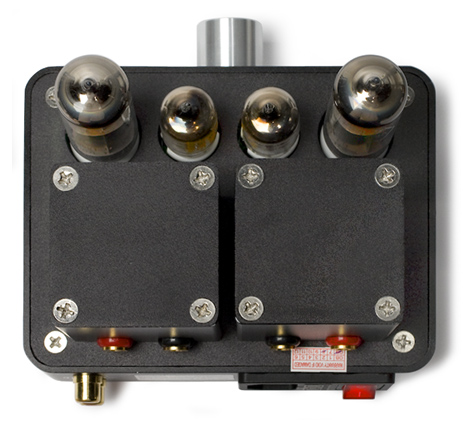
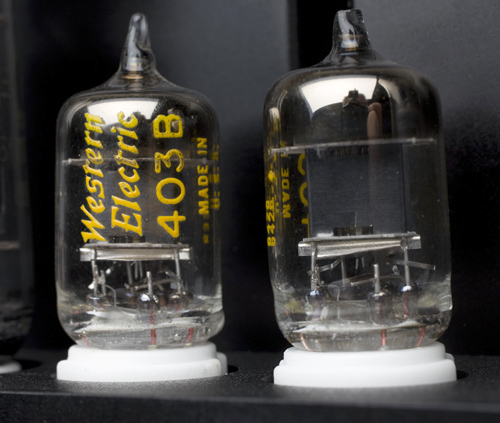
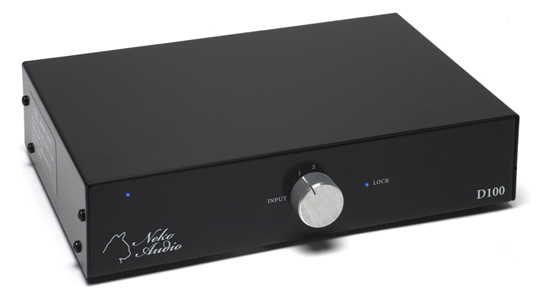
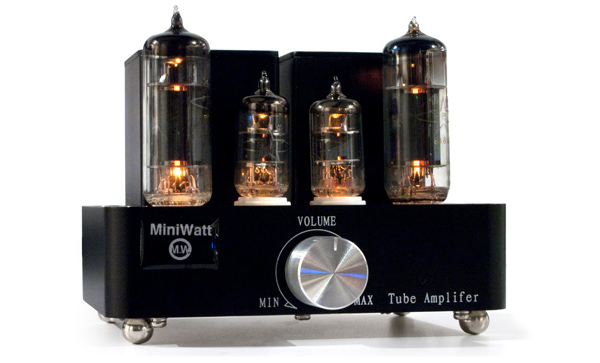 No matter what your position in the audiophile game, you need a MiniWatt. This is one of the most fun pieces of gear I’ve seen in about fifteen years. (The last time was when the Antique Sound Labs Company sold their $99 tube monoblocks…) The MiniWatt is a 2.5-watt per channel tube amplifier that weighs a couple of pounds and only takes up about a 6 x 6 inch footprint on your desk, about 15 x 15 centimeters for our friends in the rest of the world.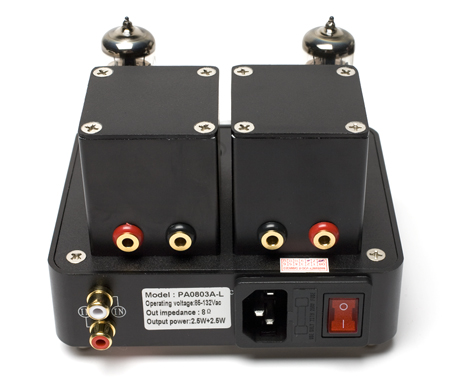
 Digital Excellence:
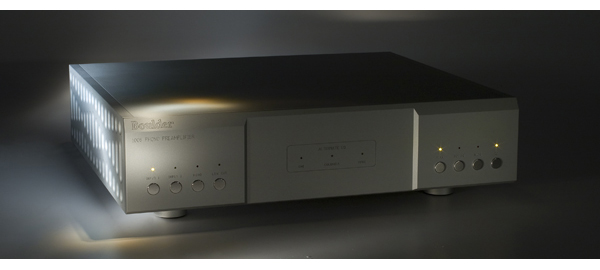 Introduced in 2002, the Boulder 2008 phono preamplifier caused quite a stir and was considered the top of the analog mountain by many. With three inputs and variable EQ options for older recordings, it left no bases uncovered. It still remains king to many people, but at $33,500 out of reach for all but the most well heeled audiophiles.
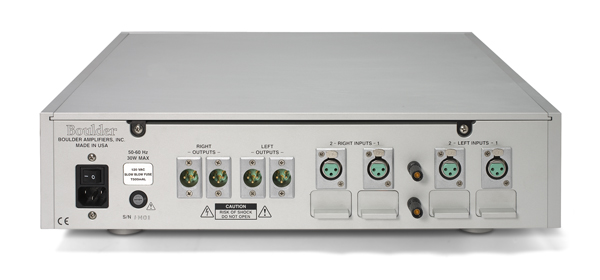
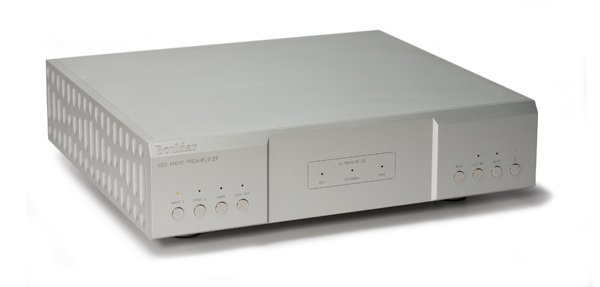 A peek inside the box reveals Boulder’s meticulous construction and outside, their flawless casework. Though light by Boulder standards at 32 pounds, the 1008 is a bit more manageable than it’s larger brother, but equally potent. (And it still weighs as much as some power amplifiers I’ve reviewed.) A one-chassis design, the 1008 still features dual mono construction throughout and heavy duty shielding on the power transformer to isolate it from the rest of the circuitry. Thanks to 70db of gain, and a noise floor that redefines quiet, you should be able to use any phono cartridge available, no matter how low the output with no issue. The MM input features 44db of gain, and allows for adjusting the capacitive load as well, so the 1008 is infinitely configurable to suit your needs.
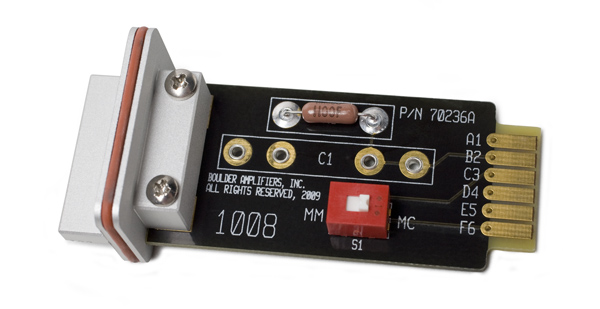 Other than placing the 1008 on my rack and plugging it in to a Running Springs Dmitri power conditioner (with Shunyata Python CX power cord, as all of my other low level components are), the only setup necessary was changing the loading on input two to low gain via a switch and unsoldering the 100 ohm resistor from the removable “personality card”, so that I could investigate the moving magnet and moving iron cartridges in my collection from Clearaudio, Grado and Soundsmith. The other cartridges used on input one were the Lyra Skala, Dynavector XV-1s and the ZYX Omega, reviewed in issue 28 of TONEAudio. I briefly auditioned the Clearaudio DaVinci, but found its slightly forward presentation not to my liking with the 1008.
 Moving back into my comfort zone, I revisited the Supertramp album that I began my evaluation with and was impressed at how much bigger the sound had grown in all three dimensions, very impressive. Next stop, the recent remasters of the Kraftwerk catalog. The driving beats in Tour De France were pounding, and at extremely high level, starting to shake my building. Thanks to that 20hz low pass filter, I was able to drive my system to discothèque levels without a hint of feedback. This also came in handy with moderately warped records. With a system that extends to 20hz, recorded anomalies that were not a problem when my system bottomed out at around 30hz now are front and center. The filter worked well without diminishing the subterranean bass drive of the system.
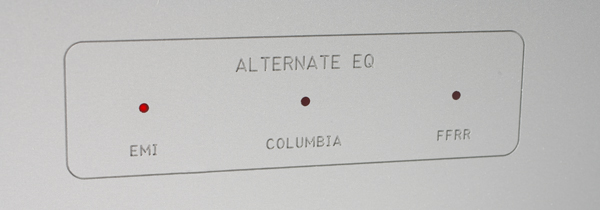 Boulder rounds off their design with a few extra touches that make the 1008 a great choice for the real vinyl connoisseur. There is a separate EQ selector for early Columbia and EMI records as well as the early Decca ffrr recordings. While I don’t have many of these records in my collection at present, should the 1008 become part of my reference system, I would no longer shy away from them in the future.
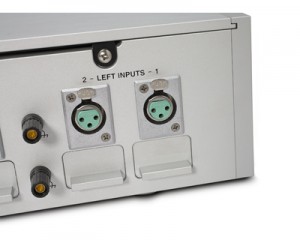 For the vinyl enthusiast that dreams of owning a Continuum table and Boulder 2008 phono preamp, but will never be able to scratch together $200k, trust me, combine the Boulder 1008 with your favorite $25k table, arm and cartridge and go to bed with a big smile on your face.
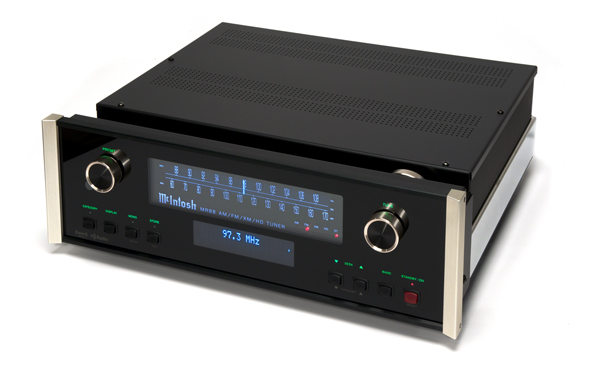 Sometimes, one longs for the hi-fi simplicity of the 1970s. Back then, FM radio functioned as the prime source of listening for many a music lover. AOR FM was in high gear, and people just tuned into any number of stations to get a music fix. Those with audiophile leanings often invested in a separate tuner to optimize the FM sound quality. Often, a manufacturer’s top-of-the-line tuner represented the best and most highly engineered product in its whole line. Companies such as Yamaha, Pioneer, SAE, Kenwood, Sansui, Marantz, Technics, Sony, and McIntosh waged a high-stakes tech war to see who could develop the king of the airwaves: A tuner with clean, clear reception coupled with good sound.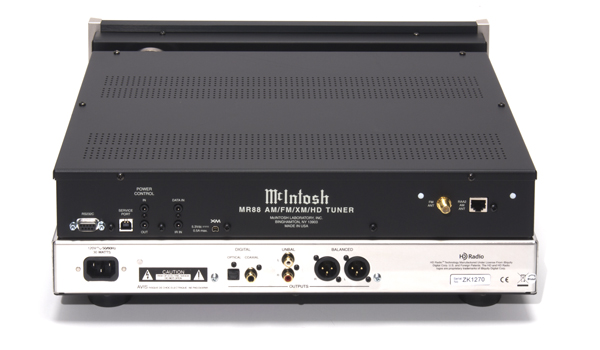
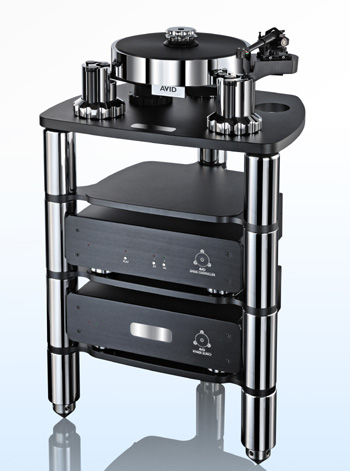 Avid HiFi, clearly on a roll after releasing their stellar Pulsare phono stage (watch for the review here, shortly) has topped their line of turntables with the Limited Edition Anniversary model, of which only 10 will be made, in celebration of their 10th anniversary.