








PLEASE DOWNLOAD HERE: https://www.tonepublications.com/MAGPDF/TA_120.pdf
The Fiio K17
April 26, 2026
Mini Music Powerhouse
$995.00
fiio.com/k17
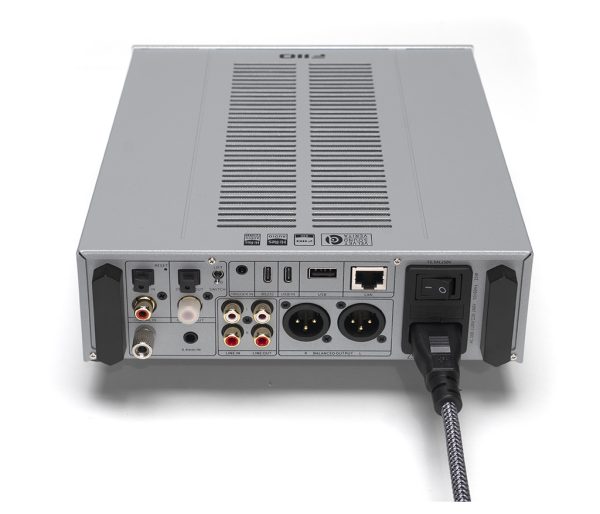
Nestled in between my mighty Klipschorns, with ROON playing “Paranormial” by The Art of Noise, it amazes a few of my audiophile buddies that the source is the tiny FiiO K17 DAC. And it’s not just a DAC, it’s a full-blown streamer, preamplifier (though I am only using it as a DAC/Streamer here), and headphone amplifier. It even has a 31-band digital parametric EQ built in!
The bass is extended, defined, and full of texture. Mids are natural and clean. The treble range is well represented, perhaps a touch grainy when compared to much higher priced kit, but completely livable. And the Khorns are a bit extended on top as well, so it’s all good. Going from here to Tom Waits’ “What’s He Building?” reveals just how much midrange detail, texture, and depth this digital front end is capable of. Following it up with Lou Reed’s “Vanishing Act” and Allan Taylor’s rendition of “Tennessee Waltz” confirms it. This is an incredible product.
With so many people out on YouTube complaining about the cost of things hifi, I submit the FiiO K17. To put this in perspective, I own a dCS Vivaldi ONE that is currently being updated to APEX spec, so that’s about a $100k digital player. I’m not saying this to boast about my system; I want you to know that I have an incredible digital front end, and yet at $995, the K17 is not only a tremendous value, but it delivers tremendous performance and amazing flexibility.
Why is this so exciting? At $995, the K17 gives budding audio enthusiasts a great jumping-off point, and for those wanting to build a great system that won’t require refinancing the house, an incredible anchor. Or, if you are a deeply committed audio enthusiast, it is the perfect building block for a second or third system.
Using the K17 in concert with a vintage Proceed PDT CD transport and streaming via ROON, Qobuz, and Tidal makes for a digital music center that is out of this world good. Taking advantage of some pretty advanced tech, both in circuit design and sheer engineering might, assembling all of this in such a small (about 8” x 8” x 2”) package is a masterpiece of execution.
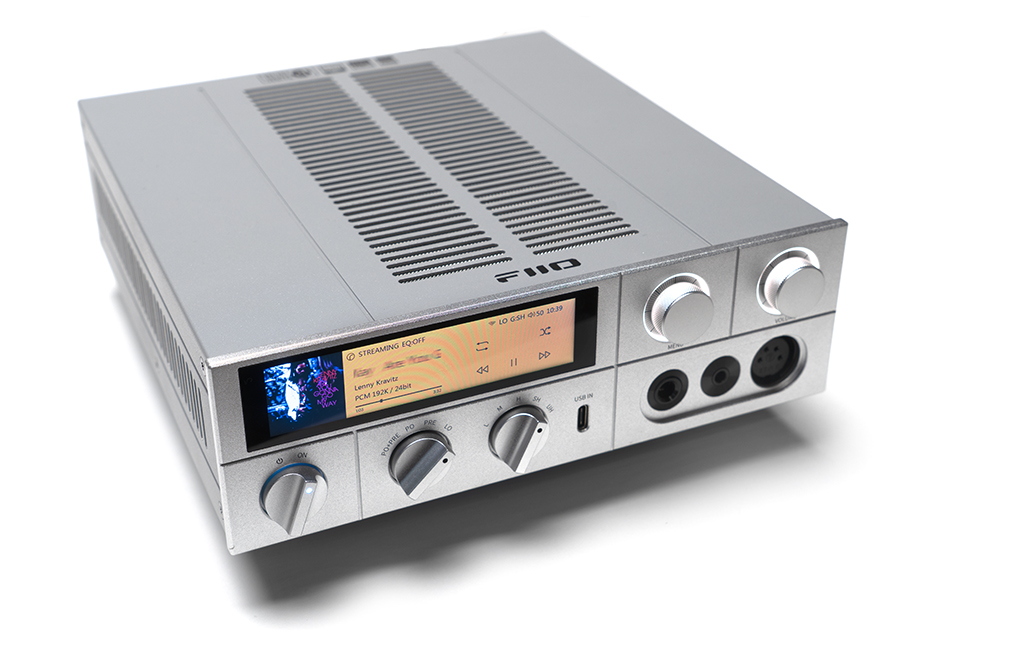
A quick look at the FiiO site shows everything they’ve packed into this small enclosure. The K17 is truly a masterpiece of miniaturization – there is no wasted space anywhere. Around front, there is a 3.93-inch high-resolution touch screen, making it easy to see what is going on and control everything from the front panel. It’s a smartly attractive piece with a slightly retro style, almost like early Mark Levinson gear, albeit a small one!
In addition to volume and menu controls, there are three headphone jacks and multiple selectors for power, function, and gain. Our review sample arrives in silver with black lettering but is slightly difficult to read because the type is so small. I’d buy mine in black, for the additional legibility, but that is truly the only complaint I have about the K17.
As a DAC/Streamer
You really need to head over to the FiiO site to see everything that the K17 is capable of. In the context of this review, it was primarily used as a DAC/streamer, as a ROON endpoint. The K17s analog stage has RCA and balanced XLR outputs. They say it is a fully balanced design, but since my ampsandsound preamplifier is RCA-only, most listening was done with the RCA outputs.
Thanks to multiple inputs around back, any source can be accommodated. There are digital inputs for coaxial SPDIF, optical, and USB sources.
Being able to stream anything from anywhere makes the K17 incredibly flexible. It even decodes MQA files if that is still a thing for anyone. Bluetooth playback with Spotify from my iPhone is exceptionally good, too.
As mentioned in the spec sheet, the K17 decodes everything. I was able to decode everything in my library with ease, and again. It works flawlessly, using it as a DAC with my vintage Proceed transport to play CDs via the coax SPDIF input. If you’ve got an older player that still functions fine, this is a great way to breathe new life and functionality into an old deck.
As a headphone/PRE
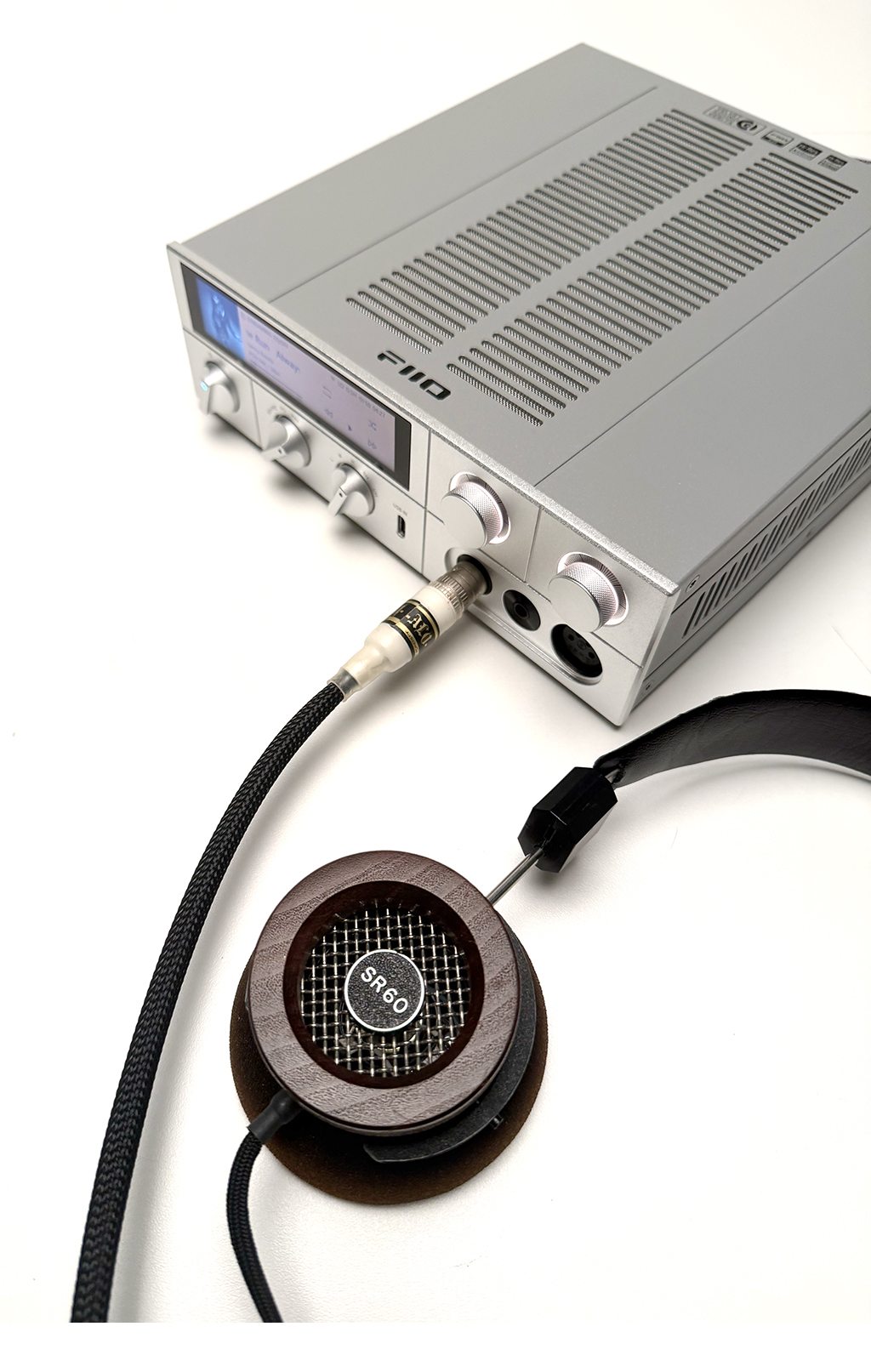
Not being a big headphone user these days, I still keep a couple of good phones around just in case, so putting the K17 to work strictly as a headphone amplifier proves this component is more than worth the asking price if that’s all you use it for.
FiiO claims 4 watts of power, with discrete output devices in the headphone amplifier section. Listening sessions with the Focal Clear MG, original Audeze 2s, and a pair of Grados all prove musical.
Back to that EQ for a minute. As you head-fi’ers know, there is so much variation in the way different phones mate with different amps, and having the ability to make minor adjustments over this wide of a frequency range is helpful. Best of all, this can be adjusted with your phone or tablet using their app. Everything else can be controlled here as well.
While my studio is a pretty good-sounding room without major issues, my living room is dreadful. Being able to surgically cut out a bit of boom here, and boost a bit of cloudiness in the upper mids goes a long way at making that room a lot more listenable. That may grate on your audiophile sensibilities, but it is great to have available. And we all know not all records are created equal.
Thanks to its fully balanced design, you can easily place the K17 where it’s convenient and run a long set of balanced interconnects to a power amplifier and speakers elsewhere in the room. I tried this in my living room, running a 6-meter pair of Ranger XLRs to a Pass Labs XA30.8 power amplifier. Back in the studio, the K17 is the anchor for System 3, but is only used as a DAC. You can choose fixed or variable outputs from the front panel. There’s even a handily placed USB-C port there, and around back, a ground lift switch. FiiO hasn’t missed a thing to make the K17 easy to integrate into your system.
However, using it as a line level preamplifier, direct to amplifier works well, making the K17 a fantastic building block to a modestly priced, yet high performance two-channel system. Thanks to the single analog input, it’s easy to add a turntable. Connecting the Hagerman Trumpet MC to a vintage Technics SL-1100 makes for an excellent combination, using the Vera-Fi A40 class–A power amplifier, driving vintage Acoustat 2+2 speakers. Because there is no loss of information at low volume, I am assuming that FiiO has implemented the volume control in the analog output stage.
The $100k question
So, is the K17 a dCS killer? Nope. But it’s core sonics are excellent, and the level of sonic refinement it does offer is way beyond what I suspect you’ll find at $995. Doing some side by side comparisons with players from Advance Paris, Naim, and Marantz with price tags nearly double – the K17 holds its own.
Beyond that, considering it’s unique set of features, it outperforms everything else I’ve encountered at over double the price. That’s great value. It may not be a dCS Vivaldi or an Esoteric Grandioso, but that’s not who this is intended for. I think putting the K17 in the context of a $3k – $10k+ system, you will be thrilled. I know I am.
I definitely want one
At $995, the FiiO K17 is one of the best values I’ve ever encountered in high-end audio in a long time. It’s more than worth the price asked, even if you were merely using it as a preamplifier, headphone amplifier, DAC, or streamer alone. That you get all four in one neatly executed box is incredible.
I’m happy to give this our first Exceptional Value Award of 2026. Regardless of where you are in your hifi journey, this is one to check out. I’m keeping the review sample. And we’ll have a little more up on YouTube in the weeks to come, too.
Peripherals
Digital source(transport) Madrigal Proceed PDT
Analog source Technics SL-1100/wSME 3009 and Denon DL-103r
Phono pre Hagerman Trumpet MC
Amplifier Pass XA30.8, VeraFi A40
Speakers Klipsch AK7 Klipschorn, w/ SVS 5000 sub
Cable Ranger signal and power
The Thorens TD-124DD Turntable
April 19, 2026
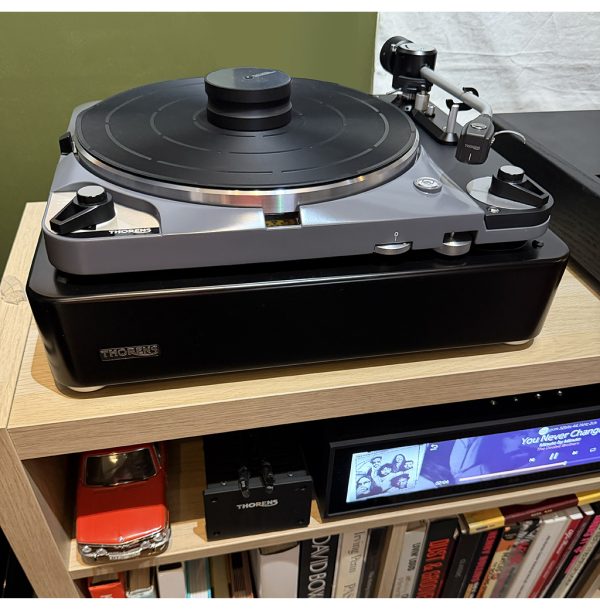
The letters DD usually mean something else to me, but in this case, they mean direct drive. Not something you’d usually expect from Thorens, long time makers of idler wheel tables, that have become famous the world over. So this reimagined version, has a mega reputation to live up to.
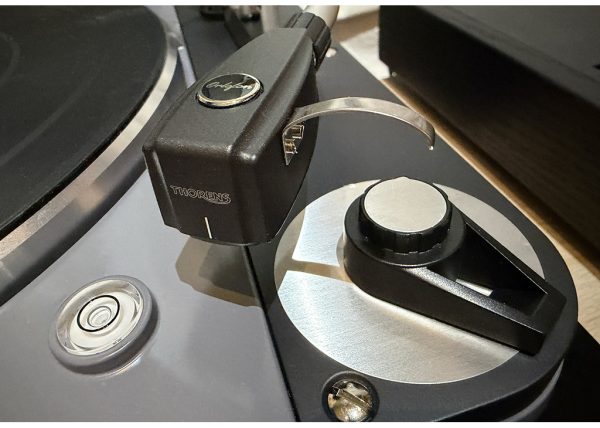
Without having a well preserved (or restored) original to do a direct comparison, I can only go on my memories. Packaged with a 9-inch Thorens arm, and thanks to the folks at MoFi Distribution, Ortofon’s latest SPU cartridge, designated the TD124, how can I go wrong?
The table sets up quickly, and unlike its ancestor, does not have a cast iron platter (though the supplied one has plenty of mass) to destroy your favorite moving coil cartridge. #askmehowiknow.
All the styling cues are here, and the only thing that seems a little off is when you lift the platter it looks more like an SL-1200 than a Thorens. But that’s progress. Playing through the MoFi Master Phono phono stage in current mode is lovely. The sound is big, lush and dynamic.
We’ve got a lot more to unpack here, and we will be doing a proper comparison to a vintage 124 as well, because if nothing else – I want to know. Stay tuned.
www.mofidistribution.com
A New Legend from Dynaudio…
April 19, 2026
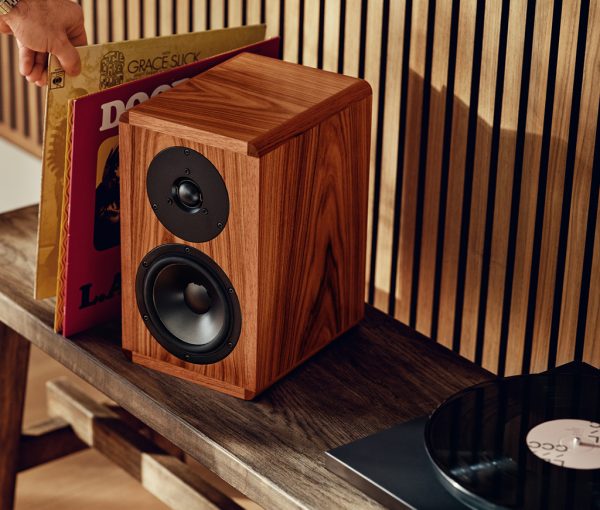
Announced the day of the opening of Axpona last week, Dynaudio’s new Legend speaker is “The Best ultra-compact speaker we’ve created so far,” according to Otto Jorgensen, the head of Dynaudio Academy.
Big words indeed, coming from the people who have given music lovers a long line of high performance, compact monitors. Many of these have been reviewed in our pages. It’s no secret that we’re big fans of the brand. The combination of understated aesthetic excellence, and the ability to pack so much performance in such a small cabinet is virtually unmatched in the industry.
And, at $7,000/pair, these mighty miniature monitors will bring great sound to small spaces everywhere.
Combining Dynaudio’s 28mm Esotar 3 tweeter, a new 14cm mid/bass driver, and crossover components all derived from their top speakers, these are a winner. Destined to live up to their name.
And the sound?
Awesome AF. That’s how they sound.
If this sounds like just what you’ve been looking for, head over to your Dynaudio dealer and listen. They were a major hit at the show. We can’t wait to get them in for review.
www.dynaudio.com
Looking back on Axpona 2026
April 19, 2026
This picture was taken about 90 seconds after Axpona opened on Friday. 20 minutes later, the place was packed – wall to wall people.
That’s exciting for a lot of reasons. For the first time since we got stuck with Covid, it felt great to see the place packed. It’s a good sign for the hifi industry and the hobby in general. There were still people in rooms on Sunday night at 6pm (and the show officially closed at 4) listening to music.
If you’re new to TONE, and you’re looking for a bunch of “Best sound at the show” awards, don’t waste your time. We don’t give them out. I always look at a hifi show as a hostile environment for producing sound, because there are so many variables. That everyone’s stuff gets there unharmed and set up in itself is amazing. And I mean this in the most respectful way. Think about it, 200+ rooms got set up and rocking in a day or so. That takes hard work and dedication.
What does “best sound at the show” really mean? It means the sound you preferred. Considering there were systems from a couple thousand dollars to a couple million, any attempt to do this isn’t fair to the manufacturers, or you – the reader. And, there was such a wide range of different systems, it was exciting to see it all in one place.
But I’ll tell you this – I heard more rooms that had well executed setups, big and small, than I’ve ever heard at any hifi show. Ever. We’ve got a few pics over on our Instagram page, with a few more to post in the next couple of days.
https://www.instagram.com/toneaudiomagazine/
Again, this is great for the people that took time off from their jobs and families to come on down and hang out. I truly hope that if you were someone new to the world of hifi you got to hear enough great sound, that you’re motivated to go further and seek out a good dealer.
It was great to be part of it, and to see as much as I could pack in. I’m already looking forward to next year. If you’d like to experience a massive cross section of hifi, I can’t think of a better place to go. – Jeff Dorgay
The Best Boink Music…
April 18, 2026
Ed. Note: While I was searching for something else on the site that was mis-labeled, I came across this. Considering we could all use a few more smooches, I’m still good with this list 12 years later! Do with it what you will.
Today, Spotify announced their list of “Top 10 Shagging songs” here:
http://www.theladbible.com/now/music-spotify-reveals-the-top-10-shagging-anthems-and-one-lasts-127-seconds-20160804
I agree that most music is subjective, and we all have our favorites to initiate or accompany the mating ritual. Here’s mine – in no particular order. If this is all TMI, sorry about that! I hope you’re open enough to either be inspired or amused. Keep in mind, these are not staff choices. Like Captain Kirk, I stand alone on this one. Let the comments begin.
1. Prince – One Night Alone
2. Mickey Hart – Eliminators
3. Pat Metheny – Are You Going With Me?
4. Anja Garbarek – Big Mouth
5. Dylan – I Want You or Just Like a Woman
6. Crash Test Dummies – I Want to Par-Tay!
7. Crowded House – Whispers and Moans
8. Dusty Springfield – Breakfast in Bed
9. The Tubes – Let’s Make Some Noise
10. Art of Noise – Moments in Love
Extra Credit:
Stephen Pompougnac – Hotel Costes (the entire series)
The Pretenders – Bad Boys Get Spanked
Judas Priest – Turbo
Kiss – Deuce
Squeeze – Tempted
Betty Davis – Game is my Middle Name
Sly & The Family Stone – You Can Make it if You Try
Fun, But Obvious:
Marvin Gaye – Let’s Get it On
Beatles – Why Don’t We Do It In The Road
And of course:
Yello – Oh Yeah!
Never:
Anything by REO Speedwagon, Journey or Styx
The Pass XS Preamplifier
April 14, 2026
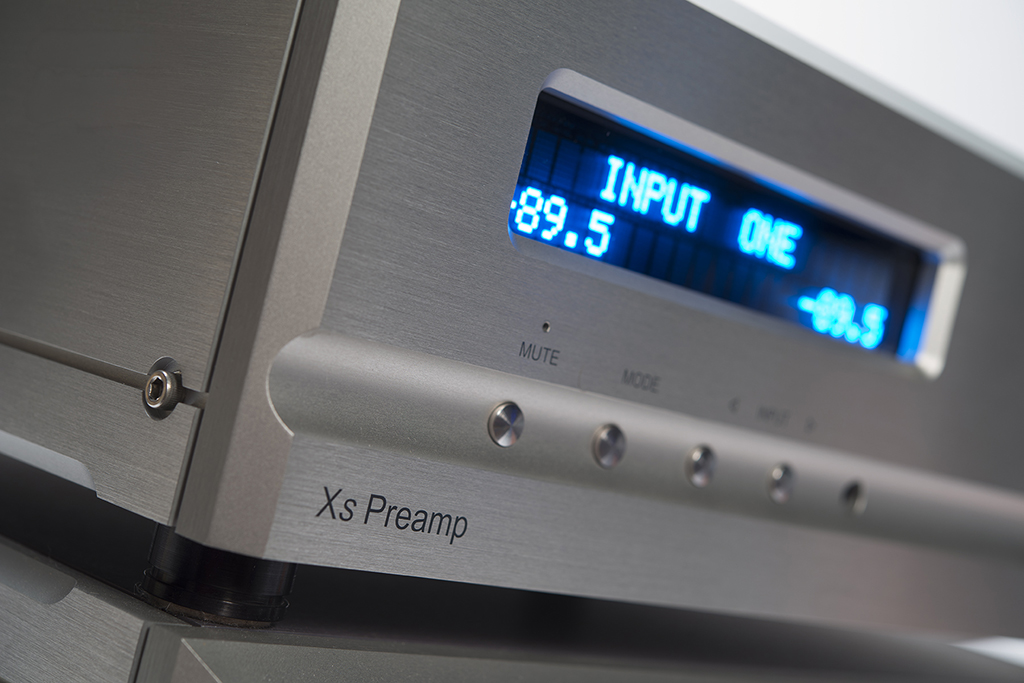
Pub. Note: This was originally published about 11 years ago, but with our upcoming review of the replacement model, we thought it would make sense to make this easier to find, as we compare it to the new XS Pre 2.
Of the thousands of tracks auditioned during the Pass XS Preamplifier’s stay here, Lou Reed’s “Vanishing Act” sums it up perfectly. As he sings/speaks, “It must be nice to disappear…” the words to describe the XS Pre appear. It just disappears, calling no attention to itself, perhaps the toughest thing for an audio component to do.
Just like buying a car, test driving a premium audio component is usually a shorter first date than you’d like. In the end, it requires a certain leap of faith, and if you blow it, it’s going to cost you dearly. Much as I love Pass products, if you decide that the $38,000 XS Pre isn’t for you, there will be a stiff penalty, should you turn it over for something else. Like any other five figure hi-fi component, putting this two-chassis beauty back on the secondary market after a few months of use will be an expensive proposition unless you have an incredibly forgiving dealer, used to you doing this kind of thing on a regular.
The good news is that the above mentioned scenario probably won’t happen. I’d even go out on a limb to bet about 100 to 1 odds that it won’t. I’ve been using the XS Pre for over a year now, and I’ll do my best at describing it so that you won’t make a misstep.
First, and most importantly, where the Pass XS and XA series amplifiers have an ever so slight tip towards the warm side (which I happen to prefer) of what I’d call neutral tonality, the XS Pre is as close to having a straight up, 12 o’clock, right in the center neutral tonal rendition as I’ve ever experienced. The only other preamplifier I’d put in this category is the Boulder 3010, and to a slightly lesser extent my other reference, the Robert Koda K-10. Either of these preamplifiers cost as much as a gently owned BMW M3, and each is phenomenal performers.
Special and then some
 Today there are a lot of incredibly competent preamplifiers, many costing less than the XS Pre and a few costing even more. Now and again, a component is so overwhelmingly good, that it’s an express elevator ride to audio heaven. My Conrad Johnson GAT2 is one of those preamplifiers too, but it’s got vacuum tubes, and only sports single ended RCA inputs and outputs so that it won’t be everyone’s idea of heaven.
The world’s finest preamplifiers that I enjoy impart little to no signature of their own to the music, yet they offer a bigger, broader, weightier presentation than a system is capable of without a preamplifier involved. This is a unique bit of magic that don’t completely understand because, in a perfect world, you would think that just going straight from your DAC or phonostage (provided it had a level control) would bring you closer to the music than running everything through another box and set of cables.
Good as the dCS Rossini DAC and Clock combination is on its own, running a pair of Cardas Clear interconnects directly from the dCS pair to the XS300 amplifiers sounds smaller, less focused and pale in comparison to putting the XS Pre in my reference system. How can this be? Especially considering Mr. Pass (the creator of the First Watt amplifiers – champions of the “less is more” approach to circuit design. Inserting the XS Pre in the signal path is not subtle. Again, this preamplifier does not change the tonal character or balance a molecule, yet everything enlarges. Dynamic range increases to the point where transients explode from the speakers where they merely had punch before, and the soundfield created by the system becomes much larger in all three dimensions. The sonic presentation goes from big and satisfying without the XS Pre to being engulfed in a tornado of sound. This effect was observed with every power amplifier connected, from a modest Conrad Johnson MV60SE up to the mighty XS300 monoblocks, so this can’t be a mere “impedance matching” kind of thing.
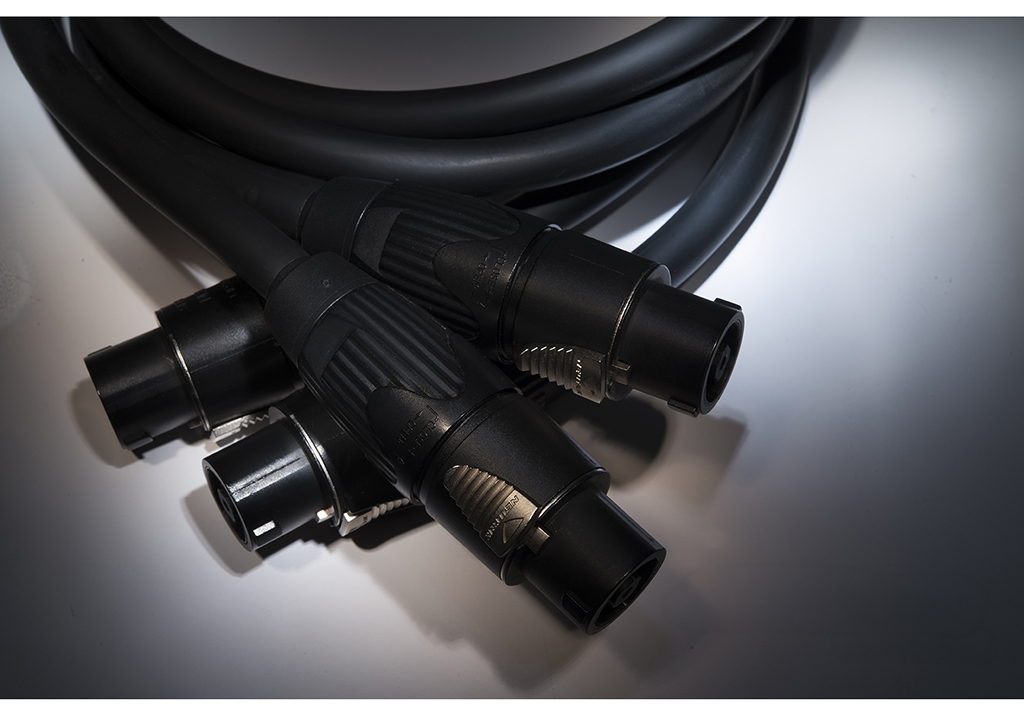
We’ve had the opportunity to use the XS Preamplifier together with the matching XS300 monoblock amplifiers to excellent result, paired with the XS Phono, making for an unbeatable combination of dynamics, tonality, and ease of use. There truly is nothing I can find fault with this trio. Ok, it’s all pretty heavy. That’s it. Fortunately, the XS Pre only weighs 80 pounds, and it is distributed between two chassis, the power supply, and the actual preamplifier circuitry. The two are connected by the same massive umbilical cords used in the XS Phono and the XS 150/300 power amplifiers. Terminated with Neutrik connectors, these are beefy cables indeed. 100,000µƒ of power supply capacitance per channel only hints at the power reserves available.
Nelson Pass and his crew have repeatedly said that they build components that they like, above all else. While many know the man with the name that adorns the faceplates as “the man” at Pass Labs, he is the power amp man. Wayne Colburn has designed all the Pass Labs preamplifiers and was given a clean slate (and pretty much a blank check) to design a companion preamplifier for the XS monoblock amplifiers. Rather than bore you with a long list of common audiophile clichés, he has succeeded on every level.
Incredibly versatile
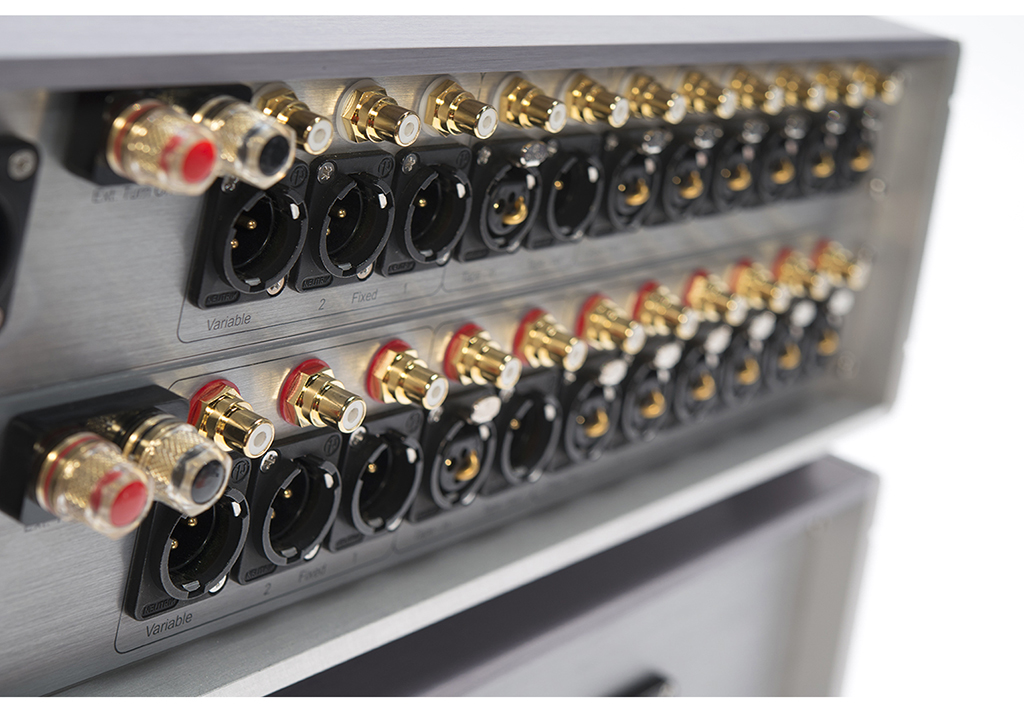
Lovely as the XS Pre is with a full compliment of Pass components, it is equally engaging with every other power amplifier we’ve had here at TONE in the last year or so – single ended or balanced. The XS Pre circuitry is fully balanced, but it features balanced XLR and single ended RCA inputs and outputs.
As a review tool, the XS Pre is without peer. It is effortless in its delivery and consistent in sound quality, providing a similar sonic picture with balanced or single ended connections. Even if you don’t review hifi gear, this kind of flexibility offers a much wider range of options as your system and tastes change. With the XS Pre offering such a neutral rendition, it is a perfect system anchor, letting you mix, match and experiment elsewhere.
Because the XS Pre doesn’t manipulate or alter the tonal character of the music it delivers, the usual list of tracks to describe bass, treble, and imaging are almost irrelevant. Laurie Anderson once said, “Paradise is exactly like where you are right now, only much, much better.” That’s the XS Pre. It’s much, much better. Add the concept of never having to retube, along with the headache that a new set of tubes can cause, makes it a component you can just leave powered up and forget about it. Matter of fact, there is no power switch.
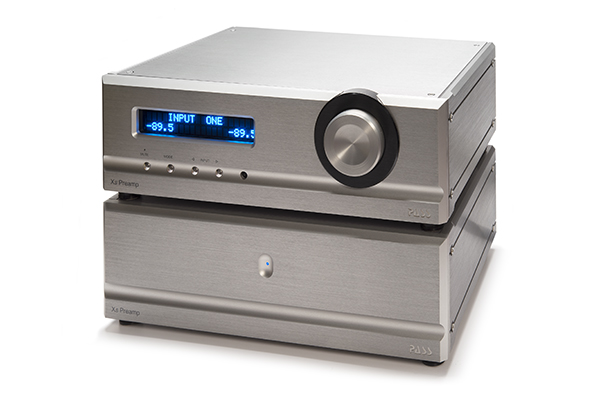
Setup is straightforward, provided you have two extra rack spaces and can separate the two boxes a bit, to keep every possible bit of noise at bay. Once powered up, the XS Pre took about four days to come all the way out of the fog from being fresh out of the box. As with any component, there is a slight bit of stiffness at initial turn on, but it dissipates quickly.
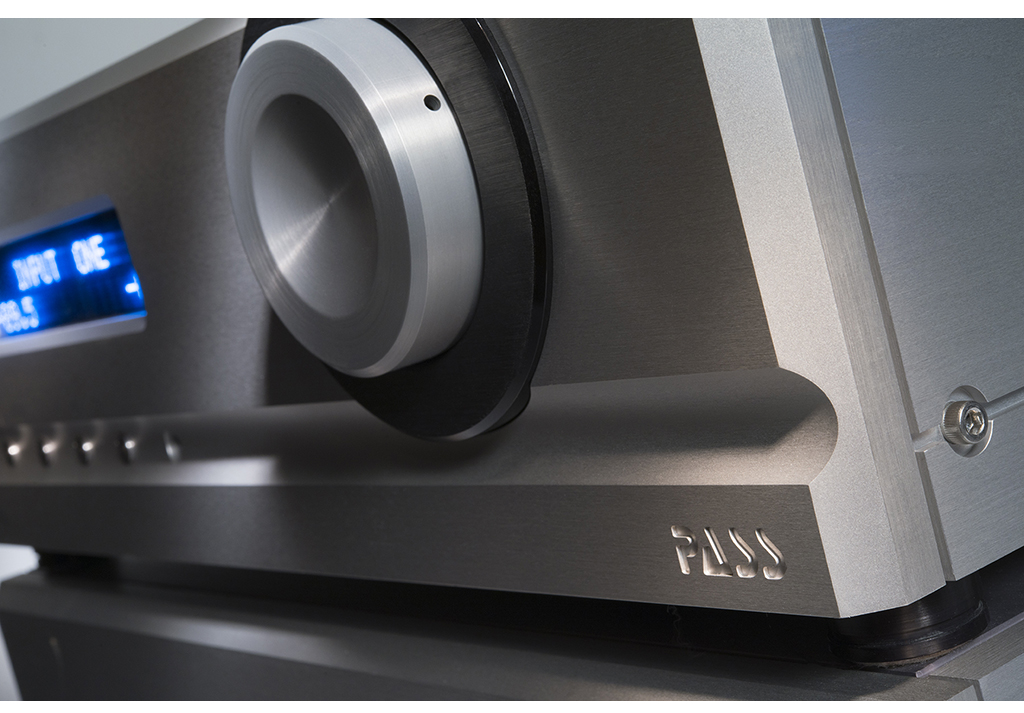
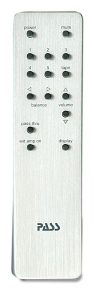
The front panel has a large volume control and a display friendly to read from across the room. Pass provides a simple, efficient aluminum remote that matches the casework of their other products, and this too is easy to use. The volume control has a wide range of operation, so even the most sensitive power amplifiers will have ample volume control range.
A keeper
Ultra high performance has a price, and there are a lot of great preamplifiers in the $10,000 – $20,000 range; even Pass makes one. (The XP-30) After living with a number of them, the XS Pre delivers an experience that you can’t get for $20k. That’s its justification. If you are looking for the last step up and a final justification, it’s worth every penny asked. This may be tough to swallow for some of you in the audience, but you can’t have a Ferrari 458 for $50k either. Like the Ferrari, the XS Pre will take your breath away if you have the room, system, and software to support it. And I’m guessing if you have 38 large, you do.
The Pass XS Pre does its job so effortlessly and so well if it doesn’t hit you on the head with the first track you play, just take it out of your system for about 90 sec. It’s like someone put the valet key in your Dodge Challenger Hellcat and the horsepower is gone. This is one of the purest hifi experiences I’ve had in over 15 years of reviewing components. Long term, I have even more enthusiasm for the XS Pre – every day it convinces me how special it is.
The Pass XS Pre Preamplifier
$38,000
Peripherals
Analog Source AVID Acutus Ref SP/SME V/Lyra Atlas, Grand Prix Audio Monaco 2.0/Tri-planar/Lyra Etna, Brinkmann Bardo/10.1arm/Koetsu Jade Platinum
Digital Source dCS Rossini DAC and Clock, Gryphon Kalliope
Phonostage Pass XS Phono
Power Amplifier Pass XS 300 monos, Pass XA200.8
Speakers GamuT RS5i, Focal Sopra no.3 w/2-REL 212, MartinLogan Neolith
Cable Tellurium Q Silver Diamond, Cardas Clear
The Pylon Jade 30 Speakers are more fun than….
April 2, 2026
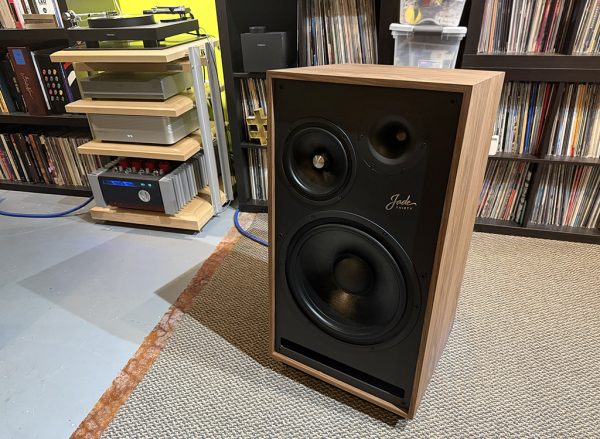
The Pylon Jade 30s have raised the bar for what I thought a fun/chill out, non-audiophile speaker could be. In the past it was always the JBL L100 (the current, reimagined version, though clean NOS ones don’t suck either). The Jade 30s eclipse everything in the category.
But this 15-inch, 3 way really does it for me. Staffer Chris Harr was over for a late night listening session the other day, and while we both agreed how awesome the big system is, these speakers are cooler than cool to just hang out and spin anything you can think of.
Making use of Pylon’s own drivers, the Jade 30s are super easy to set up thanks to their built in stands, and 93dB/1-watt sensitivity. Our initial listening has been with the Pathos Inpol Heritage integrated (80wpc-hybrid design) and the Western Electric 91E. (12wpc, SET) The Quad 33 amplifier is next up.
Bass is plentiful, the highs are smooth yet extendend and the tonal balance is the perfect blend of correct and relaxed without being slow or syrupy. The finish is BEAUTIFUL, and you can have your pair up and rocking in 10 min if you have a friend to help unbox.
At $9,995/pair, this might just be the only speaker a lot of people will ever need to step up to. Curious? Call the folks at Suncoast Audio (Click here for their site) or stop by and see them at this year’s Axpona in Chicago. Tell em I sent you. If you don’t love these, your heart’s not beating.
These are one of our Products of the Year, fyi.
Please click here for the Pylon home page.
Welcome to Distilled!
April 2, 2026
Hello and welcome to Distilled.
We are not abandoning our standard reviews, but for those of you that would like a little more than the canned press releases everyone else is posting, but not sure if you want to make the time investment in a full review, we present the distilled column.
A quick overview of components that will be 200-300 words. No space for blather, pontification, or a lot of “I, Me, Mine” stuff.
We’ll do our best to present a couple of good pics, a link to the full review (if it’s done and you’re so intrigued) and a link to the manufacturer. On occasion, we will even post a purchase link if it makes sense. Please NOTE: we are doing this for your convenience, and these are not sponsored or affiliate links.
Thank you for reading!
Continuing the battle on noise…
March 26, 2026
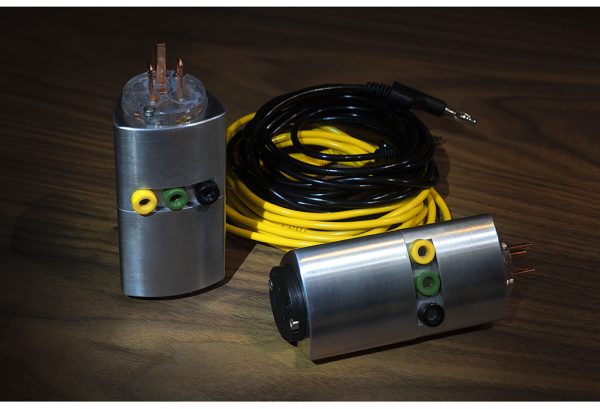
Vera Fi’s latest creation solves a common problem, and at a reasonable price.
If you’ve ever suffered the aggravation of a ground loop you can’t break, you know what we mean. But there are a few different ground issues that can add noise to your system and rob you of dynamic range. It’s not always about getting louder. And those of you with SET and super sensitive horn speakers also fall victim to that bit of noise that drives you nuts when you put your ear close to the tweeter…
Ditto, when incorporating multiple pieces of vintage gear in a system.
Some power conditioners will solve this problem, some will not. There are a whole new line of grounding solutions from premium cable manufacturers that work well, but some of them cost as much as a nice amp or DAC! Not always cost effective.
What we like most about the Ground Floor is that it is scalable. If you only have an issue with a turntable, or another single component, you only need a single unit to solve the problem. Intro price on these is $199 and if you’re struggling with noise, it’s priceless.
The Ground Floor can be configured with the supplied cables three different ways, from merely floating the ground on a device, to establish a system wide star ground, or telescoped grounds between outlets. A very versatile device indeed, and once that noise is gone, it’s a new world.
A full review will be forthcoming, but we have a number of different scenarios that both Chris Harr and I want to investigate, so we’d like to deliver a full report. No purchase link is available yet, but the folks at Vera-Fi should be able to give you more info.
Record of the day 022: Doug & The Slugs – Cognac and Balogna
March 18, 2026
When you think of Canadian music artists, perhaps you think of Rush, Triumph, April Wine, Max Webster, or even William Shatner. hahah.
I’d say yes to all of these, but there’s one I found by accident while in a record store in Milwaukee, many years ago. And it was definitely one of those records you just buy because the art was wacky or the name of the band seemed cool. Doug and the Slugs? Why not? I didn’t even know they were from Canada till years later, but it’s a fun new wave-y, kinda power pop-y type of record.
Well produced, fairlly well recorded and well played. Plus you can stream the Slugs’ catalog on Qobuz and Tidal just in case this might not be for you.
FYI, you can usually find a great copy on Discogs or your favorite used record stores for about $5. Woo hoo.
Record of the Day is brought to you by Bergmann Audio, dCS, and Supreme Acoustic Systems.
The table featured here is the Modi, with their Thor linear tracking arm.
CD’s and SACD’s are auditioned on the dCS Varese
Cartridge is a modified LYRA Helikon SL, modified by Ana Mighty Sound
Phono Pre is the award winning XP-17 from Pass Labs
Cables by Cardas Audio
All on top of the Pagode Master Reference MKII, courtesy of MoFi Distribution
Neoson Genese Integrated & Atlantis AT 16 Pro Speakers
March 15, 2026
A great beginning to a system from Decibel+
www.decibel-plus.com
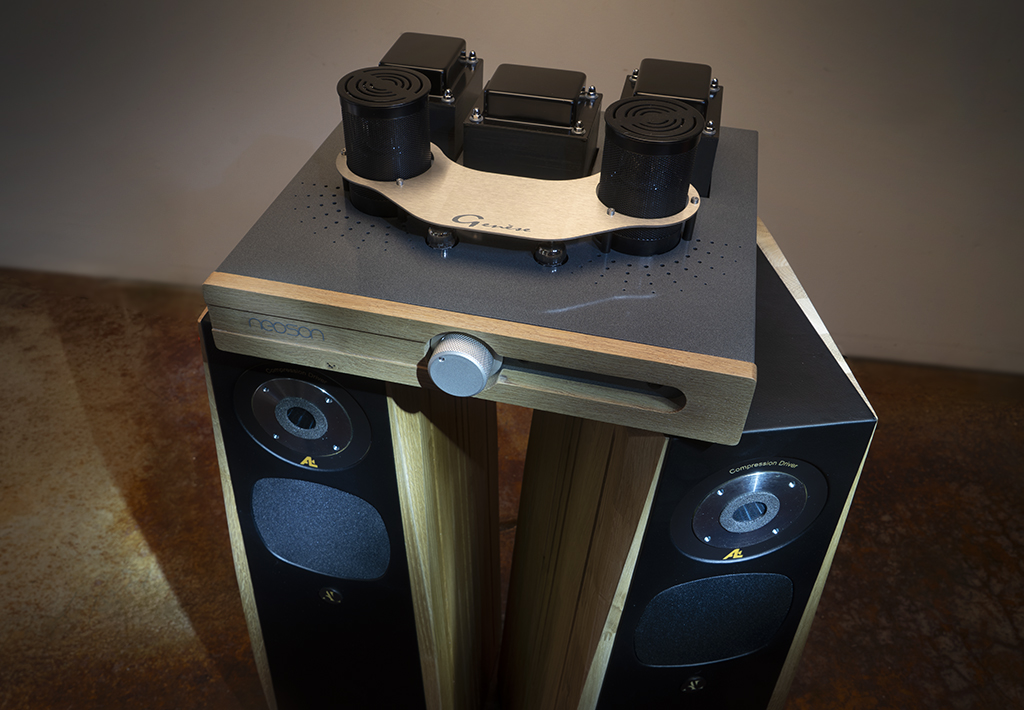
Neoson Genese Tube Integrated – $7,885
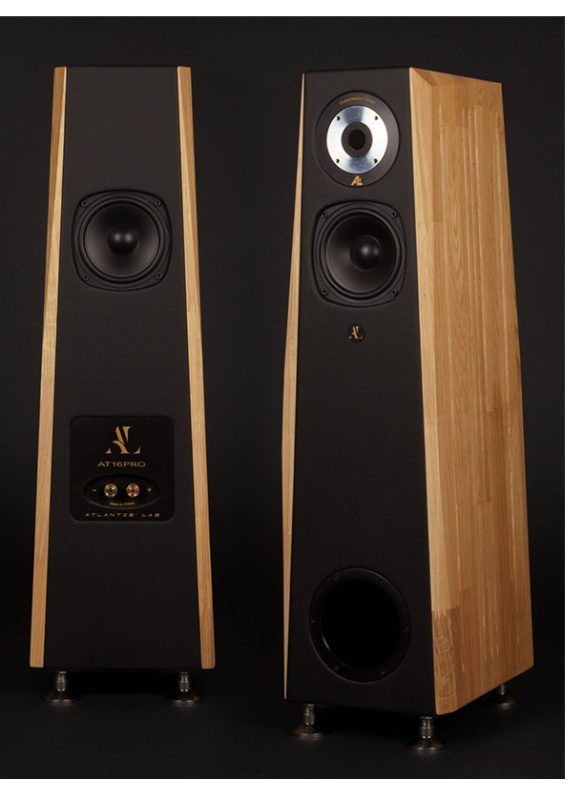
Atlantis AT 16 Pro speakers ($1,609/ea. as tested, in black leather – $1,729 ea. in white)
With such a wide range of hifi gear at your disposal, even someone who doesn’t suffer from severe FOMO can get overwhelmed in a hurry. We’ve recently run into Decibel-Plus in Las Vegas and they will be putting together some amazing system bundles that can get you rocking right away. For now, these are separate offerings, but we’ll treat the review as a “bundle,” ok?
Owner, Gabe Toro, shares space with his father, Hiram Toro, the proprietor of Supreme Acoustic Systems. While Supreme focuses more on mega gear, Gabe is carving his own niche, focusing on components and systems aimed at younger, perhaps more mid-market audio enthusiasts.
With more readers asking us for help mixing and matching components, we like the approach that Decibel+ is taking, making the process easier for music lovers who don’t necessarily want to become gear-loving (and trading) audiophiles. The Neoson amplifiers and the Atlantis speakers both hail from France. From the look and feel, they share enough design aesthetic that you might think they come from the same factory, especially with their emphasis on lighter woods and tones.
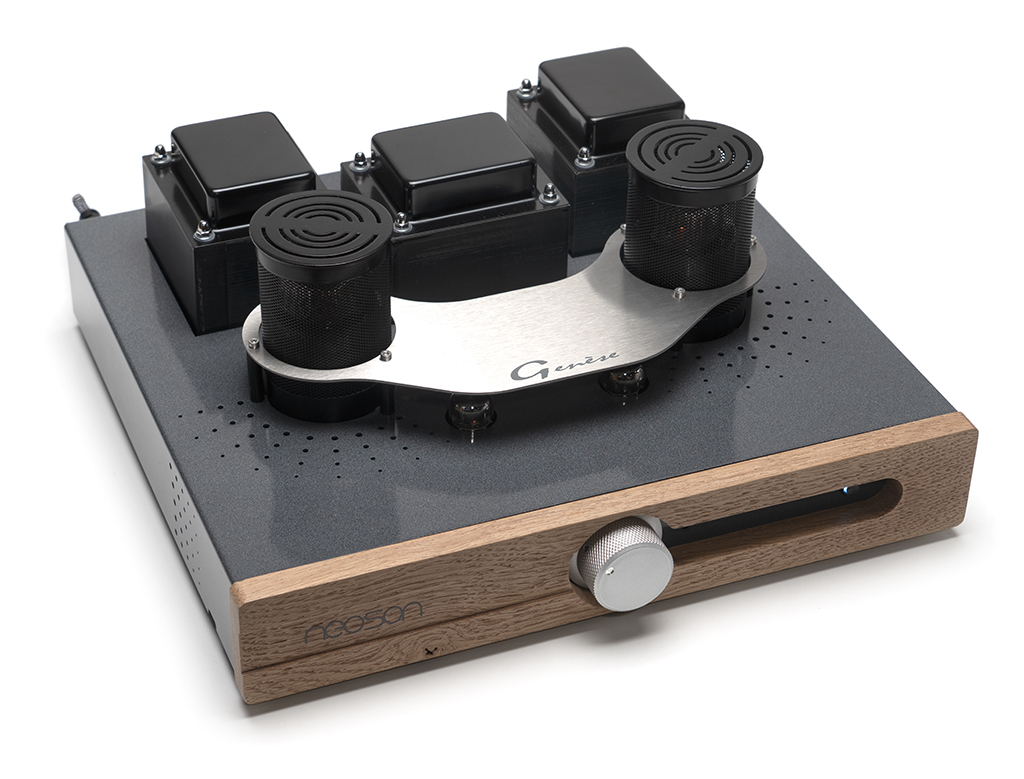
Speaking of tone
The Genese tube integrated is a 10-watt-per-channel amp that uses KT88 tubes in a single-ended class-A configuration. While this produces less power than a typical AB, push-pull amplifier, it delivers a much richer, tonally saturated presentation. A quick look under the bottom cover reveals all top-notch, premium parts as well. In addition to the ALPS potentiometer to control volume level, there’s a bevy of Mundorf MCap Evo Silver Gold caps, supported by premium PSVANE Art tubes.
Everything is beautifully finished, and the sonic signature of this amplifier reminds me of my ampsandsound Bryce monoblocks, utilizing a similar configuration. Overall, the sound is rich through the midband as you’d expect from an SET, but by using the much more robust (and affordable) KT-88 tubes, more user-friendly. And, way easier on your wallet when it comes time to re-tube. With only a pair of KT-88s and a pair of 12AX7s, this should be easy.
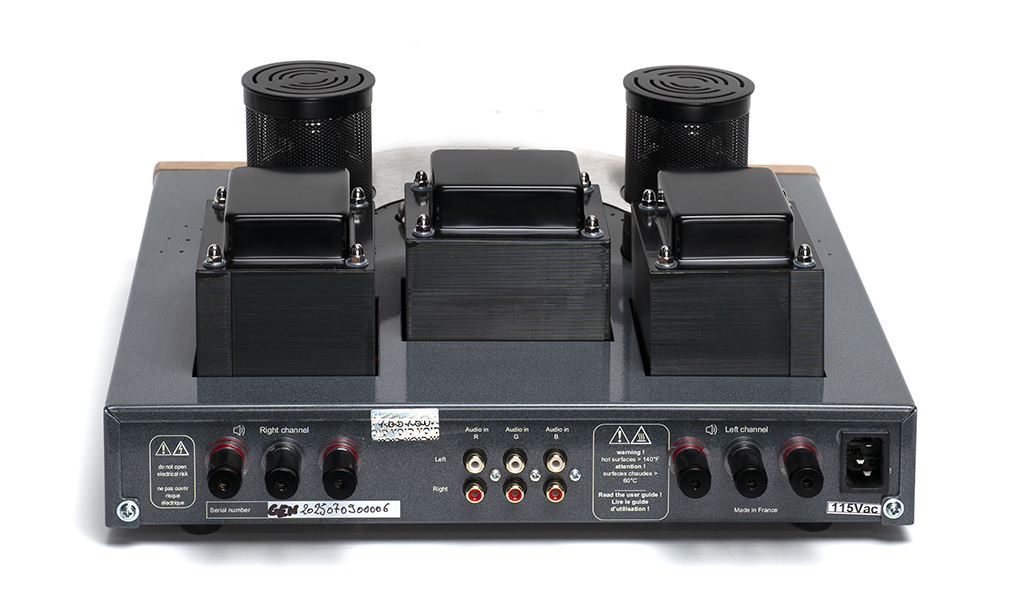
Convenience abounds
With three RCA single-ended inputs, you’ve got room for a streamer, a phono preamplifier, and who knows? Maybe a tape deck? The tubes are shrouded for those of you with pets and little ones around the house. A simple, yet functional remote is provided, but I really enjoyed walking up and interacting with the Genese; it has such a great feel, why not?
The materials used on both the amp and the speakers lend a relaxed vibe and will fit in any décor. Atlantis saves a few bucks by using an exceptional grade of synthetic leather that, even under close inspection, looks just like what you’ll see on a speaker from the folks at Sonus faber. Very nice!
Speaker setup
With a front-firing reflex port and an additional rear-firing woofer that is a match to the 7-inch front-firing woofer, this compact (about 32” tall x 9.5 wide) speaker will fit anywhere, and thanks to the variable port, can be user-voiced more for placement close to the wall if necessary. This came in handy in my 13 x 18-foot living room, and was not an issue out in the 24 x 36-foot studio. These speakers performed well in both environments, and can fill a big room btw.
They are easy to place, have great dispersion, and best of all, sport a 94.5 dB/1-watt sensitivity rating. A perfect match for the Neoson amp. Hence the bundle. And Gabe can hook you up with a few great streaming/DACs that fits right into the form factor (and, most importantly, your budget).
Atlantis claims +/-1dB down to 40Hz, and while we don’t carry out proper measurements, going from a 50Hz test tone to a 40Hz one feels equally powerful, though going down to 30Hz shows a significant roll-off at that point. Highly respectable for the form factor and price point. And you can always add a sub or two if the need arises and you have the space.
As with any other speaker, set them up in your room for the maximum amount of bass extension and lock on the room – that way you will get all the dynamics the system is capable of, then fine-tune for bass to midrange transition, with a little extra fine-tuning for image width and sparkle.
More Listening
The Atlantis/Neoson combo can play music as loud as most of you should need. I am always amazed at just how loud 86dB actually is. Should you need more, Decibel+ has other things in its stable, if you want one-stop shopping.
Of course, a few other things were tried, all with excellent results. The PrimaLuna ProLogue 1 ($2,595 – all tubes) and the Atoll INT-200 Evolution ($2,900 – solid state) are another great match-up. But this review is about the combo from Decibel +, so most of the review listening was done with the Neoson.
Bass is full-bodied, with definition and extension. Those 7-inch woofers deliver clean, articulate bass. Zooming through a few Jaco Pastorius tracks from the past, and some of Kim Gordon’s The Collective, from the present, shows these speakers can muster a lot of weight in the lower frequencies.
Listening to the entire 2 hours and 2 minutes of The Smashing Pumpkins’ Mellon Collie and the Infinite Sadness reveals these speakers to work with densely packed music. Should this be one of your faves, suffice to say all the sonic nuggets that make this record a masterpiece came through with ease. Bouncing back to that Kim Gordon record is another example of the same. The way these speakers keep the pounding bass line, the distorted instruments, and Gordon’s highly processed vocals all separate is spectacular. Ditto for some vintage Nine Inch Nails. These speakers will keep the music flowing at your next party with ease.
Atlantis does an excellent job mating the compression tweeter to the dynamic woofers, giving these small speakers a level of coherence beyond what is normally on tap for this price. Spinning the Black Crowes latest, A Pound of Feathers, which has the BC’s back to their hard rock roots, is a challenge for a speaker with limited dynamic range. Again, the AT16s impress, with a clarity that makes this music come alive.
Perfect synergy
What we really like about Decibel + is the way they are carefully curating components that work well in a small to medium-sized space, in a budget range of about $5,000-$30,000. The components chosen give you more than just a taste of what the crazy money gear costs, and look great doing it.
Where similarly priced ZU and Klipsch give you pretty basic boxes, the Atlantis speakers have a lot more style. (and I own a pair of each – so this is high praise)
Decibel + Principal Gabe Toro is 40 years old and is relatively new to the hifi retail scene. They are selling direct, but you can visit their experience center and do some in-person listening if you’d like. What he brings to the table is a fresh perspective that is much more in keeping with what his demographic might enjoy. And that’s a good thing for our industry. He’s off to a great start.
We’ll be featuring more systems from Decibel + and a few others in the future, in an attempt to draw you in. Enjoy.
NOTE: Decibel + will be offering an upcoming 10% discount on bundles on Audiogon and at this week’s THE Show in Las Vegas….
Manufacturer’s Information:
The Genese Amplifier
https://neoson8301.live-website.com/genese/
The Atlantis AT 16 Pro Speakers
https://atlantislab.eu/at-16/
Record of the day 021: Simon & Garfunkle – Bridge Over Troubled Water
March 15, 2026
This has to be today’s Record of the Day because I had the most bizarre dream last night. Aimee Mann knocked on our door and asked if she could hear a record, because she “heard I had a pretty good stereo, and she was in the neighborhood.” (Portlandia comeback, maybe? – and she was in town for shows on Thursday and Friday)
I invited her in, and she said she really wanted to hear Simon and Garfunkle’s Bridge Over Troubled Water.
“Do you have the MoFi version? They did a pretty nice job with two of my records,” she said in her signature deadpan, calm voice.
“Sure do, come on in.”
She sat down on the couch and listened to two sides of the 2-record, 45 r.p.m. set, and said, “That sounded really nice. Thank you very much.”
And as she got up from the couch to leave, I woke up.
Crazy.
Record of the Day is brought to you by Bergmann Audio, dCS, and Supreme Acoustic Systems.
The table featured here is the Modi, with their Thor linear tracking arm.
CD’s and SACD’s are auditioned on the dCS Varese
Cartridge is a modified LYRA Helikon SL, modified by Ana Mighty Sound
Phono Pre is the award winning XP-17 from Pass Labs
Cables by Cardas Audio
All on top of the Pagode Master Reference MKII, courtesy of MoFi Distribution
Record of the day 020: Squeeze – Trixies
March 12, 2026
The reason today’s choice is not on vinyl (and I might still buy a vinyl copy just because I really love Squeeze) is that all the demo and bonus tracks are only available on the CD version.
Trixies is a concept album that dates way back to the beginning of Squeeze in the early 70s, that they wrote but never recorded. Now, they’ve revised it and launched a brilliant addition to your Squeeze collection.
But hey, enough of my yapping. Here’s a link to Chris Difford and Glenn Tilbrook talking about it on YouTube. Fantastic.
https://www.youtube.com/watch?v=LgKBww4sHaw
Record of the Day is brought to you by Bergmann Audio, dCS, and Supreme Acoustic Systems.
The table featured here is the Modi, with their Thor linear tracking arm.
CD’s and SACD’s are auditioned on the dCS Varese
Cartridge is a modified LYRA Helikon SL, modified by Ana Mighty Sound
Phono Pre is the award winning XP-17 from Pass Labs
Cables by Cardas Audio
All on top of the Pagode Master Reference MKII, courtesy of MoFi Distribution
SVS SB-5000 R|Evolution Sub
March 5, 2026
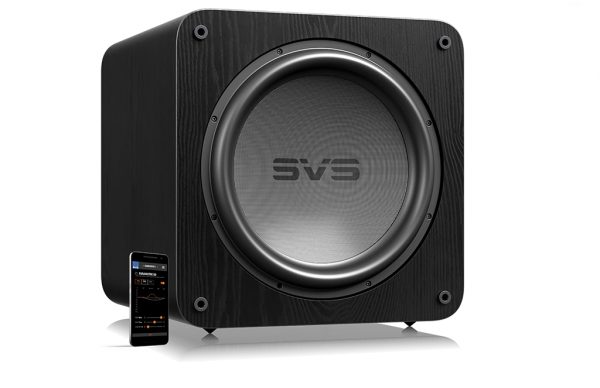
Say that 10 times as fast as you can!
All kidding aside, we’re big fans of SVS. Their subs deliver the goods. Well made, easy to use, and easy to set up thanks to DSP processing and a killer app that lets you dial it all in from your phone.
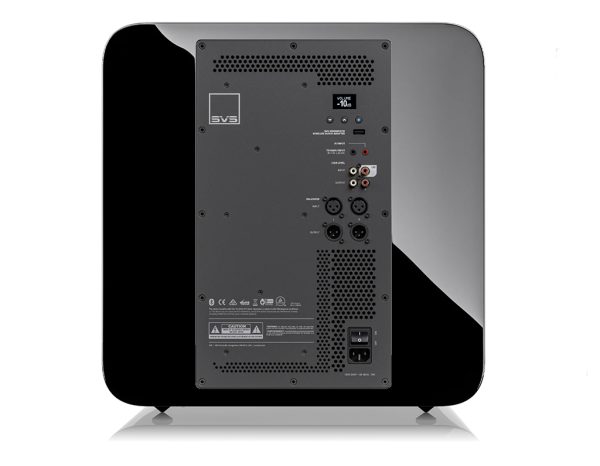
With 2,000 watts on tap, (5,000 peak) a massive 15-inch driver and a LF point of 17Hz, you can feel every bit of oomph from the lowest bass notes to the most powerful cannon shots. The SB-5000 is equally at home with music or movies.
We’re almost done with the full review, but the SB-5000 has been used with great effect on a number of different systems, including one built around their latest Ultra Evolution Towers. You can even connect them wirelessly if you don’t want to deal with cables.
In our other reference system featuring a pair of the latest Klipschorn AK7s, the matchup is seamless and paired with these classic horns, we could play our favorite Massive Attack and Art of Noise tracks at club volume without strain. But fear not, they possess plenty of nuance for your favorite acoustic tracks.
At $1,999.99 each, SVS offers great sonics, execution and value. You might just want two!
Please click here to visit their site…
The Western Electric 91E Integrated
February 23, 2026
An intriguing combination…
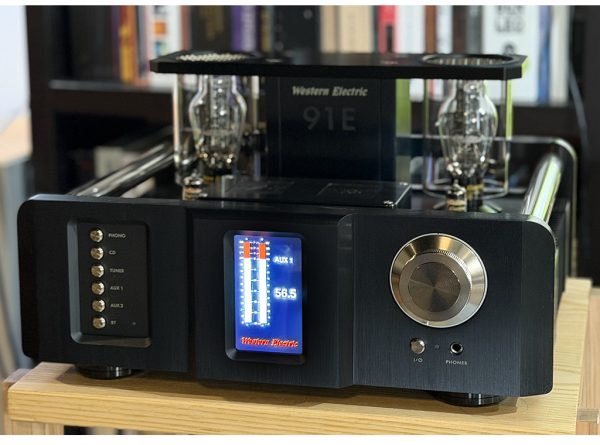
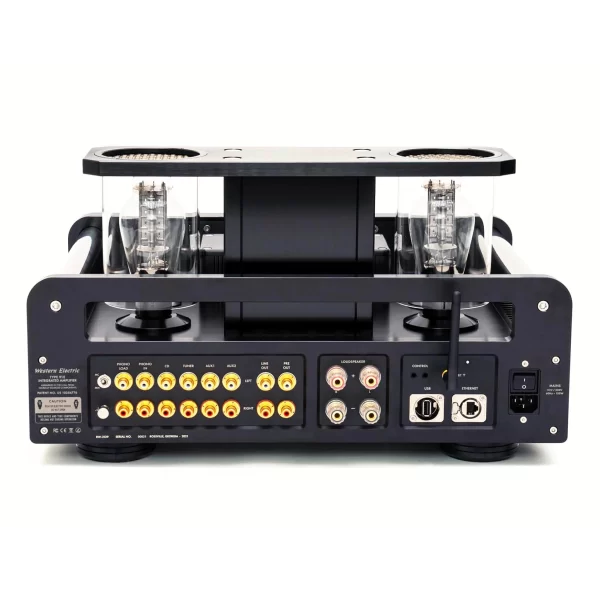
The Western Electric 300B tubes are pretty much the gold standard for the version, and at $1,495 a pair somewhat spendy. The good news is they last forever compared to the Chinese knockoffs, so they are an excellent long-term purchase. Considering you can have an entire integrated, built from the folks at WE for $7,999 (the new price) this has to be one of the best deals going. It even has a built in MM/MC phono section, headphone amplifier, and a bluetooth DAC. Not to mention a pair of ECC83 tubes with WE branding. Fingers crossed here.
We’ve got an extended review, waiting for fact check from the WE people, and as soon as we get the all clear, it will go live.
But in the meantime, we’ve been enjoying the heck out of this one. If you have a pair of efficient speakers, it’s all you need. WE claims this amplifier puts out nearly twice as much power as most standard 300B amps that usually deliver 6-9wpc, due to their unique circuitry.
It’s smooth, smooth, smooth, as you’d expect a great 300B amplifier would be. Remember, Western Electric wrote the book and designed the tube.
No doubt to keep costs realistic, they are using a solid-state power supply, but everything is well implemented and the casework is an industro-cool design that you’ll probably love or hate. We’re in the love column, and in addition to the black you see here, Nickel and Champagne is also available.
The 91E comes stoutly packaged in a bespoke crate, with everything incredibly well organized. This is an amp you can be proud of owning to be sure.
https://www.westernelectric.com/91e
The SMSL PL-100PRO CD player
February 14, 2026
Amazingly good for the money!
$159 won’t even buy a tank of gas for a giant SUV these days, but it will buy you a pretty bitchin’ CD player. The PL100PRO used to be $99 before tariffs, but hey – this is still less than a month’s worth of latte’s at your favorite coffee shop.
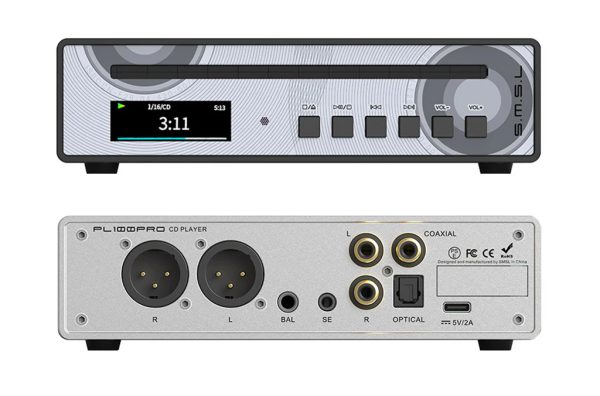
With RCA and XLR outputs, you can run it into any system with ease. Just because they were here, we did try a 20 foot pair of balanced interconnects, and the PL100PRO drives them with ease. The slot-loading mechanism feels pretty robust, and if you like the sound, buy a 2nd one and put it on the shelf for the day something bad happens.
It may not be as awesome as the yelling, screamy guys on YouTube say it is, but compared to what that $1,000 Sony CDP-100 sounded like in 1983, this is an incredible deal and a major technological advance. What it lacks is the refinement of a much more expensive player, but in the context of a nice budget or vintage system, I think you’ll be pretty excited. It also features optical and coax SPDIF outputs, in case you’d like to use it as a transport. It’s even better as a transport.
Running the PL100PRO out in the garage system with the FiiO K17 DAC via the optical input, everything sonically is well balanced. And thanks to a 5v USB-C power input, it’s easy to connect. As we bought our review sample pre-tariff, it did not come with a power supply. That may be different now.
However, using it with a basic Apple Power Book charger than happened to be around yielded great results. Stepping it up to a better linear power supply (also on hand) from Wyred 4 Sound provided benefits in terms of better bass control and a more refined top end – though that starts to defeat the “budget” aspect of this player.
Totally an Exceptional Value Award winner…
https://smsl.shop/products/pl100-pro
REVIEW – The Ranger Audio I/A Integrated
January 3, 2026
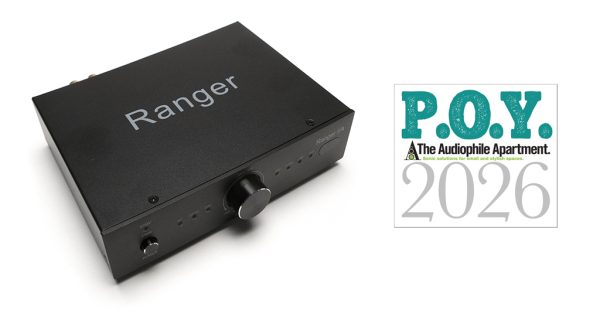
The crew at Ranger HiFi has been winning awards left and right for their small but mighty speaker systems at $299 and $149 per pair, and some great cables at $99. So it made perfect sense to see a compact integrated with similar performance. But this small and this inexpensive? Impressive indeed.
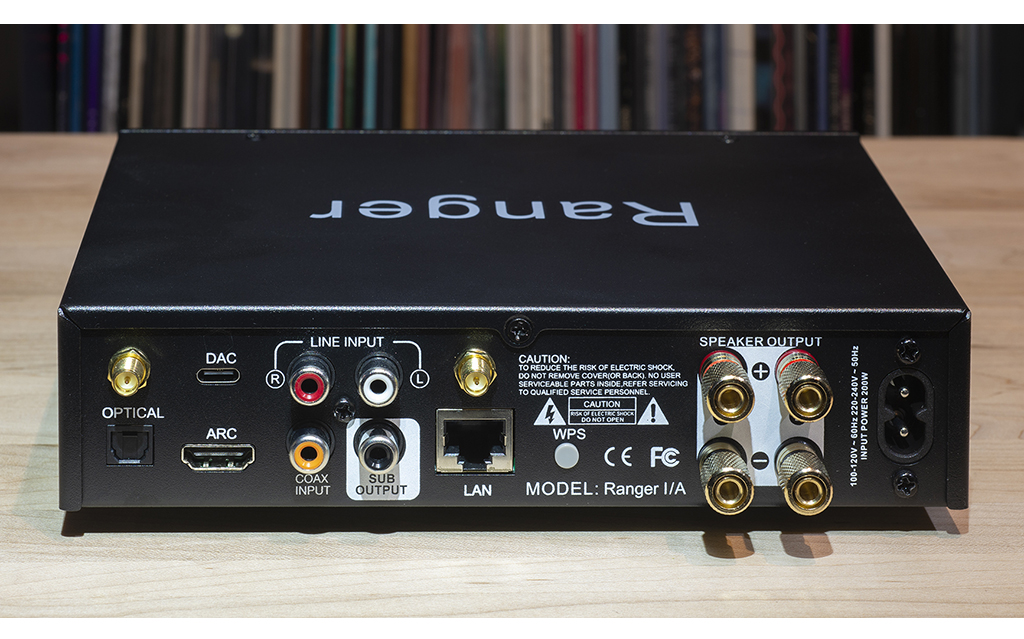
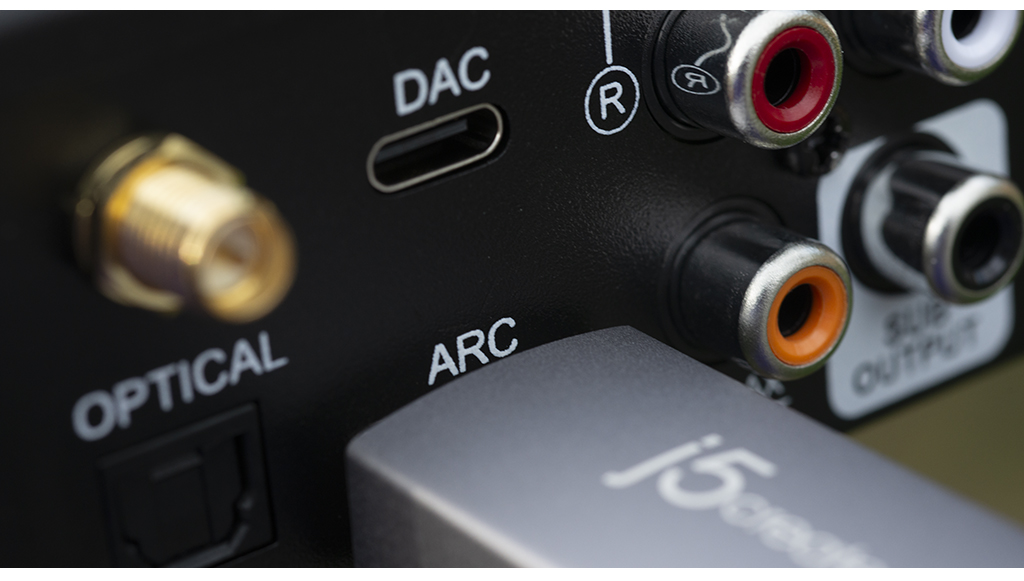
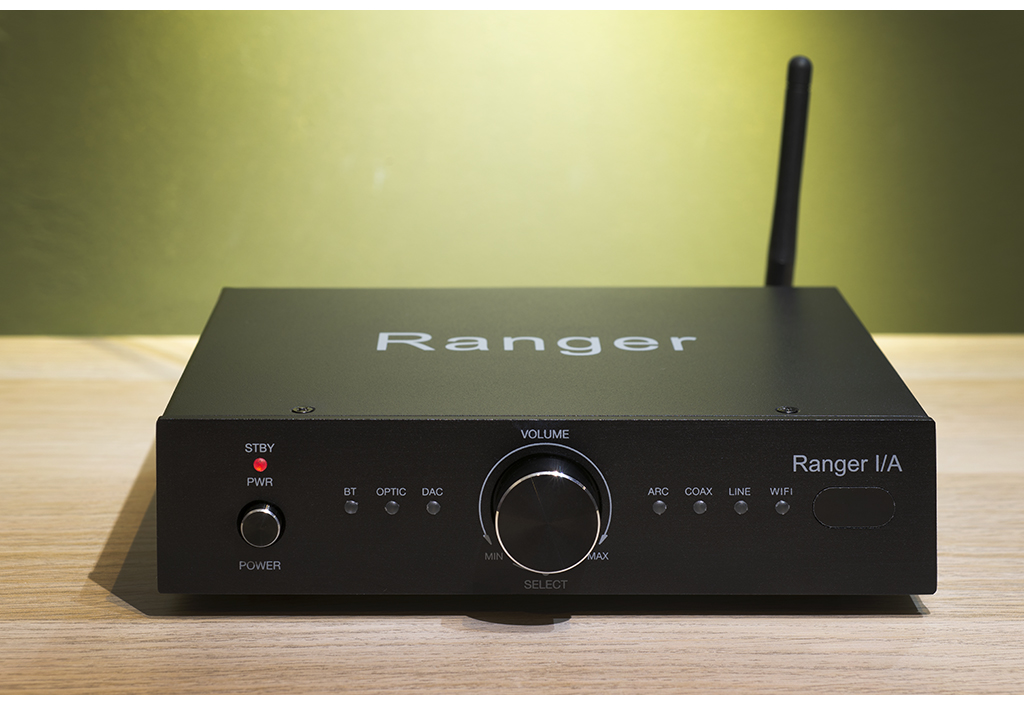
Smaller than a Stephen King novel, the I/A is a marvel of simplicity. With a central volume control that doubles as an input selector when you push it in, makes it a snap to use. Around back, there is a single pair of speaker outputs, wifi and BT antennas, optical, SPDIF, and USB inputs to connect to the internal DAC. There’s even a variable output for a powered sub – perfect for a Caldera subwoofer. Wherever space is at a premium, the I/A gets the job done without calling attention to itself.
Get in the game reasonably
A major part of the Ranger ethos is to hook you up with an amp, pair of speakers, sub (if you decide to go there), and some cables to build a basic system for well under $1,000. Mission accomplished, especially when these days spending a G at Best Buy will barely buy you a premium soundbar. Here’s where the factory-direct model really helps the entry-level audiophile. Of course, they make a great combination, but listening actually begins out in my garage system, with a recently acquired pair of Vandersteen 1s. And some gnarly vintage BMW bumpers to polish. By the time I finished the project, I was highly impressed with the I/A.
The 37.5 watts per channel into 8 ohms proves way more than enough power for the 90db/1-watt speakers, and much classic rock was enjoyed. With and without a Caldera 10 subwoofer. Midway through the initial garage sessions, the Vandersteens were swapped for a pair of SVS Ultra Evolution Towers (about $3k/pair) with equally excellent results. Swapping the I/A in and out for a few vintage receivers always had me putting the Ranger back in the system.
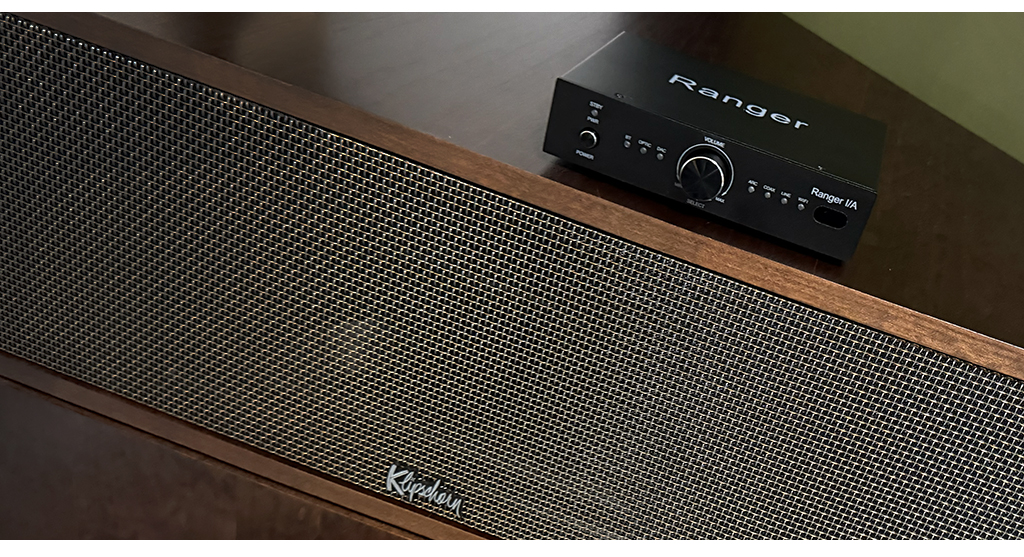
Moving the I/A into a tiny system with the $149/pair Ranger L/S speakers, sans subwoofer, reveals another exciting aspect of the I/A – tone controls. You have to access them from the remote, so don’t lose that tiny remote. A quick look at the spec sheet confirms the tone controls boost and cut at 100Hz and 10kHz. Just like the ones on your favorite ten-thousand-dollar Luxman integrated. I like em. Especially with an older pair of vintage speakers, or something small like the little Ranger speakers. With them being on the remote, you don’t even have to tell your fussy audiophile friends you’re using them. I even dropped it in the system with the mighty Klipschorns. Not bad at all.
The sound
That you can get decent sound from something with a $199 price tag is a major miracle in itself. Overall, sonically, the I/A is fairly neutral and delivers a fair amount of bass drive, with a solid, smooth upper end. It doesn’t have the resolution of that ten-thousand-dollar Luxman, but it gets the fundamentals right. The only thing the Ranger lacks in an ultimate sense is a huge amount of depth. However, putting things in perspective, comparing it to a handful of vintage stuff that you’d probably pay $500-$800 for, it’s way better. And, Schifter makes it a point to let me know that the amplifier is built around the popular Infineon Engine chip. They’ve done a handful of measurements, and if you are willing to live with a little bit more distortion, the Ranger is capable of about 80 watts per channel into 8 ohms. That explains its dynamic ability.
Keeping the budget groove going, a vintage Technics SL-1100 with a Fozi phono and a SONY ES player (with optical out) that I bought at a local estate sale for $50, proving yes, you can put together a musical system for just under a thousand bucks if you put some thought into it. Thanks to an ARC input, you can also make your Ranger I/A the hub of a great 2.1 system for your TV. Pretty cool.
Tracking through a wide range of music, the I/A delivers delightful sound. It’s quiet, punchy, and creates a wide soundfield. If you compare it to gear that costs 10–30 times as much, the only thing lacking is the level of fine detail it renders. Yet, in the context of a $500-$2,500 system, it’s fantastic. While this amplifier is so good, you should hand a few of them over to your favorite 20-somethings that aren’t into audio just to get them rolling.
Even those having a mega system should have one on the shelf just because. Expensive shit breaks now and then, and you don’t want to be without music. How about the times when you are trying to hunt down a system gremlin and need a different amplifier to pinpoint the problem, but you don’t want to disconnect your entire system? I’m buying the review sample for that very reason.
To make a long story short, the Ranger I/A is a tremendous value and a great way to build a music system on a tight budget. You gotta start somewhere, and this mighty little amplifier gives enough to get you in the game and engaged. That’s it in a nutshell.
Spoiler alert
Because it’s only a week away from when we post awards, I’ll clue you all in – this amplifier is getting one of our Product of the Year awards at The Audiophile Apartment. I can’t think of an amplifier we’ve put our hands on in years that delivers this much music for this little money. I still remember those components that got me excited about audio 50 years ago. 50 years from now, Mark Schifter and I will be dust – for a long time. I hope a few people will have the same fond memories about the Ranger I/A when they remember what got them excited about assembling a music system for the first time.
Should you be attending the Florida Audio Expo on Feb 20-22, we will have the Ranger components set up as one of the two budget systems assembled to illustrate that you can put a good starter system together for a very reasonable price. If you’re in the neighborhood, please stop by.
Issue 125
December 30, 2025
Cover Story:
World’s first review of the new Klipschorn AK7 Speakers!
Old School: Janszen Z-500 – by Jeff Dorgay
Audiophile Apartment: The Arcam A25+ Integrated Amplifier
Journeyman Audiophile: The ampsandsound “Stereo Preamplifier”
Review: The Atoll IN-200 Integrated Amplifier – by Jerold O’Brien
Short Take: Farewell to the Technics SL-1210G
Stereo Stories: Ask and you Might Get
1095: The FiiO K17 DAC/Streamer/Pre
Long Term: The HiFi ROSE RS520 Streaming Integrated
TONE Visits:
Supreme Acoustic Systems – Las Vegas
MINE – It Should Be Yours:
Fun things that you know you want
Music
Playlists: We share our readers choices from around the world
IN House: The Soundtrack of the Issue
THE SACD Report: Chatting about the other shiny discs
Future Tense
Gear in our immediate future
Issue 124
December 7, 2025
Cover Story:
Speakers – Mostly
Old School: Quad vs. Quad – by Ken Kessler
Audiophile Apartment: The Dynaudio Focus 50 – by Todd Cooperider
Journeyman Audiophile: The AVA C1A Control Amplifier – by Darin Kong
Review: The Wharfedale Dovedale Speakers
Review: The Castle Windsor Duke Speakers
Review: The Volti Audio Razz Speakers
Review: The Albeda Audio Adagia Speakers
1095: The Vera-Fi Ranger Speakers
Long Term: The REL T/9xSE subwoofers
Cover Review:
The Dali Epikore 11 Speaker system
MINE – It Should Be Yours:
Last minute holiday shopping
Music
Playlists: We share our readers choices from around the world
Future Tense
Gear in our immediate future
UMe Launches Vinylphyle series of LPs
November 3, 2025
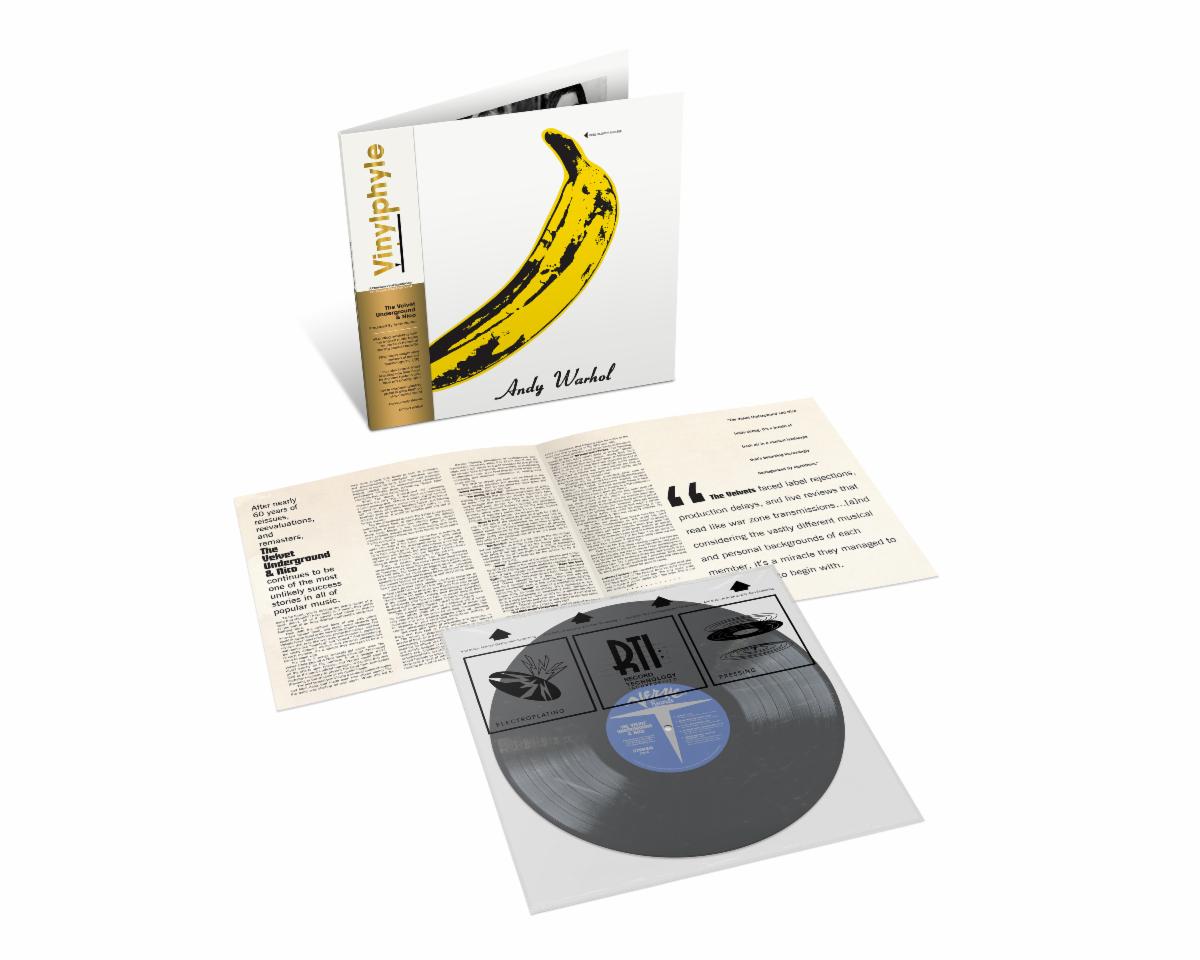
Why is this so cool? Because none other than Joe Nino-Hernes has mastered the first four titles. That’s why. If you aren’t familiar, Joe is the newest mastering engineer that’s been the rising star of analog for some time now.
So we’re just gonna give you the whole press release. Coming November 14. I’ve got my order in!
| NEW REISSUE SERIES DEBUTS WITH THE VELVET UNDERGROUND & NICO (1967), BOB MARLEY’S EXODUS(1977), THE BAND’S NORTHERN LIGHTS–SOUTHERN CROSS(1975), AND NAT KING COLE’S THE CHRISTMAS SONG (1962) ALL RECORDS FEATURE ALL-ANALOG MASTERING FROM ORIGINAL SOURCES BY TOP ENGINEERS, TIP-ON GATEFOLD PACKAGING WITH NEW LINER NOTES AND ARE PRESSED AT RTI ON 180-GRAM BLACK VINYL VINYLPHYLE LAUNCHES NOVEMBER 14 |
| Los Angeles – November 3, 2025 – UMe, the centralized global catalog division of Universal Music Group, is proud to announce the launch of Vinylphyle, a new audiophile vinyl reissue series dedicated to presenting essential albums across multiple genres with uncompromising sound quality and packaging. Billed as “A premium vinyl experience for people who love vinyl,” the series will debut on November 14 with four landmark titles: The Velvet Underground & Nico (1967), Bob Marley & The Wailers’ Exodus (1977), The Band’s Northern Lights–Southern Cross (1975), celebrating its 50th anniversary, and Nat King Cole’s The Christmas Song (1962). All albums will be available exclusively at uDiscover Music and via the artist’s official online stores where applicable. Following the launch, Vinylphyle will continue with two releases per month, spanning genres and eras to build a library of must-own records. Pre-order Vinylphyle titles now: https://UMe.lnk.to/vinylphylePR Each Vinylphyle release will feature all analog mastering from original sources by an elite group of today’s top vinyl cutting engineers. The LPs will be pressed at the world-class Southern California-based audiophile vinyl record pressing plant Record Technology, Inc. better known amongst vinyl lovers as RTI, on 180-gram black vinyl. Similar in presentation and execution to Blue Note’s acclaimed Tone Poet series, the production and packaging seek to honor the stature of these recordings and will include tip-on wrapped gatefold jackets in satin matte finish, printed on clay-coated board, with archival poly sleeves and a four-panel insert featuring new liner notes by notable music journalists, personalities and fans. Backed by RTI’s craftsmanship, these releases are produced at the highest levels and include extensive quality controls at every step of the process, from mastering to plating to pressing and printing, ensuring a superb final product. Joe Nino-Hernes of Sterling Sound has mastered the first four titles from the original analog master tapes and each album boasts new liner notes by an assortment of contributors: “the internet’s biggest music nerd” Anthony Fantano of “The Needle Drop” for The Velvet Underground & Nico, filmmaker, DJ, musician and cultural commentator Don Letts aka The Rebel Dread for Exodus, author and veteran music scribe Rick Florino for Northern Lights – Southern Cross and actor and award-winning writer James Ritz for The Christmas Song. “We are excited to launch our Vinylphyle series to provide best-in-class, audiophile quality pressings of some of the most legendary and timeless records,” said Bruce Resnikoff, President & CEO of UMe. “This series is built on uncompromising quality and all albums have all been meticulously mastered by renowned mastering engineers from analog and packaged with the utmost care and attention to detail. This new series allows both longtime record enthusiasts to hear some of their favorite albums sounding better than ever and for those just discovering vinyl to experience the warmth and richness that only vinyl can deliver and to become Vinylphyles.” Together, these inaugural selections span the underground, the political, the pastoral, and the timeless. The Velvet Underground & Nico captures New York art rock at its most provocative, a record that reshaped the boundaries of popular music. Bob Marley’s Exodus stands as reggae’s global breakthrough, marrying militant resistance with songs of joy and uplift. Northern Lights – Southern Crossreflects the maturity of roots rock in the mid-1970s, blending mythic storytelling with lived experience. The Christmas Song presents Nat King Cole’s definitive voice in holiday music, a recording that continues to return each season as if untouched by time. |
 |
Record of the Day – 015: The Bad Plus
October 23, 2025
Nearly everything The Bad Plus does is pretty trippy and off the map. And I say that in a really good way.
This double LP set of classic covers on For All I Care might just trigger your inner art school kid. Or you might run away screaming. One thing’s for sure… You won’t hear anything from this record at a hifi show anytime soon. (But I dare you to suggest it when the guy in the room says “Who wants to hear some female vocals?”
Bam.
But seriously, the recording quality is big, dynamic and breathy – thanks to guest vocalist Wendy Lewis. Taking on Yes, Nirvana, and Heart to name just a few, this record will engage. And Lewis’ cover of the Bee Gees’ classic “How Deep is Your Love?” is worth the entire price of this two-record set.
Leave a comment out on our Facebook page and let us know what you think!
Record of the Day is brought to you by Bergmann Audio, and Supreme Acoustic Systems.
The table featured here is the Modi, with their Thor linear tracking arm.
Cartridge is a modified LYRA Helikon SL, modified by Ana Mighty Sound
Phono Pre is the award winning XP-17 from Pass Labs
Cables by Cardas Audio
All on top of the Pagode Master Reference MKII, courtesy of MoFi Distribution
Record of the Day – 014: Alanis Morissette
October 21, 2025
Do you remember when the video for “Ironic” broke on MTV?
With that clip, no one knew (then) that Morissette’s third record was headed for five Grammy’s and 17x Platinum status, but it was stunning then, as it is now.
30 years later, this record is still a masterpiece, combining sublime musicianship and 90s angst, and a fantastic recording all in one. And becoming a soundtrack of many women’s lives from that time. A recent performance on “Everybody’s Live with John Mulaney” https://www.youtube.com/watch?v=bs2Jfe2PtaE shows her in top form, voice stronger than ever. And everyone in the audience knows the words to “Ironic.”
There are a number of different anniversary editions of this record, some with a lot of bonus tracks, but the MoFi, dual-45rpm version unlocks the power behind this iconic record better than any other. The SACD version is equally impressive, should digital discs be your physical format of choice.
FYI: Chris and I will be doing a cursory sonic comparison between both versions very soon!
Leave a comment out on our Facebook page and let us know what you think!
Record of the Day is brought to you by Bergmann Audio, and Supreme Acoustic Systems.
The table featured here is the Modi, with their Thor linear tracking arm.
Cartridge is a modified LYRA Helikon SL, modified by Ana Mighty Sound
Phono Pre is the award winning XP-17 from Pass Labs
Cables by Cardas Audio
All on top of the Pagode Master Reference MKII, courtesy of MoFi Distribution
Record of the Day – O13: Iron Butterfly
October 18, 2025
Im still in that 60s groove…
Somehow Moby Grape and Steppenwolf always make me dig out In-A-Gadda-Da-Vida
Yeah, I know the new kids don’t care for this, but it’s my party and I’ll play 60s music if I want to.
When I bought my original copy of this, I mostly just listened to the title track, sometimes really loud just to annoy my parents. Ha. But over the years, the rest of the album (and for that matter the rest of the IB catalog) has grown on me. I truly like this record. So you can guess who was pretty happy when this came out on MoFi as a vinyl remaster. They did produce it as a Gold CD years ago, and it is also available on SACD from MoFi.
Mastered by Krieg Wunderlich, this rocks much better than the original, albeit slightly worn original ATCO pressing in my collection. If you need to make this journey and can grab a MoFi copy, you will not regret it!
Leave a comment out on our Facebook page and let us know what you think!
Record of the Day is brought to you by Bergmann Audio, and Supreme Acoustic Systems.
The table featured here is the Modi, with their Thor linear tracking arm.
Cartridge is a modified LYRA Helikon SL, modified by Ana Mighty Sound
Phono Pre is the award winning XP-17 from Pass Labs
Cables by Cardas Audio
All on top of the Pagode Master Reference MKII, courtesy of MoFi Distribution
Record of the Day-012: Sally’s Dream
October 15, 2025
Sally’s Dream is the all-female punk band I wish I’d known about when I was hanging out at punk clubs in Milwaukee, Wisconsin in the 80s. I wish I would have seen them.
Unfortunately, it took till now to finally get the record out, but it’s just as awesome today as it was then.
Ironically, this foursome was made up of Cynthia Hammond (Bass, keyboards, guitar and vocals) Jenny Davis (Keyboards, bass, guitar, and vocals) Emily Jackson on drums, and Chrissie Dickinson on guitar and vocals.
If the name of the last band member sounds familiar – Chrissie Dickinson had written for the Chicago Tribune (as well as a number of other music outlets) for years, and was a member of the TONE staff for a few years, covering country and Americana. All the times we talked, she never mentioned the project.
Even more ironically, after a couple year hiatus, Chrissie and I had a lovely conversation one afternoon about her coming back to TONE. I made the joke that Tap’s “Sex Farm” was big in Japan and we needed to get the band back together again. She laughed and said she’d be more than interested. Two weeks later on May 19, 2022, the news of her sudden death was the first thing I saw on Facebook that morning. Later in the afternoon, I found out another friend passed the same day. Yikes.
But Chrissie’s good friend Cynthia Hammond kept the dream of this album alive with the rest of the bandmates and after all these years, have finally released it on Bandcamp as a CD or download.
The music stands up. It’s fast, thrashy, a bit irreverent and in your face – as a good punk record should be. Man, I wish I could have seen them back in the day. Photo courtesy of the band…
https://sallysdreamtheband.bandcamp.com/album/breaking-through

One of the world’s finest speakers!!
October 14, 2025
#askmehowiknow
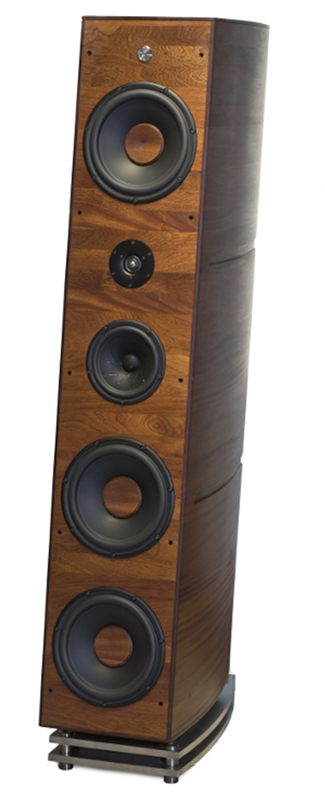
TMR actually has a pair of my old speakers for sale. Not in “I had a pair of these,” but “these were actually my speakers.”
Back in 2010 these were $149,000 a pair. Only ten pair were made.
I’ll make this short and sweet. NOTHING out there for twice the price even comes close to the musicality that these speakers offer. Do not mistake this for the later Zodiac – which looks the same and while very good, does not offer the level of fidelity that the S9 does.
With three 13″ woofers and the midrange/tweeter from the S7, this is one speaker that doesn’t absolutely need a six pack of RELs to be awesome, yet it delivers imaging like a mini-monitor. If you have the room and the amplification they will put the music in your room like few others. I’m expressing a personal bias, but I would take the S9 over anything from the majors at $850k a pair – and I’ve heard all three.
This is one of the world’s finest speakers at any price and you can have em for under $20k. Whoever does get these will get a prize.
Record of the Day – O11: Moby Grape
September 30, 2025
Time to head back to the 60s…
What a better way than some major psychedelic rock from Moby Grape? Their Wow/Grape Jam record was a two record set, released April 3, 1968. I was too young for this one on the first go, but in the early 70s when I started hanging out with a lot of the older dudes in high school that were really into Moby Grape, Iron Butterfly and Zappa, it made a big impression.
Yeah, it’s a little rambling, but that was the jam back then. Much as I love Moby Grape, I’d suggest streaming this one on your favorite streaming service to vet it first – if you aren’t familiar.
Leave a comment out on our Facebook page and let us know what you think!
Record of the Day is brought to you by Bergmann Audio, and Supreme Acoustic Systems.
The table featured here is the Modi, with their Thor linear tracking arm.
Cartridge is a modified LYRA Helikon SL, modified by Ana Mighty Sound
Phono Pre is the award winning XP-17 from Pass Labs
Cables by Cardas Audio
All on top of the Pagode Master Reference MKII, courtesy of MoFi Distribution
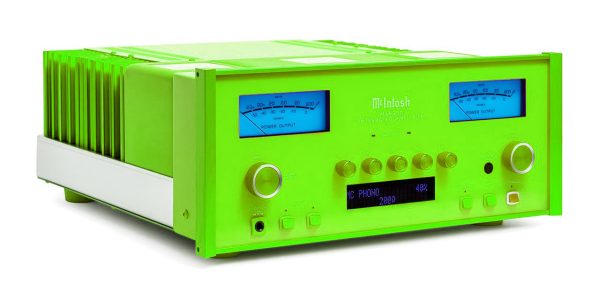
Another Fashion Breakthrough From McIntosh
September 30, 2025
To those of you who knew who Virgil Abloh (the Creative Director at fashion house Louis Vuitton) was, he had a major effect on fashion, style, and the cross pollination of artistic disciplines. In that sense, he was a force to be reckoned with. Unfortunately, he succumbed to cancer at the way too early age of 41, back in 2021.
McIntosh just announced their one of one collab honoring his personal style, an MA8950 integrated amplifier painted orange to honor Abloh, who used McIntosh gear in many of his fashion shows and creative studio.
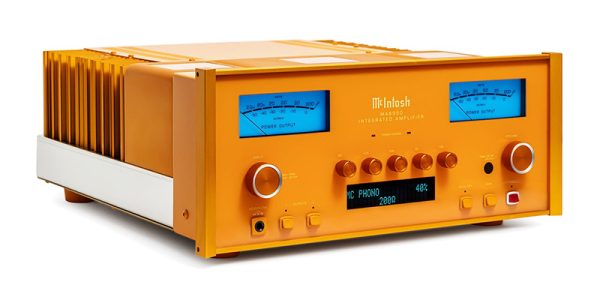
In typical McIntosh fashion, this isn’t just an off the shelf amplifier painted orange (because that’s what it is) and according to them “They are the only amplifier brand that could make a bold orange amplifier feel intentional, not accidental.”
I don’t know what they are smoking at McIntosh, but Dartzeel, Vitus, and Sugden have all been making some pretty cool orange amplifiers for some time now. Not to mention the incredibly cool cats at Metaxas and Sins. Now that’s some disruptive shit.
Don’t forget, KEF and Focal have also made orange speakers (super awesome, owned em both) and REL makes a gorgeous line of subwoofers in bright orange (yellow, green, and blue as well) too. Come on.
Of course it’s a one of one, and of course, you can’t have it. So much for all that blending of art and culture and inviting you to be part of it. Just like the McIntosh town house used to be. Cool kids club and you can’t be part of it.
I miss the old Mac. But hey maybe it’s time for a collab of my own. I submit the MC Jeff D McIntosh amp. hahahah. Who’s with me?
Why I Play Music for Empty Rooms
September 22, 2025
Jeff once asked me why I leave music playing in a room when I’m not even there. My answer goes back to something I read years ago that stuck with me.
In the 1970s, Christopher Bird and Peter Tompkins published The Secret Life of Plants. The book described studies suggesting that plants respond to music. Even earlier, in 1962, Dr. T.C. Singh found that balsam plants exposed to classical music grew 20% faster and had a 72% increase in biomass. Later, Dorothy Retallack discovered that plants thrived on jazz and classical but wilted when exposed to rock.
Are plants really “music savvy”? Probably not in the way we think. More likely, they respond to vibrations that influence growth—especially when paired with sunlight streaming through a south-facing window.
That got me wondering: if plants react to music, how does classical music affect people? For us, it can calm the body, sharpen the mind, and help regulate emotions. The exact effect depends on the tempo, harmony, and our own personal taste.
When stress builds and the world feels overwhelming, I’ve found that Mozart or Vivaldi brings me back to center. Rock, on the other hand, amplifies emotions—it can fire you up, fuel your anger, or give you the motivation to push forward.
Both have their place. Rock energizes. Classical soothes. And maybe that’s the real reason I let classical music play in an empty room—it’s not just good for plants, it’s good for me too.
-Pamela Dorgay

$149 a pair? CRAZY
September 19, 2025
The Vera-Fi Ranger speakers have really taken me on a trip down memory lane today. Many audio reviewers and enthusiasts with high-end systems sometimes forget where it all began. For me, it was a used pair of AR-7s for $50. My buddy Todd across the street purchased them new at J&R Music World (remember the ads in the back of Audio magazine?) for $79. Crazy.

Back in my University of Wisconsin days, the radio was peppered with ads for “Crazy TV Lenny” from American TV of Madison. He was audio’s screamy guy of the time, offering a pair of speakers for $199, with free speaker wire and a ten-speed bike!
This became such a big tradition in Wisconsin audio retailing that when Mrs. Crazy TV Lenny filed for divorce (and it was listed in the local paper), on top of the house, tons of money, and a red Mercedes 560SL, she received a ten-speed bike. You gotta love that. Ironically, I saw the airplane that she was on crash at Milwaukee’s airport. I was across the street at Holiday Inn, photographing an event for Miller Brewing Company. Weird.
In 2025, Vera-Fi has these damn cool little speakers selling for $149 a pair. No bike, but hey.
Now you might be thinking, “How can they possibly make a pair of speakers for $149?”
You might think Mark Schifter is crazy.
If you think about it, though, a new pair of Bowers & Wilkins 707 S2s costs $599. Just like the Vera-Fi speakers, they are made in China. Yet by the time B&W (and no disrespect here) sends them here, an importer takes their percentage, and the dealer gets their 50% cut. These prestigious speakers probably cost less to build than the Rangers. My neighbors have actually just bought a pair of 707s, and they aren’t even close to the Rangers in terms of the level of musical realism they deliver for $149. I’m debating whether to tell them to send the B&Ws back to Amazon and grab a pair of these instead.
Starting with my usual Aimee Mann test LP – Lost in Space, I’m immediately involved and intrigued. What these little speakers do so well, that so many inexpensive speakers can’t, is get the midrange right. Often, manufacturers goose the bass to make budget speakers more exciting. Kudos to the Vera-fi team for playing it straight up.
Moving on to a bit of Crosby, Stills, and Nash, with a dose of Grover Washington Jr.’s Mister Magic, I’m right back in the bedroom of my parents’ house in Wisconsin. I’m digging it.
These little cabinets are about 8″ wide, 11″ tall, and 9″ deep. Inside the gorgeous cabinet is a 5.25-inch woofer and a 1-inch silk dome tweeter. The crossover is set at 2,500Hz, and these 8-ohm speakers have a claimed sensitivity of 84 dB/1 watt. Kinda like your favorite pair of LS3/5a’s, right?
Schifter says, “These are friendly in look, sound, and feel.” I can’t agree more.
No, you can’t play your favorite electronica tracks on these and get floor-rattling bass, nor can you play Slayer at concert level. That’s not what these are about. The Rangers provide you with enough insight into the music that, if you’re a new audio enthusiast and music lover, they will get you hooked and encourage you to take your journey further, yet are a great place to park until you can.
Staying close to the budget system groove, I set these up in our 11 x 12 foot back bedroom with an $89 Sony SACD player (new at Amazon before the tariffs) and an old Pioneer SX-434 that I bought at a garage sale for $100. Things have gone up since we used to produce the Slummin’ column in the early years of TONE.
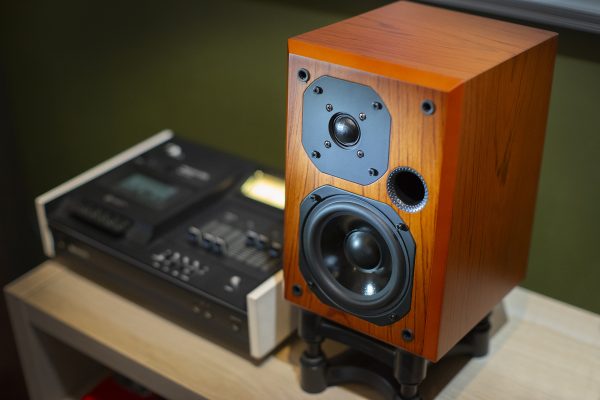
Rounding out the system with some of Vera-Fi’s Ranger cables and a used REL T3 subwoofer (which I picked up during Echo Audio’s closeout sale last summer for $75) brought my total system price to about $500. Good times.
For those curious about Vera-Fi’s $199 10-inch Caldera 10, I gave that a try and for my taste, the Rangers don’t quite go down far enough to blend seamlessly. The Scouts do, but these just don’t quite reach – that’s why I went to the used REL with an 8-inch driver this time around. Don’t be surprised if you see a smaller sub from Vera-Fi sooner than later, but you didn’t hear that from me!
Setup is simple, whether you are in a room or at your desk. Thanks to that great midrange, if you happen to be editing video on your desktop, the Rangers do a great job if you want top sound on a tight budget. Along with the sub, they were fantastic for watching F1 qualifying too.
Zooming in on 20 of our standard demo tracks reveals a high level of musicality at work. Much like my AR-7s or even the Spica TC-50s that I would cherish a decade later, the clean, natural midrange and smooth high end help you forget that there isn’t a lot of throbbing bass going on.
In the 11 x 12 room, placing the speakers soundly on a set of 22-inch stands, about 18″ out from the room’s corners, takes advantage of a bit of room gain, at the loss of some imaging specificity. Moving them in the near field, three feet out from the rear and side walls, creates a more immersive sound, if that option is available. This is a perfect setup to add a small sub to.
It was incredibly easy to forget I was listening to $500 worth of gear. In addition to a natural midrange, the highs are slightly rolled off. Still, they extend out smoothly and integrate well with the woofer, making the whole thing work seamlessly. Well.
You should only need about 20- or 30-watts worth of power to get excellent results. I would have matched these up with a used Dynaco Stereo 70 and PAS 3 if I weren’t going the Japanese receiver route. Using my PrimaLuna EVO100 integrated amplifier gave me a pretty good idea of what that might sound like.
A few more amp/pre/integrated variations were tried, with excellent results, but they were all in the $2k-$3k range – again showing off how much these little speakers can deliver. Used within the envelope of what they are capable of, I hope you’ll be as excited as I am about the Rangers.
Much as I love the $299 Scouts, the value offered by these little Rangers is off the chart. For everyone you see with giant speakers and amplifiers (myself included), this is where we all started. This is a great place to start if you’re new to this, and as Crazy TV Lenny used to say, “Trust me, you’ll love them.”
SACD of the Week 03 – U.K.
September 15, 2025
Bet you didn’t know I was a total closet prog-head. It started with Yes, and Emerson, Lake & Palmer many years ago. Guilty as charged.
If you loved the auspicious debut (arguably their best and most pure effort) of this prog powerhouse consisting of John Wetton, Bill Bruford, Eddie Jobson, and Alan Holdsworth, try and find this disc. Those in the know will remember the FM radio nugget “Dead of Night,” and perhaps you even saw them perform this record back in the late 70s.
This example was produced a few years ago on SHM-SACD and the sound quality is epic, now doing full justice to Wetton’s killer bass lines.
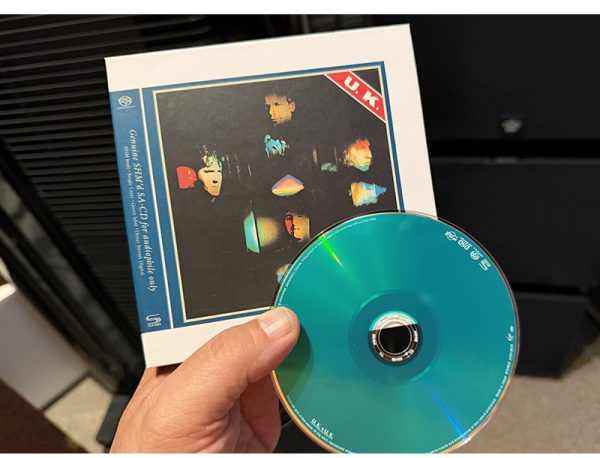
This column is sponsored by dCS, who’s Vivaldi ONE DAC/Streamer/Disc Player is my reference, and Mobile Fidelity Sound Labs, producer of exceptional audiophile vinyl and SACD releases.
Our reference system to evaluate discs features:
XS PRE, and XS 300 monoblocks from Pass Labs
The Auditorium Plus speakers from Clarisys Speakers
A Six Pack/Line array of Carbon Special Black Label subwoofer from REL Subwoofers
Cabling from Cardas Audio
and racks from Quadraspire Racks
SACD of the Week-02: Hejira!
September 8, 2025
Im still on a Joni Mitchell kick, but now that MoFi’s SACD pressing plant is back open after summer maintenance, it’s just the way things are shaking out.
This album, harkening from 1975 and 76, is a continuation of the more dense, jazzy groove that Mitchell started with Hissing of Summer Lawns. Most of this material was written during her breakup with drummer John Guerin, and according to her “very difficult to write.” The songs are personal, the playing incredible, and it really shows off the fretless bass skills of the late Jaco Pastorius.
Definitely not a casual listening hour album. One for a quiet, and blustery day. But highly rewarding and brilliantly captured by the MoFi crew here.
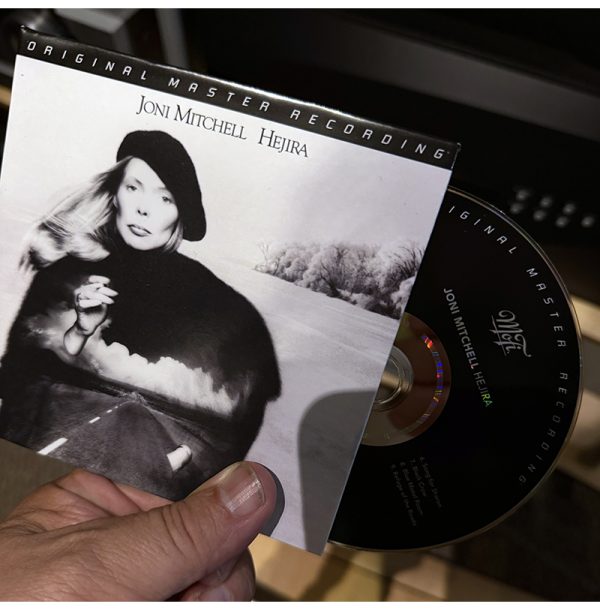
And best of all to this cheesehead, the photos were shot on Lake Mendota in Madison, Wisconsin by the legendary rock photographer Joel Bernstein – though the portrait superimposed on the cover is from Norman Seeff. (notice the stylistic similarities with Van Halen’s Women and Children First?)
This column is sponsored by dCS, who’s Vivaldi ONE DAC/Streamer/Disc Player is my reference, and Mobile Fidelity Sound Labs, producer of exceptional audiophile vinyl and SACD releases.
New Hana Premium Cartridge!
September 1, 2025
New Flagship MC cartridge from Hana / Excel Sound
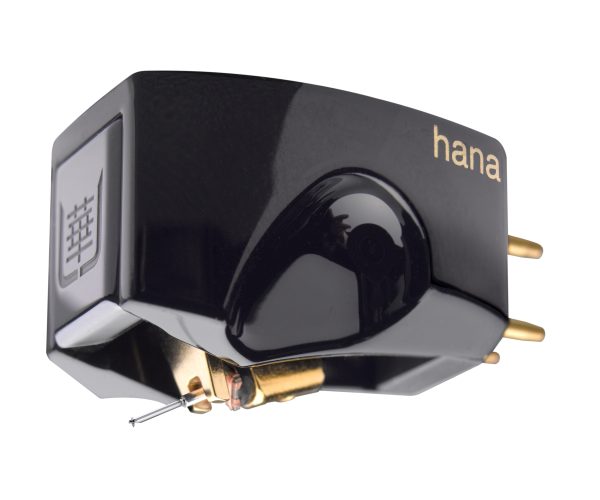
Introducing the Umami Black MC cartridge $11,500
The HANA-Umami Black continues the brand’s legacy of “Brilliant and Gorgeous” sound. Master cartridge designer Masao Okada-san of Excel Sound celebrates over 5 decades of innovation and excellence with his new masterpiece, featuring a diamond cantilever and new “OKD” High-Efficiency Moving Coil Generator. The Umami Black is much more than just an Umami Red with a diamond cantilever.
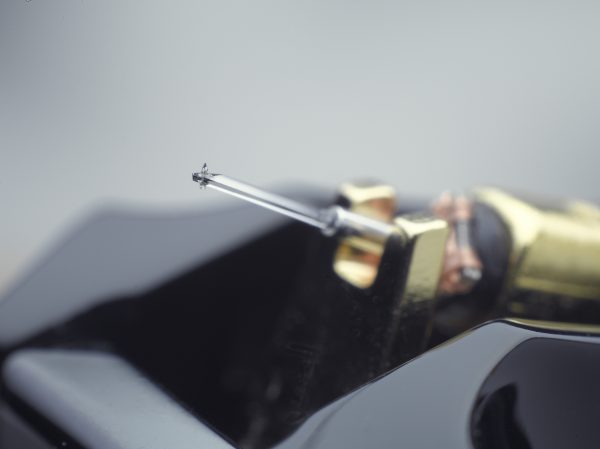
Unique Umami Black Features
Diamond Cantilever
In a category first for HANA, the Umami Black incorporates a diamond cantilever, the hardest possible material, ideal for signal transfer.
High-Efficiency “OKD” Moving Coil Generator
Another category first, the Umami Black uses the newly developed “OKD” with the world’s first “Integrated Pole Piece and Rear Yoke” and Inverted U-shaped Front Yoke, optimizing energy transfer from the diamond cantilever.
Inverted U Front Yoke
The U-shaped (bifurcated) inverted front yoke is engineered for both mechanical resonance control and magnetic field alignment, while also providing precise support for the diamond cantilever.
High-Power Rare Earth Magnet
Unique to the Umami Black, the rare earth neodymium-iron-boron (NdFeB) magnet is used for the high-efficiency generator, delivering superior energy conversion.
Hybrid Carbon Armature
A 2mm square hybrid Carbon permalloy armature, comprising 78% carbon-infused nickel-iron, is precisely hand-wound with 30-micron, 4N high-purity copper wire on Excel’s proprietary machinery. This ultra-light moving coil has an output of 0.3mV and a 5 ohm impedance.
Special Urushi Enameled Finish
The HANA-Umami Black features an exquisite Urushi lacquer finish, applied through a specialized thermosetting process, bonding to the aluminum body via vapor deposition.
Call the folks at musicalsurroundings.com for more info, and these beauties will be available for purchase after September 22.
SACD of the Week-01: RUN-DMC!
August 27, 2025
Sponsored by dCS and Mobile Fidelity Sound Labs
As our “album of the day” column continues to get traction, we’ve decided to commit to an SACD at least once a week as well. Our friends at MoFi and dCS agree, so here we are. I honestly love the SACD format, (just like CD) because you can play both sides at one sitting. Sometimes it’s not convenient to get up and flip the record.
And no one is more committed to the SACD format than Mobile Fidelity Sound Labs.
It’s not tricky at all to enjoy one of hip-hop’s landmark albums in high-resolution digital style. Just grab a copy of Mobile Fidelity’s Raising Hell on SACD. If you can. Originally limited to 2000 copies, this one quickly sold out, as did Kings of Rock.
However, you can still get the first RUN-DMC album on SACD right here:
https://www.musicdirect.com/music/optical-disc/run-dmc-run-dmc-numbered-hybrid-sacd/
So act now, or pay later (on the secondary market, hahahah)
Please click here to visit the dCS website…
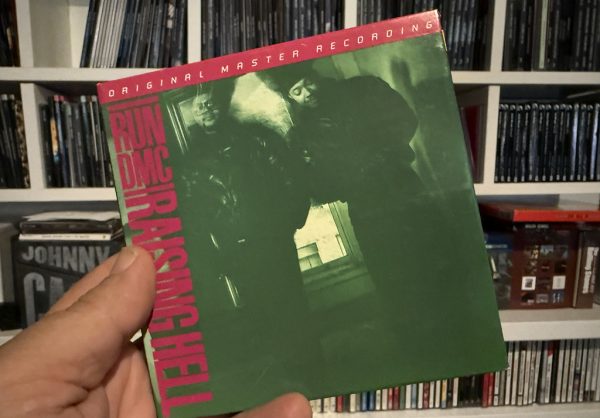
Record of the Day – 010: DEVO!
August 26, 2025
I didn’t need to watch the Netflix documentary on DEVO to shake the dust off my DEVO albums. I never stopped playing them.
However, that first record was pretty amazing, even in a day where punk was king, and new wave was a close second – DEVO was unique. It was a classic day in the record store that I worked, with the satin-jacketed guy from WB stopping in with the promo and concert tickets! Sometimes it pays off to work the night shift.
By this time, I’d seen them on Saturday Night Live and bought the first record, the one you see here – the tix were for the Duty Now For the Future album, at the Uptown Theater in Milwaukee, Wisconsin in the summer of ’79
But this record, produced by Brian Eno is so catchy, it sounds completely fresh today, full of animalistic drumming, buzz saw guitars and out of this world synthesizer bits. Of course, the anthem that made DEVO famous is here in all it’s glory, but this record is 34 and a half minutes of fun.
For those of you that are interested, our own Jaan Uhelszki did an incredible interview with Mark Mothersbaugh back in issue 26, that we’ve put back on the site here:
https://www.tonepublications.com/music/looking-back-on-devo/
Leave a comment out on our Facebook page and let us know what you think!
Record of the Day is brought to you by Bergmann Audio, and Supreme Acoustic Systems.
The table featured here is the Modi, with their Thor linear tracking arm.
Cartridge is a modified LYRA Helikon SL, modified by Ana Mighty Sound
Phono Pre is the award winning XP-17 from Pass Labs
Cables by Cardas Audio
All on top of the Pagode Master Reference MKII, courtesy of MoFi Distribution
Looking back on DEVO…
August 26, 2025
This article, originally titled, “Almost everything you want to know about Mark Mothersbaugh,” is written by Jaan Uhelszki, and was originally published in issue #26 of TONE, back in 2009. Considering the popularity of the recent DEVO documentary on Netflix, we felt it might be fun to look this one over again.
Mark Mothersbaugh would be loathe to be called a Renaissance man, but that’s what he is. Rather a savant for most of his years, he got the name and idea for his revolutionary science-cum-art rock band from a Jehovah’s Witnesses pamphlet, and nabbed the phrase, “Are we not men? We are Devo,” from a 1932 Charles Laughton movie called Island of Lost Souls. An odd title for a man who has a preponderance of soul, even if he is from Akron, Ohio.
In addition to being the bespectacled, robotic lead singer of Devo, the 59 year-old Mothersbaugh is a well respected film composer, with over 100 credits. He wrote the music for Pee-wee’s Playhouse in 1986 –and even got to sit on Chairy. He’s an accomplished artist in the “low brow school of art,” mainly because he incorporates flourescent pigments in the base of his paints so they glow when you least expect it — much like the occasional subliminal messages he inserts into the commercials he creates, signifying only one thing: With Mark Mothersbaugh, what you see is not what you get. But what you get is a lot.
With Devo back on tour and a new album in the works, our favorite spud boy is as busy as ever.
TONE: What’s the greatest misconception about you?
MM: Oh, good grief. The greatest misconception is that “Whip It” was the best thing I ever did.
That’s the song with the gift that keeps on giving, you know?
Yeah, all the way to being the theme song for the Swiffer Wet Jet commercial!
You did that commercial? Now, that’s de-evolution. I have to tell you it’s probably the worst product ever made for man.
It is. I got this little tiny old, inexpensive house out in Palm Springs, fixed it up really nice so it had a nice epoxy floor. And oh, there’s a little spot over there. I got the Swifter out. I’ll try it. It ate the epoxy right off the floor. Whatever it is, I don’t know, but I think it came from outer space. I don’t know if we’re even allowed to dispose of it in your trash.
You should retaliate and put subliminal messages in those commercials.
I love to put subliminal messages into commercials. It’s easy to do. We used to be into it more than we are now because nobody cared. I kept putting these messages in and nobody ever stopped or called me or got freaked out and said, “Take that out immediately!” People just acted like they didn’t hear it.
How did you feel when Target used “Beautiful World” to sell soap?
Well, we really liked the idea. The only thing is the ironic humor was lost on them. People that really know the song, and know “It’s a beautiful world for you / But not for me,” would appreciate it even if those words weren’t used in the actual commercial.
Tell me about the importance of being from Ohio.
Ohio had everything to do with my band and myself, the people in my band and myself, our vision of the world and the particular viewpoint that we have, and have had since we were angry young men. And now we’re grumpy old whatevers.
My mom always tells me that men get meaner as they age.
I don’t think men get meaner. I think what happens, as they get older and then as lust fades away, they become more like women.
Are you the oldest kid or the youngest?
I’m the oldest kid.
Did you fit in in school?
I was kind of a loner and I fought with the teachers and I fought with the other kids. I got my ass kicked by everybody when I was in school, so when I left, when I went to Kent State. I liked it because I was anonymous. At 3:30 the bell would ring and all the kids in my class, they’d all perk up … And then they’d head off for their fraternities and their sororities and their beer houses and all the things they did, and I just stayed right there and I used all the facilities in the art department and just kept doing art all night. Did it till one or two in the morning and then get up and go to my classes and just wait for everybody to leave again.
I remember in an interview in the ‘80s you said that you’re a picky eater, so was a big deal when David Bowie asked you out for sushi? Did you eat the raw fish?
I did. When David Bowie asks you to eat raw fish, you say “Yes.”

So David Bowie cured you of being a picky eater.
Yeah I pretty much got over my picky eating because of David Bowie. That, and seeing the world. But my eating habits were partly economic. I used to think food was like something to take your money away so you couldn’t afford to buy a roll of recording tape that week and record a song.
During Devo’s heyday, when everyone from Mick Jagger to Jack Nicholson to Eno were asking to be your guest list and saying that you were such a revolutionary band, did you think you deserved all that high profile attention? And were you nervous when people would come backstage?
I don’t know, I was kind of nerdy. I was the guy that was happiest sitting at, before there were computers, sitting at whatever instruments I had and making music or making visual art – that’s what made me happy. In a way, I wish I would have been more interested in meeting people and hanging out with the people that wanted to collaborate with us and stuff. And I did some collaborations. We worked with Eno and Bowie, of course. And I played on a Rolling Stones song, and I wrote some music for Hugh Cornwell and the Stranglers, and did some sessions but not all the stuff that we could have done or that we were offered to do, so it’s like in retrospect I kind of wish we would have been a little less insular as a band.
Yeah, but maybe that would have changed like your vision, too.
That’s what we thought: We don’t want to be a rock and roll band. We didn’t think of ourselves that way.
Yeah, Devo was more like an art statement.
That’s how we felt about it.
I always think that we’re all the same. It doesn’t really matter if Mick Jagger wants to collaborate with you unless you have had a meeting of the minds, you know? But I could see where there was some kind of intersection between Devo and Eno.
Yeah. That was during the Roxy Music days.
Eno always seemed like a space alien to me. Did he ever come off his pedestal? I mean, did you guys communicate well?
It was funny, Eno was one of the few people I had kind of like some sort of a reverential feeling for and I kind of lost it. I still think he’s a great guy, but … it’s really hard to pinpoint incidents, but you know, after we finished, I never thought of him in the same way. But having said that, I always thank him because he paid for the first Devo record for us, because we didn’t even have a record deal.
I read that Iggy was also instrumental in getting you signed?
Iggy, David, and Brian Eno all took an interest and actually were all proactive in helping us.
Now you spend most of your time scoring films and creating music for commercials. Did you feel like getting into the film music business was serendipity? Is it something you went after or did it just kind of fall into your lap?
Well, I always liked film music, but I didn’t go to school to be a composer. I went to school and didn’t know what the hell I was doing there, and then became obsessed with printmaking and then met Jerry [Casale], who I started the band with. Then everything just started falling forward.
I know you named your band for de-evolution, but don’t you feel like everything’s been like an evolutionary progression, like it’s built on each other? Or has it just been like a lot of random accidents?
I think there’s an intelligent design at work here. What’s all this bullshit about evolution and intelligent design? It’s de-evolution! Nobody knows, they’re just like ignoring the facts. Pay attention to what’s going on!
Was there a watershed moment when you really thought you got to a nadir of de-evolution, that you were prescient in your ethos?
To me it was MTV. MTV was exactly what we were predicting. Sound and vision. We were reading Popular Science. We knew about laser discs, and said, Oh, my God, it’s exactly the same size as an album but it has pictures to go with the whole thing. This is going to totally change who’s making pop art. It’s not going to be some guy sitting over there with a band in a bar, and it’s not going to be somebody that’s sitting on a hill painting a landscape, it’s going to be somebody that works in the pop media of our time. They’re going to be doing stuff that goes on television and it’s going to be music and pictures together. And that’s what we wanted to be. We wanted to be the new art form. And instead MTV came along, and it looked like, during first half a year or year, it had potential. And then all of a sudden, I remember having this realization that MTV was just Home Shopping Network for record companies.
It became less a thing of making albums; you were just making one song. And one song that was going to get on MTV because if it didn’t, you were fucked. And your whole project died, and all the money that you would have used to like seed yourself to keep going till you had your third album and maybe had a chance to have enough maturity to make a statement that was interesting from an art point of view, people never got there.
Make it one step more depressing. Oh, I know. Let’s change the format to CD’s, where now all of a sudden people feel like instead of writing 44 minutes of well-crafted music, they have to come up with 70 or 80 minutes of filler to go around the one song that’s on MTV. So you got one song for MTV and then you got 70 minutes of stuff just to fill up a CD.
Was that really anxiety-producing for you when you were in the band?
Well, by the time, our airliner was already heading to the ground where CD’s were concerned and we were weaving a cocoon to hibernate in at that point. So we saw it more than we felt it. It was already a virulent strain of anti-art that was like a gas permeating the industry, and for some reason it made record companies hopeful. It gave them a new lease on life because they reissued all their old shit. And then they went into horror when they realized, “Oh, but wait. Once we give it to them in digital form, then that’s it. They will share it with each other and they don’t need us anymore.”
When you were in the throes of Devo, did you know how cool it was? Did you have that sense that you were doing something really tremendous?
We felt like we were doing something big in the early days. There was that energy that started it. And then by the mid-to-late ‘70s, we had that power and that energy of things moving forward. And then we went into retrograde, then with the Freedom of Choice album it started heading downhill, there was this horrible feeling where we felt misunderstood. We felt like—”wait a minute, we have something to say, and there’s a lot of people that don’t have anything to say, and you should ignore them!” It was a frustrating thing. I never anticipated it, you know. I didn’t know then that things were cyclical and they came back. Like careers.
Your career came back when you did the music for Pee-wee’s Playhouse. Were you asked to do it because Paul Reubens was a big Devo fan?
Yeah, I’d known him for years, and he’d asked me to work on his live theater show. He asked me to score his film. And I was too wrapped up in Devo and I was traveling all over the world. I was interested, but you know how it goes. When the TV show thing came up, my drummer had just left the band to start another band. Greta, Greta. You don’t remember that? Nobody does.
When you worked on Pee-wee’s Playhouse did you hang out there a lot?
When you’re a composer, especially for TV but for film also, you spend a lot of time by yourself. It is much more solitary than you would imagine. I visited the set once when they were shooting in New York for the first season, and I sat on Chairy. The rest of them were all easier because they shot them in L.A. I’d go visit, but most of the time, I got a tape on a Monday and sent it back to them on Thursday, and watched it on the weekend.
Is the process different than writing a rock song? Do you have to use a visual kind of sense?
I don’t know how to compare that kind of writing to a rock song because when we did songs, we were thinking about sound and vision. And we oftentimes had ideas for films before we wrote the song. Write a song to go to a film idea that we were talking about, because we made our own little films, back when they were still called promo videos.

How did you get the gig doing the Rugrats music? Were the Clasky Csupo people pretty wacky or were they fairly normal?
Gabor Csupo, of Klasky Csupo called me and wanted to license a song from Muzik for Insomniaks, a solo album I recorded in the early ‘80s. I offered to write him something new, and a great collaboration was born. All people in animation seem to be pretty wacky, yet somewhat normal.
And the Sims video games?
That was actually Mutato Muzika, my West Hollywood muzikal think tank (www.mutatomuzika.com) that scored many of those Sims games, but Devo would be a perfect fit… Wait, didn’t they license an unheard Devo tune called, “i’ve fallen in love, (with recombinant dna)” for a WB trailer, or something?
Mutato Muzika has scored many big games, and Devo has contributed to a number of games, also.
What was the greatest thrill being in Devo?
To actually be able to pull it off. I think it’d be great if everybody could at one time go to the Forum or go to Madison Square Garden and know what it’s like to have 35,000 people all looking at you, and you move your hand and feel everybody’s eyes watch what you’re doing. Or have them sing along with words that you made up in your basement about half a year ago when you were really depressed. Then all of a sudden there’s all these people singing it together, and you’re like, “Whoa, it’s cool.” You understand what evangelist preachers feel and to know what it’s like to have the power be so concentrated, and have the ability to use that power to go over and touch somebody and they jump back like they’ve been hit by lightning. That’s what being on stage with Devo in the early years was like.
I think that music has the power to change your life, and I do think it’s just like electronic force fields. It’s a great responsibility and a great buzz. Was it hard for you to go back to the film music and kind of be in the background rather than the foreground?
I know what you’re saying. But you know what? I saw those people that had been onstage, where I was five years before, waiting backstage, you saw the way they looked at you, and I go, “You know what? It’s not going to be forever and I’m going to enjoy it while it’s here.” And to be honest with you, Devo was a collaborative band. Although you’ll see people get credit for songs on albums, everybody contributed, because it was two sets of brothers originally. And to me, the idea of collaborating with a director and a producer, it feels more like Devo than if I would be just by myself doing solo records.
So you work well with others?
Yeah, I enjoy it.
Do you have a rule or a motto, something you say to yourself when you just don’t feel like getting up to do it in the morning?
God, I have no great quotes. I mean I try to live my life like a virgin.
What do you think your greatest strength is?
I enjoy solving problems. I’m a good problem solver everywhere in life. The big difference between Devo and KISS is, if the plumbing wasn’t working in the hotel room when we checked in, it probably worked when we left. And if the TV had snow on it we could, it was probably adjusted properly by the time we left the room. I can fix things, yeah. You know what? Save your brain for other stuff.
When you first came out with that line, “Are we not men? We are Devo,” was that a seminal moment in your life?
Yeah. It was a great moment. I was sitting in this shitty apartment in Akron, Ohio, $65 a month apartment, and I had quack religious pamphlets that I’d been collecting. I always invited Jehovah’s Witnesses in because they had great gravitas, and they were always attacking evolution. So they were the ones who got me thinking about all this great stuff – you know, things that I could use for pro-de-evolution. I could just use all their information so I would invite those people in and they’d stay around, and they’d walk around and look at all the masks I had on the walls, and I could hear them saying, “He has one room. He doesn’t have a bed. What is this? Is this a real apartment, or what is this? Hell?”
Would you overhear people saying, “Are we not men?” when you’d be out in the shopping mall or at the bank?
Yeah, but they always got it wrong. They said, “We are not men.” Dammit. Of course, a rhetorical question.
What’s something money can’t buy?
What can’t money buy? Peace of mind. No, it does buy it. What does it gain a man to have all the pussy in the world but to lose his soul? No, that’s not my motto.
What’s one thing that would surprise fans about you?
I think what surprises Rugrats fans is when they find out I was in Devo.
Let’s fast forward to today. In regards to the current tour, what prompted you to play the first two albums back to back as opposed to anything else?
The two-album-back-to-back concerts were inspired by Devo playing a string of parties back in London in May ’09. We were surprised that the first album, side 1 cut 1 through to side 2 last cut format worked so well, and wanted to let the Americanos get a chance to hear it.
Will the rest of the set list have some surprises for loyal fans?
Yes… and, uh, OK… yes! That said, I think the interesting part of this concept for a concert is, no surprises? Except extraordinarily good merch, for once.
Are you having a good time doing this music again? A while back you said you wouldn’t do DEVO again.
First off, it’s not about having a good time. We just do what we must do. I think I said “I wouldn’t ‘doo’ Devo, referring to wearing those uncomfortable plastic hair ‘doos’ we wore on the New Traditionalists album cover. Of course, none of us in the band have a lot of control over “doing” Devo; it’s in our genetic encoding.
How did the first two Devo albums end up getting remastered on 180g. vinyl? Was it a Devo decision or a Warner Bros. decision?
The vinyl remastering was spearheaded by Tom Biery at WB, I think. He loves vinyl as much as we do. I miss vinyl and not just for the sonic reasons.
Will we see the rest of the catalog remastered?
If WB hits black gold in some Burbank oil field soon, they may want to press a whole bunch of Devo albums.
What info can you leak to us about the new album? What else is up your yellow sleeves?
The new album is what our first albums would have been like if we would have had nurses to administer the drugs, and rascals to ride around on. Stay tuned.

Record of the Day – 009: Court and Spark
August 23, 2025
It’s been a week or so, and I’m back in the Joni Mitchell mode again. My one-step copy of Court and Spark has arrived, and while this was Mitchell’s most commercial record, it remains a favorite.
Court and Spark was Mitchell’s transition to a more jazzy period. On a parallel track, she was also part of Tom Scott’s LA Express, and this record sees a major part of that crew sitting in on this record. Here’s a little tidbit I didn’t know: Jose Feliciano plays electric guitar on “Free Man in Paris.” Maybe I should give Wikepedia $5.
I have no idea what the “definitive” pressing of this record is. Discogs says there are 204 versions of this record, and that’s way too much work. The one-step is incredibly good. Dynamic and full of detail, Joni has never sounded better on my system. The pressing is flawless, and the background noise low, low, low. You might even hear some tiny bits throughout that you missed in the past. And that’s a big part of the fun.
And yes, there is still the slightest bit of overload at the beginning of “Car on a Hill.” Is there a version that doesn’t have this? I haven’t heard it. I’m not letting three seconds ruin the experience and you shouldn’t either.
If this is a record you cherish as much as I do, consider making the one-step part of your collection before they are gone. You will not be disappointed. Fingers crossed that MoFi is going to do Hissing of Summer Lawns as part of the series…
Leave a comment out on our Facebook page and let us know what you think!
Record of the Day is brought to you by Bergmann Audio, and Supreme Acoustic Systems.
The table featured here is the Modi, with their Thor linear tracking arm.
Cartridge is a modified LYRA Helikon SL, modified by Ana Mighty Sound
Phono Pre is the award winning XP-17 from Pass Labs
Cables by Cardas Audio
All on top of the Pagode Master Reference MKII, courtesy of MoFi Distribution
Record of the Day – 008: Liz Story
August 21, 2025
This one goes way back to my early audiophile days, when anything that was “half-speed mastered” or “recorded on audiophile vinyl” caught my attention and my wallet.
A trip to my favorite hifi store of the day, Audio Emporium, just outside of Milwaukee, WI where they were playing Ms. Story’s Solid Colors on a pair of Magnepan Tympanis.
Recorded by well known engineer Steven Miller, and pressed at RTI (yep, that’s how long they’ve been around…) this was great music on the Windham Hill label before they got labeled with the new age moniker. Captured at 30ips on a 2-track Studer, this is some amazing piano playing that sounds fantastic. Who says audiophile quality equals boring?
You can still find a copy of this very reasonable. It’s pressed on JVC vinyl and is a good addition to your reference collection.
Leave a comment out on our Facebook page and let us know what you think!
Record of the Day is brought to you by Bergmann Audio, and Supreme Acoustic Systems.
The table featured here is the Modi, with their Thor linear tracking arm.
Cartridge is a modified LYRA Helikon SL, modified by Ana Mighty Sound
Phono Pre is the award winning XP-17 from Pass Labs
Cables by Cardas Audio
All on top of the Pagode Master Reference MKII, courtesy of MoFi Distribution
Record of the day-007: Made In Japan
August 21, 2025
Just the other day, the 10-album box set of Deep Purple’s classic: Made In Japan was released. This one features the main album remixed by Steven Wilson, and if you like what he’s done with classic Yes and King Crimson, there’s a great chance you’ll enjoy this rendition as well.
I’m usually not a fan of making 10 albums out of one, but there is so much cool bonus content here, I’m gonna have to listen to this for a week to get through it all! Recorded during their first tour of Japan in summer of 1972, it was released in the Japan on December 8 of 1972, and March 30 in the US.
It’s a killer record, containing one of the most recognizable songs/opening riffs ever – “Smoke on the Water,” and continues to endure.
I would not encounter Deep Purple live until their Stormbringer tour, back in my hometown of Milwaukee, Wisconsin nearly a year later. But it was an incredible first concert experience. What was your first show?
Leave a comment out on our Facebook page and let us know what you think!
Record of the Day is brought to you by Bergmann Audio, and Supreme Acoustic Systems.
The table featured here is the Modi, with their Thor linear tracking arm.
Cartridge is a modified LYRA Helikon SL, modified by Ana Mighty Sound
Phono Pre is the award winning XP-17 from Pass Labs
Cables by Cardas Audio
All on top of the Pagode Master Reference MKII, courtesy of MoFi Distribution
The Klipsch AK7 Klipschorn
August 20, 2025
There aren’t a lot of companies that have been making speakers for nearly 80 years, (2026 is their 80th anniversary!!) but Klipsch and the legendary K-horn are still here, better than ever.
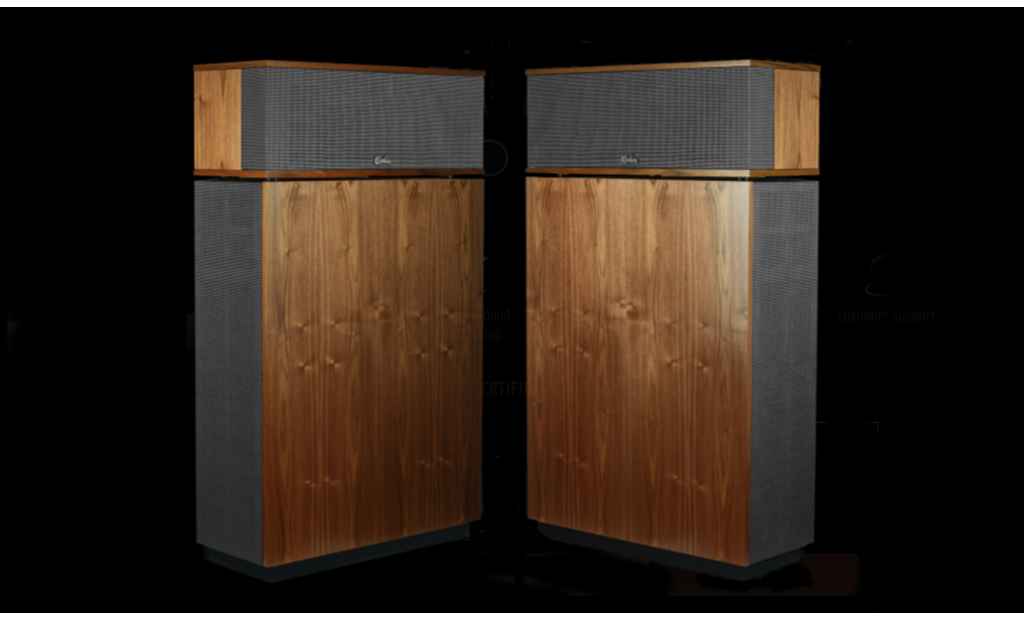
With a sealed back since the AK6 model, they still really should be in the corner (as the late, great Paul Klipsch intended), but they have much more solid bass than ever. This mega-sensitive speaker (105dB/1-watt) doesn’t need a ton of power to shine. PrimaLuna’s EVO 100 with a full complement of EL-34s, delivering 40 watts per channel, is getting the job done nicely.
Klipsch says the KHorns will work in a room as small as 13 x 18 (Yeah, we tried that), but space is truly the final frontier. Out in the main listening room on the 24-foot wall, feeding into a 36-foot room, not only can the speakers really breathe in and out, but there is a much better sense of integration from the horn drivers about 18 feet back. And, boy, do these fill a room.
Now that the AK7 Klipschorn offers a three-way active crossover, there’s so much more of this story to tell – and that’s in the works.
For now, these $20k speakers remain an excellent investment. Much as we hate to embrace hard, fast rules in the world of music and audio, there is something undeniably amazing about listening to big music in a big room on a big pair of speakers.
Just click here to visit the Klipsch site. And stay tuned, we’ve got a LOT more to come.
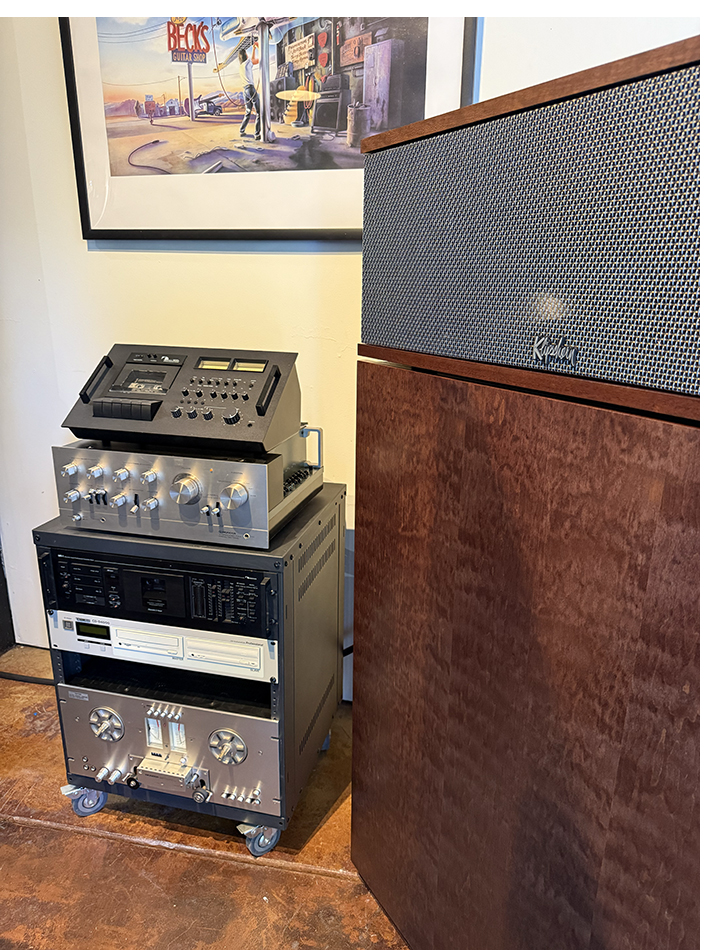
Record of the Day – 007 KIKO
August 8, 2025
While their popularity has never waned, (and the band continues to tour today) it might be argued that Los Lobos was at their peak of exposure in the early 1990s. Their soundtrack to the movie La Bamba, in 1987 sold two million copies, but Kiko was their biggest selling album, with close to half a million copies sold.
Kiko is one of those perfect records that remains as fresh and imaginative today as it did 30-plus years ago, with incredible musicianship and songwriting, propelled by an audiophile level of detail to the recording.
Go to tracks here for demo use are always “Kiko and the Lavender Moon,” and “That Train Don’t Stop Here Anymore,” but the entire album is full of sonic treats. Los Lobos is often pigeonholed as Tex Mex, or Americana/Roots rock, but Kiko – produced by Mitchell Froom (who also plays on the record) is much more experimental and creative to put in a box.
The Mobile Fidelity treatment of this record is incredible, and still available as a half speed mastered LP and SACD. As good as it gets, this one will truly show off the performance envelope of your system without resorting to stuffy, audiophile approved tracks.
Leave a comment out on our Facebook page and let us know what you think!
Record of the Day is brought to you by Bergmann Audio, and Supreme Acoustic Systems.
The table featured here is the Modi, with their Thor linear tracking arm.
Cartridge is a modified LYRA Helikon SL, modified by Ana Mighty Sound
Phono Pre is the award winning XP-17 from Pass Labs
Cables by Cardas Audio
All on top of the Pagode Master Reference MKII, courtesy of MoFi Distribution
Record of the Day – 006: Are You Experienced?
August 5, 2025
This one is a mega classic, albeit a bit before my time. However, I think many of us can agree that Hendrix’ debut, released in May 1967 was not only one of the greatest, but most successful rock records of all time.
The low distortion of the Acoustic Sounds pressing is thought by many collectors to be the finest rendition of this album, and the lack of tracking error in the Bergmann Thor linear tracking arm has Jimi’s guitar growling like never before.
Are You Experienced? is nearly 40 minutes of non stop energy, whether you have the 38:34 UK version or the 39:29 US version. Regardless of which pressing you have, this is a great album to enjoy start to finish.
Leave a comment out on our Facebook page and let us know what you think!
Record of the Day is brought to you by Bergmann Audio, and Supreme Acoustic Systems.
The table featured here is the Modi, with their Thor linear tracking arm.
Cartridge is a modified LYRA Helikon SL, modified by Ana Mighty Sound
Phono Pre is the award winning XP-17 from Pass Labs
Cables by Cardas Audio
All on top of the Pagode Master Reference MKII, courtesy of MoFi Distribution
Record of the Day – 005: Time Loves a Hero
August 4, 2025
Long before “Yacht Rock” was a thing, there was Little Feat. Yep, if you dig a bit (or listen carefully) you’ll hear a few Doobie Brothers’ on this record. Come to think of it back in 1977, when this record was released, it was often spun in rooms full of smoke.
The late Lowell George and Paul Barrere, along with the rest of the Little Feat crew, always put a record together with catchy lyrics, flawless musicianship, and tight grooves.
Recorded at Warner Bros., Western Recorders, and The Record Plant, this album was full of the beach side attitude. Little did those of us that were there, that the men responsible for the cracking production would soon release a record that would change the world only six months later.
Ted Templeman as producer and Donn Landee, would soon bring Van Halen to life – and that was definitely not yacht rock. But more about that later.
Leave a comment out on our Facebook page and let us know what you think!
Record of the Day is brought to you by Bergmann Audio, and Supreme Acoustic Systems.
The table featured here is the Modi, with their Thor linear tracking arm.
Cartridge is a modified LYRA Helikon SL, modified by Ana Mighty Sound
Phono Pre is the award winning XP-17 from Pass Labs
Cables by Cardas Audio
All on top of the Pagode Master Reference MKII, courtesy of MoFi Distribution
Record of the Day – 004: The Raven
July 31, 2025
Lou Reed’s last solo album, released in January of 2003, is somewhat of a Spinal-Tap ish homage to Edgar Allen Poe.
His wife Laurie Anderson often talked about “Difficult Listening Hour,” but this one just might become an acquired taste. This link to the Wikepedia entry has a full list of the credits – and it’s pretty major. The two disc version is just over two hours long, and you’ll probably have to work up to a full listening.
However, I suggest “Vanishing Act.” This track is so intimate, yet big at the same time, it will get you to sit up and take notice. It’s also one of the most engaging male vocal tracks to see what your system is capable of. Great as the vinyl sounds, you might want to stream it first. You’ll either love it, or it will be nevermore.
Leave a comment and let us know what you think!
Record of the Day is brought to you by Bergmann Audio, and Supreme Acoustic Systems.
The table featured here is the Modi, with their Thor linear tracking arm.
Cartridge is a modified LYRA Helikon SL, modified by Ana Mighty Sound
Phono Pre is the award winning XP-17 from Pass Labs
Cables by Cardas Audio
All on top of the Pagode Master Reference MKII, courtesy of MoFi Distribution
Record of the Day – 003: Shadows and Light
July 30, 2025
Though the performance for the album was recorded in September of 1979, at the Santa Barbara Bowl in California, I had seen this show a month earlier at Alpine Valley Music Theater in Wisconsin. It still stands out as one of the most amazing live experiences I’ve had.
Mitchell has always surrounded herself with stellar performers, but this was a special lineup featuring Jaco Pastorius, Pat Metheny, Lyle Mays, MIchael Brecker, and Don Alias. The setlist was the best of her material to date, starting with “In France They Kiss on Main Street” and “Edith And The Kingpin” from The Hissing of Summer Lawns, and ending with “Woodstock.”
Originally mastered by Bernie Grundman, the current remaster pictured here is also handled by Mr. Grundman. I can honestly say this is one of the few records I think I wore out. Whether you were there, and re-living the experience, or just someone who digs Joni Mitchell – this is a record you should own.
Considering how popular and loved Ms. Mitchell remains, this is a rare glimpse of her at her absolute peak.
Record of the Day is brought to you by Bergmann Audio, and Supreme Acoustic Systems.
The table featured here is the Modi, with their Thor linear tracking arm.
Cartridge is a modified LYRA Helikon SL, modified by Ana Mighty Sound
Phono Pre is the award winning XP-17 from Pass Labs
Cables by Cardas Audio
All on top of the Pagode Master Reference MKII, courtesy of MoFi Distribution
Record of the day – 002: The Pretenders
July 29, 2025
As I mentioned yesterday, in collaboration with Supreme Acoustic Systems and Bergmann Turntables, we begin our quest to play a record every single day (though we usually do more than that) start to finish, and share it with you.
Today’s record is the Pretenders’ debut.
And while we’re at it, why not the Mobile Fidelity remaster? This version is available on MoFi SACD and Original Master Recording LP (MFSL-1-372). If you can find them, expect to pay about $50-$80. Side note: there was also a Nautilus Super Disc done (NR-38) from the mid 80s I think that is not half bad either.
But this is not a pressing shootout. And there are 208 different versions of this album. Including 8-track!
Released January 11, in 1980 the Pretenders self-titled debut found me working behind the counter in a hifi shop. Our manager burst through the door with a copy in hand, proclaiming “you have to hear this.”
He wasn’t wrong. Chrissis Hynde picked up the baton for women that really rock from Patti Smith and never looked back. It still has the same energy and urgency it had on that sunny January day. The sleeve instructs you to “play it loud,” and that’s all you need. Put this one on, crank it up, and enjoy this hard rocking record that the title classic is hardly enough praise.
Curtail Cable Crankiness
July 28, 2025
No matter what the reason, there’s a certain group of audio enthusiasts who always bristle at spending more than a pittance on cables, regardless of the system’s price. Here’s a great solution from Vera-Fi Audio: Their new Ranger line of cables.
Is this reason enough to sell your $70k Odin 2s on Audiogon and buy a nice vintage Alfa Romeo GTV with the proceeds? Maybe. Got your attention?
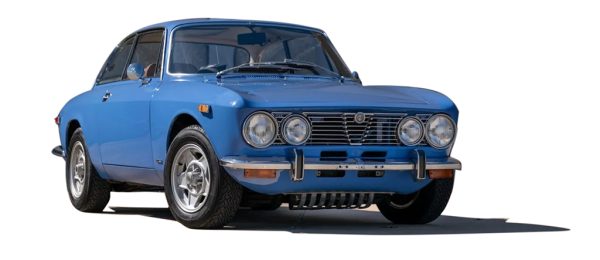
While we didn’t conduct a shootout with a five-figure pair of Nordost cables, comparing these to budget cables from Blue Jeans, Tributaries, and Clarus that we do have on hand, the Ranger cables reveal more musical information. They are not harsh or etched in any way. $79 buys you a well-executed pair of interconnect cables, delivering more performance than what you’ll find at Best Buy or Amazon that is similarly priced. (We compared that too)
Vera-Fi says that they will soon have a phono cable as well as speaker and power cables to round out the lineup. We’ll report back as soon as we have samples. For now, we’re ordering a 6M pair to go from the three tape decks plugged into our Manley Skipjack.
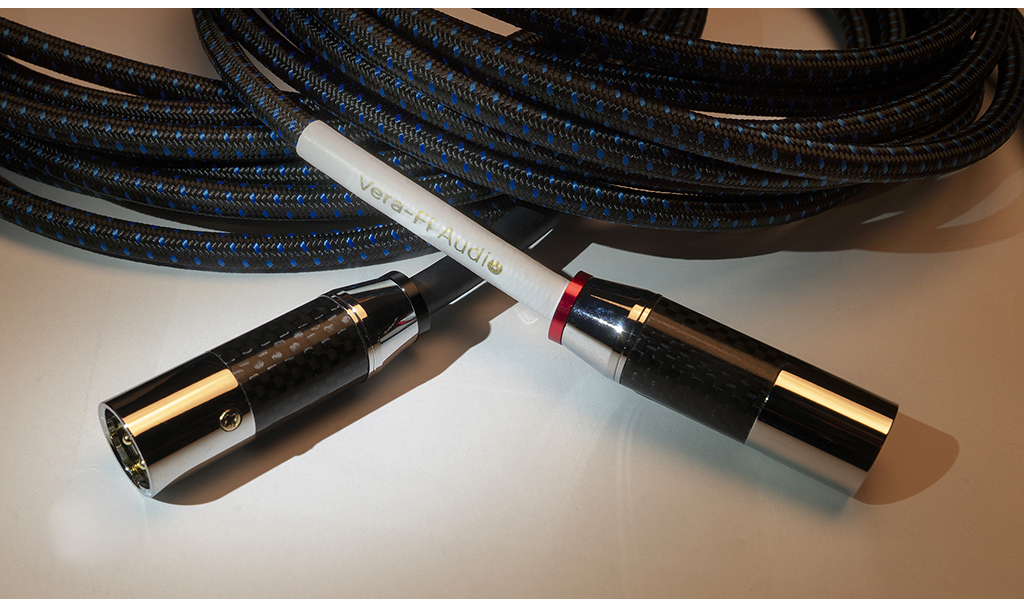
Cable choice is a quicksand that plagues more than beginning audio lovers. If you’re starting from the beginning, a loom of these cables will get you rolling and on a great path. And if you’ve been shopping for a sports car on Bring A Trailer and need some extra dough…
Just sayin.
You can find them here, at Vera-Fi’s site…
A Record a Day – For a year!
July 28, 2025
On a recent visit to Mobile Fidelity Sound Labs in Sebastopol, California – mastering engineer Shawn Britton asked me “What was the first record you bought with your own money?”
Easy – Edgar Winter’s They Only Come Out at Night. Still have it and it’s still in perfect shape.
We’re collaborating with Supreme Acoustic Systems and Bergmann Audio to play a different record, every day for a year and showcase it on their Modi table and Thor linear tracking tonearm. For now the cartridge is a Lyra Helikon SL rebuilt and upgraded by Ana Mighty Sound in France. (They do fantastic work btw…)
The rest of the playback chain is rounded out with an XP-17 phono stage from Pass Labs and cable from Cardas Audio. All placed on top of the latest Pagode Master Reference rack from Finite Elemente, courtesy of MoFi Distribution. (with super-cool carbon fiber top shelf!) Clean power is being supplied by IsoTek Systems’ V5 Sigma.
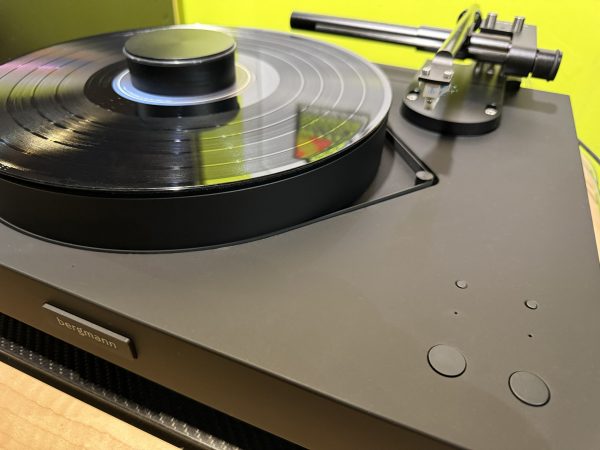
So join me on a wacky journey for a year. It’s not like I’m not playing records all the time, but this is on one level, more fun because it’s a commitment to doing something every single day, at the start of the day. Morning coffee, then put a record on.
I can’t think of a better way to really evaluate this turntable and tonearm. Stay tuned and thank you in advance. And a heartfelt thank you to everyone helping make this happen.
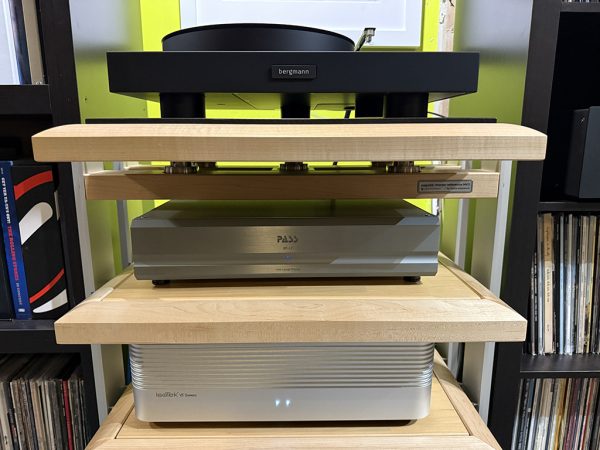
The Songer S1-X Redefines the Category
July 26, 2025
If you’ve never heard a pair of single-driver speakers, the Songer S1-X might be too much for you to take in. They might freak you out. They are that good. And like a handful of speakers that are truly special, providing a sonic experience like no other, the S1-X is destined to join that rare category.
Our full review is in process, but these speakers deliver an experience that I’ve never heard in over 50 years, and I love, love, love single driver speakers and ESLs. With a pair of the legendary Quad 63s and a pair of 57s here on hand, I still consider the S1-X magic. Even more so with Songer’s $30k A3 integrated amp, a 300B SET design.
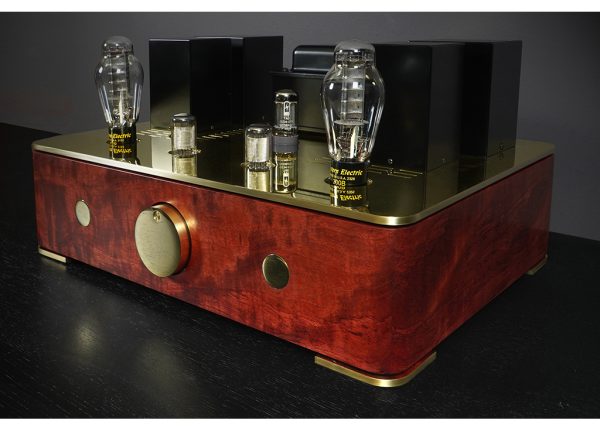
The difference here is that the S1-X is a field coil driver, which is much more complex than a standard full-range driver, such as a Lowther. (which we are still huge fans of as well – but this is next level) The driver is handmade by Ken Songer in a lengthy process.
We’ll have all the details in the upcoming full review, but suffice to say that even if this setup is not your cup of (or you think it isn’t), you should experience it at a show, Songer’s place, or our place. It’s a data point that will stick with you forever, even if your bag is something more like a gigantic pair of cone speakers. There’s so much more to tell you, but these are one of my top ten favorite audio experiences. Of all time. In over 50 years of listening. That good.
There is an intimacy to the reproduced notes via the complete Songer system that is, at the same time, wonderful, inviting, and unique. Forget everything you think you know about single drivers. These do more everywhere. And they rock. Don’t be surprised if you see these on the cover of February’s issue as our Product of the Year. They are that good. I’m scheming on how to finance a pair as we speak. That good.
-Jeff Dorgay
https://songeraudio.com/
YG Carmel 3 in for review…
July 20, 2025
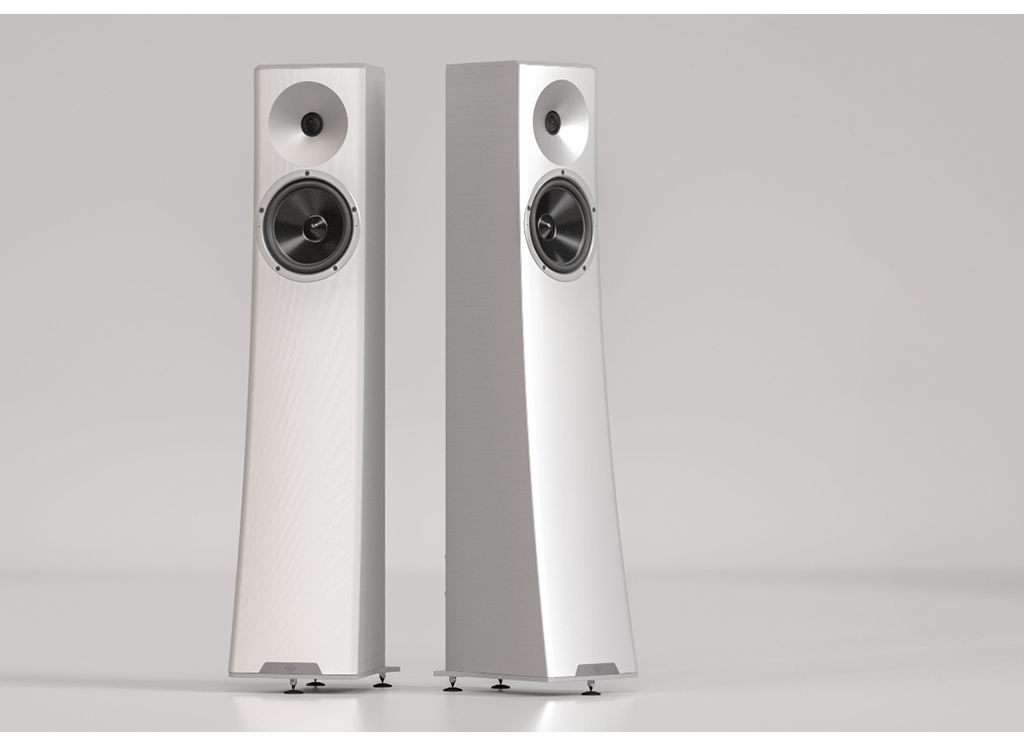
As we’re winding up the review on the YG Descent (a three-way floorstander), that is coming in at right about $30k per pair, and is the top of their Peaks range, the two-way, all-aluminum Carmel 3 has also landed. We thank YG’s new distributor Hiram Toto of Supreme Acoustic Systems for being kind enough to leave the Descents a few more weeks so we can compare and contrast, as they are similarly priced.
While YG is well known for their aluminum-bodied speakers, it is a controversial aesthetic choice, one that usually polarizes potential customers. Because the Carmel 3 is the entry level speaker in YG’s Reference lineup, we were curious to reveal the differences, as a potential buyer might.
You’ll have to read or full review for that, as it is outside the scope of a distilled piece. Suffice to say that the Carmel 3 on it’s own is a brilliant design, one that combines the tech of the XV, Sonja, and Hailey 3 (reviewed here) in a more compact cabinet. Even in our 24 x 36 foot room, the Carmel 3 delivers impressive bass response, and creates a massive soundfield, driven by the Pass Labs X600.8 power amplifiers.
The Carmel 3 delivers incredibly high performance, in a compact enclosure, and for those not having a room big enough to house the top YG’s, leaves precious little on the table in terms of ultimate resolution. Our test pair came fresh out of the box, and Toto tells us that good as they are already, they will continue to improve over the next week or so.
More to follow, please stay tuned.
Big Brit Sound: Harbeth Monitor 40.2
July 10, 2025
While the new Harbeth 40.5XD is a fantastic speaker (we’ve got a review going live any day…) don’t discount the 40.2s, especially when you can buy this pair, complete with stands for just over $10k at TMR.
If you’ve never heard the big Harbeths, they are quite special. Though these speakers are fairly large at about 30″ tall, 17″ wide and 15″ deep. They weigh about 85 pounds each, so tiny British monitors they are not.
But with big speakers comes big sound. If you’ve ever listened to a pair of smaller Harbeths and thought “If only I could get more of this…” The monitor 40 is the answer to your wishes. Even though the cabinet has a fairly large frontal area, these big monitors disappear in your room like a pair of LS3/5a’s, but with big bass and slam.
With an 87dB/1-watt sensitivity rating, anything beyond about 40 watts per channel will work, but if you can pair them up with a big solid-state amplifier, it’s a completely different movie. They take another big leap.
The top photo is merely for illustration, but this black pair complete with a pair of Tronger stands (A $2,000 value by themselves) is on the block at TMR for $10,499 in ebony. You know you want em!
Please click here for a purchase link. (bottom photo, courtesy of TMR)
Please note that all TONE and TONE related text and images are copyright © 2005–2026 TONE Magazine and The Audiophile Apartment. The RSS feed provided is for personal, non-commercial use only.
If you are not reading this content in your news aggregator, RSS reader, or direct, then the site you are looking at may be guilty of copyright infringement. If you locate this anywhere, please contact [email protected] so we can take action immediately.