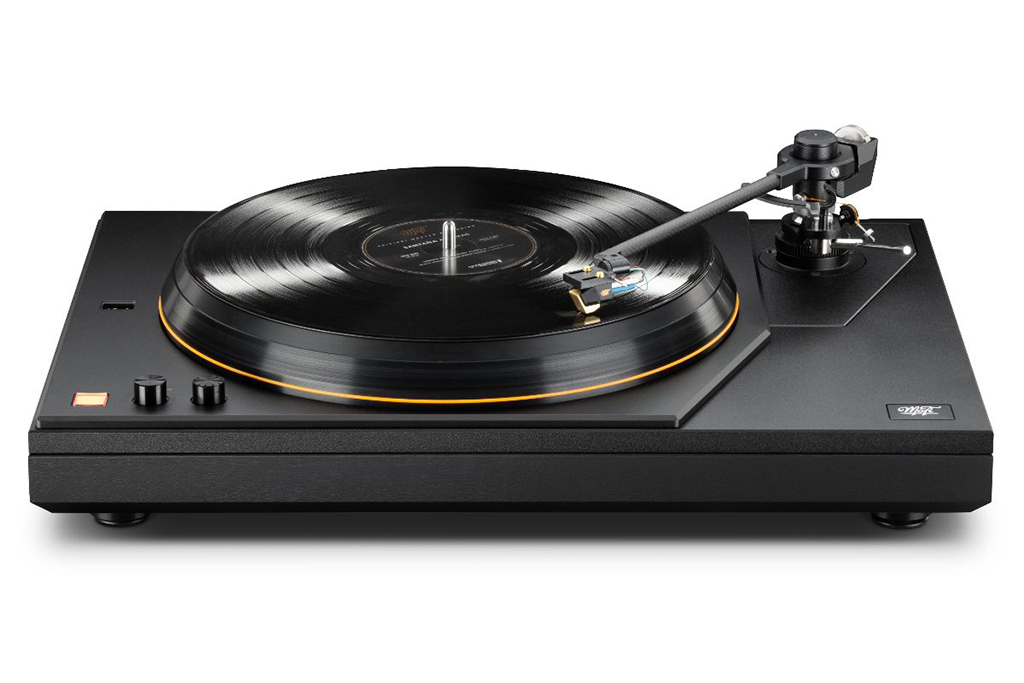
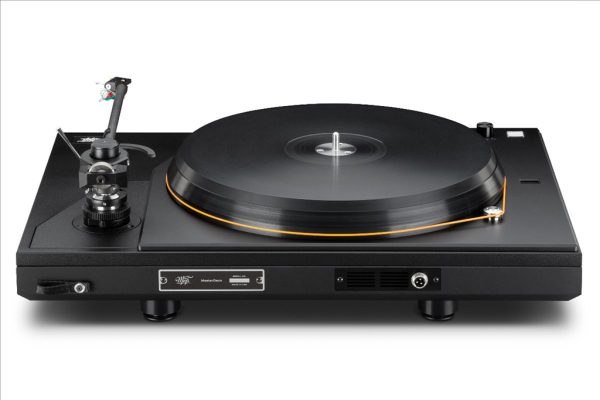
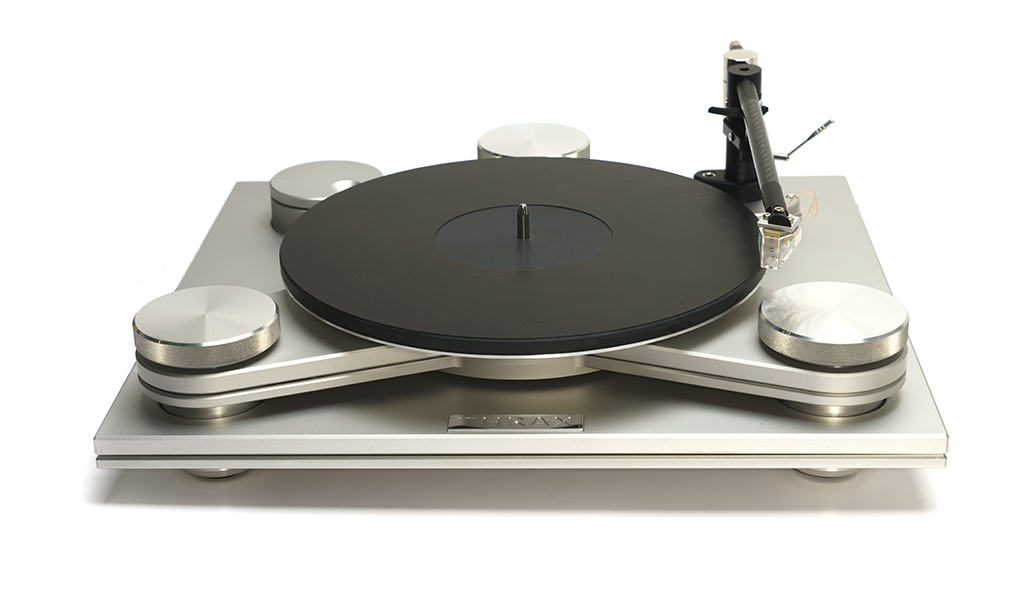
MoFi Distribution proudly introduces the new MoFi Electronics MasterDeckturntable, a reference grade product designed by master turntable maker Allen Perkins. Created by vinyl lovers for those with the desire to accurately reveal and experience the true music embedded deep in the groves of their vinyl LP collection. The MasterDeck turntable will be manufactured in small batches in the USA at MoFi Electronics’ factory located in Ann Arbor, Michigan to ensure the very highest level of quality control.
A compelling feature of the MasterDeck is an “all new” Dual-pivot carbon-fiber 10 inch tonearm that offers the best balance of precision, control and friction-free tracking. This tonearm uses a removable headshell and allows for the optimization of virtually any cartridge by facilitating adjustable horizontal angle (azimuth), vertical tracking angle (VTA), overhang and anti-skate. As well, all internal tonearm wiring is provided by Cardas Audio.
The MasterDeck achieves precision playback in part with an optically regulated speed controller using a three-phase brushless DC drive motor, housed in an isolated container. Fine speed adjustments are available for 33, 45 and 78 RPM and are displayed on a four-digit display. The 1.75 inch thick platter is a high mass hybrid material constructed exclusively from Aluminum and Delrin. This platter sits atop an ultra-high quality Encapsulated Spiral Groove inverted bearing. Isolation from both environmental noise and feedback is accomplished by effectively floating the MasterDeck using custom Harmonic Resolution Systems (HRS) Isolation Feet. Finally, with respect to “functional” cosmetics, a solid wood frame, in either Walnut or Black Ash finish, is wrapped around a constrained-layer body of wood and aluminum to eliminate all resonances.
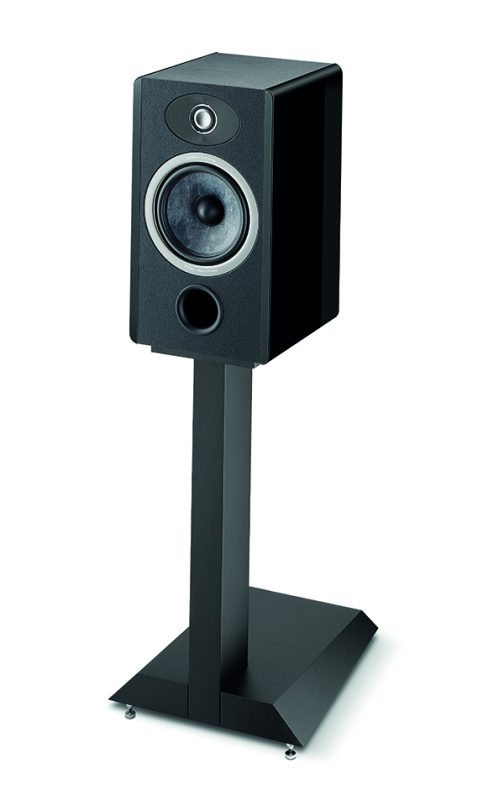
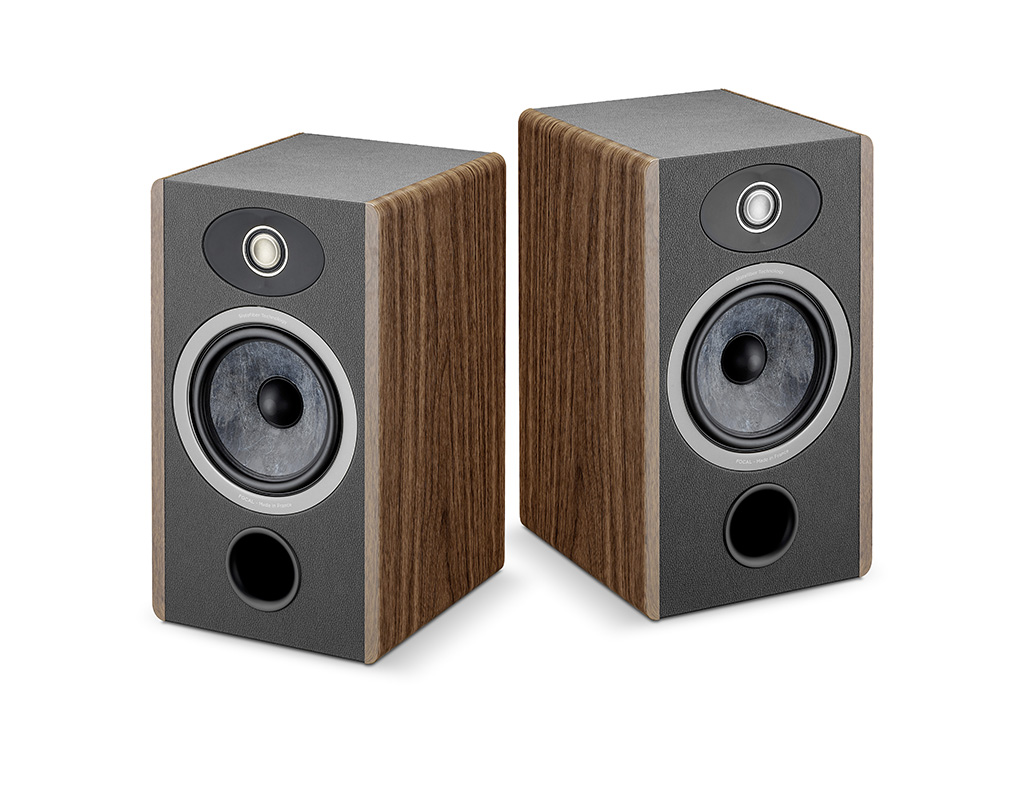
After spending an afternoon with staffer Earle’s Focal Sopra 3s, just before firing up their new Vestia no.1 at my place, the level of sonic excellence they bring to a $1,198 pair of speakers seems amazing. Listening to the same handful of tracks that I shuffled through at Earle’s house, not too much sonic memory was lost in the 25-minute drive on the I-5 to my place.
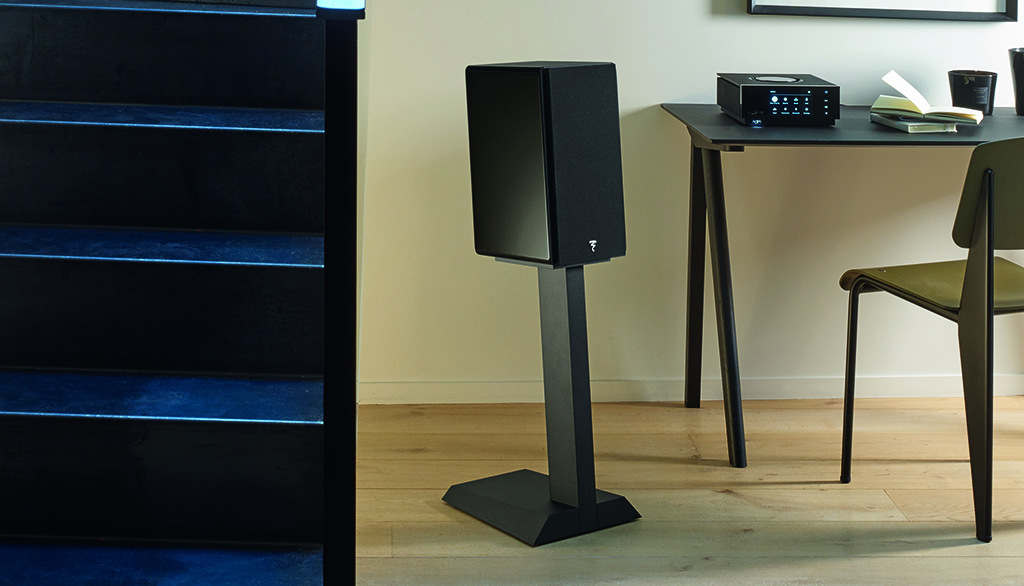
Playing the Vestia no.1s through the main reference system truly shows off what they can do, but it’s not really a fair comparison, so my Naim Uniti Atom ($3,599 and available from your Naim/Focal dealer) makes for a perfect match. However, like all the other Focal speakers we’ve used, they are just as easy to drive with your favorite tube amplifier as well. Swapping the Uniti Atom for the PrimaLuna ProLogue One and the Naim CD5is in for review is equally enticing.
Queuing up a MoFi copy of Santana’s Caravanserai is lovely and room filling. Placed on 24” Sound Anchor stands about 10 feet apart on the 24-foot wall in my listening room (couch about 10 feet back) the small Focals produce a large soundstage, but in a large room, their horizontal dispersion, especially from the top is slightly limited. The cure for this is stands that allow the tweeters to be close to ear height as possible, or the ability to tip them back slightly. The more stylish dedicated stands from Focal do just this, and are reasonably priced, at $249 a pair. Thanks to their front ports, you can achieve nearly the same effect on a bookshelf. The Vestia no. 1 is definitely user friendly.
All in the family
The Vestias take advantage of some new and existing Focal technology. You can read the full story on the Focal website here; suffice to say Focal puts a lot of expertise into their entry level speakers. The only thing that is really compromised between the Vestias and the higher range Focals, is the simplicity of the cabinets. The finish and shape is a more simple box shape, lacking the complex finish of Sopras and Kantas. Yet what is delivered is of top quality. Compare the Vestias to some of the competitors made in China, and you can see the Focal difference. A quick rap on the cabinet reveals solid construction and lack of resonance. Impressive for this price point.
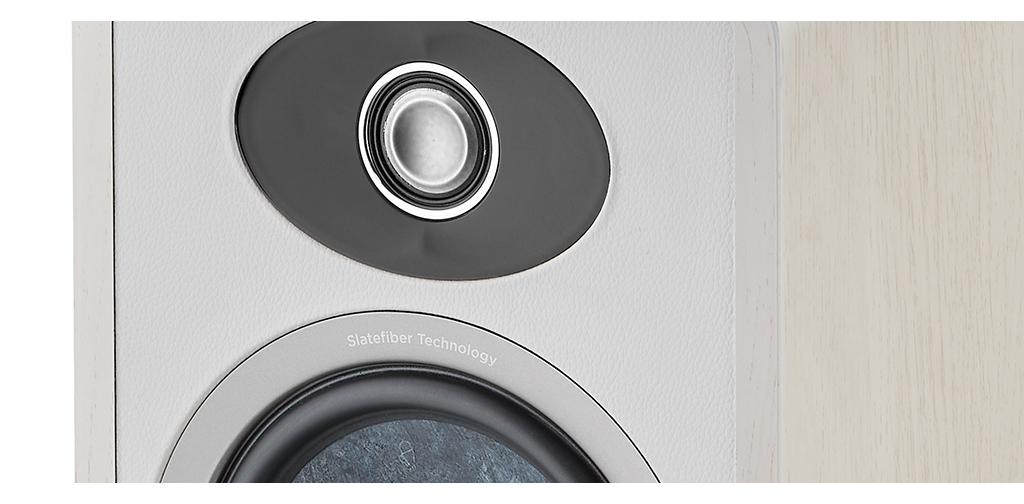
A two-way design, the compact cabinet only measures 8 5/8 x10 1/4×15 1/4″ (21.9x26x38.7cm) and weighs only 15.4 pounds, so they are easy to unbox and install. They utilize a 1-inch inverted dome tweeter with Focal’s TAM material. (aluminum and magnesium composite) The 6 1/2- inch woofer is made from recycled carbon fiber, allowing added stiffness at a lower cost than standard, woven carbon fiber – a very unique approach. The Vestias are available in light wood like our review samples, dark wood and a black high gloss finish. All feature a “leather effect” front panel.
Further listening
Moving on to Lloyd Cole’s new album, On Pain (as well as a few LC classic tracks) reveals the clean, natural midrange the Vestias deliver, which ironically hits me near the middle of the third track, “I Can Hear Everything.” Sometimes the soundtrack of your life is synergistic. Going through the gamut of favorite vocal tracks confirms the initial excitement. The Undertones’ “More Songs About Chocolate and Girls” demonstrates the Vestias ability to pull detail from dense, compressed recordings. This is a terrible sounding (but fun) track, showing you can have high end speakers that play everything with ease.
When you’re starting to build a system, every bit of performance you can get for the dollar is key and this is what makes the Vestias such a great value. If you could see what goes on every day at the Focal factory in France, it’s easy to see how they do it. Focal performs every aspect of design and manufacturing in-house; cabinets, crossovers, and drivers. The level of engineering talent is incredible, equally so with execution. Focal definitely takes the high road on the Vestia no.1 in terms of overall balance. Many speakers in this price range hinge their reputation on a single feature, where the Vestias sacrifice an over exaggerated frequency response to deliver smooth and resolving sound.
Changing program material to bass heavy tracks from Thievery Corporation, Massive Attack, and Tosca reveal that the Vestias manage to go down fairly low, and the bass that is delivered is of high tonal quality. Moving them back into a more appropriate sized room (12 x 18 feet, and 10 x 12 feet respectively) and taking care to place them so they can take advantage of a bit of room gain provides tremendous sonic rewards. It’s easy to hear the lineage all the way up to the Utopia series here.
Different partners
Swapping the Naim Atom for the T+A Caruso R, and PrimaLuna amplifier is fun, and again proves that these little speakers have more than enough resolution to discern distinct differences between amplification and program sources.
The no.1s are a great way to start building a system, and like some of the other Focal speakers, they offer a full range of floorstanding speakers, and a center channel option so you can build a multichannel system having the same voice.
Focal claims a sensitivity of 89dB/1-Watt, and they proved easy to drive even with our 12 Watt per channel Lab 12 Mighty (vacuum tubes) amplifier, so they should work well with whatever you have on hand. Around back is a single pair of 5-way binding posts to make connection to your speaker cables equally easy.
At present, Focal does not offer a subwoofer in the Vestia lineup, but they do suggest their SUB600P, for those wanting to keep it all Focal. To get a better chance of what they can do in a 2.1 system, they were mated to an SVS 3000 Micro ($899) subwoofer and alternately with a REL T5/x ($699). Thanks to the solid bass foundation that the Vestias deliver, adding a sub makes for a great full range system should you so desire to take this direction.
Constant innovation, tremendous value While some of the names might be a little confusing at times, Focal continues to innovate and apply new technologies and construction techniques on every speaker in their range. That their commitment to excellence is just as serious with the Vestias as it is with their top range Utopia speakers is great news for the beginning audiophile. We are happy to give these one of our Exceptional Value Awards for 2023. This is a great pair of speakers to build a system with.
Digital and Analog parity: The Tambaqui DAC and Lupe Phono from Mola-Mola
Features
Old School: Going down the Revox Rabbit Hole by Jeff Dorgay
1095: Vera-Fi’s awesome Vera Link. Now you have sound anywhere!
The Audiophile Apartment: The REL Classic 98 subwoofer
Journeyman Audiophile: Tannoy Autograph Mini speakers
Headphone Arts: FOCALS latest Bathys phones with a surprise
Shanon Says: Our Canadian connection lets us know what she’s listening to
Mine: It Should Be Yours
Future Tense: Gear in our immediate future
Reviews
YG’s Hailey 3 Speakers – the first of an all new breed Black Ravioli Record Ground – It’s not a clamp! The Enleum AMP-23R – Massive sound, minimum footprint Totem Solution Sub – When you think you don’t have room for a sub Naim CD5si – A worthy disc player
Music
Playlists: We share our readers choices from around the world Merch Table: ZZ Top. Awwww!! Jim on Jazz
One of the most compelling things about the world’s finest products, be it speakers, watches, cameras, you name it – is the ease of enjoying them in a fashion that you no longer think about the object in use.
There’s no more longing for additional performance, or an aspect of use that annoys you. A Rolex Submariner, a Leica M6 (if you’re a film person) or M10 (if you aren’t), the Eames Lounge Chair (a real one), or a late 80s 3.2 Porsche Carrera. I’m sure you have your own list, but this is where I place the Baileys. The level of performance they deliver is something I doubt you will ever tire of.
This was a more difficult review to write than most, only because the Haileys deliver such an immersive experience that hours pass between paragraphs. Some high performance loudspeakers make for dynamic demos, and that’s great for the 30 seconds you catch of Nils Lofgren’s plucky guitar opening to “Keith Don’t Go,” but then lose their luster during extended listening. The Haileys sail through all the prerequisite audiophile test tracks, but at the end of the day are incredibly musical in a way that you do not want to leave the listening chair for anything more than to change the record.
Thanks to all the new technology implemented at YG over the last few years, much of this effortlessness comes from the low distortion and careful attention to maximizing phase coherence in the recent models. YG claims no more than + /- 5 degrees of phase shift, which is tight indeed. Many studies backup the idea that the human ear is more sensitive to phase anomalies than anything else. Again, this is a major contributor to the effortless presentation these speakers deliver.
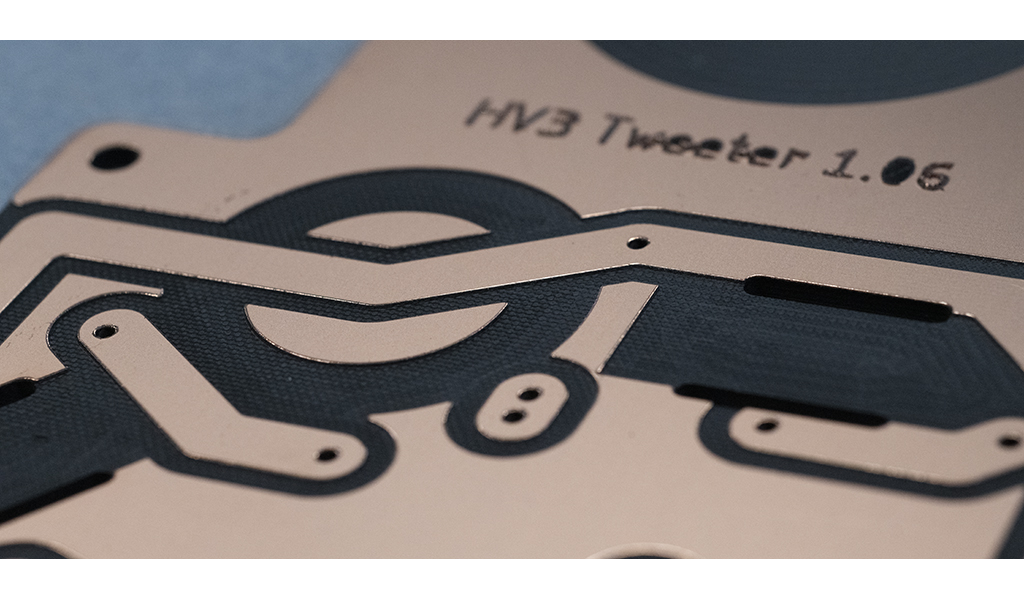
Even though the new speakers look very similar to the originals from an aesthetic perspective, every aspect has been re-examined, reconfigured, and redesigned. Even the printed circuit board used for the crossover network is CNC machined in the YG factory. The new models use 3.lmm-thick electrically non-reactive sheets of a secret material mated to pure copper – twice as much copper as in previous YG crossovers and four times the industry standard – and they machine out the copper they don’t use.
No one pays this close attention to fine detail. YG’s Duncan Taylor smiles as he says “that’s our biggest marketing challenge, to let potential customers know how much of an improvement the new speakers truly are.” Yet if you are familiar with the original YG speakers, you’ll hear it immediately.
Top of the list
Listening to Trey Gunn and Tu-ners newest release T-1 Contact Information is a prog excursion full of atmospheric sounds, blazing riffs, and of course killer bass lines. The Hailey 3s do an amazing job creating a massive soundfield with incredible coherence feeling more like a great surround setup, or perhaps the enormous 9-foot-tall Sound Labs ESLs. (But with way more transient ability) One of the Hailey’s main strengths is the integration of the drivers feeling like one big full range speaker. That’s only part of the story.
Taylor explains to me that this speaker is one of the latest models that is filled with “new tech and engineering, with few remnants of the original YG products.” Where the initial YG speakers were incredibly resolving, they required perfection in room treatment and music quality, and to some they brought a fatigue with them that made for short listening sessions. Today at YG, those traits are a thing of the past. Forget everything you think you know about these speakers – though they have similar physical shapes these all new models are a pinnacle of loudspeaker design.
If you are looking for a pair of speakers offering high resolution and low distortion (make that extremely low distortion) without ever feeling harsh, and you value tonal accuracy – YG should be at the top of your list.
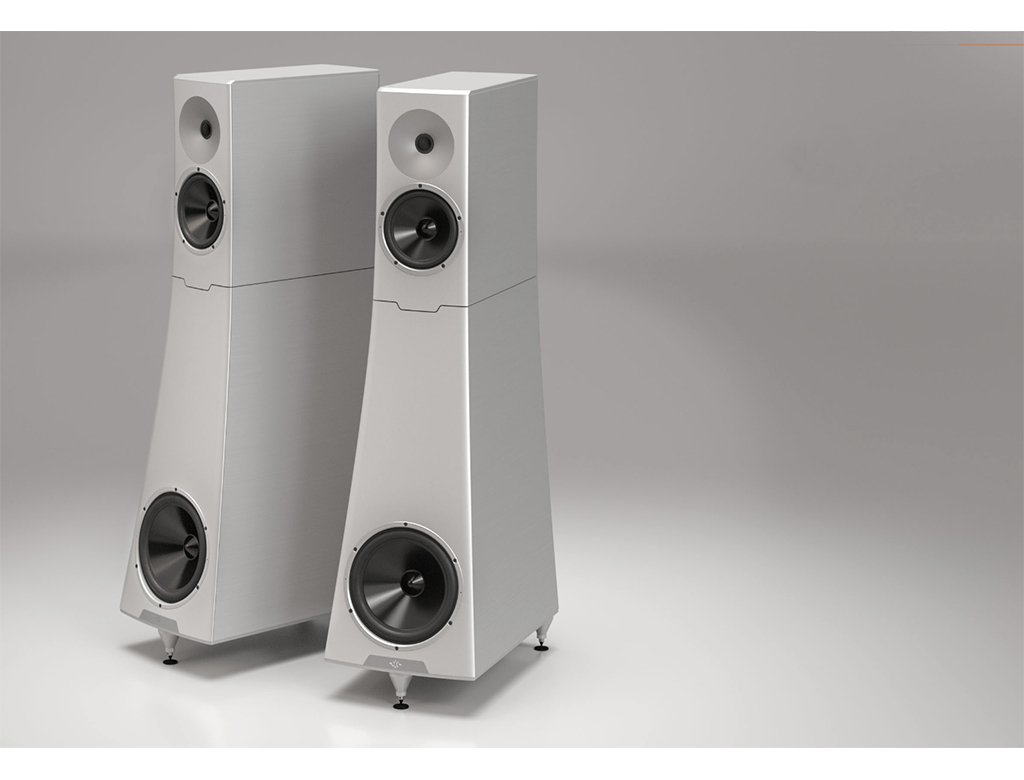
The 200-pound (each) Hailey 3 speakers are a three-way passive speaker, taking up a small footprint, relatively speaking, at 13 inches wide and 21 inches deep at the bottom, gently tapering up to 8 inches wide and 16 inches deep at the top. Silver and black anodized aluminum are the standard finishes, but customization is something YG is testing and plans to eventually offer. While visiting the YG factory earlier thisyear, there were some custom-finish speakers on their way to a client that were absolutely stunning.
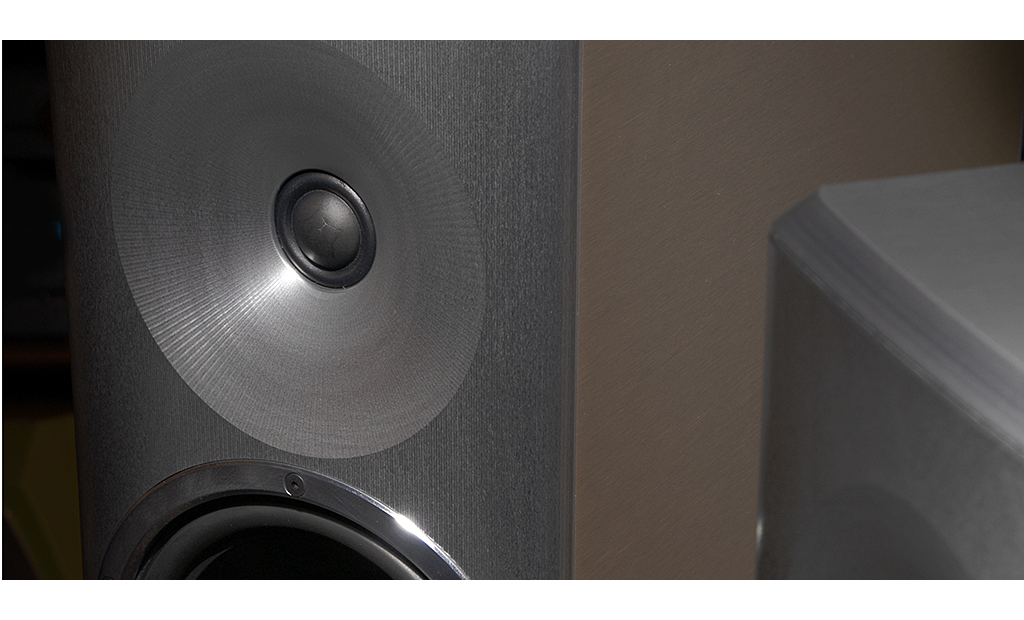
The surface of a YG speaker surpasses even what I’ve seen in the world’s finest automobiles. Yep, they are that good. These speakers define understated elegance, and more than one friend that has always been “metal speaker” adverse, loved the look, feel, and finish of the Hailey 3s. They will look at home in any decor.
The precision metalwork doesn’t end there. YG painstakingly machines the rigid, well damped cones of their drivers in their facility too. It’s one thing to see the YG’s being made, and quite another to run your hands across the surface of a YG speaker. As a crazed car guy fascinated by machining excellence I have a major appreciation for things built like this.
YG uses a soft-dome tweeter, placing a structure under the dome that they call “the lattice,” which machined from solid aluminum just like the cones of the midrange and woofers. Duncan tells me that nearly 99% solid block is machined away from the individual billet to produce them. Those of you concerned about the environmental aspect of this process, fear not. Every speck of unwanted material is recycled at the YG factory. These cones are a work of art.
Simple setup
For speakers weighing over 200 pounds each, the Hailey’s can actually be set up by one person. While the review pair arrived in road cases, YG sends their speakers in a bespoke crate, so you can bring the container to your listening room, tip it up, and slide the Hailey’s out. These are one of the easiest pairs of large speakers to unpack that I’ve encountered, underlining the thought process behind every aspect of the YG’s design. The spiked feet come with stainless spike cups, so you can adapt them to any flooring situation.
Even with random placement in the 24 x 36-foot listening room (on the short wall) about 12 feet apart and about five feet from the rear wall, the Haileys paint an enormous soundstage. Fortunately, Duncan was kind enough to stop by for the day and fine-tune them to perfection. For stacking those who the see this as the manufacturer stacking the deck in their favor, I always prefer this. Especially with a speaker that I have precious little review experience with. It’s always helpful to the review process when a manufacturer can either tweak the final setup or reassure you that all is well. That way the evaluation can start on an easy note. 30 minutes later, the Haileys are placed to perfection by moving them a bit wider apart and serious listening can begin.
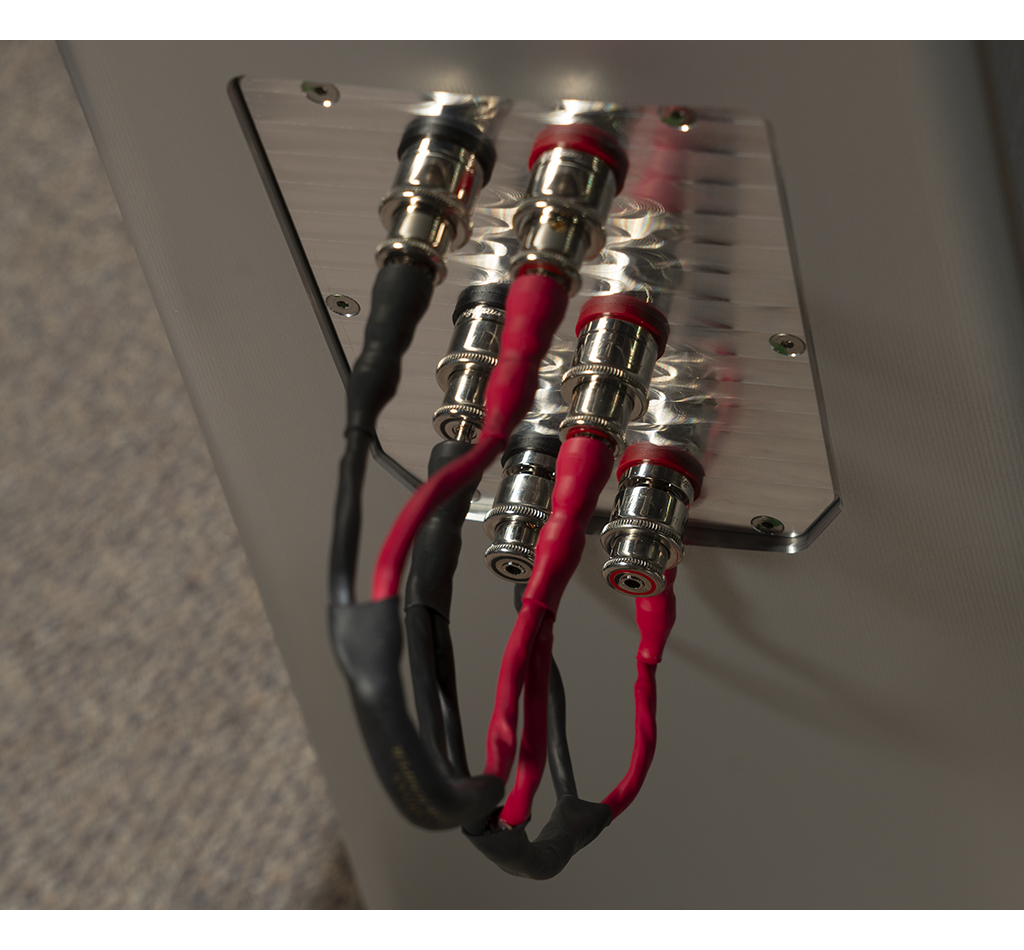
The highly revealing nature of the Haileys 3s is further emphasized during the setup process, when it was time to attach the jumpers between the three sets of binding posts on the rear of the speakers. (As a side note, my demo pair was tri-amp-capable, something YG now offers in addition to the standard single binding post arrangement, though they suspect most customers will probably go with the single set of binding posts.) For this review, Cardas Audio provided a custom set of jumpers from Cardas Clear cable, because I use Clear in my main system. I suggest this with any speaker that you choose to use jumpers with – I have always achieved the best results combining jumpers made from the same cable as the main speaker cables. Taylor tells me that internally, YGs are wired with the exact same Cardas wire, so this makes perfect sense. I’ve never heard a speaker affected by six inches of wire as much as I did with the Hailey 3s.
The speakers arrived a day before the jumpers, so during the initial listening, some zip cord was pressed into use. Not good. At first, it was suspected that the speakers needed more run the in time, but the following day when the Cardas jumpers arrived, this became an entirely different movie indeed.
Articulate bass
Being used to a six-pack of REL subwoofers makes it easy to become spoiled for lowfrequency response that is accurate, powerful, and defined. There are many large speakers that can reproduce tones down to 30 or even 25Hz, but the level of low-frequency resolution actually delivered (as with a number of subwoofers, too) is questionable. Moving air is one dimension, but being able to hear Jaco Pastorius’ fingers pluck the strings, with the resulting harmonic structure intact is quite another.
Even though the Haileys can’t move as much air as a six pack of REL’s they do achieve a level of low-frequency resolution and detail that is on the same level and this is indeed rare. We all have different goals concerning low frequency response. My personal bias here is resolution over sheer weight, yours may be different. In addition the YGs bring a wide dynamic range to the listening experience and the ability to deliver high resolution at low listening levels. This is a true display of high performance.
Swapping the Pass XA200.8 monoblocks, for the 15 watt per channel ampsandsound Bryce monoblocks is equally enticing. Even at a one-watt level, these speakers are able to deliver deep, rich, and detailed low frequencies. It’s worth mentioning the Bryce amplifiers deliver tremendous bass response, but that’s a subject of another review. The way these speakers can capture leading and trailing transients on drums and bass guitar is so realistic, you might beshocked hearing it for the first time. In a good way of course.
At least eight or nine different amplifiers from the 3 watt Coincident SETs to the 600 watt per channel PS Audio BHK 600 Monos (tube and solid-state) were used while evaluating the Hailey3s. The common thread here is quality. Because of the resolving nature of the YGs, they will reveal every source component, cable, and vibration control device in your system – though not mercilessly. To get the most these speakers can deliver, I do suggest the best cables and components that you can pair them with.
While some are quick to tell you to spend this much on cable, no more than this on amplifiers or speakers, the YGs are certainly a speaker you can splurge on now as your anchor, and make the other upgrades as time and budget allow. I can’t imagine the YGs would ever be the weak link in your system.
Seamless
Way too many high-performance speakers, especially those with the ability to play very loud,don’t always integrate the low, mid, and high frequencies in a way that feels natural and convincing. Precious few of the world’s top speakers are able to do this, and nearly all the ones I’ve heard are considerably more expensive than the Haileys. This is the result of a number of things, all equally important.
YG prides themselves on their extensive research in the area of design depth and computer modeling to implement their crossovers. They even build their own printed circuit boards from scratch, with no 90-degree corners in the PC board traces. They are CNC machined in-house from raw board blanks that are made specifically for YG. Components are selected and tolerances meticulously matched before extensive listening tests verify what’s been done on the design table.
The crossover is one part of the equation, yet having custom drivers that work in as close to perfect harmony as possible is the other part. Some manufacturers choose to take a different approach, employing more complex crossover networks to achieve their goals with lower quality drivers. Taking the latter approach does not always make for the ultimate in a smooth transition between drivers, and that last bit of clarity that only the finest loudspeakers can deliver. The YG Haileys are more than deserving of being in that exclusive realm.
That seamless clarity that the Haileys deliver offers a musical experience that is not only realistic, but non fatiguing. These are speakers that you can listen to all day at any volume level and never tire of. That’s the highest compliment I can pay them.
The rest of the range
Great as everything else is, these speakers are equally smooth throughout the frequency spectrum. Those of you that enjoy this aspect of single driver or panel speakers will appreciate how well the three drivers in the Hailey’s work together. No matter how loud or soft the Haleys are played, they deliver the electrical impulses presented to them with one voice.
If you really want to blast the system, you will need more than 15 watts per channel, and though the Haileys reveal a lot at low volume, they are glorious when being played loud. Whether you’re listening to Deep Purple’s Made in Japan, The 1812 Overture, or grooving on some Slowdive, these speakers will take you anywhere you want to go.
Ironically when YG hit the market 21 years ago, under their original ownership they claimed to be the “world’s greatest loudspeaker.” While I can’t make that claim about any one loudspeaker, I’d certainly say that today, YG is in that small top tier of the world’s finest speakers without hesitation.
PREAMPLIFIERPass Labs XS Pre PHONO STAGEPass XP-27 Phono ANALOG SOURCESME 20 w/SME IV.VI tonearm, Hana Umami Red Cartridge DIGITAL SOURCEdCS Vivaldi ONE CABLESCardas Clear
I still remember my first stereo, a 1981 Sony Boom box, which served as a loyal companion from middle school through college. It finally failed after a decade of use. However, my nostalgia for the old-school portable form factor persists. So, I’m thrilled to see Teenage Engineering, a Sweden-based company, bring back the classic handle-topped design in a smaller and lighter package with sleek aesthetics and modern technology under the hood. While the company’s name might conjure an image of whimsical product designers, make no mistake. The OB-4 is a sturdy and very capable audio companion.
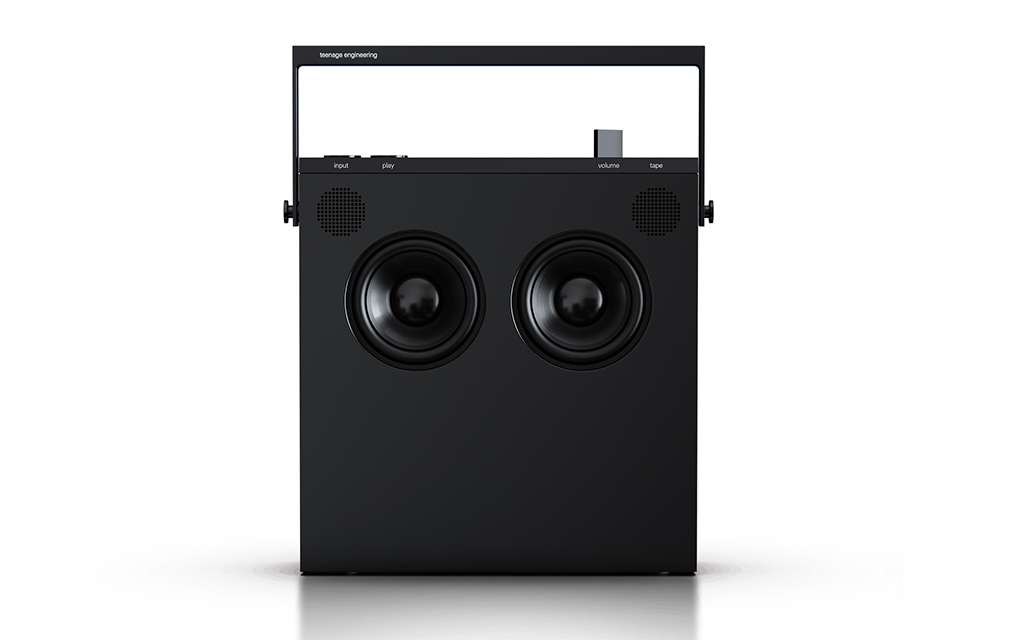
The Teenage Engineering (TE) OB-4 measures a compact 9.2 x 11.2 x 2.3 inches (233 x 284 x 58 mm) and weighs in at a scant 3.75 lbs (1.7 kg). It contains a rechargeable battery that makes it easy to take your tunes anywhere you go. Driven at high volume via a Bluetooth connection a listener can expect about eight hours of playback. However, low radio volumes will provide a couple days of music before a needed re-charge. Rotated backward, the OB-4’s handle can support it in a reclined position making it equally at home on a countertop, the floor, a driveway, or on a stump next to a camping tent. TE even offers a customized OB-4 backpack with a mesh front, sold separately.
Fun Features
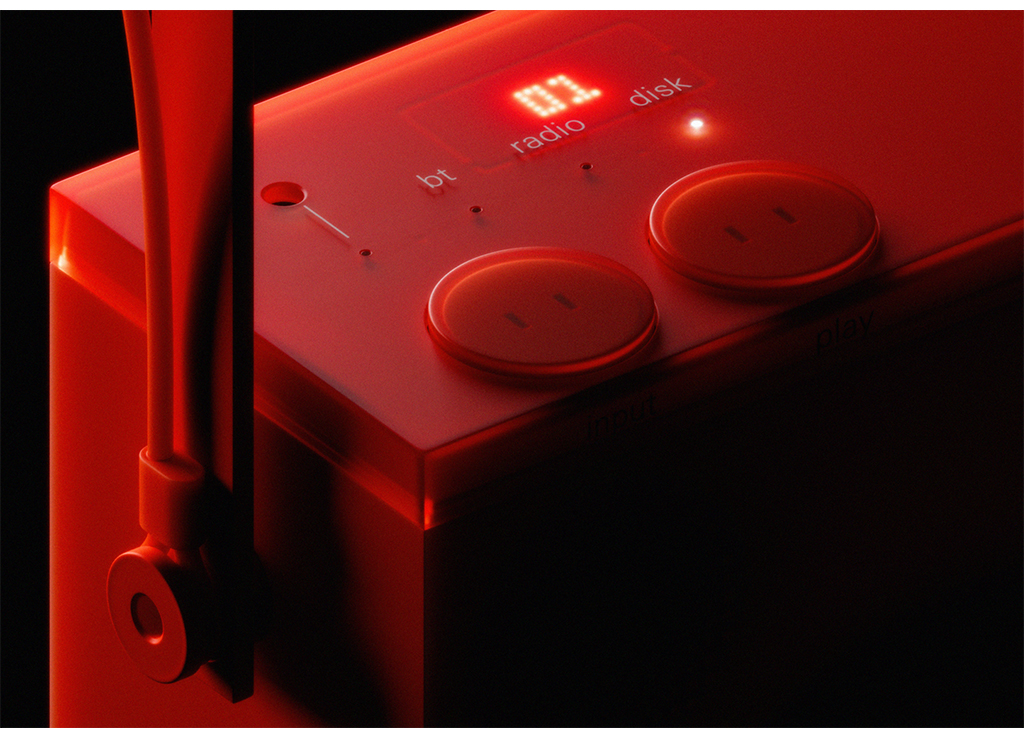
OB-4 offers a choice of three input sources: a 3.5mm stereo mini-jack, a built-in FM radio, and a Bluetooth connection. On the top panel, the OB-4 has a very streamlined user interface with a minimal number of buttons and dials. Depending on the source, control buttons serve different purposes. An owner can also download a basic “Ortho” remote control app for Apple and Android devices. Those who want a dedicated, hands-on remote can purchase the cool-looking, circular “Ortho” remote from TE’s website.
For FM listeners using the OB-4’s buttons, picking a station is easy. Simply push the “play” button to scan for available stations until a tiny LED screen confirms the correct destination. Holding down the “input” button and tapping the “play” reverses the scanning direction. The TE’s handle comes equipped with a built-in antenna. However, to assist in reception-challenged locations, a secondary, removable antenna proves handy. One end of that coiled antenna has a hook to facilitate connecting it to a window blind or even a nearby tree branch for better reception. That supplemental antenna can store neatly in the OB-4’s handle or removed entirely when not needed.
Those wanting to hear device-streamed or stored music will enjoy the simplicity of the Bluetooth source option. Once connected to the OB-4, the phone’s volume buttons control the TE’s volume knob. The OB-4 sounds marvelous with any music thrown at it. However, a user cannot stream high-resolution music that exceeds Bluetooth’s capability. Some might prefer using the OB-4’s 3.5mm stereo input.
The OB-4 offers another music source option that requires some explaining. While the unit does not feature line-outs for external recording, it does have a fun, partial workaround built in. As music plays, it’s captured by a two-hour, constantly-rolling digital “tape” recording. After two hours, “old” music starts to disappear, replaced by new. A tiny wheel on the OB-4’s top edge physically spins while the recording process takes place. It’s both humorous and beguiling to watch the process in action. Anytime a listener wants to revisit the past, spin the wheel counterclockwise to hear previously enjoyed music. The opposite action moves a listener forward until they catch up with real-time sources. It’s irresistible to play with the controller, even if it’s just a quick spin now and then. While a user twists the wheel, there’s an old-school DJ “record-scratching” sound. When the wheel stops moving, cached music resumes playback from that point.
The OB-4 has other quirky features, too. The OB-4 has a built-in metronome, a Yoga Mantra setting, and some ambient sounds which – as I’ve discovered – do a great job of encouraging sleep. Be sure to check out the OB-4 manual for more details on ways to loop music and more.
Super sonics
The OB-4 may be small, but the TE team managed to squeeze in two tiny tweeters, a pair of 2.5-inch midrange drivers, a bass port on the lower left side, and a 38-watt-per-channel amplifier. The midrange cones’ position, one-third the way down the OB-4’s front, makes them look like giant owl eyes. It’s endearing, but don’t underestimate those little things! They manage to push forth a surprisingly loud, clear, and detailed sound.
Unlike the tweeters, the midranges do not have protective grilles over them. While they recess slightly into the OB-4’s body, the potential vulnerability is still a little anxiety-provoking. The OB-4 is designed for portability, but there’s a very real possibility of a dented cone if the owner gets overly cavalier and tosses the OB-4 into a car trunk or bag.
The OB-4’s specifications suggest low-frequency reproduction in the 52Hz range. There’s a caveat to the TE’s bass prowess, though. As with large stereo speakers at home, placement is critical. If positioned too close to a rear wall bass boominess can result. If too far from the wall, the bass can disappear. As a portable stereo, it’s easy to position the OB-4 anywhere needed to find the perfect Goldilocks zone. When in a room’s corner or near a rear wall, natural bass loading kicks in. So, in a way, the TE offers an ultra-manual tone control. Find the sonic balance that works best for you.
Nobody should expect the OB-4 to exceed the high-resolution sonics or stereo imaging capability of a good component system because it is not designed to. But despite the inherent limitations of a boom box form factor, the OB-4 does a great job of delivering the musical goods. Sound-wise, it strikes an excellent tonal balance with slightly warm, stridency-free playback even at high volumes.
Summing up
Three close friends own and use their OB-4s regularly. The boxes move around the house to deliver music anywhere it’s needed. When we rent a vacation house together, there’s always an OB-4 playing non-stop. An OB-4 also joined our trip overseas and enhanced our downtime with music wherever we went. While other small, single-purpose Bluetooth speakers may be less expensive and easier to carry around, I’ve encountered few that approach the OB-4’s musical presence.
At $649, Teenage Engineering’s mini stereo isn’t cheap, but it does not sound or feel cheap either. The OB-4 is a durable and creatively purpose-built device that reimagines the classic boom box style with a modern twist and unique features. Those who enjoy sound on-the-go will find their OB-4 a marvelous complement to their home audio system — or even as a one-box primary listening device. It’s a worthwhile investment for those who enjoy great sound anywhere.
Teenage Engineering also produces several other products including electronic musical instruments and even a tiny turntable kit that lets its owner cut their own one-song records. Check ‘em out here.
If you are not reading this content in your news aggregator, RSS reader, or direct, then the site you are looking at may be guilty of copyright infringement. If you locate this anywhere, please contact [email protected] so we can take action immediately.