What a better way than some major psychedelic rock from Moby Grape? Their Wow/Grape Jam record was a two record set, released April 3, 1968. I was too young for this one on the first go, but in the early 70s when I started hanging out with a lot of the older dudes in high school that were really into Moby Grape, Iron Butterfly and Zappa, it made a big impression.
Yeah, it’s a little rambling, but that was the jam back then. Much as I love Moby Grape, I’d suggest streaming this one on your favorite streaming service to vet it first – if you aren’t familiar.
Leave a comment out on our Facebook page and let us know what you think!
The table featured here is the Modi, with their Thor linear tracking arm. Cartridge is a modified LYRA Helikon SL, modified by Ana Mighty Sound Phono Pre is the award winning XP-17 from Pass Labs Cables by Cardas Audio All on top of the Pagode Master Reference MKII, courtesy of MoFi Distribution
To those of you who knew who Virgil Abloh (the Creative Director at fashion house Louis Vuitton) was, he had a major effect on fashion, style, and the cross pollination of artistic disciplines. In that sense, he was a force to be reckoned with. Unfortunately, he succumbed to cancer at the way too early age of 41, back in 2021.
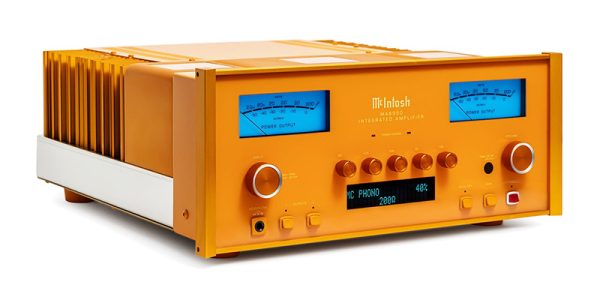
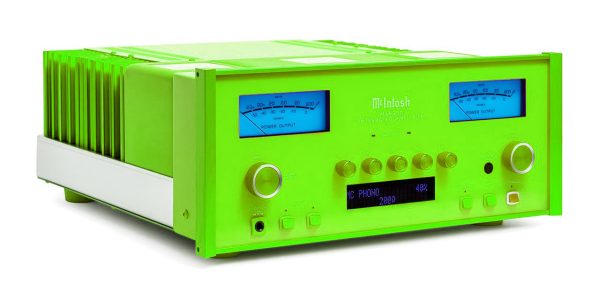
McIntosh just announced their one of one collab honoring his personal style, an MA8950 integrated amplifier painted orange to honor Abloh, who used McIntosh gear in many of his fashion shows and creative studio.
In typical McIntosh fashion, this isn’t just an off the shelf amplifier painted orange (because that’s what it is) and according to them “They are the only amplifier brand that could make a bold orange amplifier feel intentional, not accidental.”
I don’t know what they are smoking at McIntosh, but Dartzeel, Vitus, and Sugden have all been making some pretty cool orange amplifiers for some time now. Not to mention the incredibly cool cats at Metaxas and Sins. Now that’s some disruptive shit.
Don’t forget, KEF and Focal have also made orange speakers (super awesome, owned em both) and REL makes a gorgeous line of subwoofers in bright orange (yellow, green, and blue as well) too. Come on.
Of course it’s a one of one, and of course, you can’t have it. So much for all that blending of art and culture and inviting you to be part of it. Just like the McIntosh town house used to be. Cool kids club and you can’t be part of it.
I miss the old Mac. But hey maybe it’s time for a collab of my own. I submit the MC Jeff D McIntosh amp. hahahah. Who’s with me?
Jeff once asked me why I leave music playing in a room when I’m not even there. My answer goes back to something I read years ago that stuck with me.
In the 1970s, Christopher Bird and Peter Tompkins published The Secret Life of Plants. The book described studies suggesting that plants respond to music. Even earlier, in 1962, Dr. T.C. Singh found that balsam plants exposed to classical music grew 20% faster and had a 72% increase in biomass. Later, Dorothy Retallack discovered that plants thrived on jazz and classical but wilted when exposed to rock.
Are plants really “music savvy”? Probably not in the way we think. More likely, they respond to vibrations that influence growth—especially when paired with sunlight streaming through a south-facing window.
That got me wondering: if plants react to music, how does classical music affect people? For us, it can calm the body, sharpen the mind, and help regulate emotions. The exact effect depends on the tempo, harmony, and our own personal taste.
When stress builds and the world feels overwhelming, I’ve found that Mozart or Vivaldi brings me back to center. Rock, on the other hand, amplifies emotions—it can fire you up, fuel your anger, or give you the motivation to push forward.
Both have their place. Rock energizes. Classical soothes. And maybe that’s the real reason I let classical music play in an empty room—it’s not just good for plants, it’s good for me too.
The Vera-Fi Ranger speakers have really taken me on a trip down memory lane today. Many audio reviewers and enthusiasts with high-end systems sometimes forget where it all began. For me, it was a used pair of AR-7s for $50. My buddy Todd across the street purchased them new at J&R Music World (remember the ads in the back of Audio magazine?) for $79. Crazy.
Back in my University of Wisconsin days, the radio was peppered with ads for “Crazy TV Lenny” from American TV of Madison. He was audio’s screamy guy of the time, offering a pair of speakers for $199, with free speaker wire and a ten-speed bike!
This became such a big tradition in Wisconsin audio retailing that when Mrs. Crazy TV Lenny filed for divorce (and it was listed in the local paper), on top of the house, tons of money, and a red Mercedes 560SL, she received a ten-speed bike. You gotta love that. Ironically, I saw the airplane that she was on crash at Milwaukee’s airport. I was across the street at Holiday Inn, photographing an event for Miller Brewing Company. Weird.
In 2025, Vera-Fi has these damn cool little speakers selling for $149 a pair. No bike, but hey.
Now you might be thinking, “How can they possibly make a pair of speakers for $149?”
You might think Mark Schifter is crazy.
If you think about it, though, a new pair of Bowers & Wilkins 707 S2s costs $599. Just like the Vera-Fi speakers, they are made in China. Yet by the time B&W (and no disrespect here) sends them here, an importer takes their percentage, and the dealer gets their 50% cut. These prestigious speakers probably cost less to build than the Rangers. My neighbors have actually just bought a pair of 707s, and they aren’t even close to the Rangers in terms of the level of musical realism they deliver for $149. I’m debating whether to tell them to send the B&Ws back to Amazon and grab a pair of these instead.
Starting with my usual Aimee Mann test LP – Lost in Space, I’m immediately involved and intrigued. What these little speakers do so well, that so many inexpensive speakers can’t, is get the midrange right. Often, manufacturers goose the bass to make budget speakers more exciting. Kudos to the Vera-fi team for playing it straight up.
Moving on to a bit of Crosby, Stills, and Nash, with a dose of Grover Washington Jr.’s Mister Magic, I’m right back in the bedroom of my parents’ house in Wisconsin. I’m digging it.
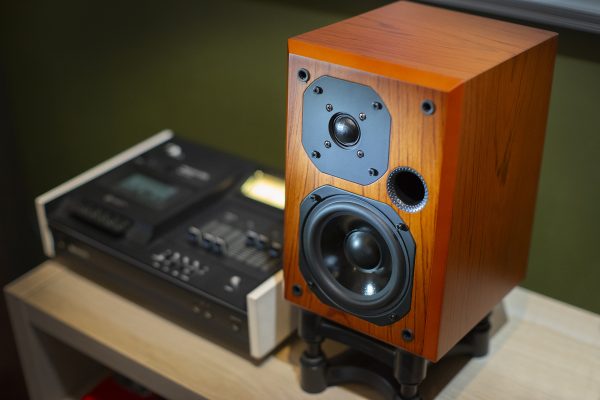
These little cabinets are about 8″ wide, 11″ tall, and 9″ deep. Inside the gorgeous cabinet is a 5.25-inch woofer and a 1-inch silk dome tweeter. The crossover is set at 2,500Hz, and these 8-ohm speakers have a claimed sensitivity of 84 dB/1 watt. Kinda like your favorite pair of LS3/5a’s, right?
Schifter says, “These are friendly in look, sound, and feel.” I can’t agree more.
No, you can’t play your favorite electronica tracks on these and get floor-rattling bass, nor can you play Slayer at concert level. That’s not what these are about. The Rangers provide you with enough insight into the music that, if you’re a new audio enthusiast and music lover, they will get you hooked and encourage you to take your journey further, yet are a great place to park until you can.
Staying close to the budget system groove, I set these up in our 11 x 12 foot back bedroom with an $89 Sony SACD player (new at Amazon before the tariffs) and an old Pioneer SX-434 that I bought at a garage sale for $100. Things have gone up since we used to produce the Slummin’ column in the early years of TONE.
Rounding out the system with some of Vera-Fi’s Ranger cables and a used REL T3 subwoofer (which I picked up during Echo Audio’s closeout sale last summer for $75) brought my total system price to about $500. Good times.
For those curious about Vera-Fi’s $199 10-inch Caldera 10, I gave that a try and for my taste, the Rangers don’t quite go down far enough to blend seamlessly. The Scouts do, but these just don’t quite reach – that’s why I went to the used REL with an 8-inch driver this time around. Don’t be surprised if you see a smaller sub from Vera-Fi sooner than later, but you didn’t hear that from me!
Setup is simple, whether you are in a room or at your desk. Thanks to that great midrange, if you happen to be editing video on your desktop, the Rangers do a great job if you want top sound on a tight budget. Along with the sub, they were fantastic for watching F1 qualifying too.
Zooming in on 20 of our standard demo tracks reveals a high level of musicality at work. Much like my AR-7s or even the Spica TC-50s that I would cherish a decade later, the clean, natural midrange and smooth high end help you forget that there isn’t a lot of throbbing bass going on.
In the 11 x 12 room, placing the speakers soundly on a set of 22-inch stands, about 18″ out from the room’s corners, takes advantage of a bit of room gain, at the loss of some imaging specificity. Moving them in the near field, three feet out from the rear and side walls, creates a more immersive sound, if that option is available. This is a perfect setup to add a small sub to.
It was incredibly easy to forget I was listening to $500 worth of gear. In addition to a natural midrange, the highs are slightly rolled off. Still, they extend out smoothly and integrate well with the woofer, making the whole thing work seamlessly. Well.
You should only need about 20- or 30-watts worth of power to get excellent results. I would have matched these up with a used Dynaco Stereo 70 and PAS 3 if I weren’t going the Japanese receiver route. Using my PrimaLuna EVO100 integrated amplifier gave me a pretty good idea of what that might sound like.
A few more amp/pre/integrated variations were tried, with excellent results, but they were all in the $2k-$3k range – again showing off how much these little speakers can deliver. Used within the envelope of what they are capable of, I hope you’ll be as excited as I am about the Rangers.
Much as I love the $299 Scouts, the value offered by these little Rangers is off the chart. For everyone you see with giant speakers and amplifiers (myself included), this is where we all started. This is a great place to start if you’re new to this, and as Crazy TV Lenny used to say, “Trust me, you’ll love them.”
Bet you didn’t know I was a total closet prog-head. It started with Yes, and Emerson, Lake & Palmer many years ago. Guilty as charged.
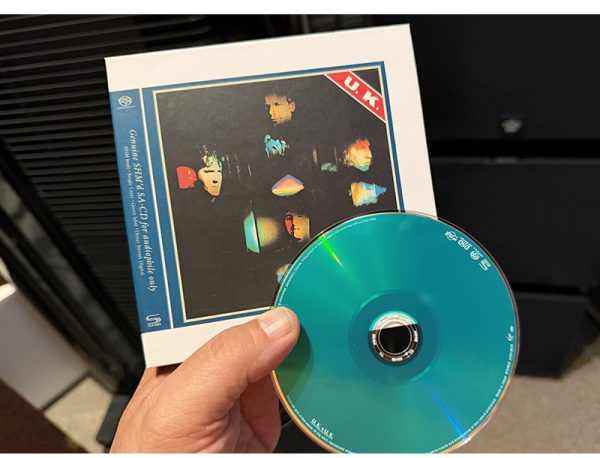
If you loved the auspicious debut (arguably their best and most pure effort) of this prog powerhouse consisting of John Wetton, Bill Bruford, Eddie Jobson, and Alan Holdsworth, try and find this disc. Those in the know will remember the FM radio nugget “Dead of Night,” and perhaps you even saw them perform this record back in the late 70s.
This example was produced a few years ago on SHM-SACD and the sound quality is epic, now doing full justice to Wetton’s killer bass lines.
This column is sponsored by dCS, who’s Vivaldi ONE DAC/Streamer/Disc Player is my reference, and Mobile Fidelity Sound Labs, producer of exceptional audiophile vinyl and SACD releases.
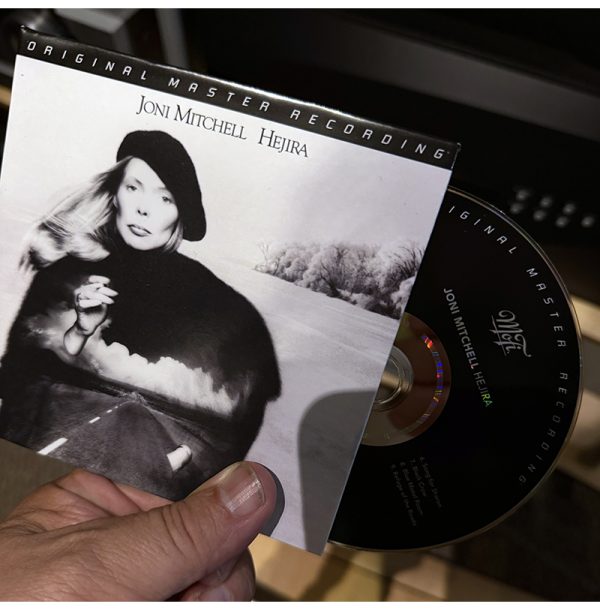
Im still on a Joni Mitchell kick, but now that MoFi’s SACD pressing plant is back open after summer maintenance, it’s just the way things are shaking out.
This album, harkening from 1975 and 76, is a continuation of the more dense, jazzy groove that Mitchell started with Hissing of Summer Lawns. Most of this material was written during her breakup with drummer John Guerin, and according to her “very difficult to write.” The songs are personal, the playing incredible, and it really shows off the fretless bass skills of the late Jaco Pastorius.
Definitely not a casual listening hour album. One for a quiet, and blustery day. But highly rewarding and brilliantly captured by the MoFi crew here.
And best of all to this cheesehead, the photos were shot on Lake Mendota in Madison, Wisconsin by the legendary rock photographer Joel Bernstein – though the portrait superimposed on the cover is from Norman Seeff. (notice the stylistic similarities with Van Halen’s Women and Children First?)
This column is sponsored by dCS, who’s Vivaldi ONE DAC/Streamer/Disc Player is my reference, and Mobile Fidelity Sound Labs, producer of exceptional audiophile vinyl and SACD releases.
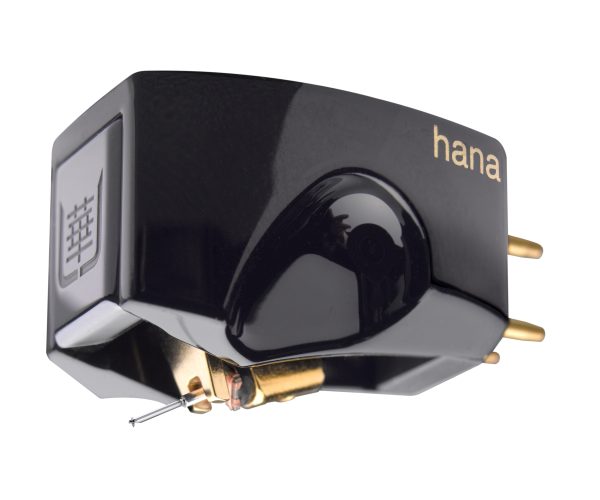
The HANA-Umami Black continues the brand’s legacy of “Brilliant and Gorgeous” sound. Master cartridge designer Masao Okada-san of Excel Sound celebrates over 5 decades of innovation and excellence with his new masterpiece, featuring a diamond cantilever and new “OKD” High-Efficiency Moving Coil Generator. The Umami Black is much more than just an Umami Red with a diamond cantilever.
Unique Umami Black Features
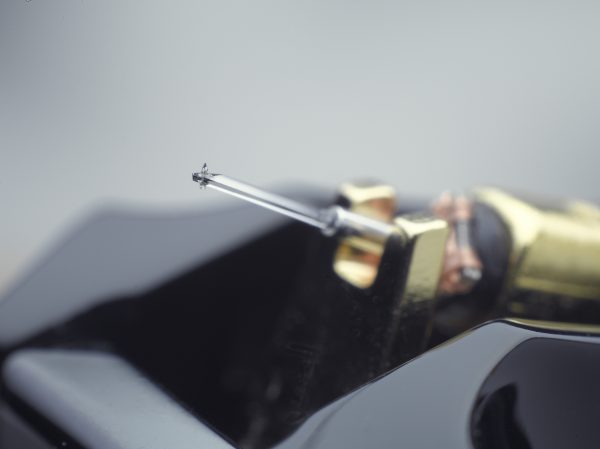
Diamond Cantilever
In a category first for HANA, the Umami Black incorporates a diamond cantilever, the hardest possible material, ideal for signal transfer.
High-Efficiency “OKD” Moving Coil Generator
Another category first, the Umami Black uses the newly developed “OKD” with the world’s first “Integrated Pole Piece and Rear Yoke” and Inverted U-shaped Front Yoke, optimizing energy transfer from the diamond cantilever.
Inverted U Front Yoke
The U-shaped (bifurcated) inverted front yoke is engineered for both mechanical resonance control and magnetic field alignment, while also providing precise support for the diamond cantilever.
High-Power Rare Earth Magnet Unique to the Umami Black, the rare earth neodymium-iron-boron (NdFeB) magnet is used for the high-efficiency generator, delivering superior energy conversion.
Hybrid Carbon Armature A 2mm square hybrid Carbon permalloy armature, comprising 78% carbon-infused nickel-iron, is precisely hand-wound with 30-micron, 4N high-purity copper wire on Excel’s proprietary machinery. This ultra-light moving coil has an output of 0.3mV and a 5 ohm impedance.
Special Urushi Enameled Finish
The HANA-Umami Black features an exquisite Urushi lacquer finish, applied through a specialized thermosetting process, bonding to the aluminum body via vapor deposition.
Call the folks at musicalsurroundings.com for more info, and these beauties will be available for purchase after September 22.
If you are not reading this content in your news aggregator, RSS reader, or direct, then the site you are looking at may be guilty of copyright infringement. If you locate this anywhere, please contact [email protected] so we can take action immediately.